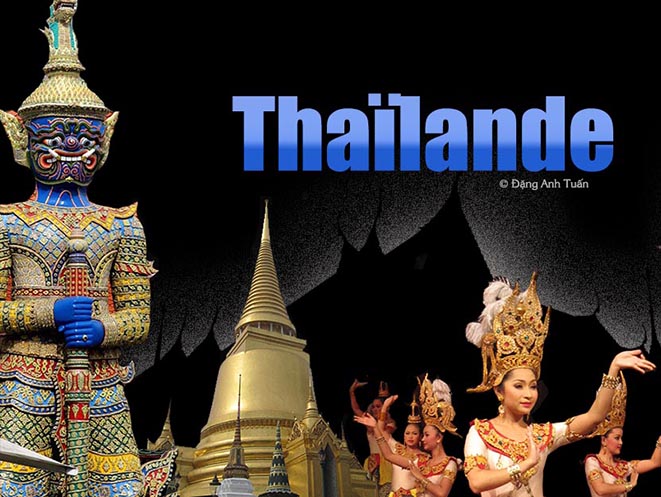
Thailand (Thái Lan)

French version

The emergence of the Thai people is only strengthened since the XIVth century. Nevertheless it is a very ancient people of Southern China. It is a member of the Austro-Asiatic group (Chủng Nam Á) (or Baiyue or Bách Việt in Vietnamese). It is this group French archaeologist Bernard Groslier often indicated under the name of « Thai-Vietnamese group ».

Repulsed by the Tsin of Shi Huang Di, the Thai people try to resist again and again. For Vietnamese writer Bình Nguyên Lôc, the subjects of Shu and Ba (Ba Thục) kingdoms annexed very early by the Tsin in the Szechuan (Tứ Xuyên) (1), were the Proto-Thai (or Tày). According to this writer, they belonged to the Austroasiatic group of branch Âu (or Ngu in language mường or Ngê U in Chinese mandarin (quan thoại)) to which the Thai and the Tày were attached.

For him as for other Vietnamese researchers Trần Ngọc Thêm, Nguyễn Đình Khoa, Hà Văn Tấn etc .., the Austro-Asiatic group contains 4 different subgroups: subgroup Môn-Khmer, subgroup Việt Mường (branch Lạc), subgroup Tày-Thái (branch Âu) and subgroup Mèo-Dao to which it is necessary to add the subgroup Cham, Raglai, Êdê to define the Indonesian race (or Proto-Malay) (2) (Chủng cổ Mã Lai).

The contribution of the Thai people in the foundation of the Ậu Lạc kingdom of Thục Phán (An Dương Vương) is no longer in doubt after the latter managed to eliminate last king Hùng of the Văn Lang kingdom because the name « Âu Lạc » (or Ngeou Lo) evoke obviously the union of two ethnic groups Yue of branch Âu (Proto-Thai) and branch Lạc (Proto-Viet ). Furthermore, Thục Phán originating from the royal family of Shu (Thục), an Yue of Thai branch, which shows at such a point the union and the common fate of these two ethnic groups in front of the Chinese expansion.

It is what is has been reported in Chinese historical writings ( as Kiao -tcheou wai-yu ki or Kouang-tcheou ki) but it has been refuted by some Vietnamese historians because the Shu kingdom was too far the Văn Lang kingdom. This latter has been annexed very early ( more than a half century before the foundation of the Văn Lang kingdom) by the Tsin. But according to Bình Nguyên Lộc writer, in the compagny of his trusted friends, Thục Phán having lost his homeland, was forced to seek refuge at this time in the country having the same ethnic affinity, that is to say Si Ngeou (Tây Âu) located beside the Văng Lang kingdom of the Vietnamese. Furthermore, the Chinese have no interest in falsifying history by reporting that the ruler of the Âu Lạc kingdom was the Shu prince. For this latter and his trusted friends, the requests for asylum need a certain time, which explains at least a half century in this exodus before the foundation of his Âu Lạc kingdom. Moreover, he was at the head of an army of 30.000 soldiers. It is impossible for him to assure all logistical aspects and render his army invisible during the exodus by crossing through Yunan mountainous regions administered by others ethnic ennemies or people close to the Chinese. It is likely that he needed what is necessary before his conquest with Si Ngeou people (or Proto-Thaïs). Despite the legend of the Vietnamese magic crossbow, An Dương Vương (Ngan-yang wang) was a historical personage. The discovery of his capital archeological remains (Cổ Loa, huyện Đông An, Hànội ) does not question the existence of this kingdom established about three centuries before Jesus Christ. This one was later annexed by Zhao To (Triệu Đà), founder of the Nan Yue kingdom.


A long common history with the Vietnamese.

The Lạc Long Quân-Âu Cơ myth insinuate so skilfully the union and the separation of two Yue ethnic groups, one being of Lạc branch (the Proto-Vietnamese) coming down to the plains by the pursuit of water courses and rivers, the other (the Proto-Thaïs) taking refuge in mountainous areas. There are the Mường in this exodus. Being close to the Vietnamese at the linguistic level, the Mường have managed to keep their ancestral customs because they were sent away and protected in high mountains. They had a social organization similar to that of the Tày and the Thaïs.

Located in Kouang Tong (Quãng Đông) and Kouang Si (Quãng Tây) provinces, the Si Ngeou (Tây Âu) kingdom is none other than the land of the Proto-Thaïs (Thai ancestors). It is here that Shu prince Thục Phán took refuge before the Văn Lang kingdom conquest. It should also be remembered that Chinese emperor Shi Houang Di had to mobilize at this time more than 500.000 soldiers for the Si Ngeou kingdom conquest after having successfully defeated the Chu kingdom (Sỡ Quốc) army with 600.000 soldiers. You have to think that in addition to the implacable resistance of its warriors, the Si Ngeou kingdom should be very large and densely populated for the commitment of the substantial military force from Shi Houang Di (Tần Thủy Hoàng).

Despite the premature death of Si Ngeou king named Yi-Hiu-Song (Dịch Hu Tống),the resistance led by the Yue of Thai branch or (Si Ngeou)(Tây Âu) succeeded in obtaining a few expected results in Southern Kouang Si with the death of general T’ou Tsiu (Uất Đồ Thư) leading a Chinese army of 500.000 men, which has been mentioned in Master Houa-nan annals (or Houai–nan –tseu in Chinese or Hoài Nam Tử in Vietnamese) written by Liu An (Lưu An), grandson of Kao-Tsou emperor (or Liu Bang), founder of Han dynasty between 164 and 173 before our era. Si Ngeou was known for the courage of its formidable warriors. This corresponds exactly to the temperament of the Thai living in the past, described by French writer and photographer Alfred Raquez:(3)

Being belligerent and adventure racer, the old-time Thai were almost constantly at war with their neighbours and often saw their successfull excursions. After each victorious campaign, the prisoners were taken with them and deported in a part of Siam territory as far away as possible from their countries of origin.

After the disappearance of this kingdom and that of Âu Lạc, the Proto-Thaï remaining in Vietnam at this time under the bosom of Zhao To (a former general of Tsin dynasty who later became the first emperor of Nan Yue kingdom) had their descendants forming properly today the ethnic minority Tày of Vietnam. Other Proto-Thaï fled to Yunnan where they united at the eighth century in Nanzhao kingdom (Nam Chiếu) then Dali (Đại Lý) where buddhism of Greater Vehicle began to take root. Unfortunaly, their attempt was in vain. Shu, Ba, Si Ngeou, Âu Lạc (5), Nan Zhao, Dali countries are part of the list of kingdoms annexed one after the other by the Chinese during their exodus. In these countries submitted, the Proto-Thaïs presence was very important. In front of the Chinese continous pressure and the Himalaya inexorable barrier, the Proto-Thaï had to get back in the Indochinese peninsular (4) by penetrating slowly like a fan in Laos, northwest region of Vietnam (Tây Bắc), northern Thailand and Upper Burma.

According to Thai historical inscriptions found in Vietnam, there are three important waves of migration initiated by the Thai of Yunnan in northwest of Vietnam during the 9th and 11th centuries. This corresponds exactly to the period where Nanzhao was annexed by Dali destroyed, in turn, three centuries later by Kubilai Khan Mongols in China. During this penetration, the Proto-Thaïs were separated into groups: the Thaï of Vietnam, the Thaï in Burma (or Shans), the Thaï in Laos (or Ai Lao in Vietnamese) and the Thaï in Northern Thailand. Each of these groups began to adopt the religion of these host countries. The Thaï of Vietnam do not have the same religion as those of other territories. They continue to keep animism (vạn vật hữu linh) or totemism.

This is not the case of the Thaï living in Northern Thailand, Upper Burma, Laos which were occupied at this time by Indianized and Buddhist theravàda Môn-Khmer kingdoms (Angkorian empire, Môn Dvaravati, Haripunchai, Lavo kingdoms etc …) after the dislocation of Indianized Funan kingdom. The Môn had a key rôle in the transmission of Theravadà Buddhism from Sinhalese tradition for Thai newcomers.


(1): Pays des pandas. C’est aussi ici qu’on a découvert la culture de Ba-Shu célèbre pour ses masques zoomorphes de Sanxingdui et pour le mystère des signes sur les armures. C’est aussi le royaume de Shu-Han (Thục Hán) de Liu Bei (Lưu Bị) à l’époque des Trois Royaumes.(Tam Quốc)

(2) Race de l’Asie du Sud-Est préhistorique.

(3): Comment s’est peuplé le Siam, ce qu’est aujourd’hui sa population. Alfred Raquez, (publié en 1903 dans le Bulletin du Comité de l’Asie Française). In: Aséanie 1, 1998. pp. 161-181.

(4) Indochina in wider sense. This is not French Indochina.

(5) The Âu Lạc kingdom of An Dương Vương was annexed by Chinese General Zhao To (Triệu Đà) who later became the founder of Nanyue kingdom. This one will be in turn under the control of Han dynasty, half a century later.


Bibliography
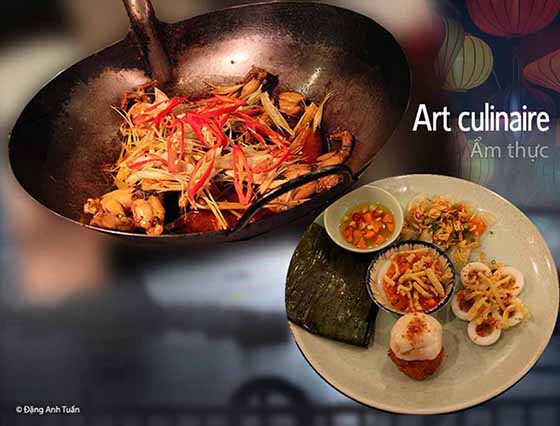
Culinary art ( Nghệ Thuật Ẩm Thực của người Việt)

 
amthucvn

French version

Vietnamese people grant a great importance to the culinary art, in particular to their eating. It is the first necessity in their daily life and culture. Nothing is more amazing to see the use of « an » as the prefix in a great number of words. Among them we find: ăn nói ( to speak ), ăn mặc ( to wear ), ăn ở ( to live ), ăn tiêu ( to consume ), ăn ngủ ( to sleep ), ăn trộm ( to steal ), ăn gian ( to cheat ), ăn hiếp ( to bully ) and so on…It is usually said: Trời đánh tránh bữa ăn to means even God dare not disturb the Vietnamese during their meal.


Their eating is carefully elaborated according to the concept of Yin and Yang and the five elements (Thuyết Âm Dương Ngũ Hành) which serves as the fundamental basis of their Van Lang civilization.
Yin-Yang ( Âm Dương ) is the representation of the two poles of all things, a duality that is at the same time contradictory and complementary. Of the nature Yin is whatever is fluid, cold, humid, passive, somber, interior, female in essence like the sky, the moon, night, water, winter. Of the nature Yang is whatever is solid, hot, luminous, active, exterior, male in essence like the earth, the sun, fire, summer. Human is the hyphen between these two poles or rather between the Earth (Dương) and the Sky ( Âm ). Harmony may only be found in the equilibrium that human brings to its environment, universe and body. Vietnamese food therefore finds all its meticulous preparation and particularity in the dialectic relationship of the theory of Yin and Yang. It also shows the respect of the millennial cultural tradition of a farming country and of a civilization known for its rice farming on flooded rice fields (trồng lúa nước).

Yin-Yang in Vietnamese culinary art

© Đặng Anh Tuấn

That is why rice should not be missed in a Vietnamese meal. It is at the basis of several Vietnamese dishes (bánh cuốn, bánh xèo, phở, bún, bánh tráng, bánh chưng vân vân ) (ravioli, crepe, pho, vermicelli, rice paper, sweet rice cake etc..) Rice can be whole, round, long, crushed, scented, glutinous etc… More than a food, rice is for the Vietnamese people a tangible proof of their Bai Yue culture, a trace of civilization that is not lost under the weight of long Chinese domination.

The manner in Vietnamese eating is not foreign to the search for the middle-of-the-road attitude encouraged in the concept of Yin and Yang.  » Eating together  » requires in their view a certain respect, a certain level of culture in the art of eating because there exists an undeniable interdependence among the guests in the share of food and space. It is usually said: Ăn trông nồi , ngồi trông hướng.

When eating look for where the rice cooker is and when sitting look for where the direction is. That is the maxim that Vietnamese parents used to tell their children about their table manners. One has to behave oneself when invited to a meal. One should not eat too fast for not to be called impolite but should neither eat too slowly as one should not make other guests wait. Emptying one’s plate or the cook pot is not allowed because it gives the feeling of being greedy. On the contrary, eating too little implies a lack of mannerliness, which may vex the host. This cautious behavior could be summed up by the following statement: Ăn hết bị đòn, ăn còn mất vợ. (Emptying the cook pot deserves spanking, leaving some leftover leads to losing the spouse ). It is in the constant search for equilibrium evoked in the Yin and Yang theory that a Vietnamese must exercise in due course at a meal. It should not be ignored the « varied » nature brought in by Vietnamese food that is characterized by the diversity and visible exuberance in colors of the ingredients in the preparation.

Around a bowl of rice is the creation of a multitude of colors, flavors and dishes. The expression of the 5 senses (ngũ giác) is also found in a Vietnamese meal:  

smell: by the release of aromas and flavors of foods served,
sight: by various coloration of the ingredients that go in the preparation of the dishes,
taste: by the flavors of the dishes,
hearing: by the sound made by the sucking of tea or stock with the mouth,
touch: by the nonstop handling of chopsticks.

For some Vietnamese specialties (gà nướng (roasted chicken), gà luộc ( boiled chicken ), gỏi cuốn (spring rolls) ), the use of hand is highly appreciated. Most Westerners used to attribute to the Chinese the holder of chopstick civilization. However it is the product of the cradle of the rice growing civilization of South East Asia. It is what the Chinese historian Ðàm Gia Kiện has written in his book entitled « Cultural History of China » ( Lịch sử văn hóa Trung Quốc ) ( 1993, page 769 ):
At the time prior to the unification of China by Qin Shi Huang Di, the Chinese continued to use their hands to grasp food. It was a tradition found in people growing millet (kê), barley (mạch) and eating bread, hum bao ( bánh bao ) and meat. They only began to use chopsticks during their expansion toward Southern China.
That assertion has been justified by recent scientific discoveries. Chopsticks can only be made in a region where abundance of bamboo is not in doubt. That is the case of Southern China and South East Asia. They are the rudimentary tool shaped to the image of the bird’s bill to efficiently pick up grains of rice and fish without having to soil the hands with the plates containing water (soup, broth, fish cauce etc…). It is found in the Vietnamese use of chopsticks a simple as well as humoristic philosophy. A pair of chopsticks is always compared with a married couple.

That is why one used to say:

Vợ chồng như đôi đũa có đôi
Bây giờ chồng thấp vợ cao như đôi đũa lệch so sao cho bằng.

Husband and wife are like a pair of chopsticks
Now that husband is short and wife is tall
Like mismatched chopsticks can’t be paired at all.

During the Lê dynasty, breaking a pair of chopsticks is like a dissolution of marriage. One prefers having a stupid spouse to having a disastrous pair of crooked chopsticks. This preference is evoked many time in the following statement:

Vợ dại không hại bằng đũa vênh.

Besides the « vivacious » and « lively » characteristics found in the handling of chopsticks, the « collective » characteristics should not be ignored as an attribute to this rudimentary utensil. It is often referred to a bundle of chopsticks to evoke solidarity. The saying: Vơ đũa cả nắm( gather chopsticks in a bunch) reflects that idea when we want to criticize someone and his family in a dispute or debate.

The Vietnamese fierce will to give a big attention to the balance of Yin and Yang is found again in their way of eating. A good meal must meet a certain number of criteria where interdependence cannot be ignored:

  • 1) It must be in agreement with the weather. It cannot be defined as good even when it is served with tasty dishes.
  • 2) It must occur at a pleasant place and time otherwise it is not deemed good either.
  • 3) It must be shared with close friends otherwise the word good cannot be attributed to it.

That is why coming from the criteria mentioned above, a good Vietnamese meal is not necessarily well stuffed. Sometimes meagerness is found in a good meal. It is that of Vietnamese poor peasants where a clever mixture of aromatic herb flavors plays a preponderant role.
The judicious search for balance of Yin and Yang is undeniably shown in the dishes, the human body and between man and the environment. In the Vietnamese culinary art three following important points are turned up: 

1) Yin-Yang equilibrium in the makeup of the dishes.
 
Vietnamese people tend to distinguish dishes according to classification they established in relation to the five elements of Yin-Yang: hàn ( cold ) ( Water ), nhiệt ( hot ) (Fire), ôn ( warm ) ( Wood ), lương ( fresh ) ( Meta l) and bình ( temperate ) (Earth). They take into account the compensation, interaction and combination of ingredients and condiments in the elaboration of a dish. One notices a series of vegetables and condiments in in the makeup of Vietnamese recipes. Known for curing illnesses caused by the « cold » ( coughs, colds etc…), ginger (gung), the condiment of the Yang characteristics, is visible in all the dishes having tendency to bear the cold: Bí đao ( marrow quash ), cải bắp ( cabbage ) rau cải ( lettuce ) and cá ( fish ). Hot pepper is of Yang nature ( hot ) and frequently used in dishes having cold, temperate or foul-smelling characteristics ( seafood, steamed fish for example ). One used to eat fermented chicken’s or duck’s eggs ( trứng gà lộn, trứng vịt lộn ) having the Yin characteristics ( Âm ) along with a very flavorful leaf ( rau răm ) of the Yang ( Dương ) tendency. The Yin (Âm) bearing water melon is always eaten with the Yang ( Dương ) natured salt. The most typical Vietnamese sauce remains the fish sauce. In the preparation of this national sauce, it is noticed there are 5 flavors classified according to the 5 element of Yin and Yang: mặn ( salty ) with the fish juice ( nước mắm ), đắng ( bitter ) with the zest of lemon ( vỏ chanh ), chua ( sour ) with the juice of lemmon ( or vinegar ), cay ( hot ) with powdered or crushed hot pepper and ngọt ( sweet ) with powdered sugar. Those five flavors ( mặn, đắng, chua, cay, ngọt ) combined and found in the national sauce of Vietnamese people correspond respectively to five elements defined in the theory of Yin and Yang( Thủy, Hỏa, Mộc, Kim, Thổ) ( Water, Fire, Wood, Metal, Earth).
 
2) Yin-Yang equilibrium in the human body.

Vietnamese food is sometimes used as an effective medicine to cure dysfunctions caused by the loss of balance in Yin and Yang in the human body. For the Vietnamese, the scenario seen in nature is also found inside their bodies. When an organ becomes too Yin, it leads to a slowdown in physical metabolism (feeling cold, slow heartbeats, indigestion etc…). On the other side, if it becomes too Yang, it triggers an acceleration of physical metabolism ( feeling hot, fast heartbeats, physical and mental hyperactivity etc…). A well-balanced Yin-Yang maintains life and assure good health. To regain this balance a person whose illness is of Yin nature ( Âm ) must eat dishes bearing Yang (Dương) characteristics. On the contrary a Yang-natured illness must be treated with Yin-natured dishes. To the Vietnamese, eating is taking care of oneself. Constipation (a Yang illness) can only be cured among the Yin dishes (chè đậu đen, chè đậu xanh etc..( meung bean, black bean compote, a Vietnamese dessert). On the other hand, Yin-natured diarrhea or stomach ache can be treated effectively with Yang-natured seasoned dishes (ginger (gừng, galangal (riềng)). The cold (a Yin-natured illness must find its solution in a bowl of rice porridge full of ginger slices

3) Yin-Yang equilibrium with the environment.

One used to say in Vietnamese : Ăn theo mùa ( Eating according to season ). This saying reflects the state of mind of the Vietnamese to be always in phase with nature and the environment in food.

In Summer, the supply of heat favors an abundance of vegetables, seafoods and fish. Therefore the Vietnamese people tend to eat vegetables and fish. They used to boil vegetables, pickle them (dưa) or make salads (gõi). Dishes that contain water are appreciated. It is the case of pho, the national stock of the Vietnamese people. Bitter and sour flavors cannot be absent either in the Vietnamese cuisine. It is the case of a mildly sour soup prepared with fish (or shrimps), tamarind (or pine apple) and tomatoes ( canh chua cá, canh chua tôm ).

On the other hand in Winter, to resist the cold, the Vietnamese prefer to eat meat and fatter dishes (of Yang characteristics). We notice a massive use of oily liquids (vegetable or animal) and condiments (ginger, chilly, garlic, pepper etc…). Slow cooking meat on low heat in fish sauce (rim thit), sauteing (xào) or frying meat (rán) are the cooking methods frequently used and conformed to climatic variations. Known as a tropical country (Yang)(Dương), Vietnam possesses a great number of dishes of cold characteristics ( Âm ). That is what the father of Vietnamese traditional medecine Hải Thượng Lãn Ông ( Lê Hữu Trác ) had an opportunity to emphasize in his work entitled « Nữ Công Thắng Lãm ». Out of 120 foodstuffs, he succeeded in picking about a hundred of Yin characteristics. This remark puts in evidence the unquestionable preference of Vietnamese for Yin dishes in their traditional food structure and the importance they keep granting to the search for a balance with nature and the environment. Vietnamese cuisine finds more and more followers in the West. Unlike other cuisines that play with sauces, it prefers using a lot of aromatic herbs and condiments. It is a cuisine that stands out for its lightness and digestibility. Much less fatty than Chinese cuisine, it does not miss showing its subtlety and originality. No less than 500 dishes are counted among them remains the imperial roll ( chả gìo). In this cuisine one finds not only a harmony of flavors and a multitude of subtle variations around a bowl of rice but also a profound and intimate agreement with nature and the environment.

There, Yin-Yang does not lose its vitality, the Vietnamese people, their soul and their temperament.

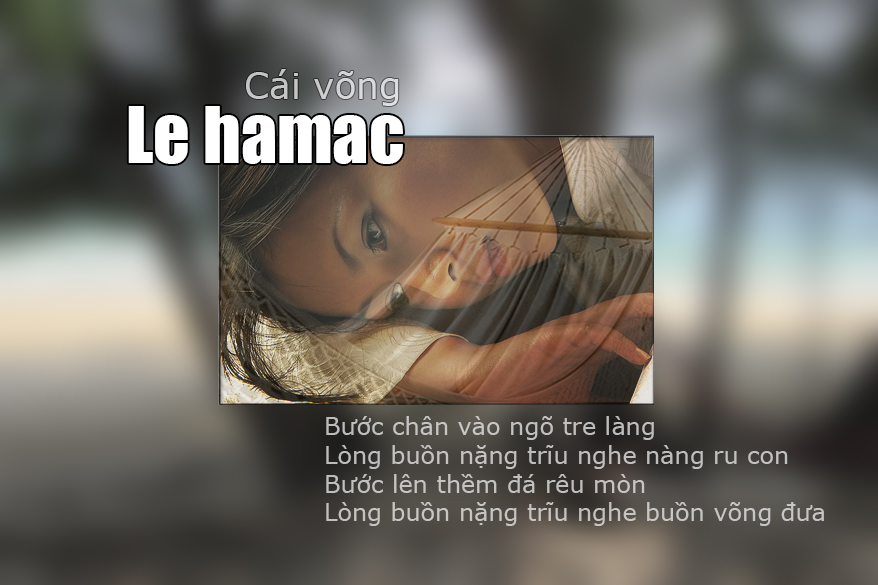
Hammock (Cái võng)


Vietnamese version

French version

The hammock is an instrument very familiar to the Vietnamese. For many generations, one was used to hearing its resonant creaking with a regular cadence from the South to the North of Vietnam. This strident sound blended with the crying of the little children and lullabies becomes a tune of music eternally rooted in the Vietnamese soul. Poor or rich, each Vietnamese possesses at least one hammock. It is not only the cradle of the little Vietnamese children but also their swing. 

It is used by adults for relaxing. It is also a resting bed for people of old age. It is the only instrument that no Vietnamese could do without. It is a habit to say that in Vietnam one has grown up with the sound of the hammock ( lớn lên trong tiếng võng ) and will grow old in the lullabies ( già trong lời ru ) because the latter are sung tirelessly by the mothers or grand-mothers to pamper their children or grandchildren.

The lullabies stay the same but this time they are sung by a young mother who by a curious coincidence may be the girl he had known at the time he was an adolescent, or an old ferry crossing. It is sure there will be in this case the same resentment felt by a person returning to his or her native village after so many years of absence, proven in this following lullaby:

Bước chân vào ngõ tre làng
Lòng buồn nặng trĩu nghe nàng ru con
Bước lên thềm đá rêu mòn
Lòng buồn nặng trĩu nghe buồn võng đưa

One feels sad, setting foot on the village entrance
Hearing the nursery rhyme lulling her baby in cadence,
One feels sad, stepping on the worn and mossy rock
Hearing the melancholic creaking sound of the hammock.

One cannot stay insensitive when one is the issue of the Mekong delta when listening to the following lullaby:

Ầu ơ .. Bao giờ Chợ Quán hết vôi,
Thủ Thiêm hết giặc em thôi đưa đò,
Bắp non mà nướng lửa lò
Ðố ai ve được con đò Thủ Thiêm.

Âu ơ .. When the Chợ Quán market is out of lime,
The Thủ Thiêm region is out of war, I will stop being a ferrywoman.
Young and tender corn baked in oven,
I bet anyone who could court me, the boat of Thủ Thiêm.

This has without a doubt, made us relive the time of our youth, a time when we were still carefree, we would like very much flirting the girls even the ferrywoman.

 
Even the hammock is simply made of jute or fabrics, the sound provoked by its back and forth motion continue to anchor itself softly in the intimacy of our conscience and in our spiritual lifestyle and become as the years go by, the most talked about in the Vietnamese popular songs.

Ðố ai nằm võng không đưa,
Ru con không hát, đò đưa không chèo

Let’s bet who is sleeping on a hammoc without swinging,
Lulling a child to sleep without saying nursery rhyme, conducting a sampan without rowing.

In the old days, the hammock was also used to transport women or mandarins who did not know how to ride on horseback. The hammock is held up by a big bamboo resting on the shoulder of two men who trotted along with a rhythmical look. To shelter from the sun, a sedge matt is placed astride the bamboo. This assembly is often known as palanquin. This one has to follow certain protocols when it comes to a palanquin used by mandarins. According to their rank, the line that accompanied the palanquin was more or less important. One or several persons preceding the official palanquin bore arms (sabres, sticks etc…). By the sides of the palanquin walked the porters of parasols, betel nut box, spittoon, water pipe etc… This palanquin was replaced only at the appearance of the rickshaw in 1884 in Hànội.
The hammock was also the dream of most of Vietnamese young girls to be married to a mandarin as in our tradition, the young bride was riding in a palanquin preceded by her husband on horseback. ( Ngựa anh đi trước, võng nàng theo sau ).
In the West, one has the Eye of Cain to symbolize the torture of moral conscience. In Vietnam, to talk about this torture, one refers often to the creaking of the hammock of  » Con Tấm » (or Vietnamese Cinderella ) because this creaking brings back the thought the wandering soul of Tấm, victim of a plot hatched by her half-sister Cám and her step mother, trying to take revenge on Cám. The moment this one lay down on the hammock, its creaking became so deafening and menacing that Cam had the feeling her sister Tam’s wandering soul substituted for the hammock.

Nowadays, in the cities, well-to-do people replace the hammock with a bed for their little children. But it is certain that the bed, despite its comfort and attractiveness, cannot be recognizable as a familiar instrument, own and intimate of the Vietnamese people because its use is very limited and it lacks another part, the creaking that comes along with melancholic lullabies to become an eternal and irreplaceable tune of music.

In spite of its rudimentary constitution, the hammock continues to give rhythm to the Vietnamese life and witness as the years go by,the intimacy and cultural specificity of the Vietnamese people.

Nguyễn Huy Thiệp (Version anglaise)


huythiep


French version
Vietnamese version

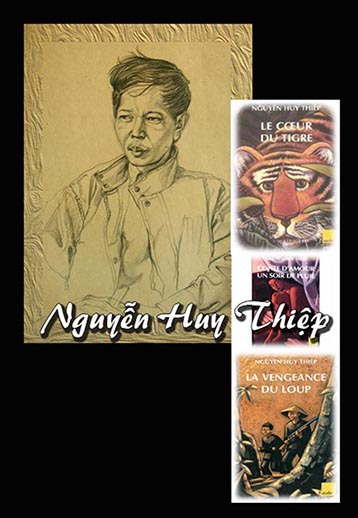
Assigned up until 1986 to the job of drawing illustrations for school manuals in an office of Publishing and Education in Hà-Nội, Nguyễn Huy Thiệp, taking advantage of the openness policy known as Ðỗi Mới ( Renovation ) at the time the Vietnamese communist party held its 6th congress, published in 1987 his first book called « The breezes of Hứa Tát » printed in « Literature and Art« , the prestigious magazine of the National Association of Writers.

His success was not slow. But it was due mostly to his work entitled « The retirement of a general » when it was published in June 1987. This has provoked not only an earthquake in Vietnamese public opinion but also a hope to see draining in its trail a new generation of young writers without shady deal and having an independent and critical mind that seemed almost non-existent up until then in the Vietnamese literature.

His success was not slow. But it was due mostly to his work entitled  » The retirement of a general » when it was published in June 1987. This has provoked not only an earthquake in Vietnamese public opinion but also a hope to see draining in its trail a new generation of young writers without shady deal and having an independent and critical mind that seemed almost non-existent up until then in the Vietnamese literature.

· A general in retreat (in retirement)
· The heart of the tiger
· The vengeance of the wolf
· Demons live among us.
· Tale of love. A rainy evening
· The gold and fire
· My uncle Hoat
· In our twenties

licorneThanks to his collection of tales, Nguyễn Huy Thiệp became overnight a shining figure in the Vietnamese literature. His readers including the diaspora find in him not only the talent of a writer but also the boldness to break the taboo and the unspoken kept until then by customs and a system fallen into disuse. At present, he is considered a great Vietnamese writer. With his much sober style, he succeeds in sensitizing easily the reader because he uses metaphors and allusions with his raw language to describe the reality of today in Vietnam, the one with all alienation presently forming the social fabric of the country.

Selecting typical situations and characters in his novels and tales, he makes us uncover with terror all the contradiction of the Vietnamese society, all the unbearable truths, the gangrene of the Bad, the collapse of moral values of a society. He dares to display in public forum the collapse of a system, to scour the social flesh with his black humor and his freezing realism. He succeeds in showing us all the facets of society through his short and bare passages with a talent of a storyteller and that of a writer in total breaking off with the generation of writers compromising with the regime. If he succeeds in building news with an astonishing ease, it is a great deal due to his growing up in the countryside with his mother during his youth, and to his training as a historian when he attended teaching college in 1970 in Hanoi.

The work of the Chinese historian Si Ma Qian (Tư Mã Thiên ) has an enormous influence on his tales, especially on his style. He has said one day in 1990 to the French magazine Libération: I don’t think people can write when uprooted. He preferred to stay in Vietnam in order to be able to write his tales, to reveal the true nature of a system and to express the anger and hidden feeling of a human being crushed by years in mud, war and deprivation. Although he has never been in politics, he is always a suspect in the eyes of the Vietnamese authorities because of his liberal words that shake state apparatus. He embodies the symbolic expression of the state of mind of the whole people in search of a stolen and lost treasure.

All those who defended him, in particular the manager of the Văn Nghệ. Review, have been fired. A campaign of denigration in the official media was launched in the past. He was blamed for having published the trilogy to historical argument that attacked national hero Quang Trung through his work « Dignity ». Despite censorship, threats and intimidation, the courageous newspapers continue to publish today his collections. Some of them have already been printed in French at l’Aube publishing house.

The characters in his tales are human beings sexually, morally and socially alienated. They are ordinary people that are thrown, by the ups and downs of life and the system, in perversion, humiliation, abuse, lunacy and profit. In  » There is no king », dirty old man Kiên prefers to eye quietly hairy young women, in particular his daughter-in-law Sinh who because of her 5 children she has to raise, has no means to get remarried, that’s what he said to his son Ðoài when the latter overtly criticized him. It is shocking to see an 80-year old man dying of heart attack in « The Forgotten Land », Panh who tried to fell a tree to contest a challenge and to be able to marry a 14-year old girl that he has known during his passage to Yên Châu. In « The Retirement of a general », his character, retired general Thuận cannot keep his mouth shut when he dares to speak in front of his superiors about the three activities forming the indispensable economic model in the present system: gardening, fish farming and animal husbandry. He expiates a mistake of not knowing how to protect himself. He prefers an honorable death to an ignominious life. He was buried with all military honors.

He was a great man. He died for his country during a mission, which was said by general Chương to his son. One sees profit and cronyism growing in all layers of society and new people. Each country has its own customs, said by Mr. Thuyết to his sawing employees in the novel « Sawyers in the long ». Likewise, the daughter-in-law of general Thuận, taking advantage of her physician role, assigned to do abortion and curettage, takes home every night abandoned fetuses in a Thermos flask to cook and feed the pigs and shepherd dogs, which presently constitutes a significant financial resource for a Vietnamese family.

Nguyễn Huy Thiệp continues to angrily munch Vietnam with his tales and stories. Like everyone in Vietnam, he tries to find a solution to his daily needs and above all to give a meaning, a signification to his existence like his character Mr. Quý in his « Nostalgia of the Campaign »: To be intellectual is to be capable of giving a meaning to the life we live. In spite of a bitter heritage, he is at least content of the consolation though his tales and stories.

[Return LITERATURE]


Nguyễn Huy Thiệp (Version Française)

huythiep

English version
Version française

Được tuyển dụng cho đến năm 1986 trong công việc vẽ tranh minh họa cho sách giáo khoa tại văn phòng ở Hànội, Nguyễn Huy Thiệp, lợi dụng chính sách mới rộng rãi được gọi là « Đỗi Mới » trong Đại hội thứ  6 của đảng cộng sản Việt Nam mà  ông xuất bản tháng giêng năm 1987, tuyển tập đầu tiên của ông có mang tên là  “Những cơn gió Hứa Tát” được đăng trên tạp chí uy tín của Hội Nhà văn toàn quốc “Văn nghệ”.

Ông không quá mất nhiều thời gian để được sự thành công. Nhưng phải nói ông được như  vậy đấy  là nhờ tuyển tập “Tướng về hưu” ra mắt vào tháng 6 năm 1987. Điều này không chỉ gây ra một cơn chấn động  trong dư luận của ngừơi Viêt  mà còn xem đây  là niềm hy vọng được nhìn thấy theo   gương ông một thế hệ nhà văn trẻ mới không khoan nhượng, có tính độc lập và phê phán như Phạm Thị Hoài, Bảo Ninh vân vân mà cho đến nay dường như không có tồn tại trong văn học Việt Nam.

Tướng về hưu

Trái tim hổ

Sự báo thù của soái

Ma quỉ sống giữa chúng ta

Chuyện tình kể trong đêm mưa.

Vàng và lửa

Chú Hoạt tôi

Tuổi hai mươi yêu dấu vân vân…


Nhờ  các  truyện ngắn, Nguyễn Huy Thiệp đã trở thành nhân vật hàng đầu của văn học Việt Nam. Các độc giả của ông, luôn  cả những người ở hải ngoại, nhận thấy ở nơi ông không chỉ tài năng của một nhà văn mà còn  có sự liều lĩnh dám phá bỏ những điều cấm kỵ và những điều chưa nói được duy trì cho đến bây giờ  bởi phong tục và một hệ thống không còn được trọng dụng. Ông hiện được xem là nhà văn vĩ đại nhất của Việt Nam. Với lối viết giản dị, ông dễ dàng làm  người đọc nhạy cảm vì ông biết cách sử dụng những ẩn dụ và ám chỉ bằng ngôn ngữ thô thiển của mình để mô tả thực tế ngày nay ở Việt Nam và để nói lên  những tha hóa hiện đang hình thành cơ cấu xã hội của đất nước.

Bằng cách lựa chọn những tình huống và các anh hùng tiêu biểu trong truyện ngắn và truyện cổ tích của mình, ông làm  chúng ta kinh hãi khám phá ra tất cả những mâu thuẫn của xã hội Việt Nam, tất cả những sự thật không thể chịu đựng nổi, sự hoại tử của cái ác, sự suy sụp của các giá trị đạo đức của một xã hội. Ông ta dám vạch trần sự thất bại của một hệ thống giữa quần chúng, dày vò thân xác xã hội với  khiếu  hài hước tối tâm và tính hiện thực lạnh lùng của mình. Ông  cố gắng cho chúng ta thấy tất cả các khía cạnh của xã hội thông qua những bài viết ngắn gọn và giản dị với tài năng của một người kể chuyện và của một nhà văn, hoàn toàn đoạn tuyệt với nhóm  nhà văn có thiện cảm  với chế độ. 

Nếu ông có thể viết truyện ngắn một cách dễ dàng đáng  kinh ngạc, thì điều này phần lớn là nhờ lúc thời thiếu niên, ông sống ở môi trường nông thôn với mẹ và nhờ được sự  đào tạo thành nhà sử học mà ông theo học ở Đại học Sư phạm Hà Nội từ năm 1970. Tác phẩm của nhà sử học Trung Quốc Tư Mã Thiên có ảnh hưởng rất lớn đến các bộ sưu tập của ông, đặc biệt là lối viết  của ông. Ông từng nói với tờ báo Pháp Libération vào năm 1990: Tôi không tin bạn có thể viết khi bạn đã mất gốc. Ông thích ở lại Việt Nam hơn để có thể viết những tuyển tập của mình, ghi lại sự quan sát của một hệ thống và bày tỏ sự tức giận cũng như nỗi lưu vong  ở nội tâm của một người bị đè bẹp bởi nhiều năm bùn lầy, chiến tranh và thiếu thốn. Dù chưa bao giờ tham gia chính trị nhưng ông luôn bị chính quyền Việt Nam nghi ngờ vì quyền tự do ngôn luận của ông khiến bộ máy nhà nước phải lo sợ  và ông là hiện thân biểu tượng tâm trạng của cả một dân tộc tìm kiếm một kho tàng đã bị mất và bị đánh cắp.

Tất cả những người đứng ra bảo vệ ông, đặc biệt là giám đốc tạp chí « Văn Nghệ », đều bị sa thải. Còn có  cả  chiến dịch bôi nhọ  ông không ngần ngại trên báo chí chính thống. Ông bị chỉ trích vì ông xuất bản  tác phẩm có ba tập  mang tính cách lịch sử làm tổn thương vị anh hùng dân tộc Quang Trung qua truyện “Nhân phẩm”. Bất chấp sự kiểm duyệt và lời đe dọa, những tờ báo dũng cảm vẫn tiếp tục xuất bản các tuyển tập của ông cho đến ngày nay, một số trong đó đã xuất hiện bằng tiếng Pháp bởi nhà xuất bản « Aube » ở Pháp. 

Những anh hùng trong bộ sưu tập của ông là những  người bệnh tâm thần  về mặt tình dục, đạo đức và xã hội. Họ là những người bình thường mà những thay đổi thất thường của cuộc sống và hệ thống dẫn đến sự trụy lạc, sỉ nhục, lạm dụng, điên rồ và trục lợi. Trong truyện ngắn “Không Có Vua”, ông già Kiên thích lén lút ngắm nhìn những phụ nữ trẻ khỏa thân, đặc biệt là con dâu Sinh vì ông phải nuôi 5 đứa con nên không có khả năng tái hôn. Ông nói với con trai mình là Đoài khi người này công khai chỉ trích ông. Thật bàng hoàng khi chứng kiến ​​cụ Panh 80 tuổi chết vì đau tim trong truyện ngắn « Vùng đất bị lãng quên » khi cố chặt cây để thực hiện thử thách và có thể cưới được bé gái 14 tuổi người mà ông  đã gặp trong thời gian ở Yên Châu. Trong truyện “Tướng về hưu”, người hùng của ông, tướng Thuận không biết kiềm chế khi dám nói trước mặt cấp trên về ba hoạt động hình thành mô hình kinh tế thiết yếu trong hệ thống hiện nay: làm vườn, nuôi cá và vật nuôi trong nhà. Ông ta chuộc lỗi mà ông ta không thể tự bảo vệ mình.

Ông ta thích một cái chết vinh quang hơn một cuộc sống ô nhục. Ông được chôn cất với đầy đủ nghi lễ trọng thể trong quân đội. Đây là một người đàn ông tuyệt vời. Ông đã hy sinh vì đất nước trong một lần làm nhiệm vụ, điều mà tướng Chương đã kể lại cho con trai ông. Còn được thấy lợi nhuận và hệ thống  bè phái  đang phát triển ở mọi tầng lớp và mọi cấp độ ở trong xã hội. Mỗi nước đều có một phong tục riêng, đó là điều ông Thuyết nói với những người thợ xẻ trong truyện ngắn “Những người thợ xẻ”. Tương tự như vậy, con dâu của tướng Thuận, lợi dụng chức danh bác sĩ, chịu trách nhiệm phá và nạo thai, thu hồi lại những bào thai bị bỏ rơi mà mỗi tối cô ta mang về nhà trong bình thermo  để nấu lại  và cho lợn và chó chăn cừu ăn, hiện  nay là nguồn tài chính đáng kể của một gia đình Việt Nam.

Nguyễn Huy Thiệp tiếp tục viết những tuyển tập  ngắn của mình với tư cách giận dữ. Tựa  như người dân Việt, ông cố gắng tìm ra một giải pháp cho nhu cầu hằng ngày của mình và nhất là mang lại một  ý nghĩa cho sự tồn tại của mình cũng như nhân vật tên  Quý trong “Thương nhớ đồng quê”: Là một  người trí thức thì phải có  khả năng  mang lại một  ý nghĩa cho cuộc sống mà  ta đựơc  có. Mặc dù có một gia tài quá cay đắng, ông vẫn hài lòng khi  ông  có được ít nhất niềm an ủi qua các truyện ngắn và cổ tích cùa ông.

Version française

Cantonné jusqu’en 1986 dans le travail de dessin des illustrations pour manuels scolaires dans un bureau des Editions de l’Education à Hanoï, Nguyễn Huy Thiệp, profitant de la nouvelle politique d’ouverture connue sous le nom  » Ðỗi Mới « (Renouveau ) » lors du 6ème congrès du parti communiste vietnamien, publia en Janvier 1987 son premier recueil intitulé « Les vents de Hứa Tát » paru dans le journal prestigieux de l’Association des écrivains nationaux  » Littérature et Art « .

Son succès ne tarda pas. Mais il le dut surtout à son recueil intitulé « La retraite du général » quand celui-ci parut en Juin 1987. Cela provoqua non seulement un séisme dans l’opinion publique vietnamienne mais aussi un espoir de voir drainer dans son sillage une nouvelle génération de jeunes écrivains ( Phạm Thị Hoài, Bảo Ninh etc.) sans compromission et ayant un esprit d’indépendance et de critique qui semble être quasi inexistant jusqu’alors dans la littérature vietnamienne.

Un général à la retraite
Le cœur du tigre
La vengeance du loup
Les démons vivent parmi nous.
Conte d’amour. Un soir de pluie
L’or et le feu
Mon oncle Hoat
 A nos vingt ans etc.

Grâce à ses recueils de nouvelles, Nguyễn Huy Thiệp devint du jour au lendemain la figure de proue de la littérature vietnamienne. Ses lecteurs y compris ceux de la diaspora retrouvèrent en lui non seulement le talent d’un écrivain mais aussi l’audace de briser le tabou et le non-dit entretenus jusqu’alors par les coutumes et par un système tombé en désuétude. On le considère actuellement comme le plus grand écrivain vietnamien. Avec son style très sobre, il arrive à sensibiliser facilement le lecteur car il sait se servir des métaphores et des allusions avec son langage cru pour décrire la réalité d’aujourd’hui du Vietnam et  celle de toutes les aliénations formant actuellement le tissu social du pays.

En sélectionnant des situations et des héros types dans ses nouvelles et ses contes, il nous fait découvrir avec effroi toutes les contradictions de la société vietnamienne, toutes les vérités insupportables, le gangrène du Mal, l’effondrement des valeurs morales d’une société. Il ose déballer sur la place publique la débâcle d’un système, fouailler la chair sociale avec son humour noir et son réalisme glacial. Il arrive à nous montrer toutes les facettes de la société à travers ses textes brefs et dépouillés avec le talent d’un conteur et celui d’un écrivain en rupture totale avec la génération des écrivains compromis avec le régime. S’il arrive à écrire  ses nouvelles avec une facilité étonnante, cela est dû en grande partie à sa jeunesse qu’il a vécue dans le milieu rural avec sa mère et à sa formation d’historien qu’il a suivie à Hanoï dans l’université de Pédagogie à partir de 1970. L’œuvre de l’historien chinois Si Ma Qian (Tư Mã Thiên) a influé énormément sur ses recueils, en particulier sur son style. Il a déclaré un jour en 1990 au journal français Libération: Je ne crois pas qu’on puisse écrire quand on est déraciné. Il a préféré rester au Viêt-Nam dans le but de pouvoir écrire ses recueils, de relever le constat d’un système et d’exprimer la colère et l’exil intérieur d’un être broyé par des années de boue, de guerre et de privations. Bien qu’il ne fasse jamais de politique, il est toujours suspect aux yeux des autorités vietnamiennes car sa parole libre fait trembler les appareils de l’état et il incarne l’expression symbolique de l’état d’âme de tout un peuple à la quête d’un trésor perdu et volé.

Tous ceux qui ont pris sa défense en particulier le directeur de la revue Văn Nghệ ont été limogés. On n’a pas hésité à lancer dans le passé une campagne de dénigrement dans la presse officielle. On lui reprocha la publication de la trilogie à argument historique qui portait atteinte au héros national Quang Trung à travers l’œuvre « Dignité ». Malgré la censure, les menaces et les intimidations, les journaux courageux continuent à publier aujourd’hui ses recueils dont certains sont déjà parus en français aux éditions de l’Aube.

Les héros de ses recueils sont des êtres aliénés sexuellement, moralement et socialement. Ce sont des gens ordinaires que les aléas de la vie et le système précipitent dans la perversion, l’humiliation, l’abus, la folie et le profit. Dans « Il n’y a pas de roi », le vieux Kiên préfère reluquer en douce sur les jeunes femmes à poil, en particulier sa bru Sinh car à cause de ses 5 enfants qu’il est obligé de nourrir et d’élever, il n’a pas le moyen de se remarier, ce qu’il dit à son fils Ðoai lorsque ce dernier l’a critiqué ouvertement. C’est choquant de voir mourir d’une crise cardiaque dans « La terre oubliée » un homme âgé de 80 ans, Panh qui a tenté d’abattre un arbre pour relever le défi et pour pouvoir épouser une jeune fille de 14 ans qu’il a connue lors de son passage à Yên Châu. Dans  » Un général à la retraite », son héros, le général retraité Thuận ne sait pas retenir sa parole en osant parler devant son supérieur des trois activités formant le modèle économique indispensable dans le système actuel: le jardinage, l’élevage des poissons et des animaux domestiques. Il expie une faute dont il n’a pas su se préserver. Il préfère une mort honorable à la vie ignominieuse. On l’a enterré avec tous les honneurs militaires. C’est un grand homme. Il est mort pour la patrie au cours d’une mission, ce que le général Chương a dit à son fils. On voit se développer à toutes les couches de la société et à tous les niveaux le profit et le copinage. A chaque pays, ses coutumes, ce qu’a dit Mr Thuyết à ses employés scieurs dans la nouvelle « les scieurs de long ». De même, la bru du général Thuận, profitant de son rôle médecin, chargé des avortements et des curetages, récupère les fœtus abandonnés qu’elle ramène à la maison tous les soirs dans une bouteille Thermos pour les faire cuire et pour nourrir les cochons et les chiens bergers constituant actuellement une ressource financière non négligeable pour une famille vietnamienne.

Nguyễn Huy Thiệp continue à croquer rageusement le Viêtnam avec ses recueils et ses contes. Comme les gens du Vietnam, il essaie de trouver une solution à ses besoins quotidiens et de donner surtout un sens, une signification à son existence comme son héros Mr Quý dans « Nostalgie de la Campagne (Thương Nhớ Ðồng Quê) »: Être intellectuel c’est être capable de donner un sens à la vie qu’on mène. Malgré un héritage amer, il se contente d’avoir néanmoins sa consolation à travers ses récits et ses contes.

[Return LITTERATURE]licorne


Literature (Văn chương)


litterature

French version
Vietnamese version

Vietnam possesses an important literature, ancient as well as modern. Because of Chinese influence, the ancient literature was written in Chinese characters. It was only in about 13th century that the « nôm » began to replace the Chinese characters. Although the « nom » remains the expression of the common Vietnamese, it supposes the mastering of classical Chinese penmanship and the Vietnamese pronunciation of Chinese characters.

The Vietnamese literature tried to develop and freed itself from the Chinese model since 15th century, not only in style but also in theme. Nguyễn Trãi is one of the poets the most known by Vietnamese people. We owe him a collection of 254 poems in national language ( Quốc Âm Thi Tập ), whose translation into French language under the direction of P. Schneider is found in the Edition of CNRS, 1978, Paris. Nguyễn Trãi famous was his Bình Ngô Ðại Cáo ( Great Proclamation of The Pacification of The Ngô ). It is one of the most beautiful monuments of the Vietnamese literature.

But the most famous poems remain Chinh phu ngâm of poetess Ðoàn Thị Ðiểm and Kim Vân Kiều of Nguyễn Du ( 1756-1820 ). The latter composed during his retirement a novel composed of 3254 verses which symbolises for the majority of Vietnamese the heart and soul of the nation .

Everyone of Vietnamese knows it or many parts of it by heart. It is important to note that this masterpiece of the Vietnamese literature is also one of the masterpieces of world literature.

It is a poignant love story adapted from a Chinese novel, depicting an abundance of thoughts on the meaning of life, war, love and above all the purity of the soul inaccessible to bodily taints. The three key characters in this novel are Kim, Vân and Kiều. Separated from Kim by cruel circumstances and after so many years of suffering and humiliation, Kiều was rescued from suicide by fishermen who fished her from the river where she had wanted to drown herself. Following is an excerpt of this novel that describes the reunion of Kim and Kieu at the temple where she had spent her peaceful days.

In the joy of their reunion, they are moved by thought of their love of days before,
From the time their youth blossomed, tender like a lotus, delicious like a peach,
Fifteen years have gone by and now the dream has come true.

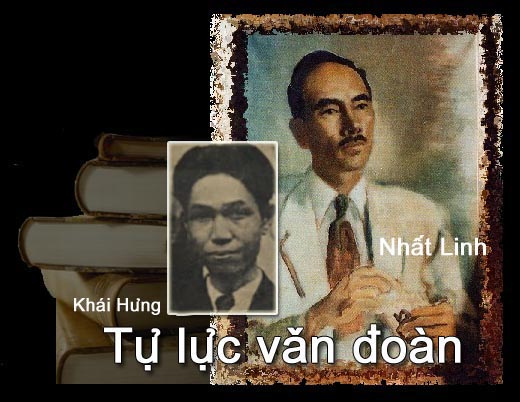
The detachment from the Chinese models has been accelerated by the development of the « quốc ngữ » ( Vietnamese writing in Roman alphabet ) favored by the colonization. In 1932, motivated by Nguyễn Tường Tam also known as Nhat Linh, writing club Tự Lực Văn Ðoàn was founded. This movement endeavored itself to the creation of a national literature starting from traditional bases and the most acceptable foreign influences. It relied on a review called Ngày Nay whose editors team was made of known writers such as Khái Hưng, Thạch Lam, Thế Lữ etc.

The Vietnamese literature written in French began with Phạm Quỳnh through articles of reflection on Vietnamese culture and the difficulty of dialogue between eastern and western cultures. Phạm Duy Khiêm published legends and an autobiographic novel. Phạm Văn Ky elicited in a profound manner the dialogue of the East and the West in his romanesque works ( Blood Brothers, 1947; Those Who Will Reign, 1954 etc.). While historical evolution and mostly the war seemed to drain that literature, the arrival in France of several refugees has revived a literature of witnessing ( Kim Lefèvre ) and also one in search of identity.


Independent Literary group (Tự lực văn đoàn)

French version
Vietnamese version

  • Hoàng Đạo
  • Thế Lữ
  • Thạch Lam
  • Xuân Diệu
  • Tú Mỡ
  • Trần Tiêu etc.
    tulucvandoan

Titles of best-known novels

Hồn Bướm Mơ Tiên (1933)
Nữa Chừng Xuân (1934)
Ðoạn Tuyệt (1935)
Trống Mái (1936)
Lạnh Lùng (1937)
Tiêu Sơn Tráng sĩ (1937)
Thoát Ly (1938)
Tắt đèn (1939)
Bướm Trắng (1941)

Articles founded on the Net

Anh phải sống (1937)
Tiểu sử Tự Lực Văn Đoàn 1930-1945

It is regrettable not to see appearing Nhất Linh et Khá’i Hưng’s names in today’s school curriculum or in anthologies published recently in foreign languages in Vietnam. However, they are the two best Vietnamese novelists at the dawn of 20th century.

People continue to look for and tear off rare issues published in South Vietnam before 1975. In spite of their selected topics generally relating to love, sentimental twists, dramas of the middle-class etc. at colonial time, they however continue to gain unanimous admiration of Vietnamese youth today, in particular of young Vietnamese living abroad because their writings are carrying not only a more or less occidentalized culture but also a purely Vietnamese romanticism. They succeeded in bringing to their works an innovative style, in using a simple vocabulary free of Sino-Vietnamese words perceived by Vietnamese young people as erudite words, and in approaching topics capable of adhering the youth: love-sacrifice, impossible love, vagueness in the soul etc…with a Cornelian glance as well as with Alfred de Musset‘s romantic manner.

« Hồn Bướm Mơ Tiên » (or Heart of a Butterfly in a Dream of Immortality),  » Nữa Chừng Xuân » ( or Mid-Spring ), « Ðoạn Tuyệt » ( or Rupture ,), « Anh Phải Sống » ( or You Must Live ) etc… continue to be the best-sellers preferred by Vietnamese youth today. It is not surprising to find that the topic of sacrifice approached about fifty years ago by Khai Hung in his works, is taken again recently by a young talented novelist Nguyễn Huy Thiệp in his novel  « Chảy đi sông ơi » ( or Run! Run! Oh River ) in spite of a completely different political context.

In their writings, one finds not only modern use of clauses, adverbs, tense forms that were until then absent in Vietnamese prose, but also the use of personal pronouns. The « I, me » make their way in, with words like « anh », « em », « mình », « cậu » that had not been used before in a sentence. It is noticed in the construction of their sentences a great economy of means, an unprecedented clarity, and a great effectiveness.

Coming from urban environment, influenced by the French culture since their younger age, they are unsurprisingly found inspired in their works by the models of Musset, Lamartine, Daudet, etc. when it is known that these French writers’ works formed part of the teaching curriculum at French lycee Albert Sarraut ( Hà-Nội ) where Khai Hung took his classes at colonial time. He received his bachelor’s degree in 1927 and taught at Thăng Long high school when Nhất Linh returned to Vietnam in 1930 after four years of scientific studies from France

His encounter with Khái Hưng at Thăng Long high school has overnight made them a famous and inseparable couple. They founded together the writing club Tự Lực Vân Ðoàn ( or Self-Sufficient Literary Group ) in 1933. Khái Hưng, who was nine years older than Nhất Linh, was however regarded as the « second » of this couple and was given the pseudonym of  » Nhị Linh » because Nhất Linh had already been author of two novels in 1926 and 1927. They acquired the merit of having brought clarity, concision, modernity to the Vietnamese literature and especially of knowing how to give to this modernity the soul of Vietnamese romanticism.

Contrary to other novelists of their time ( Vũ Trọng Phụng, Ngô Tất Tố for example), they did not have a critical view on social inequalities, virtues, and rural customs. They did not know how to help in fighting and denouncing these inequalities. But on the other hand, they tried to depict the most disfranchised social layer with much fineness and accuracy without having to defend it with horn and fanfare.

Is it why they are reproached of lacking combativeness and realism, tepidity in their manner of depicting the reality of urban society, and being influenced by western culture? It is certain that the episode of Musset’s Tales could be used as model by Khái Hưng because the heroine in the novel Anh Phải Sống, the young wife of the Vietnamese mason Thuc, let herself drowned in the flood like Madame des Arcis in the tales « Pierre et Camille » of Alfred de Musset in 1844. But Khái Hưng knew how to give his heroine the nobility and grandeur in the Vietnamese tradition.

Neither could be doubful their patriotism, their political involvement in Vietnamese nationalist movements. Because of their nationalist political orientation and especially their simple idealism, both have perished respectively like their heroines in Khái Hưng’s Anh Phải Sống ( You Must Live ) and in Nhất Linh »s « A Silhouette in the Fog« . Khái Hưng has deceased in 1947 under mysterious conditions near the Cửa Gà dock, in the district of Xuân Trường ( Hà Nam Ðịnh provine ) while Nhất Linh, disappointed for being misunderstood, took his life with poison on July 7, 1963 in Saigon. 

butvietBoth of them tried to live their lives the way their heroines did with an exemplary stoicism. The literary heritage they left to the Vietnamese people is priceless.

In a word, they are not only the pioneers of modern literature of Vietnam but also the most romantic novelists that Vietnam has ever known.

[Return LITERATURE]

Groupe littéraire indépendant (Tự lực văn đoàn)


  • Hoàng Đạo
  • Thế Lữ
  • Thạch Lam
  • Xuân Diệu
  • Tú Mỡ
  • Trần Tiêu etc.

tulucvandoan

Titres des romans connus

Hồn Bướm Mơ Tiên (1933)
Nữa Chừng Xuân (1934)
Ðoạn Tuyệt (1935)
Trống Mái (1936)
Lạnh Lùng (1937)
Tiêu Sơn Tráng sĩ (1937)
Thoát Ly (1938)
Tắt đèn (1939)
Bướm Trắng (1941)

Articles trouvés sur le Net
Anh phải sống (1937)

Tiểu sử Tự Lực Văn Đoàn 1930-1945

 
Version anglaise
Version française

Thật đáng tiếc khi không thấy tên Nhất Linh và Khái Hưng được đưa vào chương trình giảng dạy hiện nay hay trong các tuyển tập tiếng nước ngoài mới xuất bản ở Việt Nam. Tuy nhiên, họ lại là hai tiểu thuyết gia Việt Nam xuất sắc nhất vào buổi bình minh của thế kỷ 20.

Chúng ta tiếp tục tìm kiếm những bản tái bản hiếm hoi được xuất bản ở miền Nam Việt Nam trước năm 1975. Mặc dù các chủ đề được chọn nói chung liên quan đến tình yêu, những mâu thuẫn tình cảm, những bi kịch của giai cấp tư sản địa chủ, vân vân… trong thời kỳ thuộc địa, chúng ta vẫn tiếp tục nhận được sự đồng tình ngưỡng mộ của giới trẻ Việt Nam ngày nay, đặc biệt là giới trẻ Việt Nam sống ở nước ngoài vì  các tác phẩm của họ không chỉ truyền tải một nền văn hóa ít nhiều bị phương Tây hóa mà còn là một chủ nghĩa lãng mạn thuần túy Việt Nam. Họ đã cố gắng mang đến một phong cách sáng tạo cho tác phẩm của mình, sử dụng từ vựng đơn giản, không có bất kỳ từ Hán Việt nào được giới trẻ Việt Nam coi là những từ học thuật, để đề cập đến các chủ đề có thể được giới trẻ ủng hộ:

tình yêu hy sinh, tình yêu bất khả thi, sự mơ hồ của tâm hồn vân vân với cái nhìn vừa đậm chất kiểu  Coóc-nây vừa lãng mạn theo phong cách của Alfred Musset.“Hồn Bướm Mơ Tiên” (hay Hồn bướm trong giấc mơ bất tử), “Nữa Chừng Xuân” “Đoạn Tuyệt”, “Anh phải sống” vân vân tiếp tục là những cuốn sách bán chạy nhất được giới trẻ Việt Nam ngày nay ưa thích. Không có gì đáng ngạc nhiên khi chủ đề hy sinh được đề cập đến khoảng năm mươi năm trước trong các tác phẩm của Khái Hưng trong tác phẩm của ông gần đây lại được tiểu thuyết gia trẻ tài năng “Nguyễn Huy Thiệp” tiếp tục trong tác phẩm của ông « Chảy đi sông ơi hay là  « Chảy đi, dòng sông ơi) dù bối cảnh chính trị hoàn toàn khác hẳn.

Chúng ta không chỉ tìm thấy ở tác phẩm của họ tính hiện đại ở mức độ sử dụng mệnh đề, trạng từ, chỉ thời gian mà từ trước đến nay văn xuôi tiếng Việt chưa có mà còn ở mức độ sử dụng đại từ nhân xưng. Chữ “tôi” đi vào cùng với các từ “anh”, “em”, “mình”, “cậu” mà trước đây không được sử dụng trong câu. Chúng ta cũng lưu ý rằng trong việc xây dựng câu của họ, họ sử dụng rất nhiều phương tiện, sự rõ ràng đáng kinh ngạc và hiệu quả tuyệt vời. Xuất thân từ môi trường đô thị, thấm nhuần văn hóa Pháp ngay từ khi còn nhỏ, không có gì đáng ngạc nhiên khi thấy tác phẩm của họ lấy cảm hứng từ hình mẫu của Musset, Lamartine, Daudet… khi chúng ta biết rằng tác phẩm của những nhà văn Pháp này nằm trong chương trình giảng dạy tại trường Lycée Albert Sarraut (Hà-Nội) của Pháp, nơi mà Khải Hưng theo học thời thuộc địa. Ông nhận bằng cử nhân năm 1927 và giảng dạy tại trường Cao đẳng Thăng Long. Nhất Linh trở về Việt Nam năm 1930 sau khi hoàn thành bốn năm nghiên cứu khoa học tại Pháp.

Cuộc gặp gỡ của ông với Khải Hưng tại trường Thăng Long đã khiến họ trở thành một cặp đôi văn học nổi tiếng và không thể tách rời chỉ sau một đêm. Họ cùng nhau thành lập Câu lạc bộ Tự Lực Văn Đoàn (hay Nhóm văn học độc lập) vào năm 1933. Khái-Hưng hơn Nhất-Linh chín tuổi, tuy nhiên tự coi mình là “người thứ hai” trong cặp đôi này và tự đặt cho mình bút danh “Nhị Linh” vì Nhất-Linh đã là tác giả của hai cuốn tiểu thuyết năm 1926 và 1927. Họ đã có công mang lại sự trong sáng, ngắn gọn, hiện đại cho văn học Việt Nam và hơn hết là biết truyền cho văn học văn học Việt Nam cái tâm hồn lạng mạn của Việt Nam. Không giống như các tiểu thuyết gia khác cùng thời (Vũ Trọng Phụng, Ngô Tất Tố chẳng hạn), họ không có con mắt tinh tường về những bất bình đẳng xã hội, đạo đức và phong tục nông thôn. Họ không biết sử dụng nó để đấu tranh và tố cáo những bất bình đẳng này. Mặt khác, họ cố gắng khắc họa một cách hết sức tinh tế và chính xác tầng lớp xã hội thiếu thốn nhất mà không buộc phải lớn tiếng bảo vệ nó. Đây có phải là lý do tại sao chúng ta chỉ trích họ vì thiếu tính hiếu chiến và chủ nghĩa hiện thực, sự thờ ơ trong cách miêu tả hiện thực của xã hội đô thị và sự thấm nhuần văn hóa phương Tây. Chắc chắn rằng tình tiết Contes de Musset có thể làm hình mẫu cho Khái -Hưng vì nữ anh hùng trong truyện ngắn “Anh Phải Sống”, người vợ trẻ của người thợ nề Việt đã để mình chìm vào sóng như Madame des Arcis trong Contes “Pierre et Camille” của Alfred de Musset năm 1844. Nhưng Khái-Hưng có công khi biết cách làm cho nữ anh hùng của mình có được sự cao quý và cao cả theo truyền thống Việt Nam.

Chúng ta cũng không thể nghi ngờ lòng yêu nước, sự  cam kết chính trị của họ đối với các phong trào dân tộc chủ nghĩa ở Việt Nam. Vì khuynh hướng chính trị dân tộc chủ nghĩa và đặc biệt vì chủ nghĩa duy tâm đơn giản, cả hai đều chết như các nữ anh hùng trong “Anh  Phải Sống” của Khải Hưng và trong “Bóng người trong sương mù” của Nhất Linh. Khái-Hưng chết năm 1947 trong một hoàn cảnh rất  bí ẩn gần bến Cửa Gà, huyện Xuân Trường (tỉnh Hà Nam Định), còn Nhất Linh, thất vọng vì bị hiểu lầm, đã tự đầu độc vào ngày 7 tháng 7 năm 1963 tại Sài Gòn.

Cả hai đều cố gắng sống cuộc sống của mình giống như các nữ anh hùng của mình với chủ nghĩa khắc kỷ mẫu mực. Di sản văn học họ để lại cho người dân Việt Nam là vô giá.

Nói một cách dễ hiểu, họ không chỉ là những người tiên phong của văn học Việt Nam hiện đại mà còn là những tiểu thuyết gia lãng mạn nhất mà Việt Nam đã từng biết đến.

[Return LITTERATURE]  

Il est regrettable de ne pas voir figurer les noms de Nhất Linh et Khái Hưng dans les programmes d’enseignement d’aujourd’hui ou dans les anthologies publiées récemment en langues étrangères au Vietnam. Pourtant, ce sont les deux meilleurs romanciers vietnamiens à l’aube du XXème siècle.

On continue à chercher et à s’arracher les rares rééditions parues au Sud-Vietnam d’avant 1975. Malgré leurs thèmes choisis portant d’une manière générale sur l’amour, sur les contorsions sentimentales, sur les drames de la bourgeoisie latifundiaire etc.. à l’époque coloniale, ils continuent à bénéficier pourtant de l’admiration unanime de la jeunesse vietnamienne d’aujourd’hui, en particulier de celle des jeunes Vietnamiens vivant à l’étranger car leurs écrits sont porteurs non seulement d’une culture plus ou moins occidentalisée mais aussi d’un romantisme purement vietnamien. Ils ont réussi à apporter à leurs œuvres un style novateur, à utiliser un vocabulaire simple débarrassé de tous les mots sino-vietnamiens perçus par les jeunes vietnamiens comme des mots savants, à aborder des thèmes susceptibles d’avoir l’adhésion de la jeunesse: l’amour-sacrifice, l’amour impossible, le vague à l’âme etc.. avec un regard à la fois cornélien et romantique à la manière d’Alfred Musset.

« Hồn Bướm Mơ Tiên«  (ou Âme de papillon dans un rêve d’immortalité », « Nữa Chừng Xuân » (ou A mi-printemps) » « Ðoạn Tuyệt ( ou La Rupture ) », « Anh phải sống ( ou Tu Dois Vivre ) » etc. continuent à être les best-sellers préférés par la jeunesse vietnamienne d’aujourd’hui. Il n’est pas étonnant de trouver que le thème du sacrifice abordé, il y a eu une cinquantaine d’années, par Khái Hưng dans son œuvre, est repris récemment par le jeune romancier talentueux « Nguyễn Huy Thiệp » dans son roman Chảy đi sông ơi (ou Coule, coule ô fleuve) malgré un contexte politique tout à fait différent.

On trouve non seulement dans leurs écrits la modernité au niveau d’emploi des propositions, d’adverbes, d’indicateurs de temps qui étaient absents jusqu’alors dans la prose vietnamienne mais aussi au niveau d’emploi des pronoms personnels. Le « moi » fait son entrée ainsi que les mots « anh », « em », « mình », »cậu » qui, auparavant n’étaient pas employés dans la phrase. On note aussi dans la construction de leurs phrases une grande économie des moyens, une clarté inouïe et une grande efficacité.

Issus du milieu urbain, imprégnés dès leur plus jeune âge de la culture française, il n’est pas étonnant de trouver qu’ils s’inspirent dans leurs œuvres des modèles de Musset, Lamartine, Daudet etc. lorsqu’on sait que les œuvres de ces écrivains français firent partie du programme d’études au lycée français Albert Sarraut ( Hà-Nội ) où Khái Hưng fit ses études à l’époque coloniale. Il fut reçu bachelier en 1927 et enseigna au collège Thăng Long tandis que Nhất Linh rentra au Vietnam en 1930 après avoir suivi ses quatre années d’études scientifiques en France.

Sa rencontre avec Khái Hưng au collège Thăng Long fit d’eux du jour au lendemain un couple littéraire célèbre et inséparable. Ils fondèrent ensemble le club Tự Lực Văn Ðoàn (ou Groupe Littéraire indépendant) en 1933. Khái-Hưng, plus âgé que Nhất-Linh de neuf ans, se considérait pourtant comme le « second » de ce couple et se donnait comme pseudonyme « Nhị Linh » car Nhất-Linh était déjà l’auteur de deux romans en 1926 et 1927. Ils ont eu le mérite d’apporter à la littérature vietnamienne la clarté, la concision, la modernité et de savoir donner surtout à cette dernière l’âme du romantisme vietnamien.

Contrairement à d’autres romanciers de leur époque (Vũ Trọng Phụng, Ngô Tất Tố par exemple), ils n’avaient pas un regard aussi aigu sur les inégalités sociales, sur les mœurs et les coutumes rurales. Ils n’avaient pas su s’en servir pour combattre et dénoncer ces inégalités. Par contre, ils tentaient de dépeindre avec beaucoup de finesse et de justesse la couche sociale la plus déshéritée sans être obligés de la défendre à cor et à cri.

Est -ce pour cela qu’on leur reproche le manque de combativité et de réalisme, la tiédeur dans leur manière de dépeindre les réalités de la société urbaine et l’imprégnation d’une culture à l’occidentale. Il est certain que l’épisode des Contes de Musset a pu servir de modèle à Khái-Hưng car l’héroïne de la nouvelle « Anh Phải Sống« , la jeune femme du maçon vietnamien Thức, se laissa couler dans les flots comme Madame des Arcis des Contes « Pierre et Camille » d’Alfred de Musset en 1844. Mais Khái-Hưng a eu le mérite de savoir donner à sa héroïne la noblesse et la grandeur dans la tradition vietnamienne.

On ne peut pas remettre en doute non plus leur patriotisme, leur engagement politique auprès des mouvements nationalistes vietnamiens. A cause de leurs orientations politiques nationalistes et surtout à cause de leur simple idéalisme, tous les deux ont péri comme leurs héroïnes respectives dans « Tu dois Vivre » de Khái Hưng et dans  » Une silhouette dans la brume  » de Nhất Linh. Khái-Hưng est décédé en 1947 dans des conditions mystérieuses près du débarcadère Cửa Gà dans le district de Xuân Trường ( province Hà Nam Ðịnh) tandis que Nhất Linh, déçu d’être incompris, s’empoisonna le 7 Juillet 1963 à Saïgon.

butviet

Leur vie, tous les deux ont essayé de la mener comme leurs héroïnes avec un stoïcisme exemplaire. Leur héritage littéraire qu’ils ont laissé au peuple vietnamien est inestimable.

En un mot, ce sont non seulement les pionniers de la littérature moderne du Vietnam mais aussi les romanciers les plus romantiques que le Vietnam ait connus.

[Return LITTERATURE]