Paris je t’aime


Version vietnamienne

Version anglaise

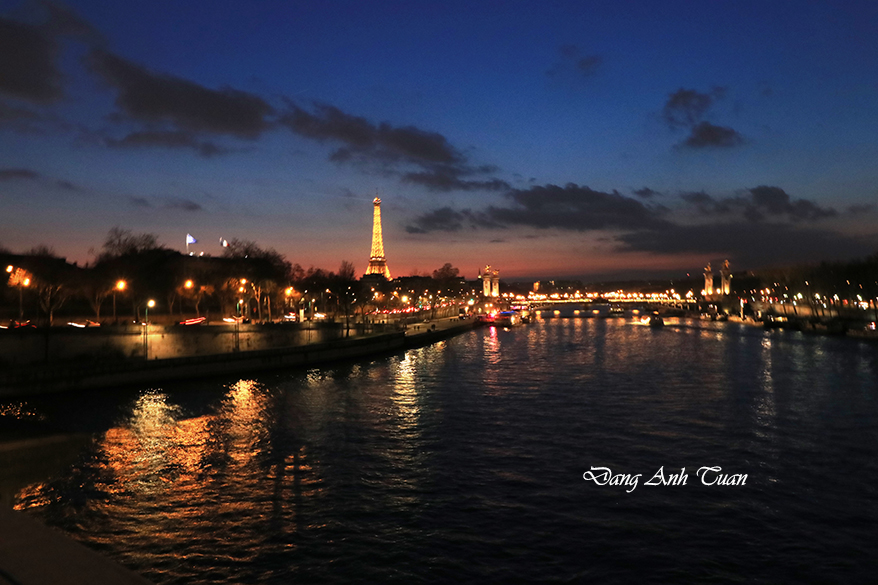
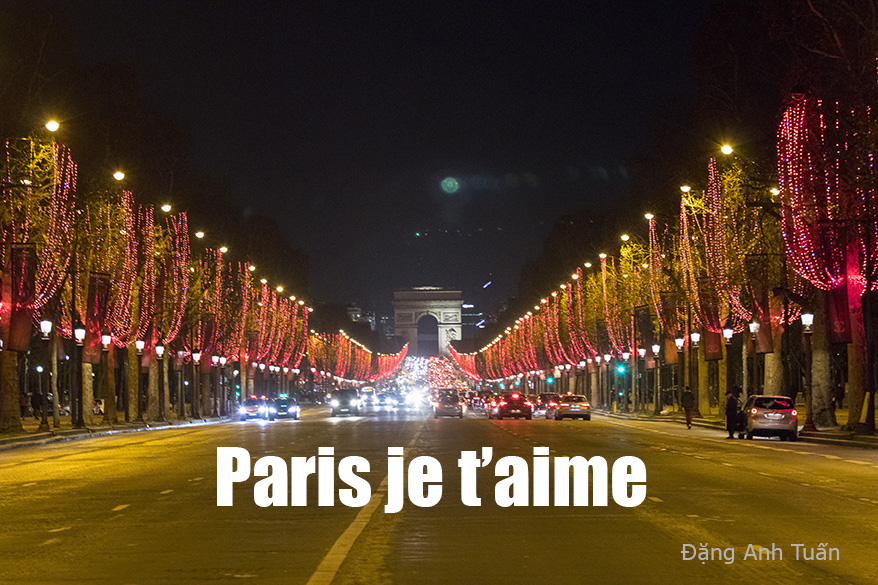
Paris est l’une des plus belles villes du monde, en particulier la nuit. Comme l’écrivain américain Ernest Hemingway disait qu’il n’y a que Paris pouvant lui apporter  à tout instant,  l’inspiration dans la création de ses œuvres littéraires. Pour lui, Paris était considéré  toujours comme  une fête (The Moveable feast) lors de son séjour à la fin des années 1950. Il y a non seulement la Seine coulant paisiblement  sous les ponts  ayant chacun une architecture particulière mais aussi des lieux très célèbres comme le jardin de Luxembourg, la cathédrale Notre Dame, la tour Eiffel, le musée du Louvre etc. C’est pour cela que Paris lui a exercé un attrait irrésistible même il était de passage à Paris pour une fois. C’est aussi Paris  qui a fait de lui un écrivain célèbre.

Version vietnamienne

Paris là một trong những thành phố đẹp nhất thế giới nhất là về đêm. Cũng như nhà văn hào Mỹ Ernest Hemingway nói   chỉ có Paris có thể đem lại cảm hứng sáng tác cho ông bất kỳ lúc nào. Chính vì thế ông xem Paris lúc nào cũng như ngày lễ hội.  Không những  có  sông Seine trôi lặng lẽ dưới các cây cầu có một  kiến trúc độc đáo  mà còn các nơi nổi tiếng  như vườn hoa Luxembourg,  nhà thờ Notre Dame,  tháp Eiffel, bảo tàng viện Louvre vân vân khiến   Paris trở thành nơi có sức lôi cuốn mãnh liệt đối với ông dù ông chỉ có một lần đến Paris.  Chính Paris làm ông trở thành một nhà văn hào nổi tiếng.

Version anglaise

Paris is one of the most beautiful cities in the world, especially at night. As the American writer Ernest Hemingway said, only Paris could bring him inspiration at any moment in the creation of his literary works. For him, Paris was always considered a feast (The Moveable Feast) during his stay in the late 1950s. There is not only the Seine flowing peacefully under the bridges, each with its own unique architecture, but also very famous places like the Luxembourg Garden, Notre Dame Cathedral, the Eiffel Tower, the Louvre Museum, etc. That is why Paris exerted an irresistible attraction on him, even if he was only passing through Paris once. It is also Paris that made him a famous writer.


Rừng tràm Trà Sư (Tịnh Biên, Châu Đốc)


Rừng tràm Trà Sư

Version française 
Version anglaise
Galerie des photos

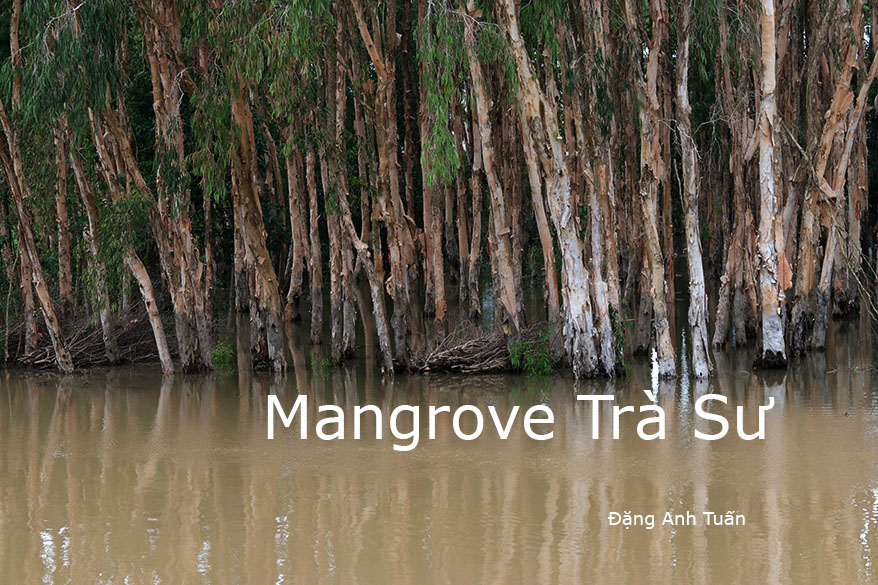
Là một hệ sinh thái đầm lầy nước ngọt có rễ cây tràm trú ẩn các động vật có vỏ, cá và động vật giáp xác, rừng tràm Trà Sư  là khu rừng ngập nước ngọt  tiêu biểu cho vùng Tây sông Hậu và cũng là nơi sinh sống của 140 loài động vật (dơi ăn quả, dơi, diệc, cò, chim cốc vân vân) và  thực vật thuộc hệ thống rừng đặc dụng Việt Nam. Nằm cách thành phố Châu Đốc khoảng 30 cây số về phía tây nam và thành phố Long Xuyên 64 cây số. Rừng tràm Trà Sư là nơi mà người du khách có cơ hội hoà mình vào thiên nhiên len lỏi theo xuồng ba lá hay  tắc ráng giữa mênh mông rừng tràm qua các con đường bèo quanh co, rất thú vị nhất là với mùa nước nổi từ tháng 9 đến tháng 11 hàng năm.

Étant un écosystème de marais d’eau douce  dont le cajeputier abrite dans ses racines échasses coquillages, poissons et crustacés, la mangrove Trà Sư est une forêt inondée typique du  delta du Mékong dans la région ouest du Bassac. C’est aussi ici la réserve forestière du Vietnam  où on trouve  140 animaux (roussettes, chauves-souris, hérons, aigrettes, cormorans etc.)  et plantes. Elle est située à 30 kilomètres au sud ouest  de  la ville de Châu Đốc  et distante de 64 km de la ville de Long Xuyên. La forêt inondée Trà Sư est le lieu où le touriste a l’occasion de de se jeter à corps perdus dans la nature et  pouvoir s’introduire    dans les  recoins de l’immense sylve remplis  de lentilles d’eau et  parsemés parfois par des fleurs de lotus   grâce à la barque avec pagaie ou équipée d’un petit moteur. C’est très agréable de passer une journée en période de hautes crues  de l’année (de septembre à novembre). 

Being a freshwater swamp ecosystem whose cajeput trees shelter shellfish, fish, and crustaceans in their stilt roots, the Trà Sư mangrove is a typical flooded forest of the Mekong Delta in the western Bassac region. It is also the forest reserve of Vietnam where 140 animals (flying foxes, bats, herons, egrets, cormorants, etc.) and plants can be found. It is located 30 kilometers southwest of the city of Châu Đốc and 64 km from the city of Long Xuyên. The flooded forest of Trà Sư is a place where tourists have the opportunity to immerse themselves completely in nature and explore the corners of the vast forest filled with duckweed and occasionally dotted with lotus flowers, thanks to a paddle boat or one equipped with a small motor. It is very pleasant to spend a day there during the high flood season of the year (from September to November).

La forêt des cajeputiers

Tra_su

Mùa thu Paris (Paris)


Mùa thu Paris

Một ngày ở phố cổ Hanoï ( Une journée dans le vieux quartier de Hanoï)

Version française
English version
Galerie des photos

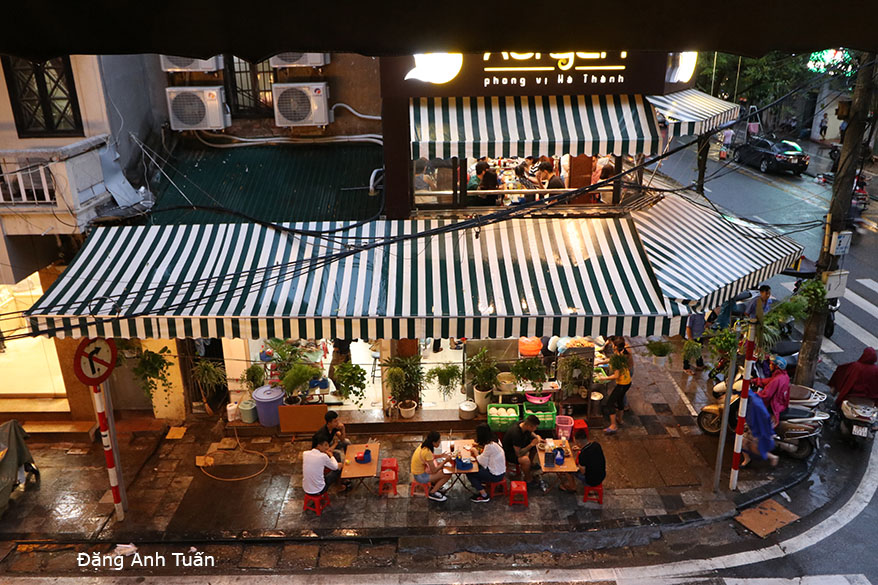
Bao lần đến Hànội  thỉ mình vẫn thích ở phố cổ. Phố nầy có  thời kì phong kiến thường gọi lả khu phố buôn bán hay kẻ chợ để ám chỉ những người của chợ. Khu phố nầy tuy nó có diện tích 82 ha quá nhỏ nhưng nó rất sống động. Nó là linh hồn của Hà Thành vì nó  thể hiện được bằng ký ức và  cảm xúc qua cuộc sống hằng ngày của người Hà Thành. Từ sáng đến tối, lúc nào cũng có người ngoài đường nhưng tùy giờ mà nhịp sống nó thay đổi. Chính mình cũng cảm nhận được sự kiện nầy khiến mình rất thích thú, không chán mà còn nhận ở nơi nầy có nhiều chuyện học hỏi, những tập quán mà không còn thấy ở những  đô thị khác ở Việt Nam và cũng có nhiều nơi để mình tham quan và lưu niệm qua máy ảnh   như nhà cổ Mã Mây, cầu Long Biên, cửa Ô Quan Chưởng, đền Quán Thánh vân vân…    Nhà văn Thạch Lam đã từng nói đến Hànội băm sáu phố phường qua  cái ăn uống của người Hà Thành.

Khu phố cổ nầy nó là hiện thân của nền văn hóa thương mại  và đô thị của Viêtnam đã có hơn nghìn năm. Nó còn minh chứng cho quá trình tiến triển của Hà Thành trong những năm gần đây. Mỗi giờ  luợng người qua lại  thay đổi. Sáng cở 5 giờ ở các đường nhất là ở phố Cầu Gỗ, các người bán rong hay bán hoa thường tựu về đây để họ trang trí lại  hoa  quả theo mùa và theo ý muốn của họ. Đây là một trong những nét đẹp của phố cổ. Bao lần đến ở phố cổ thì mình cũng mất ít nhất  một buổi sáng sớm cùng các du khách  ngọai quốc  đeo đuổi một cách kính đáo các người bán rong nầy để chụp ảnh. Vừa tội nghiệp cuộc sóng bon chen của họ mà cũng vừa thích thú khi chụp được các bó bông, các trái cây  họ kết hợp bày trưng   một cách khéo léo khiến  làm màu sắc rực rỡ  và làm   tăng thêm  cái  vẻ đẹp của  các thực phẩm  họ muốn bán.  Sau đó dọc theo bờ Hồ Hoàn Kiếm lối 6, 7 giờ thì có các nguời chạy bộ thư giãn,  các đoàn thể  cùng nhau tập thể dục theo nhạc hay tài chi. Còn trước các tiệm buôn bán,  bày ra la liệt  trên vĩa hè  các thúng rau cải  xanh, trái cây  hay  các thịt sống.  Đây cũng là một lối buôn bán nầy chắc có từ lâu vì thiếu chợ ở xung quanh. Có luôn cả  các nguời bán rong thức ăn (bánh cuốn Thanh Trì, nem rán, xôi, phở bò  hay cả phê vân vân…).

Nhưng cở 10 giờ trở đi  thì các trò buôn bán nẩy không còn nửa nhường vĩa hè lại cho các tiệm buôn trong ngày.  Đường xá cũng không ngừng tiếng kèn, người qua lại cũng đông, các quán cà phê  cũng  bất đầu có người và  du khách. Khi trời không mưa, có thể đi bộ  tử phố nầy sang phố khác, mỗi phố  có nghề nghiệp riêng biệt: Hàng Đào với các khăn quang cổ bằng tơ lụa đủ màu, Hàng thuốc bắc với mùi hương của các loại thảo, Hàng Mã thì bán đồ trang trí bằng giấy để cho công việc cúng lễ nhưng cũng có phố chỉ còn cò tên chớ không còn nghề bán riêng biệt như Hàng Bè nơi mình ở. Thưở xưa, nơi nầy có chợ ở trên con  đê bán  các bè gỗ.  Muốn đi bộ thư thản  như mình cũng mất ít nhất 2, 3 tiếng vỉ mình vừa đi vừa chụp hình.  Nhưng không thể đi lâu hơn được càng về trưa càng nóng không thể tưởng tượng nhất it khi có gió lắm nhưng khi có gió bấc mủa đông thì nó lạnh thấu xuơng không thua chi ở Paris. Ở phố cổ, ăn chi cũng có nhưng tùy giá mình muốn trả mà thôi.

Có một lần ngồi ăn bún chả Hànội ở vĩa hè chỉ có tốn  25 ngàn đồng nhưng  ăn không được vì chả nó bị cháy đóng  mỡ. Còn  đến tiệm ăn nổi tiếng cùng món ăn  đó thì phải trả 110 ngàn đồng. Còn ăn cá rán dầm nước mắm với xoài hay thịt kho nước dừa, món của miền nam thỉ rất khó tìm lắm nhưng khi tìm được rồi, mình cứ đến nơi đó ăn vài lần vì  mới biết người bếp từ Saigon ra đây sinh sống nấu ăn. Vị ăn của người Bắc quá mặn còn vị của người Nam quá ngọt biết  bao giờ thống nhất được  các vị nầy chắc chắn vị  nó sẻ đậm đà cho Quê Hương …Trưa lại  lại có thể ra bờ hồ Hoàn Kiếm  hứng gió như đôi tình nhân hay nghỉ mát như các du khách ngoại quốc. Nếu thích  thì có thể đi tham quan các bảo tàng nổi tiếng như bảo tàng dân tộc học, bảo tàng lịch sử vân vân … hay  đi xem múa rối nước hoăc đến các quán cà phê via hè lúc nào cũng tấp nập người. Chiều tối, có các trò biểu diển ngoài trời (ca nhạc, hát chèo vân vân ..) nếu cuối tuần thì có khu đi bộ, có chợ đêm rất náo nhiệt. Có ở Phố cổ bao nhiêu lần như mình khó mà không có kỷ niệm, khó mà quên đựợc cái đẹp  cá biệt của nó dù biết rằng cuộc sống ở đây  rất bon chen với   thời gian và không gian cùng các ngôi nhà sâu và hẹp san sát nhau (nhà ống).

Version française

En venant à Hanoï tant de fois, je continue à aimer son vieux faubourg et préférer d’y séjourner. Son existence date de l’époque féodale. On a l’habitude de l’appeler sous le nom de « quartier marchand » ou « kẻ chợ » pour faire allusion à tous ceux qui y vivent. Malgré sa très petite superficie de 82 ha, ce quartier est très animé. Il est l’âme de Hanoï car il réussit à  incarner  souvenances  et  émotions passées  dans la vie quotidienne des Hanoïens.  Du matin jusqu’au soir, le nombre  de gens ne cesse de varier dans les rues mais en fonction du créneau horaire, le rythme de vie change dont je m’aperçois également. C’est pourquoi je suis tellement satisfait  sans me lasser car c’est ici que j’apprend  à découvrir un tas de choses, des traditions que je ne trouve plus ailleurs   dans les autres villes du Vietnam. C’est aussi ici  que je peux flâner agréablement, ressentir la richesse visuelle du faubourg   et photographier des lieux  historiques tels que  l’ancienne maison Mã Mây, le pont Long Biên (ancien pont Paul Doumer), la porte Ô Quan Chưởng, le temple Quán Thánh etc.  Le célèbre romancier Thạch Lam a l’occasion d’évoquer ce faubourg à 36 rues à travers la cuisine vietnamienne. Ce vieux  quartier  témoigne  depuis plus de 1000 ans de la culture commerciale et urbaine de la civilisation vietnamienne et de son évolution jusqu’à aujourd’hui. Le va-et-vient   des  gens varie incessamment  d’heure en heure au cours de la journée. Vers 5 heures du matin dans les rues du quartier, en particulier dans  la rue Cầu Gỗ, les marchandes ambulantes ou les fleuristes  se regroupent   pour mettre en  valeur leurs produits  à vendre (fleurs et fruits) en fonction de la saison et à leur guise.

C’est l’un des attraits de ce vieux quartier. Comme les touristes étrangers, je suis obligé de consacrer au moins une matinée pour poursuivre ces marchandes. Bien que je sois  soucieux d’éviter de les gêner dans  leur vie difficile et de les photographier de loin  avec discrétion,  je retrouve parfois  la satisfaction d’avoir de  belles photos avec  leurs bouquets de fleurs fraîches (ou fruits) aux  couleurs vives et éclatantes. Puis,  vers 6 ou 7 heures, tout le long du lac de l’épée restituée (Hồ Hoàn Kiếm), on voit les uns  faire du  jogging ou de la danse aérobique en groupe et  les autres du  Tai Chi. Devant les façades des boutiques de commerce, on voit s’étaler sur le trottoir une  grande variété de légumes et d’herbes soigneusement sélectionnés ou de la viande fraîche. C’est une méthode de vente datant peut-être depuis longtemps  car  je ne trouve aucun  marché aux alentours. D’autres vendeuses de rue occupent  aussi le trottoir et  proposent des spécialités culinaires de Hanoi (galettes Thanh Trì, nems, riz gluant, soupe au bœuf et aux nouilles de riz ou café etc.).

Aux alentours de 10 heures,  toutes ces activités de commerce alimentaire disparaissent et cèdent la place aux boutiques ayant pignon sur rue dans la journée. Le klaxon des motos ne cesse pas de retentir. Le va-et-vient des gens commence à gêner la circulation. Les gargotes de café se remplissent progressivement. Au cas où il fait beau, il est possible de marcher à pied et de flâner d’une rue à une autre car chaque rue a sa spécialité: rue de la soie aux écharpes multicolores, rue des médicaments au parfum d’herbes aromatiques, rue des papiers et objets  votifs  pour les temples et  les âmes errantes etc. mais il y a aussi  les rues portant les noms d’autrefois et n’ayant aucun rapport avec les produits proposés à vendre aujourd’hui. C’est le cas de la rue Hàng Bè où se trouve mon hôtel. Autrefois c’est ici qu’il y avait un marché sur une digue où on  vendait les radeaux en bois. Pour flâner dans tous les coins des rues comme moi, il faut compter au moins 2 ou 3 heures car j’ai besoin de faire la photo tout en observant tout ce qui se passe dans la rue. Mais il est impossible de faire longtemps la marche à pied car il fait tellement chaud  surtout à midi en été.  Par contre, on peut être transi de froid avec le vent glacial venant du nord comme celui de Paris en hiver.

Dans ce faubourg, le prix de la bouffe varie d’une gargote à une autre. Dans l’après-midi, on peut se détendre au lac Hồ Hoàn Kiếm ou aller visiter les musées célèbres comme le musée d’ethnographie du Vietnam, le musée de l’histoire de Hanoï, le musée des beaux-arts  etc. ou aller voir l’art scénique des marionnettes sur eau ou fréquenter  les gargotes du café pour retrouver l’ambiance d’autrefois. Le soir, les spectacles (musique, théâtre etc…) ont lieu en plein air autour du lac. En fin de la semaine, il y a des  rues interdites pour la circulation et réservées pour les piétons ainsi que le marché de nuit où  tous les produits locaux et artisanaux sont proposés  avec des prix variables. Il est difficile pour quelqu’un comme moi de ne pas avoir des souvenirs et d’oublier le charmant trait caractéristique de ce faubourg bien qu’on sache que la vie journalière de ses habitants est difficile non seulement au niveau temporel mais aussi au niveau spatial avec leurs maisons tubulaires et adossées étroitement les unes des autres.

Coming to Hanoi so many times, I continue to love its old suburb and prefer to stay there. Its existence dates back to the feudal era. It is usually called the « merchant district » or « kẻ chợ » to refer to all those who live there. Despite its very small area of ​​82 ha, this district is very lively. It is the soul of Hanoi because it succeeds in embodying past memories and emotions in the daily life of Hanoians. From morning to evening, the number of people keeps varying in the streets but depending on the time slot, the rhythm of life changes which I also notice. That is why I am so satisfied without getting tired because it is here that I learn to discover a lot of things, traditions that I no longer find elsewhere in other cities in Vietnam. It is also here that I can stroll pleasantly, feel the visual richness of the suburb and photograph historical places such as the old Mã Mây house, Long Biên Bridge (former Paul Doumer Bridge), Ô Quan Chưởng Gate, Quán Thánh Temple etc. The famous novelist Thạch Lam has the opportunity to evoke this suburb with 36 streets through Vietnamese cuisine. This old quarter has been a testament to the commercial and urban culture of Vietnamese civilization for more than 1000 years and its evolution until today. The coming and going of people varies incessantly from hour to hour during the day. Around 5 a.m. in the streets of the neighborhood, especially on Cầu Gỗ Street, street vendors or florists gather to showcase their products for sale (flowers and fruits) according to the season and as they wish.

This is one of the attractions of this old quarter. Like foreign tourists, I’m obliged to devote at least a morning to pursuing these merchants. Although I’m careful to avoid disturbing them in their difficult lives, and to photograph them discreetly from a distance, I sometimes find the satisfaction of having beautiful photos with their brightly colored bouquets of fresh flowers (or fruit). Then, at around 6 or 7 o’clock, all along the Lake of the Restored Sword (Hò Hoàn Kiếm), we see some people jogging or doing aerobic dance in groups, and others practicing Tai Chi. In front of the store fronts, you’ll see a wide variety of carefully selected vegetables and herbs, or fresh meat, spread out on the sidewalk. This may be a long-established method of selling, as I can’t find any markets in the vicinity. Other street vendors also occupy the sidewalk, selling Hanoi’s culinary specialties (Thanh Trì pancakes, egg rolls, sticky rice, beef and rice noodle soup or coffee etc.).

Around 10 a.m., all these food trading activities disappear and give way to the stores that are open during the day. The horns of motorcycles blare incessantly. The comings and goings of people begin to impede traffic flow. The coffee shops are gradually filling up. If the weather is fine, it’s possible to walk and stroll from one street to the next, as each street has its own specialty: silk street with its multicolored scarves, medicine street with its fragrant herbs, paper street and votive objects for temples and wandering souls, etc. But there are also streets with names from yesteryear that have nothing to do with the products on sale today. Such is the case of rue Hàng Bè, where my hotel is located. In the past, there was a market here on a dike where wooden rafts were sold. To stroll around every corner like I do, you need at least 2 or 3 hours, as I need to take photos while observing everything that’s going on in the street. But it’s impossible to walk for long because it’s so hot, especially at midday in summer.  On the other hand, you can freeze to death in the icy north wind, like the one blowing from Paris in winter.

In this suburb, the price of food varies from one gargote to another. In the afternoon, you can relax at Lake Hồ Hoàn Kiếm or visit famous museums such as the Museum of Vietnamese Ethnography, the Hanoi History Museum, the Fine Arts Museum, etc., or see the scenic art of water puppetry, or frequent the café gargotes to recapture the atmosphere of yesteryear. In the evenings, there are open-air shows (music, theater, etc.) around the lake. At the end of the week, there are streets closed to traffic and reserved for pedestrians, as well as the night market where all kinds of local products and crafts are on offer at varying prices. It’s hard for someone like me not to remember and forget the charming characteristic of this suburb, even though we know that the daily life of its inhabitants is difficult not only temporally but also spatially, with their closely-spaced, tubular houses.

Pictures Gallery

[Return HANOÏ]

La pagode du Maître (Chùa Thầy)


Version française
Version anglaise
Galerie des photos

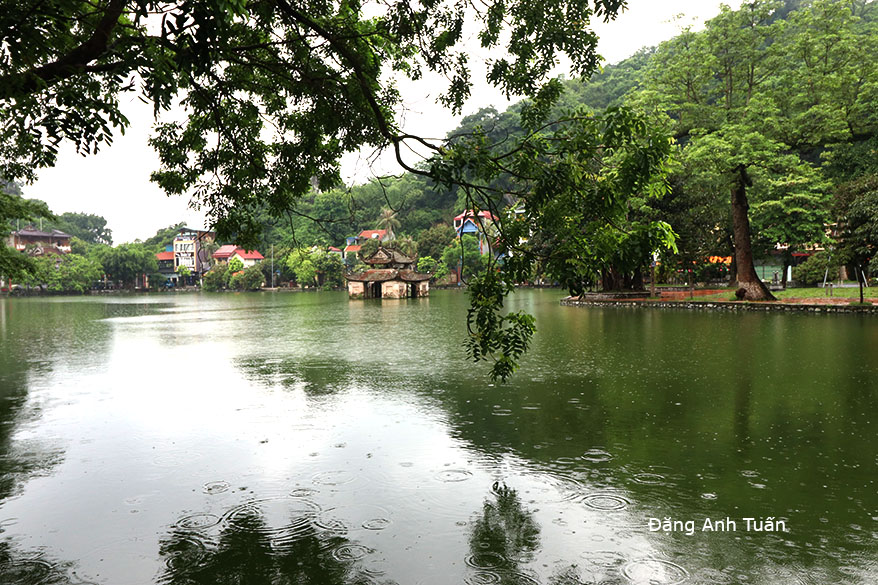
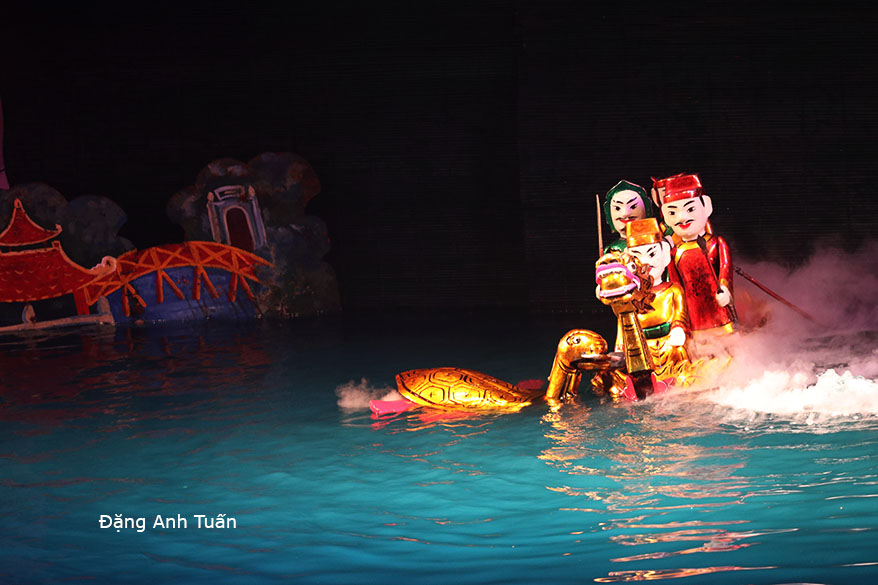
 Cách trung tâm Hà Nội khoảng 20 cây số, chùa Thầy  tọa lạc  ở chân núi Sài Sơn, huyện Quốc Oai, xã Sài Sơn và được xây dựng từ thời nhà Đinh. Chùa nầy là một trong ba chủa nổi tiếng nhất ở đất Hà Thành mà còn là chủa có liên quan mật thiết đến quãng đời sau cùng của thiền sư Từ Đạo Hạnh. Ông  thuộc thế hệ thứ 12 của  dòng Thiền Ti-ni-đa-lưu-chi (Vinitaruci) và còn được xem là tiêu biểu cho khuynh hướng Mật Tông qua những pháp thuật.  Ông là  thủy tổ múa rối nước. Vốn ưa thích múa hát, ông đã dạy dân hát chèo, sáng tạo nên trò múa rối nầy  và truyền dạy cho dân chúng. Chính ở giữa hồ Long Trì mà ngày lễ hội thường  thấy ở thủy đình có trò múa rối nước.


Từ Đạo Hạnh không những  là một thiền sư rất uyên thâm hiểu biết mà còn là một danh nhân văn hóa. Chính vì vậy công lao của ông đóng góp với  đất nước và dân gian rất lớn  duới triều Lý cho nên ông được dân gian biết ơn sùng kính  thường gọi ông là Thầy, là Thánh hay Phật. Cuộc đời của ông cũng không thiếu màu sắc huyền thoại từ việc  hóa thân thành con trai của Sùng Hiền hầu là Lý Dương Hoán, chính là vua  Lý Thần Tông sau này  đến  cái chết của ông được dân chúng thần thánh hóa trở thành cái chết đẹp và để trở thành người khác với cuộc sống mới   qua bài kệ thi tịch  của ông:

Thu lai bất báo nhạn lai quy,
Lãnh tiếu nhân gian tạm phát bi.
Vị báo môn nhân hưu luyến trước,
Cổ sư kỉ độ tác kim sư.

Dịch nghĩa

Mùa thu về không báo tin cho chim nhạn cùng về,
Đáng cười người đời cứ nảy sinh buồn thương [trước cái chết].
Khuyên các môn đồ chớ có vì ta mà quyến luyến,
Thầy xưa đã bao nhiêu lần hoá thân làm thầy nay.(*)

 Ông trở thành  là người mở đầu cho dân gian  một tín ngưỡng thờ Thánh Tổ hòa trộn vào Phật giáo qua mô hình  « Tiền Phật – Hậu Thánh« . Đây cũng  là  một thể thức tôn sùng từ đó ở chùa của người dân Việt  dành cho những người có công đức hay  gần gũi và bảo trợ  dân gian. 

(*) Nguồn: Thơ văn Lý Trần (tập I), NXB Khoa học xã hội. 
Version française

Loin du centre-ville de Hanoïi de 20 km, la pagode du Maître est située au pied de la montagne Sài Sơn dans la commune du district Quốc Oai. Celle-ci fut édifiée à l’époque de la dynastie des Đinh.  Elle est  l’une des trois  pagodes  célèbres de la capitale Hanoï mais elle est liée intimement aussi à la durée de vie restante du moine zhen Từ Đạo Hạnh. Celui-ci appartint à cette époque à la douzième génération de l’école   Vinitaruci  et il fut considéré comme le représentant du bouddhisme tantrique à travers ses pouvoirs magiques. Il est aussi le créateur du spectacle des marionnettes sur l’eau. Étant passionné pour les danses et les  chansons  traditionnelles, il a appris au peuple  le théâtre populaire  ainsi que la façon de se distraire avec  les marionnettes sur l’eau.  C’est au milieu de l’étang du Dragon que se déroule fréquemment le spectacle des marionnettes sur l’eau à l’occasion des festivités locales. 

Từ Đạo Hạnh était non seulement  un moine ayant  une profonde connaissance mais aussi un illustre personnage culturel.  C’est pour cela que ses contributions étaient énormes   pour le peuple et le pays si bien que tout le monde  exprimait sa gratitude en l’appelant souvent « Maître », « Saint » ou « Bodhisattva ». Il ne manque pas la coloration mythique dans la vie de ce moine zhen. De son incarnation dans le personnage du roi Lý Thần Tông, fils de Lý Dương Hoán jusqu’à sa mort que le peuple a mystifiée en lui donnant une belle mort et une réincarnation avec une nouvelle vie à travers son  kê (une sorte de stance bouddhique): 

Le retour de l’automne n’accompagne pas celui des hirondelles,
Je désapprouve les gens continuant à s’accrocher à  leur vie avec tristesse et douleur  devant la mort
Il est déconseillé à mes disciples de  montrer trop d’attachements émotionnels à cause de moi,
Étant l’ancien maître,  j’ai incarné tant de fois pour devenir le maître d’aujourd’hui.(*)

Il  est le premier à introduire au peuple le culte des personnages déifiés dans le bouddhisme  à travers le modèle « Devant Bouddha-Derrière les Saints ou les personnages déifiés« . C’est une forme de vénération adoptée à cette époque  par les Vietnamiens pour exprimer leur gratitude envers tous ceux qui avaient la vertu et le mérite de les protéger dans le quotidien.

(*) Source : Ly Tran Poésie et littérature (Volume I), Maison d’édition des sciences sociales.

Version anglaise

Far from the city center of Hanoi by 20 km, the Master’s Pagoda is located at the foot of Sài Sơn mountain in the commune of Quốc Oai district. It was built during the Đinh dynasty. It is one of the three famous pagodas of the capital Hanoi but is also closely linked to the remaining lifespan of the monk zhen Từ Đạo Hạnh. He belonged at that time to the twelfth generation of the Vinitaruci school and was considered the representative of tantric Buddhism through his magical powers. He is also the creator of the water puppet show. Passionate about traditional dances and songs, he taught the people popular theater as well as how to entertain themselves with water puppets. The water puppet show frequently takes place in the middle of the Dragon pond during local festivities.

Từ Đạo Hạnh was not only a monk with profound knowledge but also an illustrious cultural figure. That is why his contributions were enormous for the people and the country, so much so that everyone expressed their gratitude by often calling him « Master, » « Saint, » or « Bodhisattva. » The mythical coloring is not lacking in the life of this venerable monk. From his incarnation as King Lý Thần Tông, son of Lý Dương Hoán, until his death, which the people mystified by giving him a beautiful death and a reincarnation with a new life through his kê (a type of Buddhist stance):

Mùa thu về không báo tin cho chim nhạn cùng về,
Đáng cười người đời cứ nảy sinh buồn thương [trước cái chết].
Khuyên các môn đồ chớ có vì ta mà quyến luyến,
Thầy xưa đã bao nhiêu lần hoá thân làm thầy nay.(*)

The return of autumn does not accompany that of the swallows,
I disapprove of people continuing to cling to their lives with sadness and pain before death.
My disciples are advised not to show too much emotional attachment because of me,
Being the former master, I have incarnated so many times to become today’s master.(*)

He was the first to introduce to the people the worship of deified figures in Buddhism through the model « In front Buddha – Behind Saints or deified figures. » This was a form of veneration adopted at that time by the Vietnamese to express their gratitude toward all those who had the virtue and merit to protect them in daily life.

(*) Source: Ly Tran Poetry and Literature (Volume I), Social Sciences Publishing House.

Pictures Gallery

pagode_thay

[Return RELIGION] 

Cathédrale Saint Joseph (Nhà thờ Lớn Hànội)

Version française
Version anglaise
Picture Gallery

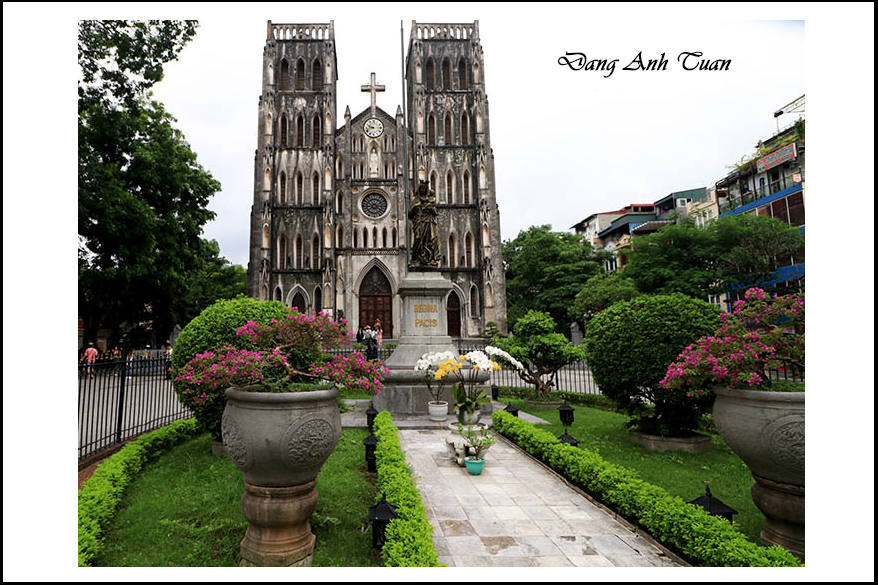
Dựa theo mẫu nhà thờ Đức Bà Paris, nhà thờ Saint Joseph được thiết kế bỡi giám mục Paul-François Puginier theo phong cách kiến trúc Gothic trung cổ  Âu Châu và được xây dựng  vào năm 1884 trên khu đất mà trước đó có  chùa Báo Thiên, một chùa nổi tiếng đã có từ thời nhà Lý (thế kỷ 11) . Nhà thờ nầy thường đươc gọi là nhà thờ lớn vì ngoài kích thước hoành tráng  với  chiều dài 64,5m, chiều rộng 20,5m và hai tháp chuông cao 31,5m có đến 5 chuông còn  được xem là nhà thờ chính tòa của Tổng giáo phận Hà Nội. Nhà thờ nầy được hoàn thành vào năm 1886 sau bốn năm xây cất. Chi phí tốn kém nhờ hai đợt xổ số (đợt một năm 1883, đợt hai năm 1886). Tuy rằng bề ngoài của nhà thờ có vẻ đen tối vì ô nhiễm, nhà thờ nầy vẫn được xem là một di tích lich sữ thời kỳ Pháp thuộc và là điểm tham quan cực kỳ quan trọng đối với người du khách nước ngoài khi đến Hànội.

Basée sur le modèle de Notre Dame de Paris, l’église Saint Joseph dont les plans ont été dessinés par l’évêque  Paul-François Puginier est   du style néo-gothique. Elle fut construite  en 1884  sur l’emplacement de la pagode Báo Thiên, un édifice bouddhique très connu à l’époque de la dynastie des Lý (XIème siècle).  Cette église est fréquemment appelée « grande église » car outre ses dimensions imposantes avec sa longueur de 64,5 mètres, sa largeur de  20,5 mètres  et ses deux clochers carrés hauts de 31 mètres et  équipés de 5 cloches, elle est encore  l’église-mère de l’archidiocèse d’Hanoï. Sa réalisation fut terminée en 1886 après 4 années de construction avec l’argent alimenté par le système de loterie (organisé en 1883 et en 1886). Malgré son aspect extérieur assombri par la pollution, cette église est un vestige historique de l’époque coloniale française et devient actuellement l’un des sites  extrêmement importants pour les touristes étrangers lors de leur passage à Hanoï.

English version

Based on the model of Notre Dame de Paris, Saint Joseph Church, whose plans were drawn by Bishop Paul-François Puginier, is in the neo-Gothic style. It was built in 1884 on the site of the Báo Thiên pagoda, a very well-known Buddhist building during the Lý dynasty (11th century). This church is often called the « great church » because, in addition to its imposing dimensions with a length of 64.5 meters, a width of 20.5 meters, and two square bell towers 31 meters high equipped with 5 bells, it is also the mother church of the Archdiocese of Hanoi. Its construction was completed in 1886 after 4 years of building, funded by a lottery system (organized in 1883 and 1886). Despite its exterior darkened by pollution, this church is a historical relic of the French colonial era and has become one of the extremely important sites for foreign tourists during their visit to Hanoi.
 
Eglise Saint Joseph

[RETURN]

Lotte center (Hànội)


Version française
Version anglaise

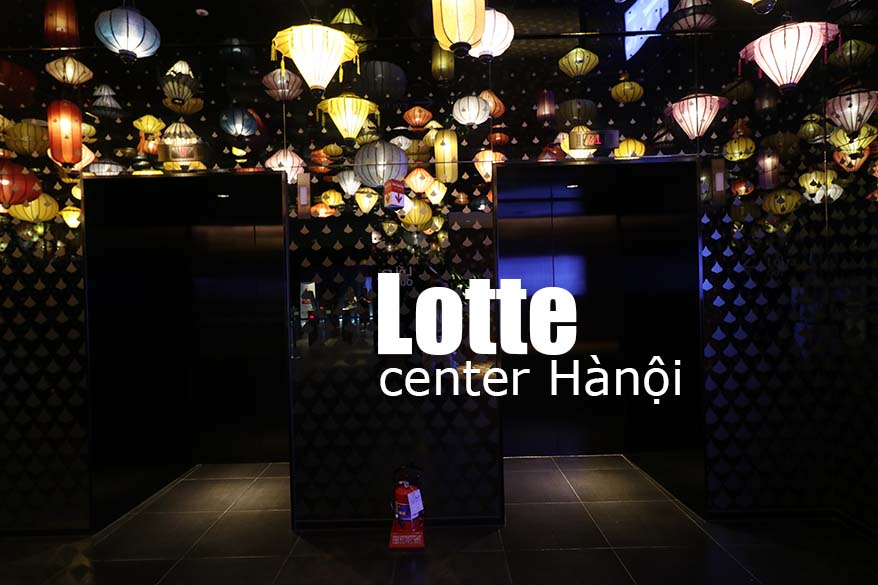
Tọa lạc ở giữa thành phố Hànội trong quận Ba Đình, trung tâm  Lotte center Hànôi   gồm 65 tầng nổi và 5 tầng hầm. Toà nhà nầy cao thứ 2 Việt Nam từ năm 2014 cho tới khi landmark 81 của Saigon  vượt qua chiều cao của nó 2017 (bề cao 461,5m). Nơi nầy, ngoài khách sạn 5 sao, còn có  đại siêu thị Lotte Mart chiếm toàn bộ tầng hầm B1. Từ tầng 1 đến tầng 6  là trung tâm thương mại với các mặt hàng thời trang cao cấp. Đến đây , có thể nhìn thấy tổng quát Hà thành với  đài quan sát  Sky Walk ở tầng 65, cao tới 272 m.  Ngoài ra còn bố trí các quán bar để du khách giải lao và ăn uống. 


Trung Tâm Lotte

Le gratte-ciel Lotte center  est situé au cœur de la capitale de Hànội dans le district de Ba Đình.  Il a 65  étages et 5 étages en sous-sol.  Classé deuxième au Vietnam depuis 2014, il est devancé désormais par le gratte-ciel landmark 81 de Saigon. Ce dernier  a la  hauteur de 461,5m.  C’est ici qu’outre l’hôtel 5 étoiles, il y a encore le supermarché Lotte Mart. Celui-ci  occupe  carrément  l’étage en sous-sol B1. Du premier étage jusqu’au 6ème étage, c’est le centre commercial avec des boutiques de mode. La tour d’observation Sky Walk haute de 272m est  au 65 ème étage. On peut y avoir la vue d’ensemble  magnifique  de la capitale Hanoï.  Le cadre est aussi superbe avec les bars et restaurants. Les visiteurs peuvent  s’y  détendre.

The Lotte Center skyscraper is located in the heart of the capital Hanoi, in the Ba Đình district. It has 65 floors and 5 basement levels. Ranked second in Vietnam since 2014, it is now surpassed by the Landmark 81 skyscraper in Saigon. The latter has a height of 461.5m. Here, in addition to the 5-star hotel, there is also the Lotte Mart supermarket, which occupies the entire B1 basement floor. From the first floor to the 6th floor, there is a shopping center with fashion boutiques. The Sky Walk observation tower, 272m high, is on the 65th floor. You can enjoy a magnificent overall view of the capital Hanoi. The setting is also superb with bars and restaurants. Visitors can relax there.


[RETURN]

Le palais fortifié du roi des Hmong (Dinh thự của vua Mèo)

Version vietnamienne
Version anglaise
Galerie des photos

De passage à Hà Giang, on a l’occasion de visiter le palais fortifié du roi des Hmong Vương Chính Đức. Celui-ci est situé à une vingtaine de kilomètres de Đồng Văn au cœur de la vallée de la  commune Sa Phìn. Selon l’on-dit, Vuơng Chính Đức a choisi cet emplacement du fait qu’il y a  un bloc de terre semblable à la carapace de la tortue, ce qui permet d’avoir une belle carrière pour lui et ses descendants dans l’optique des géomanciens.

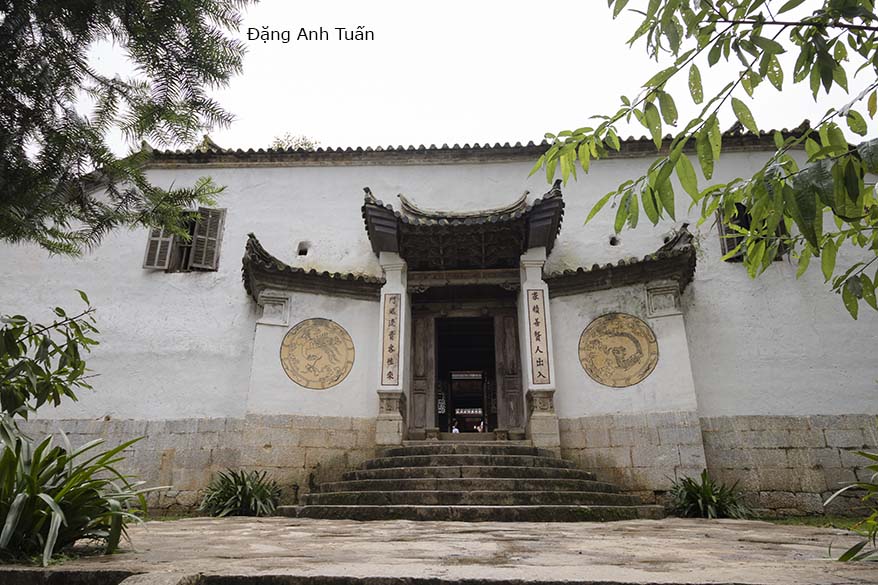
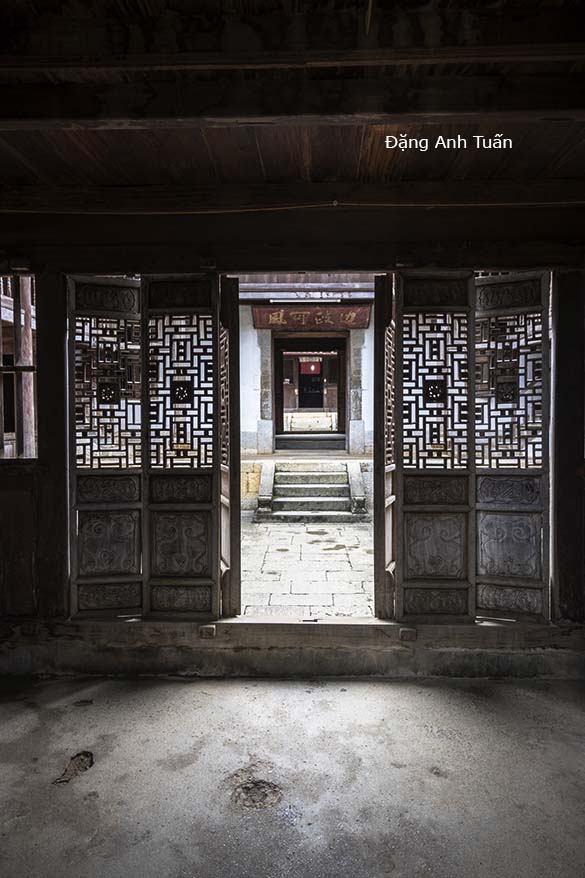
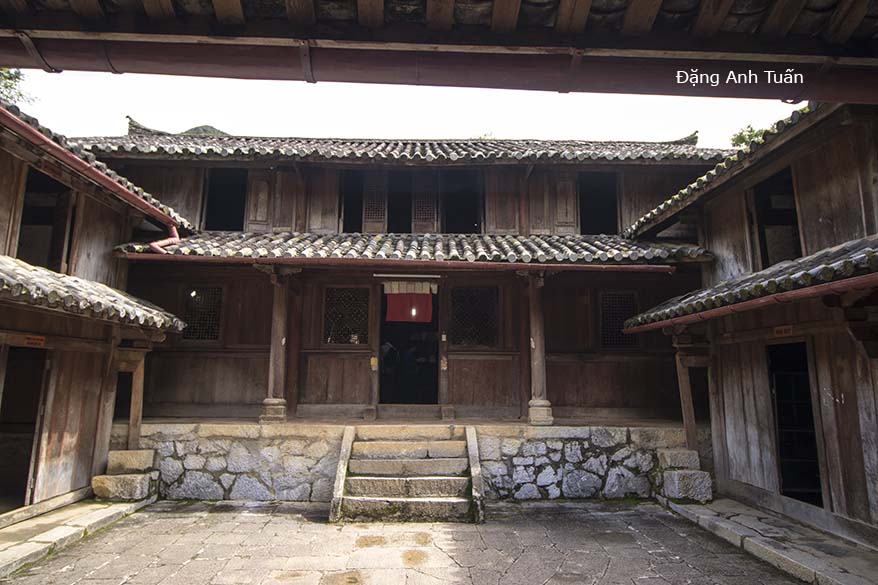
Basée sur le modèle de Yamen Manchu (bâtisse d’un mandarin à l’époque des Qing) et construite dans les années 1920 à 1600 m d’altitude sur une superficie de 3000 m2, cette magnifique résidence est une belle œuvre architecturale, un mélange subtil de l’art traditionnel Hmong, chinois et français. Cela   nécessite quand même 8 ans de travaux effectués  avec acharnement par les ouvriers venant de Yunnan et de Đồng Văn.  Elle est composée de 3 constructions  sur pilotis à 2 étages dont l’une  est située jusque derrière  l’entrée et les deux autres dépendances  sont opposées entre elles et forment avec la première  un angle droit. Tout est fait en bois précieux (planchers, cloisons, colonnes etc…) avec la toiture toujours en tuiles Yin et Yang.

Il y a au moins 64 pièces et   trois cours intérieures. Grâce à l’ajout de de deux donjons en pierre  à l’arrière de cette résidence, celle-ci est appelée souvent sous le nom « château ».  À l’époque où le roi des Hmong était en vie, il y avait plus de 100 personnes qui étaient logés dans cette résidence, y compris ses 3 femmes et ses enfants. 

Vue prise de l’entrée de la résidence jusqu’au fond à travers les cours

Maison principale avec ses deux dépendances opposées
Ai có đến Hà Giang thì cũng có dịp đến tham quan nhà của vua Mèo Vương  Chính Đức. Được tọa lạc cách Đồng Văn gần hai chục cây số ở giữa lòng một thung lũng thuộc địa phận xã Sa Phìn. Theo lời  đồn, Vương Chính Đức chọn nơi nầy vì ở đây có một khối đất được xem như là cái mai rùa khiến sẻ  có sự nghiệp tốt đẹp cho ông và con cháu theo cái nhìn quan sát của các nhà rành về phong thủy. Dựa trên mẫu nhà của Yamen Manchu (những dinh thất của các quan dưới thời đại nhà Thanh) và  được xây cất  ở độ cao 1600 thước vào các năm 1920 với một diện tích 3000 mét vuông, dinh thự nầy là một kiệt tác kiến trúc, một hỗn hợp tinh vi của nghệ thuật truyền thống của người Hmong, người Hoa và người Pháp. Thế cũng phải  mất 8 năm xây dựng nhọc nhằn bỡi những người thợ chuyên môn đến từ Vân Nam và Đồng Văn. Dinh thự  nầy gồm có 3 tòa nhà mà nhà chính thì được tọa lạc ngay sau cửa vào và hai nhà phụ thì đối diện với nhau và tạo với nhà chính các góc vuông.

Tất cả đều được làm bằng gỗ qúy từ sàn nhà cho đến cột trụ qua đến vách ngăn.  Tất cả mái nhà  nơi nầy đều được lợp với ngói âm dương. Có ít nhất 64 phòng và ba sân  nội.  Nhờ thêm hai vọng lâu xây  bằng đá ở phiá sau dinh thự mà dinh nầy thuờng được gọi là lầu đài.   Dạo thời vua Mèo còn sống thì có hơn một trăm người sống ở đây kể luôn ba bà vợ  của ông và các con cháu.

Based on the model of a Manchu Yamen (a mandarin’s residence during the Qing dynasty) and built in the 1920s at an altitude of 1600 meters over an area of 3000 m², this magnificent residence is a beautiful architectural work, a subtle blend of traditional Hmong, Chinese, and French art. It still required 8 years of hard work by laborers coming from Yunnan and Đồng Văn. It is composed of 3 two-story stilt buildings, one of which is located right behind the entrance, and the other two outbuildings are opposite each other, forming a right angle with the first. Everything is made of precious wood (floors, partitions, columns, etc.) with the roof always covered with Yin and Yang tiles.

Passing through Hà Giang, one has the opportunity to visit the fortified palace of the Hmong king Vương Chính Đức. It is located about twenty kilometers from Đồng Văn in the heart of the Sa Phìn commune valley. According to legend, Vương Chính Đức chose this location because there is a block of earth resembling a turtle shell, which provides a good position for him and his descendants according to geomancers.

There are at least 64 rooms and three inner courtyards. Thanks to the addition of two stone towers at the back of this residence, it is often called a « castle. » At the time when the Hmong king was alive, more than 100 people lived in this residence, including his 3 wives and children.

Galerie des photos

palais_roi_hmong

[RETOUR]

La bourgade de Đồng Văn (Phố cổ Đồng Văn)

Version française
Version anglaise
Galerie des photos

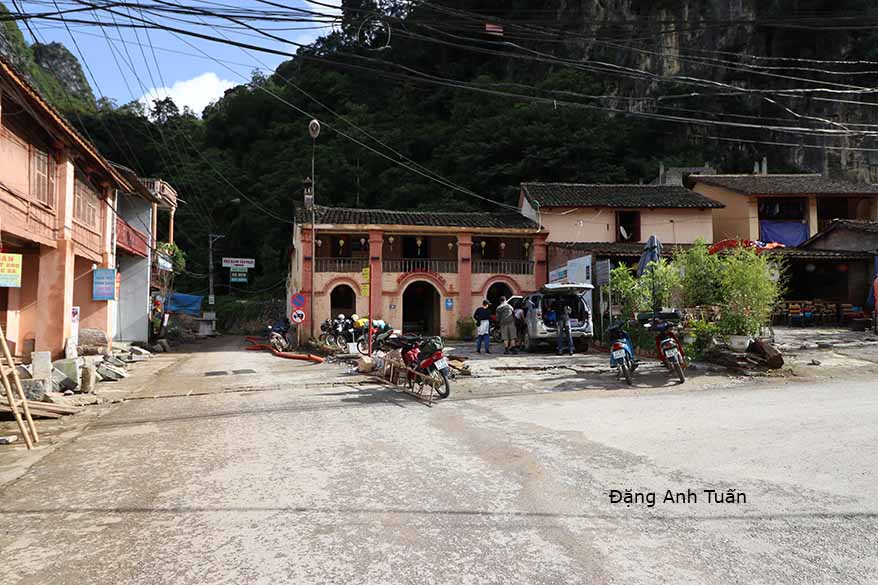
Nằm ở giữa lòng thung lũng của cao nguyên đá Đồng Văn, phố nầy lúc ban đầu có khoảng chừng 40  cái nhà mà thôi. Khu phố nầy được thành hình vào đầu  thế kỷ 20 dưới chân núi  với vài gia đình người Hmong, người Tày và người Hoa. Bởi vì được xây cất với các thợ  được thuê đến từ Tứ Xuyên nên các nhà ở đây mang dấu ấn  khá  sâu đậm của người Hoa qua lối kiến trúc hai tầng trình tường, mái  ngói âm dương và trước cửa nhà có đèn lồng treo cao. Nay trở thành một địa điểm quan trọng mà du khách không thể bỏ qua được khi đến Hà Giang. Nhà cửa ở đây cũng xây cất lại, nhà trọ cũng có nhiều, giá cả cũng  phải chẵn, du khách ngoại quốc nhất là dân đi phượt cũng đông cuối tuần và thích ngủ nhà sàn.

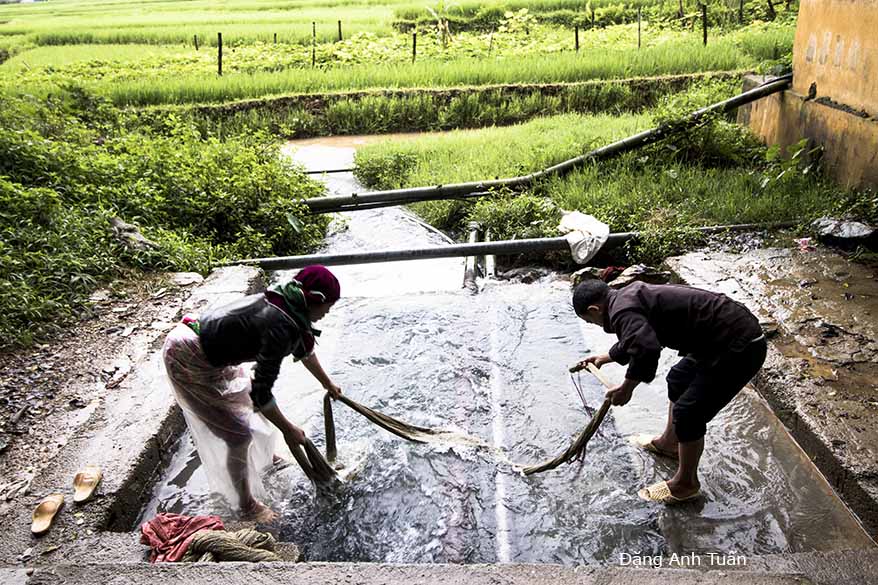
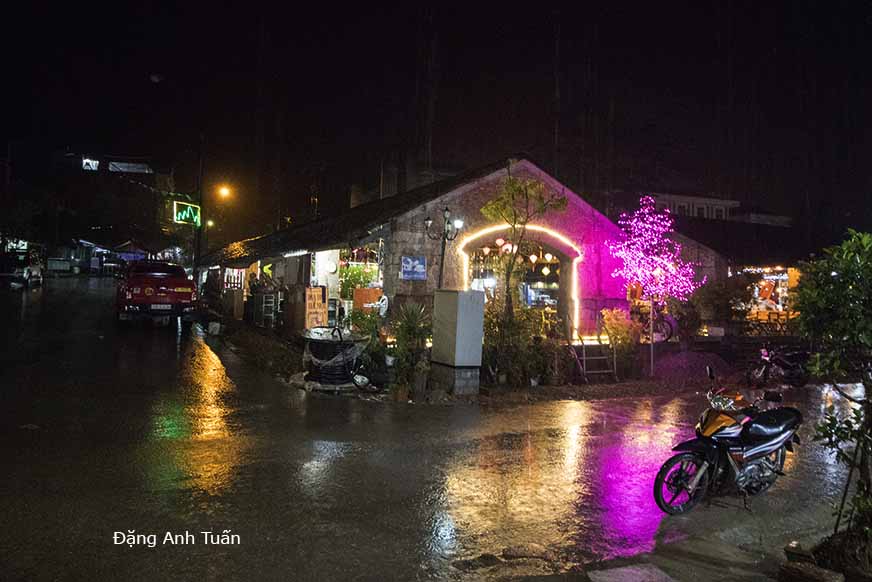
Rất tiếc chiều hôm đó, mưa quá to nên chụp hình không được nhiều. Chỉ sáng hôm sau, trời lại nắng nên mới có vài tấm ảnh để lưu niệm nhưng cũng có dịp viếng thăm một nhà cổ của người Hmong nay thành nhà trọ và có dịp chứng kiến cách thức dùng nước suối rửa cây linh (lin)  trước khi dệt vãi.  Đi miền núi như mình rất mệt nhưng  học hỏi rất nhiều về tập quán nhất là Hà Giang có đến 22 dân tộc thiểu số  và rất thích thú trong cuộc hành trình nầy. 

Située au cœur de la vallée du plateau karstique de Đồng Văn, cette bourgade avait  seulement au moment de sa construction  une quarantaine de maisons.  Elle prit forme au début  du XXème siècle au pied des montagnes rocheuses avec quelques familles Hmong, Tày et Hoa (ou Chinois).  Comme ses maisons ont été construites par des ouvriers recrutés  venant de Sichuan, cette bourgade continue à garder  une  profonde empreinte chinoise à travers son architecture typique à deux étages, son toit avec des tuiles tubulaires âm dương (Yin-Yang) et ses lampions suspendus devant l’entrée.

Aujourd’hui, elle devient un passage obligatoire pour ceux qui visitent Hà Giang.  La plupart de ses maisons sont rénovées et ses « homestay » (logement chez l’habitant) sont nombreux avec un prix assez raisonnable. Les touristes étrangers  sont en majorité des routards ou des gens aimant l’aventure de l’extrême et préférant dormir dans des maisons sur pilotis   et ils sont nombreux à la fin de la semaine.   

C’est regrettable pour nous d’avoir la pluie torrentielle le soir de notre arrivée. C’est seulement le lendemain avec le retour du soleil que je peux faire quelques photos ci-dessus. J’ai aussi l’occasion de visiter une vieille maison devenant aujourd’hui un  « logement chez l’habitant » et d’apprendre la façon de laver le lin avec l’eau de source  avant le tissage des vêtements pratiqué par les Hmong.  L’excursion à la montagne est épuisante   mais elle me permet d’avoir des choses à apprendre en particulier les coutumes et les traditions lorsque la région Hà Giang a 22 minorités ethniques. Je suis très content de ce voyage mémorable. 

La bourgade Đồng Văn au fil de la nuit.

Laver le lin avant le tissage des vêtements par les Hmong.

Located in the heart of the Đồng Văn karst plateau valley, this small town had only about forty houses at the time of its construction. It took shape at the beginning of the 20th century at the foot of the rocky mountains with some Hmong, Tày, and Hoa (or Chinese) families. Since its houses were built by workers recruited from Sichuan, this town continues to retain a strong Chinese influence through its typical two-story architecture, its roof with âm dương (Yin-Yang) tubular tiles, and its lanterns hanging in front of the entrance. Today, it has become a must-visit stop for those visiting Hà Giang. Most of its houses have been renovated, and its homestays are numerous with quite reasonable prices. The majority of foreign tourists are backpackers or people who love extreme adventure and prefer to sleep in stilt houses, and many of them come at the end of the week.

It is unfortunate for us to have torrential rain on the evening of our arrival. It is only the next day, with the return of the sun, that I can take some photos above. I also had the opportunity to visit an old house that has now become a « homestay » and to learn how to wash flax with spring water before weaving clothes, a practice of the Hmong. The mountain excursion is exhausting, but it allows me to learn many things, especially the customs and traditions since the Hà Giang region has 22 ethnic minorities. I am very happy with this memorable trip.


bourgade_dong_van

[RETOUR]

Hà Giang, vẽ đẹp của miền sơn cước


Version française
Version anglaise
Galerie des photos

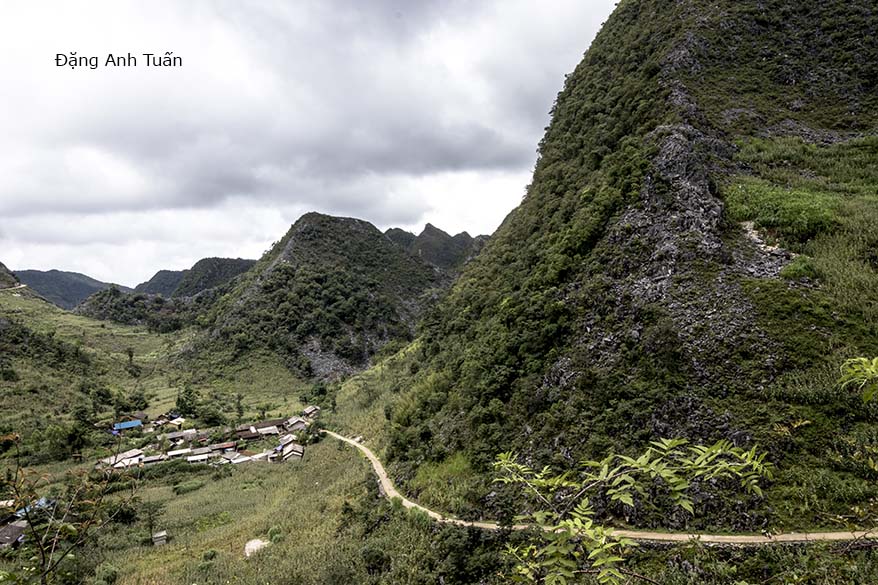
Nằm ở vùng núi phía Bắc Vietnam, Hà Giang là một tỉnh có nhiều núi rừng, giáp ranh giới vói tỉnh Vân Nam của Trung Quốc. Dân số ở nơi nầy rất thưa, chỉ có khoảng chừng 900.000 người theo điều tra dân số năm 2016. Tuy nhiên chính ở nơi nầy tụ hơp rất nhiều dân tộc thiểu số (22 dân tộc) trong đó đáng kể nhất là người Hmong (hay Miêu) tiếp đó người Tày, người Dao và người Nùng. Đến đây mới thấy được cái đẹp tư nhiên của tạo hóa, cái hùng vĩ của non nước, cái nhọc nhằn, công lao của ông cha ta gìn giữ bờ cõi đất nước trước hiểm họa của người phương bắc. Chính cũng ở nơi nầy mới có cảm xúc nhiều khi lặn lội trèo lên 389 bậc thang ở đỉnh Lũng Cú mà thường được gọi là đỉnh núi Rồng (Long Sơn) (1700 mét), nơi mà danh tướng Lý Thường Kiệt phá Tống bình Chiêm dựng lên lúc ban sơ cây cột cờ để khẳng định chủ quyền Vietnam trên mãnh đất nầy.

Tuy Hà Giang nó rất còn hoang sơ của miền sơn cước nhưng nó có cái gì thiêng liêng mà không thể diễn tả được khi đến với mãnh đất nầy. Tôi còn nhớ trước ngày đi đến, ai cũng khuyên không nên đi vỉ tuần trước đường xá sạt lở vì bão Sơn Tinh. Có thể nguy hiểm cho tánh mạng và có thể hủy đi lịch trình Hà Giang khiến tôi sẻ mất một tuần ở Vietnam nhưng rồi tôi cũng quyết tâm đi cùng các con cháu. Tôi mới có dịp nhìn thấy được nét đẹp của Hà Giang, đến tham quan cao nguyên đá Đồng Văn mà cơ quan UNESCO chín thức công nhận là Công Viên địa chất toàn cầu đầu tiên của Vietnam và thứ hai ở Đông Nam Á sau Langkawi (Mã Lai)  vào năm 2010.

Hôm đi, không có gì trở ngại cả, cứ lấy quốc lộ 2 đến Tuyên Quang rồi sau đó đến thành phố Hà Giang nghỉ một đêm ở một khách sạn trong thành phố Hà Giang. Trên đường, có một quán bán nước mía không thấy có ruồi chi cả dù có bã mía rất nhiều trong thùng rác. Thấy vậy tôi,  các con cháu và cháu  tài xế mới mua uống  mỗi người một ly. Hai vợ chồng bán nước mía nầy họ trồng sau vườn các bụi mía. Thât ngon và sạch nhất là ở đất nầy không thấy có  ruồi có lẽ tại khí hậu của rừng núi và dân số quá thưa. Lâu lắm rồi mới uống được một ly nước mía trong sạch chớ bao giờ dám uống mỗi lần vê Việtnam. 

Chiều đó  còn được một cặp vợ chồng bạn con dâu mình mời và  đãi một buổi cơm với món ăn đặc trưng ở Hà Giang là lẩu ngựa. Ăn kèm theo rau rừng, mùi vị béo ăn cũng không ngán để làm ấm lại con người khi  không gian thời tiết se lạnh hay mưa rỉ rả trong đêm. Sáng sớm mưa vẫn rơi, tụi nầy tiếp tục hành trình đi Đồng Vạc với quốc lộ 4C, mình hơi lo, cứ nhủ thầm trong lòng, cứ  sương mù xuống nửa lừng đồi thêm mưa rỉ rả  như vầy  thì chuyện chụp hình của mình cũng hỏng chưa nói chuyện sạt lở đất ở giữa đường đi, đôi khi có một  tảng đá to lớn vài tấn nằm bên hông đường. Không có chỉ dẩn rõ ràng chi cả có đi đuợc hay không, cháu tài xế Minh cứ lẳng lặng lái xe.

Chính nhờ  sự bình tĩnh cũa Minh và tính tiền định có ở nơi người con Việt mà sự  lo âu của mình cũng dần dần biến mất nhất là có những đọan đường không có mây đen trời lại nắng khiến mình mãi mê chụp hình mà quên tất cả. Nhưng có những đoạn đường quanh co nguy hiểm đến đổi phải sửng sốt đèo nầy qua thì đèo khác tới khiến làm ai cũng mệt  nhất là chỉ có tổng cộng hơn 200 cây số mà 6, 7  tiếng đồng hồ phải mất .  Mệt thì có mệt nhưng với không gian yên tĩnh, con người hiền hòa của vùng sơn cước thì  cũng nên cần có  chớ không như ở Saïgon hay Hànội  cái ồn ào ầm ĩ của tiếng kèn, cái không gian sôi động không ngừng. 

Cũng không có trộm cắp như các đô thị khác theo lời kể của cháu tài xế. Cụ thể là gà, vịt, trâu và bò vẫn ngẩn ngơ do dự   từng bước  sang ngang trên quốc lộ mà tất cả xe lớn xe nhỏ phải tránh và dù tụi nó  xa nhà của chủ nhân có cả cây số. Cũng không ai dám cán  chúng nó vì sợ chủ nhân đòi đền gấp  nhiều lần hơn. Dọc theo quốc  lộ,  lúc nào cũng thấy các cánh đồng ngô xanh của dân tộc Hmong. Họ rất giỏi về làm ruộng. Bởi vậy từ thưở nào người Trung Hoa  dùng chữ  tựơng hình điền  thêm trên đầu  chữ  tượng hình thảo (lúa)  ám chỉ nguời Hmong 苗 hay Miêu, những người  giỏi về canh tác đấy. 

Cũng đúng thôi vì nhìn  trên tản đá chỉ cần một tí đất là  cây ngô có thể chồi ra dễ dàng. Đôi khi dọc theo đường nhìn sâu qua kiến xe có một  hay hai cái nhà của người Hmong nằm cheo leo sườn núi không biết họ xây dưng làm sao và đi thể nào để vào đó.  

Cũng có phần  may mắn khi  đến Đồng Văn có một nhà trọ mới sửa ở phố cổ nên tụi nầy được trọ đêm thứ nhì ở  đây. Mưa vẫn rơi tầm tã nên đèn đuốc cũng lờ mờ, không có trông đẹp như Hội An, Phố cổ Hànội. Có lẽ tụi nầy đến giữa tuần nên không có nhộn nhịp như lúc cuối tuần. Sáng ngày thứ ba, tụi nầy mới có dịp ăn điểm tâm ở đây, ăn bánh cuốn trứng  Đồng Văn, đặc sản ở  miền sơn cước.

Nó cũng được tráng từ bột gạo và nhân làm từ lợn xay ra, chỉ có khác là thay vì ăn kèm với nước mắm pha chanh đường thì họ dùng với nước hầm (ninh) xương kèm theo hai chiếc giò lụa nhỏ.  Mình chỉ  thấy có một hương vị đặc biệt nhưng vì có mỡ của xuơng nên ăn dễ  ngán lắm. Có lẽ là một cách ăn để ấm lòng và  xua đuổi cái lạnh của rừng Tây Bắc cũng như ở Pháp thường ăn bơ với mùa đông. Sau đó tụi nầy  đi một vòng ở phố cổ Đồng văn, mới có dịp nhìn thấy được cách thức rửa cây lin  mà người Hmong dùng để  dệt vãi  với nước suối trước khi đi tham quan đỉnh Lũng Cú và nhà vua Mèo Vương Chính Đức.  Biết bao nhiêu kỷ niệm khó quên và cảm xúc không ít với ba ngày ở Hà Giang nhất là có các con cháu bên cạnh, lúc nào cũng trơ lực  trong chuyến đi nầy từ Hà Giang đến Cà Mau, hai cái mốc của đất nước cách xa  1535 cây số.

Située dans la région montagneuse du Nord Vietnam, Hà Giang est une province partageant la frontière commune avec  la contrée du sud-ouest de la Chine, Yunnan. Sa population est peu dense et estimée à peu près de 900.000 habitants selon la statistique démographique en 2016. Pourtant c’est une région où il y a la concentration importante  des ethnies minoritaires du Vietnam (22 ethnies) parmi lesquelles il faut citer d’abord les Hmongs suivis par les Tày, les Dao et les Nùng. C’est ici qu’on découvre la beauté extraordinaire du Créateur,  la nature grandiose et magnifique du Vietnam fascinant, le labeur et le mérite de nos ancêtres dans l’action de résister à la menace des gens du Nord. C’est ici seulement qu’on ressent une émotion intense lorsqu’on grimpe les 389 marches de l’escalier en pierre de la colline Lũng Cú qu’on est habitué à appeler la « colline du Dragon » à 1700 mètres d’altitude. C’est ici aussi que le général vainqueur  des Song et pacificateur du Chămpa  Lý Thường Kiệt a édifié au début un mât en bois de quelques mètres pour affirmer  avec intransigeance la souveraineté du Vietnam sur ce territoire.

Bien que ce dernier ait l’air d’une région montagneuse  sauvage et difficilement pénétrable, il y a quelque chose sacrée que je n’arrive pas à décrire en venant ici. Je rappelle bien que la veille de mon départ, tout le monde m’a recommandé d’abandonner le projet de visiter Hà Giang  car elle a été dévastée la semaine précédente par la tempête « Sơn Tinh« . Cela pourrait provoquer des ennuis pour moi et me faire perdre une semaine de vacances au Vietnam. Malgré cela, je continue à persister dans le dessein d’y aller. J’ai ainsi l’occasion d’admirer le charme irrésistible  de Hà Giang et de visiter le plateau karstique Đồng Văn que la fondation  UNESCO a reconnu comme le deuxième parc géologique de l’Asie du Sud Est après celui de la Malaisie (Langkawi) en 2010.

Nous  n’avons  aucun souci le jour du départ. Nous  n’avons  qu’à prendre la route nationale n°2 pour aller à la ville Tuyên Quang avant de rejoindre ensuite  la ville Hà Giang pour passer la nuit à l’hôtel.  Sur la route, nous avons l’occasion de rencontrer un kiosque  détenu par un couple et spécialisé dans la vente du jus de canne à sucre. Nous constatons  qu’il n’y a pas de mouches aux alentours malgré la présence d’une poubelle remplie de déchets de canne à sucre broyés. Nous pensons que le climat joue un rôle important et la démographie n’est pas importante. Nous sommes tentés, chacun  de prendre un verre de jus de canne à sucre. C’est extrêmement délicieux car jusqu’à ce jour je n’ose pas à le prendre quand je reviens au Vietnam.

Le soir  même, nous sommes invités par un couple d’amis de  ma belle-fille Oanh dans un restaurant connu pour sa spécialité locale (lẫu ngựa)(ou fondue vietnamienne de viande de cheval). Accompagné par les légumes de la région montagneuse, ce plat ayant la saveur grasse ne nous dégoûte pas mais il nous réchauffe tellement  lorsque le temps commence à se refroidir et la pluie est sporadique durant toute  la nuit. Le lendemain, la pluie continue à tomber toujours. Malgré cela, nous prenons   la route nationale 4C  en direction de Đồng Văn. 

L’inquiétude commence à m’envahir car si le brouillard continue à s’épaissir de plus en plus à mi-hauteur de la colline avec la pluie persistante comme celle de la nuit, l’idée de faire les photos  serait tombée à l’eau sans  évoquer les dégâts causés sur la route par la dernière tempête ( plusieurs  gros bloc de pierre de plusieurs tonnes  étant souvent visibles au bord de la route). Aucune indication n’est fournie pour connaître la praticabilité de la route ou non. Notre chauffeur Minh continue à conduire avec assiduité sans être inquiété par l’absence de l’indication.

C’est grâce à son calme et à l’attitude fataliste reçue des Vietnamiens  que mon inquiétude s’estompe au fil de la journée. Sur certains tronçons de la route,  le retour du soleil m’incite  à tout oublier et à me  consacrer entièrement  à  faire des clichés. Par contre il y a des tronçons de route très dangereux et tellement sinueux que cela nous rend tous fatigués. Pour 200 kilomètres de trajet, il faut compter au minimum 6 ou 7 heures de route. Malgré cela, nous sommes contents d’avoir cet espace tranquille et  les gens gentils et  aimables de la région montagneuse au lieu de retrouver à Saïgon ou à Hanoï le bruit incessant des klaxons et l’espace tellement animé et pollué.

Selon le chauffeur Minh, il n’y a pas non plus le vol comme on le trouve dans les villes.  Les poulets, les canards,  les buffles ou les bœufs hésitant dans leur marche peinent à  traverser la route sans que leur propriétaire s’inquiète de les perdre même s’ils sont loin de leur enclos.

Personne n’aime à les écraser car il faut payer  un prix très fort au propriétaire. Sur le bord de la route, on trouve souvent les champs de maïs des Hmong. Ils sont experts dans le domaine de la culture. C’est pourquoi les Chinois se servent depuis longtemps du pictogramme  điền   (champ) au dessus duquel est ajouté  le pictogramme thảo  (riz paddy) pour désigner les Hmong (ou Miêu), les gens doués pour la culture du sol.

C’est ce que nous constatons en découvrant de près sur une roche garnie d’une  petite motte de terre l’apparition d’une plante de maïs. Parfois à travers la vitrine de la voiture, nous  découvrons au loin  une ou deux maisons des Hmong perchées  sur le flanc de la montagne. On se demande comment arrivent-ils à les construire et à y accéder?

Nous avons la chance de passer la deuxième nuit  à Đồng Văn  dans un homestay récemment rénové au centre de la vieille ville. La pluie continue à tomber le soir. C’est pourquoi aucune attraction n’a lieu et les lampions sont clairsemés par rapport à ceux de Hội An et de la vieille ville de Hànội. Du fait que nous sommes arrivés au milieu de la semaine, nous ne trouvons aucune   animation organisée fréquemment  en fin de la semaine. Le matin du  troisième jour, pour prendre le petit déjeuner,  nous cherchons de bonne heure un restaurant spécialisé dans la préparation d’une crêpe à l’œuf (bánh cuốn trứng)  typique de Đồng Văn.

 Étant une spécialité de la région montagneuse, cette crêpe  est faite à partir de la farine de riz et de la viande hachée et se déguste  en la trempant  dans une sauce mijotée à petit feu avec des os de porc et accompagnée toujours par deux petits morceaux de pâté de viande.  Ce plat a une saveur particulière mais à cause de la consistance graisseuse de la sauce, il est difficile de renouveler l’envie.   

C’est peut-être la façon de se réchauffer et d’évacuer le froid provenant de la forêt Nord-Ouest comme en France  on est habitué à manger du beurre en hiver. Nous allons faire ensuite un tour à Đồng Văn. Nous avons l’occasion de voir la façon des Hmongs de laver  le lin avant de s’en servir pour le tissage de leurs vêtements avec l’eau de source. Puis    nous visitons  la colline Lũng Cú et le palais fortifié du roi des Hmongs Vương Chính Đức. J’ai tellement des souvenirs et des moments d’émotion intense qu’il est difficile de remémorer pour ces trois jours de visite à Ha Giang en  compagnie de  mes enfants et de mon petit-fils qui ne cessent pas de me soutenir dans ce projet depuis le début jusqu’à la fin de ce voyage inoubliable. (de Hà Giang jusqu’à la pointe de Cà Mau, 1535 km à parcourir).

English version

Located in the mountainous region of Northern Vietnam, Hà Giang is a province sharing a common border with the southwestern region of China, Yunnan. Its population is sparse and estimated at about 900,000 inhabitants according to demographic statistics in 2016. Yet, it is a region with a significant concentration of Vietnam’s ethnic minorities (22 ethnic groups), among which the Hmongs are the most notable, followed by the Tày, the Dao, and the Nùng. It is here that one discovers the extraordinary beauty of the Creator, the grand and magnificent nature of fascinating Vietnam, the labor and merit of our ancestors in resisting the threat from the northern people. It is only here that one feels an intense emotion when climbing the 389 steps of the stone staircase on Lũng Cú hill, commonly called the « Dragon Hill, » at an altitude of 1,700 meters. It is also here that the general who defeated the Song and pacified Champa, Lý Thường Kiệt, initially erected a wooden pole a few meters high to firmly assert Vietnam’s sovereignty over this territory.

Although it looks like a wild and hardly accessible mountainous region, there is something sacred that I cannot describe when coming here. I clearly remember that the day before my departure, everyone recommended that I abandon the project of visiting Hà Giang because it had been devastated the previous week by the storm « Sơn Tinh« . This could cause trouble for me and make me lose a week of vacation in Vietnam. Despite this, I continued to persist in the intention to go there. I thus had the opportunity to admire the irresistible charm of Hà Giang and to visit the Đồng Văn karst plateau, which the UNESCO foundation recognized as the second geological park in Southeast Asia after the one in Malaysia (Langkawi) in 2010.

We had no problem on the day of departure. We just had to take national road No. 2 to go to the city of Tuyên Quang before then joining the city of Hà Giang to spend the night at the hotel. On the way, we had the opportunity to encounter a kiosk owned by a couple and specialized in selling sugarcane juice. We noticed that there were no flies around despite the presence of a trash bin filled with crushed sugarcane waste. We think that the climate plays an important role and that the demography is not important. We are each tempted to have a glass of sugarcane juice. It is extremely delicious because until now I have not dared to have it when I return to Vietnam.

That same evening, we are invited by a couple of friends of my daughter-in-law Oanh to a restaurant known for its local specialty (lẫu ngựa) (or Vietnamese horse meat fondue). Accompanied by vegetables from the mountainous region, this dish, with its rich flavor, does not disgust us but warms us up so much as the weather begins to cool and the rain is sporadic throughout the night. The next day, the rain continues to fall. Despite this, we take National Road 4C towards Đồng Văn.

Worry begins to overwhelm me because if the fog continues to thicken more and more halfway up the hill with persistent rain like that of the night, the idea of taking photos would be ruined, not to mention the damage caused to the road by the last storm (several large stone blocks weighing several tons are often visible at the roadside). No indication is provided to know whether the road is passable or not. Our driver Minh continues to drive diligently without being concerned by the lack of signs.

It is thanks to his calm and the fatalistic attitude inherited from the Vietnamese that my anxiety fades throughout the day. On certain stretches of the road, the return of the sun encourages me to forget everything and fully dedicate myself to taking pictures. However, there are very dangerous and winding sections of the road that make us all tired. For 200 kilometers of travel, it takes at least 6 or 7 hours on the road. Despite this, we are happy to have this peaceful space and the kind and friendly people of the mountainous region instead of returning to Saigon or Hanoi with the incessant noise of horns and the very lively and polluted environment.

According to the driver Minh, there is also no theft like what is found in the cities. Chickens, ducks, buffaloes, or oxen hesitating in their walk struggle to cross the road without their owners worrying about losing them even if they are far from their pens. No one likes to run them over because a very high price must be paid to the owner. Along the roadside, you often find the Hmong’s cornfields. They are experts in the field of cultivation. That is why the Chinese have long used the pictogram điền (field) above which is added the pictogram thảo (rice paddy) to designate the Hmong (or Miêu), the people skilled in soil cultivation.

This is what we observe when closely discovering, on a rock adorned with a small clump of earth, the appearance of a corn plant. Sometimes, through the car window, we spot one or two Hmong houses perched on the mountainside in the distance. We wonder how they manage to build and access them?

We are fortunate to spend the second night in Đồng Văn at a recently renovated homestay in the center of the old town. The rain continues to fall in the evening. This is why no attractions take place and the lanterns are sparse compared to those in Hội An and the old town of Hà Nội. Since we arrived midweek, we find no frequently organized events at the end of the week. On the morning of the third day, to have breakfast, we early on look for a restaurant specializing in preparing an egg pancake (bánh cuốn trứng) typical of Đồng Văn.

Being a specialty of the mountainous region, this pancake is made from rice flour and minced meat and is enjoyed by dipping it in a sauce simmered slowly with pork bones, always accompanied by two small pieces of meat pâté. This dish has a particular flavor, but due to the greasy consistency of the sauce, it is hard to want to have it again.

It may be a way to warm up and get rid of the cold coming from the Northwest forest, just like in France where we are used to eating butter in winter. Then we will take a tour of Đồng Văn. We have the opportunity to see how the Hmongs wash the flax before using it to weave their clothes with spring water. Then we visit Lũng Cú hill and the fortified palace of the Hmong king Vương Chính Đức. I have so many memories and moments of intense emotion that it is difficult to recall these three days of visiting Ha Giang in the company of my children and my grandson who have continuously supported me in this project from the beginning to the end of this unforgettable journey. (From Hà Giang to the tip of Cà Mau, 1535 km to travel).

Cuộc hành trình Hà Giang  theo hình ảnh 


Paris 28/08/2018 

[RETOUR]