
Version française
Version anglaise
Galerie des photos
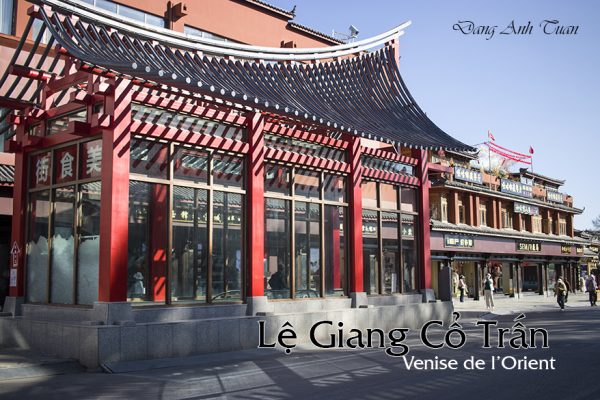
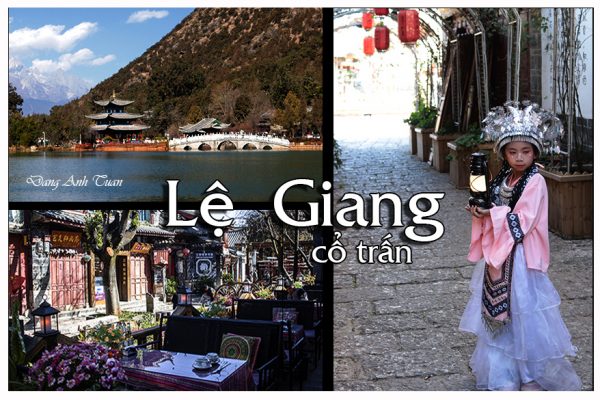
Được mệnh danh là « Tiểu Venice của phương Đông », phố cổ Lệ Giang, nằm ở tỉnh Vân Nam, tây nam Trung Quốc, dưới chân núi Ngọc Long Tuyết Sơn, nổi bật với vẻ đẹp quyến rũ như tranh vẽ. Vẻ đẹp này đến từ sự hiện diện của hàng trăm con kênh phân nhánh từ ba con sông trên núi. Những con kênh này uốn lượn qua các con phố hẹp và đan chen lấn với nhau khiến tạo cho du khách có cảm tưởng đang thất lạc ở trong mê cung. Năm 1997, phố cổ Lệ Giang được ghi vào danh sách Di sản Thế giới với tư cách là « một thành phố cổ kính nổi bật nằm trong khung cảnh ngoạn mục ». Từ thế kỷ 12, phố cổ Lijiang đã là một trung tâm thương mại quan trọng giữa Tứ Xuyên, Vân Nam và Tây Tạng, cho phép phần phía nam của Con đường Tơ lụa kết nối với các tuyến đường trà và ngựa cổ xưa.
Đến đây, du khách sẽ ngẩn ngơ trước vẻ đẹp hoài cổ của viên ngọc qúi kiến trúc Mộc Phủ, nơi đây đã từng là dinh thự của dòng họ Mộc, những người cai trị vùng Lệ Giang suốt 470 năm từ thế kỷ 13 đến đầu thế kỷ 20. Chỉ cần đi một vòng ở phố cổ, bạn sẽ bị cuốn hút bởi các mái ngói nhà cổ kính, các cầu gỗ, những con ngõ hẽm nhỏ lát đá, tràn ngập sắc hoa và các đèn lồng đỏ.
Đây cũng là nơi sinh sống của người Nạp Tây (Naxi), một dân tộc thiểu số trong 56 dân tộc thiểu số của Trung Hoa ngày nay. Người Nạp Tây có nguồn gốc từ những người Khương sống du cư ở vùng đất Tậy Tạng vào thời cổ . Chính vì vậy trong văn hóa của họ thường thấy có sự pha trộn văn hóa của người Tạng với người Hán nhất là trong âm nhạc. Họ còn hệ thống chữ viết tượng hình Đông Ba duy nhất trên thế giới còn được sử dụng cho đến ngày nay, gắn liền với văn hóa và tín ngưỡng của họ.
Người Nạp Tây sinh ra cho đến khi qua đời, đều sống trong nhà của mẹ tức là họ là những người theo chế độ mẫu hệ. Vì có cấu trúc gia đình mẫu hệ nên sau khi hôn nhân thì người chồng cư trú bên vợ, người thừa kế tài sản là phụ nữ.
Surnommée la « Petite Venise de l’Orient » et située dans la province du Yunnan, au sud-ouest de la Chine, au pied de la montagne enneigée du Dragon de Jade, la vieille ville de Lijiang, est réputée pour sa beauté pittoresque. Celle-ci tient à la présence de centaines de canaux prenant leur source dans les trois rivières de montagne. Ces canaux serpentent à travers d’étroites ruelles et s’entrelacent, ce qui donne aux visiteurs l’impression de se perdre dans un labyrinthe. En 1997, la vieille ville de Lijiang a été inscrite sur la Liste du patrimoine mondial en tant que « ville ancienne exceptionnelle dans un cadre spectaculaire ». Depuis le XIIème siècle, la vieille ville de Lijiang est un important carrefour commercial entre le Sichuan, le Yunnan et le Tibet, permettant la partie sud de la Route de la Soie de rejoindre les anciennes routes du thé et des chevaux. C’est ici que les visiteurs seront captivés par la beauté empreinte de nostalgie du manoir de la famille Mu, un joyau architectural précieux servant jadis de résidence à la famille Mu, qui régna sur Lijiang durant 470 ans, du XIIIème au début du XXème siècle. Une promenade dans la vieille ville vous enchantera avec ses anciens toits, ses ponts de bois, ses ruelles pavées et étroites débordant de fleurs et de lanternes rouges.
Cette région est abritée également par le peuple Naxi, l’une des 56 minorités ethniques de la Chine d’aujourd’hui. Les Naxi sont issus du peuple nomade Qiang qui vivait autrefois au Tibet. C’est pourquoi leur culture présente souvent un mélange d’influences tibétaines et chinoises Han, notamment dans leur musique. Ils possèdent également le système d’écriture pictographique unique Dongba, le seul de son genre au monde encore utilisé aujourd’hui et étroitement associé à leur culture et à leurs croyances.
Les Naxi vivent dans la maison de leur mère de la naissance jusqu’à la mort, ce qui correspond à un système matriarcal. De ce fait, après le mariage, ils vivent toujours chez leur épouse et l’héritage revient aux filles.
Nicknamed the « Little Venice of the East » and located in Yunnan province, in southwestern China, at the foot of the snow-capped Jade Dragon Mountain, the old town of Lijiang is renowned for its picturesque beauty. This is due to the presence of hundreds of canals originating from the three mountain rivers. These canals wind through narrow alleys and intertwine, giving visitors the impression of getting lost in a labyrinth. In 1997, the old town of Lijiang was inscribed on the World Heritage List as an « exceptional ancient town in a spectacular setting ». Since the 12th century, the old town of Lijiang has been an important trading hub between Sichuan, Yunnan and Tibet, allowing the southern part of the Silk Road to join the ancient tea and horse routes.
Here, visitors will be captivated by the nostalgic beauty of the Mu family mansion, a precious architectural gem that once served as the residence of the Mu family, who ruled Lijiang for 470 years, from the 13th century to the early 20th century. A stroll through the old town will enchant you with its ancient roofs, wooden bridges, narrow cobbled streets overflowing with flowers and red lanterns.
This region is also home to the Naxi people, one of the 56 ethnic minorities in China today. The Naxi descend from the nomadic Qiang people who once lived in Tibet. That is why their culture often presents a mix of Tibetan and Han Chinese influences, especially in their music. They also possess the unique Dongba pictographic writing system, the only one of its kind in the world still in use today and closely associated with their culture and beliefs.
The Naxi live in their mother’s house from birth until death, which corresponds to a matriarchal system. As a result, after marriage, they always live at their wife’s home and inheritance goes to the daughters.