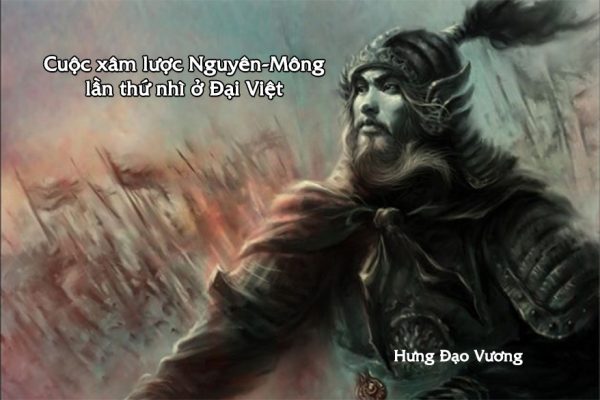
Cuộc xâm lược Đại Việt lần thứ nhì của quân Mông Cổ.
La deuxième invasion des Mongols au pays Đại Việt.
The second Mongol invasion of Đại Việt
Version française
Version anglaise
Bibliographie
Năm 1259, Đại Hãn Mông Kha qua đời khi quân Mông còn đang trong chiến dịch tấn công nhà Nam Tống. Triều đại nầy bị tiêu diệt khi Hốt Tất Liệt chiếm được Hàng Châu vào năm 1276 và sự quy hàng những ổ kháng cự cuối cùng xung quanh Quảng Châu ba năm sau đó. (Lê Thành Khôi : ibid 180). Hốt Tất Liệt trở thành hoàng đế của nước Trung Hoa. Ông là người sáng lập triều đại nhà Nguyên. Sau khi diệt được Nam Tống, Hốt Tất Liệt đối xử một cách nhân đạo đối với vị vua trẻ bị giam giữ, Tống Cung Đế (4 tuổi) Vị vua trẻ nầy được đưa đến xứ Thổ Phồn (nay là Tây Tạng), bắt phải cắt tóc đi tu.
Còn hoàng hậu nhiếp chính được chào đón một cách đầy trân trọng trước khi bà lui về một tu viện Phật giáo. Đó là lời chứng được kể lại của thương gia người Ý Marco Polo trong quyển sách có tựa đề « Marco Polo du ký » lúc ông đang phục vụ tại triều đình Hốt Tất Liệt. Chính nhờ đó Hốt Tất Liệt được người Hán chấp nhận nhận dễ dàng, xem ông là thiên tử của họ. Ông phải tranh giành quyền lực lúc bấy giờ với người em trai của ông là A Lật Bất Ca (Ariq Böke) được giới quí tộc Mông Cổ ủng hộ, dẫn đến cuộc nội chiến của dòng dõi Tolui kéo dài từ năm 1260 đến năm 1264. Sau đó A Lật Bất Ca (Ariq Böke) xin qui hàng.
Ông giành được phần thắng lợi sau cùng nhờ có được các nguồn lực nông nghiệp và kinh tế ở miền Bắc Trung Quốc mà ông kiểm soát được khiến A Lật Bất Ca bị ông bóp nghẹt về mặt kinh tế trong cuộc chiến. Hơn nữa ông còn được sự ủng hộ của các mưu sĩ và các quan lại người Hán đầy năng lực giúp ông tổ chức một bộ máy hành chính hiệu quả so với nền kinh tế thảo nguyên rất hạn hẹp mà đối thủ được có. Điều này đảm bảo cho ông có được sự hợp tác của thần dân ở địa phương về hậu cần và tài chính. Nhờ có nguồn lực từ đất Hán, quân đội của Hốt Tất Liệt được cung cấp lương thực đầy đủ liên tục trong cuộc chiến. Đây là những yếu tố then chốt để ông duy trì nỗ lực chiến tranh.
Ngay từ năm 1260, ông đã dời đô từ Karakorum ở Mông Cổ về Bắc Kinh. Ông đã có ý định tiếp thu tất cả các truyền thống Trung Hoa như là của mình. Hốt Tất Liệt thực sự tìm cách khẳng định ông là người kế thừa các vị hoàng đế vĩ đại của Trung Hoa đặc biệt là Hán Vũ Đế (triều đại nhà Tây Hán) thông qua việc khẳng định quyền tối thượng của đế chế mình trên toàn châu Á mà luôn cả vùng Đông Nam Á. Chính vì vậy tất cả các vương quốc phụ cận với đế quốc Mông Cổ đều trở thành các chư hầu lệ thuộc trong đó có Đại Viêt và Chiêm Thành cũng như có môt thời các nước nầy là các chư hầu của nhà Tống.
Nhà Trần có tục lệ truyền ngôi sớm cho hoàng thái tử khi vua cha còn sống để làm Thái Thượng Hoàng và để giúp vị vua trẻ quen dần với việc gánh vác chính sự dưới sự giám sát của vua cha. Như vậy tránh khỏi sự tranh giành quyền lực giữa các hoàng tộc, giử được đoàn kết nội bộ và bảo đảm quá trình chuyển giao quyền lực diễn ra một cách êm thấm. Dù Trần Thừa cha đẽ của Trần Cảnh (Trần Thái Tôn) không có môt ngày làm vua nhưng vẫn được tôn làm Thái Thượng Hoàng nếu không thì đây là sự soán ngôi vì Lý Chiêu Hoàng nhường ngôi cho chồng chớ có bao giờ nhường cho cha chồng đâu. Bởi vây ông vẫn được truy tôn miếu hiệu là Trần Thái Tổ của nhà Trần.
Sau khi thắng giặc Nguyên Mông lần thứ nhất, Trần Thái Tông lui về hậu trường làm Thái Thượng Hoàng và nhường ngôi lại cho Trần Hoàng tức là vua Trần Thánh Tông vào năm 1258. Phải đương đầu với tham vọng bành trướng của đế quốc Nguyên-Mông cường thịnh và hùng mạnh ở phương Bắc, Trần Thánh Tông dùng chính sách mềm dẽo, cống nạp nhà Nguyên 3 năm 1 lần với các đồ sản vật qúi lạ như sừng tê giác, ngà voi, đồi mồi vân vân nhưng ông cự tuyệt không cống người và voi và từ chối đích thân sang chầu. Ông còn khước từ việc gửi sang nước ta một quan chưởng ấn để đi giảm trị các châu quận nước ta và để biết nước ta có những gì để liệu đường mà đánh lấy cho tiện (Trần Trọng Kim, ibid 110). Ngoài ra, Trần Thánh Tông tích cực chỉnh đốn quân đội, tổ chức tuần tra biên giới để đề phòng sự xâm lược của giặc Nguyên.
Thừa dịp Trần Thái Tông qua đời, Trần Thánh Tông lên làm thái thượng hoàng nhường ngôi cho Trần Khâm (Trần Nhân Tông) và lui về ở Thiên Trường năm 1279. Hốt Tất Liệt mới gửi sứ giả Sài Xuân (hay Sài Thung) đòi Trần Nhân Tông sang chầu để tỏ lòng thần phục.
Sài Thung nổi tiếng trong lịch sử là một kẻ hống hách, kiêu căng và tìm mọi cách để hạ nhục triều đình nhà Trần. Ông đến với tư cách Thượng thư bộ Lễ nhằm thăm dò thái độ và ép vua tôi nhà Trần đầu hàng không tốn xương máu. Ông cố tình hạ nhục quốc thể Đại Việt bẳng cách tiếp thái sư Trần Quang Khải nằm khểnh trên giường trong sứ quán và không ngồi dậy ra mà ra đón tiếp thái sư.
Đây là một chiến thuật tâm lý xem coi vua tôi nhà Trần có run sợ trước sức mạnh của phương Bắc hay không? Chính qua sự kiện nầy mới thấy cái tuyệt chiêu của Hưng Đạo Vương mà chúng ta phải kính phục. Biết chuyện ngạo mạn nầy, ông liền cạo đầu, mặc áo vải đóng giả làm một nhà sư phương Bắc để đến sứ quán. Lầm tưởng là nhà sư phương Bắc thật nên Sài Thung ngồi dậy tiếp đón tử tế. Đây là cách thức để nước ta giữ được thể diện, buộc kẻ thù phải đổi thái độ mà cũng không cần dùng vũ lực đối với kẻ ngạo mạn.
Khác với mọi lần, để kéo dài thời gian hòa hoãn và chuẩn bị lực lượng quân sự, vua ta Trần Nhân Tôn rất khéo léo từ chối và cử người chú họ là Trần Di Ái, con trai thứ tư cũa Trần Thừa và em trai của vua Trần Thái Tông, sang thay mặt mình gánh vác trách nhiệm ngoại giao. Nhưng Hốt Tất Liệt nhận thấy có cơ hội dùng đòn ly gián bằng cách phong Trần Di Ái làm An nam Quốc Vương để thay thế vua Trần và sai Sài Thung dẫn theo 1.000 quân hộ tống. Nhận được tin nầy vua Trần Nhân Tôn chủ động sai tướng chặn đánh đội quân hộ tống của nhà Nguyên ngay lúc họ tiến đến Ải Nam quan khiến họ bị thua tháo chạy tan tác. Sai Thung bị trúng tên đui một mắt, còn Trần Di Ái bị bắt sống đưa về triều, phạt tội đồ đày làm lính hầu lo việc phục dịch ở phủ Thiên Trường.
Qua lăng kính của các sử gia thì Hốt Tất Liệt có ý đồ xâm chiếm nước Chiêm Thành với hai lý do sau đây:
1°) Vương quốc Champa đóng vai trò then chốt trên các tuyến đường hàng hải nối liền Trung Quốc và Ấn Độ trong một thời gian dài. Hốt Tất Liệt muốn có các đội tàu buôn của mình được an ninh đem lại sư thịnh vượng cho đế chế và các căn cứ hải quân để hỗ trợ cho các hoạt động quân sự trong tương lai tại Đông Nam Á.
2°) So với Đại Viêt, Chiêm Thành có thể bị chiếm dễ dàng được qua đường biển. Vương quốc nầy có dân số thưa thớt và phân bố trên một vùng đất rộng dưới thời trị vì của ông vua già yếu Indravarman V.
Cũng có dịp cho Hốt Tất Liệt dùng chiêu bài mượn đường Đại Việt để đánh Chiêm Thành nhưng thật sự là mưu đồ gọng kìm để thôn tính cả hai nước. Điều nầy vua ta Trần Nhân Tông đã nhận ra được từ lâu nên khi quan trấn thủ Lạng Sơn cho người về kinh đô phi báo với ông. Nhân Tông ngự thuyền ra sông Bình Thang để hội các vương hầu bách quan phải dùng kế nào chống giặc. (Trần Trọng Kim, ibid 115) Các quan người thì nói để cho quân Mông-Nguyên mượn đường, người thì bảo nên đưa đồ sang cống kỳ kế hoãn binh chỉ có Trần Quốc Tuấn và Trần Khánh Dư quyết xin đem quân trấn giữ những nơi hiểm trở không cho giặc Nguyên-Mông mượn đường sang đánh Chiêm Thành. Vua Trần Nhân Tông ưng ý nghe theo. Ông phong Trần Quốc Tuấn làm Quốc công Tiết chế, thống lĩnh toàn bộ quân đội Đại Việt để chuẩn bị cho cuộc kháng chiến chống quân Nguyên – Mông lần thứ hai. (1283).
Còn Trần Khánh Dư được giao giữ chức phó tướng quân trấn giữ Vân Đồn dưới quyền tổng chỉ huy của Trần Quốc Tuấn. Nhân Tông còn thực hiện kế sách « hợp tung » phối hợp hỗ trợ lẫn nhau với Chiêm Thành để cùng nhau chống giặc ngoại xâm.
Chúng ta mới nhận thấy Trần Nhân Tông là một vị hoàng đế anh minh kiệt xuất nhất trong lịch sử Việt Nam, nổi tiếng với tài trị quốc. Lúc nào cũng dựa lên tinh thần đoàn kết dân tộc và luôn luôn có chính sách đối ngoại vô cùng khéo léo. Ông tin tưởng giao toàn bộ quyền quân sự cho Trần Hưng Đạo nên tạo ra sự đồng lòng mẫu mực giữa vua và tôi để hai lần đánh bại quân Nguyên–Mông dù biết rằng Hưng Đạo vương Trần Quốc Tuấn là con trai của An Sinh vương Trần Liễu.
Ông còn tha chết, biết trọng tài năng và phục chức cho Trần Khánh Dư, một nhà quân sự xuất chúng chỉ đứng sau Trần Hưng Đạo về nghệ thuật quân sự và mưu lược, nổi tiếng với câu nói trong dân gian « lắm tài nhiều tật » khi Trần Khánh Dư vướng vào vụ bê bối thông dâm với công chúa Thiên Thụy, con dâu của Trần Hưng Đạo, súy mất mạng phải lấy công chuộc tội. Vua còn thể hiện tầm nhìn chiến lược của một nhà chính trị đại tài để bảo vệ nền độc lập trước thế lực phương Bắc và mở rộng bờ cõi không bằng xương máu về sau ở phía nam qua cuộc hôn nhân chính trị mang tính chiến lược (Huyền Trân công chúa với vua Chế Mân (Jaya Simhavarman III).
Tháng 8 năm giáp-thân (1284), Trần Hưng Đạo truyền hịch cho các vương hầu và quân sĩ tại bến Đông bộ đầu để điểm duyệt và được biết quân thủy và quân bộ cả thảy được 200.000 quân. Ông mới sai Trần Bình Trọng đem quân đi đóng ở Vân-Đồn (Quàng Yên) còn các tướng thì chia ra đống ở các nơi hiểm yếu. Ông thì đóng ở Vạn Kiếp (Hải Dương) để tiếp ứng mọi nơi. Còn phía quân Nguyên-Mông thì được thái tử Thoát Hoan (Toghan) con của Hốt Tất Liệt chỉ huy tiến binh vào nội địa Đại Việt dù vua Nhân Tôn có sai người thương thuyết nhưng bị khước từ. Vua buộc lòng triều tập các bộ lão thân hào và nhân sĩ tại Diên Hồng đề bàn có nên Hoà hay Chiến.Mọi người đồng thanh xin đánh.Đây là người xưa gọi là khất ngôn (référendum).
Vua mới thấy vậy an lòng lui về Hải Đông và cầm bút viêt hai câu thơ trên đuôi thuyền của Trần Hưng Đạo nhắn nhũ Hưng Đạo vương hãy nên nhớ: Câu Tiễn ở Cối Kê ngày xưa, ái quốc như thế nào vương nên nhớ. Biết rằng ở Châu Hoan (Nghệ An), Châu Ái (Thanh Hóa) còn dự trữ 10 vạn binh nữa. (Thái văn Kiểm, ibid 97).
Cối kê cựu sự quân tu ký
Hoan Ái tồn thập vạn binh.
Đây là lời nhắn nhũ cuối cùng của Trần Nhân Tôn với Hưng Đạo vương Trần Quốc Tuấn. Giờ đây tất cả mọi việc đều trong cậy vào khanh đấy thôi.
Khi đến ải Nam Quan cùng với 50 vạn quân hùng mạnh, Thoát Hoan (Toghan) mới sai sứ giả Ali mang thơ cho vua Trần Nhân Tông mượn đường nước ta để sang đánh Chiêm Thành. Nhưng vua ta từ chối lấy cớ không tiện cho việc chuyển binh đi đường bộ. Sau đó vua giao sứ giả lại cho Trần Hưng Đạo bị ông ta đuổi về.
Thông thạo binh pháp, Trần Hưng Đạo mới phân binh ra ở hai ải Khả Li, Lọc Châu (thuộc Lạng Sơn). Còn ông dẫn đại quân đóng ở Kỳ Cấp và thuyền bè thì đóng ở Bến Chữ (Bái Tân) thượng lưu sông Lục Nam với hình tam giác (thế chân kiền) để yểm trợ cho nhau. Ba vị trí này tạo thành một thế trận khép kín nhưng linh hoạt. Khi một điểm bị tấn công, hai điểm còn lại có thể lập tức cơ động ứng cứu, bọc lót từ hai bên sườn hoặc phía sau, khiến quân địch dễ rơi vào thế bị gọng kìm kẹp chặt.
Đây là nghệ thuật bố trí trận thế phối hợp bộ binh và thủy binh với một tư duy quân sự ở đỉnh cao được Trần Hưng Đạo áp dụng vô cùng thuần thục. Lạng Sơn và vùng thượng lưu sông Lục Nam vốn có địa hình đồi núi, sông ngòi đan xen. Trần Hưng Đạo đã tận dụng triệt để « địa lợi » này để chia cắt đội hình hành quân vốn quen lối đánh đồng bằng, thảo nguyên của quân Nguyên-Mông.
Lúc đầu Thoát Hoan còn e ngại nhưng vì số quân Nguyên-Mông nhiều gấp mấy lần quân ta nên Thoát Hoan tấn công cả ba mặt lấy được hai ải rồi Thoát Hoan dồn toàn quân tấn công Kỳ Cấp khiến quân ta bị dồn ra khỏi núi và Hưng Đạo buộc lòng phải chạy về Chi Lăng qua bến Bãi Tân. Nơi đây Yết Kiêu ở lại giử thuyền. Nhưng Thoát Hoan đánh rốc vào Chi Lăng dữ dội buộc Hưng Đạo vương phải lui về lại Bãi Tân (Bến Chữ) với tàn quân. Ông muốn đi đường bộ nhưng gia bộc Dã Tượng lại ngăn cản Hưng Đạo Vương không nên vì tin rằng « Yết Kiêu chưa thấy Đại Vương thì nhất định không rời thuyền ».
Trần Quốc Tuấn thấy thuyền của Yết Kiêu vẫn còn ở đó chờ sẵn. Nhờ chiếc thuyền này, ông đã kịp thời thoát khỏi sự truy đuổi của kỵ binh giặc Nguyên. Cảm động trước lòng trung nghĩa tuyệt đối ấy, Hưng Đạo Vương mới thốt ra lời ca ngợi: « Chim hồng hộc muốn bay cao phải nhờ ở sáu trụ xương cánh… » .
[Thời Trần, tất cả các quý tộc và quan lại đều có gia nô. Nhưng gia nô suốt đời phải phục dịch cho chủ nhân. Dưới chế độ phong kiến không ai có địa vị thấp hèn như họ cả. Họ mang tên của những con thú thì biết thân phận của họ như thế nào thế lại được Trần Quốc Tuấn lại trọng dụng họ thì phải khen họ là những bậc anh hùng cái thế cũng như chủ nhân họ đấy thôi.]
Nhân Tông nghe Hưng Đạo vương thua chạy về Vạn Kiếp liền ngự một chiến thuyền nhỏ xuống Hải–Đông (tức Hải Dương) rồi triều Hưng Đạo về để bàn việc. Trong bụng lo sợ, vua mới nói: Đối phuơng quá mạnh mà chống với nó thì hại muôn dân, hay là để trẫm chịu hàng để cứu muôn dân. Hưng Đạo vương mới tâu rằng: Bệ hạ nói vậy thật là lời nhân đức nhưng mà Tôn miếu xã tắc thì sao? Nếu bệ hạ muốn hàng thì chém đầu thần đi đã. Nghe lời nói trung liệt cứng cỏi của Hưng Đạo vương, Nhân Tông mới thấy an lòng. (Trần Trọng Kim, ibid 117). Ông ngày đêm chiêu tập các đạo quân ở Vạn Kiếp được lên đến 20 vạn quân.
Ông có soạn ra một quyển Binh Thư yếu lược để khuyên răng tướng sĩ phải hết lòng luyện tập và quyết chí đánh giặc cho nên người nào cũng lấy mực thích vào cánh tay hai chữ Sát Đát tức là giết quân Mông Cổ. Bởi vậy khi quân Nguyên-Mông thắng ở Vạn Kiếp, người nào có chữ Sát Đát ở trên cánh tay là bị giết ngay. Biết khó giữ được thành Thăng Long, Hưng Đạo vương rước vua và Thái Thượng Hoàng ra ngoài thành chạy về phía nam trước khi thành thất thủ khiến Thoán Hoan nổi giận sai quân rượt theo.
Vào mùa thu năm 1282, Toa Đô (Sögètu) được lệnh của Hốt Tất Liệt dẫn một đạo quân Nguyên-Mông đi đường bể sang đánh Chiêm Thành với 350 chiếc thuyền và chiếm được không tốn sức nhiều Vijaya (Đồ Bàn) cùng các thành phố trọng yếu của Chiêm Thành (1283). Những thắng lợi đó chẳng kéo dài được bao lâu. (Lê Thành Khôi, ibid 182). Dưới sư chỉ huy của hoàng tử Harijit (Chế Mân) người Chăm tiến hành một cuộc chiến tranh du kích ác liệt chống lại quân Nguyên-Mông. Hơn nữa họ phải chịu đựng cái nóng, bệnh tật và tình trạng thiếu lương thực khiến chiến dịch quân sự kéo dài, đánh mãi mà không thắng.
Chính vì vậy Hốt Tất Liệt hạ chiếu sai Toa Đô theo đường bộ kéo ra Nghệ An, hợp với quân Thoát Hoan mà đánh nước ta. Được tin nầy, Thoát Hoan sai tướng Ô Mã Nhi (Omar) đi đường bể vào tiếp ứng Toa Đô đánh từ mặt trong đánh ra còn ở mặt ngoài thì quân Nguyên-Mông chia ra giữ cả các bến từ Thăng Long xuống đến khúc sông Đại Hoàng (Hà Nam). Trần Hưng Đạo được tin nầy liền sai thượng tướng Trần quang Khải đưa binh vào đóng Nghệ An chặng đường tiến của Toa Đô và Trần Bình Trọng ở lại giữ Thiên Trường.
Còn ông thì đưa vua về Hải Dương. Trần Quang Khải chống giữ không nổi nhất là Ô Mã Nhi ở mặt bể đánh vào khiến phải lui binh. Một số hoàng tộc nhà Trần ra hàng đầu với Toa Đô trong đó có Trần Kiên (cháu nội của Trần Thái Tông, quan trấn thủ Nghệ An), Trần Ích Tắc, Trần Tú Viên. Chỉ có Trần Hưng Đạo tìm kế ngày đêm đánh giặc không nao núng chút nào cả.
Trấn giữ Thiên Trường (Nam Định), Trần Bình Trọng chẵng may bị vây bắt lúc đem binh ra đánh. Thoát Hoan cố tình khuyên dụ nhưng ông không chịu đầu mà còn để lại một câu nói bất hủ: Ta thà làm quỉ nước Nam chứ không thèm làm vương đất Bắc khiến ai nghe đến cũng động lòng thương xót. Thoát Hoan thấy dụ dỗ không được sai quân đem chém lúc ông được 26 tuổi. Bấy giờ quân Nguyên-Mông đông mạnh thế, đóng khắp mọi nơi (Bắc Ninh, Thăng Long, Thiên Trường). Trước tỉnh thế nguy nan, Trần Hưng Đạo bèn rước xa giá ra Quảng Yên rồi sau cùng đưa Nhân Tông về tỉnh Thanh Hóa.
Còn Toa Đô đánh hoài mà không lấy được mà lương thảo càng ngày lại cạn nên lấy quyết định cùng Ô Mả Nhi dẫn quân ra đường biển để hợp binh với Thoát Hoan. Đươc tin nầy Trần Quang Khải cho người về báo với Nhân Tôn thì ông mới hội quần thần lại hỏi kế. Trần Hưng Đạo mới tâu : Từ Chiêm Thành trở ra quân phải qua Thuận Hóa, Nghệ An quân sĩ vất vả. Nay lại vượt bễ ra Bắc thì sức lực của họ cũng giảm nhiều. Đây là lúc thuận tiện để mà đánh chắc chắn là phá được. Nhân Tông nghe lời mới phong Trần Nhật Duật làm tướng và Trần Quốc Toản làm phó tướng với 5 vạn binh ra đón đường chặn đánh Toa Đô ờ bến Hàm Dương.
Quân ta thắng trận buộc Toa Đô phải lui về cừa Thiên Trường. Được tin thắng trận, vua nghe lời Trần Hưng Đạo truyềnh lệnh cho Trần Quang Khải từ Nghệ An ra đánh Thoát Hoan đi vòng đường bể đến bến Chương Dương để khôi phục kinh thành Thăng Long với Phạm Ngụ Lão. Trước sự dũng cảm của quân ta, Thoát Hoan phải bỏ Thăng Long chạy về Bắc Ninh và quân ta đại thắng. Trần Quang Khải vào thành và mở tiệc ăn mừng khao quân. Lúc cảm hứng, ông mới ngâm bài thơ mà sử gia Trần Trọng Kim đã dịch lại như sau:
Chương Dương cướp gíáo giặc
Hàm Tử bắt quân thù
Thái bình nên gắng sức
Non nước ấy nghìn thu
Sau đó ông sai người về Thanh Hoá phi báo thắng trận lên vua Nhân Tông. Vua vui mừng không xiết và quyết định dời đô về Ninh Bình để tiện bề theo dõi những biến chuyển. (Thái văn Kiểm, ibid 101). Sau đó là trận Tây Kết. Đây là trận đánh quyết định vào tháng 5 năm 1285 trong cuộc chiến Nguyên-Mông lần thứ nhì. Trần Hưng Đạo chia các ngả đường chặn đánh, cô lập lực lượng của Thoát Hoan và Toa Đô không cho liên lạc với nhau. Quân Nguyên-Mông bị đánh tứ phía phải chống chọi mãnh liệt để tìm đường mà chạy. Toa Đô bị bắn chết tại trận bởi tướng quân Nguyễn Khoái, trong khi Ô Mã Nhi chạy ra tới biển lấy ghe trốn về Trung Quốc.
Khi thấy đầu của Toa Đô mà các tướng mang về nộp, Nhân Tông mới than rằng : Làm bầy tôi phải như người nầy rồi ông cởi áo ngự bào đắp vào đầu Toa Đô để tỏ lòng khâm phục người dũng liệt chết vì hết lòng với chúa.
Thoát Hoan nghe tin Toa Đô bị bắn chết, Ô Mã Nhi thì chạy trốn về Tàu thì tinh thần bị lung lay mà binh sĩ thì không còn sức lực để chống chọi nữa nhất là thêm vào đó, khí hậu nóng nực, bệnh dịch tể hoành hành. Lo sợ đại quân nhà Trần thừa thắng xông lên bao vây Thăng Long, Thoát Hoan lập tức hạ lệnh bỏ kinh thành, dẫn tàn quân rút lui tháo chạy về nước nhục nhã trong ống đồng để giữ mạng mạng sống theo hướng Bắc (Lạng Sơn). Quân ta thành công dẹp tan giặc và đánh đuổi nửa triệu quân ra khỏi bờ cỏi.
Sự thất bại của cuộc xâm lược lần thứ hai của quân Mông Cổ bắt nguồn từ tinh thần đoàn kết và lòng quyết tâm sắt đá của toàn dân tộc ta điển hình là qua Hội nghị Diên Hồng cùng việc thực hiện chiến lược « vườn không nhà trống » (tạm thời bỏ kinh thành Thăng Long, đồng thời di dời toàn bộ lương thực và tài sản nhằm làm rối loạn đội hình quân Mông Cổ). Những yếu tố này kết hợp với tài thao lược xuất chúng của Trần Hưng Đạo, người đã kiên nhẫn chờ đợi thời cơ chín muồi để tung ra các đòn phản công chớp nhoáng trong những trận đánh quyết định tại Hàm Tử, Chương Dương và Tây Kết.
En 1259, le Grand Khan Möngke mourut alors que les forces mongoles menaient encore la campagne militaire contre la dynastie des Song du Sud. Cette dynastie s’éteignit lorsque Kubilai Khan s’empara de Hangzhou en 1276 et que les derniers foyers de résistance autour de Canton capitulèrent trois ans plus tard (Lê Thành Khôi : ibid., 180). Kubilai Khan devint empereur de Chine et fondateur de la dynastie Yuan. Après avoir conquis les Song du Sud, Kubilai Khan traita avec humanité le jeune monarque captif, l’empereur Gong des Song (âgé de quatre ans). Celui-ci fut envoyé au Tibet et contraint de se raser la tête et de devenir moine. Quant à l’impératrice régente, elle fut accueillie avec grand respect avant de se retirer dans un monastère bouddhiste.
L’impératrice régente reçut un accueil respectueux avant de se retirer dans un monastère bouddhiste. Ce récit nous vient du marchand italien Marco Polo, tel qu’il figure dans son ouvrage *Le Devisement du monde* (ou *Les Voyages de Marco Polo*), rédigé à l’époque où il servait à la cour de Kubilai Khan. C’est en grande partie grâce à cela que Kubilai Khan fut aisément accepté par les Chinois, qui le reconnurent comme le « Fils du Ciel ». À cette époque, il dut disputer le pouvoir à son frère cadet, Ariq Böke soutenu par la noblesse mongole, ce qui déclencha une guerre civile au sein de la lignée de Tolui. Cette confrontation dura de 1260 à 1264. Ariq Böke finit par se rendre à Kubilai Khan.
Il réussit à emporter la victoire en tirant parti des ressources agricoles et économiques du nord de la Chine qu’il contrôlait et étranglant ainsi économiquement Ariq Böke durant le conflit. En outre, il bénéficiait du soutien de stratèges et de fonctionnaires chinois compétents, ce qui lui permit de mettre en place un appareil administratif efficace bien supérieur à l’économie limitée fondée sur le mode de vie des steppes dont disposait son rival. Cela lui assura la coopération des populations locales sur les plans logistique et financier. Grâce aux ressources provenant des territoires chinois, l’armée de Kubilaï fut abondamment et régulièrement ravitaillée tout au long de la guerre. Ce sont ces facteurs déterminants lui permettant de soutenir son effort de guerre.
Dès 1260, il transféra la capitale de Karakorum en Mongolie, à Pékin, avec l’intention d’adopter les traditions chinoises. Kubilai Khan chercha à s’imposer comme le successeur des grands empereurs de Chine notamment l’empereur Wu Di des Han occidentaux en affirmant la suprématie de son empire sur l’ensemble de l’Asie, y compris l’Asie du Sud-Est. En conséquence, les royaumes voisins de l’Empire mongol furent réduits au rang des états vassaux parmi lesquels figuraient le Đại Việt et le Champa, qui avaient été auparavant les deux vassaux de la dynastie des Song.
La dynastie des Trần avait la tradition d’employer l’abdication précoce, selon laquelle le monarque régnant transmettait le trône au prince héritier de son vivant, tout en assumant le titre d’empereur retiré afin d’aider le jeune souverain à maîtriser progressivement toutes les affaires de l’État sous sa supervision. Cette pratique prévenait les luttes de pouvoir au sein du clan royal, préservait l’unité interne et garantissait une transition en douceur de l’autorité. Bien que Trần Thừa, le père biologique de Trần Cảnh (l’empereur Trần Thái Tông) n’ait jamais régné en tant qu’empereur, il reçut néanmoins le titre d’empereur retiré. Sans cela, la succession aurait été perçue comme une usurpation du fait que l’impératrice Lý Chiêu Hoàng avait abdiqué en faveur de son époux plutôt que de son beau-père. Par conséquent, il fut honoré à titre posthume du nom de temple Trần Thái Tổ. Il fut consacré ainsi comme l’ancêtre fondateur de la dynastie des Trần.
Après la première victoire sur les envahisseurs mongols de la dynastie Yuan, Trần Thái Tông se retira pour devenir empereur émérite, cédant ainsi le trône à Trần Hoàng qui prit le nom de roi Trần Thánh Tông en 1258. Face aux ambitions impéralistes du puissant empire mongol des Yuan au nord, Trần Thánh Tông adopta une politique de souplesse: il versa un tribut à la cour des Yuan tous les trois ans en offrant des biens rares et précieux tels que des cornes de rhinocéros, de l’ivoire et de l’écaille de tortue. Par contre il refusa catégoriquement de fournir des sujets humains ou des éléphants de guerre ou de se rendre en personne à la cour des Yuan pour y prêter hommage. Il rejeta également la proposition de laisser sur place un fonctionnaire yuan chargé de superviser l’administration locale et d’y évaluer les ressources du royaume en vue d’une éventuelle invasion (Trần Trọng Kim, ibid., p. 110). Par ailleurs, Trần Thánh Tông réorganisa activement l’armée et mit en place des patrouilles frontalières pour se prémunir contre toute agression mongole.
Profitant de la mort de Trần Thái Tông, son fils Trần Thánh Tông prit le titre d’Empereur retiré. Il céda ainsi le trône à Trần Khâm (Trần Nhân Tông) et se retira à Thiên Trường en 1279. Par la suite, Kubilai Khan envoya un émissaire, Sài Xuân (également connu sous le nom de Sài Thung), pour exiger le déplacement de Trần Nhân Tông à la cour mongole afin d’y prêter hommage et de faire acte de soumission.
Sài Thung fut historiquement connu pour son arrogance et sa morgue, ainsi que pour ses tentatives incessantes de vouloir humilier la cour des Trần. Il vint en qualité de ministre des Rites, avec l’objectif de sonder l’attitude de la cour et de contraindre le monarque Trần ainsi que ses dignitaires à se rendre sans effusion de sang. Il porta délibérément atteinte à la dignité du Đại Việt en recevant le Grand Chancelier Trần Quang Khải. Il était allongé sur le lit dans la résidence diplomatique tout en refusant de se lever pour l’accueillir.
C’était une manœuvre psychologique destinée à impressionner le monarque de la dynastie Trần et sa cour pour savoir s’ils trembleraient face à la puissance du Nord. C’était précisément lors de cet épisode que se révéla le génie du prince Hưng Đạo, une qualité suscitant jusqu’à aujourd’hui notre profonde admiration. Ayant appris l’arrogance de l’envoyé, il se rasa le crâne et revêtit la simple robe d’un moine du Nord pour se rendre à l’ambassade. En le prenant pour un véritable moine venu du Nord, Sai Thung se leva pour l’accueillir avec courtoisie. Cette stratégie permit à la nation vietnamienne de préserver sa dignité et de contraindre l’ennemi à changer d’attitude sans avoir besoin de recourir ainsi à la force face à l’arrogance de l’adversaire.
Contrairement à toutes les autres fois, afin de prolonger la période de trêve et de préparer les forces militaires, notre roi Trần Nhân Tông déclina habilement la convocation et envoya son oncle Trần Di Ái, quatrième fils de Trần Thừa et frère cadet du roi Trần Thái Tông, de mener la mission diplomatique en son nom. Toutefois, Kublai Khan y vit l’occasion de semer la discorde: il nomma Trần Di Ái « roi d’Annam» en remplacement du souverain en titre et dépêcha Sài Thung (Tchai Tchouen), à la tête d’une escorte de mille soldats pour l’accompagner. Informé de la situation, le roi Trần Nhân Tông ordonna à ses généraux d’intercepter le détachement des Yuan à l’approche de la passe Nam Quan et lui infligea une déroute totale. Sai Thung fut blessé par une flèche à l’œil tandis que Trần Di Ái fut capturé vivant et ramené à la cour royale où il fut condamné aux travaux forcés en tant que serviteur au palais de Thiên Trường.
À travers le prisme des historiens, Kublai Khan avait l’intention d’envahir le royaume de Champa pour les deux raisons suivantes :
1°) Le royaume de Champa a joué un rôle clé sur les routes maritimes reliant la Chine et l’Inde pendant une longue période. Kublai Khan voulait ses propres flottes marchandes en sécurité dans le but d’apporter la prospérité à son empire et des bases navales afin de soutenir les opérations militaires futures en Asie du Sud-Est.
2°) Comparé à Đại Viêt, le Champa pouvait être conquis facilement par voie maritime. Ce royaume avait une population clairsemée et répartie sur un vaste territoire sous le règne du vieux roi faible Indravarman V.
Il y eut aussi une occasion pour Kubilai Khan d’utiliser le stratagème d’emprunter la route du Đại Việt pour attaquer le Champa, mais en réalité c’était un plan de tenaille pour annexer les deux pays. Notre roi Trần Nhân Tông s’en était rendu compte depuis longtemps. Lorsque le gouverneur de Lạng Sơn envoya quelqu’un à la capitale pour lui faire un rapport urgent, Nhân Tông se rendit en barque sur la rivière Bình Than (Bắc Ninh) et réunit sa cour (princes et dignitaires) afin de décider la stratégie à adopter pour résister à l’ennemi. (Trần Trọng Kim, ibid 115) Certains mandarins proposèrent de laisser le passage à emprunter aux troupes Yuan-Mongoles tandis que d’autres suggérèrent d’envoyer des présents en tribut afin de gagner du temps. Seuls, Trần Quốc Tuấn et Trần Khánh Dư demandèrent résolument à conduire l’armée pour tenir les lieux stratégiques et empêcher les Yuan-Mongols d’emprunter la route pour aller attaquer le Champa. Le roi Trần Nhân Tông adopta cet avis. Il nomma Trần Quốc Tuấn Quốc commandant en chef de l’ensemble de l’armée du Đại Việt, pour préparer la résistance contre les Yuan-Mongols pour la deuxième fois (1283).
Quant à Trần Khánh Dư, il fut chargé du poste de vice-général pour garder le district Vân Đồn de la province Quảng Ninh sous le commandement général de Trần Quốc Tuấn. Nhân Tông mit également en œuvre la stratégie de « hợp tung (ou l’union fait la force) » afin d’assurer la coordonnination et l’entraide avec le Champa dans la lutte contre les envahisseurs étrangers.
Nous venons de reconnaître que Trần Nhân Tông est l’un des empereurs les plus éclairés et exceptionnels dans l’histoire du Vietnam pour son talent de gouvernance. Il s’est toujours appuyé sur l’esprit de solidarité nationale et a constamment mené une politique étrangère extrêmement habile. Il a accordé toute sa confiance à au prince H ưng Đ ạo en lui donnant la totalité du pouvoir militaire. Cela créa ainsi l’unanimité exemplaire entre le roi et son sujet pour vaincre à deux reprises les armées Yuan-Mongoles, bien qu’il sût que le prince Hưng Đạo, Trần Quốc Tuấn, était le fils du prince An Sinh, Trần Liễu.
Trần Nhân Tông épargna encore la vie à Trần Khánh Dư. Il sut apprécier son talent et le rétablit dans ses fonctions. C’était un militaire hors pair classé derrière Trần Hưng Đạo pour l’art militaire et la stratégie. Il était très connu par le peuple pour la phrase «autant de talents que défauts» lorsque Trần Khánh Dư fut impliqué dans le scandale d’adultère avec la princesse Thiên Thụy, belle-fille de Trần Hưng Đạo. Cela faillit de lui faire perdre la vie. Il dut racheter sa faute par ses exploits militaires. Le roi manifesta encore la vision stratégique d’un grand homme politique pour défendre l’indépendance du pays face aux puissances du Nord et pour savoir agrandir plus tard le territoire au sud sans effusion de sang au moyen d’un mariage politique stratégique (la princesse Huyền Trân avec le roi Chế Mân (Jaya Simhavarman III)).
Au huitième mois de l’année du singe de bois (1284), Prince Hưng Đạo adressa une proclamation aux princes, aux nobles et aux troupes rassemblés à l’embarcadère de Đông bộ đầu pour une revue des effectifs, le tout dévoilant une force combinée navale et terrestre de 200 000 soldats. Il chargea Trần Bình Trọng de positionner des troupes à Vân Đồn (Quảng Yên), tandis que d’autres généraux étaient affectés à la surveillance de divers points stratégiques. Quant à lui, il établit ses forces à Vạn Kiếp (Hải Dương) afin de pouvoir apporter le renfort à l’endroit où le besoin se ferait sentir. Quant aux forces yuan-mongoles, elles étaient placées sous le commandement du prince Toghan, fils de Kubilaï Khan en vue d’une invasion du territoire du Đại Việt malgré les tentatives infructueuses de négociation du roi Nhân Tông. Celui-ci fut obligé de convoquer une assemblée réunissant tous les vieillards du pays, les notables et les lettrés au palais Diên Hồng pour délibérer sur le choix à prendre entre la paix et la guerre. L’assemblée se prononça à l’unanimité pour la guerre, un événement considéré historiquement comme une forme précoce de référendum.
Rassuré par le choix de la confrontation, le roi se retira à Hải Đông. Il saisit alors son pinceau pour inscrire ses deux vers sur la poupe de la barque du Prince Hưng Đạo en lui demandant de garder à l’esprit l’exemple du roi Goujian au mont Kuaiji ainsi que la nature du véritable patriotisme. Il dut savoir également qu’une force de réserve de cent mille hommes était à sa disposition et restait stationnée encore à Châu Hoan (Nghệ An) et à Châu Ái (Thanh Hóa) (Thai Van Kiem, ibid., p. 97).
À son arrivée à la passe de Nam Quan à la tête d’une puissante armée de 500 000 hommes, Toghan envoya un émissaire nommé Ali chargé de remettre une lettre au roi Trần Nhân Tông et lui sollicita l’autorisation de traverser le pays pour attaquer le Champa. Le roi refusa en invoquant le caractère inadapté du terrain pour le déplacement de troupes par la voie terrestre. Il remit ensuite l’émissaire au prince Hưng Đạo qui l’expulsa sans tarder.
Doué dans l’art de la guerre, Trần Hưng Đạo déploya ses forces aux cols de Khả Li et de Lộc Châu dans la province de Lạng Sơn). Parallèlement, il établit le gros de son armée à Kỳ Cấp et il positionna sa flotte à Bến Chữ (Bái Tân) situé sur le cours supérieur de la rivière Lục Nam. Cela formait ainsi un dispositif défensif triangulaire (thế chân kiền) qui permettait aux unités de se soutenir mutuellement. Ces trois positions constituaient un dispositif de combat à la fois autonome et flexible: si l’un des points venait à être attaqué, les deux autres pouvaient immédiatement manœuvrer pour porter secours en prenant l’ennemi de flanc ou le frappant par l’arrière. Cela permit de le piéger aisément dans une position prise en tenailles difficile d’en sortir.
Cela illustre bien l’art de coordonner les forces d’infanterie et les troupes navales en formationde combat avec un état d’esprit militaire à son apogée que Trần Hưng Đạo a maîtrisé et mis en œuvre avec une habileté exceptionnelle. Le relief de Lạng Sơn et celui du cours supérieur de la rivière Lục Nam étaient caractérisés par un enchevêtrement de collines, de montagnes et de cours d’eau. Trần Hưng Đạo a pleinement tiré parti de cet avantage géographique pour fragmenter les formations des troupes yuan-mongoles habituées à combattre en terrain découvert dans les plaines et les steppes.
Au début, Toghan hésita. Ayant constaté que les forces mongoles de la dynastie Yuan surpassaient largement en nombre les troupes vietnamiennes, il rassembla toutes ses troupes pour lancer une offensive sur trois fronts et il s’empara de deux cols de montagne. Puis il concentra ensuite l’ensemble de son armée pour attaquer Kỳ Cấp, ce qui permit de déloger les troupes vietnamiennes des montagnes et de forcer Prince Hưng Đạo à battre en retraite vers Chi Lăng tout en passant par le débarcadère de Bãi Tân où Yết Kiêu dut rester pour garder les embarcations. Cependant, la progression rapide et impétueuse de Toghan obligea Prince Hưng Đạo et ses troupes restantes à se replier sur Bãi Tân (appelé également Bến Chữ). Malgré son intention de poursuivre sa retraite par la voie terrestre, son fidèle serviteur Dã Tượng l’en dissuada en lui signalant que Yết Kiêu n’abandonnerait certainement pas les embarcations sans l’avoir vu d’abord.
Effectivement, une fois arrivé au débarcadère Bãi Tân, Trần Quốc Tuấn trouva la barque de Yết Kiêu qui continuait à l’attendre. Grâce à cette embarcation, il parvint à s’échapper in extremis à la cavalerie yuan lancée à ses trousses. Profondément touché par une loyauté aussi indéfectible, Prince Hưng Đạo s’exclama avec admiration : « Pour que le flamant prenne son essor, il lui faut s’appuyer sur les six os structurants de ses ailes… »
[Sous la dynastie des Trần, tous les nobles et les hauts fonctionnaires entretenaient des serviteurs attachés à leur résidence. Ces hommes étaient tenus de servir leurs maîtres durant toute leur vie. Dans le régime féodal, nul n’occupait un statut inférieur à celui qu’ils avaient. Ils portaient les noms empruntés dans le monde des animaux. Toutefois, le fait d’être choisis par Trần Quốc Tuấn témoignait d’une grande estime et des missions importantes qui leur étaient confiées nous amène à les saluer comme des héros d’une stature exceptionnelle, au même titre que leur maître].
En apprenant que le prince Hưng Đạo avait été vaincu et s’était replié à Vạn Kiếp, Nhân Tông monta aussitôt sur une petite jonque pour rejoindre Hải–Đông (c’est-à-dire Hải Dương), puis il convoqua Prince Hưng Đạo à la cour afin de discuter des affaires. Plongé dans une profonde inquiétude, le roi lui dit alors : L’ennemi est trop puissant, si nous lui résistons, ce sera au détriment du peuple ou bien ma reddition ne vaudrait-elle pas afin de sauver le peuple? Prince Hưng Đạo lui répondit: Ce que Votre Majesté vient de dire est certes une parole pleine d’humanité et de bonté, mais que deviendraient alors les temples ancestraux et le royaume ? Si Votre Majesté veut se rendre, il faut commencer par me trancher la tête. En écoutant ces paroles loyales et fermes du prince Hưng Đạo, Nhân Tông se sentit enfin rassuré. (Trần Trọng Kim, ibid 117). Jour et nuit, il continua à mobiliser les troupes à Vạn Kiếp jusqu’à atteindre deux cent mille soldats.
Après avoir rédigé le manuel intitulé « Binh Thư yếu lược (ou Résumé essentiel de l’art militaire » à l’intention de ses troupes, il réussit à exhorter ces dernères à s’entraîner avec diligence et à demeurer inébranlables dans leur détermination à combattre l’ennemi. Chaque soldat se fit tatouer ainsi sur le bras les caractères « Sát Đát » (signifiant « Tuer les Mongols »). Lorsque les forces mongoles de la dynastie Yuan remportèrent la victoire à Vạn Kiếp, quiconque portait ce tatouage était immédiatement exécuté. La capitale Thăng Long ne pouvait pas être défendue. Prince Hưng Đạo fit sortir le roi et l’empereur retiré de la citadelle et il s’enfuya vers le sud avant sa chute. Cela provoqua la colère de Toghan et le poussa à ordonner à ses troupes de se lancer à leur poursuite.
À l’automne de l’année 1282, Kubilai Khan ordonna à Sögètu (Toa Đô) de mener une armée yuan-mongole par voie maritime pour envahir le Champa. Il fut à la tête d’une flotte de 350 navires. Il parvint à s’emparer de Vijaya (Đồ Bàn) et d’autres cités chames stratégiques sans grande difficulté (1283). Toutefois, ces victoires furent de courte durée (Lê Thành Khôi, ibid. 182). Sous le commandement du prince Harijit (Chế Mân), les Chams menèrent une guerre de guérilla acharnée contre les troupes yuan-mongoles. En outre, les envahisseurs souffrirent de la chaleur, des maladies et de pénuries alimentaires, ce qui fit s’éterniser la campagne militaire sans remporter aucune victoire décisive.
C’était pour cela que Kubilai Khan promulgua un décret impérial ordonnant à Sögètu (Toa Đô) de faire route par voie terrestre vers Nghệ An et de faire sa jonction avec Toghan (Thoát Hoan) pour envahir le Đại Việt. Informé de la situation, Toghan dépêcha le général Omar (Ô Mã Nhi) par voie maritime pour renforcer Sogëtu dans le but de coordonner une attaque venant de l’intérieur, tandis que les troupes yuan-mongoles étaient déployées pour sécuriser tous les points de passage fluviaux de la capitale Thăng Long jusqu’à la rivière Đại Hoàng (dans l’actuelle province de Hà Nam). Mis au courant de ces mouvements, Prince Hưng Đạo ordonna immédiatement au général en chef Trần Quang Khải de mener des troupes à Nghệ An pour intercepter la progression de Sogëtu, tout en chargeant Trần Bình Trọng de rester sur place pour défendre Thiên Trường.
Quant à lui, il escorta le roi jusqu’à Hải Dương. Trần Quang Khải ne parvint pas à tenir surtout ses positions après une attaque venue de la mer lancée par Omar et il fut contraint de battre en retraite. Plusieurs membres de la famille royale des Trần se rendirent à Toghan, notamment Trần Kiên (petit-fils du roi Trần Thái Tông et gouverneur de la province Nghệ An), Trần Ích Tắc et Trần Tú Viên. Il n’y avait que Prince Hưng Đạo continuant à élaborer des stratégies pour combattre l’ennemi jour et nuit, sans jamais faiblir dans sa détermination.
En défendant Thiên Trường (Nam Định), Trần Bình Trọng fut malheureusement capturé lors d’une sortie contre l’ennemi. Toghan tenta de le convaincre de faire défection, mais il refusa et il laissa une phrase immortelle qui émut tous ceux qui l’entendirent: « Je préfère être un fantôme du Sud plutôt qu’un seigneur du Nord. » Sachant que ses tentatives de persuasion étaient vaines, Toghan ordonna son exécution. Trần Bình Trọng était alors âgé de vingt-six ans. À cette époque, les forces yuan-mongoles étaient nombreuses et puissantes et occupaient divers points de la région, notamment Bắc Ninh, Thăng Long et Thiên Trường. Face à cette situation périlleuse, Prince Hưng Đạo escorta le cortège royal jusqu’à la province Quảng Yên et finit par emmener le roi Nhân Tông dans la province de Thanh Hóa.
Dans l’impossibilité de s’emparer du territoire malgré des assauts répétés et confronté à l’épuisement des vivres, Sögètu (Toa Đô), le général de Toghan, décida de faire passer ses troupes par voie maritime aux côtés de Omar (Ô Mã Nhi) pour rejoindre le gros des forces de Toghan. Informé de la situation, Trần Quang Khải en avisa le roi Nhân Tông, qui réunit aussitôt ses dignitaires pour élaborer une stratégie. Prince Hưng Đạo conseilla: Leurs troupes ont enduré de grandes épreuves en marchant depuis le Champa, à travers les provinces Thuận Hóa et Nghệ An. À présent, la traversée maritime vers le nord achèva de les épuiser. C’était le moment idéal pour les frapper. La victoire serait à nous. Suivant cet avis, le roi Nhân Tông nomma Trần Nhật Duật commandant et Trần Quốc Toản commandant adjoint et les envoya à la tête d’une armée de 50 000 hommes pour intercepter et affronter Sögètu au quai de Hàm Dương.
Nos forces remportèrent la bataille et contraignèrent Sögètu (Toa Đô) à battre en retraite vers l’estuaire de Thiên Trường. Informé de cette victoire, le roi sur les conseils du Prince Hưng Đạo ordonna à Trần Quang Khải de quitter Nghệ An pour attaquer Toghan. En empruntant la voie maritime jusqu’au quai de Chương Dương, Trần Quang Khải fit sa jonction avec le général Phạm Ngũ Lão pour reconquérir la capitale impériale de Thăng Long. Face à la bravoure de nos troupes, Toghan fut contraint d’abandonner Thăng Long et de fuir vers Bắc Ninh. Cela offrit ainsi une victoire éclatante à notre camp. Trần Quang Khải pénétra dans la citadelle et organisa un banquet pour célébrer la victoire et récompenser les troupes. Dans un élan d’inspiration, il récita un poème que l’historien Trần Trọng Kim a traduit comme suit:
À Chương Dương, nous avons arraché les lances à l’adversaire;
À Hàm Tử, nous avons capturé les troupes ennemies.
En temps de paix, nous œuvrons de toutes nos forces
Cette terre perdurera à jamais.
Il envoya ensuite un messager à Thanh Hóa pour annoncer d’urgence la victoire au roi Nhân Tông. Ravi par cette annonce, le roi décida de transférer la capitale à Ninh Bình afin de mieux suivre l’évolution de la situation (Thái Văn Kiểm, ibid. 101). Vint ensuite la bataille de Tây Kết. C’était un affrontement décisif survenu en mai 1285 lors de la seconde invasion mongole. Prince Hưng Đạo déploya ses troupes pour intercepter et isoler les armées de Toghan et de Sögètu, ce qui les empêcha ainsi de communiquer entre elles. Assaillies de toutes parts, les forces mongolo-yuan luttèrent désespérément pour trouver une issue. Sögètu fut abattu au combat par le général Nguyễn Khoái, tandis que Omar prit la fuite vers la mer et regagna la Chine par bateau.
En voyant la tête de Sögètu apportée par ses généraux, le roi Nhân Tông s’exclama : « Un sujet devrait être comme cet homme ». Puis il retira sa propre robe royale pour en recouvrir la tête de Sögètu. Il exprima ainsi son admiration pour un valeureux guerrier mort dans un dévouement absolu envers son seigneur.
En apprenant la mort de Sögètu (Toa Đô) et la fuite d’Omar (Ô Mã Nhi) vers la Chine, Toghan (Thoát Hoan) vit son moral s’effondrer. Ses troupes, déjà épuisées et accablées par une chaleur étouffante ainsi que par des maladies galopantes, n’avaient plus la force de résister.Craignant que l’armée victorieuse des Trần profita de cet avantage pour assiéger Thăng Long, Toghan ordonna immédiatement l’abandon de la capitale. Il mena les restes de son armée dans une retraite humiliante vers le nord en direction de Lạng Sơn et il s’échappa, selon la légende, dissimulé dans un tube de bronze pour sauver sa vie tandis que nos forces écrasaient les envahisseurs et chassaient du pays cette armée forte d’un demi-million d’hommes.
L’échec de la seconde invasion mongole a été dû à la solidarité et la détermination inébranlable de la nation illustrées par la conférence de Diên Hồng ainsi qu’à la mise en œuvre de la stratégie de la « terre brûlée » (abandon temporaire de la capitale Thăng Long et évacuation de toutes les ressources alimentaires et des biens pour désorienter les forces mongoles). Le tout était conjugué au commandement brillant du Prince Hưng Đạo qui sut attendre patiemment le moment opportun pour lancer des contre-attaques fulgurantes lors des batailles décisives de Hàm Tử, Chương Dương và Tây Kết.
In 1259, the Great Khan Möngke died while Mongol forces were still waging a military campaign against the Southern Song dynasty. That dynasty came to an end when Kublai Khan captured Hangzhou in 1276 and the last pockets of resistance around Canton surrendered three years later (Lê Thành Khôi: ibid., 180). Kublai Khan became Emperor of China and the founder of the Yuan dynasty. After conquering the Southern Song, Kublai Khan treated the young captive monarch, Emperor Gong of Song, who was four years old—humanely. The boy was sent to Tibet and forced to shave his head and become a monk. As for the Empress Regent, she was received with great respect before retiring to a Buddhist monastery.
The Empress Regent was received respectfully before retiring to a Buddhist monastery. This account comes from the Italian merchant Marco Polo, as recorded in his work *The Travels of Marco Polo* (or *Description of the World*), written while he was serving at the court of Kublai Khan. It was largely thanks to this that Kublai Khan was readily accepted by the Chinese, who recognized him as the « Son of Heaven. » At that time, he had to vie for power with his younger brother, Ariq Böke who was supported by the Mongol nobility—sparking a civil war within the lineage of Tolui. This conflict lasted from 1260 to 1264. Ariq Böke eventually surrendered to Kublai Khan.
He succeeded in securing victory by leveraging the agricultural and economic resources of the northern Chinese territories under his control, thereby economically strangling Ariq Böke during the conflict. Furthermore, he benefited from the support of skilled Chinese strategists and officials, enabling him to establish an efficient administrative apparatus far superior to the limited, steppe-based economic system available to his rival. This ensured the cooperation of local populations regarding logistics and finance. Thanks to resources drawn from Chinese territories, Kublai’s army was abundantly and consistently supplied throughout the war. These were the decisive factors that enabled him to sustain his war effort.
As early as 1260, he moved the capital from Karakorum in Mongolia to Beijing, intending to adopt Chinese traditions. Kublai Khan sought to establish himself as the successor to the great emperors of China, notably Emperor Wu of the Western Han by asserting his empire’s supremacy over all of Asia, including Southeast Asia. Consequently, kingdoms neighboring the Mongol Empire were reduced to the status of vassal states; these included Đại Việt and Champa, which had previously been vassals of the Song dynasty.
The Trần dynasty followed a tradition of early abdication, whereby the reigning monarch would pass the throne to the crown prince during his own lifetime while assuming the title of Retired Emperor; this allowed him to assist the young sovereign in gradually mastering state affairs under his supervision. This practice prevented power struggles within the royal clan, preserved internal unity, and ensured a smooth transition of authority. Although Trần Thừa—the biological father of Trần Cảnh (Emperor Trần Thái Tông)—never reigned as emperor, he was nonetheless granted the title of Retired Emperor. Without this measure, the succession might have been viewed as a usurpation, given that Empress Lý Chiêu Hoàng had abdicated in favor of her husband rather than her father-in-law. Consequently, he was posthumously honored with the temple name Trần Thái Tổ, thereby being enshrined as the founding ancestor of the Trần dynasty.
After the initial victory over the Mongol invaders of the Yuan Dynasty, Trần Thái Tông stepped down to become Emperor Emeritus, ceding the throne to Trần Hoàng, who assumed the title of King Trần Thánh Tông in 1258. Confronted with the imperialist ambitions of the powerful Mongol Yuan Empire to the north, Trần Thánh Tông adopted a flexible policy: he paid tribute to the Yuan court every three years, offering rare and precious goods such as rhinoceros horns, ivory, and tortoiseshell. However, he flatly refused to provide human subjects or war elephants, or to travel in person to the Yuan court to pay homage. He also rejected the proposal to station a Yuan official locally to oversee the administration and assess the kingdom’s resources in preparation for a potential invasion (Trần Trọng Kim, ibid., p. 110). Furthermore, Trần Thánh Tông actively reorganized the army and established border patrols to guard against any Mongol aggression.
Upon the death of Trần Thái Tông, his son Trần Thánh Tông assumed the title of Retired Emperor. He thus ceded the throne to Trần Khâm (Trần Nhân Tông) and retired to Thiên Trường in 1279. Subsequently, Kublai Khan sent an envoy, Sài Xuân (also known as Sài Thung), to demand that Trần Nhân Tông travel to the Mongol court to pay homage and demonstrate his submission.
Sài Thung was historically known for his arrogance and haughtiness, as well as for his ceaseless attempts to humiliate the Trần court. He arrived as Minister of Rites with the aim of gauging the court’s attitude and compelling the Trần monarch and his dignitaries to surrender without bloodshed. He deliberately affronted the dignity of Đại Việt when receiving Grand Chancellor Trần Quang Khải. He remained lying on the bed in the diplomatic residence, refusing to rise to greet him.
It was a psychological ploy designed to impress the Trần dynasty monarch and his court, testing whether they would tremble before the might of the North. It was precisely during this episode that the genius of Prince Hưng Đạo was revealed—a quality that commands our deep admiration to this day. Upon learning of the envoy’s arrogance, he shaved his head and donned the simple robes of a Northern monk to visit the embassy. Mistaking him for a genuine monk from the North, Sai Thung rose to greet him courteously. This strategy enabled the Vietnamese nation to uphold its dignity and compel the enemy to alter their attitude, without needing to resort to force in the face of the adversary’s arrogance.
Unlike previous occasions, and seeking to extend the truce while preparing his military forces, King Trần Nhân Tông skillfully declined the summons; instead, he dispatched his uncle Trần Di Ái—the fourth son of Trần Thừa and younger brother of King Trần Thái Tông—to lead the diplomatic mission in his stead. However, Kublai Khan seized this opportunity to sow discord: he appointed Trần Di Ái « King of Annam » to replace the reigning monarch and sent Sài Thung, accompanied by an escort of one thousand soldiers, to escort him. Upon learning of the situation, King Trần Nhân Tông ordered his generals to intercept the Yuan detachment as it approached Nam Quan Pass, inflicting a crushing defeat upon them. Sài Thung was wounded in the eye by an arrow, while Trần Di Ái was captured alive and brought back to the royal court, where he was sentenced to forced labor as a servant at the Thiên Trường Palace.
From the perspective of historians, Kublai Khan intended to invade the Kingdom of Champa for the following two reasons:
1) The Kingdom of Champa played a key role in the maritime routes connecting China and India for a long period. Kublai Khan wanted to ensure the safety of his merchant fleets—thereby bringing prosperity to his empire—and to secure naval bases to support future military operations in Southeast Asia.
2) Compared to Đại Viêt, Champa could be easily conquered by sea. The kingdom had a sparse population spread across a vast territory under the reign of the elderly and weak King Indravarman V.
Kublai Khan also had the opportunity to employ a ruse—using the route through Đại Việt to attack Champa—though in reality, it was a pincer strategy intended to annex both countries. King Trần Nhân Tông had long since realized this. When the governor of Lạng Sơn sent a messenger to the capital with an urgent report, Nhân Tông traveled by boat to the Bình Than River (in Bắc Ninh) and convened his court comprising princes and dignitaries to determine the strategy for resisting the enemy. (Trần Trọng Kim, ibid. 115) Some officials proposed allowing the Yuan-Mongol troops passage, while others suggested sending tribute gifts to buy time.
Trần Quốc Tuấn and Trần Khánh Dư were the only ones to firmly request command of the army to secure strategic positions and prevent the Yuan-Mongols from using the route to attack Champa. King Trần Nhân Tông accepted this proposal. He appointed Trần Quốc Tuấn Commander-in-Chief of the entire Đại Việt army to prepare for a second resistance against the Yuan-Mongols (1283).
As for Trần Khánh Dư, he was assigned the role of deputy general to guard the Vân Đồn district in Quảng Ninh province, under the overall command of Trần Quốc Tuấn. Nhân Tông also implemented a strategy of « union makes strength » (*hợp tung*) to ensure coordination and mutual support with Champa in the struggle against foreign invaders.
Trần Nhân Tông is recognized as one of the most enlightened and exceptional emperors in Vietnamese history, owing to his talent for governance. He consistently relied on the spirit of national solidarity and pursued an extremely skillful foreign policy. He placed his full trust in Prince Hưng Đạo, granting him total military authority. This fostered an exemplary unity between the monarch and his subject, enabling them to defeat the Yuan-Mongol armies twice—even though he knew that Prince Hưng Đạo (Trần Quốc Tuấn) was the son of Prince An Sinh (Trần Liễu).
Trần Nhân Tông once again spared Trần Khánh Dư’s life. Recognizing his talent, the king reinstated him in his duties. He was an exceptional military commander, second only to Trần Hưng Đạo in the arts of war and strategy. He was well-known among the people—often described as having « as many flaws as talents » after becoming embroiled in an adultery scandal with Princess Thiên Thụy, Trần Hưng Đạo’s daughter-in-law. This incident nearly cost him his life, and he was forced to redeem himself through military feats. The king further demonstrated the strategic vision of a great statesman by defending the nation’s independence against northern powers and later expanding its territory to the south without bloodshed through a strategic political marriage (that of Princess Huyền Trân to King Chế Mân, or Jaya Simhavarman III).
In the eighth month of the Year of the Wood Monkey (1284), Prince Hưng Đạo issued a proclamation to the princes, nobles, and troops gathered at the Đông Bộ Đầu landing for a troop review—an assembly revealing a combined naval and land force of 200,000 soldiers. He tasked Trần Bình Trọng with positioning troops at Vân Đồn (Quảng Yên), while other generals were assigned to guard various strategic points. For his own part, he established his forces at Vạn Kiếp (Hải Dương) so that he could provide reinforcements wherever the need arose. Meanwhile, the Yuan-Mongol forces were placed under the command of Prince Toghan, son of Kublai Khan, for an invasion of Đại Việt territory, despite King Nhân Tông’s unsuccessful attempts at negotiation. The King was compelled to convene an assembly of the country’s elders, notables, and scholars at the Diên Hồng Palace to deliberate on the choice between peace and war. The assembly voted unanimously for war—an event historically regarded as an early form of referendum.
Reassured by the decision to confront the enemy, the king withdrew to Hải Đông. He then took up his brush to inscribe two lines of verse on the stern of Prince Hưng Đạo’s boat, urging him to bear in mind the example of King Goujian at Mount Kuaiji and the true nature of patriotism. He also made it known that a reserve force of one hundred thousand men was at the prince’s disposal, stationed in Châu Hoan (Nghệ An) and Châu Ái (Thanh Hóa) (Thai Van Kiem, ibid., p. 97).
Upon arriving at the Nam Quan Pass at the head of a mighty army of 500,000 men, Toghan sent an envoy named Ali to deliver a letter to King Trần Nhân Tông, requesting permission to march across the country to attack Champa. The king refused, citing the unsuitability of the terrain for overland troop movements. He then handed the envoy over to Prince Hưng Đạo, who promptly expelled him.
A master of the art of war, Trần Hưng Đạo deployed his forces at the Khả Li and Lộc Châu passes in Lạng Sơn province. Simultaneously, he stationed the bulk of his army at Kỳ Cấp and positioned his fleet at Bến Chữ (Bái Tân) on the upper reaches of the Lục Nam River. This created a triangular defensive formation—known as *thế chân kiền*—that allowed the units to support one another. These three positions formed a combat setup that was both autonomous and flexible: if one point came under attack, the other two could immediately maneuver to provide relief by flanking the enemy or striking from the rear. This made it easy to trap the enemy in a pinch movement from which escape was difficult.
This aptly illustrates the art of coordinating infantry and naval forces in combat formation—reflecting military acumen at its peak—which Trần Hưng Đạo mastered and executed with exceptional skill. The terrain of Lạng Sơn and the upper reaches of the Lục Nam River was characterized by a complex tangle of hills, mountains, and waterways. Trần Hưng Đạo fully exploited this geographical advantage to fragment the formations of the Yuan-Mongol troops, who were accustomed to fighting in the open terrain of plains and steppes.
At first, Toghan hesitated. Upon realizing that the Mongol forces of the Yuan Dynasty vastly outnumbered the Vietnamese troops, he gathered all his forces to launch a three-pronged offensive and captured two mountain passes. He then concentrated his entire army to attack Kỳ Cấp, successfully dislodging the Vietnamese troops from the mountains and forcing Prince Hưng Đạo to retreat toward Chi Lăng via the Bãi Tân landing—where Yết Kiêu had remained to guard the boats. However, Toghan’s rapid and impetuous advance compelled Prince Hưng Đạo and his remaining troops to fall back to Bãi Tân (also known as Bến Chữ). Although he intended to continue his retreat overland, his loyal retainer dissuaded him, pointing out that Yết Kiêu would certainly not abandon the boats without first seeing him.
Indeed, upon arriving at the Bãi Tân landing, Trần Quốc Tuấn found Yết Kiêu’s boat still waiting for him. Thanks to this vessel, he managed a last-minute escape from the Yuan cavalry hot on his heels. Deeply moved by such unwavering loyalty, Prince Hưng Đạo exclaimed with admiration: « For the flamingo to take flight, it must rely on the six structural bones of its wings... »
[Under the Trần dynasty, nobles and high-ranking officials maintained retainers attached to their households. These men were bound to serve their masters for life. In the feudal order, none held a status lower than theirs; they even bore names borrowed from the animal kingdom. Yet, the fact that they were chosen by Trần Quốc Tuấn—a mark of great esteem—and the significant missions entrusted to them compel us to hail them as heroes of exceptional stature, standing alongside their master.]
Upon learning that Prince Hưng Đạo had been defeated and had retreated to Vạn Kiếp, Nhân Tông immediately boarded a small junk to travel to Hải Đông (present-day Hải Dương) and summoned the Prince to court to discuss the situation. Deeply anxious, the King said to him: « The enemy is too powerful; if we resist, the people will suffer. Would it not be better for me to surrender in order to save them? » Prince Hưng Đạo replied: « Your Majesty’s words are indeed full of humanity and benevolence, but what would then become of the ancestral temples and the kingdom? If Your Majesty wishes to surrender, you must first cut off my head. » Hearing these loyal and resolute words from Prince Hưng Đạo, Nhân Tông finally felt reassured (Trần Trọng Kim, ibid. 117). Day and night, he continued to mobilize troops at Vạn Kiếp until the force reached two hundred thousand soldiers.
After drafting the manual titled *Binh Thư yếu lược* (or « Essential Summary of the Art of War ») for his troops, he successfully urged them to train diligently and remain steadfast in their determination to fight the enemy. Every soldier had the characters « Sát Đát » (meaning « Kill the Mongols ») tattooed on his arm. When the Mongol forces of the Yuan Dynasty achieved victory at Vạn Kiếp, anyone bearing this tattoo was immediately executed. The capital, Thăng Long, could not be defended; Prince Hưng Đạo evacuated the king and the retired emperor from the citadel, fleeing south before it fell. This enraged Toghan, prompting him to order his troops to pursue them.
In the autumn of 1282, Kublai Khan ordered Sögètu (Toa Đô) to lead a Yuan-Mongol army by sea to invade Champa. He commanded a fleet of 350 ships. He succeeded in capturing Vijaya (Đồ Bàn) and other strategic Cham cities without much difficulty (1283). However, these victories were short-lived (Lê Thành Khôi, ibid. 182). Under the command of Prince Harijit (Chế Mân), the Chams waged a fierce guerrilla war against the Yuan-Mongol troops. Furthermore, the invaders suffered from the heat, disease, and food shortages, causing the military campaign to drag on without achieving any decisive victory.
It was for this reason that Kublai Khan issued an imperial decree ordering Sögètu (Toa Đô) to march overland to Nghệ An and link up with Toghan (Thoát Hoan) to invade Đại Việt. Upon learning of the situation, Toghan dispatched General Omar (Ô Mã Nhi) by sea to reinforce Sögètu and coordinate an attack from within, while Yuan-Mongol troops were deployed to secure all river crossings from the capital, Thăng Long, to the Đại Hoàng River (in present-day Hà Nam province). Alerted to these movements, Prince Hưng Đạo immediately ordered Commander-in-Chief Trần Quang Khải to lead troops to Nghệ An to intercept Sögètu’s advance, while assigning Trần Bình Trọng to remain behind and defend Thiên Trường.
As for him, he escorted the king to Hải Dương. Trần Quang Khải was unable to hold his positions—particularly following a sea-borne attack launched by Omar—and was forced to retreat. Several members of the Trần royal family surrendered to Toghan, notably Trần Kiên (grandson of King Trần Thái Tông and governor of Nghệ An province), Trần Ích Tắc, and Trần Tú Viên. Only Trần Hưng Đạo continued to devise strategies to fight the enemy day and night, never wavering in his determination.
While defending Thiên Trường (Nam Định), Trần Bình Trọng was unfortunately captured during a sortie against the enemy. Toghan attempted to persuade him to defect, but he refused, uttering an immortal phrase that moved all who heard it: « I would rather be a ghost of the South than a lord of the North. » Realizing his attempts at persuasion were futile, Toghan ordered his execution. Trần Bình Trọng was twenty-six years old at the time. The Yuan-Mongol forces were numerous and powerful, occupying various locations in the region, notably Bắc Ninh, Thăng Long, and Thiên Trường. Faced with this perilous situation, Prince Hưng Đạo escorted the royal entourage to Quảng Yên province and eventually took King Nhân Tông to Thanh Hóa province.
Unable to seize the territory despite repeated assaults and facing a shortage of provisions, Toghan’s general Sögètu (Toa Đô) decided to move his troops by sea alongside Omar (Ô Mã Nhi) to rejoin Toghan’s main force. Upon learning of the situation, Trần Quang Khải informed King Nhân Tông, who immediately convened his officials to devise a strategy. Prince Hưng Đạo advised: « Their troops have endured great hardships marching from Champa through the provinces of Thuận Hóa and Nghệ An. Now, the sea voyage northward has completely exhausted them. It is the ideal moment to strike; victory will be ours. » Acting on this advice, King Nhân Tông appointed Trần Nhật Duật as commander and Trần Quốc Toản as deputy commander, dispatching them at the head of an army of 50,000 men to intercept and engage Sögètu at the Hàm Dương wharf.
Our forces won the battle and compelled Sügètu (Toa Đô) to retreat toward the Thiên Trường estuary. Upon learning of this victory, the King, acting on the advice of Prince Hưng Đạo, ordered Trần Quang Khải to leave Nghệ An and attack Toghan. Traveling by sea to the Chương Dương wharf, Trần Quang Khải linked up with General Phạm Ngũ Lão to retake the imperial capital of Thăng Long. Faced with the valor of our troops, Toghan was forced to abandon Thăng Long and flee toward Bắc Ninh, thereby securing a resounding victory for our side. Trần Quang Khải entered the citadel and held a banquet to celebrate the triumph and reward the troops. In a moment of inspiration, he recited a poem that the historian Trần Trọng Kim translated as follows:
At Chương Dương, we wrested the spears from the foe;
At Hàm Tử, we captured the enemy troops.
In times of peace, we strive with all our might;
This land shall endure forever.
He then sent a messenger to Thanh Hóa to urgently announce the victory to King Nhân Tông. Delighted by the news, the king decided to relocate the capital to Ninh Bình to better monitor the unfolding situation (Thái Văn Kiểm, ibid. 101). Next came the Battle of Tây Kết. It was a decisive clash that took place in May 1285 during the second Mongol invasion. Prince Hưng Đạo deployed his troops to intercept and isolate the armies of Toghan and Sögètu, thereby preventing them from communicating with one another. Besieged on all sides, the Mongol-Yuan forces fought desperately to find a way out. Sögètu was killed in action by General Nguyễn Khoái, while Omar fled toward the sea and returned to China by boat.
Upon seeing the head of Sögètu brought by his generals, King Nhân Tông exclaimed: « A subject ought to be like this man. » He then removed his own royal robe to cover Sögètu’s head, thereby expressing his admiration for a valiant warrior who had died in absolute devotion to his lord.
Upon learning of the death of Sögètu (Toa Đô) and the flight of Omar (Ô Mã Nhi) to China, Toghan (Thoát Hoan) saw his morale collapse. His troops, already exhausted and plagued by stifling heat and rampant disease, no longer had the strength to resist. Fearing that the victorious Trần army would capitalize on this advantage to besiege Thăng Long, Toghan immediately ordered the abandonment of the capital. He led the remnants of his army in a humiliating retreat northward toward Lạng Sơn and—according to legend—escaped by hiding inside a bronze tube to save his life, while our forces crushed the invaders and drove this army of half a million men out of the country.
The failure of the second Mongol invasion was due to the nation’s solidarity and unwavering determination—exemplified by the Diên Hồng Conference as well as the implementation of a « scorched-earth » strategy (temporarily abandoning the capital, Thăng Long, and evacuating all food supplies and assets to disorient Mongol forces). These factors were combined with the brilliant leadership of Prince Hưng Đạo, who patiently awaited the opportune moment to launch lightning-fast counter-attacks during the decisive battles of Hàm Tử, Chương Dương, and Tây Kết.
[Cuộc xâm lăng lần thứ ba của quân Nguyên-Mông ở Đại Việt]
Bibliographie
Trần Trọng Kim: Việt Nam sử lược . Histoire du Viet Nam. Imprimerie Vĩnh & Thanh 1928.
Lê Thành Khôi: Le Viet-Nam. Histoire et Civilisation. Les Éditions de Minuit. 1955
Thái Văn Kiểm: Việt Nam Quang Hoa. Editeur Xuân Thu
René Grousset: Histoire de lA Chine. Editeur France Loisirs 1997
Bai Shouyi : Précis d’histoire de Chine. Edition en langues étrangères. 1988
Yamamoto T. : La conquête de l’Annam par les Yuan et les Ming. Tokyo. 1950