The first Mongol invasion of Dai Viet

Photo Pinterest

The first Mongol invasion of Dai Viet

Version vietnamienne
Version française
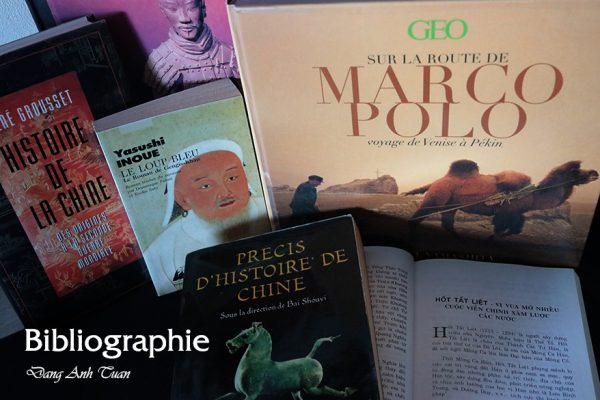
Bibliographie

In 1209, while the imperial capital of Thăng Long was plunged into chaos by General Quách Bốc, who had risen up to avenge his commander Pham Bỉnh Di, King Lý Cao Tông was forced to flee to Quy Hóa. Meanwhile, Crown Prince Lý Sâm reached the region of Hải Ấp to find refuge with the Trần clan, a wealthy and influential local power that possessed a large number of vassals and private troops in the coastal area.

It was in the wake of these events that Lý Cao Tông regained the throne. As for Lý Sâm, in love with Trần Thị Dung, daughter of Trần Lý, he married her. This alliance paved the way for the rise of the Trần clan at the royal court and, ultimately, for the overthrow of the Lý dynasty. A major transfer of political power, orchestrated mainly by Trần Thủ Độ, took place afterwards. Not only did he take advantage of the incapacity of King Lý Huệ Tông (formerly Crown Prince Lý Sâm), who suffered from mental disorders, but he also elevated Trần Thị Dung to the rank of empress. Furthermore, in 1225 he arranged the marriage of Lý Chiêu Hoàng (reigning queen of the Lý dynasty, then six years old) with Trần Cảnh (son of Trần Thừa, eight years old). This political maneuver was a calculated strategy by Trần Thủ Độ, commander of the imperial guard, aimed at transferring power from the Lý dynasty to the Trần dynasty.

His cruelty earned him sharp criticism from historians and by posterity, notably for having forced King Lý Huệ Tông to become a monk before driving him to his death. He usurped the throne by installing the young Trần Cảnh (eight years old) — through the latter’s marriage to Lý Chiêu Hoàng (six years old) — and eliminated all members of the Lý royal family in order to remove any future threat. Anyone bearing the family name Lý was forced to change it to Nguyễn. Only Admiral Lý Long Tường, seventh son of King Lý Anh Tông, escaped this massacre. He and 6,000 members of his kin fled Đại Việt by sea to seek refuge in the kingdom of Goryeo (Korea). There, he became a renowned general in the service of King Gojong during the resistance against the Mongol invasions, and he received from the sovereign the title of Lord of Hwasan (or General Hwasan).

Although Trần Thủ Độ was a remarkable statesman who consolidated the absolute royal authority of the Trần dynasty and rendered immense services to the nation during the first resistance against the Mongol invaders, his cruel and shameful acts earned him the condemnation of public opinion.

In the eyes of Confucian historians of the feudal era such as Lê Văn Hưu and Ngô Sĩ Liên, he appeared as a cunning and ruthless man, disregarding moral principles in his desire to consolidate royal power for the benefit of the Trần dynasty. He went so far as to force Trần Cảnh (Emperor Trần Thái Tông) to marry his own sister-in-law, Lý Ngọc Oanh, the eldest daughter of King Lý Huệ Tông and wife of Prince An Sinh (Trần Liễu), because Empress Lý Chiêu Hoàng (Lý Phật Kim) had not produced an heir. Furious, Prince An Sinh (father of Trần Hưng Đạo) fomented a rebellion on the Cái River in an attempt to reclaim his wife. It was an act for which he was later punished by Trần Thủ Độ. Thanks to the vigorous protection of his younger brother, Emperor Trần Thái Tông, Trần Liễu escaped execution, although he continued to harbor deep resentment until the end of his days.

On the other hand, from the perspective of objective and progressive history today, he is credited with having saved the nation by stabilizing the economy and strengthening the army through the repression of various revolts such as those led by the Mường rebels in Quốc Oai, the Đoàn Thường faction in Đường Hào, and Nguyễn Non’s faction in Bắc Giang. These actions made it possible to establish a new dynasty powerful enough to defend the kingdom against the first Mongol invasion, which occurred thirty years later. Contemporary historians acknowledge that the final phase of the Lý dynasty would certainly have been incapable of achieving this. Without his efforts, the country would probably have suffered the same fate as the kingdom of Dali in Yunnan, annihilated in 1252.

In order to consolidate their political power and preserve the noble lineage of the royal family, the monarchs of the Tran dynasty frequently practiced consanguineous marriages, uniting within the extended family. Although such unions carry a risk of congenital anomalies by modern standards, the era of the Trần nevertheless witnessed the emergence of many illustrious figures such as Trần Hưng Đạo, Trần Nhân Tôn, Trần Quang Khải, Trần Nhật Duật, Trần Bình Trọng, Trần Quốc Toản etc.

This is precisely what enabled our country to defeat the Mongol invaders. According to Professor Lê Thành Khôi (ibid., 180), they were a people who possessed not only skilled mounted archers capable of moving with lightning speed, but also enjoyed an overwhelming military superiority over the inhabitants of the coastal plains. Furthermore, the researcher Trần Trọng Kim (ibid., 106) emphasizes that the Mongols, originally from the upper course of the Amur River, were a warlike people. Their exceptional cavalry and archers conquered Central Asia, Persia, and parts of Eastern Europe as well as the kingdom of Western Xia (in the northwest of China). They annihilated the Jin dynasty and invaded the kingdom of Goryeo (ibid., 107).

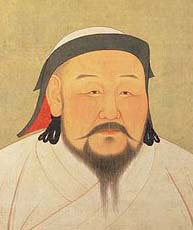
In 1257, as part of a plan aimed at encircling the Southern Song dynasty by opening a second front from the south, Möngke Khan entrusted his younger brother, Kubilai Khan, with the mission of invading the Kingdom of Dali, in Yunnan Province, which bordered Vietnam.

Consequently, Đại Việt became a major strategic target for launching an attack on the rear of the Southern Song. It was a state that had successfully resisted every attempt at subjugation for more than two decades. After the conquest of the kingdom of Dali, the Mongol general Uriyangkhadai sent envoys to the Trần court to request permission to pass through their territory in order to attack the Song dynasty (China) from the south. Concerned about the sovereignty of his kingdom and firmly determined not to betray the bonds of vassalage that bound him to the Song, King Trần Thái Tông not only rejected the Mongol request but also had the Mongol envoys arrested and ordered his nephew, Trần Quốc Tuấn (Trần Hưng Đạo), to lead a powerful army to defend the northern border.

For the Mongol Empire, the imprisonment or murder of diplomatic envoys was considered a supreme insult that demanded immediate military retaliation. Möngke Khan authorized Uriyangkhadai to launch the first Mongol invasion of Vietnam at the end of the year 1257. Outnumbered, Trần Quốc Tuấn was forced to retreat and position his troops at Sơn Tây, while the Mongol forces advanced as far as the Thao River. King Thái Tông personally led the defense but was unable to hold his positions. He was forced to abandon the capital and took refuge near the Thien Mạc River (a section of the Red River located in Hưng Yên Province). Upon entering the citadel of Thăng Long (capital of Đại Việt), General Uriyangkhadai found the envoys chained in the prison. One of them died at the moment of his release. This drove him into a mad rage and prompted him to order his troops to pillage the city and massacre all the men, women and children who were there (Trần Trọng Kim, ibid., p. 208).

Faced with this perilous situation, King Thái Tông consulted his younger brother, Grand Marshal Trần Nhật Hiệu, while they were aboard the royal barge. Without saying a word, Hiệu seized a pole and traced the characters “Nhập Tống” (Join the Song) on the surface of the water, thereby suggesting either flight and surrender, or the integration of the kingdom into the Song dynasty in order to preserve their lives and their lineage. Rejecting this proposal, the king turned to Grand Preceptor Trần Thủ Độ. He replied with calm and determination: “As long as my head remains on my shoulders, Your Majesty has nothing to fear.” Reassured by these words, King Thái Tông regained his composure.

This exchange reveals that, although Thủ Độ acted without mercy toward the Lý dynasty, he was a remarkable and eminent statesman of the Trần dynasty. It is, moreover, difficult for us to judge him harshly when we reread the history of that troubled period, because without him, the outcome of events could have been very different.
How did the Trần dynasty manage to defeat the Mongol army in the first confrontation when our forces were overwhelmed by the Mongols on all fronts? Under the command of General Trần Hưng Đạo, the Trần dynasty implemented a comprehensive defensive strategy based on the following three key elements:

1°) The “scorched earth” strategy. When enemy forces advanced toward the citadel, the order was given to the entire population, as well as to those holding food supplies, livestock, and vital resources, to evacuate the area or to conceal their property. This measure deprived the invaders of any source of resupply in the event of delays in their own supply lines.

2°) The climate and diseases. These factors acted as natural allies in the fight against the invaders. While formidable in arid plains, the Mongol forces could not withstand the overwhelming heat, high humidity, and the country’s dense forest terrain. As a result, the troops quickly succumbed to exhaustion and saw their combat effectiveness drop drastically after more than a week of encampment. They suffered from malnutrition and tropical diseases such as malaria. General Uriyangkhadai was forced to position his troops along the Red River (in the Đông Bộ Đầu area) to maintain a defensive posture, while seeking opportunities to plunder and break the encirclement.

This was the “The first Mongol invasion of Dai Viet” strategy adopted by Uriyangkhadai: using the troops of Dali to provide cover and take the blows in place of the Mongol army. Moreover, as fervent Buddhists, the soldiers of Dali lacked the ferocity and bloodlust of their Mongol counterparts. They were forced to serve as the vanguard and enter our territory at the beginning of the year 1258, alongside General Cacakdu. This vanguard was tasked with secretly crossing the river, bypassing our positions to take us from the rear, seizing the landing points, and cutting off all routes of retreat.

3°) Guerrilla warfare and counterattacks. This is a strategy consisting of “using the weak to oppose the strong,” frequently employed in our country. The Yunnan region (Dali) shared a border with the northern part of Dai Viet (the area corresponding to the present Northwestern provinces). The troops of Dali were accustomed to the rugged terrain as well as the harsh and perilous conditions of these wild, mountainous borderlands. Consequently, Uriyangkhadai forced 20,000 Dali soldiers to accompany 10,000 Mongol cavalrymen. They were tasked with scouting the terrain and bearing the brunt of the fighting, thus serving as a shield for the elite Mongol cavalry.

When the Mongol army in the central position launched a direct frontal assault, the Trần forces would have found themselves in a desperate situation, driven back against the riverbank with the imminent risk that the king and his court would be captured. Although the Mongols won a victory on the Bình Lệ Nguyên plain (located in what is now Vĩnh Phúc province) thanks to their eagerness to quickly engage in battle, their strategic intentions were revealed. It was for this reason that King Trần, his court, and tens of thousands of elite soldiers were able to embark calmly and retreat in complete safety. By contrast, the Mongol army subsequently found itself facing a severe shortage of provisions. Its morale collapsed, which allowed the Trần forces to launch, at the opportune moment, a general counteroffensive that culminated in victory at the battle of Đông Bộ Đầu (*).

(*) Đông Bộ Đầu Wharf on the Red River (today, the area extending from Hàng Than Slope to Hòe Nhai Street, in the Ba Đình district of Hanoï.

[The second  Mongol invasion  of Dai Viet]

Bibliography

Trần Trọng Kim: Việt Nam sử lược . Histoire du Viet Nam. Imprimerie Vĩnh & Thanh 1928.
Lê Thành Khôi: Le Viet-Nam. Histoire et Civilisation. Les Éditions de Minuit. 1955
Thái Văn Kiểm: Việt Nam Quang Hoa. Editeur Xuân Thu
René Grousset: Histoire de lA Chine. Editeur France Loisirs 1997
Bai Shouyi : Précis d’histoire de Chine. Edition en langues étrangères. 1988
Yamamoto T. : La conquête de l’Annam par les Yuan et les Ming. Tokyo. 1950


Deuxieme invasion des Mongols au pays Đai Viet


Cuộc xâm lược Đại Việt lần thứ nhì của quân Mông Cổ.

 La deuxième invasion des Mongols au pays Đại Việt.

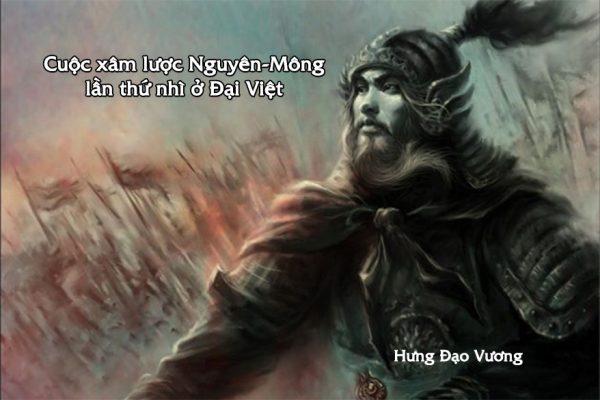
The second Mongol invasion of Đại Việt

Version française
Version anglaise 
Bibliographie

Năm 1259, Đại Hãn Mông Kha qua đời khi quân Mông  còn đang trong chiến dịch tấn công nhà Nam Tống. Triều đại  nầy bị tiêu diệt khi  Hốt Tất Liệt chiếm được Hàng Châu vào năm 1276 và sự quy hàng những ổ kháng cự cuối cùng  xung quanh Quảng Châu ba năm sau đó. (Lê Thành Khôi : ibid 180). Hốt Tất Liệt trở thành hoàng đế của nước Trung Hoa. Ông là người sáng lập triều đại nhà Nguyên. Sau khi diệt được Nam Tống, Hốt Tất Liệt đối xử một cách nhân đạo đối với vị vua trẻ bị giam giữ, Tống Cung Đế (4 tuổi) Vị vua trẻ nầy được đưa đến xứ Thổ Phồn (nay là Tây Tạng), bắt phải cắt tóc đi tu.

Còn hoàng hậu nhiếp chính được chào đón một cách đầy trân trọng trước khi bà lui về một tu viện Phật giáo. Đó là lời chứng được kể lại của thương gia người Ý Marco Polo trong quyển sách có tựa đề « Marco Polo du ký » lúc ông đang phục vụ tại triều đình Hốt Tất Liệt. Chính nhờ đó Hốt Tất Liệt được người Hán chấp nhận nhận dễ dàng, xem ông là thiên tử của họ. Ông phải tranh giành quyền lực lúc bấy giờ  với người em trai của ông là A Lật Bất Ca (Ariq Böke)  được giới quí tộc Mông Cổ ủng hộ, dẫn đến cuộc nội chiến của dòng dõi Tolui kéo dài từ năm 1260 đến năm 1264. Sau đó A Lật Bất Ca (Ariq Böke) xin qui hàng.

Ông giành được phần thắng lợi sau cùng nhờ có  được các nguồn lực nông nghiệp và kinh tế ở miền Bắc Trung Quốc  mà ông kiểm soát được khiến  A Lật Bất Ca bị  ông  bóp nghẹt về mặt kinh tế trong cuộc chiến.  Hơn nữa  ông còn được sự ủng hộ của các mưu sĩ  và các quan lại người Hán đầy năng lực giúp ông tổ chức một bộ máy hành chính hiệu quả so với nền kinh tế thảo nguyên rất hạn hẹp mà đối thủ được có. Điều này đảm bảo cho ông có  được sự hợp tác của thần dân ở địa phương về hậu cần và tài chính. Nhờ có nguồn lực từ đất Hán, quân đội của Hốt Tất Liệt được cung cấp lương thực đầy đủ liên tục  trong cuộc chiến. Đây là những yếu tố then chốt để ông duy trì nỗ lực chiến tranh.

Ngay từ năm 1260, ông đã dời đô từ Karakorum ở Mông Cổ về Bắc Kinh. Ông đã có ý định tiếp thu tất cả các truyền thống Trung Hoa như là của  mình. Hốt Tất Liệt  thực sự  tìm cách khẳng định ông là người kế thừa các vị hoàng đế vĩ đại của Trung Hoa đặc biệt là Hán Vũ Đế (triều đại nhà Tây  Hán) thông qua việc khẳng định quyền tối thượng của đế chế mình trên toàn châu Á mà luôn cả vùng Đông Nam Á. Chính vì vậy tất cả các vương quốc phụ cận với đế quốc Mông Cổ đều trở thành các chư hầu lệ thuộc trong đó có Đại Viêt và Chiêm Thành cũng như có môt thời các nước nầy là các chư hầu của nhà Tống.

Nhà Trần có tục lệ truyền ngôi sớm cho hoàng thái tử khi vua cha còn sống để làm Thái Thượng Hoàng và để giúp vị vua trẻ  quen dần với việc gánh vác chính sự dưới sự giám sát của vua cha. Như vậy  tránh khỏi sự tranh giành quyền lực giữa các hoàng tộc, giử được đoàn kết nội bộ và bảo đảm quá trình chuyển giao quyền lực diễn ra một cách  êm thấm. Dù Trần Thừa cha đẽ của Trần Cảnh (Trần Thái Tôn) không có môt ngày làm vua nhưng vẫn được tôn làm Thái Thượng Hoàng nếu không thì đây là sự soán ngôi vì Lý Chiêu Hoàng nhường ngôi cho chồng chớ có bao giờ  nhường cho cha chồng đâu. Bởi vây ông vẫn được truy tôn miếu hiệu là Trần Thái Tổ  của nhà Trần.

Sau khi thắng giặc Nguyên Mông lần thứ nhất, Trần Thái Tông lui về hậu trường làm Thái Thượng Hoàng và nhường ngôi lại cho Trần Hoàng tức là vua Trần Thánh Tông  vào năm 1258.  Phải đương đầu với tham vọng bành trướng của đế quốc Nguyên-Mông cường thịnh và hùng mạnh ở phương Bắc, Trần Thánh Tông dùng chính sách mềm dẽo, cống nạp nhà Nguyên 3 năm 1 lần với các đồ sản vật qúi lạ như sừng tê giác, ngà voi, đồi mồi vân vân nhưng ông cự tuyệt không cống người và voi và  từ chối đích thân sang chầu. Ông còn khước từ việc gửi sang nước ta một quan chưởng ấn để đi giảm trị các châu quận nước ta và để biết nước ta có những gì để liệu đường mà đánh lấy cho tiện (Trần Trọng Kim, ibid 110). Ngoài ra, Trần Thánh Tông  tích cực chỉnh đốn quân đội, tổ chức tuần tra biên giới để đề phòng sự xâm lược của  giặc Nguyên.

Thừa dịp Trần Thái Tông qua đời, Trần Thánh Tông  lên làm thái thượng hoàng nhường ngôi cho Trần Khâm (Trần Nhân Tông) và lui về ở Thiên Trường năm 1279. Hốt Tất Liệt mới gửi sứ giả Sài Xuân (hay Sài Thung) đòi Trần Nhân Tông sang chầu để tỏ lòng thần phục.

Sài Thung nổi tiếng trong lịch sử là một kẻ hống hách, kiêu căng và tìm mọi cách để hạ nhục triều đình nhà Trần. Ông đến với tư cách Thượng thư bộ Lễ nhằm thăm dò thái độ và ép vua tôi nhà Trần đầu hàng không tốn xương máu. Ông cố tình hạ nhục quốc thể Đại Việt bẳng cách tiếp thái sư Trần Quang Khải nằm khểnh trên giường trong sứ  quán và không ngồi dậy ra mà ra đón tiếp thái sư.

Đây là một chiến thuật tâm lý xem coi vua tôi nhà Trần có run sợ trước sức mạnh của phương Bắc hay không? Chính qua sự kiện nầy mới thấy cái tuyệt chiêu của Hưng Đạo Vương mà chúng ta phải kính phục. Biết chuyện ngạo mạn nầy, ông liền cạo đầu, mặc áo vải đóng giả làm một nhà sư phương Bắc để đến sứ quán. Lầm tưởng là nhà sư phương Bắc thật nên  Sài Thung ngồi dậy tiếp đón tử tế.  Đây là cách thức để nước ta giữ được thể diện, buộc kẻ thù phải đổi thái độ  mà  cũng không cần dùng vũ lực đối với kẻ ngạo mạn.

Khác với mọi lần, để  kéo dài thời gian hòa hoãn và chuẩn bị lực lượng quân sự, vua ta  Trần Nhân Tôn rất khéo léo  từ chối và cử người chú họ là Trần Di Ái, con trai thứ tư cũa Trần Thừa và em trai của vua Trần Thái Tông,  sang thay mặt mình gánh vác trách nhiệm ngoại giao. Nhưng Hốt Tất Liệt  nhận thấy có  cơ  hội dùng đòn ly gián bằng cách phong Trần Di Ái làm An nam Quốc Vương để thay thế vua Trần và sai Sài Thung dẫn theo 1.000 quân hộ tống. Nhận được tin nầy vua Trần Nhân Tôn chủ động sai tướng chặn đánh đội quân hộ tống của nhà Nguyên ngay lúc họ tiến đến Ải  Nam quan khiến họ bị thua tháo chạy tan tác. Sai Thung  bị trúng tên đui một mắt, còn Trần Di Ái bị bắt sống đưa về triều, phạt tội đồ đày làm lính hầu lo việc phục dịch ở phủ Thiên Trường.

Qua lăng kính của các sử gia thì Hốt Tất Liệt có ý đồ xâm chiếm nước Chiêm Thành với hai lý do sau đây:

1°) Vương quốc Champa đóng vai trò then chốt trên các tuyến đường hàng hải nối liền Trung Quốc và Ấn Độ trong một thời gian dài. Hốt Tất Liệt muốn có các đội tàu buôn của mình được an ninh đem lại sư thịnh vượng cho  đế chế và các căn cứ hải quân để hỗ trợ cho các hoạt động quân sự trong tương lai tại Đông Nam Á.

2°) So với Đại Viêt, Chiêm Thành có  thể  bị chiếm dễ dàng  được qua đường biển. Vương quốc nầy có dân số thưa thớt và  phân bố  trên một vùng đất rộng dưới thời trị vì của ông vua già yếu Indravarman V.

Cũng có dịp cho Hốt Tất Liệt  dùng chiêu bài mượn đường Đại Việt để đánh Chiêm Thành nhưng thật sự  là mưu đồ gọng kìm để thôn tính cả hai nước. Điều nầy vua ta Trần Nhân Tông đã nhận ra được  từ lâu nên khi quan trấn thủ Lạng Sơn cho người về kinh đô phi báo với ông. Nhân Tông ngự thuyền ra sông Bình Thang  để hội các vương hầu  bách quan  phải  dùng kế nào chống giặc. (Trần Trọng Kim, ibid 115) Các quan người thì nói để cho quân Mông-Nguyên mượn đường, người thì bảo nên đưa đồ sang cống kỳ kế hoãn binh chỉ có Trần Quốc Tuấn và Trần Khánh Dư quyết xin đem quân trấn giữ những nơi hiểm trở không cho giặc Nguyên-Mông mượn  đường sang đánh Chiêm Thành. Vua Trần Nhân Tông ưng ý nghe theo. Ông phong Trần Quốc Tuấn làm Quốc công Tiết chế, thống lĩnh toàn bộ quân đội Đại Việt để chuẩn bị cho cuộc kháng chiến chống quân Nguyên – Mông lần thứ hai. (1283).

Còn Trần Khánh Dư được giao giữ chức phó tướng quân trấn giữ Vân Đồn dưới quyền tổng chỉ huy của Trần Quốc Tuấn. Nhân Tông còn thực hiện kế sách « hợp tung » phối hợp hỗ trợ lẫn nhau với Chiêm Thành để cùng nhau chống giặc ngoại xâm.

Chúng ta mới nhận thấy Trần Nhân Tông là một vị hoàng đế anh minh kiệt xuất nhất trong lịch sử Việt Nam, nổi tiếng với tài trị quốc. Lúc nào cũng dựa lên  tinh thần đoàn kết dân tộc và luôn luôn có chính sách đối ngoại vô cùng khéo léo. Ông tin tưởng giao toàn bộ quyền quân sự cho Trần Hưng Đạo nên tạo ra sự đồng lòng mẫu mực giữa vua và tôi để hai lần đánh bại quân Nguyên–Mông dù biết rằng  Hưng Đạo vương Trần Quốc Tuấn  là con trai của An Sinh vương Trần Liễu.

Ông còn tha chết, biết trọng tài năng và phục chức cho Trần Khánh Dư, một nhà quân sự xuất chúng chỉ đứng sau Trần Hưng Đạo về nghệ thuật quân sự và mưu lược, nổi tiếng với câu nói trong dân gian « lắm tài nhiều tật » khi Trần  Khánh Dư  vướng vào vụ bê bối thông dâm với công chúa Thiên Thụy, con dâu của Trần Hưng Đạo, súy mất mạng phải lấy công chuộc tội. Vua còn thể hiện  tầm nhìn chiến lược của một nhà chính trị đại tài để bảo vệ nền độc lập trước thế lực phương Bắc và mở rộng bờ cõi không bằng xương máu về sau ở phía nam qua cuộc hôn nhân chính trị mang tính chiến lược (Huyền Trân công chúa với vua Chế Mân (Jaya Simhavarman III).

Tháng 8 năm giáp-thân (1284), Trần Hưng Đạo truyền hịch cho các vương hầu và quân sĩ tại bến Đông bộ đầu để điểm duyệt và được biết quân thủy và quân bộ cả thảy được 200.000 quân. Ông mới sai Trần Bình Trọng đem quân đi đóng ở Vân-Đồn (Quàng Yên)  còn các tướng thì chia ra đống ở các nơi hiểm yếu. Ông thì đóng ở Vạn Kiếp (Hải Dương) để tiếp ứng mọi nơi. Còn phía quân Nguyên-Mông thì được thái tử Thoát Hoan (Toghan) con của Hốt Tất Liệt chỉ huy tiến binh vào nội địa Đại Việt dù vua Nhân Tôn có sai người thương thuyết nhưng bị khước từ. Vua buộc lòng triều tập các bộ lão thân hào và nhân sĩ tại Diên Hồng đề bàn có nên Hoà hay Chiến.Mọi người đồng thanh xin đánh.Đây là người xưa gọi là khất ngôn (référendum).

Vua mới thấy vậy an lòng lui về Hải Đông và cầm bút viêt hai câu thơ trên đuôi thuyền của Trần Hưng Đạo nhắn nhũ Hưng Đạo vương hãy nên nhớ: Câu Tiễn  ở Cối Kê ngày xưa, ái quốc như thế nào vương nên nhớ. Biết rằng ở Châu Hoan (Nghệ An), Châu Ái (Thanh Hóa) còn dự trữ 10 vạn binh nữa. (Thái văn Kiểm, ibid 97).

Cối kê cựu sự quân tu ký
Hoan Ái tồn thập vạn binh.

Đây là lời nhắn nhũ cuối cùng của Trần Nhân Tôn với Hưng Đạo vương Trần Quốc Tuấn. Giờ đây tất cả mọi việc đều trong cậy vào khanh đấy thôi.

Khi đến ải Nam Quan cùng với 50 vạn quân hùng mạnh, Thoát Hoan (Toghan) mới sai sứ giả Ali mang thơ cho vua Trần Nhân Tông mượn đường nước ta để sang đánh Chiêm Thành. Nhưng vua ta từ chối lấy cớ không tiện cho việc chuyển binh đi đường bộ. Sau đó vua giao sứ giả lại cho Trần Hưng Đạo bị ông ta đuổi về.

Thông thạo binh pháp, Trần Hưng Đạo mới phân binh ra ở  hai ải Khả Li, Lọc Châu (thuộc Lạng Sơn). Còn ông dẫn đại quân đóng ở Kỳ Cấp  và thuyền bè thì đóng ở Bến Chữ (Bái Tân) thượng lưu sông Lục Nam với hình tam giác (thế chân kiền)  để yểm trợ cho nhau. Ba vị trí này tạo thành một thế trận khép kín nhưng linh hoạt. Khi một điểm bị tấn công, hai điểm còn lại có thể lập tức cơ động ứng cứu, bọc lót từ hai bên sườn hoặc phía sau, khiến quân địch dễ rơi vào thế bị gọng kìm kẹp chặt.

Đây là nghệ thuật bố trí trận thế phối hợp bộ binh và thủy binh với một tư duy quân sự ở đỉnh cao được Trần Hưng Đạo áp dụng vô cùng thuần thục. Lạng Sơn và vùng thượng lưu sông Lục Nam vốn có địa hình đồi núi, sông ngòi đan xen. Trần Hưng Đạo đã tận dụng triệt để « địa lợi » này để chia cắt đội hình hành quân vốn quen lối đánh đồng bằng, thảo nguyên của quân Nguyên-Mông.

Lúc đầu Thoát Hoan còn e ngại nhưng vì số quân Nguyên-Mông nhiều gấp mấy lần quân ta nên Thoát Hoan tấn công cả ba mặt lấy được  hai ải rồi Thoát Hoan dồn toàn quân tấn công  Kỳ Cấp  khiến quân ta bị dồn ra khỏi núi và Hưng Đạo buộc lòng phải chạy về Chi Lăng qua bến Bãi Tân. Nơi  đây Yết Kiêu ở lại giử thuyền.  Nhưng Thoát Hoan đánh rốc vào Chi Lăng dữ dội buộc Hưng Đạo vương phải lui về lại Bãi Tân (Bến Chữ) với tàn quân.  Ông muốn đi đường bộ  nhưng gia bộc  Dã Tượng lại ngăn cản Hưng Đạo Vương không nên vì tin rằng « Yết Kiêu chưa thấy Đại Vương thì nhất định không rời thuyền ».

Trần Quốc Tuấn thấy thuyền của Yết Kiêu vẫn còn ở  đó chờ sẵn. Nhờ chiếc thuyền này, ông đã kịp thời thoát khỏi sự truy đuổi của kỵ binh giặc Nguyên. Cảm động trước lòng trung nghĩa tuyệt đối ấy, Hưng Đạo Vương  mới thốt ra lời ca ngợi: « Chim hồng hộc muốn bay cao phải nhờ ở sáu trụ xương cánh… » .

 [Thời Trần, tất cả các quý tộc và quan lại đều có gia nô. Nhưng gia nô  suốt đời phải phục dịch cho chủ nhân. Dưới chế độ phong kiến không ai có địa vị thấp hèn như họ cả.  Họ mang tên  của những  con thú thì  biết  thân phận của họ như thế nào thế lại được Trần Quốc Tuấn lại  trọng dụng họ thì phải khen họ là những bậc anh hùng cái thế cũng như chủ nhân  họ đấy thôi.]

Nhân Tông nghe Hưng Đạo vương thua chạy về Vạn Kiếp liền ngự một chiến thuyền nhỏ xuống Hải–Đông (tức Hải Dương) rồi triều Hưng Đạo về để bàn việc. Trong bụng lo sợ, vua mới nói: Đối phuơng quá mạnh mà chống với nó thì hại muôn dân, hay là để trẫm chịu hàng để cứu muôn dân.  Hưng Đạo vương mới tâu rằng: Bệ hạ nói vậy thật là lời nhân đức  nhưng mà Tôn miếu xã tắc thì sao? Nếu bệ hạ muốn hàng thì chém đầu thần đi đã. Nghe lời nói trung liệt cứng cỏi của Hưng Đạo vương, Nhân Tông mới thấy an lòng. (Trần Trọng Kim, ibid 117).  Ông ngày đêm chiêu tập các đạo quân ở Vạn Kiếp được lên đến 20 vạn quân.

Ông có soạn ra một quyển Binh Thư yếu lược để khuyên răng tướng sĩ phải hết lòng luyện tập và quyết chí đánh giặc cho nên người nào cũng lấy mực thích vào cánh tay hai chữ Sát Đát tức là giết quân Mông Cổ. Bởi vậy khi quân Nguyên-Mông thắng ở Vạn Kiếp, người nào có chữ Sát Đát ở trên cánh tay là bị giết ngay. Biết khó giữ được thành Thăng Long, Hưng Đạo  vương rước vua  và Thái Thượng Hoàng ra ngoài thành chạy về phía nam trước khi thành thất thủ khiến Thoán Hoan nổi giận sai quân rượt theo.

Vào mùa thu năm 1282, Toa Đô (Sögètu) được lệnh của Hốt Tất Liệt dẫn một đạo quân Nguyên-Mông đi đường bể sang đánh Chiêm Thành  với 350 chiếc thuyền và  chiếm được không tốn sức nhiều Vijaya (Đồ  Bàn) cùng các thành phố trọng yếu của  Chiêm Thành (1283). Những thắng lợi đó chẳng kéo dài được bao lâu. (Lê Thành Khôi, ibid 182). Dưới sư chỉ huy của hoàng tử Harijit (Chế Mân) người Chăm tiến hành một cuộc chiến tranh du kích  ác liệt chống lại quân Nguyên-Mông. Hơn nữa họ phải chịu đựng cái nóng, bệnh tật và tình trạng thiếu lương thực khiến chiến dịch quân sự kéo dài, đánh mãi mà không thắng.

Chính vì vậy Hốt Tất Liệt hạ chiếu sai Toa Đô theo đường bộ kéo ra Nghệ An, hợp  với quân  Thoát Hoan mà đánh nước ta. Được tin nầy, Thoát Hoan sai tướng Ô Mã Nhi (Omar) đi đường bể vào tiếp ứng Toa Đô đánh từ mặt trong đánh ra còn ở mặt ngoài thì quân Nguyên-Mông chia ra giữ cả các bến từ Thăng Long xuống đến khúc sông Đại Hoàng (Hà Nam). Trần Hưng Đạo được tin nầy liền sai thượng tướng Trần quang Khải đưa binh vào đóng Nghệ An chặng đường tiến của Toa Đô và Trần Bình Trọng ở lại giữ Thiên Trường.

Còn ông thì  đưa vua về Hải Dương. Trần Quang Khải  chống giữ không nổi nhất là Ô Mã Nhi ở mặt bể đánh vào  khiến phải lui binh. Một số hoàng tộc nhà Trần ra hàng đầu với Toa Đô  trong đó có Trần Kiên (cháu nội của Trần Thái Tông, quan trấn thủ Nghệ An), Trần Ích Tắc, Trần Tú Viên. Chỉ có Trần Hưng Đạo tìm kế  ngày đêm đánh giặc không nao núng chút nào cả.

Trấn giữ Thiên Trường (Nam Định), Trần Bình Trọng chẵng may bị vây bắt lúc đem binh ra đánh. Thoát Hoan cố tình khuyên dụ  nhưng ông không chịu đầu mà còn để lại một câu nói bất hủ: Ta thà làm quỉ nước Nam chứ không thèm làm vương đất Bắc khiến ai nghe đến cũng động lòng thương xót. Thoát Hoan thấy dụ dỗ không được sai quân đem chém lúc ông được 26 tuổi.  Bấy giờ quân Nguyên-Mông đông mạnh thế, đóng khắp mọi nơi (Bắc Ninh, Thăng Long, Thiên Trường).  Trước tỉnh thế nguy nan, Trần Hưng Đạo bèn rước xa giá ra Quảng Yên rồi sau cùng đưa Nhân Tông về tỉnh Thanh Hóa.

Còn Toa Đô đánh hoài mà không lấy được mà lương thảo càng ngày lại cạn nên lấy quyết định cùng Ô Mả Nhi dẫn quân ra đường biển để hợp binh với Thoát Hoan. Đươc tin nầy Trần Quang Khải cho người về báo với Nhân Tôn thì ông mới hội quần thần lại hỏi kế. Trần Hưng Đạo mới tâu : Từ Chiêm Thành trở ra quân phải qua Thuận Hóa, Nghệ An quân sĩ vất vả. Nay lại vượt bễ ra Bắc thì sức lực của họ cũng giảm nhiều. Đây là lúc thuận tiện để mà đánh chắc chắn là phá được.  Nhân Tông nghe lời mới phong Trần Nhật Duật làm tướng và Trần Quốc Toản làm phó tướng với 5 vạn binh ra đón đường chặn đánh Toa Đô ờ bến Hàm Dương.

Quân ta thắng trận buộc Toa Đô phải lui về cừa Thiên Trường. Được tin thắng trận, vua nghe lời Trần Hưng Đạo truyềnh lệnh cho Trần Quang Khải từ Nghệ An ra đánh Thoát Hoan đi vòng đường bể  đến bến Chương Dương  để khôi phục kinh thành Thăng Long với Phạm Ngụ Lão. Trước sự dũng cảm của quân ta, Thoát Hoan phải bỏ Thăng Long chạy về Bắc Ninh và quân ta đại thắng. Trần Quang Khải vào thành và mở tiệc ăn mừng khao quân.  Lúc cảm hứng, ông mới ngâm bài thơ mà sử gia Trần Trọng Kim đã dịch lại như sau:

Chương Dương cướp gíáo giặc
Hàm Tử bắt quân thù
Thái bình nên gắng sức
Non nước ấy nghìn thu

Sau đó ông sai người về Thanh Hoá phi báo  thắng trận lên vua Nhân Tông. Vua vui mừng không xiết và quyết định dời đô về Ninh Bình để tiện bề theo dõi những biến chuyển. (Thái văn Kiểm, ibid 101). Sau đó là trận Tây Kết. Đây là trận đánh quyết định vào tháng 5 năm 1285 trong cuộc chiến Nguyên-Mông lần thứ nhì. Trần Hưng Đạo chia các ngả đường chặn đánh, cô lập lực lượng của Thoát Hoan và Toa Đô không cho liên lạc với nhau.  Quân Nguyên-Mông bị đánh tứ phía phải chống chọi mãnh liệt để tìm đường mà chạy. Toa Đô bị bắn chết  tại trận bởi  tướng quân Nguyễn Khoái, trong khi Ô Mã Nhi chạy ra tới biển lấy ghe trốn về Trung Quốc.

Khi thấy đầu của Toa Đô mà  các tướng mang  về nộp, Nhân Tông mới than rằng : Làm bầy tôi phải như người nầy  rồi ông cởi áo ngự bào đắp vào đầu Toa Đô để tỏ lòng khâm phục người dũng liệt chết vì hết lòng với chúa.

Thoát Hoan nghe tin Toa Đô bị bắn chết,  Ô Mã Nhi thì chạy trốn về Tàu thì tinh thần bị lung lay mà binh sĩ thì không còn sức lực để chống chọi nữa nhất là thêm vào đó, khí hậu nóng nực, bệnh dịch tể hoành hành. Lo sợ đại quân nhà Trần thừa thắng xông lên bao vây Thăng Long, Thoát Hoan lập tức hạ lệnh bỏ kinh thành, dẫn tàn quân rút lui tháo chạy về nước nhục nhã trong ống đồng để giữ mạng mạng sống  theo hướng Bắc (Lạng Sơn). Quân ta thành công dẹp tan giặc và đánh đuổi nửa triệu quân ra khỏi bờ cỏi.

Sự thất bại của cuộc xâm lược lần thứ hai của quân Mông Cổ bắt nguồn từ tinh thần đoàn kết và lòng quyết tâm sắt đá của toàn dân tộc ta điển hình là qua Hội nghị Diên Hồng cùng việc thực hiện chiến lược « vườn không nhà trống » (tạm thời bỏ kinh thành Thăng Long, đồng thời di dời toàn bộ lương thực và tài sản nhằm làm rối loạn đội hình quân Mông Cổ). Những yếu tố này kết hợp với tài thao lược xuất chúng của Trần Hưng Đạo, người đã kiên nhẫn chờ đợi thời cơ chín muồi để tung ra các đòn phản công chớp nhoáng trong những trận đánh quyết định tại Hàm Tử, Chương Dương và Tây Kết.

Version Française

En 1259, le Grand Khan Möngke mourut alors que les forces mongoles menaient encore la campagne militaire contre la dynastie des Song du Sud. Cette dynastie s’éteignit lorsque Kubilai Khan s’empara de Hangzhou en 1276 et que les derniers foyers de résistance autour de Canton capitulèrent trois ans plus tard (Lê Thành Khôi : ibid., 180). Kubilai Khan devint empereur de Chine et fondateur de la dynastie Yuan. Après avoir conquis les Song du Sud, Kubilai Khan traita avec humanité le jeune monarque captif, l’empereur Gong des Song (âgé de quatre ans). Celui-ci fut envoyé au Tibet et contraint de se raser la tête et de devenir moine. Quant à l’impératrice régente, elle fut accueillie avec grand respect avant de se retirer dans un monastère bouddhiste.

L’impératrice régente reçut un accueil respectueux avant de se retirer dans un monastère bouddhiste. Ce récit nous vient du marchand italien Marco Polo, tel qu’il figure dans son ouvrage *Le Devisement du monde* (ou *Les Voyages de Marco Polo*), rédigé à l’époque où il servait à la cour de Kubilai Khan. C’est en grande partie grâce à cela que Kubilai Khan fut aisément accepté par les Chinois, qui le reconnurent comme le « Fils du Ciel ». À cette époque, il dut disputer le pouvoir à son frère cadet, Ariq Böke soutenu par la noblesse mongole, ce qui déclencha une guerre civile au sein de la lignée de Tolui. Cette confrontation  dura de 1260 à 1264. Ariq Böke finit par se rendre à Kubilai Khan.

Il réussit à emporter la victoire  en tirant parti des ressources agricoles et économiques du nord de la Chine qu’il contrôlait et étranglant ainsi économiquement Ariq Böke durant le conflit. En outre, il bénéficiait du soutien de stratèges et de fonctionnaires chinois  compétents, ce qui lui permit de mettre en place un appareil administratif efficace  bien supérieur à l’économie limitée fondée sur le mode de vie des steppes dont disposait son rival. Cela lui assura la coopération des populations locales sur les plans logistique et financier. Grâce aux ressources provenant des territoires chinois, l’armée de Kubilaï fut abondamment et régulièrement ravitaillée tout au long de la guerre. Ce sont ces facteurs déterminants lui permettant de soutenir son effort de guerre.

Dès 1260, il transféra la capitale de Karakorum en Mongolie, à Pékin, avec l’intention d’adopter les traditions chinoises. Kubilai Khan chercha à s’imposer comme le successeur des grands empereurs de Chine  notamment l’empereur Wu Di des Han occidentaux en affirmant la suprématie de son empire sur l’ensemble de l’Asie, y compris l’Asie du Sud-Est. En conséquence, les royaumes voisins de l’Empire mongol furent réduits au rang des états vassaux  parmi lesquels figuraient le Đại Việt et le Champa, qui avaient été auparavant  les deux  vassaux de la dynastie des Song.

La dynastie des Trần avait la tradition d’employer  l’abdication précoce, selon laquelle le monarque régnant transmettait le trône au prince héritier de son vivant, tout en assumant le titre d’empereur retiré afin d’aider le jeune souverain à maîtriser progressivement toutes les affaires de l’État sous sa supervision. Cette pratique prévenait les luttes de pouvoir au sein du clan royal, préservait l’unité interne et garantissait une transition en douceur de l’autorité. Bien que Trần Thừa, le père biologique de Trần Cảnh (l’empereur Trần Thái Tông) n’ait jamais régné en tant qu’empereur, il reçut néanmoins le titre d’empereur retiré. Sans cela, la succession aurait été perçue comme une usurpation du fait que l’impératrice Lý Chiêu Hoàng avait abdiqué en faveur de son époux plutôt que de son beau-père. Par conséquent, il fut honoré à titre posthume du nom de temple Trần Thái Tổ. Il fut  consacré ainsi comme l’ancêtre fondateur de la dynastie des Trần.

Après la première victoire sur les envahisseurs mongols de la dynastie Yuan, Trần Thái Tông se retira pour devenir empereur émérite, cédant ainsi le trône à Trần Hoàng qui prit le nom de roi Trần Thánh Tông en 1258. Face aux ambitions impéralistes du puissant empire mongol des Yuan au nord, Trần Thánh Tông adopta une politique de souplesse: il versa un tribut à la cour des Yuan tous les trois ans en offrant des biens rares et précieux tels que des cornes de rhinocéros, de l’ivoire et de l’écaille de tortue. Par contre il refusa catégoriquement de fournir des sujets humains ou des éléphants de guerre ou de se rendre en personne à la cour des Yuan pour y prêter hommage. Il rejeta également la proposition de laisser sur place un fonctionnaire yuan chargé de superviser l’administration locale et d’y évaluer les ressources du royaume en vue d’une éventuelle invasion (Trần Trọng Kim, ibid., p. 110). Par ailleurs, Trần Thánh Tông réorganisa activement l’armée et mit en place des patrouilles frontalières pour se prémunir contre toute agression mongole.

Profitant de  la mort de Trần Thái Tông, son fils Trần Thánh Tông prit le titre d’Empereur retiré. Il céda ainsi le trône à Trần Khâm (Trần Nhân Tông) et se retira à Thiên Trường en 1279. Par la suite, Kubilai Khan envoya un émissaire, Sài Xuân (également connu sous le nom de Sài Thung), pour exiger  le déplacement de Trần Nhân Tông à la cour mongole afin d’y prêter hommage et de faire acte de soumission.

Sài Thung fut historiquement connu pour son arrogance et sa morgue, ainsi que pour ses tentatives incessantes de vouloir humilier la cour des Trần. Il vint en qualité de ministre des Rites, avec l’objectif de sonder l’attitude de la cour et de contraindre le monarque Trần ainsi que ses dignitaires à se rendre sans effusion de sang. Il porta délibérément atteinte à la dignité du Đại Việt en recevant le Grand Chancelier Trần Quang Khải. Il était allongé sur le lit dans la résidence diplomatique tout en refusant de se lever pour l’accueillir.

C’était une manœuvre psychologique destinée à impressionner  le monarque de la dynastie Trần et sa cour pour savoir s’ils trembleraient face à la puissance du Nord. C’était précisément lors de cet épisode que se révéla le génie du  prince Hưng Đạo,  une qualité  suscitant jusqu’à aujourd’hui notre profonde admiration. Ayant appris l’arrogance de l’envoyé, il se rasa le crâne et revêtit la simple robe d’un moine du Nord pour se rendre à l’ambassade. En le prenant pour un véritable moine venu du Nord, Sai Thung se leva pour l’accueillir avec courtoisie. Cette stratégie permit à la nation vietnamienne  de préserver sa dignité et de contraindre l’ennemi à changer d’attitude sans avoir besoin de recourir ainsi à la force face à l’arrogance de l’adversaire.

Contrairement à toutes les autres fois, afin de prolonger la période de trêve et de préparer les forces militaires, notre roi Trần Nhân Tông déclina habilement la convocation et envoya son oncle Trần Di Ái, quatrième fils de Trần Thừa et frère cadet du roi Trần Thái Tông, de mener la mission diplomatique en son nom. Toutefois, Kublai Khan y vit l’occasion de semer la discorde: il nomma Trần Di Ái « roi d’Annam» en remplacement du souverain en titre et dépêcha Sài Thung (Tchai Tchouen), à la tête d’une escorte de mille soldats  pour l’accompagner. Informé de la situation, le roi Trần Nhân Tông ordonna à ses généraux d’intercepter le détachement des Yuan à l’approche de la passe  Nam Quan et lui infligea une déroute totale. Sai Thung fut blessé  par une flèche à l’œil tandis que Trần Di Ái fut capturé vivant et ramené à la cour royale où il fut condamné aux travaux forcés en tant que serviteur au palais de Thiên Trường.

À travers le prisme des historiens, Kublai Khan avait l’intention d’envahir le royaume de Champa pour les deux raisons suivantes :
1°) Le royaume de Champa a joué un rôle clé sur les routes maritimes reliant la Chine et l’Inde pendant une longue période. Kublai Khan voulait ses propres flottes marchandes en sécurité dans le but d’apporter  la prospérité à son empire et des bases navales afin de  soutenir les opérations militaires futures en Asie du Sud-Est.

2°) Comparé à Đại Viêt, le Champa pouvait être conquis facilement par voie maritime. Ce royaume avait une population clairsemée et répartie sur un vaste territoire sous le règne du vieux roi faible Indravarman V.

Il y eut aussi une occasion pour Kubilai Khan d’utiliser le stratagème  d’emprunter la route du Đại Việt pour attaquer le Champa, mais en réalité c’était un plan de tenaille pour annexer les deux pays. Notre roi Trần Nhân Tông s’en était rendu compte depuis longtemps. Lorsque le gouverneur de Lạng Sơn envoya quelqu’un à la capitale pour lui faire un rapport urgent, Nhân Tông se rendit en barque sur la rivière Bình Than (Bắc Ninh)  et réunit sa cour (princes et dignitaires)  afin de décider la stratégie à adopter pour résister à l’ennemi. (Trần Trọng Kim, ibid 115) Certains mandarins proposèrent de laisser le passage à emprunter aux  troupes Yuan-Mongoles tandis que   d’autres suggérèrent d’envoyer des présents en tribut afin de gagner du temps. Seuls,  Trần Quốc Tuấn et Trần Khánh Dư demandèrent résolument à conduire l’armée pour tenir les lieux stratégiques et empêcher les Yuan-Mongols d’emprunter la route pour aller attaquer le Champa. Le roi Trần Nhân Tông adopta cet avis. Il nomma Trần Quốc Tuấn Quốc commandant en chef de l’ensemble de l’armée du Đại Việt, pour préparer la résistance contre les Yuan-Mongols pour la deuxième fois (1283).

Quant à Trần Khánh Dư, il fut chargé du poste de vice-général pour garder le district Vân Đồn de la province Quảng Ninh  sous le commandement général de Trần Quốc Tuấn. Nhân Tông mit également en œuvre la stratégie de « hợp tung (ou l’union fait la force)  » afin d’assurer  la  coordonnination et l’entraide avec le Champa dans la lutte contre les envahisseurs étrangers.

Nous venons de reconnaître que Trần Nhân Tông est l’un des empereurs les plus éclairés et exceptionnels dans l’histoire du Vietnam pour son talent de gouvernance. Il s’est toujours appuyé sur l’esprit de solidarité nationale et a constamment mené une politique étrangère extrêmement habile. Il a accordé toute sa confiance à au prince H ưng Đ ạo en lui donnant la totalité du  pouvoir militaire. Cela créa ainsi  l’unanimité exemplaire entre le roi et son sujet pour vaincre à deux reprises les armées Yuan-Mongoles, bien qu’il sût que le prince Hưng Đạo, Trần Quốc Tuấn, était le fils du prince An Sinh, Trần Liễu.

Trần Nhân Tông épargna encore la vie à Trần Khánh Dư. Il sut apprécier son  talent  et le rétablit dans ses fonctions. C’était  un militaire hors pair classé derrière Trần Hưng Đạo pour l’art militaire et la stratégie. Il était  très connu par  le peuple pour la phrase «autant de talents que défauts» lorsque Trần Khánh Dư fut impliqué dans le scandale d’adultère avec la princesse Thiên Thụy, belle-fille de Trần Hưng Đạo.  Cela faillit  de lui faire perdre la vie. Il dut  racheter sa faute par ses exploits militaires. Le roi manifesta encore la vision stratégique d’un grand homme politique pour défendre l’indépendance du pays  face aux puissances du Nord et pour  savoir agrandir plus tard le territoire au sud sans effusion de sang au moyen d’un mariage politique stratégique (la princesse Huyền Trân avec le roi Chế Mân (Jaya Simhavarman III)).

Au huitième mois de l’année du singe de bois  (1284), Prince Hưng Đạo  adressa une proclamation aux princes, aux nobles et aux troupes rassemblés à l’embarcadère de Đông bộ đầu  pour une revue des effectifs, le tout dévoilant une force combinée navale et terrestre de 200 000 soldats. Il chargea Trần Bình Trọng de positionner des troupes à Vân Đồn (Quảng Yên), tandis que d’autres généraux étaient affectés à la surveillance  de divers points stratégiques. Quant à lui,  il établit ses forces à Vạn Kiếp (Hải Dương) afin de pouvoir apporter le renfort à l’endroit  où le besoin se ferait sentir. Quant aux forces yuan-mongoles, elles étaient placées sous le commandement du prince Toghan, fils de Kubilaï Khan  en vue d’une invasion du territoire du Đại Việt malgré  les tentatives infructueuses de négociation du roi Nhân Tông. Celui-ci fut obligé de convoquer une assemblée réunissant  tous les vieillards du pays, les notables et les lettrés au palais  Diên Hồng pour délibérer sur le choix à prendre entre la paix et la guerre. L’assemblée se prononça à l’unanimité pour la guerre, un événement considéré historiquement comme une forme précoce de référendum.

Rassuré par le choix de la confrontation, le roi se retira à Hải Đông. Il saisit alors son pinceau pour inscrire ses deux vers sur la poupe de la barque du  Prince Hưng Đạo en lui demandant de garder à l’esprit l’exemple du roi Goujian au mont Kuaiji ainsi que la nature du véritable patriotisme. Il  dut savoir également qu’une force de réserve de cent mille hommes  était à sa disposition et restait stationnée encore  à Châu Hoan (Nghệ An) et à Châu Ái (Thanh Hóa) (Thai Van Kiem, ibid., p. 97).

À son arrivée à la passe  de Nam Quan à la tête d’une puissante armée de 500 000 hommes, Toghan envoya un émissaire nommé Ali chargé de  remettre une lettre au roi Trần Nhân Tông et lui sollicita l’autorisation de traverser le pays pour attaquer le Champa. Le roi refusa en  invoquant le caractère inadapté du terrain pour le déplacement de troupes par la voie terrestre. Il remit ensuite l’émissaire au prince Hưng Đạo qui l’expulsa sans tarder.

Doué dans l’art de la guerre, Trần Hưng Đạo déploya ses forces aux cols de Khả Li et de Lộc Châu dans la province de Lạng Sơn). Parallèlement, il établit le gros de son armée à Kỳ Cấp et il positionna sa flotte à  Bến Chữ (Bái Tân) situé sur le cours supérieur de la rivière Lục Nam. Cela  formait ainsi un dispositif défensif triangulaire  (thế chân kiền) qui permettait aux unités de se soutenir mutuellement. Ces trois positions constituaient un dispositif de combat  à la fois autonome et flexible: si l’un des points venait à être attaqué, les deux autres pouvaient immédiatement manœuvrer pour porter secours en prenant l’ennemi de flanc ou le frappant  par l’arrière. Cela  permit de le piéger aisément dans une position prise  en tenailles difficile d’en sortir.

Cela illustre bien l’art de coordonner les forces d’infanterie et les troupes navales en formationde combat avec un état d’esprit militaire à son apogée que Trần Hưng Đạo a maîtrisé et mis en œuvre avec une habileté exceptionnelle. Le relief de Lạng Sơn et celui du cours supérieur de la rivière Lục Nam étaient caractérisés par un enchevêtrement de collines, de montagnes et de cours d’eau. Trần Hưng Đạo a pleinement tiré parti de cet avantage géographique pour fragmenter les formations des troupes yuan-mongoles habituées à combattre en terrain découvert dans les plaines et les steppes.

Au début, Toghan hésita.  Ayant constaté que les forces mongoles de la dynastie Yuan surpassaient largement en nombre les troupes vietnamiennes, il  rassembla toutes ses troupes pour lancer une offensive sur trois fronts et il s’empara de deux cols de montagne. Puis il concentra ensuite l’ensemble de son armée pour attaquer  Kỳ Cấp, ce qui permit de  déloger les troupes vietnamiennes des montagnes et  de forcer Prince Hưng Đạo à battre en retraite vers Chi Lăng  tout en passant par le débarcadère de Bãi Tân où Yết Kiêu  dut rester  pour garder les embarcations. Cependant, la progression rapide et impétueuse de Toghan  obligea Prince Hưng Đạo et ses troupes restantes à se replier sur Bãi Tân (appelé également Bến Chữ). Malgré son intention de poursuivre sa retraite par la voie terrestre, son fidèle serviteur Dã Tượng l’en dissuada en lui signalant que Yết Kiêu n’abandonnerait certainement pas les embarcations sans l’avoir  vu d’abord.

Effectivement, une fois arrivé au débarcadère Bãi Tân, Trần Quốc Tuấn trouva la barque de Yết Kiêu qui continuait à l’attendre. Grâce à cette embarcation, il parvint à s’échapper in extremis à la cavalerie yuan lancée à ses trousses. Profondément touché par une loyauté aussi indéfectible, Prince Hưng Đạo s’exclama avec admiration : « Pour que le flamant prenne son essor, il lui faut s’appuyer sur les six os structurants de ses ailes… »

[Sous la dynastie des Trần, tous les nobles et les hauts fonctionnaires entretenaient des serviteurs attachés à leur résidence. Ces hommes étaient tenus de servir leurs maîtres durant toute leur vie. Dans le régime féodal, nul n’occupait un statut inférieur à celui qu’ils avaient. Ils portaient les noms empruntés dans le  monde des animaux. Toutefois, le fait d’être choisis par Trần Quốc Tuấn  témoignait d’une grande estime et  des missions importantes qui leur étaient confiées  nous amène à les saluer comme des héros d’une stature exceptionnelle, au même titre que leur maître].

En apprenant que le prince Hưng Đạo avait été vaincu et s’était replié à Vạn Kiếp, Nhân Tông monta aussitôt sur une petite jonque pour  rejoindre Hải–Đông (c’est-à-dire Hải Dương), puis  il convoqua Prince Hưng Đạo à la cour afin de discuter des affaires. Plongé dans une profonde inquiétude,  le roi lui dit alors : L’ennemi est trop puissant, si nous lui résistons, ce sera au détriment du peuple ou bien ma reddition  ne vaudrait-elle pas  afin de sauver le peuple? Prince Hưng Đạo lui répondit: Ce que Votre Majesté vient de dire est certes une parole pleine d’humanité et de bonté, mais que deviendraient alors les temples ancestraux et le royaume ? Si Votre Majesté veut se rendre, il  faut commencer par me trancher la tête. En écoutant  ces paroles loyales et fermes du prince Hưng Đạo, Nhân Tông se sentit enfin rassuré. (Trần Trọng Kim, ibid 117). Jour et nuit, il continua à mobiliser les troupes à Vạn Kiếp jusqu’à atteindre deux cent mille soldats.

Après avoir rédigé le manuel intitulé «  Binh Thư yếu lược (ou Résumé essentiel de l’art militaire » à l’intention de ses troupes, il réussit à exhorter ces dernères à s’entraîner avec diligence et à demeurer inébranlables dans leur détermination à combattre l’ennemi.  Chaque soldat se fit tatouer  ainsi sur le bras les caractères « Sát Đát » (signifiant « Tuer les Mongols »). Lorsque les forces mongoles de la dynastie Yuan remportèrent la victoire à Vạn Kiếp, quiconque portait ce tatouage était immédiatement exécuté. La capitale Thăng Long ne pouvait pas être défendue. Prince Hưng Đạo  fit sortir le roi et l’empereur retiré de la citadelle et il s’enfuya  vers le sud avant sa chute. Cela provoqua  la colère de  Toghan et le poussa à ordonner à ses troupes de se lancer à leur poursuite.

À l’automne  de l’année 1282, Kubilai Khan ordonna à Sögètu (Toa Đô) de mener une  armée yuan-mongole par voie maritime pour envahir le Champa. Il fut  à la tête d’une flotte de 350 navires. Il parvint à s’emparer de Vijaya (Đồ Bàn) et d’autres cités chames stratégiques sans grande difficulté (1283). Toutefois, ces victoires furent de courte durée (Lê Thành Khôi, ibid. 182). Sous le commandement du prince Harijit (Chế Mân), les Chams menèrent une guerre de guérilla acharnée contre les troupes yuan-mongoles. En outre, les envahisseurs souffrirent de la chaleur, des maladies et de pénuries alimentaires, ce qui fit s’éterniser la campagne militaire sans remporter aucune victoire décisive.

C’était pour cela que  Kubilai Khan promulgua un décret impérial ordonnant à Sögètu (Toa Đô) de faire route par voie terrestre vers Nghệ An et de faire sa jonction avec Toghan (Thoát Hoan) pour envahir le Đại Việt. Informé de la situation, Toghan dépêcha le général Omar (Ô Mã Nhi) par voie maritime pour renforcer Sogëtu dans le but de coordonner une attaque venant de l’intérieur, tandis que les troupes yuan-mongoles étaient déployées pour sécuriser tous les points de passage fluviaux  de la capitale Thăng Long jusqu’à la rivière Đại Hoàng (dans l’actuelle province de Hà Nam). Mis au courant de ces mouvements, Prince  Hưng Đạo  ordonna immédiatement au général en chef Trần Quang Khải de mener des troupes à Nghệ An pour intercepter la progression de Sogëtu, tout en chargeant Trần Bình Trọng de rester sur place pour défendre Thiên Trường.

Quant à lui, il escorta le roi jusqu’à Hải Dương. Trần Quang Khải ne parvint pas à tenir  surtout ses positions  après une attaque venue de la mer lancée par Omar  et il fut contraint de battre en retraite. Plusieurs membres de la famille royale des Trần se rendirent à Toghan, notamment Trần Kiên (petit-fils du roi  Trần Thái Tông et gouverneur de  la province Nghệ An), Trần Ích Tắc et Trần Tú Viên. Il n’y avait que Prince Hưng Đạo  continuant à élaborer des stratégies pour combattre l’ennemi  jour et nuit, sans jamais faiblir dans sa détermination.

En défendant Thiên Trường (Nam Định), Trần Bình Trọng fut malheureusement capturé lors d’une sortie contre l’ennemi. Toghan tenta de le convaincre de faire défection, mais il refusa et il laissa une phrase immortelle qui émut tous ceux qui l’entendirent: « Je préfère être un fantôme du Sud plutôt qu’un seigneur du Nord. » Sachant que ses tentatives de persuasion étaient vaines, Toghan ordonna son exécution. Trần Bình Trọng était alors âgé de vingt-six ans. À cette époque, les forces yuan-mongoles étaient nombreuses et puissantes et occupaient  divers points de la région, notamment Bắc Ninh, Thăng Long et Thiên Trường. Face à cette situation périlleuse, Prince Hưng Đạo escorta le cortège royal jusqu’à  la province Quảng Yên et finit par emmener le roi Nhân Tông dans la province de Thanh Hóa.

Dans l’impossibilité de s’emparer du territoire malgré des assauts répétés et confronté à l’épuisement des vivres,  Sögètu (Toa Đô), le général de Toghan, décida de faire passer ses troupes par voie maritime aux côtés de Omar (Ô Mã Nhi) pour rejoindre le gros des forces de Toghan. Informé de la situation, Trần Quang Khải en avisa le roi Nhân Tông, qui réunit aussitôt ses dignitaires pour élaborer une stratégie. Prince Hưng Đạo conseilla: Leurs troupes ont enduré de grandes épreuves en marchant depuis le Champa, à travers les provinces Thuận Hóa et Nghệ An. À présent, la traversée maritime vers le nord achèva de les épuiser. C’était le moment idéal pour les frapper. La victoire serait à nous. Suivant cet avis, le roi Nhân Tông nomma Trần Nhật Duật commandant et Trần Quốc Toản commandant adjoint et  les envoya à la tête d’une armée de 50 000 hommes pour intercepter et affronter Sögètu au quai de Hàm Dương.

Nos forces remportèrent la bataille et contraignèrent Sögètu (Toa Đô) à battre en retraite vers l’estuaire de Thiên Trường. Informé de cette victoire, le roi sur les conseils du Prince Hưng Đạo  ordonna à Trần Quang Khải de quitter Nghệ An pour attaquer Toghan. En empruntant la voie maritime jusqu’au quai de Chương Dương, Trần Quang Khải fit sa jonction avec le général Phạm Ngũ Lão pour reconquérir la capitale impériale de Thăng Long. Face à la bravoure de nos troupes, Toghan fut contraint d’abandonner Thăng Long et de fuir vers Bắc Ninh. Cela  offrit ainsi une victoire éclatante à notre camp. Trần Quang Khải pénétra dans la citadelle et organisa un banquet pour célébrer la victoire  et récompenser les troupes. Dans un élan d’inspiration, il récita un poème que l’historien Trần Trọng Kim a traduit comme suit:

À Chương Dương, nous avons arraché les lances à l’adversaire;
À Hàm Tử, nous avons capturé les troupes ennemies.
En temps de paix, nous œuvrons de toutes nos forces
Cette terre perdurera à jamais.

Il envoya ensuite un messager à Thanh Hóa pour annoncer d’urgence la victoire au roi Nhân Tông. Ravi par cette annonce, le roi décida de transférer la capitale à Ninh Bình afin de mieux suivre l’évolution de la situation (Thái Văn Kiểm, ibid. 101). Vint ensuite la bataille de Tây Kết. C’était  un affrontement décisif survenu en mai 1285 lors de la seconde invasion mongole. Prince Hưng Đạo déploya ses troupes pour intercepter et isoler les armées de Toghan et de Sögètu, ce qui les empêcha ainsi de communiquer entre elles. Assaillies de toutes parts, les forces mongolo-yuan luttèrent désespérément pour trouver une issue. Sögètu fut abattu au combat par le général Nguyễn Khoái, tandis que Omar prit la fuite vers la mer et regagna la Chine par bateau.

En voyant la tête de Sögètu apportée par ses généraux, le roi Nhân Tông s’exclama : « Un sujet devrait être comme cet homme ». Puis il retira sa propre robe royale pour en recouvrir la tête de Sögètu.  Il exprima ainsi son admiration pour un valeureux guerrier mort dans un dévouement absolu envers son seigneur.

En apprenant la mort de Sögètu (Toa Đô) et la fuite d’Omar (Ô Mã Nhi) vers la Chine, Toghan (Thoát Hoan) vit son moral s’effondrer. Ses troupes, déjà épuisées et accablées par une chaleur étouffante ainsi que par des maladies galopantes, n’avaient plus la force de résister.Craignant que l’armée victorieuse des Trần profita de cet  avantage pour assiéger Thăng Long, Toghan ordonna immédiatement l’abandon de la capitale. Il mena les restes de son armée dans une retraite humiliante vers le nord en direction de Lạng Sơn et il  s’échappa, selon la légende, dissimulé dans un tube de bronze pour sauver sa vie  tandis que nos forces écrasaient les envahisseurs et chassaient du pays cette armée forte d’un demi-million d’hommes.

L’échec de la seconde invasion mongole a été dû à la solidarité et  la détermination inébranlable de la nation illustrées par la conférence de Diên Hồng ainsi qu’à la mise en œuvre de la stratégie de la « terre brûlée » (abandon temporaire de la capitale Thăng Long et évacuation de toutes les ressources alimentaires et des biens pour désorienter les forces mongoles). Le tout  était conjugué au commandement brillant du Prince Hưng Đạo qui sut attendre  patiemment le moment opportun pour lancer des contre-attaques fulgurantes lors des batailles décisives de  Hàm Tử, Chương Dương và Tây Kết.

Version anglaise

In 1259, the Great Khan Möngke died while Mongol forces were still waging a military campaign against the Southern Song dynasty. That dynasty came to an end when Kublai Khan captured Hangzhou in 1276 and the last pockets of resistance around Canton surrendered three years later (Lê Thành Khôi: ibid., 180). Kublai Khan became Emperor of China and the founder of the Yuan dynasty. After conquering the Southern Song, Kublai Khan treated the young captive monarch, Emperor Gong of Song, who was four years old—humanely. The boy was sent to Tibet and forced to shave his head and become a monk. As for the Empress Regent, she was received with great respect before retiring to a Buddhist monastery.

The Empress Regent was received respectfully before retiring to a Buddhist monastery. This account comes from the Italian merchant Marco Polo, as recorded in his work *The Travels of Marco Polo* (or *Description of the World*), written while he was serving at the court of Kublai Khan. It was largely thanks to this that Kublai Khan was readily accepted by the Chinese, who recognized him as the « Son of Heaven. » At that time, he had to vie for power with his younger brother, Ariq Böke who was supported by the Mongol nobility—sparking a civil war within the lineage of Tolui. This conflict lasted from 1260 to 1264. Ariq Böke eventually surrendered to Kublai Khan.

He succeeded in securing victory by leveraging the agricultural and economic resources of the northern Chinese territories under his control, thereby economically strangling Ariq Böke during the conflict. Furthermore, he benefited from the support of skilled Chinese strategists and officials, enabling him to establish an efficient administrative apparatus far superior to the limited, steppe-based economic system available to his rival. This ensured the cooperation of local populations regarding logistics and finance. Thanks to resources drawn from Chinese territories, Kublai’s army was abundantly and consistently supplied throughout the war. These were the decisive factors that enabled him to sustain his war effort.

As early as 1260, he moved the capital from Karakorum in Mongolia to Beijing, intending to adopt Chinese traditions. Kublai Khan sought to establish himself as the successor to the great emperors of China, notably Emperor Wu of the Western Han by asserting his empire’s supremacy over all of Asia, including Southeast Asia. Consequently, kingdoms neighboring the Mongol Empire were reduced to the status of vassal states; these included Đại Việt and Champa, which had previously been vassals of the Song dynasty.

The Trần dynasty followed a tradition of early abdication, whereby the reigning monarch would pass the throne to the crown prince during his own lifetime while assuming the title of Retired Emperor; this allowed him to assist the young sovereign in gradually mastering state affairs under his supervision. This practice prevented power struggles within the royal clan, preserved internal unity, and ensured a smooth transition of authority. Although Trần Thừa—the biological father of Trần Cảnh (Emperor Trần Thái Tông)—never reigned as emperor, he was nonetheless granted the title of Retired Emperor. Without this measure, the succession might have been viewed as a usurpation, given that Empress Lý Chiêu Hoàng had abdicated in favor of her husband rather than her father-in-law. Consequently, he was posthumously honored with the temple name Trần Thái Tổ, thereby being enshrined as the founding ancestor of the Trần dynasty.

After the initial victory over the Mongol invaders of the Yuan Dynasty, Trần Thái Tông stepped down to become Emperor Emeritus, ceding the throne to Trần Hoàng, who assumed the title of King Trần Thánh Tông in 1258. Confronted with the imperialist ambitions of the powerful Mongol Yuan Empire to the north, Trần Thánh Tông adopted a flexible policy: he paid tribute to the Yuan court every three years, offering rare and precious goods such as rhinoceros horns, ivory, and tortoiseshell. However, he flatly refused to provide human subjects or war elephants, or to travel in person to the Yuan court to pay homage. He also rejected the proposal to station a Yuan official locally to oversee the administration and assess the kingdom’s resources in preparation for a potential invasion (Trần Trọng Kim, ibid., p. 110). Furthermore, Trần Thánh Tông actively reorganized the army and established border patrols to guard against any Mongol aggression.

Upon the death of Trần Thái Tông, his son Trần Thánh Tông assumed the title of Retired Emperor. He thus ceded the throne to Trần Khâm (Trần Nhân Tông) and retired to Thiên Trường in 1279. Subsequently, Kublai Khan sent an envoy, Sài Xuân (also known as Sài Thung), to demand that Trần Nhân Tông travel to the Mongol court to pay homage and demonstrate his submission.

Sài Thung was historically known for his arrogance and haughtiness, as well as for his ceaseless attempts to humiliate the Trần court. He arrived as Minister of Rites with the aim of gauging the court’s attitude and compelling the Trần monarch and his dignitaries to surrender without bloodshed. He deliberately affronted the dignity of Đại Việt when receiving Grand Chancellor Trần Quang Khải. He remained lying on the bed in the diplomatic residence, refusing to rise to greet him.

It was a psychological ploy designed to impress the Trần dynasty monarch and his court, testing whether they would tremble before the might of the North. It was precisely during this episode that the genius of Prince Hưng Đạo was revealed—a quality that commands our deep admiration to this day. Upon learning of the envoy’s arrogance, he shaved his head and donned the simple robes of a Northern monk to visit the embassy. Mistaking him for a genuine monk from the North, Sai Thung rose to greet him courteously. This strategy enabled the Vietnamese nation to uphold its dignity and compel the enemy to alter their attitude, without needing to resort to force in the face of the adversary’s arrogance.

Unlike previous occasions, and seeking to extend the truce while preparing his military forces, King Trần Nhân Tông skillfully declined the summons; instead, he dispatched his uncle Trần Di Ái—the fourth son of Trần Thừa and younger brother of King Trần Thái Tông—to lead the diplomatic mission in his stead. However, Kublai Khan seized this opportunity to sow discord: he appointed Trần Di Ái « King of Annam » to replace the reigning monarch and sent Sài Thung, accompanied by an escort of one thousand soldiers, to escort him. Upon learning of the situation, King Trần Nhân Tông ordered his generals to intercept the Yuan detachment as it approached Nam Quan Pass, inflicting a crushing defeat upon them. Sài Thung was wounded in the eye by an arrow, while Trần Di Ái was captured alive and brought back to the royal court, where he was sentenced to forced labor as a servant at the Thiên Trường Palace.

From the perspective of historians, Kublai Khan intended to invade the Kingdom of Champa for the following two reasons:

1) The Kingdom of Champa played a key role in the maritime routes connecting China and India for a long period. Kublai Khan wanted to ensure the safety of his merchant fleets—thereby bringing prosperity to his empire—and to secure naval bases to support future military operations in Southeast Asia.

2) Compared to Đại Viêt, Champa could be easily conquered by sea. The kingdom had a sparse population spread across a vast territory under the reign of the elderly and weak King Indravarman V.

Kublai Khan also had the opportunity to employ a ruse—using the route through Đại Việt to attack Champa—though in reality, it was a pincer strategy intended to annex both countries. King Trần Nhân Tông had long since realized this. When the governor of Lạng Sơn sent a messenger to the capital with an urgent report, Nhân Tông traveled by boat to the Bình Than River (in Bắc Ninh) and convened his court comprising princes and dignitaries to determine the strategy for resisting the enemy. (Trần Trọng Kim, ibid. 115) Some officials proposed allowing the Yuan-Mongol troops passage, while others suggested sending tribute gifts to buy time.

Trần Quốc Tuấn and Trần Khánh Dư were the only ones to firmly request command of the army to secure strategic positions and prevent the Yuan-Mongols from using the route to attack Champa. King Trần Nhân Tông accepted this proposal. He appointed Trần Quốc Tuấn Commander-in-Chief of the entire Đại Việt army to prepare for a second resistance against the Yuan-Mongols (1283).

As for Trần Khánh Dư, he was assigned the role of deputy general to guard the Vân Đồn district in Quảng Ninh province, under the overall command of Trần Quốc Tuấn. Nhân Tông also implemented a strategy of « union makes strength » (*hợp tung*) to ensure coordination and mutual support with Champa in the struggle against foreign invaders.

Trần Nhân Tông is recognized as one of the most enlightened and exceptional emperors in Vietnamese history, owing to his talent for governance. He consistently relied on the spirit of national solidarity and pursued an extremely skillful foreign policy. He placed his full trust in Prince Hưng Đạo, granting him total military authority. This fostered an exemplary unity between the monarch and his subject, enabling them to defeat the Yuan-Mongol armies twice—even though he knew that Prince Hưng Đạo (Trần Quốc Tuấn) was the son of Prince An Sinh (Trần Liễu).

Trần Nhân Tông once again spared Trần Khánh Dư’s life. Recognizing his talent, the king reinstated him in his duties. He was an exceptional military commander, second only to Trần Hưng Đạo in the arts of war and strategy. He was well-known among the people—often described as having « as many flaws as talents » after becoming embroiled in an adultery scandal with Princess Thiên Thụy, Trần Hưng Đạo’s daughter-in-law. This incident nearly cost him his life, and he was forced to redeem himself through military feats. The king further demonstrated the strategic vision of a great statesman by defending the nation’s independence against northern powers and later expanding its territory to the south without bloodshed through a strategic political marriage (that of Princess Huyền Trân to King Chế Mân, or Jaya Simhavarman III).

In the eighth month of the Year of the Wood Monkey (1284), Prince Hưng Đạo issued a proclamation to the princes, nobles, and troops gathered at the Đông Bộ Đầu landing for a troop review—an assembly revealing a combined naval and land force of 200,000 soldiers. He tasked Trần Bình Trọng with positioning troops at Vân Đồn (Quảng Yên), while other generals were assigned to guard various strategic points. For his own part, he established his forces at Vạn Kiếp (Hải Dương) so that he could provide reinforcements wherever the need arose. Meanwhile, the Yuan-Mongol forces were placed under the command of Prince Toghan, son of Kublai Khan, for an invasion of Đại Việt territory, despite King Nhân Tông’s unsuccessful attempts at negotiation. The King was compelled to convene an assembly of the country’s elders, notables, and scholars at the Diên Hồng Palace to deliberate on the choice between peace and war. The assembly voted unanimously for war—an event historically regarded as an early form of referendum.

Reassured by the decision to confront the enemy, the king withdrew to Hải Đông. He then took up his brush to inscribe two lines of verse on the stern of Prince Hưng Đạo’s boat, urging him to bear in mind the example of King Goujian at Mount Kuaiji and the true nature of patriotism. He also made it known that a reserve force of one hundred thousand men was at the prince’s disposal, stationed in Châu Hoan (Nghệ An) and Châu Ái (Thanh Hóa) (Thai Van Kiem, ibid., p. 97).

Upon arriving at the Nam Quan Pass at the head of a mighty army of 500,000 men, Toghan sent an envoy named Ali to deliver a letter to King Trần Nhân Tông, requesting permission to march across the country to attack Champa. The king refused, citing the unsuitability of the terrain for overland troop movements. He then handed the envoy over to Prince Hưng Đạo, who promptly expelled him.

A master of the art of war, Trần Hưng Đạo deployed his forces at the Khả Li and Lộc Châu passes in Lạng Sơn province. Simultaneously, he stationed the bulk of his army at Kỳ Cấp and positioned his fleet at Bến Chữ (Bái Tân) on the upper reaches of the Lục Nam River. This created a triangular defensive formation—known as *thế chân kiền*—that allowed the units to support one another. These three positions formed a combat setup that was both autonomous and flexible: if one point came under attack, the other two could immediately maneuver to provide relief by flanking the enemy or striking from the rear. This made it easy to trap the enemy in a pinch movement from which escape was difficult.

This aptly illustrates the art of coordinating infantry and naval forces in combat formation—reflecting military acumen at its peak—which Trần Hưng Đạo mastered and executed with exceptional skill. The terrain of Lạng Sơn and the upper reaches of the Lục Nam River was characterized by a complex tangle of hills, mountains, and waterways. Trần Hưng Đạo fully exploited this geographical advantage to fragment the formations of the Yuan-Mongol troops, who were accustomed to fighting in the open terrain of plains and steppes.

At first, Toghan hesitated. Upon realizing that the Mongol forces of the Yuan Dynasty vastly outnumbered the Vietnamese troops, he gathered all his forces to launch a three-pronged offensive and captured two mountain passes. He then concentrated his entire army to attack Kỳ Cấp, successfully dislodging the Vietnamese troops from the mountains and forcing Prince Hưng Đạo to retreat toward Chi Lăng via the Bãi Tân landing—where Yết Kiêu had remained to guard the boats. However, Toghan’s rapid and impetuous advance compelled Prince Hưng Đạo and his remaining troops to fall back to Bãi Tân (also known as Bến Chữ). Although he intended to continue his retreat overland, his loyal retainer dissuaded him, pointing out that Yết Kiêu would certainly not abandon the boats without first seeing him.

Indeed, upon arriving at the Bãi Tân landing, Trần Quốc Tuấn found Yết Kiêu’s boat still waiting for him. Thanks to this vessel, he managed a last-minute escape from the Yuan cavalry hot on his heels. Deeply moved by such unwavering loyalty, Prince Hưng Đạo exclaimed with admiration: « For the flamingo to take flight, it must rely on the six structural bones of its wings... »

[Under the Trần dynasty, nobles and high-ranking officials maintained retainers attached to their households. These men were bound to serve their masters for life. In the feudal order, none held a status lower than theirs; they even bore names borrowed from the animal kingdom. Yet, the fact that they were chosen by Trần Quốc Tuấn—a mark of great esteem—and the significant missions entrusted to them compel us to hail them as heroes of exceptional stature, standing alongside their master.]

Upon learning that Prince Hưng Đạo had been defeated and had retreated to Vạn Kiếp, Nhân Tông immediately boarded a small junk to travel to Hải Đông (present-day Hải Dương) and summoned the Prince to court to discuss the situation. Deeply anxious, the King said to him: « The enemy is too powerful; if we resist, the people will suffer. Would it not be better for me to surrender in order to save them? » Prince Hưng Đạo replied: « Your Majesty’s words are indeed full of humanity and benevolence, but what would then become of the ancestral temples and the kingdom? If Your Majesty wishes to surrender, you must first cut off my head. » Hearing these loyal and resolute words from Prince Hưng Đạo, Nhân Tông finally felt reassured (Trần Trọng Kim, ibid. 117). Day and night, he continued to mobilize troops at Vạn Kiếp until the force reached two hundred thousand soldiers.

After drafting the manual titled *Binh Thư yếu lược* (or « Essential Summary of the Art of War ») for his troops, he successfully urged them to train diligently and remain steadfast in their determination to fight the enemy. Every soldier had the characters « Sát Đát » (meaning « Kill the Mongols ») tattooed on his arm. When the Mongol forces of the Yuan Dynasty achieved victory at Vạn Kiếp, anyone bearing this tattoo was immediately executed. The capital, Thăng Long, could not be defended; Prince Hưng Đạo evacuated the king and the retired emperor from the citadel, fleeing south before it fell. This enraged Toghan, prompting him to order his troops to pursue them.

In the autumn of 1282, Kublai Khan ordered Sögètu (Toa Đô) to lead a Yuan-Mongol army by sea to invade Champa. He commanded a fleet of 350 ships. He succeeded in capturing Vijaya (Đồ Bàn) and other strategic Cham cities without much difficulty (1283). However, these victories were short-lived (Lê Thành Khôi, ibid. 182). Under the command of Prince Harijit (Chế Mân), the Chams waged a fierce guerrilla war against the Yuan-Mongol troops. Furthermore, the invaders suffered from the heat, disease, and food shortages, causing the military campaign to drag on without achieving any decisive victory.

It was for this reason that Kublai Khan issued an imperial decree ordering Sögètu (Toa Đô) to march overland to Nghệ An and link up with Toghan (Thoát Hoan) to invade Đại Việt. Upon learning of the situation, Toghan dispatched General Omar (Ô Mã Nhi) by sea to reinforce Sögètu and coordinate an attack from within, while Yuan-Mongol troops were deployed to secure all river crossings from the capital, Thăng Long, to the Đại Hoàng River (in present-day Hà Nam province). Alerted to these movements, Prince Hưng Đạo immediately ordered Commander-in-Chief Trần Quang Khải to lead troops to Nghệ An to intercept Sögètu’s advance, while assigning Trần Bình Trọng to remain behind and defend Thiên Trường.

As for him, he escorted the king to Hải Dương. Trần Quang Khải was unable to hold his positions—particularly following a sea-borne attack launched by Omar—and was forced to retreat. Several members of the Trần royal family surrendered to Toghan, notably Trần Kiên (grandson of King Trần Thái Tông and governor of Nghệ An province), Trần Ích Tắc, and Trần Tú Viên. Only Trần Hưng Đạo continued to devise strategies to fight the enemy day and night, never wavering in his determination.

While defending Thiên Trường (Nam Định), Trần Bình Trọng was unfortunately captured during a sortie against the enemy. Toghan attempted to persuade him to defect, but he refused, uttering an immortal phrase that moved all who heard it: « I would rather be a ghost of the South than a lord of the North. » Realizing his attempts at persuasion were futile, Toghan ordered his execution. Trần Bình Trọng was twenty-six years old at the time. The Yuan-Mongol forces were numerous and powerful, occupying various locations in the region, notably Bắc Ninh, Thăng Long, and Thiên Trường. Faced with this perilous situation, Prince Hưng Đạo escorted the royal entourage to Quảng Yên province and eventually took King Nhân Tông to Thanh Hóa province.

Unable to seize the territory despite repeated assaults and facing a shortage of provisions, Toghan’s general Sögètu (Toa Đô) decided to move his troops by sea alongside Omar (Ô Mã Nhi) to rejoin Toghan’s main force. Upon learning of the situation, Trần Quang Khải informed King Nhân Tông, who immediately convened his officials to devise a strategy. Prince Hưng Đạo advised: « Their troops have endured great hardships marching from Champa through the provinces of Thuận Hóa and Nghệ An. Now, the sea voyage northward has completely exhausted them. It is the ideal moment to strike; victory will be ours. » Acting on this advice, King Nhân Tông appointed Trần Nhật Duật as commander and Trần Quốc Toản as deputy commander, dispatching them at the head of an army of 50,000 men to intercept and engage Sögètu at the Hàm Dương wharf.

Our forces won the battle and compelled Sügètu (Toa Đô) to retreat toward the Thiên Trường estuary. Upon learning of this victory, the King, acting on the advice of Prince Hưng Đạo, ordered Trần Quang Khải to leave Nghệ An and attack Toghan. Traveling by sea to the Chương Dương wharf, Trần Quang Khải linked up with General Phạm Ngũ Lão to retake the imperial capital of Thăng Long. Faced with the valor of our troops, Toghan was forced to abandon Thăng Long and flee toward Bắc Ninh, thereby securing a resounding victory for our side. Trần Quang Khải entered the citadel and held a banquet to celebrate the triumph and reward the troops. In a moment of inspiration, he recited a poem that the historian Trần Trọng Kim translated as follows:

At Chương Dương, we wrested the spears from the foe;
At Hàm Tử, we captured the enemy troops.
In times of peace, we strive with all our might;
This land shall endure forever.

He then sent a messenger to Thanh Hóa to urgently announce the victory to King Nhân Tông. Delighted by the news, the king decided to relocate the capital to Ninh Bình to better monitor the unfolding situation (Thái Văn Kiểm, ibid. 101). Next came the Battle of Tây Kết. It was a decisive clash that took place in May 1285 during the second Mongol invasion. Prince Hưng Đạo deployed his troops to intercept and isolate the armies of Toghan and Sögètu, thereby preventing them from communicating with one another. Besieged on all sides, the Mongol-Yuan forces fought desperately to find a way out. Sögètu was killed in action by General Nguyễn Khoái, while Omar fled toward the sea and returned to China by boat.

Upon seeing the head of Sögètu brought by his generals, King Nhân Tông exclaimed: « A subject ought to be like this man. » He then removed his own royal robe to cover Sögètu’s head, thereby expressing his admiration for a valiant warrior who had died in absolute devotion to his lord.

Upon learning of the death of Sögètu (Toa Đô) and the flight of Omar (Ô Mã Nhi) to China, Toghan (Thoát Hoan) saw his morale collapse. His troops, already exhausted and plagued by stifling heat and rampant disease, no longer had the strength to resist. Fearing that the victorious Trần army would capitalize on this advantage to besiege Thăng Long, Toghan immediately ordered the abandonment of the capital. He led the remnants of his army in a humiliating retreat northward toward Lạng Sơn and—according to legend—escaped by hiding inside a bronze tube to save his life, while our forces crushed the invaders and drove this army of half a million men out of the country.

The failure of the second Mongol invasion was due to the nation’s solidarity and unwavering determination—exemplified by the Diên Hồng Conference as well as the implementation of a « scorched-earth » strategy (temporarily abandoning the capital, Thăng Long, and evacuating all food supplies and assets to disorient Mongol forces). These factors were combined with the brilliant leadership of Prince Hưng Đạo, who patiently awaited the opportune moment to launch lightning-fast counter-attacks during the decisive battles of Hàm Tử, Chương Dương, and Tây Kết.

[Cuộc xâm lăng lần thứ ba của quân Nguyên-Mông ở Đại Việt]

Bibliographie
Trần Trọng Kim: Việt Nam sử lược . Histoire du Viet Nam. Imprimerie Vĩnh & Thanh 1928.
Lê Thành Khôi: Le Viet-Nam. Histoire et Civilisation. Les Éditions de Minuit. 1955
Thái Văn Kiểm: Việt Nam Quang Hoa. Editeur Xuân Thu
René Grousset: Histoire de lA Chine. Editeur France Loisirs 1997
Bai Shouyi : Précis d’histoire de Chine. Edition en langues étrangères. 1988
Yamamoto T. : La conquête de l’Annam par les Yuan et les Ming. Tokyo. 1950
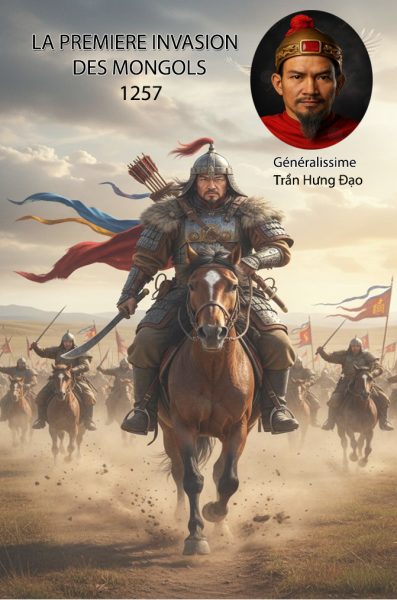
 

Cité interdite de Pékin (Yin-Yang)

Photo de Ming Chan (Pinterest)

Édification de la Cité interdite  selon les principes du Yin et Yang,
Wu Xing et Feng Shui

Version française
English version

Được nằm trên trục Nam – Bắc tượng trưng cho sự cân bằng vũ trụ, toàn bộ quận thể Tử Cấm Thành được thiết kế và qui hoạch theo nguyên lý âm dương, ngũ hành và phong thủy một cách chặt chẽ. Không chỉ có các con linh thú (Ốc Tích Thú) ở trên mái của các cung điện để chống hỏa hoạn và diệt trừ tà ma qua phong thủy mà còn có luôn cả âm dương ngũ hành được  thể  hiện một cách rõ rệt trong việc xây dựng cung điện và cửa nẽo ở Tử Cấm Thành.

Nơi nầy được chia hai phần chính là Tiền triều (hay ngoại triều)  được bố trí ở khu vực phía nam của hoàng cung nhằm thiết triều, cử hành các đại lễ và xử lý chính sự quốc gia theo nguyên tắc truyền thống « tọa bắc hướng nam »  và Hậu tẩm (nội đình) ở phía bắc làm nơi  yên nghỉ của vua và hoàng hậu cùng các cung phi. Tiền Triều  được xây dựng trên một nền móng cao nên có  yếu tố Dương (陽) và được nổi bật với ba điện lớn là Thái Hòa (太和殿 ), Trung Hòa (中和殿) và Bảo Hòa (电宝和) được đặt trên một bệ đá cẩm thạch chạm khắc gồm ba tầng và thể hiện uy quyền tối cao của thiên tử, con của Thượng Đế.

Còn hậu tẩm gồm có ba điện Càn Thanh cung (乾清宫),   Điện Giao Thái (交泰殿) và Khôn Ninh cung (坤宁宫) thì được xây dựng trên nền móng thấp hơn Tiền Triều  mang tính  Âm (阴) để thể hiện được sự hài hòa với nguyên lý « Âm thâm trầm, Dương uy mãnh« .

Vì vậy hệ thống thoát nước tại khu vực Tiền Triều và Hậu Tẩm là một đỉnh cao của kiến trúc cổ đại. Nếu hệ thống này không được nghiên cứu và thiết kế kỹ lưỡng, khu vực Hậu Tẩm sẽ bị  gập lụt nghiêm trọng và hư hại long mạch. Đây  một hệ thống thoát nước vô cùng tinh vi, dùng  lối thiết kế ở giữa cao  như mai rùa mà thấp ở hai bên khiến nước  không thể tựu lại ở lối đi mà bị đẩy sang hai bên rìa sân. Nơi  nầy  có những rãnh thoát nước hở và các lỗ đục nghệ thuật trên đá như những đồng tiền xu cổ  và các gạch lát nền đặc biệt cùng các mương ngầm chảy về phía Nam. Nhờ đó nước  đổ thẳng vào  con sông nhân tạo Nội Kim Thủy mặc dầu nó chỉ là vàng trên danh nghĩa và uốn lượn xuyên qua Tiền Triều.

Yếu tố âm dương và phong thủy càng được thấy rõ ràng ở các cung điện nằm trên trục chính Nam Bắc qua  màu sắc và vật liệu. Sự kết hợp giữa ngói lưu ly màu vàng (tượng trưng cho hành Thổ và trung tâm) và tường cung, cửa sổ màu đỏ (tượng trưng cho hỷ khánh và  sinh khí) trên nền cẩm thạch trắng tạo nên sự hài hòa âm dương theo quan niệm phong thủy phong kiến. Nhưng có  2 ngoại lệ  thường được nhắc  đến: Văn Uyên Các và  Nam Tam Sở tương ứng với một khu vực lịch sử dành riêng cho các hoàng thái tử hoạc thành viên hoàng tộc vào thời nhà Thanh.

Văn Uyên Các là  thư viện hoàng gia nằm trong Tử Cấm Thành, nhưng mái của nó lại có màu đen. Theo Ngũ Hành, màu đen thuộc hành Thủy (Nước), Thủy khắc Hỏa (Lửa). Việc dùng ngói đen là một cách yểm bùa phong thủy để cầu mong thư viện không bao giờ bị hỏa hoạn. Còn Nam Tam Sở (hay A-Ca-Sở), đây là khu nhà dành cho các Hoàng tử thì lại lợp ngói màu xanh lục. Màu xanh thuộc hành Mộc, tượng trưng cho mùa xuân, sự sinh trưởng và phát triển, với hàm ý chúc các vị hoàng tử được  trưởng thành vững vàng.

Còn phía nam thì hành Hỏa  thể  hiện sự phát triển thịnh vượng đến mức cực đại và sức mạnh tối cao, sự thị uy và chính thống của vương triều. Còn phía Bắc  (hành Thủy) thì tượng trưng cho sự tĩnh lặng,  sự yên bình và kín đáo của hoàng gia.

Các công trình phụ trợ dành cho  các hoàng tử ở phía Đông thuộc hành Mộc (mùa xuân, sự sinh trưởng)  và phía Tây thuộc hành Kim (mùa thu, sự tĩnh lặng)  dành cho các phi tần, được bố trí đối xứng qua trục thần đạo Nam-Bắc của Tử Cấm Thành  cũng thể hiện  được triết lý âm dương điều hòa và  trời đất dung hòa.

Tuy nhiên cũng có sự khác biệt tinh tế. Đó là  điểm khác biệt nhỏ để phù hợp với công năng và cấu trúc giữa Đông Lục Cung và Tây Lục Cung. Một bên,  Đông Lục Cung  thì có công năng biệt lập nhằm đảm bảo sự riêng tư và tôn ti trật tự nghiêm ngặt. Không có sự giao lưu trực tiếp. Còn bên kia, Tây Lục Cung thì có công năng liên thông nhất là có thể qua lại dưới thời nhà Thanh.

Từ Hi Thái hậu ra lệnh xây dựng  một tòa điện mới mang tên Thể Hòa Điện vào năm Quang Tự thứ 10 (1884) để chuẩn bị cho đại lễ mừng thọ 50 tuổi của bà qua cách phá bỏ bức tường bao phía sau của Dực Khôn Cung và bức tường bao phía trước của Trữ Tú Cung và biến hai cung độc lập thành một tổ hợp cung điện « tiền đình hậu viện » liên hoàn. Từ Hi Thái hậu dùng Dực Khôn Cung và Thể Hòa Điện làm nơi tiếp kiến, ngự thiện (ăn uống), còn Trữ Tú Cung ở phía sau làm phòng ngủ và nơi nghỉ ngơi riêng. Có cả luôn một  hành lang có mái che (Hồi lang) chạy xuyên suốt nối các điện ở Tây Lục Cung.

Trong Tử Cấm Thành, hầu như tất cả các cổng chính và cửa lớn của các điện đều có đinh cửa (gọi là Môn đinh), nhưng số lượng đinh trên mỗi cửa lại có sự khác biệt nghiêm ngặt dựa theo cấp bậc phong kiến. Hơn nữa chỉ có hai cửa chính ở  Nam và Bắc thì có năm cổng, còn lại thì chỉ có ba cổng. Dưới thời nhà Minh thì không có văn bản nào quy định cả. Đến thời nhà Thanh thì  trong Đại Thanh hội điển có nghi như sau: Cửa cung điện là nơi trang nghiêm, phía bên phải phủ bằng lưu ly màu vàng, cánh cửa phải đóng 9 hàng đinh ngang, dọc bằng vàng.

 Với quy tắc « 9 hàng 9 cột » tối thượng các cổng chính dành cho Hoàng đế như Ngọ Môn, Thần Vũ Môn, Thiên An Môn… đều có đúng 81 chiếc đinh vàng chia đều thành ma trận 9 hàng x 9 cột trên mỗi cánh cửa.  Số 9 là số lẻ lớn nhất (số Dương) chỉ dành cho Thiên tử (con Trời). Dân thường hoặc quan lại nếu tự ý đính số lượng này lên cửa nhà mình sẽ bị khép vào tội mưu phản. Chỉ có cổng Đông Hoa Môn là nơi duy nhất  được phá vỡ quy chuẩn hoàng gia khi chỉ có 72 chiếc đinh (chia thành 9 hàng x 8 cột). Đây là một số chẵn thuộc tính Âm.

Có hai  lý do để giải thích sự phân biệt nầy. Thời nhà Thanh, khi Hoàng đế, Hoàng hậu hay Thái hậu băng hà, linh cữu của họ bắt buộc phải được đi  qua cổng Đông Hoa Môn để rời cung. Vì việc tang tóc mang tính Âm cực nặng, số hàng đinh được giảm xuống thành số chẵn (8 cột) để phù hợp về mặt phong thủy tâm linh. Có thể xem đây là cổng ma trong Tử Cấm Thành.

Còn lý do thứ nhì  đây là  lối ra vào hàng ngày của các đại thần và quan chức vào triều kiến vua nên vì vậy cần hạ  xuống một bậc uy nghiêm so với lối đi riêng của hoàng đế.

Đây là quy định rất rõ ràng  và nghiêm ngặt về đinh cửa trong bộ luật « Đại Thanh Hội Điển« :

Cửa cung Hoàng đế: 9 hàng x 9 cột = 81 đinh (Mạ vàng).

Phủ Thân vương (Hoàng tử, em trai vua): 9 hàng x 7 cột = 63 đinh (Bằng đồng).

Phủ Quận vương: 7 hàng x 9 cột = 63 đinh (Bằng đồng).

Phủ Bá tước, Hầu tước: 7 hàng x 7 cột = 49 đinh (Bằng đồng).

Nhà quan lại cấp thấp: 5 hàng x 5 cột = 25 đinh (Bằng sắt).

Nhà dân thường: Tuyệt đối không được phép đóng đinh tròn lên cửa (chỉ dùng cửa gỗ trơn).

Nếu du khách có dịp  đến thăm Cung Vương Phủ (vương phủ lớn nhất và bảo tồn nguyên vẹn nhất tại Bắc Kinh ngày nay, vốn là phủ của đệ nhất tham quan Hòa Thân, sau này giao cho Thân vương Dịch Hân thì du khách  sẽ thấy:

Cánh cửa chính của phủ sơn màu đỏ sẫm

Các hàng đinh cửa xếp đúng quy chuẩn 9 hàng 7 cột.

Toàn bộ đinh cửa đều bằng đồng thau đúc, hoàn toàn không có lớp vàng sáng bóng như ở Ngọ Môn hay Thái Hòa Môn của Tử Cấm Thành.

Ngày nay  khi đi tham quan cố cung, du khách sẽ phát hiện số lượng đứng nối đuôi để được sờ  vào môn đinh.  Trong tiếng Hán, từ « Đinh » (钉 – đinh cửa) đồng âm với từ « Đinh » (丁 – người đàn ông, con trai). Do đó, phụ nữ hiếm muộn con đến sờ vào đinh cửa lớn của gia đình quyền quý hoặc hoàng cung sẽ giúp « thêm đinh » cho dòng họ, tức là người đó cầu sinh con trai được như ý nguyện.

Màu vàng của đinh tượng trưng cho tài lộc, màu đỏ của cánh cửa tượng trưng cho vận may và sự xua đuổi tà ma. Bởi vậy hàng triệu người chà xát tay mỗi năm đã làm bong tróc lớp sơn và lớp mạ vàng của các đinh cửa cổ khiến làm hư hại cổ vật. Do đó, ban quản lý Cố Cung đã lập hàng rào bảo vệ xung quanh hầu hết các cổng chính như Ngọ Môn, Thái Hòa Môn vân vân.

Situé le long de l’axe nord-sud, symbole d’équilibre cosmique, l’ensemble du complexe de la Cité interdite a été méticuleusement conçu et planifié selon les principes du Yin et du Yang, des Cinq Éléments et du Feng Shui. Au-delà des créatures mythiques visibles sur les toitures (*Ốc Tích Thú*) pour conjurer les incendies et les mauvais esprits grâce au Feng Shui, les concepts du Yin et du Yang ainsi que ceux des Cinq Éléments s’expriment également de manière manifeste par les  couleurs utilisées pour les palais et les portes de la Cité.

Ce complexe architectural se divise en deux parties principales: la Cour avant (ou Cour extérieure), située dans la partie sud du palais impérial et réservée aux audiences, aux grandes cérémonies et à la gestion des affaires de l’État, conformément   au principe traditionnel « on siège au nord  tout en faisant face au sud »  et la Cour  arrière (Cour intérieure), au nord,  servant de résidence privée à l’empereur, à l’impératrice et aux épouses impériales. Érigée sur une plateforme surélevée incarnant ainsi l’élément *Yang (陽)*, la Cour avant se distingue par la présence de trois grands palais: celui de  l’Harmonie Suprême (Thái Hoà (太和殿 ), celui de l’Harmonie parfaite Trung Hoà (中和殿) et  celui de l’Harmonie préservée Bảo Hòa (电宝和),  dressés  sur une estrade en marbre sculpté à trois paliers et conçus de manière à montrer l’autorité suprême de l’empereur en tant que  le Fils du Ciel.

Quant à la Cour arrière, il y a aussi trois  palais, celui de la Pureté céleste (乾清宫)(Qianqing Gong), celui de l’Union et de la Paix(交泰殿) (Jiaotai Dian) et celui de la Tranquillité terrestre (坤宁宫)(Kunning Gong) qui ont été édifiés sur des fondations plus basses que celles de la Cour extérieure. Cette conception reflète la nature du *Yin (阴) * et incarne l’harmonie avec le principe selon lequel « le *Yin* est profond et en retrait, tandis que le *Yang* est majestueux et vigoureux ».

C’est pour cela que le système de drainage desservant la Cour extérieure et la Cour intérieure constitue un chef-d’œuvre de l’ancienne architecture. Si ce système n’avait pas fait l’objet d’une étude rigoureuse et d’une conception minutieuse, la Cour  intérieure aurait subi d’importantes inondations,  ce qui risquait d’endommager ainsi les veines du dragon (les flux d’énergie du site). Il s’agit d’un dispositif très sophistiqué, caractérisé par une partie centrale surélevée évoquant la forme de la carapace de tortue et ses côtés en pente. Cette configuration empêche l’eau de stagner sur les allées et la dirige vers leurs bords.

Ce lieu possède des canaux de drainage à ciel ouvert, des motifs décoratifs en pierre ajourée rappelant des  anciennes pièces de monnaie, des dalles de pavage spéciales ainsi que des conduites souterraines orientées vers le sud. Ces dernières acheminent l’eau directement dans la rivière artificielle aux eaux d’or (Nei jinshui qiao) même si celle-ci n’a d’or que le nom  et serpente à travers la Cour avant.

Les principes du Yin-Yang et du Feng Shui s’illustrent tout particulièrement dans les palais situés le long de l’axe central nord-sud, à travers l’usage des couleurs et des matériaux. L’association de tuiles vernissées jaunes (symbolisant l’élément Terre et le centre) et de murs et fenêtres rouges (symbolisant la grande joie et l’énergie vitale),  le tout se détachant sur un fond de marbre blanc crée une harmonie entre le Yin et le Yang, conformément aux concepts du Feng Shui féodal. Il existe toutefois deux exceptions souvent citées : le pavillon Wenyuan (Văn Uyên Các) et le Nan San Suo (Nam Tam Sở) correspondant à une zone résidentielle historique spécifique réservée aux princes héritiers ou aux membres de la famille impériale à l’époque des Qing. 

Le pavillon Wenyuan est une bibliothèque impériale située au sein de la Cité interdite. Pourtant, son toit est noir. Selon la théorie des Cinq Éléments, le noir correspond à l’Eau. Comme l’Eau domine le Feu alors l’utilisation de tuiles noires constituait donc une mesure de *Feng Shui* destinée à protéger la bibliothèque des incendies. À l’inverse, Nan San Suo (ou A-Ca-So), le complexe résidentiel des princes est doté de tuiles vertes. Le vert correspond à l’élément Bois, symbole du printemps, de la croissance et du développement, exprimant ainsi le vœu de voir les princes grandir en maturité avec force.

Associé à l’élément Feu, le Sud incarne l’apogée de la prospérité et le pouvoir suprême, ainsi que la puissance et la légitimité de la dynastie. De son côté, le Nord (associé à l’élément Eau) symbolise l’immobilité, la tranquillité et le caractère « reclus » du domaine royal.

Les structures annexes situées à l’est pour les princes (associées à l’élément Bois, symbole du printemps et de la croissance) et à l’ouest pour les concubines (associées à l’élément Métal, symbole de l’automne et de l’immobilité), sont disposées symétriquement de part et d’autre de l’axe principal nord-sud de la Cité interdite, ce qui incarne ainsi la philosophie de l’harmonie entre le Yin et le Yang et de l’union du Ciel et de la Terre.

Il existe toutefois des différences subtiles et de légères variations reflétant les fonctions et les agencements distincts des Six Palais de l’Est et des Six Palais de l’Ouest. Ceux  de l’Est étaient conçus pour être autonomes et garantissent ainsi l’intimité et le respect d’une hiérarchie stricte sans  avoir l’accès direct entre les palais. À l’inverse, les Six Palais de l’Ouest présentaient une disposition interconnectée permettant de circuler de l’un à l’autre, notamment sous la dynastie Qing. 

La dixième année du règne de Guangxu (1884), l’impératrice douairière Cixi ordonna la construction d’un nouveau pavillon baptisé *Tihe Dian* (Pavillon de l’Harmonie mutuelle) en vue de la célébration de son cinquantième anniversaire. Ce projet fut réalisé en supprimant le mur arrière du Yikun Gong (Palais de l’Honneur terrestre) et le mur avant du Chuxiu Gong (Palais des Élégances accumulées) pour effectuer ainsi la fusion de ces deux palais indépendants en un ensemble unifié selon une disposition «pavillon à l’avant, cour à l’arrière ». Cixi utilisait le *Yikun Gong* et le *Tihe Dian* pour recevoir ses invités et prendre ses repas, tout en réservant le *Chuxiu Gong*  situé à l’arrière pour ses appartements privés et  son repos. Un couloir couvert continu traversait également le site, reliant entre eux les différents pavillons des « Six Palais de l’Ouest ».

Dans la Cité interdite, la quasi-totalité des portes principales et des grandes entrées menant aux pavillons sont ornées de clous de porte (appelés *Mending*).  Toutefois, le nombre de clous sur chaque porte était strictement déterminé par le rang féodal. Par ailleurs, seules les portes principales situées aux extrémités Sud et Nord comportaient cinq passages, tandis que les autres n’en comptaient que trois. Aucun règlement écrit à ce sujet n’existait sous la dynastie Ming.  Cependant, le *Da Qing Huidian* (Recueil des statuts de la Grande dynastie Qing) stipulait que les portes du palais  en tant qu’édifices solennels devaient être ornées de tuiles vernissées jaunes et comporter neuf rangées de clous dorés disposés tant horizontalement que verticalement.

Conformément à la règle suprême de la disposition en « 9 rangées et 9 colonnes », les grandes portes réservées à l’Empereur  telles que la Porte du Méridien (Ngọ Môn), la Porte de la Divine Puissance (Thần Vũ Môn) et la Porte de la Paix Céleste (Thiên An Môn) arborent exactement 81 clous dorés disposés en une matrice de 9×9 sur chaque vantail. Le chiffre 9 est le plus grand nombre impair (symbolisant le *Yang*) et est réservé exclusivement au Fils du Ciel. Les roturiers ou les fonctionnaires qui auraient pris la liberté d’apposer ce nombre de clous sur leurs propres portes se seraient rendus coupables de trahison. La Porte Florale de l’Est (Đông Hoa Môn) constitue la seule exception à cette norme impériale, ne comptant que 72 clous (disposés en 9 rangées et 8 colonnes), soit un nombre pair associé au *Yin*.

Il y a deux raisons pour expliquer cette distinction. Sous la dynastie Qing, lorsqu’un empereur, une impératrice ou une impératrice douairière décédait, le cercueil devait impérativement quitter le palais par la porte Donghua. Du fait que les rites funéraires étaient empreints d’une puissante énergie « Yin », le nombre de rangées de clous décoratifs était ramené à un chiffre pair (huit rangées) afin de se conformer aux principes spirituels du Feng Shui. Par conséquent, cette porte pouvait être considérée comme la « Porte des Fantômes » de la Cité interdite.

Quant à la seconde raison, il s’agit de l’entrée et de la sortie quotidienne des ministres et des hauts fonctionnaires venus solliciter une audience auprès du roi. Son degré de magnificence devait donc rester inférieur à celui du passage privé de l’empereur.

Le *Da Qing Hui Dian* (Recueil des statuts de la dynastie Qing) établit des règles très claires et strictes concernant les clous de porte:
Portes du palais impérial: 9 rangées × 9 colonnes = 81 clous dorés.
Résidences des *Qinwang* (princes de premier rang, fils ou frères de l’empereur): 9 rangées × 7 colonnes = 63 clous (en bronze).
Résidences des *Junwang* (princes de second rang): 7 rangées × 9 colonnes = 63 clous (en bronze).
Résidences des comtes et des marquis: 7 rangées × 7 colonnes = 49 clous (en bronze).
Demeures des fonctionnaires de rang inférieur: 5 rangées × 5 colonnes = 25 clous (en fer).
Demeures des gens ordinaires: interdiction formelle d’avoir des clous de porte ronds (seules les portes en bois uni étaient autorisées). 

Les visiteurs peuvent visiter la résidence du prince Gon. C’est le domaine princier le plus vaste et le mieux préservé du Pékin actuel qui fut d’abord la demeure du célèbre fonctionnaire corrompu Heshen (Hoà Thân) avant d’être attribué au prince Gong (Yixin). Ils peuvent y remarquer ce qui suit:La porte principale est peinte d’un rouge foncé.Les rangées de clous décoratifs sont disposées selon la configuration standard de neuf rangées et sept colonnes.

Tous les clous ornant les portes sont en laiton moulé. Ils sont dépourvus de la finition dorée brillante que l’on trouve sur les portes de la Cité interdite telles que la Porte du Midi ou la Porte de l’Harmonie suprême. Aujourd’hui, les visiteurs de la Cité interdite voient souvent des gens faire la queue pour toucher ces clous de porte. En Chinois, le mot désignant un « clou » (*ding* – 钉) est homophone du mot *ding* (丁), qui signifie « homme » ou « fils ». Par conséquent, les femmes confrontées à l’infertilité aiment  toucher les gros clous des portes des demeures nobles ou du palais impérial dans l’espoir d’« ajouter un *ding* » à leur lignée  c’est-à-dire de concevoir un fils comme elles le désiraient.
Tous ces clous sont en laiton moulé et sont totalement dépourvus de la finition dorée éclatante que l’on trouve sur la porte du Méridien ou la porte de l’Harmonie suprême, dans la Cité interdite.

Situated along the north-south axis, a symbol of cosmic balance, the entire Forbidden City complex was meticulously designed and planned according to the principles of Yin and Yang, the Five Elements and Feng Shui. Beyond the mythical creatures adorning the roofs (*Ốc Tích Thú*) intended to ward off fires and evil spirits through Feng Shui, the concepts of Yin and Yang and the Five Elements are also clearly expressed through the colors used for the City’s palaces and gates.

This architectural complex is divided into two main sections: the Front Court (or Outer Court), located in the southern part of the Imperial Palace and reserved for audiences, grand ceremonies, and the administration of state affairs, adhering to the traditional principle of « sitting in the north while facing the South » and the Rear Court (Inner Court) to the North, which served as the private residence for the emperor, the empress, and the imperial consorts. Built upon a raised platform that embodies the *Yang* (陽) element, the Front Court is distinguished by three grand halls (Thái Hoà, Trung Hoà, and Bão Hoà), designed to demonstrate the supreme authority of the emperor as the Son of Heaven.

As for the Inner Court, there are also three palaces: the Palace of Heavenly Purity (Qianqing Gong), the Palace of Union and Peace (Jiaotai Dian), and the Palace of Earthly Tranquility (Kunning Gong), built on foundations lower than those of the Outer Court. This design reflects the nature of *Yin* and embodies harmony with the principle that « *Yin* is deep and secluded, whereas *Yang* is majestic and vigorous. »

That is why the drainage system serving the Outer and Inner Courtyards is a masterpiece of ancient architecture. Had this system not been the result of rigorous study and meticulous design, the Inner Courtyard would have suffered severe flooding, potentially damaging the « dragon veins »—the site’s energy flows. It is a highly sophisticated system, featuring a raised central section that resembles a tortoise shell, with sloping sides. This configuration prevents water from pooling on the walkways and directs it toward the edges.

This place features open drainage channels, decorative motifs in openwork stone reminiscent of ancient coins, special paving slabs, as well as underground conduits oriented toward the south. These conduits channel the water directly into the artificial golden-water river (Nei jinshui qiao), even though this river has gold only in its name and winds through the Outer Court.

These conduits channel the water directly into the artificial golden-water river (Nei jinshui qiao), even though this river has gold only in its name and winds through the Outer Court.

The principles of Yin-Yang and Feng Shui are particularly evident in the palaces situated along the central north-south axis, through the use of color and materials. The combination of yellow glazed tiles (symbolizing the Earth element and the center) with red walls and windows (symbolizing great joy and vital energy), all set against a backdrop of white marble creates a harmony between Yin and Yang, in accordance with the concepts of feudal Feng Shui. However, there are two frequently cited exceptions: the Wenyuan Pavilion (Văn Uyên Các) and the Nan San Suo (Nam Tam Sở), the latter being a specific historical residential area reserved for crown princes or members of the imperial family during the Qing dynasty.

The Wenyuan Pavilion is an imperial library located within the Forbidden City. Yet, its roof is black. According to the theory of the Five Elements, black corresponds to Water. Since Water overcomes Fire, the use of black tiles served as a *Feng Shui* measure intended to protect the library from fire. Conversely, Nan San Suo (or A-Ca-So), the residential complex for the princes—features green tiles. Green corresponds to the Wood element, a symbol of spring, growth, and development, thereby expressing the wish for the princes to mature with strength.

Associated with the element of Fire, the South embodies the pinnacle of prosperity and supreme power, as well as the might and legitimacy of the dynasty. Meanwhile, the North (associated with the element of Water) symbolizes stillness, tranquility, and the « secluded » nature of the royal realm.

The auxiliary structures—located to the east for the princes (associated with the element of Wood, a symbol of spring and growth) and to the west for the concubines (associated with the element of Metal, a symbol of autumn and stillness)—are arranged symmetrically on either side of the Forbidden City’s main ceremonial north-south axis, thereby embodying the philosophy of harmony between Yin and Yang and the union of Heaven and Earth.

However, there are subtle differences and slight variations reflecting the distinct functions and layouts of the Six Eastern Palaces and the Six Western Palaces. The Eastern Palaces were designed to be self-contained, thereby ensuring privacy and adherence to a strict hierarchy, without direct access between the palaces. Conversely, the Six Western Palaces featured an interconnected layout that allowed for movement from one to another, particularly during the Qing Dynasty.In the tenth year of the Guangxu reign (1884), Empress Dowager Cixi ordered the construction of a new pavilion named *Tihe Dian* (Pavilion of Mutual Harmony) to mark her fiftieth birthday. The project involved removing the rear wall of *Yikun Gong* (Palace of Earthly Honor) and the front wall of *Chuxiu Gong* (Palace of Accumulated Elegance), thereby merging these two independent palaces into a unified complex featuring a « pavilion-in-front, courtyard-in-back » layout. Cixi used *Yikun Gong* and *Tihe Dian* to receive guests and dine, while reserving *Chuxiu Gong*, located at the rear for her private quarters and rest. A continuous covered corridor also ran through the site, connecting the various pavilions of the « Six Western Palaces. »In the Forbidden City, almost all the main gates and grand entrances leading to the pavilions are adorned with door studs (known as *mending*). However, the number of studs on each gate was strictly determined by feudal rank. Furthermore, only the main gates at the southern and northern ends featured five passageways, whereas the others had only three. No written regulations regarding this matter existed during the Ming Dynasty. Nevertheless, the *Da Qing Huidian* (Collected Statutes of the Great Qing Dynasty) stipulated that palace gates being solemn structures were to be adorned with yellow glazed tiles and feature nine rows of gilded studs arranged both horizontally and vertically. 

In accordance with the supreme rule of the « 9-row, 9-column » layout, the grand gates reserved for the Emperor—such as the Meridian Gate (Ngọ Môn), the Gate of Divine Might (Thần Vũ Môn), and the Gate of Heavenly Peace (Thiên An Môn)—feature exactly 81 golden studs arranged in a 9×9 grid on each door leaf. The number 9 is the highest odd number (symbolizing *Yang*) and is reserved exclusively for the Son of Heaven. Commoners or officials who took the liberty of affixing this number of studs to their own gates would have been guilty of treason. The East Floral Gate (Đông Hoa Môn) is the sole exception to this imperial standard, bearing only 72 studs (arranged in 9 rows and 8 columns)—an even number associated with *Yin*.

There are two reasons for this distinction. During the Qing Dynasty, whenever an emperor, empress, or empress dowager passed away, the coffin was required to leave the palace through the Donghua Gate. Because funeral rites were imbued with powerful « Yin » energy, the number of rows of decorative studs was reduced to an even number (eight rows) to comply with the spiritual principles of Feng Shui. Consequently, this gate could be considered the « Gate of Ghosts » of the Forbidden City.

As for the second reason, it concerns the daily coming and going of ministers and high-ranking officials seeking an audience with the King. Its level of magnificence therefore had to remain inferior to that of the Emperor’s private passageway.

The *Da Qing Hui Dian* (Collected Statutes of the Qing Dynasty) established very clear and strict rules regarding door studs:

Imperial palace gates: 9 rows × 9 columns = 81 gilded studs.

Residences of Qinwang (princes of the first rank, sons or brothers of the Emperor): 9 rows × 7 columns = 63 studs (bronze).

Residences of Junwang (princes of the second rank): 7 rows × 9 columns = 63 studs (bronze).

Residences of counts and marquises: 7 rows × 7 columns = 49 studs (bronze).

Dwellings of lower-ranking officials: 5 rows × 5 columns = 25 studs (iron).

Dwellings of commoners: strict prohibition against round door studs (only plain wooden doors were permitted).

Visitors can tour the residence of Prince Gong. It is the largest and best-preserved princely estate in modern-day Beijing; originally the home of the notorious corrupt official Heshen, it was later granted to Prince Gong (Yixin). Notable features include:

The main gate is painted a deep red. Rows of decorative studs are arranged in the standard configuration of nine rows and seven columns.

All the studs adorning the gates are made of cast brass. They lack the brilliant gold finish found on the gates of the Forbidden City, such as the Meridian Gate or the Gate of Supreme Harmony.

Today, visitors to the Forbidden City often see people queuing up to touch these gate studs. In Chinese, the word for « nail » or « stud » (*ding* – 钉) is a homophone for the character *ding* (丁), which signifies « man » or « son. » Consequently, women struggling with infertility like to touch the large studs on the gates of noble estates or the imperial palace in the hope of « adding a *ding* » to their lineage that is, conceiving a son, as was their wish.

All these studs are made of cast brass and completely lack the dazzling gold finish found on the Meridian Gate or the Gate of Supreme Harmony in the Forbidden City.


Ốc Tích Thú (wujishou)

Version française
Version anglaise

Thông thường khi bạn đi tham quan Tử Cấm Thành (Bắc Kinh) thì bạn hay thường  đi theo người hướng dẫn của công ty du lịch. Vì vậy ít khi bạn nhìn lên và để ý đến cung điện nào bạn viếng thăm lắm. Bởi vậy muốn biết rõ nơi nào bạn đến, bạn  hãy nhìn lên trên mái cung  số lượng các  linh vật mà người Hoa họ gọi là Ốc Tích Thú (chữ Hán: 屋脊兽). Nhờ số lượng mà bạn sẽ được biết tầm quan trọng và vị thế của cung điện nầy và cũng nhờ đó mà bạn biết phân biệt chỗ ở của hoàng đế hay của hoàng hậu so với các kiến trúc khác.  Bạn không cần  chỉ đích danh một cá nhân cụ thể nào cả.

Số lượng thần thú  trên  góc mái hiên  của  cung điện  có thể  gồm từ  1 đến 10. Tùy theo vai trò  quan trọng  quy mô của cung điện  và tùy theo đẳng  cấp  của chủ nhân trong triều đình mà con số  nầy nó  có thể thay đổi. Số lượng thần thú nầy được chỉ định trong bộ sách  ghi chép lại   tất cả  những điển pháp  dưới nhà Thanh  và được biết với cái tên là  Đại Thanh Hội Điển (Da Qing Hui Dian).  Các thần thú   nầy được sắp xếp theo số lẻ (số Dương)  1-3-5-7-9   trên  góc mái hiên   và theo thứ tự rõ ràng như sau:  rồng, phượng, sư tử, thiên mã, hải mã, toan nghê, áp ngữ, giải trãi, đấu ngưu và khỉ.

Con số 9 là con số Dương cao nhất dành cho cho vua  như Cung Càn Thanh (Palais de la Pureté Céleste)  và cho hoàng hậu như Cung Khôn Ninh (Palais de la Tranquillité Céleste). Cung nầy  chỉ còn có 7 linh vât, không có 3 con từ toan nghê tính đi. Số lượng linh vật trên mái nhà của các Quý phi và Phi tần thì phải thấp hơn cũng như nơi ở của Hoàng tử nằm ở  trong  khu vực  Đông Ngũ Sở.  

Nơi  nầy  gồm có năm dãy nhà  thì chỉ còn có từ 3 đến 5 con linh vật mà thôi. Chỉ có một điều ngoại lệ dưới triều đại nhà Thanh lúc bà Từ Hi Thái  hậu buông rèm nhiếp chính. Cung của bà (Điện Trữ Tú)(Palais des Elégances  Accumulées) là nơi bà cư trú lúc còn làm phi tần, được nâng cấp lên đến 9 con để ngang hàng với hoàng đế. Ở Việt Nam chỉ thấy Ốc Tích Thú ở vài chùa trong Chợ Lớn hay ở Hội An với chùa Phúc Kiến, những nơi có ảnh hưởng quan trọng của người Hoa.

Luôn luôn dẩn đầu các thần thú  nầy bởi một vị tiên cởi gà hay phượng thường đựơc gọi là hoàng tử Min. Bên cạnh những sinh vật kỳ ảo này, ở gần phần chót nóc mái, luôn có hình đầu một loài vật có sừng với khuôn miệng đang mở (đây là người con thứ chín của rồng).

Có một việc ngoài lệ đó là điện Thái Hoà có đến 10  thần thú trên  các góc mái hiên  vì ở nơi nầy hoàng đế  tổ chức các lễ hội quan trọng (như lễ tấn phong, lễ cưới, lễ  sinh nhật, lễ  tất niên vân vân….).

Các con linh vật  trên mái nhà đều có ý nghĩa sâu sắc về phong thủy. Chúng còn giữ vai trò  tựa như các  « vị thần » bảo vệ cung điện khỏi hỏa hoạn, thiên tai và tà ma. Chúng được bố trí sắp xếp theo qui tắc chỉ định khó dời chỗ và nhờ đó mà bạn có thể biết địa vị  chủ nhân của toà nhà nầy.

Sau đây là ý nghĩa  phong thủy của từng thần thú trên mái cung điện:

 Tiên nhân cưỡi phượng đi đầu. Theo truyền thuyết kể lại,  một vị vua khi bị kẻ địch truy đuổi đến bờ vực thẳm  đã được một con chim phượng hoàng bay đến cứu thoát. Biến nguy thành an.

1°) Long (Dragon). Trong phong thủy, rồng là thần mưa, có khả năng phun nước để trấn áp hỏa hoạ. Đây là nỗi sợ lớn nhất ở cố cung vì tất cả cung điện đều xây cất bằng gỗ. Rồng cũng là biểu tượng của thiên tử và hoàng đế.

2°) Phượng (Phénix). Phượng hoàng xuất hiện khi  quốc thái dân an, thiên hạ được  thái bình. Phượng  được xem là vua của các loài chim và biểu tượng của hoàng hậu.

3°)  Sư tử (Lion). Trong phong thủy, sư tử có lòng dũng cảm và uy nghiêm nên có tác dụng để trấn an, xua đuổi tà ma và đem lại bình yên ở cung điện.

4°) 5°) Thiên mã (Destrier céleste) & 6. Hải mã (Hippocampe)

 Đôi tượng mã nhỏ này  tượng trưng cho  uy quyền từ trên trời xuống biển sâu. Chúng còn biểu thị cho năng lực thông thiên đạt địa của hoàng quyền và khả năng lướt sóng, ngăn chặn thủy tai.

6°) Toan nghê (Suanni)

Trong phong thủy, nó mang  lại sự may mắn, bảo bọc và thu hút năng lượng ôn hòa.  Nó còn là một đứa con của rồng, có hình dáng giống sư tử nhưng thích khói lửa và sự tĩnh lặng.

7°) Áp ngữ (Yaju) Trong truyền thuyết,  loài cá thần có khả năng gọi mưa dập lửa. Đây là linh vật  có  trách  nhiệm  phòng chống hỏa hoạn cho công trình.

8°) Giải trãi (Xiezhi)

Linh thú một sừng có khả năng phân biệt ngay thẳng và tà ác. Khi thấy kẻ gian, nó sẽ dùng sừng húc thẳng vào. Loài này tượng trưng cho sự công lý của  pháp luật và sự minh triết của triều đình thể hiện qua chính sách lấy dân làm gốc.

9°)  Đấu ngưu (Douniu)

Đây là linh vật chót cuối cùng trong nhóm thần thú có nhiệm vụ khắc chế hỏa hoạn. Đây cũng là loài rồng có sừng bò, có khả năng phun mây nhả khói để tạo mưa.

10°) Háng thú (Hangshi)

Có ngoại hình giống khỉ nhưng có cánh và tay cầm chùy sét,  tựa  giống Lôi Thần (Thần sấm sét). Sự xuất hiện của Hành thập (Háng thú) có ý nghĩa phong thủy là chống sét đánh  để  bảo vệ  tòa nhà cao nhất Tử Cấm Thành.

Version française

Lorsqu’on visite la Cité interdite de Pékin, on est habitué à suivre  généralement le guide de l’agence de voyage. C’est pour cela qu’on ne lève même pas les yeux pour observer de près le bâtiment qu’on va visiter. Pourtant, pour saisir la véritable portée d’une construction, il convient d’observer sa toiture et de compter les figurines d’animaux mythiques appelées *wujishou* (屋脊兽) en chinois. Le nombre de ces figurines révèle l’importance et le statut du bâtiment, ce qui  permet de distinguer ainsi les palais de l’empereur ou de l’impératrice vis-à-vis des autres édifices. On n’a pas besoin d’identifier une personne en particulier.

 Groupées toujours en nombre impair (số Dương)  1-3-5-7-9, les figurines  marquent non seulement l’importance de l’édifice impérial mais aussi la fonction occupée par le propriétaire dans la hiérarchie impériale. Le nombre des figurines est fixé par le recueil de lois et de décrets de la dynastie des Qing connu sous le nom « Da Qing Hui Dian » (Đại Thanh hội điển).  Le chiffre 9 est le nombre Yang le plus élevé réservé à l’empereur (Palais de la Pureté Céleste). Quant au chiffre 7, il est destiné à l’impératrice (Palais de Kunning)

Les figurines  représentant chacune un symbole et une qualité, sont établies dans un ordre très précis: dragon (rồng), phénix (phượng hoàng), lion (sư tử), destrier céleste (thiên mã), hippocampe (hải mã), yaju (áp ngư), suanni (toan nghê), Xiezhi (hải trãi), douniu (đấu ngưu) hangshi (khỉ).

Le nombre 9 est le nombre Yang le plus élevé, réservé à l’empereur comme le palais de la Pureté céleste, et à l’impératrice comme le palais de la Tranquillité terrestre. Ce dernier ne compte plus que 7 figurines, sans compter les 3 autres créatures  à partir de la figurine suanni. Le nombre de figurines sur les toits des palais des nobles concubines et des concubines impériales devait être inférieur  ainsi que celui de la résidence des princes impériaux située dans la zone orientale nommée « les Cinq Résidences ». Cet endroit comprend cinq rangées de bâtiments et ne compte plus que 3 à 5 créatures. Une seule exception eut lieu sous la dynastie Qing, lorsque l’impératrice douairière Cixi gouverna derrière le rideau. Son palais (le palais des Élégances Accumulées), l’endroit où elle résidait lorsqu’elle était encore concubine, fut élevé à 9 créatures, au même rang que l’empereur. Au Vietnam, on ne trouve que les Ốc Tích Thú (wujishou) dans  quelques pagodes à  Cholon ou à Hội An où la communauté chinoise est importante. 

 Elles sont toujours précédées par un immortel taoïste appelé parfois le « prince Min» qui est  sur le dos d’un coq ou d’un phénix. À côté de ces animaux chimériques près du sommet du toit, se trouve toujours une tête d’animal cornu à gueule ouverte (neuvième fils du dragon). Il y a une exception à cette règle d’alignement.

C’est le cas du palais de l’Harmonie Suprême Taihe (Ðiện Thái Hòa) où 10 figurines sont toutes présentes sur l’arête de sa toiture car c’est ici que l’empereur a organisé les festivités importantes (intronisation, mariage, anniversaire, nouvel an, solstice d’hiver etc.). L’utilisation de ces figurines est destinée à protéger les édifices contre le feu  et les esprits malfaisants  et à montrer la puissance et la suprématie de l’empereur

Les créatures mythiques sur les toits ont toutes une profonde signification dans le feng shui. Elles jouent également un rôle semblable à celui de « divinités » protégeant les palais contre les incendies, les catastrophes naturelles et les esprits maléfiques. Elles sont disposées selon des règles précises qui ne permettent guère de les déplacer, ce qui permet de connaître le statut du propriétaire du bâtiment. Voici la signification feng shui de chacune des créatures mythiques situées  sur le toit du palais:

 L’immortel chevauchant un phénix en tête. Selon la légende, un roi poursuivi par ses ennemis jusqu’au bord d’un précipice fut sauvé par un phénix venu à son secours. Le danger se transforme ainsi en sécurité.
1°) Dragon (Rồng). Dans le feng shui, le dragon est le dieu de la pluie. Il est  capable de cracher de l’eau pour maîtriser les incendies. C’est la plus grande crainte dans la cité interdite car tous les palais y étaient construits en bois. Le dragon est également le symbole du Fils du Ciel et de l’empereur.

2°) Phénix (Phượng). Le phénix apparaît lorsque le pays est prospère et  lorsque le monde connaît la paix. Le phénix est considéré comme le roi des oiseaux et le symbole de l’impératrice.

3°) Lion. Dans le feng shui, le lion possède le courage et majesté. Il sert donc à rassurer, chasser les esprits maléfiques et apporter la paix au palais.
4°) 5°) Destrier céleste et  Hippocampe(Thiên mã và cá ngựa)
Ces deux figurines symbolisent l’autorité descendue du ciel jusqu’aux profondeurs marines. Elles représentent le pouvoir impérial capable de communiquer avec le ciel et de maîtriser la terre, ainsi que la capacité de chevaucher les vagues et de prévenir les catastrophes hydrauliques.
6°) Suanni (Toan nghê)
Dans le feng shui, il apporte la chance et la  protection et il attire une énergie paisible. C’est également un enfant du dragon, ayant l’apparence d’un lion et appréciant la fumée, le feu et la tranquillité.

7°) Yaju  (Cá ngừ)  Dans les légendes, ce poisson divin a le pouvoir d’appeler la pluie pour éteindre les incendies. C’est une créature sacrée chargée de protéger les édifices contre les incendies.

8°) Xiezhi (Giải trãi)

C’est une créature sacrée à une corne capable de distinguer immédiatement le bien  du mal. Lorsqu’elle voit un homme malhonnête, elle le charge directement avec sa corne. Cette espèce symbolise la justice de la loi et la sagesse de la cour impériale en prenant le peuple comme la base de sa gouvernance.
9°) Đấu ngưu (Douniu)
Il s’agit de la dernière créature sacrée du groupe des animaux divins chargés de prévenir les incendies. C’est également un dragon doté de cornes de taureau, capable de souffler des nuages et de rejeter de la fumée afin de provoquer la pluie.
10°) Háng thú (Hangshi)
Son apparence ressemble à celle d’un singe, mais il possède des ailes et il tient dans sa main une massue de la foudre, à l’image du Dieu du Tonnerre. Son apparition  revêt une signification dans le feng shui: protéger le plus haut bâtiment de la Cité interdite contre la foudre.

Version anglaise

When visiting Beijing’s Forbidden City, people are generally accustomed to following the travel agency’s guide. Consequently, they do not even look up to closely observe the building they are about to visit. Yet, to grasp the true significance of a structure, one should examine its roof and count the figurines of mythical animals called *wujishou* (屋脊兽) in Chinese. The number of these figurines reveals the building’s importance and status, thus distinguishing the emperor’s or empress’s palaces from other structures. There is no need to identify any particular person.

Always grouped in odd numbers (số Dương), 1-3-5-7-9, the figurines indicate not only the importance of the imperial building but also the function held by its owner within the imperial hierarchy. The number of figurines was established by the collection of laws and decrees of the Qing dynasty known as the “Da Qing Hui Dian” (Đại Thanh hội điển). The number 9 is the highest Yang number, reserved for the emperor (Palace of Heavenly Purity). As for the number 7, it is designated for the empress (Palace of Kunning).

The figurines, each representing a symbol and a quality, are arranged in a very precise order: dragon (rồng), phoenix (phượng hoàng), lion (sư tử), celestial steed (thiên mã), seahorse (hải mã), yaju (áp ngư), suanni (toan nghê), xiezhi (hải trãi), douniu (đấu ngưu), hangshi (khỉ). The number 9 is the highest Yang number, reserved for the emperor, as in the Palace of Heavenly Purity, and for the empress, as in the Palace of Earthly Tranquility. The latter has only 7 figurines, not counting the 3 other creatures starting with the suanni figurine.

The number of figurines on the roofs of the palaces of noble consorts and imperial concubines had to be lower, as did that of the residence of the imperial princes located in the eastern area called “the Five Residences.” This place comprises five rows of buildings and has only 3 to 5 creatures. A single exception occurred under the Qing dynasty, when Empress Dowager Cixi ruled from behind the curtain. Her palace (the Palace of  Accumulated Elegances), where she resided when she was still a concubine, was raised to 9 creatures, equal in rank to the emperor. In Vietnam, Ốc Tích Thú are found only in a few pagodas in Cholon or Hội An, where the Chinese community is significant.

They are always preceded by a Taoist immortal, sometimes called “Prince Min,” who rides on the back of a rooster or phoenix. Next to these mythical animals near the top of the roof, there is always the head of a horned, open-mouthed animal (the dragon’s ninth son). There is one exception to this alignment rule.
This is the case of the Palace of Supreme Harmony Taihe (Điện Thái Hòa), where all 10 figurines are present along the ridge of its roof, because this is where the emperor held important festivities (enthronement, wedding, birthday, New Year, winter solstice, etc.). The use of these figurines is intended to protect the buildings from fire and evil spirits and to demonstrate the emperor’s power and supremacy.

The mythical creatures on the roofs all have profound significance in feng shui. They also play a role similar to that of “deities,” protecting palaces against fires, natural disasters, and evil spirits. They are arranged according to precise rules that allow little room for relocation, making it possible to determine the status of the building’s owner. Here is the feng shui significance of each of the mythical creatures located on the palace roof:

The immortal rides a phoenix at the front. According to legend, a king pursued by his enemies to the edge of a cliff was saved by a phoenix that came to his aid. Danger thus transforms into safety.
1°) Dragon (Rồng). In feng shui, the dragon is the god of rain. It is capable of spitting water to control fires. This is the greatest fear in the Forbidden City because all the palaces there were built of wood. The dragon is also the symbol of the Son of Heaven and the emperor.
2°) Phoenix (Phượng). The phoenix appears when the country is prosperous and when the world is at peace. The phoenix is considered the king of birds and the symbol of the empress.
3°) Lion. In feng shui, the lion possesses courage and majesty. It therefore serves to reassure, drive away evil spirits, and bring peace to the palace.

4°) 5°) Celestial Steed and Hippocampus (Thiên mã và cá ngựa)
These two figurines symbolize authority descended from heaven to the depths of the sea. They represent imperial power capable of communicating with heaven and mastering the earth, as well as the ability to ride the waves and prevent water-related disasters.
6°) Suanni (Toan nghê)
In feng shui, it brings luck and protection and attracts peaceful energy. It is also a child of the dragon, having the appearance of a lion and enjoying smoke, fire, and tranquility.
7°) Yaju (Cá ngừ) In legends, this divine fish has the power to summon rain to extinguish fires. It is a sacred creature tasked with protecting buildings from fires.
8°) Xiezhi (Giải trãi)
It is a sacred one-horned creature capable of immediately distinguishing right from wrong. When it sees a dishonest man, it charges directly at him with its horn. This species symbolizes the justice of the law and the wisdom of the imperial court, which takes the people as the foundation of its governance.
9°) Đấu ngưu (Douniu)
This is the last sacred creature in the group of divine animals tasked with preventing fires. It is also a dragon with bull’s horns, capable of blowing clouds and expelling smoke to bring about rain.
10°) Háng thú (Hangshi)
Its appearance resembles that of a monkey, but it has wings and holds a lightning club in its hand, like the God of Thunder. Its appearance has a meaning in feng shui: protecting the tallest building in the Forbidden City from lightning.


Nguyễn An, un Vietnamien hors pair (Cité interdite de Pékin)

Nguyễn An, một người Việt kiệt xuất.


Version française
Version anglaise
Galerie des  photos

Nguyễn An sinh ra và lớn lên ở Hà Đông (nay thuộc về thành phố Hà Nội)  trong một bối cảnh lịch sử với nhà Trần suy yếu. Thừa dịp đó Hồ Qúi Ly cướp ngôi, đổi tên đất nước thành Đại Ngu và  dự  định dời đô về Thanh Hoá  sau khi xây dựng Tây Đô nhưng lòng dân không theo. Nhà Minh lấy cớ đó xâm chiếm nước ta  với  tướng Trương Phụ.  Không chỉ bắt cha con Hồ Qúy Ly mà luôn cả những thợ thủ công tài hoa nhất trong đó  có  Nguyễn An và  cả hàng ngàn người Việt ưu tú đem về phương Bắc.

Nguyễn An từ nhỏ đã bộc lộ những phẩm chất xuất chúng. Lúc 16 tuổi ông đã tham gia vào nhóm thợ giỏi nhất để xây dựng, sửa sang cung điện của vua Trần Thuận Tông ở Thăng Long. Ông bị bắt làm tù binh  đưa về Trung Quốc để  xây dựng kinh đô mới của triều Minh ở  Bắc Kinh dưới thời Minh Thành Tổ (Chu Đệ). Lúc đó  ông mới ngoài 20 tuổi. Không thân nhân và t ù nhân, ông phải chịu bị hoạn để làm thái giám trong cung dưới thời nhà Minh. Nhờ đó ông phục vụ qua 5 đời vua (từ Minh Thành Tổ đến Minh Tông/Cảnh Tông) và có tên là A Lưu trong Minh Sử.

Nhờ nổi tiếng có tài tính toán chính xác, liêm khiết và thông minh nên đã được nhà vua tin tưởng giao trọng trách tham gia giám sát việc xây dựng Tử Cấm Thành  Bắc Kinh. Ông giỏi tính toán kích thước  nên rất  chuẩn xác không cần đo đạc phức tạp.

Nhờ tài năng xuất chúng, ông mới nghĩ  thiết kế theo quan niệm vũ trụ trời tròn đất vuông. Như sao Bắc Đẩu ở  trên thiên giới, Tử  Cấm Thành là nơi vua ngự  trị  ở hạ giới. Để thiết kế 4 tháp tại bốn góc thành, Nguyễn An vô tình quan sát lồng con dế yêu của mình để lấy cảm hứng từ đó  tạo nên bố cục kiến trúc độc đáo và thiết kế một cách ngẫu nhiên, được Vĩnh Lạc khen ngợi. Đấy là giai thoại truyền miệng được nhắc đến trong bộ phim Đức « Chinas Verbotene Stadt »   được phát hành vào cuối năm 2007 trên  các kênh Arte và ZDF.

Nhờ tính liêm khiết của ông nên ông được vua Minh Thành Tổ tin cậy nên ông được tham giao vào nhóm kiến trúc sư và thiết kế Thái Tín (Cai Xin), Trần Khuê (Chen Gui), Ngô Trung (Wu Zhong) và Khoái Tường (Kuai Xiang) với chức vụ Tổng Đốc Công. Chức nầy được xem là là chức vụ đứng đầu việc quy hoạch, thiết kế và chỉ đạo thi công các đại công trình ở thời phong kiến.

Có thể nói ông chỉ là thợ thủ công lúc đầu, được Minh Thành Tổ  tin cậy mới giao chức vụ  trọng trách như vậy  chớ làm gì có thể  hơn được các quan như Trần Khuê, Ngô Trung trong thời kỳ Trung Hoa còn chế độ phong kiến nhất là ông họan quan thuộc về thành phần hạ cấp bị khinh bĩ trong xã hội. Trần Khuê giữ tước vị Túc Ninh hầu là người tổng chỉ huy, điều hành toàn bộ nhân lực, vận chuyển vật liệu và ngân sách.

Còn Ngô Trung, ông là thượng thư Bộ Công (chức vụ này mới thực sự tương đương Bộ trưởng Bộ Xây dựng / Bộ Giao thông ngày nay).  Còn Thái Tín thời đó ông là kiến trúc sư trưởng với Khoái Tường, kiến trúc sư về mỹ thuật. 

Minh Thành Tổ Chu Đệ không tin tưởng vào các quan vì mang tiếng tham ô quá nhiều nên chỉ tin vào các thái giám vì họ chỉ lệ thuộc trực tiếp với ông. Có thể nói Nguyễn An là « tai mắt » của Chu Đệ, là cận thần thân tín của Chu Đệ với nhiệm vụ Tổng Đốc Công. Chức nầy được xem là chức vụ đứng đầu việc quy hoạch, thiết kế và chĩ đạo thi công các đại công trình ở thời phong kiến.

Dưới triều đại nhà Minh  việc bổ nhiệm một quan chức hoặc viên chức vào vị trí then chốt đòi hỏi phải có văn bản chính thức do chính đích thân hoàng đế ban hành. Chỉ về sau  mới có văn bản chính thức dưới thời vua Minh Anh Tông  phong ông làm Tổng công trình sư tối cao từ năm 1436.

Vua Minh Anh Tông muốn xây dựng hệ thống tháp sừng sững tại 9 cửa thành bao quanh Bắc Kinh.Thị lang Bộ Công là Thái Tín tâu rằng: Công trình này quá lớn, phải cần tới 18 vạn dân phu và phải mất ít nhất 5 năm mới làm xong. Nhà vua không tin tưởng Bộ Công nên đã gạt Thái Tín sang một bên, giao toàn quyền Tổng đốc công cho Nguyễn An. Ông nhận lệnh và chứng minh thiên tài quản lý của mình: Thay vì dùng 18 vạn dân phu gây kiệt quệ sức dân, ông chỉ dùng hơn 1 vạn binh sĩ.

Ông tự tay vạch kiểu, tính toán chi tiết nhân lực và vật liệu. Bộ Công luôn cả Khoái Tường và các thợ thuyền đành chịu khoanh tay, bái phục, nghe ông chỉ bảo, sai khiến, thật là người đại tài và xuất chúng.  Công việc của ông làm chính là kết hợp nhiệm vụ của một kiến trúc sư công trình, một nhà quy hoạch, một kỹ sư xây dựng lẫn một nhà quản lý dự án, như ở thời đại ngày nay. Năm Chính Thống thứ hai (1437), ông xây dựng thành nội tức Hoàng thành, thành ngoại với 9 cửa. Tất cả được thực hiện trong vòng 3 năm mà chỉ dùng hết 1 vạn nhân công.

Sau đó,  vào tháng 3 năm 1440, ông lại được nhà vua giao cho 7 vạn thợ xây dựng và trùng tu ba điện Phụng Thiên, Hoa Cái, Cẩn Thân cùng hai cung Càn Thanh, Khôn Ninh (các tòa cung điện này đã bị sét đánh từ năm 1421 đời Minh Thành Tổ. Chỉ có năm rưỡi thì xong khiến vua  Minh Anh Tông hài lòng, thưởng cho A Lưu 50 lạng vàng, 100 lạng bạc, 8 tấn thóc và 1 vạn quan tiền.

Nhờ tài năng quản lý xuất chúng cùng đức liêm chính, ông được các hoàng đế nhà Minh tin tưởng giao phó thực hiện vô số công trình quy mô lớn khác tại Bắc Kinh cũng như trên khắp lãnh thổ đế quốc. Hoàng đế biết rằng nếu giao toàn bộ ngân sách cho ông ấy, số tiền đó sẽ được dùng cho vật liệu thay vì nó  chạy vào túi các quan lại. Ông được đánh giá trong Minh sử  là một trong số ít quan chức triều đình hoàn toàn liêm khiết. Điều đáng nói hơn là  khi ông qua đời, các sử gia kể lại  ngân quỹ của ông gần như trống rỗng. Điều này chứng tỏ ông chưa bao giờ biển thủ dù chỉ một xu từ những khoản ngân sách khổng lồ mà ông từng quản lý trong suốt cuộc đời.

Ngoài việc xây cất Tử Cấm Thành, ông còn  đảm nhiệm  chẵng hạn công việc tái thiết các bức tường thành Bắc Kinh. Ông đã giám sát quá trình hiện đại hóa bức tường thành bao quanh thành phố, thay thế các công trình bằng đất nén bằng gạch và đá dày. Trong lĩnh vực kỹ thuật thủy lợi (quản lý nguồn nước) thì ông đã trở thành một vị anh hùng dân tộc tại Trung Quốc nào với việc kiểm soát lũ lụt sông Hoàng Hà   qua các hệ thống đê điều, kênh dẫn  dòng và cửa cống vô cùng tinh vi (ba dự án thủy lợi lớn được hoàn thành với tỷ lệ thành công tuyệt đối) nào với việc nạo vét kênh Đại Vận Hà  nhằm tạo thuận lợi cho việc vận chuyển lương thực và hàng hóa đến Bắc Kinh. Một tuyến đường được xem là huyết mạch đối với nền kinh tế thời nhà Minh.

Nguyễn An (Ruan An) không chỉ được nhắc đến trong bộ *Minh sử* mà còn được  người dân Trung Quốc đương thời biết đến nhưng nó lại mang tính phân hóa rõ rệt.

Đối với công chúng nói chung, ông chỉ là một nhân vật ít được biết đến so với thái giám Trịnh Hoà cùng thời  được nhắc nhở nhiều  trong sách giáo tiếng Trung. Ngược lại  ông trở thành một tên tuổi quan trọng đối với những người đam mê lịch sử và kiến ​​trúc.

Cité interdite de Pékin

Version française

Nguyễn An est  né et a grandi à Hà Đông à une époque où la dynastie Trần était sur le déclin. Saisissant cette opportunité, Hồ Quý Ly usurpa le trône, rebaptisa le pays Đại Ngu et projeta de transférer la capitale à Thanh Hóa après avoir fait construire Tây Đô. Toutefois, il ne parvint pas à s’attirer le soutien de la population. Prenant prétexte de cette situation, la dynastie Ming envahit le pays sous le commandement du général Zhang Fu. Les envahisseurs capturèrent non seulement Hồ Quý Ly et son fils, mais aussi tous les artisans les plus talentueux dont Nguyễn An ainsi que des milliers d’autres Vietnamiens remarquables et  les emmenèrent tous vers le Nord de la Chine.

Nguyễn An fit preuve de qualités exceptionnelles dès son plus jeune âge. À seize ans, il avait déjà rejoint un groupe d’artisans d’élite chargé de la construction et de la rénovation des palais du roi Trần Thuận Tông à Thăng Long. Par la suite, il fut fait prisonnier et emmené en Chine pour participer à l’édification de la nouvelle capitale de la dynastie Ming, Pékin, sous le règne de l’empereur Yongle (Vĩnh Lạc). Il était alors âgé d’une vingtaine d’années. Seul et captif, il fut castré et servit en tant qu’eunuque de palais sous la dynastie Ming. Il servit cinq empereurs successifs — de Yongle à Jingtai et dans l’*Histoire des Ming* (Ming Shilu) il fut connu  sous le nom d’A Luu.

Réputé pour sa précision dans les calculs, son intégrité et son intelligence, il se vit confier par l’Empereur la mission importante de superviser la construction de la Cité interdite à Pékin. Il maîtrisait si bien le calcul des dimensions que ses mesures étaient d’une grande exactitude, rendant  ainsi superflues les opérations complexes de prise de mesures sur le chantier.

Grâce à son talent exceptionnel, il a conçu un plan fondé sur le concept cosmologique ancestral d’un ciel rond et d’une terre carrée. Étant considérée comme l’étoile polaire régnant sur la voûte céleste, la Cité interdite sert de siège à l’empereur sur terre. L’inspiration pour les quatre tours d’angle lui était venue de manière inattendue de la cage de son grillon apprivoisé. Cette conception architecturale unique et improvisée lui a valu les éloges de l’empereur Yongle. Cette anecdote a été relatée dans le documentaire allemand *Chinas Verbotene Stadt* (La Cité interdite de Chine), diffusé sur les chaînes Arte et ZDF fin 2007.

Grâce à son intégrité, l’empereur Yongle (Ming Chengzu) lui a accordé sa confiance et  l’a intégré ainsi à une équipe d’architectes et de concepteurs aux côtés de Thái Tin (Cai Xin) , Trần Khuê (Chen Gui), Ngô Trung (Wu Zhong) et Khoái Tường (Kuai Xiang).

Il n’aurait certainement pas pu se voir attribuer un rang supérieur à celui de fonctionnaires tels que Trần Khuê (Chen Gui) et Ngô Trung (Wu Zhong)  dans le cadre du système féodal chinois où il appartenait à une catégorie méprisée et de bas rang de la société. Ayant eu le titre de marquis de Taining (Túc Ninh), Chen Gui (Trần Khuê) occupait la fonction de commandant en chef et supervisait l’ensemble de la main-d’œuvre, ainsi que le transport des matériaux et la gestion du budget.

Quant à  Wu Zhong (Ngô Trung), il a occupé le poste de ministre des Travaux publics, une fonction véritablement équivalente à celle d’un ministre de la Construction ou des Transports d’aujourd’hui. De son côté, Cai Xin (Thái Tín) était l’architecte en chef de l’époque avec Kuai  Xiang (Khoái Tường), architecte en art.

L’empereur Yongle (Zhu Di) se méfiait des fonctionnaires en raison de leur réputation généralisée de corruption. Il préférait s’en remettre aux eunuques, qui lui étaient directement redevables. On peut dire que Nguyễn An a servi de « yeux et d’oreilles » à Zhu Di et a agi  en tant que homme de confiance. L’empereur lui accorda au début le rôle de surintendant général des travaux.  Ce poste était considéré comme la plus haute fonction chargée de la planification, de la conception et de la supervision de la construction de grands projets à l’époque féodale.

Sous la dynastie Ming, la nomination d’un fonctionnaire à un poste clé nécessitait un document officiel émanant personnellement de l’empereur. Ce n’était qu’en 1436, sous le règne de l’empereur Ming Zhengtong, qu’un décret officiel fut promulgué pour le nommer architecte en chef suprême.

L’empereur Ming Zhengtong souhaitait faire ériger des tours de guet imposantes aux neuf portes entourant Pékin. Cai Xin, vice-ministre des Travaux publics, soumit un rapport indiquant que le projet était d’une envergure excessive, nécessitant une main-d’œuvre de 180 000 ouvriers et au moins cinq années de travaux. Méfiant à l’égard du ministère des Travaux publics, l’empereur écarta Cai Xin et confia la pleine responsabilité du projet à Nguyễn An. Une fois investi de cette mission, Nguyễn An fit preuve d’un génie organisationnel remarquable: au lieu de mobiliser 180 000 ouvriers,  une mesure aurait épuisé la population. Il mena à bien le projet en s’appuyant sur un effectif d’à peine plus de 10 000 soldats.

Il a personnellement élaboré les plans et calculé avec précision les besoins en main-d’œuvre et en matériaux. Saisis d’admiration, les responsables du ministère des Travaux publics  y compris Kuai Xing ainsi que les artisans s’en remettaient à ses directives. C’était véritablement un homme d’un talent et d’une intelligence exceptionnels. Son travail conjuguait les rôles d’architecte en structure, d’urbaniste, d’ingénieur en génie civil et de chef de projet, à l’instar des professionnels polyvalents de notre époque. La deuxième année de l’ère Zhengtong (1437), il fit construire la ville intérieure (la Cité impériale) ainsi que la ville extérieure, dotée de neuf portes. L’ensemble du projet fut achevé en trois ans seulement avec une main-d’œuvre de dix mille ouvriers.

Par la suite, en mars 1440, l’empereur le chargea de diriger une main-d’œuvre de 70 000 ouvriers pour la construction et la restauration de trois salles: Palais de l’Harmonie Suprême (Phụng Thiên) (奉天), Palais de l’Harmonie Centrale (Hoa Cái) (華蓋) et Palais de l’Harmonie Préservée (Cẩn Thân)  (謹身) ainsi que de deux palais, Càn Thanh (乾清宮) (Palais de la Pureté Céleste ) et Khôn Ninh (坤寧宮) (Palais de la Tranquillité Terrestre) (des édifices frappés par la foudre sous le règne de l’empereur Yongle de la dynastie Ming). Le projet fut achevé  seulement en un an et demi à la grande satisfaction de l’empereur Ming Zhengtong, qui récompensa A Luu en lui offrant 50 taels d’or, 100 taels d’argent, 8 tonnes de céréales et 10 000 chapelets de sapèques.

Grâce à ses compétences exceptionnelles en gestion et à son intégrité, les empereurs de la dynastie Ming lui confièrent de nombreux projets d’envergure, tant à Pékin que dans le reste de l’empire. Ils savaient que si l’on lui confiait la totalité du budget, les fonds seraient consacrés aux matériaux plutôt qu’à garnir les poches de fonctionnaires corrompus. L’*Histoire des Ming (Ming Shilu)* le salue comme l’un des rares dignitaires de la cour à avoir fait preuve d’une incorruptibilité totale. Les historiens notent d’ailleurs qu’à sa mort, ses coffres personnels étaient pratiquement vides, prouvant qu’il n’avait jamais détourné le moindre sou des budgets considérables qu’il avait gérés tout au long de sa vie.

Outre la construction de la Cité interdite, il entreprit des travaux tels que la reconstruction des remparts de Pékin. Il supervisa la modernisation des fortifications de la ville en remplaçant les structures en terre damée par une maçonnerie épaisse de briques et de pierres. Dans le domaine du génie hydraulique, il devint un héros national en Chine pour avoir maîtrisé les crues du fleuve Jaune grâce à des systèmes sophistiqués de digues, de canaux de dérivation et d’écluses avec trois projets majeurs de gestion des eaux  et pour avoir fait curer le Grand Canal afin de faciliter le transport de céréales et de marchandises vers Pékin, une voie considérée comme le poumon économique de la dynastie Ming.

Nguyễn An (Ruan An) est  mentionné non seulement dans l’*Histoire des Ming (Ming Shilu) *, mais il est  également connu auprès  des Chinois d’aujourd’hui, bien que les perceptions à ce sujet varient considérablement.

Pour le grand public, il demeure une figure relativement méconnue comparée à son contemporain, l’amiral eunuque Zheng He (Trịnh Hoà),  cité fréquemment dans les manuels scolaires chinois. En revanche, il est une figure marquante pour les passionnés d’histoire et d’architecture.

English version

Nguyễn An was born and raised in Hà Đông during a time when the Trần dynasty was in decline. Seizing this opportunity, Hồ Quý Ly usurped the throne, renamed the country Đại Ngu, and planned to relocate the capital to Thanh Hóa after constructing Tây Đô. However, he failed to win the support of the populace. Using this situation as a pretext, the Ming dynasty invaded the country under the command of General Zhang Fu. The invaders captured not only Hồ Quý Ly and his son but also the most talented artisans—including Nguyễn An—along with thousands of other distinguished Vietnamese, taking them all to northern China.

Nguyễn An demonstrated exceptional talent from a very young age. By the age of sixteen, he had already joined an elite group of artisans tasked with constructing and renovating the palaces of King Trần Thuận Tông in Thăng Long. Subsequently, he was taken prisoner and transported to China to participate in the construction of Beijing—the new capital of the Ming Dynasty—under the reign of the Yongle Emperor (Vĩnh Lạc). He was in his twenties at the time. Alone and in captivity, he was castrated and served as a palace eunuch under the Ming Dynasty. He served five successive emperors—from Yongle to Jingtai—and is known in the *History of the Ming* (Ming Shilu) by the name A Luu.

Renowned for his precision in calculations, his integrity, and his intelligence, he was entrusted by the Emperor with the important mission of overseeing the construction of the Forbidden City in Beijing. He had such a mastery of dimensional calculations that his measurements were extremely accurate, thereby rendering complex on-site measuring procedures unnecessary.

Thanks to his exceptional talent, he devised a plan based on the ancient cosmological concept of a round heaven and a square earth. Viewed as the North Star reigning over the celestial vault, the Forbidden City serves as the earthly seat of the emperor. He drew the inspiration for the four corner towers unexpectedly from the cage of his pet cricket. This unique, improvised architectural design earned him the praise of the Yongle Emperor. This anecdote was recounted in the German documentary *Chinas Verbotene Stadt* (China’s Forbidden City), broadcast on the Arte and ZDF channels in late 2007.

Thanks to his integrity, Emperor Yongle (Ming Chengzu) placed his trust in him and appointed him to a team of architects and designers alongside Thái Tin (Cai Xin), Trần Khuê (Chen Gui), Ngô Trung (Wu Zhong), and Khoái Tường (Kuai Xiang).He certainly could not have been granted a rank higher than that of officials such as Trần Khuê (Chen Gui) and Ngô Trung (Wu Zhong) within the Chinese feudal system, as he belonged to a low-ranking and despised stratum of society. Holding the title of Marquis of Taining (Túc Ninh), Chen Gui (Trần Khuê) served as commander-in-chief, overseeing the entire workforce as well as the transport of materials and budget management.

As for Wu Zhong (Ngô Trung), he held the post of Minister of Public Works—a role effectively equivalent to that of a modern-day Minister of Construction or Transport. Meanwhile, Cai Xin (Thái Tín) served as the era’s chief architect, alongside the master architect Kuai Xiang (Khoái Tường).Emperor Yongle (Zhu Di) distrusted government officials due to their widespread reputation for corruption. He preferred to rely on eunuchs, who were directly beholden to him.

It could be said that Nguyễn An served as Zhu Di’s « eyes and ears » and acted as a trusted confidant. The Emperor initially appointed him General Superintendent of Works—a position considered the highest office responsible for the planning, design, and supervision of major construction projects during the feudal era. Under the Ming dynasty, the appointment of an official to a key position required an official document issued personally by the emperor. It was not until 1436, during the reign of the Ming Emperor Zhengtong, that an official decree was promulgated appointing him Supreme Chief Architect.

Emperor Ming Zhengtong wished to erect imposing watchtowers at the nine gates surrounding Beijing. Cai Xin, the Vice Minister of Public Works, submitted a report stating that the project was excessively ambitious, requiring a workforce of 180,000 laborers and at least five years of construction. Suspicious of the Ministry of Public Works, the Emperor dismissed Cai Xin and entrusted full responsibility for the project to Nguyễn An. Once charged with this mission, Nguyễn An demonstrated remarkable organizational genius: instead of mobilizing 180,000 laborers, a measure that would have exhausted the population. He successfully completed the project using a workforce of just over 10,000 soldiers.

He personally drew up the plans and precisely calculated the requirements for labor and materials. Filled with admiration, officials from the Ministry of Public Works including Kuai Xing as well as the artisans themselves, deferred to his direction. He was truly a man of exceptional talent and intelligence. His work combined the roles of structural architect, urban planner, civil engineer, and project manager, much like the multifaceted professionals of our own time.

In the second year of the Zhengtong era (1437), he oversaw the construction of the Inner City (the Imperial City) and the Outer City, the latter featuring nine gates. The entire project was completed in just three years, utilizing a workforce of ten thousand laborers. Subsequently, in March 1440, the Emperor tasked him with leading a workforce of 70,000 laborers in the construction and restoration of three halls—the Hall of Supreme Harmony (Phụng Thiên), the Hall of Central Harmony (Hoa Cái), and the Hall of Preserved Harmony (Cẩn Thân) as well as two palaces Càn Thanh (Palace of Heavenly Purity) Khôn Ninh (Palace of Earthly Tranquility). These structures had been struck by lightning during the reign of the Ming Dynasty’s Emperor Yongle. The project was completed in just a year and a half, to the great satisfaction of the Ming Emperor Zhengtong, who rewarded A Luu with 50 taels of gold, 100 taels of silver, 8 tons of grain, and 10,000 strings of cash coins.

Thanks to his exceptional management skills and integrity, Ming dynasty emperors entrusted him with numerous large-scale projects, both in Beijing and across the empire. They knew that if the entire budget were placed in his hands, the funds would be spent on materials rather than lining the pockets of corrupt officials. The *History of the Ming (Ming Shilu)* hails him as one of the few court dignitaries to have demonstrated absolute incorruptibility. Indeed, historians note that upon his death, his personal coffers were virtually empty, proving that he had never misappropriated a single penny from the vast budgets he had managed throughout his life.

In addition to the construction of the Forbidden City, he undertook projects such as the rebuilding of Beijing’s city walls. He oversaw the modernization of the city’s fortifications, replacing rammed-earth structures with thick masonry made of brick and stone. In the field of hydraulic engineering, he became a national hero in China for taming the Yellow River’s floods through sophisticated systems of dikes, diversion channels, and sluice gates comprising three major water management projects and for having the Grand Canal dredged to facilitate the transport of grain and goods to Beijing, a waterway regarded as the economic lung of the Ming Dynasty.

Nguyễn An (Ruan An) is mentioned not only in the *History of the Ming (Ming Shilu)* but is also known to Chinese people today, although perceptions of him vary considerably.

For the general public, he remains a relatively obscure figure compared to his contemporary, the eunuch admiral Zheng He (Trịnh Hoà), who is frequently cited in Chinese school textbooks. However, he is a significant figure for history and architecture enthusiasts.


Kubilai Khan (Hốt Tất Liệt)


Hốt Tất Liệt (Kubilai Khan)

Version française
Version anglaise 
Bibliographie

Vào thế kỷ XII, vùng đất Trung Hoa hình thành cục diện chân vạc chia cắt giữa ba thế lực lớn: Nam Tống (người Hán ở phía nam với thủ đô Hàng Châu), nhà Kim (người Nữ Chân ở miền bắc Trung Hoa, thủ đô là Băc Kinh) và Tây Hạ (người Đảng Hạng ở vùng Tây Bắc, thủ đô Hưng Khánh, Ngân Xuyên). Với ý định thôn tính Trung Hoa, Thành Cát Tư Hãn mới khởi binh đánh Tây Hạ trước hết nhưng ông bị lâm bệnh, qua đời và được thay thế bởi người con trai thứ ba của ông, Oa Khoát Đài (Ögedeï). Ông trở thành Đại Hản thứ hai trong đế chế Mông Cổ.

Sau khi chinh phục được Tây Hạ. Cùng với đại quân, Oa Khoát Đài tiến từ Sơn Tây xuống Hà Nam để tấn công tỉnh này từ phía bắc, trong khi người em trai Đà Lôi (Toloui) đánh vào hậu phương nhà Kim bằng cách tiến về phía tây qua miền nam Thiểm Tây. Chiến thuật này đã tạo điều kiện để bao vây và tiêu diệt nhà Kim. Kinh đô Khai Phong của họ bị Tốc Bất Đài (Subutai) chiếm đóng, và vị vua nhà Kim phải tự sát để tránh bị quân Mông Cổ ngược đãi. Kể từ nay miền bắc Trung Hoa nằm trong tay của người Mông Cổ vào năm 1234.

Hốt Tất Liệt, cháu nội của Thành Cát Tư Hãn, con trai của Đà Lôi (con út của Thành Cát Tư Hãn), và là anh em với Húc Liệt Ngột (Hulègu) cùng Mông Kha (Mongka)—đã được Mông Kha (Đại Hãn thứ ba) giao quyền chỉ huy phần phía đông của Đế quốc Mông Cổ từ năm 1252. Sau khi Mông Kha qua đời, Hốt Tất Liệt mới được tôn làm Đại Hãn (ngày 6 tháng 5 năm 1260), nhưng phải đối mặt với sự thách thức từ người em trai A Lý Bất Ca (Arikbögè). Người này mãi đến năm 1264 mới chịu quy phục.

Muốn xâm chiếm Nam Tống thì Hốt Tất Liệt phải mất rất nhiều thời gian vì theo sử gia người Pháp René Grousset người Mông Cổ cần phải tiến hành chiến tranh theo kiểu người Hoa. Phải cần có các lực lượng bộ binh đông đảo với pháo binh đầy đủ và các loại máy công thành. Nam Tống bị chia cắt bởi vô số sông ngòi và núi non hiểm trở, rất có nhiều trung tâm đô thị khiến làm những kỵ sĩ thảo nguyên mất đi phương hướng và không quen lối vận hành như vầy. Hốt Tất Liệt phải mất đến 10 năm để tiêu diệt nhà Tống và thống nhất nước Trung Hoa. Sau khi Quảng Đông qui phục vào năm 1260, Hốt Tất Liệt mới dời đô về Bắc Kinh và xây dựng một thành phố mới được gọi là Khan balik (thành phố của Hãn). Chớ thành phố cũ Khai Phong hay Bắc Kinh hoàn toàn bi thiêu hủy khi quân Mông Cổ xâm chiếm.

Quân nầy nổi tiếng là hung bạo và hủy diệt tất cả những nơi họ đi qua chớ họ không biết đây là tài sản của họ từ đây. Họ nghĩ họ là dân du cư không thích ở vĩnh viển một nơi. Chính sự việc nầy cho thấy Hốt Tất Liệt rất khoan dung và nhân đạo trong việc hành sự của ông đối với kẻ thù cũng như với tôn giáo. Ông cấm quân Mông Cổ không được cướp bóc nhà cửa của dân Trung Hoa.
Theo sự nhận xét của sử gia người Pháp René Grousset, đây là cột mốc mà người Mông Cổ đã đạt được kể từ thời Thành Cát Tư Hãn (Gengis Khan) . Chỉ trong vòng hai thế hệ, từ những kẻ bán khai, họ đã vươn lên ngang tầm với các dân tộc văn minh cổ xưa. Chính nhờ đó ông mới thành công hiện thực được giấc mơ chinh phục toàn nước Trung Hoa. Đây là một kỳ tích mà chưa bộ tộc du mục nào từng làm được.

Từ đây Hốt Tất Liệt trở thành thiên tử, con của Trời. Ông ngự trị ở Bắc Kinh thay vì ở Karakoroum, thủ đô của đế Mông Cổ nhất là ông hán hóa triều đình của ông khiến làm biết bao nhiêu người Mông Cổ bất mãn, làm họ mất đi cuộc sống ở thảo nguyên. Chính vì vậy họ ngã theo lúc đầu ủng hộ em trai của ông là A Lý Bất Ca (Arikbögè) nhưng sau cuộc qui thuận của A Lý Bất Ca, họ quay về ủng hộ người em họ của ông là Qaïdou, cháu nội của Oa Khoát Đài.

Từ năm 1267, Qaïdou dành được toàn vùng Turkestan mà thường gọi là Hãn quốc Sát Hợp Đài (Khanat de Djaghataï). Theo lời tường thuật của thương nhân Marco Polo, Koubilai Khan phá vỡ liên minh chống ông vào năm 1287 và phải nhờ cháu nội ông là Đại Hãn Temur mới chấm dứt về sau cuộc chiến với Qaïdou. (1301).

Sau khi diệt được Nam Tống, Hốt Tất Liệt đối xử một cách nhân đạo đối với vị vua trẻ bị giam giữ, Tống Cung Đế (4 tuổi) Vị vua trẻ nầy được đưa đến xứ Thổ Phồn (Tây Tạng), bắt phải cắt tóc đi tu. Còn hoàng hậu nhiếp chính được chào đón một cách đầy trân trọng trước khi bà lui về một tu viện Phật giáo, đó là lời chứng được kể lại của thương gia người Ý Marco Polo trong quyển sách có tựa đề « Livre des Merveilles (Marco Polo du ký) lúc ông đang phục vụ tại triều đình Hốt Tất Liệt.

Còn về tôn giáo, ngoài tín ngưỡng Shaman, ông còn thể hiện thái độ thân thiện bao dung đối với các giáo phái khác nhau. Là một nhà chính trị lỗi lạc, Hốt Tất Liệt hiểu rõ lợi thế của việc đặt giới tăng lữ dưới quyền kiểm soát của mình. Số lượng hiệp ước tương ứng với số lượng các tôn giáo được công nhận chính thức. Các tổ chức Phật giáo và Đạo giáo được tổ chức như cơ quan nhà nước. Tuy nhiên theo lời tường thuật của Marco Polo thì ông nghiên về Phật giáo nhất là Phật giáo Tây Tạng. Bởi vậy có sự lạm dụng, dung túng khiến tạo không ít sự bất mãn về sau cho triều đình nhà Nguyên-Mông. Phật giáo trong truyền thống Tây Tạng cũng theo gót quân Nguyên lui về thảo nguyên sa-mạc sau khi triều đại Nguyên Mông sụp đổ. Còn Công giáo Nestorus (Cánh Đông Kinh hay Cứu thế giáo) được bành trướng mạnh mẽ nhờ chính sách dung dưỡng tôn giáo và sự liên minh hôn nhân của Đế quốc Mông Cổ, đặc biệt dưới thời đại hưng thịnh của nhà Nguyên-Mông do Hốt Tất Liệt lập ra. Các bộ lạc du mục như Kereit (Khắc Liệt), Naiman, và Ongud đã tiếp nhận đạo Nestorus từ thế kỷ 11 và mang theo đức tin này khi phục vụ dưới trướng Đại Hãn. Đấy là trường hợp mẹ ông là công chúa Toa Lỗ Hốt Tha Ni (Sorghaghtani Beki), người có công không ít trong việc truyền bá đạo nầy.

Nhờ cuộc chinh phạt của người Mông Cổ, các tín đồ Kitô giáo mới có thể khởi hành đi từ Bắc Kinh để hành hương đến Jerusalem, đi theo lộ trình Con đường Tơ lụa cổ xưa, vốn đã bị đóng cửa từ thế kỷ 11 do sự bành trướng của Hồi giáo và cũng nhờ đó mà Marco Polo mới có thể đến Trung Hoa, mới gặp được Hốt Tất Liệt và được ông ủy thác các nhiệm vụ như sứ thần đặc mệnh ở các vùng đất xa xôi như Miến Điện, Ấn Độ, Tây Tạng và các tỉnh miền Nam Trung Hoa hay là Quan sát viên để về báo cáo với Đại Hãn những vùng được chinh phục.

Dựa trên lời tường thuật của Marco Polo thì thời đó có *Örtöö* hay còn gọi là *Yam*. Đây là một mạng lưới trạm cho phép truyền tải nhanh chóng thư từ và thông tin từ các trinh sát và gián điệp, đồng thời giúp giám sát sự an toàn của những nhân vật quan trọng khi họ di chuyển. Bộ luật nhà Nguyên hướng tới việc cải thiện đời sống của nô lệ, lao động nông nghiệp và tá điền làm việc tại các điền trang lớn. So với luật pháp thời Tống, bộ luật nhà Nguyên mang lại cho những tầng lớp thấp kém này sự bảo vệ tốt hơn trước các hành vi tùy tiện của chủ nhân. Ngay từ giai đoạn đầu của triều đại, luật đã quy định hình phạt một trăm lẻ bảy gậy đối với bất kỳ địa chủ nào đánh chết những người này.

Sau khi làm chủ Trung Hoa, Hốt Tất Liệt đòi hỏi sự thần phục từ các quốc gia chư hầu ở Viễn Đông. Triều Tiên đã chấp nhận quyền thống trị của ông. Ngược lại các đạo quân mà Hốt Tất Liệt phái đi đánh Đại Việt và Chiêm Thành vào các năm 1283, 1285 và 1287 đã hoàn toàn thất bại vì không quen phong thổ và địa lợi nhất là Đại Việt có một nhà quân sự kiệt xuất Trần Hưng Đạo và một liên minh chính trị đặc biệt giữa Đại Việt và Chiêm Thành. Tuy nhiên Đại Việt, Chiêm Thành cũng như Miến Điện cũng phải hoà hoãn cầu hoà và thừa nhận quyền bá chủ của nhà Hốt Tất Liệt. Cũng dưới thời ngự trị của Hốt Tất Liệt, Nhật Bản bị xâm lược hai lần vào các năm 1274 và 1281. Lần đầu một hạm đội gồm 900 tàu và gần 30.000 binh sĩ đã đổ bộ lên đảo Kyushu. Một cơn bão dữ dội đã phá hủy một số tàu và buộc quân Mông Cổ phải rút lui. Còn lần thứ nhì thì cùng một hạm đội khổng lồ với hơn 140.000 binh sĩ. Các võ sĩ samurai đã kiên cường cố thủ suốt nhiều tuần lễ, trước khi một cơn bão lớn ập đến và phá hủy hạm đội của quân Mông Cổ.

Theo thương nhân Marco Polo, Hốt Tất Liệt rất xứng đáng làm hoàng đế nước Trung Hoa vì từ thời ông Adam đến giờ chưa có hoàng đế nào đóng vai nghiêm túc như ông để chữa lành những vết thương của một thế kỷ chiến tranh với số người chết quá cao. Nên nhớ lại, vào 1125 nước Trung Hoa có được 100 triệu dân nhưng chỉ còn lại 59 triêu dân.

Thành tựu vĩ đại nhất của Hốt Tất Liệt có lẽ không phải là việc trở thành người đầu tiên trong lịch sử chinh phục toàn bộ Trung Quốc, mà là việc bình định được vùng đất này.

Version française

Au XIIème  siècle, la Chine était partagée entre trois puissances majeures: les Song du Sud (Hans du sud, avec pour capitale Hangzhou), la dynastie Jin (Jurchens du nord de la Chine, avec pour capitale Pékin) et les Xia occidentaux (Tangoutes du nord-ouest, avec pour capitale Xingqing/Yinchuan). Déterminé à conquérir la Chine, Gengis Khan lança d’abord une campagne contre les Xia occidentaux.  Toutefois, il tomba malade et mourut, et son troisième fils, Ögedei, lui succéda pour devenir le deuxième Grand Khan de l’Empire mongol.

Après avoir conquis les Xia occidentaux, Ögedei mena son armée principale de Shanxi vers le Henan pour attaquer la province par le nord, tandis que son frère cadet Tolui frappa les arrières de la dynastie Jin en progressant vers l’ouest à travers le sud du Shaanxi. Cette stratégie permit d’encercler et d’anéantir la dynastie des Jin. Leur capitale, Kaifeng, fut prise par Subutai, et le souverain Jin se suicida pour échapper aux mauvais traitements des forces mongoles. En 1234, la Chine du Nord était passée sous la domination mongole.

Kubilaï Khan, petit-fils de Gengis Khan, fils de Tolui (le plus jeune fils de Gengis Khan) et frère de Houlagou et de Möngke, s’était vu confier par Möngke (le troisième Grand Khan) le commandement de la partie orientale de l’Empire mongol à partir de 1252. Après la mort de Möngke, Kubilaï fut proclamé Grand Khan (le 6 mai 1260), mais il dut faire face à la contestation de son frère cadet, Ariq Böke, qui ne se soumit qu’en 1264.

La conquête de la dynastie des Song du Sud fut une entreprise de longue haleine pour Kubilai Khan. Comme l’a souligné l’historien français René Grousset, les Mongols durent adopter un mode de guerre à la chinoise. Cela nécessitait d’importants effectifs d’infanterie dotés d’artillerie et d’engins de siège. Le territoire des Song du Sud était sillonné d’innombrables rivières et de montagnes escarpées, et parsemé de nombreux centres urbains, un environnement qui déconcertait les cavaliers des steppes, peu habitués à de telles conditions. Il fallut une décennie entière à Kubilai Khan pour vaincre la dynastie des Song et unifier la Chine. Après la reddition de la ville  Guangdong en 1260, Kubilai Khan transféra sa capitale à Pékin et fit bâtir une nouvelle ville nommée Khanbaliq (la « Ville du Khan »), les anciennes cités de Kaifeng et de Pékin ayant été entièrement détruites lors de l’invasion mongole.

Ces troupes étaient tristement célèbres pour leur brutalité et pour les destructions qu’elles semaient sur leur passage, sans réaliser que les terres qu’elles traversaient finiraient par leur appartenir. Elles se percevaient comme des nomades, réticentes à toute sédentarisation durable. Ce contexte met en lumière la tolérance et l’humanité remarquables dont fit preuve Kubilai Khan dans ses relations tant avec ses ennemis qu’avec les groupes religieux. Il interdit formellement à ses troupes mongoles de piller les foyers des populations chinoises.

Comme l’a souligné l’historien français René Grousset, cela marqua une étape décisive pour les Mongols depuis l’époque de Gengis Khan. En l’espace de deux générations seulement, ils étaient passés d’un état semi-barbare à un rang d’égalité avec des nations anciennes et civilisées. C’est précisément cette transformation qui lui permit de concrétiser le rêve de conquérir la Chine tout entière,  un exploit sans précédent pour des tribus nomades.

Dès lors, Kubilaï Khan devint le Fils du Ciel. Il gouverna depuis Pékin plutôt que depuis Karakorum, la capitale de l’Empire mongol — et, le fait notable, il  sinisa sa cour.  Cette attitude aliéna de nombreux Mongols, qui avaient le sentiment de perdre leur mode de vie traditionnel lié à la steppe. Par conséquent, bien qu’ils aient initialement soutenu son frère cadet Arikbögè, ils reportèrent leur allégeance sur son cousin Qaidu,  petit-fils d’Ögedei après la reddition d’Arikbögè.

À partir de 1267, Qaidu s’assura la maîtrise de toute la région du Turkestan, communément appelée le khanat de Djaghataï. Selon le récit du marchand célèbre Marco Polo, Kubilai Khan brisa l’alliance formée contre lui en 1287, bien qu’il ait fallu attendre l’époque de son petit-fils, le Grand Khan Temur, pour  terminer  la guerre contre Qaidu  (1301).

Après avoir conquis la dynastie des Song du Sud, Kubilai Khan traita avec humanité le jeune monarque captif, l’empereur Gong des Song, alors âgé de quatre ans. L’enfant empereur fut envoyé au Tibet et contraint de se raser la tête pour devenir moine. Parallèlement, l’impératrice régente fut accueillie avec un grand respect avant de se retirer dans un monastère bouddhiste.  Ce récit était consigné par le marchand italien Marco Polo dans son *Livre des merveilles* (ou *Devisement du monde*), alors qu’il était au service de la cour de Kubilai Khan.

En matière de religion, au-delà du chamanisme, il fit également preuve d’une attitude bienveillante et tolérante envers diverses confessions religieuses. Etant homme d’état brillant, Kubilaï Khan saisit parfaitement les avantages qu’il avait  en plaçant le clergé sous son contrôle. Le nombre de concordats correspondait au nombre de religions officiellement reconnues.

En matière de religion, au-delà du chamanisme, il fit également preuve d’une attitude bienveillante et tolérante envers diverses confessions religieuses. Etant homme d’état brillant, Kubilaï Khan saisit parfaitement les avantages qu’il y avait  en plaçant le clergé sous son contrôle. Le nombre de concordats correspondait au nombre de religions officiellement reconnues.

Les organisations bouddhistes et taoïstes étaient structurées de manière analogue aux institutions étatiques. Toutefois, les récits de Marco Polo laissent entrevoir une inclination particulière pour le bouddhisme, et plus précisément pour le bouddhisme tibétain. Cette situation donna lieu à des abus et à une certaine complaisance officielle, suscitant par la suite un vif ressentiment à l’encontre de la cour mongole des Yuan.

Après la chute de la dynastie mongole des Yuan, le bouddhisme tibétain se replia vers les steppes et les déserts, suivant le mouvement de retrait des forces mongoles. Parallèlement, le christianisme nestorien (ou Église de l’Orient) connut une expansion vigoureuse, favorisé par la politique de tolérance religieuse et les alliances matrimoniales de l’Empire mongol, notamment durant l’apogée de la dynastie mongole des Yuan fondée par Kubilai Khan.

Des tribus nomades telles que les Kéraïtes, les Naïmans et les Ongüts adoptèrent le christianisme nestorien dès le XIème siècle et propagèrent cette foi alors qu’elles servaient le Grand Khan. Ce fut notamment le cas de sa mère, la princesse Sorghaghtani Beki qui joua un rôle majeur dans la diffusion de cette religion.

Basé sur les récits de Marco Polo, l’*Örtöö* — également connu sous le nom de *Yam* — existait à cette époque. Il s’agit d’un réseau de relais permettant la transmission rapide de la correspondance et des informations provenant d’éclaireurs et d’espions, tout en contribuant à assurer la sécurité des personnalités importantes lors de leurs déplacements.

Le code juridique des Yuan visait à améliorer le sort des esclaves, des travailleurs agricoles et des métayers employés dans les grands domaines. Par rapport à la législation de la dynastie Song, le code des Yuan offrait à ces classes inférieures une meilleure protection contre l’arbitraire de leurs maîtres. Dès l’avènement de la dynastie, la loi prévoyait une peine de 107 coups de bâton pour tout propriétaire terrien ayant battu à mort de telles personnes.

Après avoir pris le contrôle de la Chine, Kubilai Khan exigea la soumission des États vassaux d’Extrême-Orient. La Corée accepta son autorité. En revanche, les armées que Kubilai Khan envoya  pour envahir le  Đại Việt et le Champa en 1283, 1285 et 1287 essuyèrent un échec cuisant et  total.  Ses troupes n’étaient pas habituées au climat et au terrain locaux. Le fait déterminant  est que  le  Đại Việt disposait d’un chef militaire exceptionnel en la personne de Trần  Hưng Đạo, ainsi que d’une alliance politique inédite avec le Champa. Néanmoins, le Đại Việt (Dai Yue), le Champa et la Birmanie finirent par être contraints de rechercher la paix et de reconnaître l’hégémonie de la dynastie de Kubilai Khan.

Sous le règne de Kubilai Khan, le Japon fut envahi à deux reprises, en 1274 et en 1281. Lors de la première invasion, une flotte de 900 navires transportant près de 30 000 soldats débarqua sur l’île de Kyushu.  Toutefois, une violente tempête détruisit une partie des navires et contraignit les forces mongoles à battre en retraite. La seconde invasion mobilisa une flotte encore plus imposante, forte de plus de 140 000 soldats. Les samouraïs opposèrent une résistance acharnée  durant plusieurs semaines avant qu’une puissante tempête se soit battu sur la flotte mongole et  l’ait  détruit.

Selon le marchand Marco Polo, Kubilaï Khan était véritablement digne d’être empereur de Chine . En effet, depuis l’époque d’Adam jusqu’à ce jour, aucun empereur ne s’était attaché avec autant de sérieux à guérir les plaies d’un siècle de guerres ayant coûté la vie à tant de personnes. Il  est convenu de rappeler qu’en 1125, la Chine eut 100 millions d’habitants mais  elle n’en compta plus que 59 millions.

Le plus grand accomplissement de Kubilai Khan n’est peut-être pas de devenir la première personne de l’histoire à conquérir la Chine tout entière, mais plutôt de la pacifier.

In the 12th century, China was divided among three major powers: the Southern Song (Southern Han, with their capital at Hangzhou), the Jin dynasty (Jurchens of northern China, with their capital at Beijing), and the Western Xia (Tanguts of the northwest, with their capital at Xingqing/Yinchuan). Determined to conquer China, Genghis Khan first launched a campaign against the Western Xia. However, he fell ill and died, and his third son, Ögedei, succeeded him to become the second Great Khan of the Mongol Empire. After conquering the Western Xia, Ögedei led his main army from Shanxi toward Henan to attack the province from the north, while his younger brother Tolui struck the Jin dynasty’s rear by advancing westward through southern Shaanxi. This strategy enabled the encirclement and annihilation of the Jin dynasty. Their capital, Kaifeng, was captured by Subutai, and the Jin ruler committed suicide to escape mistreatment by Mongol forces. By 1234, northern China had come under Mongol rule.

Kublai Khan, grandson of Genghis Khan, son of Tolui (Genghis Khan’s youngest son), and brother to Hulagu and Möngke had been entrusted by Möngke (the third Great Khan) with command of the eastern part of the Mongol Empire starting in 1252. Following Möngke’s death, Kublai was proclaimed Great Khan (on May 6, 1260), but he faced a challenge from his younger brother, Ariq Böke, who did not submit until 1264. The conquest of the Southern Song dynasty was a long and arduous undertaking for Kublai Khan. As the French historian René Grousset noted, the Mongols had to adopt a Chinese style of warfare. This required large infantry forces equipped with artillery and siege engines. The Southern Song territory was crisscrossed by countless rivers and steep mountains and dotted with numerous urban centers—an environment that baffled the steppe horsemen, who were unaccustomed to such conditions. It took Kubilai Khan a full decade to defeat the Song dynasty and unify China.

After the surrender of the city of Guangdong in 1260, Kubilai Khan moved his capital to Beijing and had a new city built called Khanbaliq (the « City of the Khan »), as the old cities of Kaifeng and Beijing had been completely destroyed during the Mongol invasion.These troops were notorious for their brutality and the destruction they wreaked in their wake, failing to realize that the lands they traversed would eventually become their own. They viewed themselves as nomads, averse to any form of permanent settlement. This context highlights the remarkable tolerance and humanity Kublai Khan demonstrated in his dealings with both his enemies and various religious groups. He strictly forbade his Mongol troops from looting the homes of the Chinese population. As the French historian René Grousset noted, this marked a decisive milestone for the Mongols since the era of Genghis Khan. In the span of just two generations, they had evolved from a semi-barbaric state to a position of equality with ancient, civilized nations. It was precisely this transformation that enabled him to realize the dream of conquering all of China, an unprecedented feat for nomadic tribes. 

Kubilai Khan thus became the Son of Heaven. He ruled from Beijing rather than Karakorum, the capital of the Mongol Empire and, notably, he Sinicized his court. This stance alienated many Mongols, who felt they were losing their traditional steppe-based way of life. Consequently, although they had initially supported his younger brother Ariq Böke, they shifted their allegiance to his cousin Qaidu—a grandson of Ögedei—after Ariq Böke’s surrender.

From 1267 onwards, Qaidu secured control over the entire Turkestan region, commonly known as the Chagatai Khanate. According to the account of the famous merchant Marco Polo, Kubilai Khan broke the alliance formed against him in 1287, though it was not until the reign of his grandson, the Great Khan Temür, that the war against Qaidu was brought to an end (1301).

After conquering the Southern Song dynasty, Kubilai Khan treated the young captive monarch, Emperor Gong of Song, then four years old humanely. The child emperor was sent to Tibet and forced to shave his head to become a monk. Meanwhile, the empress regent was received with great respect before retiring to a Buddhist monastery. This account was recorded by the Italian merchant Marco Polo in his *Book of Marvels* (or *Description of the World*) while he was in the service of Kubilai Khan’s court.

Regarding religion, beyond shamanism, he also demonstrated a benevolent and tolerant attitude toward various religious denominations. As a brilliant statesman, Kublai Khan fully grasped the advantages of placing the clergy under his control. The number of concordats corresponded to the number of officially recognized religions. Buddhist and Taoist organizations were structured similarly to state institutions. However, Marco Polo’s accounts suggest a particular inclination toward Buddhism—specifically Tibetan Buddhism. This situation led to abuses and a degree of official leniency, subsequently fueling strong resentment against the Mongol Yuan court.

Following the fall of the Mongol Yuan dynasty, Tibetan Buddhism retreated toward the steppes and deserts, tracking the withdrawal of Mongol forces. At the same time, Nestorian Christianity (or the Church of the East) experienced vigorous expansion, aided by the Mongol Empire’s policies of religious tolerance and marriage alliances—particularly during the heyday of the Yuan dynasty founded by Kublai Khan. Nomadic tribes such as the Keraites, Naimans, and Onguts adopted Nestorian Christianity as early as the 11th century and spread the faith while serving the Great Khan. This was notably the case for his mother, Princess Sorghaghtani Beki, who played a major role in the religion’s dissemination. As described in the accounts of Marco Polo, the *Örtöö*—also known as the *Yam*—was in operation during this period. It was a network of relay stations that enabled the rapid transmission of correspondence and intelligence from scouts and spies, while also helping to ensure the safety of important figures during their travels. 

The Yuan legal code aimed to improve the lot of slaves, agricultural laborers, and sharecroppers employed on large estates. Compared to Song dynasty legislation, the Yuan code offered these lower classes better protection against the arbitrary actions of their masters. From the very beginning of the dynasty, the law prescribed a punishment of 107 strokes of the cane for any landowner who beat such individuals to death.

After gaining control of China, Kubilai Khan demanded the submission of vassal states in the Far East. Korea accepted his authority. In contrast, the armies Kubilai Khan sent to invade Đại Việt and Champa in 1283, 1285, and 1287 met with crushing and total failure. His troops were unaccustomed to the local climate and terrain. A decisive factor was that Đại Việt possessed an exceptional military leader in Trần Hưng Đạo, as well as an unprecedented political alliance with Champa. Nevertheless, Đại Việt, Champa, and Burma were ultimately compelled to seek peace and acknowledge the hegemony of Kubilai Khan’s dynasty.

During the reign of Kubilai Khan, Japan was invaded twice—in 1274 and 1281. For the first invasion, a fleet of 900 ships carrying nearly 30,000 soldiers landed on the island of Kyushu. However, a violent storm destroyed some of the vessels and forced the Mongol forces to retreat. The second invasion involved an even larger fleet, comprising over 140,000 soldiers. The samurai put up fierce resistance for several weeks before a powerful storm struck the Mongol fleet and destroyed it. According to the merchant Marco Polo, Kubilai Khan was truly worthy of being Emperor of China. Indeed, from the time of Adam to that day, no emperor had applied himself so earnestly to healing the wounds of a century of warfare that had claimed so many lives. It is worth noting that while China had a population of 100 million in 1125, that figure had fallen to just 59 million.

Kubilai Khan’s greatest achievement may not be becoming the first person in history to conquer all of China, but rather pacifying it. 


Bibliographie

Dynastie Shang (Nhà Ân-Thương)


Version française
Version anglaise
Galerie des photos


Do sự bất tài và nghịch đạo, vị vua cuối cùng của nhà Hạ, Hạ Kiệt, một kẻ cai trị cực kỳ tàn bạo, đã sống cuộc đời xa hoa và trụy lạc tột độ. Ông bị chỉ đạo bởi người thiếp tên là Muội Hỉ và  bị  chìm đắm lôi cuốn vào những thú vui quái đản, chẳng hạn như việc tạo ra một hồ chứa đầy rượu (Tửu trì). Những hành động này đã khơi dậy những cơn thịnh nộ của Trời, dẫn đến thiên tai và các cuộc nổi dậy dữ dội, buộc phải phế truất ông và trao lại thiên mệnh cho một trong những bề tôi xứng đáng nhất: vua Thành Thang (Tang le Victorieux). Câu chuyện này được ghi lại trong bộ « Sử ký » (*Shiji*) của Tư Mã Thiên, người thường được ví như « Herodote của Trung Hoa ». Ban đầu vốn là tên kinh đô tổ tiên của tộc người đã đánh bại nhà Hạ, « Thương » (Shang) trở thành về sau danh xưng chỉ tầng lớp các nhà cai trị kiêm pháp sư. Họ đã lãnh đạo một liên minh gồm nhiều bộ lạc. Những nhóm vẫn duy trì các truyền thống và phong tục riêng biệt – trong suốt hơn bảy thế kỷ.

Phải đến những năm 1950, các di chỉ có niên đại thuộc văn hóa Hạ và thời kỳ đầu nhà Thương mới được phát hiện. Một ví dụ điển hình là di chỉ Nhị Lý Cương (Erligang), nằm gần thành phố Trịnh Châu (tỉnh Hà Nam); nơi đây có các nền móng chôn sâu tới 20 mét và một vòng thành bằng đất nện trải dài 7 km, bao quanh các khu nhà ở, xưởng thủ công, xưởng đúc và khu mộ táng. Mặc dù di chỉ này thể hiện sự thịnh vượng và quy mô đồ sộ, các nhà khảo cổ học đã xác định nó chính là Ao (hay Xiao) – kinh đô thứ hai của nhà Thương. Các di chỉ khác được phát hiện sau đó tại Sơn Tây, Sơn Đông, Hà Bắc, An Huy và Hồ Bắc cũng được xác định có mối liên hệ với di chỉ Nhị Lý Cương (Erligan) hoặc với phần chiếm đóng   thứ tư của di chỉ Nhị Lý Đầu (Erlitou).

Tóm lại, niên đại của nhà Thương có thể được chia thành hai giai đoạn: thời kỳ Nhị Lý Đầu (Erlitou) hay Trịnh Châu (1500–1300 TCN) và thời kỳ An Dương (Anyang) (1300–1050 TCN).

Bố cục của thành phố Trịnh Châu thời nhà Thương có nét tương đồng với thành phố An Dương, nơi vốn không có tường thành bao chung quanh. Trung tâm là khu vực cung điện (thường  diễn ra các hoạt động nghi lễ và hành chính) được bao chung quanh bởi các khu dân cư và khu vực dành cho thợ thủ công : từ trung tâm này, nơi đặt trụ sở của quyền lực chính trị và tôn giáo được thấy là nhiều khu phố nhỏ, mỗi khu đảm nhận một chức năng riêng biệt. Mô hình đô thị này phản ánh một xã hội có sự phân hóa giai cấp sâu sắc. Tầng lớp này được chia thành năm nhóm: nhà vua và giới quý tộc, quân đội, thợ thủ công, nông dân và nô lệ cùng người hầu. Giới quý tộc là tầng lớp xã hội được trọng vọng nhất và chịu trách nhiệm cai quản các vùng lãnh thổ hạn chế. Những người thợ đúc kim loại, đặc biệt là những người trực tiếp thực hiện công đoạn đúc, được có vị thế đặc biệt ưu tiên. Nhờ vận dụng trình độ kỹ thuật được đúc kết trong quy trình sản xuất phức tạp, họ sử dụng kỹ thuật luyện kim đồng để chế tác các vật phẩm và đồ đựng có hình dáng tinh xảo,  hoa văn phong phú, phục vụ cho các nghi lễ tôn giáo.

Những hiện vật này thường được tìm thấy cùng với các món đồ bằng ngọc trong các ngôi cổ mộ. Tuy nhiên, vào thời kỳ An Dương, các đồ tế khí này mang đặc điểm nổi bật là có hình chạm khắc các loài vật, những mặt nạ hình thú đối xứng và  mang vẻ kỳ ảo, cùng những dòng chữ ngắn ghi lại tên chủ sở hữu hoặc người được dâng tặng. Nhờ việc phát hiện một lượng lớn văn bản ghi chép (gần 200.000 hiện vật) mô tả chi tiết hoạt động của các pháp sư trong các nghi thức bói toán và tế lễ, chúng ta biết rằng đã có ba mươi vị vua nhà Thương trị vì, tuân theo các quy tắc kế vị phức tạp dựa chủ yếu vào quan hệ huyết thống trong dòng tộc cầm quyền. Dòng dõi hoàng gia bao gồm một tầng lớp giai cấp giao sĩ–pháp sư. Nhà vua cùng các thành viên trong dòng tộc nắm giữ quyền lực về chính trị, quân sự và tôn giáo. Họ sở hữu thẩm quyền được công nhận rộng rãi trong việc giao tiếp với tổ tiên và các vị thần linh thuộc thế giới tâm linh. Khả năng giao tiếp với các thực thể này đã mang lại cho nhà vua và dòng tộc của ông một vị thế mang tính thần thánh. Trong các nghi lễ, những người chủ trì thường dùng một số lượng lớn đồ uống có cồn. Việc này giúp họ rơi vào trạng thái xuất thần để liên lạc kết nối với với những người ở bên kia.

Bói bằng xương và bói bằng yếm rùa là những hoạt động thường nhật ở triều đình, do các pháp sư đảm nhiệm  mà những lời tiên tri của họ rất được trọng vọng. Thủ  tục lấy quyết định phức tạp này luôn được bắt đầu bằng một nghi thức bói toán tại triều đình. Sau khi đọc và giải thích các vết nứt cháy trên xương bò và mai rùa, có hình chữ T tượng trưng cho lời tiên tri của tổ tiên được nhà vua truyền lại, các thư lại mới bắt đầu ghi chép lại ngày tháng, tên của thầy bói và đối tượng của việc bói toán.

Chính nhờ việc phát hiện và giải mã các mảnh xương và mai rùa dùng trong bói toán (có hơn 80.000 hiện vật), được khai quật qua nhiều đợt tại Tiểu Đồn (gần An Dương) vào cuối thế kỷ 19 mà các nhà khảo cổ đã có thể tái dựng phả hệ của triều đại này, đồng thời hiểu rõ hơn về tín ngưỡng thờ cúng các vị thần tự nhiên, tục thờ tổ tiên, các vị thần sinh sôi nảy nở.

Một số văn khắc ghi lại tên các bộ lạc sống chung quanh nhà Thương. Những tư liệu này cho thấy dưới thời trị vì của Vũ Đinh, các tộc người Tufang, Erbo và Yerbo sinh sống ở phía bắc và phía đông của vương quốc Ân Thương. Quân đội của Vũ Đinh cũng đã giao tranh với các bộ lạc khác, bao gồm có  các  bộ lạc Bafang và Chifang. Vũ Đinh là ông vua thứ 22 của nhà Thương có tư duy muốn chấn hưng nhà Thương nên ông đã tiến hành một loạt cuộc chiến tranh chống lại các nước vốn thường xuyên quấy nhiễu nhà Thương, đồng thời cũng thực hiện các cuộc viễn chinh về phía nam.

Triều đại của Vũ Đinh  gắn liền với hai sự kiện quan trọng: việc phát hiện ra khu mộ của Vương hậu và nữ tướng chỉ huy quân đội Phụ Hảo (Fu Hao), và cuộc xung đột quân sự giữa quân đội của ông với các bộ tộc Việt, một sự kiện được nhắc đến trong truyền thuyết Thánh Gióng của nước Văn Lang chúng ta. Như vậy có sự tiếp xúc giữa nước Văn Lang với văn hóa Ân Thương phải chăng đã nói lên cái lõi sự thật của truyền thuyết nhất là tìm được một số nhà chương không ít ở hai làng cổ Phùng Nguyên và Xóm Rền, hai nơi  nầy là di chỉ của văn hóa Phùng Nguyên.

Từ việc phát hiện ra lăng mộ của Phụ Hảo (Fu Hao) rằng, với tư cách là một tướng lĩnh quân sự, bà đã sử dụng loại xe ngựa hai bánh, vốn được tiếp thu từ các láng giềng vùng thảo nguyên, không chỉ xem như một vũ khí mang tính quyết định trong chiến lược quân sự mà còn như là một biểu tượng cho quyền lực của nhà Thương. Thời nhà Thương được xem là giai đoạn then chốt với những tiến bộ công nghệ vượt bậc. Bên cạnh kỹ thuật đúc đồng, các thành tựu còn bao gồm những công trình thủy lợi và sự ra đời của hệ thống chữ viết được tạo ra nhằm mục đích giao tiếp với thế giới tâm linh.  Các cuộc khai quật diễn ra từ thập niên 1970 đến 1990 đã làm sáng tỏ hơn nữa tầm ảnh hưởng văn hóa của nhà Thương. Tuy nhiên, các nhà khảo cổ học cũng vô cùng kinh ngạc khi phát hiện ra những trung tâm văn minh độc đáo khác cùng thời với nhà Thương nhưng lại hoàn toàn không được nhắc đến trong các thư tịch cổ Trung Hoa. Điển hình là di chỉ Tam Tinh Đôi (Sanxingdui) tại Tứ Xuyên, nơi các nghi thức tế lễ khác biệt rõ rệt so với nhà Thương và di chỉ Ngô Thành (Wucheng) ở tỉnh Giang Tây. 

Theo sử chép thời đó có tới ngàn chư hầu, có lẽ chỉ có một số ít ở gần kinh đô mới trực thuộc nhà Thương, còn ở xa kinh đô thì là những bộ lạc tương đối độc lập. Đó là nguồn gốc của chế độ phong kiến phân quyền sẽ thấy phát triển ở đầu nhà Châu rồi suy tàn ở cuối thời đó.

À cause de l’incompétence et l’impiété du dernier souverain de la dynastie des Xia,  le souverain d’une extrême cruauté, Jie Gui (Hạ Kiệt) de la dynastie Xia,  a mené une vie de luxe excessif et de débauche,.  Il a été  dominé  par sa  concubine (Muội Hỉ) dans les jeux de distraction extrêmement bizarres. C’est le cas  du lac rempli de vin (Tửu trì) par exemple. Cela aurait provoqué la colère du Ciel  avec les calamités et les révoltes si violentes qu’il s’avéra nécessaire de le destituer et de confier la mission divine à l’un de ses vassaux les plus méritants, Tang le Victorieux (Thành Thang). C’est ce qu’a évoqué dans ses mémoires historiques (Shiji) Hérodote chinois Sima Qian.

Etant  désigné la capitale ancestrale de la population ayant défait les Xia, le nom Shang est utilisé ensuite pour désigner la caste des chamans-souverains qui durant plus de 7 siècles  régna sur une sorte de  confédération de groupes tribaux, chacun conservant ses traditions et ses coutumes.

C’est seulement à partir des années 1950 qu’on découvrit les sites remontant à la culture Xia et à la première partie de la dynastie Shang. C’est le cas du site d’Erligan découvert près de la ville Zhenzhou (Henan) (Trịnh Châu, Hà Nam)  avec des fondations enfouies jusqu’à 20 mètres de profondeur, une enceinte en terre battue s’étendant sur 7 kilomètres à l’intérieur de laquelle se trouvaient des habitations, des ateliers d’artisans, des fonderies et des sépultures. Malgré la richesse manifeste et l’aspect grandiose de ce site, les archéologues l’identifièrent  avec Ao ou Xiao la deuxième capitale des  capitales des Shang.  D’autres sites découverts entre-temps dans le Shanxi, le Shandong, le Hebei, l’Anhui et le Hubei furent rattachés aussi au site d’Erligan ou au quatrième niveau d’occupation du site d’Erlitou.

Bref, la chronologie de la dynastie Shang peut être divisée en deux phases : la période d’Erlitou ou de Zhengzhou (1500-1300 avant J.C.) et la période d’Anyang (1300-1050 avant J.C.). La structure de la cité Shang de Zhengzhou était plus proche de celle d’Anyang qui n’avait pas la mur d’enceinte avec un noyau formé de la zone des palais, siège des activités rituelles et administratives et entouré de quartiers résidentiels et artisanaux: à partir du centre, où résidait le représentant du pouvoir politique et religieux, on trouvait une multitude de petits quartiers ayant chacun une fonction particulière. Ce type de ville correspond à une société fortement hiérarchisée. Celle-ci est répartie en cinq catégories: le roi et l’aristocratie, les militaires, les artisans,  les paysans  et les esclaves et les serviteurs. Les membres de l’aristocratie constituaient la classe sociale la plus respectée et étaient chargés de gouverner des régions plus restreintes du territoire. Les artisans fondeurs étaient de part de leur production, étaient les plus privilégiés de la capitale. Grâce aux connaissances techniques élaborées dans un cycle de la production complexe,  ils se servaient de la  métallurgie du bronze  dans la fabrication des objets et des vases aux formes compliquées et richement décorés et destinés aux cérémonies religieuses. 

On les trouve souvent aux côtés des pièces de jade dans le mobilier funéraire des sépultures. Par contre dans la période d’Anyang, ces vases rituels se caractérisent par la présence des figures animales, des taotie (masques animaliers fantastiques et symétriques),  des courtes inscriptions relatant le nom du propriétaire ou celui du destinataire.  Grâce à la  mise au jour d’une masse considérable de documents écrits (près de 200000) sur les détails des activités des chamans dans les rites divinatoires et les cérémonies rituelles, on sait qu’il y avait 30 souverains Shang sur le trône, conformément  aux règles de succession assez complexes fondées essentiellement sur les rapports de parenté à l’intérieur du clan dominant. La lignée royale était constituée d’une caste de prêtres-chamans. Le roi et les membres de son clan détenaient le pouvoir politique, militaire et religieux. Ils avaient l’autorité reconnue par tous, de communiquer avec les ancêtres et les divinités de l’au-delà. Leur capacité de dialoguer avec ces dernières conféraient au roi et son lignage un caractère divin. Lors des rituels, les officiants consommaient beaucoup de boissons alcooliques. Cela leur permit d’être à l’état de transe et entrer en contact avec les gens de l’au-delà.

 La spatulomancie et la plastromancie y étaient les pratiques quotidiennes  effectuées par les chamans dont les prédictions étaient tenues en haute estime. La procédure complexe  de décision était précédée par un rite divinatoire à la cour. Après la lecture et l’interprétation des craquelures brûlées sur les omoplates de bétail et plastrons de tortue,  en forme de T matérialisant la parole des ancêtres royaux par le roi, les scribes commençaient à les noter en mentionnant la date, le nom du devin et l’objet de la divination.

C’est grâce à la découverte et le décryptage des os et des écailles de tortues divinatoires (plus de 80000 exemplaires)  lors des fouilles ayant eu lieu  successivement à la fin du 19ème siècle à Xiaotun (proche d’Anyang)  que les archéologues réussirent à connaître la généalogie de la dynastie, l’adoration d’un grand nombre d’esprits de la nature, la vénération de ses ancêtres, les dieux de fertilité.

Certaines inscriptions contenaient les noms des tribus entourant l’état Shang. On apprend qu’à l’époque de Wuding, les Tufang (Thổ Phương), les Erbo et les Yerbo vivaient  au nord et à l’est du royaume Shang. Les armées de Wuding affrontèrent d’autres tribus parmi lesquelles se trouvaient les Bafang et les Chifang. Wu Ding (Vũ Đinh), le vingt-deuxième roi de la dynastie Yin- Shang (Ân-Thương), chercha à redynamiser la dynastie. Il mena par conséquent une série de guerres contre ces tribus qui harcelaient fréquemment le territoire Shang et entreprit également des expéditions militaires vers le sud.

L’époque de Wuding s’illustre par deux faits importants : l’un lié à la découverte de la tombe de sa concubine et cheffe militaire Fu Hao (Phụ Hảo) connue   pour avoir remporté des victoires militaires contre les tribus Yi (Tộc Yi), Ba (Tộc Ba), Qiang (Tộc khương) et les grands ennemis Tufang, (Thổ Phương) l’autre l’affrontement militaire entre son armée et les tribus Yue, évoqué dans la légende vietnamienne du Saint Gióng (Thánh Gióng). Ainsi, le contact entre le royaume  de Văn Lang et la culture de Yin-Shang pourrait bien révéler la part de vérité contenue dans la légende  surtout si l’on considère la découverte d’un nombre important de « zhang» (lames cérémonielles en jade) dans les anciens villages de Phùng Nguyên et de Xóm Rền, deux sites associés à la culture Phùng Nguyên.

Lors de la découverte de la tombe de Fu Hao, on s’aperçut qu’en tant que commandante militaire,  elle a utilisé le char à deux roues emprunté  aux voisins des steppes et tiré par des chevaux, non seulement comme l’arme décisive dans les stratégies de son armée mais aussi comme l’un des instruments de la puissance des Shang. La période Shang était considérée comme l’époque charnière de rapide progrès technologique. Outre le moulage du bronze, il y avait les travaux d’irrigation, l’invention de la langue écrite destinée à la communication avec le monde spirituel. Dans les années 1970-1990, la multiplication des fouilles a révélé leur rayonnement culturel. Malgré cela, la surprise des archéologues était de taille avec la découverte d’autres foyers de civilisation contemporains des Shang, ignorés par les textes chinois et très originaux. C’est le cas de Sanxingdui  dans le bassin de Sichuan où les pratiques rituelles étaient très différentes de celles des Shang ou celui de Wucheng dans Jianxi (Giang Tây).

D’après les sources historiques chinoises, il existait alors un millier d’états vassaux à  l’époque Shang. Toutefois, seule une poignée d’entre eux,  situés à proximité de la capitale, étaient directement soumis à la dynastie Shang, tandis que les états les plus éloignés constituaient des tribus relativement indépendantes. Cette situation a jeté les bases du système féodal décentralisé qui allait prospérer au début de la dynastie Zhou avant de décliner finalement vers la fin de celle-ci.

Because of the incompetence and impiety of the last sovereign of the Xia dynasty, the extremely cruel ruler Jie Gui (Hạ Kiệt) of the Xia dynasty led a life of excessive luxury and debauchery. He was dominated by his concubine (Muội Hỉ) in extremely bizarre entertainment games. This is the case of the lake filled with wine (Tửu trì), for example. This is said to have provoked Heaven’s wrath with such violent calamities and revolts that it became necessary to depose him and entrust the divine mission to one of his most deserving vassals, Tang the Victorious (Thành Thang). This is what was mentioned in his historical memoirs (Shiji) by the Chinese Herodotus Sima Qian.
Having been designated as the ancestral capital of the people who defeated the Xia, the name Shang was subsequently used to refer to the caste of shaman-sovereigns who for more than 7 centuries ruled over a sort of confederation of tribal groups, each preserving its own traditions and customs.It was only from the 1950s onwards that sites dating back to the Xia culture and the first part of the Shang dynasty were discovered. This is the case of the Erligan site discovered near the city of Zhenzhou (Henan) (Trịnh Châu, Hà Nam), with foundations buried up to 20 meters deep, a rammed-earth enclosure extending over 7 kilometers, inside which were dwellings, artisans’ workshops, foundries, and burial sites. Despite the evident wealth and grandiose appearance of this site, archaeologists identified it with Ao or Xiao, the second capital of the Shang capitals. Other sites discovered in the meantime in Shanxi, Shandong, Hebei, Anhui, and Hubei were also linked to the Erligan site or to the fourth level of occupation of the Erlitou site.

In short, the chronology of the Shang dynasty can be divided into two phases: the Erlitou or Zhengzhou period (1500–1300 BC) and the Anyang period (1300–1050 BC). The structure of the Shang city of Zhengzhou was closer to that of Anyang, which did not have a surrounding wall, with a core formed by the palace area, the seat of ritual and administrative activities, and surrounded by residential and craft districts: starting from the center, where the representative of political and religious power resided, there was a multitude of small quarters each with a particular function. This type of city corresponds to a highly hierarchical society. This society is divided into five categories: the king and the aristocracy, the military, the artisans, the peasants, and the slaves and servants.The members of the aristocracy constituted the most respected social class and were responsible for governing more limited regions of the territory. The founder artisans, by virtue of their production, were the most privileged in the capital. Thanks to the technical knowledge developed within a complex production cycle, they used bronze metallurgy in the manufacture of objects and vases with complicated forms, richly decorated and intended for religious ceremonies.

They are often found alongside jade pieces in the funerary furnishings of tombs. By contrast, in the Anyang period, these ritual vases are characterized by the presence of animal figures, taotie (fantastic and symmetrical animal masks), and short inscriptions relating the name of the owner or that of the recipient. Thanks to the uncovering of a considerable mass of written documents (nearly 200,000) detailing the activities of shamans in divinatory rites and ritual ceremonies, it is known that there were 30 Shang sovereigns on the throne, in accordance with rather complex rules of succession based essentially on kinship relations within the dominant clan. The royal lineage was made up of a caste of priest-shamans. The king and the members of his clan held political, military, and religious power. They had the authority, recognized by all, to communicate with the ancestors and the deities of the beyond.

Their ability to converse with these beings conferred a divine character upon the king and his lineage. During rituals, the officiants consumed large quantities of alcoholic drinks. This allowed them to enter a state of trance and come into contact with people from the beyond.
Spatulomancy and plastromancy were daily practices carried out by shamans whose predictions were held in high esteem. The complex decision-making procedure was preceded by a divinatory rite at court. After reading and interpreting the burnt cracks on the cattle shoulder blades and turtle plastrons, in the shape of a T materializing the words of the royal ancestors through the king, the scribes began to note them down, mentioning the date, the name of the diviner, and the object of the divination.

It was thanks to the discovery and deciphering of the divinatory bones and turtle shells (more than 80,000 specimens) during excavations carried out successively at the end of the 19th century at Xiaotun (near Anyang) that archaeologists succeeded in learning the genealogy of the dynasty, the worship of a great number of nature spirits, the veneration of its ancestors, and the gods of fertility.Some inscriptions contained the names of the tribes surrounding the Shang state. It is learned that in the time of Wuding, the Tufang (Thổ Phương), the Erbo and the Yerbo lived to the north and east of the Shang kingdom. Wuding’s armies confronted other tribes among which were the Bafang and the Chifang. Wu Ding (Vũ Đinh), the twenty‑second king of the Yin‑Shang (Ân‑Thương) dynasty, sought to revitalize the dynasty. He therefore led a series of wars against these tribes that frequently harassed Shang territory and also undertook military expeditions to the south. 

The era of Wuding is marked by two important events: one linked to the discovery of the tomb of his concubine and military commander Fu Hao (Phụ Hảo), known for having won military victories against the Yi tribes (Tộc Yi), Ba (Tộc Ba), Qiang (Tộc Khương) and the great enemies Tufang (Thổ Phương); the other, the military confrontation between his army and the Yue tribes, mentioned in the Vietnamese legend of Saint Gióng (Thánh Gióng). Thus, contact between the kingdom of Văn Lang and the Yin-Shang culture could well reveal the element of truth contained in the legend, especially if one considers the discovery of a significant number of “zhang” (ceremonial jade blades) in the ancient villages of Phùng Nguyên and Xóm Rền, two sites associated with the Phùng Nguyên culture.

During the discovery of Fu Hao’s tomb, it was noticed that, as a military commander, she used the two-wheeled chariot borrowed from the neighboring steppe peoples and drawn by horses, not only as the decisive weapon in her army’s strategies but also as one of the instruments of Shang power. The Shang period was considered a pivotal era of rapid technological progress. In addition to bronze casting, there were irrigation works and the invention of a written language intended for communication with the spiritual world. In the years 1970–1990, the increase in excavations revealed their cultural influence. Despite this, archaeologists were greatly surprised by the discovery of other centers of civilization contemporary with the Shang, unknown in Chinese texts and highly original. This is the case of Sanxingdui in the Sichuan basin, where ritual practices were very different from those of the Shang, or that of Wucheng in Jianxi (Giang Tây). 

According to Chinese historical sources, there were then a thousand vassal states during the Shang period. However, only a handful of them, located near the capital, were directly subject to the Shang dynasty, while the more distant states were relatively independent tribes. This situation laid the foundations for the decentralized feudal system that would flourish at the beginning of the Zhou dynasty before eventually declining towards its end.


Galerie des photos

Bibliographie

Maurizio Scarpari :  Chine ancienne. Des origines à la dynastie Tang . Edition Gründ.
Corinne Debaine-Francfort : La redécouverte de la Chine ancienne. Edition Découvertes Gallimard Archéologie 1998.
Victor Sit : Xia Dynasty: Civilisation in the Early Bronze Age. Xia dynasty set the foundation for China’s civilization.
Martine Leyris:  La Chine du Dragon Impérial. Editions Robert Laffont.1982
Philippe Conrad: La Chine des premiers empereurs. Edition Atlas 1991.
Gildo. Fossati : Merveilles du monde: Chine. Editions Fernand Nathan.
Christian Deydier: Les os divinatoires d’époque Shang au Musée de Mariemont. 1974, vol. 5, pp :6-19

La Dynastie Xia (Nhà Hạ)


夏La Dynastie Xia (Nhà Hạ)

Version française
Version anglaise

Nhờ sự hỗ trợ của khoa học công nghệ hiện đại, sự lan rộng của nền văn minh Lương Chử cũng đã được xác nhận bởi khảo cổ học địa chất. Sự sụp đổ của nền văn hóa Lương Chử và các nền văn hóa thời kỳ đồ đá mới khác ở hạ lưu sông Dương Tử như Thạch Gia Hà là do biến đổi khí hậu và lũ lụt liên tục, buộc cư dân phải di cư. Nhiều vùng cao nguyên nội địa Trung Quốc vẫn còn tồn tại, rất thích hợp cho việc di cư nội địa của người dân khi mực nước biển dâng cao. Do đó, số lượng người sống sót sau thảm họa này vẫn còn khá lớn. Xét về địa hình sau trận biển động, một bộ phận dân cư Lương Chử đã di chuyển về phía bắc đến khu vực Nhị Lý Đầu thuộc quận Yển Sư (Hà Nam) bằng đường bộ hay bắng đường thủy với thuyền hay xuồng độc mộc được chế tạo từ  những khối gỗ lớn. Vào thời điểm này, nền văn hóa Nhị Lý Đầu  (Erlitou) đã đạt đến một quy mô nhất định với triều đại nhà Hạ. 

Đây cũng là triều đại đầu tiên được đề cập khá chi tiết trong các thư tịch cổ còn lưu truyền. Danh sách các vị vua nhà Hạ đã được ghi lại trong « Trúc thư kỷ niên » (Bamboo Annals) và « Sử ký » của Tư Mã Thiên. Có một thời, nhà Hạ và nhà Thương đều từng bị đặt dấu hỏi.  Nhưng nhờ việc phát hiện và giải mã thành công các văn tự trên giáp cốt (xương và mai rùa) trong giai đoạn 1930-1950 mà người ta mới biết rõ chi tiết về xã hội và các sự kiện quốc gia thời Thương nên tính xác thực của danh sách nhà Thương  trong sử ký không còn là môt nghi vấn nữa. Ngược lại ngoại trừ một vài ký tự tượng hình đơn lẻ khắc trên các bình đựng rượu bằng gốm người ta vẫn chưa tìm thấy bất kỳ dạng văn tự nào của thời Hạ. Vì vậy nhiều học giả phương Tây vẫn coi nhà Hạ là triều đại mang tính huyền thoại. Cũng dưới triều đại nhà Hạ nầy  chế độ nhường ngôi cho người hiền tài không còn nữa. Sự kiện này đã mở ra kỷ nguyên thể thức cai trị « cha truyền con nối » tại Trung Quốc.

Triều đại đầu tiên của Trung Quốc rất có  khả năng bắt nguồn từ một sự kiện thiên nhiên có thật trong lịch sử. Việc phát hiện các di cốt người gắn liền với thảm họa lớn này, kết hợp với phương pháp định tuổi bằng đồng vị phóng xạ (14C) và dữ liệu địa tầng, đã cho phép xác định thời điểm xảy ra sự kiện là năm 1920 TCN, qua đó giúp  sự dung hòa niên đại lịch sử và khảo cổ học. Trận lụt này cho thấy triều đại vốn được xem là huyền thoại cùng thời cai trị của vua  Đại Vũ, đã bắt đầu sớm hơn từ hai đến ba thế kỷ so với mốc thời gian 2200 TCN thường được chấp nhận trước đây. « Nếu trận đại hồng thủy này thực sự xảy ra, thì nhiều khả năng triều đại nhà Hạ đã thực sự tồn tại, » David Cohen thuộc Khoa Nhân học, Đại học Quốc gia Đài Loan tại Đài Bắc, một trong những tác giả của bài báo đăng trên tạp chí « Science (Khoa học)» (ngày 11 tháng 8 năm 2016), cho biết trong một cuộc phỏng vấn.

Lãnh địa trực thuộc nhà vua là môt « siêu quốc gia » và là trung tâm của đế chế. Nhà vua đóng vai trò là chúa tể hoặc người đứng đầu danh nghĩa của tất cả các quốc gia trong thế giới Trung Hoa. Các chư hầu và lãnh địa phong kiến ​​có nghĩa vụ cống nạp cho nhà vua và phải chầu tại triều đình khi được triệu tập. Nhà vua thực thi công lý thay mặt cho Trời (« thế Thiên hành đạo« ) và trừng phạt những kẻ bất tuân. Các chư hầu và lãnh địa này không có chủ quyền trọn vẹn. Một số người đứng đầu các lãnh địa này từng giữ chức vụ trong triều đình nhà vua. Thí dụ lãnh chúa Tiết (Xue) từng giữ chức Xa chính (phụ trách xe cộ), còn lãnh chúa Thương (Shang) từng giữ chức Tư thổ (phụ trách đất đai) và Tư thủy (phụ trách thủy lợi). Tuy nhiên, các thực thể chính trị này không thuộc quyền sở hữu của nhà Hạ, cũng không phải là chính quyền địa phương của nhà Hạ. Họ có quân đội riêng và quyền tự chủ trong các vấn đề kinh tế – xã hội, nghĩa là họ đại diện cho các nền văn hóa khác biệt cùng tồn tại song song với văn hóa Hạ. Bởi vậy qua các nghiên cứu khảo cổ  thì thấy có  sự đồng nhất đáng kể trong các di chỉ thuộc văn hóa Nhị Lý Đầu (Erlitou). Nó được phổ biến  rộng rãi trên một vùng lãnh thổ lớn, nơi từng tồn tại sáu nền văn hóa khác nhau trong thời kỳ văn hóa Long Sơn (Long Shan).

Nền văn hóa này được đặt tên theo một di chỉ được phát hiện tại thôn Nhị Lý Đầu thuộc quận Yến Sư , tỉnh Hà Nam, phổ biến rộng rãi trên địa bàn nay thuộc hai tỉnh Hà Nam và Sơn Tây, và sau đó lan đến các vùng nay thuộc các tỉnh Thiểm Tây và Hồ Bắc.  Dù Nhị Lý Đầu phát triển nhanh chóng nhưng nó chỉ trở thành một trung tâm khu vực, xong chưa phải là nền văn minh đô thị. Văn hóa Nhị Lý Đầu thuộc về Triều Hạ. Triều đại nầy tổng cộng truyền được 14 đời với 17 vua, kế tục trong khoảng 471 năm, bị triều Thương tiêu diệt 1751  trước Công Nguyên. Triều Hạ được xem là vương triều đầu tiên theo lịch sử truyền thống Trung Quốc, có địa vị lịch sử đáng kể. Vua Đại Vũ là vị vua đầu tiên của nhà Hạ. Sử gia Tư Mã Thiên có nhắc đến vị vua  nầy  trong sử ký. Ông có công trị thủy để ổn định cuộc sống và  phát triển việc cày cấy.  Khác với cha mình là Gun (Cổn), ông cố gắng bảo vệ Trung Quốc khỏi lũ lụt bằng cách xây dựng các con đê. Vũ không tìm cách giam giữ nước mà ông đã bố trí các đường thoát nước nhằm giảm thiểu tình trạng tràn bờ. Từ các kênh đào, một hệ thống tưới tiêu đã được thiết lập để thúc đẩy việc bón màu cho đất đai. Ông được vua Thuấn nhường ngôi lại lập ra nhà Hạ  (2255 TCN – 1751 TCN)  lúc mà văn hóa Lương Chử đã biến mất. Người Hán đời sau thường tự xưng là « Hoa Hạ » và  từ  nầy trở thành danh từ đại diện cho Trung Quốc.

Trong văn hóa Lý Nhị Đầu, gỗ được sử dụng rộng rãi trong việc xây dựng các cung điện. Việc lựa chọn vật liệu này nhằm mục đích  phô trương uy tín của tầng lớp thống trị dựa trên sức mạnh và sự đoàn kết của thị tộc. Vì vậy  nên không có những công trình đồ sộ mang tính chất phù du. Sự phân hóa xã hội cũng được thể hiện rõ nét qua các loại hình nhà ở và sự đa dạng của đồ tùy táng. Các nhà khảo cổ đã phát hiện nhiều hiện vật quan trọng tại các di chỉ có niên đại từ thời nhà Hạ. Những phát hiện này bao gồm đồ gốm có khắc các ký hiệu cho thấy sự phát triển nhất định của chữ viết, các món đồ ngọc quý dùng trong nghi lễ, cùng những vật dụng bằng đồng có kỹ thuật chế tác ở mức khiêm tốn chẳng hạn như lưỡi câu, dùi, đầu mũi tên, vũ khí có lưỡi sắc và các vật dụng tương tự. Chính ở di chỉ Nhị Lý Đầu vào năm 1973, bốn chiếc bình đồng đầu tiên, có niên đại khoảng năm 1600, được tìm thấy: đó là bốn chiếc cốc hay tước « jue » ba chân với hình dáng góc cạnh cùng thân cốc mỏng manh  và không có trang trí.

Mặc dù có vẻ ngoài hơi thô sơ, những chiếc bình nhỏ này thể hiện đầy đủ các đặc điểm riêng biệt của ngành luyện kim Trung Hoa, đặc biệt là kỹ thuật đúc ngược trong các khuôn đất sét phân đoạn. Hình dáng của chúng báo hiệu sự phát triển sau này của một nghệ thuật mang tính chuyên biệt và được quy chuẩn ở mức độ cao thông qua chất liệu đồng. Nghệ thuật này từ đó trở thành một phương thức biểu đạt ưu tiên và được trân trọng bởi một tầng lớp tinh hoa hạn chế (giai cấp các thầy tế–pháp sư) trong một xã hội ngày càng có tính thứ bậc.

Các hiện vật bằng đồng thời Nhị Lý Đầu (Erlitou) hầu như hoàn toàn không có hoa văn trang trí. Chúng được chế tác bằng phương pháp đúc thay vì gò (nện búa), mô phỏng hình dáng của các loại đồ gốm. Các hiện vật này được đúc thành từng phần riêng biệt bằng khuôn đất sét. Việc sản xuất đồ đồng đúc đòi hỏi người thợ phải có lò nung nhiệt độ cao và nguồn kim loại nguyên liệu dồi dào. Là những cổ vật lâu đời nhất từng được phát hiện tại Trung Quốc, các hiện vật bằng đồng này cho phép xác định chính xác thời điểm khởi đầu của Thời đại Đồ đồng gắn liền với văn hóa Nhị Lý Đầu (Erlitou). Giai đoạn này nổi bật với những bước tiến vượt bậc về công nghệ, đồng thời đánh dấu quá trình chuyển đổi liên tục từ thời kỳ Đồ đá mới sang thời kỳ Đồ đồng trong khuôn khổ văn hóa Nhị Lý Đầu. Do đó, dựa trên những hiểu biết hiện tại về sự phát triển của kỹ thuật luyện kim ở Trung Quốc, có thể coi Thời đại Đồ đồng của Trung Quốc tương ứng với thời kỳ Tam Đại (các triều đại Hạ, Thương và Chu) trong lịch sử nước này.

Grâce au soutien de la science et de la technologie moderne, la diffusion de la civilisation Liangzhu a également été confirmée par la géo-archéologie. L’effondrement de la culture Liangzhu et d’autres cultures néolithiques dans la région inférieure du fleuve Yangtsé comme celle de Shijiahé est dû au changement climatique et aux inondations continues, forçant  ainsi les habitants à fuir. De nombreuses zones de plateau à l’intérieur de la Chine continentale sont restées intactes, ce qui favorisait la migration interne des populations lorsque le niveau de la mer s’est élevé. Par conséquent, le nombre de survivants après cette catastrophe était encore assez important. En tenant compte de la réalité du terrain après l’inondation, une partie de la population de Liangzhou a migré vers le nord, vers la région d’Erlitou. À cette époque, la culture Erlitou avait déjà atteint une certaine envergure avec la dynastie Xia.

C’est également la première dynastie dont les détails sont assez précisément mentionnés dans les anciens documents encore conservés. La liste des rois de la dynastie Xia a été enregistrée dans les « Annales de bambou » et dans les « Shiji » (Mémoires historiques) de l’historien chinois Sima Qian. Il fut un temps où les dynasties Xia et Shang étaient toutes deux remises en question. Mais grâce à la découverte et au déchiffrement réussi des inscriptions sur les os et  les plastrons de tortue entre les années 1930 et 1950, on a pu connaître en détail la société et les événements nationaux de l’époque Shang, ce qui a levé tout doute sur l’authenticité de la liste des rois Shang dans les annales historiques. En revanche, à l’exception de quelques caractères hiéroglyphiques isolés gravés sur des vases à vin en céramique, aucun type d’écriture datant de l’époque Xia n’a encore été retrouvé. C’est pourquoi de nombreux chercheurs occidentaux considèrent encore la dynastie Xia comme légendaire. C’est également sous la dynastie Xia que le système de transmission du pouvoir aux personnes vertueuses a pris fin. Cet événement a inauguré une ère de pouvoir héréditaire en Chine.

La première dynastie chinoise trouve probablement son origine dans un événement naturel historique avéré. La découverte de restes humains liés à cette catastrophe majeure et leurs datations radiocarbones 14C, associés aux données stratigraphiques ont permis d’en fixer la date à 1920 avant notre ère, réconciliant ainsi chronologies historiques et archéologiques. Ce déluge ferait débuter cette dynastie mythique, et le règne de l’empereur Yu, deux à trois siècles avant la date traditionnellement retenue de 2200 avant notre ère. « Si cette grande crue s’est véritablement produite, il est probable que la dynastie Xia a réellement existé », a déclaré lors d’une interview David Cohen, du département d’anthropologie de l’Université nationale de Taïwan, à Taipeh, un des cosignataires de l’article publié dans Science (11 août 2016).

Le territoire directement soumis au roi était une  entité supranationale et le centre de l’Empire. Le roi jouait le rôle de seigneur ou de chef nominal de tous les pays du monde chinois. Les vassaux et fiefs féodaux avaient l’obligation de verser un tribut au roi et devaient se présenter à la cour lorsqu’ils y  étaient convoqués. Le roi rendait  la justice au nom du Ciel (« Thế Thiên Hành Đạo ») et punit les récalcitrants. Ces vassaux et territoires ne jouissaient pas d’une pleine souveraineté. Certains dirigeants de ces territoires avaient autrefois occupé des fonctions à la cour du roi. Par exemple, le seigneur Tiết (Xue) a été chargé de la fonction de chef des chars (responsable des véhicules), tandis que le seigneur Thương (Shang) a exercé la fonction de responsable des terres (Tư thổ) et de responsable de l’irrigation (Tư thủy). Cependant, ces entités politiques n’étaient pas la propriété de la dynastie Xia, ni des autorités locales de la dynastie Xia. Elles disposaient de leurs propres armées et d’une autonomie dans les affaires économiques et sociales, ce qui signifie qu’elles représentaient des cultures distinctes coexistant parallèlement à la culture Xia. C’est pourquoi, à travers les recherches archéologiques, on observe une homogénéité notable dans les sites relevant de la culture d’Erlitou (Nhị Lý Đầu). Elle s’est largement diffusée sur un vaste territoire où avaient coexisté six cultures différentes durant la période de la culture de Longshan (Long Sơn).

Cette culture tire son nom d’un site découvert dans le village d’Erlitou, situé dans le district de Yanshi (province du Henan). Elle s’étendait sur les territoires correspondant aux actuelles provinces du Henan et du Shanxi, avant de gagner des régions faisant aujourd’hui partie du Shaanxi et du Hubei. Bien que la culture d’Erlitou se soit développée rapidement pour devenir un centre régional, elle ne constituait pas une civilisation urbaine à part entière. Elle est associée à la dynastie Xia. Cette dynastie a connu dix-sept rois répartis sur quatorze générations et a duré environ 471 ans avant d’être renversée par la dynastie Shang en 1751 av. J.-C. Dans l’historiographie chinoise traditionnelle, la dynastie Xia est considérée comme la première dynastie et revêt une importance historique majeure. Yu le Grand fut le premier souverain de la dynastie Xia. L’historien chinois Sima Qian le mentionne dans ses « Mémoires historiques ». On a attribué à You  la maîtrise des crues dans le but d’améliorer les conditions de vie des gens  et développer l’agriculture.  Contrairement à son père Gun (Cổn)  qui tenta de protéger la Chine des inondations en construisant des digues, You ne chercha pas à emprisonner l’eau mais il aménagea des voies d’écoulement afin de minimiser les débordements. À partir des canaux, un système d’irrigation fut mis en place  afin de favoriser la fertilisation des terres.

C’est pourquoi l’empereur Shun lui céda le trône. Il fonda ainsi la dynastie Xia (2255 av. J.-C. – 1751 av. J.-C.), à une époque où la culture de Liangzhu avait déjà disparu. Les Han des générations suivantes se désignaient toujours eux-mêmes comme « Hua Xia ». Ce terme devient ainsi un nom représentant la Chine

Dans la culture d’Erlitou, le bois était largement utilisé dans la construction des palais. Le choix de ce matériau avait pour objectif d’afficher le prestige de la classe dominante, fondé sur la force et la cohésion du clan. Il n’existait donc pas de constructions grandioses à caractère éphémère. La stratification sociale se manifestait également très nettement à travers les types d’habitations et la diversité des objets funéraires. Les archéologues ont mis au jour de nombreux artefacts importants sur des sites datant de la dynastie Xia. Ces découvertes comprennent des poteries gravées de signes indiquant un certain développement de l’écriture, des objets précieux en jade utilisés dans les rites, ainsi que des ustensiles en bronze dont la technique de fabrication reste modeste, tels que des hameçons, des poinçons, des pointes de flèches, des armes tranchantes et des objets analogues. C’est précisément sur le site d’Erlitou qu’en 1973, les quatre premières vases en bronze, datées d’environ 1600, ont été découvertes : il s’agit de quatre coupes ou gobelets « jue » à trois pieds, aux formes anguleuses et aux parois minces et dépourvus de décor.

Malgré leur aspect un peu frustre, ces petites vases présentent tous les caractères distinctifs de la métallurgie chinoise, notamment la technique de la fonte renversée dans des moules d’argile segmentés. Leur forme préfigure le développement ultérieur d’un art hautement spécialisé et codifié à travers le bronze. Cet art est devenu ainsi  un mode d’expression privilégié et apprécié par une élite restreinte (la classe des prêtes-chamans) dans une société de plus en plus hiérarchisée.

Les objets en bronze de l’époque Erlitou sont presque totalement dépourvus de motifs décoratifs. Ils ont été façonnés par la technique de la fonte plutôt que par le martelage dans l’imitation de la forme des céramiques. Ces objets ont été moulés en différentes parties distinctes à l’aide de moules en argile. La production de bronzes moulés exigeait que l’artisan dispose de fours à haute température et de ressources abondantes en métal brut. Etant les plus anciennes antiquités jamais découvertes en Chine, ces objets en bronze permettent de déterminer le début de l’âge du Bronze lié à la culture Erlitou. Il s’agit d’une phase de profondes innovations technologiques marquant également une transition continue de l’époque néolithique à l’âge du Bronze dans la culture d’Erlitou. Ainsi, en nous fondant sur les connaissances actuelles du développement de la métallurgie en Chine, nous pouvons considérer que l’âge du Bronze chinois correspond à la période des Trois Dynasties (Xia, Shang, Zhou) dans l’histoire de la Chine.

Thanks to the support of modern science and technology, the spread of Liangzhu civilization has also been confirmed by geo-archaeology. The collapse of the Liangzhu culture and other Neolithic cultures in the lower Yangtze River region, such as Shijiahé, was due to climate change and continuous flooding, thus forcing the inhabitants to flee. Many plateau areas in inland mainland China remained intact, which facilitated internal population migration when sea levels rose. Therefore, the number of survivors after this catastrophe was still quite large. Taking into account the post-flood terrain conditions, some of the Liangzhou population migrated northwards to the Erlitou region. At that time, Erlitou culture had already reached a certain scale with the Xia dynasty.

It is also the first dynasty whose details are mentioned with sufficient precision in ancient documents that have been preserved. The list of the kings of the Xia dynasty was recorded in the “Bamboo Annals” and in the “Shiji” (Historical Records) by the Chinese historian Sima Qian. There was a time when both the Xia and Shang dynasties were called into question. But thanks to the discovery and successful deciphering of inscriptions on bones and turtle plastrons between the 1930s and 1950s, it became possible to know in detail the society and national events of the Shang period, which dispelled any doubt about the authenticity of the list of Shang kings in the historical annals. By contrast, with the exception of a few isolated hieroglyphic characters engraved on ceramic wine vessels, no form of writing dating from the Xia period has yet been found. This is why many Western scholars still consider the Xia dynasty to be legendary. It was also under the Xia dynasty that the system of transferring power to virtuous people came to an end. This event inaugurated an era of hereditary power in China.

The first Chinese dynasty probably finds its origin in a known historical natural event. The discovery of human remains linked to this major catastrophe and their 14C radiocarbon dating, combined with stratigraphic data, made it possible to fix its date at 1920 BCE, thus reconciling historical and archaeological chronologies. This flood would mark the beginning of this mythical dynasty and the reign of Emperor Yu, two to three centuries earlier than the traditionally accepted date of 2200 BCE. “If this great flood really occurred, it is likely that the Xia dynasty actually existed,” said David Cohen of the Department of Anthropology at the National University of Taiwan in Taipei, one of the co-authors of the article published in Science (11 August 2016), during an interview.

The territory directly subject to the king was a supranational entity and the center of the Empire. The king played the role of lord or nominal leader of all the lands of the Chinese world. Vassals and feudal fiefs were obliged to pay tribute to the king and had to present themselves at court when summoned. The king dispensed justice in the name of Heaven (“Thế Thiên Hành Đạo”) and punished those who defied him. These vassals and territories did not enjoy full sovereignty. Some leaders of these territories had previously held positions at the king’s court. For example, Lord Tiết (Xue) was assigned the role of chief of chariots (responsible for vehicles), while Lord Thương (Shang) held the position of overseer of lands (Tư thổ) and overseer of irrigation (Tư thủy). However, these political entities were not the property of the Xia dynasty, nor of the local authorities of the Xia dynasty. They had their own armies and autonomy in economic and social affairs, which means they represented distinct cultures coexisting alongside Xia culture. This is why, through archaeological research, one observes a notable homogeneity in the sites belonging to the Erlitou (Nhị Lý Đầu) culture. It spread widely over a vast territory where six different cultures had coexisted during the Longshan (Long Sơn) period.

This culture takes its name from a site discovered in the village of Erlitou, located in the Yanshi district (Henan province). It extended over territories corresponding to the present-day provinces of Henan and Shanxi, before reaching regions that are now part of Shaanxi and Hubei. Although the Erlitou culture developed rapidly to become a regional center, it did not constitute a fully fledged urban civilization. It is associated with the Xia dynasty. This dynasty had seventeen kings over fourteen generations and lasted about 471 years before being overthrown by the Shang dynasty in 1751 BC. In traditional Chinese historiography, the Xia dynasty is considered the first dynasty and holds major historical significance. Yu the Great was the first ruler of the Xia dynasty. The Chinese historian Sima Qian mentions him in his “Historical Records.” Yu is credited with controlling floods in order to improve people’s living conditions and develop agriculture. Unlike his father Gun (Cổn), who tried to protect China from floods by building dikes, Yu did not seek to imprison the water but instead created drainage channels to minimize overflowing. From these canals, an irrigation system was put in place to promote the fertilization of the land.

That is why Emperor Shun ceded the throne to him. In this way he founded the Xia dynasty (2255 BC – 1751 BC), at a time when the Liangzhu culture had already disappeared. The Han of later generations still referred to themselves as “Hua Xia”. This term thus became a name representing China
In Erlitou culture, wood was widely used in the construction of palaces. The choice of this material aimed to display the prestige of the ruling class, founded on the strength and cohesion of the clan. There were therefore no grandiose constructions of a temporary nature. Social stratification also manifested itself very clearly through the types of dwellings and the diversity of funerary objects. Archaeologists have uncovered many important artifacts at sites dating from the Xia dynasty.

These discoveries include pottery engraved with signs indicating a certain development of writing, precious jade objects used in rites, as well as bronze utensils whose manufacturing technique remains modest, such as fishhooks, awls, arrowheads, cutting weapons and similar objects. It was precisely on the Erlitou site that in 1973 the first four bronze vases, dated to around 1600, were discovered: they consist of four “jue” cups or goblets with three legs, angular shapes, thin walls and devoid of decoration.
Despite their somewhat rough appearance, these small vases display all the distinctive characteristics of Chinese metallurgy, notably the technique of inverted casting in segmented clay molds. Their form foreshadows the subsequent development of a highly specialized and codified art through bronze. This art thus became a privileged mode of expression appreciated by a restricted elite (the class of priest-shamans) in an increasingly hierarchical society.

The bronze objects from the Erlitou period are almost completely devoid of decorative motifs. They were shaped using casting techniques rather than hammering, in imitation of the forms of ceramics. These objects were cast in different, separate parts using clay molds. The production of cast bronzes required that the artisan have high‑temperature furnaces and abundant resources of raw metal. Being the oldest antiquities ever discovered in China, these bronze objects make it possible to determine the beginning of the Bronze Age associated with the Erlitou culture. This is a phase of profound technological innovations that also marks a continuous transition from the Neolithic period to the Bronze Age in Erlitou culture. Thus, based on current knowledge of the development of metallurgy in China, we can consider that the Chinese Bronze Age corresponds to the period of the Three Dynasties (Xia, Shang, Zhou) in Chinese history.

Bibliographie:
Maurizio Scarpari :  Chine ancienne. Des origines à la dynastie Tang . Edition Gründ
Corinne Debaine-Francfort : La redécouverte de la Chine ancienne. Edition Découvertes Gallimard Archéologie 1998.
Victor Sit : Xia Dynasty: Civilisation in the Early Bronze Age. Xia dynasty set the foundation for China’s civilization.

[Chine, Empire du Milieu]

Accrochage Hàm Nghi 2026 (Cernuschi)

Phương thuốc cho cuộc sống lưu đày
Nghệ thuật của Hoàng đế Hàm Nghi

Version française
Version anglaise
Galerie des photos

Triều Nguyễn có ba vị vua bị truất phế và bị lưu đày dưới thời Pháp thuộc.  Mỗi vua đều có tư cách tuyệt vời  trong thời gian ngự trị và có khí khái để hậu thế ngày nay vẫn còn ngưỡng mộ. Đó là vua Hàm Nghi, Thành Thái và Duy Tân. Hôm nay, ở bảo tàng Cernuschi  (Paris), có một triển lảm về các tuyệt tác của vua Hàm Nghi  thực hiện trong thời gian ông bị lưu đày ở Alger. Sau cuộc tấn công thất bại ở Mang Cá, nơi mà quân đội Pháp của thống soái De Courcy đóng và sau hai lần xuống chiếu Cần vương, ông trở thành linh hồn còn các quân phiến loạn Cần vương là thân thể. Nếu linh hồn mất thì thân thể cũng phải tiêu tan tự nhiên. Vì vậy chính quyền thực dân Pháp mới nghĩ cách l ưu đày ông qua Alger lúc ông mới có 18 tuổi. Ở đây ông cũng không còn hi vọng trở về Việt Nam nữa. Từ đây ông tìm ra được nguồn an ủi trong một niềm đam mê khác, một cách sống khác thông qua nghệ thuật. Nhờ đó, ông trở thành học trò  của họa sĩ Marius Reynaud và nhà điêu khắc tài hoa Auguste Rodin và cho phép ông vượt qua nỗi đau buồn bất diệt của một vị hoàng đế yêu nước bị lưu đày xa quê hương cho đến khi qua đời. Trong khuôn khổ mùa hè Viêt Nam,  bảo tàng viện Cernuschi  đề nghị một cuộc triển lãm  bất đầu từ 18 Mai đến 6 septembre về các tác phẩm  của vua Hàm Nghi (từ các tranh thủy mạc đến các tạc tượng).

Version française

La dynastie des Nguyễn compta trois rois déposés et exilés durant la période coloniale française. Chacun d’eux, Hàm Nghi, Thành Thái et Duy Tân, se distingua par son caractère exceptionnel et son esprit, toujours admiré jusqu’à aujourd’hui. Le musée Cernuschi (Paris) présente aujourd’hui une exposition consacrée aux chefs-d’œuvre du roi Hàm Nghi, réalisés durant son exil à Alger. Après l’échec de l’attaque de Mang Cá, où était stationnée l’armée française du général De Courcy, et suite à deux décrets royaux appelant à la résistance, Hàm Nghi devint l’âme de la résistance, tandis que les rebelles en étaient le corps. Or, la perte de l’âme entraîne inévitablement celle du corps. C’est pourquoi le gouvernement colonial français l’exila à Alger alors qu’il n’avait que 18 ans. Là, il perdit tout espoir de retourner au Vietnam. Il trouva alors refuge dans une autre passion, un autre mode de vie, à travers l’art. Grâce à cela, il devint l’élève du talentueux peintre Marius Reynaud et du sculpteur Auguste Rodin, ce qui lui permit de surmonter le deuil sempiternel d’un empereur patriote exilé de sa patrie jusqu’à sa mort. Dans le cadre de l’été vietnamien, le musée Cernuschi propose une exposition, du 18 mai au 6 septembre, consacrée aux œuvres du roi Hàm Nghi (des peintures à l’aquarelle jusqu’aux statues).

Version anglaise

The Nguyễn dynasty had three kings who were deposed and exiled during the French colonial period. Each of them, Hàm Nghi, Thành Thái and Duy Tân, stood out for his exceptional character and spirit, still admired to this day. The Cernuschi Museum (Paris) is currently presenting an exhibition devoted to the masterpieces of King Hàm Nghi, created during his exile in Algiers. After the failure of the attack on Mang Cá, where the French army under General De Courcy was stationed, and following two royal decrees calling for resistance, Hàm Nghi became the soul of the resistance, while the rebels were its body. Now, the loss of the soul inevitably entails that of the body. That is why the French colonial government exiled him to Algiers when he was only 18 years old. There, he lost all hope of returning to Vietnam. He then found refuge in another passion, another way of life, through art. Thanks to this, he became the pupil of the talented painter Marius Reynaud and the sculptor Auguste Rodin, which allowed him to overcome the endless mourning of a patriotic emperor exiled from his homeland until his death. As part of the Vietnamese Summer, the Cernuschi Museum is offering an exhibition, from May 18 to September 6, devoted to the works of King Hàm Nghi (from watercolor paintings to statues).

Pictures gallery

[RETURN MUSEUM]

Monument de l’indépendance (Dinh Độc Lập)

Version française
Version anglaise
Galerie des photos

Trước khi trở về chủ quyền của đất nước, dinh nầy đã được xây dựng  và thiết kế bởi thống đốc Pháp De la Grandière vào năm 23 tháng 3 năm 1868.  Dinh nầy được dùng làm nơi cư trú và chỗ làm việc của toàn quyền Đông Dương  dưới thời Pháp thuộc. Bởi vậy nó có tên cũ là dinh Norodom vì nó nằm ở trên đại lộ Norodom, một vị vua của nước Cao Miên ở thời bấy giờ. Đến năm 1954, sau khi hiệp định Genève 8 tháng 5 và sau khi phế truất Quốc trưởng Bảo Đại và thành lập nước  Việt Nam Cộng Hoà, ông Ngô Đình Diệm mới lấy dinh Norodom làm dinh Tổng Thống Việt Nam Cộng Hoà. Dinh nầy mới đổi tên từ đó  thành dinh Độc Lập. Nhưng dinh nầy bị oanh tạc bởi  hai phi công của phe đối lập, Đại Việt Quốc Dân Đảng  vào ngày 27/2/1962 khiến làm sập toàn bộ phần chính cánh trái của dinh nên việc khôi phục lại không thể thực hiện  được. Vì đó ông Ngô Đình Diệm mới  ra lệnh san bằng và nhờ kiến trúc Ngô Viết Thụ, một người Việt Nam đầu tiên đạt giải khôi nguyên La Mã thiết kế và xây lại một dinh thự mới ngay trên nền đất cũ với một diện tích 12 ha.

Sau sự kiện 30 tháng 4 năm 1975,  dinh  nấy mới đỗi tên một lần nữa  và mới lấy tên là dinh Thống Nhất  vào tháng 11 năm 1975 để nói lên sự thống nhất của hai miền Nam Bắc từ nay dưới quyền lãnh đạo của đảng cộng  sản Việt Nam. Dinh nầy  trở thành một trong những địa điểm du lịch không thể thiếu của mỗi người dân nước ngoài hay trong nước  khi tới thành phố Saïgon. So với dinh cũ thời Pháp thuộc, dinh Độc Lập có mang thiết kế hiện đại. Tuy nhiên, ngoài ý nghĩa lịch sử, dinh còn thể hiển được không những một kiến trúc độc đáo dựa trên triết lý phương đông qua các chiết tự chữ Hán và  cá tính của dân tộc (ba gian hai chái)  được nhận thấy ở mặt tiền.

Chẳng hạn chữ Khẩu (口) để chỉ đến cái miệng, ngụ ý là tự do ngôn luận.  Còn chữ TRUNG (中) được thành hình  tử chữ Khẩu với cột cờ xuyên qua  tiêu biểu cho đức tính  trung kiên trong việc xây dựng dân chủ. Còn ba nét dọc ngang được trông thấy từ mái hiên và ban công hợp thành chữ TAM (三) đó là sự nhắc đến dân chủ hửu tam (Nhân, Minh, Võ). Đây là sự mong muốn có được người lãnh đạo có đủ phẩm chất, trí tuệ và bản lĩnh để phát triển đất nước. Còn chữ VƯƠNG (王) được hợp thành từ chữ TAM với  nét sổ dọc. Nó  biến thành chữ CHỦ (主)với lá cờ kỳ đài ở trên chót vót của dinh đến chủ quyền dân tộc.  Sau cùng chữ HƯNG (興)  được tạo thành từ cái nhìn toàn bộ mặt tiền với ban công tầng 2, tầng 3, mái hiên và hai cột gỗ. Đây là ý nguyện có được  một   đất nước Hưng Thịnh. 

Tọa lạc trong một  khuôn viên rộng 12 ha rợp bóng cây và cao có 26 m, dinh gồm 3 tầng chính, 2 gác lửng, tầng nền, 2 tầng hầm và 1 sân thượng cho máy bay trực thăng đáp xuống. Qua các chiết tự chữ  CÁT (吉) ,  KHẨU (口), TRUNG (中), TAM (三), CHỦ (主),  VƯƠNG (王),  HƯNG (興) được thể hiện ở mặt bằng tổng thể đến mặt bằng ngôi nhà đều được bố cục một cách tĩ mĩ, kiến trúc sư  Ngô Viết Thụ muốn  gửi đến một cách thâm thúy một thông điệp  mang ý nghĩa đem lại sự tốt lành và hưng thịnh cho đất nước. Ngoài ra, trong nội thất của dinh thì các gian phòng chính quan trọng được trang trí theo các gam màu chủ đạo.

 Cũng như màu vàng được sử dụng ở phòng Đại Yến và được  kết hợp với các họa tiết thực vật khiến nó tạo ra sự ấm áp trong việc tiếp tân  đãi tiệc. Ở phòng  Đại Yến, có một bức tranh dầu do kiến trúc sư Ngô Viết Thụ vẽ và biếu tặng nhân dịp ngày khánh thành dinh với 2 câu thơ chữ Hán Việt:  «Cẩm tú  sơn hà, thái bình thảo mộc» có nghĩa là «Non sông gấm vóc, cây cỏ thái bình ». Còn màu xanh lá cây  và màu đen thì được sử  dụng  ở thảm, màn và da ghế để tạo ra cảm giác mát mẻ nhất là với các cuộc hợp căng thẳng ở phòng nội các (tầng 1).

Còn màu đỏ thỉ đựơc thấy ở phòng khánh tiết hay các phòng tiếp tân tổng thống và phó tổng ở tầng 2. Cái đặc điểm của Dinh Độc Lập là rèm hoa đá bao quanh tầng 2. Đây là những đốt trúc thanh tao được lấy từ một hình ảnh  được cách điệu từ “cửa bàn khoa” của cung điện ở Cố đô Huế. Ngoài việc thẩm mỹ, rèm hoa đá còn giúp điều hoà ánh sáng tự nhiên và nó trở thành biểu tượng độc đáo của dinh độc lập.

Đã bao lần đổi tên với  sự thăng trầm của đất nước, nó trở thành ngày nay một di tích lịch sử văn hoá quốc gia, một điểm du lịch không thể bỏ qua khi đến Saigon và một công trình kiến trúc để đời của kiến trúc sư tài ba Ngô Viết Thụ.

Version française

Avant le retour à la souveraineté nationale, ce palais a été construit et conçu par le gouverneur français De la Grandière le 23 mars 1868. Ce palais servait de résidence et de lieu de travail pour le gouverneur général de l’Indochine sous l’occupation française. C’est pourquoi il portait l’ancien nom de palais Norodom, car il se trouvait sur l’avenue Norodom, du nom d’un roi du Cambodge à cette époque. En 1954, après les accords de Genève du 8 mai et après la destitution du chef de l’État Bảo Đại et la création de la République du Viêt Nam, Mr Ngô Đình Diệm a choisi le palais Norodom comme palais présidentiel de la République du Viêt Nam. Ce palais a alors été rebaptisé palais de l’Indépendance. Mais il a été bombardé par deux pilotes du parti d’opposition  « Đại Việt Quốc Dân Đảng » le 27 février 1962, ce qui a détruit toute la partie principale de l’aile gauche, rendant ainsi la restauration impossible. C’est pourquoi Mr. Ngô Đình Diệm a ordonné sa démolition et a demandé à l’architecte Ngô Viết Thụ, le premier Vietnamien à avoir remporté le prix de Rome, de concevoir et de construire un nouveau palais sur l’ancien emplacement dont la superficie est de 12ha.

Après les événements du 30 avril 1975, le palais fut rebaptisé Palais de la Réunification en novembre 1975, symbolisant ainsi la réunification du Nord et du Sud-Vietnam sous l’égide du Parti communiste vietnamien. Ce palais est devenu un site touristique incontournable pour les visiteurs vietnamiens et étrangers lors de leur passage à Saïgon. Comparé à l’ancien palais de l’époque française, le Palais de l’Indépendance présente un design moderne. Au-delà de son importance historique, il présente un style architectural unique, inspiré de la philosophie orientale, comme en témoignent ses 7 caractères chinois et son architecture typiquement vietnamienne (trois travées et deux ailes) trouvée sur la façade.  

Par exemple, le caractère *Khẩu* (口) — signifiant « bouche » — symbolise la liberté d’expression. De son côté, le caractère *Trung* (中) — signifiant « loyauté » — est formé par l’association du caractère *Khẩu* et d’un mât de drapeau le traversant, représentant la loyauté inébranlable nécessaire à l’édification de la démocratie. Les lignes horizontales et verticales visibles au niveau des avant-toits et des balcons dessinent le caractère *Tam* (三) — signifiant « trois » — en référence aux trois vertus démocratiques : l’humanité (*Nhân*), la sagesse (*Minh*) et le courage (*Võ*). Cela reflète l’aspiration à voir émerger un dirigeant doté du caractère, de l’intelligence et de la trempe nécessaires au développement de la nation. Le caractère *Vương* (王)– signifiant «roi» — est formé en ajoutant un trait vertical au caractère *Tam* ; il se transforme en caractère *Chủ * (主)— signifiant « souveraineté du pays » — lorsque l’on y intègre le drapeau situé au point culminant du bâtiment. Enfin, le caractère *Hưng* (興) — signifiant « prospérité » — apparaît dans la vue d’ensemble de la façade, englobant les balcons des deuxième et troisième étages, les avant-toits et les deux piliers en bois. Il incarne le vœu d’une nation prospère et florissante.

Situé dans un parc de 12 hectares ombragé et d’une hauteur de 26 m, le palais comprend 3 étages principaux, 2 mezzanines, un rez-de-chaussée, 2 sous-sols et une terrasse pour l’atterrissage des hélicoptères. À travers les caractères CÁT (吉), KHẨU (口), TRUNG (中), TAM (三), CHỦ (主), VƯƠNG (王), HƯNG (興)  représentés d’une manière méticuleuse du plan général au plan du palais, l’architecte Ngô Viết Thụ a voulu transmettre de manière subtile un message porteur de bonheur et de prospérité pour le pays. En outre, à l’intérieur du palais, les principales pièces importantes sont décorées selon des gammes de couleurs dominantes.Par exemple, la couleur jaune est utilisée dans la salle du Grand Banquet et combinée avec des motifs végétaux. Elle crée ainsi une atmosphère chaleureuse pour l’accueil et les réceptions. Dans la salle du Grand Banquet, il y a une peinture à l’huile réalisée et offerte par l’architecte Ngô Viết Thụ à l’occasion de l’inauguration du palais, accompagnée de deux vers en caractères sino-vietnamiens: « Cẩm tú sơn hà, thái bình thảo mộc » qui signifie « Montagnes et rivières somptueuses, herbes et arbres paisibles ». Quant au vert et au noir, ils sont utilisés pour les tapis, les rideaux et le cuir des sièges afin de créer une sensation de fraîcheur, surtout lors des réunions importantes  de tension extrême dans la salle du cabinet (1er étage).

Quant à la couleur rouge, elle est visible dans la salle de réception ou dans les salons de réception du président et du vice-président au deuxième étage. La caractéristique du Palais de l’Indépendance est la frise florale en pierre qui entoure le deuxième étage. Ce sont des tiges de bambou élégantes, inspirées d’une image stylisée de la “Porte Bàn Khoa” du palais de l’ancienne capitale de Huế. En plus de l’aspect esthétique, la frise florale en pierre aide à réguler la lumière naturelle et elle est devenue un symbole unique du Palais de l’Indépendance.

Ayant changé de nom à plusieurs reprises au gré des vicissitudes du pays, il est aujourd’hui un monument historique et culturel national, un site touristique incontournable lors d’une visite à Saigon et une œuvre architecturale mémorable du talentueux architecte Ngô Viết Thụ.

Version anglaise

Before the return to national sovereignty, this palace was built and designed by the French governor De la Grandière on March 23, 1868. This palace served as the residence and workplace for the Governor General of Indochina during the French occupation. That is why it bore the former name Norodom Palace, as it was located on Norodom Avenue, named after a Cambodian king at that time. In 1954, after the Geneva Accords of May 8 and after the removal of Head of State Bảo Đại and the creation of the Republic of Vietnam, Mr. Ngô Đình Diệm chose Norodom Palace as the presidential palace of the Republic of Vietnam. The palace was then renamed Independence Palace. But it was bombed by two pilots from the opposition party « Đại Việt Quốc Dân Đảng » on February 27, 1962, which destroyed the entire main part of the left wing, making restoration impossible. That is why Mr. Ngô Đình Diệm ordered its demolition and asked architect Ngô Viết Thụ, the first Vietnamese to win the Rome Prize, to design and build a new palace on the old site, which covers an area of 12 hectares.

After the events of April 30, 1975, the palace was renamed the Reunification Palace in November 1975, thus symbolizing the reunification of North and South Vietnam under the leadership of the Vietnamese Communist Party. This palace has become a must-see tourist site for both Vietnamese and foreign visitors when passing through Saigon. Compared to the old palace from the French era, the Independence Palace features a modern design. Beyond its historical significance, it displays a unique architectural style, inspired by Eastern philosophy, as evidenced by its 7 Chinese characters and its typically Vietnamese architecture (three sections and two wings) found on the façade.

For example, the character *Khẩu* (口) — meaning « mouth » — symbolizes freedom of expression. Meanwhile, the character *Trung* (中) — meaning « loyalty » — is formed by combining the character *Khẩu* and a flagpole passing through it, representing the unwavering loyalty necessary for the establishment of democracy. The horizontal and vertical lines visible at the eaves and balconies outline the character *Tam* (三) — meaning « three » — in reference to the three democratic virtues: humanity (*Nhân*), wisdom (*Minh*), and courage (*Võ*). This reflects the aspiration to see a leader emerge who possesses the character, intelligence, and resolve necessary for the nation’s development. The character *Vương* (王) — meaning « king » or « sovereign » — is formed by adding a vertical stroke to the character *Tam*; it transforms into the character *Chủ* (主) — meaning « national sovereignty » — when the flag at the building’s highest point is incorporated. Finally, the character *Hưng* (興) — meaning « prosperity » — appears in the overall view of the façade, encompassing the balconies of the second and third floors, the eaves, and the two wooden pillars. It embodies the wish for a prosperous and flourishing nation.

Located in a 12-hectare shaded park and standing 26 meters high, the palace comprises 3 main floors, 2 mezzanines, a ground floor, 2 basements, and a terrace for helicopter landings. Through the characters CÁT (吉), KHẨU (口), TRUNG (中), TAM (三), CHỦ (主), VƯƠNG (王), HƯNG (興) meticulously represented from the general plan to the palace layout, architect Ngô Viết Thụ sought to subtly convey a message of happiness and prosperity for the country. Furthermore, inside the palace, the main important rooms are decorated according to dominant color schemes.
For example, yellow is used in the Grand Banquet Hall and combined with plant motifs. This creates a warm atmosphere for welcoming and receptions. In the Grand Banquet Hall, there is an oil painting created and offered by architect Ngô Viết Thụ on the occasion of the palace’s inauguration, accompanied by two verses in Sino-Vietnamese characters: “Cẩm tú sơn hà, thái bình thảo mộc” which means “Magnificent mountains and rivers, peaceful grasses and trees.” As for green and black, they are used for carpets, curtains, and the leather of the seats to create a sense of freshness, especially during important meetings of extreme tension in the cabinet room (1st floor).

As for the color red, it is visible in the reception hall or in the reception rooms of the president and vice president on the second floor. The characteristic feature of the Independence Palace is the floral stone frieze that surrounds the second floor. These are elegant bamboo stems, inspired by a stylized image of the “Bàn Khoa Gate” of the palace of the former capital of Huế. In addition to its aesthetic aspect, the floral stone frieze helps to regulate natural light and has become a unique symbol of the Independence Palace.

Having changed its name several times according to the vicissitudes of the country, it is today a national historical and cultural monument, an essential tourist site when visiting Saigon, and a memorable architectural work by the talented architect Ngô Viết Thụ.

Galerie des photos

[Return SAIGON]