Zen (Haiku)

Version anglaise
Version française
Galerie des photos

Thiền là một hoạt động được người hành thiền thực hiện bằng cách tập trung tâm trí vào một đối tượng nào để rèn luyện sự chú ý và nhận thức và để tìm kiếm  mỗi ngày, một tâm trí thanh tịnh và trong sáng được thanh lọc vào một khoảnh khắc nào để thời  điểm của sự kết hợp nhất với cuộc sống trở thành việc giảng dạy quan trọng nhất trong Phật giáo. Nó giúp con người trầm tư chiêm nghiệm một vấn đề nào đó của cuộc sống và vũ trụ và dẫn đến giai đọan giác ngộ (thức tỉnh) khi con người thấu triệt được những nguyên lý vận hành sự biến dịch của vạn vật trong tự nhiên. Chữ Thiền (zen) trong tiếng Hán là , phiên âm /chán/ nhưng chữ nầy trong tiếng phạn, một cổ ngữ trong nền văn hóa Ấn Độ là dhyana (thiền na).

Con đường Thiền hiện diện trong cuộc sống thường ngày. Mặc dù Thiền được nhà sư Bồ Đề Đạt Ma (Bodhidharma) mang từ Ấn Độ sang đến Trung Quốc vào năm 520, nhưng ngày nay nó lại nổi bật nhất  ở Nhật Bản so với các nước châu Á khác, luôn kể cả Việt Nam. Con đường Thiền ở Nhật Bản phát triển mạnh mẽ trong các nghệ thuật và các bộ môn thông qua nhiều hình thức thiền định và học tập: trà đạo (chado), hoa đạo (kado), kiếm đạo (kendo) vân vân. Nhưng điều quan trọng nhất  ở dưới những hình thức này là sự cảm nhận khoảnh khắc hiện tại: ở đây và bây giờ. Chỉ có nghệ thuật thơ haiku mới có thể nắm  giữ được khoảnh khắc nầy trong thực tế. Chính sự gặp gỡ chớp nhoáng này đã làm cho haiku trở thành thơ ca của Thiền, và việc đọc thơ  haiku làm tăng thêm cảm giác hạnh phúc và bình yên cho cả nhà thơ lẫn người đọc. 

Theo nhà  văn Lê Tấn Dương, ngôn ngữ dùng trong thơ thiền Haiku có mang tính cách trực tiếp không phải suy luận bằng lý trí (trực cảm). Nếu còn suy nghĩ thì còn gì là cảm quan trực giác. Dù  tính thiền vẫn còn đó nhưng nó không còn ảo diệu nữa. Ngược lại  nó rất quan tâm đến những điều nhỏ bé, những chi tiết, lòng từ bi và niềm đam mê mà nó dành cho khoảnh khắc hiện tại.

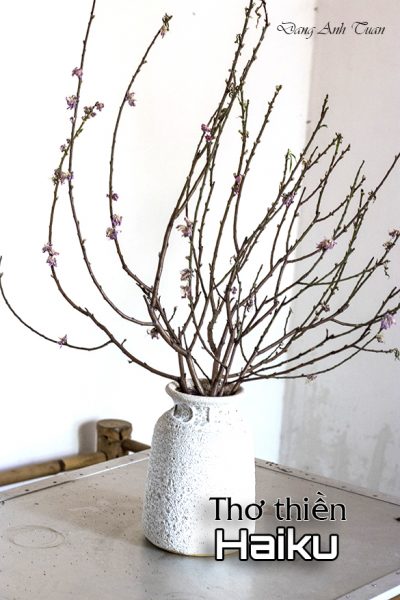
Haiku là một thể thơ rất đơn giản chớ nó không bị giới hạn ở việc miêu tả đơn thuần. Nó có thể là sự phát triển của một hình thức thơ cổ của Nhật Bản gọi là katauta, theo cùng một mô hình 5-7-5 âm tiết, tổng cộng là 17 âm tiết và tương ứng chính xác với độ dài của một hơi thở. Haiku không nhất thiết phải có vần.

Tuy nhiên thơ thiền Haiku nó cũng  có  hai quy tắc cần tuân thủ :

  • một kigo, tức là một khái niệm về mùa, để làm bối cảnh;
  • và một gạch nối (césure) hay kireji, sẽ cắt bài thơ thành hai phần.

Haiku  hay thường giữ cái ẩn ý hơn là cái rõ ràng, do đó kigo chỉ nên mang tính gợi mở. Như thường lệ, thơ Haiku không thể tách rời các mùa. Việc viết thơ gợi mùa thì quá dễ dàng, thay vào đó thi gia haiku sẽ thích nhắc nhở  hơn về “tiếng dế” hay “hoa mao lương”. Kireji, ngược lại, cho phép chuyển từ một miêu tả đơn giản của một hình ảnh sang cảm nhận mà nó tạo ra ở tác giả. Nó không chỉ đơn thuần đồng nghĩa với « sự tĩnh lặng » hay « sự an lạc ». Những ham muốn, cảm xúc, thậm chí cả suy nghĩ đều phải được gạt bỏ. Quá trình thanh lọc này có thể bao gồm cả việc quên đi « cái tôi » để dẫn đến giác ngộ và để có cái nhìn trầm tư hơn và tự do hơn về thế giới, thoát khỏi mọi sự tìm kiếm ý nghĩa. Điều đó còn tùy  thuộc sự rung cảm từ tâm thức của người viết và người đọc mà còn luôn cả mức độ giác ngộ của mỗi người  về cảnh quan và cuộc sống. Có nguời đi suốt cuộc đời vẫn chưa giác ngộ, còn có người có duyên thì giác ngộ  đến rất sớm. Con đường lớn (hay con đường Thiền) không có cổng; hàng ngàn con đường dẫn đến đó. Ai đi qua cánh cổng không lối này sẽ tự do đi lại giữa Trời và Đất, đó là lời nhắn nhũ cho những ai học thiền.

Thơ haïku là sự diễn giải của một trải nghiệm chớ không phải môt bình luận. Chính vì vậy haïku hay thường được so sánh với một bức tranh trong đó quan sát và kinh nghiệm là một với ý thức. Thi ca haiku là một bức tranh toàn diện không thừa không thiếu với 17 âm tiết, ngôn dủng trong  thi ca là trực giác. Theo nhà văn nhà văn Manuela Dunn Mascetti,  sự tươi mát là bông hoa của nghệ thuật haïku  vì nó  được tạo ra bởi sự tức thời của cảm giác khiến người đọc có  được niềm vui thật sự và vĩnh cửu. Nhưng muốn có được  tinh thông nghệ thuật haiku thì cần có nhiều năm luyện tập. Chìa khóa thảnh công là đạt được hay là mất đi thì cũng giống như một trãi nghiệm sống. Tuy thơ thiền haiku vuợt qua biên giới ngày nay  với một số tín đồ ngoại quốc nhưng   chỉ có những bậc thầy nổi tiếng  như Matsuo Basho  (1644-1694), Yosi Buson (1718-1783), Kobayashi Isa (1763-1827)  hay Natsume Soseki (1867-1916) vẫn tiếp tục  làm rung chuyển trái tim chúng ta ở mỗi giây phút hiện tại với các bài thơ độc đáo mang đậm chất thiền  và còn giúp đỡ ta trong việc thiền định. Ngoài ra, haiku còn là một thú vui nho nhỏ trong cuộc sống, giúp ta tạm quên đi những lo lắng thường ngày. Cùng nhau thử phân tích  bài thơ nổi tiếng « con ếch »  của thiền nhân Basho dưới đây:

Ao cũ                                  Furu ike ya
Con ếch nhày vào                kawazu tobikomu  
vang tiếng nước xao             mizu no oto  

(Matsuo Basho- Nhât Chiêu dịch)

Cái tên Basho nầy gắn liền với ông  từ khi ông về sống ở cái lều nhỏ mà bên cạnh có trồng cây chuối (ba tiêu). Vì vậy ông tự gọi ông là Basho và nơi ông ở là am ba tiêu. Bài thơ haiku nầy có vẻ  đẹp đơn sơ của ao cũ, lấy động tả tĩnh,nhẹ nhàng, trong sáng mà còn gần với đời sống thường ngày qua việc chú ý quan sát sinh vật nhỏ bé “con ếch”. Kigo ở đây là con ếch tức là mùa xuân. Âm thanh tiếng nước mà con ếch khuấy động còn mãi âm vang vọng trong  tâm hồn lúc Basho đang ngồi tham thiền. Qua cái nhìn trực cảm trước sự việc nầy, Basho  giác ngộ ra cái thâm sâu về bản chất huyền nhiệm cũa sự hiện hữu,  thấu triệt  vận hành sự biến dịch của vạn vật trong tự nhiên và con đường sâu thẳm mà ông xem  như là khúc giao hưởng của một tâm hồn đang hoà nhập với thế giới, là  cuộc hành trình về với thiên nhiên vũ trụ tinh khiết.

Version française

La méditation est une activité exercée par les pratiquants en concentrant l’esprit sur un objet afin de développer l’attention et la conscience, et de trouver chaque jour, à chaque instant, un esprit clair et  purifié afin que le moment de l’union avec l’existence devienne le plus grand enseignement dans le bouddhisme. Elle aide les individus à approfondir un certain problème de la vie et de l’univers et à les conduire à la réalisation de l’éveil lorsque les principes régissant le changement de toutes choses dans la nature sont compris parfaitement. Le mot méditation (zen) en chinois est, translittéré /chán/, mais ce mot en sanskrit, une ancienne langue de la culture indienne, est dhyana (thiền na).

La voie du zen réside dans la vie quotidienne. Malgré que le zen fut rapporté d’Inde en Chine par le moine errant Bodhidharma en 520, il devient plus important aujourd’hui  au Japon que dans les autres pays d’Asie y compris le Vietnam.  La voie du zen japonais  s’épanouit  dans les arts et disciplines  sous diverses formes de méditation et d’apprentissage: chado la voie du thé, kado la voie des fleurs, kendo la voie de l’épée etc. mais ce qui importe le plus dans ces formes, la perception du moment: être ici et maintenant.  C’est  l’art de haïku qui réussit à encadrer  la réalité en un seul instant et  qui fait de haïku la poésie du zen japonais. Sa  lecture  augmente le sentiment de bonheur et de tranquillité au poète et au lecteur.

Le langage utilisé dans la poésie zen Haïku porte le caractère « direct », il ne repose pas sur un raisonnement intellectuel (intuition directe). S’il y a encore la réflexion, il n’y a plus la perception intuitive. Bien que la nature zen soit toujours présente, elle n’est plus magique. Au contraire, elle s’intéresse beaucoup aux petites choses, aux détails, à la compassion et à la passion réservée  pour l’instant présent.

Haiku est une forme de poésie très simple, mais elle ne se limite pas à une simple description. Elle est peut-être le développement d’une ancienne forme de poésie japonaise appelé katauta en suivant le même schéma de ce dernier 5-7-5 syllabes, ce qui donne un total 17 syllabes et qui correspond exactement à la longueur d’une respiration. Le haïku ne doit pas forcément faire de rimes.

Le haïku privilégie souvent le sens caché  plutôt que le sens  clair. Ainsi le kigo ne doit être qu’évoqué. Comme toujours, le haïku est indissociable des saisons. « Écrire des poèmes » évoquant les saisons serait trop facile ; les poètes de haïku préfèrent donc nous rappeler « le chant du grillon» ou « la fleur d’anémone».  En revanche, le kireji permet de passer d’une simple description d’une image à la sensation qu’elle suscite chez l’auteur. Le haïku ne signifie pas simplement « silence » ou « paix ». Les désirs, les émotions, voire les pensées doivent être écartées. Ce processus d’épuration peut inclure l’oubli du « moi » pour atteindre l’éveil et adopter un regard plus méditatif et plus libre sur le monde, affranchi de toute quête de sens.

Cela dépend de l’émotion dans l’esprit de l’écrivain et du lecteur, mais aussi du niveau d’éveil de chacun sur le paysage et la vie. Certaines personnes passent toute leur vie sans être « éveillées », tandis que d’autres sont prédestinées à ce que l’illumination vienne très tôt. La grande voie n’a pas de porte. Des milliers de routes y débouchent. Celui qui franchit cette porte sans porte marche librement entre le Ciel et la Terre, ce qui constitue le message destiné à ceux qui pratiquent le zen.

La poésie  haïku est l’interprétation d’une expérience et non un simple  commentaire. C’est pourquoi le haïku est souvent comparé à un tableau où l’observation et l’expérience ne font qu’un avec la conscience. La poésie Haïku est un tableau complet, ni plus ni moins, avec 17 syllabes, le langage utilisé dans la poésie est l’intuition. Selon l’écrivaine Manuela Dunn Mascetti, la fraîcheur est la fleur de l’art de Haïku car elle est créée par l’instantanéité du sentiment qui procure au lecteur une joie véritable et éternelle. Mais pour maîtriser l’art du Haïku, il faut de nombreuses années de pratique. La clé de réussite est soit atteinte soit perdue tout comme une expérience vécue. La poésie zen haiku a franchi les frontières de nos jours avec un certain nombre de pratiquants étrangers, mais ce sont seulement les maîtres célèbres tels que Matsuo Basho (1644-1694), Yosi Buson (1718-1783), Kobayashi Isa (1763-1827) ou Natsume Soseki (1867-1916) qui continuent à émouvoir nos cœurs à chaque instant présent avec leurs poèmes Haiku et qui nous aident encore dans la pratique de la méditation. En plus, haiku est un petit plaisir de la vie qui éloigne votre esprit des tracas ordinaires. Essayons d’analyser ci-dessous le célèbre poème « La Grenouille » du maître zen Basho :

Trong ao cũ                  Furu ike ya                Dans le vieil étang
Con ếch nhày vào         kawazu tobikomu       Une grenouille saute 
Vang tiếng nước xao     mizu no oto                Un ploc dans l’eau
(Basho)

Le nom de Basho lui fut associé lorsqu’il s’installa dans une petite hutte près d’un bananier. Il se nomma donc Basho et sa demeure le pagodon du bananier. Ce haïku illustre bien la beauté simple d’un vieil étang. Il emploie le mouvement pour dépeindre le calme, la douceur, la pureté et la proximité de la vie quotidienne à travers l’observation d’une petite créature, la « grenouille ». Kigo désigne ici la grenouille, qui fait allusion au printemps. Le bruit de l’eau remuée par le saut de cette rainette résonne dans l’âme de Basho pendant sa méditation. Par cette observation intuitive, le moine Basho s’éveille au profond mystère de l’existence, il comprend le fonctionnement et les transformations de toute chose dans la nature et le chemin profond qu’il perçoit comme la symphonie de l’âme en fusion parfaite  avec le monde, un voyage de retour à la nature pure et à l’univers.

Zen  is an activity practiced by practitioners by focusing the mind on an object in order to develop attention and awareness, and to find every day, at every moment, a clear and purified mind so that the moment of union with existence becomes the greatest teaching in Buddhism. It helps individuals to deepen a certain problem of life and the universe and to lead them to the realization of awakening when the principles governing the change of all things in nature are perfectly understood. The word meditation (zen) in Chinese is , transliterated /chán/, but this word in Sanskrit, an ancient language of Indian culture, is dhyana (thiền na).

The path of Zen lies in daily life. Although Zen was brought from India to China by the wandering monk Bodhidharma in 520, it is more important today in Japan than in other Asian countries including Vietnam. The Japanese Zen path flourishes in arts and disciplines in various forms of meditation and learning: chado the way of tea, kado the way of flowers, kendo the way of the sword, etc. but what matters most in these forms is the perception of the moment: being here and now. It is the art of haiku that manages to frame reality in a single moment and makes haiku the poetry of Japanese Zen. Its reading increases the feeling of happiness and tranquility in both the poet and the reader.

The language used in Zen haiku poetry carries a « direct » character; it does not rely on intellectual reasoning (direct intuition). If there is still reflection, there is no longer intuitive perception. Although the Zen nature is always present, it is no longer magical. On the contrary, it is very interested in small things, details, compassion, and passion reserved for the present moment.

Haiku is a very simple form of poetry, but it is not limited to a mere description. It may be the development of an ancient form of Japanese poetry called katauta, following the same pattern of the latter 5-7-5 syllables, which gives a total of 17 syllables and corresponds exactly to the length of a breath. The haiku does not necessarily have to rhyme.

Haiku often favors hidden meaning rather than clear meaning. Thus, the kigo should only be evoked. As always, haiku is inseparable from the seasons. « Writing poems » evoking the seasons would be too easy; haiku poets therefore prefer to remind us of « the song of the cricket » or « the anemone flower. » On the other hand, the kireji allows one to move from a simple description of an image to the sensation it arouses in the author. Haiku does not simply mean « silence » or « peace. » Desires, emotions, even thoughts must be set aside. This process of purification can include the forgetting of the « self » to reach awakening and adopt a more meditative and freer view of the world, freed from any search for meaning.

Haiku poetry is the interpretation of an experience and not a mere commentary. That is why haiku is often compared to a painting where observation and experience merge with consciousness. Haiku poetry is a complete picture, neither more nor less, with 17 syllables; the language used in the poetry is intuition. According to the writer Manuela Dunn Mascetti, freshness is the flower of the art of Haiku because it is created by the immediacy of the feeling that provides the reader with true and eternal joy. But to master the art of Haiku, many years of practice are required. The key to success is either achieved or lost just like a lived experience. Zen haiku poetry has crossed borders nowadays with a number of foreign practitioners, but it is only the famous masters such as Matsuo Basho (1644-1694), Yosi Buson (1718-1783), Kobayashi Issa (1763-1827), or Natsume Soseki (1867-1916) who continue to move our hearts at every present moment with their Haiku poems and who still help us in the practice of meditation. Moreover, haiku is a small pleasure of life that takes your mind away from ordinary worries. Let us try to analyze below the famous poem « The Frog » by the Zen master Basho:

Dans le vieil étang       
Une grenouille saute      
Un ploc dans l’eau
(Basho)

In the old pond
A frog jumps
A splash in the water
(Basho)

The name Basho was associated with him when he settled in a small hut near a banana tree. He thus named himself Basho and his home the banana tree pagoda. This haiku beautifully illustrates the simple beauty of an old pond. It uses movement to depict calm, gentleness, purity, and the closeness of daily life through the observation of a small creature, the « frog ». Kigo here refers to the frog, which alludes to spring. The sound of the water stirred by the leap of this tree frog resonates in Basho’s soul during his meditation. Through this intuitive observation, the monk Basho awakens to the profound mystery of existence; he understands the functioning and transformations of all things in nature and the deep path he perceives as the symphony of the soul in perfect fusion with the world, a journey back to pure nature and the universe.

Pictures Gallery

Bibliographie.
Manuela Dunn Mascetti: The Little Book of Zen . Evergreen 2007
Lê Tấn Dương: Thiền trong văn hóa Nhật Bản. Đặc san Lâm Viên.
Japanese way of tea

Trà đạo

Vietnamese version
French version

Before talking about the Japanese tea ceremony (or chanoyu), it is desirable to mention the origin of tea. Was tea discovered by the Chinese? Probably not, because no wild tea trees are found in China. However, this primitive plant of the same family as the Chinese one (Camellia Sinensis) was found in the northeastern region of India (Assam). Then it was later detected in the wild in the border regions of China such as Tibet, Burma, Sichuan, Yunnan, Vietnam, etc. It is interesting to recall that Sichuan was the kingdom of Shu and Yunnan that of Dian, having a very intimate link with the Lo Yue tribe (the ancestors of today’s Vietnamese). Later, these regions Sichuan and Yunnan as well as Vietnam were conquered and annexed by the Chinese during the Qin and Han dynasties. One is led to conclude that the tea tree is not a product of the Chinese, but they had the merit of domesticating this tea tree so that it would have its full delicious aroma. At first, tea was used by the Chinese as a medicine but it was not adopted in any case as a beverage. Its spread to a large number of users took place during the Tang dynasty (starting from 618).

Tea later became a classic beverage widespread in Chinese society with the appearance of the book titled « The Classic of Tea » by Lu Yu (733-804), intended to teach the Chinese how to prepare tea. It is Lu Yu himself who specified in his book: « The tea plant is a precious plant found in southern China. »

The sage Confucius had the opportunity to speak about the Bai Yue people in the « Analects » to his disciples: The Bai Yue people living south of the Yangtze River have a lifestyle, language, traditions, customs, and specific food. They dedicate themselves to rice cultivation and differ from us who are accustomed to cultivating millet and wheat. They drink water from a kind of plant gathered in the forest known as « tea. » It is interesting to recall that from the Qin-Han era onwards, there existed an imperial institution composed of local scholars (the fanshi) considered magicians specialized in star rites and government recipes. Their role was to collect, each within their own territory, ritual procedures, beliefs, local medicines, systems of representations, cosmologies, myths, legends as well as local products and submit them to political authority.

It could either retain them or not and incorporate them in the form of regulations with the aim of increasing imperial power within an ethnologically very diverse nation and providing the emperor with the means for his divine vocation. This is why there were baseless Chinese legends about the tea plant, one involving Bodhidharma, the legendary founder of Chinese Zen religion, and the other involving Shen Nong, the divine Chinese farmer. To resist sleepiness during his meditation, the former cut off his eyelids and threw them to the ground. From this piece of flesh, the very first tea plant of humanity immediately sprang forth. It is certain that Zen monks were the first to use tea to resist sleep and maintain a relaxed and serene mind during their meditation. As for Shen Nong, it was by chance that while resting under the shade of a shrub (tea plant), some of its leaves fell into his bowl of hot water. From that day, he knew how to prepare tea (around 3000 BCE) in his very ancient work « Bencao Jing » dedicated to Chinese medicine. However, this book was written during the Han dynasty (25 – 225 CE). Moreover, it is known that he was buried in Changsha in the Bai Yue region. Was he really of Chinese origin? It would have been impossible for him to travel at that time if he were.

He was obviously part of the Bai Yue because his name, although written in Chinese characters, still retains a structure coming from the Yue (normally, Nong Shen should be written in Chinese characters). The Chinese place great importance on the quality of tea.
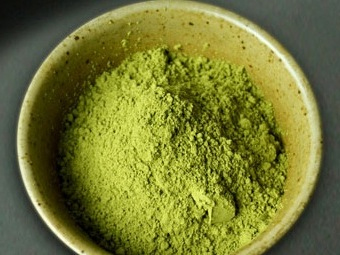
Tencha

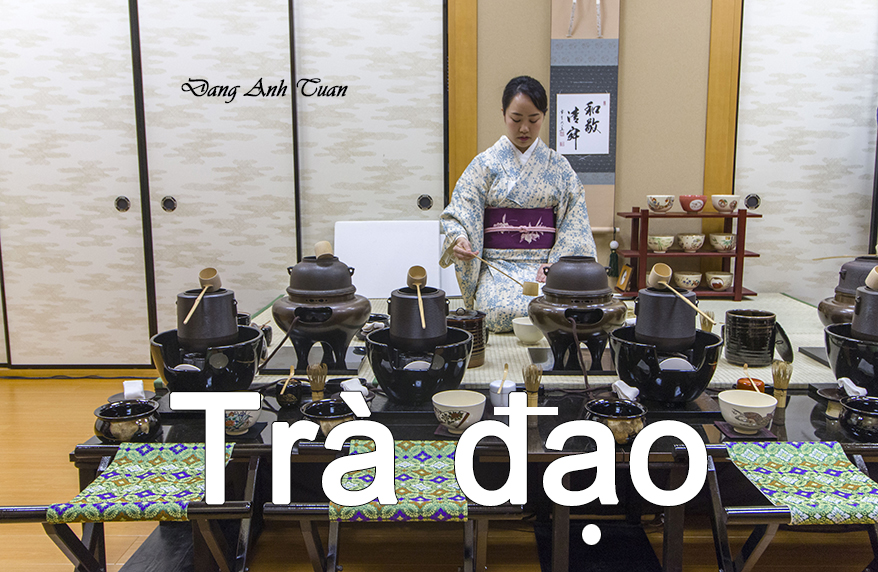
They consider tea preparation as an art. That is why they are interested not only in selecting the highest quality teas but also in the accessories necessary for preparation (teapots, spring water, filtered or potable water, etc.) in order to achieve a specific, delicious, and light taste. As for the Japanese, tea preparation is considered a ritual because they learned about tea and its preparation from Zen monks. They elevate tea preparation as « an art of Zen living » while more or less maintaining Shinto influence. With the four fundamental principles of the way of tea: Harmony (wa), Respect (Kei), Purity (Sei), Tranquility (Jaku), the guest has the opportunity to fully free themselves while maintaining a harmonious sharing not only with nature, the accessories used in tea preparation, the place of the ceremony but also with the host and other guests. Upon crossing the threshold of the ceremony room measuring 4 tatami mats, the guest can speak more easily to anyone (who could be a monk, a noble, or even a deity) without distinguishing social class, in an egalitarian spirit.

The guest recognizes the quiddity of life, in particular the truth of their own person through respect towards everyone and everything (such as the instruments of chanoyu). Their self-love is no longer present within them, but only a kind of feeling of consideration or respect towards others remains. Their state of mind will be serene when their five senses are no longer sullied. This is the case when they contemplate a painting (kakemono) in the alcove of the room (tokonoma) or flowers in a pot (ikebana) with their eyes. They smell the pleasant aromatic scent through their nose. They hear the sound caused by water heated on a charcoal brazier. They handle the chanoyu instruments (tea scoop, chasen, tea bowl (chawan), etc.) in an orderly manner and moisten their mouth with sips of tea. Thus, all their five senses become pure. Tranquility (jaku) is the result that the tea drinker finds at the end of these three fundamental principles mentioned above, once their state of mind has found complete refuge in serenity now, whether they live amidst the crowd or not. Tranquility is interpreted as a virtue that transcends the cycle of life. It allows them to live and contemplate life in an ordinary world where their presence is no longer necessary.

The guest realizes that the way of tea is not so simple because it involves many rules to be able to drink good tea or not, but it is also an effective means of bringing tranquility to the mind to allow one to reach inner illumination in meditation.

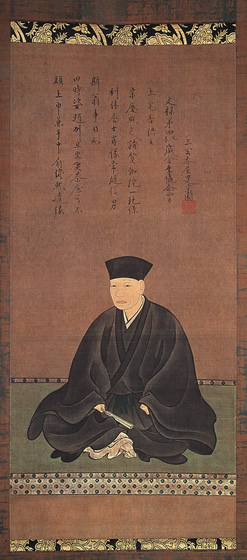
Sen no Rikyu


For the tea master Sen no Rikyu, who had the merit of establishing the protocols for preparing tea, the way of drinking tea is very simple: boil water, then make the tea and drink it in the correct manner.

The way of tea is a sequence of events organized in a scrupulous and careful manner. This ceremony has a maximum of 4 guests and one host. They must walk through the garden of the place where the ceremony takes place. They must perform purification (wash their hands, rinse their mouth) before entering a modest cubic room usually located at the corner of the garden through a very low door. All guests must lower their heads to enter with respect and humility. In the past, to cross the threshold of this door, the samurai had to leave his sword outside the door before meeting the host. It is here that all guests can admire the interior of the room as well as the instruments for tea preparation. They can follow the protocol phases of tea preparation.

Each event carries such a particular significance that the guest recognizes at every important moment of the ceremony. It can be said that the way of tea brings harmony between the host and their guests and shortens not only the distance separating man from the sky but also that between the guests. This is why in the world of samurai, there is the following proverb: « Once, a meeting » (Ichigo, ichie) because no encounter is the same. This allows us to be like the samurai of old, in the present moment to savor and slow down each instant with our loved ones and friends.

[Return JAPON]


ukiyo-e japonais (Các bức tranh của thế giới nổi trôi)

Les estampes du monde flottant

Version française
Version anglaise

Nghệ thuật vẽ các  bức hình  của thế giới trôi nổi được sinh ra ở thời Edo, một thời kỳ mà con người luôn tìm kiếm hoan lạc mà cũng là thời kỳ của Mạc chúa Tokugawa đã thành công thống nhất xứ Phù Tang và đóng đô ở Edo nay là thủ đô Tokyo. Các bức hình vẽ nầy đã ảnh hưởng rất nhiều đến những hoạ sĩ nổi tiếng như Matisse, Monet Van Gogh. Các bức hình vẽ nầy phản ảnh một thế giới sôi động và phức tạp với những thú vui phù du và tinh tế mà giới giai cấp tư sản ở thành thị  thường ưa thích trong cuộc sống hằng ngày như ca kịch, thơ hay bên cạnh các kỹ nữ.

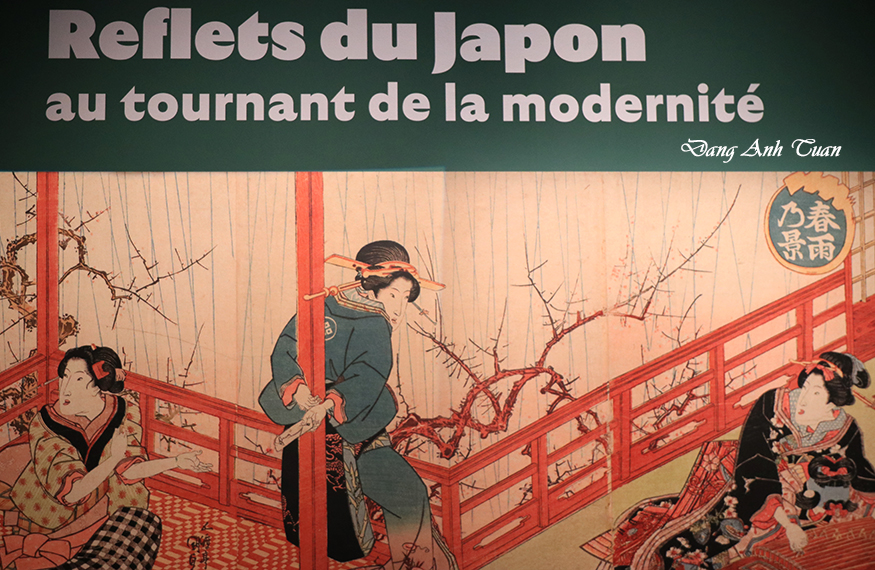
Kỹ thuật in khắc  hình trên  gỗ cho phép sản xuất hàng loạt và phân phối những hình ảnh rẻ tiền và định dạng khác nhau, ban đầu nhằm mục đích quảng cáo. Kỹ thuật nầy bắt đầu được thực hiện vào đầu thế kỷ XIX bởi các nghệ sĩ đến từ trường Utagawa (Kuniyoshi, Kunishada)  mà một số  tác phẩm được chọn và  trưng bày gần đây bởi Bảo tàng Cernuschi ở Paris với tựa đề « Những phản ảnh của Nhật Bản bước vào thời kỳ  tân tiến ».

L’art de peindre des images du monde flottant (ou ukiyo-e)  est né à l’époque d‘Edo, une période où les gens cherchaient toujours le bonheur, mais c’est aussi l’époque où le shogun Tokugawa a réussi à unifier le Japon et à fonder la ville d’Edo qui devient aujourd’hui la capitale de Tokyo. Ces estampes ont beaucoup influencé des peintres célèbres occidentaux comme Matisse, Monet  et Van Gogh. Ces peintures reflètent un monde effervescent et complexe avec des plaisirs subtils et éphémères  que la bourgeoisie urbaine appréciait souvent dans la vie quotidienne comme le théâtre, la poésie ou encore la compagnie des courtisanes. 

La technique de l’estampe sur bois facilitant la production et la diffusion  de masse de ces images peu onéreuses et sous des formats différents a pour but de servir la publicité. Elle  commence à se réaliser au début du XIXème siècle avec des illustres  artistes issus de l’école Utagawa (Kuniyoshi, Kunishada) dont certaines œuvres ont été choisies et exposées  pour le thème intitulé « Reflets du Japon au tournant de la modernité » du musée Cernuschi (Paris).

[RETURN JAPAN]


The art of painting images of the floating world (or ukiyo-e) was born in the Edo period, a time when people were always seeking happiness, but it was also the era when the Tokugawa shogun succeeded in unifying Japan and founding the city of Edo, which today becomes the capital Tokyo. These prints greatly influenced famous Western painters such as Matisse, Monet, and Van Gogh. These paintings reflect an effervescent and complex world with subtle and ephemeral pleasures that the urban bourgeoisie often enjoyed in daily life, such as theater, poetry, or the company of courtesans.

The woodblock printing technique, facilitating the mass production and dissemination of these inexpensive images in various formats, aimed to serve advertising. It began to take shape at the beginning of the 19th century with illustrious artists from the Utagawa school (Kuniyoshi, Kunishada), some of whose works were selected and exhibited for the theme entitled « Reflections of Japan at the Turn of Modernity » at the Cernuschi Museum (Paris).


Kinkaku-ji (Kim Các Tự)

Kinkaku-ji (Kim Các Tự)

Version française
Version anglaise
Galerie des photos

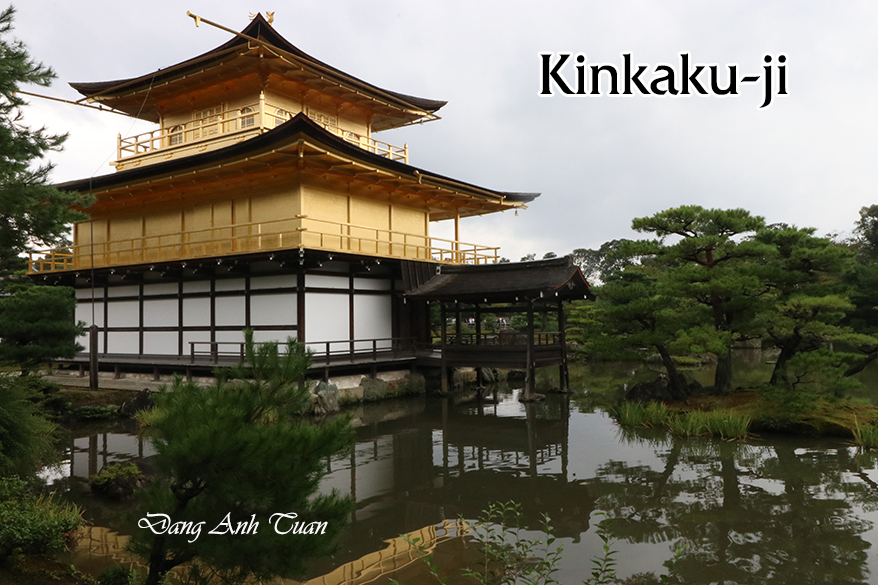
Được biết đến với cái tên quen thuộc là Kinkaku-ji, ngôi chùa Rokuon-ji (Lộc Uyển Tự) này là một trong những viên ngọc quý của cố đô Kyoto. Trái ngược với sự đơn giản mà chúng ta thường thấy trong kiến ​​trúc Phật giáo Nhật Bản, Kinkaku-ji là một tòa nhà ba tầng với những bức tường dát vàng đặt giữa một hồ nước. Điều này cho phép toà nhà  phản chiếu ánh sáng vàng trên mặt nước  hồ quanh năm trong một khung cảnh tráng lệ và thanh tịnh. Trên đỉnh tòa nhà rực rỡ này còn có một con phượng hoàng bằng đồng.

Trong ngôi nhà vàng này, chúng ta tìm thấy ba phong cách kiến ​​trúc, tầng trệt tương ứng với phong cách của các cung điện ở thời Heian (794 – 1185), tầng một là phong cách của các ngôi nhà của các võ sĩ và tầng trên cùng là phong cách của các ngôi chùa thiền. Ban đầu, vị tướng quân thứ ba Yoshimitsu của gia tộc Ashikaga (1358-1408), một đệ tử nhiệt thành của thiền sư Soseki, muốn biến nơi này thành nơi ở riêng trong thời gian ông từ giã cuộc sống công cộng. Khi ông qua đời, con trai ông là Yoshimochi quyết định biến nơi này thành một ngôi chùa Thiền tông cho trường phái Rinzai và đặt tên là « Rokuon-ji« . Sau đó nó bị phá hủy nhiều lần bởi hỏa hoạn. Lần trùng tu cuối cùng có niên đại  năm 1955 là bản sao giống hệt như thưở ban đầu. Đây là di sản thế giới được cơ quan UNESCO công nhận từ năm 1994 và được xem là ngôi chùa Phật giáo săn đón một số lượng lớn du khách mỗi năm  đến từ Nhật Bản.

Etant connu sous son nom usuel de Kinkaku-ji, ce temple  Rokuon-ji (Lộc Uyển Tự)  est l’un des bijoux de l’ancienne capitale de Kyoto. Contrairement à la simplicité qu’on est habitué à voir dans l’architecture bouddhique japonaise, Kinkaku-ji est une bâtisse à trois étages dotée des parois recouvertes de feuilles d’or trônant au milieu d’un étang. Cela lui permet de  refléter tout le long de l’année sur la surface de l’eau  sa lumière dorée dans un cadre magnifique et serein.  Au sommet de cette bâtisse éblouissante se trouve un phénix en cuivre. On retrouve dans ce pavillon d’or trois styles d’architecture, le rez-de-chaussée correspondant au style des palais de l’époque Heian (794 – 1185), le premier étage à celui des maisons des samouraïs et le dernier étage à celui des temples zen. À l’origine, le troisième shogun Yoshimitsu de la famille  Ashikaga (1358-1408), disciple fervent du moine zen Soseki veut faire de ce lieu une demeure privée lors de son retrait de la vie publique. À sa mort, son fils Yoshimochi  décide de transformer l’endroit en temple zen pour l’école Rinzai et le nomme « Rokuon-ji ».  Puis il  est  détruit plusieurs fois par les flammes. La dernière restauration datant  de 1955 est la copie absolument conforme de l’ancien pavillon.  Il  est inscrit au Patrimoine mondial de l’Unesco depuis 1994 et il est considéré comme le temple bouddhiste accueillant  un grand nombre de visiteurs par an du Japon.

Picture gallery

kinkaku_ji

Version anglaise

Known by its common name Kinkaku-ji, this Rokuon-ji temple is one of the jewels of the ancient capital Kyoto. Unlike the simplicity usually seen in Japanese Buddhist architecture, Kinkaku-ji is a three-story building with walls covered in gold leaf, standing in the middle of a pond. This allows it to reflect its golden light on the water’s surface throughout the year in a magnificent and serene setting. At the top of this dazzling building is a copper phoenix. In this golden pavilion, three architectural styles can be found: the ground floor corresponds to the style of palaces from the Heian period (794 – 1185), the first floor to that of samurai houses, and the top floor to that of Zen temples. Originally, the third shogun Yoshimitsu of the Ashikaga family (1358-1408), a fervent disciple of the Zen monk Soseki, wanted to make this place a private residence upon his retirement from public life. Upon his death, his son Yoshimochi decided to transform the place into a Zen temple for the Rinzai school and named it « Rokuon-ji. » It was then destroyed several times by fire. The last restoration, dating from 1955, is an exact replica of the former pavilion. It has been listed as a UNESCO World Heritage site since 1994 and is considered the Buddhist temple in Japan that welcomes a large number of visitors each year.

[RETURN JAPAN]


Thanh Thủy Tự (Kiyomizu-dera)

Kiyomizu-dera (Kyoto)

Version française
Version anglaise
Pictures gallery

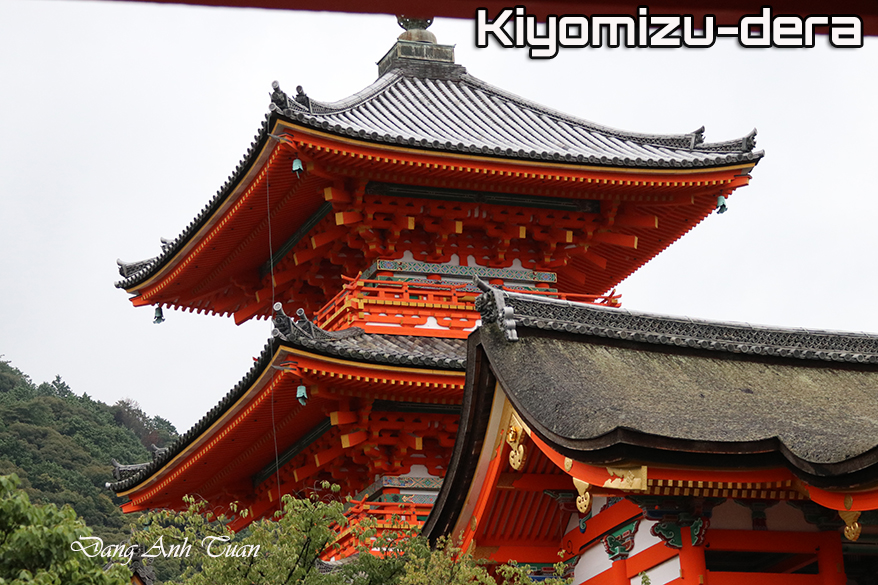
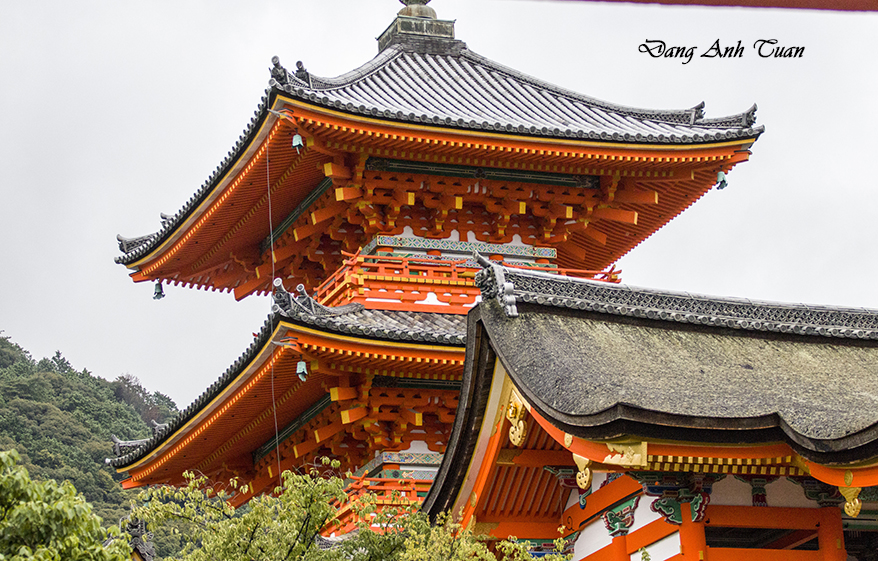
Chùa nầy nằm ở phía Đông của cố đô Kyoto thuộc về tông phái Phật giáo và Thần đạo là một ngôi chùa rất nổi tiếng ở Nhật Bản. Được xây cất vào cuối  thời kỳ Nara (778), tái thiết lại sau trận hỏa họan bởi tướng quân  Tokugawa Iemitsu và được công nhận bởi UNESCO là di sản văn hóa thế giới vào năm 1994. Chùa nầy thật sự  là một quận thể kiến trúc gồm có nhiều đền  còn được mang tên là Thanh Thủy bởi vì nó có nguồn nước thiên chảy từ  núi Otowayama. Theo tiếng Nhật Kiyomizu có nghĩa là dòng suối trong còn dera là chùa.  Đặc điểm của suối nầy là có ba dòng nước nhỏ rất linh nghiệm về   « trường thọ », « tình duyên », « học hành thành đạt ». Nếu du khách nào có tâm nguyện cầu khẩn uống  một ngụm nước ở một trong ba dòng  nước nầy thì sẽ được  toại nguyện. Còn uống  2 ngụm thì sự linh ứng sẽ giảm đi một nữa. Còn uống  ba ngụm nước liên tục thì chỉ còn có một phần ba trong việc linh ứng.  Còn uống cả ba dòng nước thì  việc linh ứng sẽ không  còn nữa. Vô số  người đứng nối đuôi để được uống nước suối nầy. Vì thời giờ quá eo hẹp cho mình (2 tiếng tham quan) nên mình không có nối đuôi chỉ  đi chụp hình mà thôi  và  lại  gần suối mua ở một cửa hàng một cái bùa nho nhỏ linh nghiệm về việc học hành mang về Pháp để  tặng cho đứa bé cháu nội của mình.

Theo cách tương tự như được trông thấy ở nhà thờ  Lourdes, từ  bãi đậu xe du khách  phải đi bộ trèo lên hằng ngày  cái dốc  để  đến cổng chùa Niomon (Cổng Nhị Vương). Ở  dọc hai bên đường các tiệm buôn bán lúc nào  cũng đông đúc du khách và tín đồ  đi hành hương để  làm lễ trước pho tượng Phật Quan Âm (Kannon)  có 11 đầu. Đặc điểm thứ hai của chùa là phần hiên của chính điện là hoàn toàn xây cất không dùng đến một cây đinh. Với kỹ thuật nầy, một chùa Nhật Bản như  Kiyomizu-dera có  ít nhất một ngàn thanh trúc nối với nhau qua các lỗ mộng. Đây cũng là đỉnh cao của kiến trúc gỗ của Nhật Bản.  Đến đây du khách có thể nhìn phía dưới quang cảnh tuyệt vời của cố đô Kyoto. Có một câu thành ngữ  tiếng Nhật  hay thường nghe nói ở  đây đó  là Nhảy từ vũ đài  chùa Kiyomizu. Khi ai có quyết tâm muốn làm điều gì đó thì không chỉ bất chấp hiểm nguy mà còn phải có động lực và nghị lực  mới dám nhảy từ độ cao dưới sự bảo trợ của Phật bà Quan Âm thì lời cầu nguyện  của mình mới thành hiện thực. Dưới thời Edo, có đến 234 lần nhảy được ghi nhận thực hiện và trong số đó có đến 85.4% người còn sống sót. Nay hành động nầy bị nghiêm cấm. Chùa Kiyomizu là một điểm du lịch không thể thiếu sót trong cuộc hành trình ở cố đô Kyoto.
Etant située à l’est de l’ancienne capitale Kyoto, cette pagode  qui appartient aux sectes bouddhiste et shintoïste est  très connue  au Japon. Construite  à la fin de la période Nara (778), reconstruite ensuite en 1633 après l’incendie  par le shogun  Tokugawa Iemitsu  et reconnue par l’UNESCO comme patrimoine culturel mondial en 1994. En fait,  elle  est un complexe architectural composé de plusieurs temples et appelé aussi    en vietnamien  sous le nom Thanh Thủy car elle se distingue par son eau cristalline sacrée  coulant du mont Otowayama. En japonais, Kiyomizu signifie  « eau pure » et Dera « pagode ». La caractéristique de cette  source d’eau  réside dans l’existence de  trois filets d’eau très efficaces en termes de « longévité », « amour » et « réussite dans les  études ». Si le  visiteur a le désir sincère de  prendre une gorgée d’eau dans l’un de ces trois filets d’eau, son vœu  sera exaucé. S’il boit  2 gorgées,  l’efficacité sera réduite de moitié. Par contre  si trois gorgées d’eau sont prises d’une manière continue, il ne lui restera plus qu’un tiers de l’efficacité dans la réalisation de son vœu. S’il prend  en même temps tous les 3 filets d’eau, son vœu ne sera plus exaucé. Une foule immense de visiteurs continue à faire la queue pour tenter cette expérience. À cause du manque de temps limité à deux heures pour cette visite, je ne  suis pas tenté de le faire.

Par contre je continue à faire les photos et je vais chercher dans une boutique proche de cette source d’eau un petit talisman connu pour son efficacité  dans les études. J’aime l’offrir à mon petit-fils lors de mon retour en France. De manière analogue à celle trouvée à  l’église de Lourdes, depuis le parking, les visiteurs doivent gravir  tous les jours la pente de la route  pour arriver à la porte de la pagode Niomon (portail Nhị Vương). Des deux côtés de cette  longue  route, les boutiques sont toujours bondées de touristes et de fidèles venant rendre  hommage  à la statue du Bouddha Guan Yin (Kannon) à 11 têtes. La deuxième caractéristique de ce complexe architectural  est que l’auvent de la partie principale  du temple a été entièrement construit sans recourir à l’utilisation des clous.  Avec cette technique, une pagode japonaise comme  Kiyomizu-dera possède au moins un millier de joints assemblés par mortaises ou tenons. C’est le summum de l’architecture japonaise en bois. C’est ici qu’en contrebas le visiteur a la vue panoramique superbe de l’ancienne capitale Kyoto.  Il y a une expression japonaise qu’on est habitué à entendre souvent ici « Saut à partir de la  plateforme de la pagode ». Quand quelqu’un est déterminé à faire quelque chose, il doit non seulement défier le danger, mais aussi avoir la motivation et la volonté d’oser sauter du haut de la plateforme  sous les auspices du Bouddha Guan Yin (Kannon). C’est ainsi que  son vœu deviendra réalité. À l’époque Edo, on a enregistré 234 sauts effectués mais il y a eu 85,4% de survivants. Cette expérience est désormais  interdite. La pagode Kiyomizu-dera est un site touristique à ne pas manquer lorsqu’on a l’occasion de visiter le Japon.

Version anglaise

Located east of the former capital Kyoto, this pagoda, which belongs to the Buddhist and Shinto sects, is very well known in Japan. Built at the end of the Nara period (778), then rebuilt in 1633 after a fire by the shogun Tokugawa Iemitsu, it was recognized by UNESCO as a World Cultural Heritage site in 1994. In fact, it is an architectural complex composed of several temples and is also called in Vietnamese by the name Thanh Thủy because it is distinguished by its sacred crystalline water flowing from Mount Otowayama. In Japanese, Kiyomizu means « pure water » and Dera means « pagoda. » The characteristic of this water source lies in the existence of three streams of water that are very effective in terms of « longevity, » « love, » and « success in studies. » If the visitor sincerely desires to take a sip of water from one of these three streams, their wish will be granted. If they drink 2 sips, the effectiveness will be reduced by half. However, if three sips of water are taken continuously, only one-third of the effectiveness in fulfilling the wish will remain. If all three streams of water are taken at the same time, the wish will no longer be granted. A huge crowd of visitors continues to queue to try this experience. Due to the limited time of two hours for this visit, I am not tempted to do it.

On the other hand, I continue to take photos and I am going to look in a shop near this water source for a small talisman known for its effectiveness in studies. I like to give it to my grandson when I return to France. Similarly to the one found at the church in Lourdes, from the parking lot, visitors must climb the slope of the road every day to reach the gate of the Niomon pagoda (Nhị Vương gate). On both sides of this long road, the shops are always crowded with tourists and devotees coming to pay homage to the statue of the 11-headed Buddha Guan Yin (Kannon). The second characteristic of this architectural complex is that the canopy of the main part of the temple was entirely built without using nails. With this technique, a Japanese pagoda like Kiyomizu-dera has at least a thousand joints assembled by mortises or tenons. It is the pinnacle of Japanese wooden architecture. It is here, below, that the visitor has a superb panoramic view of the ancient capital Kyoto. There is a Japanese expression that is often heard here: « Jump from the pagoda platform. » When someone is determined to do something, they must not only face danger but also have the motivation and will to dare to jump from the top of the platform under the auspices of Buddha Guan Yin (Kannon). This is how their wish will come true.

During the Edo period, 234 jumps were recorded, but there was an 85.4% survival rate. This practice is now prohibited. The Kiyomizu-dera pagoda is a must-see tourist site when visiting Japan.

Galerie des photos

[RETURN JAPAN]

Kyoto (Cố đô Kyoto, Nhật Bản)

Kyoto (Cố đô Kyoto, Nhật Bản)

Version française
Version anglaise
Pictures gallery

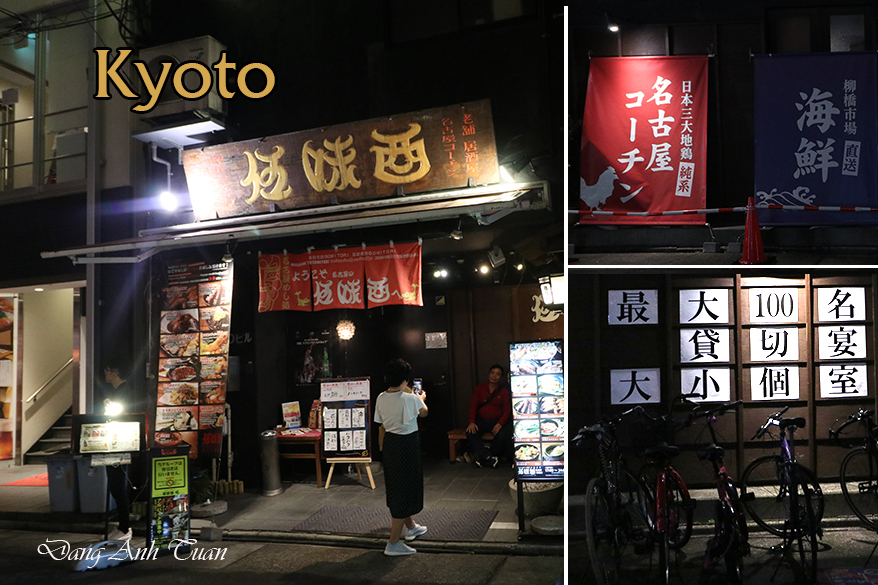
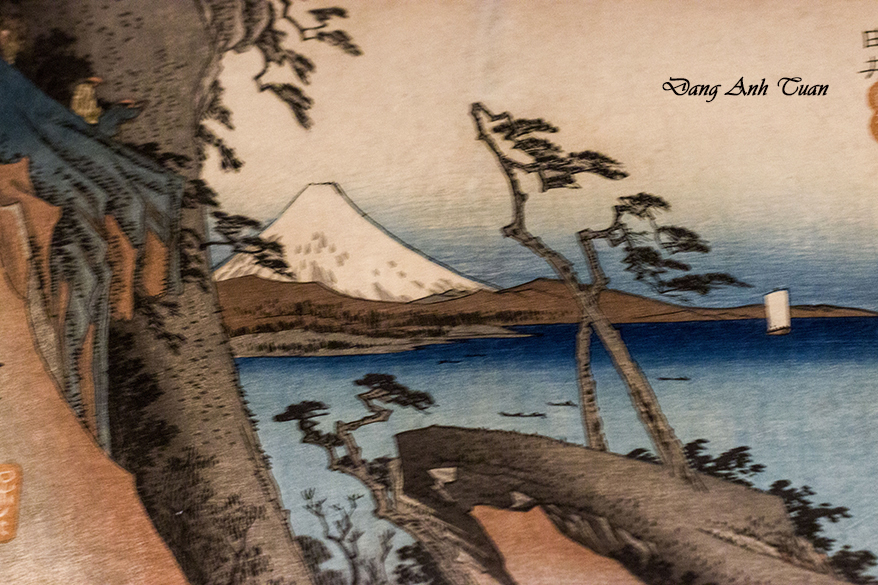
Có một thời  thịnh vượng, Tokyo còn được gọi là Edo.  Muốn đến cố đô Kyoto lữ khách phải  đi  bộ  hay đi ngựa nhiều ngày với con đường ngoạn mục Tokaido  dài có 500 cây số.Tuyến đường nầy  có nhiều  lữ quán, các đền thờ thần đạo hay Phật giáo, các di tích lịch sử sẽ  để lại cho lữ khách những kỷ niệm khó quên  như đèo Nakayama, đền Ise, chùa Thanh Thủy (Kiyomieu-dera), chùa  gác vàng Kinka kuji của tướng quân Yoshimitsu Ashikaga  vân vân …  Chính vì thế tuyến đường nầy trở  nên một nguồn cảm hứng không ít cho nhiều  họa sỹ  mà trong đó có Hiroshige mà chúng ta được biết  qua  bộ  tranh màu của ông được in trên  các mộc bản  của thế giới nổi trôi,  thường gọi là ukiyo-e (phù thế hội).  Thời ki hoàng kim  của ukiyo-e là từ khoảng những năm 1790 cho đến năm 1850. Sáng nay tụi nầy được anh HDV dẫn  đến cố đô  Kyoto. Cũng tuyến đường nầy nhưng  được thay thế bằng con  đường sắt với tàu cao tốc TGV Tokaido Shinkansen và được dừng lại ở nhà ga Kakegawa để lấy  xe bus đi tham quan vườn hoa nổi tiếng của Nhật Hammatsu của tỉnh Shizuoka. Trạm ga nào cũng sạch sẽ luôn ở  trên tàu cao tốc cũng vậy trong một không gian yên lặng.

Rất tiếc trời rất u ám nên chụp ảnh không vừa ý chi cho mấy khi đến tham quan công viên  Hammatsu. Nơi nầy có rất nhiều cây bonsai hình dáng khác nhau trông lạ mắt lắm đấy nhưng cũng không kém  phần lãng mạn như  ở các  công viên Paris. Sau đó tụi này lấy xe  bus đến cố đô Kyoto nơi ở của Nhật hoàng  vào buổi chiều. Ở đây đường xá cũng sạch  sẽ nhưng thời gian có vẻ chậm lại nhịp sống hằng ngày   tựa như ở cố đô Huế  của nước ta  vậy.

Version française

À une  époque florissante, Tokyo était également connue sous le nom d’Edo. Pour se rendre à l’ancienne capitale de Kyoto, les voyageurs devaient marcher  à pied ou à cheval plusieurs jours sur la spectaculaire route du Tokaido, longue de cinq cent  kilomètres. Celle-ci  comptait de nombreuses auberges, temples shintoïstes ou bouddhistes et des sites historiques qui leur ont laissé des souvenirs inoubliables tels que le col Nakayama, le temple Ise, la pagode Kiyomieu-dera ou le pavillon d’or Kinkaku-ji  du shôgun Yoshimitsu Ashikaga  etc. C’était  pourquoi cet itinéraire devenait ainsi  une source d’inspiration pour de nombreux artistes, dont Hiroshige que l’on connaît grâce à ses peintures  en couleurs imprimées sur planches de bois du monde flottant, souvent appelées ukiyo-e. L’âge d’or de l’ukiyo-e s’était déroulé entre 1790 et 1850 environ. Ce matin, le guide nous a emmenés dans l’ancienne capitale de Kyoto. Ce même itinéraire a été remplacé par le  chemin de fer avec le train à grande vitesse TGV Tokaido Shinkansen. Nous devions  descendre  à la gare de Kakegawa pour prendre un bus afin de pouvoir  visiter le célèbre parc floral Hammatsu de la préfecture de Shizuoka. Nous constations la propreté  partout,  y  compris dans le train à grande vitesse dans un espace silencieux.

À  cause du mauvais temps, il était impossible pour moi de faire des photos comme il le fallait  lors ma visite au parc floral. Celui-ci possédait de nombreux bonsaïs de formes différentes. Cela  m’étonna tellement mais il  n’était  pas moins romantique que les jardins  de Paris. Puis nous allions prendre le bus dans l’après-midi pour rendre visite à l’ancienne capitale de Kyoto, où résidait l’empereur du Japon. Ici, les rues sont propres mais  le temps semble ralentir le rythme de vie au quotidien  comme celui trouvé dans l’ancienne capitale Huế de notre pays.

Version anglaise

At a flourishing time, Tokyo was also known as Edo. To reach the former capital Kyoto, travelers had to walk or ride horses for several days along the spectacular Tokaido route, which is five hundred kilometers long. This route included numerous inns, Shinto or Buddhist temples, and historical sites that left them unforgettable memories such as the Nakayama Pass, the Ise Temple, the Kiyomizu-dera Pagoda, or the Kinkaku-ji Golden Pavilion of Shogun Yoshimitsu Ashikaga, etc. This is why this itinerary became a source of inspiration for many artists, including Hiroshige, who is known for his color paintings printed on woodblocks of the floating world, often called ukiyo-e. The golden age of ukiyo-e took place roughly between 1790 and 1850. This morning, the guide took us to the former capital Kyoto. This same route has been replaced by the railway with the high-speed TGV Tokaido Shinkansen train. We had to get off at Kakegawa station to take a bus in order to visit the famous Hamamatsu flower park in Shizuoka Prefecture. We noticed cleanliness everywhere, including on the high-speed train in a quiet space.

Because of the bad weather, it was impossible for me to take photos properly during my visit to the floral park. It had many bonsais of different shapes. This surprised me so much, but it was no less romantic than the gardens of Paris. Then we were going to take the bus in the afternoon to visit the former capital of Kyoto, where the emperor of Japan resided. Here, the streets are clean, but time seems to slow down the daily pace of life, similar to what is found in the former capital Huế of our country.

Pictures gallery

[RETURN JAPAN]


Làng cổ Oshino Hakkai (Nhật Bản)


Oshino Hakkai (Nhật Bản)

Version française
Version anglaise
Galerie des photos

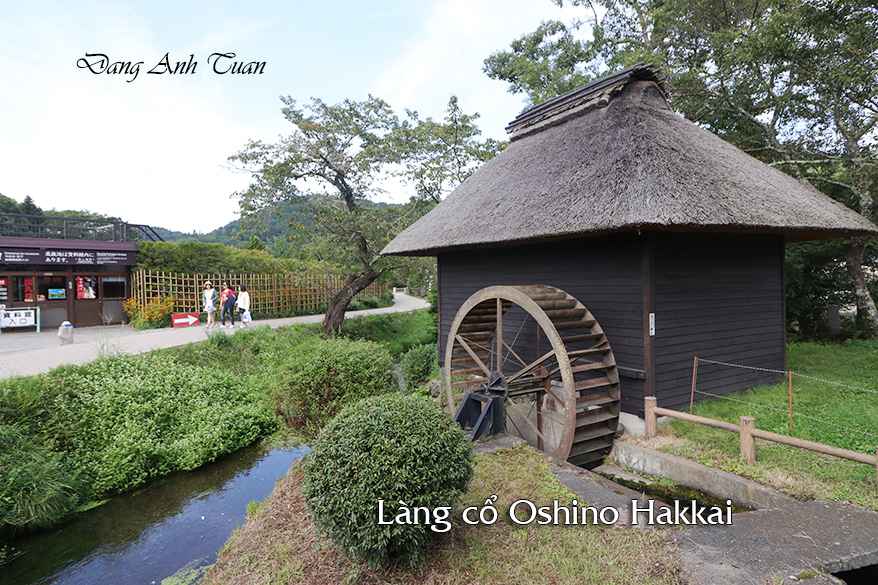
Sáng nay, ngày thứ tư, mình được cùng phái đoàn được viếng thăm một làng cổ trứ danh của nước Phù Tang ở dưới chân núi của núi Phú Sĩ  thuộc về  tỉnh Kanagawa cách xa thủ đô Tokyo 116 cây số trong khu vực ngũ hồ. Cũng như làng cổ Đường Lâm ở miền bắc Viêt Nam, Oshino Hakkai không những là một ngôi làng cổ thuần túy với phong cách kiến trúc ở thời kì Edo mà còn có vẽ đẹp thanh bình hoà hợp với môi trường. Nét đẹp của làng cổ thanh bình nầy đuợc thấy qua các mảnh vườn trồng rau, ngô, chè xanh và các khu vườn cây thông bao quanh các ngôi nhà mái lá cùng các buị bông ven đường. Ở đây còn sót lại 8 hồ nhỏ được  tạo ra ở thời kì núi Phú Sĩ còn phun lửa. Dân cư ở đây phần đông làm ruộng nhưng rất giàu có chỉ nhìn qua các nhà họ xây dựng. Nhờ kiến trúc cá biệt, làng nầy được công nhận là một di sãn thế giới vào năm 2013 bởi UNESCO. Tuy nhiên đến đây khó mà chụp ảnh vì người dân ở đây họ muốn giữ cái yên tĩnh họ đã có từ bao nhiêu năm nay.

Le village antique d’Oshino Hakkai 

Ce matin, au quatrième jour de mon voyage au Japon, j’ai eu l’occasion de visiter avec mon groupe touristique, un village antique très connu au Japon situé au pied du mont Fuji dans la zone de cinq lacs de la province Kanagawa et loin de la capitale Tokyo de 116 kilomètres. Analogue au village ancien Đường Lâm (Sơn Tây) dans le nord du Vietnam, Oshino Hakkai est un village très ancien. Il se distingue non seulement par son caractère authentique avec son style d’architecture de l’époque Edo mais aussi par son charme paisible en harmonie avec l’environnement. On trouve son attrait à travers ses jardins potagers (légumes, maïs, théier etc.) et ses parcs de pins bonsaï autour de ses maisons aux toits de chaume. Ici il reste 8 petits lacs crées au moment de l’éruption du volcan Fuji.  Sa population est constituée essentiellement par les agriculteurs qui sont assez riches. Grâce à son architecture singulière, le village Oshino Hakkai fut reconnu en 2013 par UNESCO comme le patrimoine mondial culturel du Japon. Malgré sa réputation, il est difficile pour un touriste de faire des photos car ses habitants n’apprécient pas le regard des touristes et n’aiment pas à être dérangés non plus dans leur quiétude.

The ancient village of Oshino Hakkai

This morning, on the fourth day of my trip to Japan, I had the opportunity to visit with my tour group a very famous ancient village in Japan located at the foot of Mount Fuji in the Five Lakes area of Kanagawa Prefecture, 116 kilometers away from the capital Tokyo. Similar to the ancient village of Đường Lâm (Sơn Tây) in northern Vietnam, Oshino Hakkai is a very old village. It stands out not only for its authentic character with its Edo period architectural style but also for its peaceful charm in harmony with the environment. Its appeal lies in its vegetable gardens (vegetables, corn, tea plants, etc.) and its bonsai pine parks around houses with thatched roofs. Here remain 8 small lakes created at the time of Mount Fuji’s eruption. Its population mainly consists of farmers who are quite wealthy. Thanks to its unique architecture, the village of Oshino Hakkai was recognized in 2013 by UNESCO as a cultural world heritage site of Japan. Despite its reputation, it is difficult for tourists to take photos because the inhabitants do not appreciate the gaze of tourists and also do not like to be disturbed in their tranquility.

Pictures gallery

[RETURN JAPAN]

Núi Phú Sĩ (Le mont Fuji)

Núi Phú Sĩ (Le mont Fuji)

Version française
Version anglaise
Galerie des photos
Lac Kawaguchi

[Cuộc hành trình Nhật Bản (ngày thứ ba)]

Ngày thứ ba , mình cùng các du khách trong đoàn được đi tham quan núi Phú Sĩ. Trước khi đến tham quan, tụi nầy được  ghé  Gotemba Premium Outlets. Đây là khu mua sắm bao gồm các cửa hàng cao cấp hàng đầu của Nhật. Ở đây du khách có thể nhìn thấy đỉnh núi Phú Sĩ  trong mây.  Núi nầy có độ cao 3776 thước được xem là ngọn núi cao nhất ở Nhật Bản. Đến đất nước Nhật Bản mà không có đến tham quan núi Phú Sĩ thì là một điều đáng tiếc vì nó không những là một biểu tượng của đất nước mặt trời mọc mà còn là một di sản văn hóa thế giới. Hình tượng núi Phú Sĩ rất thanh nhã, thay đổi theo mùa và theo thời điểm trong ngày khiến nó trở thành một chủ đề ưa thích của nhiều họa sĩ trứ danh Nhật ở thế kỉ 19: K. Hosukai (1760-1849) với « 36 cảnh núi Phú Sĩ », A. Hiroshige (1797-1858) với «Năm mươi ba trạm dừng của Tokaido». Núi Phú Sĩ vẫn được xem từ lâu là một đỉnh núi thiêng liêng vì theo Nhật Bản thư kỷ, núi nầy là nơi ở của nữ thần Konohanasakuya-hime, vợ của thần Ninigi-no-Mikoto, cháu nội của nữ thần mặt trời Amaterasu. Bởi vậy phụ nữ không được phép leo lên núi cho tới năm 1868.

Ngày nay số lựợng người leo núi để giải trí nhiều hơn số lượng người leo núi hành hương. Phú Sĩ không phải là một chóp núi nhọn mà nó là miệng núi lửa. Nó vẫn hoạt động và lần cuối cùng nó phun trào vào năm 1707 của thời kỳ Edo. Vì thế khu vực xung quanh núi toàn thấy tro bụi núi lửa và có cả 5 hồ nước do núi lửa tạo ra và được gọi là ngũ hồ: hồ Motosu, hồ Shoji, hồ Kawaguchi, hồ Yamanaka và hồ Sai. Nếu ai không thích leo lên đỉnh thì có thể dừng ở trạm số 5 Fuji Subaru Line. Nơi nầy ngoài khu buôn bán còn có một khu  vực quan sát để có được cái nhìn toàn cảnh tuyệt đẹp trên hồ Yamanaka và thành phố Fujiyoshida.  Chiều hôm đó, tụi nầy được sống  theo lối Nhật ở  một khách sạn gần hồ Kawaguchi bên cạnh rừng thông. Thật tuyệt vời nhất là sáng sớm hôm sau khi lúc  mặt trời mọc mình thả bộ một mình qua đường mòn của rừng thông  để  chụp  quan cảnh xung quanh hồ. 

Galerie des photos

FUJI

Version française

Le mont Fuji
Le troisième jour du voyage au Japon, notre groupe a eu l’occasion de visiter le mont Fuji.   Avant de pouvoir l’admirer, nous  rendons visite à un grand centre commercial de nom Gotemba Premium Outlets où on ne trouve que les grandes marques préférées par les Japonais.  C’est ici que le touriste peut voir le sommet du mont Fuji dans les nuages. Étant haut de 3776 mètres, ce mont Fuji  est considéré comme la montagne la plus élevée au Japon. Il est regrettable de ne pas le visiter car il est non seulement l’emblème célèbre du pays au Soleil-Levant mais aussi le patrimoine mondial culturel de l’UNESCO. Ce mont ne manque pas de charme et ne cesse pas de modifier son image en fonction des saisons et des moments de la journée. C’est pour cela qu’il devient le thème préféré des dessinateurs japonais célèbres du XIXème siècle à l’époque Edo: K. Hosukai (1760-1849) dans la série de « 36 vues du mont Fuji« , A. Hiroshige (1760-1849) dans la série d’estampes intitulée « Les 53 relais de Tokaido ». Depuis longtemps, le mont Fuji revêt un caractère sacré car selon les annales chroniques du Japon (Nihon shoki), le mont Fuji est le lieu de résidence d’une kami japonaise de nom Konohanasakuya-hime, l’épouse du petit-fils Ninigi-no-Mikoto de la déesse du soleil Amaterasu. C’est pour cette raison que l’ascension était interdite aux femmes jusqu’à l’année 1868.

Aujourd’hui le nombre de randonneurs est plus important que celui des pèlerins grimpeurs. Le sommet de Fuji est en fait un cratère volcanique. Il continue à être actif mais sa dernière éruption  eut lieu en 1707 à l’époque Edo. Autour de ce mont, on ne trouve que des poussières volcaniques et 5 lacs que l’éruption a crées: lac Motosu, lac Shoji, lac Kawaguchi, lac Yamanaka et lac Sai. Si on n’aime pas à marcher à pied jusqu’au sommet du mont Fuji, on peut s’arrêter à la station portant le numéro 5 de Fuji Subaru Line. C’ici qu’outre le centre commercial, il y a la zone d’observation où on peut avoir une vue panoramique imprenable  sur le lac Yamanaka et la petite ville Fujiyoshida. Ce soir là, nous passons la nuit dans un hôtel proche de la forêt des pins. C’est superbe pour moi de me promener tout seul,  le  lendemain au lever du soleil,  sur le sentier de la forêt des pins et faire  les photos autour du lac.

Version anglaise

On the third day of the trip to Japan, our group had the opportunity to visit Mount Fuji. Before being able to admire it, we visited a large shopping center called Gotemba Premium Outlets, where only the top brands favored by the Japanese can be found. It is here that tourists can see the summit of Mount Fuji in the clouds. Standing at 3,776 meters high, Mount Fuji is considered the tallest mountain in Japan. It is regrettable not to visit it as it is not only the famous emblem of the Land of the Rising Sun but also a UNESCO World Cultural Heritage site. This mountain is full of charm and constantly changes its appearance depending on the seasons and times of day. That is why it became the favorite theme of famous Japanese artists of the 19th century during the Edo period: K. Hokusai (1760-1849) in the series « 36 Views of Mount Fuji, » A. Hiroshige (1760-1849) in the print series titled « The 53 Stations of the Tokaido. » For a long time, Mount Fuji has held a sacred character because, according to the Japanese chronicles (Nihon Shoki), Mount Fuji is the residence of a Japanese kami named Konohanasakuya-hime, the wife of the grandson Ninigi-no-Mikoto of the sun goddess Amaterasu. For this reason, climbing it was forbidden to women until the year 1868.

Today, the number of hikers is greater than that of pilgrim climbers. The summit of Fuji is actually a volcanic crater. It remains active, but its last eruption occurred in 1707 during the Edo period. Around this mountain, there are only volcanic ashes and five lakes created by the eruption: Lake Motosu, Lake Shoji, Lake Kawaguchi, Lake Yamanaka, and Lake Sai. If you don’t like walking all the way to the summit of Mount Fuji, you can stop at station number 5 on the Fuji Subaru Line. There, besides the shopping center, there is an observation area where you can enjoy an unbeatable panoramic view of Lake Yamanaka and the small town of Fujiyoshida. That evening, we spend the night in a hotel near the pine forest. It is wonderful for me to walk alone the next morning at sunrise along the pine forest trail and take photos around the lake.

Lac Kawaguchi

HOPHUSI

[RETURN JAPAN] Lire la suite

Pourquoi les pagodes japonaises ne s’écroulent pas en cas du séisme?


Tại sao các chùa Nhật Ban không bị sụp đổ khi có động đất?

Version française
Version anglaise
Galerie des photos

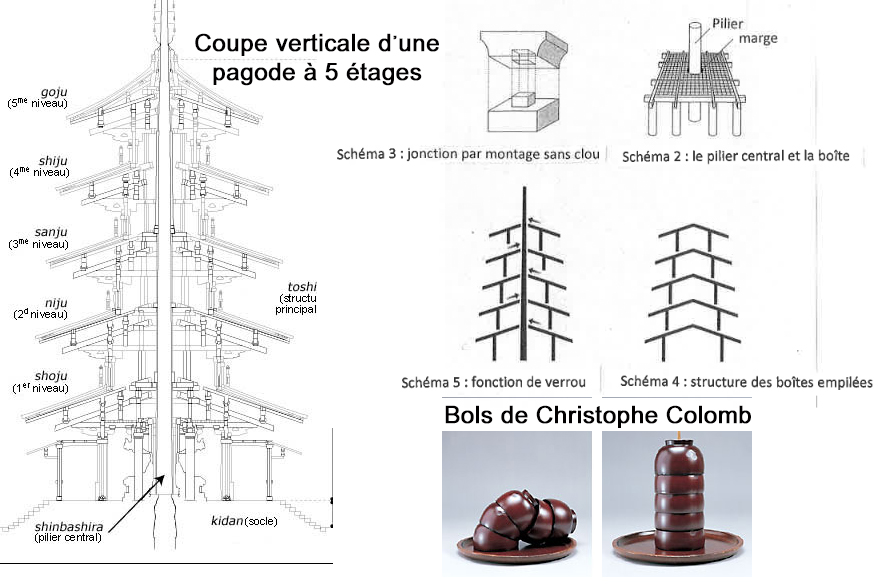
Đến xứ Nhật Bản, du khách thường có dịp đi tham quan các chùa Nhật bằng gỗ ở Nara Kyoto.  Qua nhiều trận động đất thường xuyên ở Nhật Bản, các chùa nầy vẫn đứng vững dù đã có trải  qua hơn 1300 năm xây cất. Cũng như chùa Senso-ji 5 tầng ở Tokyo không phải bị phá hủy bởi  động đất mà bị oanh tạc trong thời kỳ  chiến tranh thế giới thứ hai. Như vậy có bí quyết nào khiến các chùa không bị sụp đổ và được bảo vệ trước sự tàn phá của động đất ? Đó là một câu hỏi mà chính mình cũng tự nêu ra khi đến tham quan các chùa như Senso-jiKiyomizu Dera.  Theo kiến trúc sư Nhật Ueda Atsushi thì sự  bảo vệ an toàn nầy được giải thích với chùa Hôryûji, một chùa Nhật có lâu đời nhất dựa trên các lý do như sau trong quyển Nipponia số 33.  Trước hết là việc sử dụng vật liệu. Tất cả phần cấu trúc của chùa đều làm bằng gỗ. Nó có thể cong uốn nhưng không dễ bị gãy, đó là nhờ tính linh hoạt khiến nó có thể  làm tiêu tan và thu hút năng lượng địa chấn. Kế đó là sự lựa chọn thiết kế kiến trúc. Không có một cây đinh nào trọng dụng ở các nơi nối các thanh trúc với nhau (như lỗ mộng, lưỡi gà vân vân..). Các đầu của các thanh trúc nầy được đục mỏng và hẹp hơn vào trong các khe khiến tạo ra một lề di chuyển, cọ xát lẫn nhau và kiềm chế lại được việc truyền năng lượng địa chấn lên đỉnh tháp.

Với kỹ thuật nầy, một chùa Nhật Bản năm tầng như Senso-ji có ít nhất một ngàn thanh trúc nối với nhau qua các lỗ mộng. Hơn nữa, chùa có một cấu trúc có nhiều lớp hay nhiều hình hộp chồng lên, cái to ở dưới chót cái nhỏ ở trên cao mà người Nhật họ gọi là go-ju no to. Khi mặt đất rung chuyển thì các hộp từ từ đu đưa nhưng mỗi lớp của cái hộp hoàn toàn độc lập với các lớp khác khiến cho toàn bộ cấu trúc dễ « uốn nắn », linh hoạt  như một con rắn vặn vẹo và tìm lại được lại sự thăng bằng như  một món đồ chơi con lắc jaijirobe của người Nhật. Khi lớp hộp ở dưới xoay bên trái thì lớp hộp nắp trên xoay bên phải rồi trên nữa xoay bên trái …Nhưng sự thăng bằng nầy có thể bị phá vỡ nếu có một lớp nào tách rời xa quá trung tâm và nếu nó không được kéo về lại vị trí  khiến làm toàn bộ cấu trúc sẽ sụp đổ. Đấy là trong trường hợp có một trận động đất cực kỳ quan trọng. Vì vậy để ngăn ngừa sự sụp đổ nầy mà cần  có cây cột trụ lớn từ  dưới đất lên tới đỉnh nằm ở trung tâm. Nó có nhiệm vụ là đưa về vị trí cũ  một trong những lớp hộp nào muốn trượt ra khỏi ngoài.

Như thế cây cột trụ trung tâm (shinbashira) giữ vai trò chốt then và xem như một chiếc đũa mà được đâm xuyên qua ở dưới đích của 5 cái chén úp chồng lên nhau khiến các chén nầy khó mà bay ra ngoài. Các chén nầy được  kiến trúc sư Nhật Ueda Atsushi gọi là các chén của Christophe Colomb » bằng cách tìm nguôn cảm hứng với quả trứng của Christophe Colomb.  Quả trứng nầy đứng vững trên bàn sau khi một phần nhỏ của vỏ đã bị san phẳng ở một đầu của nó.  Những kỷ thuật truyền thống của các chùa Nhật 5 tầng vẫn còn được trọng dụng và là nguồn cảm ứng không ít  hiện nay cho các toà nhà cao ốc như ngọn tháp Tokyo Skytree.

Version française

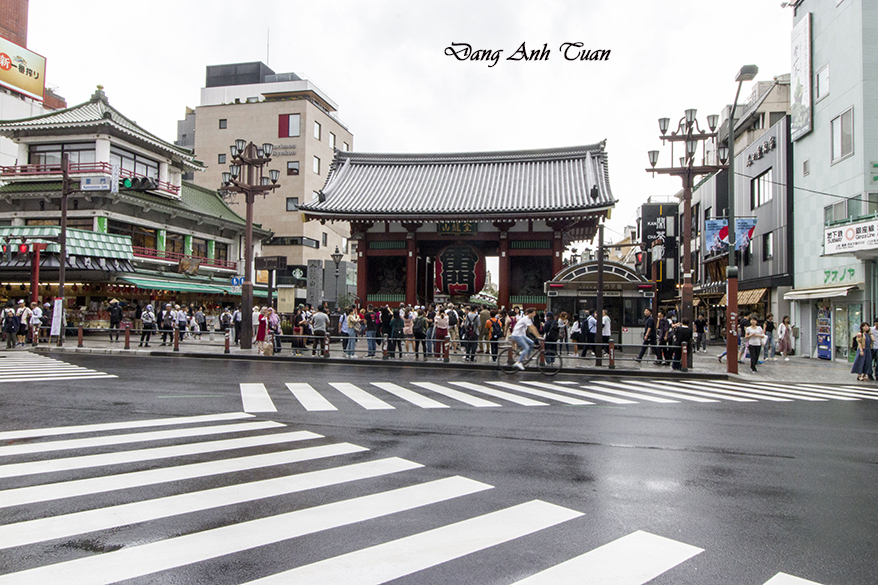
De passage au Japon, le touriste a l’occasion de visiter les pagodes japonaises de Nara et Tokyo. Malgré la fréquence des séismes au Japon,  ces  pagodes continuent à tenir bon durant 1300 ans de leur construction. C’est le cas de la pagode Senso-ji à 5 étages.  Celle-ci n’a jamais  été détruite par le séisme mais elle a été anéantie entièrement  par les bombardements  durant la deuxième guerre mondiale. Quel est le secret pour ces pagodes de ne pas s’écrouler face à la dévastation provoquée par le séisme ? C’est aussi la question que je me pose moi-même sans cesse lors de la visite des pagodes Senso-ji  (Tokyo) et  Kiyomizu Dera (Kyoto). Selon l’architecte japonais Ueda Atsushi, l’entière protection trouve son explication avec la très ancienne  pagode Hôryûji.  Celle-ci  est basée essentiellement  sur les raisons suivantes trouvées dans le livre  Nipponia n° 33. D’abord c’est l’utilisation du matériel. Toute la structure de la pagode a été faite avec du bois.  Celui-ci peut être flexible mais il n’est pas cassable. Ce matériau de construction  a la vertu d’être souple, ce qui permet de dissiper et d’absorber l’énergie sismique. Puis c’est le choix de la conception architecturale. Aucun clou n’est utilisé dans les réseaux de joints où les pièces de bois (comme les mortaises, les languettes etc…) peuvent être rabotées de façon mince et rétrécies dans les fentes, ce qui donne une large marge de déplacement et provoque le frottement entre ces pièces jouant ainsi un rôle de frein à la propagation sismique ver la partie haute de la pagode.

Avec cette technique, une pagode japonaise comme Senso-ji possède au moins un millier de joints assemblés par mortaises ou tenons. De plus la pagode a une structure en « couches ou boîtes superposées »  où  l’empilement s’effectue d’une manière progressive de bas en haut, de la plus grande à la plus petite au sommet de la pagode. Les Japonais désignent cette structure sous le nom « go-ju no to ». Quand la surface du sol commence à bouger, chaque boîte oscille indépendamment de ses voisines. La tour effectue une sorte de « danse de serpent » et retrouve son équilibre à l’état intial comme le jouet artisanal japonais jaijirobe. Quand la boîte formant l’étage inférieur a tendance à  tourner vers la gauche, celle au dessus oscille vers la droite et celle au dessus encore vers la gauche … Cette manière à osciller peut provoquer un déséquilibre et aboutit à un écroulement de la structure lorsqu’une boîte s’écarte trop du centre et ne réussit pas à revenir à son état initial. C’est le cas où le tremblement de terre est très violent. Pour cela, il s’avère indispensable d’avoir au centre de la base  de la pagode un gros pilier central (ou  shinbashira) s’élançant du bas jusqu’au sommet pour empêcher le déséquilibre ainsi que l’écroulement de la structure. Ce pilier a pour rôle de ramener  la « boîte empilée » à son état initial lorsque cette dernière s’éloigne trop du centre.

On peut dire que le pilier central ou (shinbashira) assume la fonction de verrou. Il est considéré comme une baguette transperçant au centre  les fonds de cinq bols empilés à l’envers sur un plateau, ce qui les empêche de tout écartement. L’architecte japonais Ueda Atsushi  désigne ces bols sous le nom des « bols de Christophe Colomb » en trouvant l’inspiration dans l’exemple de l’œuf de Christophe Colomb. Celui-ci peut se maintenir sur la table lorsqu’une petite partie de sa coquille est aplatie à l’une de ses extrémités. Les techniques classiques servant la construction des pagodes japonaises  à 5 étages continuent à être employées encore aujourd’hui et constituent au moins une source d’inspiration pour les gratte-ciel. C’est le cas de la tour Tokyo Skytree.

Version anglaise

When visiting Japan, tourists often have the opportunity to tour wooden Japanese temples in Nara and Kyoto. Despite the frequent earthquakes in Japan, these temples have stood firm even after more than 1,300 years of construction. Similarly, the five-story Senso-ji temple in Tokyo was not destroyed by earthquakes but was bombed during World War II. So, is there a secret that prevents these temples from collapsing and protects them from earthquake damage? That is a question I asked myself when visiting temples like Senso-ji and Kiyomizu-dera. According to Japanese architect Ueda Atsushi, this safety protection is explained with Hōryū-ji, one of the oldest Japanese temples, based on the following reasons in Nipponia magazine, issue 33. First is the use of materials. All structural parts of the temple are made of wood. It can bend and flex but is not easily broken; this flexibility allows it to dissipate and absorb seismic energy. Next is the choice of architectural design. Not a single nail is used in the joints connecting the wooden beams (such as mortise and tenon joints, tongue and groove, etc.). The ends of these beams are carved thinner and narrower into the slots, creating a margin for movement, rubbing against each other, and restraining the transmission of seismic energy to the top of the tower.

With this technique, a five-story Japanese temple like Senso-ji has at least one thousand bamboo beams connected to each other through mortise holes. Moreover, the temple has a structure with many layers or several stacked box shapes, the large one at the bottom and the small one at the top, which the Japanese call go-ju no to. When the ground shakes, the boxes sway slowly, but each layer of the box is completely independent of the others, making the entire structure easy to « bend, » flexible like a twisting snake, and regains balance like a Japanese Jaijirobe pendulum toy. When the bottom box layer turns left, the next layer above turns right, then the one above that turns left… However, this balance can be disrupted if any layer moves too far from the center and is not pulled back into position, causing the whole structure to collapse. This is in the case of a very significant earthquake. Therefore, to prevent this collapse, a large pillar from the ground up to the top is needed at the center. Its role is to bring back into place any of the box layers that want to slip out.

The central pillar or (shinbashira) can be said to act as a lock. It is considered a rod piercing the bottoms of five bowls stacked upside down on a tray, preventing them from moving apart. Japanese architect Ueda Atsushi called these bowls « Christopher Columbus bowls, » drawing inspiration from the example of Christopher Columbus’s egg. The egg can stay on the table when a small part of its shell is flattened at one end. Classical techniques used to build five-story Japanese pagodas continue to be used today and are at least one source of inspiration for skyscrapers. This is the case for the Tokyo Skytree tower.

Galerie des photos


jpn_seisme

[RETURN JAPAN]

Art de vivre propre à la japonaise (lối sống sạch của người Nhật)

Version française
Version anglaise
Galerie des photos

Lối sống siêu sạch của người Nhật
L’art de vivre « propre » à la japonaise.

Đến xứ mặt trời mọc, mình rất bỡ ngỡ ngày đầu khi khám phá được lối sống siêu sạch của người Nhật. Mới đến phi trường thì mình đã nhận thấy dọc theo hành lang ra cổng có rất nhiều phòng vệ sinh. Lên xe ca thì mỗi du khách phải quản lí rác của mình cho đến ngày trở ra phi trường chớ tài xế không có dọn cho đâu, đó là lời nói của HDV Ngọc Anh nói với đoàn mình ngày đầu trên đường về khách sạn. Từ phi trường đến khách sạn rồi trong những ngày tiếp đi tham quan mọi nơi thì nhận thẩy ở đâu cũng sạch luôn cả phòng vệ sinh. Đến nơi nào như nhà hàng, chuyện đầu tiên phải làm là cổi giày để trước cửa hay bỏ trong tủ. Họ rất sạch sẻ từ trang phục đến giày. Khi có mưa, họ chuẩn bị túi nylon để bạn gói dù ướt lại và để tránh nước mưa nhỏ trên nền đất. Thùng rác ở công cộng được chia ra nhiều loại chẳng hạn như chai nước vứt đi cũng phải bỏ vào 3 thùng rác khác nhau: nút chai, vỏ chai và nhãn giấy trên chai nước.

Tại sao họ sạch đến thế ? Sỡ dĩ họ được như vậy vì họ có một thói quen từ thưở nhỏ lúc còn là học sinh tiểu học hay cấp hai ở trường. Họ có một môn học gọi là « Kỷ năng lao động » khiến họ có trách nhiệm làm sạch nơi mình dùng. Họ rất nhạy cảm về hình ảnh của họ trong mắt người khác. Họ còn được giáo huẩn để biết tôn trọng tài sản của người khác mà muốn được thế, họ phải có lòng tự trọng ở bản thân họ. Họ không bao giờ ăn xin dù họ nghèo, vô gia cư, nằm ngủ trong hầm điện métro. Mình cho tiền thì họ lấy. Họ không bao giờ đòi hay nhận tiền bo ở nhà hàng vì họ xem đó là nhiệm vụ họ phải hoàn thành mà thôi. Họ rất tự hào về họ, về dân tộc của họ.

Việc cội rửa bụi bẩn ở tinh thần cũng như ở thể chất là những việc hằng ngày mà họ phải làm thôi. Họ xem đây là một thể thức rèn luyện, tu tập mà họ phải cố gắng cũng như thiền định vậy. Cũng nên nhớ là trước khi Phật giáo được truyền bá vào Nhật Bản thì người dân Nhật đã theo Thần đạo mà trong đạo nầy có nghi lễ thanh tẩy trước khi vào đền Thần đạo. Bỡi vậy họ phải cần đảm bảo sạch sẻ và tinh khiết để có được một tâm hồn lẫn tâm trí thanh tịnh. Có vậy mới bày tỏ được lòng thành kính với Thần. Đấy là những lý do khiến lối sống của người dân Nhật quá siêu sạch và quá thanh tao. Đây là một ấn tượng để lại cho mình lúc đầu sự bỡ ngỡ rồi sau đó sự khâm phục trong thời gian ở xứ Phù Tang.

Version française

En débarquant au Japon, je suis un peu déboussolé et étonné le premier jour par le fait de découvrir l’art de vivre « super propre » des Japonais. Je m’aperçois qu’il y a pas mal de toilettes mises à la disposition des touristes tout le long du couloir de l’aéroport. Dans le car qui nous ramène à l’hôtel, chacun de notre groupe doit gérer jusqu’au jour de notre départ, les ordures avec le sac en nylon distribué. C’est ce que le guide vietnamien Ngọc Anh nous dit tout de suite car pour lui, le chauffeur du car ne le fait pas. Ce n’est pas sa mission. Il faut rendre propre le car à son état initial. Du premier jour jusqu’au dernier jour de mon voyage, la propreté est visible partout y comprises les toilettes publiques.(dans la gare du métro par exemple). Arrivé dans n’importe quel restaurant, la première chose à faire est d’enlever les chaussures et de les ranger soit dans un casier à chaussures soit à l’entrée de l’établissement. Les Japonais aiment s’habiller de la manière la plus propre et simple. En cas de pluie, ils distribuent à chacun de leurs clients un sac en nylon pour couvrir son parapluie mouillé et éviter le trempage de l’eau sur le plancher de leur boutique. Les poubelles urbaines publiques sont divisées en plusieurs catégories. En prenant l’exemple de la bouteille en plastique, il faut effectuer le rangement en trois poubelles différentes: la première réservée à son bouchon, la deuxième pour sa marque collée en papier et la dernière pour la bouteille elle-même.

Pour quelle raison sont-ils si propres ? Ils le sont ainsi car ils ont cette habitude dès leur jeune âge à l’école primaire. Ils ont une matière intitulée « la compétence dans le travail » à apprendre, ce qui les oblige à avoir la responsabilité de rendre propre l’endroit où ils travaillent. Ils sont tellement susceptibles d’être mal vus dans le regard des autres. Ils sont éduqués de manière à respecter le bien d’autrui mais pour cela il faut qu’ils s’engagent à se respecter eux-mêmes. Ils ne mendient pas même s’ils sont pauvres, sans domicile et se traînent dans le métro, c’est ce que je constate moi-même. Ils ne sollicitent pas le pourboire dans les restaurants car pour eux, c’est une mission à accomplir, une manière de reconnaître leur valeur et leur compétence dans le travail. Ils sont très fiers d’eux et de leur pays.

Le fait de se purifier l’esprit ou le corps est le travail journalier qu’ils tentent d’assumer tout simplement. Ils le prennent comme une façon importante de se corriger et de se perfectionner avec effort et patience comme la méditation. Il faut rappeler qu’avant l’implantation du bouddhisme au Japon, les Japonais ont eu le shintoïsme. Dans cette religion locale, il y a le rite de purification avant de visiter le jinja (le temple où réside la divinité shintoïste). Le visiteur doit s’assurer qu’il est « propre » et « pur » afin d’avoir une âme et un esprit calme et serein. Cela lui permet de montrer son respect envers la divinité. Ce sont les raisons expliquant leur art de vivre « propre ». Cela me laisse pantois d’étonnement et d’admiration durant mon séjour au Japon.

Version anglaise

Upon arriving in Japan, I am a bit disoriented and surprised on the first day by discovering the « super clean » lifestyle of the Japanese. I notice that there are quite a few toilets available for tourists along the airport corridor. On the bus that takes us back to the hotel, each member of our group must manage the trash with the nylon bag provided until the day we leave. This is what the Vietnamese guide Ngọc Anh tells us right away because, for him, the bus driver does not do it. It is not his job. The bus must be kept clean and returned to its original state. From the first day until the last day of my trip, cleanliness is visible everywhere, including public restrooms (for example, in the subway station). Upon entering any restaurant, the first thing to do is to take off your shoes and store them either in a shoe locker or at the entrance of the establishment. The Japanese like to dress in the cleanest and simplest way possible. In case of rain, they give each of their customers a nylon bag to cover their wet umbrella and prevent water from soaking the floor of their shop. Public urban trash bins are divided into several categories.

Taking the example of the plastic bottle, it is necessary to sort it into three different bins: the first reserved for its cap, the second for its paper label, and the last for the bottle itself. Why are they so clean? They are this way because they have this habit from a young age in primary school. They have a subject called « competence in work » to learn, which obliges them to take responsibility for keeping the place where they work clean. They are very sensitive to being seen poorly by others. They are educated to respect the property of others, but for that, they must commit to respecting themselves. They do not beg even if they are poor, homeless, and dragging themselves through the subway, this is what I observe myself. They do not ask for tips in restaurants because for them, it is a mission to accomplish, a way to recognize their value and competence in work. They are very proud of themselves and their country.

The act of purifying the mind or body is the daily work they simply try to undertake. They see it as an important way to correct and perfect themselves with effort and patience, like meditation. It should be noted that before the introduction of Buddhism in Japan, the Japanese had Shintoism.

In this local religion, there is a purification rite before visiting the jinja (the temple where the Shinto deity resides). The visitor must ensure that he is « clean » and « pure » in order to have a calm and serene soul and mind. This allows him to show his respect to the deity. These are the reasons explaining their « clean » art of living. This leaves me speechless with amazement and admiration during my stay in Japan.
Galerie des photos

[RETURN JAPAN]