Monument de l’indépendance (Dinh Độc Lập)

Version française
Version anglaise
Galerie des photos

Trước khi trở về chủ quyền của đất nước, dinh nầy đã được xây dựng  và thiết kế bởi thống đốc Pháp De la Grandière vào năm 23 tháng 3 năm 1868.  Dinh nầy được dùng làm nơi cư trú và chỗ làm việc của toàn quyền Đông Dương  dưới thời Pháp thuộc. Bởi vậy nó có tên cũ là dinh Norodom vì nó nằm ở trên đại lộ Norodom, một vị vua của nước Cao Miên ở thời bấy giờ. Đến năm 1954, sau khi hiệp định Genève 8 tháng 5 và sau khi phế truất Quốc trưởng Bảo Đại và thành lập nước  Việt Nam Cộng Hoà, ông Ngô Đình Diệm mới lấy dinh Norodom làm dinh Tổng Thống Việt Nam Cộng Hoà. Dinh nầy mới đổi tên từ đó  thành dinh Độc Lập. Nhưng dinh nầy bị oanh tạc bởi  hai phi công của phe đối lập, Đại Việt Quốc Dân Đảng  vào ngày 27/2/1962 khiến làm sập toàn bộ phần chính cánh trái của dinh nên việc khôi phục lại không thể thực hiện  được. Vì đó ông Ngô Đình Diệm mới  ra lệnh san bằng và nhờ kiến trúc Ngô Viết Thụ, một người Việt Nam đầu tiên đạt giải khôi nguyên La Mã thiết kế và xây lại một dinh thự mới ngay trên nền đất cũ với một diện tích 12 ha.

Sau sự kiện 30 tháng 4 năm 1975,  dinh  nấy mới đỗi tên một lần nữa  và mới lấy tên là dinh Thống Nhất  vào tháng 11 năm 1975 để nói lên sự thống nhất của hai miền Nam Bắc từ nay dưới quyền lãnh đạo của đảng cộng  sản Việt Nam. Dinh nầy  trở thành một trong những địa điểm du lịch không thể thiếu của mỗi người dân nước ngoài hay trong nước  khi tới thành phố Saïgon. So với dinh cũ thời Pháp thuộc, dinh Độc Lập có mang thiết kế hiện đại. Tuy nhiên, ngoài ý nghĩa lịch sử, dinh còn thể hiển được không những một kiến trúc độc đáo dựa trên triết lý phương đông qua các chiết tự chữ Hán và  cá tính của dân tộc (ba gian hai chái)  được nhận thấy ở mặt tiền.

Chẳng hạn chữ Khẩu (口) để chỉ đến cái miệng, ngụ ý là tự do ngôn luận.  Còn chữ TRUNG (中) được thành hình  tử chữ Khẩu với cột cờ xuyên qua  tiêu biểu cho đức tính  trung kiên trong việc xây dựng dân chủ. Còn ba nét dọc ngang được trông thấy từ mái hiên và ban công hợp thành chữ TAM (三) đó là sự nhắc đến dân chủ hửu tam (Nhân, Minh, Võ). Đây là sự mong muốn có được người lãnh đạo có đủ phẩm chất, trí tuệ và bản lĩnh để phát triển đất nước. Còn chữ VƯƠNG (王) được hợp thành từ chữ TAM với  nét sổ dọc. Nó  biến thành chữ CHỦ (主)với lá cờ kỳ đài ở trên chót vót của dinh đến chủ quyền dân tộc.  Sau cùng chữ HƯNG (興)  được tạo thành từ cái nhìn toàn bộ mặt tiền với ban công tầng 2, tầng 3, mái hiên và hai cột gỗ. Đây là ý nguyện có được  một   đất nước Hưng Thịnh. 

Tọa lạc trong một  khuôn viên rộng 12 ha rợp bóng cây và cao có 26 m, dinh gồm 3 tầng chính, 2 gác lửng, tầng nền, 2 tầng hầm và 1 sân thượng cho máy bay trực thăng đáp xuống. Qua các chiết tự chữ  CÁT (吉) ,  KHẨU (口), TRUNG (中), TAM (三), CHỦ (主),  VƯƠNG (王),  HƯNG (興) được thể hiện ở mặt bằng tổng thể đến mặt bằng ngôi nhà đều được bố cục một cách tĩ mĩ, kiến trúc sư  Ngô Viết Thụ muốn  gửi đến một cách thâm thúy một thông điệp  mang ý nghĩa đem lại sự tốt lành và hưng thịnh cho đất nước. Ngoài ra, trong nội thất của dinh thì các gian phòng chính quan trọng được trang trí theo các gam màu chủ đạo.

 Cũng như màu vàng được sử dụng ở phòng Đại Yến và được  kết hợp với các họa tiết thực vật khiến nó tạo ra sự ấm áp trong việc tiếp tân  đãi tiệc. Ở phòng  Đại Yến, có một bức tranh dầu do kiến trúc sư Ngô Viết Thụ vẽ và biếu tặng nhân dịp ngày khánh thành dinh với 2 câu thơ chữ Hán Việt:  «Cẩm tú  sơn hà, thái bình thảo mộc» có nghĩa là «Non sông gấm vóc, cây cỏ thái bình ». Còn màu xanh lá cây  và màu đen thì được sử  dụng  ở thảm, màn và da ghế để tạo ra cảm giác mát mẻ nhất là với các cuộc hợp căng thẳng ở phòng nội các (tầng 1).

Còn màu đỏ thỉ đựơc thấy ở phòng khánh tiết hay các phòng tiếp tân tổng thống và phó tổng ở tầng 2. Cái đặc điểm của Dinh Độc Lập là rèm hoa đá bao quanh tầng 2. Đây là những đốt trúc thanh tao được lấy từ một hình ảnh  được cách điệu từ “cửa bàn khoa” của cung điện ở Cố đô Huế. Ngoài việc thẩm mỹ, rèm hoa đá còn giúp điều hoà ánh sáng tự nhiên và nó trở thành biểu tượng độc đáo của dinh độc lập.

Đã bao lần đổi tên với  sự thăng trầm của đất nước, nó trở thành ngày nay một di tích lịch sử văn hoá quốc gia, một điểm du lịch không thể bỏ qua khi đến Saigon và một công trình kiến trúc để đời của kiến trúc sư tài ba Ngô Viết Thụ.

Version française

Avant le retour à la souveraineté nationale, ce palais a été construit et conçu par le gouverneur français De la Grandière le 23 mars 1868. Ce palais servait de résidence et de lieu de travail pour le gouverneur général de l’Indochine sous l’occupation française. C’est pourquoi il portait l’ancien nom de palais Norodom, car il se trouvait sur l’avenue Norodom, du nom d’un roi du Cambodge à cette époque. En 1954, après les accords de Genève du 8 mai et après la destitution du chef de l’État Bảo Đại et la création de la République du Viêt Nam, Mr Ngô Đình Diệm a choisi le palais Norodom comme palais présidentiel de la République du Viêt Nam. Ce palais a alors été rebaptisé palais de l’Indépendance. Mais il a été bombardé par deux pilotes du parti d’opposition  « Đại Việt Quốc Dân Đảng » le 27 février 1962, ce qui a détruit toute la partie principale de l’aile gauche, rendant ainsi la restauration impossible. C’est pourquoi Mr. Ngô Đình Diệm a ordonné sa démolition et a demandé à l’architecte Ngô Viết Thụ, le premier Vietnamien à avoir remporté le prix de Rome, de concevoir et de construire un nouveau palais sur l’ancien emplacement dont la superficie est de 12ha.

Après les événements du 30 avril 1975, le palais fut rebaptisé Palais de la Réunification en novembre 1975, symbolisant ainsi la réunification du Nord et du Sud-Vietnam sous l’égide du Parti communiste vietnamien. Ce palais est devenu un site touristique incontournable pour les visiteurs vietnamiens et étrangers lors de leur passage à Saïgon. Comparé à l’ancien palais de l’époque française, le Palais de l’Indépendance présente un design moderne. Au-delà de son importance historique, il présente un style architectural unique, inspiré de la philosophie orientale, comme en témoignent ses 7 caractères chinois et son architecture typiquement vietnamienne (trois travées et deux ailes) trouvée sur la façade.  

Par exemple, le caractère *Khẩu* (口) — signifiant « bouche » — symbolise la liberté d’expression. De son côté, le caractère *Trung* (中) — signifiant « loyauté » — est formé par l’association du caractère *Khẩu* et d’un mât de drapeau le traversant, représentant la loyauté inébranlable nécessaire à l’édification de la démocratie. Les lignes horizontales et verticales visibles au niveau des avant-toits et des balcons dessinent le caractère *Tam* (三) — signifiant « trois » — en référence aux trois vertus démocratiques : l’humanité (*Nhân*), la sagesse (*Minh*) et le courage (*Võ*). Cela reflète l’aspiration à voir émerger un dirigeant doté du caractère, de l’intelligence et de la trempe nécessaires au développement de la nation. Le caractère *Vương* (王)– signifiant «roi» — est formé en ajoutant un trait vertical au caractère *Tam* ; il se transforme en caractère *Chủ * (主)— signifiant « souveraineté du pays » — lorsque l’on y intègre le drapeau situé au point culminant du bâtiment. Enfin, le caractère *Hưng* (興) — signifiant « prospérité » — apparaît dans la vue d’ensemble de la façade, englobant les balcons des deuxième et troisième étages, les avant-toits et les deux piliers en bois. Il incarne le vœu d’une nation prospère et florissante.

Situé dans un parc de 12 hectares ombragé et d’une hauteur de 26 m, le palais comprend 3 étages principaux, 2 mezzanines, un rez-de-chaussée, 2 sous-sols et une terrasse pour l’atterrissage des hélicoptères. À travers les caractères CÁT (吉), KHẨU (口), TRUNG (中), TAM (三), CHỦ (主), VƯƠNG (王), HƯNG (興)  représentés d’une manière méticuleuse du plan général au plan du palais, l’architecte Ngô Viết Thụ a voulu transmettre de manière subtile un message porteur de bonheur et de prospérité pour le pays. En outre, à l’intérieur du palais, les principales pièces importantes sont décorées selon des gammes de couleurs dominantes.Par exemple, la couleur jaune est utilisée dans la salle du Grand Banquet et combinée avec des motifs végétaux. Elle crée ainsi une atmosphère chaleureuse pour l’accueil et les réceptions. Dans la salle du Grand Banquet, il y a une peinture à l’huile réalisée et offerte par l’architecte Ngô Viết Thụ à l’occasion de l’inauguration du palais, accompagnée de deux vers en caractères sino-vietnamiens: « Cẩm tú sơn hà, thái bình thảo mộc » qui signifie « Montagnes et rivières somptueuses, herbes et arbres paisibles ». Quant au vert et au noir, ils sont utilisés pour les tapis, les rideaux et le cuir des sièges afin de créer une sensation de fraîcheur, surtout lors des réunions importantes  de tension extrême dans la salle du cabinet (1er étage).

Quant à la couleur rouge, elle est visible dans la salle de réception ou dans les salons de réception du président et du vice-président au deuxième étage. La caractéristique du Palais de l’Indépendance est la frise florale en pierre qui entoure le deuxième étage. Ce sont des tiges de bambou élégantes, inspirées d’une image stylisée de la “Porte Bàn Khoa” du palais de l’ancienne capitale de Huế. En plus de l’aspect esthétique, la frise florale en pierre aide à réguler la lumière naturelle et elle est devenue un symbole unique du Palais de l’Indépendance.

Ayant changé de nom à plusieurs reprises au gré des vicissitudes du pays, il est aujourd’hui un monument historique et culturel national, un site touristique incontournable lors d’une visite à Saigon et une œuvre architecturale mémorable du talentueux architecte Ngô Viết Thụ.

Version anglaise

Before the return to national sovereignty, this palace was built and designed by the French governor De la Grandière on March 23, 1868. This palace served as the residence and workplace for the Governor General of Indochina during the French occupation. That is why it bore the former name Norodom Palace, as it was located on Norodom Avenue, named after a Cambodian king at that time. In 1954, after the Geneva Accords of May 8 and after the removal of Head of State Bảo Đại and the creation of the Republic of Vietnam, Mr. Ngô Đình Diệm chose Norodom Palace as the presidential palace of the Republic of Vietnam. The palace was then renamed Independence Palace. But it was bombed by two pilots from the opposition party « Đại Việt Quốc Dân Đảng » on February 27, 1962, which destroyed the entire main part of the left wing, making restoration impossible. That is why Mr. Ngô Đình Diệm ordered its demolition and asked architect Ngô Viết Thụ, the first Vietnamese to win the Rome Prize, to design and build a new palace on the old site, which covers an area of 12 hectares.

After the events of April 30, 1975, the palace was renamed the Reunification Palace in November 1975, thus symbolizing the reunification of North and South Vietnam under the leadership of the Vietnamese Communist Party. This palace has become a must-see tourist site for both Vietnamese and foreign visitors when passing through Saigon. Compared to the old palace from the French era, the Independence Palace features a modern design. Beyond its historical significance, it displays a unique architectural style, inspired by Eastern philosophy, as evidenced by its 7 Chinese characters and its typically Vietnamese architecture (three sections and two wings) found on the façade.

For example, the character *Khẩu* (口) — meaning « mouth » — symbolizes freedom of expression. Meanwhile, the character *Trung* (中) — meaning « loyalty » — is formed by combining the character *Khẩu* and a flagpole passing through it, representing the unwavering loyalty necessary for the establishment of democracy. The horizontal and vertical lines visible at the eaves and balconies outline the character *Tam* (三) — meaning « three » — in reference to the three democratic virtues: humanity (*Nhân*), wisdom (*Minh*), and courage (*Võ*). This reflects the aspiration to see a leader emerge who possesses the character, intelligence, and resolve necessary for the nation’s development. The character *Vương* (王) — meaning « king » or « sovereign » — is formed by adding a vertical stroke to the character *Tam*; it transforms into the character *Chủ* (主) — meaning « national sovereignty » — when the flag at the building’s highest point is incorporated. Finally, the character *Hưng* (興) — meaning « prosperity » — appears in the overall view of the façade, encompassing the balconies of the second and third floors, the eaves, and the two wooden pillars. It embodies the wish for a prosperous and flourishing nation.

Located in a 12-hectare shaded park and standing 26 meters high, the palace comprises 3 main floors, 2 mezzanines, a ground floor, 2 basements, and a terrace for helicopter landings. Through the characters CÁT (吉), KHẨU (口), TRUNG (中), TAM (三), CHỦ (主), VƯƠNG (王), HƯNG (興) meticulously represented from the general plan to the palace layout, architect Ngô Viết Thụ sought to subtly convey a message of happiness and prosperity for the country. Furthermore, inside the palace, the main important rooms are decorated according to dominant color schemes.
For example, yellow is used in the Grand Banquet Hall and combined with plant motifs. This creates a warm atmosphere for welcoming and receptions. In the Grand Banquet Hall, there is an oil painting created and offered by architect Ngô Viết Thụ on the occasion of the palace’s inauguration, accompanied by two verses in Sino-Vietnamese characters: “Cẩm tú sơn hà, thái bình thảo mộc” which means “Magnificent mountains and rivers, peaceful grasses and trees.” As for green and black, they are used for carpets, curtains, and the leather of the seats to create a sense of freshness, especially during important meetings of extreme tension in the cabinet room (1st floor).

As for the color red, it is visible in the reception hall or in the reception rooms of the president and vice president on the second floor. The characteristic feature of the Independence Palace is the floral stone frieze that surrounds the second floor. These are elegant bamboo stems, inspired by a stylized image of the “Bàn Khoa Gate” of the palace of the former capital of Huế. In addition to its aesthetic aspect, the floral stone frieze helps to regulate natural light and has become a unique symbol of the Independence Palace.

Having changed its name several times according to the vicissitudes of the country, it is today a national historical and cultural monument, an essential tourist site when visiting Saigon, and a memorable architectural work by the talented architect Ngô Viết Thụ.
Galerie des photos

[Return SAIGON]

Cap Saint Jacques (Vũng Tàu)

Vũng Tàu (Cap Saint Jacques)

Version française

Version anglaise

Galerie des photos


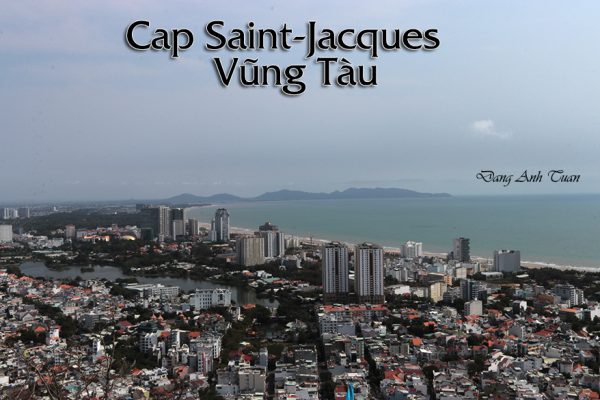
Lâu lắm rồi không có ra Vũng Tàu vi chỉ nhớ có một thời  các bãi biển ở nơi nầy lắm dơ khi mình mới trở về Việt Nam lần đầu. Từ đó  để lại cho mình một ấn tượng không tốt chi cho mấy. Nay trở lại cùng anh bạn quen từ thưở nhỏ  thì chỉ có hai ngày trước Tết 2026 thì tụi nầy cảm thấy thành phố nầy  trở thành nơi lý tưởng để sống vì nó không có náo nhiệt ồn ào như Saigon, xe cộ cũng ít, người dân cũng hiền hoà tựa như môt thành phố trước 75.  Các người Pháp về hưu sống ở nơi nầy rất đông vì đời sống nó  không có  đắt đỏ  mà lại an nhàn thư thản  nhất là nó chỉ cách xa  thành phố Saigon có 90 cây số.  Chỉ mất 2 tiếng rưởi  đi với xe limousine Vip với giá trung bình là 250.000 đồng. Nhờ có cô bạn hướng dẫn quen biết, tụi nầy được  ăn  ngày đầu ở một quán ăn tên là Gành Hào ở bãi biển (Bãi Dâu)  và đựợc thưởng thức món lẫu cá  tuyệt vời.  Ngày thứ nhì, tụi nầy được đi tham quan Đền Thánh Đức Mẹ,  chùa Phật Bà Quan Âm,  lên núi nhỏ  xem hải đăng với kiến trúc độc đáo và nhờ đó được ngắm toàn cảnh thành phố từ trên cao.

Sau đó  tụi nầy đi bộ buổi trưa  từ khách sạn Phượng Hoàng ra  đến bãi biển trước. Giờ đây trông  biển lại quá sạch nhất là thêm vào đó, có gió biển và ăn được một chén chè tàu hũ nước đường gừng của cô  bán hàng rong quá tuyệt vời đấy. Tối lại  ghé lại quán  21, Eatery and Bar mà giới trẻ và ngoại quốc ưa thích ở đường  Lý Tự Trọng nghe nhóm trẻ hát nhạc ngoại  quốc rất thú vị. Còn gì bằng có được 2 ngày nghỉ ngơi như  vậy ở Vũng Tàu.

Version française

Cela faisait longtemps que je n’étais pas allé à Vũng Tau. Je me souviens seulement que les plages étaient très sales lors de mon premier retour au Vietnam. Cela m’avait laissé une impression plutôt négative. Aujourd’hui, de retour avec un ami de longue date  deux jours avant le Têt 2026, nous trouvons que cette ville est devenue un endroit idéal pour vivre : elle est moins bruyante et  animée que Saigon, la circulation y est plus fluide et les habitants sont gentils  comme dans une ville d’avant 1975. De nombreux retraités français y vivent car la vie n’y est pas chère et le cadre est paisible et reposant, d’autant plus que la ville n’est qu’à 90 kilomètres de Saigon. Le trajet en limousine VIP n’a duré que deux heures et demie, pour un coût moyen de 250 000 VND. Grâce à une ami qui nous a servi de guide, nous avons pris notre premier repas au restaurant Gành Hào, en face de la mer (Bãi Dâu) et dégusté un délicieux hotpot de poisson. Le lendemain, nous avons visité de bonne heure  le sanctuaire de  Notre-Dame, le temple bouddhiste Quan Âm, puis gravi la petite montagne pour admirer le phare à l’architecture unique et profiter d’une vue panoramique sur la ville. Enfin, dans l’après-midi nous avons flâné  à pied de l’hôtel Phénix (Phượng Hoàng) où nous étions jusqu’à la plage.

La mer est si propre, surtout avec la brise marine et un dessert  de tofu sucré au gingembre acheté à une marchande ambulante. C’est absolument merveilleux. Le soir, nous sommes allés au restaurant  portant le nom  21 Eatery and Bar. C’est  un lieu prisé des jeunes et des étrangers  et situé  à la rue Lý Tự Trong. Nous avons écouté un groupe de jeunes chanter des chansons étrangères, c’était vraiment  agréable. Quoi de mieux que passer deux jours de détente comme ça à la ville Vũng Tàu ? 

Galerie des photos

Le mont enneigé du Dragon de jade (Yunnan)

Ngọc Long Tuyết Sơn 

Version française
Version anglaise
Galerie des photos

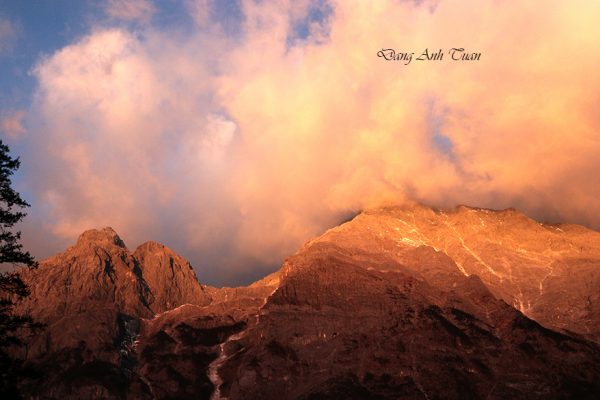
Ngọc Long Tuyết Sơn nằm tại thành phố Lệ Giang, cách cổ trấn khoảng 15 km. Đây  là điểm mà du khách đến tham quan quanh năm, mỗi mùa mang đến những nét đẹp riêng. Đỉnh cao nhất của nó được đặt tên Phiến Tử Đẩu (扇子陡Shanzidou) cao 5.596 m.  Càng lên cao thì càng thiếu oxygen nên mình chỉ đến nữa đường  mà đã tốn đến ba ống oxygene  và cảm thấy đuối nên không  dám mạo hiểm.

Le mont enneigé du Dragon de Jade se situe à Lijiang, à environ 15 km de la vieille ville. C’est un site touristique  très prisé toute l’année, chaque saison offrant un charme unique. Son plus haut sommet, le Shanzidou (扇子陡), culmine à 5 596 mètres. Plus on monte, plus l’oxygène se raréfie. Je n’ai atteint que la moitié du  trajet et je me sens complètement épuisé  malgré l’utilisation de trois  bouteilles d’oxygène. Je n’oserais donc pas aller plus haut.

The snow-covered Jade Dragon Mountain is located in Lijiang, about 15 km from the old town. It is a popular tourist site all year round, each season offering a unique charm. Its highest peak, Shanzidou (扇子陡), rises to 5,596 meters. The higher you go, the less oxygen becomes scarce; I only reached halfway up the summit before using three oxygen bottles and becoming exhausted, so I would not dare to go any higher.


Galerie des photos

[RETURN CHINA]


Chung cư Nguyễn Thiện Thuật (Bàn Cờ, Quân 3)


Chung Cư Nguyễn Thiện Thuật (Bàn Cờ, Quận 3)

Chuyện bên lề ở giữa lòng chung cư 

Version française
Version anglaise
Galerie des photos

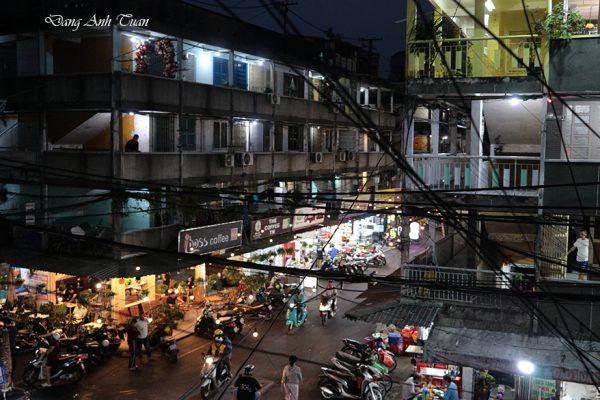
Từ lâu không có dịp ăn Tết ở Việt Nam nên lần nầy mình cùng anh bạn của thời thơ ấu,  hai đứa rũ  nhau về trước Tết để tìm lại trong ký ức những kỷ niệm của một thời thơ ấu. Chính vì vậy tụi nầy muốn  tìm lại những gì mà tụi nầy không được thấy từ lâu, không được ăn từ bao nhiêu năm nay nên tụi nầy quyết định tìm một khách sạn không những vừa thích hợp với túi tiền mà còn phải ở gần chợ và dân cư nghèo để hiểu được nếp sống của họ trước những ngày Tết. Bởi vậy tụi nầy mới tìm ra được một khách sạn rất xinh xắn, mang đậm phong cách của người Hoa ở gần chợ  Bàn Cờ và chung cư Nguyễn Thiên Thuật. Công trình kiến trúc nầy  được xây dựng vào năm 1968 sau Tết Mậu Thân.  Lúc đầu là nơi ở các binh lính quân đội Mỹ trong chiến tranh Việt Nam. Nghe kể lại có một lần  nơi nầy bị pháo kích nhưng  về  sau nó trở thành một chung cư dành cho các người nghèo lao động. Có thể xem nó như là  một thành phố Saigon thu nhỏ lại, một chung cư được thiết kế theo dạng nhà ống. Mỗi căn hộ nó có chiều dài  đáng kể và chiều  ngang chừng 3 thước rưởi. Các căn hộ nầy được liên kế  sát bên nhau nhờ có một  hành lang nhỏ tuy khá hẹp nhưng được  tận dụng làm  nơi để phơi quần áo  và  nó  còn dùng để bọc xung quanh cả chung cư  khiến nó tạo ra một lối sống thân cận của cộng đồng.

Vì ở trên đường Nguyễn Thiện Thuật  nên chung cư nầy cũng mang tên đường này luôn. Các tầng trệt được tận dụng làm các gian hàng ẩm thực và các quán cà phê. Những  con đường (hay hẻm)  ở trong chung cư lúc nào cũng náo nhiệt, lúc nào cũng có người đi qua lại, tiếng kèn xe gắn máy vang lên không ngừng. Gần đây, chung cư Nguyễn Thiên Thuật đã xuống cấp nhiều nhưng vì nó vẫn  gợi lại  hình ảnh Sàigon của những năm 70 nên  nhờ đó nó trờ thành  địa điểm làm người khách nước ngọài ưa thích và đến đây để tham quan và chụp hình.

Có thể nói nó được xem như loại favela ở  các nước Nam Mỹ. Còn tụi nầy thì thích cái nét hoài cổ cũ kỷ, cái retro và nhất là với  cái nhịp sống mạnh mẽ  của người dân lao động nghèo. Nó còn được xem là thiên đàng ẩm thực vi nó rất  đa dạng về các món ăn và đồ uống. Nó còn phô trương thường ngày cuộc sống bình dị của người dân nơi nầy. Đi loanh quanh trong chung cư  du khách có cảm giác lọt vào mê cung, đi đầu nầy ra đầu kia. Tuy nó đơn sơ nghèo nàn nhưng nó có cái gì khiến làm tụi nầy  lúc  nào cũng  muốn trở lại một lần nữa. Nó còn để lại cho tuị nầy biết bao nhiêu câu hỏi  mà không có  câu trả  lời cho đến ngày trở về Paris. Sức hấp dẫn mà nó mang đến cho tụi nầy  khiến làm tụi nầy  không bao giờ thỏa mãn cả.

Version française

N’ayant pas eu l’occasion de célébrer le Têt au Vietnam depuis longtemps, cette fois-ci mon ami d’enfance  et moi, nous avons décidé de revenir avant le Têt pour revivre les souvenirs de notre enfance. Pour cette raison, nous voulions retrouver ce que nous n’avions pas vu depuis longtemps et  ce que nous n’avions pas mangé depuis de nombreuses années.  Nous avons décidé de trouver alors  un hôtel qui est non seulement à prix abordable mais aussi proche du marché et des logements des gens déshérités pour comprendre leur mode de vie avant le Têt. C’est pourquoi nous avons trouvé un hôtel très charmant de style chinois, tout proche  du marché  Bàn Cờ  (L’échiquier) et du complexe d’appartements de nom Nguyễn Thiện Thuật.

Ce projet architectural fut réalisé en 1968, après l’offensive du Têt. Il servit d’abord de logement aux soldats américains pendant la guerre du Vietnam. On a entendu dire qu’il fut bombardé une fois, puis il devint un complexe d’appartements pour les travailleurs à faibles revenus. On pourrait le considérer désormais comme un mini Saïgon, un  complexe d’appartements de forme parallélépipédique. Chaque appartement est d’une longueur assez importante et mesure environ trois mètres et demi de large. Ces appartements sont reliés côte à côte par un petit couloir étroit servant à étendre  les vêtements et à ceinturer tout le complexe,  ce qui crée ainsi un mode de vie communautaire soudé en appartement.

Du fait qu’’il se trouve dans la rue Nguyễn Thiên Thuât, ce complexe d’appartements porte aussi le nom de cette rue. Les rez-de-chaussée abritent des stands de nourriture et des cafés. Les rues (ou ruelles) à l’intérieur du complexe d’appartements sont toujours animées, avec un va-et-vient incessant et le klaxon ininterrompu des motos. Récemment, le complexe Nguyễn Thiện Thuật s’est considérablement dégradé,  mais comme il évoque encore le Saigon des années 1970, il est devenu un lieu de prédilection pour les touristes étrangers qui viennent y prendre des photos. On peut qu’il ressemble aux favelas trouvés en Amérique latine. Quant à nous, nous aimons l’ambiance nostalgique et désuète, le style rétro, et surtout le rythme de vie effréné de la classe ouvrière pauvre.

Etant connu comme un paradis culinaire, il offre une grande variété de plats et de boissons et il met en exhibition la simplicité de la vie quotidienne de ses habitants. Les visiteurs ont souvent l’impression de se perdre dans un labyrinthe. On y entre de ce côté et on en sort de l’autre côté. Malgré la simplicité dans sa pauvreté, cet endroit avait quelque chose qui nous donnait envie d’y retourner car il nous a laissé tant de questions sans réponse jusqu’à notre retour à Paris.  L’attrait qu’il exerce fait que nous ne sommes jamais satisfaits.

English version

Having not had the opportunity to celebrate Tet in Vietnam for a long time, this time my childhood friend and I decided to return before Tet to relive the memories of our childhood. For this reason, we wanted to find what we had not seen for a long time and what we had not eaten for many years. We then decided to find a hotel that was not only affordable but also close to the market and the homes of the underprivileged people to understand their way of life before Tet. That is why we found a very charming Chinese-style hotel, very close to the Bàn Cờ market (The Chessboard) and the Nguyễn Thiện Thuật apartment complex.

This architectural project was completed in 1968, after the Tet Offensive. It first served as housing for American soldiers during the Vietnam War. It was said to have been bombed once, then it became an apartment complex for low-income workers. It could now be considered a mini Saigon, a parallelepiped-shaped apartment complex. Each apartment is quite long and measures about three and a half meters wide. These apartments are connected side  by side by a narrow small corridor used for hanging clothes and encircling the entire complex, thus creating a close-knit community lifestyle within the apartments.

Because it is located on Nguyễn Thiên Thuât street, this apartment complex also bears the name of this street. The ground floors house food stalls and cafés. The streets (or alleys) inside the apartment complex are always lively, with constant comings and goings and the uninterrupted honking of motorcycles. Recently, the Nguyễn Thiện Thuật complex has considerably deteriorated, but since it still evokes Saigon of the 1970s, it has become a favorite spot for foreign tourists who come to take photos. One might say it resembles the favelas found in Latin America. As for us, we love the nostalgic and outdated atmosphere, the retro style, and especially the frantic pace of life of the poor working class.

Known as a culinary paradise, it offers a wide variety of dishes and drinks and showcases the simplicity of the daily life of its inhabitants. Visitors often feel like they are lost in a labyrinth. You enter from one side and exit from the other. Despite the simplicity in its poverty, this place had something that made us want to return because it left us with so many unanswered questions until our return to Paris. Its appeal means we are never satisfied.

Galerie des photos

[Return SAIGON]

Paris est une fête (2025)

Paris est toujours une fête

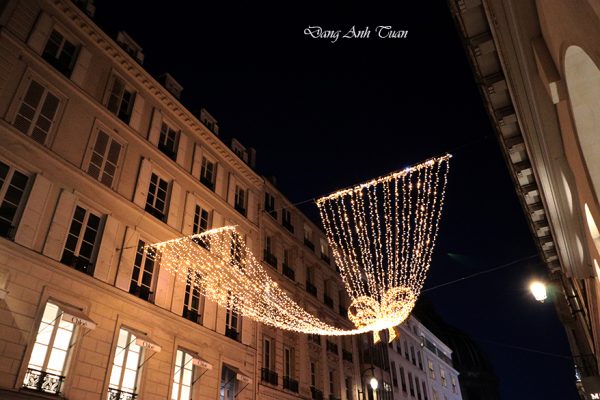
Khu phố sang trọng của Paris được thắp sáng bởi những mặt tiền của các thương hiệu lớn của Pháp và nước ngoài ở đường  Saint Honoré và quảng trường Vendôme vào dịp cuối năm 2025.

Le quartier chic de Paris est illuminé par les façades des grandes marques françaises et étrangères à la rue Saint Honoré et à la place Vendôme à l’occasion de la fin de l’année 2025.

The upscale district of Paris is illuminated by the storefronts of major French and international brands on Saint Honoré Street and Vendôme Square at the end of 2025.

2025_PARIS

[Return PARIS]

Phố Bùi Viện (Saigon Quận 1)


Phố Tây Ba Lô

Quartier des routards européens

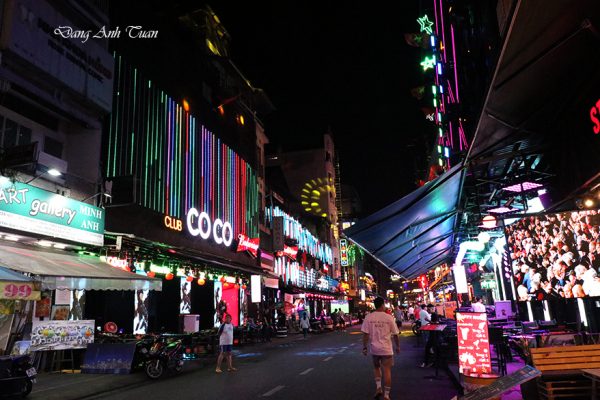
Còn có tên gọi là phố Tây Ba Lô, phố đi bộ Bùi Viện là một khu vui chơi nổi tiếng mà du khách nước ngoài không thể bỏ qua khi đến thành phố Saigon cũng như ở Hanội với khu phố Tạ Hiền. Nó là khu phố không ngủ về đêm và được yêu thích bởi giới trẻ Việt Nam

Etant connu sous le nom de « quartier des routards européens, le quartier piéton de Bùi Viện est un lieu que les touristes étrangers ne peuvent pas manquer lorsqu’ils viennent dans la ville de Saigon comme à Hanoï avec la rue Tạ Hiền. Celui-ci est l’endroit très animé au fil de la nuit et il est fréquenté par la jeunesse vietnamienne.

Also known as Backpacker Street, Bùi Viện Walking Street is a famous entertainment area that foreign tourists cannot miss when coming to Saigon as well as in Hanoi with Tạ Hiền Street. It is a street that never sleeps at night and is loved by young Vietnamese people.

Quartier Bùi Viện

au fil de la nuit

[Return SAIGON]


Exposition immersive de Van Gogh (Triển lãm nhập vai của Van Gogh)

Triển lãm nhập vai  của Van Gogh.

Version française
Version anglaise
Galerie des photos

Triển lãm này hé lộ thế giới nội tâm hỗn loạn, mênh mông và đầy chất thơ mà danh họa đã trải qua ở mọi giai đoạn cuộc đời, với những tác phẩm gợi nhớ về những lần ông lưu trú tại Nuenen, Paris, Arles và Saint-Rémy-de-Provence. Trong những tác phẩm đậm màu sắc và phong cách độc đáo của ông, chúng ta luôn tìm thấy sự giao thoa không ngừng giữa ánh sáng và bóng tối.

Ce qu’on voit dans cette exposition, c’est le monde intérieur  à la fois chaotique, démesuré et poétique que l’artiste a rencontré à chaque étape de sa vie avec ses œuvres évoquant ses séjours à Nuenen, Paris,  Arles et Saint-Rémy de Provence. On trouve toujours dans ses œuvres aux couleurs audacieuses et au style inimitable un échange permanent entre l’ombre et la lumière.  

What we see in this exhibition is the chaotic, excessive, and poetic inner world that the artist encountered at each stage of his life, with works evoking his stays in Nuenen, Paris, Arles, and Saint-Rémy de Provence. His boldly colored works, with their inimitable style, always feature a constant interplay between light and shadow.

Pictures Gallery

[Return MUSEUM]

Menton (Côte d’azur)


Thành phố Menton (Côte d’Azur)

Version française
Version anglaise
Galerie des photos

Được gọi là ngọc trai của nước Pháp,  Menton là một thành phố nằm trên bờ biển Địa Trung Hải ở phía đông nam nước Pháp. Nơi đây nổi tiếng với những bãi biển tuyệt đẹp. Nằm trên sườn đồi, khu phố cổ thời trung cổ của thành phố là nơi tọa lạc của vương cung thánh đường Michel-Archange với tháp chuông  có từ thế kỷ 18 và nhà nguyện trắng Penitents với mặt tiền được trang trí lộng lẫy. Nhờ di sản kiến ​​trúc và thực vật, điều này mang lại cho Menton nhãn  hiệu « Thành phố nghệ thuật và lịch sử » vào năm 1991.

Version française

Étant connue comme la perle de la France, Menton  est une ville située sur la rive méditerranéenne (Côte d’Azur), dans le sud-est de la France. Elle est réputée pour ses plages. Située sur les pentes de la colline, sa vieille ville médiévale abrite la basilique Saint-Michel Archange avec son clocher du XVIIIème  siècle, et la chapelle des Pénitents blancs à la façade superbement  décorée. Grâce à son patrimoine architectural et botanique, cela lui donne le label « Ville d’Art et d’Histoire » en 1991.

Version anglaise

Known as the pearl of France, Menton is a town located on the Mediterranean coast (French Riviera), in the southeast of France. It is renowned for its beaches. Situated on the slopes of the hill, its medieval old town houses the Basilica of Saint Michael the Archangel with its 18th-century bell tower, and the Chapel of the White Penitents with its beautifully decorated facade. Thanks to its architectural and botanical heritage, it was awarded the label « City of Art and History » in 1991.

Galerie des photos

[Return VILLES DE FRANCE]

Le palmier à sucre

Le palmier à sucre (Cây Thốt Nốt)

Version vietnamienne
Version anglaise
Galerie des photos

Analogue au cocotier caractérisant le paysage agraire des régions côtières et deltaïques du Viet Nam, le palmier à sucre est visible surtout  dans les régions frontalières du Vietnam avec le Cambodge. Cet arbre joue un rôle important dans l’économie de la province d’An Giang, en particulier dans ses districts Tịnh Biên et Tri Tôn  et fournit la moitié du sucre consommée par la population locale. Il est appelé sous le nom de « thnot »  par les Khmers qui en ont fait leur arbre national tandis que nous le nommons « cây thốt nốt ». Le palmier à sucre est sans doute originaire du royaume du sud de l’Inde. C’est pour cela  qu’au moment des échanges commerciaux de ce dernier avec  les royaumes indianisés de l’Asie du Sud Est (Thaïlande, Birmanie, Laos, Cambodge, Champa) que s’est développée la culture du Borassus (nom scientifique donné à ce palmier à sucre). Faisant partie de la famille des palmiers, le Borassus apprécie beaucoup  les sols fertiles des diguettes où les couches d’humus nées de l’amoncellement de la boue  et des mauvaises herbes favorisent sa croissance  et il peut vivre jusqu’à 150 ans. Son tronc peut atteindre jusqu’à 35 mètres mais la hauteur moyenne des individus varie entre 18 et 35 m, ce qui lui donne une allure filiforme à l’âge adulte. Par contre son tronc est renflé à la base (1m au maximum pour le diamètre).

La surface du tronc est rugueuse et de couleur gris cendré. On peut récolter le jus du palmier lorsque ses spécimens sont  âgés de plus de 15 ans et ils ont une hauteur de 9 à 10m. C’est le moment préféré des paysans grimpeurs: l’arbre est facile à exploiter. Au-delà de 80 ans, il est risqué de continuer la récolte car l’arbre devient trop haut, les risques  de chute devenant plus fréquents. L’adolescence du palmier à sucre est donc relativement longue, mais lorsqu’il atteint l’âge adulte il peut être exploité pendant cent à cent vingt cinq ans. On a constaté que seule la hauteur de l’arbre limite la durée réelle de cette exploitation. Par contre les grimpeurs expérimentés continuent rarement leur métier au-delà de 40 ans car au-delà  des  maux particuliers liés à leur profession  comme les rhumatismes du genou, il y a le risque d’être handicapé facilement lorsqu’on n’est plus habitué à grimper sur le palmier avec adresse. Pour récolter la sève du palmier à sucre, la réalisation doit avoir lieu uniquement à la saison sèche (de décembre à fin mai). On peut le faire 2 fois par jour, le matin et le soir. Chaque arbre peut fournir jusqu’à 600 litres de sève en une saison, ce qui représente 90 kilos de sucre après transformation.

La sève doit être  extraite  des fleurs blanches ou jaunes se trouvant au sommet de l’arbre, leur  période de floraison étant toujours au printemps et en été. Pour y arriver, le paysan grimpeur doit recourir à une échelle en bambou.  Puis il doit faire une incision dans la tige de la fleur mâle  ou femelle à l’aide d’un couteau spécifique pour faire sortir la sève qu’il recueille au moyen des tubes en bambou. Puis il doit la transformer en sucre  dans les deux heures qui suivent la collecte s’il ne veut pas nuire à sa qualité à cause de la fermentation qui peut être ralentie avec  des tanins de bois. Normalement, le jus du palmier à sucre a une couleur blanchâtre, un goût sucré, gras, légèrement fermenté  et aigre. En prenant le jus du palmier à sucre pour la première fois, beaucoup de gens pensent qu’il n’est pas vraiment  pur à cause du léger goût de fermentation. Ce processus de transformation continue à empirer  au fil de la journée si  les conditions de conservation ne sont pas  bonnes.  C’est pourquoi il est obligé de la transformer immédiatement en sirop. Pour cela, le jus doit être  filtré et cuit durant trois heures  dans un vaste chaudron  avant d’être battu d’une manière  ininterrompue avec un outil en bois traditionnel pour concrétiser la cristallisation. Il sera ensuite tamisé ensuite dans le but d’obtenir une texture cristalline.

Le rônier est une plante à multiple usages. On peut se servir de son  sucre transformé  dans la préparation des plats  destinés aux diabétiques car son indice glycémique est moins élevé que celui des autres sucres.  Son jus est considéré comme une boisson agréable à prendre  car il a un goût acidulé et il devient après quelques heures de fermentation un vin à la saveur fumée. Ses fruits peuvent être consommés frais. Les marchands ambulants  vietnamiens d’origine khmère ont l’habitude de proposer au marché des  gâteaux au palmier à sucre connus sous le nom « akao». La région des Sept Montagnes (Thất Sơn, An Giang) est depuis longtemps réputée  pour ses vastes forêts de palmiers rôniers, une espèce d’arbre étrange qui ne produit des fruits qu’après 15 ans d’existence. Pour les habitants d’ici, le palmier rônier est non seulement une image familière, mais aussi la principale source de revenus pour  de nombreuses familles vietnamiennes. Le palmier rônier est associé au travail pénible et dangereux des grimpeurs. Dès l’aube, les habitants d’ici grimpent sur les imposants palmiers rôniers au risque de leur vie pour extraire  de la  sève  dans la fabrication du sucre et pour cueillir des fruits à vendre  dont la couleur est verte lorsqu’ils sont jeunes et deviennent noirs à maturité.

Nous savons aussi que ce travail est réservé aux pauvres. En faisant le va-et-vient plusieurs fois par jour sur le palmier rônier, le grimpeur  pourra perdre sa vie s’il n’y prend garde. On constate que notre pays a tellement des gens pauvres. Étant un touriste de passage dans cette région, je suis satisfait de pouvoir boire un verre de jus de palmier à sucre  au bord de la route mais en apprenant  en même temps le travail  que le paysan grimpeur accepte de prendre tous les jours au risque de sa vie, cela me fait beaucoup de peine.
Version vietnamienne

Tương tự như cây dừa đặc trưng cho cảnh quan nông nghiệp của vùng ven biển và đồng bằng châu thổ của Việt Nam, cây thốt nốt được nhìn thấy ở các vùng biên giới của Việt Nam với Cao Miên. Cây này giữ vai trò quan trọng trong nền kinh tế của tỉnh An Giang, đặc biệt là ở các huyện Tịnh Biên và Tri Tôn, và cung cấp một nửa số lượng đường tiêu thụ của người dân địa phương. Người Khơ Me gọi nó là « thnot », họ đã biến nó thành cây tiêu biểu quốc gia của họ, trong khi chúng ta gọi nó là « cây thót nốt ».

Cây thốt nốt  có lẽ có nguồn gốc từ vương quốc miền Nam Ấn Độ. Đây là lý do tại sao, vào thời điểm giao thương của vương quốc này với các vương quốc Ấn Độ hóa ở Đông Nam Á (Thái Lan, Miến Điện, Lào, Chân Lạp, Chiêm Thành), việc trồng Borassus (tên khoa học được đặt cho cây cọ đường này) đã được phát triển. Là một phần của họ cọ, Borassus rất thích sống ở đất màu mỡ của các con đê nơi mà  các lớp mùn được tạo ra do sự tích tụ của bùn và cỏ dại nên tạo ra điều kiện cho sự phát triển của nó và nó có thể sống tới 150 năm. Thân cây có thể cao tới 35 mét nhưng chiều cao trung bình của từng cá thể thay đổi  từ 18 đến 35 mét, khiến cây có vẻ ngoài mảnh khảnh khi trưởng thành. Mặt khác, thân cây phình to ở gốc (đường kính tối đa là 1 mét). Bề mặt thân cây thô và có màu xám tro. Nhựa cây cọ có thể được thu hoạch khi mẫu vật của nó hơn 15 năm tuổi và cao từ 9 đến 10 mét.

Đây là thời điểm được nông dân leo cây ưa thích: cây dễ khai thác. Sau 80 năm, việc tiếp tục khai thác sẽ có nhiều sự  rủi ro vì cây đã quá cao và nguy cơ  việc cây  đổ rất  thường xuyên hơn. Do đó, thời kỳ thiếu niên của cây thốt nốt tương đối dài, nhưng khi đạt đến độ tuổi trưởng thành, nó có thể được khai thác từ 100 đến 125 năm. Người ta thấy rằng chỉ có chiều cao của cây mới giới hạn thời gian khai thác thật  sự này. Mặt khác, những người leo cây có kinh nghiệm hiếm khi tiếp tục nghề nghiệp của mình sau 40 tuổi vì ngoài những căn bệnh cụ thể liên quan đến nghề nghiệp như thấp khớp ở đầu gối, họ còn có nguy cơ dễ bị tàn tật khi không còn quen với việc leo cây một cách khéo léo.

Để thu hoạch nhựa (nước ép)  cây thốt nốt, quá trình này chỉ được thực hiện vào mùa khô (từ tháng 12 đến cuối tháng 5). Có thể thực hiện hai lần một ngày, vào buổi sáng và buổi tối. Mỗi cây có thể cung cấp tới 600 lít nhựa cây trong một mùa, tương đương với 90 kí lô  đường sau khi chế biến. Nhựa cây (nước ép)  phải được chiết xuất từ ​​những bông hoa màu trắng hoặc vàng nhạt  nằm ở ngọn cây, thời kỳ ra hoa của chúng luôn là vào mùa xuân và mùa hè. Để đạt được điều này, người nông dân leo cây phải sử dụng thang tre. Sau đó, anh ta phải rạch một đường trên thân hoa đực hoặc hoa cái bằng một con dao chuyên dụng để lấy nhựa cây, sau đó anh ta thu thập nhựa cây (nước ép)  qua các ống tre. Sau đó, anh ta phải chuyển hóa nó thành đường trong vòng hai giờ sau khi thu hoạch nếu không muốn làm hỏng đi chất lượng của nó do quá trình lên men, có thể  chậm lại nhờ dùng tannin gỗ. Thông thường, nước ép thốt nốt có màu trắng, vị ngọt, béo, lên men nhẹ và chua. Khi uống nước thốt nốt lần đầu tiên, nhiều người nghĩ rằng nó không thực sự tinh khiết vì có vị lên men nhẹ. Quá trình chuyển hóa này tiếp tục xấu đi trong ngày nếu điều kiện bảo quản không được tốt. Đó là lý do tại sao anh ta buộc lòng phải biến  đổi nó ngay thành xi-rô. Để làm được điều này, nước thốt nốt  phải được lọc và nấu ba giờ trong một cái vạc lớn trước khi được đánh liên tục sau đó bằng một dụng cụ bằng gỗ truyền thống để đạt được sự kết tinh. Sau đó, nó sẽ được sàng lọc  để có được kết cấu tinh thể.

Cây thốt nốt là một loại cây đa dụng. Đường chế biến của nó có thể được sử dụng để chế biến các món ăn dành cho người  bị tiểu đường vì chỉ số đường huyết của nó thấp hơn các loại đường khác. Nước ép của nó được coi là một thức uống dễ chịu vì nó có vị chua và sau vài giờ lên men, nó trở thành một loại rượu khói. Quả của nó có thể ăn tươi. Những người bán hàng rong người Việt gốc Khơ Me  thường bán bánh thốt nốt được gọi là « akao » ở chợ.

Vùng Thất Sơn (An Giang) từ lâu đã nổi tiếng với những cánh rừng thốt nốt bạt ngàn, một loài cây lạ chỉ có quả sau 15 năm. Đối với người dân địa phương, thốt nốt không chỉ là cảnh tượng quen thuộc mà còn là nguồn thu nhập chính của nhiều gia đình Việt Nam. Cây thốt nốt gắn liền với công việc leo trèo gian khổ và nguy hiểm của những người leo cây. Từ sáng sớm, người dân địa phương bất chấp nguy hiểm trèo lên những cây thốt nốt cao chót vót để lấy nhựa làm đường và hái quả để bán, quả của nó có màu xanh khi còn non và chuyển sang màu đen khi chín. Chúng ta cũng biết rằng công việc này dành riêng cho  những người nghèo khổ. Nếu không cẩn thận, người leo cây có thể mất mạng  như chơi nếu đi qua đi lại nhiều lần trong ngày trên cây thốt nốt. Chúng ta thấy rằng đất nước chúng ta còn có rất nhiều người nghèo. Là một du khách đi qua vùng này,  mình rất  thích thú khi được uống một cốc nước thốt nốt bên lề đường, nhưng đồng thời cũng biết được công việc mà người nông dân leo cây đồng ý đảm nhận mỗi ngày với nguy cơ mất mạng, điều đó khiến  mình cảm thấy buồn không ít.

Version anglaise

Similar to the coconut tree characterizing the agricultural landscape of the coastal and delta regions of Vietnam, the sugar palm is mainly seen in the border regions of Vietnam with Cambodia. This tree plays an important role in the economy of An Giang province, especially in its districts Tịnh Biên and Tri Tôn, and provides half of the sugar consumed by the local population. It is called « thnot » by the Khmers, who have made it their national tree, while we call it « cây thốt nốt. » The sugar palm is undoubtedly native to the southern kingdom of India. This is why, during the commercial exchanges of the latter with the Indianized kingdoms of Southeast Asia (Thailand, Burma, Laos, Cambodia, Champa), the cultivation of Borassus (the scientific name given to this sugar palm) developed. Belonging to the palm family, Borassus greatly appreciates the fertile soils of the dikes where layers of humus formed from the accumulation of mud and weeds favor its growth, and it can live up to 150 years. Its trunk can reach up to 35 meters, but the average height of individuals varies between 18 and 35 meters, giving it a slender appearance in adulthood. However, its trunk is swollen at the base (up to 1 meter in diameter).

The surface of the trunk is rough and ash gray in color. The juice of the palm tree can be harvested when the specimens are over 15 years old and have a height of 9 to 10 meters. This is the favorite time for the climbing farmers: the tree is easy to exploit. Beyond 80 years, it is risky to continue harvesting because the tree becomes too tall, and the risk of falling becomes more frequent. The adolescence of the sugar palm is therefore relatively long, but when it reaches adulthood, it can be exploited for one hundred to one hundred and twenty-five years. It has been observed that only the height of the tree limits the actual duration of this exploitation. However, experienced climbers rarely continue their profession beyond 40 years because, in addition to specific ailments related to their profession such as knee rheumatism, there is the risk of becoming easily disabled when one is no longer accustomed to climbing the palm tree skillfully. To harvest the sap of the sugar palm, the operation must take place only during the dry season (from December to the end of May). It can be done twice a day, in the morning and in the evening. Each tree can provide up to 600 liters of sap in one season, which represents 90 kilograms of sugar after processing.

The sap must be extracted from the white or yellow flowers found at the top of the tree, their blooming period always being in spring and summer. To do this, the climbing farmer must use a bamboo ladder. Then he must make an incision in the stem of the male or female flower using a specific knife to let the sap flow out, which he collects using bamboo tubes. He must then transform it into sugar within two hours after collection if he does not want to harm its quality due to fermentation, which can be slowed down with wood tannins. Normally, the sugar palm juice has a whitish color, a sweet, rich, slightly fermented, and sour taste. When tasting sugar palm juice for the first time, many people think it is not really pure because of the slight fermentation taste. This transformation process continues to worsen throughout the day if the storage conditions are not good. That is why it must be immediately transformed into syrup. For this, the juice must be filtered and cooked for three hours in a large cauldron before being continuously stirred with a traditional wooden tool to facilitate crystallization. It will then be sifted to obtain a crystalline texture.

The rônier is a plant with multiple uses. Its processed sugar can be used in the preparation of dishes intended for diabetics because its glycemic index is lower than that of other sugars. Its juice is considered a pleasant drink to consume because it has a tangy taste and, after a few hours of fermentation, it becomes a wine with a smoky flavor. Its fruits can be eaten fresh. Vietnamese street vendors of Khmer origin are accustomed to offering sugar palm cakes known as « akao » at the market. The Seven Mountains region (Thất Sơn, An Giang) has long been renowned for its vast forests of rônier palms, a strange species of tree that only produces fruit after 15 years of existence. For the local inhabitants, the rônier palm is not only a familiar image but also the main source of income for many Vietnamese families. The rônier palm is associated with the hard and dangerous work of climbers. At dawn, the locals climb the towering rônier palms at the risk of their lives to extract sap for sugar production and to pick fruits to sell, which are green when young and turn black when mature.

We also know that this work is reserved for the poor. By going back and forth several times a day on the sugar palm, the climber could lose his life if he is not careful. It is evident that our country has so many poor people. As a tourist passing through this region, I am happy to be able to drink a glass of sugar palm juice by the roadside, but at the same time learning about the work that the climbing farmer accepts to do every day at the risk of his life makes me very sad.

Galerie des photos

[Return Fleurs du Monde]

Notre Dame de Paris restaurée (Nhà thờ Đức Bà được sùng tu lại)

Notre Dame de Paris entièrement restaurée depuis fin 2024

Nhà thờ Đức Bà được sùng tu lại hoàn toàn từ cuối năm 2024

Notre Dame de Paris completely restored late 2024

[Return PARIS et ses sites]