
夏La Dynastie Xia (Nhà Hạ)
Version française
Version anglaise
Nhờ sự hỗ trợ của khoa học công nghệ hiện đại, sự lan rộng của nền văn minh Lương Chử cũng đã được xác nhận bởi khảo cổ học địa chất. Sự sụp đổ của nền văn hóa Lương Chử và các nền văn hóa thời kỳ đồ đá mới khác ở hạ lưu sông Dương Tử như Thạch Gia Hà là do biến đổi khí hậu và lũ lụt liên tục, buộc cư dân phải di cư. Nhiều vùng cao nguyên nội địa Trung Quốc vẫn còn tồn tại, rất thích hợp cho việc di cư nội địa của người dân khi mực nước biển dâng cao. Do đó, số lượng người sống sót sau thảm họa này vẫn còn khá lớn. Xét về địa hình sau trận biển động, một bộ phận dân cư Lương Chử đã di chuyển về phía bắc đến khu vực Nhị Lý Đầu thuộc quận Yển Sư (Hà Nam) bằng đường bộ hay bắng đường thủy với thuyền hay xuồng độc mộc được chế tạo từ những khối gỗ lớn. Vào thời điểm này, nền văn hóa Nhị Lý Đầu (Erlitou) đã đạt đến một quy mô nhất định với triều đại nhà Hạ.
Đây cũng là triều đại đầu tiên được đề cập khá chi tiết trong các thư tịch cổ còn lưu truyền. Danh sách các vị vua nhà Hạ đã được ghi lại trong « Trúc thư kỷ niên » (Bamboo Annals) và « Sử ký » của Tư Mã Thiên. Có một thời, nhà Hạ và nhà Thương đều từng bị đặt dấu hỏi. Nhưng nhờ việc phát hiện và giải mã thành công các văn tự trên giáp cốt (xương và mai rùa) trong giai đoạn 1930-1950 mà người ta mới biết rõ chi tiết về xã hội và các sự kiện quốc gia thời Thương nên tính xác thực của danh sách nhà Thương trong sử ký không còn là môt nghi vấn nữa. Ngược lại ngoại trừ một vài ký tự tượng hình đơn lẻ khắc trên các bình đựng rượu bằng gốm người ta vẫn chưa tìm thấy bất kỳ dạng văn tự nào của thời Hạ. Vì vậy nhiều học giả phương Tây vẫn coi nhà Hạ là triều đại mang tính huyền thoại. Cũng dưới triều đại nhà Hạ nầy chế độ nhường ngôi cho người hiền tài không còn nữa. Sự kiện này đã mở ra kỷ nguyên thể thức cai trị « cha truyền con nối » tại Trung Quốc.
Triều đại đầu tiên của Trung Quốc rất có khả năng bắt nguồn từ một sự kiện thiên nhiên có thật trong lịch sử. Việc phát hiện các di cốt người gắn liền với thảm họa lớn này, kết hợp với phương pháp định tuổi bằng đồng vị phóng xạ (14C) và dữ liệu địa tầng, đã cho phép xác định thời điểm xảy ra sự kiện là năm 1920 TCN, qua đó giúp sự dung hòa niên đại lịch sử và khảo cổ học. Trận lụt này cho thấy triều đại vốn được xem là huyền thoại cùng thời cai trị của vua Đại Vũ, đã bắt đầu sớm hơn từ hai đến ba thế kỷ so với mốc thời gian 2200 TCN thường được chấp nhận trước đây. « Nếu trận đại hồng thủy này thực sự xảy ra, thì nhiều khả năng triều đại nhà Hạ đã thực sự tồn tại, » David Cohen thuộc Khoa Nhân học, Đại học Quốc gia Đài Loan tại Đài Bắc, một trong những tác giả của bài báo đăng trên tạp chí « Science (Khoa học)» (ngày 11 tháng 8 năm 2016), cho biết trong một cuộc phỏng vấn.
Lãnh địa trực thuộc nhà vua là môt « siêu quốc gia » và là trung tâm của đế chế. Nhà vua đóng vai trò là chúa tể hoặc người đứng đầu danh nghĩa của tất cả các quốc gia trong thế giới Trung Hoa. Các chư hầu và lãnh địa phong kiến có nghĩa vụ cống nạp cho nhà vua và phải chầu tại triều đình khi được triệu tập. Nhà vua thực thi công lý thay mặt cho Trời (« thế Thiên hành đạo« ) và trừng phạt những kẻ bất tuân. Các chư hầu và lãnh địa này không có chủ quyền trọn vẹn. Một số người đứng đầu các lãnh địa này từng giữ chức vụ trong triều đình nhà vua. Thí dụ lãnh chúa Tiết (Xue) từng giữ chức Xa chính (phụ trách xe cộ), còn lãnh chúa Thương (Shang) từng giữ chức Tư thổ (phụ trách đất đai) và Tư thủy (phụ trách thủy lợi). Tuy nhiên, các thực thể chính trị này không thuộc quyền sở hữu của nhà Hạ, cũng không phải là chính quyền địa phương của nhà Hạ. Họ có quân đội riêng và quyền tự chủ trong các vấn đề kinh tế – xã hội, nghĩa là họ đại diện cho các nền văn hóa khác biệt cùng tồn tại song song với văn hóa Hạ. Bởi vậy qua các nghiên cứu khảo cổ thì thấy có sự đồng nhất đáng kể trong các di chỉ thuộc văn hóa Nhị Lý Đầu (Erlitou). Nó được phổ biến rộng rãi trên một vùng lãnh thổ lớn, nơi từng tồn tại sáu nền văn hóa khác nhau trong thời kỳ văn hóa Long Sơn (Long Shan).
Nền văn hóa này được đặt tên theo một di chỉ được phát hiện tại thôn Nhị Lý Đầu thuộc quận Yến Sư , tỉnh Hà Nam, phổ biến rộng rãi trên địa bàn nay thuộc hai tỉnh Hà Nam và Sơn Tây, và sau đó lan đến các vùng nay thuộc các tỉnh Thiểm Tây và Hồ Bắc. Dù Nhị Lý Đầu phát triển nhanh chóng nhưng nó chỉ trở thành một trung tâm khu vực, xong chưa phải là nền văn minh đô thị. Văn hóa Nhị Lý Đầu thuộc về Triều Hạ. Triều đại nầy tổng cộng truyền được 14 đời với 17 vua, kế tục trong khoảng 471 năm, bị triều Thương tiêu diệt 1751 trước Công Nguyên. Triều Hạ được xem là vương triều đầu tiên theo lịch sử truyền thống Trung Quốc, có địa vị lịch sử đáng kể. Vua Đại Vũ là vị vua đầu tiên của nhà Hạ. Sử gia Tư Mã Thiên có nhắc đến vị vua nầy trong sử ký. Ông có công trị thủy để ổn định cuộc sống và phát triển việc cày cấy. Khác với cha mình là Gun (Cổn), ông cố gắng bảo vệ Trung Quốc khỏi lũ lụt bằng cách xây dựng các con đê. Vũ không tìm cách giam giữ nước mà ông đã bố trí các đường thoát nước nhằm giảm thiểu tình trạng tràn bờ. Từ các kênh đào, một hệ thống tưới tiêu đã được thiết lập để thúc đẩy việc bón màu cho đất đai. Ông được vua Thuấn nhường ngôi lại lập ra nhà Hạ (2255 TCN – 1751 TCN) lúc mà văn hóa Lương Chử đã biến mất. Người Hán đời sau thường tự xưng là « Hoa Hạ » và từ nầy trở thành danh từ đại diện cho Trung Quốc.
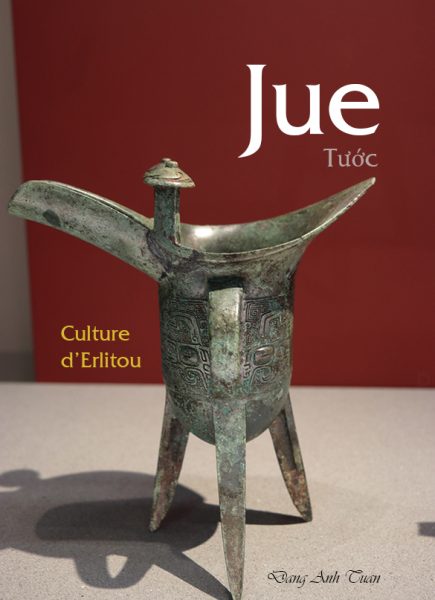
Trong văn hóa Lý Nhị Đầu, gỗ được sử dụng rộng rãi trong việc xây dựng các cung điện. Việc lựa chọn vật liệu này nhằm mục đích phô trương uy tín của tầng lớp thống trị dựa trên sức mạnh và sự đoàn kết của thị tộc. Vì vậy nên không có những công trình đồ sộ mang tính chất phù du. Sự phân hóa xã hội cũng được thể hiện rõ nét qua các loại hình nhà ở và sự đa dạng của đồ tùy táng. Các nhà khảo cổ đã phát hiện nhiều hiện vật quan trọng tại các di chỉ có niên đại từ thời nhà Hạ. Những phát hiện này bao gồm đồ gốm có khắc các ký hiệu cho thấy sự phát triển nhất định của chữ viết, các món đồ ngọc quý dùng trong nghi lễ, cùng những vật dụng bằng đồng có kỹ thuật chế tác ở mức khiêm tốn chẳng hạn như lưỡi câu, dùi, đầu mũi tên, vũ khí có lưỡi sắc và các vật dụng tương tự. Chính ở di chỉ Nhị Lý Đầu vào năm 1973, bốn chiếc bình đồng đầu tiên, có niên đại khoảng năm 1600, được tìm thấy: đó là bốn chiếc cốc hay tước « jue » ba chân với hình dáng góc cạnh cùng thân cốc mỏng manh và không có trang trí.
Mặc dù có vẻ ngoài hơi thô sơ, những chiếc bình nhỏ này thể hiện đầy đủ các đặc điểm riêng biệt của ngành luyện kim Trung Hoa, đặc biệt là kỹ thuật đúc ngược trong các khuôn đất sét phân đoạn. Hình dáng của chúng báo hiệu sự phát triển sau này của một nghệ thuật mang tính chuyên biệt và được quy chuẩn ở mức độ cao thông qua chất liệu đồng. Nghệ thuật này từ đó trở thành một phương thức biểu đạt ưu tiên và được trân trọng bởi một tầng lớp tinh hoa hạn chế (giai cấp các thầy tế–pháp sư) trong một xã hội ngày càng có tính thứ bậc.
Các hiện vật bằng đồng thời Nhị Lý Đầu (Erlitou) hầu như hoàn toàn không có hoa văn trang trí. Chúng được chế tác bằng phương pháp đúc thay vì gò (nện búa), mô phỏng hình dáng của các loại đồ gốm. Các hiện vật này được đúc thành từng phần riêng biệt bằng khuôn đất sét. Việc sản xuất đồ đồng đúc đòi hỏi người thợ phải có lò nung nhiệt độ cao và nguồn kim loại nguyên liệu dồi dào. Là những cổ vật lâu đời nhất từng được phát hiện tại Trung Quốc, các hiện vật bằng đồng này cho phép xác định chính xác thời điểm khởi đầu của Thời đại Đồ đồng gắn liền với văn hóa Nhị Lý Đầu (Erlitou). Giai đoạn này nổi bật với những bước tiến vượt bậc về công nghệ, đồng thời đánh dấu quá trình chuyển đổi liên tục từ thời kỳ Đồ đá mới sang thời kỳ Đồ đồng trong khuôn khổ văn hóa Nhị Lý Đầu. Do đó, dựa trên những hiểu biết hiện tại về sự phát triển của kỹ thuật luyện kim ở Trung Quốc, có thể coi Thời đại Đồ đồng của Trung Quốc tương ứng với thời kỳ Tam Đại (các triều đại Hạ, Thương và Chu) trong lịch sử nước này.
Grâce au soutien de la science et de la technologie moderne, la diffusion de la civilisation Liangzhu a également été confirmée par la géo-archéologie. L’effondrement de la culture Liangzhu et d’autres cultures néolithiques dans la région inférieure du fleuve Yangtsé comme celle de Shijiahé est dû au changement climatique et aux inondations continues, forçant ainsi les habitants à fuir. De nombreuses zones de plateau à l’intérieur de la Chine continentale sont restées intactes, ce qui favorisait la migration interne des populations lorsque le niveau de la mer s’est élevé. Par conséquent, le nombre de survivants après cette catastrophe était encore assez important. En tenant compte de la réalité du terrain après l’inondation, une partie de la population de Liangzhou a migré vers le nord, vers la région d’Erlitou. À cette époque, la culture Erlitou avait déjà atteint une certaine envergure avec la dynastie Xia.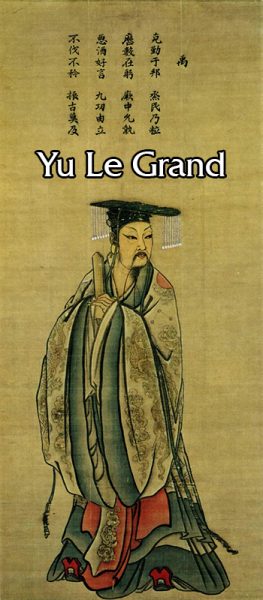
C’est également la première dynastie dont les détails sont assez précisément mentionnés dans les anciens documents encore conservés. La liste des rois de la dynastie Xia a été enregistrée dans les « Annales de bambou » et dans les « Shiji » (Mémoires historiques) de l’historien chinois Sima Qian. Il fut un temps où les dynasties Xia et Shang étaient toutes deux remises en question. Mais grâce à la découverte et au déchiffrement réussi des inscriptions sur les os et les plastrons de tortue entre les années 1930 et 1950, on a pu connaître en détail la société et les événements nationaux de l’époque Shang, ce qui a levé tout doute sur l’authenticité de la liste des rois Shang dans les annales historiques. En revanche, à l’exception de quelques caractères hiéroglyphiques isolés gravés sur des vases à vin en céramique, aucun type d’écriture datant de l’époque Xia n’a encore été retrouvé. C’est pourquoi de nombreux chercheurs occidentaux considèrent encore la dynastie Xia comme légendaire. C’est également sous la dynastie Xia que le système de transmission du pouvoir aux personnes vertueuses a pris fin. Cet événement a inauguré une ère de pouvoir héréditaire en Chine.
La première dynastie chinoise trouve probablement son origine dans un événement naturel historique avéré. La découverte de restes humains liés à cette catastrophe majeure et leurs datations radiocarbones 14C, associés aux données stratigraphiques ont permis d’en fixer la date à 1920 avant notre ère, réconciliant ainsi chronologies historiques et archéologiques. Ce déluge ferait débuter cette dynastie mythique, et le règne de l’empereur Yu, deux à trois siècles avant la date traditionnellement retenue de 2200 avant notre ère. « Si cette grande crue s’est véritablement produite, il est probable que la dynastie Xia a réellement existé », a déclaré lors d’une interview David Cohen, du département d’anthropologie de l’Université nationale de Taïwan, à Taipeh, un des cosignataires de l’article publié dans Science (11 août 2016).
Le territoire directement soumis au roi était une entité supranationale et le centre de l’Empire. Le roi jouait le rôle de seigneur ou de chef nominal de tous les pays du monde chinois. Les vassaux et fiefs féodaux avaient l’obligation de verser un tribut au roi et devaient se présenter à la cour lorsqu’ils y étaient convoqués. Le roi rendait la justice au nom du Ciel (« Thế Thiên Hành Đạo ») et punit les récalcitrants. Ces vassaux et territoires ne jouissaient pas d’une pleine souveraineté. Certains dirigeants de ces territoires avaient autrefois occupé des fonctions à la cour du roi. Par exemple, le seigneur Tiết (Xue) a été chargé de la fonction de chef des chars (responsable des véhicules), tandis que le seigneur Thương (Shang) a exercé la fonction de responsable des terres (Tư thổ) et de responsable de l’irrigation (Tư thủy). Cependant, ces entités politiques n’étaient pas la propriété de la dynastie Xia, ni des autorités locales de la dynastie Xia. Elles disposaient de leurs propres armées et d’une autonomie dans les affaires économiques et sociales, ce qui signifie qu’elles représentaient des cultures distinctes coexistant parallèlement à la culture Xia. C’est pourquoi, à travers les recherches archéologiques, on observe une homogénéité notable dans les sites relevant de la culture d’Erlitou (Nhị Lý Đầu). Elle s’est largement diffusée sur un vaste territoire où avaient coexisté six cultures différentes durant la période de la culture de Longshan (Long Sơn).
Cette culture tire son nom d’un site découvert dans le village d’Erlitou, situé dans le district de Yanshi (province du Henan). Elle s’étendait sur les territoires correspondant aux actuelles provinces du Henan et du Shanxi, avant de gagner des régions faisant aujourd’hui partie du Shaanxi et du Hubei. Bien que la culture d’Erlitou se soit développée rapidement pour devenir un centre régional, elle ne constituait pas une civilisation urbaine à part entière. Elle est associée à la dynastie Xia. Cette dynastie a connu dix-sept rois répartis sur quatorze générations et a duré environ 471 ans avant d’être renversée par la dynastie Shang en 1751 av. J.-C. Dans l’historiographie chinoise traditionnelle, la dynastie Xia est considérée comme la première dynastie et revêt une importance historique majeure. Yu le Grand fut le premier souverain de la dynastie Xia. L’historien chinois Sima Qian le mentionne dans ses « Mémoires historiques ». On a attribué à You la maîtrise des crues dans le but d’améliorer les conditions de vie des gens et développer l’agriculture. Contrairement à son père Gun (Cổn) qui tenta de protéger la Chine des inondations en construisant des digues, You ne chercha pas à emprisonner l’eau mais il aménagea des voies d’écoulement afin de minimiser les débordements. À partir des canaux, un système d’irrigation fut mis en place afin de favoriser la fertilisation des terres.
C’est pourquoi l’empereur Shun lui céda le trône. Il fonda ainsi la dynastie Xia (2255 av. J.-C. – 1751 av. J.-C.), à une époque où la culture de Liangzhu avait déjà disparu. Les Han des générations suivantes se désignaient toujours eux-mêmes comme « Hua Xia ». Ce terme devient ainsi un nom représentant la Chine
Dans la culture d’Erlitou, le bois était largement utilisé dans la construction des palais. Le choix de ce matériau avait pour objectif d’afficher le prestige de la classe dominante, fondé sur la force et la cohésion du clan. Il n’existait donc pas de constructions grandioses à caractère éphémère. La stratification sociale se manifestait également très nettement à travers les types d’habitations et la diversité des objets funéraires. Les archéologues ont mis au jour de nombreux artefacts importants sur des sites datant de la dynastie Xia. Ces découvertes comprennent des poteries gravées de signes indiquant un certain développement de l’écriture, des objets précieux en jade utilisés dans les rites, ainsi que des ustensiles en bronze dont la technique de fabrication reste modeste, tels que des hameçons, des poinçons, des pointes de flèches, des armes tranchantes et des objets analogues. C’est précisément sur le site d’Erlitou qu’en 1973, les quatre premières vases en bronze, datées d’environ 1600, ont été découvertes : il s’agit de quatre coupes ou gobelets « jue » à trois pieds, aux formes anguleuses et aux parois minces et dépourvus de décor.
Malgré leur aspect un peu frustre, ces petites vases présentent tous les caractères distinctifs de la métallurgie chinoise, notamment la technique de la fonte renversée dans des moules d’argile segmentés. Leur forme préfigure le développement ultérieur d’un art hautement spécialisé et codifié à travers le bronze. Cet art est devenu ainsi un mode d’expression privilégié et apprécié par une élite restreinte (la classe des prêtes-chamans) dans une société de plus en plus hiérarchisée.
Les objets en bronze de l’époque Erlitou sont presque totalement dépourvus de motifs décoratifs. Ils ont été façonnés par la technique de la fonte plutôt que par le martelage dans l’imitation de la forme des céramiques. Ces objets ont été moulés en différentes parties distinctes à l’aide de moules en argile. La production de bronzes moulés exigeait que l’artisan dispose de fours à haute température et de ressources abondantes en métal brut. Etant les plus anciennes antiquités jamais découvertes en Chine, ces objets en bronze permettent de déterminer le début de l’âge du Bronze lié à la culture Erlitou. Il s’agit d’une phase de profondes innovations technologiques marquant également une transition continue de l’époque néolithique à l’âge du Bronze dans la culture d’Erlitou. Ainsi, en nous fondant sur les connaissances actuelles du développement de la métallurgie en Chine, nous pouvons considérer que l’âge du Bronze chinois correspond à la période des Trois Dynasties (Xia, Shang, Zhou) dans l’histoire de la Chine.
Thanks to the support of modern science and technology, the spread of Liangzhu civilization has also been confirmed by geo-archaeology. The collapse of the Liangzhu culture and other Neolithic cultures in the lower Yangtze River region, such as Shijiahé, was due to climate change and continuous flooding, thus forcing the inhabitants to flee. Many plateau areas in inland mainland China remained intact, which facilitated internal population migration when sea levels rose. Therefore, the number of survivors after this catastrophe was still quite large. Taking into account the post-flood terrain conditions, some of the Liangzhou population migrated northwards to the Erlitou region. At that time, Erlitou culture had already reached a certain scale with the Xia dynasty.
It is also the first dynasty whose details are mentioned with sufficient precision in ancient documents that have been preserved. The list of the kings of the Xia dynasty was recorded in the “Bamboo Annals” and in the “Shiji” (Historical Records) by the Chinese historian Sima Qian. There was a time when both the Xia and Shang dynasties were called into question. But thanks to the discovery and successful deciphering of inscriptions on bones and turtle plastrons between the 1930s and 1950s, it became possible to know in detail the society and national events of the Shang period, which dispelled any doubt about the authenticity of the list of Shang kings in the historical annals. By contrast, with the exception of a few isolated hieroglyphic characters engraved on ceramic wine vessels, no form of writing dating from the Xia period has yet been found. This is why many Western scholars still consider the Xia dynasty to be legendary. It was also under the Xia dynasty that the system of transferring power to virtuous people came to an end. This event inaugurated an era of hereditary power in China.
The first Chinese dynasty probably finds its origin in a known historical natural event. The discovery of human remains linked to this major catastrophe and their 14C radiocarbon dating, combined with stratigraphic data, made it possible to fix its date at 1920 BCE, thus reconciling historical and archaeological chronologies. This flood would mark the beginning of this mythical dynasty and the reign of Emperor Yu, two to three centuries earlier than the traditionally accepted date of 2200 BCE. “If this great flood really occurred, it is likely that the Xia dynasty actually existed,” said David Cohen of the Department of Anthropology at the National University of Taiwan in Taipei, one of the co-authors of the article published in Science (11 August 2016), during an interview.
The territory directly subject to the king was a supranational entity and the center of the Empire. The king played the role of lord or nominal leader of all the lands of the Chinese world. Vassals and feudal fiefs were obliged to pay tribute to the king and had to present themselves at court when summoned. The king dispensed justice in the name of Heaven (“Thế Thiên Hành Đạo”) and punished those who defied him. These vassals and territories did not enjoy full sovereignty. Some leaders of these territories had previously held positions at the king’s court. For example, Lord Tiết (Xue) was assigned the role of chief of chariots (responsible for vehicles), while Lord Thương (Shang) held the position of overseer of lands (Tư thổ) and overseer of irrigation (Tư thủy). However, these political entities were not the property of the Xia dynasty, nor of the local authorities of the Xia dynasty. They had their own armies and autonomy in economic and social affairs, which means they represented distinct cultures coexisting alongside Xia culture. This is why, through archaeological research, one observes a notable homogeneity in the sites belonging to the Erlitou (Nhị Lý Đầu) culture. It spread widely over a vast territory where six different cultures had coexisted during the Longshan (Long Sơn) period.
This culture takes its name from a site discovered in the village of Erlitou, located in the Yanshi district (Henan province). It extended over territories corresponding to the present-day provinces of Henan and Shanxi, before reaching regions that are now part of Shaanxi and Hubei. Although the Erlitou culture developed rapidly to become a regional center, it did not constitute a fully fledged urban civilization. It is associated with the Xia dynasty. This dynasty had seventeen kings over fourteen generations and lasted about 471 years before being overthrown by the Shang dynasty in 1751 BC. In traditional Chinese historiography, the Xia dynasty is considered the first dynasty and holds major historical significance. Yu the Great was the first ruler of the Xia dynasty. The Chinese historian Sima Qian mentions him in his “Historical Records.” Yu is credited with controlling floods in order to improve people’s living conditions and develop agriculture. Unlike his father Gun (Cổn), who tried to protect China from floods by building dikes, Yu did not seek to imprison the water but instead created drainage channels to minimize overflowing. From these canals, an irrigation system was put in place to promote the fertilization of the land.
That is why Emperor Shun ceded the throne to him. In this way he founded the Xia dynasty (2255 BC – 1751 BC), at a time when the Liangzhu culture had already disappeared. The Han of later generations still referred to themselves as “Hua Xia”. This term thus became a name representing China
In Erlitou culture, wood was widely used in the construction of palaces. The choice of this material aimed to display the prestige of the ruling class, founded on the strength and cohesion of the clan. There were therefore no grandiose constructions of a temporary nature. Social stratification also manifested itself very clearly through the types of dwellings and the diversity of funerary objects. Archaeologists have uncovered many important artifacts at sites dating from the Xia dynasty.
These discoveries include pottery engraved with signs indicating a certain development of writing, precious jade objects used in rites, as well as bronze utensils whose manufacturing technique remains modest, such as fishhooks, awls, arrowheads, cutting weapons and similar objects. It was precisely on the Erlitou site that in 1973 the first four bronze vases, dated to around 1600, were discovered: they consist of four “jue” cups or goblets with three legs, angular shapes, thin walls and devoid of decoration.
Despite their somewhat rough appearance, these small vases display all the distinctive characteristics of Chinese metallurgy, notably the technique of inverted casting in segmented clay molds. Their form foreshadows the subsequent development of a highly specialized and codified art through bronze. This art thus became a privileged mode of expression appreciated by a restricted elite (the class of priest-shamans) in an increasingly hierarchical society.
The bronze objects from the Erlitou period are almost completely devoid of decorative motifs. They were shaped using casting techniques rather than hammering, in imitation of the forms of ceramics. These objects were cast in different, separate parts using clay molds. The production of cast bronzes required that the artisan have high‑temperature furnaces and abundant resources of raw metal. Being the oldest antiquities ever discovered in China, these bronze objects make it possible to determine the beginning of the Bronze Age associated with the Erlitou culture. This is a phase of profound technological innovations that also marks a continuous transition from the Neolithic period to the Bronze Age in Erlitou culture. Thus, based on current knowledge of the development of metallurgy in China, we can consider that the Chinese Bronze Age corresponds to the period of the Three Dynasties (Xia, Shang, Zhou) in Chinese history.
Bibliographie:
Maurizio Scarpari : Chine ancienne. Des origines à la dynastie Tang . Edition Gründ
Corinne Debaine-Francfort : La redécouverte de la Chine ancienne. Edition Découvertes Gallimard Archéologie 1998.
Victor Sit : Xia Dynasty: Civilisation in the Early Bronze Age. Xia dynasty set the foundation for China’s civilization.