
 Les estampes du monde flottant
Version française
Version anglaise
Nghệ thuật vẽ các bức hình của thế giới trôi nổi được sinh ra ở thời Edo, một thời kỳ mà con người luôn tìm kiếm hoan lạc mà cũng là thời kỳ của Mạc chúa Tokugawa đã thành công thống nhất xứ Phù Tang và đóng đô ở Edo nay là thủ đô Tokyo. Các bức hình vẽ nầy đã ảnh hưởng rất nhiều đến những hoạ sĩ nổi tiếng như Matisse, Monet và Van Gogh. Các bức hình vẽ nầy phản ảnh một thế giới sôi động và phức tạp với những thú vui phù du và tinh tế mà giới giai cấp tư sản ở thành thị thường ưa thích trong cuộc sống hằng ngày như ca kịch, thơ hay bên cạnh các kỹ nữ.
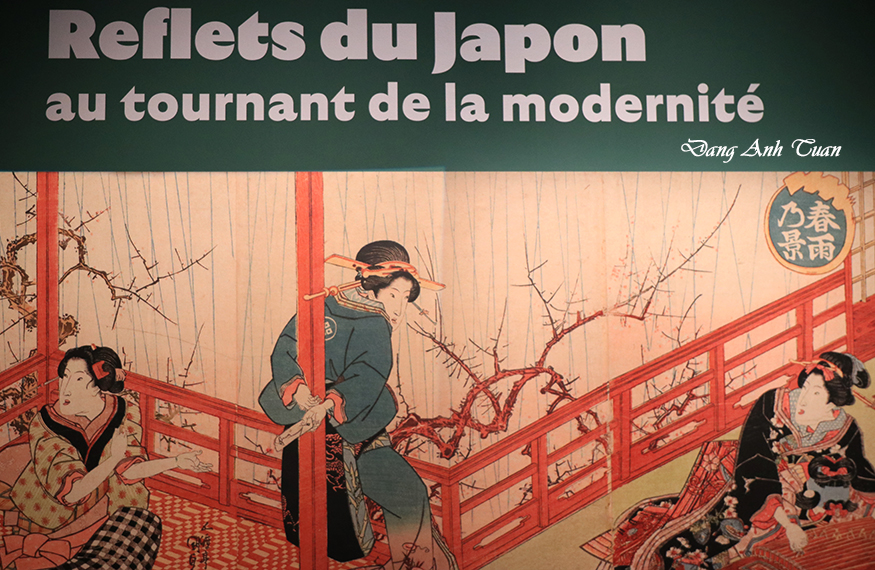
Kỹ thuật in khắc hình trên gỗ cho phép sản xuất hàng loạt và phân phối những hình ảnh rẻ tiền và định dạng khác nhau, ban đầu nhằm mục đích quảng cáo. Kỹ thuật nầy bắt đầu được thực hiện vào đầu thế kỷ XIX bởi các nghệ sĩ đến từ trường Utagawa (Kuniyoshi, Kunishada) mà một số tác phẩm được chọn và trưng bày gần đây bởi Bảo tàng Cernuschi ở Paris với tựa đề « Những phản ảnh của Nhật Bản bước vào thời kỳ tân tiến ».
L’art de peindre des images du monde flottant (ou ukiyo-e) est né à l’époque d‘Edo, une période où les gens cherchaient toujours le bonheur, mais c’est aussi l’époque où le shogun Tokugawa a réussi à unifier le Japon et à fonder la ville d’Edo qui devient aujourd’hui la capitale de Tokyo. Ces estampes ont beaucoup influencé des peintres célèbres occidentaux comme Matisse, Monet et Van Gogh. Ces peintures reflètent un monde effervescent et complexe avec des plaisirs subtils et éphémères que la bourgeoisie urbaine appréciait souvent dans la vie quotidienne comme le théâtre, la poésie ou encore la compagnie des courtisanes.
La technique de l’estampe sur bois facilitant la production et la diffusion de masse de ces images peu onéreuses et sous des formats différents a pour but de servir la publicité. Elle commence à se réaliser au début du XIXème siècle avec des illustres artistes issus de l’école Utagawa (Kuniyoshi, Kunishada) dont certaines œuvres ont été choisies et exposées pour le thème intitulé « Reflets du Japon au tournant de la modernité » du musée Cernuschi (Paris).

The art of painting images of the floating world (or ukiyo-e) was born in the Edo period, a time when people were always seeking happiness, but it was also the era when the Tokugawa shogun succeeded in unifying Japan and founding the city of Edo, which today becomes the capital Tokyo. These prints greatly influenced famous Western painters such as Matisse, Monet, and Van Gogh. These paintings reflect an effervescent and complex world with subtle and ephemeral pleasures that the urban bourgeoisie often enjoyed in daily life, such as theater, poetry, or the company of courtesans.
The woodblock printing technique, facilitating the mass production and dissemination of these inexpensive images in various formats, aimed to serve advertising. It began to take shape at the beginning of the 19th century with illustrious artists from the Utagawa school (Kuniyoshi, Kunishada), some of whose works were selected and exhibited for the theme entitled « Reflections of Japan at the Turn of Modernity » at the Cernuschi Museum (Paris).