
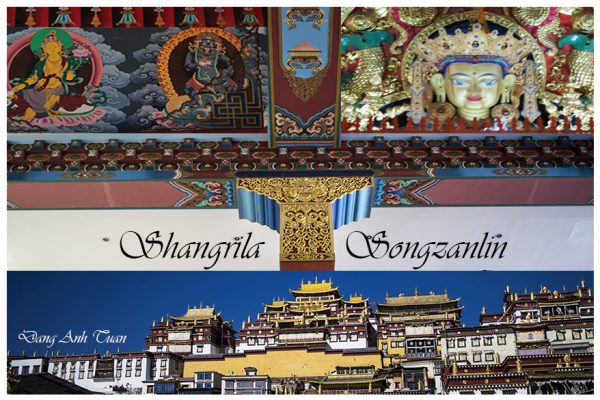
Tu viện Tùng Tán Lâm
Version française
Version anglaise
Galerie des photos
Shangrila nó không những là trung tâm của ba dòng sông lớn Dương Tử, Lan Thương, đoạn đầu của dòng Mékong và Nộ Giang (sông Thanlwin). Nó còn có nghĩa là địa điểm của vận mệnh và sự may mắn theo ngôn ngữ của người Tạng.
Đây cũng là một thế giới riêng biệt được mang tên Shangri-La trong chuyến du lịch gần đây của mình ở tỉnh Vân Nam, gần biên giới Trung Quốc-Tây Tạng (cuối tháng 1 năm 2026) với chủ đích tìm hiểu dưới gốc độ tâm linh Phật giáo Mật Tông và khám phá cao nguyên huyền bí. Nó còn là thế giới đã mất được mô tả trong tiểu thuyết của James Hilton. Chính tại đây, m ình tìm thấy một bầu không khí độc đáo nhờ sự hiện diện của người dân Tạng với các ngôi làng cổ và phong tục truyền thống của họ như các nhất là có một công trình kiến trúc phật giáo Tây Tạng độc đáo có hơn 300 tuổi đời với tu viện Tùng Tán Lâm được xem nh ư là Tiểu Potola so sánh với Potola ở Lhassa. Muốn đến nơi nầy, du khách phải vượt 146 bậc thang.
Shangrila n’est pas seulement le centre de trois grands fleuves: le Yangtsé, le Lancang, la source du Mékong et le Nujiang (fleuve Thanlwin). Cela signifie aussi un lieu du destin et de chance selon la langue tibétaine.
C’est aussi un monde à part nommé Shangri-La lors de mon récent voyage dans la province du Yunnan, près de la frontière Chine-Tibet occidental (fin janvier 2026), avec l’intention de savoir plus sous l’angle spirituel le bouddhisme tantrique et d’explorer le plateau mystérieux. C’est aussi le monde perdu décrit dans le roman de James Hilton. C’est ici que j’ai trouvé une atmosphère unique grâce à la présence des habitants tibétains avec leurs villages anciens et leurs coutumes traditionnelles, notamment un ouvrage architectural bouddhiste tibétain unique datant de plus de 300 ans avec le monastère de Songzanlin, considéré comme le Petit Potala en comparaison avec celui de Potala à Lhassa. Pour atteindre ce lieu, les visiteurs doivent monter 146 marches.
Shangrila is not only the center of three great rivers: the Yangtze, the Lancang, the source of the Mekong, and the Nujiang (Thanlwin River). It also means a place of destiny and luck according to the Tibetan language.
It is also a world apart named Shangri-La during my recent trip to Yunnan province, near the China-Western Tibet border (end of January 2026), with the intention of learning more about tantric Buddhism from a spiritual perspective and exploring the mysterious plateau. It is also the lost world described in James Hilton’s novel. It is here that I found a unique atmosphere thanks to the presence of Tibetan inhabitants with their ancient villages and traditional customs, notably a unique Tibetan Buddhist architectural work dating back more than 300 years with the Songzanlin Monastery, considered the Little Potala compared to the Potala in Lhasa. To reach this place, visitors must climb 146 steps.