
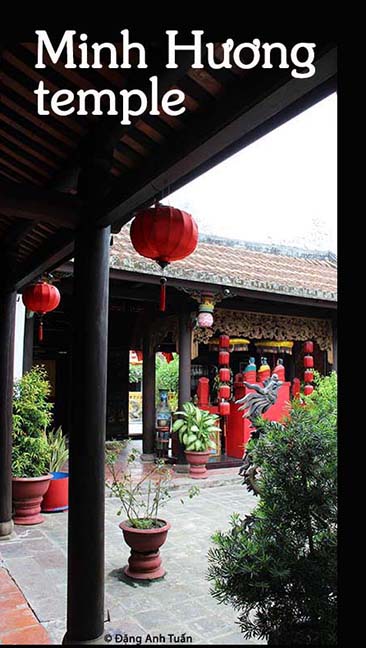
Mois : décembre 2016
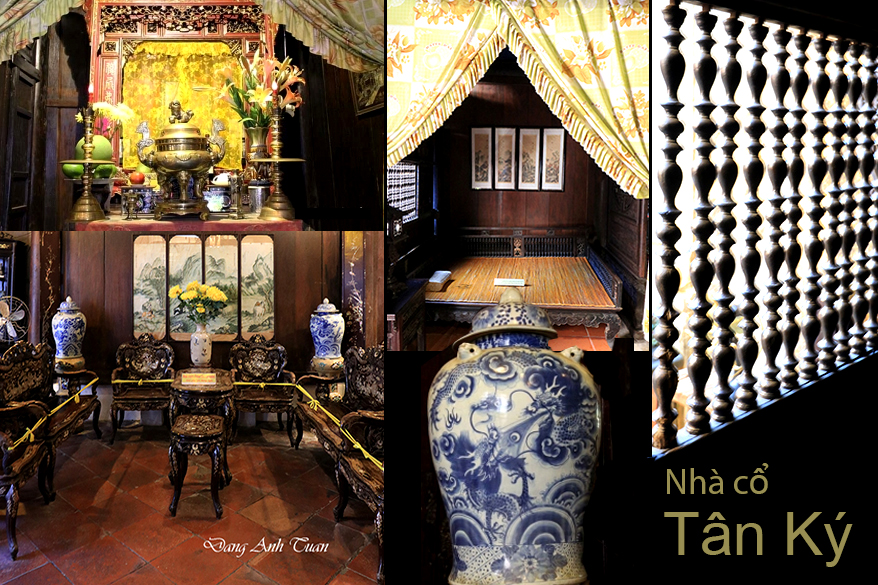
Vieille maison Tấn Ký
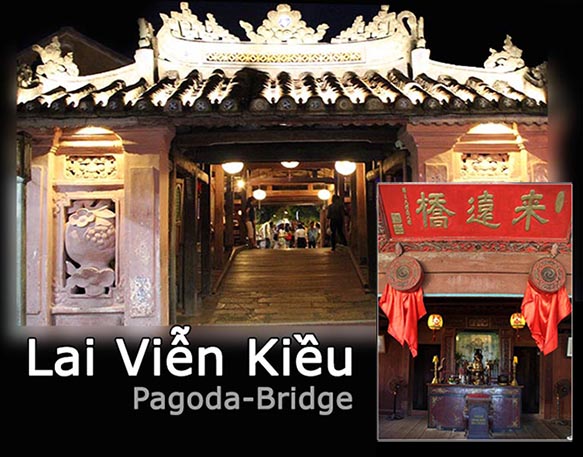
Pagode-pont (Chùa cầu)
Version française
Version anglaise
Galerie des photos
Về cây cầu này, một số nhà sử học cho rằng nó được xây dựng bởi người Nhật. Liệu họ tự xây dựng hay là do người Trung Quốc đặt hàng? Bí ẩn lịch sử này vẫn chưa được giải đáp. Các chuyên gia khác hoàn toàn bác bỏ giả thuyết này. Họ tin rằng cây cầu nên được cho là do người Nhật xây dựng, vì mục đích của nó là đánh dấu rõ hơn lối vào khu phố Nhật Bản.
En ce qui concerne ce pont, certains historiens en attribuent la construction aux Japonais. Ces derniers l’ont-ils construit eux-mêmes ou l’ont-ils réalisé sur commande des Chinois ? C’est une énigme historique qui reste à éclaircir. D’autres experts réfutent totalement cette hypothèse. Ils estiment que ce pont doit être attribué aux Japonais dans la mesure où celui-ci était destiné à mieux signaler l’entrée du quartier japonais.
Regarding this bridge, some historians attribute the construction to the Japanese. The latter, did they build it for themselves or did they realize it on Chinese request? It is the historic riddle which remains to clear up. Other experts totally refute this hypothesis. They consider that this bridge must be attributed to the Japanese in so far as this one was intended to indicate better the entrance of the Japanese district.
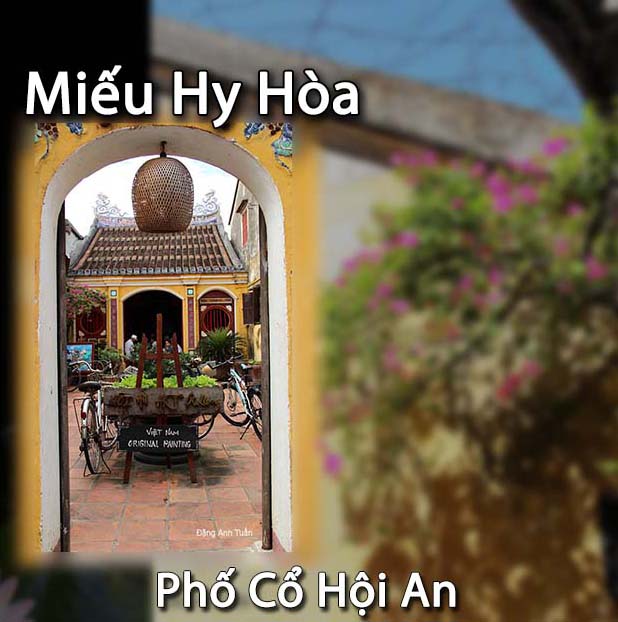
Temple Hy Hòa (Miếu Hy Hòa)
Văn Lang kingdom (Văn Lang)
French version
Vietnamese version
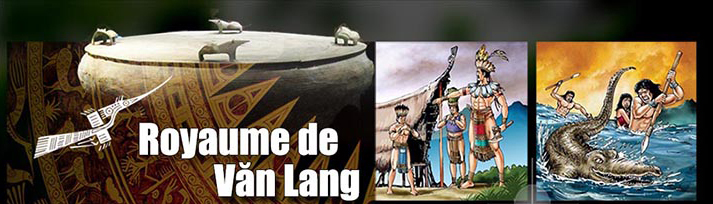
In fact, Văn Lang referres the semi-legendary epoch of the eighteen Hùng kings or Lạc Vương (2879-257 B.C.) or 2622 years. It was the legend and the myth of the Dragon and the Immortal of whom Vietnamese are issue. This kingdom was located in the Yang Tse river basin (Sông Dương Tử) and was placed under the authority of a Hùng king . This one had been elected for his courage and his values. He had divided his kingdom into districts entrusted to his brothers known under the name « Lạc hầu » ( marquis ). His male children have the title of Quan Lang and his daughters that of Mỵ nương. His people was known under the name « Lạc Việt« . His men had a habit of tattooing their body. This « barbarian » practice, often revealed in the Chinese annals, was intended to protect men from the attacks of water dragons (con thuồng luồng) if one believes the Vietnamese texts. It is perhaps the reason why the Chinese often designated them under the name « Qủi (daemons) ».
Loincloth and chignon constituted the usual costume of these people to which were added bronze ornaments. The Lac Viet lacquered their teeth in black, chewed betel nuts and crushed rice with their hand. The farmers practiced the cultivation of rice in flooded field. They lived in plains and coastal areas while, in the mountainous areas of the current Việt Bắc and on part of the territory of the current Chinese province of Kuang Si, lived the Tây Âu, ancestors of the ethnic groups Tày, Nùng and Choang currently disseminated in the North Vietnam and in the South of China. At that epoch, the Vietnamese people lived on fishing and cultivation. They already knew how to use tree bark to make clothes, prepare rice alcohol, practice slash and burn agriculture, eat ordinary rice or sweet rice, live in houses on stilts to avoid wild animals etc… Many Vietnamese popular tales (the story of the Sweet Rice Cake, that of the Betel Quid and that of the Mountain and River Gods etc.) came from these customs.
There is a part of reality in the history of this kingdom. The ruines of the Cổ Loa citadel (Spiral citadel) located about 18km in the district Đồng Ánh from Hànội and the temples of Hùng kings testifies to these indisputable vestiges with historians viewpoint.