Quán Thánh temple (Hànôi)

French version
Vietnamese version

Not far from Lake of the West (Hồ Tây), Quán Thánh is one of  the inescapable sites of Hànôi city. This sacred  temple is reserved to the cult of Taoist God named  Huyền Thiên Trấn Vũ considered in Asia as the emperor of the North (Bei Di (or Bắc Đẩu in vietnamese)) ruling on the underwater world. According to  the judicious arrangement of Feng Shui, (Phong Thủy), it is  erected with three  others  for purpose of protecting Thăng Long capital against strangers and  evil spirits, each going in the well-defined direction (Bạch Mã temple Hàng Buồm at the East, Voi Phục (Thủ  Lệ ) temple at the West,  Kim Liên in the South and Quán Thánh in the northern Hanoi). It is often said that this temple was erected in 1010 under the reign of Lý Thái Tổ king. The  statue was made of wood at the beginning of its installation. Despite successive  renovations under the Trần dynasty,  it was  only in 1677 under the reign of Lê Hy Tông king that the restoration was significant with the installation and replacement of the statue in bronze-black and the bell tower of the temple.

Vũ Công Chấn’s altar
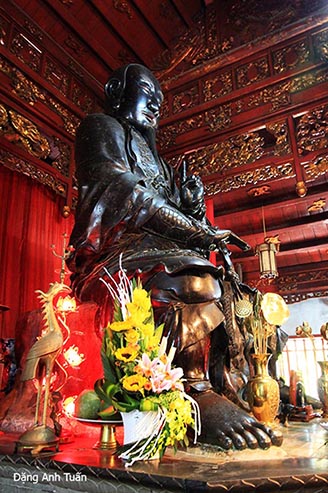
This colossal statue of 4 tons and about 4 meters  in height, was placed on a marble platform having one metre in height. In a  sitting position with a square face and barefoot, the statue has a taoist traditional dress. It holds  in the right hand, a sword pointing on the turtle’s back and superbly decorated by the presence of the coiled snake while in the left hand, a Taoist mudra, a codified  ritual sign is visible by way of exorcism. Being associated to the direction of the North and  water, the color must be black  according to the theory of five elements (Ngũ hành). It is the explanation found in the color selection for the statue.

Pictures gallery

Đền Quán Thánh

The fine detail and the imposing size of this statue made almost four centuries ago, unquestionably reveal  the prodigious exploit and  know-how of  Ngũ Xã village steelworkers of this time under the supervision of Vũ Công Chấn.

 This temple is not only  the one of  last Taoist temples found in the capital but also the ideal place for those who like  serenity and calm in the town so loud and vibrant as Hànội city.
[RETOUR]


Maison communale Kim Ngân (Đình Kim Ngân, Hànội)

Version française
Version anglaise
Liste des photos

Đình Kim Ngân


Đình Kim Ngân này được xây dựng vào đầu thế kỷ 16 bởi Thượng thư Nội vụ của vua Lê Thánh Tông, Lưu Xuân Tín. Ông vốn là người tỉnh Hải Dương, nổi tiếng với nghề nấu chảy vàng thỏi. Vào thời điểm đó, ông đã đưa một số lượng lớn người dân trong làng của mình đến Hà Nội làm thợ kim hoàn cho nhà vua. Họ đã xây dựng ngôi đình này mang tên Kim Ngân khi họ định cư tại đây. Sau nhiều năm bị bỏ hoang, nó chỉ được trùng tu vào năm 2004 nhờ sự giúp đỡ của các chuyên gia người Pháp từ thành phố Toulouse. Ngày nay, nó không chỉ là nơi thường xuyên diễn ra tất cả các buổi biểu diễn âm nhạc truyền thống (ví dụ như Ca Trù) mà còn là nơi tôn kính tổ tiên của nghề thủ công Hiền Viên.

Cette maison communale Kim Ngân fut édifiée au début du XVIème siècle par le ministre de l’intérieur du roi Lê Thánh Tông, Lưu Xuân Tín. Celui-ci était originaire de la province Hải Dương, connue pour sa spécialité dans la fonte des lingots d’or. Il fit venir à cette époque un grand nombre de gens de son village pour travailler en tant qu’orfèvres à Hànoï pour le compte du roi. Ces derniers y ont construit lors de leur installation cette maison communale de nom Kim Ngân. Etant laissée à l’abandon depuis plusieurs années, elle fut restaurée seulement en 2004 grâce au concours des experts français de la ville de Toulouse. Désormais c’est non seulement l’endroit où ont lieu fréquemment tous les spectacles de musique traditionnelle (Ca Trù par exemple) mais aussi le lieu de vénération de l’ancêtre des métiers Hiên Viên.

This communal house was erected under the reign of king Lê Thánh Tông by the Minister of the Interior, Lưu Xuân Tín. This one was from Hải Dương province known for its speciality in casting into ingots. He invited at this time a large number of people in  his village for working as  silversmiths on the behalf of the king. During the installation, the latter have built à Hàng Bạc this communal house named « Kim Ngân (or silver). Being neglected for many years, it was restored in 2004 by French experts of Toulouse city. Henceforth, it is only the place where tradional music concerts take place frequently but also the space of veneration of Hiên Viên, the ancestor of crafts.
 

Communal House Kim Ngân

(Hàng Bạc)

[Return HANOI]


Ancienne maison Mã Mây (Hànội)

Version française
Version anglaise
Liste des photos

Nhà cổ Mã Mây

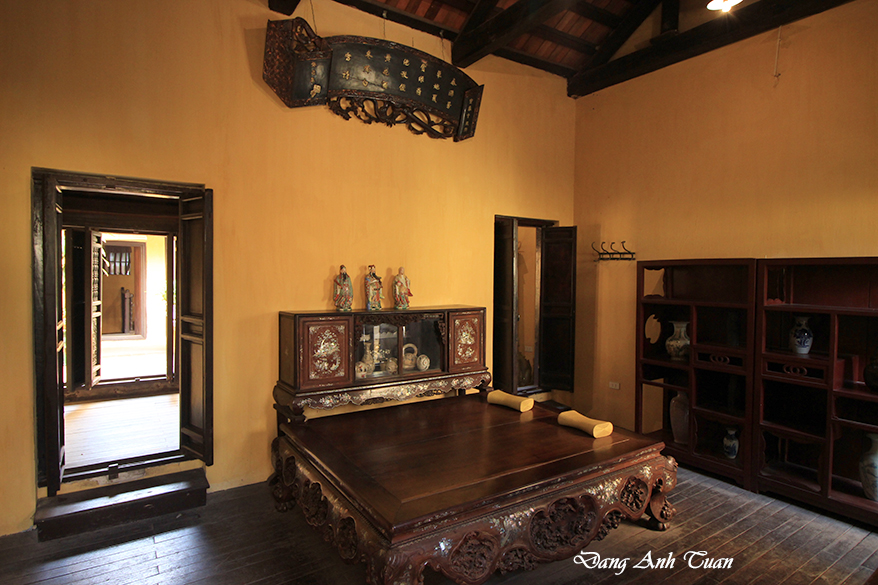
Ngôi nhà nầy được xây cất vào cuối thế kỷ 19 và được thay đổi nhiều chủ nhà mà phần đông họ là những người buôn bán. Ngôi nhà nầy được sùng tu lại gần đây  trong chương trình hợp tác giữa thành phố Hànội với thành phố Pháp Toulouse. Tại sao có tên Mã Mây ? Vì trước đó phố (hay đường) Mã Mây  ở đoạn đầu phố  là Hàng  Mây chuyên môn bán đồ tre và cuối phố thì Hàng Bạc bán vàng mã. Phố nầy thời Pháp thuộc rất sầm uất và buôn bán nên qui tụ nơi nầy rất nhiều thương gia nay trở thành một trong những phố có nhiều du khách ngoại quốc. Nhà cổ Mã Mây được xây cất theo dạng hình ống, rất hẹp chiều ngang và có chiều dài và đa năng sử dụng. Mặt trước là cửa hàng phiá trong có sân tiếp đến là nhà hậu và sau cùng là nhà bếp và khu vệ sinh.  Trên tầng 2 là gian thờ ông bà tổ tiên  và phòng ngủ. Ngôi nhà nầy là mẫu nhà truyền thống mà được công nhận từ năm 2004 bởi bộ văn hoá Việtnam.

Tọa lạc ở  số 87 Mã Mây – Hàng Buồm – Hoàn Kiếm – Hà Nội

Version française

Cette vieille maison Mã Mây a été construite à la fin du 19 ème  siècle et changée plusieurs fois de propriétaires, en particulier des commerçants. Elle a été rénovée  dans le cadre de coopération entre les villes de Hanoï et de Toulouse (France). Pourquoi a-t-elle ce nom Mã Mây? Cette maison se trouvait dans une rue dont l’une des extrémités était la rue Hàng Mây destinée à vendre des articles en bambou et en rotin et l’autre extrémité, la rue Hàng Bạc où on ne trouvait que les objets votifs.  À l’époque coloniale, cette rue fut tellement animée et commerciale si bien qu’elle devint en quelques années un lieu de rassemblement de commerçants. Aujourd’hui, la rue Mã Mây est l’une des rues les plus fréquentées par les touristes étrangers. Cette vieille maison a été construite sous forme tubulaire. La largeur de la maison est très limitée par rapport à sa longueur. Elle a plusieurs fonctions d’usage. Pour répondre à cette exigence, il y a un ordre très précis dans la répartition :

  • Pièce principale-cour-pièce postérieure-cuisine et toilette.
  • Au deuxième étage, la pièce donnant sur la rue est dédiée au culte des ancêtres tandis que l’autre pièce sert de dortoir.

Cette maison fut reconnue comme  le modèle de la maison traditionnelle par le ministère de la culture  en 2004.

Adresse: n° 87 Mã Mây – Hàng Buồm – Hoàn Kiếm – Hà Nội.

Version anglaise

This old Mã Mây house was built at the end of the 19th century and has changed owners several times, particularly merchants. It was renovated as part of a cooperation between the cities of Hanoi and Toulouse (France). Why does it have the name Mã Mây? This house was located on a street whose one end was Hàng Mây street, intended for selling bamboo and rattan items, and the other end was Hàng Bạc street, where only votive objects were found. During the colonial era, this street was so lively and commercial that it became a gathering place for merchants within a few years. Today, Mã Mây street is one of the busiest streets frequented by foreign tourists. This old house was built in a tubular form. The width of the house is very limited compared to its length. It has several functional uses. To meet this requirement, there is a very precise order in the layout:

  • Main room – courtyard – back room – kitchen and toilet.
  • On the second floor, the room facing the street is dedicated to ancestor worship, while the other room serves as a dormitory.
    This house was recognized as a model of traditional houses by the Ministry of Culture in 2004.

Address: No. 87 Mã Mây – Hàng Buồm – Hoàn Kiếm – Hà Nội.

Nhà cổ Mã Mây

[RETURN]

Hànôi illuminée par les fêtes au fil de la nuit (2016)

[ngg_images source= »galleries » container_ids= »233″ display_type= »photocrati-nextgen_basic_thumbnails » override_thumbnail_settings= »1″ thumbnail_width= »160″ thumbnail_height= »120″ thumbnail_crop= »1″ images_per_page= »60″ number_of_columns= »6″ ajax_pagination= »0″ show_all_in_lightbox= »0″ use_imagebrowser_effect= »0″ show_slideshow_link= »0″ slideshow_link_text= »[Montrer sous forme de diaporama] » template= »/homepages/5/d276592279/htdocs/clickandbuilds/vietnamquehuongtoi/wp-content/plugins/nextgen-gallery/products/photocrati_nextgen/modules/ngglegacy/view/gallery.php » order_by= »pid » order_direction= »ASC » returns= »included » maximum_entity_count= »500″]

Bãi Đá Sông Hồng (Parc floral Hànội)


Bãi đá sông Hồng (Parc floral)

Version vietnamienne

Version anglaise

Etant connu sous le nom de « Bãi Đá sông Hồng« , ce parc floral est situé sur la rue Âu Cơ (Hànội). C’est l’endroit idéal fréquenté par la jeunesse vietnamienne, en particulier les jeunes mariés pour immortaliser leur union et leur amour.

Được biết dưới cái tên « Bãi Đá sông Hồng », công viên nầy nằm ở trên đường Âu Cơ (Hànội). Nó là nơi được các giới trẻ yêu chuộng và nhất là với  đôi vợ chồng mới cưới thường  đến  đây để lưu niệm những  hình ảnh. 


English version

Being known under the name « Bãi Đá sông Hồng », this flower national park is located on the street Âu Cơ (Hànôi). It is the ideal place very frequently visited by the Vietnamese youth and in particular, the married for immortalizing  union and  love.

[RETURN]

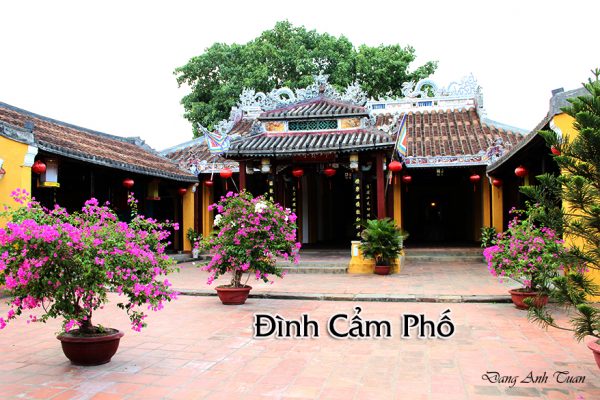
Maison communale Cẩm Phô (Đình Cẩm Phố)

Maison communale Cẩm Phố


[Retour HÔI AN et ses quartiers]

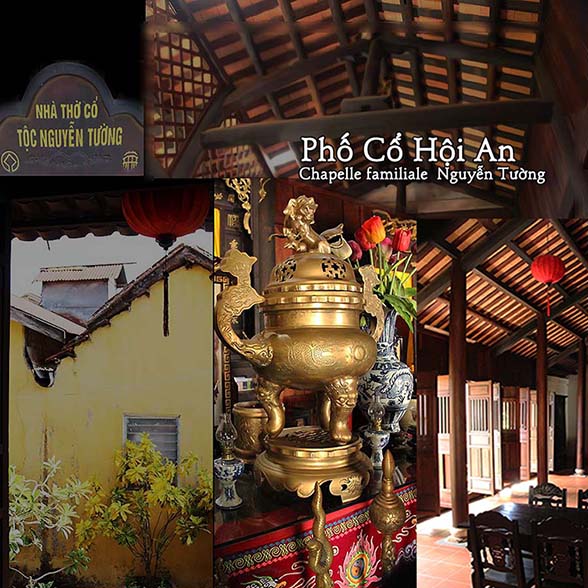
Chapelle familiale Nguyễn Tường

hoian_nguyentuong

Nhà thờ cổ tộc Nguyễn Tường

[Retour HOI AN et ses quartiers]

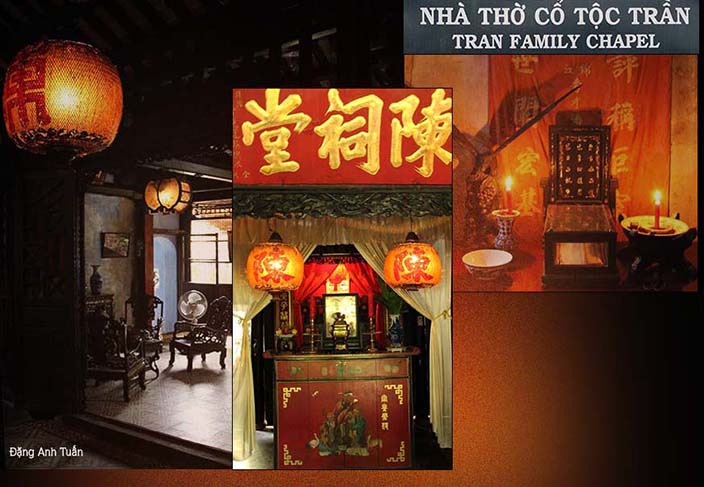
Temple du clan familial Trần (Nhà thờ cổ tộc Trần)

hoian_et_tran

Temple du clan familial Trần 


[Retour HOI AN et ses quartiers]


Vieille maison Tấn Ký


[Retour HOI AN et ses quartiers]

Pagode-pont (Chùa cầu)

pagoda_bridge


Version française
Version anglaise
Galerie des photos

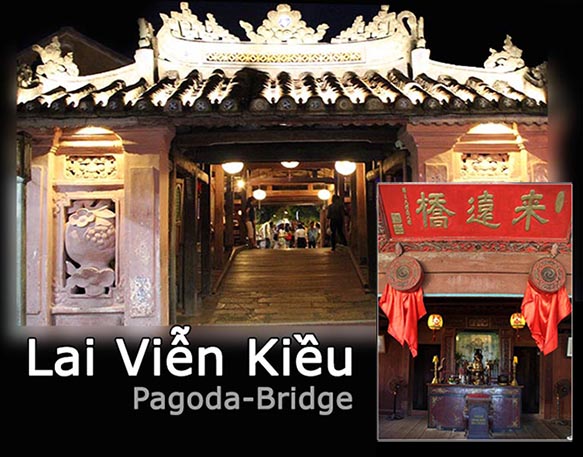
Về cây cầu này, một số nhà sử học cho rằng nó được xây dựng bởi người Nhật. Liệu họ tự xây dựng hay là do người Trung Quốc đặt hàng? Bí ẩn lịch sử này vẫn chưa được giải đáp. Các chuyên gia khác hoàn toàn bác bỏ giả thuyết này. Họ tin rằng cây cầu nên được cho là do người Nhật xây dựng, vì mục đích của nó là đánh dấu rõ hơn lối vào khu phố Nhật Bản.

En ce qui concerne ce pont, certains historiens en attribuent la construction aux Japonais. Ces derniers l’ont-ils construit eux-mêmes ou l’ont-ils réalisé sur commande des Chinois ? C’est une énigme historique qui reste à éclaircir. D’autres experts réfutent totalement cette hypothèse. Ils estiment que ce pont doit être attribué aux Japonais dans la mesure où celui-ci était destiné à mieux signaler l’entrée du quartier japonais.

Regarding this bridge, some historians attribute the construction to the Japanese. The latter, did they build it for themselves  or did they realize it on Chinese request? It is the historic riddle which remains to clear up. Other experts totally refute this hypothesis. They consider that this bridge must be attributed to the Japanese in so far as this one was intended to indicate better the entrance of the Japanese district.

Galerie des photos

[Retour Hoi An et ses quartiers]