Sainte-Chapelle (Nhà thờ Sainte Chapelle)


Version vietnamienne
Version française
Version anglaise
Galerie des photos

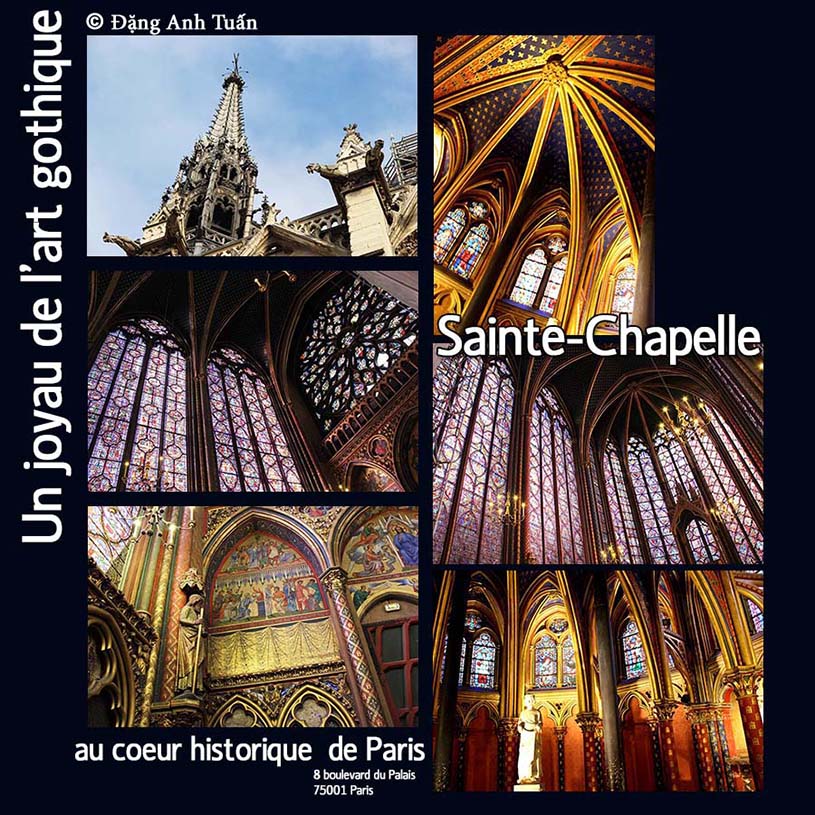
Ít ai biết đến nhà thờ nầy bằng Notre Dame de Paris. Nó nằm trong lãnh vực của bộ tư pháp và cũng không xa chi cho mấy nhà thờ Notre Dame. Được xây dựng vào năm 1242, dưới thời vua Saint Louis (Louis IX), thời gian xây dựng nhà thờ mất khoảng 7 năm. Khi hoàn thành, công trình này khác biệt không những bỡi vẻ thanh lịch đặc sắc và đồ sộ mà còn thấy sự liều lĩnh trong việc xây dưng kiến trúc gothic nầy dựa trên việc nâng cao trọng đại các cửa kiến không dùng vách tường. Gần bờ sông Seine, nhà thờ Sainte Chapelle là một trong những kiến trúc kiệt tác nằm giữa khu phố lịch sữ latin. Được chọn làm nơi lưu giữ những thánh tích như vòng gai của Đức Chúa Jésus truớc khi chúa bị đóng đinh vào thập tự mà vua Louis IX có được năm 1239.

Saint-Chapelle est moins connue que l’église Notre Dame de Paris. Édifiée en 1242 sous le règne du roi Louis IX (ou Saint Louis), elle est située à l’intérieur du domaine appartenant au ministère de la justice qui n’est pas trop loin de l’église Notre Dame. Sa durée de réalisation prend à peu près 7 ans. Elle se distingue non seulement, lors de sa finition, par l’élégance extraordinaire et la taille impressionnante mais aussi par la hardiesse de construire un œuvre d’art gothique basé essentiellement sur l’élévation importante et l’absence presque totale des murs au niveau des fenêtres. Localisée sur l’île de la Cité, la Sainte-Chapelle est l’un des chefs d’œuvre situé au cœur historique du quartier latin. Elle a été choisie par le roi Louis IX pour abriter les reliques qu’il avait acquises en 1239, en particulier la couronne d’épines posée sur la tête du Christ avant sa crucifixion.

Saint-Chapelle is less well known than the Notre Dame Church of Paris. Built in 1242 during the reign of King Louis IX (or Saint Louis), it is located within the grounds belonging to the Ministry of Justice, not far from the Notre Dame Church. Its construction took about 7 years. It stands out not only, upon completion, for its extraordinary elegance and impressive size but also for the boldness of creating a Gothic work of art based essentially on significant elevation and the almost total absence of walls at the window level. Located on the Île de la Cité, Sainte-Chapelle is one of the masterpieces situated in the historic heart of the Latin Quarter. It was chosen by King Louis IX to house the relics he had acquired in 1239, particularly the crown of thorns placed on Christ‘s head before his crucifixion.


Galerie des photos

[Return PARIS et ses sites]

Trần Miếu (Nam Định)

Version française


Phủ Thiên Trường

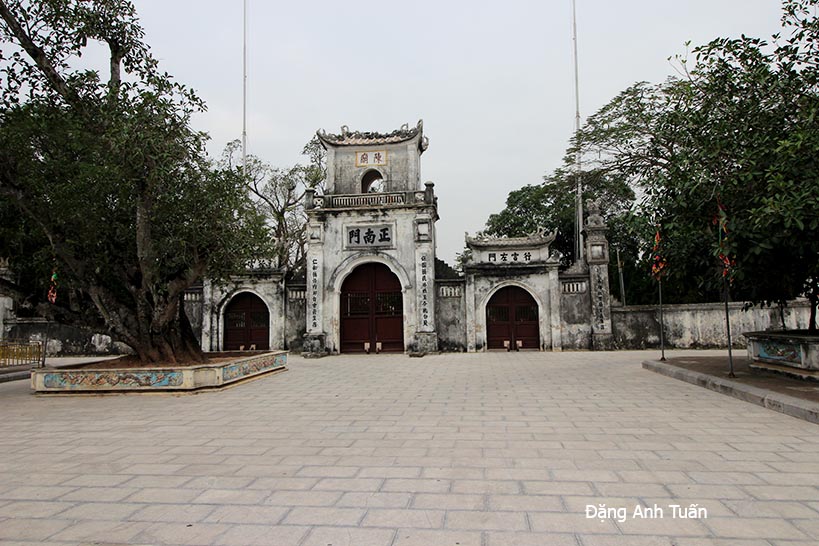
Đây là một quần thể kiến trúc và lịch sữ dành để thờ các vua nhà Trần và các quan có công phù tá. Nằm trên quốc lộ số 10 trong tỉnh Nam Định, đền nầy được xây cất lại năm 1695 trên nền thái miếu cũ được gọi là phủ Thiên Trường mà quân xâm lược nhà Minh phá hủy vào thế kỷ 15.  Cũng ở nơi nầy mà phát tích vương triều nhà Trần.  Các vua nhà Trần tạm về nơi nầy để lánh nạn trong thời gian chống giặc Nguyên Mông của Hốt Tất Liệt.


Temple royal  des Trần

C’est un  ensemble architectural et historique remarquable  dédié au culte des  rois de la dynastie des Trần  et de leurs  célèbres  serviteurs.  Situé à la route nationale n°10 dans la province de Nam Định, il fut reconstruit en 1695 sur l’emplacement de l’ancien temple royal  connu sous le nom « phủ Thiên Trường »  détruit complètement par les envahisseurs chinois (les Ming) au XVème siècle. C’est ici qu’est née la dynastie des Trần. Les rois des Trần  y trouvaient refuge durant la guerre contre les Mongols de Kubilai Khan. 

It is a remakable architectural and historic complex dedicated to the cult of the kings and their famous mandarins from the  Trần dynasty. Located on the national road n°10 in the Nam Định province, it was rebuilt on the site of the former royal temple known under the name « Phủ Thiên Đường » . This one was completely destroyed by  chinese invaders, the Ming in the 15th century.  It is here that was born the Trần dynasty.   The Trần dynasty kings took refuge here during the war against the Mongols of Kubilai Khan.

Village ancien Đường Lâm (Làng cổ)

Portail du village Đường Lâm

Version vietnamienne
English version 
Pictures Gallery

Ayant occupé  à peu près 800 ha, le village  Đường Lâm est localisé approximativement à 4km à l’ouest de la ville provinciale Sơn Tây. Il est consacré pratiquement à l’agriculture. Il est rare de trouver encore  aujourd’hui l’un des villages ayant conservé les traits caractéristiques d’un village traditionnel vietnamien.  Si la baie de Hạ Long est l’œuvre de la nature, Đường Lâm est par contre l’ouvrage crée par l’homme.  Il est plus riche de signification que la baie de Hạ Long. C’est ce qu’a remarqué le chercheur thaïlandais Knid Thainatis. Effectivement Đường Lâm est riche non seulement en histoire mais aussi en tradition.

Dans les temps anciens,  il s’appelait encore  Kẻ Mia (pays de la canne à sucre). Selon  une légende populaire,  le métier de fabriquer de la mélasse de canne à sucre à Đường Lâm rapportait  comment la princesse Mi Ê a trouvé une plante semblable à un roseau. Elle a pris une section de cette plante et a senti sa douceur fraîche et son goût aromatique. Elle a tellement aimé cette plante si bien qu’elle  a conseillé aux gens de la cultiver. Au fil du temps,  la canne à sucre poussait tellement dense qu’elle couvrait une grande surface comme le bois. La population locale a commencé à produire de la mélasse ainsi que des bonbons à partir de celle-ci. D’où le nom « Kẻ Miá ».

Grâce aux fouilles archéologiques aux  alentours des contreforts de la montagne Ba Vi, on découvre que  Đường Lâm était le territoire des Proto-Vietnamiens. Ces derniers y vivaient en grande concentration à l’époque de la civilisation de Sơn Vi. Ils continuaient à s’y établir encore durant les quatre cultures suivantes: Phùng Nguyên (2000-1500 BC), Đồng Dậu (1500-1000 BC), Gò Mun (1000-600 BC) et Đồng Sơn (700 BC-100 AD).

Le village  est aussi  la terre de deux rois célèbres Phùng Hưng et Ngô Quyền. Le premier, connu sous le nom « Bố Cái Đại Vương »  (ou Grand roi père et mère du peuple) est adulé comme le  libérateur de la domination chinoise à l’époque des Tang tandis que le deuxième a réussi à mettre fin à l’occupation chinoise de 1000 ans en défiant la flotte des Han du Sud (Nam Hán) sur le fleuve de Bạch Đằng. C’est aussi ici qu’on retrouve l’autel dédié à l’ambassadeur Giang Văn Minh auprès de la cour de Chine. Ce dernier fut tué par  l’empereur des Ming  Zhu Youjian (Sùng Trinh)  car il a osé l’affronter en lui répondant du tac au tac avec le vers mémorable suivant: 

Ðằng giang tự cổ huyết do hồng (Bạch Đằng từ xưa vẫn đỏ vì máu)
Le fleuve Bạch Ðằng continue à être teinté avec du sang rouge.

pour lui rappeler    les victoires éclatantes et décisives des Vietnamiens contre les Chinois sur le fleuve Bạch Ðằng,  suite au vers arrogant qu’il a reçu de la part de l’empereur chinois: 

Đồng trụ chí kim đài dĩ lục (Cột đồng đến giờ vẫn xanh vì rêu).
Le pilier en bronze continue à être envahi par la mousse verte. (évoquant ainsi la période de pacification du territoire vietnamien par le général chinois Ma Yuan à l’époque des Han).

 Làng cổ Đường Lâm 

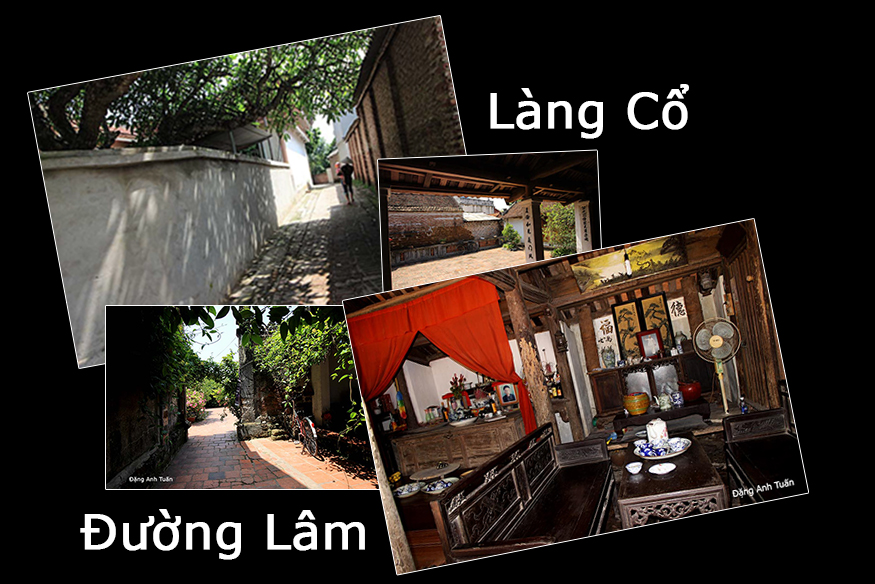
L’une des caractéristiques de ce village  antique réside dans la préservation  de son  portail (porte principale) par lequel tout le monde doit passer. Le visiteur peut s’égarer facilement s’il n’arrive pas à repérer la maison communale Mông Phụ.  Celle-ci est un bâtiment colossal édifié au centre du village avec son imposante charpente en bois de fer (gỗ lim). La plupart des maisons sont protégées  par des blocs de murs en   latérite et leurs porches  sont parfois des petits chefs-d’œuvre qui ne peuvent pas laisser indifférent le visiteur.  Le village Đường Lâm continue à garder son charme séculaire face à l’urbanisation galopante qu’on ne cesse pas de voir dans d’autres villages.

Version vietnamienne

Có khoảng chừng 800 mẫu, làng cổ Đường Lâm nằm cách chừng 4 cây số về phiá tây của thị xã Sơn Tây.  Làng nầy chuyên sống về canh nông.  Rất hiếm còn tìm lại được ngày nay một trong những làng cổ còn giữ được những nét cá biệt của một làng Việtnam truyền thống. Nếu vịnh Hạ Long là một tác phẩm của tạo hóa thì làng cổ Đường Lâm ngược lại là một sản phẩm do con người tạo ra. Nó còn giàu có ý nghĩa  nhiều hơn vịnh Hạ Long. Đây là sự nhận xét của nhà nghiên cứu Thái Knid Thainatis. Thật vậy Đường Lâm rất phong phú không những về lịch sữ mà còn luôn cả tập quán. 

 Thời xưa, Đường Lâm  vẫn được gọi là Kẻ Mia (vùng đất trồng mía). Theo truyền thuyết, nghề làm mật mía ở Đường Lâm liên quan đến việc công chúa Mi E tìm thấy một loại cây giống cây sậy. Cô lấy một phần của cây này và ngửi thấy vị ngọt và hương vị thơm mát của nó. Cô rất yêu thích loài cây này nên đã khuyên mọi người nên trồng nó. Theo thời gian, cây mía mọc rậm rạp phủ kín cả một vùng rộng lớn như rừng. Người dân địa phương bắt đầu sản xuất mật mía cũng như kẹo từ nó. Do đó nó có tên là « Kẻ Miá« .

Nhờ các cuộc khai quật khảo cổ xung quanh ở chân núi Ba Vi, người ta phát hiện ra Đường Lâm là lãnh thổ của người Việt cổ. Những người sau này sống tập trung ở đây  trong thời kỳ của nền văn hóa Sơn Vi. Họ  vẫn tiếp tục định cư ở nơi nầy tiếp theo cho bốn nền văn hóa sau đây: Phùng Nguyên (2000-1500 TCN), Đồng Dậu (1500-1000 TCN), Gò Mun (1000-600 TCN) và Đồng Sơn (700 TCN-100 SCN).
Nơi nầy  cũng là đất của hai vua cự phách Phùng Hưng và  Ngô Quyền. Vua đầu tiên thường  gọi là « Bố Cái Đại Vương » rất  đuợc ngưỡng mộ vì ông là lãnh tụ khởi  cuộc nổi dậy chống lại sự đô hộ của nhà Đường còn Ngô Quyền thì có công trạng kết thúc sự đô hộ quân Tàu có gần một thiên niên kỹ qua cuộc thách thức hải quân Nam Hán trên sông Bạch Đằng.  Cũng chính nơi nầy mà cũng tìm thấy nhà thờ của thám hoa Giang Văn Minh. Ông đuợc đề cử sang Tàu xưng phong dưới thời Hậu Lê. Ông bị trảm quyết bỡi  vua Tàu Minh Tư Tông Chu Do Kiểm (tức hoàng đế Sùng Trinh) vì ông không để vua Tàu làm nhục Việtnam dám đối đáp thẳng thắn  với  một  vế đối lại như sau: Ðằng giang tự cổ huyết do hồng  (Bạch Đằng từ xưa vẫn đỏ vì máu) nhắc lại những chiến công hiển hách trêng sông Bạch Đằng khi nhận một vế  ngạo mạn của vua Tàu:  Đồng trụ chí kim đài dĩ lục (Cột đồng đến giờ vẫn xanh) vì rêu  ám chỉ đến cột đòng  Mã Viện , thời kỳ quân Tàu đô hộ nước Việt dưới thời Đông Hán. 

Một trong những  đặc trưng  của làng cổ nầy là  sự gìn giữ cái cổng làng mà bất cứ ai đến làng cũng phải đi qua cả.  Người du khách có thể bị lạc đường  nếu không nhận ra hướng đi đến đình Mông Phụ.   Đây là một toà nhà to tác được dựng ở giữa trung tâm của làng với một mái hiên oai vệ bằng gỗ lim.  Tất cả nhà ở làng nầy phân đông được bảo vệ qua các bức tường bằng đá ong và các cổng vào thường là những kiệc tác khiến làm du khách không thể thờ ơ được. Làng cổ  Đường Lâm tiếp diễn giữ  nét duyên dáng muôn thưở dù biết rằng  chính sách đô thị hoá vẫn phát triển không ngừng ở các làng mạc khác.

Version anglaise

Occupying about 800 hectares, the village of Đường Lâm is located approximately 4 km west of the provincial town of Sơn Tây. It is practically dedicated to agriculture. It is rare to still find today one of the villages that has preserved the characteristic features of a traditional Vietnamese village. While Ha Long Bay is the work of nature, Đường Lâm, on the other hand, is a creation made by man. It is richer in meaning than Ha Long Bay. This is what the Thai researcher Knid Thainatis noticed. Indeed, Đường Lâm is rich not only in history but also in tradition.

In ancient times, it was still called Kẻ Mia (land of sugarcane). According to a popular legend, the craft of making sugarcane molasses in Đường Lâm tells how Princess Mi Ê found a plant resembling a reed. She took a section of this plant and felt its fresh sweetness and aromatic taste. She liked this plant so much that she advised people to cultivate it. Over time, the sugarcane grew so densely that it covered a large area like a forest. The local population began to produce molasses as well as candies from it. Hence the name « Kẻ Miá« .

Thanks to archaeological excavations around the foothills of Ba Vi mountain, it was discovered that Đường Lâm was the territory of the Proto-Vietnamese. They lived there in large concentrations during the Sơn Vi civilization period. They continued to settle there during the following four cultures: Phùng Nguyên (2000-1500 BC), Đồng Dậu (1500-1000 BC), Gò Mun (1000-600 BC), and Đồng Sơn (700 BC-100 AD).

The village is also the land of two famous kings, Phùng Hưng and Ngô Quyền. The first, known as « Bố Cái Đại Vương » (or Great King Father and Mother of the People), is revered as the liberator from Chinese domination during the Tang dynasty, while the second succeeded in ending 1,000 years of Chinese occupation by defeating the Southern Han fleet on the Bạch Đằng River. It is also here that the altar dedicated to ambassador Giang Văn Minh to the Chinese court is found. He was killed by the Ming emperor Zhu Youjian (Sùng Trinh) because he dared to confront him with a sharp retort in the memorable verse:

Ðằng giang tự cổ huyết do hồng (The Bạch Đằng River has always been red because of blood)
The Bạch Đằng River continues to be stained with red blood.

This was to remind him of the brilliant and decisive victories of the Vietnamese against the Chinese on the Bạch Đằng River, following the arrogant verse he received from the Chinese emperor:

Đồng trụ chí kim đài dĩ lục (Cột đồng đến giờ vẫn xanh vì rêu).

The bronze pillar is still green because of moss.
The bronze pillar continues to be overgrown by green moss. (thus evoking the period of pacification of the Vietnamese territory by the Chinese general Ma Yuan during the Han dynasty).

One of the characteristics of this ancient village lies in the preservation of its main gate through which everyone must pass. Visitors can easily get lost if they fail to locate the Mông Phụ communal house. This is a colossal building erected at the center of the village with its imposing ironwood frame (gỗ lim). Most houses are protected by laterite wall blocks, and their porches are sometimes little masterpieces that cannot leave visitors indifferent. The Đường Lâm village continues to retain its centuries-old charm in the face of the rampant urbanization that is constantly seen in other villages.

Làng cổ Đường Lâm

Bibliographie: 

Lê Thanh Hương: An ancient village in Hanoi, Thế Giới publishers, Hànôi 2012

[RETURN]

Soil-Water (Đất Nước)


dat_nuoc

French and Vietnamese versions
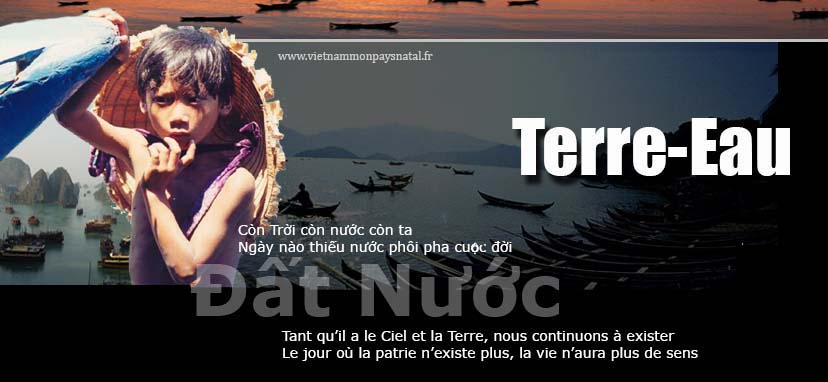
As long as we have the Sky and the Earth, we continue to exist.
But the day where the fatherland no more exists, our life will have no sense  

Water is omnipresent in Vietnam. Water is such in osmosis with the soil and perhaps because of that the two words Ðất-Nước (Soil-Water) are often used to indicate this country. It is also here that we firmly believe we are the descendants of the Dragon king, Lạc Long Quân, coming from the Waters, and of the fairy Âu Cơ of terrestrial origin. We can say it is here that water and land unite to give birth to a people. It is also here that are found in ancient tombs amulets bearing iconographic representation of the Dragon, a mythical animal with a pig’s head and a snake’s body, a hyphen between Land and Water because the pig indicates the wealth of peasants, symbol of the Land and the snake is related  to the Water.

dat_nuoc

Đất Nước

The history of Vietnam is also simply that of water. Water may become fatal because it can leave its bed to absorb harvests and whole villages. To attenuate his anger and his aggressiveness, one does not cease building dams, clogging breaches, raising ramparts, digging channels. It is it that has kneaded the thick identity of the Vietnamese people and forged this heart. It is also nourishing because it is it which fertilizes the soil and makes rice grow. But it is it which is accomplice of the Vietnamese people many times in overcoming foreign aggressors. Here, water has a thousand faces, as well as many colors and odors: tumultuous and unpredictable in the Red River with alluvium in brick color, marine and turquoise along the coasts in particular at Cà Ná, calm in Nha Trang, unchained and hemmed large waves with Ðà Nẵng, stagnated with an amber color in rice paddies and dying between the roots of palm trees in the arroyos of the Mekong Delta.
This water is found everywhere even in remote corners of Vietnam. After some monsoons, a basin left outside, a broken earthenware jar, a ditch at the edge of the road may hold it and thus become an aquarium for a biology laboratory, a water fragment for the breeding of the tadpoles or a mini-pond where lotus flowers bloom. It is also at the entrance of the villages that one finds stagnant water in ponds, covered again with water lentils and water weeds, companions of the pauper’s bowl of rice.
Water is also synonymous with fatherland. That is why the last emperor Duy Tân, brought to the throne at the age of 8 and later exiled by colonial authorities used this signification to reveal his state of mind. One day, coming back from a walk at the sea, his hands were so dirty that an old servant asked him to wash them in a basin filled with water.
The emperor asked him the following question: If the hands are dirty they can be washed with water. But if the water is « soiled », what can we clean it with? Emperor Duy Tân wanted to say if the fatherland is « humiliated », with what it could be washed off this outrage?.
This reflection stunned the old servant and made him shake.
Without waiting for his answer, the impassive emperor Duy Tân responded in his stead:

If the water is « soiled », one will wash it with blood.
If by essence, water is a protecting, fetal and vital element for humans, it is even more so for the majority of Vietnamese, a raison-d’être in this world, as it is synonymous with the word « Fatherland ».

Paris về đêm

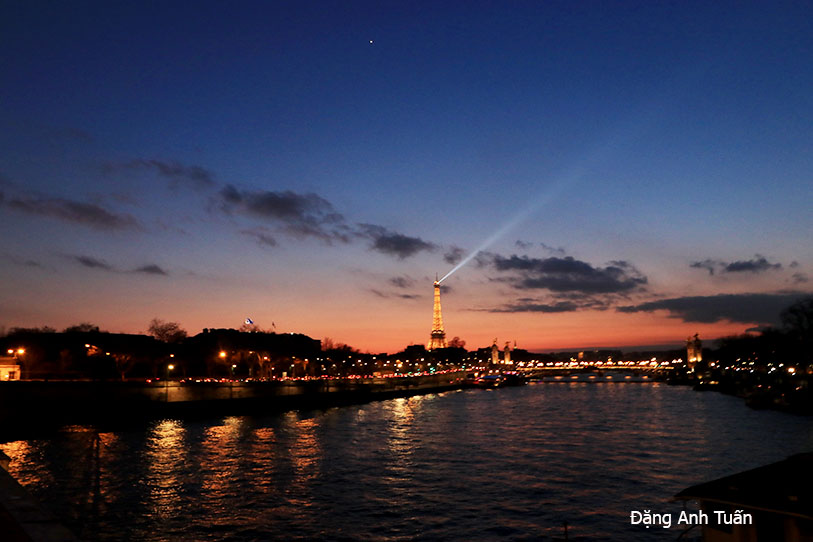
Paris au fil de la nuit


[ngg_images source= »galleries » container_ids= »247″ display_type= »photocrati-nextgen_basic_thumbnails » override_thumbnail_settings= »1″ thumbnail_width= »160″ thumbnail_height= »80″ thumbnail_crop= »1″ images_per_page= »32″ number_of_columns= »4″ ajax_pagination= »0″ show_all_in_lightbox= »0″ use_imagebrowser_effect= »0″ show_slideshow_link= »0″ slideshow_link_text= »[Montrer sous forme de diaporama] » template= »/homepages/5/d276592279/htdocs/clickandbuilds/vietnamquehuongtoi/wp-content/plugins/nextgen-gallery/products/photocrati_nextgen/modules/ngglegacy/view/gallery.php » order_by= »pid » order_direction= »ASC » returns= »included » maximum_entity_count= »500″]

Cầu Long Biên (Ancien pont Paul Doumer, Hànội)


Version française
Version anglaise
Liste des photos

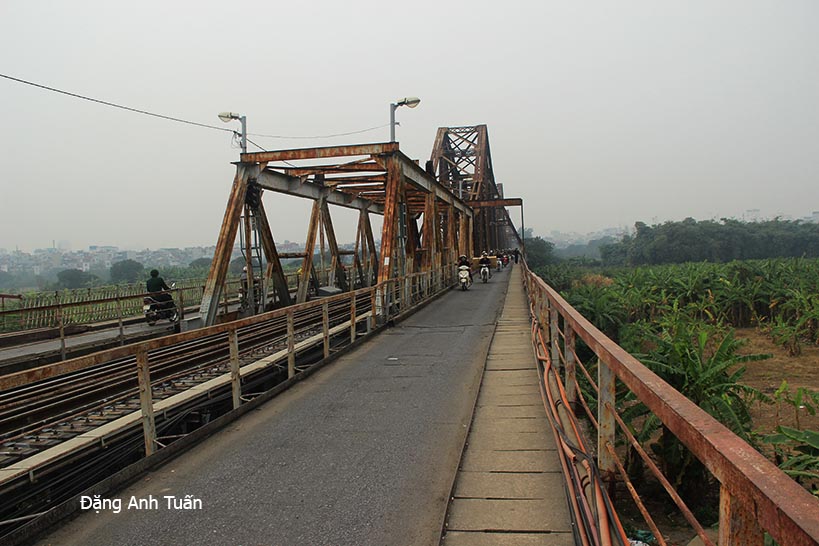
Ai có đến Hànôi hay đi tham quan vịnh Hà Long thì ít nhất cũng trông thấy cầu nầy từ đằng xa vì nó là cầu thép nối hai quận Hồ Hoàn Kiếm và quận Long Biên bắc qua sông Hổng, một con sông rất dài xuất phát từ Vân Nam và  đổ ra biển Đông  cuối cùng. Nó mang nhiều tên qua nhiều thế kỷ. Sông nầy  chỉ quen thuộc đối với thời cận hiện đại với  tên sông Hồng  chỉ có từ cuối thế kỷ XIX , dưới thời Pháp thuộc khi người Pháp ho dựa trên màu nước của đất phù sa mà đặt một tên thống nhất. Chính con sông nầy nó làm giàu có vùng đồng Bắc Bộ nơi mà các nhà sữ gia Tây Phương và Việt cho đây   là cái nôi của dân tộc Việt Nam.  Còn cái cầu nầy nó được khởi công xây dựng tháng 9 năm 1898  dưới thời kỳ Pháp thuộc với toàn quyền Paul Doumer và hoàn thành  hơn  3 năm  sau. Cầu nầy được thiết kế do hãng Daydé & Pillé nhưng kiểu dáng quá độc đáo không thua chi  đã trông thấy với các cầu của Gustave Eiffel vì vậy có sự nhầm lẫn nầy vã lại không phải là phương án thiết kế của Gustave Eiffel vì trên trang nhà của các người thừa kế của ông nầy không có liệt kê phương án nầy (http://www.gustaveeiffel.com/ouvrage/routiers.html).

Hiện trên đầu cầu vẫn còn tấm biển kim loại có khắc chữ « 1899 -1902 – Daydé & Pillé – Paris ». Nhưng cũng phải công nhận  đây là một kỳ công về kỹ thuật và công việc hậu cận vì thời đó nó là một trong bốn cầu dài nhất thế giới (nhất là ở Viễn  Đông ) và ngành công nghiệp thép bản  xứ hầu như không có, xứ Pháp thì quá xa vời. Cây cầu dài 1.862m, gồm 19 nhịp dầm thép, đặt trên 20 trụ cầu cao 43,50m. Ở giữa cầu là đường xe lửa, hai bên có đường rộng 1,3m, từng quãng một có những chỗ rộng nhô ra, nơi những ngừơi nghèo thường bán đồ. Toàn bộ chiều dài của cầu lên tới 2.500m.   

Nó là cầu chứng kiến những  thăng trầm lịch sữ của đất nước. Cầu nầy được vua Thành Thái và Toàn quyền Đông Dương đến đầu cầu để làm lễ khánh thành dưới thời Pháp thuộc. Nó cũng  là cầu mà ngày 10/10/1954, quân đội viễn chinh Pháp  lặng lẽ  cuốn gói  rời khỏi Hànội sau trận chiến ở Điện Biên Phủ. Nó bao lần bị oanh tạc hư hao trong thời kỳ chống Mỹ.  Nay sang thời bình, sau thập kỷ 90, cầu Long Biên được sử dụng chỉ cho tàu hỏa, xe đạp, xe máy  và người đi bộ từ khi có cầu Chương Dương  nằm trong mục tiêu đáp ứng nhu cầu đi lại và để phát triển kinh tế, xã hội đô thị ở hai bờ sông Hồng. Với nét cổ kính,  nó còn là nơi lý tưởng dành cho  giới trẻ Hà Thành muốn chụp ảnh đám cưới hay lưu niệm. Hôm tôi đến đây chụp thấy ớn quá chừng có nhiều  người đứng giữa cầu chụp nhất là có tàu hỏa thường tới lui trên cầu. Chỉ có ở đất nước mình mới thấy sự táo bạo như vậy mà thôi. Tôi còn nhớ em đó nói có chi đâu anh khi nghe còi thì chạy  vào mà thôi.  Một hình ảnh khó quên.

Quiconque ayant l’occasion de venir à Hànội ou d’aller à la baie d’Along  peut voir   au loin   ce pont en acier. Celui-ci relie les deux districts Hồ Hoàn Kiếm et Long Biên en enjambant le long  fleuve Rouge issu de la grotte de Yunnan en Chine  et terminant sa course dans la mer de l’Est. Ce fleuve  a plusieurs noms au fil des siècles. Il est  plus connu familièrement sous le nom actuel « Fleuve Rouge » à la fin du XIXème siècle. En voyant la couleur alluviale de son eau et en voulant uniformiser les noms portés par ce fleuve, les Français lui ont donné, à l’époque coloniale, le nom « Fleuve Rouge« . C’est lui qui nourrit et enrichit la région du delta du Nord que les historiens occidentaux et vietnamiens ont considérée toujours comme le berceau de la civilisation vietnamienne. En ce qui concerne le pont, il fut construit à l’époque coloniale en 1898 et achevé 3 ans plus tard sous l’initiative du gouverneur de l’Indochine,   Paul Doumer. Le projet de conception et de réalisation  de ce pont était assumé  par la société  Daydé & Pillé.  Comme sa forme et son style ressemblent à  ceux des ponts de Gustave Eiffel, il y a là une confusion énorme en attribuant cet ouvrage  à ce dernier.

De plus, dans la liste des ponts routiers  réalisés par Gustave Eiffel (http://www.gustaveeiffel.com/ouvrage/routiers.html), le pont Paul Doumer ne figure pas. 

Par contre, on trouve encore aujourd’hui à l’entrée de ce pont,  une plaque métallique  portant le nom de la maison  Daydé & Pillé et sa date de réalisation. Il faut reconnaître que ce pont est un remarquable ouvrage d’art de l’époque, une prouesse technique et logistique,  vu  la faiblesse de la sidérurgie locale et l’éloignement de la France. Il est l’un des quatre ponts les plus longs du monde ( le premier en Extrême Orient). Long de 1862 mètres, il  comprend  19 travées solidaires formées de poutres d’acier du type Cantilever et repose essentiellement  sur une vingtaine  de colonnes solides hautes de   43,50 mètres. De chaque côté du pont, il y a un petit trottoir réservé pour les piétons et une piste  pour les vélos et les motos tandis qu’au milieu se trouvent  les rails pour les trains. La longueur totale de ce pont atteint jusqu’à 2500 mètres.

Il est le témoin majeur des hauts et des bas de l’histoire du Vietnam.  Il fut  inauguré par l’empereur Thành Thái  en présence du gouverneur de l’Indochine Paul Doumer à l’époque coloniale. C’est aussi par ce pont que les troupes françaises  empruntèrent en Octobre 1954   pour quitter Hànoï après la chute de Điện Biên Phủ. Il était maintes fois  la cible privilégiée des bombardements durant la guerre contre les Américains.

Après la décennie des années 1990 marquée par la paix, le pont Long Biên est réservé uniquement pour les trains, les vélos, les scooters et les piétons depuis qu’i l existe  le pont Chương Dương répondant aux développements  économiques et à l’urbanisation de deux côtés du fleuve Rouge.

Avec son charme antique, il devient aujourd’hui l’endroit idéal fréquenté par la jeunesse hanoienne pour immortaliser son mariage ou son souvenir. Le jour où j’étais de passage pour faire des photos, je m’aperçus qu’il y avait quelques jeunes gens empruntant la voie du milieu fréquentée par les trains  pour être photographiés. C’est une audace effarante qu’on peut trouver seulement au Vietnam au détriment de la vie. C’est difficile d’oublier cette scène.

English version

Anyone who has the chance to come to Hanoi or go to Ha Long Bay can see in the distance this steel bridge. It connects the two districts Hồ Hoàn Kiếm and Long Biên by spanning the long Red River, which originates from the Yunnan cave in China and ends its course in the East Sea. This river has had several names over the centuries. It is more familiarly known by its current name « Red River » since the late 19th century. Seeing the alluvial color of its water and wanting to standardize the names carried by this river, the French gave it, during the colonial period, the name « Red River. » It nourishes and enriches the northern delta region, which Western and Vietnamese historians have always considered the cradle of Vietnamese civilization. Regarding the bridge, it was built during the colonial period in 1898 and completed 3 years later under the initiative of the governor of Indochina, Paul Doumer. The design and construction project of this bridge was undertaken by the company Daydé & Pillé. Since its shape and style resemble those of Gustave Eiffel‘s bridges, there is a huge confusion attributing this work to him.

Moreover, in the list of road bridges built by Gustave Eiffel (http://www.gustaveeiffel.com/ouvrage/routiers.html), the Paul Doumer Bridge does not appear.

However, even today at the entrance of this bridge, there is a metal plaque bearing the name of the Daydé & Pillé company and its date of completion. It must be acknowledged that this bridge is a remarkable work of art of its time, a technical and logistical feat, given the weakness of the local steel industry and the distance from France. It is one of the four longest bridges in the world (the first in the Far East). Measuring 1862 meters long, it comprises 19 solid spans formed of Cantilever-type steel beams and rests mainly on about twenty solid columns, each 43.50 meters high. On each side of the bridge, there is a small sidewalk reserved for pedestrians and a lane for bicycles and motorcycles, while in the middle are the rails for trains. The total length of this bridge reaches up to 2500 meters.

It is a major witness to the ups and downs of Vietnam’s history. It was inaugurated by Emperor Thành Thái in the presence of the Governor of Indochina, Paul Doumer, during the colonial era. It was also via this bridge that French troops passed in October 1954 to leave Hanoi after the fall of Điện Biên Phủ. It was repeatedly a prime target for bombings during the war against the Americans.

After the decade of the 1990s marked by peace, the Long Biên Bridge has been reserved only for trains, bicycles, scooters, and pedestrians since the Chương Dương Bridge was built to meet the economic developments and urbanization on both sides of the Red River.

With its antique charm, it has become today the ideal place frequented by Hanoi’s youth to immortalize their wedding or memories. The day I was passing by to take photos, I noticed that there were some young people using the middle lane, frequented by trains, to be photographed. It is a staggering audacity that can only be found in Vietnam at the risk of life. It is hard to forget this scene.

Galerie des photos

[RETOUR]


Đình Bảng (Maison communale, Bắc Ninh)

English version

Version vietnamienne

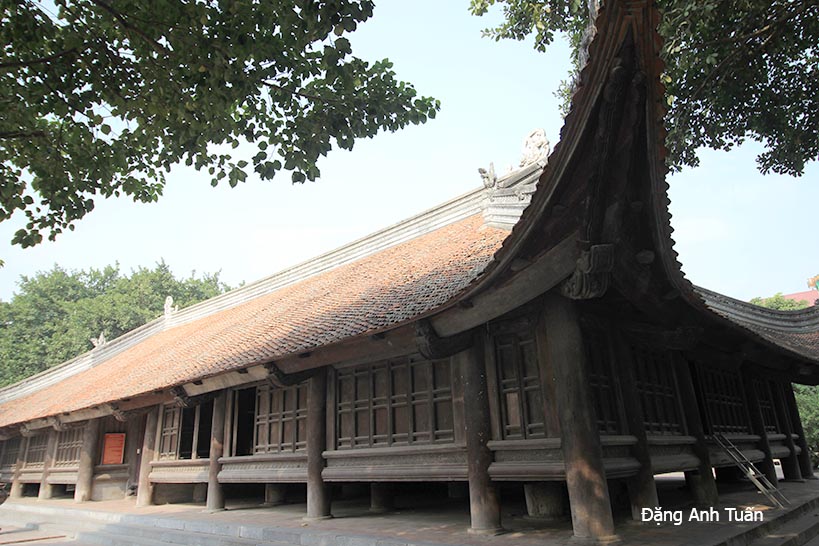
Depuis  longtemps,  Đình Bảng est réputée   dans le Nord du Vietnam  comme la maison communale,  réussissant par  son âge datant plus de 300 ans, à garder son état initial. On attribue sa  ressemblance à une grande maison en bois sur pilotis qu’on ne trouve pas dans d’autres villages du Tonkin. Vue de loin, elle a une structure imposante surélevée, posée solidement sur le sol grâce à   un assemblage de colonnes (60 piliers), d’arbalétriers et de toutes sortes d’éléments en bois de fer (gỗ lim)  soudés par des mortaises et des tenons sans avoir besoin des fondations coulées. C’est le poids de  sa toiture qui permet de la consolider . Selon l’on dit, à l’époque coloniale, cette maison réussît à résister aux assauts  d’un char  français  par l’attelage de sa splendide  charpente avec des chaînes. Grâce à la participation active du mandarin Nguyễn Thạc Lương, originaire du village Đình Bảng et  sa femme Nguyễn Thị Nguyên, cette maison communale édifiée au début du XVIII ème siècle fut  achevée seulement après 36 ans de travaux de construction. Dans  un vieil adage populaire vietnamien , cet édifice  occupe   la seconde place dans la classification des maisons communales du Tonkin. La  première place revient à Đồng Khang qui  n’arrive pas à résister aux aléas du temps tandis que la  maison Đình Diềm occupe la dernière place honorable et   garde seulement aujourd’hui 3 travées au lieu de 5 au moment de sa construction. Il n’y a que Đình Bảng continuant à préserver son état initial au fil des  années.

Située dans le village   Cổ Pháp de la commune Từ Sơn dans la province Bắc Ninh, cette maison communale est dédiée au  culte de trois génies tutélaires (le Génie de l’Eau, le Génie de la Terre et celui des Récoltes). Selon l’on-dit, c’est ici qu’est né Lý Công Uẩn, le fondateur de la dynastie des Lý. De passage à Đình Bảng, il ne faut pas oublier de visiter le temple Đô (Đền Đô) appelé fréquemment sous le nom « Lý Bát Đế (ou temple des 8 rois des Lý).  Ce site n’est pas très loin de la maison communale Đình Bảng ( à peu près  un demi kilomètre à pied). Il y a aussi  une spécialité locale connue sous le nom susê ou phu thê (mari-femme) qu’il ne faut pas oublier de goûter. Ce gâteau a  l’apparence d’un cube   ficelé avec un ruban de couleur rouge. Ce gâteau est composé de la  farine du tapioca, parfumé  au pandan et parsemé de grains de sésame (vừng đen) de couleur noire.  Au cœur de ce gâteau  se trouve une pâte  faite avec des haricots de soja cuits à la vapeur (couleur jaune)  et de la confiture des graines de lotus et de la coco râpée (couleur blanche)  ressemblant énormément à la frangipane trouvée dans les galettes des rois. Sa texture collante rappelle le lien fort  qu’on veut représenter dans l’union. Ce gâteau est le symbole de la perfection de l’amour conjugal et de la loyauté en accord parfait  avec le Ciel et la Terre (théorie du Yin et du Yang).


Version vietnamienne

Từ lâu, Đình Bảng   được xem là  một ngôi đình ở miền Bắc  còn giữ  đựợc vẻ  nguyên sơ dù nó  được xây dựng đã có 300 năm. Nó còn là ngôi đình có dáng nhà sàn mà ít  trông thấy ở các làng khác. Nhìn  từ đẳng xa, ngôi đình có một cấu trúc nổi,   kê vững  chắc trên mặt đất nhờ qua một   hệ thống  chân cột (60 cột trụ bằng gỗ lim ), kèo và xà giằng nhau, liên kết  không cần chân móng. Mái đình  càng nặng thì sức nén của nó xuống các cột càng lớn khiến ngôi đình càng vững chãi. Nghe nói nhờ vậy dưới thời Pháp thuộc,  đền nầy không có đổ vỡ truớc sự tấn công xe chiến đấu  của quân đội Pháp.

 Đình Bảng (Bắc Ninh)

Nhờ sự tích cực tham gia của quan Nguyễn Thạc Lương, người Đình Bảng và bà vợ là Nguyễn Thị Nguyên, ngôi đình nầy được xây dựng vào đầu thế kỷ 18 kéo dài 36 năm mới được hoàn thành. Đây là ngôi đình thường được dân gian miền Bắc  nói đến qua ngạn ngữ: Thứ nhất là đình Đông Khang, thứ nhì đình Bảng, thứ ba đình Diềm.  Đình Đông Khang bị tàn phá bởi chiến tranh, còn đình Diềm trước có 5 gian nay thì còn 3 gian. Chỉ còn đình Đình Bảng còn giữ đựợc vẻ nguyên sơ qua dòng thời gian. Đình nầy nằm ở  làng Cổ Pháp,  thị xã Từ Sơn, tỉnh Bắc Ninh và thờ các vị thành hoàng gồm Cao Sơn đại vương (thần Núi), Thủy Bá đại vương (thần Nước) và Bách Lệ đại vương (thần Đất). Nơi nầy theo lời tương truyền còn là nơi sinh và lớn lên  của Lý Công Uẩn, người sáng lập triều đình nhà Lý. Đến đây , cũng nên đến tham quan Đền Đô nhà Lý thường được gọi là đền Lý Bát Đế, nơi thờ  tám vị vua đầu tiên nhà Lý. Đền nầy không xa chi cho mấy đi chừng nửa cây số qua cái chợ là đến. Nhớ đừng quên ăn đặc sản của vùng. Đó là bánh phu thê, một  bánh hình  vuông bằng lá dừa, nhân đậu xanh ở  trong hình tròn,  biểu tượng vuông tròn của triết lý âm dương  và nhắc đến tình nghĩa vợ chồng.


Chùa Keo (Pagode Keo, Thái Bình)


Version vietnamienne
English version
Galerie des photos

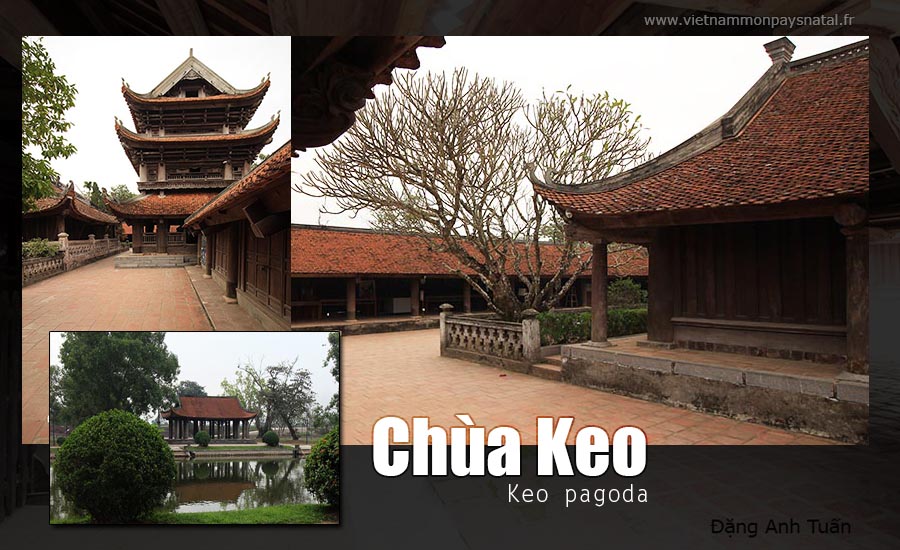
En évoquant Thái Bình, on ne cesse pas de penser à sa spécialité locale (soupe de poissons)  et à sa pagode Keo.  Etant préparé minutieusement avec  les morceaux de  carpe  d’eau douce assaisonnés avec de  la poudre de curcuma,, ce plat associé aux nouilles de riz crée à la fois un goût délicieux et aromatique avec les feuilles d’aneth et de basilic,  ce qui lui permet de rivaliser incontestablement avec le phở, le bouillon des Tonkinois.

Quant à la pagode Keo, elle est véritablement un ancien ouvrage  architectural localisé dans le district Vũ Thư avec une superficie de 40.907,9m2. Etant considérée souvent comme une chef d’œuvre d’art basé essentiellement sur l’utilisation des étais  du bois de fer précieux (gỗ lim), cette pagode possède plus de 100 travées de taille diverse et un clocher magnifique à 3 étages  dont chacun possède son propre toit aux tuiles « mủi hài » et une cloche en bronze carrelé.  

On ne conteste pas sa réputation d’être  le plus beau   joyau architectural typique datant de l’époque des Lê postérieurs. Son dôme ressemble à une fleur de lotus épanouie au milieu de la cour de la pagode.

 L’organisation du culte religieux est la particularité de cet édifice  avec   Tiền Phật hậu Thần Thánh ( Bouddha dans la cour avant  et les Génies dans la cour arrière). C’est pourquoi on retrouve  prioritairement Bouddha  dans la salle antérieure (tiền đường) de la pagode  tandis qu’on pratique le culte des génies, en particulier celui  du  moine Dương Không Lộ dans la salle postérieure (hậu đường).    Etant issus des écoles religieuses   Vô Ngôn Thông et Thảo Đường, Dương Không Lộ était non seulement le Maître du Royaume sous la dynastie des Lý mais aussi l’inventeur de la fonderie vietnamienne. Cette pagode est habituée à organiser chaque année le festival des rites traditionnels ayant lieu au printemps (le 4ème jour du 1er mois lunaire), et  à l’automne (entre le 13ème et le 15ème jour du 9e mois lunaire). La fête est tellement importante que les filles ne peuvent pas s’en passer avec le dicton suivant:

Dù cho cha đánh mẹ treo, Em không bỏ hội chùa Keo hôm rằm.

Malgré l’interdiction de mes parents,
je ne peux pas  laisser tomber le festival des rites traditionnels au jour du mois lunaire.

Un joyau architectural vietnamien

Galerie des photos 


Version anglaise 

In speaking of Thái Bình province, one does not cease thinking about its local speciality (fish soup) and Keo pagoda. Being carefully prepared with  seasoned pieces  of freshwater carp in turmeric powder, this meal combined with noddles gives simustaneously a delicious  and aromatic taste  by the presence of dill  and basil leaves, which allow it to compete with phở, the Tonkinese soup. For the Keo pagoda, there is an older architectural  artefact located in the  Vũ Thư district and covering a land area of 40.907,9m2. Being considered as a greatest masterpiece  of art and  based essentially on the use of precious wooden struts (gỗ lim), this pagoda has more than 100  various-sized spans and  a magnificient threelevel bell tower,  each of which  posseses its own roof  with  shaped tiles (mũi hài) and a bell in tiled bronze

.One does not deny its reputation for being the most beautiful architectural jewel dating from the time of Later Lê Dynasty. Its dome looks like a flower blossomed in the midst of pagoda’s yart.

The organization of religious worship is the  particularity of this building with Tiền Phật hậu thần thánh (Buddha in front yard and geniuses in rear yard). That is why Buddha is fund in the anterior room (tiền đường) while the cult of geniuses, in particular that of Dương Không Lộ monk takes place in the posterior room (hậu đường). Coming  from religious schools Vô Ngôn Thông and Thảo Đường, Dương Không Lộ was not only the great master of the kingdom under Ly  dynasty but also the inventor of Vietnamese foundry. This pagoda is accustomed to organize each year the religious festival in the spring (4th day of the first lunar month) and autumn (between 13th and 15th day of the 9th lunar month). The festival is so important that girls  cannot do without it with the following saying: 

Dù cho cha đánh mẹ treo, em không bỏ hội chùa Keo hôm rằm.
Despite the interdiction of my parents,  I cannot renounce the Keo festival at the lunar day.

 
Chùa Keo,
một kiến trúc đẹp nhất ở Vietnam

Vietnamese version

Nhắc đến Thái Bình thì không thể quên được món canh cá rô và chùa Keo.  Canh cá, món nầy  được kết hợp với bánh đa, tạo ra một hương vị đầm đà với lá thì là, húng bạc hà,   không thua chi món phở của người miền Bắc  còn chùa Keo thì là một công trình kiến trúc cổ  độc đáo nằm trong huyện Vũ Thư  và có diện tích 40.907,9m2.  Đựơc xem là một kiệt tác nghệ thuật bằng gỗ lim, có hơn một trăm gian lớn nhỏ khác nhau và  nhất là có một gác chuông gồm có ba tầng, 12 mái, khung gỗ, mái lợp ngói mũi hài và một chiếc chuông đồng lát gạch.

Gác chuông là một kiến trúc tiêu biểu dưới thời Hậu Lê và được xem là đẹp nhất của vùng Bắc Bộ với hình dáng của một hoa sen vương lên giữa sân chùa.

Chùa Keo  có đặc điểm riêng trong việc thờ tự, ngoài thờ Phật phía sau còn thờ thánh.(tiền Phật, hậu Thánh). Vì vậy phía sau là nơi thờ thiền sư Dương Không Lộ, đựợc phong làm thánh.  Ông thuộc phái Vô Ngôn Thông và phái Thảo Đường, làm Quốc sư dưới triều nhà Lý và được xem là vị tổ của nghề đúc đồng. Chùa nầy hằng năm  còn có tổ chức những ngày lễ hội  truyền thống dành cho mùa Xuân và mùa Thu. Ngày lễ hội quan trọng cho đến đổi  có câu ca dao về hội chùa Keo:

Dù cho cha đánh mẹ treo,
Em không bỏ hội chùa Keo hôm rằm.

[Return RELIGION]


Người bán hàng rong Hanoï


Les marchandes ambulantes de Hanoï

Version anglaise
Version vietnamienne
Galerie des photos

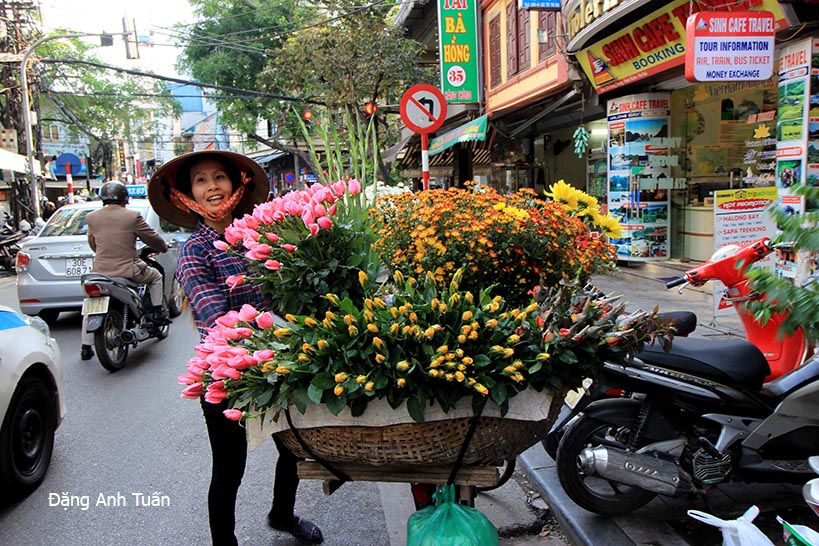
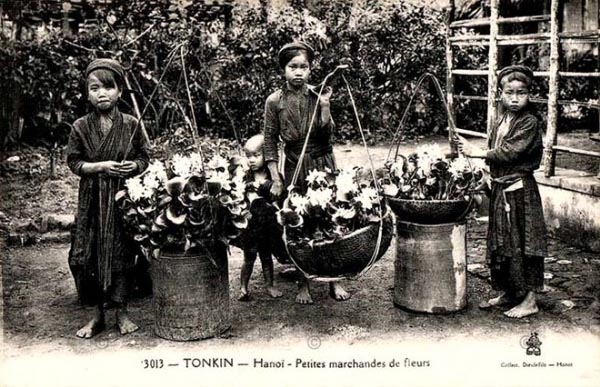
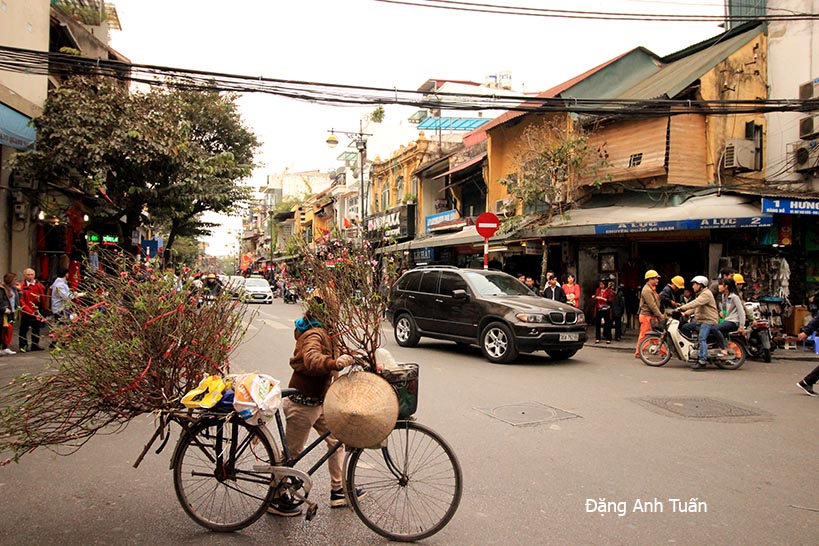
Étant connues à l’époque coloniale, les marchandes ambulantes se font au fil des années une image d’une scène ordinaire et plutôt familière pour les Hanoïens dans leur vie journalière. Par contre pour les touristes étrangers et les passionnés  de photos, elles constituent un attrait  très original,  une caractéristique particulière de la « culture du commerce ambulant »  de Hanoï  dont les photos ne peuvent pas être absentes  dans un album de photos de voyage, en particulier avec les marchandes ambulantes de fleurs. Étant venues d’autres provinces ou vivant aux alentours de la capitale, celles-ci  réveillées  très  tôt, à 4 ou 5 heures du matin, doivent accomplir  des dizaines de  kilomètres en vélo pour s’approvisionner en fleurs et fruits au marché.  Puis elles  cherchent des rues  calmes et désertes  pour mettre en valeur les produits  proposés à vendre (leurs et fruits)  tout en faisant appel à leur créativité  et l’adresse de leurs mains dans la géniale exposition et  la disposition superbement équilibrée de ces produits. Ceux-ci sont proposés en fonction de leur saison. On peut dire que ces femmes marchandes ambulantes  sont des tableaux vivants animés et multicolores se  faufilant au cœur du vieux quartier de la capitale.

Elles  apportent  tous les jours à la capitale   un style de vie   particulier sans qu’elles  le sachent. Elles continuent à s’inquiéter de manière timorée  tout en cherchant de loin la présence et le déplacement de la police locale à travers leurs yeux  craintifs et apeurés. Cela fait mal à ces femmes qui doivent chercher de l’argent pour s’acquitter des obligations familiales et avoir la tranquillité dans l’âme mais cela crée aussi un souci majeur pour ceux qui aiment à faire des photos comme moi car je suis obligé de les poursuivre patiemment  à travers les rues et les quartiers avec le but de pouvoir obtenir ces photos inoubliables ci-dessous  que je pourrai partager sur le net. Il est  très difficile d’avoir auprès de ces femmes courageuses un sourire matinal naturel avec cette vie assez  tumultueuse.

Version vietnamienne

Đã có từ  đời Pháp thuộc, người bán hàng rong là một hình ảnh bình dị quá quen thuộc  đối với người Hà Thành trong cuộc sống hằng ngày nhưng đối với những người du khách ngoại quốc hay là những người thích chụp ảnh thì người bán hàng rong là một nét đẹp quá độc đáo, một đặc trưng  văn hoá bán hàng rong  riêng tư  của Hà Thành không thể thiếu sót để lưu niệm trong cuốn album được nhất là với  những người bán hoa dạo. Các phụ nữ bán rong nầy họ là những người  nhập cư từ phương xa đến, họ  thức dậy lúc 4, 5 giờ sáng đạp xe hàng cây số để lấy hoa hay trái cây ở chợ   rồi họ tìm những đường hay nơi vắng vẽ ít người  để họ trang trí lại theo ý muốn, tăng thêm với  đôi bàn tay khéo léo,  cái  vẻ đẹp của  các món hàng thực phẩm  họ bán,  nhất là hoa quả. Họ bán theo mùa, muà nào thức ấy. Có thể nói họ là những bức tranh sống  linh hoạt   muôn màu di chuyển giữa lòng phố cổ. 

Họ tạo ra hằng ngày  một nét đẹp riêng tư  cho Hà Thành mà chính họ không bao giờ biết  nghỉ đến. Họ lúc nào cũng lo lắng  rụt rè thăm dò từ đằng xa sự đeo  đuổi của các chú  cảnh sát phường xóm qua đôi mắt sợ sệt. Thật tội cho họ để kiếm tiền trang trải cuộc sống vất vã, không có lúc nào được yên tâm cả mà cũng tội cho những người thích  chụp ảnh như  tớ cũng bị lôi cuốn, chạy theo họ qua đường phố, phải kiên nhẫn  để có thể được các tấm ảnh nầy  để chia sẻ trên trang nầy  nhất là hiếm có  được ở nơi họ  những  nụ cười tự nhiên vui vẻ buổi sáng với cuộc sống bon chen nầy.

marchande_ambulante


Version anglaise

Being known at the colonial period, street women  vendors get over the years,  a picture of the ordinary scene and too familiar for people living in Hanoi. However, for foreign tourists and photo enthusiasts, they constitute an attraction very original, a particular characteristic of ambulant commerce in Hanoï. Their photos are not missing in an album of travel pictures, in particular with  itinerant florists. Coming from other provinces or living around the capital and being  up early  around 4 or 5 in the morning, they must accomplish tens of kilometers on a bike  for their  supplies in flowers and fruits to the market. Then they seek refuge in quiet and desert streets in order to highlight the products to be sold  (flowers and fruits) by calling upon the creativity  and the manuel skill  in the ingenious exhibition and the arrangement superbly balanced of these products proposed depending on their season. 

One can say these street vendors are animated and multicoloured  living tableaux sneaking in the heart of old quarter of Hanoï. They provide every day to the capital a  particular lifestyle without them knowing. They continue to worry in timid manner by seeking away the presence and displacement of local police with their fearful eyes. It hurts these women who must find money for paying off their family obligations and having peace in their soul but it  also creates a major concern for those who love to take pictures like me because I am obliged to pursue them with patience through streets  and quarters in order to obtain these unforgettable  pictures below.  It is difficult to have a morning natural  smile from courageous women when they have a tumultuous life.

Galerie des photos

[Return FLEURS DU MONDE]

[Return HANOI]

Old Hànội (Phố cổ Hànội)

Version française
Version vietnamienne
Galerie des photos

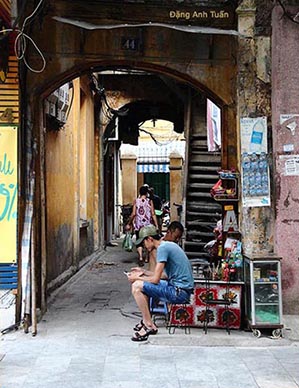
Despite the obsolescence of its tubular houses (nhà ống) and  old quarter of 36 streets and guilds, the « old Hanội » make over time the charming and romantic feeling. This old quarter  extending over an area mesuring approximately 82 ha, was established according to the criteria mentioned in the geomancy, a Asian discipline for finding the equilibrium and harmony between water and earth and especially between beneficial wind (Blue Dragon) and  evil wind (White Tiger).

 Each street has its specialty: street consecrated to the silk with multicolored scarves, street reserved only to drugs with the fragrance of aromatic herbs etc … , that is what writer Roland Dorgeles told in his book « On the mandarin road ». In his book entitled « A description of  Tonkin kingdom« , the English merchant Samuel Baron mentioned that with  his illustrations and interesting descriptions.

Despite its insignificant size against that of Vietnam, the old quarter of Hanoï irrefutably  demonstrate the commercial and urban culture of the Vietnamese over many centuries. It is a model sorely needed for knowing in depth the traditional structure of the « town » in the Vietnamese’s rural world.

Pictures gallery 

titre_vieux_hanoi_1


Phố Cổ

The old quarter has a thousand years of history even if this latter is chaotic. Hànội has been predicted by Lý Thái Tổ king for ten thousand generations to come during the capital’s transfer. Hànội remains not only the eternal capital of the Vietnamese but also the sole city in South-East Asia  successfully keeping its mercantile city over the centuries.

Thu Quyến Rũ (The seduction of  Autumn of Đoàn Chuẫn-Từ Linh).
Saxophonist Quyền Văn Minh.

This track is taken from the album « Hànội mùa thu và em » (Hànội, the autumn and my love).

 Over night

vieux hanoi la nuit