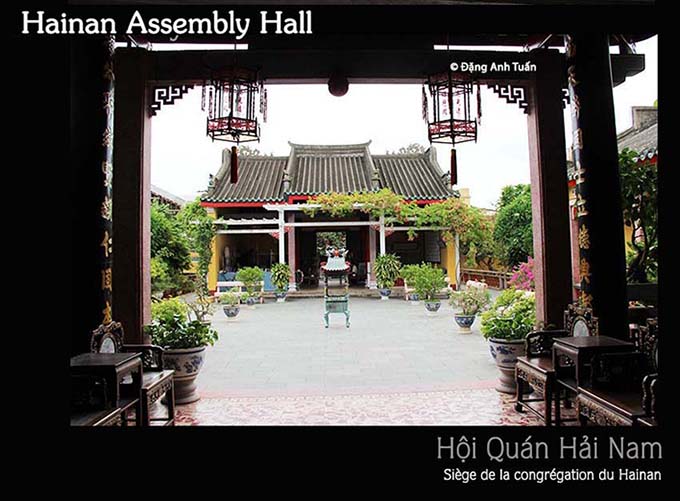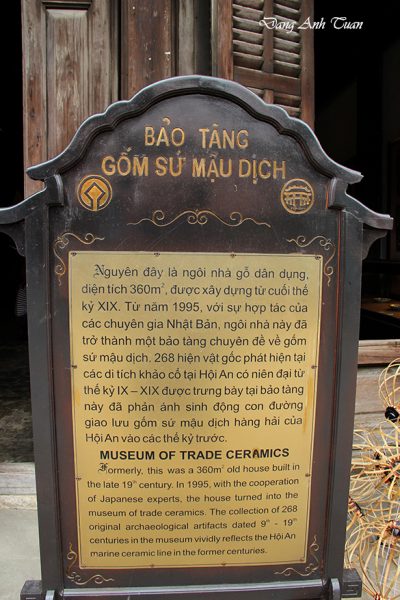
Musée du commerce de la céramique

Land of Montagnard minorities
Being known for beauty of nature characterized by its waterfalls and lakes, Buôn Ma Thuộc is the capital of Dak Lak province in Higland Center. The development of tourism is essentially based on elephant ride, visit of ethnic minorities or that of waterfalls. Formerly, it is the country of the Êdê and Bahnar. It is distingued from other regions by its plantations (coffee, rubber, pepper, cashew and durian fruit).
[ngg_images source= »galleries » container_ids= »173″ display_type= »photocrati-nextgen_basic_thumbnails » override_thumbnail_settings= »1″ thumbnail_width= »180″ thumbnail_height= »80″ thumbnail_crop= »1″ images_per_page= »30″ number_of_columns= »4″ ajax_pagination= »0″ show_all_in_lightbox= »0″ use_imagebrowser_effect= »0″ show_slideshow_link= »0″ slideshow_link_text= »[Montrer sous forme de diaporama] » template= »/homepages/5/d276592279/htdocs/clickandbuilds/vietnamquehuongtoi/wp-content/plugins/nextgen-gallery/products/photocrati_nextgen/modules/ngglegacy/view/gallery-caption.php » order_by= »pid » order_direction= »ASC » returns= »included » maximum_entity_count= »500″]
Ethnic minority housing
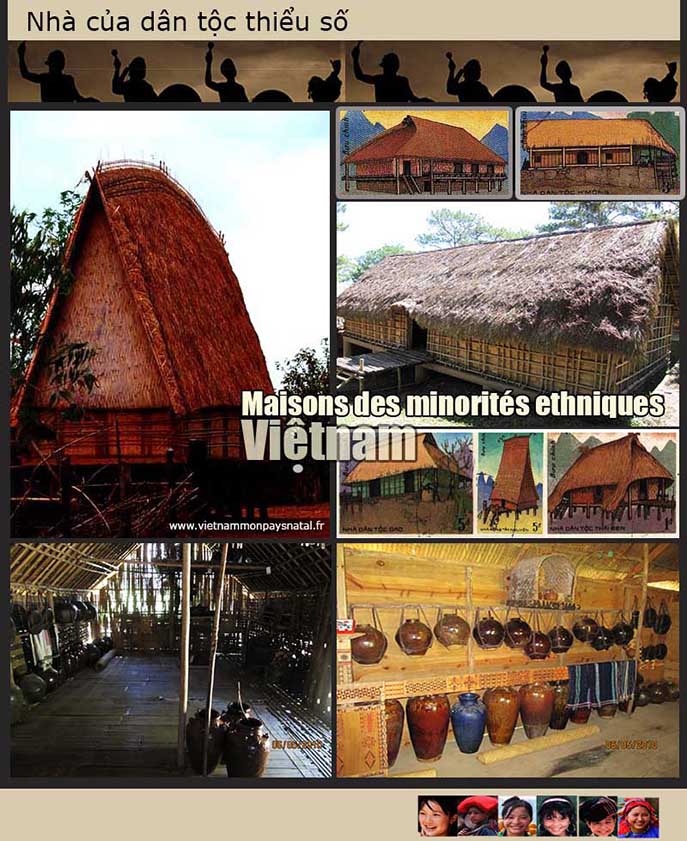
The richness of ethnic minorities living in the Central Highlands (Tây Nguyên) of Vietnam is measured by the number of jars of rice beers found inside of their houses. These jars are distinguished by their forms, sizes and colors. Some are engraved with the bas-reliefs often illustrated by flowers or dragons.
Pictures gallery
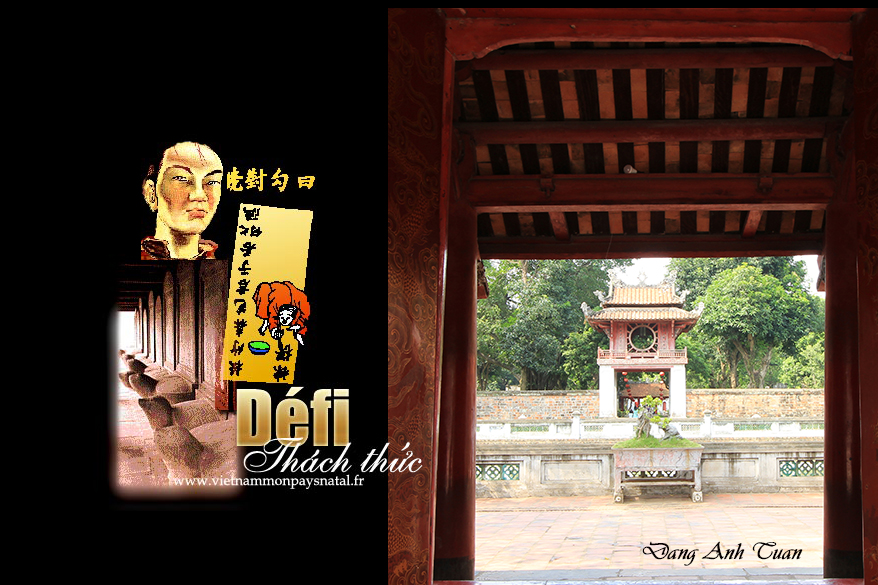
The challenge
French version
Vietnamese version
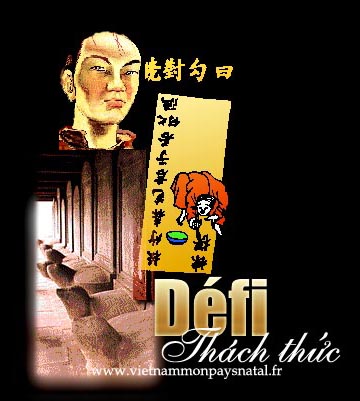
This word is not unfamiliar to the Vietnamese. On the contrary, it is synonymous to perseverance, resistance, ingenuity and confrontation for these frail people whose feet have been burried in the rice fields’ mud since the dawn of time. They never stop at taking up, from generation to generation, the challenge incessantly imposed by the excesses of a harsh and inhospitable nature and by the Midle Empire, their big brother and hereditary enemy at the border. The Vietnamese dedicated to the latter a surprising admiration but at the same time pledged an implacable resistance in the goal of keeping their national independence and cultural traits. China has many times tried to assimilate Vietnam during its millennial domination but it succeeded in blurring the particularities without making them disappear completely. It was quick to be aware of that, because on any favorable occasion, the Vietnamese displayed their resistance and difference. They even tried to confront the Chinese in the field of literature. That has been reported in a great number of accounts that keep on to be plentiful up until now in the history of Vietnamese literature.
According to what was said, after having succeeded in putting down the revolt of the two sisters Trưng Trắc Trưng Nhị and pacifying Giao Chỉ ( ancient country of the Viet ), Chinese General Ma Viện( MaYuan ) of the Han dynasty erected in 43 at the Sino-Vietnamese border a pillar several meters high bearing the following notice:
Ðồng trụ triệt, Giao Chỉ diệt
Ðồng trụ ngã, Giao Chỉ bị diệt.
Vietnam would disappear forever with the fall of this pillar.
To avoid the pillar’s fall, the Vietnamese tried to strengthen it by throwing, as they walked by, a piece of soil around that huge column, and thus progressively helped in building a mound making the mythical pillar disappear.
To be ironic about the Vietnamese’s fear and worry of losing their country, the Ming emperor did not hesitate to use unfriendly terms to arrogantly tell the Vietnamese envoy Giang Văn Minh ( 1582-1639 ) during a reception:
Ðồng trụ chí kim đài dĩ lục
This Bronze pillar is now buried in green moss
to remind Giang Văn Minh of the putting down of the Trung sisters’ revolt and the pacifiaction of his country by the Chinese. Remaining unruffled, Giang Văn Minh responded with a surprising insight and an energetic and courageous determination:
Ðằng giang tự cổ huyết do hồng
That Ðằng river was then blended with red blood.
This was not the first time such a litterary competition took place. Under the reign of king Lê Ðại Hành ( The Great Expediter ), monk Lạc Thuận had an opportunity to catch the admiration of Chinese ambassador Li Jiao ( Lý Giác ) whom he helped cross the river by posing as a boatman.
He was quick to complete the four-versed poem started first by Li Jiao who saw two wild geese playing on the water wave crests:
Ngỗng ngỗng hai con ngỗng
Ngữa mặt nhìn trời xanh
Goose, goose, the two geese
Looking up the blue sky they tease
by the following two verses:
Nước biếc phô lông trắng
Chèo hồng sóng xanh khua
Bluish green water contrasts white feather
Showing pink feet splitting blue waves over.
It is shown not only the rapidity of monk Lac Thuan’s improvisation but also his ingenuity of placing in parallel the ideas and the words to be used in this four-versed poem.
But obviously credits on the confrontation finally go to to the learned Mạc Ðỉnh Chi because he knew how to show during his stay in China his capability of resistance and his talent of knowing how to cleverly answer all questions s and avoid all traps. He was sent to China (1314) by king Trần Anh Tôn after the latter had defeated the army of Kubilai Khan’s Mongols with general Trần Hưng Ðạo. Because of an unexpected delay, he could not show up on time at the gate of the fort at the Sino-Vietnamese border. The mandarin in charge of the supervision of the fort agreed to open the gate if f only Mạc Ðỉinh Chi could appropriately parallel the mandarin’s sentence containing 4 words « quan ».
Quá quan trì, quan quan bế,
nguyện quá khách quá quan
Qua cữa quan chậm, cữa quan đóng,
mời khách qua đường qua cữa quan.
Late at passing the gate, the mandarin gate is closed,
Passing pedestrian please pass the gate.
Unruffled at this litterary challenge, he replied to the mandarin with a surprising ease by the following sentences:
Xuất đối dị, đối đối nan, thỉnh tiên sinh tiên đối.
Ra câu đối dễ, đối câu đối khó
xin tiên sinh đối trước
Easy to pose the sentence, difficult to parallel it.
Parallel sentence poser please pose first.
It is noted that in this reply, there are not only the word « đối » that is repeated 4 times in parallel with the word « quan », but also the virtuosity of respecting the rhymes and the rules in composing parallel sentences by Mạc Ðỉnh Chi in his verses while making it known to the mandarin the situation he was tangled up with. This enormously pleased the Chinese mandarin who was quick to to open the fort gate and greet him with great pomp. This incident was reported to the Peking court and was fast to bring desire to the best Chinese learned mandarins to measure up with him in literary field.
One day, he was riding his mule in the capital city of Peking. The mule did not go fast enough, which annoyed a Chinese mandarin who followed him on his way. Irritated by the disturbing slowliness, the mandarin turn to him saying with an arrogant and contemptuous tone:
Xúc ngã ky mã, đông di chi nhân dã, Tây di chi nhân dã?
Chạm ngựa ta đi là người rợ phương Ðông hay là người rợ phương Tây?
Slowing my horse is the barbarian from the East or from the West?
That mandarin took what he had learned in the book Mencius ( Mạnh Tử )(1) to refer to the barbarians, those who do not possess the same culture of the Midle Empire by using the words « đông di ». Surprised by the hurting remark while he knew that China was at that time governed by by the nomad tribes, the Mongols, Mạc Ðĩnh Chi replied with his black humor:
Át dư thừa lư, Nam Phương chi cường dư, Bắc phương chi cường dư
Ngăn lừa ta cưởi, hỏi người phương Nam mạnh hay người phương Bắc mạnh?
Impeding my mule is the strong people from the North or from the South?
Mạc Ðỉnh Chi also took what he had learned from the book Trung Dung (2) to remind the mandarin that he was not sure that the people from the North were stronger than those from the South. The mandarin turned pale of shame and was so vexed by the spirited and spontaneous reply that he was forced to drive off. Another time, in a discussion with Mạc Ðỉnh Chi and wanting to know his character, the Yuan emperor read him the following phrase:
Nhật hỏa, vân yên, bạch đáng thiêu tàn ngọc thỏ
Mặt trời là lửa, mây là khói, ban ngày đốt cháy vần trăng
Daytime, the sun being fire, the clouds being smoke burn up the moon.
The emperor wanted to show his power by comparing himself with the sun and in making it known to Mạc Ðỉnh Chi that Vietnam is comparable to the moon would soon be wiped out and dominated. Unruffled, Mac Ðỉnh Chi replied in firm and courageous terms:
Nguyệt cung, kim đạn, hoàng hôn xa lạc kim ô
Trăng là cung, sao là đạn, chiều tối bắn rơi mặt trời.
Nightime, the moon being crossbow, the stars being projectiles shoot down the sun.
Thus the Yuan emperor Kubilai Khan ( Nguyên Thê’ Tổ ) had to recognize his talent and granted him the title » ( Lưỡng Quốc Trạng Nguyên » ( Doctor of both countries ) for China as well as for Vietnam. this rendered some Chinese mandarins jealous. One of them tried to humiliate him one day by treating him as a bird because of the tone of the monosyllabic language; the Vietnamese give the impression of chirping when they speak:
Quích tập chi đầu đàm Lỗ luận: tri tri vi tri chi, bất tri vi bất tri, thị tri
Chim đậu cành đọc sách Lỗ luận: biết thì báo là biết, chẳng biết thì báo chảng biết, ấy là biết đó.
Birds gather on the branch to study the book Dialogs: What we know we say we know, what we don’t we say we don’t, we know it though.
It was a way to recommend Mac Ðĩnh Chi to show more humility and to behave like a man of Confucian quality ( junzi ). Mac Ðĩnh Chi replied in treating him like a frog because the Chinese have the habit of clicking the tongue when drinking and speaking loudly:
Oa minh trì thượng đọc Châu Thư: lạc dữ đọc lạc nhạc, lạc dữ chúng lạc nhạc, thục lạc.
Châu chuộc trên ao đọc sách Châu Thu: cùng ít người vui nhạc, cùng nhiều người vui nhạc, đằng nào vui hơn.
Frogs assemble in the pond to learn the work Chou Ching : they enjoy blaring alone, they enjoy blaring together, they’re blaring anyhow.
It’s a way to recommend the Chinese mandarin to have a keen mind in order to be able to have the right behavior and a more fair judgment.
In spite of the literary confrontation, Mac Ðĩnh Chi was very much appreciated in China. He was assigned by the Yuan emperor to write the funeral oration in honor of the passing away of a Mongolian princess. Due to the respect that the Chinese traditionally maintained toward talented Vietnamese people, especially the scholars having unprecedented erudition and keen minds, the learned Nguyễn Trãi was saved in extremis by the great steward Houang Fou ( Hoàng Phúc ). He was seen by Chinese generalissimo Tchang Fou ( Trương Phụ ) as a captive to be eliminated, a dangerous and harmful to the Chinese politics of expansion in Vietnam. He was retained by Tchang Fou during his stay at Ðồng Quang ( ancien name of Capital Hà-Nội before he could join the cotton clothed hero Lê Lợi later at Lam Sơn. Without the magnanimous and protective gesture of the eunuch Hoang Fou, Lê Lợi would not have been able to defeat the Ming because it was Nguyễn Trãi, the godsent adviser and eminent strategist that Lê Lợi relied upon to run the guerilla during his ten years struggle against the Chinese.
This literary confrontation began to blurr progressively with the arrival of the French in Vietnam and stopped definitively when emperor Khải Ðịnh decided to put an end to the Vietnamese system of mandarinal contest up until then copied from the Chinese one and based essentially on the Four Classics (3) and the Five Cannons (4) of the wise Confucius (Tứ Thư Ngũ Kinh).

The last mandarinal contest was organized at Huế in 1918. Another system of recruitment in the French way was proposed at the colonial l period. From then on, Vietnam has no longer the opportunity to measure up literarily with China and to show her its difference, its intellectual resistance and its cultural traits.
(1) : Jou philosophy of first plan of 4th century B.C.
(2) : The Middle-Of-The-Road, one of the basic works of Chinese education.
(3) : The Great Studies, ( Ðại Ho.c ), Middle-Of-The-Road ( Trung Dung ), Dialogs ( Luận Ngữ ) and Mencius’s Book ( ( Sách Mạnh Tử ).
(4):The Book of Odes ( Kinh Thi ), The Historic Documents( Kinh Thư ), The Book of Mutations ( Kinh Dịch ) The Rites( Kinh Lễ ), Springs and Autumn ( Kinh Xuân Thu ).
English version
Version vietnamienne
Galerie des photos
Le défi
Ce mot n’est pas étranger aux Vietnamiens. Par contre, il est synonyme de la persévérance, de la résistance, de l’ingéniosité et de la confrontation pour ces gens frêles, les pieds enfouis dans la boue des rizières depuis la nuit des temps. Ceux-ci ne cessaient pas de relever, de génération en génération, le défi imposé incessamment par les intempéries d’une nature ingrate et inhospitalière et par l’Empire du Milieu, leur grand frère limitrophe et leur ennemi héréditaire. Les Vietnamiens vouaient à ce dernier une admiration étonnante en même temps une résistance implacable dans le but de garder leur indépendance nationale et leurs spécificités culturelles. La Chine tenta de siniser à maintes reprises le Viêt-Nam durant sa domination millénaire mais elle réussit à estomper les particularités sans les faire disparaître complètement. Elle ne tarda pas à s’en apercevoir car à chaque occasion favorable, les Vietnamiens affichaient leur résistance et leur différence. Ils cherchaient à affronter même les Chinois dans le domaine littéraire. Cela a été rapporté par un grand nombre de récits continuant à abonder encore jusqu’à nos jours dans l’histoire littéraire vietnamienne.
Selon l’on-dit, après avoir réussi à mater la révolte des deux sœurs Trưng Trắc Trưng Nhị et de pacifier le Giao Chỉ (l’ancien pays des Viets), le général chinois Mã Viện (Ma Yuan) de la dynastie des Han édifia en 43 à la frontière sino – vietnamienne un pilier haut de plusieurs mètres et portant l’écriteau suivant:
Ðồng trụ triệt, Giao Chỉ diệt
Ðồng trụ ngã, Giao Chỉ bị diệt.
Le Vietnam disparaîtrait pour toujours avec la chute de ce pilier.
Pour éviter sa chute, chaque Vietnamien tenta de le consolider en jetant, à chaque passage, un morceau de terre autour de cette colonne colossale, ce qui permit d’édifier progressivement un monticule faisant disparaître ainsi ce pilier mythique.
Pour ironiser sur la peur et l’angoisse des Vietnamiens de perdre leur patrie, l’empereur des Ming n’hésita pas à s’adresser arrogamment au délégué vietnamien Giang Văn Minh (1582-1639) lors d’une réception, avec des termes inamicaux:
Ðồng trụ chí kim đài dĩ lục
Le pilier en bronze continue à être envahi par la mousse verte.
pour rappeler à Giang Văn Minh l’écrasement de la révolte dirigée par les sœurs Trưng Trắc et Trưng Nhị et la pacification de son pays par les Chinois. Imperturbable, Giang Văn Minh lui répondit avec une perspicacité étonnante et une détermination énergique et courageuse :
Ðằng giang tự cổ huyết do hồng
Le fleuve Bạch Ðằng continue à être teinté avec du sang rouge.
pour rappeler à l’empereur des Ming les victoires éclatantes et décisives des Vietnamiens contre les Chinois sur le fleuve Bạch Ðằng.
Ce n’est pas la première fois que cette compétition littéraire avait lieu. A l’époque du règne du roi Lê Ðại Hành ( Le Grand Expéditeur ), le bonze Lạc Thuận eut l’occasion de frapper d’admiration l’ambassadeur chinois Li Jiao ( Lý Giác ) à qui il avait fait passer le fleuve en se déguisant en sampanier. Il n’hésita pas à achever le quatrain entamé d’abord par Li Jiao qui se mit à chanter en voyant les deux oies sauvages jouer sur la crête des vagues:
Ngỗng ngỗng hai con ngỗng
Ngữa mặt nhìn trời xanh
Des oies sauvages, voyez ces deux oies sauvages
Elles dressent la tête et se tournent vers l’horizon
par ses deux vers suivants:
Nước biếc phô lông trắng
Chèo hồng sóng xanh khua
Leurs plumes blanches s’étalent sur les eaux glauques
Leurs pattes roses, telles des rames, fendent les flots bleus.
On constate non seulement la rapidité et l’improvisation du moine Lạc Thuận mais aussi son ingéniosité de mettre en parallèle les idées et les termes à employer dans ce quatrain.
Mais le mérite de la confrontation revient évidemment au lettré Mạc Ðỉnh Chi car ce dernier sut montrer durant son séjour en Chine sa capacité de résistance mais aussi son talent de savoir répliquer savamment à toutes les questions et éviter toutes les embûches. Il fut envoyé en Chine (1314 ) par le roi Trần Anh Tôn après que ce dernier avait défait l’armée des Mongols de Kubilai Khan avec le général Trần Hưng Ðạo. À cause d’un retard inopiné, il ne put pas se présenter à l’heure convenue devant le portail du fort à la frontière sino-vietnamienne. Le mandarin chargé de la surveillance de ce fort accepta d’ouvrir ce portail à condition qu’il réussît de répondre d’une manière appropriée à la question que ce mandarin voulait lui poser et dans laquelle il y avait 4 mots « quan »
Quá quan trì, quan quan bế,
nguyện quá khách quá quan
Qua cữa quan chậm, cữa quan đóng,
mời khách qua đường qua cữa quan
Vous êtes en retard, la porte réservée étant fermée.
Je vous demande de bien vouloir vous présenter devant cette porte.
Imperturbable devant ce défi littéraire, il répondit au mandarin avec une facilité étonnante par la phrase suivante:
Xuất đối dị, đối đối nan, thỉnh tiên sinh tiên đối.
Ra câu đối dễ, đối câu đối khó
xin tiên sinh đối trước
C’est très facile pour vous de poser une question, la réponse n’étant pas évidente.
Je vous demande de bien vouloir poser la question.
On constate que dans cette réplique, il y a non seulement le mot « đối » qui se répète en quatre fois et qui est disposé de la même manière que le mot « quan » mais aussi la virtuosité de savoir respecter les rimes et les règles prosodiques par Mạc Ðỉnh Chi dans son vers tout en faisant connaître au mandarin la situation où il était empêtré avec sa suite. Cela contenta énormément le mandarin chinois. Celui-ci n’hésita pas à ouvrir le portail du fort et à le recevoir en grande pompe. Cet incident fut rapporté à la cour de Pékin et ne tarda pas à porter envie aux meilleurs mandarins lettrés chinois de se mesurer avec lui dans le domaine littéraire.
Un beau jour, dans la capitale de Pékin, il était en train de faire une promenade avec son mulet. Comme ce dernier ne trottinait pas assez vite, cela énerva un mandarin chinois qui le suivait de près sur son chemin. Irrité par cette lenteur gênante, le mandarin se tourna vers lui en lui adressant avec un ton arrogant et méprisant:
Xúc ngã ky mã, đông di chi nhân dã, Tây di chi nhân dã?
Chạm ngựa ta đi là người rợ phương Ðông hay là người rợ phương Tây?
En gênant le passage de mon cheval, est -il un barbare venant de l’Est ou de l’Ouest?
Ce mandarin s’inspira de ce qu’il avait appris dans le livre de Mencius (Mạnh Tử )(1) pour désigner les Barbares, ceux ne possédant pas la même culture que l’empire du Milieu par l’emploi des deux mots « Ðông di ». Surpris par ce propos blessant lorsqu’il savait que la Chine fut gouvernée à cette époque par les tribus nomades, les Mongols, Mạc Ðỉnh Chi lui répliqua avec son humour noir:
Át dư thừa lư, Nam Phương chi cường dư, Bắc phương chi cường dư
Ngăn lừa ta cưởi, hỏi người phương Nam mạnh hay người phương Bắc mạnh?
En empêchant la marche normale de mon mulet, est-il fort, l’homme du Nord ou celui du Sud?
L’empereur des Yuan n’hésita pas à vanter sa puissance en le comparant au soleil et en faisant savoir à Mạc Ðỉnh Chi que le Viêt-Nam, comparable à la lune, serait anéanti et dominé bientôt. Imperturbable, Mạc Ðỉnh Chi lui répondit d’une manière ferme et courageuse:
Nguyệt cung, kim đạn, hoàng hôn xa lạc kim
Trăng là cung, sao là đạn, chiều tối bắn rơi mặt trời.
Etant prise pour l’arbalète, la lune avec les étoiles comme des projectiles, détruit facilement dans la nuitée le soleil.
L’empereur des Yuan Kubilai Khan ( Nguyên Thê’ Tổ ) dut reconnaître son talent et lui accorda ainsi le titre » Premier docteur » ( Lưỡng Quốc Trạng Nguyên ) aussi bien en Chine qu’au Viêt-Nam, ce qui rendit jaloux quelques mandarins chinois. L’un d’eux tenta de l’humilier un beau matin en le traitant comme un oiseau car à cause de la tonalité monosyllabique de la langue, les Vietnamiens donnent l’impression de gazouiller toujours lorsqu’ils parlent:
Quích tập chi đầu đàm Lỗ luận: tri tri vi tri chi, bất tri vi bất tri, thị tri
Chim đậu cành đọc sách Lỗ luận: biết thì báo là biết, chẳng biết thì báo chảng biết, ấy là biết đó.
L’oiseau s’agrippant sur une branche lit ce qui a été écrit dans le livre Les Entretiens : Si nous savons quelque chose, nous disons que nous la savons. Dans le cas contraire, nous disons que nous ne la savons pas. C’est ainsi que nous disons que nous savons quelque chose.
C’est une façon de recommander Mạc Ðỉnh Chi de se montrer plus humble et de se comporter comme un homme de qualité confucéenne ( junzi ). Mạc Ðỉnh Chi lui répliqua en le traitant comme une grenouille car les Chinois ont l’habitude de clapper à cause de leur manière de boire ou de parler bruyamment:
Oa minh trì thượng đọc Châu Thư: lạc dữ đọc lạc nhạc, lạc dữ chúng lạc nhạc, thục lạc.
Châu chuộc trên ao đọc sách Châu Thu: cùng ít người vui nhạc, cùng nhiều người vui nhạc, đằng nào vui hơn.
La grenouille barbotant dans la mare lit ce qui a été écrit dans le livre Livre des Documents Historiques (Chou Ching): certains jouent seuls de la trompette, d’autres jouent ensemble de la trompette. Lesquels paraissent en jouer mieux.
C’est une façon de dire au mandarin chinois d’avoir un esprit sain pour pouvoir avoir un comportement juste et un discernement équitable.
Malgré la confrontation littéraire, Mạc Ðỉnh Chi fut très apprécié en Chine. Il fut chargé même par l’empereur des Yuan de composer une oraison funèbre en l’honneur de la disparition d’une princesse mongole. Grâce au respect que les Chinois savaient entretenir traditionnellement à l’égard des gens de talent vietnamiens, en particulier des lettrés ayant une érudition inouïe et une vivacité d’esprit, le lettré Nguyễn Trãi fut sauvé in extremis par le grand intendant Houang Fou (Hoàng Phúc). Il était aux yeux du généralissime chinois Tchang Fou (Trương Phụ ) un homme captif à abattre, un personnage dangereux et nuisible à la politique d’expansion de la Chine au Viêt Nam . Il fut retenu par Tchang Fou durant son séjour à Ðồng Quang ((ancien nom donné à la capitale Hanoï ) avant de pouvoir rejoindre plus tard le héros à habit de cotonnade Lê Lợi à Lam Sơn. Sans ce geste magnanime et protecteur de l’eunuque Houang Fou, Lê Lợi n’aurait pas pu déboulonner les Ming car c’était Nguyễn Trãi, le conseiller providentiel et le stratège éminent sur lequel Lê Lợi s’appuya pour mener le guérilla durant ses dix années de lutte contre les Chinois.
Cette confrontation littéraire commença à s’estomper progressivement avec l’arrivée des Français au Vietnam et cessa définitivement lorsque l’empereur Khải Ðịnh avait décidé de mettre fin au système de concours mandarinal vietnamien calqué jusqu’alors sur celui des Chinois et basé essentiellement sur les Quatre Livres Classiques (3) et les Cinq Livres Canoniques (4) du sage Confucius.(Tứ Thư Ngũ Kinh).
On nota le dernier concours mandarinal organisé à Huế en 1918. Un autre système de recrutement à la française fut proposé à l’époque coloniale. Dès lors, le Vietnam n’avait plus l’occasion de se mesurer littérairement avec la Chine et de lui montrer sa différence, sa résistance intellectuelle et ses spécificités culturelles.
(1) : Philosophe Jou de premier plan du IV è siècle avant J.C.
(2) : Le Juste Milieu , l’un des ouvrages de base de l’enseignement chinois.
(3) : La Grande Étude, ( Ðại Học), le Juste Milieu ( Trung Dung ), Les Entretiens ( Luận Ngữ ) et le livre de Mencius ( Sách Mạnh Tử).
(4): Le Livre des Odes ( Kinh Thi ), Les Documents Historiques( Kinh Thu ), Le Livre des Mutations ( Kinh Dịch ) Les Rites ( Kinh Lễ ) , Printemps et Automne ).( Kinh Xuân Thu ).