The sweet cake rice (Bánh chưng bánh dầy)


The sweet rice cake

French version

The son of the first king of Van Lang, the Vietnam of long time ago, reigned under the name of Hùng Vương. He had three wives, each of them gave birth to a boy. The son of the first wife, Long married Kim who was arrogant and jealous. The son of the second, Ho married Ngoc who was naughty and sharp tongued toward her husband. The son of the deceased third wife, Vân, lived with his maternal grandmother and farmed for a living. He practiced the slash and burn agriculture, grew vegetables or went fishing in his spare time. His grandmother married Van to Xuân, a wise and hard working young woman in the village. The couple led a modest but happy life.

One day, summoned by the king, they had to sell their buffaloes to prepare for the trip to the court. There, they saw their elder brothers and their wives dress elegantly and adorned with jewels. Van and Xuan felt confused. Everyone mocked and scorned at them for going to see the king in such a simple appearance.

However, the king showed afection to Vân, an orphan of mother. Burdened by old age and a reign of 50 years, the king wanted to leave the throne to whoever could prapare the most tasty foods. The spouse of the elder brothers, confident of their talent, rivaled for getting the throne to their husbands. Only Vân and Xuan were worried because they were very poor.

One night, in a dream, Van saw his mother who let him know he would be selected for the throne. It would be sufficient for him to make a sweet rice cake in the form of a square with meat and bacon in the middle of it to symbolise the heart. The square cake represented the earth because at that time people thought the earth was square. Vân woke up and recalled the dream to his wife. The couple decided to follow the advice of their mother to make the cake, and to boil it in a terra cotta pot.

On the scheduled day, the two brothers Kim and Ngọc offered to the king expensive dishes. But the latter did not find anything exceptional. As for the cakes offered by Vân and Xuân, the king was excited by their delicateness and meaning. ( One should govern the country with wisdom). He showered Van with praises and designated him to be his successor. For his generosity, Van did not hesitate to give his brothers the title of viscount.The sweet rice cake ( or bánh chưng in Vietnamese ) is one of the traditional delicacies of the Vietnamese people during the Tết festival. It is eaten with caramel marinated stewed pork.This cake is also intangible proof of the theory of Yin and Yang and of the five elements belonging to Bai Yue (or Cent Yue), to which the Proto-Vietnamese belong, as it is made according to the cycle of generation of these 5 elements.

Fire->Earth->Metal->Water->Wood

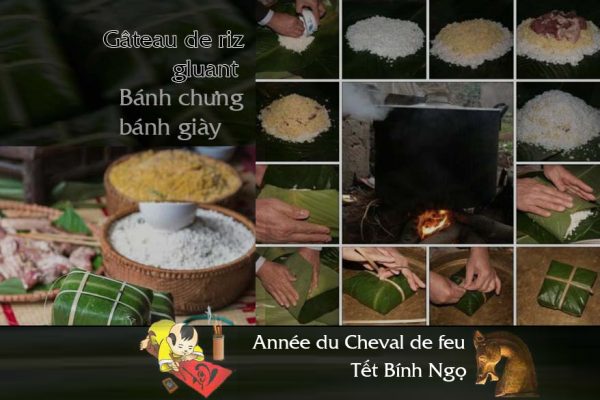
Inside the cake, there’s a piece of red pork (Fire) surrounded by a kind of pastry made from yellow beans (Earth). The whole is wrapped in white glutinous rice (Metal) and cooked with boiling water (Water), before the surface is given a green tint by banana leaves (Wood). The shape of these cakes was found in bi discs and jade and ivory Congs in the tombs of the aristocrats of two civilizations, Lianzhu and Shijiahé, with the idea of protecting the deceased in the world of the dead. The bi disc was often associated with Heaven and was green in color, while the Cong, which was tubular on the outside and cylindrical on the inside, was associated with Earth and was yellow in color. This is why, to commemorate the Elders, rice cakes cannot be missing from the ancestors’ altar on the occasion of the Lunar New Year.


[Return CONTES]

Gâteau de riz gluant (Bánh chưng bánh giày)

Le gâteau de riz gluant (Bánh chưng bánh giày)

Version vietnamienne

Version anglaise

Le fils du premier roi du royaume  Văn-Lang (Vietnam d’autrefois) régnait sous le nom de Hùng-Vương. Il avait trois épouses, chacune d’elles donnant naissance à un garçon. Le fils de la première, Long, se mariait à  Kim, orgueilleuse et jalouse. Le fils de la seconde, Hồ, épousait  Ngọc, méchante et acariâtre envers son mari. Le fils de la troisième décédée, Lang Liêu, vivait avec sa grand-mère maternelle et s’occupait des travaux agricoles. Il pratiquait la culture sur brûlis, cultivait les légumes ou allait pêcher aux heures de loisir. La grand-mère maria Lang Liêu à Xuân, une demoiselle sage et laborieuse du village. Le couple menait une vie modeste et heureuse.

Un jour, convoqués par le roi, ils durent vendre leurs deux buffles pour préparer le voyage. À la cour royale, ils virent leurs aînés et leurs épouses habillés élégamment et parés de bijoux. Lang Liêu et Xuân se sentirent confus. Tout le monde se moqua d’eux en leur reprochant de se présenter au roi sous une simple apparence.

Par contre, le roi se montra affectueux pour Lang Liêu, orphelin de mère. Accablé par la vieillesse et par le règne durant plus de  50 ans, le roi voulut céder le trône à celui qui pouvait préparer les mets les plus savoureux. Les épouses des deux aînés, confiantes de leur talent, rivalisèrent pour gagner le trône à leur mari. Seuls, Lang Liêu et Xuân furent  très inquiets car ils étaient très pauvres.

Une nuit, dans un songe, Lang Liêu vit sa mère qui lui fit savoir qu’il serait l’élu du trône. Il lui suffit de faire deux gâteaux de riz gluant, l’un en forme de carré (bánh chưng) avec de la viande et de la graisse au milieu pour symboliser le cœur et l’autre en forme de rondeur (bánh giày) sans garniture.  Les gâteaux carré  et rond représentaient respectivement  la terre et le ciel car on crut à cette époque que la terre était plate et carrée et le ciel étai rond. Lang Liêu se réveilla et raconta le songe à sa femme. Le couple décida de suivre les conseils de leur mère pour confectionner les gâteaux, puis les faire bouillir dans une marmite en argile cuite.

Au jour fixé, les deux brus Kim et Ngọc offrirent au roi des plats copieux et  coûteux. Mais ce dernier ne trouva rien d’exceptionnel. Quant aux gâteaux offerts par Lang Liêu et Xuân, il fut ravi par leur délicatesse et par leur signification. (Il faut régner sur terre avec cœur et sagesse et se souvenir du grand mérite des parents).

Le roi combla Lang Liêu de louanges et le désigna comme son successeur. Pour sa générosité, Lang Liêu n’hésita à élever au titre de vicomtes ses frères. De ce jour, chaque année, lors de la fête du Têt, il  prit l’habitude d’offrir sur l’autel de ses parents ces deux gâteaux de riz qu’il confectionna lui-même. Tous ses sujets commencèrent à l’imiter à cette occasion. C’est pourquoi le gâteau de riz gluant de Lang Liêu porta désormais le nom « Tiết Liệu » et devint ainsi  l’une des friandises traditionnelles des Vietnamiens lors de la fête du Tết. On le sert souvent avec du porc au caramel. Ce gâteau est aussi  la preuve intangible de la théorie  du Yin et du Yang et de ses cinq éléments appartenant à Bai Yue (ou Cent Yue)  dont les Proto-Vietnamiens font  partie car on retrouve  dans  sa confection le cycle d’engendrement  de ces 5 éléments.

Feu->Terre->Métal->Eau->Bois

À l’intérieur du gâteau, on  trouve un  morceau de viande de porc  de couleur rouge (le Feu) entouré par une sorte de pâte faite avec des fèves de couleur jaune  (la Terre).  Le tout est enveloppé par  le riz gluant de couleur blanche (le Métal) pour  être cuit avec de l’eau bouillante (l’Eau) avant d’avoir la coloration verte sur sa surface grâce aux feuilles de bananier (le Bois). La forme de ces gâteaux était retrouvée  à travers les disques bi et les Cong en jade et en ivoire  dans les tombes des aristocrates de deux civilisations Lianzhu et Shijiahé avec l’idée de protéger les trépassés dans le monde des morts.  Le disque bi était souvent associé au Ciel et avait la couleur verte tandis que le Cong  dont la forme était  tubulaire à l’extérieur et cylindrique à l’intérieur, était  assimilé à la Terre et avait  la couleur jaune. C’est pourquoi  afin de commémorer les Anciens, à l’occasion de nouvel an lunaire, les gâteaux de riz  ne peuvent pas être manquants sur l’autel des ancêtres.

Version vietnamienne

Con trai của vị vua đầu tiên của vương quốc Văn-Lang (Việt Nam cổ đại) trị vì tên là Hùng-Vương. Ngài có ba người vợ, mỗi người đều sinh được một đứa con trai. Con trai trưởng Long lấy vợ Kim kiêu hãnh và ganh tị. Con trai thứ hai là Hồ lấy Ngọc, xấu tính và cay nghiệt với chồng. Con trai của người thứ ba qua đời  tên là  Lang Liêu, sống với bà ngoại và chăm lo công việc nông nghiệp. Anh  làm nương rẫy thường ngày, trồng rau hoặc đánh cá lúc rảnh rỗi. Bà gả Lang Liêu cho Xuân, một cô thôn nữ ngoan ngoãn và  chăm chỉ. Cặp đôi vợ chồng có một cuộc sống khiêm tốn và hạnh phúc.

Một ngày kia, được vua triệu tập, hai vợ chồng phải bán hai con trâu của mình để chuẩn bị cho chuyến đi. Ở triều đình, họ thấy vợ chồng của hai anh ăn mặc sang trọng và  đeo đầy trang sức. Lang Liêu và Xuân cảm thấy bối rối. Mọi người đều cười nhạo họ, trách móc họ đến trình diện với vua cha với cách ăn mặc giản dị.

Ngược lại, vua cha biểu lộ sự trìu mến với Lang Liêu, mồ côi mẹ từ sớm. Nản lòng trước tuổi già và trị vì hơn 50 năm, nhà vua muốn nhường ngôi cho người con nào  có thể chế biến được những món ăn ngon nhất. Vợ của hai anh cả tin tưởng ở tài năng của mình nên cố tranh giành nhau ngôi báu cho chồng mình. Chỉ có Lang Liêu và Xuân là rất lo lắng vì họ rất nghèo.

Một đêm, trong một giấc mơ, Lang Liêu thấy mẹ của mình về , báo cho anh biết rằng anh sẽ được ngôi vua. Chỉ cần phải làm là hai chiếc bánh gạo nếp, một chiếc có hình vuông (bánh chưng) với nhân thịt và mỡ ở giữa tượng trưng cho trái tim và chiếc còn lại hình tròn không nhân (bánh giày). Hai chiếc bánh hình tròn và hình vuông nầy  tượng trưng cho trời và đất  vì thời đó người ta tin rằng trái đất bằng phẳng là hình vuông và trời thì tròn. Lang Liêu tỉnh dậy và kể lại giấc mơ cho vợ. Hai vợ chồng quyết định nghe lời mẹ làm bánh rồi sau đó đem luộc bánh trong nồi đất nung.

Đến ngày quyết  định, hai cô con dâu Kim và Ngọc dâng vua cha những món ăn cao sang đắt tiền. Nhưng vua cha không tìm thấy có chi đặc biệt cả. Đối với những chiếc bánh của Lang Liêu và Xuân, vua cha lại  hoan hỉ vì vừa thấy ngon và có ý nghĩa của các bánh gạo nếp. (Cần phải trị vì với đạo lý và khôn ngoan và nhớ đến công đức sinh thành lớn lao của cha mẹ)

Nhà vua khen ngợi Lang Liêu và chỉ định làm người kế vị. Vì lòng hào hiệp của mình, Lang Liêu không ngần ngại phong anh em mình lên hàng tử tước. Kể từ ngày đó, cứ đến Tết hàng năm, vua Lang Liêu  lại có thói quen  cúng trên bàn thờ cha mẹ hai chiếc bánh chưng bánh  dày do chính tay vua làm. Tất cả mội người dân bắt đầu bắt chước vua từ đấy . Đó là lý do tại sao bánh nếp của Lang Liêu ngày nay mang tên “Tiết Liệu” và trở thành một trong những món ăn truyền thống của người dân Việt trong ngày Tết. Nó thường được  ăn chung với thịt lợn kho. Chiếc bánh chưng  cũng là bằng chứng xác thực của thuyết Âm dương và ngũ hành thuộc về đại tộc Bách Việt trong đó có người Việt cổ vì chúng ta tìm thấy trong cách chế tạo của bánh có ngũ hành tương sinh:

Hỏa->Thổ->Kim->Thủy->Mộc

Bên trong bánh có một miếng thịt lợn màu đỏ (Hỏa) bao quanh bên ngoài là loại bột nhão làm bằng nhân đậu màu vàng (Thổ). Toàn bộ được gói bằng gạo nếp có màu trắng (Kim) trụng với nước sôi (Thủy) trước khi có màu xanh trên bề mặt nhờ có lá chuối (Mộc).Hình dáng Bánh Chưng bánh giày này được trông thấy trong các mộ qúi phái của hai nền văn hoá Lương Chữ và Thạch Gia Hà qua các đĩa bi và cong bằng ngọc bích và ngà  trong bối cảnh nghi lễ và thường  có nhiệm vụ bảo vệ người về thế giới bên kia. Bi thường được kết nối với trời và màu xanh, trong khi tông, với hình dạng hình ống vuông ở bên ngoài và hình tròn bên trong, được liên kết với đất và màu vàng.Bởi vậy để tưởng niệm người xưa, các bánh chưng bánh giày không thể thiếu trên bàn thờ  tổ tiên nhân dịp Tết Nguyên Đán.


[Return CONTES]

The God of Mountains and the God of Rivers (Sơn Tinh Thủy Tinh)

sontinh_thuytinh

French version
Vietnamese version
Pictures Gallery

We would not know a society without its legends, like there are no civilizations without histories

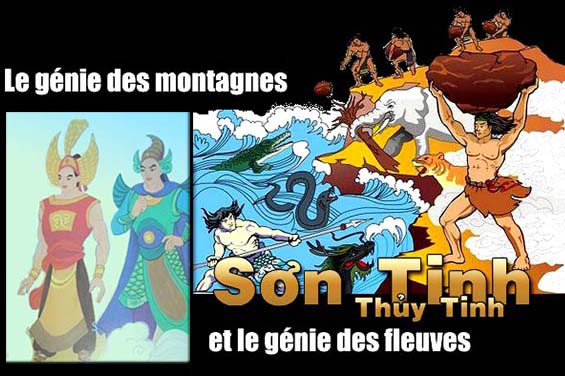
King Hùng Vương the 18th had a daughter called Mị Nương who was extraordinarily beautiful. When she reached the age of marriage, her reputation was even more exploding. The king decided to choose a talented husband for her. One day, two young men, brilliant in their intelligence and handsomeness unexpectedly arrived at the same time and requested to marry Mi Nuong. One called himself Sơn Tinh, the God of high Mountains and Profound Forests, the other, Thủy Tinh, the God of Rivers and Immense Seas. Embarrassed, the king did not know whom to choose because both of them had incomparable talents and infinite powers. After a moment of thinking, the king ordered a challenge: one hundred plates of sweet rice, one elephant with nine tusks, one rooster with nine cockcombs, one horse with nine red manes. Who would bring them in first would be the spouse of Mị Nương.

The following day, at dawn, Sơn Tinh arrived first with all the presents and took the belle to the mountains. Thuy Tinh showed up later, loaded with all the gifts but the princess had already gone. Confused and furious, Thủy Tinh lashed out, raising the water level, decided to penetrate the mountains to get Mi Nuong back. Sơn Tinh raised the the mountains even higher.

Thủy Tinh deployed his talent, called in winds, tempests, lightnings and storms, shaking all the mountains and forests. Sơn Tinh maintained the mountains unshakable. Thủy Tinh resorted to marine troops and lashed out with the current, mounted massive assaults. Sơn Tinh, with his iron nets, cut reinforcing routes, rolled down rocks to succumb spirits and crash marine monsters that floated at the derivation.

After three days and three nights, beaten more and more everyday, Thủy Tinh gave up and withdrew his troops and brought back the waves. To assure his tranquility Sơn Tinh did a miracle by raising the two mountains of the spouses higher than the places of the Gods. Later, people will call them Mountain of the Lord and Mountain of the Lady; at the foot of these mountains a temple was dedicated to Sơn Tinh and Mị Nương.
 

Galerie des photos

[Return CONTES]
 

Le génie des montagnes et celui des fleuves (Sơn Tinh Thủy Tinh)

sontinh_thuytinh

English version
Vietnamese version
Galerie des photos

Nous ne connaissons pas de société sans légendes, 
tout comme il n’y a pas de civilisations sans histoires.

Le dix-huitième roi Hùng Vương avait une fille Mị Nương, d’une extraordinaire beauté. Quand elle arriva à l’âge de se marier, sa réputation éclata encore davantage partout. Le roi décida de lui choisir un mari talentueux. Un jour, deux jeunes hommes, brillants d’intelligence et de beauté arrivèrent fortuitement en même temps et demandèrent la main de Mị Nương. L’un s’appelait Sơn Tinh, génie des Hautes Montagnes et des Forêts Profondes, l’autre, Thủy Tinh , génie des Fleuves et des Mers Immenses. Le roi, embarrassé, ne sut pas choisir lequel car tous les deux avaient des talents incomparables et une puissance infinie. Après un moment de réflexion, le roi les plaça devant un défi: cent plateaux de riz gluant, un éléphant à neuf défenses, un coq à neuf ergots, un cheval à neuf crinières rouges. Celui qui apportait le tout en  premier sera  l’époux de Mị Nương.

Le lendemain, dès l’aube, Sơn Tinh arriva le premier avec tous les présents et emmena la belle dans les montagnes. Thủy Tinh se présenta après, muni de toutes les offrandes mais la princesse était déjà partie. Confus et furieux, Thủy Tinh s’élança, éleva ensuite le niveau des eaux, décida de pénétrer  dans les montagnes et tenta d’y enlever Mi Nương. Sơn Tinh éleva les monts encore plus haut. Thủy Tinh déploya son génie, battit le rappel des vents, des tempêtes, des éclairs et de la foudre et  ébranla toute la montagne et la forêt. Sơn Tinh maintint d’une manière inébranlable les monts. Thủy Tinh recourut aux troupes marines et s’élança avec le courant et  donna massivement l’assaut. Sơn Tinh, avec des filets de fer, coupa la route des renforts, roula des rochers pour combler les âmes et écrasa  les monstres marins qui flottèrent à la dérive.

Après trois jours et trois nuits,  Thủy Tinh  battu davantage chaque jour, fut obligé de retirer ses troupes et ramener les flots. Pour assurer sa tranquillité Sơn Tinh opéra le miracle d’élever les deux montagnes des époux au plus haut dans l’endroit  des demeures des Dieux. Plus tard, le peuple les appellera Montagne du Monsieur et Montagne de la Dame, au pied desquelles un temple fut dédié à Sơn Tinh et à Mị Nương. Cette légende a été rapportée dans l’ouvrage intitulé  » Lĩnh Nam Chích Quái (ou les contes étranges à Lĩnh Nam) » de Trần Thế Pháp sous  le nom du titre « Histoire de la montagne Tản Viên« . Tous les ans vers le mois de juillet ou Aôut, les habitants vivant au pied de cette montagne ont l’habitude de subir le vent puissant et violent et la grande inondation provoquant ainsi des dégâts imports au niveau de la récolte. C’est pourquoi on a l’habitude d’attribuer à cet évènement la compétition entre le génie des montagnes et celui des fleuves  pour avoir Mị Nương. L’académicien vietnamien Nguyễn Sĩ Cố de la dynastie des Trần, a laissé un poème suivant lors de son  passage dans ce coin:

Sơn tự thiên cao thần tối linh
Tâm huynh tài khấu dĩ văn thanh
Mỵ Nương diệc hữu hiển linh trứ
Thả vị thư sinh bảo thử hành.

Le génie sacré se trouve dans cette montagne aussi élevée que  le ciel.
On entend le bruit en venant frapper la porte de son cœur
Si Mị Nương existe, son don miraculeux se révèlera
Et protègera le voyage du jeune lettré.

[Return CONTES]

Version vietnamienne

Sơn Tinh Thủy Tinh

Chúng ta không biết một xã hội  nào không có huyền thoại cũng như không có nền văn minh nào mà không có lịch sử.

Vua Hùng Vương thứ 18 có một người con gái là Mị Nương, sắc đẹp lạ thường. Khi đến tuổi lấy chồng, tiếng tăm của nàng lại càng vang lên ở khắp bốn phương. Nhà vua quyết định chọn cho nàng một người chồng tài giỏi. Một ngày nọ, có hai chàng trai, thông minh và tuấn tú, tình cờ đến cùng một lúc và xin cầu  hôn  Mị Nương. Một người được gọi là Sơn Tinh, chúa của các vùng núi non cao và các rừng sâu, còn người kia là Thủy Tinh, chúa các của các sông nòi và biển cả thăm thẳm. Nhà vua rất băn khoăn không biết phải chọn người nào vì cả hai đều có tài năng vô song và quyền lực vô hạn.

 Sau một lúc suy nghĩ, nhà vua đành đặt họ trước một thử thách: một trăm đĩa xôi, một con voi chín ngà, một con gà trống chín cựa, một con ngựa chín hồng mao. Người nào đem đến trước được  làm chồng của Mị Nương. Ngày hôm sau, lúc rạng đông, Sơn Tinh đến trước với đầy đủ lễ vật và đưa người đẹp lên núi. Thủy Tinh đến  trình diện sau đó, với đầy đủ lễ vật nhưng nàng công chúa đã đi rồi. Vừa hoang mang vừa tức giận, Thủy Tinh lao tới, dâng cao lên mực nước, quyết định vào núi bắt cóc Mị Nương. Sơn Tinh nâng núi cao hơn nữa. Thủy Tinh trổ tài năng của mình, đánh đuổi gió bão, sấm chớp làm rung chuyển cả núi rừng. Sơn Tinh giữ núi một cách vững vàng. Thủy Tinh nhờ đến thủy binh mà xông lên theo dòng nước, xông pha toàn lực. Sơn Tinh dùng các lưới sắt, cắt  đường tiếp tế,  lăn đá lấp hồn và đè bẹp  các thủy quái trôi dạt vào bờ.

Sau ba ngày ba đêm, mỗi ngày càng thêm thất  bại, Thủy Tinh đành cam chịu rút quân, mang sóng về. Để đảm bảo sự yên tĩnh của mình, Sơn Tinh làm phép lạ nâng cao hai ngọn núi của vợ chồng  lên cao nhất nơi ở của các thần. Sau này dân gian gọi là núi ông và núi bà, dưới chân núi lại có đền thờ Sơn Tinh và Mị Nương. Chuyện nầy được kể lại trong Lĩnh Nam Chích Quái của Trần Thế Pháp dưới tên là Truyện núi Tản Viên. Cứ hàng năm cở tháng bảy tháng tám dân ở vùng chân núi nầy hay thường bị gió to nước lớn làm lúa má bị thiệt hại. Vì vậy người đời truyền rằng đó là  Sơn Tinh và Thủy Tinh tranh nhau để lấy Mị Nương. Quan hàn lâm học si triều nhà Trần Nguyễn Sĩ Cố có đi ngang qua và có bái yết nơi nầy với bài thơ như sau:

Sơn tự thiên cao thần tối linh
Tâm huynh tài khấu dĩ văn thanh
Mỵ Nương diệc hữu hiển linh trứ
Thả vị thư sinh bảo thử hành.

Núi cao như trời, thần rất thiêng.
Cửa lòng vừa gõ đã nghe tiếng.
Mỵ Nương nếu có, tài hiển linh,
Hãy phù hộ chuyến đi của kẻ thư sinh này.

Galerie des photos

[Return CONTES]


Water melons island (Chuyện Dưa hấu)

dua_hau

French version

Vietnamese version

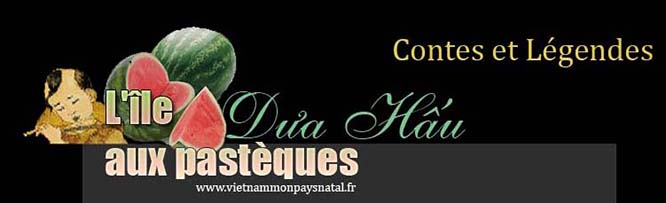
Under the reign of Hùng Vương the 18th, king Văn Lang, 3rd century B.C., An Tiêm, one of the best subjects of the king, being falsely accused, was condemned to exile on a desert island with his wife and son. Facing the hostility of nature, everyone cried except him because he was convinced as a Vietnamese proverb puts it, that water from a brook flows down to the sea but always ends up returning to the source. He began to investigate the environment and found what was needed for a survival: water, fruits, etc…

He even succeeded in making with his own hands a bow to hunt birds. In a beautiful morning, having shot down a bird, he discovered that the latter had been eating a certain fruit of which what was left were grains. This gave him an idea of seeding them. Thanks to the watering and cares provided by his wife and son, the fruits began to grow and took a certain round shape. An Tiêm called them « dưa hấu » in memory of his son’s name « Hấu ».

Several moons have gone by since their departure. He began to feel strangely nostalgic. That was why he decided to send a message to his friends by carving his name and the name of his family on the skin of the watermelons and thowing them in the sea. Those melons were fished out by fishermen who found them having an exquisite taste but also bearing the inscription of the An Tiêm family. They did not hesitate to offer some to the king. The king, tormented by remorse and the fidelity of the An Tiêm family, decided to pardon An Tiêm and his family.

As for the island, it was no longer a place of exile. People were allowed to resettle there. Their hard work made fruits other than « dưa hấu' » grow.

[Return CONTES]

L’île aux pastèques (Chuyện Dưa hấu)

dua_hau

English version

French version

Dưới triều đại Hùng Vương thứ 18, vua Văn Lang vào thế kỷ thứ 3 trước Công nguyên, An Tiêm, một trong những thần dân trung thành nhất của nhà vua, đã bị đày ải trên một hoang đảo cùng vợ và con trai vì tội vu khống. Trước sự khắc nghiệt của thiên nhiên, tất cả mọi người đều khóc, ngoại trừ ông, vì ông tin rằng, theo tục ngữ Việt Nam, nước suối chảy ra biển nhưng luôn trở về nguồn.

Ông bắt đầu khám phá môi trường xung quanh và tìm kiếm mọi thứ cần thiết để sinh tồn: nước, trái cây vân vân.. Ông thậm chí còn tự chế tạo một chiếc nỏ để săn chim. Một buổi sáng đẹp trời, khi đang bắn một con chim, ông phát hiện ra nó đã ăn một loại quả nào đó, không để lại hạt, điều này đã thôi thúc ông gieo chúng. Nhờ sự tưới nước và chăm sóc của vợ con, những quả bắt đầu to và tròn hơn. An Tiêm đặt tên cho chúng là « dưa hấu » để tưởng nhớ tên « Hấu » của con trai mình.

Đã mấy tuần trăng trôi qua kể từ khi họ rời đi. Điều này bắt đầu khơi dậy trong lòng chàng một nỗi nhớ kỳ lạ. Vì lý do này, chàng quyết định gửi lời nhắn đến bạn bè bằng cách khắc tên mình và tên gia đình lên vỏ dưa hấu rồi thả xuống biển. Những người đánh cá vớt được chúng lên và thấy chúng không chỉ có hương vị tuyệt hảo mà còn mang dấu ấn của gia tộc An Tiêm. Họ không ngần ngại dâng một ít lên nhà vua. Hối hận, nhà vua, cảm động trước lòng trung thành của gia tộc An Tiêm, đã quyết định tha tội cho An Tiêm và gia đình. Về phần hòn đảo, nó không còn là vùng đất lưu đày nữa. Người dân có thể định cư ở nơi đó. Công sức của họ đã tạo ra những loại trái cây khác ngoài « dưa hấu ».

Sous le règne de Hùng Vương 18, roi de Văn Lang au 3è siècle avant J.C., An Tiêm, un des meilleurs sujets du roi, à cause des calomnies, a été condamné à s’exiler sur une île déserte avec sa femme et son fils. Devant l’hostilité de la nature, tout le monde a pleuré sauf lui car il a été convaincu que selon un proverbe du Viêt-Nam, l’eau du ruisseau rejoint la mer mais finit toujours par retourner à la source.

Il commençait à tâtonner l’environnement et à trouver tout ce qu’il fallait pour survivre: de l’eau, des fruits etc… Il arrivait même avec ses mains à fabriquer lui-même une arbalète pour chasser les oiseaux. Un beau matin, en abattant un oiseau, il découvrit que celui-ci était en train de manger un certain fruit dont il ne restait plus des graines, ce qui lui donnait l’idée de les semer. Grâce à l’arrosage et aux soins apportés par sa femme et son enfant, les fruits commençaient à grossir et à prendre une certaine rondeur. An Tiêm les a nommés « dưa hấu » en souvenir du nom de son fils « Hấu« .

Plusieurs lunes ont passé depuis leur départ. Cela commençait à provoquer en lui une étrange nostalgie. C’est pour cette raison qu’il décida d’envoyer à ses amis un message en gravant son nom ainsi que celui de sa famille sur l’écorce des pastèques et en jetant ces fruits à la mer. Ceux-ci ont été repêchés par les pêcheurs qui les trouvaient non seulement posséder un goût exquis mais porter aussi des inscriptions de la famille An Tiêm. Ils n’hésitèrent à en offrir quelques unes au roi. Celui-ci, rongé par le remords et par la fidélité de la famille d’An Tiêm, décida de gracier An Tiêm et sa famille.

Quant à l’île, elle n’était plus une terre d’exil. Les gens pouvaient s’y installer. Leur labeur faisait pousser les fruits autres que « dưa hấu ». 

[Return CONTES]

The story of an impossible love (Trương Chi Mỵ Nương)

The story of an impossible love

French version
Vietnamese version

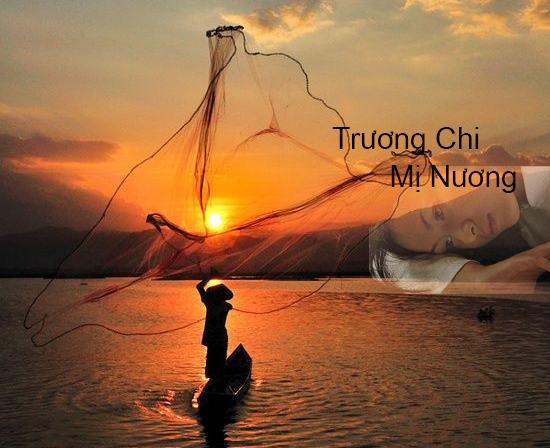
Once upon a time there was a powerful lord having a sole daughter of the name Mỵ Nương. She was very beautiful. Like all the girls of her status, she was always kept in the palace. She devoted her time in painting, embroidery and poetry. She often came to the window to view the landscape and look at the river water that flowed underneath. 

On a beautiful day, she was attracted by a melodious and melancholic song that came up from the river. It was the voice of a fisherman who was pulling his net. She began to make a habit of listening to him. This voice is so captivating that she began to rock her soul into insensitivity. It was like an appointment she had with this fisherman.


 In one beautiful morning, that voice was quiet. Its silence rendered her ill. She was completely bedridden and no doctors could determine the cause of her illness. Then, one day, the voice rose again. The song was so melodious that My Nuong regained her forces and found her beauty back. She became happy at the greatest joy of her father. He began to know the cause of his daughter’s illness. Every time the voice was quiet, she plunged back into a desperate lethargy. Her father ended up looking for the fisherman and brought him to his sick daughter. This boy was so ugly that My Nuong was frightened of him at first sight. From that day on, the charm of the voice whose absence made her ill disappeared. She began to forget that habit and went back to her normal life.

However, life was turned up side down for the poor fisherman, Trương Chi. He had lived, up until then, a peaceful life and had nothing to worry about besides earning his daily bread. From that encounter, he fell in love with the gracious Mỵ Nương. He knew that his love was a desperate one. He began to neglect his work, fell ill one beautiful morning and ended up dying. His body was buried at the river bank, next to a tree.

[Return CONTES]


One day, during a violent storm, the banks were ravaged by the river. His tomb was completely devastated. People found at that place a jade ball of magnificent purity. According to the people of that place, it was the body of this fisherman that was transformed into that ball.

Attracted by the splendor of the jade ball during a passage to that place , My Nuong’s father succeeded in buying it at the price of gold. He had it made in the form of a cup and gave it to his daughter as a birthday gift. When she poured tea in the cup, she saw appearing at the bottom of the cup the image of Trương Chi with his resonant melodious voice somewhere.

Moved and taken by pity, Mỵ Nương began to cry. Her tears dropped into the cup. With enchantment, the image disintegrated and disappeared. The fisherman’s soul was thus freed of his despair thanks to My Nuong’s compassion. And thus ended the story of an impossible love.


In the Vietnamese best-seller very known, this legend is evoked by two following verses:

Nợ tình chưa giã cho ai
Khối tình mang xuống tuyên đài chưa tan

As long as the love debt is not paid
Even in Hades, this stone of love cannot be melted.


L’histoire de la voix envoûtante ( Trương Chi Mị Nương )


L’histoire de la voix envoûtante

Vietnamese version
English version

Il était une fois un puissant seigneur ayant eu une fille unique s’appelant Mỵ Nương. Celle-ci était très belle. Comme toutes les autres filles de son rang, elle était toujours cloîtrée dans son palais. Elle consacrait tout son temps à la peinture, la broderie et  la poésie. Elle se mettait souvent à la fenêtre pour admirer le paysage et regarder l’eau du fleuve qui coulait jusqu’en contrebas. 

Un beau jour, elle fut séduite par un chant mélodieux et mélancolique qui montait du fleuve. C’est la voix d’un pêcheur qui était en train de chanter et  de tirer son filet. Elle commençait à prendre l’habitude de l’écouter. Cette voix était si envoûtante qu’elle commençait à bercer son cœur jusque-là insensible. C’était un rendez-vous habituel qu’elle ne pouvait pas manquer avec ce pêcheur.

Puis un jour, cette voix se tut. Ce silence la rendit malade. Elle fut complètement alitée et aucun médecin n’arriva à déterminer les causes de sa maladie. Puis, un autre jour, la voix s’éleva de nouveau. Ce chant était si mélodieux que Mỵ Nương reprit ses forces et retrouva sa beauté. Elle redevint heureuse à la grande joie de son père. Celui-ci commença à découvrir la cause de son mal. Elle fut replongée dans la léthargie désespérée chaque fois que cette voix se tut.  Son père finit par rechercher ce pêcheur qu’on amena auprès de sa fille malade. Ce pauvre garçon était tellement laid que cela effraya Mỵ Nương à sa première vue. De ce jour, le charme de la voix dont l’absence la rendait malade disparut. Elle commença à oublier cette habitude et reprit une vie normale.

Par contre, la vie fut bouleversée complètement pour ce pauvre pêcheur, Trương Chi. Celui-ci menait jusque-là une vie paisible et n’avait aucun souci autre que la procuration journalière de la nourriture. Il tomba amoureux de la gracieuse My Nương lors de cette rencontre. Il sut que cet amour était sans espoir. Il commença à négliger son travail, tomba malade un beau matin et finit par mourir. Son corps fut enterré au bord du fleuve. Un jour, lors d’une crue violente, les berges furent ravagées par le fleuve. Sa tombe fut complètement dévastée. On trouva à cet endroit une boule de jade d’une pureté magnifique. Selon les gens de ce coin, il s’agit bien du corps du pêcheur qui s’était transformé en cette boule.

Attiré par la splendeur et la beauté de cette boule lors de son passage dans ce coin, le père de Mỵ Nương réussit à l’acheter à prix d’or. Il fit tailler cette boule en forme de tasse et l’offrit à sa fille lors de son jour d’anniversaire. Quand celle-ci y versa du thé, elle vit apparaître au fond de cette tasse l’image de Trương Chi avec sa voix mélodieuse résonant quelque part.

Émue et prise de pitié, Mỵ Nương commença à pleurer. Ses larmes tombèrent dans la tasse. Par enchantement, celle-ci se désagrégea et disparut. Grâce à la compassion de Mỵ Nương, l’âme du pêcheur fut ainsi libérée de son désespoir. Ainsi se termina l’histoire d’un amour impossible.

Dans un chef-d’œuvre vietnamien bien connu, on fait allusion à cette légende à travers les deux vers suivants:

Nợ tình chưa giã cho ai
Khối tình mang xuống tuyên đài chưa tan

Tant que la dette d’amour demeure,
Au Pays des Sources, la pierre d’amour ne peut pas fondre.

Trương Chi-Mị Nương

Ngày xưa, có một vị lãnh chúa quyền thế có được một cô con gái duy nhất tên là Mỵ Nương. Nàng này rất đẹp. Tựa  như tất cả những cô gái khác cùng cấp bậc, nàng nầy luôn luôn ở trong cung điện của mình. Nàng dành tất cả thời gian cho hội họa, thêu thùa và làm thơ. Nàng hay thường đến bên cửa sổ để ngắm quan cảnh và nhìn dòng nước chảy xuống về phía dưới cuối sông. Một ngày nắng đẹp, nàng bị quyến rũ bởi một tiếng hát du dương và u sầu vang lên từ dòng sông. Đó là tiếng của một ngư dân vừa đang kéo lưới và vừa hát. Nàng bắt đầu có thói quen lắng nghe tiếng hát của anh chàng nầy. Giọng hát nó mê hoặc đến nỗi làm  rung chuyển trái tim vô cảm của nàng. Đây là một cuộc hẹn hò quen thuộc mà nàng có với anh chàng ngư dân này.

 Có một ngày, giọng hát đó lại im bặt  khiến làm nàng đâm ra lâm bệnh. Nàng nằm liệt giường và không thầy thuốc y nào có thể xác định được nguyên nhân khiến nàng bị mắc bệnh. Rồi bổng một ngày, giọng hát nầy cất lên lại. Bài hát nó quá du dương khiến Mỵ Nương hồi phục mau chóng sức khỏe và vẻ đẹp của mình. Nàng trở nên vui vẻ như thưở nào  khiến cha nàng vô cùng vui sướng. Cha nàng mới bắt đầu khám phá ra nguyên nhân của căn bệnh. Nàng  bị chìm vào trạng thái hôn mê tuyệt vọng mỗi khi giọng hát đó lại im bặt. Cha nàng quyết định tìm kiếm lại anh ngư dân này và mời đến cho cô con gái bị bệnh gặp mặt. Tội nghiệp cho anh chàng này quá xấu xí đến mức khiến Mỵ Nương khiếp sợ ngay qua cái nhìn lần đầu tiên. Kể từ ngày đó, sự thu hút của tiếng hát không còn làm nàng khốn đốn  lâm bệnh. Nàng bắt đầu quên dần  đi thói quen này và trở lại  sau đó với nếp sống bình thường. 

Trái lại, cuộc sống hoàn toàn bị  chao đảo đối với anh ngư dân nghèo Trương Chi này. Cho đến giờ, anh có một cuộc sống  bình yên và không phải lo lắng gì cả ngoài việc  sinh nhai hằng ngày. Chàng đem lòng yêu trộm Mỵ Nương trong cuộc gặp gỡ này. Anh cũng thừa biết tình yêu này là tuyệt vọng khiến làm anh  bắt đầu bê tha công việc của mình, đổ bệnh vào một hôm và qua đời sau đó. Thi thể của anh được chôn ở  bên cạnh bờ sông.Có một hôm, trong một trận lũ dữ dội, bờ sông bị phá vỡ. Phần mộ của anh cũng bị tàn phá hoàn toàn. Người ta tìm thấy ở nơi đó có quả ngọc bích tinh khiết tuyệt đẹp. Theo người dân sinh sống ở khu vực này, đó là thi thể  của Trương Chi  đã biến thành ra quả cầu này. Bị thu hút bởi vẻ đẹp lộng lẫy của quả cầu này khi đi qua ở nơi này, cha của Mị Nương mua lại viên ngọc bích nầy rồi nhờ một  nghệ nhân đẽo thành hình một cái chén và  đem tặng cho  Mỵ Nương nhân dịp ngày lễ sinh nhật của nàng. Khi Mị Mương  rót trà vào chén, nàng bổng thấy hình ảnh Trương Chi hiện ra dưới đáy chén cùng với tiếng hát du dương của chàng vang vọng ở đâu đó. Quá xúc động và thương hại chàng, Mỵ Nương bắt đầu rơi lệ.  Các giọt lệ của nàng rơi vào  cái chén khiến nó  bị tan rã  và biến mất. Nhờ sự đồng cảm của Mỵ Nương  mà hồn của Trương Chi được giải thoát từ sự tuyệt vọng. Đây cũng là sự kết thúc của một tình yêu bất khả thi. Trong một kiệt tác nổi tiếng của Việt Nam, truyền thuyết này được ám chỉ qua hai câu thơ như sau:

Nợ tình chưa giã cho ai
Khối tình mang xuống tuyên đài chưa tan.

[Return CONTES]

Parallel sentences (Doanh thiếp)


Vietnamese version

French version

One of the charms of Vietnamese poetry lies in the usage of paralell sentences. Not only is found there the opposite of ideas or words used but also the relevance of the practice of parallelism. That is why parallel sentences constitute one of the major difficulties for novices but nevertheless they become one of the indisputable appeals for known Vietnamese poets such as Hồ Xuân Hương, Tự Ðức, Cao Bá Quát, Ðoàn Thị Ðiểm, Nguyễn Ðỉnh Chiễu etc. who had the opportunity to use them wisely. They have given us sentences showing their unprecedented talent and always serving as reference in the Vietnamese poetry.

Thanks to the contrast of the words or ideas in a verse or from stanza to stanza, the poet succeeded in stressing a reason or a crtitique and reinforcing the vigor of his thought. He composes these sentences based on prosodic rules established essentially on the alternation of equal (or bằng ) and oblique ( or trắc ) tones while leaning on the power of melodious and harmonious combinations of words used that are reinforced by the musicality of the Vietnamese language and the contrast of ideas.


Parallel sentences constitute a kind of intellectual pastime, an art that renowned poets found it hard to do without. They have succeeded in practicing this art with an astonishing ease and a remarkable ingenuity.

Parallel sentences reflect exactly what the poet saw and felt in his daily life. It is not surprising to see the Vietnamese’s infatuation of this subtle prosody for generations. It has become not only the pleasure of the people but also an efficient weapon against oppression, obscurantism and provocation.
Parallel sentences are a part of what every Vietnamese cannot miss on the occasion of Tết. The following two sentences:

Thịt mỡ, dưa hành câu đối đỏ,
Cây nêu, tràng pháo, bánh chưng xanh

Fatty meats, pickled shallots, red parallel sentences.
Tet poles, firecracker strings, green sweet rice cakes.

witness to the familiarity and profound attachment that the Vietnamese love to reserve to this popular prosody during the new year time. Rich or poor, poet or not, everyone try to have these sentences hung at the entrance to their homes. They compose them themselves or have them composed by learned people who would write them to best express their personal aspirations.

Parallel sentences probably found their root in Chinese literature. They are known in Vietnamese as « Doanh Thiếp » ( manuscript hung on the housepost ). They comprise two parts that are called upper part ( vế trên ) and lower part ( vế dưới ). They are also called given statement ( vế ra ) and cross statement ( vế đối ) when one is composed by a person and the other by another. One finds some characteristics common to those two parts:

· The number of words must be the same;
· The content must be suitable at the level of significance when it comes to antithesis or parallelism of ideas.
· The form must be respected when it comes to contrast of words used (respect of placement order of nouns, adjectives and verbs, observance of opposition rules and registered sounds bằng and trắc).
In the example cited below,

Gia bần tri hiếu tử
Quốc loạn thức trung thần.
Poor homes discern their pious children
Troubled nation recognizes its loyal citizens.

It is noted that there is the same number of words used ( 5 in each part, 6 in English ), the parallelism of ideas and the strict observance of registered sounds bằng and trắc used in both parts. At the position of the bang tone (Bần) in the upper verse one finds the trac tone (Loạn) at the same place in the lower verse. Likewise, the remaining trac tones in the upper verse hiếu and tử are respectively crossed by the two bằng tones trung and thần in the lower verse.

Parallel sentences made up of one to three words for each of the parts are called little parallel sentences ( or tiểu đối in Vietnamese ). When they contain four to seven words and follow prosodic rules of poetry, they are called « poetic parallel sentences » ( câu đối thơ ). It is the case cited above. In the case of parallelism of ideas which is called doi xuoi in Vietnamese, no opposition of ideas is detected; on the contrary, the is an intimate relation between the two parts, which we find in the following sentences:

Vũ vô kiềm tỏa năng lưu khách
Sắc bất ba đào dị nịch nhân.
Rain though not restraining, is retaining
Feminine beauty being no big waves, can easily be drowning.

In the opposite case they are called đối ngược in Vietnamese. 

The parallelism of ideas is frequently used by poet Cao Bá Quát. There is an anecdote about him during the passage of emperor Minh Mạng in his village when he was still a young boy. Instead of hiding, he threw himself in a pond to take a bath. His absurd attitude caused him to be tied and brought before Minh Mạng under the exhausting sun. Minh Mang, who was surprised by his boldness and young age offered to free him at the only condition that he succeed in composing the appropiate cross sentence in response to the emperor’s given statement. Seeing a bigger fish chasing a smaller one in the pond, the emperor began to say:

Nước trong leo lẽo, cá đóp cá
In clear water, fish eating fish.
Without hesitation, Cao Bá Quát replied with astonishing ease:

Trời nắng chan chan, người trói người
Under scorching sun, man tying man.

Marveled by his promptness and unprecedented talent, the emperor was obliged to set him free. Cao Bá Quát, known for his independence, presumption and contempt of the mandarinal system, often stood up against challenges launched by his adversaries. One day, while participating in a talk on poetry hosted by a mandarin, he did not stop making fun of the mandarin when this one gave simplistic explanations to questions made by the public. Annoyed by his continuing provocation, the mandarin challenged him with the intention of punishing him immediately by asking him to give a cross sentence appropriate to the statement given by the mandarin himself:

Nhi tiểu sinh hà cứ đác lai, cảm thuyết Trình, Chu sự nghiệp
Mầy là gả học trò ở đâu đến mà dám nói đến sự nghiệp của Trương Công và Chu Công?

You little student coming from nowhere dare to critique the works of Trinh and Chu?
Without hesitation, he replied with impertinence:
Ngã quân tử kiên cơ nhi tác, dục ai Nghiêu Thuấn quân dân
Ta là bậc quân tử, thấy cơ mà dấy, muốn làm vua dân trở nên vua dân đời vua Nghiêu vua Thuấn.

I the gentleman taking opportunity for action want to turn king and subjects to those of Nghiêu and Thuấn.

In the old days parallel sentences constituted a favorite place where Chinese and Vietnamese loved to affront publicly. The cross statement of the learned Giang Văn Minh, anchored in the memory of a whole people and perpetuated for several generations

Ðằng giang tự cồ huyết do hồng.

The Ðằng River is from ancient time still red of blood .
continues to illustrate its infallible determination to the provocation of the Ming emperor with its following given statement:

Ðồng trụ chí kim đài dĩ lục

The Bronze Pole is up until now covered with green of moss

There are also anonymous poets who left us memorable parallel sentences. It is those found on the altar of Nguyễn Biểu at the Bình Hồ commune ( North Vietnam ).

Năng diệm nhơn đầu năng diệm Phụ
Thượng tồn ngô thiệt thượng tôn Trần
Ăn được đầu người thì co’ thể ăn cả Trương Phụ
Còn lưỡi của ta thì còn nhà Trần

Capable of eating a human head is capable of eating Trương Phụ
Having still my tongue is having remain the dynasty of Trần.

Thanks to these two sentences, the anonymous poet wanted to render a vibrant homage to the national hero. He was drowned by the Chinese generalissimo Trương Phụ who had hosted a somptuous banquet in his honor. To intimidate Nguyen Bieu, Truong Phu did not hesitate to present him a plate on which sit the head of a decapitated adversary. Instead of being afraid of this presentation, Nguyen Bieu remained impassible, took the chopsticks, picked out the eyes and ate them savorily.

After the fall of Saigon in 1975, an anonymous composed the following parallel sentences:
Nam Kì Khởi Nghĩa tiêu Công Lý
Ðồng Khởi vùng lên mất Tự Do.

Nam Ki Uprising wiped out Justice
Ðồng Khởi Revolt took away Freedom

because the names of the bouvevards Công Lý and Tự Do were replaced by Nam Ki Khởi Nghĩa and Ðồng Khởi in this teeming city of the South.

By means of parallel sentences, the anonymous poet wanted to stress his caustic criticism with regard to the regime.
Taking advantage of the subtleness found in parallel sentences and of the figurative meaning of the Vietnamese language, Vietnamese politicians, emperor Duy Tân in particular, have often had the opportunity to probe and be ironical of their adversary.
Brooding on the idea of fomenting for a long time an insurrection against the colonial authorities, Duy Tân, taking advantage of a coastal excursion with his prime minister Nguyễn Hữu Bài at the beach of Cửa Tủng ( Quảng Trị ), requested of the latter a cross statement to his given sentence:

Ngồi trên nước không ngăn được nước
Trót buôn câu đã lỡ phải lần.

Sitting on water, but one is incapable of retaining it
Throwing out the fishing line, yet we can only pull it back slowly.

Since Nước also means country in Vietnamese, Duy Tân in his given statement wanted to express the idea that he was on top of the country, yet he could not govern it.

He also wanted to probe Nguyễn Hữu Bài‘s political intention to see if the latter was with his opinion or paid by the French colonialists. Knowing the political conjuncture and being close to the colonial authorities, Nguyễn Hữu Bài preferred immobilism and a politics of dialogue in the following reply:

Ngẫm việc đời mà ngán cho đời
Liệu nhắm mắt đến đâu hay đó

Thinking of life, one becomes fed up with it
Closing our eyes, we will take whatever happens

To be ironical of his adversary, Ðặng Trần Thường, who had judged him wrong for being a partisan of emperor Quang Trung, with the following sentence:

Thế Chiến Quốc, thế Xuân Thu, gặp thời thế, thế thời phải thế
At the time of Chiến Quốc and Xuân Thu, whoever had the opportunity would grab it.

Ngô Thời Nhiệm succeeded in giving a perfect reply to the given statement by his adversary Ðặng Trần Thường, a partisan of emperor Gia Long.
Ai Công hầu, ai Khanh tướng, trên trần ai, ai dễ biết ai
For the titles of Duke and Minister, who is who in society to know them.

He succeeded to show not only his bravery but also his contempt with regards to go-getters such as Ðặng Trần Thường. Annoyed by these vexing words, the latter ordered his subordinates to flog him to death in front of the temple of literature. Ngô Thời Nhiệm was not wrong to recall Ðặng Trần Thường of this remark because he was later condemned to death by emperor Gia Long.
Phú, it is the noun in Vietnamese attributed to parallel sentences having a large number of words or parts. It is the case of sentences used by Ngô Thời Nhiệm and Đặng Trần Thường. When they are made of several parts of sentences, three ( in the example cited above ) or more, in the middle of which is inserted a very short part, one calls them gối hạc ( the kneecap of the crane ) in Vietnamese because it looks like the two parts of the crane’s leg separated by the kneecap.

Parallel sentences become with the flow of time the true popular expression of the whole people in the permanent struggle against obscurantism and oppression. By giving the people the opportunity to show their character, temperament and soul, parallel sentences succeed in justifyingwhat novelist Staël has put:

By learning the prosody of a language, one intimately enters the spirit of the nation that speaks it. It is with parallel sentences that one can understand and feel better about Vietnam. One would

then be closer to its people and culture.

[Return LITERATURE]

Sentences parallèles (Doanh Thiếp)

Doanh thiếp

Version vietnamienne 

L’un des charmes de la poésie vietnamienne réside dans l’utilisation des sentences parallèles. On y trouve non seulement l’antithèse des significations  ou des mots employés mais aussi la pertinence dans  la pratique de ces sentences. C’est pourquoi les sentences parallèles constituent l’une des difficultés majeures pour les novices mais elles deviennent néanmoins l’un des attraits incontestables pour les poètes vietnamiens connus comme Hồ Xuân Hương, Tự Ðức, Cao Bá Quát, Ðoàn Thị Ðiểm, Nguyễn Ðình Chiễu etc …
Ceux-ci ont eu l’occasion de les utiliser savamment. Ils nous ont légué des sentences dignes de leur talent inouï et servant toujours de référence dans la poésie vietnamienne. Grâce à l’antinomie trouvée dans les  mots ou les significations à l’intérieur d’un vers ou de strophe en strophe, le poète réussit à faire ressortir une raison ou une critique et à renforcer la vigueur de sa pensée.  Les sentences sont composées  à partir des règles prosodiques établies essentiellement sur l’alternance des tons bằng et  trắc (1) tout en s’appuyant sur la puissance des combinaisons des mots utilisée  de manière harmonieuse et  accrue par l’extrême musicalité de la langue vietnamienne et sur l’antithèse des significations (ou d’idées) ou la cohérence et la mise en corrélation des significations.

Les sentences parallèles constituent en quelque sorte un passe-temps intellectuel, un art dont les poètes de grand renom ne peuvent pas se passer. Ces derniers ont réussi à l’exercer avec une facilité étonnante et une ingéniosité remarquable. Les sentences parallèles reflètent exactement ce que le poète a vu  et ressenti dans la vie quotidienne.

Rien n’est étonnant de voir l’engouement des Vietnamiens pour cette prosodie subtile  au fil des générations. Elle devient non seulement le plaisir du peuple mais aussi une arme aussi efficace contre l’obscurantisme,  l’oppression et la provocation.

Thịt mỡ, dưa hành câu đối đỏ,
Cây nêu, tràng pháo, bánh chưng xanh
Viande grasse, légumes salés, sentences parallèles rouges,
Mât du Tết, chapelets de pétards, gâteaux de riz du nouvel an.

Les sentences parallèles font partie de ce que chacun des Vietnamiens ne peut pas manquer à l’occasion de la fête du Tết. Elles témoignent de la familiarité et de l’attachement profond que le Vietnamien aime réserver à cette prosodie populaire lors du nouvel an. Riche ou pauvre, poète ou non, chacun tente d’avoir ces sentences pour les déposer devant  l’autel des ancêtres ou pour les accrocher à l’entrée de sa maison. Il les compose lui-même ou se procure auprès des lettrés celles qui formulent le mieux ses aspirations personnelles.

Les sentences parallèles trouvent probablement leur origine dans la littérature chinoise et sont connues en vietnamien sous le nom « Doanh thiếp (2) » . Elles comprennent deux vers: l’un est appelé le vers  supérieur (vế trên) et  l’autre le vers  inférieur (vế dưới). Le vers supérieur est le vers  composé et proposé par une personne souhaitant le commencement des sentences  tandis que le vers inférieur est  celui  qu’une autre personne  veut terminer pour la réplique.

On trouve quelques caractéristiques communes à ces deux vers: 

– Le nombre de mots doit y être le même.
– Le contenu doit y être convenable au niveau de la signification quand il s’agit de l’antithèse ou de la cohérence des idées.
– La forme doit y être respectée quand il s’agit de l’opposition totale des mots employés (respect de l’ordre de l’emplacement des mots, des adjectifs et des verbes, observation des règles d’opposition des registres sonores bằng et trắc).
Dans l’exemple cité ci-dessous,

Gia bần tri hiếu tử
Quốc loạn thức trung thần.

Nhà nghèo mới biết con hiếu thảo
Nước loạn mới biết rõ tôi trung
La famille pauvre discerne des enfants pieux
Le pays en désordre reconnaît des sujets fidèles.

on constate qu’il y a le même nombre de mots (5 mots dans chaque vers), le parallélisme des idées et l’observation stricte des registres sonores bằng et trắc employés dans les deux vers. A la place du ton bằng (nghèo) du vers supérieur on retrouve un ton trắc (loạn) au même emplacement dans le vers inférieur. De même, les tons trắc restants du vers supérieur hiếu et tử sont remplacés respectivement par les deux tons bằng trung et thần dans le vers inférieur.

Les sentences parallèles constituées de un à sept mots pour chacun des vers s’appellent des petites sentences parallèles (ou tiểu đối en vietnamien). Lorsqu’elles contiennent  plus de  sept mots et suivent les règles prosodiques de la poésie, on les désigne sous le nom de « sentences parallèles poétiques » (ou thi đối). C’est le cas de l’exemple cité ci-dessus. En cas du parallélisme d’idées, on les appelle  câu đối xuôi en vietnamien. Dans ce cas, aucune opposition d’idées n’y est décelée. Par contre, il y a une cohérence et une corrélation entre leurs deux vers, c’est ce qu’on trouve dans ces deux sentences suivantes:

Vũ vô kiềm tỏa năng lưu khách
Sắc bất ba đào dị nịch nhân.
Sans avoir la serrure à la porte, la pluie peut retenir celui qui est pressé de partir
Sans la possibilité de faire les vagues de la mer, la beauté d’une fille peut noyer celui qui s’en est épris.

Dans le cas contraire, on les appelle câu đối ngược en vietnamien. Dans ce type de sentences, l’antinomie de significations ou d’idées est visible dans les deux vers. C’est le cas de l’exemple suivant:

Hữu duyên thiên lý năng tương ngộ
Vô duyên đối diện bất tương phùng 
Có duyên dù ở xa ngàn dậm cũng có thể gặp nhau
Còn không có duyên  rồi dù ở có  đối mặt cũng không gặp được nhau.

Malgré plusieurs milliers de kilomètres de distance, on peut se rencontrer lorsqu’on a la chance.
En dépit de la proximité géographique, on ne peut pas se voir lorsqu’on n’a pas la chance.

Les sentences parallèles sont  employées fréquemment par le poète Cao Bá Quát. Il y a eu une anecdote sur lui lors du passage de l’empereur Minh Mạng dans son village quand il était encore un jeune garçon entêté. Au lieu de se cacher, il se jeta dans un étang pour prendre une baignade. Devant son attitude absurde, il fut ligoté et emmené devant Minh Mạng sous un soleil accablant.  Surpris par sa hardiesse et son jeune âge, celui-ci lui proposa de le libérer à condition qu’il réussît à composer une sentence appropriée répondant à celle émise par l’empereur. En voyant la poursuite engagée par le plus gros poisson sur le petit dans l’étang, l’empereur commença à dire:

Nước trong leo lẽo, cá đóp cá
L’eau étant tellement limpide, le grand happe le petit.

Sans hésitation, Cao Bá Quát répliqua avec une facilité étonnante:

Trời nắng chan chan, người trói người
Le soleil étant tellement accablant, le grand  ligote le petit.

Émerveillé par sa promptitude et par son talent inouï, l’empereur fut obligé de lui rendre la liberté. Cao Bá Quát, connu pour son indépendance, sa présomption et son mépris à l’égard du système mandarinal, était obligé de relever souvent le défi lancé par ses adversaires. Un beau jour, profitant de sa participation à un exposé organisé par un mandarin sur la poésie, il ne cessa pas de faire le clown lorsque ce dernier continua à donner des explications simplistes sur les questions posées par le public. Énervé par sa provocation continue, le mandarin fut obligé de le défier dans l’intention de le punir immédiatement en lui demandant de donner une sentence appropriée répondant à celle émise par lui-même :

Nhi tiểu sinh hà cứ đác lai, cảm thuyết Trình, Chu sự nghiệp
Mầy là gả học trò ở đâu đến mà dám nói đến sự nghiệp của Trương Công và Chu Công?

Étant un élève venant de quel coin, oses-tu citer les œuvres de Trương Công et Chu Công?

Sans hésitation, il lui répondit avec impertinence:

Ngã quân tử kiên cơ nhi tác, dục ai Nghiêu Thuấn quân dân
Ta là bậc quân tử, thấy cơ mà dấy, muốn làm vua dân trở nên vua dân đời vua Nghiêu vua Thuấn.

Etant un homme de ren (3), profitant des moments opportuns pour m’élever, puis-je devenir roi à l’image des rois Nghiêu et Thuấn?

Les sentences parallèles constituaient autrefois un lieu de prédilection où les Chinois et les Vietnamiens aimaient s’affronter publiquement. La sentence répondante du lettré Giang Văn Minh, ancrée dans la mémoire de tout un peuple et perpétuée depuis plusieurs générations :

Ðằng giang tự cổ huyết do hồng.
Le fleuve Bạch Ðằng continue à être teinté avec du sang rouge.
illustre bien sa détermination infaillible face à la provocation de l’empereur des Ming avec sa sentence émise suivante:

Ðồng trụ chí kim đài dĩ lục.
Le pilier en bronze continue à être envahi par la mousse verte.

Il y a aussi des poètes anonymes qui nous ont laissé des sentences parallèles mémorables. C’est celles qu’on a trouvées sur l’autel du héros national Nguyễn Biểu dans la commune Bình Hồ au Nord Vietnam.

Năng diệm nhơn đầu năng diệm Phụ
Thượng tồn ngô thiệt thượng tôn Trần
Ăn được đầu người thì có thể ăn cả Trương Phụ
Còn lưỡi của ta thì còn nhà Trần

En mangeant la tête humaine, on peut manger aussi Trương Phụ
En ayant encore la langue, je peux survivre autant que la dynastie des Trần.

Grâce à ses deux sentences, le poète anonyme a voulu rendre un vibrant hommage au héros national. Celui-ci fut noyé par le généralissime chinois Trương Phụ après que ce dernier avait organisé un banquet somptueux en son honneur. Pour intimider Nguyễn Biểu, Trương Phụ n’hésita pas à lui présenter un plat où on trouvait la tête décapitée d’un adversaire. Au lieu d’être effrayé par cette présentation, Nguyễn Biểu restant impassible, se servit des baguettes pour déloger les yeux et les mangea savoureusement.

Lors de la chute de Saigon en 1975, un anonyme a composé les deux sentences parallèles suivantes:

Nam Kì Khởi Nghĩa tiêu Công Lý
Ðồng Khởi vùng lên mất Tự Do.

Le soulèvement du Sud anéantit la justice
La révolte en marche fait périr la liberté

car les noms des boulevards Công Lý et Tự Do ont été remplacés respectivement par Nam Kì Khởi Nghĩa et Ðổng Khởi dans la ville bouillonnante du Sud. C’est par le biais de ces sentences que le poète anonyme a voulu mettre en relief sa critique acerbe à l’égard du régime.

Profitant de la subtilité trouvée dans les sentences parallèles et du sens figuré dans la langue vietnamienne, les hommes politiques vietnamiens, en particulier l’empereur Duy Tân, ont eu l’occasion de s’en servir souvent pour sonder ou ironiser sur l’adversaire. Caressé par l’idée de fomenter depuis longtemps une insurrection contre les autorités coloniales, Duy Tân, profitant de l’excursion maritime qu’il a effectuée avec le premier ministre Nguyễn Hữu Bài à la plage Cửa Tùng (Quảng Trị), proposa à ce dernier de lui donner une réplique appropriée à sa sentence émise:

Ngồi trên nước không ngăn được nước
Trót buôn câu đã lỡ phải lần
Etant assis sur l’eau, on est incapable de la retenir
En commettant l’erreur de jeter l’appât, on n’a plus la possibilité de le retirer.

À travers ces deux sentences, Duy Tân voulut connaître l’intention politique de son ministre Nguyễn Hữu Bài car le mot « nước » en vietnamien désigne à la fois l’eau et le pays. Il aimerait savoir si ce dernier était de son avis ou à la solde des colonialistes français. Connaissant la conjoncture politique et  étant un proche des autorités coloniales, Nguyễn Hữu Bài  préféra l’immobilisme et adopta une politique de concertation en donnant la réplique suivante:

Ngẫm việc đời mà ngán cho đời
Liệu nhắm mắt đến đâu hay đó
En réfléchissant mûrement sur la vie, on en est dégoûté.
En tentant de fermer les yeux, on n’a qu’à attendre le moment propice.

Étant chargé de juger le tort de Ngô Thời Nhiệm d’être le partisan de l’empereur Quang Trung,  Ðặng Trần Thường  l’a défié en émettant la sentence suivante:

Thế Chiến Quốc, thế Xuân Thu, gặp thời thế, thế thời phải thế, 
À l’époque des Royaumes Combattants ou des Printemps Automnes, quiconque rencontrant le moment opportun, en profite pour devenir celui qu’il est.

Ngô Thời Nhiệm a réussi à donner sa sentence répliquante avec ironie  à Ðặng Trần Thường, un  partisan de l’empereur Gia Long:

Ai Công hầu, ai Khanh tướng, trên trần ai, ai dễ biết ai
On est duc et marquis ou mandarin et ministre; quiconque vivant dans cette société, distingue facilement le rôle que chacun assume.

Il réussit à montrer non seulement sa bravoure mais aussi son mépris à l’égard des gens arrivistes comme Ðặng Trần Thường. Irrité par ces propos vexants, ce dernier donna l’ordre à ses subordonnés de le fouetter à mort devant le temple de la littérature. Ngô Thời Nhiệm n’a pas eu tort de rappeler à Ðặng Trần Thường cette remarque car il fut condamné à mort plus tard par l’empereur Gia Long.

Phu’, c’est le nom en vietnamien qu’on attribue aux sentences parallèles ayant un grand nombre  de membres de phrases. C’est le cas de l’exemple de sentences employées par Ngô Thời Nhiêm et Ðặng Trần Thường. Lorsque celles-ci comprennent trois ou plus (dans l’exemple cité ci-dessus) de membres, au milieu desquels on insère un membre très court, on les appelle sous le nom phú gối hạc (la rotule de la grue) en vietnamien car on trouve une ressemblance avec le schéma de la patte de la grue avec les deux membres longs séparés par la rotule.

Ces sentences parallèles deviennent au fil des années l’expression populaire véridique de tout un peuple en lutte permanente contre l’obscurantisme et l’oppression. En donnant à ce dernier l’occasion de montrer son caractère, son tempérament et son âme, elles réussissent à justifier ce que la romancière Staël a l’occasion de dire: En apprenant la prosodie d’une langue, on entre intimement dans l’esprit de la nation qui la parle. C’est avec ces sentences parallèles  qu’on peut comprendre et sentir mieux le Vietnam. On serait alors plus proche de son peuple et de sa culture.

[Return LITTERATURE]


(1) bằng deux accents: accent grave  et sans accents ; trắc: 4 accents: accent retombant, tilde, accent aigu et accent intensif.
(2) Doanh thiếp: manuscrit accroché au poteau de la maison.
(3) Être ren: c’est savoir faire régner bonne foi, tolérance, diligence et générosité.