Le tatouage (Tập tục xăm minh)

Tục lệ xăm mình

Version française

English version

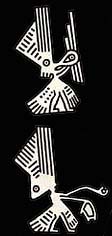
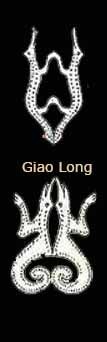
Theo sách Lĩnh Nam Chích Quái, tục lệ  xăm mình có từ thời Hồng Bàng. Lúc đó dân ta thường sống trong nước để đánh cá hay bắt sò nên thường bị giống giao long làm hại bèn tâu với vua. Vua ta mới nói giống sơn man và giống thủy man có thù với nhau, thưòng  ghét nhau cho nên hại nhau đó. Nhờ lấy mực xăm vào mình theo hình Long Quân dạng thủy quái nên từ đó không bị hại. Tục xăm mình có từ lâu từ thời dân tộc ta thuộc  đại tộc Bách Việt và  còn cư trú ở vùng hạ và trung lưu  của sông Dương Tử, nơi có một loại cá sấu lớn  thích sống ở những khúc sông nước chảy chậm mà dân ta gọi là giao long. Ngày nay loại cá sấu nầy trong tình trạng bị đe dọa tuyệt chủng. Tục xăm mình chỉ là một hình thức văn hóa tâm linh trong việc ghép cho vật tổ của họ, Tiên-Rồng với  quan niệm song trùng lưỡng hợp (hai thành một) của tộc Việt nên mới có việc vẽ hình Rồng trên người và đội mũ lông chim.(Con Rồng Cháu Tiên).

Tục xăm mình vẫn được duy trì dưới hai triều  đại nhà Lý và Trần. Dưới thời nhà Lý thì chỉ có qúi tộc mới có quyền vẽ hình rồng trên ngực và đùi. Đến đời nhà Trần, để  tỏ ra ý chí can đảm diệt quân Nguyên  với tinh thần bất khuất, dân ta không ngần ngại thích xăm  trên cánh tay hai chữ  Sát Thát  như Trần Quốc Toản dưới thời nhà Trần.  Tục lệ nhà Trần, khi lên ngôi  vua phải xăm hình rồng ở đùi để nhớ nguồn gốc của mình nhưng vua Trần Anh Tôn không thích nên tục lệ nầy  bị mất dần từ đó trong giới hoàng tộc. Xăm mình ngày nay ở  Việt Nam được giới trẻ  xem như là một phương pháp làm đẹp cơ thể theo sở thích  của mình và thể hiện được cá tính dù xã hội ngày nay đôi khi có cái nhìn không thân thiện nhất là còn ảnh hưởng đạo Khổng ít nhiều. Điều nầy cũng không  quan trọng chi cho mấy  trong cuộc sống hiện nay nhất là ta biết  ta,  sống cho ta và ta có quyền tự chủ  con người của ta. Với cái ý nghĩ nầy , hình xăm đã được dân chủ hóa phần lớn và đã trở thành một hiện tượng xã hội thực sự.

Selon le livre intitulé  « Sélection des contes étranges à Lingnan », le tatouage remonte à la période de la dynastie des Hồng Bàng. À cette époque, notre peuple vivait souvent dans l’eau pour pêcher ou attraper des palourdes. Ils étaient donc souvent attaqués par les alligators. Alors ils le signalaient au roi.  Ce dernier venait de leur dire que les gens des montagnes et ceux de l’eau étaient  hostiles les uns envers les autres, se détestaient souvent et se faisaient donc du mal. Grâce au tatouage effectué « en forme de monstre marin » avec de l’encre, ils n’étaient plus blessés depuis lors. Le tatouage exista depuis l’époque où notre peuple faisant partie de la  grande tribu « Cent Yue ( Bai Yue) » vivait encore dans les cours inférieur et moyen du fleuve Yang Tse.  Il y avait  un grand type de crocodile aimant  vivre dans les cours d’eau  à débit lent de ce fleuve. Notre peuple l’appelait souvent sous le nom Giao Long. Aujourd’hui cette espèce vivant dans ce fleuve est menacée d’extinction. Le tatouage n’est qu’une forme de culture spirituelle dans l’association du couple (Oiseau /Dragon)(Fée-Dragon)   à leur totem avec la notion de dualité (deux en un) des Proto-Viet. C’était pour cela qu’ils aimaient à se faire tatouer le dragon sur leur corps et porter le chapeau à plumes (Enfants du Dragon et Grands Enfants de l’Immortelle).

Cette coutume continuait à exister sous les deux dynasties des Lý et des Trần. Sous la dynastie des Lý, il n’y avait que les gens de la noblesse ayant le droit de  se faire tatouer le dragon au niveau de la poitrine et des cuisses.  Puis sous la dynastie des Trần, afin de montrer le courage de vaincre les Mongols avec l’esprit indomptable de résistance, les Vietnamiens n’hésitaient pas à se faire tatouer sur le bras deux mots « Sát Thát (Tuer les Mongols) comme le jeune général Trần Quốc Toản. Selon la tradition des Trần, une fois monté au trône, le roi devait  se faire tatouer sur les cuisses  le dragon pour rappeler son origine. Mais le roi Trần Anh Tôn n’appréciait pas cette coutume et refusait de le faire. Le tatouage disparut ainsi auprès de la noblesse.

Aujourd’hui, le tatouage est  considéré au Vietnam par les jeunes comme une méthode d’embellissement de leur corps selon la préférence et la possibilité d’exprimer leur personnalité  bien que la société ait parfois une vision défavorable car elle est encore influencée dans une certaine mesure par le confucianisme.  Ce n’est pas si important dans la vie d’aujourd’hui car on sait qu’on peut vivre pour soi-même et on a le droit de disposer librement de son corps. Avec cette idée, le tatouage réussit  à se démocratiser largement  et devient ainsi un phénomène de société.


According to the book entitled “Selection of Strange Tales in Lingnan”, the tattoo dates back to the period of the Hồng Bàng dynasty. Back then, our people often lived in the water to fish or catch clams. So they were often attacked by alligators. So they reported it to the king.  The king had just told them that the mountain people and the water people were hostile to each other, often hated each other and therefore did each other harm. Thanks to a tattoo in the shape of a “sea monster” with ink, they have not been hurt since. The tattoo has existed since the time when our people, part of the great “Cent Yue ( Bai Yue)” tribe, still lived in the lower and middle reaches of the Yang Tse River.

There was a large type of crocodile that liked to live in the slow-moving streams of this river. Our people often called it Giao Long. Today this species living in this river is threatened with extinction. Tattooing is only a form of spiritual culture in the association of the couple (Bird / Dragon) (Fairy-Dragon) to their totem with the notion of duality (two in one) of the Proto-Viet. That was why they liked to have the dragon tattooed on their body and wear the feathered hat (Children of the Dragon and Great Children of the Immortal).

This custom continued to exist under both the Lý and Trần dynasties. Under the Lý dynasty, only the nobility were allowed to have the dragon tattooed on their chest and thighs. Then under the Trần dynasty, in order to show the courage to defeat the Mongols with the indomitable spirit of resistance, the Vietnamese did not hesitate to have two words « Sát Thát (Kill the Mongols) » tattooed on their arms like the young general Trần Quốc Toản. According to Trần tradition, once ascended to the throne, the king had to have the dragon tattooed on his thighs to recall his origin. But King Trần Anh Tôn did not appreciate this custom and refused to do so. The tattoo thus disappeared among the nobility.

Today, tattooing is considered by young people in Vietnam as a method of beautifying their bodies according to their preferences and the possibility of expressing their personality, although society sometimes has an unfavorable view of it because it is still influenced to some extent by Confucianism. This is not so important in today’s life because we know that we can live for ourselves and we have the right to freely dispose of our bodies.

With this idea, tattooing has managed to become widely democratized and thus becomes a social phenomenon.

Tài liệu tham khảo:

Lĩnh Nam Chích Quái . Trần Thế Pháp. Nhà xuất bản Hồng Bàng.
Đai Việt Sử Ký Toàn Thư Toàn Bộ. Nhà xuất bản Thời Đại.
Văn Lang Dị Sử. Nguyễn Lang. Lá Bối.

Le kouffa (Thuyền thúng)

Thuyền thúng

Version française

Version anglaise

Thuyền thúng là một loại thuyền được trọng dụng ở miền biển Việt Nam nhất là ở miền trung từ Hà Tịnh đến Bình Thuận. Ngoài màu sắc vui tươi,  các thuyền thúng  hay thường dập  dềnh ngoài biển khơi hay nằm phơi nắng trên các bãi cát. Chúng còn là  một phương tiện rất cần thiết với các ngư dân trong việc sử dụng để chuyên chở các hàng hóa từ các tàu thuyền lớn  đánh cá ngoài biển vào bờ hoặc dùng với mục đích khác nhau như  câu tôm hay mực, lặn ngắm xem san hô cho các du khách nước ngoài hay là cứu sinh trong trường hợp khẩn cấp. Không chì tiện dụng  cưởi sóng dễ dàng, mà còn vững chắc thuyền thúng  ít khi bị lật đổ  vì nó nhẹ so với các thuyền thân dài.

Thuyền thúng có hai kích cở, một loại lớn với đường kính là 2,2m và một loại nhỏ là 1,8m. Việc đóng thuyền thúng đòi hỏi người thợ phải có nhiều kinh nghiệm và tâm huyết. Nếu có bất trắc, thuyền bị thắm nước và lật úp thì hậu quả sẽ khó đo lường. Loại tre dùng để đan  không quá non và cũng không già quá. Chỉ dùng cật từ thân tre trở xuống. Ít nhất cũng cần  từ 5 đến 7 cây tre loại đặc.

Thuyền thúng là một minh chứng cuộc sống hằng ngày vất vả của các ngư dân miền trung với khát vọng mong muốn có được một tương lai rực rỡ trong một môi trường sống quá khắc nghiệt.

Le  kouffa est un type de bateau très apprécié sur la côte vietnamienne, en particulier dans la région centrale de Hà Tịnh à Bình Thuận. Outre  leurs couleurs gaies, on voit souvent les kouffas flotter sur la mer ou prendre un bain de soleil sur la plage de sable. Ils sont un moyen  indispensable pour les pêcheurs de pouvoir  transporter les marchandises depuis de grands bateaux de pêche en mer jusqu’au rivage ou à d’autres fins telles que la pêche aux crevettes ou aux calmars, la plongée pour observer les coraux  ou le sauvetage en cas d’urgence. 

Le kouffa  est non seulement maniable pour surfer facilement sur les  vagues mais aussi stable pour éviter d’être renversé car il est léger  par rapport au bateau de dimension importante. Le bateau panier est disponible en deux tailles, l’un grand d’un diamètre de 2,2 m et l’autre petit d’un diamètre de 1,8 m.

La construction d’un bateau-panier nécessite de la part de l’artisan beaucoup d’expérience et de dévouement. En cas de problème, le bateau sera inondé  et chaviré et  les conséquences seront difficiles à prévoir. Le type de bambou utilisé pour le tissage n’est ni trop jeune ni trop vieux. Seuls les nœuds du milieu du bambou jusqu’à la racine sont utilisés. Il faut se servir au moins de 5 à 7 troncs solides de bambous à maturité pour la réalisation de ce bateau-panier.

Le bateau-panier témoigne de la dureté de la vie quotidienne des pêcheurs du Centre qui rêvent d’avoir toujours  un avenir radieux dans un environnement extrêmement rude.

The kouffa is a popular type of boat on the Vietnamese coast, particularly in the central region from Hà Tịnh to Bình Thuận. In addition to their cheerful colors, kouffas are often seen floating on the sea or sunbathing on the sandy beach. They are an indispensable means for fishermen to be able to transport goods from large offshore fishing boats to shore or for other purposes such as shrimp or squid fishing, diving to observe corals or rescue in case of emergency.

The kouffa is not only maneuverable for easy wave riding, but also stable to avoid being knocked over, as it is lightweight compared to the larger boat. The basket boat is available in two sizes, a large one with a diameter of 2.2 m and a small one with a diameter of 1.8 m.

Building a basket boat requires a great deal of experience and dedication on the part of the craftsman. If something should go wrong, the boat will flood and capsize, and the consequences will be difficult to predict. The type of bamboo used for weaving is neither too young nor too old. Only knots from the middle of the bamboo to the root are used. At least 5 to 7 solid, mature bamboo trunks are needed for this basket boat.

The kouffa bears witness to the harsh daily life of the fishermen of the Centre, who dream of a bright future in an extremely harsh environment.


Folk songs (Ca Dao)


Vietnamese version

French version

Folk songs are an oral tradition that the Vietnamese people have preserved for four thousand years of their history behind the bamboo hedges of the village. They are often used as a popular expression reflecting the daily life and thoughts of the peasants in opposition to the scholars imposing morality and enclosing the individual in morality and in the imperative network of rites and obligations with their scholarly literature written in nôm.

According to writer Thuần Phong, folk song is considered by Vietnamese intellectuals to be the most characteristic and specifically Vietnamese literary genre, because it is oral literature, anonymous and originating in the rural world. Moreover, ca dao is a song without verse divisions and without musical accompaniment.  Six-eight is the metre for folk songs. Different types of ca dao are performed from North to South:

lullaby (ru con) in the North, (hát đưa em) in the South, sampan song (đò đưa), war drum songs (trống quân) and so on. Despite this, folk song is expounded with a view to respecting the established order on the five duties and three relationships (Ngũ Thường and  Tam Cang) of Confucian and feudal society and manifesting common sense, wisdom, love of life, optimism, satire of feudal society.

As Vietnam is an agricultural country, the peasant’s daily life is always dominated by factors he cannot control in advance, such as floods, droughts, typhoons and so on. His existence is a perpetual struggle. What’s more, in the event of a foreign invasion, the peasant must take up arms and defend the land. From then on, it’s the wife who has to take over from him, replacing him in all the daily chores. These day-to-day difficulties are often cited in folk song, where the peasant not only enjoys a certain freedom, however restricted, to express his human feelings, but also has the opportunity to create a verbal world in which villains are castigated and sneered, and to depict his beloved animals with realism and precision. Such is the case with familiar animals like the egret, the buffalo and the pig.

As a hunter-gatherer animal that looks noble and innocent in the rice fields and closer to the peasants, the egret has to search hard for food day and night, but it can fly away freely at any time towards the blue sky, as so many peasants dream of always having faith in the future and optimism as opposed to the scholar.  For the peasant, freedom is priceless, despite the daily toil he is accustomed to sharing with the buffalo. As for the pig, it’s synonymous with wealth and prosperity.

The folk song quoted below evokes the fate of peasants in the face of calamity under feudal rule. Analogous to the egret, the peasant does not escape death, but she wishes to die with dignity rather than in dishonor. This is the essence of the folk song that has won the admiration of generations of Vietnamese.

Con cò mà đi ăn đêm,
Đậu phải cành mềm lộn cổ xuống ao.
Ông ơi, ông vớt tôi nào,
Tôi có lòng nào ông hãy xáo măng.
Có xáo thì xáo nước trong,
Đừng xáo nước đục đau lòng cò con.

The egret searching for food at night
From a flexible branch has fallen into the pond
Sir, please fish me out of here
If I’ve done wrong, you can cook me with bamboo shoots.
But if it’s done, it’s better to do it in clear water
Cloudy water would hurt the little egret’s heart

The image of the buffalo is closely linked to Vietnam’s rural landscape. Buffalo are often seen harrowing the soil after ploughing in rice fields.  This is why the buffalo’s arduous task is described in the following folk songs:

Trâu ơi ta bảo trâu này
Trâu ra ngoài ruộng trâu cày với ta.
Cầy cấy vốn nghiệp nông gia
Ta đây trâu đấy ai mà quản công.

O my buffalo, listen to what I say
You go to the rice field and plough with me; 
Ploughing and transplanting is a ploughman’s trade
Here I am, here you are, who of us pities his pain.

Trên đồng cạn dưới đồng sâu,
Chồng bừa vợ cấy con trâu đi cày.

In the low rice field and in the deep rice field,
The husband harrows, the wife transplanting, the buffalo ploughing.

Analogous to the buffalo, the pig is also an animal often cited in Vietnamese folk songs. It is first used to describe the situation of a polygamous person in Vietnam:

Một vợ nằm giường lèo,
Hai vợ nằm chèo queo,
Ba vợ thì xuống chuồng heo mà nằm.

With one woman, you have the right to sleep in the bed in a decent way,
With two wives, you start sleeping on your own.
But with three wives, you deserve to be in the pigsty.

The criticism is scathing for people who mistreat their colleagues when they are poor and destitute, and who bow their heads and show their docility to powerful and wealthy people:

Mèo tha miếng thịt xôn xao,
Hùm tha con lợn thì nào thấy chi

We become agitated when the cat snatches a piece of meat,
We remain impassive when the tiger devours a pig.

We use physiognomy to give an indication about a person we meet:

Trông mặt mà bắt hình dong,
Con lợn có béo thì lòng mới ngon.

By looking at someone’s face, you already have an idea of his personality, just as in the case of a fat pig, you know that it always has delicious guts.

It’s also through popular song that we come to know the farmer’s deep attachment to his native land. The water of his pond is the most pleasant despite the vagaries of nature and the ups and downs of the life he has had.

Ta về ta tắm ao ta
Dù trong dù đục ao nhà vẫn hơn

Let’s go back home and bathe in our pond.
Whether the water is clear or turbid, our pond is always better.

Ca Dao (Chansons populaires)


Chansons populaires (Ca Dao)

Version vietnamienne

English version

Les chansons populaires sont une tradition orale que le peuple vietnamien a su conserver depuis quatre mille ans de son histoire derrière les haies de bambou du village. Elles sont employées souvent comme une expression populaire reflétant la vie quotidienne  et la pensée des paysans  en opposition  aux lettrés imposant la morale et enserrant l’individu dans la morale et dans le réseau impératif de rites et d’obligations  avec leur littérature  savante écrite en nôm.

Selon l’écrivain Thuần Phong, la chanson populaire est considérée par les intellectuels vietnamiens comme le genre littéraire le plus caractéristique et le plus spécifiquement vietnamien car elle est la littérature orale, anonyme et issue du monde rural. De plus ca dao est un chant non soumis à des divisions en couplets et sans accompagnement de musique.  Le Six-Huit est le mètre des chansons populaires. Différents genres de ca dao sont divulgués  du Nord jusqu’au Sud: berceuse (ru con) dans le Nord, (hát đưa em) dans le Sud, chant des sampaniers (đò đưa), chants du tambour de guerre (trống quân) etc. Malgré cela, la chanson populaire est exposée dans  le souci de respecter l’ordre établi sur les cinq devoirs et les trois relations (Ngũ Thường Tam Cang) de  la société confucéenne et féodale et de manifester le bon sens, la sagesse, l’amour de la vie, l’optimisme, le satire de la société féodale.

Comme le Viêt-Nam est un pays agricole, la vie quotidienne  du paysan  est toujours dominée par des facteurs qu’il n’arrive pas à  maîtriser  à l’avance comme  l’inondation, la sécheresse, le typhon etc. Son existence est une lutte perpétuelle. De plus, lors d’une invasion étrangère, le paysan doit prendre les armes et défendre la terre. Dès lors  c’est la femme qui doit assumer la relève et le remplacer dans tous les travaux journaliers. Ces difficultés journalières sont souvent citées dans la chanson populaire où le paysan jouit non seulement d’une certaine liberté même restreinte pour exprimer ses sentiments humains mais aussi de la possibilité de créer un monde verbal où les méchants sont fustigés et ricanés et  de dépeindre ses animaux proches avec réalisme et précision. C’est le cas des animaux familiers comme l’aigrette , le buffle et le cochon.

Etant un animal chasseur-cueilleur ayant l’air noble et innocent dans les rizières et plus proche des paysans, l’aigrette doit chercher durement de jour comme de nuit la nourriture mais elle peut s’envoler librement  à tout moment vers le ciel bleu comme tant de paysans rêvent avoir toujours la foi en l’avenir et l’optimisme  en opposition aux lettrés.  Pour le paysan, la liberté n’a pas de prix en dépit du labeur journalier qu’il est habitué à partager avec le buffle. Quant au cochon, il est synonyme de richesse et de prospérité.

La  chanson populaire  citée ci-dessous  évoque le sort  des paysans face à la calamité sous le régime féodal. Analogue à l’aigrette, le paysan n’échappe pas à la mort mais elle souhaite mourir avec dignité au lieu d’être  décédé dans le déshonneur. C’est là qu’on trouve l’essence de la chanson populaire qui a suscité l’admiration de plusieurs générations des Vietnamiens.

Con cò mà đi ăn đêm,
Đậu phải cành mềm lộn cổ xuống ao.
Ông ơi, ông vớt tôi nào,
Tôi có lòng nào ông hãy xáo măng.
Có xáo thì xáo nước trong,
Đừng xáo nước đục đau lòng cò con.

L’aigrette qui la nuit cherche sa nourriture
D’une branche flexible est tombée dans la mare
Monsieur, repêchez-moi d’ici
Si j’ai mal fait, vous pourrez me faire cuire aux pousses de bambou.
Mais si c’est fait, il vaut mieux le faire dans une eau limpide
Une eau trouble ferait mal au cœur de la  petite aigrette.

L’image du buffle est liée étroitement au paysage rural du Vietnam. On a l’habitude de voir souvent les buffles herser le sol  après le labourage dans les rizières.  C’est pourquoi la tâche pénible du buffle est décrite dans les chansons populaires suivantes :

Trâu ơi ta bảo trâu này
Trâu ra ngoài ruộng trâu cày với ta.
Cầy cấy vốn nghiệp nông gia
Ta đây trâu đấy ai mà quản công.

Ô mon buffle, écoute ce que je te dis
Tu vas à  la rizière, tu  laboures avec moi;  
Labourer et repiquer c’est le métier des laboureurs
Moi que voici, toi que voilà, qui de nous plaint sa peine.

Trên đồng cạn dưới đồng sâu,
Chồng bừa vợ cấy con trâu đi cày.

Dans la rizière basse  et dans la rizière profonde,
Le mari herse, la femme repique, le buffle laboure.

Analogue au buffle, le cochon est aussi un animal souvent cité dans les chansons populaires vietnamiennes. Il est employé d’abord pour décrire la situation d’une personne polygame au Viêt-Nam:

Một vợ nằm giường lèo,
Hai vợ nằm chèo queo,
Ba vợ thì xuống chuồng heo mà nằm.

Avec une femme, on a le droit de dormir dans le lit d’une manière convenable,
Avec deux femmes, on commence à dormir tout seul
Mais avec trois femmes, on mérite d’être à la porcherie.

La critique est acerbe pour  les gens qui maltraitent leurs collègues quand ceux-ci sont pauvres et sans ressources et qui courbent leur tête et montrent leur docilité face à des gens puissants et riches :

Mèo tha miếng thịt xôn xao,
Hùm tha con lợn thì nào thấy chi.

On s’agite quand le chat happe un morceau de viande,
On reste impassible quand le tigre dévore un cochon.

On se sert de la physionomie pour donner une indication sur une personne rencontrée :

Trông mặt mà bắt hình dong,
Con lợn có béo thì lòng mới ngon.

En regardant le visage de quelqu’un, on a déjà une idée sur sa personnalité comme dans le cas d’un cochon gras, on sait qu’il a toujours des boyaux délicieux.

C’est aussi par la chanson populaire ci-dessous qu’on connait l’attachement profond du paysan à sa terre natale. L’eau de son étang est la plus agréable malgré les aléas de la nature et les hauts et les bas de la vie qu’il a eus.

Ta về ta tắm ao ta
Dù trong dù đục ao nhà vẫn hơn

Retournons chez nous et baignons nous dans notre étang.
Que l’eau soit limpide ou trouble, l’étang de chez nous est toujours meilleur.

Version vietnamienne

Ca dao là truyền thống truyền miệng (truyền khẩu) mà người  dân Việt đã gìn giữ trong suốt bốn ngàn năm lịch sử sau những hàng tre của ngôi làng. Chúng thường được dùng như một  câu nói  phổ biến phản ánh đời sống và suy nghĩ thường ngày của những  người nông dân, không giống như các sĩ phu áp đặt đạo đức và ràng buộc cá nhân vào mạng lưới của các nghi lễ và nghĩa vụ bằng văn học uyên bác của họ được viết bằng chữ Nôm.

Theo nhà văn Thuần Phong, ca dao được giới trí thức Việt Nam coi là thể loại văn học đặc trưng và riêng biệt nhất của Việt Nam vì đây là thể loại văn học truyền miệng, vô danh và có nguồn gốc đến  từ nông thôn. Hơn nữa, ca dao là một bài hát không chia ra thành từng câu và không có nhạc đệm. Thể thơ Lục Bát hay thường dùng trong các bài ca dao. Có  rất nhiều loại ca dao khác nhau từ Bắc đến  Nam: hát ru con ở miền Bắc, hát đưa em  ở miền Nam, hát đò đưa, hát trống quân… Mặc dù vậy, ca dao  quan tâm đến việc tôn trọng trật tự đã được thiết lập dựa trên ngũ thường và tam cang trong xã hội phong kiến và nho giáo, đồng thời  nó  còn thể hiện sự lương tri, trí tuệ, tình yêu cuộc sống, sự lạc quan, châm biếm xã hội phong kiến.

Việt Nam là một quốc gia nông nghiệp nên  cuộc sống hàng ngày của người nông dân luôn bị chi phối bởi những yếu tố mà họ không thể kiểm soát trước, chẳng hạn như lũ lụt, hạn hán, bão vân vân. Sự tồn tại của họ là một cuộc đấu tranh triền miên. Hơn nữa, khi có cuộc xâm lược  từ bên ngoài, người nông dân phải cầm vũ khí và bảo vệ đất đai. Từ đó trở đi, người phụ nữ phải là người thay thế chồng trong mọi công việc hàng ngày. Những khó khăn thường ngày này thường được nói  đến  trong những ca dao, nơi người nông dân hưởng quyền tự do tối thiểu  để thể hiện không chỉ cảm xúc của mình mà còn tạo ra cho  mình một thế giới mà có thể  dùng lời nói để  chế giểu và trừng phạt những kẻ độc ác và  để miêu tả những con vật gần gũi của mình một cách chân thực và chính xác. Đây là trường hợp của con cò, con trâu và con heo.

Là loài động vật săn bắt và hái lượm trông vẻ cao quý và ngây thơ trên những cánh đồng lúa và gần gũi với người nông dân, con cò phải vất vả kiếm ăn ngày đêm nhưng nó có thể lựợn  bay tự do bất cứ lúc nào hướng về bầu trời xanh cũng như bao nhiêu người nông dân hay thường mơ ước có được niềm tin trong tương lai và sự lạc quan, không giống như các  sĩ phu.  Đối với người nông dân, tự do là vô giá bất chấp công việc nhọc nhằn  hàng ngày mà họ phải chia sẻ với con trâu. Còn với con lợn, nó đồng nghĩa với sự giàu có và thịnh vượng.

Bài ca dao dưới đây  gợi lên cảnh ngộ khốn khổ của người nông dân phải đối mặt với tai ương dưới chế độ phong kiến. Tương tự như loài cò, người nông dân không thoát khỏi cái chết nhưng muốn chết với danh dự thay vì qua đời trong tủi nhục. Đây chính là nơi mà chúng ta tìm thấy được  bản chất thật sự của bài ca dao  nầy.  Nó đã khơi dậy sự ngưỡng mộ của nhiều thế hệ người dân Việt.

Con cò mà đi ăn đêm,
Đậu phải cành mềm lộn cổ xuống ao.
Ông ơi, ông vớt tôi nào,
Tôi có lòng nào ông hãy xáo măng.
Có xáo thì xáo nước trong,
Đừng xáo nước đục đau lòng cò con.

Hình ảnh con trâu  thường được gắn liền với phong cảnh nông thôn của nước Việt. Chúng ta hay  quen nhìn thấy trâu thường xới đất sau khi cày trên ruộng lúa. Đây là lý do việc  cực nhọc vất vả của con trâu được miêu tả trong những bài ca dao sau đây:

Trâu ơi ta bảo trâu này
Trâu ra ngoài ruộng trâu cày với ta.
Cầy cấy vốn nghiệp nông gia
Ta đây trâu đấy ai mà quản công.

hay là

Trên đồng cạn dưới đồng sâu,
Chồng bừa vợ cấy con trâu đi cày.

Tương tự như trâu, lợn cũng là loài vật thường được nhắc đến nhiều  trong các ca dao. Trước hết,  lợn được sử dụng để mô tả tình trạng của một người đa thê ở Việt Nam:

Một vợ nằm giường lèo,
Hai vợ nằm chèo queo,
Ba vợ thì xuống chuồng heo mà nằm.

Những lời chỉ trích nặng nề đối với những người đối xử tệ bạc với đồng nghiệp khi họ nghèo khổ, túng thiếu và cúi đầu, tỏ ra ngoan ngoãn trước những người quyền lực và giàu có:

Mèo tha miếng thịt xôn xao,
Hùm tha con lợn thì nào thấy chi.

Người ta cũng dùng ngoại hình để đoán  ra được  người mà ta gặp:

Trông mặt mà bắt hình dong,
Con lợn có béo thì lòng mới ngon.

Khi nhìn vào khuôn mặt của một người, chúng ta đã có ý niệm về tính cách của họ, cũng giống như chúng ta biết về một con lợn béo thì nó luôn có ruột ngon.

Cũng nhờ qua bài ca dao dưới đây  người ta mới biết sự gắn bó sâu sắc  của  người nông dân  với đất nước. Nước ao nhà vẫn dễ chịu  dù có sự biến đổi thất thường của thiên nhiên và sự thăng trầm trong cuộc sống của họ.

Ta về ta tắm ao ta
Dù trong dù đục ao nhà vẫn hơn

Bibliographie:
Thuần Phong: Ca dao giãng luân.  Explication et commentaire des chansons populaires. Editions Á Châu, Saigon, 1958, 196 pages
Lê Thành Khôi: Aigrettes sur la rizière. Chants et poèmes classiques du Vietnam. Connaissances de l’Orient. Gallimard


Le culte de la baleine (Tục lệ thờ cá Ông)

Tục lệ thờ cá Ông

The whale cult

Version française

Version anglaise

Ai đến miền trung và miền nam Việt Nam sẽ  khám phá một tập quán mà theo nhà nghiên cứu Charles J.C. MacDonald  (CNRS Marseille) là một đặc tính của người Việt ở vùng biến  chớ ở miền Bắc thì không có, đó là tục lệ thờ cá Ông (hay cá voi (poisson éléphant) ).  Cho đến giờ nầy  các nhà học giả Việt như Thái Văn Kiểm, Trần văn Phước hay Trần Hàm Tấn thì nghĩ rằng đây là một tập quán cũa người Chàm mà người Việt tiếp nhận  cũng như ở Nha Trang với thánh mẫu Po Nagar nhưng cho đến giờ không có sách vỡ nào chứng minh là tập quán nầy  thuộc về dân tộc Chàm. Theo cố cả Léopold Cadière thì đúng hơn là người dân Việt  theo thuyết duy linh và đa thần nên chuyện thờ cá Ông cũng không ngoại lệ. Ở  đảo Cù lao chàm có hẵn hòi luôn  một đền thờ cá Ông. 

 Người dân Việt ở miền Trung và miền Nam kính nể cá Ông như  cha mẹ  và thần thánh. Còn gọi cá Ông với các tên như sau : ông Chung, ông Khơi, ông Lớn  vân vân…Mỗi khi gặp cá Ông « lụy (chết) » dạt vào bờ, ngư dân đầu tiên thấy được thì  dân làng cử làm trưởng tang, phải chịu tang như là con của cá Ông dù  được cả làng đứng ra tổ chức mai táng và xây mộ.

Theo lời nhà học giả Thái văn Kiểm, dưới thời vua Gia Long, cá Ông được chứng chỉ sắc phong làm thống chế của các biển phía nam vì cá Ông đã giúp vua Gia Long thoát chết đuối. Dưới thời vua Tự Đức (1848-1883) cá voi được tôn xưng là Đức Ngư có nghĩa là cá có đức độ. Theo sách « Gia Định thành thông chí » của Trịnh Hoài Đức thì  thấy chép như sau : Những khi tàu bè găp sóng gió lớn thường thấy cá Ông dìu đỡ mạn thuyền và bảo vệ người dân được yên ổn. Cũng thường đưa người vào bờ khi thuỳền bị chìm đắm hay lúc có sóng gió thần.

Chỉ có từ Linh Giang đến Hà Tiên ở nứớc Nam ta mới có hiện tượng nầy mà thôi chớ ở các biển  khác thì không có sự  giúp đỡ  kỳ diệu nầy. Cũng có phần đúng với sự nhận xét của học giả Anh Quốc  Ruddle Kenneth như sau: chuyện thờ cúng cá Ông cũng là một thể thức nhẳm cố liên kết chặt chẻ các ngư dân Việt sống ở vủng biển.

Version française

Quiconque débarque  dans le centre et le sud du Vietnam va découvrir  une coutume que le chercheur Charles J.C. MacDonald (CNRS Marseille) a considérée comme une caractéristique typique trouvée chez les Vietnamiens vivant le long de la côte  vietnamienne  car les gens du Nord ne l’ont pas eue. C’est le culte de la baleine. Selon certains érudits vietnamiens tels que Thái Văn Kiểm, Trần văn Phước ou Trần Hàm Tấn, ce culte appartenait aux Chams. Lors de l’occupation de leur territoire par les Vietnamiens, ceux-ci n’hésitaient pas à l’adopter comme la déesse Po Nagar à Nha Trang. Mais cette hypothèse n’est pas très convaincante dans la mesure où aucun document n’apporte jusqu’aujourd’hui la certitude à propos de cette appartenance  chame.

Selon le père Léopold Cadière, cette coutume n’est pas une exception car les Vietnamiens étaient animistes et polythéistes. C’est dans l’île Poulo Cham qu’on découvre un temple dédié carrément au culte de la baleine. Ce mammifère marin est vénéré comme  les parents ou un génie. On l’appelle parfois avec les noms suivants : Monsieur Chung, Monsieur Khơi, Monsieur Lớn etc. Chaque fois que  le pêcheur  découvre en premier  une baleine échouée morte  sur le rivage, il sera nommé d’office par les villageois comme l’organisateur des funérailles car il est considéré comme le fils du cétacé malgré les frais des funérailles et de la construction de sa tombe à la charge de tous les  gens du village.  

Selon l’érudit Thái văn Kiểm, sous le règne de l’empereur Gia Long, la baleine reçut un brevet de génie et le titre d’amiral des mers du Sud car l’empereur Gia Long dut sa vie à ce mammifère marin lors d’une noyade. Sous le règne du roi Tự  Đức (1848-1883), les baleines étaient honorées sous le nom de Đức Ngư, ce qui signifie  « poisson vertueux ». Selon le livre «Gia Định thành thông chí» de Trịnh Hoài Đức, il est écrit ce qui suit: Lorsque le bateau  rencontre  de grosses vagues et le vent violent, on voit souvent la baleine soutenir le bateau et protéger les gens. Elle les ramène souvent  sur terre sains et saufs  lors du naufrage du bateau ou durant la tempête.  Dans notre pays, ce phénomène  se produit uniquement de Linh Giang jusqu’à Hà Tiên, mais dans d’autres mers, cette aide miraculeuse n’existe pas. 

Rien ne contredit pas ce que le chercheur anglais Ruddle Kenneth a remarqué dans son livre: le culte de la baleine renforce la cohésion de la communauté des pêcheurs vietnamiens vivant le long de la côte du centre et du Sud Vietnam.

Version anglaise

Anyone arriving in central and southern Vietnam will discover a custom that researcher Charles J.C. MacDonald (CNRS Marseille) considered a typical feature found among Vietnamese living along the Vietnamese coast. MacDonald (CNRS Marseille) considered a typical characteristic found among Vietnamese living along the Vietnamese coast, because the people of the North didn’t have it. It’s the cult of the whale. According to some Vietnamese scholars such as Thái Văn Kiểm, Trần văn Phước or Trần Hàm Tấn, this cult belonged to the Chams. When the Vietnamese occupied their territory, they didn’t hesitate to adopt it as the goddess Po Nagar in Nha Trang. But this hypothesis is not very convincing, as no document to date provides any certainty about this Chame affiliation.

According to Father Léopold Cadière, this custom is no exception, as the Vietnamese were animists and polytheists. On the island of Poulo Cham, we discovered a temple dedicated to the cult of the whale. This marine mammal is revered as a parent or a genie. It is sometimes called by the following names: Monsieur Chung, Monsieur Khơi, Monsieur Lớn etc. Whenever a fisherman is the first to discover a whale washed up dead on the shore, he is automatically appointed by the villagers as the organizer of the funeral, as he is considered the son of the cetacean, despite the fact that the costs of the funeral and the construction of its grave are borne by all the people of the village

According to scholar Thái văn Kiểm, during the reign of Emperor Gia Long, the whale was awarded a patent of genius and the title of Admiral of the South Seas, as Emperor Gia Long owed his life to this marine mammal during a drowning incident. During the reign of King Tự Đức (1848-1883), whales were honored as Đức Ngư, meaning “virtuous fish”. According to the book “Gia Định thành thông chí” by Trịnh Hoài Đức, it says the following: When the boat encounters big waves and strong wind, the whale is often seen supporting the boat and protecting the people. It often brings them safely ashore when the boat sinks or during a storm.  In our country, this phenomenon only occurs from Linh Giang to Hà Tiên, but in other seas, this miraculous help does not exist.

Nothing contradicts what English researcher Ruddle Kenneth noted in his book: whale worship strengthens the cohesion of the Vietnamese fishing community living along the coast of central and southern Vietnam.

The bamboo ( Cây Tre)


Version française

Version vietnamienne

Bamboo is closely linked to Vietnamese daily life. When we’re young, we fall asleep in the swing of a bamboo cradle. When we’re old and dying, we lie in a coffin lowered into the grave with bamboo ropes. French journalist Jean Claude Pomonti, a specialist in Southeast Asian issues, has often humorously referred to our civilization as the “bamboo civilization” in his columns for the newspaper “Le Monde”, because bamboo is an important part of our culture. Thanks to scientific research, we know that 39,000 years ago, bamboo was the main resource used by human groups in Southeast Asia, but due to the extremely unfavourable preservation conditions for organic materials, this use was no longer visible several thousand years later. In 1948, the famous geographer Pierre Gourou spoke of a “plant civilization” for Indochina, and more specifically for Vietnam.

It is a plant with multiple uses in Vietnam. Thanks to this plant, everything is possible in this country where nothing is easy and where we do not let ourselves be put off or stopped by obstacles. First, in our history, bamboo is evoked in the myth of the giant child of the village of Gióng. This man grew enormously in a few weeks to chase away the armies coming from the North (the Shang) and on his iron horse breathing fire, he succeeded in pulling out bamboo forests to defeat his enemies. Then in the 13th century, a resounding victory was led by the generalissimo Trần Hưng Đạo against the Mongol hordes of Kublai Khan on the Bạch Đằng River with junks and boats made of wood and bamboo. The victory of Dien Bien Phủ was also achieved in 1954 against the French expeditionary force through the massive and clever use of bamboo poles and bamboo-trimmed bicycles in supplying the front with food and ammunition and i clever use of bamboo poles and bamboo-trimmed bicycles in supplying the front with food a around the fortified camp of Dien Bien Phủ, which thus facilitated intensive artillery bombardment, day and night.

Through history, we can see that there is a long-standing deep attachment of the Vietnamese people to this bamboo. It is this plant that the Vietnamese poet Nguyễn Duy tries to humanize and describe for the noble qualities in his poem entitled « Tre Việt Nam (Vietnamese bamboo) » from which some verses are extracted below:

Bão bùng thân bọc lấy thân
Tay ôm, tay níu tre gần nhau thêm.
Thương nhau, tre chẳng ở riêng
Luỹ thành từ đó mà nên hỡi người.

During the storm, the bamboos protect their bodies.
Arms clasped together, they try to get closer to each other.
Filled with affection, they cannot live apart.
Thus, the bamboo fortress is born.

In food, bamboo shoots are used in the preparation of many dishes. They are necessarily cooked or canned in order to remove the natural toxins they contain. There are many proverbs and popular songs alluding to childhood by evoking bamboo shoots. We say măng sữa (bamboo shoot to breastfeed) or tuổi măng sữa (tender age) to refer to childhood. We usually say: Măng không uốn thì tre uốn sao được. (If we do not straighten the shoot, how can we straighten the bamboo?). The bamboo shoot reminds us of the notion of the passage of time. We must not let lost time slip away because bamboo grows for a time and man has only one age. We must enjoy time before it passes and old age catches up with us. This is what we find in Vietnamese folk songs and sayings:

Măng mọc có lứa người ta có thì.

There’s a season for bamboo shoots, just as there is a time for people. Or

Khi đi trúc chưa mọc măng
Ngày về trúc đã cao bằng ngọn tre.

The bamboo hadn’t yet sprouted when I left.
It had already reached the top of the bamboo when I returned.

Or

Tre già măng mọc

When the bamboo grows old, the shoots begin to emerge.

This expression somehow reflects our hope for youth and future generations.

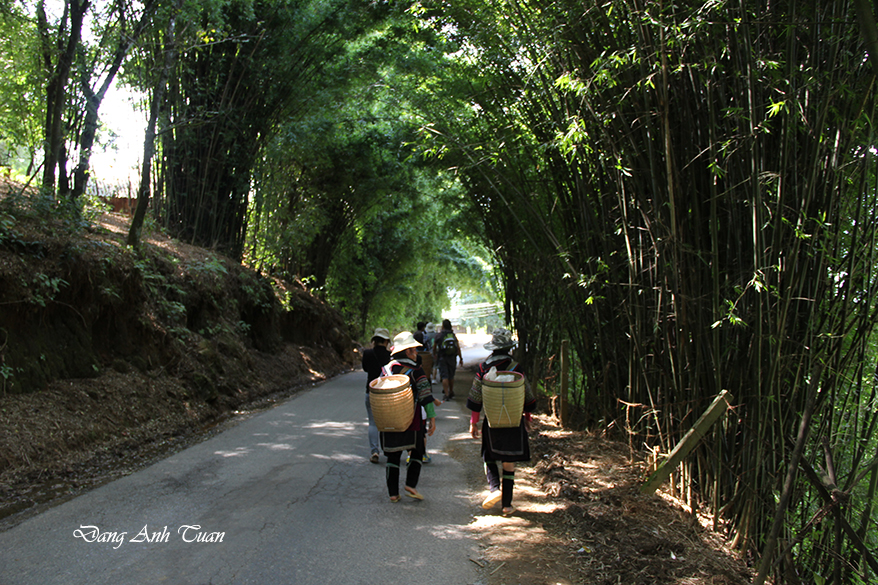
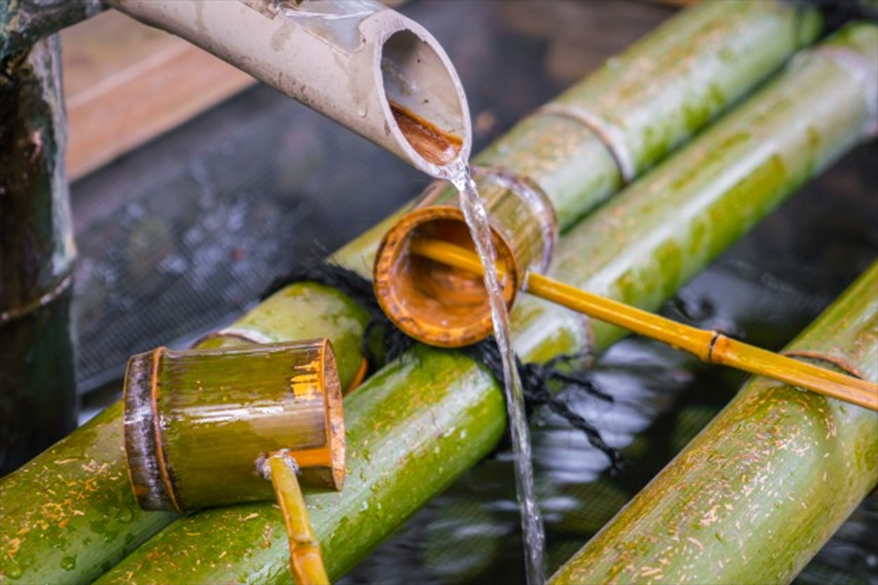
In the past, the Vietnamese used this hollow bamboo, so strong and so light, to build partitions and hedges several meters high to protect their village from enemies and bandits. This material is found everywhere in the house, from the framework, walls, partitions to the floors. Everything is made with this hollow wood (furniture, beds, tables, various accessories, etc.), even a drinking cup. Torn into strips, it is used as ropes and strings. Bamboo filaments are used to make baskets of all kinds to facilitate transport on land (baskets) or on water (round baskets). It is also used to make conical hats to shelter from the rain and the sun. Thanks to this plant, we know how to create everyday tools (buckets for drawing water, pipes for smokers, water pipes, etc.).

It is also used as food for animals and even for villagers. They eat the most tender bamboo shoots like asparagus. The roots of this hollow wood are even dug up and dried in the sun for weeks on end. As Tet approaches, it is used as firewood to bake sticky rice cakes or to protect against the cold, especially in winter in northern and central Vietnam. Bamboo thus becomes something « sacred, » intimate and specific to the village. It is thanks to these hedges made from this plant that the village regains not only its tranquility and privacy, but also its traditions and customs. Bamboo thus becomes the protector of the villagers. This is why a Vietnamese proverb says that

The king’s authority stops before the village’s bamboo hedges. (Phép vua thua lệ làng)

It is also only in villages today that we find this incomparable plant that makes life easier for villagers. Bamboo and the village are so closely linked that they are often compared to a person linked to his shadow. This is why we find this evocation in several Vietnamese poems. This impression, every Vietnamese will probably have it when passing through his native village through the following four verses:

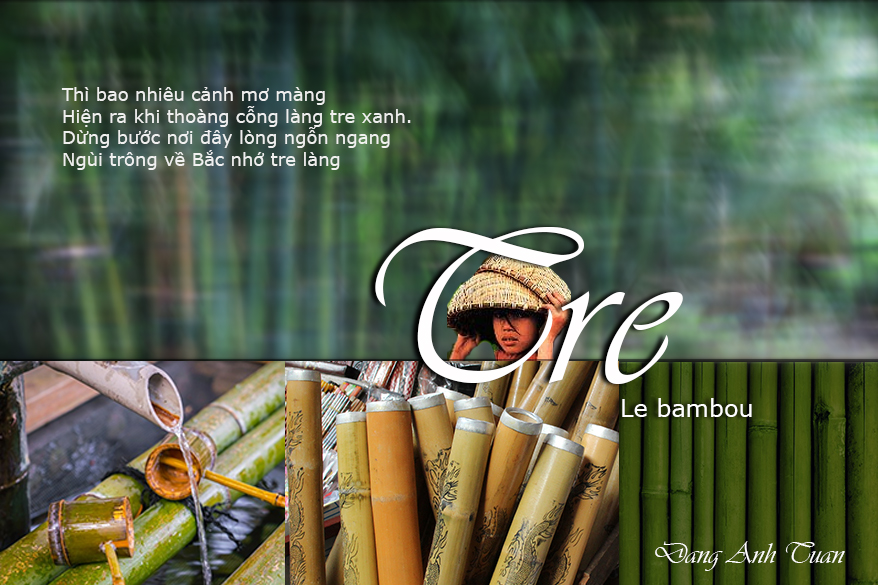
Thì bao nhiêu cảnh mơ màng
Hiện ra khi thoàng cỗng làng tre xanh.

As we indulge in dreaming, we see the entrance to the village and the bamboo appear from afar.

Dừng bước nơi đây lòng ngỗn ngang
Ngùi trông về Bắc nhớ tre làng

When we stop here, we feel helpless
When we remember our homeland with emotion, we are reminded to see the village bamboo again.


To find the bamboo is to find the village. That’s why bamboo has become the representative symbol of Vietnam.


Cham elements in Vietnamese culture (Yếu tố Chàm trong văn hóa Việt)


Version française

Version vietnamienne

In Vietnamese folklore, when speaking of Princess Huyền Trân (Jade Jenny), the Vietnamese people deplore not only the fate reserved for her but also the promise of King Trần Nhân Tôn to grant his daughter’s hand in marriage to the Cham King Chế Mân (Jaya Simhavarman III) during his special trip to the capital Vijaya (Bình Định) through the following folk song:

Tiếc thay cây quế giữa rừng, 
để cho thằng Mán, thằng Mường nó leo.

It is a shame to let a Man or a Mung climb the cinnamon tree in the middle of the forest. However, we do not know that the founder of the « Bamboo Forest » sect was a talented politician with great insight who wanted to expand his territory in the South and maintain good neighborly relations in the fight against the danger coming from the North.

 Thanks to the support provided by the Đại Việt kingdom in blocking the land passage, the Yuan army lost the battle for the second time by attacking Champa under the command of the valiant King Chế Mân with 20,000 soldiers. As for Chế Mân, the two provinces of Châu Ô and Châu Ri were not entirely under his control because their inhabitants had fled to the forest or to places where the Cham government still fully exercised its authority, the other three provinces Bố Chinh, Ma Linh and Địa Lý having long since been ceded to King Lý Thánh Tôn by the Cham king Chế Củ (Rudravarman III) in exchange for peace and his liberation.Now, by ceding two more provinces, Châu Ô and Châu Ri, it seemed difficult for him to speak to his people, especially since he was the hero of the Cham nation who had managed to win the victory against the Yuan army. The marriage of Huyền Trân was an excellent solution for the political situation of the time. This event also demonstrates the use of the « non-violence » method of the founder of « Bamboo Forest » to resolve conflicts in Buddhism according to the Vietnamese newspaper Giác Ngộ, but no one expected the sudden death of the king forcing Huyền Trân to accompany him and die with him on the funeral pyre according to Cham custom.

According to researcher Po Dharma, this is indeed a staging of the story of the organized rescue of Huyền Trân and the broken promise of the Trần dynasty, which transformed this incident into a deep discord between the two peoples, thus leading to the decline of the Champa kingdom a few centuries later with the dazzling victory of King Lê Thánh Tông in the citadel Đồ Bàn (Vijaya).

Is this ironic folk song true or not? Is Cham culture so mediocre that people despise it like this? We also need to know who they are, where they come from with the practices of a different culture carrying cultural and traditional elements specific to India. The temples and towers they possessed on the current central coast stretched over 1,000 kilometers with statues of gods of a strange and different religion. Although they were in ruins or intact, they were still invisible threats deeply rooted in the minds of our people like the statues of Brahma, Shiva, Vishnu, which created more or less anxiety, confusion and fear as is the case of Lord Tiên (Nguyễn Hoàng) who was in charge of governing the territory of Thuận Hóa (Binh Trị Thiên) in Đàng Trong, a remote, arid and dangerous region.

Tới đây đất nước lạ lùng   
Con chim kêu cũng sợ, con cá vẫy vùng cũng lo.

This is a very strange place.

A bird’s cry frightens me as much as the wriggling of a fish in a stream.

This is why, according to Abbot Léopold Cadière, in order to reassure the soul and gain peace, our people do not hesitate to introduce Cham cultural sites into their world of religious belief and transform them into places of worship such as the Pagoda of the Celestial Lady (Thiên Mụ), the Hòn Chén palace, the Po Nagar temple etc.

Throughout the travel to Thuận Hóa, the group of faithful and trusted men of Nguyễn Hoàng were all from Thanh Hóa and integrated into that of Nghệ An during the first migration in the 14th century when the provinces of Châu Ô and Châu Rí belonged to the Đai Việt kingdom. The inhabitants of Thuận Hóa were called at that time by the name of « Thanh Nghệ people » (Thanh Hóa-Nghệ An). Having left without knowing the date of return, they had to endure all the hardships and sufferings from then on. But, having strengthened the will of an adventurer in a foreign land, sometimes, they could console themselves. That is why there is a folk song tinged with philosophy as follows:

Măn giang nấu cá ngạnh nguồn,
Tới đây nên phải bán buồn mua vui.

Nothing beats wild bamboo shoots cooked with catfish,
Once you’re there, you have to sell your sadness for a little hope.

Having arrived first, the inhabitants of Thanh Nghệ were not numerous in the current region of Quảng Tri. They were forced to live in harmony with the Chams who remained there. At first, Nguyễn Hoàng still spoke with a northern accent, but over the course of only a few generations, his heirs and residents were influenced by the social environment resulting from the mixing of the two peoples, especially at the time of the breakdown of relations and trade by taking the Gianh River as the border between Đàng Trong and Đàng Ngoài and especially after the construction of the rampart (Trường Dục)  of Đào Duy Từ, which gave them a particular tone, recognizable to the inhabitants of Quảng Bình and Quảng Trị.

According to scholar Thái Văn Kiểm, the Huế accent was formed later when Lord Nguyễn Phúc Nguyên (Lord Sãi), decided to move the capital to Phước Yên village, Quang Điền district and Lord Thượng (Nguyễn Phước Lan) to Kim Long village in 1636. Through the interaction of two ancient cultures, Việt Mường (Thanh Hóa and Nghệ An) and Cham, a new way of life emerged focusing on food (eating spicy food, shrimp paste, pissalat etc.), treating diseases with southern medicinal plants, cultivating Cham rice, building boats with the Cham model (thuyền bầu) for trading at sea, water management and the construction of dikes along rivers and the use in fine arts, of the five most distinctive colors among which is purple, a color that does not provoke sad emotions and which Cham women still love and use today. These are the new characteristics of the Việt-Cham community that are often seen in Binh Trị Thiên and are now called the identity of Huế.

According to American historian Michael Vickery, based on comparative linguistic analysis, it is known that the Cham came from the island of Borneo by sea at the end of the first millennium BC. Their language belonged to the Austronesian languages. They often settled in places suitable for transporting goods on the river. Known as the Vikings of Southeast Asia, they used to cause trouble at sea by plundering ships in the southernmost coastal region of Nhat Nam district, which was directly under the administration of Giao Chau (the land of the Vietnamese) when the latter was still annexed by the Chinese. According to the observation of Vietnamese archaeologist Ngo Van Doanh, they often preferred to live in coastal plains located between three slopes of high mountains and a slope leading to the sea, all equipped with one or more fortresses.

Based on Chinese historical documents and epigraphic inscriptions, it is known that the Lâm Ấp (Lin Yi) country was transformed into the kingdom of Champa (Champapura) from the beginning of the 7th century with Simhapura (Trà Kiệu) as its capital. It is thanks to the name Champapura that we can guess that Champa is a kingdom composed of several city-states (pura). It is in some ways a federation of many city-states. The most powerful city-state is chosen to assume the role of « leader » (main role) and thus becomes Champapura (the capital of Champa). The dynasty of this city-state thus controls the entire kingdom of Champa.

According to archaeologist Trần Quốc Vượng, the Cham used to use the following cultural model, which always consisted of 3 parts: sanctuary (mountain), citadel (capital) and port (economic center) in their city. This type of model has been seen repeated in every Cham city-state from Quảng Trị to Bình Thuận. According to the observation of archaeologist Trần Kỳ Phương, city-states that built grandiose religious sites must be able to mobilize a necessary human resource that they can feed with possible economic potential. The Cham are generally oriented towards maritime trade because their arable land found in the coastal valleys of central Vietnam is very limited.

How many times has human history demonstrated that a superior civilization has a transformative effect on an inferior one? The more powerful ancient Rome, at the time of its conquest, was subject to the influence of Greek civilization. Similarly, the Mongols or Manchus, at the time of their conquest in China, were subsequently assimilated by the latter. Our Đại Việt kingdom was no exception either. Being accustomed to denigrating and despising the Chams (or Mans), could our Đại Việt have anything to do with this conquest? He received many things during the punitive military expedition of King Lê Đại Hành to Champa in 982. To enhance his prestige and celebrate his victory, he brought back not only an Indian monk (Thiên Trúc) who was at the monastery of Đ ồng Dương (present-day Quảng Nam) but also a hundred musicians and dancers (Thai Van. Kiem:64).

It can be said that since then, royal music included many elements of Champa. In 1069, King Lý Thánh Tông ordered the court musicians to compose a kind of slow and sad melody, in the style of the Cham people called Chiêm Thành Âm. Then, during the reign of Lý Cao Tôn, there were “Southern Rhymes (Airs of the Southerners)” such as Ha Giang Nam, Ai Giang Nam, Nam Thuong etc. There was also a Cham musical instrument called “Rice Drum” or “Phạn sĩ” which our people frequently use, according to the book titled “Annam chí lược (Abridged Records of Lê Tắc). As for sculpture, the Vietnamese lived under the southern influence of the South to create artifacts such as the head of a dragon from the Lý-Trần dynasty resembling that of a makara dragon or the Siamese duck (vịt siêm) with the Hamsa goose of Champa for example, all of which were found in the imperial citadel Thăng Long on the tiled roofs and gables of buildings up to the decorated motifs on bowls (Hồ Trung Tú:264). Another Cham element of the Lý dynasty that can be observed in the field of architecture and to which few people pay attention is that the pagodas of this period often had square plans, similar to the model of Cham towers (kalan).

The Dien Huu Pagoda (One Pillar Pagoda) originally consisted of a square main hall only 3 meters across and a single entrance similar to that of a Cham tower, erected on a column 4 meters high above the water surface. As for the barcarolles of the coastal region, such as the song of the second oar (hò mái nhì) or song of the propelling oar (hò mái đẩy), they all received Cham influence. According to musicologist Professor Trân Văn Khê, the boatmen’s songs of Huế (or barcarolles) and the Pelog songs of Java (Indonesia) both present the same melodic line. He concluded that after centuries of exchange, Vietnamese music was tinged with Cham color. According to researcher Charles J.C. MacDonald (CNRS Marseille), whale worship is considered a typical characteristic found among the Vietnamese living along the coast of Central and South Vietnam, as people in the North did not have it. Some Vietnamese scholars such as Thái Văn Kiểm, Trần văn Phước, or Trần Hàm Tấn have confirmed that this cult belongs to the Chams.

Thanks to these Cham elements, Vietnamese culture has become rich and diverse because, in addition to the Việt-Mường (Bai Yue) culture, it has also inherited, more or less, since the founding of the country, traditions from two ancient cultures: India and China.

[Return to CHAMPA]


Is Vietnamese civilization a copy of Chinese civilization?

Is Vietnamese civilization a copy of Chinese civilization?

Version vietnamienne

Version française

For a long time, based on Chinese annals, famous Vietnamese scholars such as Trần Trọng Kim in his work « The History of Vietnam » or Đào Duy Anh in « The Outline of the History of Vietnamese Civilization » have recognized that the Proto-Vietnamese originated in China or Tibet. This is why during the time of Chinese domination, the Chinese governors Si Kouang and Ren Yan had to teach them how to cultivate rice and how to live and dress (Book of Later Han). This is an understandable mistake because they need to rely on Chinese annals to find the source of reliable information instead of believing in Vietnamese legends recounting improbable things, the ancient territory of Vietnam being delimited by the Dongting Lake of the Chu Kingdom during the Warring States period, for example.
Even the Europeans during their stay in Southeast Asia in the 19th century had a rather short-sighted vision because they only discovered two major and brilliant civilizations: India and China. This is why they called Indochina to recall the notable influence of these two civilizations in this region including Vietnam, Cambodia and Laos. The recent discoveries of famous American archaeologists such as Wilhelm G. Solheim II, Carl Sauer, Chester Gorman (1965), Donn Bayard, Stephen Oppenheimer provide evidence confirming that the birth of agriculture took place very early in Southeast Asia. Between 9000 and 10000 years BC, its inhabitants were experienced farmers. They did not live only from hunting as European archaeologists used to describe. Around 8000 BC, there was a great cataclysm and a flood that forced these farmers to flee to other safe regions to protect themselves and earn a living. According to S. Oppenheimer, their traces have been found in the islands of Melanesia, Polynesia, and Micronesia. They spoke the language belonging to the Austronesian language family and were originally from Southeast Asia.


This is entirely consistent with the genetic data analyzed by the American team led by Professor J.Y. Chu of the University of Texas and published in July 1998 in the journal of the American Academy of Sciences under the title « Genetic Relations of Population in China »: the Chinese of today, especially those of South China (Hoa Nam) have ancestors in Southeast Asia. We can therefore say that the Bai Yue, especially the Luo Yue (the Proto-Vietnamese) were not Chinese and they knew agriculture very early. An axe dating back to 7000 BC was found by Chester Gorman in 1965 at the Spirit Cave in Thailand, while the axe attributed to China and brought back to Southeast Asia only dated back to 3000 BC. The Hemudu culture discovered in 1973 (5000 BC – 4500 BC) and considered to be the first very ancient domestic rice culture in China is also the Bai Yue culture because the Jiangnan province belonged during the Warring States period to the famous Wu-Yue king Goujian (496-465 BC). In fact, the Hoa Binh culture (12,000 BC-10,000 BC) that Madeleine Colani discovered in Vietnam and which was at the origin of Vietnamese civilization spread later and brought notable influence to the north. The people living in Hoa Binh at that time were called the Proto-Miao (they would later become the Proto-Vietnamese). They excelled in agriculture. That is why the Proto-Chinese used the pictogram Rice Field below which appears the pictogram Vegetation to form the word Miao designating people who knew how to do agriculture. They left the Himalayan mountain range, Tiānshān (Thiên Sơn) several thousand years ago, followed the rivers in the East and Southeast direction and settled in Southeast Asia before traveling through the regions located in the south of China (or the south of the Yangtze River Delta). They were also called the people living in the hot country (or Viêm tộc) during the Chu Dynasty (nhà Châu) or the Bai Yue later. It can be said that the Hoà Bình culture was the flooded rice culture of the Vietnamese. It also favored the birth of the Hemudu culture (5500 TCN), the Đồng Sơn culture (500 years BC) etc.

As for the Proto-Chinese, they were also from Tiānshān (Thiên Sơn) but they were part of the nomadic tribes living from hunting and cattle breeding in the Xinjiang region. When it became desert (5000 BC), the Proto-Chinese were forced to follow along the Yellow River and advanced into northern China where the Proto-Miao were. They were called at that time the Yi. This pictogram Yi is the association of two pictograms Man and Bow to designate a man knowing how to shoot with a bow. The Proto-Chinese were excellent warriors. This is why there is a confrontation that took place between them and the Proto-Miao led by Chiyou at Zhuolu in 2704 BC. They emerged victorious with the death of the latter.

For the Chinese, the first traces of their civilization date back to the Neolithic period in the Shang capital, Anyang (Henan) and Yangshao (Shaanxi) with several sites. It was the Swedish archaeologist Johann Andersson who discovered the first site in 1921. This culture, dating back to between about 5000 and 3000 years BC, flourished in the plains of the central highlands irrigated and shaped by the Yellow River for centuries. They cultivated millet, wheat and barley. According to the French historian René Grousset, rice is foreign to northern China (page 8) in his work entitled « History of China« . This fact is consistent with the spread and influence exerted by the Hoà Binh culture (12000TCN-10000 TCN) in the north. The Chinese living in southern China are Bai Yue, whom the Chinese have managed to sinicize because their blood contains the gene of the Proto-Miao or Bai Yue (like the Man Yue, the U Yue, the Shan Yue, the Wu Yue, etc.). This is why the Chinese are proud of the richness and diversity of their culture. Yin and Yang and the 5 elements, the Yi King,  the tea, the curved roof of houses, the paper, the dragon, the  chopsticks  and the bronze drums, everything now belongs to them because it is located in the territory of the Bai Yue, i.e. in the south of the 5 Passes (Lĩnh Nam) of China except Vietnam. Yet at a certain time, the Bai Yue were still Nan Man or southern barbarians. This is one of the characteristic features of Chinese culture: it knows how to accept and absorb foreign cultures without ever being able to speak of vacillation or cultural modifications. This is what the famous 20th century Chinese philosopher Liang Shuming wrote in the introduction to his work entitled « The Master Ideas of Chinese Culture » (translated by Michel Masson).

This is in line with the following observation made by the French ethnologist and sinologist Brigitte Baptandier in her lecture text at an APRAS study day on regional ethnologies in Paris in 1993: Chinese culture has thus been formed over the centuries as a sort of mosaic of cultures. China needs a slow infusion of barbarian blood by readapting the beautiful formula of the historian F. Braudel for France with the barbarians. The Chinese introduce into their literature a Pangu creation myth collected from the ancestors of Yao. (Baptandier).

Lac_viet

From the Qin-Han period onwards, there existed an imperial institution, the fangshi, who were local scholars considered magicians specializing in star rites and government recipes. Their role consisted of collecting, each in their own territory, ritual procedures, beliefs, local medicines, systems of representation, cosmologies, myths, legends as well as local products and submitting them to the political authority so that the latter could retain them or not and incorporate them in the form of regulations with the aim of increasing imperial power in an ethnologically very diverse nation and giving the emperor the means for his divine vocation. 

Everything had to be collected and added to the service of the Son of Heaven in order to establish his legitimacy in territories recently conquered from the barbarians. This is why in the history of China there is an inconsistency that is difficult to understand because the Chinese used to take Mr. A’s outfit to dress Mr. B during the time of the Five Emperors and Three Augusts. All this is due in large part to the borrowing of traditions, customs and mythical characters or animals from the peoples they managed to sinicize.

Chinese demiurges such as Fuxi, Nuwa, Pangu, Shennong were borrowed from southern populations. This is the case of the great Chinese scholar Ruey Yih-Fu who sees in Fuxi and Nuwa a specific cultural trait of the Nan Man (Southern Barbarians) or that of Charles Le Blanc, the translator of Huainanzi (Hoài Nam Tử). For the latter, the cycle of Fuxi-Nuwa is a tradition of the kingdom of Chu. We tend to forget that from the Qin-Han era, the agricultural culture of the Bai Yue was integrated into Chinese culture so much so that the difference between these two cultures is no longer distinguished. China succeeded in largely sinicizing most of the Bai Yue except the Luo Yue.

They managed to escape from the yoke of the Northerners after a long domination lasting almost 1000 years. The Chinese took over everything that belonged to the Vietnamese but they failed to sinicize them because the Vietnamese continued to keep the characteristic way of life of the cultivation of flooded rice based essentially on the autonomy of the villages thus making the penetration of foreign aggressors ineffective with their traditions and customs. (The authority of the king yielding to the local customs of the village). This is why they only need two essential elements « Earth » and « Water » to refer to their country and their civilization. « Earth » and « Water » allow them to domesticate wild rice and help them to attach themselves deeply to their soil to protect the water (or country in Vietnamese), this is what their ancestors have managed to demonstrate many times the resistance to the peril of the Northerners for many centuries.


Anh Ca (Brother Hai)


Anh Cả (Brother Hai)

Once, while I was visiting South Vietnam, I had the opportunity to listen to the bus guide tell us about it. According to him, during our people’s march to the South, the eldest son must stay with his mother to support the family while his father, who is in the army, goes to the South alone. Far from his family and his homeland, he usually takes a second wife and has another child. This child will be called « sister Hai » or « brother Hai » because this corresponds to the rank « TWO » in the family consisting of several children. There is another hypothesis as follows:

During the Nguyen Dynasty, there was a tradition of refraining from any action that referred to the first name of the king or his relatives. This is why the word ĐẢM was replaced by the word ĐỞM because ĐẢM was the first name of Nguyễn Phúc Đảm (King Minh Mang) (can đảm meaning courage was transformed into can đỏm). King Minh Mang had a wife named Hồ Thị Hoa, mother of King Thiệu Trị. Viceroy Le Van Duyet built a bridge near a beautiful garden in Bến Nghé (the first district of today’s Ho Chi Minh City). It was originally called « flower bridge » (cầu HOA), which later became « cầu BÔNG. » It is said that the word « Cả » is not used because it refers to the eldest son of King Gia Long (Prince Cảnh). This is absurd because « Hương Cả » is the title given to the first person in the village in South Vietnam, often heard by the population and still used in the French colonial era. This is absurd because no one ever pays attention to the rank or title given.

It should be remembered that the Vietnamese are part of the Austro-Asiatic group. In addition to the Vietnamese, there are many other ethnic groups that are now called ethnic minorities such as the Tai-Kadai, the Austronesians, the Mường, the Hmong, the Cham etc.). Consequently, there is always the reciprocal borrowing of words in the vocabulary used by these ethnic groups. In South Vietnam, formerly it was the territory of the kingdom of Funan whose inhabitants were not the Khmer but the Austronesians like the Cham and the Mạ in the Đồng Nai region despite the annexation of this kingdom later by Chenla which later became the Angkorian empire of the Khmer. As their territory was too vast, the Khmer were unable to assume their presence everywhere. This is why the Funanese only became Khmer in places where contact was possible thanks to the assimilation policy. On the other hand, in other places the Funanese continued to live as before.

Being given the undeniable proximity of the Austro-Asiatic and Austronesian groups, proven for thousands of years by documents from genetic research work as recently as twenty years ago, the borrowing of the word HAK from the Funanese belonging to the Austronesian group in South Vietnam by the Vietnamese is very normal to designate children.

According to Vietnamese writer Bình Nguyên Lộc, the eldest son is always called « Son Hak » by the Funanese. So « sister Hai » or « brother Hai » used by the Vietnamese in South Vietnam obviously come from the Funanese. This is why in South Vietnam when you meet a Vietnamese with wavy hair, you can deduce that he is of Funanese origin like the Mạ in the Dong Nai region. A pure Vietnamese never has wavy hair but on the other hand has straight hair because he is part of the Southern Mongoloid group.


Traces of Vietnam’s matriarchal system


Traces of Vietnam’s matriarchal system.

Version française
There is a time when our people, like other peoples of the world, adopt the matriarchal system. Do we have the opportunity to think about this for ourselves? Certainly not, because at birth, we all took our father’s name, except in France where we are now allowed to add our mother’s name to our name. In the Vietnamese language, we often use words that still bear traces of the matriarchal system, which we never think about, especially since our country has adopted the patriarchal system for so long. We often say wife/husband (VỢ CHỒNG) but never husband/wife (CHỒNG VỢ). We are used to referring to the family line with the term « BÀ CON » where the word BÀ (madam) always precedes the word CON (or child). Sometimes there is contempt in the words when using the following term « gái nạ dòng or divorced woman » where the word nạ refers to the mother’s lineage. According to the writer Binh Nguyên Lộc, this is meant to imply a polyandrous girl. This implicitly means a bad girl.

Today, our country still has a matriarchal system in many places, such as in the Vietnamese highlands with the Cham, Jarai, Ede, Raglai and Churu ethnic groups belonging to the Austronesian language family, or the M’nong and K’ho of the Austro-Asiatic language family. Some claim that our country has adopted the patriarchal system since the annexation of Jiaozhi (Giao Chỉ) by China. This is certainly not true. When did our country abandon the matriarchal system in favor of the patriarchal one? To explore this question further, archaeologists often rely on the way the dead are buried in the tombs of sites linked to the flooded rice civilization. It was certainly not at this time that the Hùng kings of the Văn Lang kingdom ruled with the Phùng Nguyên culture, as succession to the throne clearly operates through patriarchy in the legend, notably the major power always accruing to the eldest member of the family in the social organization of the time.

We also know that the ancestors of the Vietnamese people came directly from the region of the Blue River (Yangtze), based on today’s genetic research data. We need to go back in time and analyze the places where flooded rice was grown in the middle and lower reaches of the Yangtze River, because according to Japanese researcher Shin’ichi Nakamura of Kanazawa University, the cradle of rice cultivation must have been there, but given the current state of knowledge, it’s difficult to pinpoint it very precisely on a map.

However, there is the social evolution in the regions of the lower Yangtze River (Hemudu and Liangzhu archaeological sites) during the Neolithic period:

from a diversified economy to an exclusively rice-growing economy

– from agricultural to urban settlement

– from a collective cemetery to a cemetery for individual groups.

Why the Hemudu site? According to French archaeologist Corinne Debaine-Francfort, the oldest Neolithic site in the Hemudu region (Zheijiang) not only yielded the remains of a wooden lake dwelling on stilts, quite different from the mud houses of northern China, but also grains of rice cultivated in flooded fields using hoes made from animal shoulder blades in 1973. It can be said that rice was domesticated at this site dating from around 4770 to 5000 BC. The people living here had both Mongoloid and Australo-Negroid features. When people died, they were buried with their heads facing east or northeast, and most had no offerings. Nor did they have a clearly defined communal cemetery.

On the other hand, they had a common clan cemetery with numerous grave goods. We can see that a matriarchal system was still in place here, as we find the remains of animals such as monkeys, rhinoceroses, deer, elephants, tigers, tortoises etc. This shows that the local inhabitants were still living off hunting and fish.

The role of man is not considered important, as it is not yet necessary to have a social organization requiring many human resources for production, such as tool-making, storing rice in granaries, casting bronze, etc., as well as the distribution of arduous tasks to obtain the desired result during the harvest season. Man seems to have little power and is not allowed to own or inherit land.ing at the time.

On the other hand, in the Neolithic sites of the Liangzhu culture, there is a clear shift in the balance of power between husband and wife. For example, among the funerary objects in individual tombs, agricultural tools such as polished stone shovels are intended for men, while weaving wheels remain the main objects for women. This proves that, at the time, men were the main laborers in the rice fields and women were only responsible for household chores.

In addition, stonecutters were forced to change their trade and became jade cutters. This led to an important period of industrial development and division of labor in society, and fostered the emergence of class distinctions between rich and poor, as well as between aristocracy and religion. Since then, there has also been a contribution to division within the family unit. It was also at this point that monogamy began to appear.  The wife followed her husband to live with his family. The children were also able to live with their parents and family, and took the father’s surname when they were born.  Upon death, husband and wife could be buried together with members of their patriarchal family.

In short, we can say that the Vietnamese followed the patriarchal system very early on, when our ancestors were still living in the Yangtze basin. Consequently, when they returned to the Red River delta, they continued to preserve patriarchy under the Hồng Bàng dynasty with the Phùng Nguyên culture.


Bibliographie:

Annick Levy-Ward : Les centres de diffusion du riz cultivé. De l’Asie du Sud-Est à la Chine. Études rurales, n°151-152, 1999
Shin’ichi Nakamura: LE RIZ, LE JADE ET LA VILLE. Évolution des sociétés néolithiques du Yangzi. Éditions de l’EHESS 2005/5 60e année, pp 1009-1034
Corinne Debaine-Francfort : La redécouverte de la Chine ancienne.  Editions Gallimard  1998.
Bình Nguyên Lộc: Lột trần Việt ngữ. Talawas