Le peuple arc-en-ciel (Rainbow people)

Version anglaise
Version française

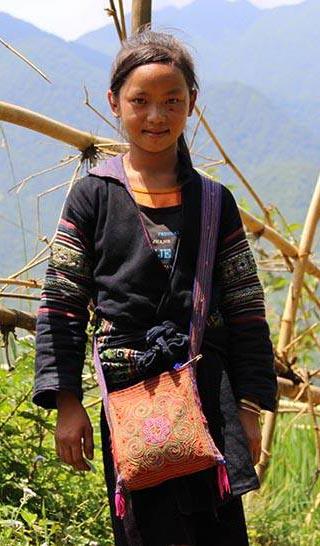
Màu chàm là màu căn bản  thường được trọng dụng bởi các phụ nữ Hmong trong việc nhuộm quần áo. Trước đó các y phục nầy được sáng chế  từ các  cây gai dầu mà họ trồng,  rồi họ tự dệt lấy và  nhuộm màu chàm sau cùng một cách tự nhiên. Những phụ nữ Hmong được xem là  những phụ nữ khéo tay.  Màu xanh tuyệt vời này  tô điểm cuộc sống của họ đã từ bao năm nay.

Dệt và thêu là  các công việc chính của các phụ nữ Hmong. Chính vì lý do này mà họ phải học may từ thưở nhỏ (6 hoặc 7 tuổi) với mẹ. Khi trưởng thành, họ hoàn toàn biết may vá quần áo để thể hiện không chỉ họ có khả năng  thành thạo trong việc làm  mà  còn  thể hiện được sự giàu có và cấp bậc mà gia đình họ có ở  trong làng. Đó cũng là một cách để quyến rũ và  giữ được sự chú ý của các chàng trai trẻ  và cha mẹ của họ trong trường hợp đi đến chuyện hôn nhân.

Thành ngữ  sau đây biểu lộ  định kiến ​​mà được duy trì từ lâu ở trong xã hội Hmong:
Gái xinh chưa biết cầm kim là hư.
Những bộ đồ sặc sỡ, những tác phẩm thêu thùa  trang nhã và những trang sức tinh xảo  làm họ  có tiếng tăm ở  khắp vùng Đông Nam Á. Đây cũng là biểu tượng độc đáo của bản sắc của dân tộc Hmong.

Người Hmong là một dân tộc không có quốc gia. Tuy nhiên, họ là một dân tộc rất cổ xưa, có nguồn gốc từ Trung Quốc và liên tục bị đàn áp và đẩy lùi bởi những người phương Bắc trong nhiều thế kỷ để trở thành một trong những dân tộc thiểu số của Việt Nam ngày nay. Việc trưng bày trang phục và đồ trang trí của họ có liên quan đến cái tên được gọi là « dân tộc đa sắc » như cái cầu vòng mà có một số người tiếp tục gán cho dân tộc Hmong.

yphuc_hmong

Un peuple en quête de liberté.© Đặng Anh Tuấn 

Version française

L’indigo est à la base de la teinture employée par les femmes Hmong dans la confection de leurs vêtements. Ceux-ci sont en chanvre cultivé et tissé par elles-mêmes. Ils sont teintés par l’indigo obtenu de façon naturelle. On dit que les femmes Hmong ont la main bleue. Ce superbe bleu colore bien leur vie depuis longtemps. Tissage et broderie sont les tâches principales des femmes Hmong. C’est pour cette raison qu’elles doivent apprendre à coudre dès leur jeune âge (6 ou 7 ans) auprès de leurs mères. Une fois adultes, elles maîtrisent parfaitement la confection pour montrer non seulement leur aptitude au travail, leur savoir-faire mais aussi la richesse et le rang de leurs familles dans le village.  C’est aussi une façon de séduire et de retenir l’attention des garçons ainsi que celle de leurs parents en cas du mariage. 

L’idiome Hmong suivant:

Gái xinh chưa biết cầm kim là hư

Une jolie fille ne sachant pas manipuler une aiguille est méprisable.

témoigne du préjugé entretenu dans la société Hmong.
cogai_hmong

Les costumes bigarrés, les broderies élégantes et les bijoux fins font incontestablement leur réputation à travers l’Asie du Sud-Est. C’est aussi le symbole unique de leur identité.

Les Hmong constituent un peuple sans nation. Pourtant c’est un peuple très ancien, originaire de la Chine et refoulé sans cesse par les gens du Nord au fil des siècles pour devenir aujourd’hui l’une des minorités ethniques du Vietnam. L’exhibition de leurs costumes et de leurs parures n’est pas étrangère à la dénomination « peuple arc-en-ciel » que certains continuent à attribuer aux Hmong.

Version anglaise
The indigo underlies  the dye used by the Hmong women in their clothing manufacture. These  are made of  hemp grown   and woven by themselves. They are colored by the indigo obtained in a natural way. It is said that the Hmong women have the blue hand. This beautiful blue colours well their lives for a long time.
Weaving and embroidery are the main tasks of  Hmong women. It is for this reason that they must learn how to sew from their young age (6 or 7 years) with their mothers. As adults, they have perfectly mastered  the making clothing to show not only their ability to work and  their know-how but also the wealth and status of their families in the village. It is also a way to seduce and to retain the  boys attention  as well as that of their parents in the event of marriage.

The Hmong idiom following:
Gái xinh chưa biết cầm kim là hư
A pretty girl not knowing manipulate a needle is despicable.
testifies to the bias maintained  in the Hmong society.

a people in search of freedom 

Funny costumes, elegant embroideries and fine jewelries incontestably build their reputation through the South-East Asia. It is also the unique symbol of their identity. The Hmong are a people without nation. It is a people very old, originating in China and repulsed without delay by the North people over the centuries to become today one of the ethnic minorities of Vietnam. The exhibition of their costumes and ornaments is not foreign to the name “rainbow people ” that some people continues to assign to the Hmong.
[Back to page « Vietnam, land of 54 ethnies »]

Siège de la congrégation du Fujian

hoian_et_fujian
Hôi Quán Phúc Kiến

[Retour HOI AN et ses quartiers ]

Hội An et ses ruelles (Ngõ Hẻm)

Ngõ hẻm


Version française

Version anglaise

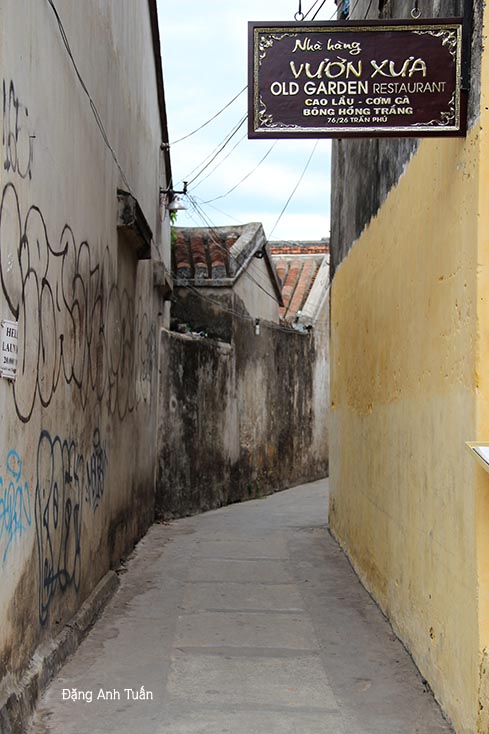
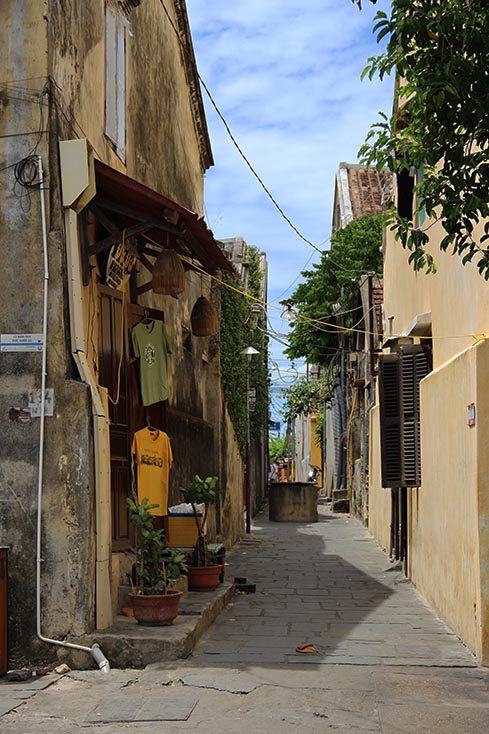
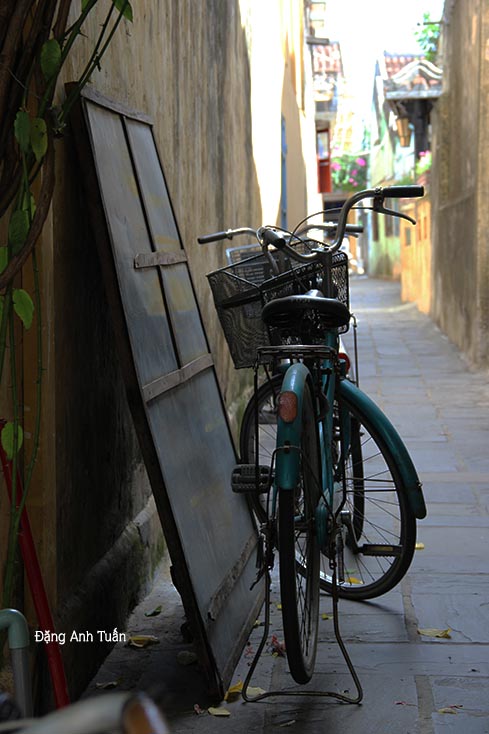
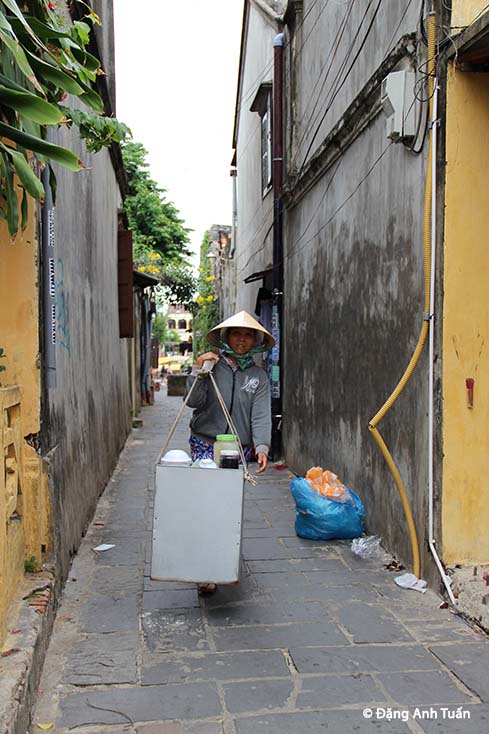
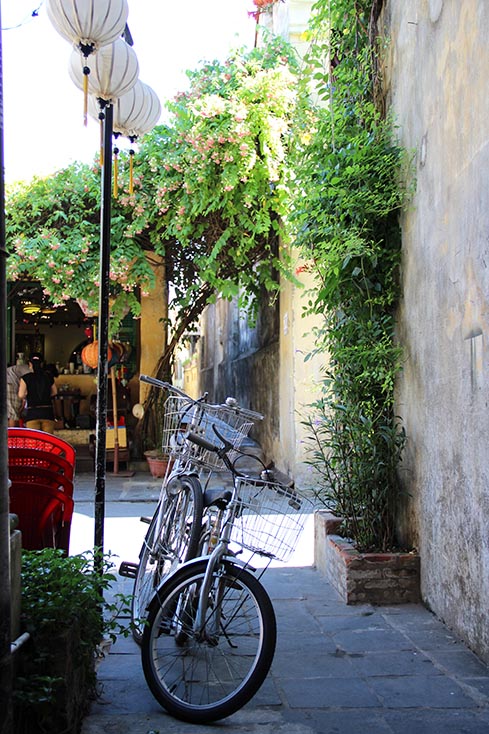
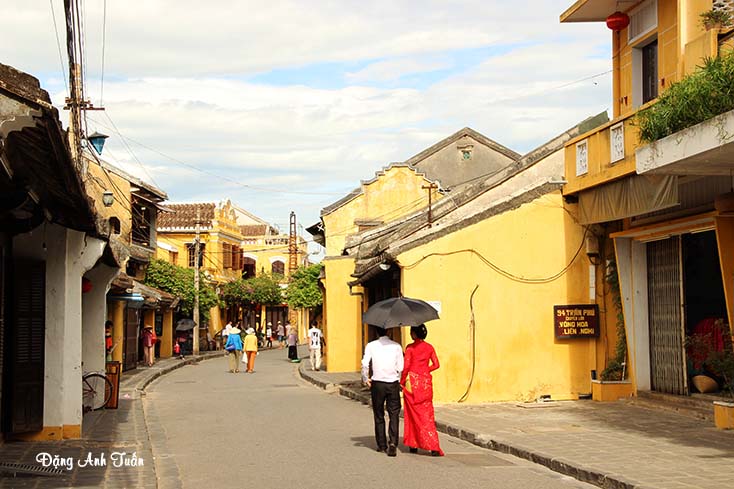
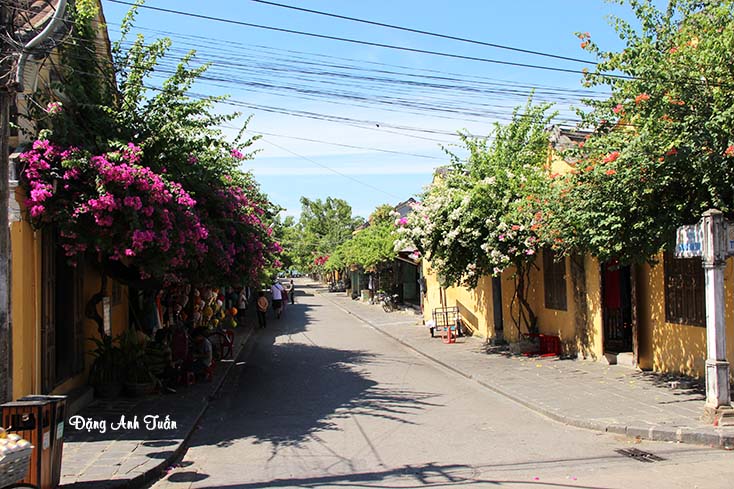
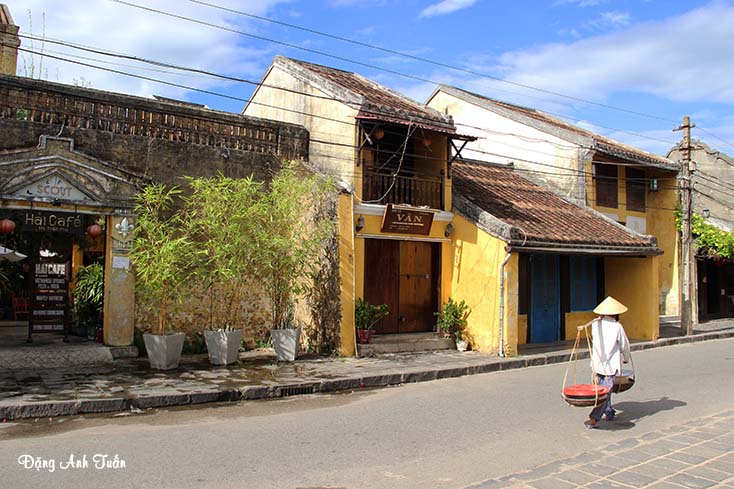
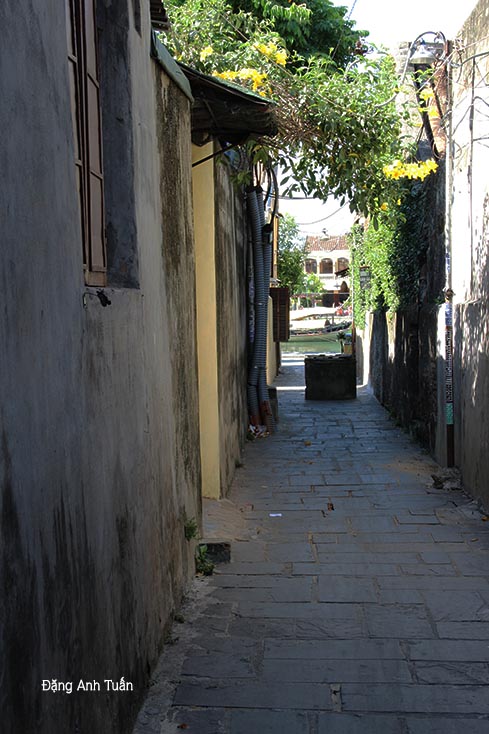
Đây là một nét đặc trưng khác được tìm thấy ở phố cổ Hội An. Những ngôi nhà được dựng san sát nhau và ngăn cách nhau bởi những con hẻm (hoặc ngõ cụt) khá rộng và sáng. Chính qua những con hẻm này, ta có thể khám phá lối sống truyền thống của người dân ở nơi đây. Không tựa như những con đường chính, những ngõ hẻm này luôn có một bầu không khí yên tĩnh và thanh bình.


C’est une autre particularité trouvée dans la vieille ville de  Hội An.  Ses maisons sont alignées étroitement les unes contre les autres et  séparées par des ruelles (ou des impasses) assez larges et  éclairées. C’est par ces ruelles qu’on peut découvrir le mode de vie traditionnel des gens d’ici. Contrairement aux rues principales, il y a toujours une atmosphère  tranquille et sereine dans ces allées.

This is another characteristic found in the old town of Hội An. Its houses are closely aligned against each other and separated by fairly wide and well-lit alleys (or dead ends). It is through these alleys that one can discover the traditional way of life of the local people. Unlike the main streets, there is always a quiet and serene atmosphere in these lanes.

[Return HOI AN]

Hội An et son musée de folklore populaire

hoian_et_dangian

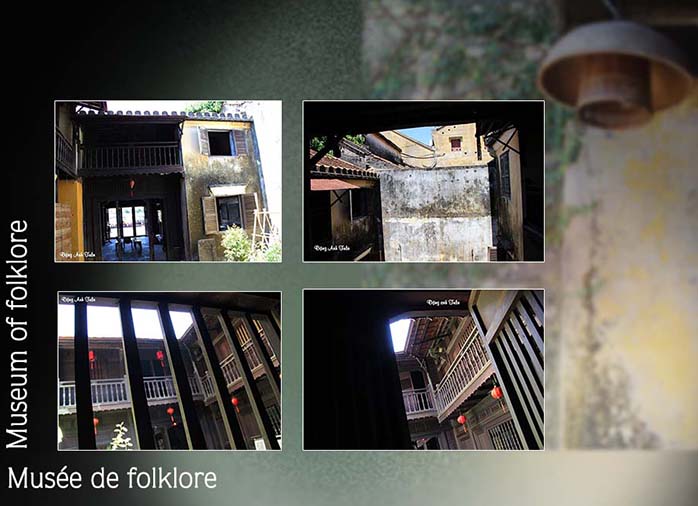
Bảo tàng văn hóa dân gian

33 Rue Nguyễn Thái Học

Hội An


[Retour Hoi an et ses quartiers]

Hội An et ses 5 congrégations (Ngũ Bang)


Version française
Version anglaise
Galerie des photos

hoian_et_congregations

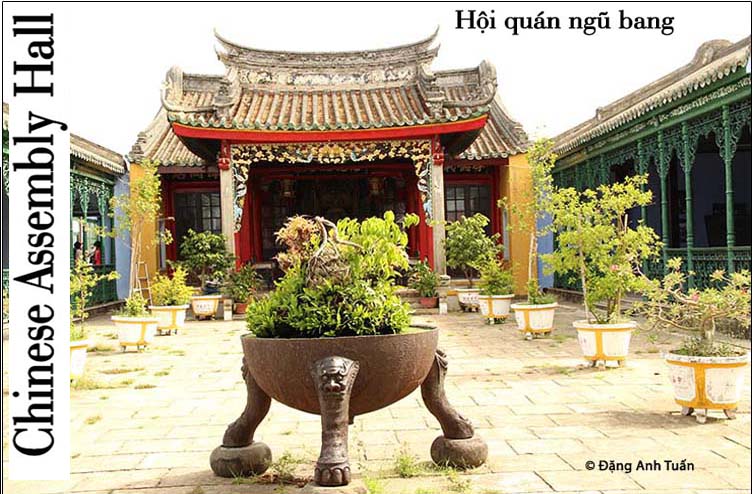
Siège des congrégations chinoises

64 Rue Trần Phú

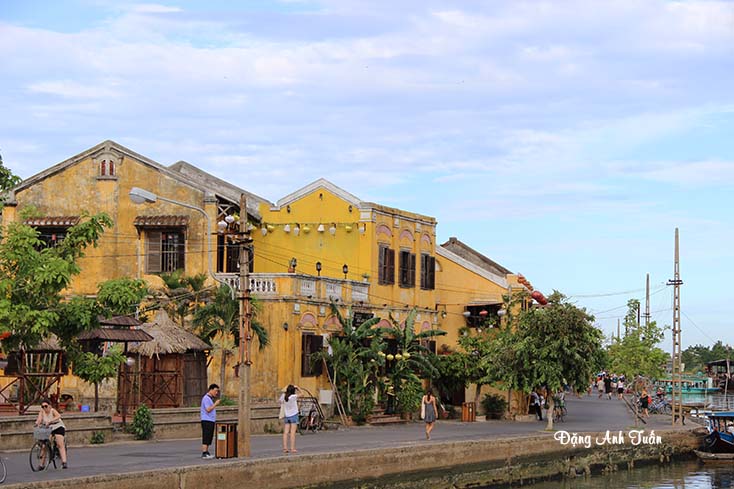
Từ khi có thông lệnh của Mạc phủ (Bakufu) ở Nhật cấm người dân xuất ngoại thì nguời dân Nhật buộc lòng rời bỏ Hội An trở về. Khiến Hội An trở thành từ đây là thành phố của người Hoa nhất là có một biến cố quan trọng ở Trung Hoa vào giữa thế kỷ 17 với sự sụp đổ triều đại nhà Minh. Có một cuộc di tản đáng kể của người Hoa đến Vietnam luôn cả ở Hội An. Họ đến từ 5 vùng phiá nam của Trung Quốc: Quảng Đông, Triều Châu, Phúc Kiến, Hải NamGia Ứng (hay Hẹ).

Ở Hội An họ được các chúa Nguyễn cho phép họ có quyền tự chủ. Cụ thể là họ có quyền bầu người đại diện, giữ các phong tục và tập quán của họ cũng như có quyền lập các hội quán theo vùng họ đến. Có thể nói mỗi hội quán phản ánh phương ngữ bản địa, là thánh đường, là phòng thương mại (nơi để giải quyết tất cả công ăn việc làm của người Hoa mới đến định cư) và cũng là nơi trừng phạt những hành vi sai trái của mỗi thành viên. Vì vậy ít khi họ có các cuộc đụng chạm với người bản xứ và cần nhờ đến nhà chức trách. Chính cũng là một hệ thống giúp đở vô cùng hữu hiệu. Các hội quán có quyền thu thuế để xây cất trường học, bệnh viện và đền chùa riêng tư. Các hội quán đều nằm trên con đường chính Trần Phú cả vì thời đó Hội An chỉ có một con đường nầy mà thôi. Về sau nhờ việc bồi đất mới có thêm hai con đường song song đó là đường Nguyễn Thái Học và Bạch Đằng. Bởi vậy mới có câu mà người Hội An thường nói:

Thượng chùa cầu, hạ Âm Bổn

có nghĩa là ở đầu đường phiá tây có chùa cầu còn ở cuối đường phiá đông có chùa ông Bổn tức là chùa thờ Phục Ba tướng quân (Mã Viện), ngày nay là hội quán của người Triều Châu. Có nhiều sử gia cho rằng chùa cầu là do người Nhật xây cất, có phải họ xây cất thật sư hay mướn người Hoa cất. Đây là một điều bí ẩn mà cho đến nay chưa có sáng tõ rỏ ràng. Các nhà hội quán người Hoa dù có đến từ vùng khác nhau đi nữa đều có ba cổng dẫn đến một cái sân.

Tựa như đình của người dân Việt, các hội quán còn là nơi thờ cúng các nhân vật trong các chuyện thần thoại của Trung Hoa nhất là bà Thiên Hậu Thánh Mẫu, bà có công giúp người vượt sóng đại dương hay là các bậc anh hùng như Khổng Tử, Quan Vũ (hay Quan Công), Mã Viện, Tôn Đật Tiên vân vân.. Bởi vậy luôn luôn ở các hội quán có hai không gian: một gian dành cho việc thờ cúng còn gian còn lại dùng để giải quyết tất cả những việc liên quan đên cộng đồng. Khi họ đến Hội An họ thường cùng nhau ở chung một khu riêng biệt. Vì vậy người Việt thường gọi là khu khách trú. Bởi vậy mới gọi người Hoa là “khách trú” từ đó mà ra. Còn “ba tàu” cũng dùng để kêu họ vì dạo đó có 3 chiếc tàu của người Hoa do hai tướng nhà Minh Dương Ngan ĐịchHoàng Tiến xin định cư ở đất Chân Lạp (Mỹ Tho) với chúa Nguyễn Phúc Tần.

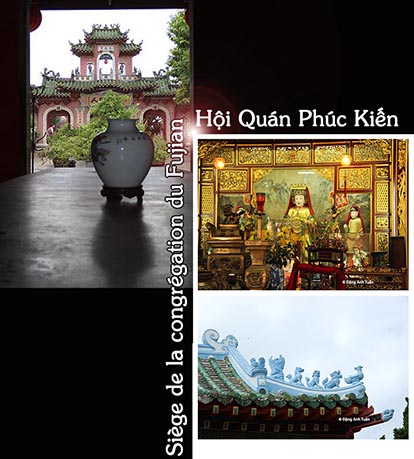
Muốn tham quan các hội quán trên đường Trần Phú thì người du khách có thể đi từ Chùa cầu đến am ông Bổn như vậy sẻ không thiếu sót một một hội quán nào cả. Nhưng trong các hội quán nầy, người du khách thường được biết đến nhiều khi đến Hội An đó là hội quán của người Phúc Kiến. Nơi nầy có cả mô hình của một chiếc thuyền cổ vượt biển vào thời đó và nhất là trên cổng chùa có những pho tượng thú như đã thấy ở trên mái của Điện Thái Hoà ở Tử Cấm Thành (Bắc Kinh).. Các con thú nầy được bài trí thứ tự được nhắc trong cuốn Đại Thanh hội điển (Da Qing Hui Dian), nhìn trông thấy lạ và thích thú.

Version française

Depuis le rapatriement forcé des Japonais lié à la politique isolationniste (ou Sakoku) du shogun Lemitsu Tokugawa , cela provoqua non seulement le déséquilibre démographique entre les deux communautés japonaise et chinoise à Hội An mais aussi la régression du quartier japonais jusqu’au point où on trouve seulement aujourd’hui le pont-pagode japonais, témoin unique d’une époque d’échange commercial entre le Japon et le Vietnam. Les commerçants chinois commencèrent à remplacer progressivement les Japonais en achetant leur maison et leur terre. Ils devinrent ainsi les acteurs principaux de l’économie commerciale de Hội An. Comme ils étaient issus des cinq régions: Kouang Toung (Quảng Đông), Tsao Chéou (Triều Châu), Foukien (Phúc Kiến), Hai Nan (Hải Nam) et Gia Ung (Gia Ứng, Hakka) de la Chine méridionale, ils bénéficiaient d’un certain degré d’autonomie. Ils pouvaient élire librement leurs représentants, garder leurs us et coutumes et constituer leur association selon leur appartenance régionale. Chaque congrégation avait pour but d’apporter l’entraide aux nouveaux venus et surtout à ceux qui se lançaient dans le commerce. On trouve à Hội An autant de congrégations que de régions de la Chine méridionale dont étaient issus les migrants chinois. Le siège de chaque congrégation est en fait un lieu de rencontre et de discussion sur les affaires de chaque communauté.

Ayant la même fonction de la maison communale (đình) des Vietnamiens, il est un lieu de culte des personnages de la mythologie chinoise ( la reine Thiên Hậu portant secours aux naufragés en pleine mer) ou des héros de la Chine ( Guan You (Quan Công), Phục Ba Tướng Quân Mã Viện (Ma Yuan), Sun Yat Shen (Tôn Dật Tiên) etc…). C’est pour cette raison que dans chaque siège de la congrégation, il y a toujours deux espaces: l’un réservé au culte et l’autre destiné à assumer et à planifier les activités communautaires. Lors de leur arrivée, les Chinois vivaient regroupés selon leur appartenance régionale et séparés des Vietnamiens dans leur quartier qu’on a l’habitude d’appeler en vietnamien « khu khách trú » (quartier des résidents). C’est pour cette raison qu’on les appelle dès lors « khách trú ». C’est le mot employé par les Vietnamiens pour désigner les Chinois. Pour pouvoir visiter toutes les congrégations chinoises de Hôi An, il suffit pour le touriste de prendre la rue principale Trần Phú car à une certaine époque Hôi An n’avait que cette rue. Il faut commencer la visite à partir du pont pagode japonais. De passage à Hôi An, aucun touriste ne perd l’occasion de connaître la pagode Fou Kien (congrégation des habitants de Fou Kien) car elle est le symbole de Hôi An avec son porche imposant, sa cour embellie de fleurs et sa toiture où il y a un  grand nombre de figurines animaux comme celles trouvées sur les bâtiments de la cité interdite de Pékin.

English version

Since the forced repatriation of the Japanese linked to the isolationist policy (or Sakoku) of Shogun Lemitsu Tokugawa, this not only caused a demographic imbalance between the Japanese and Chinese communities in Hoi An, but also led to the decline of the Japanese quarter to the point where today only the Japanese pagoda bridge remains, the sole witness to an era of trade between Japan and Vietnam. Chinese merchants gradually began to replace the Japanese by buying their houses and land. They thus became the main players in Hội An’s commercial economy. As they came from five regions of southern China: Guangdong, Chaozhou, Fujian, Hai Nan, and Gia Ung  (Hakka), they enjoyed a certain degree of autonomy. They were free to elect their representatives, maintain their customs and traditions, and form associations based on their regional origins. The purpose of each congregation was to provide mutual aid to newcomers, especially those who were starting businesses. There are as many congregations in Hội An as there are regions in southern China from which the Chinese migrants originated. The headquarters of each congregation is in fact a place for meeting and discussing the affairs of each community.

Serving the same function as the communal house (đình) of the Vietnamese, it is a place of worship for figures from Chinese mythology (Queen Thiên Hậu, who rescues shipwrecked sailors at sea) or Chinese heroes (Guan You (Quan Công), Phục Ba Tướng Quân Mã Viện (Ma Yuan), Sun Yat Shen (Tôn Dật Tiên), etc.). For this reason, each congregation headquarters always has two areas: one reserved for worship and the other for organizing and planning community activities. When they arrived, the Chinese lived grouped together according to their regional origins and separated from the Vietnamese in their neighborhood, which is commonly referred to in Vietnamese as “khu khách trú” (residents’ neighborhood). This is why they are now called “khách trú.” This is the word used by the Vietnamese to refer to the Chinese. To visit all the Chinese congregations in Hoi An, tourists need only take the main street, Trần Phú, because at one time Hoi An had only this street. The tour should start at the Japanese pagoda bridge. No tourist visiting Hoi An should miss the opportunity to visit the Fou Kien Pagoda (congregation of the inhabitants of Fou Kien), as it is the symbol of Hoi An with its imposing porch, its courtyard embellished with flowers, and its roof decorated with a large number of animal figurines similar to those found on the buildings of the Forbidden City in Beijing.

Galerie des photos 

NGU_BANG

[Return HOI AN]

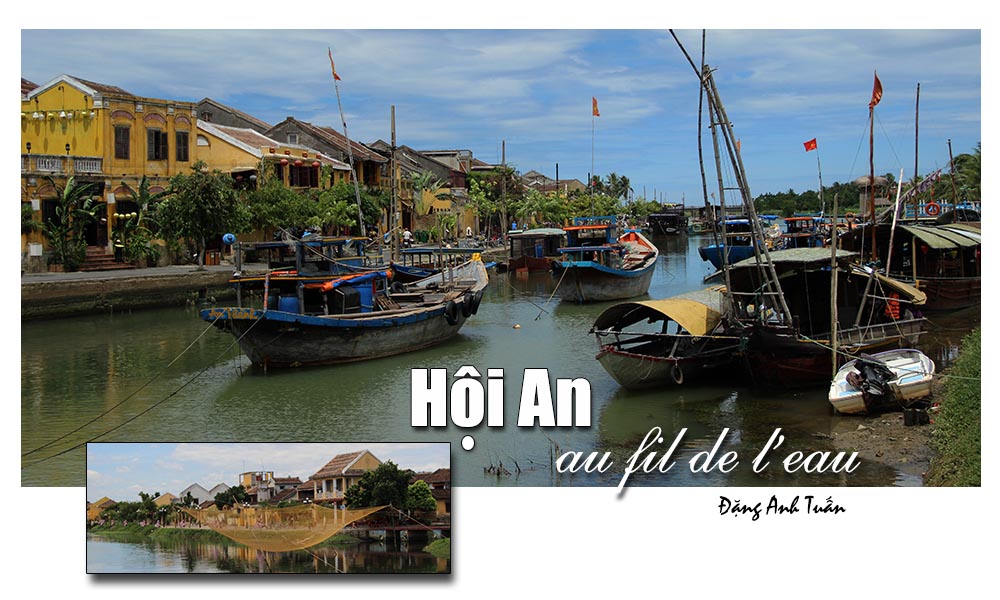
Hội An au fil de l’eau


hoian_au_fil_de_eauVen bờ sông Đoài 

[Return HOI AN ]

Hội An et ses maisons historiques (3ème partie)


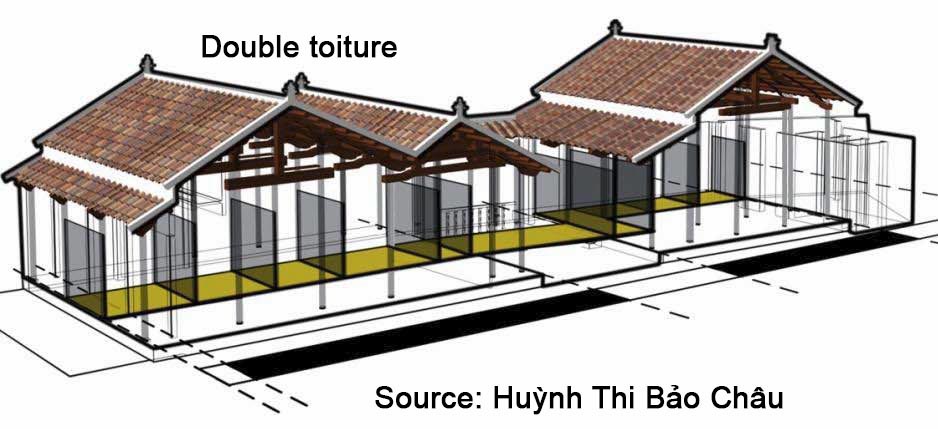
Schéma de la double toiture d’une maison traditionnelle

hoian_et_ses_maisons2

Nét duyên dáng của  nhà cổ

Version anglaise

Version vietnamienne

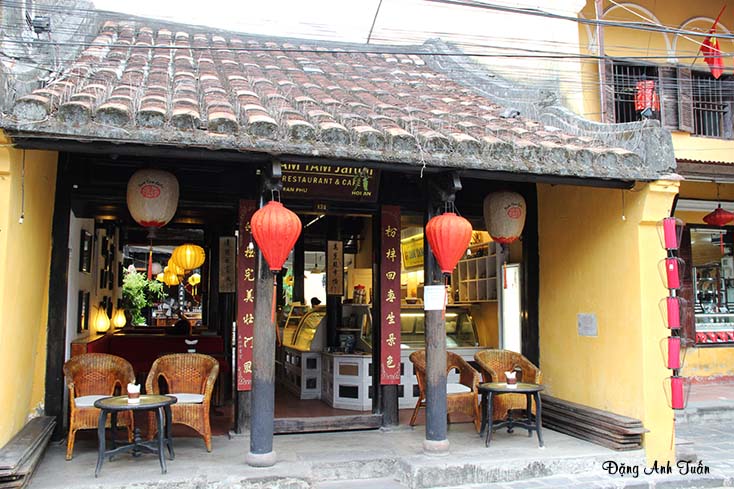
Une autre caractéristique importante de la maison traditionnelle de Hội An est la présence d’une paire de « yeux du dragon » en bois accrochés souvent au dessus de sa porte d’entrée. Parfois on les retrouve à l’intérieur de la maison. On recense au moins une vingtaine de modèles ayant chacun une forme différente: un rond, un octogone etc. mais le plus commun trouvé reste le chrysanthème à huit pétales correspondant aux 8 caractères trouvés dans le Yi King (Kinh Dịch) et ayant à son centre le symbole du Yin et du Yang (Âm Dương). Ces yeux du dragon sont aussi un détail important que l’architecte polonais Kazimierz Kwiatkowsky (Kazik) n’a pas laissé s’échapper au moment où il avait l’occasion d’examiner l’architecture de Hội An, en particulier celle de ses maisons traditionnelles. Certains spécialistes trouvent dans ces yeux l’incarnation de l’âme de la ville Hội An tandis que d’autres attribuent à cette paire l’allégorie de la culture et de la tradition orientale. Selon l’écrivain Hữu Ngọc, les chercheurs ont trouvé leur origine à partir des clous en bois dont on est habitué à voir la fixation dans les linteaux des portes d’accès aux temples bouddhistes dans le Sud de la Chine. Personne ne conteste cette explication relative à leur origine mais on est amené à penser que cette paire d’yeux revêt plutôt une signification très spéciale, un caractère spirituel ou religieux que le propriétaire aimerait lier à son destin lors de son installation. Pour ce dernier, ces yeux ont la faculté d’entendre les réflexions de chaque membre au sein de la famille et de capter aussi tout ce qui s’est passé autour de la maison et au coeur même de sa propre vie. Il faut se rappeler qu’avant d’être sinisés, les gens de la région du Sud de la Chine faisaient partie du groupe Bai Yue (Cent Yue). Analogues aux Vietnamiens, ils étaient animistes car ils croyaient qu’il existe une force vitale, une âme animant tous les êtres naturels ou non (y compris les objets). (Vạn vật hữu linh). Ce culte perdura depuis la nuit des temps. Ces yeux du dragon sont en quelque sorte ceux du génie protecteur de la maison.

Une autre particularité retient l’attention de ceux qui ont l’occasion de visiter les maisons anciennes de Hội An. Ce sont les tuiles tubulaires yin yang  (ngói ống âm dương) qu’on est habitué à trouver souvent dans les bâtiments imposants des grandes surfaces commerciales en Asie. Ces tuiles ayant la forme d’un quart de cylindre, sont disposées de manière qu’une tuile convexe est reliée à une tuile concave, ce qui leur permet de recevoir le nom de « tuiles yin-yang » grâce à l’équilibre trouvé dans le Yin et le Yang.. Elles sont en terre cuite et sont divisées toujours en quatre pièces courbes, avant d’être déposées dans une moule cylindrique et soumises au  séchage et au cuisson.

Quant aux maisons traditionnelles « nhà rường« , elles sont plus spacieuses et plus confortables car elles peuvent comporter de 3 jusqu’à 5 bâtiments. Ells ont souvent à l’arrière du premier bâtiment, un jardin privé en miniature où le propriétaire, en temps de repos et de loisir, vient fumer du tabac, prendre du thé avec ses amis et contempler le paysage. Il vous manque seulement la visite pour apprécier les attributs distinctifs des maisons traditionnelles de Hội An et leurs valeurs du passé.  [Return HOI AN]

Version anglaise

Another important feature of the traditional Hội An house is the presence of a pair of wooden « dragon eyes » often hung above its entrance door. Sometimes they are found inside the house. At least twenty models have been recorded, each with a different shape: a circle, an octagon, etc., but the most common one found remains the chrysanthemum with eight petals corresponding to the 8 characters found in the Yi King (Kinh Dịch) and having at its center the symbol of Yin and Yang (Âm Dương). These dragon eyes are also an important detail that the Polish architect Kazimierz Kwiatkowsky (Kazik) did not overlook when he had the opportunity to examine the architecture of Hội An, particularly that of its traditional houses. Some specialists see in these eyes the embodiment of the soul of the city of Hội An, while others attribute to this pair the allegory of Eastern culture and tradition. According to the writer Hữu Ngọc, researchers have traced their origin to wooden nails commonly seen fixing the lintels of entrance doors to Buddhist temples in southern China. No one disputes this explanation regarding their origin, but one is led to think that this pair of eyes rather carries a very special meaning, a spiritual or religious character that the owner would like to link to their destiny upon settling in.

For the latter, these eyes have the ability to hear the thoughts of each family member and also to capture everything that has happened around the house and at the very heart of their own life. It should be remembered that before being sinicized, the people of the southern region of China were part of the Bai Yue group (Hundred Yue). Similar to the Vietnamese, they were animists because they believed in a vital force, a soul animating all natural or non-natural beings (including objects). (Vạn vật hữu linh). This cult has lasted since time immemorial. These dragon eyes are in a way those of the protective spirit of the house.

Another particularity catches the attention of those who have the opportunity to visit the old houses of Hội An. These are the yin yang tubular tiles (ngói ống âm dương) often found in the imposing buildings of large commercial areas in Asia. These tiles, shaped like a quarter of a cylinder, are arranged so that a convex tile is connected to a concave tile, which allows them to be called « yin-yang tiles » thanks to the balance found in Yin and Yang. They are made of terracotta and are always divided into four curved pieces before being placed in a cylindrical mold and subjected to drying and firing.

As for the traditional « nhà rường » houses, they are more spacious and comfortable because they can consist of 3 to 5 buildings. They often have, at the back of the first building, a miniature private garden where the owner, during rest and leisure time, comes to smoke tobacco, have tea with friends, and contemplate the landscape. All that is missing is your visit to appreciate the distinctive attributes of Hội An’s traditional houses and their values from the past.

[Return HOI AN]

Version vietnamienne

Một đặc điểm quan trọng khác của ngôi nhà truyền thống Hội An là sự hiện diện của một cặp « mắt rồng » bằng gỗ thường được treo phía trên cửa ra vào. Đôi khi chúng được tìm thấy bên trong ngôi nhà. Ít nhất hai mươi mô hình đã được ghi nhận, mỗi mô hình có một hình dạng khác nhau: hình tròn, hình bát giác vân vân  nhưng mô hình phổ biến nhất được tìm thấy vẫn là hoa cúc với tám cánh hoa tương ứng với 8 ký tự được tìm thấy trong Kinh Dịch và có biểu tượng Âm Dương ở trung tâm. Những đôi mắt rồng này cũng là một chi tiết quan trọng mà kiến ​​trúc sư người Ba Lan Kazimierz Kwiatkowsky (Kazik) không bỏ qua khi ông có cơ hội nghiên cứu kiến ​​trúc của Hội An, đặc biệt là kiến ​​trúc của những ngôi nhà truyền thống. Một số chuyên gia nhìn thấy ở đôi mắt này sự hiện thân của linh hồn thành phố Hội An, trong khi những người khác lại cho rằng cặp mắt này là ẩn dụ về văn hóa và truyền thống phương Đông.

Theo nhà văn Hữu Ngọc, các nhà nghiên cứu đã lần ra nguồn gốc của chúng từ những chiếc đinh gỗ thường thấy trên các thanh ngang cửa ra vào của các ngôi chùa Phật giáo ở miền Nam Trung Quốc. Không ai tranh cãi về lời giải thích này về nguồn gốc của chúng, nhưng người ta cho rằng đôi mắt rồng này mang một ý nghĩa rất đặc biệt, một đặc điểm tâm linh hoặc tôn giáo mà chủ nhân muốn gắn kết với vận mệnh của mình khi định cư. Đối với người theo chủ nghĩa này, đôi mắt rồng có khả năng nghe được suy nghĩ của từng thành viên trong gia đình và cũng có thể nắm bắt mọi thứ đã xảy ra xung quanh ngôi nhà và ngay trong chính cuộc sống của họ. Cần nhớ rằng trước khi bị Hán hóa, người dân miền Nam Trung Quốc thuộc nhóm Bách Việt (Bách Việt).

Tương tự như người Việt Nam, họ theo thuyết vật linh vì họ tin vào một sức sống, một linh hồn điều khiển mọi sinh vật tự nhiên hoặc phi tự nhiên (bao gồm cả đồ vật). Tín ngưỡng này đã tồn tại từ xa xưa. Đôi mắt rồng, theo một cách nào đó, là linh hồn bảo vệ ngôi nhà.Một điểm đặc biệt khác thu hút sự chú ý của những ai có dịp ghé thăm những ngôi nhà cổ Hội An. Đó là những viên ngói ống âm dương thường thấy trong các tòa nhà đồ sộ của các khu thương mại lớn ở châu Á. Những viên ngói này, có hình dạng như một phần tư hình trụ, được sắp xếp sao cho một viên lồi nối với một viên lõm, nhờ vào sự cân bằng giữa Âm và Dương mà chúng được gọi là « ngói ống âm dương » (gạch âm dương). Chúng được làm bằng đất nung và luôn được chia thành bốn phần cong trước khi được đặt vào khuôn hình trụ, sấy khô và nung. Đối với những ngôi nhà rường truyền thống, chúng rộng rãi và thoải mái hơn vì có thể bao gồm 3 đến 5 tòa nhà. Chúng thường có một khu vườn riêng thu nhỏ ở phía sau tòa nhà đầu tiên, nơi chủ nhà, trong thời gian nghỉ ngơi và giải trí, đến hút thuốc lá, uống trà với bạn bè và ngắm cảnh. Điều duy nhất còn thiếu là chuyến thăm của bạn để cảm nhận những nét đặc trưng của những ngôi nhà truyền thống Hội An và những giá trị của chúng từ quá khứ. 

[Return HOI AN]

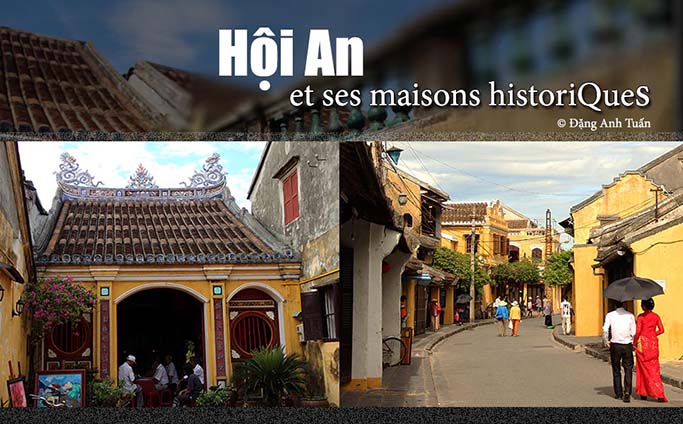
Hội an et ses maisons historiques

hoian_mai_nha_xua

Version vietnamienne
Version anglaise

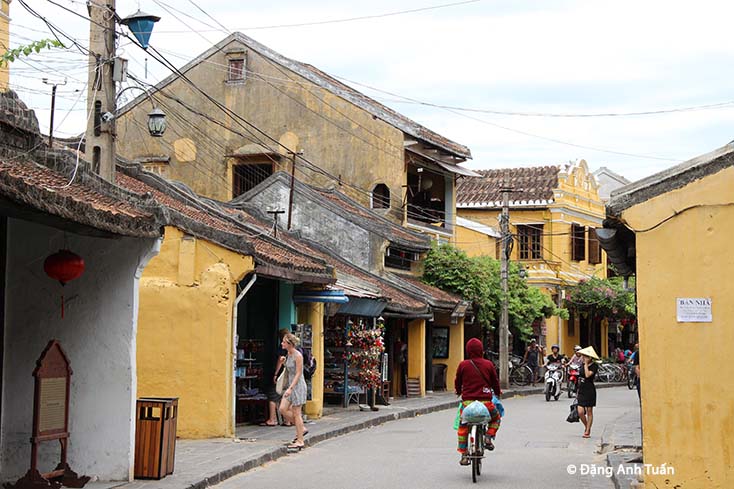
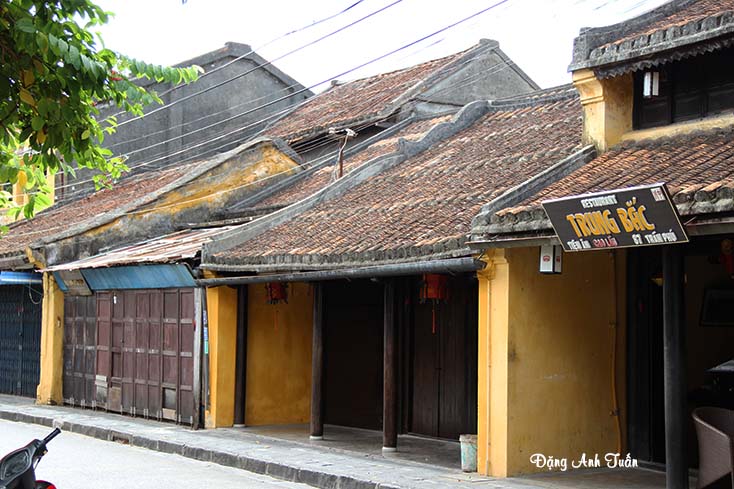
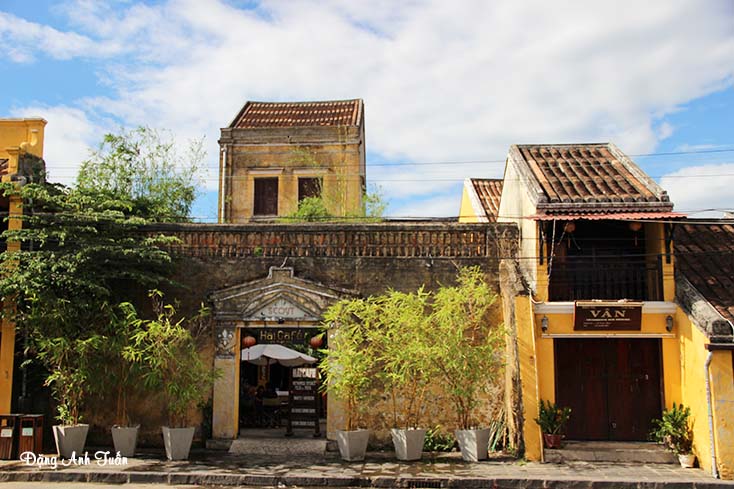
Malgré l’exposition fréquente de la ville Hội An aux calamités naturelles (inondations, humidité, chaleur, moussons etc.) et aux événements historiques (ravages provoqués par les troubles de Tây Sơn, changements dynastiques en Chine et au Vietnam), on s’aperçoit que la structure traditionnelle de ses maisons demeure inchangée au fil du temps. Le bois reste l’élément de base dans la construction et la perfection de son emploi atteint un très haut degré de réalisation artistique et architecturale. Par contre la fragilité du bois ne permet pas à ces maisons de résister aux dégradations provoquées par les changements climatiques. C’est pourquoi très peu de maisons existent encore aujourd’hui durant la période (1700-1850).(1). Ce sont les maisons traditionnelles sans étage avec la façade et le mur en bois. (Voir la classification chronologique de la construction et de la forme de la façade de ces maisons). On voit apparaître également un autre type de maison traditionnelle à la fin de cette période. C’est le modèle de la maison avec étage dont la façade est en bois ou en brique, avec ou sans grenier. Du fait de l’appartenance à des commerçants chinois, la plupart de ces maisons ont été construites tout en préservant le style et le décor de la région dont les propriétaires étaient issus. Certains commerçants exigeants n’ont pas hésité à faire venir non seulement le bois d’œuvre et les matériaux de construction de leur pays mais aussi les charpentiers hautement qualifiés de leur région. La multiplication des constructions allait de pair avec l’accroissement du potentiel commercial des Chinois et l’expansion territoriale due à l’acquisition de nouveaux terrains aux alentours de Hội An et au colmatage sur la berge de la rivière Thu Bồn.  Lire la suite (Tiếp theo)

Hội An với những nhà cổ

Mặc dù thành phố Hội An hay thường xuyên có thiên tai (lũ lụt, ẩm ướt, nắng nóng, gió mùa, vân vân…) và các biến cố lịch sử (sự tàn phá do nhà Tây Sơn gây ra, sự thay đổi triều đại ở Trung Quốc và Việt Nam), chúng ta nhận thấy rằng cấu trúc truyền thống của các ngôi nhà ở Hội An vẫn không thay đổi với thời gian. Gỗ vẫn là vật liệu cơ bản trong việc xây dựng và sự hoàn hảo sử dụng nó đạt đến mức độ rất cao  trong các thành tựu nghệ thuật và kiến ​​trúc. Mặt khác, tính dễ vỡ của gỗ không cho phép những ngôi nhà này chống lại được sự suy thoái do sự biến đổi khí hậu.

Đây là lý do tại sao rất ít có các ngôi nhà được còn tồn tại cho đến ngày nay trong thời kỳ từ 1700 đến 1850 (1). Đây là những ngôi nhà một tầng truyền thống với mặt tiền và vách tường bằng gỗ. (Xem bảng phân loại theo niên đại của cách xây dựng và hình thức mặt tiền của những ngôi nhà này). Chúng ta cũng thấy có  sự xuất hiện của một kiểu nhà truyền thống khác vào cuối thời kỳ này. Đây là mẫu nhà 2 tầng với mặt tiền bằng gỗ hoặc gạch, có gác mái hay không. Vì thuộc về các thương nhân Trung Quốc, hầu hết những ngôi nhà này được xây dựng và bảo tồn theo phong cách và lối trang trí của vùng đất mà các chủ nhà xuất thân đến. Một số thương nhân sành điệu đã không ngần ngại mang về đây không chỉ gỗ và vật liệu xây dựng từ đất nước của họ mà còn có cả những thợ mộc có tay nghề cao đến từ khu vực của họ. Sự gia tăng các công trình xây dựng được đi đôi với sự gia tăng tiềm năng thương mại của người Trung Quốc và sự mở rộng lãnh thổ do việc mua lại các vùng đất mới xung quanh ở Hội An và việc bồi đất ở bên bờ sông Thu Bồn.  (Đọc tiếp theo: phần 2)


Version anglaise

Despite the frequent exposure of the city of Hội An to natural disasters (floods, humidity, heat, monsoons, etc.) and historical events (damage caused by the Tây Sơn disturbances, dynastic changes in China and Vietnam), it is noticeable that the traditional structure of its houses remains unchanged over time. Wood remains the basic element in construction, and the mastery of its use reaches a very high level of artistic and architectural achievement. However, the fragility of wood does not allow these houses to withstand the deterioration caused by climatic changes. That is why very few houses from the period (1700-1850) still exist today. These are traditional houses without upper floors, with wooden façades and walls. (See the chronological classification of the construction and façade design of these houses). Another type of traditional house also appears at the end of this period.

This is the model of a two-story house with a facade made of wood or brick, with or without an attic. Due to the ownership by Chinese merchants, most of these houses were built while preserving the style and decor of the region from which the owners originated. Some demanding merchants did not hesitate to bring not only the lumber and construction materials from their country but also highly skilled carpenters from their region. The increase in constructions went hand in hand with the growth of the commercial potential of the Chinese and the territorial expansion due to the acquisition of new lands around Hội An and the filling in along the bank of the Thu Bồn River.[Reading more :Part 2]


(1) Architecture de la vieille ville de Hội An. Université féminine de Showa, Volume 3. 1996. Editeur Thế Giới, Hànội 2003

Hôi An et son pont-pagode (Chùa cầu)

Version vietnamienne
Version anglaise
Galerie des photos

L’histoire du pont-pagode de Hội An

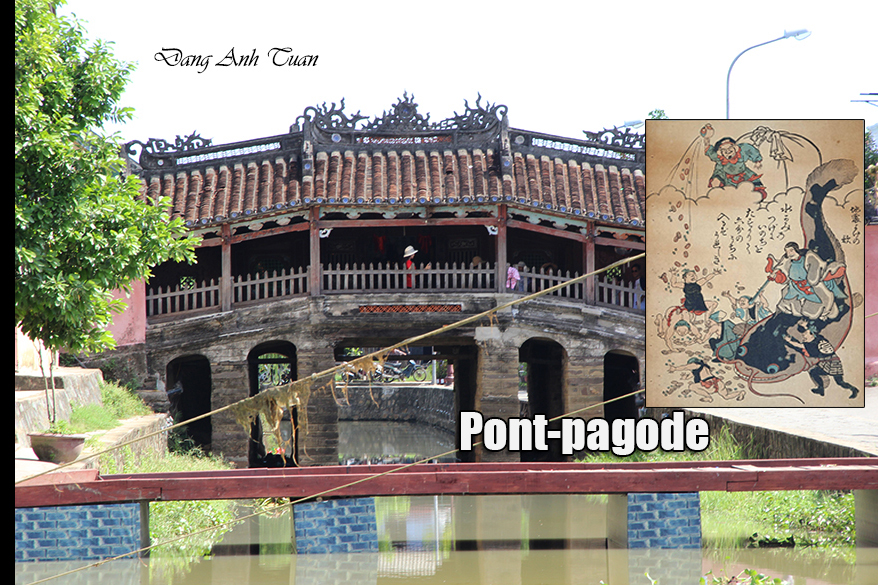
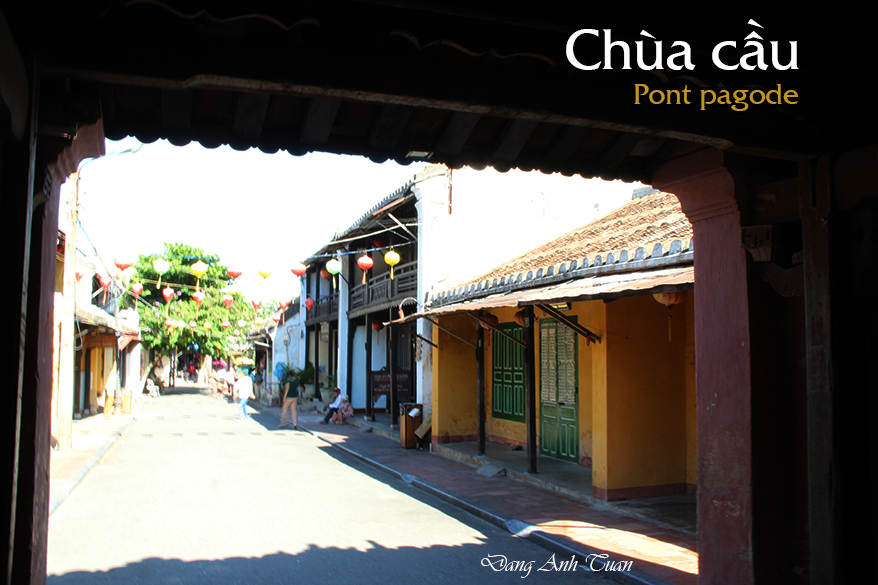
Certains historiens  attribuent la construction de ce pont  aux Japonais. Ces derniers l’ont-ils construit eux-mêmes ou l’ont-ils réalisé sur la commande des Chinois ? C’est une énigme historique qui reste à éclaircir. D’autres experts réfutent totalement cette hypothèse. Ils estiment que ce pont doit être attribué aux Japonais dans la mesure où celui-ci est destiné à mieux signaler l’entrée du quartier japonais. En tout cas, ce pont s’avère nécessaire car  il est établi sur un grand arroyo où les crues surviennent à la saison des pluies dans le but de faciliter la circulation des véhicules, des chevaux et des piétons dans les deux quartiers de Hội An et de relier aujourd’hui les rues de Trần Phú et Nguyễn Thị Minh Khai. Ce pont est constitué de deux parties : le pont lui-même et la pagode. À l’entrée et à la sortie de ce pont on relève la présence de quatre statuettes de chien et de singe. Certains pensent que les travaux de construction ont commencé dans l’année du singe et achevé dans l’année du chien. D’autres attribuent cette présence à un usage japonais qu’il est temps de chercher à comprendre. Quant à la pagode, elle est située à côté de ce pont et en bois. On trouve sur sa porte principale  une enseigne intitulée « Lai Viễn Kiều »  qui est un autographe royal laissé par le seigneur Nguyễn Phước Châu lors de sa visite en l’an 1719 à Hội An.

Auparavant, cette pagode est dédiée au culte de Huyền Thiên Đại Đế (ou Bắc Đế Trần Vũ), un personnage éminent du taoïsme chargé de gouverner la partie Nord du ciel et d’avoir la mainmise sur le poisson-chat géant (Namazu)  vivant dans la vase des profondeurs de la terre. Selon le mythe japonais, cet animal aquatique a la tête au Japon et la queue en Inde et la partie dorsale se trouve à l’endroit où s’érige le pont. Chaque fois qu’il retourne son dos, cela provoque des séismes au Japon et Hội An ne peut pas se tenir dans la paix pour permettre à ses habitants d’avoir la prospérité dans le commerce. C’est pour cela qu’on érige une pagode considérée comme  une épée transperçant  son dos  afin de l’immobiliser et  de l’empêcher de faire grands ravages. De toute façon, grâce au talent des architectes de cette époque,  on constate que ce pont-pagode peut résister aux crues capricieuses de l’arroyo au fil du temps. Ce pont-pagode devient le symbole représentatif de la vieille ville de Hội An.

Chuyện chùa cầu

[Return HOI AN]

Version vietnamienne
Một số  sử gia cho rằng việc xây dựng chùa cầu này đến từ người Nhật Bản. Họ tự xây dựng nó hay người Hoa thuê họ làm việc nầy ? Đó là một bí ẩn lịch sử cần được làm sáng tỏ. Các chuyên gia khác bác bỏ hoàn toàn giả thuyết này. Họ tin rằng cầu này được người Nhật dựng lên vì nó nhằm đánh dấu lối vào khu phố Nhật Bản. Trong mọi trường hợp, chiếc cầu này rất cần thiết vì nó được xây dựng trên một con sông lớn, nơi thường xảy ra lũ lụt vào mùa mưa nhằm tạo  ra điều kiện thuận lợi cho việc di chuyển xe cộ, ngựa và người đi bộ  ở  hai khu phố của Hội An và kết nối hai đường phố Trần Phú Nguyễn Thị Minh Khai ngày nay. 

Cầu này gồm hai phần: một phần là cầu và một phần là chùa. Ở  lối vào và lối ra của chùa cầu nầy, người ta nhận thấy có sự hiện diện của bốn tượng chó và khỉ. Một số người cho rằng việc xây dựng khởi đầu vào năm Thân và hoàn thành vào năm Tuất. Những người khác cho rằng sự hiện diện này là một tập tục của người Nhật mà cần phải nghiên cứu và tìm hiểu. Về phần chùa, nó nằm sát cạnh cầu này và được làm bằng gỗ. Trên cửa chính cũa chùa có một tấm biển đề « Lai Viễn Kiều » là ngự bút của chúa Nguyễn Phước Châu trong cuộc  viếng thăm Hội An vào năm 1719.

Ngôi chùa này được thờ phụng trước kia Huyền Thiên Đại Đế (hay Bắc Đế Trần Vũ), một nhân vật nổi tiếng của Lão giáo, có nhiệm vụ cai trị phần phía bắc của trời và có tài năng  kiểm soát được con cá trê khổng lồ  sống ở đất bùn từ sâu của lòng đất. Theo truyền thuyết của người Nhật, loài vật sống dưới nước này có đầu ở Nhật Bản, đuôi nằm ở Ấn Độ và phần lưng của nó thì là nơi dựng chùa cầu. Mỗi lần nó quay lưng lại thì gây ra sự động đất ở Nhật Bản và Hội An cũng không thể yên ổn để cho người dân có được sự thịnh vượng trong mậu dịch. Đây là lý do tại sao một ngôi chùa được dựng lên và  được xem coi như là một thanh gươm đâm vào lưng nó để cố giữ nó lại và ngăn nó tàn phá. Dù thế nào đi nữa, nhờ sự tài hoa của các nhà kiến ​​trúc sư thời bấy giờ mà chùa cầu này có thể chống chọi với những trận lũ kinh hoàng theo dòng  thời gian. Chùa cầu này trở thành ngày nay một biểu tượng tiêu biểu của phố cổ Hội An.

English version

Some historians attribute the construction of this bridge to the Japanese. Did they build it themselves or did they do it on the order of the Chinese? It is a historical mystery that remains to be clarified. Other experts completely refute this hypothesis. They believe that this bridge should be attributed to the Japanese insofar as it is intended to better mark the entrance to the Japanese quarter. In any case, this bridge proves necessary because it is built over a large arroyo where floods occur during the rainy season in order to facilitate the movement of vehicles, horses, and pedestrians between the two quarters of Hội An and today connects Trần Phú and Nguyễn Thị Minh Khai streets. This bridge consists of two parts: the bridge itself and the pagoda. At the entrance and exit of this bridge, there are four statuettes of a dog and a monkey. Some think that the construction work began in the year of the monkey and was completed in the year of the dog. Others attribute this presence to a Japanese custom that it is time to try to understand. As for the pagoda, it is located next to this bridge and is made of wood. On its main door, there is a sign titled « Lai Viễn Kiều, » which is a royal autograph left by Lord Nguyễn Phước Châu during his visit to Hội An in the year 1719.

Previously, this pagoda was dedicated to the worship of Huyền Thiên Đại Đế (or Bắc Đế Trần Vũ), a prominent figure in Taoism responsible for governing the northern part of the sky and having control over the giant catfish (Namazu) living in the mud of the earth’s depths. According to Japanese myth, this aquatic animal has its head in Japan, its tail in India, and its dorsal part is located where the bridge stands. Each time it turns its back, it causes earthquakes in Japan, and Hội An cannot remain peaceful, preventing its inhabitants from prospering in trade. That is why a pagoda was erected, considered as a sword piercing its back to immobilize it and prevent it from causing great destruction. In any case, thanks to the talent of the architects of that time, it is observed that this bridge-pagoda can withstand the capricious floods of the arroyo over time. This bridge-pagoda has become the representative symbol of the old town of Hội An.


Hội An et ses lampions


Quê hương đèn lồng.
Au pays des lanternes.

Version française
Version anglaise
Galerie des photos

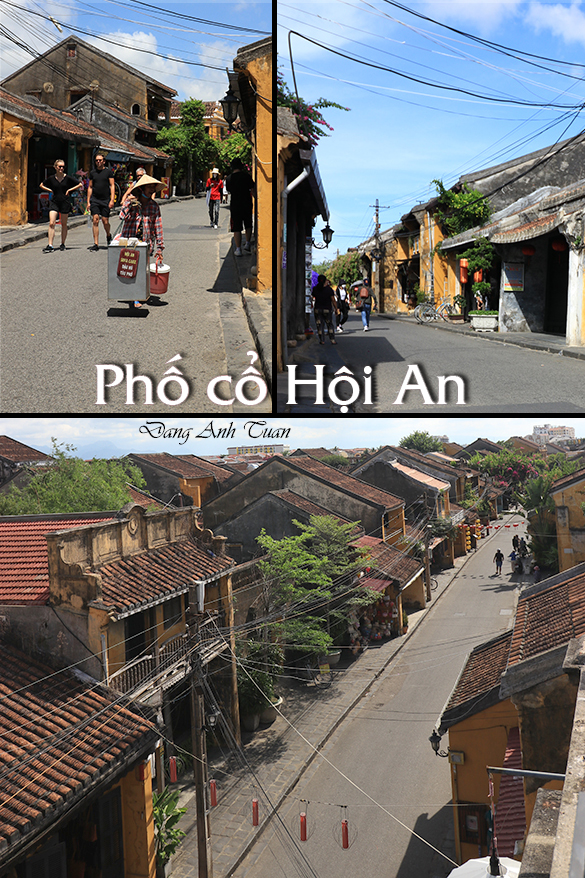
Dù ở nơi nào ở phố cổ, du khách cũng dễ dàng nhận ra được  những chiếc đèn lồng đủ màu sắc và trang hoàng đẹp mắt. Đấy là một trong những nét đặc sắc khiến Hội An rất  lộng lẫy và lung linh về đêm nhất là với  đêm rằm hàng tháng. 

Vào cuối thế kỷ 16, đèn lồng được thấy xuất hiện ở Hội An khi những người Hoa đầu tiên đến Hội An để trao đổi buôn bán và định cư lâu dài. Cho đến ngày nay, nghề làm đèn lồng ở Hội An đã có  hơn 400 năm tuổi. Người có công đầu tiên trong việc làm sống lại chiếc đèn lồng là nghệ nhân Huỳnh Văn Ba nhất là ông biết phục chế và tạo dáng lại chiếc đèn lồng, đấy là chiếc đèn lồng khung tre bọc vải ngày nay được thấy bán và treo  khắp nẻo đường ở khu Minh An của phố cổ Hôi An. Tài năng của ông đã được người Nhật để ý đến, và chính ông là nghệ nhân làm đèn lồng đầu tiên của Hội An được Chính phủ Nhật mời sang để giới thiệu về cách làm lồng đèn.

Hiện nay, ở Hội An có đến 32 cơ sở làm và bán đèn lồng.  Đèn lồng ở Hội An được  xuất khẩu ra các nước châu Âu và châu Mỹ. Trong các cơ sở nầy thì có thể kể đến cơ sở sản xuất lồng đèn Huỳnh Văn Ba và xưởng sản xuất lồng đèn Hà Linh đây là 2 cơ sở sản xuất lồng đèn lớn nhất ở Hội An.

Version française 

Peu importe où dans la vieille ville, les visiteurs peuvent reconnaître facilement les lanternes richement ornées et colorées. C’est l’une des caractéristiques remarquables  de Hôi An, ce  qui la rend  très splendide et étincelante toute  la nuit, en particulier avec la nuit de pleine lune de chaque mois. A la fin du XVIème  siècle, les lanternes commencèrent à faire leur apparition à Hội An lorsque les premiers Chinois venaient ici  pour faire le commerce et s’y installer définitivement. Jusqu’à ce jour, la fabrication des  lanternes à Hội An a plus de 400 ans.

L’artisan Huỳnh Văn Ba est celui ayant le  mérite de faire revivre la lanterne à Hôi An car il sait restaurer et remodeler la lanterne à sa guise en lui donnant un attrait esthétique avec une structure en bois enveloppée dans un tissu qu’on voit accrochée et en vente partout dans toutes les ruelles de l’ancien quartier Minh An de Hội An. Son talent a été remarqué par les Japonais, et c’est lui le premier artisan fabricant de lanternes de Hội An à être invité et récompensé par le gouvernement japonais lors de son exposé sur la façon de fabriquer ces lampions.

Actuellement, à Hội An, il y a 32 établissements qui fabriquent et vendent des lanternes. Celles-ci sont exportées vers les marchés d’Europe et d’Amérique. Parmi ces entreprises, l’usine de production de lanternes de Hùynh Văn Ba ​​et l’usine de lanternes de Hà Linh sont les deux grands établissements de production de lanternes à Hội An.

Version anglaise

No matter where in the old town, visitors can easily recognize the richly decorated and colorful lanterns. It is one of the remarkable features of Hội An, which makes it very splendid and sparkling all night long, especially on the full moon night of each month. At the end of the 16th century, lanterns began to appear in Hội An when the first Chinese came here to trade and settle permanently. To this day, lantern making in Hội An has a history of more than 400 years.

The craftsman Huỳnh Văn Ba is credited with reviving the lantern in Hội An because he knows how to restore and reshape the lantern as he wishes, giving it an aesthetic appeal with a wooden structure wrapped in fabric, which can be seen hanging and sold everywhere in all the alleys of the old Minh An quarter of Hội An. His talent was noticed by the Japanese, and he was the first lantern craftsman of Hội An to be invited and awarded by the Japanese government during his presentation on how to make these lanterns.

Currently, in Hội An, there are 32 establishments that manufacture and sell lanterns. These are exported to markets in Europe and America. Among these businesses, the Huỳnh Văn Ba lantern production factory and the Hà Linh lantern factory are the two major lantern production establishments in Hội An.

Galerie des photos


[Return HOI AN]