Le Clos Normand de Claude Monet (Giverny)

Version française
Version anglaise
Galerie des photos

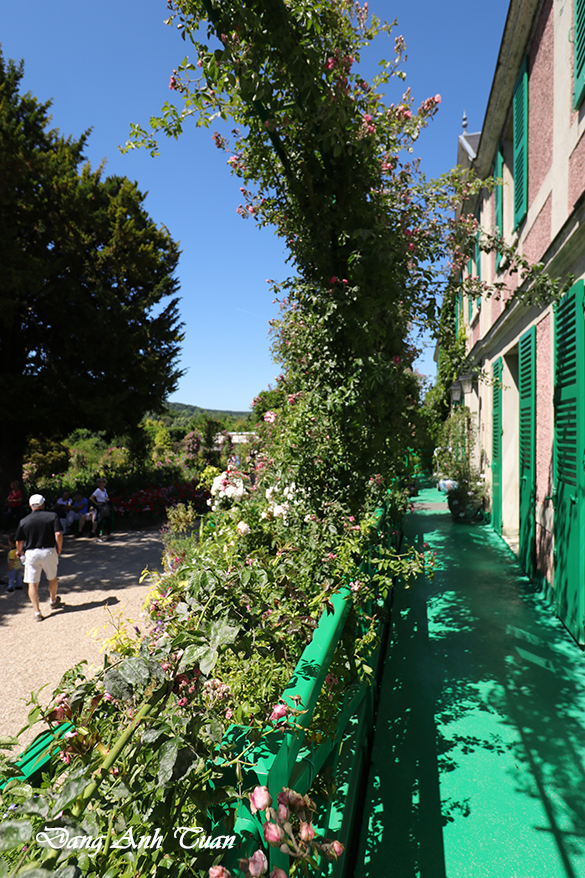
Nhờ việc nới rộng khu vườn « Clos Normand » và sửa đổi nguồn nước sông  Ru, Monet đã thành công tạo cho khu vườn nầy  có được một diện tích 1000 m2 và một hình dáng tuyệt vời mà du khách có cơ hội chiêm ngưỡng ngày nay  khi đến tham quan Giverny. Năm 1895, ông bắt đầu vẽ khu vườn của mình.  Khu nầy  không ngừng sung túc và phong phú thêm với các loài cây cỏ mà ông chọn trồng theo ý mình. Nhờ  đó, ông thực hiện hơn 250 bức tranh tuyệt vời từ nhiều góc độ nhìn khác nhau. Nhưng các hoa súng vẫn là chủ đề chính và quyén rũ ông đến nổi  qua các bức tranh của ông, các cảnh vật chỉ được vẽ sơ sài để nổi bật các hoa súng ưa thích.  Khu vườn nầy giúp ông có nguồn cảm hứng vô tận và  được xem từ đây như là một tuyệt phẩm nghệ thuật vẹn toàn 

Version française

Grâce à l’agrandissement du Clos Normand et à la modification du cours d’eau du Ru, Monet réussit à donner à son jardin d’eau couvrant désormais 1000m2 l’aspect actuel que le visiteur a l’occasion de contempler avec admiration  lors de sa visite à Giverny. Il se mit à peindre en 1895 son jardin d’eau renouvelé incessamment par de nouvelles plantations et par l’abondance de la végétation choisie avec soin par lui-même. Cela lui permit de réaliser  avec ingéniosité un ensemble de plus de 250 tableaux  sous de nombreux angles de vue différents. Mais les nymphéas constituent le sujet  principal dans ses tableaux  et captent son attention si bien que le paysage y est dessiné  simplement pour dégager  la beauté de ses fleurs préférées.   Son jardin d’eau lui donna  ainsi une source d’inspiration inépuisable et s’intégra désormais comme une œuvre d’art à part entier. 

Version anglaise

Thanks to the enlargement of the Clos Normand and the modification of the course of the Ru stream, Monet succeeded in giving his water garden, now covering 1000m2, the current appearance that visitors have the opportunity to admire during their visit to Giverny. He began painting his water garden in 1895, which was continuously renewed by new plantings and the abundance of vegetation carefully chosen by himself. This allowed him to ingeniously create a collection of more than 250 paintings from many different viewpoints. But the water lilies are the main subject in his paintings and capture his attention so much that the landscape is simply drawn to highlight the beauty of his favorite flowers. His water garden thus provided him with an inexhaustible source of inspiration and became, from then on, a work of art in its own right.

Galerie des photos

Une ballade mémorable dans le jardin de Monet (Giverny, Haute Normandie)

Cùng nhau đi dạo trong vưòn của họa sỹ tài hoa Monet (Giverny)

[Return VILLES DE FRANCE]

Paris au crépuscule (Paris lúc chiều tàn)

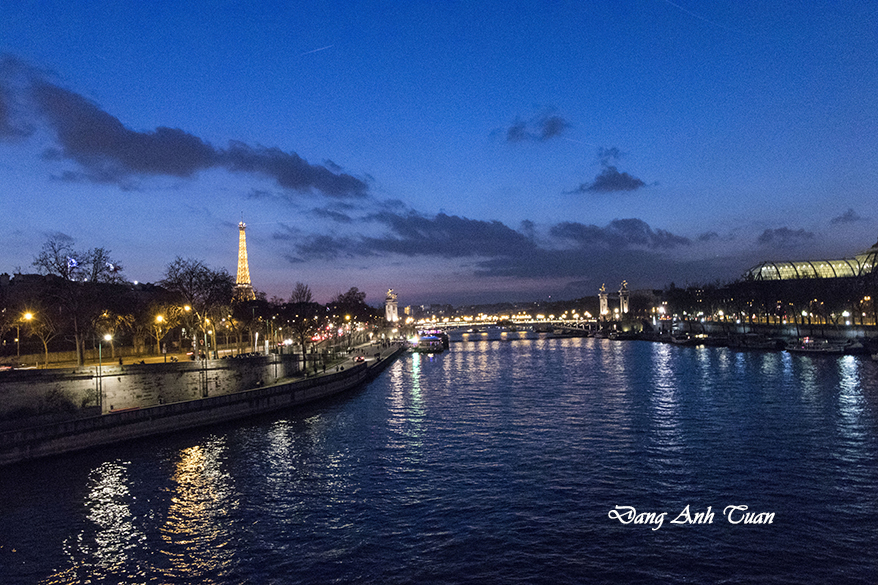
Các tia nắng ở cuối ngày cùng dòng nước óng ánh lên sắc cam rực rỡ của sông Seine  tạo ra một quan cảnh tuyệt vời khi thành phố bắt đầu lên đèn. Bạn sẽ ngẩn ngơ và cảm nhận thích thú rạo rực trong lòng ít nhiều  khi có được những khoảnh khắc kỳ diệu nầy. Đây cũng là những kỷ niệm khó quên khi bạn có dịp đến với kinh đô ánh sáng Ba Lê. 

Les derniers rayons du soleil couchant et les eaux  irisées de la Seine vous offrent un spectacle merveilleux lorsque la ville commence à s’illuminer. Vous serez abasourdi et vous sentirez une légère excitation dans votre cœur lorsque vous aurez des moments magiques. Ce sont des souvenirs inoubliables lors que vous avez l’opportunité de visiter la ville lumière qu’est Paris.

The last rays of the setting sun and the iridescent waters of the Seine offer you a marvelous spectacle when the city starts to light up. You will be stunned and feel a slight excitement in your heart when you have these magical moments. These are unforgettable memories when you have the opportunity to visit the city of light that is Paris.

Hanoï c’est quoi en chacun de nous?


Hà Nội là gì trong mỗi chúng ta?
Hanoï c’est quoi en chacun de nous?

What is Hanoi in each of us?

Pictures gallery

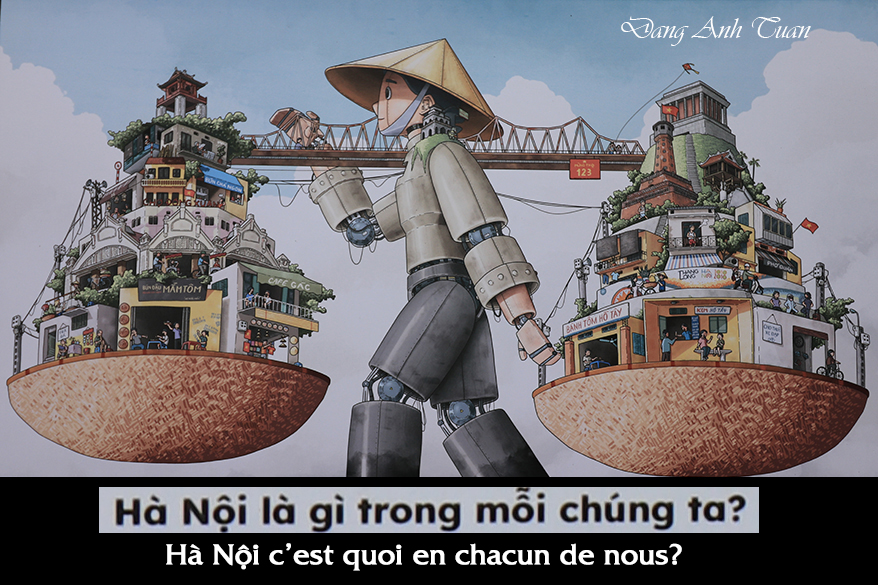
Hà Nội là bát bún ngan giản dị ? Là những ghế nhựa ngồi bệ? Là gánh hàng rong với chiếc đòn gánh là cầu Long Biên còn người gánh lại là một cô robot ? Hay là Hànội là… Đây là cuộc thi vẽ minh họa thuộc dự án Hanoi Rethink được tổ chức bởi UNESCO với sự đồng hành của nhóm Vietnam local Artist Group.

Hanoï c’est quoi en chacun de nous ? Hanoï est-elle un simple  bouillon de canard  aux vermicelles ? Ou ce sont les  chaises basses en plastique ? Ou le vendeur ambulant dont  la palanche est le pont Long Bien et qui est en fait un robot ?  Ou bien Hanoi est … C’est le concours d’illustration appartenant au  projet Hanoi Rethink organisé par UNESCO en collaboration avec le groupe Vietnam local Artist.

What is Hanoi in each of us? Is Hanoi just a simple duck broth with vermicelli? Or is it the low plastic chairs? Or the street vendor whose carrying pole is the Long Bien Bridge and who is actually a robot? Or is Hanoi… It is the illustration contest belonging to the Hanoi Rethink project organized by UNESCO in collaboration with the Vietnam Local Artist group.

Pictures Gallery

[RETURN]

Anciennes techniques de pêche (Cách thức cổ điển bắt cá)


Cách thức cổ điển bắt cá.

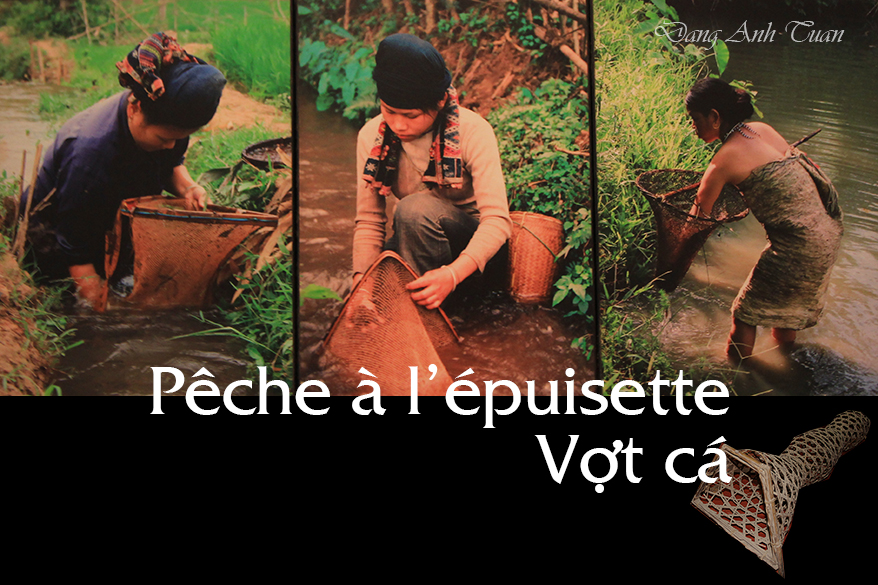
Nhũi là một dụng cụ dùng để bắt cá. Nó có hai cái cán bằng tre tréo vơi nhau dươí dạng hình chữ X mà ở giữa lại có một tấm « sáo » bện bằng những cọng tre vót nhỏ mà ở cuối đầu dưới thì có một miếng gỗ lưỡi mỏng. Khi cầm hai cán  nhũi đẩy thì một số lượng nước đi vào nhũi và thoát ra ở phiá sau qua các cọng tre chỉ còn ở lại cá,cua hay tôm. Người đi nhũi hay thường mang theo rọ tre để đựng cá.

Nhũi est un outil de pêche très efficace pour attraper les poissons. Il est constitué de deux longues manches en bambou attachées  en forme de croix au milieu desquelles se trouve une armature  creuse faite avec des  petites tiges de bambou et terminée à sa partie inférieure par un  mince morceau de bois. Au moment de son utilisation, il y a une quantité d’eau qui s’y introduit et s’échappe par derrière à travers ses tiges de bambou, ce qui permet de retenir les poissons, crabes et crevettes. Le pêcheur est habitué à emmener avec lui le panier à goulots pour contenir ces crustacés. 

Nhũi is a very effective fishing tool for catching fish. It consists of two long bamboo handles attached in the shape of a cross, in the middle of which is a hollow frame made with small bamboo sticks and finished at its lower part by a thin piece of wood. When in use, a quantity of water enters it and escapes from behind through its bamboo sticks, which allows the retention of fish, crabs, and shrimp. The fisherman is accustomed to bringing with him a basket with necks to hold these crustaceans.

[Return Art Vietnamien]


Un bistro au cœur du vieux quartier de Hanoï

Quán ăn Hanoï 1930 Bistro
Le restaurant Hanoï 1930 Bistro
 
Kỳ nầy trở ra Hànôi lúc hè 2022 mới khám phá ra các quán ăn mà tụi nầy thích ăn ở phố cổ phần đông đều đóng cửa sau khi bệnh dịch Covid. Tuy nhiên tụi nầy cũng kiếm ra một quán ăn Việt có tiêu chuẩn Châu Âu ăn cũng ngon và có một góc nhìn xuống quảng trường Đông Kinh Nghĩa Thục rất đẹp về đêm ở giữa lòng phố cổ Hanoï.
 
De retour à la capitale Hanoï en été 2022, nous avons constaté la disparition d’un grand nombre important de restaurants préférés durant l’épidémie de COVID. Cependant nous avons réussi à trouver un nouveau restaurant conforme aux normes européens où la cuisine vietnamienne est assez bonne et ayant une vue superbe au fil de la nuit sur la place célèbre Đông Kinh Nghĩa Thục au cœur du vieux quartier de Hanoï.
 

Back in the capital Hanoi in the summer of 2022, we noticed the disappearance of a significant number of favorite restaurants during the COVID epidemic. However, we managed to find a new restaurant that meets European standards where the Vietnamese cuisine is quite good and has a superb view throughout the night of the famous Đông Kinh Nghĩa Thục square in the heart of Hanoi’s old quarter.

Pictures gallery

[RETURN]

Jupe des femmes Hmong (Váy của phụ nữ Hmong)


Version française

English version

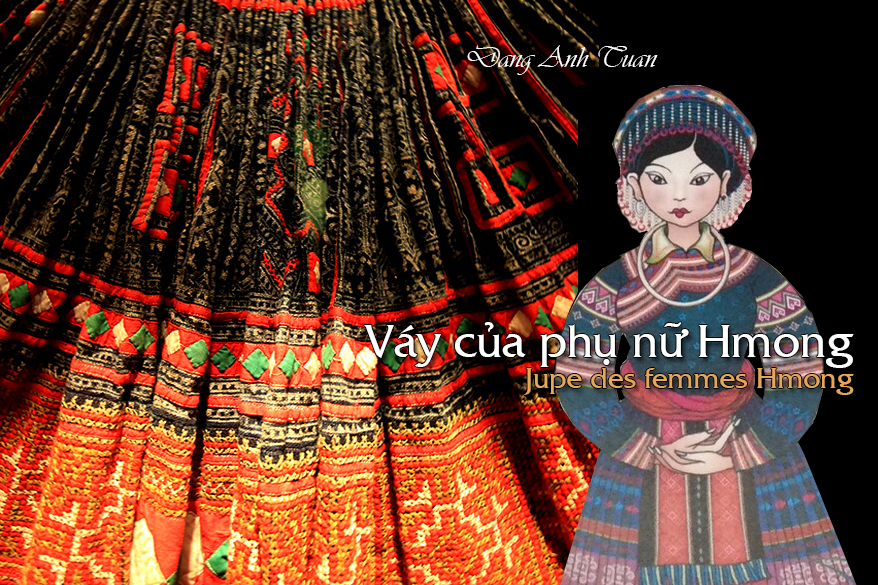
Chiếc váy xoè  có hơn 200 xếp ly  của người phụ nữ Hmong được xem trong tự điển hiện vật văn hoá các dân tộc Việt Nam là cầu kỳ nhất trong việc trang trí thêu các họa tiết. Tùy theo mỗi nhóm người  Hmong (Hmong Hoa,  Hmong Đen, Hmong Trắng hay Hmong Đỏ) mà hoa văn họa tiết lại khác nhau. Thường thấy trên váy các chấm tròn xen lẫn đường kẻ thẳng hay là hình hoa lá  hoặc hình xoán ốc  nhưng các hoa văn họa tiết nầy  phản ánh đời sống của người Hmong với thiên nhiên. Váy nầy được may bằng vải lanh nhuộm chàm. Màu nầy  là màu căn bản  thường được trọng dụng bởi các phụ nữ Hmong trong việc may quần áo. Màu xanh tuyệt vời này  tô điểm cuộc sống của họ  từ lúc còn bé (6 hay 7 tuổi).  Bởi vậy  các phụ nữ Hmong được xem là  những phụ nữ khéo tay. Những chiếc váy sặc sỡ,  những tác phẩm thêu thùa  trang nhã  và những trang sức tinh xảo  làm họ  có tiếng tăm ở  khắp vùng Đông Nam Á.

Đây cũng là biểu tượng độc đáo của bản sắc dân tộc Hmong. Họ thường được đa số người ở thế giới tiếp tục gọi họ là  «dân tộc đa sắc » như chiếc cầu  vồng.

Version française

Dans le dictionnaire des artefacts culturels des ethnies vietnamiennes, la jupe de la femme Hmong comportant de nombreux plis est considérée toujours comme la plus sophistiquée dans la décoration et la broderie de motifs. En fonction de chaque groupe des Hmong (Hmong fleuri, Hmong Noir, Hmong Blanc ou Hmong Rouge) les modèles de texture sont  très variés.  On est habitué à voir sur les jupes  des points ronds  entrecoupés de lignes droites ou de fleurs ou de spirales, mais ces motifs de texture reflètent  bien la vie des Hmong avec la nature.

Cette jupe est en lin et teint à l’indigo. Cette couleur est la couleur primaire couramment utilisée par les femmes Hmong dans la confection de leurs vêtements. Cette superbe bleu indigo colore bien leur vie depuis leur enfance. (6 ou 7 ans). C’est pour cette raison qu’on dit qu’elles ont la main bleue. Les jupes bigarrées, les broderies élégantes et les bijoux fins font incontestablement leur réputation à travers l’Asie du Sud -Est.

C’est aussi le symbole unique de leur identité. Les Hmong sont toujours appelés par la majorité des gens dans le monde sous la dénomination « peuple-arc-en-ciel »

English version

In the dictionary of cultural artifacts of Vietnamese ethnic groups, the Hmong woman’s skirt, featuring many pleats, is always considered the most sophisticated in decoration and embroidery of patterns. Depending on each Hmong group (Flower Hmong, Black Hmong, White Hmong, or Red Hmong), the texture patterns are very varied. We are used to seeing round dots on the skirts interrupted by straight lines or flowers or spirals, but these texture patterns truly reflect the life of the Hmong with nature.

This skirt is made of linen and dyed with indigo. This color is the primary color commonly used by Hmong women in making their clothes. This beautiful indigo blue colors their life well from childhood (6 or 7 years old). That is why it is said that they have a blue hand. The multicolored skirts, elegant embroidery, and fine jewelry undoubtedly make their reputation throughout Southeast Asia.

It is also the unique symbol of their identity. The Hmong are still called by the majority of people worldwide the « rainbow people. »

[Retour Vietnam des minorités]

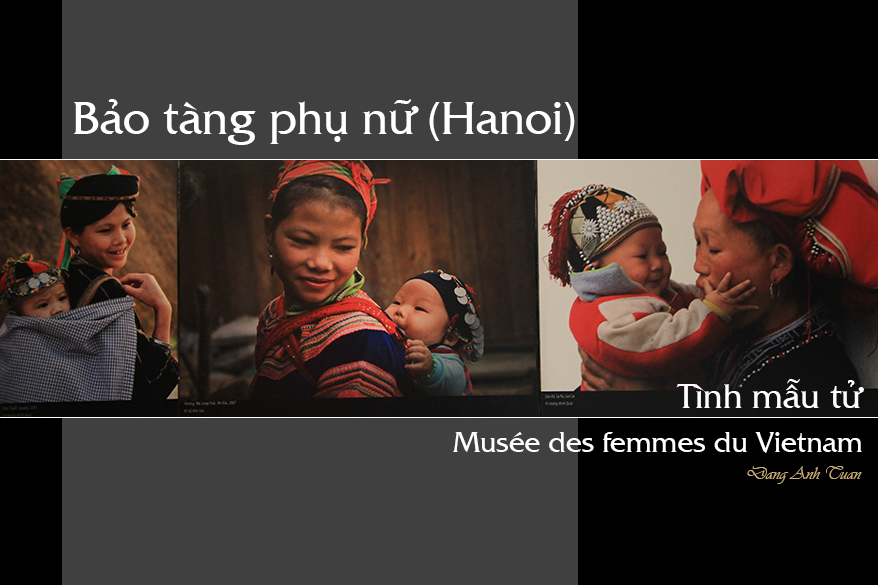
Photos superbes exposées au musée des femmes du Vietnam (Hanoï)

Les photos des minorités ethniques

prises par le muséologue Christine Hemmet ou Hoàng Minh Quốc
au  musée des femmes du Vietnam (Hanoï)

Stunning photos on display at the Vietnam Women’s Museum (Hanoi)

[Retour Vietnam des 54 ethnies]

Le tigre dans l’art ancien du Vietnam (Hổ trong mỹ thuật cổ Việt nam)

Hổ trong mỹ thuật cổ Việt Nam

The tiger in ancient Vietnamese art

Version française

English version

Đối với đại đa số  người Việt, hổ là  một con vật  đáng kính sợ. Vì sợ  hổ trả thù nên họ dành cho hổ những dấu hiệu tôn thờ qua những ngôi miếu dành riêng cho hổ  hay thường thấy được nằm rải rác ở  khắp khu rừng sâu thẩm ở miền núi. Đến nay  còn thấy nhiều dân tộc  ở miền núi còn thờ hổ.  Có  thể có liên quan đến tín  ngưỡng vạn vật hữu linh  của cư dân thưở xưa. Ngoài sức manh  uy phong  lẫm liệt của hổ, nó còn thường được xem là con vật có khả năng nghe lén các cuộc đàm thoại của họ. Vì vậy hổ được gọi là ông thính. Để tránh gọi tên hổ, người dân Việt  hay thường ám chỉ hổ với cái  tên là « ông ba mươi ».

Ngay cả trước khi giết hổ  sau khi bắt được nó,  họ cũng không quên bày tỏ lòng tôn kính lần cuối bằng cách tổ chức một buổi  nghi lễ trước đó.  Họ thường so sánh  họ với hổ qua câu châm ngôn như sau:

Hùm chết để da, người chết để tiếng.

Rất tiếc ngày nay hổ  ở  Đông Dương không còn nhiều nữa và đang ở trong tình trạng nguy cơ  tuyệt chủng vì các bộ phận của hổ được dùng làm thuốc đông y,  được bán với giá cao trên thị trường chợ đen, giá 100 gram cao hổ cốt bán tới 1.000 đôla.

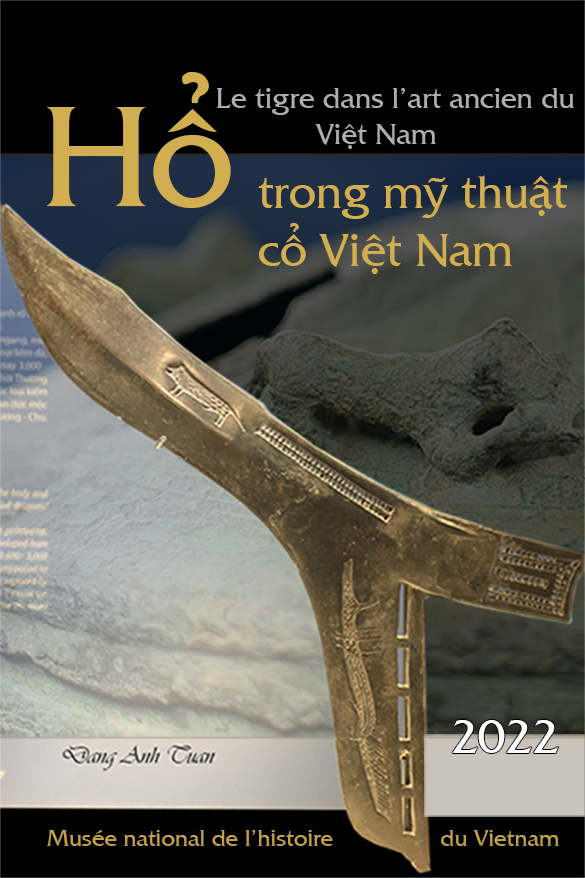
Sự xuất hiện hình ảnh hổ trong nghệ thuật  cổ  được thấy từ  thời kỳ Đồng Sơn qua các chuôi dao gâm thường   được kết hợp  với voi hay rắn được thấy ở di chỉ Làng Vạc  ở  Nghệ An chẵng hạn  hay các thạp đồng như thạp VạnThắng (Cẩm Xuyên, Phú Thọ).  Thạp nầy được trưng bày ở bảo tàng lịch sử quốc gia với  bốn tượng  hổ cập mồi rất sinh động quay vòng trên nấp thạp hay chiếc qua đồng có hình hổ  được  khắc  hai mặt  với  những chấm trên thân được  nhà khảo cứu Pháp Louis Pajot sưu tầm và đưa về  trưng bày  ở  bảo tàng Finot (nay là bảo tàng lịch sử quốc gia  ở  Hànội). Ngoài ra còn có các hình hổ trang trí bằng họa tiết chìm. Điều nầy thể hiện  được  nghệ thuật điêu khắc và trang trí của người Đồng Sơn mang tính tả thực và ước lệ. So với các hình ảnh rồng, phượng, hưu, cá, vịt vân vân  thì  hình ảnh hổ rất hiếm hoi trên đồ gốm. Tuy nhiên thạp gốm hoa nâu nổi tiếng nhất là thạp hoa nâu khắc hình ba con hổ đuổi nhau được thấy  ở bảo tàng Guimet (Paris).

Những hình hổ được thấy ngày nay không còn mang ý nghĩa tâm linh, tín ngưỡng hay sợ hải nữa mà chỉ dùng để thể hiện  sự phong phú đa dạng trong việc trang trí trên các đồ gốm hay tạo ra  bằng đá nhầm để lại một dấu ấn riêng biệt theo sở thích của người đặt mua hàng.

Version française

Pour la grande majorité des Vietnamiens, le tigre est un animal redoutable. Par peur de vengeance, ils donnent aux tigres des signes d’adoration à travers des temples dédiés aux tigres, souvent dispersés dans la forêt profonde des montagnes. Jusqu’à présent, de nombreux groupes ethniques des régions montagneuses vénèrent encore les tigres. Cela peut être lié aux croyances animistes des anciens habitants. Outre la force imposante et majestueuse du tigre, il est aussi souvent considéré comme un animal capable d’écouter leurs conversations, ce qui fait de lui connu sous le nom « Monsieur l’écouteur (Ông thính) ». Pour éviter de l’appeler sous son propre nom « Hổ ou cọp), les Vietnamiens se réfèrent aux tigres avec le nom « Monsieur Trente ». Avant même de le tuer  après l’avoir attrapé, ils n’ont pas oublié de lui rendre un dernier hommage en lui organisant au préalable un rituel. Ils se comparent souvent aux tigres à travers le proverbe suivant:

Le tigre mort laisse sa peau et l’homme décédé sa réputation.

Malheureusement, il n’y a pas beaucoup de tigres en Indochine aujourd’hui. Ces derniers sont en voie d’extinction car toutes les organes de leur corps  sont utilisés dans la médecine traditionnelle chinoise et sont vendues à prix d’or sur le marché noir.  C’est le cas  de la poudre issue d’os de tigre et proposée avec un prix élevé de 100 grammes  à 1 000 dollars.

On voit apparaître les images des tigres souvent associées à des éléphants ou des serpents dans l’art ancien à  l’époque de  Đồng Sơn,  sur les lames des poignards trouvés sur le site de Làng Vạc à Nghệ An par exemple, ou  bien des situles en bronze comme la situle  Vạn Thắng. (Cẩm Xuyên, Phú Thọ). Cette dernière est exposée au musée national de l’histoire  avec quatre blocs de statues de tigres capturant la proie et  répartis de manière circulaire sur le couvercle de la situle  ou la hache en bronze (qua đồng) recueillie par le chercheur français Louis Pajot qui a eu le mérite  de l’offrir au musée Finot (*). On trouve  l’image d’un tigre gravée sur les  deux faces  de la hache avec des points.  Il existe également des images de tigre décorées de motifs en creux. Cela montre que l’art de la sculpture et de la décoration du peuple dôngsonien  est réaliste et conventionnel. Comparées aux figures de dragons, de phénix, de cerfs, de poissons, de canards etc., celles des tigres sont très rares sur la céramique. Pourtant  le vase à glaçure brune le plus célèbre est celui de trois tigres dans la poursuite,  trouvé au musée Guimet (Paris). Les images des tigres vues aujourd’hui ne  reflètent plus le caractère  spirituel, religieux ou de peur. Elles sont utilisées uniquement dans le but de montrer la richesse et la diversité de la décoration dans la céramique ou dans la pierre et de laisser  ainsi  une  marque particulière selon le goût et les préférences de l’acheteur.

(*) C’est le musée national de l’histoire de Hanoï.

English version

For the vast majority of Vietnamese people, the tiger is a formidable animal. Out of fear of revenge, they show signs of worship to tigers through temples dedicated to tigers, often scattered deep in the mountain forests. To this day, many ethnic groups in mountainous regions still venerate tigers. This may be related to the animist beliefs of the ancient inhabitants. Besides the imposing and majestic strength of the tiger, it is also often considered an animal capable of listening to their conversations, which is why it is known as « Mr. Listener (Ông thính). » To avoid calling it by its own name « Hổ or cọp, » the Vietnamese refer to tigers as « Mr. Thirty. » Even before killing it after catching it, they do not forget to pay it a last tribute by organizing a ritual in advance. They often compare themselves to tigers through the following proverb:

The dead tiger leaves its skin and the deceased man his reputation.

Unfortunately, there are not many tigers in Indochina today. They are endangered because all the organs of their bodies are used in traditional Chinese medicine and are sold at exorbitant prices on the black market. This is the case with powder made from tiger bones, which is offered at a high price of $1,000 per 100 grams.

Images of tigers often appear alongside elephants or snakes in ancient art from the Đông Sơn period, such as on the blades of daggers found at the Làng Vạc site in Nghệ An, or on bronze situlas like the Vạn Thắng situla (Cẩm Xuyên, Phú Thọ). The latter is exhibited at the National History Museum along with four blocks of tiger statues capturing prey, arranged in a circular manner on the lid of the situla, or the bronze axe (qua đồng) collected by the French researcher Louis Pajot, who had the merit of donating it to the Finot Museum (*). The image of a tiger is engraved on both sides of the axe with dots. There are also images of tigers decorated with incised patterns.This shows that the art of sculpture and decoration of the Đông Sơn people is realistic and conventional. Compared to figures of dragons, phoenixes, deer, fish, ducks, etc., those of tigers are very rare on ceramics. However, the most famous brown-glazed vase is the one with three tigers in pursuit, found at the Guimet Museum (Paris). The images of tigers seen today no longer reflect spiritual, religious, or fearsome characteristics. They are used solely to showcase the richness and diversity of decoration in ceramics or stone and thus leave a particular mark according to the taste and preferences of the buyer.

(*) This is the National Museum of History in Hanoi.

[Return RELIGION]

Photos de Jean-Marie Duchange sur les Hauts Plateaux.

Version française

Version anglaise

Un grand hommage au photographe

Jean-Marie  Duchange 

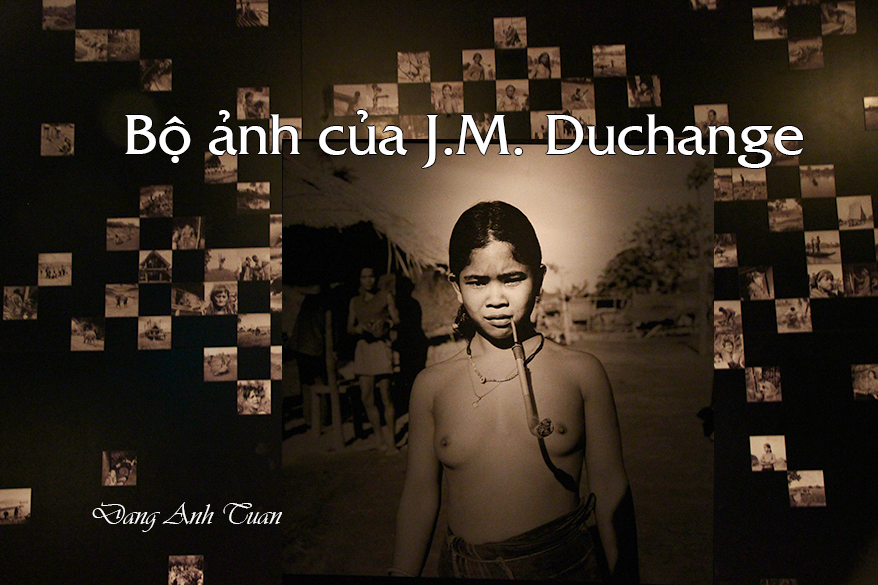
Jean-Marie Duchange sinh ra ở Saint Nazaire (Loire Atlantique) vào năm 1919. Dù ông không phải là một nhà dân tộc học như Georges Condominas mà cũng không phải nhà nhiếp ảnh viên chuyên nghiệp ở thời đó nhưng các tác phẩm ảnh mà gia đình ông tặng cho bảo tàng Quai Branly (Paris) và bảo tàng dân tộc học ở Hànội rất hiếm hoi và vô giá. Sau 4 năm trong quân đội, ông từ bỏ quân ngũ và làm việc 3 năm sau, từ năm 1952-1955 ở vụ y tế công cộng ở miền núi Nam Đông Dương (Tây Nguyên), ông có dịp đi nhiều nơi di chuyển  bằng xe jeep, cưỡi voi, đi bộ, đi thuyền vân vân..

Nhờ đó ông chụp được nhiều ảnh rất độc đáo với máy ảnh  Rolleyflex et Samflex để thỏa mãn sở thích chụp hình của ông. Đấy là những lời mở đầu được ghi lại trong cuốn sách mà ông dự định xuất bản khi ông ở tuổi 88. Nhưng không may ông qua đời khiến cô con gái của ông, bà Evelyne Duchaine và cô cháu ngọai bà Nadège Bourdoin không ngần ngại cứu vớt các tác phẩm ảnh nầy bằng cách cống hiến tất cả các phim âm bản cho bảo tàng Quai Branly (Paris) và  bảo tàng dân  tộc học ở Hànội. Nhờ vậy mới có cuộc trưng bày  để tưởng nhớ đến ông và để đáp lại sự hảo tâm của gia đình ông. Phải công nhận các tác phẩm của ông vẫn còn sống động và để lại cho những người đi xem như mình một niềm vui vô hạn.

Version française

Jean-Marie Duchange est né à Saint Nazaire (Loire Atlantique) en 1919. Bien qu’il ne soit ni ethnologue comme Georges Condominas ni photographe professionnel à cette époque, les œuvres photographiques que sa famille a offertes au musée du Quai Branly (Paris) et au musée d’ethnographie de Hanoï sont  rares et inestimables. Après 4 ans dans l’armée, il quitta l’armée et travailla 3 ans plus tard, de 1952 à 1955 au service de santé publique dans le sud de l’Indochine (Les Hauts Plateaux) du Vietnam, il avait l’occasion de voyager dans de nombreux endroits en jeep, à dos d’éléphant, à pieds, en pirogue  etc.

Grâce à cela, il prit de nombreuses photos très originales avec son appareil photo Rolleyflex et Samflex pour assouvir sa passion  pour les photos. Ce sont les premiers mots d’introduction trouvés dans le livre qu’il envisagea de publier à l’âge de 88 ans. Mais à cause de sa mort précipitée,  sa fille Evelyne Duchaine et sa nièce Nadège Bourdoin n’hésitèrent pas à sauver son travail en offrant tous les négatifs au musée  Quai Branly (Paris)  et  au  musée d’ethnographie de Hanoï. Grâce à ce don, il y a eu une exposition au musée d’ethnographie de Hanoï  en l’honneur de sa mémoire et en reconnaissance  de la générosité de sa famille. Il faut reconnaître que ses œuvres sont toujours vivantes et laissent à des visiteurs passionnés comme moi une joie incommensurable.

English version

Jean-Marie  Duchange 

Jean-Marie Duchange was born in Saint Nazaire (Loire Atlantique) in 1919. Although he was neither an ethnologist like Georges Condominas nor a professional photographer at that time, the photographic works his family donated to the Quai Branly Museum (Paris) and the Ethnographic Museum of Hanoi are rare and invaluable. After 4 years in the army, he left the military and worked three years later, from 1952 to 1955, in the public health service in southern Indochina (the Central Highlands) of Vietnam. He had the opportunity to travel to many places by jeep, on elephant back, on foot, by pirogue, etc.

Thanks to this, he took many very original photos with his Rolleiflex and Samflex cameras to satisfy his passion for photography. These are the first introductory words found in the book he planned to publish at the age of 88. But due to his sudden death, his daughter Evelyne Duchaine and his niece Nadège Bourdoin did not hesitate to save his work by donating all the negatives to the Quai Branly Museum (Paris) and the Ethnographic Museum of Hanoi. Thanks to this donation, there was an exhibition at the Ethnographic Museum of Hanoi in honor of his memory and in recognition of his family’s generosity. It must be acknowledged that his works are still alive and bring immeasurable joy to passionate visitors like me.

[Retour  Vietnam des 54 minorités ethniques]