Mù Cang Chải (Yên Bái)

Version française
Version anglaise
Galerie des photos

Đây là một huyện nằm vùng cao của tỉnh Yên Bái, cách xa Hà Nội gần 300 cây số hướng đi về Tây Bắc và cũng là nơi có các dân tộc thiểu số như Tày, Dao và Hmong. Nhìn về lich sử, Yên Bái cũng là nơi mà đảng trưởng Nguyễn Thái Học cùng 12 nhà cách mạng khác của đảng Việt Nam Quốc Dân Đảng bị thực dân Pháp xử trảm trong đó có Phó Đức Chính can đảm khí khái hiên ngang nhìn máy chém trước khi chết. Nay Mù Cang Chải là điểm ưa thích nhất của những ai thích săn ảnh và yêu chuộng thiên nhiên. Muốn đến đây, đường xá cheo leo vất vã lắm không thua chi Hà Giang, Cao Bằng một là thuê xe máy như các anh chàng tây ba lô hai mướn ô tô như mình mới có thể săn hình được nhất là phải đi con đường của các nhà săn hình (route des photographes) phải đi ngang qua thị xã Nghĩa Lộ, đổ đèo Khau Phạ (Sừng Trời có nghĩa là Sừng nó nhô đến tận Trời) , một trong bốn đèo huyền thoại của Tây Bắc như Mã Pín Lèng của Hà Giang, đường đi có độ dài 30 cây số lúc nào cũng có sương mù và hai phần ba đường ngập nghềnh sỏi đá.

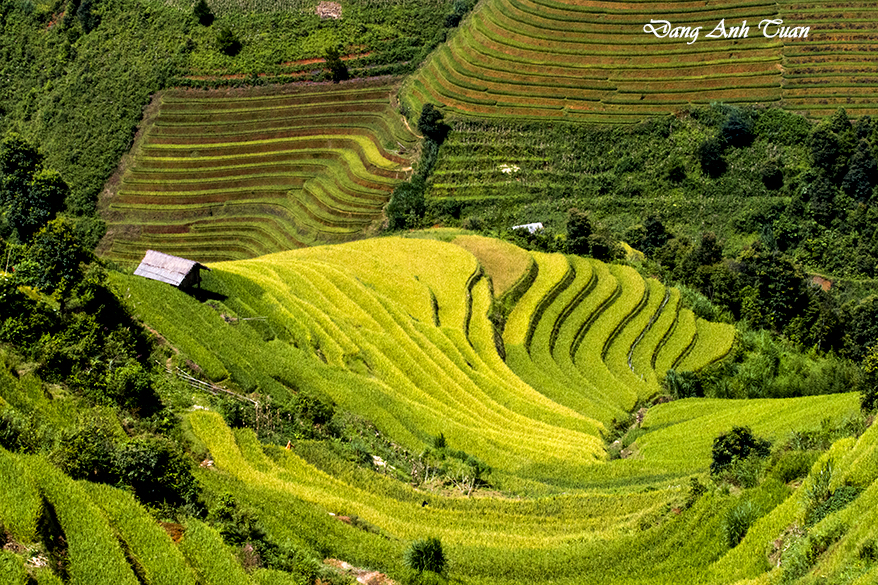
Cũng trên đường đi nầy sẻ đi ngang Tú Lệ, nơi nổi tiếng có cốm Tú Lệ, một loại lúa nếp xanh đầu mùa có một hương vị dẻo thơm, một món ăn tinh hoa của vùng đất nầy. Mù Cang Chải có hai mùa đẹp nhất đó là mủa nước đổ và mùa lúa chín. Với mùa thác đổ, nước được dẫn đến các bậc thang qua các ống tre để cho đất mềm và để cho bà con có thể cấy lúa. Những bậc thang óng ánh với nước, phản chiếu sắc trời khiến tạo một dấu ấn đặc biệt của vùng Tây Bắc. Còn giữa tháng chín và tháng mười đó là mủa lúa chín. Đó cũng là lúc lúa đã ươm vàng hay chín khiến tạo với một bầu trời xanh của mùa thu một khung cảnh hùng vĩ của đất trời khiến ít có ai mà không muốn lưu lại những khoảnh khắc đẹp của thiên nhiên với những bậc thang bát ngát và mênh mông nhất là với các đồi mâm xôi của xã Lã Pán Tấn. Phải nói mình có duyên với cuộc hành trình nầy ở Mù Cang Chải, Sapa. Trước hết phải cám ơn cháu Trung và cháu Ngân giúp chú mướn ô tô để cuộc hành trình nầy được hoàn hảo nhất với cháu tài xế Huân không bao giờ biết than thở, lúc nào cũng vui vẽ trầm lăng và lúc nào mạo hiểm cùng mình đi những nơi mà nghĩ lại đáng sợ nhất là ngày đầu đến Mù Cang Chải, đường sạt lở eo hẹp chỉ một chiếc ô tô đi được với một cơn mưa nguyên buổi chiều tối để đến một khách sạn cheo leo ở giữa những các bậc thang lúa chín. Tại sao mình dám táo bạo như thế vỉ mình nghỉ lúc nào con người có số mạng cả, muốn chết cũng không dễ và cũng như người Phật tử thường nói còn tùy  duyên nửa mình có hay không với mãnh đất nầy. Đến rồi mới thấy Quê Hương Việt Nam quá đẹp qúa mộng mơ [Đọc tiếp phần 2]

Version française

Loin de la capitale Hanoi à peu près de 300 kilomètres dans la direction nord-ouest du Vietnam, Mù Cang Chải est le district de la région montagneuse de Yên Bái. C’est aussi le lieu où il y a une forte concentration des minorités ethniques (les Tày, les Dao et les Hmongs). D’un point de vue historique, Yên Bái est aussi l’endroit où les colonialistes français ont guillotiné dans le passé le leader Nguyễn Thái Học en même temps que ses douze autres membres nationalistes parmi lesquels figurait Phó Đức Chính. Très courageux, celui-ci préférait de voir en face la guillotine avant d’être décapité. Aujourd’hui Mủ Cang Chải devient le lieu préféré non seulement par les photographes amateurs mais aussi par ceux qui aiment la nature. La route est très accidentée et sinueuse. Pour venir ici, il faut louer soit un scooter comme les randonneurs soit une voiture avec un conducteur. C’est la dernière solution que j’ai choisie durant mon voyage à Mủ Cang Chải afin de me permettre d’être sur la route des photographes en passant par la ville Nghĩa Lộ et par le col Khau Pha, l’un des quatre cols légendaires de la région Nord-Ouest. Long de 30 kilomètres, ce col Khau Pha est toujours couvert par les nuages et les deux tiers de son parcours sont des chemins caillouteux et tortueux.

C’est sur cette route qu’on arrive à Tú Lệ connu pour son riz vert du début de la saison (cốm) avec une saveur parfumée et glutineuse, un plat typique de cette région. Mù Cang Chải a deux belles saisons: celle où l’abondance de l’eau provient de la montagne et de la pluie et celle où le riz paddy est récolté. Durant la période d’abondance d’eau, on réussit à ramener l’eau venant de la montagne par des conduits en bambou jusqu’aux rizières en terrasses afin de rendre ces dernières plus molles pour faciliter le repiquage. Mélangées avec de l’eau et réfléchies par la couleur du ciel, les rizières en terrasses ont donné une empreinte caractéristique de la région Nord-Ouest du Vietnam. Entre la mi-septembre et le mois d’Octobre, c’est la période où les épis de riz sont mûrs et prennent la couleur jaune, ce qui donne avec la couleur du ciel azur un spectacle grandiose qu’il est difficile de retenir  en ces instants magiques de la nature lorsqu’on est en face des rizières en terrasses en forme des plateaux (mâm xôi) de Lã Pán Tấn. Il faut reconnaître que j’ai la chance d’avoir ce voyage à Mù Cang Chải et Sapa. D’abord je dois remercier le manager de l’hôtel Rising Dragon Hôtel Mr Trung et sa collaboratrice Ngân toujours prompts à venir m’aider dans la réalisation de mes projets de voyage (Mù Cang Chải, Sapa et Japon). J’ai aussi la chance d’avoir à mes côtés un jeune chauffeur Huân toujours silencieux et jovial.

Il ne se plaint jamais et a toujours l’audace de me suivre et à m’emmener dans des endroits presque inaccessibles lorsqu’il fait nuit et il pleut beaucoup le premier jour de notre arrivée à Mù Cang Chải avec les chemins de terre à deux sens et réservés pour une voiture pour aller à un hôtel écologique perdu à 8 kilomètres de la ville au milieu des champs de rizières en terrasses.

[Lire la suite. Partie II]

English version

Far from the capital Hanoi, about 300 kilometers northwest of Vietnam, Mù Cang Chải is a district in the mountainous region of Yên Bái. It is also the place where there is a high concentration of ethnic minorities (the Tày, the Dao, and the Hmongs). From a historical point of view, Yên Bái is also the place where the French colonialists guillotined the leader Nguyễn Thái Học in the past, along with his twelve other nationalist members, including Phó Đức Chính. Very brave, he preferred to face the guillotine before being beheaded. Today, Mù Cang Chải has become a favorite place not only for amateur photographers but also for those who love nature. The road is very rugged and winding. To come here, you must either rent a scooter like hikers or a car with a driver. This is the last option I chose during my trip to Mù Cang Chải to allow me to be on the photographers’ route passing through the town of Nghĩa Lộ and the Khau Pha pass, one of the four legendary passes of the Northwest region. The Khau Pha pass, 30 kilometers long, is always covered by clouds, and two-thirds of its route consists of rocky and winding paths.

It is on this road that you arrive at Tú Lệ, known for its early season green rice (cốm) with a fragrant and glutinous flavor, a typical dish of this region. Mù Cang Chải has two beautiful seasons: one when the abundance of water comes from the mountains and rain, and the other when the paddy rice is harvested. During the period of water abundance, water from the mountains is successfully brought through bamboo conduits to the terraced rice fields to make them softer and facilitate transplanting. Mixed with water and reflected by the color of the sky, the terraced rice fields have created a characteristic imprint of the Northwest region of Vietnam. Between mid-September and October, it is the period when the rice ears are ripe and turn yellow, which, combined with the azure sky, gives a magnificent spectacle that is hard to forget in those magical moments of nature when facing the terraced rice fields shaped like the plates (mâm xôi) of Lã Pán Tấn. I must acknowledge that I am fortunate to have this trip to Mù Cang Chải and Sapa. First, I must thank the manager of the Rising Dragon Hotel, Mr. Trung, and his collaborator Ngân, who are always quick to help me realize my travel projects (Mù Cang Chải, Sapa, and Japan). I am also lucky to have by my side a young driver, Huân, who is always silent and cheerful.

He never complains and always has the audacity to follow me and take me to almost inaccessible places when it is night and raining heavily on the first day of our arrival in Mù Cang Chải, with the two-way dirt roads reserved for one car to go to an eco-hotel lost 8 kilometers from the town in the middle of the terraced rice fields.
[Reading more. Part II]


Núi Phú Sĩ (Le mont Fuji)

Núi Phú Sĩ (Le mont Fuji)

Version française
Version anglaise
Galerie des photos
Lac Kawaguchi

[Cuộc hành trình Nhật Bản (ngày thứ ba)]

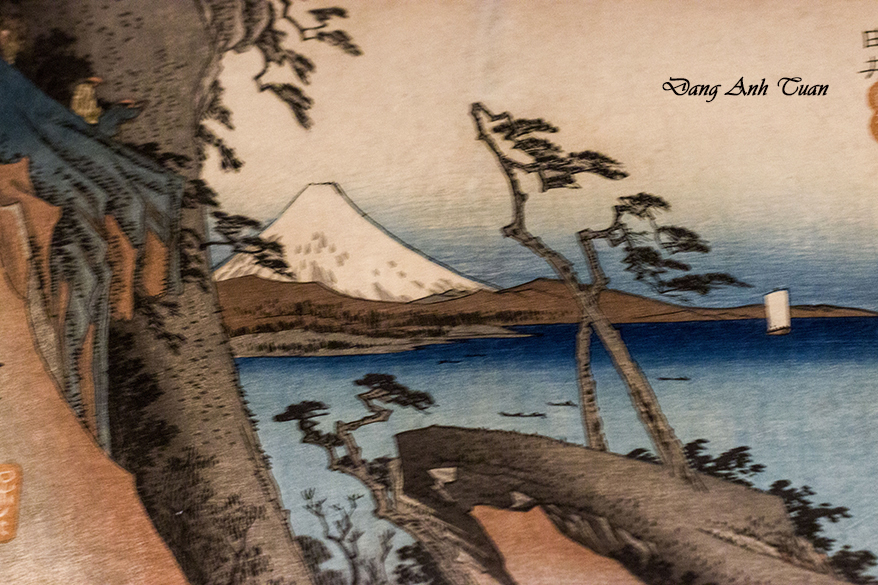
Ngày thứ ba , mình cùng các du khách trong đoàn được đi tham quan núi Phú Sĩ. Trước khi đến tham quan, tụi nầy được  ghé  Gotemba Premium Outlets. Đây là khu mua sắm bao gồm các cửa hàng cao cấp hàng đầu của Nhật. Ở đây du khách có thể nhìn thấy đỉnh núi Phú Sĩ  trong mây.  Núi nầy có độ cao 3776 thước được xem là ngọn núi cao nhất ở Nhật Bản. Đến đất nước Nhật Bản mà không có đến tham quan núi Phú Sĩ thì là một điều đáng tiếc vì nó không những là một biểu tượng của đất nước mặt trời mọc mà còn là một di sản văn hóa thế giới. Hình tượng núi Phú Sĩ rất thanh nhã, thay đổi theo mùa và theo thời điểm trong ngày khiến nó trở thành một chủ đề ưa thích của nhiều họa sĩ trứ danh Nhật ở thế kỉ 19: K. Hosukai (1760-1849) với « 36 cảnh núi Phú Sĩ », A. Hiroshige (1797-1858) với «Năm mươi ba trạm dừng của Tokaido». Núi Phú Sĩ vẫn được xem từ lâu là một đỉnh núi thiêng liêng vì theo Nhật Bản thư kỷ, núi nầy là nơi ở của nữ thần Konohanasakuya-hime, vợ của thần Ninigi-no-Mikoto, cháu nội của nữ thần mặt trời Amaterasu. Bởi vậy phụ nữ không được phép leo lên núi cho tới năm 1868.

Ngày nay số lựợng người leo núi để giải trí nhiều hơn số lượng người leo núi hành hương. Phú Sĩ không phải là một chóp núi nhọn mà nó là miệng núi lửa. Nó vẫn hoạt động và lần cuối cùng nó phun trào vào năm 1707 của thời kỳ Edo. Vì thế khu vực xung quanh núi toàn thấy tro bụi núi lửa và có cả 5 hồ nước do núi lửa tạo ra và được gọi là ngũ hồ: hồ Motosu, hồ Shoji, hồ Kawaguchi, hồ Yamanaka và hồ Sai. Nếu ai không thích leo lên đỉnh thì có thể dừng ở trạm số 5 Fuji Subaru Line. Nơi nầy ngoài khu buôn bán còn có một khu  vực quan sát để có được cái nhìn toàn cảnh tuyệt đẹp trên hồ Yamanaka và thành phố Fujiyoshida.  Chiều hôm đó, tụi nầy được sống  theo lối Nhật ở  một khách sạn gần hồ Kawaguchi bên cạnh rừng thông. Thật tuyệt vời nhất là sáng sớm hôm sau khi lúc  mặt trời mọc mình thả bộ một mình qua đường mòn của rừng thông  để  chụp  quan cảnh xung quanh hồ. 

Galerie des photos

FUJI

Version française

Le mont Fuji
Le troisième jour du voyage au Japon, notre groupe a eu l’occasion de visiter le mont Fuji.   Avant de pouvoir l’admirer, nos  rendons visite à un grand centre commercial de nom Gotemba Premium Outlets où on ne trouve que les grandes marques préférées par les Japonais.  C’est ici que le touriste peut voir le sommet du mont Fuji dans les nuages. Étant haut de 3776 mètres, ce mont Fuji  est considéré comme la montagne la plus élevée au Japon. Il est regrettable de ne pas le visiter car il est non seulement l’emblème célèbre du pays au Soleil-Levant mais aussi le patrimoine mondial culturel de l’UNESCO. Ce mont ne manque pas de charme et ne cesse pas de modifier son image en fonction des saisons et des moments de la journée. C’est pour cela qu’il devient le thème préféré des dessinateurs japonais célèbres du XIXème siècle à l’époque Edo: K. Hosukai (1760-1849) dans la série de « 36 vues du mont Fuji« , A. Hiroshige (1760-1849) dans la série d’estampes intitulée « Les 53 relais de Tokaido ». Depuis longtemps, le mont Fuji revêt un caractère sacré car selon les annales chroniques du Japon (Nihon shoki), le mont Fuji est le lieu de résidence d’une kami japonaise de nom Konohanasakuya-hime, l’épouse du petit-fils Ninigi-no-Mikoto de la déesse du soleil Amaterasu. C’est pour cette raison que l’ascension était interdite aux femmes jusqu’à l’année 1868.

Aujourd’hui le nombre de randonneurs est plus important que celui des pèlerins grimpeurs. Le sommet de Fuji est en fait un cratère volcanique. Il continue à être actif mais sa dernière éruption  eut lieu en 1707 à l’époque Edo. Autour de ce mont, on ne trouve que des poussières volcaniques et 5 lacs que l’éruption a crées: lac Motosu, lac Shoji, lac Kawaguchi, lac Yamanaka et lac Sai. Si on n’aime pas à marcher à pied jusqu’au sommet du mont Fuji, on peut s’arrêter à la station portant le numéro 5 de Fuji Subaru Line. C’ici qu’outre le centre commercial, il y a la zone d’observation où on peut avoir une vue panoramique imprenable  sur le lac Yamanaka et la petite ville Fujiyoshida. Ce soir là, nous passons la nuit dans un hôtel proche de la forêt des pins. C’est superbe pour moi de me promener tout seul,  le  lendemain au lever du soleil,  sur le sentier de la forêt des pins et faire  les photos autour du lac.

Version anglaise

On the third day of the trip to Japan, our group had the opportunity to visit Mount Fuji. Before being able to admire it, we visited a large shopping center called Gotemba Premium Outlets, where only the top brands favored by the Japanese can be found. It is here that tourists can see the summit of Mount Fuji in the clouds. Standing at 3,776 meters high, Mount Fuji is considered the tallest mountain in Japan. It is regrettable not to visit it as it is not only the famous emblem of the Land of the Rising Sun but also a UNESCO World Cultural Heritage site. This mountain is full of charm and constantly changes its appearance depending on the seasons and times of day. That is why it became the favorite theme of famous Japanese artists of the 19th century during the Edo period: K. Hokusai (1760-1849) in the series « 36 Views of Mount Fuji, » A. Hiroshige (1760-1849) in the print series titled « The 53 Stations of the Tokaido. » For a long time, Mount Fuji has held a sacred character because, according to the Japanese chronicles (Nihon Shoki), Mount Fuji is the residence of a Japanese kami named Konohanasakuya-hime, the wife of the grandson Ninigi-no-Mikoto of the sun goddess Amaterasu. For this reason, climbing it was forbidden to women until the year 1868.

Today, the number of hikers is greater than that of pilgrim climbers. The summit of Fuji is actually a volcanic crater. It remains active, but its last eruption occurred in 1707 during the Edo period. Around this mountain, there are only volcanic ashes and five lakes created by the eruption: Lake Motosu, Lake Shoji, Lake Kawaguchi, Lake Yamanaka, and Lake Sai. If you don’t like walking all the way to the summit of Mount Fuji, you can stop at station number 5 on the Fuji Subaru Line. There, besides the shopping center, there is an observation area where you can enjoy an unbeatable panoramic view of Lake Yamanaka and the small town of Fujiyoshida. That evening, we spend the night in a hotel near the pine forest. It is wonderful for me to walk alone the next morning at sunrise along the pine forest trail and take photos around the lake.

Lac Kawaguchi

HOPHUSI

[RETURN JAPAN] Lire la suite

La tristesse de l’automne doré (Buồn tàn thu)

Buồn tàn thu (La tristesse de l'automne doré)
Buồn tàn thu.
La tristesse de l’automne doré


Với năm tháng qua dần, mùa thu đã chết bao lần
Thôi tình ta đấy tựa như thu tàn với lá vàng rơi trên đường...

Au fil des années et des mois, l’automne est mort tant de fois
Notre amour ressemble ainsi à sa fin avec les feuilles jaunes et flétries tombant sur le chemin….

Over the years and months, autumn has died so many times
Our love thus resembles its end with yellow and withered leaves falling on the path

Galerie des photos

automne_doré

Thu về rải rác lá vàng
Một mình lặng lẽ lang thang trên đường….

Pagode Senso-ji (Chùa Asuka)

Version française
Version anglaise
[Schéma de Senso-ji (Tokyo)]

[Viếng thăm ngôi chùa cổ kính Senso-ji (Tokyo)]
Ngày thứ hai của cuộc hành trình ở Nhật Bản Đến Nhật Bản thường dễ nhận thấy cổng Torii ở trong các thành phố. Cổng nầy là biểu tượng của thần đạo, một tôn giáo bản địa của người dân Nhật. Đây cũng là cổng để phân chia rõ rệt giữa thế giới trần tục và không gian thiêng liêng của Thần đạo. Theo tư tưởng của đạo nầy, vạn vật dù là vật đó sống hay chết ở trong tự nhiên đều có thần (kami) cư ngụ. Có thể vì Nhật Bản là một quốc gia có nhiều thiên tai như các siêu bão, sóng thần, động đất vân vân… khiến người dân ở nơi nầy họ nghĩ rằng có một sức mạnh vô hình nào đến từ những thần linh khiến làm họ lúc nào cũng lo sợ, buộc lòng họ phải kính thờ và thân thiện. Bởi vậy trong mỗi nhà của người dân Nhật thường thấy có một bàn thờ tổ tiên hay là của một vị thần nào quen thuộc. Tổ tiên của vị thiên hoàng Nhật Bản hiện nay cũng cho mình là con cháu của nữ thần mặt trời Amaterasu Omikami. Với tầng lớp nông dân ở xứ Nhật thời đó,vai trò của nhà vua rất quan trọng vì ông là người có khả năng cầu xin nữ thần để được mùa màng. Chính nhờ tư duy thần đạo nầy mà đế chế Nhật Bản vẫn được bảo tồn qua nhiều thế kỷ nhất là vai trò thiêng liêng của thiên hoàng không bao giờ bị tướt đoạt dù quyền lực đã rơi nhiều lần vào các gia đình có thế lực mạnh (Kamakura, MuromachiTokugawa). Nước Nhật có đến hiện nay 80.000 thần xã (jinja) (hay đền của Thần đạo) thường nằm trên đồi hay ven vệ đường.

Rất ít người Nhật hiện nay theo thần đạo nhưng những thói quen như óc thẩm mĩ tối giản, chân phương hay thanh tẩy đều bắt nguồn từ thần đạo. Trước khi nhận Phật gíáo làm quốc giáo vào thế kỷ thứ 6 với hoàng tử Shotoku Taishi của dòng dõi Yamato thì người dân Nhật họ đã có thần đạo. Bởi vậy Phật giáo đột nhập vào Nhật Bản, đã có lúc đầu một cuộc xung đột ít nhiều với thần đạo nhưng về sau nhờ có sự hỗn hợp và hoà đồng của hai đạo khiến Phật giáo đã bắt rễ ăn sâu cho đến hiện nay vào đời sống của người dân Nhật. Phật giáo thể hiện được không những tính liên tục hài hoà với thần đạo qua các lễ hội quan trọng (matsuri) mà còn có những nét đặc điểm trong tôn giáo và văn hóa Nhật Bản nhất là về vũ trụ quan và đạo lí nhân sinh. Khi xâm nhập vào Nhật Bản, Phật giáo được biến hóa theo nhu cầu cần thiết và cứu tế của người dân Nhật. Sự hoà nhập Phật giáo vào tín ngưỡng dân gian Nhật Bản cũng được xem tương tự như ở Vietnam với những người theo đạo Phật thờ cúng tổ tiên. Ở đất nước nầy Thần là Phật mà Phật cũng là Thần. Cụ thể là nữ thần Kannon của Senso-ji (Thiền Thảo Tự) trở đi về sau thành Quan Âm bồ tát khi Phật giáo gia nhập xứ Nhật. Đây cũng là một sự kết hợp tính cứu tế của Quan Âm truyền thống với tính phồn thực thấy ở nữ thần Nhật Bản trong tín ngưỡng dân gian bản đia. Bởi thế Quan Âm Nhật Bản còn là vị thần se duyên và phụ sản nữa.

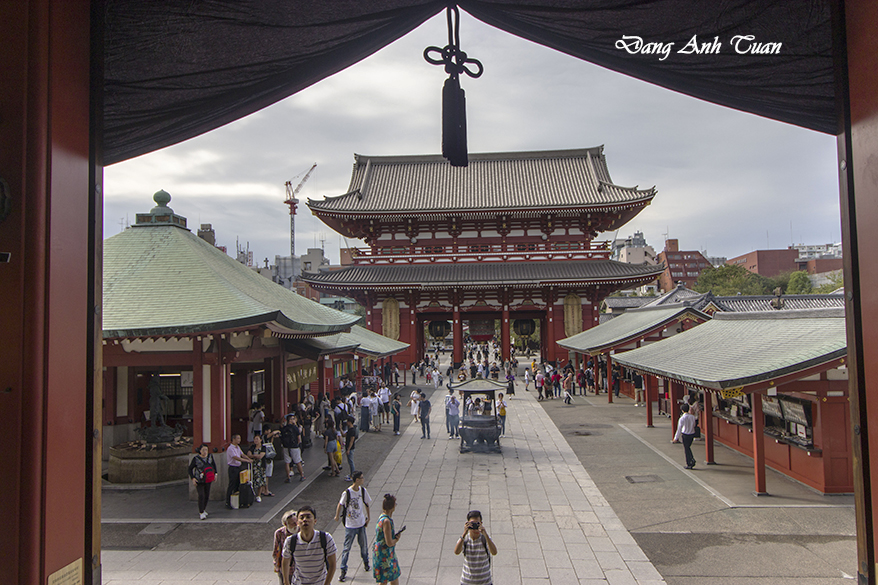
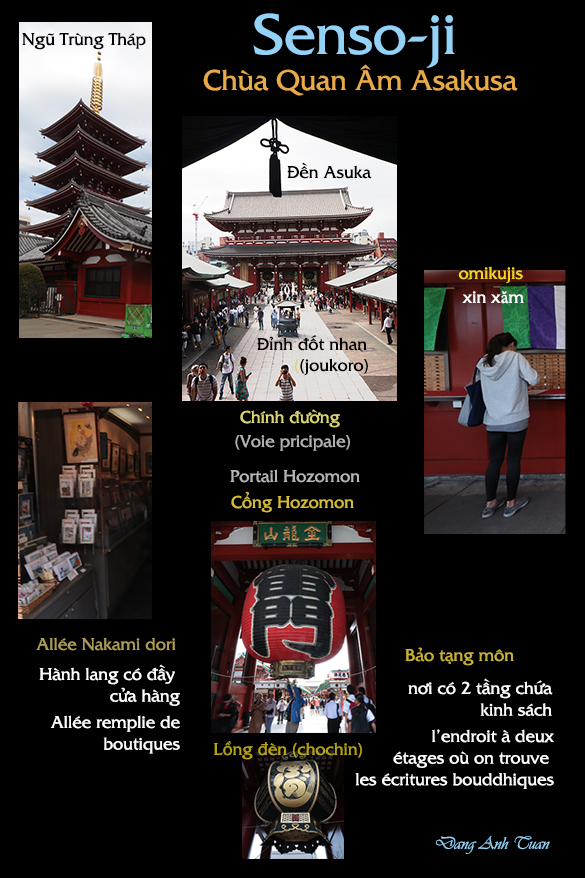
Sáng nay, ngày thứ hai, phái đoàn cùng mình được đi viếng thăm một chủa cổ kính tên là Senso-ji (Thiền Thảo Tự) nằm ở phía bắc của Tokyo. Muốn chỉ chùa chiền, người dân Nhật thường dùng chữ ji hay dera ở cuối tên chủa. Chùa nầy còn có tên là Chùa Quan Âm Asuka vì vào năm 628, có hai người dân chài kéo lưới được một pho tượng của nữ thần Kannon bằng vàng từ sông Sumida. Được biết chuyện nầy, lãnh chúa vùng nầy mới thuyết phục được hai người dân chài và cùng nhau xây một miếu thờ nữ thần Kannon Rồi đến năm 645 có một sư tăng Shokai xây chùa tại đây để thờ phượng. Nhờ sự cúng dường một phần đất lớn cho chùa của Mạc phủ Tokugawa Iaetsu mà diện tích của chùa được tăng thêm. Chùa được nổi tiếng từ đó và trở nên ngày nay là một quần thể chùa đền mà du khách đến tham quan Tokyo không thể bỏ qua vì nó được sùng tu lại và giữ được phong cách kiến trúc cổ kính của thời Edo (Tokyo xưa) dù bị tàn phá trong thế chiến thứ hai. Đến chùa nầy, mọi người phải đi qua cổng chính Kaminarimon thường được gọi là « Cổng sấm »(Lôi Môn). Nơi nầy có hai vị thần gác cổng, một người tên là Fujin (Phong thần bên phải) và Raijin (Lôi thần bên trái). Cổng nầy đựơc du khách chú ý nhất là nhờ có một lồng đèn giấy to tác treo ở giữa cổng nhất là ở dưới đáy có chạm khắc một con rồng rất tinh xảo. Lồng nầy không thay đổi qua bao nhiều thế kỷ theo dòng lịch sử. 

Phiá sau các thần nầy, còn có hai tượng thần Kim LongThiên Long một nữ, một nam, cả hai là thần nước để nhắc đến có sự liên quan mật thiết với sông Sumida, nơi mà tìm ra Phật mẫu. Khó mà chụp hình rõ ràng vì có lẽ người dân Nhật sợ thất lễ phạm thượng nhất đây là các thần (kami) của Thần đạo. Sau cùng, du khách sẻ găp ngay đường Nakamise-dori dài 250 thước. Đường nầy có rất nhiều mặt hàng bán đồ đặc sản và thủ công truyền thống làm rất tinh xảo như đai lưng obi, quạt giấy, lược chải tóc, búp bê Nhật vân vân … Gần cuối đường, du khách sẽ gặp một một đỉnh đốt nhang (joukoro) lúc nào cũng có người đứng xung quanh đốt nhang, khói bốc nghi ngút. Họ cầu nguyện mong đựợc sức khoẻ hay may mắn. Bên phải của đỉnh đốt nhang thì có các máy xin xăm (omikujis) . Đây là một loại giấy tiên đoán tương lai mà du khách bỏ tiền vào máy kéo bắt thăm. Một dạng loto. Còn phiá bên trái của đỉnh nhìn về đằng xa sẽ thấy một ngôi chùa 5 tầng, nơi giữ tro cốt của Đức Phật Thích Ca. Sau đó du khách sẻ đến cổng Hozomon (hay là Bảo Tạng Môn) trước khi vào chùa Sensoji thật sự. Cổng nầy được xây lại vào năm 1964 bằng bê tong cột thép có hai tầng và có một căn nhà chứa rất nhiều kinh Phật chữ Hán ở thế kỷ 14. Nơi nầy, trước cổng có bố trí hai tượng Kim Cương lực sĩ và có một lồng đèn (chochin) nặng 400 kilô kèm theo hai toro ở hai bên với vật liệu bằng thau trông rất xinh đẹp, mỗi toro nặng có một tấn.

Sau cổng Hozomon, du khách sẻ đến điện chính nơi thờ nữ thần Kannon hay Quan Thế Âm Bồ Tát. Điện nầy có hai gian. Gian truớc dành cho tín đồ Phật tử còn gian sau thì dành cho cúng kiến Phật mẫu và không được vào. Một khi vào bên trong của gian ngoài của điện thì sẽ thấy một ngôi miếu mạ vàng hiện ra nơi thờ bức tượng Quan Âm đã có từ thưở xưa. Các tín đồ thể hiện lòng kính có thể đốt nhan và ném tiền xu. Rất ít có thì giờ cho mình để ngắm nghiá, chỉ vỏn vẹn mua vài đôi đũa và chụp hình để lưu niệm (45 phút mà HDV dành cho đoàn trong thời gian tham quan). Một kỷ niệm khó quên, một ngôi chùa quá đẹp của thời Edo, một khu phố náo nhiệt và sầm uất trong một không gian tôn nghiêm và tĩnh lăng ….
Đến xử Phù Tang mới biết thêm một chuyện về các nhà sư « ăn thịt lấy vợ ». Các ông nầy có quyền lập gia đình và có quyền giữ chức vụ cha truyền con nối để trù trì, thật là một chuyện khó tin nhưng thật sự là vậy. Làm sư có rất nhiều tiền lắm vì có nhiều lợi tức trước hết là nhờ có đất chùa từ bao nhiêu thế kỷ nên cho các tiệm buôn bán thuê mướn truớc chùa hay là lo việc buôn bán đất mộ táng. Sỡ dĩ chùa có nhiều đất đó là nhờ các lãnh chúa cúng dường một thuở xa xôi cho chùa xem như đó là một thứ lễ vật để cầu phúc hay sám hối. Vì thế đất trở nên sở hữu của chùa và trở thành một lợi tức không nhỏ cho việc sinh sống của nhà sư. Đất chật ngưòi đông như ở Nhật Bản nên đất làm mộ táng là một loại kinh doanh siêu lợi nhuận. Người Nhật lúc còn sống thì theo đạo thần, công giáo hay vô đạo. Lúc về già gần chết thì muốn theo đạo Phật để về Tây Phương cực lạc.

Vì vậy nhất định theo đạo Phật, tốn cả triệu Yên để mua miếng đất mộ táng ở chùa mà muốn vậy thì phải là Phật tử tức là phải trải qua các nghi thức của chùa để có pháp danh mới có quyền mua đất ở chùa. Bao nhiêu tiền được sư thu thập không có đóng thuế nhất là còn thêm tiền chăm sóc các mộ táng mỗi năm và tiền đi ra ngoài làm Phật sự những lúc có người cần đến. Bởi vậy lấy sư là có một tương lai rực rỡ cùng nghề làm võ sĩ sumo. Đây là hai nghề được các cô yêu chuộng hiện nay nhất ở Nhật Bản. Hướng dẩn viên Ngọc Anh nói đến chuyện các sư Nhật làm mình cười nhớ đến sư trù trì của chùa Ba Vàng ở miền bắc Vietnam. Người dân Nhật họ có một tư cách hành sự vô cùng phức tạp về tôn giáo nhất là họ có đầu óc rất thực tiễn: họ đi lễ của thần đạo vào năm mới, đến chùa chiền của đạo Phật vào lúc mùa xuân và tổ chức tiệc tùng và tặng quà cho nhau theo đạo Kitô lúc Noël.

Version française

La pagode Senso-ji de Tokyo 

En débarquant de l’avion au Japon, le touriste a l’habitude de voir fréquemment les toriis de couleur vermillon dans les villes. Ces portails sont le symbole caractéristique du Shintoïsme, une religion locale des Japonais. Ils reflètent aussi la délimitation de la frontière entre le monde profane et l’espace sacré du sanctuaire shintoïste. Selon la pensée de cette religion, tout être vivant ou mort dans la nature doit être habité par un esprit maléfique ou bénéfique (kami). À cause des calamités fréquentes comme les typhons, tsunamis, séismes etc. au Japon, cela inspire profondément à ses habitants la certitude d’une force interne (ou énergie) invisible venant des esprits (kamis). C’est pour cela qu’ils sont constamment peureux et angoissés face à ces esprits et ils sont obligés de les vénérer dans le but de les apprivoiser et les remercier de leur protection dans une vie éphémère soumise au temps. Dans chaque maison japonaise, il y a toujours un autel réservé pour les ancêtres ou pour un « kami » familier. Les ancêtres de l’actuel empereur japonais ont reconnu d’être les descendants de la déesse du Soleil Amaterasu Omikami. Pour les paysans japonais de cette époque, le rôle de l’empereur est très important car il a la possibilité de demander les faveurs auprès de la déesse pour avoir de bonnes récoltes. C’est grâce au shintoïsme que l’empire japonais est préservé durant des siècles.

Le rôle sacré de l’empereur n’est pas confisqué non plus malgré que le pouvoir de décision était revenu plusieurs fois aux mains des shoguns.(Kamakura, Muromachi et Tokugawa). Le Japon a aujourd’hui 80.000 temples shintoïstes (jinja) situés sur les collines ou au bord des routes. Peu de Japonais sont aujourd’hui shintoïstes mais les habitudes telles que l’esprit esthétique minimaliste, la purification ou la sincérité sont empruntées dans le shintoïsme. Avant de reconnaître le bouddhisme comme la religion d’état au 6ème siècle avec le prince Shotoku Taishi de la lignée Yamato, les Japonais ont déjà eu le shintoïsme. C’est pourquoi une fois implanté au Japon, le bouddhisme est au début, en situation de conflit plus ou moins prononcé avec le shintoïsme mais il y a à la fin une sorte de syncrétisme s’opérant entre les deux religions lorsque le bouddhisme réussit à s’enraciner jusqu’à aujourd’hui dans la vie quotidienne des Japonais. Le bouddhisme montre non seulement sa voie à une intégration harmonieuse avec le shintoïsme à travers les fêtes importantes (matsuris) mais aussi ses traits caractéristiques dans la religion et la culture du Japon, notamment dans le cosmos et la moralité humaine. Lors de son invasion au Japon, le bouddhisme s’est transformé en fonction des besoins d’aide nécessaires apportés aux Japonais. L’intégration du bouddhisme dans les croyances populaires japonaises est similaire à celle du Vietnam où les adeptes du bouddhisme vénèrent leurs ancêtres.

Dans ce pays, la divinité est un Bouddha et inversement. La preuve est que la déesse Kannon du temple Senso-ji est devenue plus tard un Boddhisattva quand le bouddhisme réussit à s’implanter au Japon. Cela montre la combinaison d’un Boddhisattva traditionnel et du caractère de fertilité de la déesse japonaise dans la croyance populaire locale. C’est pourquoi le Boddhisattva japonais est aussi une déesse de mariage et de procréation. Au matin du deuxième jour, le groupe de touristes et moi, nous allons visiter la pagode Senso-ji située dans le nord de la capiale Tokyo. Quand le nom d’un monument est terminé par ji ou dera, il s’agit bien d’une pagode. Cette pagode est connue aussi sous le nom « Asuka » car elle est située dans un quartier très animé Asuka. En 628, il y avait deux pêcheurs réussissant à capturer dans leur filet une statue en or représentant la déesse Kannon dans le fleuve Sumida. Étant au courant de ce fait, un seigneur local réussît à les convaincre et à réaliser ensemble un autel dédié à cette déesse. Puis en 645, un moine de nom Shokai décida de construire à la place de cet autel un temple bouddhiste. C’est la pagode Senso-jì. Grâce aux donations de terrain effectuées par le shogun Tokugawa Iaetsu, la pagode commença à grandir et à changer d’aspect pour devenir jusqu’à aujourd’hui un complexe de pagodes et de temples shintoïstes dont le touriste ne peut pas se passer lorsqu’il a l’occasion de visiter la capitale Tokyo.

C’est aussi une très ancienne pagode connue pour son charme et sa beauté retrouvée de l’époque Edo malgré la destruction provoquée durant la deuxième guerre mondiale. Pour entrer dans cette pagode, tout le monde doit emprunter le porche principal connu sous le nom « Kaminarimon » (ou porte de tonnerre) et protégé par deux divinités Fujin (déesse du vent) et Raijin (dieu de la foudre). L’attention des touristes est retenue par la présence d’une lanterne gigantesque suspendue au milieu du porche et dont le fond contient un beau dragon sculpté en ronde bosse. Cette lanterne ne subit pas des modifications majeures au fil des siècles de l’histoire de la pagode. Derrière ces divinités shintoïstes, il y a encore un couple d’esprits de l’eau ( une déesse Kim Long et un dieu Thiên Long) rappelant le lien intime avec le fleuve Sumida où a été trouvée la statue Bodhisattva en or.. C’est difficile de bien faire les photos car les Japonais ont mis la grille métallique autour de ces kamis dans le but de les protéger et de ne pas les offenser. Puis le touriste se retrouve dans la rue marchande Nakamise-dori longue de 250 mètres. Celle-ci a plusieurs boutiques spécialisées dans la pâtisserie et dans l’artisanat traditionnel avec des produits de qualité comme les peignes, ceintures Obi, éventails, poupées etc.

Cette rue se termine sur un parvis où trône un joukoro (un brûleur d’encens) autour duquel il y a toujours des gens continuant à brûler des encens dans un atmosphère rempli de fumée pour demander la bénédiction de la déesse. Sur la droite de ce parvis, on trouve des machines destinées à imprimer des omikujis. Ceux-ci sont des papiers sacrés que l’on récupère par tirage au sort pour prédire l’avenir du demandeur. C’est une sorte de loterie sacrée.

Sur la droite de ce parvis, on voit apparaître la pagode à cinq étages où les cendres de Siddharta Gautama sont soigneusement conservés. Le deuxième porche monumental est connu sous le nom de Hozomon. Celui-ci a été gardé à son entrée par deux dieux gardiens impressionnants et construit en béton avec les colonnes en acier dans les années 1964. Hozomon a deux étages dont le deuxième est destiné à contenir des sutras écrits en chinois et datant du 14ème siècle. C’est ici qu’on trouve un chochin (une sorte de lanterne) de 400 kilos entouré de chaque côté par un beau toro en laiton, chacun pesant au moins une tonne. Derrière ce porche monumental, c’est le bâtiment principal (Kannon-do) de la déesse Kannon. Il est divisé en deux parties: la partie extérieure est réservée aux fidèles tandis que la partie intérieure est interdite au public car il y a l’autel doré de la déesse Kannon.

Notre groupe dispose seulement de 45 minutes pour visiter Senso-ji car après cette visite, nous devons participer à un cours d’initiation au thé japonais. Un souvenir inoubliable, une belle pagode de l’époque Edo, un quartier très animé dans un espace serein.

Version anglaise
[Senso-ji pagoda in Tokyo]
 

Upon disembarking from the plane in Japan, tourists are accustomed to frequently seeing vermilion-colored torii gates in the cities. These gates are the characteristic symbol of Shintoism, a local religion of the Japanese. They also reflect the boundary between the profane world and the sacred space of the Shinto shrine. According to the beliefs of this religion, every living or dead being in nature must be inhabited by an evil or benevolent spirit (kami). Due to frequent calamities such as typhoons, tsunamis, earthquakes, etc., in Japan, this deeply inspires its inhabitants with the certainty of an internal force (or energy) invisible that comes from the spirits (kamis). This is why they are constantly fearful and anxious in the face of these spirits and are obliged to venerate them in order to tame them and thank them for their protection in an ephemeral life subject to time. In every Japanese home, there is always an altar reserved for ancestors or a familiar « kami. » The ancestors of the current Japanese emperor have recognized themselves as descendants of the Sun goddess Amaterasu Omikami. For the Japanese peasants of that time, the role of the emperor was very important because he had the ability to request favors from the goddess to have good harvests. It is thanks to Shintoism that the Japanese empire has been preserved for centuries.

The sacred role of the emperor has not been confiscated either, despite the fact that decision-making power has several times returned to the hands of the shoguns (Kamakura, Muromachi, and Tokugawa). Today, Japan has 80,000 Shinto shrines (jinja) located on hills or by the roadside. Few Japanese people are Shintoists today, but habits such as the minimalist aesthetic spirit, purification, or sincerity are borrowed from Shintoism. Before recognizing Buddhism as the state religion in the 6th century with Prince Shotoku Taishi of the Yamato lineage, the Japanese already had Shintoism. That is why, once Buddhism was introduced to Japan, it was initially in a situation of more or less pronounced conflict with Shintoism, but in the end, a kind of syncretism occurred between the two religions when Buddhism succeeded in taking root up to the present day in the daily life of the Japanese. Buddhism not only shows its path to harmonious integration with Shintoism through important festivals (matsuris) but also its characteristic traits in the religion and culture of Japan, notably in the cosmos and human morality. During its introduction to Japan, Buddhism transformed according to the necessary aid it provided to the Japanese. The integration of Buddhism into Japanese popular beliefs is similar to that of Vietnam, where Buddhists venerate their ancestors.

In this country, the deity is a Buddha and vice versa. The proof is that the goddess Kannon of the Senso-ji temple later became a Bodhisattva when Buddhism managed to establish itself in Japan. This shows the combination of a traditional Bodhisattva and the fertility character of the Japanese goddess in local popular belief. That is why the Japanese Bodhisattva is also a goddess of marriage and procreation. On the morning of the second day, the group of tourists and I went to visit the Senso-ji pagoda located in the north of the capital Tokyo. When the name of a monument ends with ji or dera, it is indeed a pagoda. This pagoda is also known as « Asuka » because it is located in a very lively district called Asuka. In 628, there were two fishermen who succeeded in catching in their net a golden statue representing the goddess Kannon in the Sumida River. Being aware of this fact, a local lord managed to convince them and together they built an altar dedicated to this goddess. Then in 645, a monk named Shokai decided to build a Buddhist temple in place of this altar. This is the Senso-ji pagoda. Thanks to land donations made by the shogun Tokugawa Ieyasu, the pagoda began to grow and change in appearance to become, up to today, a complex of pagodas and Shinto temples that tourists cannot miss when they have the opportunity to visit the capital Tokyo.

It is also a very ancient pagoda known for its charm and its beauty restored from the Edo period despite the destruction caused during World War II. To enter this pagoda, everyone must pass through the main gate known as « Kaminarimon » (or Thunder Gate), guarded by two deities: Fujin (the wind goddess) and Raijin (the god of thunder). Tourists’ attention is drawn to the presence of a gigantic lantern hanging in the middle of the gate, with a beautiful dragon sculpted in high relief on its base. This lantern has not undergone major modifications over the centuries of the pagoda’s history.

Behind these Shinto deities, there is also a pair of water spirits (a goddess Kim Long and a god Thiên Long) reminding of the close connection with the Sumida River where the golden Bodhisattva statue was found. It is difficult to take good photos because the Japanese have placed a metal grille around these kami to protect them and not to offend them. Then the tourist finds themselves on Nakamise-dori shopping street, 250 meters long. It has several shops specializing in pastries and traditional crafts with quality products such as combs, Obi belts, fans, dolls, etc.

This street ends on a forecourt where a joukoro (an incense burner) stands, around which there are always people continuing to burn incense in an atmosphere filled with smoke to ask for the goddess’s blessing. On the right of this forecourt, there are machines intended to print omikujis. These are sacred papers that are drawn by lot to predict the future of the seeker. It is a kind of sacred lottery.

On the right of this forecourt, the five-story pagoda appears, where the ashes of Siddharta Gautama are carefully preserved. The second monumental gate is known as Hozomon. It has been guarded at its entrance by two impressive guardian gods and was built in concrete with steel columns in the 1960s. Hozomon has two stories, the second of which is intended to contain sutras written in Chinese dating from the 14th century. Here you find a chochin (a kind of lantern) weighing 400 kilos, flanked on each side by a beautiful brass toro, each weighing at least a ton. Behind this monumental gate is the main building (Kannon-do) of the goddess Kannon. It is divided into two parts: the outer part is reserved for worshippers, while the inner part is forbidden to the public because it houses the golden altar of the goddess Kannon.

Our group only has 45 minutes to visit Senso-ji, as afterward we are required to participate in an introductory Japanese tea class. An unforgettable memory, a beautiful Edo-period pagoda, a lively neighborhood in a serene space.

Sơ đồ của chùa Asuka-Kannon

[RETURN JAPAN]

Hoàng thành Thăng Long (Cité impériale Thăng Long)


thang_longEnglish version
Version française
Pictures gallery

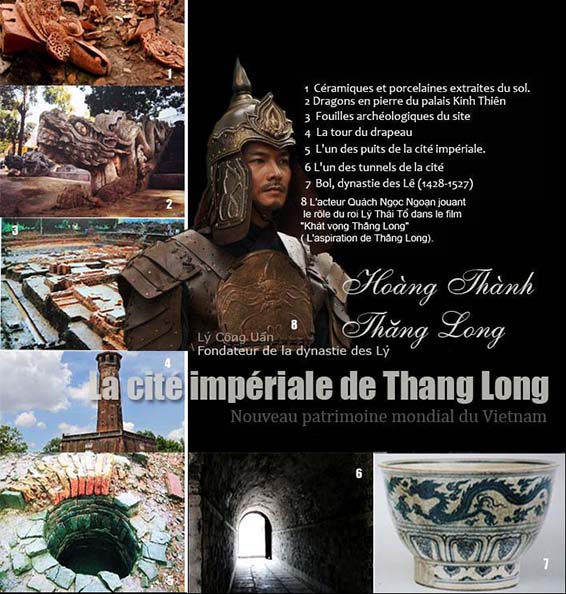
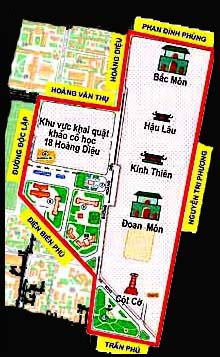
Do những sự kiện lịch sử, hoàng thành Thăng Long dường như bị phai mờ theo thời gian trong ký ức tập thể của người dân Việt với những di tích chôn vùi giữa lòng vùng đất Hànội xưa. Các nhà khảo cổ Việtnam có rất nhiều trở ngại để tìm kiếm vị trí của hoàng thành mặt dù có một loạt các cuộc khai quật khảo cổ bắt đầu ở Quần Ngựa và khu vực lăng mộ của Hồ Chí Minh vân vân… kể từ năm 1970. Chỉ đến năm 1988 họ mới tìm ra được ở khu vực địa lý gần Hậu Lâu liên kề với đường Hoàng DiệuBắc Môn (cổng phía bắc thời Nguyễn), các cột trụ và cột đá với các họa tiết hoa sen cùng các cổ vật khác được sản xuất từ thời Hậu Lê. Năm 2000, họ được phép khai quật ở bên trong của Đoan Môn (cánh cửa duy nhất của hoàng thành). Nhờ thế mà tìm ra được con đường hoàng gia (ngự đạo) của thời nhà Trần. Với các cuộc khai quật khảo cổ khác được bắt đầu từ tháng 12 năm 2002 đến 2004 ở phía bên đường số 18 Hoàng Diệu, các di tích khác có từ thời kỳ trước Thăng Long được tìm thấy. (trước thế kỷ 11).

Nhờ cuốc của các nhà khảo cổ Vietnam mà hoàng thành Thăng Long bắt đầu tiết lộ những bí mật của nó. Vai trò chính trị, hành chánh và văn hóa của nó cũng không còn là một nghi vấn nào nửa ở trong thời kỳ gồm có gần 13 thế kỷ (dưới đời nhà Lý, nhà Trần và nhà Tiền Lê). Các tàn tích kiến trúc như nền móng, nền tảng của các cột trụ, các khúc đường hoàng gia bằng gạch, các hệ thống dẫn thoát nước, các giếng nước vân vân …được trưng bày trong hoàng thành Thăng Long, minh chứng không thể chối cãi được sự phức tạp kiến trúc của các cung điện ở thời đó. Sư tồn tại của các cung điện nầy được chứng thực nhờ sự khám phá và hiện diện của một số loại gốm chất lượng cao với các họa tiết tinh xảo bao gồm luôn cả thời kỳ Lê. (các ký tự viết chữ Hán và các họa tiết với rồng 5 móng và phượng hoàng).

map_thang_long
Các đồ gốm nầy chỉ dành riêng cho vua chúa và hoàng hậu. Nhờ cuộc khai quật khảo cổ nầy, người ta dẫn đến một kết luận như sau: những di tích kiến trúc của Lý-Trần-Lê mà kiếm được đều chất chồng lên trên địa tảng của thời Tống Bình-Đại La (thế kỷ thứ 7 – thứ 9). Sự nhận xét nầy nó cũng không có tạo lại cho đến ngày nay một nghi vấn nào về tầm quan trọng và ảnh hưởng của chiếu dời đô Thăng Long mà Lý Công Uẩn, người sáng lập nhà Lý (mà thường biết đến với cái tên là Lý Thái Tổ), công bố vào mùa xuân Canh Tuất 1010. Sau khi loại trừ được Lê Long Đĩnh, (một vị vua Néron của nhà Tiền Lê?), Lý Thái Tổ sau vài năm trị vị, đã nhận ra Hoa Lư, thủ đô của Vietnam thời đó được xây cất ở trên một vùng đất khó mà mà tiếp cận để đảm bảo sự thịnh vượng, duy trì vận mệnh quốc gia và trường kỳ cho muôn đời sau.

Ông phải dời kinh đô về Đại La, nơi mà tiết độ sứ nhà Đường Cao Biền dùng để làm thủ phủ thời kỳ đô hộ An Nam. Thành phố nầy có thể giúp dân chúng tránh được lũ lụt với một địa hình rất thuận lợi trong sự định hướng núi sông (phong thủy) nhất là nó có một vị trí phù hợp với rồng cuộn hổ ngồi. Để tránh sự bất mãn của quần chúng, ông không ngần ngại lợi dụng lòng nhẹ dạ của dân cũng như cố vấn của Lê Lợi, Nguyễn Trãi thực hành về sau trong thời kỳ chống giặc Minh. Ông phao tin rằng ông thấy rồng vàng bay lên ở Đại La trong cơn mơ. Vì vậy mà Đại La được gọi là Thăng Long tức là Rồng bay. Như bao vị vua khác, ông có thể dùng chính sách bức chế với dân chúng nhưng ông lợi dụng sự mê tính của người dân mà phao tin đây là ý trời để thực hiện một công trình tuyệt vời cho một nước Việt Nam độc lập.

Triều đại của ông được gọi là “Thuận Thiên” (theo ý trời). Mồ côi, ông sống ở trong chùa và được dạy dỗ bởi sư Vạn Hạnh. Lớn lên duới bóng của thiền sư nầy, ông sớm trở thành một vị vua vĩ đại của Vietnam vì ông được thấm nhuần triết lý đạo Phật trong thời gian ông ngự trị. Người ta tìm thấy ở nơi ông không những sự khôn ngoan, đối thoại, thấu thị, khoan dung mà còn có ý chí đóng góp không thể chối cãi về việc củng cố đất nước Vietnam (một hệ thống hành chính tập trung cao độ, một chế độ thuế má rất mềm mỏng, Phật giáo được xem là quốc giáo, ưu tiên dành cho nền giáo dục vân vân…). Chính với ông mà Vietnam được công nhận lần đầu tiên là một vương quốc An Nam.

Các tác giả trong quyển sách tưa đề “Đại Việt Sử ký toàn thư” có những lời khen ngợi không ngớt về triều đại của ông. Chính nhà sử học Ngô Thi Sĩ miêu tả về sau triều đại của ông là một triều đại khoan hồng (Triều Lý nhân Ái). Nhờ Việt Sử lược ở thế kỷ 14, người ta mới biết rằng cung Càn Nguyên mà được gọi sau nầy là Thiên An và đổi tên cuối cùng là Kinh Thiên bởi vua Lê Thái Tổ (Lê Lợi) tọa lạc ở giữa lòng của hoàng thành Thăng Long được xây cất vào năm 1010 bởi Lý Thái Tổ. Trong vùng lân cận của cung điện nầy, ở phía đông có cung Tập Hiền và cửa Phi Long, phía tây có cung Giáng Vũ và cửa Đan Phượng, phía nam có cung Cao Điện và hiên Long Trì với các hành lang ở hai bên và phía bắc có hai điện Long An và Long Thụy chưa nói đến ở phía đông và tây của các điện nầy còn có thêm cung Nhật QuangNguyệt Minh. Ngoài ra còn có chùa Hưng Thiên và tháp Sao Ngũ Phượng.

Năm 1011, cung Thái Thanh, chùa Vạn Tuế và thư viện Phật giáo Tần Phúc được xây cất (Việt sử lược, được dịch và biên chép lại bởi Trần Quốc Vượng trang 70-71). Dựa trên kế hoạch của hoàng thành dưới thời Lê, các nhà khảo cổ Vietnam đã phân định hoàng thành như sau: phía bắc xung quanh phố Phan Đình Phùng, phía nam thì nằm ở đường Trần Phú, phía tây thì vượt ra phố Ông Ích Khiêm và phiá đông thì xung quanh phố thuốc bắc. Diện tích của địa điểm nầy ước chừng khoảng 140 ha dưới thời nhà Lê nhưng lại ít hơn một tí dưới triều đại nhà Lý và Trần. Mặt khác dưới nhà Nguyễn, thành Hànội không vượt quá 100 ha.Trong các cuộc khai quật khảo cổ, có một số vật liệu kiến trúc được trang trí với các chủ đề vô cùng đa dạng. Các họa tiết trang trí là hoa sen, hoa cúc hoặc các đầu của các loại động vật thần thoại với những nét sần sùi và hung dữ dưới thời kỳ Đại La (thể kỷ 7-9). Sau đó,trong thời kỳ của các triều đại Tiền Lê và Lý thì thấy có những bông sen và những đôi uyên ương. Cuối cùng dưới triều đại Lý thì nghệ thuật trang trí thông qua các con rồng, phượng, lá và hoa dẫn đến sự hoàn hảo và đạt đến đỉnh cao của vẽ đẹp. Mặc dầu vẫn duy trì các yếu tố trang trí cơ bản của triều đại nhà Lý, nghệ thuật nầy có xu hướng tìm lại sự đơn giản và bền vững dưới thời nhà Trần.

Đối với thời kỳ nhà Hậu Lê thì có một sự thay đổi quan trọng trong việc trang trí một cách đơn giản các ngói gạch của cung điện với nhiều chủ đề được thêm vào nếu so với thời đại của hai triều đại Lý và Trần. Các di tích và cổ vật được tìm thấy ở hoàng thành Thăng Long là bằng chứng không thể phủ nhận được đến từ một nền văn hóa dân tộc và có mang tính độc đáo điạ phương. Ngoài con rồng của triều đại Lý có mào trên đầu mà không được tìm thấy ở các con rồng Trung Hoa, chúng ta còn khám phá được những mái nhà của thời Lý-Trần với các ngói bò đất nung kềm theo lá trang trí hay phù điêu rồng hay phượng mà không quen tìm thấy được ở cung điện của các nước láng giềng. Người ta có thể nói hoàng thành Thăng Long thuộc về di sản văn hóa vô giá đối với Vietnam nhất là đối với thủ đô Hànội.

Được đưa vào danh sách di sản văn hóa của nhân loại, hoàng thành Thăng Long là một đia điểm mà du khách không thể bỏ qua nếu có dịp đến viếng thăm thủ đô Hànội.


Galerie des photos

[Return PATRIMOINES] 


Tài liệu tham khảo:

Hoàng Thành Thăng Long.
Thăng Long imperial citadel.
Nhà Xuất Bản Thông Tin
Hànội 2006
The Culturel Information Publishing House
 

Pont Alexandre III (Cầu Alexandre III)

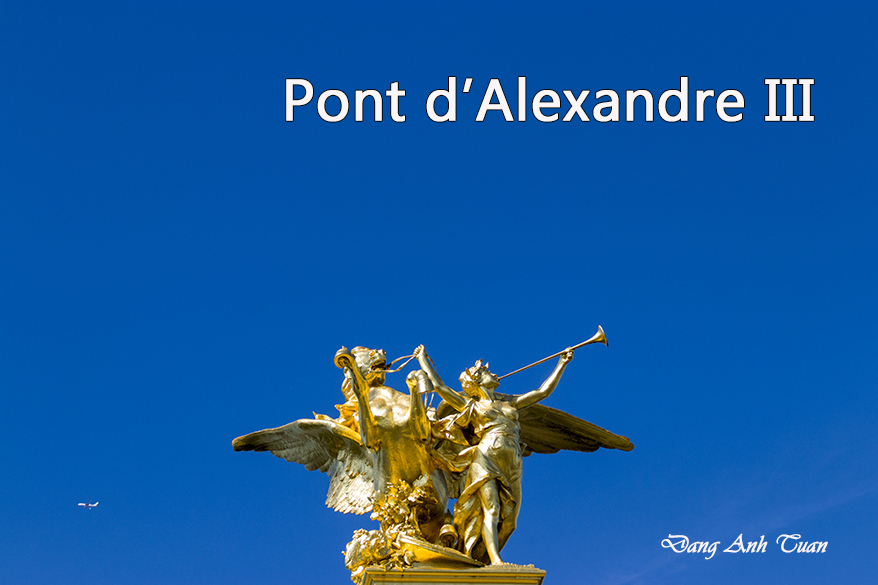
Pont d’Alexandre III

Version vietnamienne

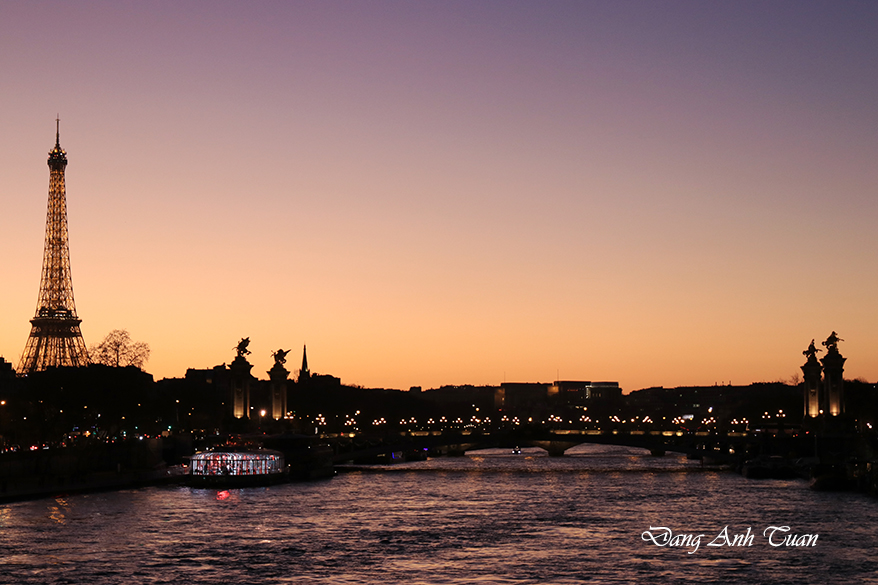
C’est le pont le plus joli enjambant la Seine romantique entre les quartiers 7 et 8 de Paris. Ce pont a été construit en même temps que les ouvrages architecturaux « Petit Palais » et « Grand Palais » à l’occasion de l’exposition universelle de Paris en 1900. C’est aussi le cadeau offert par le tsar Alexandre III à la France pour sceller l’amitié entre les deux peuples russe et français. Le tsar a demandé aux deux architectes Cassien-Bernard et Gaston cousin ainsi que deux ingénieurs Jean Résal et Amédée d’Alby d’assumer la réalisation. Aujourd’hui, ce pont est reconnu par UNESCO comme le patrimoine mondial et visité par la plupart des touristes étrangers.

Cầu Alexandre Đệ Tam 

Đây là một cái cầu đẹp nhất bắc qua sông Seine trữ tình giữa hai quận 7 và 8 của Paris. Cầu nầy được xây cất cùng hai công trình Petit Palais và Grand Palais nhân dịp có cuộc triển lãm thế giới năm 1900 ở Paris. Nó cũng là món quà tặng của sa hoàng Alexandre III để siết chặt tình hữu nghị Nga và Pháp và được giao cho hai kiến trúc sư Cassien-BernardGaston Cousin cùng hai hai kỹ sư Jean Résal và Amédée d’Alby đảm nhiệm. Nay được UNESCO công nhận là di sản thế giới.


Château de Vaux-le-Vicomte (Maincy)

Version française
Verion anglaise
Galerie des photos

Nằm gần thành phố Melun, cách xa Paris khoảng chừng 50 cây số về phía nam, lầu đài Vaux le Vicomte ở Maincy là một công trình kiến trúc được xây dựng bỡi tử tước Nicolas Fouquet, người quản lý tài chánh của vua mặt trời Louis XIV (bộ trưởng bộ tài chính) dưới thời Mazarin từ 1658 tới 1661.  Tuy nó nhỏ so với các lầu đài khác của Pháp, Vaux le Vicomte với phong cách baroque rất nỗi tiếng vì nó đem lại nguồn cảm hứng không ít về sau cho các lầu đài ở Âu Châu, nhất là với  lầu đài Versailles. Đến đây du khách sẽ trông thấy sự hài hoà giữa kiến trúc và khu vườn dài 3 cây số  phiá trước lầu đài  khiến tạo ra một không gian hữu tình và hoành tráng. Phải nói đây nhờ  sự đam mê nghệ thuật và tính hào phóng của Fouquet khiến ông tuyển lựa được ba nghệ nhân nổi tiếng vào thời điềm đó ở nước Pháp đó là kiến trúc sư Louis Le Vau, nhà thiết kế vườn cảnh André La Nôtre và nhà họa sĩ trang trí Charles Le Brun mà công trình kiến trúc Vaux le Vicomte được hoàn thành mỹ mãn.

Với lòng tự tin ở nơi vua, ông không ngần ngại đón tiếp Louis XIV ở lầu đài khiến tạo ở nơi vua sự ganh tị nhất là có những lời nói gièm pha của Colbert ở bên cạnh. Ba tuần lễ sau, Fouquet bị bắt giữ bỡi trung úy D’Artagnan và đưa ra trước toà án đặc biệt. Fouquet được trả lại  tự do nhưng bị trục xuất vĩnh viễn ra khỏi vương quốc.  Để chứng tỏ quyền lực, vua Louis XIV hủy bỏ án phạt và giảm tội  nhốt Fouquet  ở tù chung thân ở lầu đài Pignerol cho đến chết vào năm 1680. Vaux le Vicomte là một kiệt tác sáng lập vườn hoa Pháp ở thế kỷ 17 mà cũng là một điạ điểm du lịch ở Paris mà du khách không thể bỏ qua dù biết đi tham quan có nhiều trở ngại nếu không có xe.

Version française

Non loin de la ville Melun et situé environ à 50 km au sud de Paris, le château Vaux le Vicomte (Maincy) est un ouvrage architectural réalisé par le vicomte Nicolas Fouquet, le gestionnaire des finances du roi soleil Louis XIV (ou ministre des finances) à l’époque de Mazarin de 1658 à 1661. Malgré sa petite taille comparée à celles des autres châteaux de France, Vaux le Vicomte est très connu avec son style baroque car il apporte une inspiration et un modèle aux autres châteaux d’Europe, en particulier à celui de Versailles de Louis XIV. En venant ici, le touriste verra l’harmonie entre l’architecture et le jardin long de 3 kilomètres devant le château, ce qui crée un espace artistique et monumental. Il faut reconnaître que grâce à sa passion pour les arts et à sa générosité Fouquet réussît à recruter à cette époque 3 artistes célèbres dans la réalisation de son château: l’architecte Louis Le Vau, le jardinier paysagiste André le Nôtre et le peintre décorateur Charles Le Brun.

C’est une belle réalisation de son temps. Ayant eu une confiance absolue au roi, il ne tenait pas compte des critiques de la part de Colbert son futur remplaçant plus tard et n’hésita pas à donner une réception grandiose en l’honneur du roi au château Vaux le Vicomte lors d’une fête. Jaloux, le roi ordonna trois semaines plus tard son arrestation supervisée par le sous lieutenant d’Artagnan. Il fut traduit devant un tribunal d’exception. Malgré cela, Fouquet obtint le bannissement définitif hors du royaume. Pour marquer son autorité, le roi cassa la sentence et commua sa peine en prison à vie. Il fut interné dans le château Pignerol jusqu’à sa mort en 1680. Vaux le Vicomte n’est pas seulement un chef d’œuvre de création du jardin à la française au 17ème siècle mais aussi un site touristique à ne pas manquer malgré les difficultés que le touriste peut avoir s’il n’a pas les moyens de déplacement en voiture. Il faut compter 3 heures (aller-retour) avec le train et le bus du château.

Version anglaise

Not far from the town of Melun and located about 50 km south of Paris, the Vaux le Vicomte castle (Maincy) is an architectural work created by Viscount Nicolas Fouquet, the finance manager of the Sun King Louis XIV (or finance minister) during the Mazarin era from 1658 to 1661. Despite its small size compared to other castles in France, Vaux le Vicomte is very well-known for its Baroque style because it provides inspiration and a model for other castles in Europe, particularly that of Louis XIV’s Versailles. Visitors here will see the harmony between the architecture and the 3-kilometer-long garden in front of the castle, creating an artistic and monumental space. It must be acknowledged that thanks to his passion for the arts and generosity, Fouquet succeeded in recruiting three famous artists for the creation of his castle: the architect Louis Le Vau, the landscape gardener André le Nôtre, and the decorative painter Charles Le Brun.

It is a beautiful achievement of its time. Having absolute confidence in the king, he did not pay attention to the criticisms from Colbert, his future replacement, and did not hesitate to hold a grand reception in honor of the king at the Vaux le Vicomte castle during a celebration. Jealous, the king ordered his arrest three weeks later, supervised by the lieutenant under d’Artagnan. He was brought before a special tribunal. Despite this, Fouquet was sentenced to permanent banishment from the kingdom. To assert his authority, the king overturned the sentence and commuted his punishment to life imprisonment. He was confined in the Pignerol castle until his death in 1680. Vaux le Vicomte is not only a masterpiece of French formal garden design from the 17th century but also a tourist site not to be missed despite the difficulties tourists may face if they do not have means of transportation by car. It takes about 3 hours (round trip) by train and bus from the castle.


Galerie des photos

[Return PARIS et ses sites] 

Malaisie (Malacca)


Version française
Version anglaise
Galerie des photos

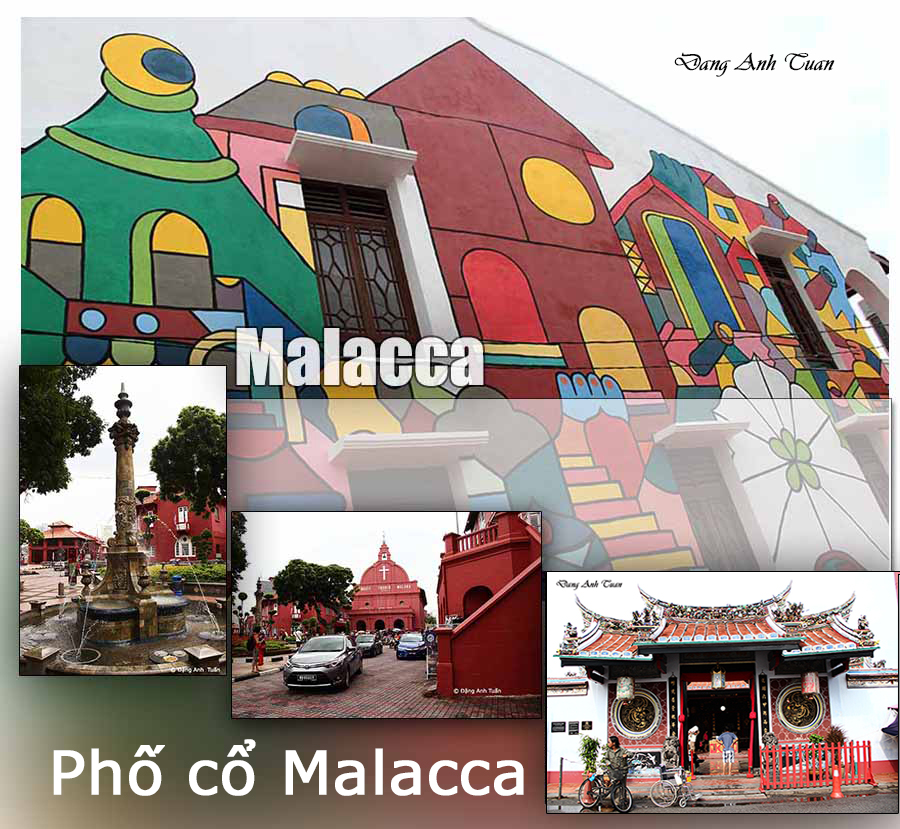
Ai có đến tham quan liên bang Mã Lai thì cũng không nên bỏ qua Malacca cả vì thành phố cổ nổi tiếng nầy nằm cách xa thủ đô Kuala Lumpur khoảng hai tiếng (150 cây số) nếu lấy xe buýt. Malacca có một thời là một thương cảng sầm uất tại khu vực Đông Nam Á nhất là nó có vị trí quan trọng nằm ở eo biển Malacca. Người Mã Lai gọi nó là Melaka. Vào thế kỷ 16, thành phố nầy  bị người Bồ Đào Nha xâm chiếm kế tiếp sang thế kỷ 17, người Hà Lan giành lại rồi nhường lại cho người Anh ở thế kỷ 18. Bởi thế ngoài sự đa dạng về dân tộc,  thành phố nầy còn  lưu giữ  hiện nay ở phiá tây  nhiều dấu tích  của các nước châu Âu ở thời kỳ thuộc địa  và ở phía đông  một khu phố tàu Jonker. Tuy diên tích khu phố đi bộ nầy nó có giới hạn nhưng lúc nào cũng đông người đi bộ nhất là thứ bảy chủ nhật.

Lang thang ở con đường nầy để  lại cho tớ một ấn tượng khó quên nhất là nó có những nét đẹp độc đáo của phố cổ Hội An. Còn ở trung tâm thành phố thì có một biểu tượng  của người Hà Lan, đó là nhà thờ Christ  được sơn màu đỏ hiện nay cùng các công trình khác gần đó. Còn hai bên bờ  sông êm đềm hiền hoà  Malacca, thì có lô nhô các quán cà  phê trữ tình khiến tớ cảm thấy thích thú, không tiếc những khoãng khắc dừng chân nơi nầy để khám phá thành phố Malacca, một di sản văn hóa mà được UNESCO công nhận vào năm 2008.

Version française

Quiconque a l’occasion de visiter la Malaisie ne peut pas laisser tomber Malacca car cette vieille ville célèbre, localisée seulement à 150 km de la capitale Kuala Lumpur nécessite  à peu près deux heures de route avec le bus. À une certaine époque, elle était un port de commerce très animé dans l’Asie du Sud-Est. Elle était située stratégiquement dans le détroit de Malacca. Pour les Malais, cette ville s’appelait Melaka. Au 16ème siècle, elle fut occupée par les Portugais qui furent chassés à leur tour un siècle plus tard  par les Hollandais.  Ces derniers la cédèrent enfin au 18ème siècle aux Anglais.  C’est pourquoi,  à part la diversité de sa population, Malacca continue à garder encore en direction d’Ouest  les vestiges des pays européens durant la période coloniale et en direction d’Est un quartier chinois connu sous le nom de Jonker.

Malgré la superficie de sa zone piétonne  très restreinte,  Malacca continue à être bondée de gens  le soir,  en particulier le week-end. « Se balader à pied » me laisse quand même une impression inoubliable lorsque cette ville charmante me rappelle quelques traits caractéristiques de Hội An (Faifo). Quant au centre de Malacca, il y a toujours un symbole visible venant de la Hollande. C’est l’église Christ peinte aujourd’hui  en rouge avec les autres bâtiments alentours. Beaucoup de kiosques à café longent les rives du fleuve paisible Malacca. Cela me donne  une ambiance pittoresque et  une  énorme satisfaction. Aucun regret ne vient non plus de ma part pour  consacrer un laps de temps dans la découverte de  cette ville que l’organisation internationale UNESCO a reconnue comme le patrimoine mondial culturel en 2008.

Anyone who has the opportunity to visit Malaysia cannot miss Malacca because this famous old town, located only 150 km from the capital Kuala Lumpur, requires about two hours by bus. At one time, it was a very busy trading port in Southeast Asia. It was strategically located in the Strait of Malacca. For the Malays, this city was called Melaka. In the 16th century, it was occupied by the Portuguese who were in turn driven out a century later by the Dutch. The latter finally ceded it to the English in the 18th century. That is why, apart from the diversity of its population, Malacca still retains to the west the remnants of European countries during the colonial period and to the east a Chinese quarter known as Jonker.

Despite the very limited size of its pedestrian area, Malacca continues to be crowded with people in the evening, especially on weekends. « Walking around » still leaves me with an unforgettable impression when this charming city reminds me of some characteristic features of Hội An (Faifo). As for the center of Malacca, there is always a visible symbol coming from Holland. It is the Christ Church, painted today in red along with the other surrounding buildings. Many coffee stalls line the banks of the peaceful Malacca River. This gives me a picturesque atmosphere and enormous satisfaction. No regret comes from me either for dedicating a lapse of time to the discovery of this city that the international organization UNESCO recognized as a cultural world heritage site in 2008.


Galerie des photos

[Return MALAISIE]

Singapour (Tân Gia Ba)

Tân Gia Ba

Version française
Version anglaise
Galerie des photos

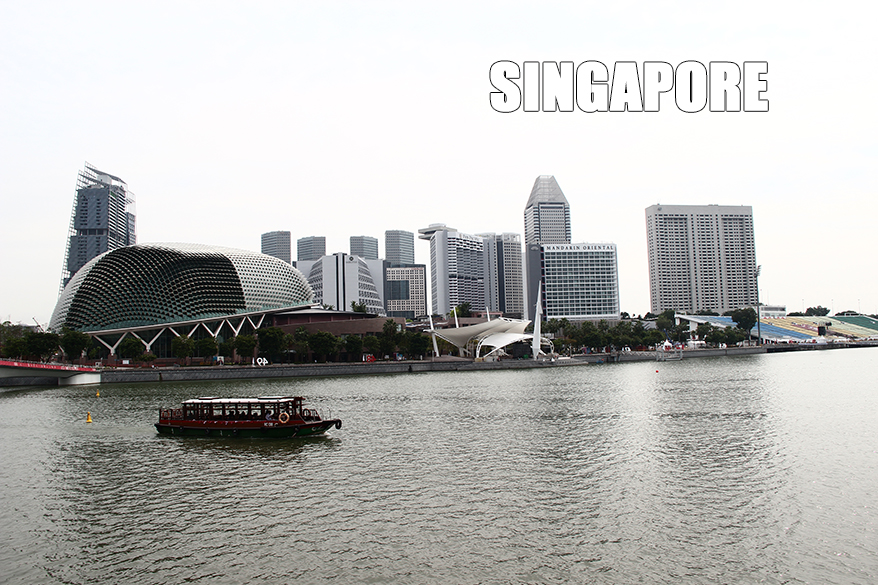
Nói đến Singapore  thì không thể nào không nhắc đến ông Lý Quang Diệu (Lee Kuan Yew). Chính nhờ ông mà Singapore, một đất nước chỉ vỏn vẹn 640 km2 cùng 5 triệu dân trở thành ngày nay một cường quốc kinh tế ở châu Á. Trước đó ở thời kỳ Singapour chưa có độc lập còn nằm  trong liên bang Mã Lai  thì chỉ là một trạm trung chuyển hàng hóa và mậu dịch do người Anh, Sir Thomas Stamford Rafles lập ra có 200 năm qua công ty Đông Ấn (East India) sau khi ông nầy thuyết phục được vua Johor nhường lại mãnh đất nầy cho Anh quốc (1819). Vì bất đồng quan điểm chính trị với chính phủ liên bang, Singapore bị trục xuất ra khỏi liên bang vào năm 1965. Trong những năm đầu độc lập, Singapore phải đối mặt với nhiều vấn đề như nạn thất nghiệp, hoà giải dân tộc vì Singapore là một quốc gia có sắc tộc đa dạng (nguời Hoa, người Ấn, người Mã Lai, người Âu Á), tài nguyên thiên nhiên nghèo nàn, một nền kinh tế nhược tiểu dựa lúc đầu trên các ngành sản xuất đã có ở trên đảo và đến từ các nguồn nhu cầu của các đồn quân trú người Anh  vân vân …

Thế mà nhờ tâm huyết của ông, cái nhìn sâu sắc của một nhà lãnh đạo yêu nước về vị trí quan trọng chiến lược của Singapore,  lòng tin cậy của người dân, Lý Quang Diệu đã thành công giải quyết từng vấn đề bức thiết và lúc nào cũng xem thương mại và dịch vụ là hai yếu tố chính trong sự nghiệp phát triển của Singapore. Hiện nay, Singapore được xem là một cảng lớn nhất trên thế giới vì nó thu hút hàng chục công ty giao dịch hàng hóa toàn cầu và kết nối qua các tuyến đường biển với thị trường Trung Quốc. Singapour trở thành trong những năm gần đây một quốc gia xanh, một đất nước có một môi trường sống sạch sẽ. Chổ nào có một tí đất trống là có vườn, có cây. Đến đây,  du khách  sẻ thoả mái đường xá sạch sẽ không bị ô nhiễm   nhưng phải cẩn thận  cần phải biết nhiều những điều cấm kỵ: xả rác, khạc nhổ trên đường và nơi công cộng, ăn uống trên tàu điện ngầm, nhay kẹo cao su, đi tiểu mà không giật nước bồn cầu   vân vân bị phạt dưới hình thức tài chánh đôi khi còn bị trục xuất nếu còn tiếp diễn, ăn buffet lấy nhiều mà ăn bỏ mứa không hết phải trả tiền nhé.

Có dịp đến Singapore, tớ chỉ nhớ đến một đất nước có kỷ luật rất nghiêm khắc, một quốc gia ít tham nhũng như ở các nước Bắc Âu (Pays Nordiques) theo khảo sát của TI (Transparency International) vì có chính sách giám sát chặt chẽ để đãm bảo tính minh bạch trong hệ thống quan chức nhà nước chớ các điểm vui chơi ở  đảo Sentosa thì tớ cũng thấy có ở các quốc gia khác như Mỹ và Âu Châu mà thôi.  Có đến thì cũng có học hỏi ít nhiều về đất nước nhỏ bé nầy.

Version française

Quand on évoque Singapore, on ne peut pas ignorer Lee Kuan Yew. C’est grâce à lui que le pays dont la superficie n’est que de 640 km2 avec une population de 5 millions d’habitants devient aujourd’hui une puissance économique en Asie. À l’époque où Singapore n’avait pas encore l’indépendance et faisait partie de la fédération de Malaisie, Singapore n’était qu’un hub de transport maritime et commercial que Sir Thomas Stamford Rafles, un Anglais de renom a crée il y a 200 ans par l’intermédiaire de la compagnie britannique des Indes orientales (East India) après avoir réussi de convaincre le sultan de Johor de lui céder ce petit bout de territoire en 1819. À cause du différend politique avec la fédération malaise, Singapore fut exclu de cette dernière en 1965. Durant les premières années de son existence en tant qu’un état indépendant, Singapore dut affronter un tas de problèmes comme le chômage d’une population non qualifiée, la nécessité d’une réconciliation nationale  due à la présence d’une population multi-ethnique (Chinois, Indiens, Malais, Européens etc.), le manque de ressources naturelles, la faiblesse d’une économie basée essentiellement sur la production industrielle locale liée en grande partie aux besoins des garnisons britanniques et malaises etc.

Pourtant  grâce à la constance de son implication et de son dévouement, la vision d’un dirigeant patriote sur la position stratégique de Singapore et la confiance de son peuple, Lee Kuan Yew réussît à résoudre progressivement tous les problèmes recensés et à considérer toujours le commerce et les services comme  les deux éléments majeurs dans le développement de la prospérité de l’île. Aujourd’hui, Singapore est considéré comme l’un des plus grands ports de commerce mondiaux car il héberge des dizaines de sociétés de commerce mondiales et il établit des liens avec toutes les routes maritimes pour accéder au marché chinois. Singapore se distingue depuis quelques années comme  la  cité verte la plus durable de l’Asie et revendique son attachement à un cadre de vie  dans un environnement à la fois propre et écologique.  La verdure est omniprésente partout à Singapore. En venant ici, le touriste se sent plus satisfait  car les rues sont propres et la pollution est moindre qu’ailleurs. Mais il doit connaître une série d’interdits : jeter quoi que ce soit par terre, cracher par terre, manger dans le tramway, mâcher ou porter sur soi le chewing gum, quitter la toilette sans tirer la chasse d’eau  etc. Il sera verbalisé toute de suite avec une forte amende. En cas de récidive, il pourra  être expulsé et interdit de séjourner à Singapore. Pour un buffet à volonté, il faut manger tout ce qui est pris dans l’assiette  sinon il faut payer ce qu’on n’arrive pas à finir.

Ayant eu l’occasion de venir à Singapore, je rappelle que c’est un pays où la sévérité de la loi est implacable. Selon TI (Transparency International),  la corruption y est moindre comme les pays nordiques dans la mesure où il y a une politique de contrôle très sévère, claire et transparente sur les dirigeants du pays. Par contre, les jeux et les divertissements à  l’île Sentosa n’ont rien de spécial, on peut les trouver ailleurs (USA  et Europe). Malgré cela, il me paraît utile quand même car mon séjour m’a permis de mieux connaître la Suisse de l’Asie.

Version anglaise

When Singapore is mentioned, one cannot ignore Lee Kuan Yew. It is thanks to him that the country, which has an area of only 640 km2 with a population of 5 million inhabitants, has become today an economic power in Asia. At the time when Singapore was not yet independent and was part of the Malaysian federation, Singapore was only a maritime and commercial transport hub that Sir Thomas Stamford Raffles, a renowned Englishman, created 200 years ago through the British East India Company after successfully convincing the Sultan of Johor to cede this small piece of territory to him in 1819. Due to political disputes with the Malaysian federation, Singapore was expelled from it in 1965. During the first years of its existence as an independent state, Singapore had to face a host of problems such as unemployment among an unskilled population, the need for national reconciliation due to the presence of a multi-ethnic population (Chinese, Indians, Malays, Europeans, etc.), the lack of natural resources, the weakness of an economy essentially based on local industrial production largely linked to the needs of British and Malaysian garrisons, etc.

Yet thanks to the consistency of his involvement and dedication, the vision of a patriotic leader on Singapore’s strategic position and the trust of its people, Lee Kuan Yew gradually managed to solve all the identified problems and always considered trade and services as the two major elements in the development of the island’s prosperity. Today, Singapore is considered one of the largest global trading ports as it hosts dozens of global trading companies and establishes links with all maritime routes to access the Chinese market. For several years, Singapore has stood out as the most sustainable green city in Asia and claims its commitment to a living environment that is both clean and ecological. Greenery is omnipresent everywhere in Singapore. When coming here, the tourist feels more satisfied because the streets are clean and pollution is lower than elsewhere. But they must know a series of prohibitions: throwing anything on the ground, spitting on the ground, eating on the tram, chewing or carrying chewing gum, leaving the toilet without flushing, etc. They will be fined immediately with a heavy penalty. In case of repeat offense, they may be expelled and banned from staying in Singapore. For an all-you-can-eat buffet, you must eat everything taken on the plate; otherwise, you have to pay for what you cannot finish.

Having had the opportunity to come to Singapore, I recall that it is a country where the severity of the law is relentless. According to TI (Transparency International), corruption is lower there, like in the Nordic countries, because there is a very strict, clear, and transparent control policy over the country’s leaders. On the other hand, the games and entertainment on Sentosa Island are nothing special; they can be found elsewhere (USA and Europe). Despite this, it still seems useful to me because my stay allowed me to better understand the Switzerland of Asia.

Galerie des photos

singapore
« of 2 »

[Return PAYS DE L’ASIE DU SUD EST]

Architecture du Laos (Kiến trúc của Ai Lao)

Architecture du Laos 


Version anglaise
Version vietnamienne
Galerie des photos

Malgré une influence notable provenant des Thai et des Cambodgiens, l’architecture du Laos a quand même son caractère original à travers ses pagodes célèbres trouvées à Luang Pra Bang et Vientiane. On trouve partout au Laos des pagodes, ce qui me donne la conviction que les Laotiens ont la ferveur bouddhique et sont orientés toujours vers la spiritualité. Les Laotiens sont de nature très pacifique. Lors de mon séjour au Laos, je n’étais jamais inquiet de rentrer tardivement le soir comme au Vietnam.

Despite a notable influence from the Thai and Cambodians, the architecture of Laos still has its original character through its famous pagodas found in Luang Prabang and Vientiane. Pagodas are found everywhere in Laos, which convinces me that the Laotians have a Buddhist fervor and are always oriented towards spirituality. Laotians are naturally very peaceful. During my stay in Laos, I was never worried about returning late at night as I was in Vietnam.

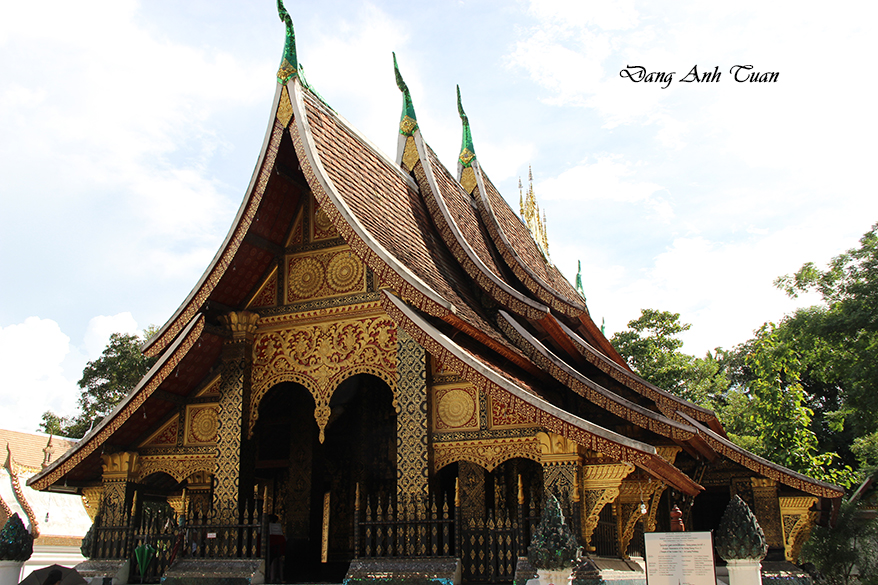
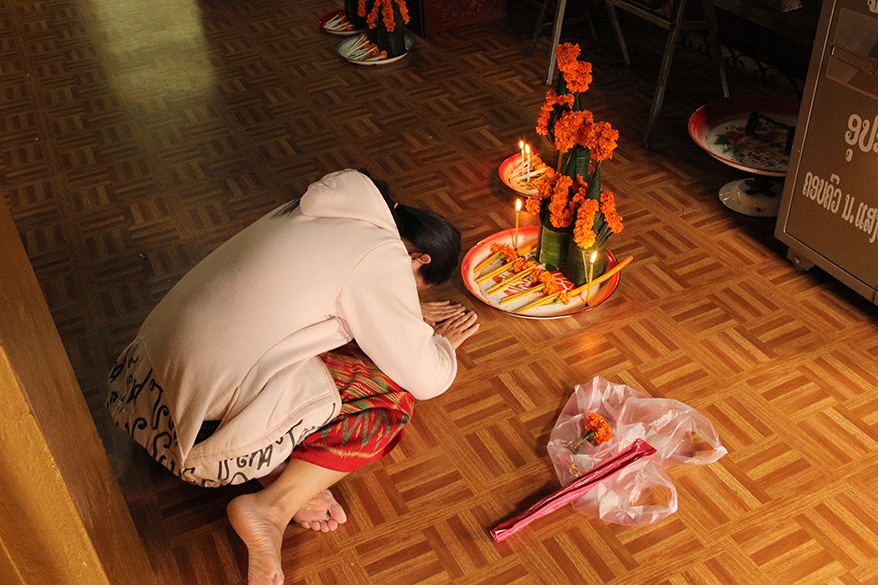
Kiến trúc ở Lào có cái đặc trưng của nó nhất là qua các chùa chiền nổi tiếng ở Luang Prabang hay Vientiane dù nó có ảnh hưởng ít nhiều của người Thái và người Cao miên. Ở Lào, ở đâu, cũng thấy chùa chiền cả khiến mình có thể nhận định rằng người Lào rất trọng đạo Phật và sống nhiều về tâm linh lắm. Người dân cũng hiền hoà. Lúc mình đến đây trong thời gian du lịch, không bao giờ mình cảnh giác lo sợ đi chơi về khuya như ở Việt Nam.

Kiến Trúc Ai Lao

archi_laos

[Retour LAOS]