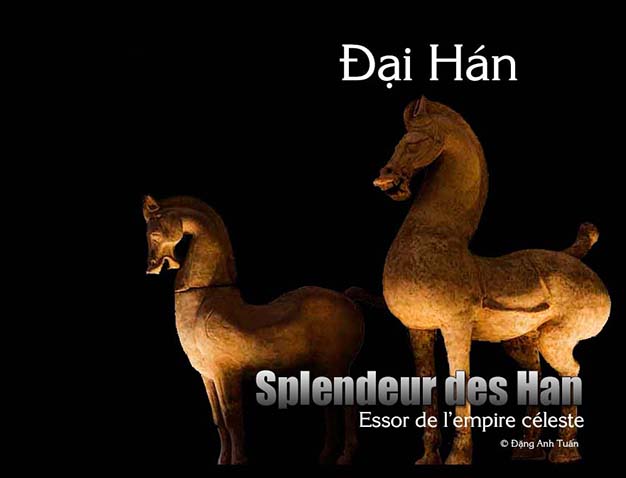
The cult of ancestors (Thờ cúng tổ tiên)


The cult of ancestors

Version française

Version vietnamienne

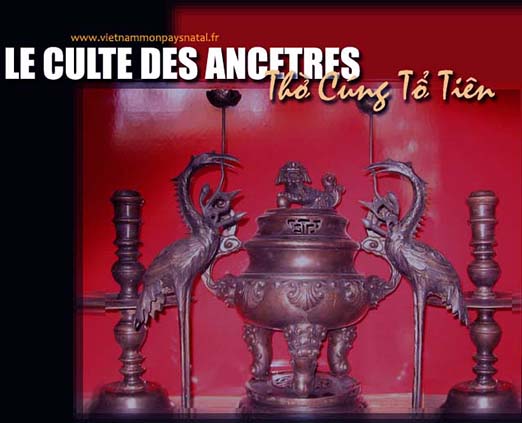
In Vietnam, filial piety is one of the fundamental notions in the Vietnamese family which is ruled by the cult of ancestors. The latter provide good advice and only help living descendant if they are respected and honored in particular if their tombs are well maintained.In most of Vietnamese homes one finds on the little family altar wooden tablets, each for an deceased ancestor, down to the fifth generation. One finds on each tablet the inscription of the name of the deceased and also the possessed titles acquired during his active live. Generally speaking, these inscriptions were written in Chinese characters.

In each Vietnamese family, it is the eldest son who is in charge of maintaining the family altar. It is possible that the oldest person in the eldest branch of the family has this responsibility when it comes to a « big family ». No importance concerning sex is imposed on the responsible person. A daughter may assume this responsibility as well as a man.

The cult of ancestors is especially put in honor at the festival of Tết, the Vietnamese New Year. One takes this occasion to offer to the deceased not only a meal but also incense and fake money bills that will be burned

during Tết.

Photo gallery

[Return New Year Bính Ngọ]

Buffalo (Con trâu)


Version française
Galerie des photos

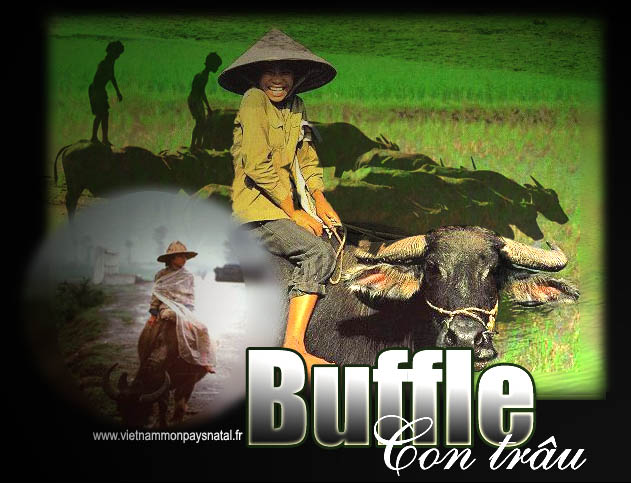
As Vietnam is an agricultural country, the buffalo is always regarded as a familiar animal for the Vietnamese people, in particular the peasants. The image of the buffalo is closely tied to the rural landscape of Vietnam. Like many other countries in the world, Vietnam has legends among which there is one concerning the buffalo.

Once upon a time, to help the Vietnamese peasants, God was assigned an angel to descend in Viet-Nam with two bags, one filled with cereal seeds to feed people and the other with grass seeds for the cattle. The angel was advised to sow the cereals seeds first, and grass seeds next. Being so absent minded, he forgot the recommendation by doing the opposite: grass seeds first, and cereal seeds next. That is why Viet-Nam was covered with so much grass and forests that the peasants had to make a complaint which echoed to Heaven. Furious, God condemned the angel to exile by turning him into a buffalo and sent him to Viet-Nam. That is why the buffalo was compelled to spend all day long munching grass and pulling the plough to pay for his errors.

The buffalo is a very useful animal in agricultural countries, in particular Vietnam where farming technologies are not very developed. In certain countries, if the dog is the best friend of man, then in Vietnam the buffalo is an inseparable companion of the farmer. Without this animal, the latter will be deprived of everything because it is the buffalo that helps the peasant to till the land everyday, to cart the burdens, to replace him in tiring and ungrateful tasks. This ruminant is also the animal that mountain and highland dwellers sacrifice when it comes to asking God for blessing harvest.

The buffalo is the Vietnamese peasants’ benefactor. This is why it is generally quoted in folk songs and proverbs. It is one of enriching subjects in the Vietnamese poetry. For the peasant, the buffalo forms part of his heritage. That is why the saying:

Ruộng sâu, trâu nái

The deep rice field, the standard buffalo

indicates a well to do person in the village.

Tậu trâu, lấy vợ, làm nhà
Trong ba việc đo’ trong là khó thay.

Purchasing a buffalo, looking for a wife, and building a home
Among these three jobs, none of them seems to be easy.

As it is the case of fish farming, the breeding of buffaloes is a mean to get rich quick. That is why it is customary to quote in folk songs the following words:

Muốn giàu thì nuôi trâu cái,
Muốn lụn bại thì nuôi bồ câu.

Want to become rich, buy female buffaloes.
Want to be in debts, breed pigeons.

To designate the buffalo, we usually use the word “ngưu (牛)” but this turns out to be incorrect. According to Vietnamese researcher Lại Nguyên Ân, This is a mistake that we should know about. The buffalo lives only in tropical regions. The buffalo is not found in northern China. It seems that this mammal only existed in Kouang Tong and Kouang Si when the Bai Yue territory was annexed by the Han. In ancient Chinese texts written by the Northern Chinese, the word “ngưu” is used to refer to an ox. As for the buffalo, in the Chinese dictionary it is referred to as “thủy ngưu (水牛)” because it is an ox that can swim well in water. That’s a fact worth knowing.

Trâu ơi ta bảo trâu này
Trâu ra ngoài ruộng trâu cày với ta.
Cầy cấy vốn nghiệp nông gia
Ta đây trâu đấy ai mà quản công.

O my buffalo, listen to what I tell you
You go to the rice field and plough with me;
Ploughing and transplanting is a ploughman’s trade
Here I am, here you are, who of us pities his pain.

or

Trên đồng cạn dưới đồng sâu,
Chồng bừa vợ cấy con trâu đi cày.

In the high and low rice fields,
The husband harrows, the wife transplants, the buffalo ploughs.

In the morning, the buffalo can be seen early in the rice field. In the evening, it is brought back to the hamlet by the herdsman after a hard day’s work. Vietnamese have occasion to recall the picture of rustic life in the countryside described by the famous poetess Huyện Thanh Quan (the sub-prefect of Thanh Quan (or Thái Bình of today)) in her poem entitled “Twilight Landscape (Cảnh chiều hôm)”:

Chiều trời bảng lảng bóng hoàng hôn
Tiếng ốc xa đưa lẫn trống đồn.
Gác mái ngư ông về viễn phố,
Gỏ sừng mục tử lại cô thôn……

Evening brings back the shadows of twilight under a pale sky;
The sound of the watchmen’s trumpets can be heard in the distance, answering the tam-tam of the guard post;
The old fisherman lays down his oar to return to his distant station;
The young herdsman beats his buffalo’s horns to return to his lonely hamlet….

In the history of Viet Nam, there are two illustrious characters who took on the role of herdsmen when they were young. Because of poverty, they were forced to spend their days herding buffalo despite being well educated. The first was Đinh Bộ Lĩnh. He had the merit of subduing the rebellions of the twelve local lords and unifying the country. He thus became the first emperor of an independent Vietnam after a thousand years of Chinese domination. The second was Đao Duy Từ. At one time, he fled to the south (Đàng Trong) to look after a herd of buffalo belonging to a wealthy man in the Tùng Châu region. Knowing that Đao Duy Từ was no ordinary character, this wealthy man recommended him to Trần Đức Hoà, the eminent advisor to Lord Nguyễn Phúc Nguyên. Finding in him the qualities of an educated and talented man, Trần Đức Hoà gave him his daughter in marriage and introduced him to the Nguyễn lord, Nguyễn Phúc Nguyên (or bonze lord). It was on his recommendation that the latter succeeded in building two fortresses “Trường Dục” and “Định Bắc Trường thành” along the river Nhật Lê we’re accustomed to calling “the Master’s fortress” at Đồng Hới (Quảng Bình) to withstand assaults from the armies of Lord Trịnh. He was the deserving mandarin of the Nguyễn dynasty and was still regarded by lord Nguyễn Phúc Nguyên as his “Venerated Master”.

In short, one finds through the image of the buffalo most of the image of Viet-Nam, our country. For the overseas Vietnamese, to find the buffalo is to find Vietnam. This animal, along with the bamboo, is one of the representative symbols of Viet-Nam.

The buffalo reflects at the same time the tender way of life and the unshakable resistance of the Vietnamese people.

Pictures gallery

[Return RELIGION]

Yên Bái (Nguyễn Thái Học- Cô Giang)


Thaihoc

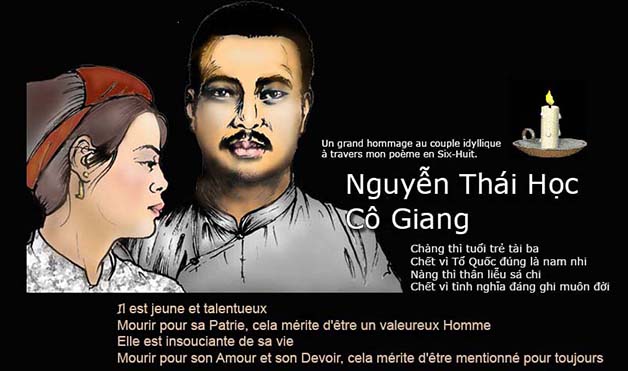
A great homage to the idyllic couple through my poem in Six-Eight:

He is young and talented;
Dying for his Father Land, he deserves being a valorous man.
She does not worry about her own life;
Dying for her love and duty, she is unforgettable forever.

Version française

Version vietnamienne

Contrary to other Vietnamese towns, Yên Bái has no tourist attractions. It is only the provincial capital, a riverside town located in the valley of the Red river half way on the road going from Hànội to the Chinese border Lào Cai. In spite of that, it continues to be famous in the past by its armed resistance driven by Vietnamese nationalists in the struggle for independence. It incarnates not only the hope of the Vietnamese people to regain their freedom by force but also the dauntlessness of the nationalists before death after the failure of their revolt in 1930. It should be looked at in the political context of that time to understand not only the causes of that revolt but also the Vietnamese people’s profound aspiration for independence after Phan Chu Trinh ‘s failure in advocating priority of overall progress of society over political independence followed by his death, and the house arrest of Phan Bội Châu, another important figure, by the colonial authorities at the capital of Huế.

Despite the warning of colonel Parfait-Louis Monteil in 1924, few reforms were made in favor of the native people. On the contrary, the exploitation of cheap labor in rubber tree plantations was at the top of its efficiency and horror. Writer Roland Dorgelès talked about it in his work « The Mandarin Road« . This virgin land, when it opens on impact, releases a mortal breath. As many as traced paths, as many as open tombs. The rubber trees coming out of the ground, spindly, and well in lines, look like the rows of cross. The dead numbered in the tens of thousand because of diseases and malnutrition. That is why through the following poem, this complaint is heard:

Kiếp phu đỗ lắm máu đào
Máu loang mặt đất máu trào mủ cây
Trần gian địa ngục là đây
Ðồn điền đất đỏ nơi Tây giết người

The coolies’ blood has much shed,
It shed on the ground, it shed through the sap.
This is the hell on earth,
The rubber tree plantation is where the French colonists commit murder.

For half of a century, the colonists harvested latex they converted into gold. It was in the plantations that sprouted the revolt. Someone like Nguyễn Văn Viên arrived at getting out of this hell and joining the Vietnamese nationalist party ( Việt Nam Quốc Dân Ðảng ) led by Nguyễn Thái Học. To show this fervor and find a favorable echo among the deprived, especially the plantation coolies, Nguyễn Văn Viên took the initiative, in spite of Nguyễn Thái Học’s reluctance, to assassinate Bazin known for his opulence in recruiting coolies and shipping them to rubber tree plantations in South Vietnam. The death of this man gave the colonial authorities an opportunity to launch the policy of repression all over the place.

Thus the nationalist party became the favored target in this crusade. It could no longer move easily. If it did not react, it would be a slow death because its members would be captured sooner or later by the colonial authorities. If it did react by the revolt, it knew that it would be a collective, hazardous, and exemplary suicide. That is why Nguyễn Thái Học had the habit of saying to his party companions:

Ðại hà chi thanh, nhân thọ kỷ hà?
Ðợi sông Hoàng Hà trong trở lại, đời người thọ là bao?

Waiting for the Yellow River water to be clear, how many live spans can we count?

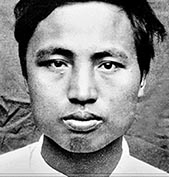
The real photo of Nguyễn Thái Học

According to the Chinese, the Yellow River water only regains its clearness every three hundred years. Nguyen Thai Hoc knew for sure he was going to lead his party companions to a definite death. He could not wait any longer. But this death seemed useful because it recalled to the Vietnamese people that there was no other choice but the struggle. It also marked the beginning of   an   awareness and awakening of the whole people facing its destiny that was, up until then, led by the unworthy heirs of the Nguyễn dynasty (Khải Ðịnh, Bảo Ðại). The revolt of  Yên Bái was an indisputable failure because most of the nationalists leaders were captured.

On the other hand, it threw in a sound and long lasting basis upon which the communist party laid its authority and popularity among the people in the following years in the conquest of independence. It also tolled the death knell for a colonial empire that had vainly lost so many opportunities to reestablish the dialogue and cooperation with the native people. This was translated by the death sentence imposed on all the nationalist leaders. Nguyễn Thái Học was the last one to be guillotined. Before his execution, he was impassible. In spite of his weakness, he tried to shout out loud in French:

Dying for one’s country
Is the most beautiful fate
The most envied lot….

Then he lay down on his back facing the blade of the guillotine. « Long live Vietnam » was the last words heard before the fall of the guillotine’s blade. His blood spurted everywhere under a covered sky. His head fell in a bucket containing saw dust (June 17 1930). He was only 27. Faithful to her Vietnamese tradition, his wife Nguyễn Thị Giang did not take long to follow him to commit suicide on June 18, 1930 at the inn where they had met often before their marriage. She left a letter whose sentences illustrated well the indefectible love she had for her husband and her country:

Sống nhục sao bằng sự thoát vinh
Nước non vẹn kiếp chung tình
………
Cuộc đời xá kể chi thành bại
Trai trung thì gái phải trinh

Dying in pride rather than living in humiliation
I make it whole the love for you and the nation
……..
Success and failure do not matter in life
As long as man is faithful and woman has fidelity.

The remains of the thirteen Vietnamese nationalists were buried the following day on a hill near the Yên Bái railway station.

If this town is not as well known as most of Vietnamese cities, it incarnates on the contrary something the other towns cannot have. It is the symbol of maturity and dignity rediscovered in a people facing its own fate. It grew valiantly in the past along with the Vietnamese people in its struggle for independence.

(Việt Nam Quốc Dân Ðảng)

The dragon (Con Rồng)

Version française
Version vietnamienne

img_2250


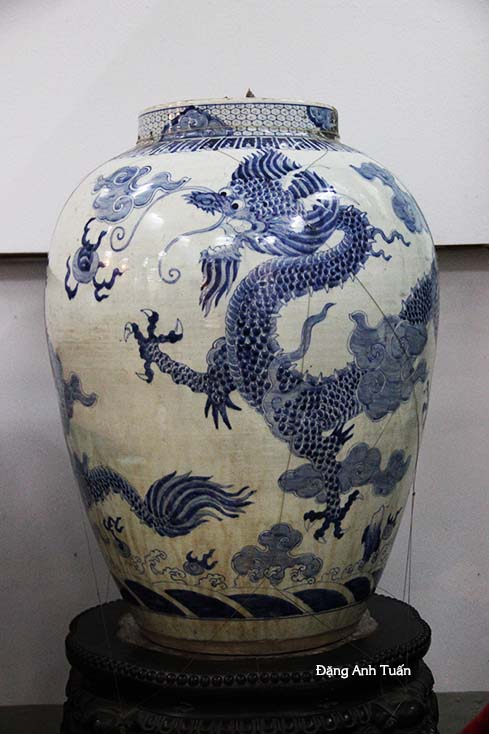
There are neither Vietnamese tales nor legends without this fabulous and mythical animal that is commonly called Con Rồng or more literary Con Long (or the Dragon in English). It makes part of the four animals with supernatural power (Tứ Linh) and occupies the top place. It is frequently used in Vietnamese art. It is not only seen in pagodas, but also on the ridges of roofs, the beams of frames, furnitures, the pieces of dishes and fabrics. It is also the emblematic animal traditionally chosen by the emperor for his clothes.

All Vietnamese firmly believe they are descendents of the Dragon king Lạc Long Quân coming from the Waters and of the fairy Âu Cơ of terrestrial origins. From this union, the fairy laid one hundred eggs that gave birth to one hundred robust sons. Later, at the separation of the couple, fifty of them followed their father Dragon toward the lower coastal regions and founded the first Vietnamese nation named Văn Lang while the other fifty followed their terrestrial mother toward the high plains to give birth later to an ethnic microcosm the most complex in the world ( about fifty groups ). Although this version of the Seven Tribes of Israel is unbridled and poetic, it nevertheless allows the Vietnamese and other minority groups to live together somewhat peacefully in this country of the form of the dragon, and to unite as a sole person to overcome foreign aggressors in difficult moments of their history.

According to a Vietnamese legend, it was thanks to the return of a benefactor dragon that barbarous hordes coming from the North were routed. Its fire spitting tongues on contact with the sea turned into a multitude of small islands and reefs with extravagant forms. That is why this bay is known in Vietnamese as « Hạ Long » or ( Descending Dragon ). It becomes thus the eighth marvel of the world and a natural site the most visited by foreign tourists when they land in Vietnam.

Hạ Long Bay

The dragon is also the symbol of the King. That is why its feet must have five claws. If one sees a dragon with five claws on a furniture, a box or a china, this object is meant for the service of the emperor. Otherwise the dragon generally has only four claws.
It is also the symbol of the husband, the fiance and more generally the man. As for the woman, she is represented by the phenix. That is why when we want to make allusion to a marriage, we often associate a dragon with a phenix on a piece of embroidery or a sculpted panel. It is also this association that poets evoke in their poems to talk about marital happiness and shared joy.

The dragon is seen everywhere even in the Mekong delta. This river born in the foothills of the Himalayas ( Tibet ) divides into nine branches or nine dragons to throw itself in the golf of Cochinchina ( or Nam Bộ ). That is why this region is called Cửu Long ( or Nine Dragons in English).

If this marine monster is rebutted by the majority of the peoples, it is on the contrary, a part of the Vietnamese daily life. It is assigned to keep an watchful eye, at the imperial city of Huế, on the tombs of the Nguyễn emperors with all its body made of multicolored ceramic pieces. Golden, it coils around the carmine lacquered pillars of imperial palaces. It is one of the twelve astrological signs of the lunar calendar. It becomes not only the embroided silk clothes for tourists but also a front part sign with gaudy colors on the junks of the Hạ Long bay.


In the cradle of legends that is our Vietnam, we have the feeling of being better protected by this marine monster because we are convinced that  we are the descendents of king Dragon.

[Return RELIGION]


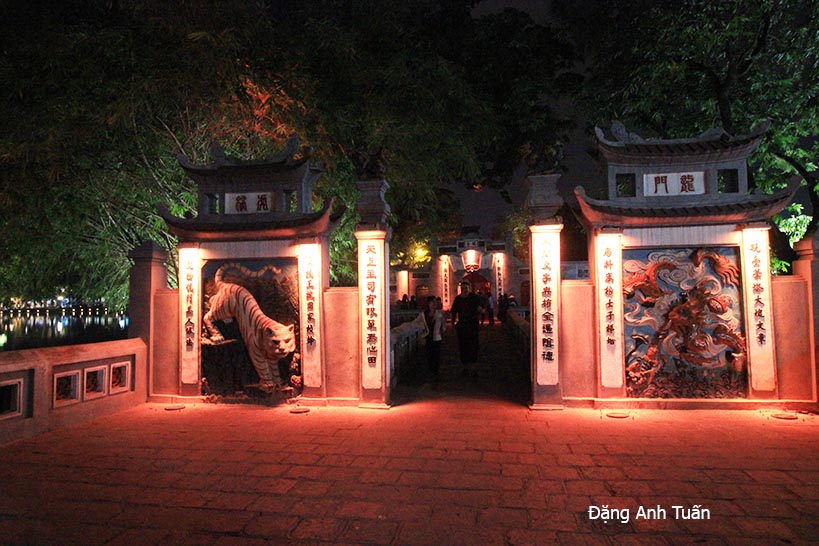
Temple Ngọc Sơn au fil de la nuit (Về đêm)


Le temple Ngọc Sơn au fil de la nuit.

Au cœur du vieux quartier Hồ Hoàn kiếm

Giữa khu phố cổ Hồ Hoàn Kiếm

Gươm rớt khí thiên ngời tựa nước
Văn hoà trời đất thọ tây non
Reflétant l’âme sacrée de la nation, l’épée miroite comme les ondes de la rive
En accord avec le Ciel et la Terre, les lettres perdurent avec l’âge des montagnes.

Gallery with ID 15 doesn't exist.

Conquêtes chinoises: Nan Yue et Yelang

 Chinese conquests: Nan Yue and Ye Lang

Version vietnamienne
Version anglaise

Au moment où Zhang Qian fut chargé d’aller chercher en l’an -126 les alliances pour mettre en tenaille les Xiongnu, ceux-ci continuèrent à monter des raids de plus en plus meurtriers avec plusieurs milliers de Chinois morts ou captifs vivant dans les commanderies frontalières (Dai, Yanmen ou Shang) au nord de la Chine, ce qui obligea Wudi, plus sûr de la consolidation de son pouvoir et de ses arrières, à adopter une nouvelle politique vis à vis de ces « barbares ». Désormais, les offensives chinoises destinées à empêcher une concentration Xiongnu en lisière du territoire chinois étaient plus fréquentes.

Le premier succès eut lieu en automne -128 dans la région de Yuyang avec Wei Qing (Vệ Thanh), le nouvel héros de l’armée chinoise. Il fut suivi par d’autres conquêtes éclatantes et décisives au printemps -121, conduites par Huo Qubing (Hoắc Khứ Bệnh), fils de la sœur aînée de Wei Qing et « champion de l’armée » avec le titre de Guanjun accordé exceptionnellement par Wudi en choisissant une nouvelle tactique de frapper comme la foudre,  la tête des armées Xiongnu au cœur de leur territoire, ce qui permit aux Chinois de reconquérir l’Ordos, toute la zone au sud de la boucle fleuve Jaune (Hoàng Hà), de fonder les commanderies de Shuofang et de Wuyuan et de déporter des gens dans les zones conquises dans le but d’apporter à long terme une logistique non négligeable à l’armée dans la poursuite des ennemis vers d’autres régions lointaines et inconnues.

L’empire de Wudi avait le moyen de pratiquer cette politique de colonisation avec une population de 50 millions d’habitants à cette époque. On estima à plus de 2 millions de Chinois déplacés sous le règne de Wudi le long de la frontière nord. Cette politique fut  payante car ces colonies agricoles devinrent définitivement quelques années plus tard le rempart sûr de la Chine face à ces « barbares ». Cela nous fait penser à la politique des Vietnamiens dans la conquête du Champa et du delta du Mékong et celle des Chinois dans le Tibet d’aujourd’hui. Le harcèlement incessant des Xiongnu excités comme des guêpes dérangées de leurs nids, obligea Wudi à changer la tactique en donnant priorité désormais au front nord et en abandonnant provisoirement toutes ses ambitions territoriales au sud-ouest de son empire dans la région de Yunnan et dans le royaume de Nanyue (Nam Việt) dont faisait partie autrefois le Nord Vietnam.

Grâce à la stratégie immuable suivante:

1°) Attaquer et refouler les Xiongnu le plus loin possible dans leurs territoires par l’effet de surprise.

2°) Déporter les populations victimes des inondations ou les gens condamnés dans les zones conquises à leurs adversaires Xiongnu et y créer de nouvelles commanderies. C’est le cas des commanderies de Jiuquan, Dunhuang, Zhangye et Wuvei tout le long du corridor du Gansu.

3°) Affaiblir les Xiongnu en jouant la carte de division et séduire les nouveaux alliés Xiongnu avec le système de tribut. (création de cinq états indépendants alliés (ou shuguo) servant de tampon entre son empire et les Xiongnu ennemis sous son règne)

Wudi réussit à freiner ainsi l’élan des belligérants Xiongnu. Ceux-ci furent obligés de transférer leur quartier général à proximité du lac Baïlkal (Sibérie) et desserrer leur emprise sur tout le Turkestan oriental.

Cela permet à Wudi d’avoir les mains libres et retrouver le désir expansionniste vers le Sud et vers le nord-est afin d’assurer le commerce et d’avoir d’autres alliés depuis que Zhang Qian lui avait tenté de miroiter l’existence d’une voie directe permettant de rejoindre le royaume de Shendu (l’Inde) à partir du royaume Shu (conquis par Shi Huang Di à l’époque de Printemps et Automnes (ou Chunqiu, 722-453 avant J.C.). Cette déduction instinctive, Zhang Qian l’a eue au moment de son séjour à Daxia (Bactriane) où il avait découvert, les produits de Shu (bambous, toiles etc.) acheminés par cette voie d’accès direct. Wudi tenta de réutiliser la même stratégie qu’il avait optée pour les Xiongnu.

Annexion des royaumes du Sud

Profitant de la dissension des Yue et de la mort du roi de Nanyue Zhao Yingqi ( Triệu Anh Tề), Wudi trouva l’occasion d’incorporer le royaume du Nanyue à son empire. Puisque le nouveau roi Zhao Xing (Triệu Ái Đế) n’avait que 6 ans, la régence revint à sa mère, une Chinoise de nom Jiu (Cù Thị). Celle-ci ne cacha jamais son attirance pour son ancienne patrie car elle était très impopulaire auprès de ses sujets Yue. Wudi tenta de la soudoyer en proposant à cette dernière un marché ayant pour but l’incorporation du royaume Nanyue à son empire en échange des titres royaux. Ce projet fut avorté à cause d’un coup d’état organisé par le premier ministre Lữ Gia  soutenu en grande majorité par les Yue. Cette reine traîtresse, son fils, le nouveau roi et les officiels Han furent massacrés par Lü Gia et ses partisans Yue. Ceux-ci installèrent le nouveau roi Zhao Jiande (Triệu Dương Đế) dont la mère était une Yue. Furieux, Wudi ne put pas laisser impuni un tel affront lorsqu’il avait l’occasion de s’approprier définitivement une région connue pour ses richesses naturelles et pour ses ports Canton et Hepu facilitant l’accès à la mer du Sud. Au dire des commerçants chinois, l’économie était florissante à Nanyue car on y trouvait non seulement les perles, les cornes des rhinocéros, les carapaces de tortues mais aussi les pierres précieuses et les essences d’arbres. Ces produits exotiques deviendraient ainsi des objets de mode auprès de la cour des Han.

L’expédition militaire fut dirigée par le général Lu Bode (Lộ Bác Đức) avec cent mille marins des bateaux à tours acheminés sur place pour mater la révolte de Nanyue. Il fut secondé dans cette mission par Yang Pu (Dương Bộc) connu pour son caractère cruel et impitoyable envers ses victimes comme un faucon sur ses proies. Par contre, Lu Bode magnanime joua sur sa réputation et invita ses ennemis à se rendre. Il réussit à avoir l’adhésion des Yue à la fin de l’affrontement militaire. Quant à Lü Gia et à son jeune roi Zhao Jiande, ils furent capturés au printemps -111 lors de leur fuite. Leurs têtes furent exposées à la porte nord du palais du Chang An (Trường An). Connu pour sa suprématie régionale, la défaite de Nanyue sonna le glas des espoirs Yue et obligea les autres à se soumettre aux Han. C’est le cas des Ou de l’Ouest (Tây Âu)  et du roi de Cangwu, (Kouangsi) (Quảng Tây) ainsi le royaume Yelang (Dạ Lang) situé à cheval à cette époque sur les territoires de Guizhou (Quí Châu) et de Kouangsi. Le Nord Vietnam fut occupé également par les Chinois qui tentaient de pousser leurs avantages jusqu’à Rinan dans l’Annam.

Wudi divisa le Nord Vietnam en deux commanderies: Jiaozhi (Giao Chỉ) and Jiuzhen (Cửu Chân). La capitale administrative de Jiaozhi fut au début à Miling (Mê Linh) puis elle fut transférée plus tard à Lũy Lâu dans la province de Bắc Ninh.

Face à la dislocation de Minyue (Mân Việt) et à la résistance d’une partie de la population de ce dernier ((Dong Yue)(Đông Việt) que Wudi considéra comme une source de trouble dans le futur, il n’hésita pas à employer les grands moyens. Il publia un décret permettant de vider la population de ce royaume en l’an 111 avant J.C. par la déportation de tous les autochtones dans une autre zone située entre la rivière Huai et le fleuve Yanzi.

Grâce à la conquête des territoires des Yue et de Yelang, Wudi réussit à entrer en contact pour la première fois avec le royaume de Dian et à connaître son importance. Il ne tarda pas à y dépêcher les envoyés dans le but de convaincre le roi Changqian de ce royaume de venir à Chang An pour faire acte d’allégeance. Face à la réticence de Changqian, Wudi donna l’ordre de liquider toutes les tribus hostiles, en particulier les Laojin et Mimo tentant de bloquer la voie méridionale évoquée par Zhang Qian pour atteindre Daxia et l’Asie centrale. On parla plus de ving mille ennenis tués ou capturés lors de cette intervention. Le roi Changqian de Dian fut obligé de se rendre avec ses sujets. Au lieu de le punir, il fut épargné par Wudi en raison de sa lointaine ascendance chinoise et reçut comme le roi de Yelang le sceau d’investiture royale pour administrer le territoire annexé. Son royaume fut transformé désormais en commanderie de Yzhou en -109 avant J.C. C’est ainsi que se termine l’annexion au sud-ouest de la Chine (Yunnan) par Wudi.

Selon l’historien Sima Qian, la question des relations entre Chinois et barbares du Sud-Ouest advint car quelqu’un voit une sauce « ju » à Panyu (Canton) et les gens de Daxia possèdent des cannes en bambous de Qiong (tribu du Sud-Ouest) pour rappeler avec humour que Wudi fut intéressé uniquement au départ par l’existence de la voie méridionale vers Daxia pour le commerce. La colonisation du Sud commença à battre son plein tout en laissant à l’aristocratie Yue locale la possibilité d’avoir une plus grande autonomie comme cela a été accordé au roi de Dian. Entre-temps, pour séparer les Xiongnu de leurs tributaires, les éleveurs de chevaux Wuhuan et Donghu, l’armée de Wudi ne tarda à être implantée en Mandchourie. Entre 109 et 106 avant J.C., l’armée de Wudi occupa la moitié nord de la péninsule coréenne et y installa quatre commanderies: Letun dans le nord-ouest, Zhenfan sur la côte ouest, Lintu à l’est et Xuantu au nord.

Après un long règne de 54 ans, Han Wudi mourut en 87 avant J.C. et laissa la Chine dans un état exsangue et ruiné comme Louis XIV laissa la France dix-huit siècles plus tard. Si les campagnes militaires menées par Wudi ont amené la dynastie Han à l’apogée de sa gloire et de sa puissance, elles ont épuisé par contre les finances publiques. Le début de son règne correspond à la période Yang durant laquelle le peuple a de quoi se nourrir, c’est ce qu’a écrit Sima Qian dans ses mémoires historiques. Les greniers à blé étaient bien remplis ainsi que le trésor public.

L’empire était stable. Tout cela était dû en grand partie à l’effort de son prédécesseur Jing Di de gouverner tout au long d’un règne de 17 ans selon le précepte taoïste: Dirige avec le minimum d’intervention. (Wu wei er zhi). Les corvées et les impôts étaient très réduits. Malheureusement, les splendeurs de la cour accompagnées par la diplomatie dispendieuse à l’égard des Xiongnu et des pays vassaux (système de tribut) et par la politique annexionniste ont englouti toutes les richesses humaines et économiques du pays, ce qui permet au Yang de basculer en Yin où les propriétaires terriens (nobles et fonctionnaires) accaparèrent toutes les parties des terres irriguées en les achetant à bas prix aux paysans démunis. On était dans une situation catastrophique: le riche plus riche, le pauvre plus pauvre.

Les gens de la capitale Luoyang vivaient dans l’excès et l’insolence et portaient de fins brocarts, des perles et du jade tandis que le sort des pauvres empira, certains préférant de devenir des esclaves privés ou gouvernementaux. Les catastrophes et les crues n’épargnaient pas non plus le pays. Entre-temps, les intrigues et débauches se multipliaient à la cour des Han à la fin du Ier siècle. Le pouvoir impérial fut affaibli par les diverses factions, les rivalités entre les épouses impériales et les jeux de leurs parentèles, ce qui permet à Wang Mang (Vương Mãng), un ministre régent ambitieux d’en profiter pour empoisonner le jeune empereur Pingdi (Hán Bình Đế) (9ans) en l’an 5 après J.C. et usurper le trône avec le concours de sa tante, l’impératrice douairière Wang de l’empire.

Tombes des princes Han: en quête d’immortalité (Suite)

[Retour Dynastie des Han]

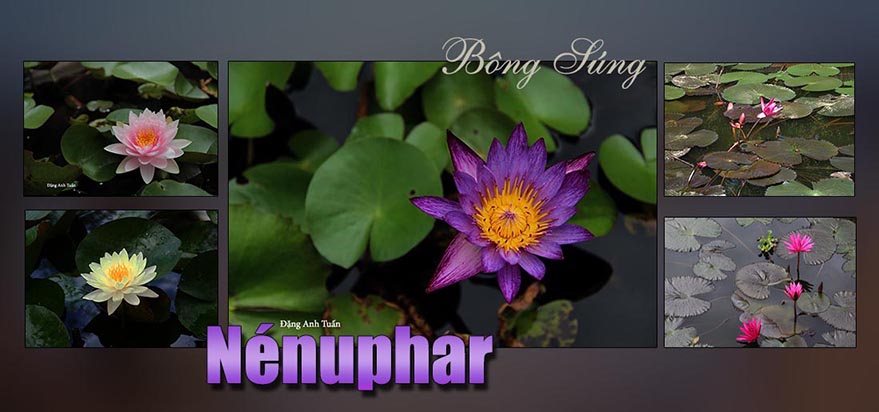
Bông Súng (Nénuphar)


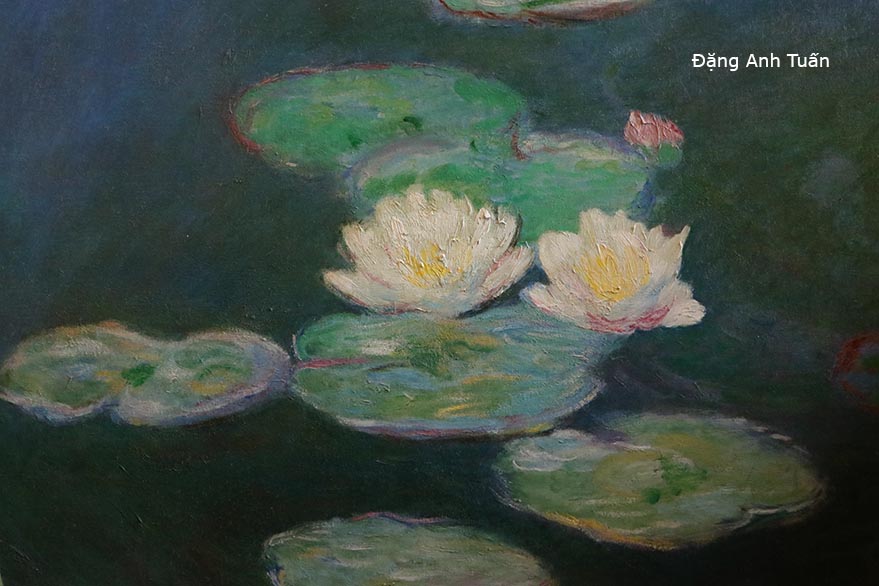
Dans le jardin de Claude Monet (Givenchy)

Version française
Version anglaise
Galerie des photos

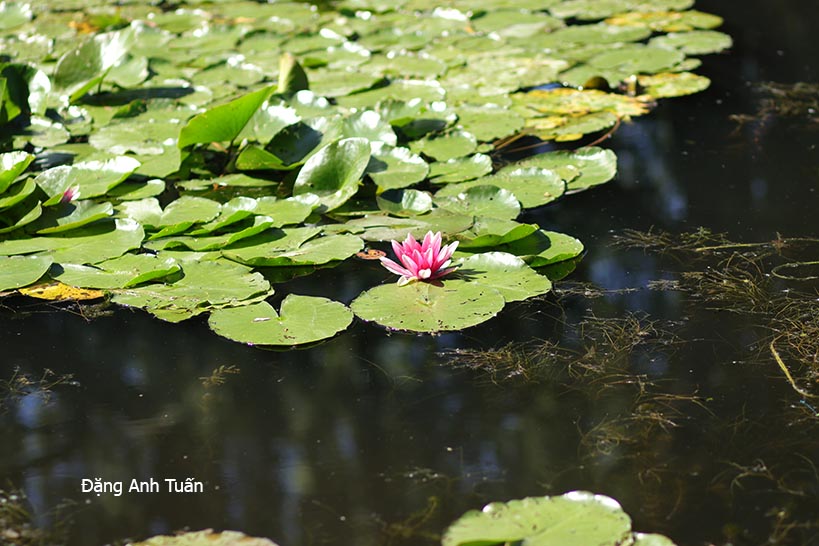
Được xem là biểu tương sự  tinh khiết và yên tĩnh, cây bông súng thường  mọc hoang dã trong bùn. Ở nam bộ Vietnam,  người ta thường ăn mắm kho với bông súng hay  dùng nó để làm món  gỏi  tuyệt vời. Để  bảo vệ một cách hữu hiệu các bộ phận  tựa như nhụy và nhị,  cây bông súng có  được một cơ chế  hóa lý rất tinh vi khi  trời về đêm lạnh rét hay  có độ ẩm cao.  Nhờ có nước  lan tràn vào  các không bào và  có sự biến  đổi của ánh sáng  và nhiệt độ khiến có sự thay đổi ở nơi có  tập trung nhiều ion canxi của các tế bào và dẩn đến việc tạo ra áp suất trên các mặt trong và ngoài của các tràng hoa.  Vì vậy các cánh hoa hay bị méo mó  nhưng không vì thế mà  bị hư hỏng. Chiều  tối lại,  cây bông súng dựng đứng lên các cánh hoa để che chở các bộ phận sinh sản bằng cách làm phòng ra các tế bào của nó. (sự trương nước) Còn sáng lại nó buông lơi  xuống các cánh hoa và làm co lại các tế bào  (sự co lại gọi  là plasmolyse) bằng cách làm bốc hơi nước và giảm đi áp xuất trên các vách tế bào. Tùy thuộc  dáng vóc mà hoa súng có nhiều cánh hoa hay không để nó có thể  dễ dàng đóng khép và bảo trợ  các bộ phận sinh sản.  Đối với các nhà nghiên cứu khoa học, đây không những là chuyện  thăng bằng mà còn là một phát minh tuyệt vời được  tìm thấy  ở các thực vật trước khi con người khám phá ra được các máy bơm nước và cái kích.

Galerie des photos

Etant le symbole de paix et de pureté, le nénuphar est habitué à pousser sauvagement dans la boue. Au Vietnam, on s’en sert dans le Sud soit pour accompagner la soupe aux poissons (mắm kho) soit pour faire une salade  délicieuse. Le nénuphar possède un mécanisme physique et chimique  très ingénieux permettant de protéger ses organes reproductifs  (étamines, pistils) contre le froid et l’humidité nocturne. Grâce à la pénétration de l’eau dans les vacuoles et aux variations de la lumière et de la température modifiant ainsi la concentration en ions calcium des cellules,  cela provoque la pression sur les faces interne et externe de ses corolles et facilite  la déformation de ses  pétales  sans que ces derniers soient abîmés.  Le soir, le nénuphar  redresse  ses pétales pour protéger ses appareils reproducteurs  par le gonflement de ses cellules (turgescence)   tandis que le matin il les fait retomber  par le dégonflement de ces  mêmes cellules  (plasmolyse) en diminuant la pression sur leurs parois cellulaires  et en perdant de l’eau par évaporation. En fonction de la taille, la fleur du nénuphar doit avoir un certain nombre de pétales  afin de mieux  se refermer et protéger ses organes reproductifs.  Pour les chercheurs, c’est non seulement une affaire d’équilibre mais aussi une invention géniale chez les plantes avant la découverte des pompes hydrauliques  et des vérins par les hommes. 

Galerie des photos

Lis d’eau

Tableau nénuphar de Monet

Version anglaise

Being the symbol of  peace and purity, the water lily is accustomed to grown savagely in the mud. In Vietnam, it is used either by accompagnying the fish soup in the South region or by making a delicious salad. The water lily has a chemical and physical mechanism very ingeniuos allowing to protect its reproductive organs (stamen, pistil)  against the cold and  night humidity. Thanks the water penetration in vacuoles and  variations in light and temperature, thereby altering  calcium ion concentration in cells, it causes  the pressure on the internal and external faces of its corollas  and facilitates  the deformation of its petals without  the latter being damaged. At night, the water lily adjustes its petals for protecting its  reproductive system by the swelling of its cells (turgor) while in the morning, its petals fall down by the  deflation of these same cells thanks to the  pressure reduction applied on their cell walls (plasmolysis)  and the loss of water by evaporation.

Depending on size, the flower of water lily must have a certain  number of petals for being closed again and protecting its reproductive organs. For scientists, it is not only the balancing act but also an ingenious invention in plants before the discovery of hydraulic pumps and cylinders by men.


[Return FLEURS DU MONDE]

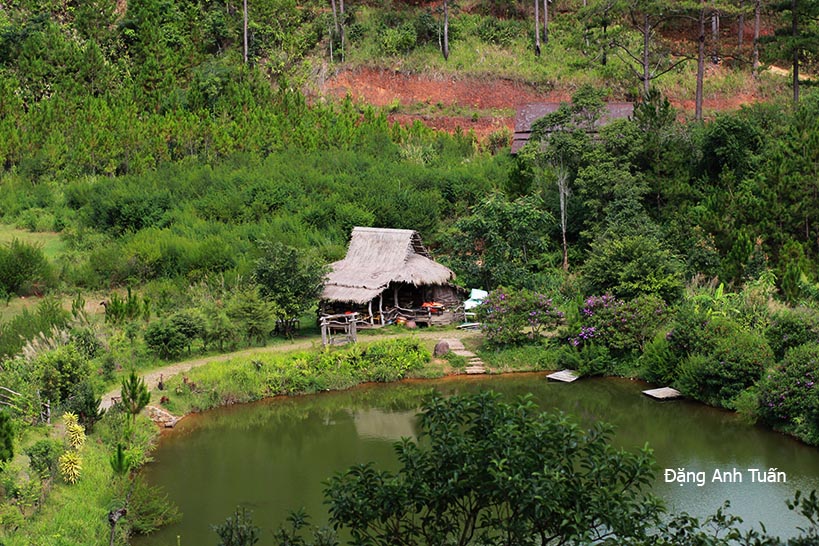
Một thoáng trở về với Đà Lạt (Un instant de retour à Đà Lạt)

Những khoảnh khắc Đà Lạt


Nằm trên  cao nguyên thuộc vùng Tây Nguyên, khoảng chừng cách xa Saigon 250 cây số và với độ cao 1500 thước  , Đà Lạt vẫn giữ được  vẻ đẹp mộng mơ của những năm 20. Située sur les hauts plateaux du centre du Vietnam, à environ 250 kilomètres de Saïgon et 1500 mètres d’altitude, Dalat continue à garder le charme des années 20.

[ngg_images source= »galleries » container_ids= »275″ display_type= »photocrati-nextgen_basic_thumbnails » override_thumbnail_settings= »1″ thumbnail_width= »160″ thumbnail_height= »80″ thumbnail_crop= »1″ images_per_page= »30″ number_of_columns= »4″ ajax_pagination= »0″ show_all_in_lightbox= »0″ use_imagebrowser_effect= »0″ show_slideshow_link= »0″ slideshow_link_text= »[Montrer sous forme de diaporama] » template= »default » order_by= »pid » order_direction= »ASC » returns= »included » maximum_entity_count= »500″]

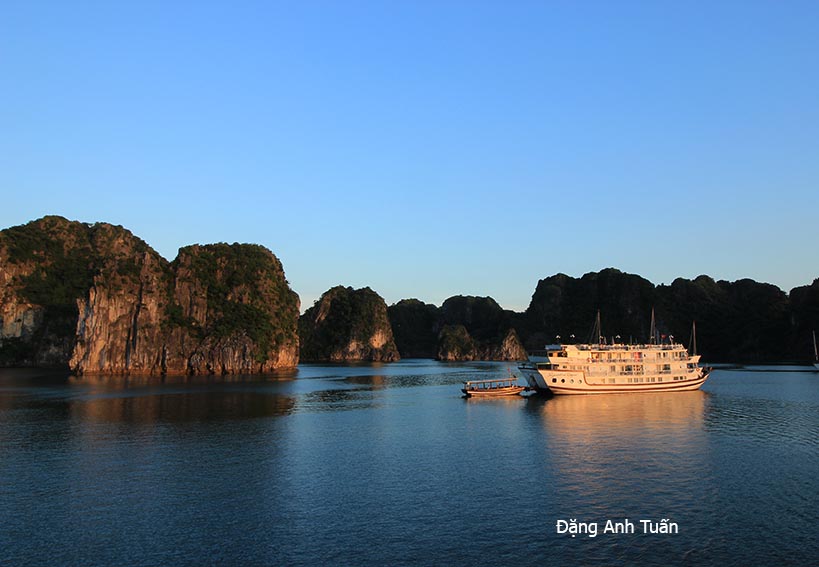
Một thoáng trở về vịnh Hạ Long (Un instant de retour à la baie d’Along)

La Baie d’Along

Hải thượng vạn phong quần ngọc lập,
Tinh la kỳ bố thúy tranh vanh
Muôn ngọn núi nổ trên như biển ngọc
La liệt như những sao sa, những quần cờ, chênh vênh màu xanh biếc …

Des cimes élevées se dressent en foule dans la mer comme autant de joyaux,
Des sommets bleuâtres sont éparpillés comme des étoiles descendantes et des pions dans l’échiquier des flots
Les poissons et le sel, abondants comme le sable, offrent au peuple un gain rapide.

High peaks rise in crowds from the sea like so many jewels,
Bluish summits are scattered like descending stars and pawns in the chessboard of the waves
Fish and salt, abundant like sand, offer the people quick profit.


[Return PATRIMOINES]