Hoa Sen (Lotus)

lotus

English version

Version française
 

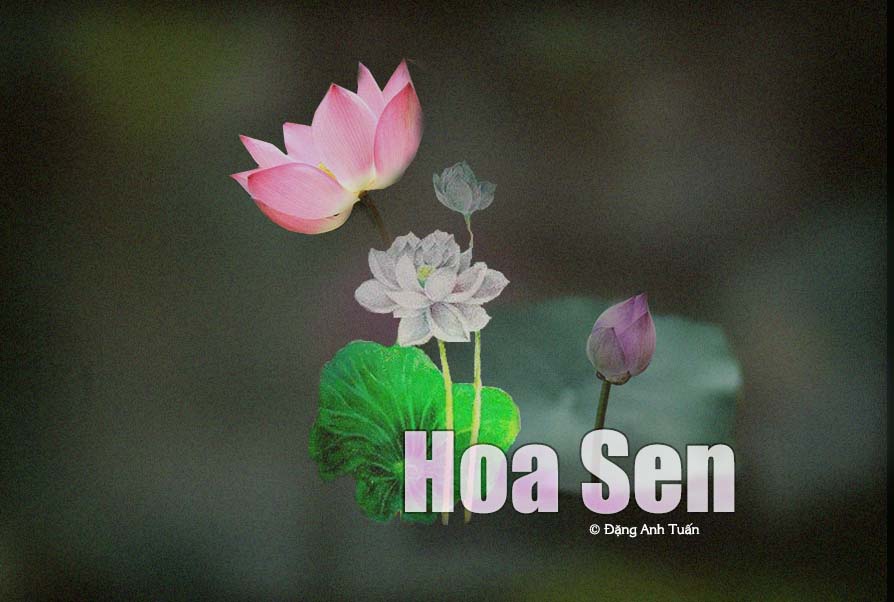
Không có cây thủy sinh nào được người Việt  ngưỡng mộ và  qúi  trọng bằng cây hay hoa sen. Ngoài biểu tượng của Phật Giáo, Sen còn đồng nghĩa với  sự tinh khiết ,  thanh thản và vẻ đẹp nữa. Nó còn khác biệt hơn những cây thủy sinh khác không những   nhờ  vẻ đẹp đơn sơ thanh nhã của hoa mà còn được nhắc nhở  nói đến rất nhiều  trong phong phú  truyền thống ở Á Châu nhất là ở Việt Nam. Nơi nầy,  Sen được liệt kê  vào  4 cây cao qúy nhất đó là  mai , liên , cúc và  trúc  biểu tượng  cho bốn mùa ( tứ thì) đấy. 

Nhìn lại trong nghệ thuật của người Việt, phong cảnh thường đựợc  dàn dựng  theo một sơ đồ bất di bất dịch  và cổ điển mà  thường  có sự xác định cần  thiết để trước  những yếu tố  nào, nhất là các nhân vật  trong cảnh tượng. Cho nên thường thấy một tương quan nghệ thuật độc đáo, một kết hợp bền vững giữa một loại cây và một loại vật  trong các bức tranh nho nhỏ của người Việt. Vì vậy thường thấy   sen  liên kết  với vịt (Liên Áp). Ít khi thấy sen liên kết với con vật  nào khác chỉ trừ khi nào tác giả không còn  tôn trọng những quy ước cổ điển nữa.    Với hoa , sen thường được người Việt gọi    là Hoa Sen hay là Liên Hoa.   Sen nó thuộc họ  Nymphéacées và có tên khoa học là   Nelumbo Nucifera hay là  Nelumbium Speciosum.  Nơi nào ở Việt Nam cũng tìm thấy Sen cả (  đầm, ao bùn,  vườn công cộng, đình vân vân…). Sự hiện diện của nó  ở chùa hay ở đền  làm giảm  đi nhuệ khí sân si dục vọng  của các tu sĩ và làm người khách cảm thấy lòng lân lân thả  hồn về cõi hư vô,  ấy cũng nhờ mùi    hương thơm nhẹ nhàng của  hoa sen. Nó sống rất   dễ dàng    và  thích nghi ở mọi môi trường.   Nó còn  sinh sôi nảy nở với cuộc sống dưới nước  bằng cách chọn lọc đi tất cả nước  đọng    ô uế mà nó  xâm nhập . Vì vậy  thường ví  nó  như   người có đức tính trong đạo Khổng (junzi)(quân tử).   Người nầy, dù ở môi trường nào đi nữa  vẫn không thay đổi  bản  chất  thanh cao  trong cuộc sống, vẫn giữ  đựợc sự  thuần khiết    giữa chốn đầy dẫy tham nhũng.  Người nầy cũng không để bị lôi cuốn  cám dỗ bởi  những tật xấu của xã hội cũng như sen không bi mùi hôi thúi ờ chốn bùn nhờ mùi hương thơm của hoa.  Bởi vậy trong  thơ ca của người Việt có môt bài đề cao đức tính của người quân tử dựa trên hình ảnh của cây Sen:    

Ðố ai mà ví như sen?
Chung quanh cành trắng, giữa chen nhị vàng
Nhị vàng cành trắng lá xanh,
Gần bùn mà chẳng hôi tanh mùi bùn.


Để ca ngợi đức tính nầy của người quân tử hay của Sen, người ta thường nói : Cư trần bất nhiễm trần. Sen có nhiều đức tính khác nên lúc nào cũng được đứng đầu trong các loại cây qúi trọng của người dân Việt và Trung Hoa. Chính Sen đem lai nguồn  cảm  hứng cho các tu sĩ của một phái thiền Phật giáo Trung Hoa tên là « Pháp Hoa Tông »  dưới đời nhà Đường.  Dựa trên lý thuyết  của kinh   « Diệu Pháp Liên Hoa » , dòng nầy chỉ lấy đức tính của Sen để tu luyện.  Trong phái nầy, thời đó có nhiều hòa thượng thi sĩ nổi tiếng như Phong Cang và Thập Đắc không thua chi  Lý Thái Bạch (1)  và  Bạch Cư Dị (2) .  Trụ sở của phái nầy là chùa Hàn Sơn nằm ở vùng lân cận của thành phố Cô Tô  (Hàng Châu) chỉ chuyên trồng Sen trong các hồ.  Phái nầy  họ nghĩ rằng muốn đựợc an lạc trong tâm hồn và tránh đi sự luân hồi và  dục vọng thèm muốn thì cần áp dụng  lý thuyết  « Diệu Pháp Liên Hoa » dựa trên các đức tính của Sen như sau:

vô ưu : mùi thơm của hoa sen khi có dịp ngử nó vào thì sẻ thấy  sự thanh thản và yên tĩnh.  Theo các người xưa, Sen còn là một loại cây chóng tăng dục cũng như rau diếp.

tùy thuận: Sen có thể sống  ở bất cứ nơi nào luôn cả những nơi khô cạn cằn cỗi.

tỏa mùi thơm: (Cư trần bất nhiễm trần) Dù nơi nào có hôi thúi , Sen cũng vẫn lấn áp  thay thế bẳng mùi hương thơm của nó,  có thể  tăng trưởng tuỳ theo cường  độ của ánh sáng trong ngày.

vô cấu: trên cơ sở sinh sản. Sen có một cơ  chế cá   biệt cho   việc sinh sản thực vật. Không có sự thành hình của giao tử như các loại hoa khác. Hoa sen không những  xuất sắc về kích thước mà còn về trạng thái  dày và vàng sáp của các cánh hoa và nhất là  hương thơm của nó có thể  tăng trưởng thay đổi trong ngày. Hoa sen chỉ sống được 4 ngày. Người Nhật diển tã sự chớm nở của hoa sen như sau: ngày đầu  hoa sen có hình dáng của chai saké, ngày thứ nhì  bằng chén saké, ngày  thứ ba bẳng chén súp và ngaỳ thứ tư thì thành  cái đĩa. Dần dần quả của nó tựu hình, tựa như cái côn lật ngửa mà thường gọi là gương sen. Trên mặt bằng phẳng nầy  thì có chừng hai chục trũng chứa  những hạt nhận. Rồi sau đó   khi quả nó chín, nó tách rời cuống, nổi lềnh bềnh   và tan rã một  khi gương sen  đụng chạm với mặt nước qua ngày tháng.  Nhờ vậy các hạt nhân nó theo dòng  nước mà trôi xa hơn nơi  mà Sen nảy nở. Những hạt sen nầy  nặng hơn nước nên  chìm lún vào đất và đâm chồi mọc rễ. Hoa sen khi tượng hình đã có hạt từ trong mầm non. Bởi vậy ngưởi Việt thường nói « nhân quả đồng hành » khi nhắc đến Sen đấy. Đức Phật cũng thường dùng hoa Sen, để nói đến những người thoát khỏi ái tình và dục vọng  vì chính ái dục là nguồn gốc của mọi tội lỗi khổ đau (duhkha) và luân hồi sinh tử.

Để ca tụng đức tính của Sen qua những lời giảng dạy của Đức Phật (3), thiền sư Minh Lương thuộc phái Lâm Tế có làm một bài kệ như sau:

Ngọc quí ẩn trong đá
Hoa Sen mọc từ bùn
Nên chỗ biết sanh tử
Ngộ vốn thiệt bồ đề

 Sen được trông thấy nhiều trong nghệ thuật của người Việt, nhất là ở trong kiến trúc của Phật giáo.   Để nhận dạng cây sen  mô típ trong kỹ thuật trang trí thường có 8 cánh hoa chỉ định 8 hướng chủ yếu và biểu hiện lại đồ hình Mandala, một dạng hình học và biểu tượng của vũ tru Phật giáo. Còn trong ngành  y dược Việtnam thì hạt sen dùng để trị bệnh tiêu chảy, kiết lỵ và mộng tinh. Các hạt sen khi ăn nhiều và ăn sống,  thường   được xem như thuốc chữa bệnh mất ngủ. Người dùng sẻ ngủ trong giây lát nếu ăn luôn cái mầm xanh ở giữa hạt sen. Thưở xưa, ở Việtnam, các cậu trai muốn tỏ tình yêu thương các cô gái thường tặng hoa sen. Trong các lễ truyền thống của người Việt  nhất là những ngày Tết , không bao giờ có thể thiếu được  mứt hạt  sen và trà ướp sen cả.  Còn ẩm thưc  thì những người  sành điệu ăn uống ai cũng biết món gỏi ngó sen.

Đất nước Việt Nam đã bị  chìm đắm triền miên trong  chiến tranh, tham nhũng và bất công. Người Việt yêu chuộng hòa bình, công bằng và tự do lúc nào cũng nuôi hy vọng không ngừng,  sẻ có một ngày đất nước  được có lại sự thanh thản, huy hoàng và kính nể cũng như hình ảnh của cây Sen. Trong bải thơ tựa đề  « Hoa Sen », vua Lê Thánh Tôn   ngư trị một thời  hoàng kim mà Việt Nam lúc đó đang ở trên đỉnh cao của vinh quang, không ngớt lời khen ngợi vẻ đẹp  duyên dáng của Sen:

Nỏn nà sắc nước nhờ duyên nước
Ngào ngạt hương thơm nức dặm Trời ..

[Return FLEURS DU MONDE]


  • (1) Lý Bạch, một trong những thi sĩ danh tiếng nhất dưới thời của vua Đuờng Huyền Tông  (701-762).
  • (2) Thi sĩ lỗi lạc đời nhà Đường (772-846)
  • (3) Siddhârta Gautama (Cồ Ðàm Tất Ðạt Ða).


Đình Bảng (Maison communale, Bắc Ninh)

English version

Version vietnamienne

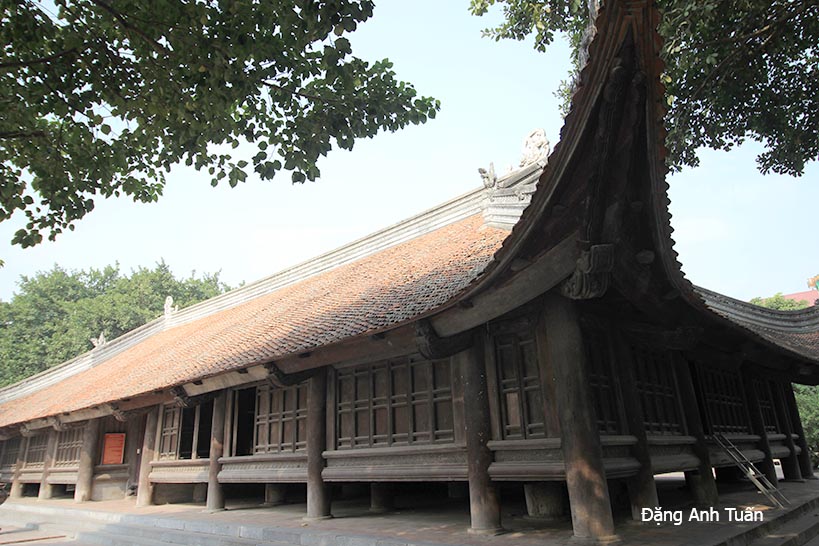
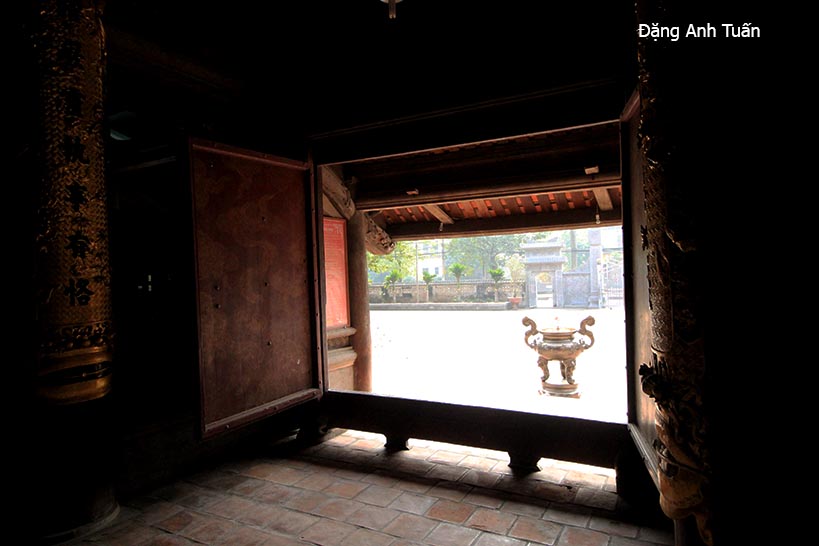
Depuis  longtemps,  Đình Bảng est réputée   dans le Nord du Vietnam  comme la maison communale,  réussissant par  son âge datant plus de 300 ans, à garder son état initial. On attribue sa  ressemblance à une grande maison en bois sur pilotis qu’on ne trouve pas dans d’autres villages du Tonkin. Vue de loin, elle a une structure imposante surélevée, posée solidement sur le sol grâce à   un assemblage de colonnes (60 piliers), d’arbalétriers et de toutes sortes d’éléments en bois de fer (gỗ lim)  soudés par des mortaises et des tenons sans avoir besoin des fondations coulées. C’est le poids de  sa toiture qui permet de la consolider . Selon l’on dit, à l’époque coloniale, cette maison réussît à résister aux assauts  d’un char  français  par l’attelage de sa splendide  charpente avec des chaînes. Grâce à la participation active du mandarin Nguyễn Thạc Lương, originaire du village Đình Bảng et  sa femme Nguyễn Thị Nguyên, cette maison communale édifiée au début du XVIII ème siècle fut  achevée seulement après 36 ans de travaux de construction. Dans  un vieil adage populaire vietnamien , cet édifice  occupe   la seconde place dans la classification des maisons communales du Tonkin. La  première place revient à Đồng Khang qui  n’arrive pas à résister aux aléas du temps tandis que la  maison Đình Diềm occupe la dernière place honorable et   garde seulement aujourd’hui 3 travées au lieu de 5 au moment de sa construction. Il n’y a que Đình Bảng continuant à préserver son état initial au fil des  années.

Située dans le village   Cổ Pháp de la commune Từ Sơn dans la province Bắc Ninh, cette maison communale est dédiée au  culte de trois génies tutélaires (le Génie de l’Eau, le Génie de la Terre et celui des Récoltes). Selon l’on-dit, c’est ici qu’est né Lý Công Uẩn, le fondateur de la dynastie des Lý. De passage à Đình Bảng, il ne faut pas oublier de visiter le temple Đô (Đền Đô) appelé fréquemment sous le nom « Lý Bát Đế (ou temple des 8 rois des Lý).  Ce site n’est pas très loin de la maison communale Đình Bảng ( à peu près  un demi kilomètre à pied). Il y a aussi  une spécialité locale connue sous le nom susê ou phu thê (mari-femme) qu’il ne faut pas oublier de goûter. Ce gâteau a  l’apparence d’un cube   ficelé avec un ruban de couleur rouge. Ce gâteau est composé de la  farine du tapioca, parfumé  au pandan et parsemé de grains de sésame (vừng đen) de couleur noire.  Au cœur de ce gâteau  se trouve une pâte  faite avec des haricots de soja cuits à la vapeur (couleur jaune)  et de la confiture des graines de lotus et de la coco râpée (couleur blanche)  ressemblant énormément à la frangipane trouvée dans les galettes des rois. Sa texture collante rappelle le lien fort  qu’on veut représenter dans l’union. Ce gâteau est le symbole de la perfection de l’amour conjugal et de la loyauté en accord parfait  avec le Ciel et la Terre (théorie du Yin et du Yang).


Version vietnamienne

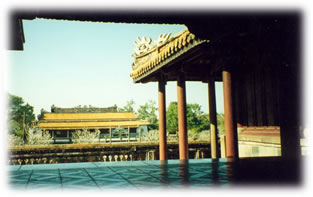
Từ lâu, Đình Bảng   được xem là  một ngôi đình ở miền Bắc  còn giữ  đựợc vẻ  nguyên sơ dù nó  được xây dựng đã có 300 năm. Nó còn là ngôi đình có dáng nhà sàn mà ít  trông thấy ở các làng khác. Nhìn  từ đẳng xa, ngôi đình có một cấu trúc nổi,   kê vững  chắc trên mặt đất nhờ qua một   hệ thống  chân cột (60 cột trụ bằng gỗ lim ), kèo và xà giằng nhau, liên kết  không cần chân móng. Mái đình  càng nặng thì sức nén của nó xuống các cột càng lớn khiến ngôi đình càng vững chãi. Nghe nói nhờ vậy dưới thời Pháp thuộc,  đền nầy không có đổ vỡ truớc sự tấn công xe chiến đấu  của quân đội Pháp.

 Đình Bảng (Bắc Ninh)

Nhờ sự tích cực tham gia của quan Nguyễn Thạc Lương, người Đình Bảng và bà vợ là Nguyễn Thị Nguyên, ngôi đình nầy được xây dựng vào đầu thế kỷ 18 kéo dài 36 năm mới được hoàn thành. Đây là ngôi đình thường được dân gian miền Bắc  nói đến qua ngạn ngữ: Thứ nhất là đình Đông Khang, thứ nhì đình Bảng, thứ ba đình Diềm.  Đình Đông Khang bị tàn phá bởi chiến tranh, còn đình Diềm trước có 5 gian nay thì còn 3 gian. Chỉ còn đình Đình Bảng còn giữ đựợc vẻ nguyên sơ qua dòng thời gian. Đình nầy nằm ở  làng Cổ Pháp,  thị xã Từ Sơn, tỉnh Bắc Ninh và thờ các vị thành hoàng gồm Cao Sơn đại vương (thần Núi), Thủy Bá đại vương (thần Nước) và Bách Lệ đại vương (thần Đất). Nơi nầy theo lời tương truyền còn là nơi sinh và lớn lên  của Lý Công Uẩn, người sáng lập triều đình nhà Lý. Đến đây , cũng nên đến tham quan Đền Đô nhà Lý thường được gọi là đền Lý Bát Đế, nơi thờ  tám vị vua đầu tiên nhà Lý. Đền nầy không xa chi cho mấy đi chừng nửa cây số qua cái chợ là đến. Nhớ đừng quên ăn đặc sản của vùng. Đó là bánh phu thê, một  bánh hình  vuông bằng lá dừa, nhân đậu xanh ở  trong hình tròn,  biểu tượng vuông tròn của triết lý âm dương  và nhắc đến tình nghĩa vợ chồng.


Người bán hàng rong Hanoï


Les marchandes ambulantes de Hanoï

Version anglaise
Version vietnamienne
Galerie des photos

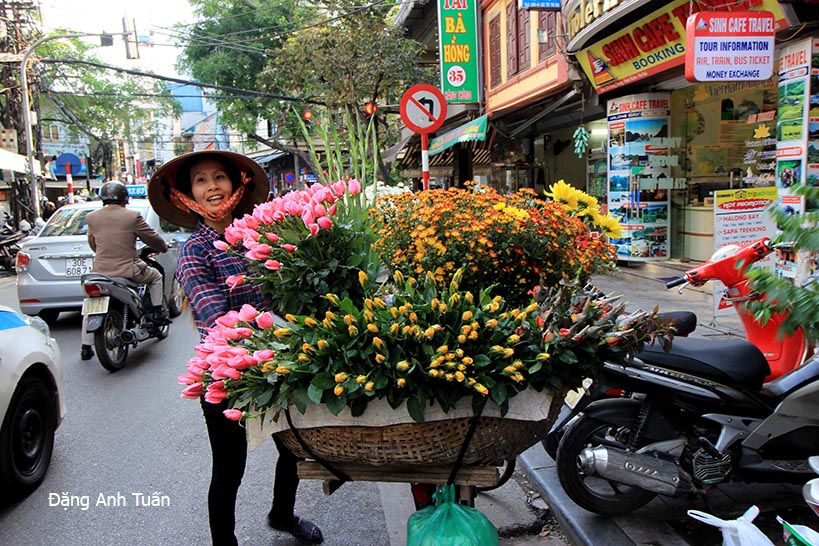
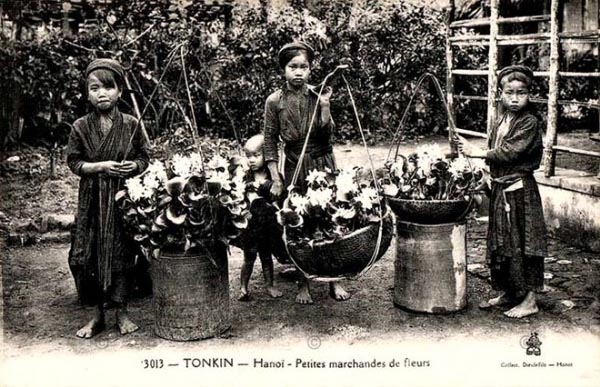
Étant connues à l’époque coloniale, les marchandes ambulantes se font au fil des années une image d’une scène ordinaire et plutôt familière pour les Hanoïens dans leur vie journalière. Par contre pour les touristes étrangers et les passionnés  de photos, elles constituent  un attrait  très original,  une caractéristique   particulière de la « culture du commerce ambulant »  de Hanoï  dont les photos ne peuvent pas être absentes  dans un album de photos de voyage, en particulier avec les marchandes ambulantes de fleurs. Étant venues d’autres provinces ou  vivant  aux alentours de la capitale, celles-ci  réveillées  très  tôt, à 4 ou 5 heures du matin, doivent accomplir  des dizaines de  kilomètres en vélo pour s’approvisionner en fleurs et fruits au marché.  Puis elles  cherchent des rues  calmes et désertes  pour mettre en  valeur les produits  proposés à vendre ( fleurs et fruits)  tout en faisant appel à leur  créativité  et l’adresse de leurs mains dans la géniale exposition et  la disposition superbement équilibrée de ces produits. Ceux-ci sont proposés en fonction de leur saison.  On peut dire que ces femmes marchandes ambulantes  sont des tableaux vivants animés et multicolores se  faufilant au cœur du vieux quartier de la capitale.

Elles  apportent  tous les jours à la capitale   un style de vie   particulier sans qu’elles  le sachent. Elles continuent à s’inquiéter de manière timorée  tout en cherchant de loin la présence et le déplacement de la police locale à travers leurs yeux  craintifs et apeurés. Cela fait mal à ces femmes qui doivent chercher de l’argent pour s’acquitter des obligations familiales et avoir la tranquillité dans l’âme mais cela crée aussi un souci majeur pour ceux qui aiment à faire des photos comme moi car je suis obligé de les poursuivre patiemment  à travers les rues et les quartiers avec le but de pouvoir obtenir ces photos inoubliables ci-dessous  que je pourrai partager sur le net. Il est  très difficile d’avoir auprès de ces femmes courageuses un sourire matinal naturel avec cette vie assez  tumultueuse.

Version vietnamienne

Đã có từ  đời Pháp thuộc, người bán hàng rong là một hình ảnh bình dị quá quen thuộc  đối với người Hà Thành  trong cuộc sống hằng ngày nhưng đối với những người du khách ngoại quốc hay là những người thích chụp ảnh thì người bán hàng rong là một nét đẹp quá độc đáo, một đặc trưng  văn hoá bán hàng rong  riêng tư  của Hà Thành không thể thiếu sót để lưu niệm trong cuốn album  được nhất là với  những người bán hoa dạo.  Các phụ nữ bán rong nầy họ là những người  nhập cư từ phương xa đến, họ  thức dậy lúc 4, 5 giờ sáng đạp xe hàng cây số để lấy hoa hay trái cây ở chợ   rồi họ tìm những đường hay nơi vắng vẽ ít người  để họ trang trí lại theo ý muốn, tăng thêm với  đôi bàn tay khéo léo,  cái  vẻ đẹp của  các món hàng thực phẩm  họ bán,  nhất là hoa quả. Họ bán theo mùa, muà nào thức ấy. Có thể nói họ là những bức tranh sống  linh hoạt   muôn màu di chuyển giữa lòng phố cổ. 

Họ tạo ra hằng ngày  một nét đẹp riêng tư  cho Hà Thành mà chính họ không bao giờ biết  nghỉ đến. Họ lúc nào cũng lo lắng  rụt rè thăm dò từ đằng xa sự đeo  đuổi của các chú  cảnh sát phường xóm qua đôi mắt sợ sệt. Thật tội cho họ để kiếm tiền trang trải cuộc sống vất vã, không có lúc nào được yên tâm cả mà cũng tội cho những người thích  chụp ảnh như  tớ cũng bị lôi cuốn,  chạy theo họ qua đường phố, phải kiên nhẫn  để có thể được các tấm ảnh nầy  để chia sẻ trên trang nầy  nhất là hiếm có  được ở nơi họ  những  nụ cười tự nhiên vui vẻ buổi sáng   với cuộc sống bon chen nầy.

marchande_ambulante


Version anglaise

Being known at the colonial period, street women  vendors get over the years,  a picture of the ordinary scene and too familiar for people living in Hanoi. However, for foreign tourists and photo enthusiasts, they constitute an attraction very original,  a particular characteristic of ambulant commerce in Hanoï. Their photos are not missing in an album of travel pictures, in particular with  itinerant florists. Coming from other provinces or living around the capital and being  up early  around 4 or 5 in the morning, they must accomplish tens of kilometers on a bike  for their  supplies in flowers and fruits to the market. Then they seek refuge in quiet and desert streets in order to highlight the products to be sold  (flowers and fruits) by calling upon the creativity  and the manuel skill  in the ingenious exhibition and the arrangement superbly balanced of these products proposed depending on their season. 

One can say these street vendors are animated and multicoloured  living tableaux sneaking in the heart of old quarter of Hanoï. They provide every day to the capital a  particular lifestyle without them knowing. They continue to worry in timid manner by seeking away the presence and displacement of local police with their fearful eyes. It hurts these women who must find money for paying off their family obligations and having peace in their soul but it  also creates a major concern for those who love to take pictures like me because I am obliged to pursue them with patience through streets  and quarters in order to obtain these unforgettable  pictures below.  It is difficult to have a morning natural  smile from courageous women when they have a tumultuous life.

Galerie des photos

[Return FLEURS DU MONDE]

[Return HANOI]

Temple Quán Thánh (Đền Quán Thánh, Hànội)


Đền Quán Thánh

English version
French_version
Liste des photos

Không cách xa Hồ Tây bao nhiêu, đền Quán Thánh là một điểm tham quan không thể thiếu sót  khi đến Hànội. Đền nầy là nơi để thờ một vị thần của Đạo Giáo tên là Huyền Thiên Trấn Vũ được xem ở Á Châu là hoàng để ở phương Bắc ngự trị trên các  loài  động vật ở dưới nước.  Theo cách bố trí tinh vi của phong thủy, đền nầy được dựng lên cùng ba đền khác hợp thành Thăng Long tứ trấn, để trấn giữ bốn cửa ngỏ của Hà thành chống ngọai bang và ma qủy, mỗi đền một phương ( Đền Bạch Mã Hàng Buồm phương đông, đền Voi Phục phương tây, đền Kim liên phương nam và đền  Quán Thánh phương bắc). Theo lời nói dân gian, đền nầy đã được dựng lên năm 1010 dưới triều đại Lý Thái Tổ. Lúc đầu tượng tạc bằng gỗ. Đã bao lần sửa chữa dưới đời  nhà Trần nhưng chỉ có lần duới triề u của vua Lê Hy Tông năm 1677, sự phục hồi nó mới đáng kể đó là sự thay thế tựợng gỗ bằng đồng đen và gác chuông.

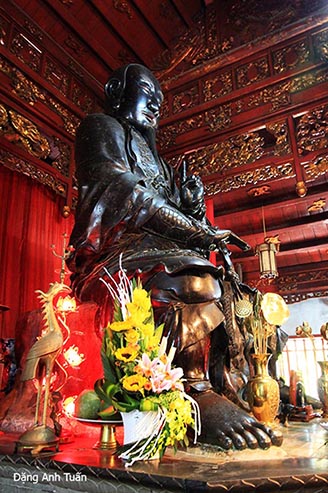
Tượng thần to tác nầy  nặng có 4 tấn và cao gần 4 thước được đặt trên bục đá một thước bề cao. Có một khuôn mặt hình vuông, ngồi chững chạc, chân không  với một bộ áo đạo sĩ. Tượng cầm trong  tay phải có cây  gươm có rắn quấn và chống lên lưng một con rùa và tay trái thì bắt quyết (hay ấn). Màu đen được chọn cho pho tượng vì màu nầy trong ngũ hành là màu tượng trưng cho nước và phương bắc. Phải nói đây là một tác phẩm kỳ diệu của những người dân  đúc đồng của làng Ngũ Xã dưới sự hướng dẩn của Vũ Công Chấn, để lại cho chúng ta  đã có gần 4 thế kỷ rồi. Đền  nầy không những là một trong những đền thuộc đạo giáo còn tìm thấy ở Hànôi mà nó còn là nơi lý tưởng để dành riêng cho những ai muốn tìm sự yên tịnh và thư thản ở Hà Thành náo nhiệt nầy.

Le temple Quán Thánh

Étant situé  non loin du lac de l’Ouest (Hồ Tây), Quán Thánh  est l’un des sites incontournables de Hànội.  Ce temple  sacré est réservé au culte d’un dieu taoïste de nom Huyền Thiên Trấn Vũ considéré en Asie comme l’empereur du Nord (Bei Di (ou Bắc Đẩu en vietnamien))  régnant sur le monde aquatique. Selon l’aménagement judicieux de Feng Shui (Phong Thủy), il est édifié  avec les trois  autres temples dans le but de protéger la capitale Thăng Long contre les envahisseurs étrangers et  les mauvais esprits, chacun dans une direction bien précise (Temple  Bạch Mã  à l’est,  temple Voi Phục (Thủ  Lệ ) à l’ouest, Kim Liên au Sud et Quán Thánh au nord de Hànội). Selon l’on-dit, ce temple fut érigé en 1010 sous le règne de Lý Thái Tổ.

La statue était   en bois au début de l’installation. En dépit des rénovations successives   sous la dynastie des Trần, c’était  seulement en 1677 sous le règne du roi Lê Hy Tông que la restauration fut significative avec l’installation et le remplacement de la statue en bronze noir ainsi que le clocher du temple. 

L’autel de Vũ Công Chấn

 Cette statue colossale de  4 tonnes et haute à  peu près de 4 mètres a été posée   sur une estrade en marbre  d’un mètre de hauteur. En position assise avec un visage carré et  ses pieds nus, elle a une tenue traditionnelle taoïste.  Elle tient dans sa main droite une épée pointée  sur le dos d’une tortue et décorée superbement   par la présence   d’un serpent  enroulé tandis que dans sa main gauche, une mudra taoïste, un geste rituel   codifié  est visible  en guise d’exorcisme (bắt ấn).  Associée  à la direction du  Nord et à l’eau, la couleur doit être  noire selon la théorie des 5 éléments (Ngũ hành).  C’est l’explication trouvée dans le choix de la couleur  réservée pour  la statue taoïste. 

La finesse des détails et la taille imposante de cette statue réalisée il y a presque 4 siècles témoignent  incontestablement de l’exploit prodigieux  et du savoir faire des métallurgistes paysans du village Ngũ Xã de cette époque supervisés par Vũ Công Chấn.

Ce temple est non seulement  l’un des derniers temples taoïstes trouvés dans la capitale mais  aussi l’endroit idéal pour ceux qui aiment retrouver la sérénité et le calme dans une ville aussi animée et  bruyante comme Hanoï.

Galerie des photos


Village antique Cừ Đà ( Old village Cự Đà)

Village antique Cừ Đà

 
Version française
Version anglaise
Galerie des photos

Làng cổ Cừ Đà

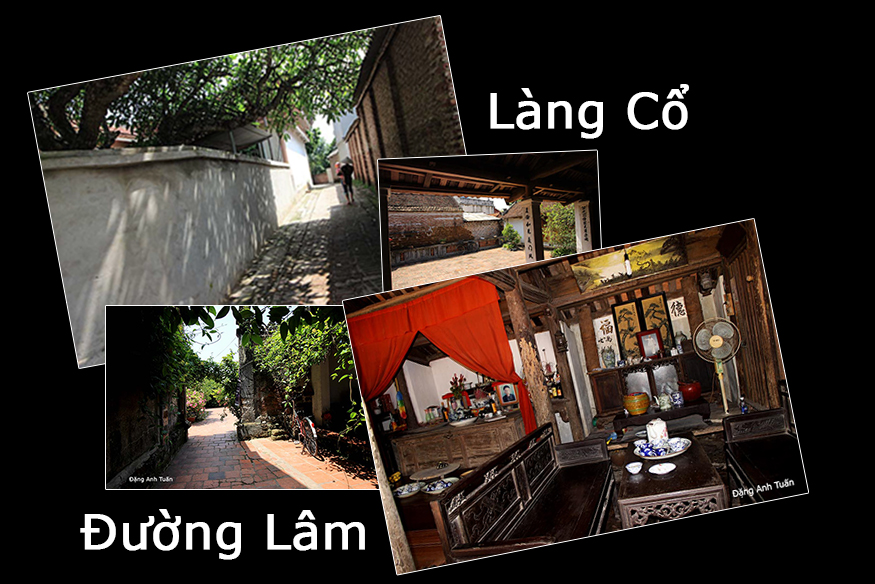
Được biết làng cổ Cự Đà qua báo chí nên cũng thừa lúc nhàn rỗi ở Hànội lúc cuối năm 2016, tụi nầy lấy quyết định đi tham quan một lần, biết đâu nó còn nét độc đáo  như làng cổ Đường Lâm vã lại nó không xa chi cho mấy Hànôi. Làng nầy nó cách xa thủ đô 20 cây số nếu  tính tử trung tâm nhưng đi đến đó chỉ có hai cách mà thội

  • -một là đi theo hướng chùa Hương để đến làng Khúc Thủy trước khi đến làng Cự Đà (cách nầy thì đi lòng vòng tốn thì giờ dù đi ô tô)
  • còn cách còn lại là tuy ngắn thì giờ (45 phút) nhưng  đi qua chợ Hà Đông đến đường Lê Lợi rồi đi thẳng theo đường liên làng qua làng Đa Sĩ. Tới đây phải đi bộ qua  cái cầu sắt thì tới đầu làng Cự Đà, ít nhất cũng có hai cây số đi bộ.  Tụi nầy  không có lựa chọn chi cả vì em tài  xế không biết nên chọn cách thứ nhì.

Cũng may trởi tuy u ám nhưng không mưa nhiều nên đi bộ cũng tạm được. Vào làng Cự Đà, cảm giác đầu tiên như thời gian nơi nầy đang dừng lại. Không có tiếng kèn, tiếng xe, tiếng ồn ào của làng xóm  như ở Hànôi. Các ngôi  nhà nó rất cũ kỹ, có cái 3 gian, có cái 5 gian, vách tường bị hư hõng rất nhiều. Nơi nầy còn thấy những ngôi nhà hai tầng mang phong cách Pháp được xây cất thời Pháp thuộc. Đúng là một làng cổ kính  ở vùng Bắc Bộ vì còn tìm thấy  được  cổng làng, mái đình, chùa, các cây cổ thụ vân vân ….Nghe kể lại có một thời làng nầy rất được sung túc vì nó nằm bên bờ sông Nhuệ, thuyển bè thường đến giao thương dễ dàng . Các doanh nhân ở Hànôi  đổ xô về đây, chen đua  cất nhà để cuối tuần đựợc an nghĩ. Nay sông Nhuệ màu nước nó đen thối ô nhiểm quá chừng không thua chi kênh Nhiêu  Lộc khiến khi đi qua cẩu sắt  phải bịt mũi lại. Lòng thấy nặng trĩu, tự hỏi ngưòi dân ở đây sao không bệnh họan được. Âu cũng vì nghèo nàn, vi sinh nhai  hằng ngày trong  cuộc sống lam lũ với nghề làm miến, làm tương, dân số càng đông khiến  làng nầy nó đang xuống cấp trầm trọng trước sự áp lực đô thị hóa.

 Từ 500 nhà cổ một thời nay chỉ còn vài chục nhà mà thôi. Dù biết trân trọng cái nét đẹp của làng cổ , người  dân ở đây vì thiếu đất , thiếu phương tiện tài chánh để sùng tu nên họ đành bó tay đôi khi còn  phá vở trần nhà để có chổ phơi miến, đôi khi xây cất lại theo phong cách hiện nay.  Có thể rồi đây  chi cần vài năm nửa thôi làng cổ Cự Đà sẻ không còn như ngày hôm nay được tham quan. 

En apprenant par les médias vietnamiens l’existence d’un village antique Cự Đà, nous sommes décidés d’aller le visiter lors de notre séjour  à Hanội à la fin de l’année 2016. Ce village n’est pas trop loin de la capitale. Il faut compter   une vingtaine de kilomètres si on commence à partir  du centre de Hanội. Deux voies d’accès sont possibles:

  • soit en prenant la route nationale   dans la direction de la pagode des Parfums (Chùa Hương) pour atteindre d’abord  le village Khúc Thủy puis celui de   Cự Đà.
  • soit en prenant la route traversant le marché Hà Đông dans la direction du  village Đa Sĩ. C’est ici qu’il faut entamer la marche à pied (2 kilomètres)  par l’emprunt d’un pont ferroviaire réservé uniquement pour les trains et les motos. C’est  la voie la plus rapide car on ne perd que 45 minutes en auto. Mais c’est aussi la voie d’accès préférée par le jeune chauffeur de la voiture. Heureusement, en dépit du temps maussade, la pluie n’est pas au rendez-vous, ce qui nous permet de marcher de façon convenable.

En entrant dans ce village, on a l’impression que le temps s’arrête.  Contrairement à ce qui est arrivé fréquemment à Hànội, on n’entend aucun klaxon, aucun bruit du moteur ou du village. De vieilles maisons sont rencontrées le long de notre marche. Certaines ont 3 travées, d’autres 5 travées. Leurs murs en brique sont  fortement détériorées. C’est ici qu’on trouve aussi des maisons à deux étages construites à l’époque coloniale dans le style franco-vietnamien. C’est vraiment  un village antique  et typique du Tonkin car on y trouve non seulement son portique mais aussi la toiture imposante de sa maison communale, sa pagode, ses banians centenaires etc…Selon la rumeur, ce village fut florissant à une certaine époque car il est situé au bord du fleuve de nom Nhuệ, ce qui facilite l’échange commercial avec la voie fluviale. Les commerçants plus ou moins aisés de Hànội ne tardaient pas à s’y installer et se rivalisaient à construire des maisons de campagne pour y passer leur fin de semaine. Aujourd’hui, le fleuve Nhuệ est tellement pollué qu’il dégage une odeur nauséabonde et a une coloration noire comme le canal Nhiêu Lộc (Saigon), ce qui nous oblige de nous boucher le nez lors de notre passage sur le pont ferroviaire. Comment les gens peuvent-ils vivre sans être malades? C’est ce profond ressentiment que j’éprouve durant cette visite.

Outre la pauvreté et la dureté de la vie journalière,  les gens de ce village ne vivent que de leur métier: fabrication des  nouilles transparentes et la sauce de soja.

Etant  connu comme  un village de métier, Cự Đà  continue à perdre son charme antique  face à l’urbanisation inquiétante et à la démographie galopante. De 500 vieilles maisons recensées au début du XXème  siècle, il n’en  reste qu’une vingtaine.  Par manque d’espace vital et de moyens financiers  dans la rénovation, certains propriétaires sont obligés d’enlever la toiture de leurs maisons pour l’exposition de leurs nouilles au soleil ou de rebâtir  leurs maisons dans le style moderne. C’est peut-être dans quelques années à venir que Cự Đà n’a plus d’attraits touristiques qu’il  garde encore aujourd’hui  lors de notre visite.

English version

Learning from the Vietnamese media about the existence of an ancient village called Cự Đà, we decided to visit it during our stay in Hanoi at the end of 2016. This village is not too far from the capital. It is about twenty kilometers if you start from the center of Hanoi. Two access routes are possible:

Either by taking the national road in the direction of the Perfume Pagoda (Chùa Hương) to first reach the village of Khúc Thủy and then Cự Đà.
Or by taking the road passing through the Hà Đông market towards the village of Đa Sĩ. This is where you have to start walking (2 kilometers) by crossing a railway bridge reserved only for trains and motorcycles. This is the fastest route as it only takes 45 minutes by car. But it is also the preferred access route by the young car driver. Fortunately, despite the gloomy weather, there was no rain, which allowed us to walk comfortably.

Upon entering this village, one gets the impression that time stands still. Unlike what often happens in Hanoi, there is no sound of horns, engines, or village noise. Old houses are encountered along our walk. Some have 3 bays, others 5 bays. Their brick walls are heavily deteriorated. It is here that you also find two-story houses built during the colonial era in the Franco-Vietnamese style. It is truly an ancient and typical village of Tonkin because it has not only its gateway but also the imposing roof of its communal house, its pagoda, its century-old banyan trees, etc.

According to rumor, this village was prosperous at one time because it is located on the banks of the river named Nhuệ, which facilitates commercial exchange via the waterway. The more or less wealthy merchants of Hanoi soon settled there and competed to build country houses to spend their weekends. Today, the Nhuệ river is so polluted that it emits a nauseating odor and has a black coloration like the Nhiêu Lộc canal (Saigon), which forces us to hold our noses when crossing the railway bridge. How can people live without getting sick? This is the deep resentment I feel during this visit.

Besides poverty and the harshness of daily life, the people of this village live solely from their trade: making transparent noodles and soy sauce.

Known as a craft village, Cự Đà continues to lose its ancient charm in the face of worrying urbanization and rapid population growth. From 500 old houses recorded at the beginning of the 20th century, only about twenty remain. Due to a lack of living space and financial means for renovation, some owners are forced to remove the roofs of their houses to expose their noodles to the sun or to rebuild their houses in a modern style. It may be in the coming years that Cự Đà will no longer have the tourist attractions it still retains today during our visit.

Galerie des photos

[RETURN]

Maison communale Kim Ngân (Đình Kim Ngân, Hànội)

Version française
Version anglaise
Liste des photos

Đình Kim Ngân


Đình Kim Ngân này được xây dựng vào đầu thế kỷ 16 bởi Thượng thư Nội vụ của vua Lê Thánh Tông, Lưu Xuân Tín. Ông vốn là người tỉnh Hải Dương, nổi tiếng với nghề nấu chảy vàng thỏi. Vào thời điểm đó, ông đã đưa một số lượng lớn người dân trong làng của mình đến Hà Nội làm thợ kim hoàn cho nhà vua. Họ đã xây dựng ngôi đình này mang tên Kim Ngân khi họ định cư tại đây. Sau nhiều năm bị bỏ hoang, nó chỉ được trùng tu vào năm 2004 nhờ sự giúp đỡ của các chuyên gia người Pháp từ thành phố Toulouse. Ngày nay, nó không chỉ là nơi thường xuyên diễn ra tất cả các buổi biểu diễn âm nhạc truyền thống (ví dụ như Ca Trù) mà còn là nơi tôn kính tổ tiên của nghề thủ công Hiền Viên.

Cette maison communale Kim Ngân fut édifiée au début du XVIème siècle par le ministre de l’intérieur du roi Lê Thánh Tông, Lưu Xuân Tín. Celui-ci était originaire de la province Hải Dương, connue pour sa spécialité dans la fonte des lingots d’or. Il fit venir à cette époque un grand nombre de gens de son village pour travailler en tant qu’orfèvres à Hànoï pour le compte du roi. Ces derniers y ont construit lors de leur installation cette maison communale de nom Kim Ngân. Etant laissée à l’abandon depuis plusieurs années, elle fut restaurée seulement en 2004 grâce au concours des experts français de la ville de Toulouse. Désormais c’est non seulement l’endroit où ont lieu fréquemment tous les spectacles de musique traditionnelle (Ca Trù par exemple) mais aussi le lieu de vénération de l’ancêtre des métiers Hiên Viên.

This communal house was erected under the reign of king Lê Thánh Tông by the Minister of the Interior, Lưu Xuân Tín. This one was from Hải Dương province known for its speciality in casting into ingots. He invited at this time a large number of people in  his village for working as  silversmiths on the behalf of the king. During the installation, the latter have built à Hàng Bạc this communal house named « Kim Ngân (or silver). Being neglected for many years, it was restored in 2004 by French experts of Toulouse city. Henceforth, it is only the place where tradional music concerts take place frequently but also the space of veneration of Hiên Viên, the ancestor of crafts.
 

Communal House Kim Ngân

(Hàng Bạc)

[RETOUR]

Gia Long ( Founder of Nguyễn dynasty)


Gia Long

French version
Vietnamese version
Pictures gallery

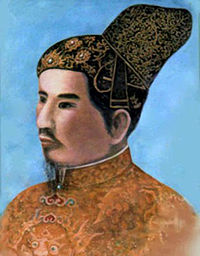
Gia Long is the imperial title prince Nguyễn Phúc Ánh took in 1802 for his reign at the time of the reunification of the Vietnam empire which extended from the border of Lạng Sơn to the point of Cà Mau on the gulf of Siam.

Gia long results from the combination of two following words: Gia and Long (Gia being a word extracted from the name Gia Định, the ancient city of Saïgon and Long that of the name Thăng Long, the ancient capital Hànội). During the 25 years of fighting against the Tây Sơn, he roamed the whole Cochinchina. He knew perfectly well all the corners of the Mekong delta. Prince Nguyễn Ánh was so attached to the people of the South and in particular to Saigon city that he was khnown at the time as « General Gia Định« .

Before the unification of Vietnam (1801), the last survivor of the Nguyen was hunted down several times by the Tây Sơn ( or the people from the West ) of Nguyễn Huệ. He owed his safe life to a French missionary Pierre Joseph Pigneaux de Behaine who shared with him his meal brought in by a confidant, P. Paul Nghi, and who did not hesitate to organize his escape in the Cancau principality of Mạc Thiên Tứ, the son of his allied Mạc Cửu Hà Tiên region) after the assassination of Nguyễn Huệ. Vương by the Tây Sơn, which is told by the British John Barrow in his book «  Voyage in Cochichina » in 1793.

The tough life he experienced during his years of vicissitude gave his partisans an occasion to interpret later his exploits and perils that he succeeded in overcoming as a sign of God’s will in helping him to regain the throne. The grotto of coins (Hang Tiên) in the region of Ha Tien, accessible nowaday by boat, evokes the souvenir of the young prince Nguyễn Ánh, who took shelter there with his troops while waiting for French reinforcements. One  finds coins left by pirates. Vietnamese sayings go with his exploits, such as:

« Kỳ đà cản mũi »

The varanus is in front of the prow

to mean a task cannot be done because of the obstruction of someone. Thanks to the presence of a monitor that blocked his junk on its way to the sea, he was narrowly saved because his enemies were waiting for him there. Another time in the region of Ha Tien, his junk was bothered by the presence of snakes. He was forced to give order to his subordinates to row faster so as not to be pursued by the snakes. This allowed him to reach Phú Quốc island sooner and avoid the trap set by his adversaries. That is why a Vietnamese saying goes:

« Gặp rắn thì đi, gặp qui thì về »

to mean it is possible to keep going when encountering snakes and it is better to go back when encountering turtles.

Thoughout historical accounts, it is noted that Nguyen Anh was lucky during the years of fighting with the Tây Sơn. One time he was chased by the enemies. He was forced to cross a river by swimming. He was aware that the river was infested with crocodiles. He had to resort to buffaloes that splashed about the riverside to take him over. Even the perilous rescue of his boat engulfed by waves by the young intrepid Lê Vân Duyệt (15 years of age ) who later became his talented general, in a stormy night was the object of prophecy discussed for so many years by the people of Long Hưng Tây village before the event took place.

In spite of these facts having something to do with legitimizing by divine protection the struggle led by Nguyễn Ánh, it is not fair to ignore the qualities in this outstanding personage. He did not have the genius of strategy of his adversary, general Nguyễn Huệ. But he had an incommensurable patience parallel only to that of Gou Jian (or Cẩu Tiễn in Vietnamese ), the prince of Yue in the North at the episode of Spring and Autumn ( thời Xuân Thu )( 476 B.C ) who waited long years to get ready for revenge against Fu Chai (Phù Sai) the Wu State’s sovereign ( nuớc Ngô của Ngũ Tử Tư ).

He was gifted at being able to recruit as subordinates individuals of valor ( Võ Tánh, Lê Văn Duyệt, Nguyễn Văn Thành etc.) and grant to frienship a particular signification during his reign, which has been noted towards French missionary Pigneaux de Behaine or his French lieutenants Jean Baptist Chaigneau ( Nguyễn Văn Thắng), Philippe Vaniera, Olivier Puymanel or Siamese king Rama I ( or Chakkri ).

In acknowledgement of the debt that Nguyễn Ánh had let him go back safe and sound with his army to rescue his imprisoned family, the latter was fast to offer many years of hospitality to prince Nguyễn Ánh and his suite when he was forced to take refuge in Bangkok after his scathing defeats against the Tây Sơn at Mỹ Tho (1785).

Nguyễn Ánh was a brave and tough man. With him it seems like there is no one in the South who dares to oppose him. To repay the debt toward his family assassinated by the Tay Son, he remained unruffled before the tortures he reserved for his adversaries. The vanquished enemies were put to death by appalling tortures. Men were torn and women and children were stamped by elephants. Their corpses were thown in the field for crows to eat. It was the fate reserved for the female general Bùi Thị Xuân, the son of emperor Nguyễn Huệ, king Nguyễn Quang Toản etc.

This pact of friendship was born in a military confrontation between his lieutenant Nguyễn Hữu Thùy and Chakkri which was still a general sent by the Siamese king Taksim (Trịnh Quốc Anh ).

Before the volte-face of Taksim imprisoning his family, Chakkri was forced to compromise with Nguyen Anh and return to Bangkok to overthrow Taksim. To recognize this debt and to assist Nguyen Anh to recover the throne, Chakkri sent an army of 50,000 men which was completely decimated in 1785 by the strategist Nguyễn Huệ in the western Mékong (Mỹ Tho).

For political reasons, he did not hesitate to kill people who had served him with devotion when he was still a young prince hunted down by the Tây Sơn. It is the case of Nguyễn Văn Thành, Ðặng Trần Thường. That is why he was ofen compared to Liu Bang (Lưu Bang), the great Han emperor having reserved the same treatment toward his comrades-in-arm. Despite that, he was also seen as a man of the heart. He was fast to render great homage to his comrade-in-arm Nguyễn Văn Thành whom he forced to commit suicide for a calomnious insinuation and burst into tear before the altar set up in honor of the latter. He ordered freedom for his family and restitution of confiscated possessions and titles. One also finds his profound attachment to his subordinates’ lives through the message addressed to his brother-in-law, general Võ Tánh in charge of defending Qui Nhơn or to Pigneaux de Behaine, his spiritual father, military advisor through the ceremony arranged at the funeral of the latter, which was reported by Father Lelabrousse at the Missions Etrangeres on April 24, 1800.

He was also a seducing warrior. His consideration toward queen Ngọc Bích, the young wife of his adversary, young king Cảnh Thịnh (son of king Quang Trung) was exemplary. She was crying out when she saw a very majestuous man standing in front of her:

-General Gia Ðịnh, what do you want of me?

He smiled and answered her with kindness:

Don’t be afraid and stop crying please. General Gia Dinh will be more gentle than a Tay Son one. This residence remains the same for you despite of the change of ownership.

Since his gentleness and his will to conquer the heart of the queen was so strong the latter could not resist. She became thus his first rank concubine and had two sons with him. She was married two times to two kings (Cảnh Thình and Gia Long) and was the last daughter of the Lê kings. That is why the two implacable adversaries became « brothers-in-law » because Nguyễn Huệ was the spouse of Ngọc Hân and Gia Long that of Ngọc Bích. It is also for the latter that a Vietnamese saying goes:

Số đâu mà số lạ lùng
Con vua mà lấy hai chồng làm vua

What a bizarre fate she has
Daughter of a king, she got twice married to kings.

In spite of his reputation of being a warrior hardened by years of war and vicissitudes, he was also as vulnerable as any ordinary man. A great number of worries has come upon him that he did not wish to hide and reveal to his confidant, Frenchmen Jean-Baptiste Chaigneau: 

Ruling country is easier than managing a harem.
This was revealed by Michel, the son of J.B. Chaigneau in his journal « Le Moniteur de la Flotte » in 1858.

Despite the treaty initialed at Versailles in 1787 by Counts de Vergennes and de Montmorin for king Louis XVI and by his son Nguyễn Phúc Cảnh witnessed by bishop of Adran, Pigneaux de Behaine, the collaboration of a great number of French subordinates in his ranks and his interest in science and Western techniques, he continued adopting a very ambiguous policy toward the Europeans, in particular the missionaries. Was this benevolent attitude due to the friendship he tried to honor toward his friend Pigneaux de Behaine or to his open mindedness like KangXi in China aiming at better utilizing the catholic missionaries’s competences?

One keeps asking these questions up to now. However, one knows that throughout the construction of the Purple City, the maintenance of the mandarinal system, the reform of the Le code based on that of the Qing in China, he appeared to be more than never an admirer of the Ming and Qing dynsties, a convinced Confucianist and a more retrograde emperor. During his last years, he began a policy of folding back by choosing as his successor prince Nguyễn Phúc Ðảm supported by most of the Confucianist mandarins in lieu of the children of prince Cảnh who deceased of an illness. The prince known under the name of Minh Mang did not hesitate to do away with the children and wife of Cảnh (Mỹ Ðường) and gave the Europeans an opportunity, especially the French government to intervene militarily, by deliberately leading an anti-western and anti-catholic policy and thus renewing a policy in line with the Chinese policy. Nguyen Anh could have become a great emperor at the image of a Japanese « Meiji » when he had the advantage of being circled by a great number of Frenchmen including his private physician (a certain Despiaux) and he had an open mind to Western techniques and sciences.

It is a shame for Vietnam to have lost an opportunity to enter the era of modernization.

It was unfortunate for the Vietnamese people to have written later their history with blood and tears

He does not deserve being forgotten in our history because he arrived at enlarging our territory and unifying the country under his banner. But he is no longer a great emperor of Vietnam because grandeur is measured by not only the enlargement of Vietnam but also by the good deeds he brought to the Vietnamese people and by the magnanimity toward his adversaries.

It is regrettable to say so because Nguyễn Ánh with the qualities he showed us during his 25 years of vicissitude could have done better to his country and people more than any other kings of Vietnam (including king Quang Trung).


Galerie des photos

[Return DYNASTIE]

Concubines under the Nguyễn dynasty (Cung tần mỹ nữ)

French version


Trong cunq quế âm thầm chiếc bóng
Ðêm năm canh trông ngóng lần lần
Khoảnh làm chi bầy chúa xuân
Chơi hoa cho rữa nhị dần lại thôi.

In the royal genaeceum, I stay alone with my shadow,
All night long, I eagerly wait for his visit.
Instantly, many springs have gone by,
He ceased coming in as this flower is withering.

Ôn Như Hầu

Except Gia Long, the founder and Bảo Ðại, the last emperor of the Nguyen dynasty no emperors of this dynasty granted a title to their principal spouse during their reign. No historic documents found today show why there was that systematic refusal since the application of Minh Mang’s decree. On the contrary, only this spouse received her title after her disappearance.

First imperial concubine ( Nhất giai Phi ) ( 1st rank )
Second imperial concubine ( Nhị Giai Phi ) (  2nd rank )
Superior concubines ( from 3rd to  4th rank ) (Tam Giai TânTứ Giai Tân ), simples concubines ( from 5th to 9th rank ) ( Ngũ Giai Tiếp Dư , Lục Giai Tiếp Dư, Thất Giai Quí Nhân, Bát Giai Mỹ  Nhân, Cữu Giai Tài Nhân ).

Then came the Ladies of the Court, next, the subordinate servants. It was estimated that those women along with the eunuchs, the queen mothers and the emperor made up a purple forbidden society of Huế. The status of those women (even that of the servants) no matter what it was, went up considerably when they gave birth to a son.
Speaking of those concubines, it is impossible not to evoke the love story of Nguyễn Phi, the future empress Thừa Thiên Cao Hoàng Hậu with prince Nguyễn Ánh, the future emperor Gia Long. This one, beaten by the Tây Sơn (or the peasants of the West) in the Fall of 1783, had to take refuge on the Phú Quốc Island. He had to send his son Nguyễn Phúc Cảnh, 4 years old, accompanied by archbishop Pigneau de Behaine to France to ask for military aid before king Louis XVI (Treaty of Versailles 1787), and took refuge in Bangkok ( Thailand) waiting for French reinforcement. Before the time of separation, he hastened to cut a gold bar into two halves and gave one to his spouse, Nguyễn Phi telling her:

Our son has already gone. I am about to leave you to resettle in Thailand. You stay here to take care of our queen mother. I do not know the date of my return nor the place of our reunion . I leave with you this half gold bar as the token of our love. We will have the chance to see each other later if God helps us to defeat the Tây Sơn.

During Nguyễn Anh’s years of exile and setback in his reconquest of power, Nguyên Phi continued to take care her mother-in-law, queen Hiếu Khương (spouse of Nguyễn Phúc Luân ) and to make uniforms for recruits. She arrived at overcoming all the difficulties destined to her family and showed her courage and bravery in escaping traps set up by their adversaries.

Thanks to his perseverance and stubbornness, Nguyễn Ánh succeeded in defeating the Tây Sơn in 1802 and became our emperor Gia Long. The day following their touching reunion, he asked her about the other half of the gold bar he had given her at the moment of their separation. She went looking for it and gave it back to him. Seeing the half of the bar in the state of shining, emperor Gia Long was so touched he told his spouse Nguyễn Phi:

This gold that you succeeded in keeping in its splendor during our difficult and eventful years shows well the blessings and grace of God for our reunion today. We should not forget that and should talk about it to our children.

Then he reassembled the two halves of the gold bar to make it whole again and gave it to Nguyễn Phi. This gold bar later became under the reign of Minh Mạng, not only the symbol of eternal love between Nguyễn Ánh and his spouse Nguyễn Phi but also an object of veneration found on the altar of emperor Gia Long and empress Thừa Thiên Cao Hoàng Hậu in the Ðiện Phụng Thiên temple in the purple city of Huê.

No one was surprised that thanks to his daughter Ngô Thị Chánh, former Tây Sơn general Ngô Vân Sở was spared from summary execution by emperor Gia Long during the victory over the Tay Son, because his daughter was the favorite concubine of his crown prince Nguyễn Phúc Ðảm, our future emperor Minh Mang. When this one acceded to power, he did not hesitate to grant her all the favors uniquely reserved up until then for his principal spouse. This concubine, when alive, often had the chance to tell the emperor:

Even you love me as such, the day I decease, I will be alone in my tomb empty-handed.

That was why when she died a few years later, the emperor followed her to the place of burial taking with him two ounces of gold. He then asked the eunuch to open the two hands of the concubine. The emperor himself put an ounces of gold in each hand saying with emotion:

I give you two ounces of gold so that you do not go empty-handed.

One found this love fifty years later in poet emperor Tự Ðức. At the funeral of his favorite concubine, he composed a poem entitled « Khóc Bằng Phi » whose two following verses immortalized love and affection emperor Tự Ðức reserved for his concubine Bằng Phi:

Ðập cổ- kính ra, tìm lấy bóng
Xếp tàn-y lại để dành hơi

I break the old mirror to find your shadow
I fold your fading clothes to keep your warmth.

Cung tần mỹ nữ

 
Under the Nguyen dysnasty, the genaeceum took an important dimension. To consolidate his authority and gain fidelity from his subordinates, emperor Gia Long himself did not hesitate to establish the politics of alliance in taking for concubines most of the daughter of the subordinates. This was revealed by his confidant, the French mandarin J.B. Chaigneau in his  » Souvenirs of Huế 1864 « . But sometimes the concubine of the emperor may be issue of a different medium. It is the case of the concubine of emperor Thành Thái, the father of Duy Tân. This concubine was the rower of a ferry boat in the region of Kim Long known for the charm and grace of its inhabitants. That is why people did not hesitate to sing the following popular song to evoke the idyllic love that emperor Thanh Thai reserved for the charming rower of the ferry and his audacity to disguise himself as a common traveler to visit Kim Long.

Kim Long có gái mỹ miều
Trẩm yêu trẩm nhớ trẩm liều trẩm đi

Kim Long is known for its charming girls
I love, I miss, I dare and I go.

One beautiful morning of our new year, Thành Thái intrigued by the charm of the Kim Long region decided to go there alone. He disguise himself as a young traveler to visit that famous region. On his way back, he had to take the ferry the rower of which was a charming girl. Seeing her timid in gait with her red cheeks under the overwhelming sun, emperor Thành Thái began to flirt with her and tease her with this idea, saying:

Miss, do you like to marry the emperor?

Stunned by this hazardous proposal, the girl looked attentively at him and replied with sincerity: Don’t you talk nonsense, they are going to cut off you head.

Seeing her in a fearful state, the emperor was determined to bother her more: That’s right, what I have proposed with you. If you agree, I will be the intermediary in the matter! Caught by a sense of decency, she hid her face behind her arm. On the ferry, among the passengers, there was an older and well dressed person. This one, having heard their conversation, did not hesitate to push on by saying to the girl:

Miss, just say « Yes » and see what happens!

Encouraged by the daring advice, the ferry rower responded promptly: Yes Happy to know the consent of the rower, Thành Thái stood up, went toward the rower and said with tenderness:

My dear concubine, you may rest. Let me take care of rowing the ferry for you.

Everyone was surprised by that statement and finally knew that they were in front of young emperor Thành Thái, known for his anti-French activities, deposed and exiled later by the French authorities to the Reunion island because of his excess in « madness ». When the ferry reached the Nghinh Lương dock, Thành Thái ordered the passengers to pay for their tickets and led the young rower into the forbidden city.

Generally speaking, the concubines lived surrounded by Ladies of the Court, eunuchs and devoted their time in embroidering and weaving. Some died without ever having received the emperor’s favor, or having got out of the palace.

A famous poet of 18th century Nguyễn Gia Thiều known under the name of Ôn Như Hầu (because of his title), had denounced the injustice inflicted upon these women, their sadness and isolation, in his work  » Cung Oán Ngâm Khúc » (or Sadness of the Palace ). Others enjoyed their status of a favorite but none was equal to Ỷ Lan, the favorite of Lý Thánh Tôn of the Lý dynasty, who had assumed brilliantly the regency of the kingdom during her husband’s campaign against Champa.

[Return Huế]

Concubines sous la dynastie des Nguyễn (Cung tần mỹ nữ)

English version

Vietnamese version

Trong cunq quế âm thầm chiếc bóng
Ðêm năm canh trông ngóng lần lần
Khoảnh làm chi bầy chúa xuân
Chơi hoa cho rữa nhị dần lại thôi.

Dans le gynécée royal, je suis toute seule avec mon ombre
Tout le long de la nuit, j’attends avec impatience sa visite
Plusieurs printemps ont été partis instantanément
Il cessait de venir et je suis comme une fleur qui se fane.

Ôn Như Hầu Lire la suite

The Vietnamese bra

French and Vietnamese versions

yem_dao
Being an integral element  of four-part dress, Yếm is the most popular bra worn by Vietnamese women in the past. One finds in its manufacture a silk or cotton fabric square, the ends of which  are fixed by the straps tying behind the back and at the neck  level.This is intended to cover and support the chest for leaving  naked the rest of the body’s upper part. Yếm causes not only lure of seduction but also pleasant freshness during summer days. However in winter, it becomes a kind of the underwear above which is added the four-part dress,  thus allowing  Vietnamese women to protect themselves against the severe cold.

In the Vietnamese tradition, the wasp waist is one of the distinctive traits  of female beauty. Perhaps that’s why the birth of this bra is linked to this tradition intended   to emphasize  the line of the women’s body by giving it the shape of the segmented body of the wasp. 

This bra  was worn by all sections of the population without exception. But the notion of color differentiates between the categories of people wearing it. The brown colour is intended for  farmers while  educated girls prefer the harmonious, elegant and discrete colors. For the elderly, the dark remains the most widely used. Despite this observation, it is possible to see Yếm with eccentric colours.

Pictures gallery

One does not known its origin but  Yếm was appeared for the first time in the 11th century under the Lý dynasty. It underwent many changes over time before being again recently an glamourous fashion article, competitor of « Áo dài ». In  old days, it was accompanied by wearing a skirt and a turban cloth (black or brown) or a scarf ending with a « Crow beak » at the  front top. (khăn vuôn mõ quạ). It is only during the reign of  Minh Mạng emperor  that the black pants was  imposed instead of the skirt.

Yếm is an inexhaustible source for Vietnamese poets among which is  famous Hồ Xuân Hương. She has had the opportunity to describe not only the romantic and glamourous image of this Vietnamese undershirt but also the innocence of a young girl living in a society ruled by Confucian immutable ethic, in her poem entitled « the girl asleep in the daytime » (Thiếu nữ ngủ ngày).

Mùa hè hây hẩy gió nồm đông
Thiếu nữ nằm chơi quá giấc nồng
Lược trúc lỏng cài trên mái tóc
Yếm đào trễ xuống dưới nương long
Ðôi gò Bông đảo sương còn ngậm
Môt lạch đào nguyên suối chưa thông
Quân tử dùng dằng đi chẳng dứt
Ði thì cũng dở ở không xong.

Summer breeze is sporadically blowing,
Lying down the young girl slides into sleeping.
Her bamboo comb loosely attached to her hair,
Her pink bra below her waist dropped down fair.
On these two Elysian mounds, the nectar is still remaining,
In that one Fairy rivulet, the current seems to stop flowing.
At such a view, the gentleman hesitated,
Odd to leave, yet inconvenient if he stayed.

Yếm is mentioned so many times in  popular poems. It reflects the strength and intensity of the love through these two following verses:

Trời mưa trời gió kìn kìn.
Đắp đôi dải yếm hơn nghìn chăn bông.

It’s raining and it made the wind with intensity.
To be covered with a pair of Yếm better than to get thousand duvets


It is difficult to leave the person we fell in love unless we have become this undershirt to retain her. That is what we have in the two verses below:

Kiếp sau đừng hóa ra người
Hóa ra dải yếm buộc người tình nhân.

In the future life, one should not be born a man
But it is necessary to be transformed into undershirt to retain the lover.