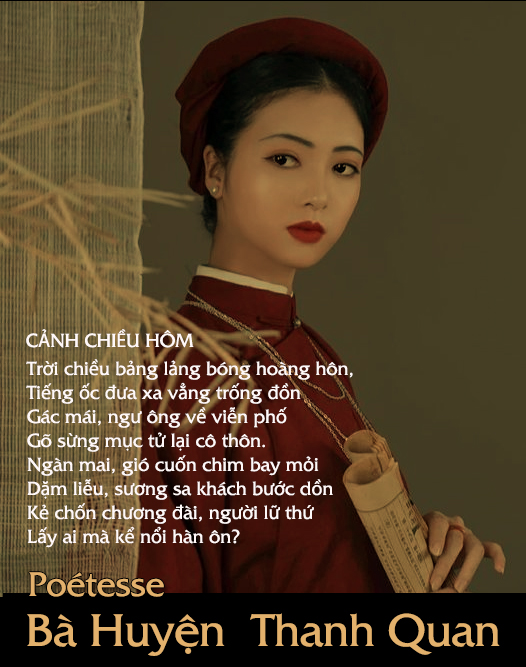
Poétesse Huyện Thanh Quan

Version française
Version anglaise

Ít ai biết tên thật của bà  trong làng văn học Việt Nam ở đầu thế kỷ XIX. Chỉ gọi bà là bà huyện Thanh  Quan vì chồng bà tên là Lưu Nghị, có  đậu cử nhân năm 1821 (Minh Mạng thứ 2) và có một thời làm tri huyện Thanh Quan (tỉnh Thái Bình). Thật sự tên thật của bà là Nguyễn Thị Hinh người phường Nghi Tâm, huyện Vĩnh Thuận, gần Hồ Tây, quận Tây Hồ (Hà Nội).  Cha của bà là ông Nguyễn Lý  (1755-1837) đỗ thủ khoa năm 1783  dưới  đời vua  Lê Hiến Tông. Qua các  bài thơ nôm  bi thương của bà, chúng ta thường thấy có sự nhớ thương  day dứt không nguôi, có một nỗi buồn của nữ sĩ đa tài  về những sự thay đổi của cảnh vật thâm trầm nhất là Thăng Long nơi mà sinh ra cũng không còn là kinh đô của đất nước mà là Huế. Còn chồng bà cũng bị cách chức một thời sau đó được thăng lên chức  Bát phẩm Thư lại bộ Hình và mất sớm ở tuổi 43. Bà rất nỗi tiếng « hay chữ » nhất là về loại thơ Đường. Loại thơ nầy  còn được gọi là cổ thi vì được  dùng cho việc thi cử tuyển chọn nhân tài, rất phổ biến ở Việt Nam vào thời Bắc thuộc (Nhà Đường). Bởi vậy thơ nầy mới có tên là thơ Đường.

Lọai thơ nầy chỉ vỏn vẹn có 8 câu ; mỗi câu 7 chữ tức là có tất cả là 8×7= 56 chữ  thế mà bà mô tả và dựng   lên được  một cách tài tình,  một bức tranh tuyệt vời từ ngọai cảnh lẫn nội dung. Tuy nhiên thể thơ nầy nó có luật rất chặt chẽ và được điều chỉnh bởi ba quy tắc thiết yếu :vần, điệu và đối khiến  ở Việt Nam từ 1925 thì các thi sĩ không còn tôn trọng quy luật bằng-trắc để có thể hiện  được sự lãng mạn của mình trong từng câu thơ. Nhưng những bài thơ thất ngôn bát cú của bà Thanh Quan thì phải xem đây là những  viên ngọc quý trong làng văn học Việt Nam. Bà đã thành công trong việc vẽ được một cảnh quan nhỏ bé với 56 chữ và bày tỏ cảm xúc sâu sắc  của mình một cách tinh tế  và sử dụng ngôn ngữ Hán Việt trong  thể thơ thất ngôn bát cú một cách điêu luyện.Theo nhà nghiên cứu  Trần Cửu Chấn, thành viên của Viện hàn lâm văn học và nghệ thuật Paris  thì các bài thơ của bà được xem như  là  những  viên ngọc quý được  bà chọn lọc và  gọt dũa đặt trên vương miện hay  được cắt bằng men.

Các bài thơ Đường của bà không chỉ mang tính chất cổ điển mà còn thể hiện được  sự điêu luyện trong cách dùng chữ. Bà còn có tài năng  biết biến thành những biểu tượng vô hồn như đá  (Đá vẫn trơ gan cùng tuế nguyệt), nước (Nước còn chau mặt với tang thương), hay cỏ cây (Cỏ cây chen đá, lá chen hoa) thành những  vật thể sinh động, còn mang tính và  hồn người và còn biết dùng màu sắc đậm nhạt để thể hiện sự tương phản (Chiều trời bảng lảng bóng hoàng hôn/ Vàng tỏa non tây bóng ác tà) hay đưa quá khứ về cùng với hiện tại  (Lối xưa xe ngựa hồn thu thảo/Nền cũ lâu đài bóng tịch dương/Ngàn năm gương cũ soi kim cổ)  khiến  các  bài thơ  tả cảnh của bà trở thành những bức tranh thiên nhiên  tuyệt vời cũng như các bức tranh thủy   mà họa sĩ dùng bút lông  vẽ trên lụa  với sắc thái   đậm  nhạt nhờ  quan sát chính xác.

Những bài thơ Đường của bà rất được các nho gia xưa  ngâm nga  yêu chuộng. Tuy rằng chỉ  tả cảnh và  bày tỏ nỗi cảm xúc của mình nhưng lời thơ rất thanh tao của một bà thuộc tầng lớp qúy tộc  cao  có học thức thường nghĩ ngợi đến nhà, đến nước. Đây là lời nhận xét của nhà nghiên cứu văn học Dương Quảng Hàm. Bà có tấm lòng thương tiếc nhà Lê nhưng  đồng thời  chỉ bày tỏ  tâm sự của một người không bằng lòng với thời cục, mong mỏi sự tốt đẹp như đã có ở một thời xa xôi trước đây mà thôi. (Nghìn năm gương cũ soi kim cổ/ Cảnh đấy người đây luống đoạn trường).  Cụ thể bà còn  giữ chức Cung Trung Giáo Tập để dạy học cho các công chúa và cung phi dưới thời vua Minh Mang  cûa nhà Nguyễn. Có một lần vua Minh Mạng có một bộ chén kiểu của Trung Quốc mới đưa sang và vẽ sơn thủy Việt Nam cũng như một số đồ sứ kiểu thời đó. Vua mới khoe và ban phép cho bà được làm một bài thơ nôm. Bà liền làm ngay hai câu thơ như sau :

Như in thảo mộc trời Nam lại
Đem cả sơn hà đất Bắc sang

khiến làm vua rất  hài lòng và thích thú. Phài nói  người Trung Hoa hay thường xem trọng sơn hà nên thường thấy ở trên các đồ kiểu còn ở Việt nam ta thì rất hướng về  ruộng lúa xanh tươi thế mà bà biết vận dụng  thành thạo  chữ nôm để có hai câu thơ đối  gợi ý tuyệt vời.

Nhưng sau khi chồng bà qua đời, một tháng sau bà xin  về hưu và  trở về sinh sống ở quê quán của mình cùng 4 đứa con. Bà mất đi ở tuổi 43 vào năm 1848.(1805-1848)

Các bài thơ nôm của bà tuy không nhiều chỉ có 6 bài nhưng thể hiện được tinh thần  thanh cao của các nho sĩ, cùng với tinh túy của Đường thi. Viết chữ Hán thì đã khó mà sang chữ Nôm thì càng khó hơn vì khó học mà  còn dùng lời văn  trang nhã, điêu luyện và ngắn gọn  như bà để giữ được quy tắc chặt chẽ của thơ Đường. Thật không có ai có thể bằng bà đựợc nhất là bà biết dùng ngoại cảnh để bày tỏ nỗi cô đơn  và tâm trạng của mình. Bà cũng không biết cùng ai để chia  sẻ cái ray rứt ở trong lòng (Một mảnh tình riêng ta với ta./Lấy ai mà kể nổi hàn ôn?). Bà luôn luôn tiếc nuối xót xa về quá khứ với một  tâm hồn thanh cao lúc nào cũng hướng về gia đình và quê hương.

QUA ĐÈO NGANG

Bước tới đèo Ngang, bóng xế tà
Cỏ cây chen lá, đá chen hoa
Lom khom dưới núí, tiều vài chú
Lác đác bên sông, chợ mâý nhà
Nhớ nước đau lòng, con quốc quốc
Thương nhà, mỏi miệng cái gia gia
Dừng chân đứng lại: trời non nước
Một mảnh tình riêng ta với ta.

THĂNG LONG HOÀI CỔ

Tạo hoá gây chi cuộc hí trường
Đến nay thắm thoát mấy tinh sương
Lối xưa xe ngựa hồn thu thảo
Nền cũ lâu đài bóng tịch dương.
Đá vẫn trơ gan cùng tuế nguyệt
Nước còn cau mặt với tang thương
Nghìn năm gương cũ soi kim cổ
Cảnh đấy, người đây luống đoạn trường.

CẢNH CHIỀU HÔM

Trời chiều bảng lảng bóng hoàng hôn,
Tiếng ốc đưa xa vẳng trống đồn
Gác mái, ngư ông về viễn phố
Gõ sừng mục tử lại cô thôn.
Ngàn mai, gió cuốn chim bay mỏi
Dặm liễu, sương sa khách bước dồn
Kẻ chốn chương đài, người lữ thứ
Lấy ai mà kể nổi hàn ôn?

CHIỀU HÔM NHỚ NHÀ

Vàng tỏa non tây bóng ác tà
Đầm đầm ngọn cỏ tuyết phun hoa
Ngàn mai lác đác chim về tổ
Dậm liễu bâng khuâng khách nhớ nhà
Còi mục gác trăng miền khoáng dã
Chài ngư tung gió bãi bình sa
Lòng quê một bước dường ngao ngán
Mấy kẻ chung tình có thấu là..?

CHÙA TRẤN BẮC

Trấn bắc hành cung cỏ dãi dầu
Ai đi qua đó chạnh niềm đau
Mấy tòa sen rớt mùi hương ngự
Năm thức mây phong nếp áo chầu
Sóng lớp phế hưng coi đã rộn
Chuông hồi kim cổ lắng càng mau
Người xưa cảnh cũ nào đâu tá
Ngơ ngẩn lòng thu khách bạc đầu

CẢNH THU

Thấp thoáng non tiên lác đác mưa
Khen ai khéo vẽ cảnh tiêu sơ
Xanh um cổ thụ tròn xoe tán,
Trắng xoá tràng giang phẳng lặng tờ.
Bầu dốc giang sơn, say chấp rượu,
Túi lưng phong nguyệt, nặng vì thơ
Cho hay cảnh cũng ưa người nhỉ ?
Thấy cảnh ai mà chẳng ngẩn ngơ ?…

Version française

Peu de gens connaissaient son vrai nom dans la communauté littéraire vietnamienne au début du XIXème siècle. On l’appelait  simplement  Madame  le sous-préfet   du  district Thanh Quan parce que son mari  Lưu Nghi fut reçu aux trois concours de la  licence en 1821 sous le règne de l’empereur  Minh Mang et fut un temps sous-préfet du district de Thanh Quan (province de Thái Binh). En fait, son vrai nom était  Nguyễn Thị Hinh. Elle était issue du village  Nghi Tâm du district de Vĩnh Thuận, près du lac de l’Ouest dans l’arrondissement de Tây Hồ (Hanoï). Son père était Mr Nguyễn Lý  (1755-1837)  ayant eu réussi  être le premier dans le concours interprovincial  en 1783 sous le règne du roi  Lê Hiến Tông. À travers à ses poèmes élégiaques, nous  remarquons toujours  la douleur et la tristesse  sempiternelle  de la poétesse talentueuse  face aux changements ayant un  profond impact au paysage, en particulier à l’ancienne capitale Thăng Long où elle est née. Cette dernière n’était  plus  la capitale du pays mais c’était plutôt Huế. Son mari fut licencié durant un certain temps avant  d’être promu au poste de secrétaire du Ministère de la Justice. Il fut décédé prématurément à l’âge de 43 ans. Elle a un penchant  pour la  versification  Tang. Ce type de poésie est également appelé la poésie antique car il est utilisé  dans les concours destinés à  recruter des gens de talent et il est  très populaire au Vietnam durant  la période de domination des gens du Nord (dynastie des Tang). C’est pourquoi il  s’appelle la poésie  des Tang.

Ce type de poème composé seulement de  8 vers de 7 pieds permet d’avoir un total de 8 × 7 = 56 mots. Pourtant la poétesse  réussit à décrire avec ingéniosité  un magnifique  tableau porté à la fois sur le  paysage externe et le contenu. Cependant, ce poème  des Tang a des règles très strictes et est régie par trois principes essentiels: la rime, le rythme et le parallélisme. Depuis 1925 au Vietnam, les poètes ne respectent plus les règles de la métrique pour s’exprimer librement dans le but d’obtenir le lyrisme dans chaque vers. Mais les poèmes des  Tang de Mme Thanh Quan doivent être considérés comme un joyau précieux dans le monde littéraire vietnamien.  Elle a réussi à  décrire et à brosser un petit paysage avec 56 mots et a exprimé ses profonds  sentiments de manière raffinée.  Elle a utilisé la langue sino-vietnamienne sous une forme poétique de 8 vers de   7 pieds avec adresse. Selon le chercheur Trần Cửu Chấn, membre de à l’Académie des Lettres et des Arts de Paris, ses poèmes Tang  sont considérés comme des perles  précieuses qu’elle  sélectionne, polit et met sur une couronne en or ou  ciselée en émail.

Ses poèmes n’ont pas seulement le caractère classique  mais ils  traduisent aussi la virtuosité  dans l’utilisation des mots. Elle a également le talent de savoir  transformer des éléments sans vie tels que la pierre (la pierre reste toujours impassible au fil du temps), l’eau (l’eau se montre indignée  devant l’instabilité des choses de la vie) ou l’herbe et les arbres (l’herbe et les arbres s’intercalent avec les rochers tandis que  les feuilles s’introduisent au sein des fleurs) en des êtres vivants  ayant la nature humaine  et l’âme et utiliser des couleurs foncée et claire  pour faire sortir les contrastes (Sous le ciel blafard, le soir ramène les ombres du crépuscule / Le jaune brille sur les montagnes de l’ouest sous les rayons du soleil couchant) ou rapprocher  le passé du présent (Lối xưa xe ngựa hồn thu thảo/  Sur la vieille voie  prise par les calèches, se promène l’âme des herbes d’automne)(Nền cũ lâu đài bóng tịch dương/ Les vestiges du palais somptueux sont éclairés par les rayons du soleil couchant) (Ngàn năm gương cũ soi kim cổ/ Au fil des siècles, dans ce  miroir antique, on met en parallèle le passé et le présent). Cela  fait de ses poèmes Tang  décrivant des  scènes de paysage  en de merveilleuses peintures naturelles comme les aquarelles  que l’artiste  réussit à peindre au pinceau   sur le  tissu en soie avec des nuances entre le foncé et clair  à l’aide d’une observation rigoureuse.

Ses poèmes des  Tang sont  très appréciés par les anciens érudits confucéens. Bien qu’ils  ne fassent  que décrire le paysage  et exprimer ses sentiments, les  termes  employés sont tellement  raffinés  et écrits par une dame aristocratique très instruite qui pense souvent à son foyer et à son pays. C’est le commentaire du chercheur littéraire  Dương Quảng Hàm. Elle avait un attachement profond à la dynastie des Lê  mais en même temps  elle n’exprimait que les sentiments de quelqu’un qui n’était pas satisfait de la situation actuelle et  qui espérait de retrouver  ce qui existait auparavant. ( Ngàn năm gương cũ soi kim cổ/Cảnh đấy người đây luống đoạn trường) (Devant ce tableau, mes entrailles se sentent déchirées en morceaux).  La preuve est qu’elle  acceptait la tâche d’enseigner les princesses et les concubines   sous le règne de l’empereur Minh Mạng de la dynastie des Nguyễn. Une fois, ce dernier reçut  un nouvel service  à thé en céramique venant de la Chine  et ayant pour décor le paysage du Vietnam. Il le montra  à ses subordonnés et demanda  à la poétesse de composer un distique. Elle ne tarda pas à  improviser  les deux sentences  suivantes:

Như in thảo mộc trời Nam lại
Đem cả sơn hà đất Bắc sang.

L’herbe et les arbres du Sud sont reproduits visiblement   sur la céramique ainsi  que  les monts et fleuves du Nord ainsi ramenés.

Sa spontanéité rendit satisfait l’empereur. Il faut reconnaitre que les Chinois font souvent attention aux montagnes et aux fleuves qu’on retrouve souvent sur les objets de décoration. Par contre au Vietnam, on s’attache   à la luxuriance des rizières. Elle réussit à  saisir l’essentiel et à composer ces deux vers parallèles tout en sachant respecter strictement  les règles de poésie des Tang. Lors du décès de son mari, un mois plus tard, elle demanda au roi de  lui permettre de désister sa fonction et retourner  à sa terre natale avec ses quatre enfants. Elle mourut en l’an 1848 lorsqu’elle n’avait que 43 ans. (1805-1848)

Étant  en nombre limité (6 en tout), ses poèmes réussissent à refléter  l’esprit noble des poètes et  la quintessence de la poésie des Tang. La composition de ces poèmes est déjà difficile en caractères chinois mais elle parait insurmontable  en  caractères démotiques dans la mesure où il faut respecter en plus les règles strictes de la poésie des Tang. Peu de gens  arrivent à l’égaler car elle sait utiliser des mots avec une rare finesse de langage pour révéler sa solitude et son état d’âme  tout en s’appuyant sur le pittoresque des scènes de la nature. Elle  ne sait non plus à qui elle peut révéler ses confidences. (Một mảnh tình riêng ta với ta./Lấy ai mà kể nổi hàn ôn?). Sous le poids de son état d’âme, elle se sent seule avec soi-même. Elle continue à éprouver  des regrets et se retourner vers  le passé  avec son esprit noble et à penser sans cesse  à son foyer et à sa terre natale.

 LE COL DE LA PORTE D’ANNAM (*)

Au moment je  gravis le Col de la Porte d’Annam, les ombres du crépuscule s’allongent vers l’occident
L’herbe et les arbres s’introduisent dans les rochers, les fleurs éclosent au milieu des feuilles.
Au pied de la montagne marchent quelques bûcherons , le dos courbé sous le faix;
Sur l’autre côté de la rivière s’élève un marché formé de quelques cases éparses.
En pensant avec douleur à la patrie absente le râle d’eau gémit sans arrêts,
Oppressée par l’attachement au foyer, la perdrix pusse des cris ininterrompus.
Je m’arrête sur le chemin et ne vois autour de moi que ciel, montagnes et mer;
Sous le poids de cet état d’âme, je me sens seule avec moi-même.

CRÉPUSCULE (*)

Sous un ciel blafard, le soir ramène les ombres du crépuscule
Au loin le son de la trompe des veilleurs répond au tam-tam du poste de garde.
Déposant sa rame, le vieux pêcheur regagne sa station lointaine;
Le jeune bouvier frappant sur les cornes de son buffle, retourne au hameau solitaire.
Les oiseaux volent avec effort vers les immenses touffes d’abricotiers qui ondulent sous le vent;
Le voyageur presse le pas sur la route que bordent les saules enveloppés de brume.
Moi je reste au logis ; vous , vous êtes en voyage;
À qui pourrais-je exprimer toutes mes confidences?

(*) Extrait du livre intitulé « Les grandes poétesses du Vietnam« , Auteur Trần Cửu Chấn. éditions Thế Giới

English version

Few people knew her real name in the Vietnamese literary community at the beginning of the 19th century. She was simply called Madame the sub-prefect of Thanh Quan district because her husband Lưu Nghi passed the three licensing exams in 1821 under the reign of Emperor Minh Mang and was at one time the sub-prefect of Thanh Quan district (Thái Binh province). In fact, her real name was Nguyễn Thị Hinh. She came from Nghi Tâm village in Vĩnh Thuận district, near West Lake in Tây Hồ ward (Hanoi). Her father was Mr. Nguyễn Lý (1755-1837), who succeeded in being first in the interprovincial exam in 1783 under the reign of King Lê Hiến Tông. Through her elegiac poems, we always notice the eternal pain and sadness of the talented poetess in the face of changes that had a profound impact on the landscape, especially the ancient capital Thăng Long where she was born. The latter was no longer the country’s capital but rather Huế. Her husband was dismissed for a time before being promoted to the position of secretary of the Ministry of Justice. He died prematurely at the age of 43. She had a penchant for Tang versification. This type of poetry is also called ancient poetry because it was used in exams intended to recruit talented people and it was very popular in Vietnam during the period of Northern domination (Tang dynasty).

This type of poem composed of only 8 lines of 7 syllables allows for a total of 8 × 7 = 56 words. Yet the poetess manages to ingeniously describe a magnificent picture focused both on the external landscape and the content. However, this Tang poem has very strict rules and is governed by three essential principles: rhyme, rhythm, and parallelism. Since 1925 in Vietnam, poets no longer adhere to the rules of meter to express themselves freely with the aim of achieving lyricism in each line. But Mme Thanh Quan’s Tang poems must be considered a precious jewel in the Vietnamese literary world. She succeeded in describing and painting a small landscape with 56 words and expressed her deep feelings in a refined manner. She used the Sino-Vietnamese language in a poetic form of 8 lines of 7 syllables with skill. According to researcher Trần Cửu Chấn, a member of the Academy of Letters and Arts of Paris, her Tang poems are considered precious pearls that she selects, polishes, and places on a golden crown or engraved with enamel.

Her poems not only have a classical character but also convey virtuosity in the use of words. She also has the talent to transform lifeless elements such as stone (stone remains impassive over time), water (water shows indignation at the instability of life’s things), or grass and trees (grass and trees intermingle with the rocks while the leaves penetrate among the flowers) into living beings with human nature and soul, and to use dark and light colors to bring out contrasts (Under the pale sky, the evening brings back the shadows of twilight / Yellow shines on the western mountains under the rays of the setting sun) or to bring the past closer to the present ((Lối xưa xe ngựa hồn thu thảo/The old path taken by carriages, the soul of autumn grass wanders there) (Nền cũ lâu đài bóng tịch dương/The remains of the sumptuous palace are illuminated by the rays of the setting sun) (Ngàn năm gương cũ soi kim cổ/ Over the centuries, in this ancient mirror, the past and present are compared). This makes her Tang poems, which describe landscape scenes, like wonderful natural paintings such as watercolors that the artist manages to paint with a brush on silk fabric with shades between dark and light through rigorous observation.

Her Tang poems are highly appreciated by ancient Confucian scholars. Although they only describe the landscape and express her feelings, the terms used are so refined and written by a highly educated aristocratic lady who often thinks of her home and country. This is the commentary of the literary researcher Dương Quảng Hàm. She had a deep attachment to the Lê dynasty but at the same time only expressed the feelings of someone who was not satisfied with the current situation and hoped to regain what existed before. ( Ngàn năm gương cũ soi kim cổ/Cảnh đấy người đây luống đoạn trường) (A thousand years the old mirror reflects the present/That scene, those people, all heartbreaking) (In front of this picture, my entrails feel torn to pieces). The proof is that she accepted the task of teaching the princesses and concubines under the reign of Emperor Minh Mạng of the Nguyễn dynasty. Once, the latter received a new ceramic tea set from China decorated with the landscape of Vietnam. He showed it to his subordinates and asked the poetess to compose a couplet. She quickly improvised the following two lines:

Như in thảo mộc trời Nam lại
Đem cả sơn hà đất Bắc sang.

The grass and trees of the South are visibly reproduced on the ceramics, as well as the mountains and rivers of the North brought there.

Her spontaneity pleased the emperor. It must be acknowledged that the Chinese often pay attention to the mountains and rivers frequently found on decorative objects. In contrast, in Vietnam, the focus is on the lushness of the rice fields. She succeeded in capturing the essence and composing these two parallel verses while strictly respecting the rules of Tang poetry. Upon the death of her husband, a month later, she asked the king to allow her to resign from her position and return to her homeland with her four children. She died in the year 1848 when she was only 43 years old (1805-1848).

Being limited in number (only 6 in total), her poems manage to reflect the noble spirit of the poets and the quintessence of Tang poetry. Composing these poems is already difficult in Chinese characters, but it seems insurmountable in demotic characters since one must also strictly adhere to the rules of Tang poetry. Few people manage to equal her because she knows how to use words with rare linguistic finesse to reveal her solitude and state of mind while relying on the picturesque scenes of nature. She also does not know to whom she can reveal her confidences. (Một mảnh tình riêng ta với ta./Lấy ai mà kể nổi hàn ôn?). She continues to feel regrets and to turn back to the past with her noble mind, constantly thinking of her home and her native land.

THE PASS OF THE GATE OF ANNAM (*)

As I climb the Pass of the Gate of Annam, the shadows of twilight stretch towards the west.
Grass and trees penetrate the rocks, flowers bloom amidst the leaves.
At the foot of the mountain walk some woodcutters, their backs bent under the load;
On the other side of the river rises a market made up of a few scattered huts.
Thinking painfully of the absent homeland, the water’s moan groans without stopping,
Oppressed by attachment to home, the partridge utters uninterrupted cries.
I stop on the path and see around me only sky, mountains, and sea;
Under the weight of this state of mind, I feel alone with myself.

TWILIGHT (*)

Under a pale sky, the evening brings back the shadows of twilight
In the distance, the sound of the watchmen’s horn answers the drum of the guard post.
Laying down his oar, the old fisherman returns to his distant station;
The young herdsman, striking the horns of his buffalo, returns to the solitary hamlet.
The birds fly with effort towards the vast clumps of apricot trees swaying in the wind;
The traveler quickens his pace on the road lined with willows wrapped in mist.
I stay at home; you, you are traveling;
To whom could I confide all my secrets?

(*) Excerpt from the book titled « The Great Poetesses of Vietnam, » Author Trần Cửu Chấn. Thế Giới editions
 

[Return LITTERATURE]

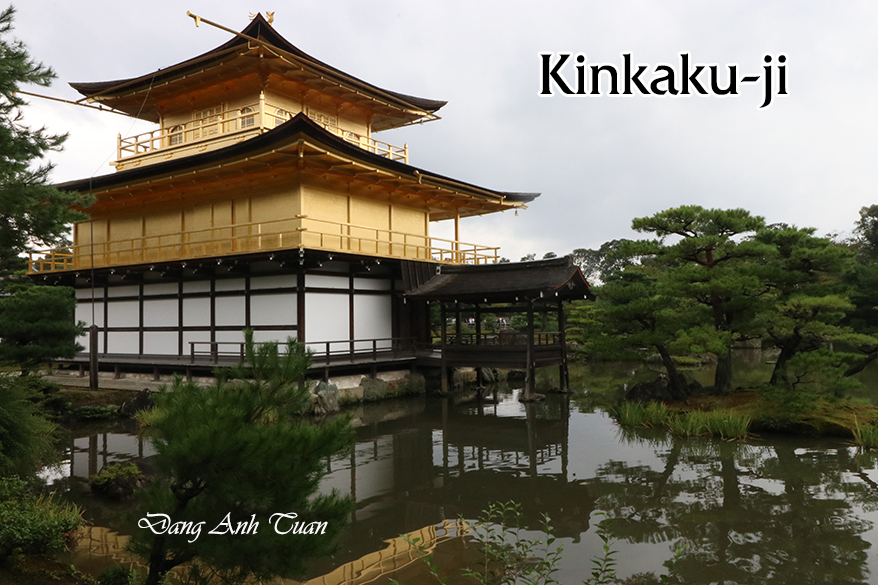
Kinkaku-ji (Kim Các Tự)

Kinkaku-ji (Kim Các Tự)

Version française
Version anglaise
Galerie des photos

Được biết đến với cái tên quen thuộc là Kinkaku-ji, ngôi chùa Rokuon-ji (Lộc Uyển Tự) này là một trong những viên ngọc quý của cố đô Kyoto. Trái ngược với sự đơn giản mà chúng ta thường thấy trong kiến ​​trúc Phật giáo Nhật Bản, Kinkaku-ji là một tòa nhà ba tầng với những bức tường dát vàng đặt giữa một hồ nước. Điều này cho phép toà nhà  phản chiếu ánh sáng vàng trên mặt nước  hồ quanh năm trong một khung cảnh tráng lệ và thanh tịnh. Trên đỉnh tòa nhà rực rỡ này còn có một con phượng hoàng bằng đồng.

Trong ngôi nhà vàng này, chúng ta tìm thấy ba phong cách kiến ​​trúc, tầng trệt tương ứng với phong cách của các cung điện ở thời Heian (794 – 1185), tầng một là phong cách của các ngôi nhà của các võ sĩ và tầng trên cùng là phong cách của các ngôi chùa thiền. Ban đầu, vị tướng quân thứ ba Yoshimitsu của gia tộc Ashikaga (1358-1408), một đệ tử nhiệt thành của thiền sư Soseki, muốn biến nơi này thành nơi ở riêng trong thời gian ông từ giã cuộc sống công cộng. Khi ông qua đời, con trai ông là Yoshimochi quyết định biến nơi này thành một ngôi chùa Thiền tông cho trường phái Rinzai và đặt tên là « Rokuon-ji« . Sau đó nó bị phá hủy nhiều lần bởi hỏa hoạn. Lần trùng tu cuối cùng có niên đại  năm 1955 là bản sao giống hệt như thưở ban đầu. Đây là di sản thế giới được cơ quan UNESCO công nhận từ năm 1994 và được xem là ngôi chùa Phật giáo săn đón một số lượng lớn du khách mỗi năm  đến từ Nhật Bản.

Etant connu sous son nom usuel de Kinkaku-ji, ce temple  Rokuon-ji (Lộc Uyển Tự)  est l’un des bijoux de l’ancienne capitale de Kyoto. Contrairement à la simplicité qu’on est habitué à voir dans l’architecture bouddhique japonaise, Kinkaku-ji est une bâtisse à trois étages dotée des parois recouvertes de feuilles d’or trônant au milieu d’un étang. Cela lui permet de  refléter tout le long de l’année sur la surface de l’eau  sa lumière dorée dans un cadre magnifique et serein.  Au sommet de cette bâtisse éblouissante se trouve un phénix en cuivre. On retrouve dans ce pavillon d’or trois styles d’architecture, le rez-de-chaussée correspondant au style des palais de l’époque Heian (794 – 1185), le premier étage à celui des maisons des samouraïs et le dernier étage à celui des temples zen. À l’origine, le troisième shogun Yoshimitsu de la famille  Ashikaga (1358-1408), disciple fervent du moine zen Soseki veut faire de ce lieu une demeure privée lors de son retrait de la vie publique. À sa mort, son fils Yoshimochi  décide de transformer l’endroit en temple zen pour l’école Rinzai et le nomme « Rokuon-ji« .  Puis il  est  détruit plusieurs fois par les flammes. La dernière restauration datant  de 1955 est la copie absolument conforme de l’ancien pavillon.  Il  est inscrit au Patrimoine mondial de l’Unesco depuis 1994 et il est considéré comme le temple bouddhiste accueillant  un grand nombre de visiteurs par an du Japon.

Picture gallery

kinkaku_ji

Version anglaise

Known by its common name Kinkaku-ji, this Rokuon-ji temple is one of the jewels of the ancient capital Kyoto. Unlike the simplicity usually seen in Japanese Buddhist architecture, Kinkaku-ji is a three-story building with walls covered in gold leaf, standing in the middle of a pond. This allows it to reflect its golden light on the water’s surface throughout the year in a magnificent and serene setting. At the top of this dazzling building is a copper phoenix. In this golden pavilion, three architectural styles can be found: the ground floor corresponds to the style of palaces from the Heian period (794 – 1185), the first floor to that of samurai houses, and the top floor to that of Zen temples. Originally, the third shogun Yoshimitsu of the Ashikaga family (1358-1408), a fervent disciple of the Zen monk Soseki, wanted to make this place a private residence upon his retirement from public life. Upon his death, his son Yoshimochi decided to transform the place into a Zen temple for the Rinzai school and named it « Rokuon-ji. » It was then destroyed several times by fire. The last restoration, dating from 1955, is an exact replica of the former pavilion. It has been listed as a UNESCO World Heritage site since 1994 and is considered the Buddhist temple in Japan that welcomes a large number of visitors each year.

[RETURN JAPAN]


Kyoto (Cố đô Kyoto, Nhật Bản)

Kyoto (Cố đô Kyoto, Nhật Bản)

Version française
Version anglaise
Pictures gallery

Có một thời  thịnh vượng, Tokyo còn được gọi là Edo.  Muốn đến cố đô Kyoto lữ khách phải  đi  bộ  hay đi ngựa nhiều ngày với con đường ngoạn mục Tokaido  dài có 500 cây số.Tuyến đường nầy  có nhiều  lữ quán, các đền thờ thần đạo hay Phật giáo, các di tích lịch sử sẽ  để lại cho lữ khách những kỷ niệm khó quên  như đèo Nakayama, đền Ise, chùa Thanh Thủy (Kiyomieu-dera), chùa  gác vàng Kinka kuji của tướng quân Yoshimitsu Ashikaga  vân vân …  Chính vì thế tuyến đường nầy trở  nên một nguồn cảm hứng không ít cho nhiều  họa sỹ  mà trong đó có Hiroshige mà chúng ta được biết  qua  bộ  tranh màu của ông được in trên  các mộc bản  của thế giới nổi trôi,  thường gọi là ukiyo-e (phù thế hội).  Thời ki hoàng kim  của ukiyo-e là từ khoảng những năm 1790 cho đến năm 1850. Sáng nay tụi nầy được anh HDV dẫn  đến cố đô  Kyoto. Cũng tuyến đường nầy nhưng  được thay thế bằng con  đường sắt với tàu cao tốc TGV Tokaido Shinkansen và được dừng lại ở nhà ga Kakegawa để lấy  xe bus đi tham quan vườn hoa nổi tiếng của Nhật Hammatsu của tỉnh Shizuoka. Trạm ga nào cũng sạch sẽ luôn ở  trên tàu cao tốc cũng vậy trong một không gian yên lặng.

Rất tiếc trời rất u ám nên chụp ảnh không vừa ý chi cho mấy khi đến tham quan công viên  Hammatsu. Nơi nầy có rất nhiều cây bonsai hình dáng khác nhau trông lạ mắt lắm đấy nhưng cũng không kém  phần lãng mạn như  ở các  công viên Paris. Sau đó tụi này lấy xe  bus đến cố đô Kyoto nơi ở của Nhật hoàng  vào buổi chiều. Ở đây đường xá cũng sạch  sẽ nhưng thời gian có vẻ chậm lại nhịp sống hằng ngày   tựa như ở cố đô Huế  của nước ta  vậy.

Version française

À une  époque florissante, Tokyo était également connue sous le nom d’Edo. Pour se rendre à l’ancienne capitale de Kyoto, les voyageurs devaient marcher  à pied ou à cheval plusieurs jours sur la spectaculaire route du Tokaido, longue de cinq cent  kilomètres. Celle-ci  comptait de nombreuses auberges, temples shintoïstes ou bouddhistes et des sites historiques qui leur ont laissé des souvenirs inoubliables tels que le col Nakayama, le temple Ise, la pagode Kiyomieu-dera ou le pavillon d’or Kinkaku-ji  du shôgun Yoshimitsu Ashikaga  etc. C’était  pourquoi cet itinéraire devenait ainsi  une source d’inspiration pour de nombreux artistes, dont Hiroshige que l’on connaît grâce à ses peintures  en couleurs imprimées sur planches de bois du monde flottant, souvent appelées ukiyo-e. L’âge d’or de l’ukiyo-e s’était déroulé entre 1790 et 1850 environ. Ce matin, le guide nous a emmenés dans l’ancienne capitale de Kyoto. Ce même itinéraire a été remplacé par le  chemin de fer avec le train à grande vitesse TGV Tokaido Shinkansen. Nous devions  descendre  à la gare de Kakegawa pour prendre un bus afin de pouvoir  visiter le célèbre parc floral Hammatsu de la préfecture de Shizuoka. Nous constations la propreté  partout,  y  compris dans le train à grande vitesse dans un espace silencieux.

À  cause du mauvais temps, il était impossible pour moi de faire des photos comme il le fallait  lors ma visite au parc floral. Celui-ci possédait de nombreux bonsaïs de formes différentes. Cela  m’étonna tellement mais il  n’était  pas moins romantique que les jardins  de Paris. Puis nous allions prendre le bus dans l’après-midi pour rendre visite à l’ancienne capitale de Kyoto, où résidait l’empereur du Japon. Ici, les rues sont propres mais  le temps semble ralentir le rythme de vie au quotidien  comme celui trouvé dans l’ancienne capitale Huế de notre pays.

Version anglaise

At a flourishing time, Tokyo was also known as Edo. To reach the former capital Kyoto, travelers had to walk or ride horses for several days along the spectacular Tokaido route, which is five hundred kilometers long. This route included numerous inns, Shinto or Buddhist temples, and historical sites that left them unforgettable memories such as the Nakayama Pass, the Ise Temple, the Kiyomizu-dera Pagoda, or the Kinkaku-ji Golden Pavilion of Shogun Yoshimitsu Ashikaga, etc. This is why this itinerary became a source of inspiration for many artists, including Hiroshige, who is known for his color paintings printed on woodblocks of the floating world, often called ukiyo-e. The golden age of ukiyo-e took place roughly between 1790 and 1850. This morning, the guide took us to the former capital Kyoto. This same route has been replaced by the railway with the high-speed TGV Tokaido Shinkansen train. We had to get off at Kakegawa station to take a bus in order to visit the famous Hamamatsu flower park in Shizuoka Prefecture. We noticed cleanliness everywhere, including on the high-speed train in a quiet space.

Because of the bad weather, it was impossible for me to take photos properly during my visit to the floral park. It had many bonsais of different shapes. This surprised me so much, but it was no less romantic than the gardens of Paris. Then we were going to take the bus in the afternoon to visit the former capital of Kyoto, where the emperor of Japan resided. Here, the streets are clean, but time seems to slow down the daily pace of life, similar to what is found in the former capital Huế of our country.

Pictures gallery

[RETURN JAPAN]


Con phượng hoàng (Le phénix)

Con phượng hoàng

The phoenix (Fenghuang)

Version française
English version

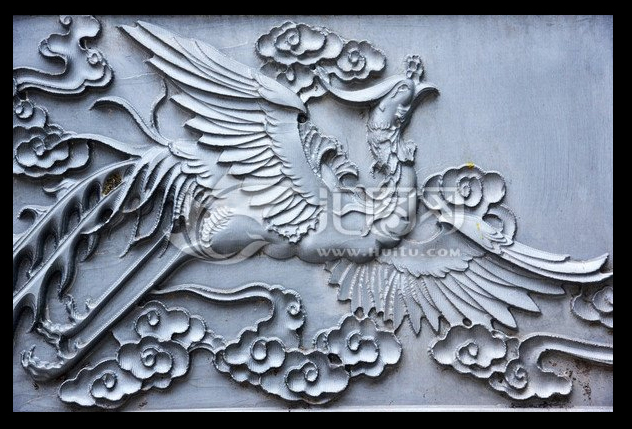
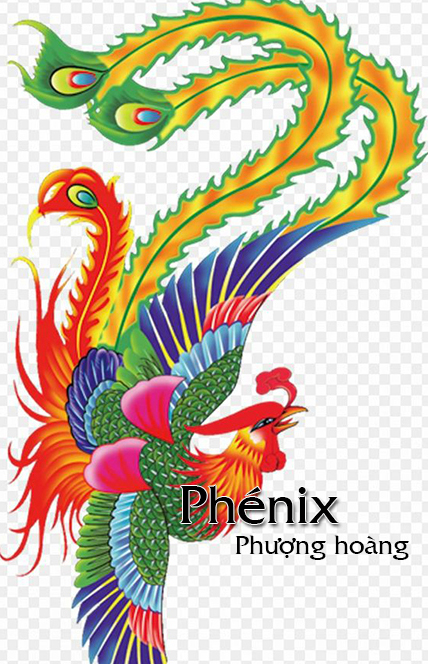
Cũng như kỳ lân mà người  Hoa tHạ thường dùng  để ám chỉ một cập thì con phượng hoàng (Fenghuang)  nầy cũng vậy. Phượng  hay phụng chỉ  con đực và hoàng là con cái. Nhưng người dân Việt chỉ gọi  gắn gọn con chim nầy bằng phượng hoàng  trong văn hóa. Phượng hoàng có phần tựa giống  con chim trĩ có mỏ diều hâu dài, mảo trĩ, vảy cá chép, móng chim ưng và đuôi công. Lông của nó đại diện cho màu sắc của ngũ hành: đen, trắng, đỏ, xanh và vàng. Nó là một loài chim lớn ở thời tiền sử thường được coi là con chim thần thoại trong văn hóa phương Đông và hoàn toàn khác biệt với phượng hoàng  trong khái niệm của phương tây. Theo truyền thuyết, phượng hoàng chỉ xuất hiện vào thời thái bình, và sẽ ẩn mình trong thời loạn lạc. Chim còn biểu thị cho sự hòa hợp âm dương. Bởi vậy chim được dùng cùng rồng để nói lên  quan hệ hạnh phúc  và quyền lực mà Thượng đế ban cho hoàng hậu (Âm) và vua (Dương). Nó còn biểu hiện   đức hạnh và vẻ duyên dáng nữa. Trong truyền thuyết « Con Rồng Cháu Tiên » của dân tộc ta thì chim là hoá thân của mẹ Tiên  Âu Cơ cùng cha rồng Lạc Long Quân.

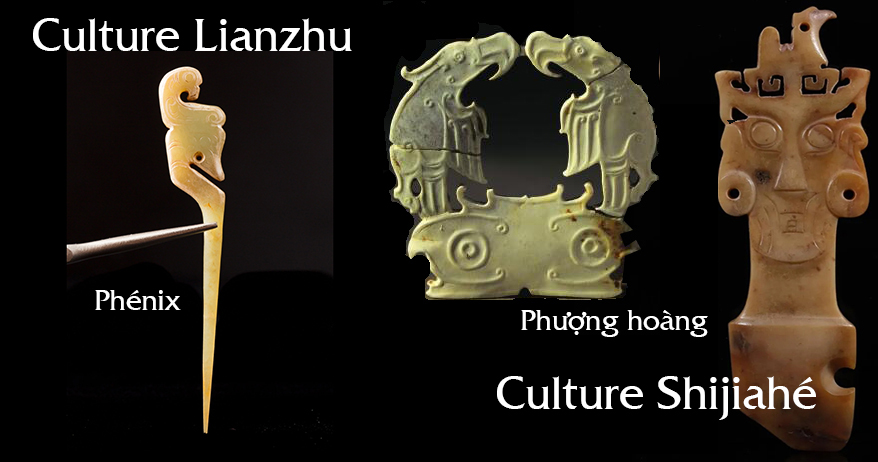
Vậy con phượng hoàng nầy nó có nguồn gốc từ đâu? Nó có phải là con linh vật  của người Hoa Hạ hay của đại  tộc Bách Việt? Dĩ nhiên nó xuất hiện ở Trung Hoa nhưng ở trong địa bàn của dân Bách Việt bị thôn tính bởi người Hoa Hạ vì hình tượng của nó được tìm thấy sớm nhất trên các miếng ngọc và các hiện vật của nền văn  hóa Thạch Gia Hà (Shiziahé) và Lương Chữ (Lianzhu) ở vùng trung và hạ lưu của sông Dương Tử, nơi  mà người dân  có một lối sống định cư ổn định sớm cùng một hệ thống tưới tiêu ruộng lúa  bằng nguồn nước lưu giữ qua các kênh mương. Các học giả Trung Hoa xác nhận  cư dân ở đây là Vũ Nhân (羽 人) hay Vũ dân tức là những người  thờ vật  Chim và Thú tức là Tiên Rồng (truyền thuyết Con Rồng Cháu Tiên).Theo tự điển Hán nôm, chữ () chỉ chung một loại chim. Tại sao Tiên Rồng? Từ thưở xưa, chim  là  loại  vật có thể   bay cao vượt núi đến bồng lai tiên cảnh, nơi  cư ngụ của các tiên nữ. Còn rồng chắc chắn là thủy quái  mà trong sử nước ta  gọi là con thuồng luồng (giao long). Thời đó ở sông Dương Tử có  một loại cá sấu  nay đang ở  trong tình trạng bị đe dọa tuyệt chủng. Để tránh sự tấn công của thủy quái, tộc Việt hay có tục lệ xâm mình. Bởi vậy tộc Việt ghép cho vật tổ của họ là Chim và Rồng với quan niệm song trùng lưỡng hợp  (hai thành một).

Còn tên thị tộc  Hồng Bàng  cũng từ vật tổ Chim Rồng mà ra. Ở  văn hóa Thạch Gia Hà còn thấy các hiện  vật  hình tròn bằng ngọc thể hiện chim phượng hoàng hay rồng được tạo tác một cách tinh vi. Theo nhà khoa học chính trị người Mỹ Charles E. Merriam của đại học Chicago thì đây là một phương thức  hợp pháp hóa thực nghiệm  quyền lực và giữ vai trò «miranda» [*] để buộc dân chúng phải kính trọng  hai loại vật linh thiêng nầy. Bởi vậy  cư dân ở đây có thói xâm hình rồng trên người  và  đội mũ lông chim để thể hiện điều nầy. Các tập tục nầy đều có ở dân tộc ta và được thể hiện ở trên trống Đồng Sơn. Chính  ở nơi nầy về sau  thời Chiến Quốc là địa bàn của nước Sở sau khi thôn tính được  hai  nước Ngô Việt của Ngũ Tử Tư Câu Tiễn. Chính cũng có một thưở ban sơ trong truyền thuyết  của dân tôc ta có nhắc đến họ Hồng Bàng. Cụm từ nầy cũng từ Chim Rồng mà ra. Còn nước Văn Lang, bắc tới  Hồ Động Đình, đông thì Biển Đông, tây giáp với Ba Thục, nam tới nước Hồ Tôn (Chiêm Thành) thì cũng nằm hoàn toàn trong địạ bàn của nước Sở. Sự trùng hợp ngẫu nhiên nầy  càng cũng cố thêm quan điểm của Edouard Chavannes[2] và Léonard Aurousseau [3]: người Việt cổ và  các thần dân của  nước Sở có cùng chung tổ tiên:  chữ Mi ở trong  ngôn ngữ nước Sở khi dịch sang Hùng () trong tiếng Việt thì được xem là tên của các vị vua nước  Sở và các vị vua nước Việt. Dựa trên sử  ký  lịch sử của Tư Mã Thiên do E. Chavannes [2]  dịch, chúng ta còn  biết rõ  vua của nước Sở  đến từ những kẻ man rợ ở miền Nam (hay Bách Vịệt). Hùng Cừ nói: Tôi là một kẻ man rợ và tôi không nhận chức tước và tên truy tặng của  nước Trung Hoa cả.

Nói tóm lại, phượng hoàng là con linh vật của đại tộc Bách Việt. Bởi vậy ở vùng đất của đại tộc Bách Việt như ở Quảng Đông thuộc nước Nam Việt thưở xưa nay vẫn còn món ẩm thực nổi tiếng đó là món ăn có tên là Phượng trảo » (鳳爪) tức là chân gà hầm  nấu với đậu đen. Cũng có ở môt địa diểm nổi tiếng tên là Phượng hoàng cổ trấn (Fenghuang) ở tỉnh Hồ Nam trong địa bàn nước Sở của Trung quốc ngày nay. Nơi nầy còn  gìn giữ được những  nét văn hóa đặc sắc  của người Miêu (hay Hmong), một tộc trong đại tộc Bách Việt. Cần nhắc lại trong  tập Lĩnh Nam Chích Quái có kể rằng vào đời  Chu Thành Vương (Zhou Chengwang), Hùng  Vương sai bề tôi tự xưng là người Việt Thường đem dâng nhà Chu  một con chim trĩ trắng để liên kết  sự giao hảo và thân thiện với nhà Chu trong thời bình. Có phải con chim trĩ  nầy là  con phượng hoàng không? Có người cho rằng con chim Lạc ở trên trống Đồng Sơn là tiền thân của hình tượng phượng hoàng ở những thời đại sau này.  Có đúng hay không? Sự việc  nầy chưa có phần giải đáp cho đến ngày hôm nay  nhưng chúng ta có thể xác  định một điều là người Việt cổ có tín ngưỡng thờ chim.   

[*]miranda: thuật ngữ này liên quan đến các biểu tượng đề cập đến cảm xúc của một dân tộc nhằm áp đặt sự tôn trọng hoặc sự thán phục.


Version française

Analogue à la licorne que les Chinois ont utilisée pour se référer à un couple d’animaux, le phénix (Fenghuang) l’est aussi.  Phượng  (ou phụng) désigne un mâle tandis que Hoàng  est réservée à la femelle. Les Vietnamiens appellent tout simplement le phénix sans distinction dans leur culture. Cet oiseau ressemble à un faisan avec un long bec de faucon, une crête de faisan, des écailles de carpe, des griffes d’aigle et une queue de paon. Ses plumes représentent les couleurs des cinq éléments (Wu Xing): noir, blanc, rouge, jaune et vert. C’est un grand oiseau préhistorique souvent considéré comme un oiseau mythique dans la culture de l’Orient et complètement différent du phénix trouvé dans les concepts occidentaux. Selon la légende, le phénix n’apparaît qu’en temps de paix et se cache en temps de trouble ou du désordre. Il manifeste  également l’harmonie entre le  yin et le yang. C’est pourquoi on se sert du phénix  pour évoquer à la fois  la relation heureuse et le pouvoir  que Dieu accorde à la reine (Yin) et au roi (Yang). Il est aussi le symbole de vertu  et de grâce.  Dans la légende «Le fils du dragon et le petit-fils de l’Immortelle» de notre peuple, l’oiseau est la réincarnation de la fée mère Âu  Cơ et du père dragon Lac Long Quan. Alors, d’où vient ce phénix ? Est-il  l’oiseau sacré  des Chinois ou celui des Bai Yue?

Il est apparu en Chine mais dans l’aire  des Bai  Yue annexée par les  Chinois  car son image a été retrouvée plus tôt sur les objets en jade des  cultures de  Shiziahé et Liangzhu  se trouvant respectivement  dans les  cours milieu et  inférieur du fleuve Yang Tse, où les gens avaient un mode de vie sédentaire précoce et un système d’irrigation et de drainage des rizières avec de l’eau emmagasinée via des canaux. Les érudits chinois confirment que les gens d’ici sont des Vũ Nhân (羽 人) ou des  Vũ Dân. Ce sont  les adorateurs des oiseaux et des  animaux,  càd les Enfants du Dragon et les Grands Enfants de l’Immortelle (Con Rồng Cháu Tiên). Selon le dictionnaire sino-vietnamien, le mot Vũ () fait référence à un oiseau. Pourquoi Fée-Dragon ? Dans les temps anciens, les oiseaux sont  des animaux pouvant  voler au-dessus des montagnes jusqu’à l’endroit où vivent les Immortelles. Quant au dragon, il est certainement un monstre marin qui, dans l’histoire de notre pays, s’appelle le dragon d’eau (Giao Long). À cette époque, dans le fleuve Yang Tsé, il y avait un type d’alligator  qui est maintenant en danger d’extinction. Afin d’éviter l’attaque de  ce monstre marin, les Proto-Vietnamiens avaient  coutume de se tatouer. C’est pourquoi ils  associaient  à leur totem le couple (Oiseau /Dragon) avec la notion de dualité (deux en un). Le nom du clan Hồng Bàng provient également du couple (Oiseau/Dragon).

Dans la culture de Shijiahé, il y a également des artefacts ronds en jade (phénix, dragons) et fabriqués de manière tellement sophistiquée. Selon le politologue américain Charles E. Merriam [1] de l’université de Chicago, il s’agit d’un moyen de légitimation empirique du pouvoir et de possession de la fonction «miranda» pour forcer les gens à respecter ces deux animaux sacrés. C’est pourquoi les gens d’ici aiment tatouer des dragons sur leur corps et porter des chapeaux de plumes pour les montrer. Ces coutumes  ont été retrouvées chez notre peuple et sur le tambour de bronze de  Đồng Sơn. C’est ici  qui devint plus tard durant la période des Royaumes combattants, le  territoire de l’État Chu après que ce dernier avait réussi à annexer les deux états Wu et Yue de Wu Zisu et Goujian. Dans le légendes de notre peuple, le nom patronymique Hồng Bàng est souvent mentionné. Ce nom  trouve également  toute sa source  dans les mots « Oiseau » et « Dragon ».

Etant délimité au nord par le lac Dongtin, à l’est par la mer de l’Est, à l’ouest par le royaume Ba et  au sud par le Champa, le royaume Văn Lang se trouvait entièrement dans l’aire géographique  de l’état Chu. Cette coïncidence renforce encore les points de vues d’Édouard Chavannes[2] et de Léonard Aurousseau[3] : les Proto-Vietnamiens et les sujets de l’état Chu avaient des ancêtres communs: les noms Mi de l’état  Chu  traduit en Hùng () en vietnamien étaient considérés comme les noms des rois de l’état Chu et ceux des rois vietnamiens. D’après les chroniques historiques de Sima Qian traduites par E. Chavannes [2], on sait aussi que le roi de Chu était issu des barbares (Man Di)  du Sud (ou Bai Yue). Hùng Cừ a déclaré : Je suis un barbare et je n’accepte pas de titres et de noms posthumes en provenance de  la Chine. En résumé, le phénix est l’animal sacré des Bai Yue. C’est pourquoi dans les territoires des Bai Yue, comme à Canton appartenant  autrefois au royaume de Nan Yue, il existe encore un plat célèbre appelé « Griffes de Phénix » (鳳爪), où des pattes de poulet  sont mitonnées avec des haricots noirs.  Il y a également une ancienne ville très célèbre appelée  en vietnamien « Phượng Hoàng cổ  Trấn (ou village ancien Fenghuang » dans la province du Hunan faisant partie du territoire de l’état  Chu d’autrefois où on conserve encore les caractéristiques culturelles uniques du peuple Miao (ou Hmong), l’une des tribus des Bai Yue.

Il est important de rappeler que dans le recueil intitulé  « La Sélection des contes étranges à Lĩnh Nam (Lĩnh Nam Chích Quái », il est dit que sous le règne du  roi Zhu Chengwang (Chu Thành Vương) de l’état Zhou, le roi Hùng ordonna à son ambassadeur de présenter au roi de Zhou  un faisan blanc  pour se lier de bonne relation et d’amitié avec l’état Zhou en temps de paix. Le faisan est-il le phénix évoqué ? Certains pensent que l’oiseau  Lạc sur le tambour de bronze  Đồng Sơn est le précurseur de l’image du phénix des époques ultérieures. Est-ce vrai ou pas? Ce fait n’apporte  pas de réponse jusqu’à aujourd’hui. Par contre nous pouvons  affirmer que les Proto-Vietnamiens croyaient au culte des oiseaux.


 miranda: ce terme se rapporte aux symboles s’adressant à l’émotivité d’un peuple pour lui imposer le respect ou l’émerveillement.

Analogous to the unicorn that the Chinese used to refer to a pair of animals, the phoenix (Fenghuang) is as well. Phượng (or phụng) designates a male, while Hoàng is reserved for the female. The Vietnamese simply call the phoenix without distinction in their culture. This bird resembles a pheasant with a long hawk-like beak, a pheasant crest, carp scales, eagle claws, and a peacock tail. Its feathers represent the colors of the five elements (Wu Xing): black, white, red, yellow, and green. It is a large prehistoric bird often considered a mythical bird in Eastern culture and completely different from the phoenix found in Western concepts. According to legend, the phoenix appears only in times of peace and hides in times of trouble or disorder. It also represents the harmony between yin and yang. That is why the phoenix is used to evoke both the happy relationship and the power that God grants to the queen (Yin) and the king (Yang). It is also a symbol of virtue and grace. In the legend « The Dragon’s Son and the Immortal’s Grandson » of our people, the bird is the reincarnation of the fairy mother Âu Cơ and the dragon father Lạc Long Quân. So, where does this phoenix come from? Is it the sacred bird of the Chinese or that of the Bai Yue?

It appeared in China but in the Bai Yue area annexed by the Chinese because its image was found earlier on jade objects from the Shiziahé and Liangzhu cultures located respectively in the middle and lower courses of the Yangtze River, where people had an early sedentary lifestyle and a system of irrigation and drainage of rice fields with water stored through canals. Chinese scholars confirm that the people here are Vũ Nhân (羽人) or Vũ Dân. They are worshippers of birds and animals, that is, the Children of the Dragon and the Great Children of the Immortal (Con Rồng Cháu Tiên). According to the Sino-Vietnamese dictionary, the word Vũ (羽) refers to a bird. Why Fairy-Dragon? In ancient times, birds were animals capable of flying over mountains to the place where the Immortals live. As for the dragon, it is certainly a sea monster which, in the history of our country, is called the water dragon (Giao Long). At that time, in the Yangtze River, there was a type of alligator which is now endangered. To avoid attacks from this sea monster, the Proto-Vietnamese used to tattoo themselves. That is why they associated their totem with the couple (Bird/Dragon) with the notion of duality (two in one). The name of the Hồng Bàng clan also comes from the couple (Bird/Dragon).

In the culture of Shijiahé, there are also round jade artifacts (phoenix, dragons) made in such a sophisticated manner. According to American political scientist Charles E. Merriam [1] from the University of Chicago, this is an empirical means of legitimizing power and possessing the « miranda » function to compel people to respect these two sacred animals. That is why the people here like to tattoo dragons on their bodies and wear feathered hats to show them. These customs have been found among our people and on the bronze drum of Đồng Sơn. This is the place that later, during the Warring States period, became the territory of the Chu State after it succeeded in annexing the two states Wu and Yue of Wu Zisu and Goujian. In the legends of our people, the surname Hồng Bàng is often mentioned. This name also finds its origin in the words « Bird » and « Dragon. »

Being bordered to the north by Dongtin Lake, to the east by the East Sea, to the west by the Ba kingdom, and to the south by Champa, the Văn Lang kingdom was entirely located within the geographical area of the Chu state. This coincidence further supports the views of Édouard Chavannes[2] and Léonard Aurousseau[3]: the Proto-Vietnamese and the subjects of the Chu state had common ancestors: the Mi names of the Chu state translated into Hùng () in Vietnamese were considered the names of the kings of the Chu state and those of the Vietnamese kings. According to the historical chronicles of Sima Qian translated by E. Chavannes[2], it is also known that the king of Chu descended from the southern barbarians (Man Di) (or Bai Yue). Hùng Cừ declared: I am a barbarian and I do not accept titles and posthumous names from China. In summary, the phoenix is the sacred animal of the Bai Yue. That is why in the territories of the Bai Yue, such as in Canton, formerly belonging to the Nan Yue kingdom, there still exists a famous dish called « Phoenix Claws » (鳳爪), where chicken feet are stewed with black beans. There is also a very famous ancient town called in Vietnamese « Phượng Hoàng cổ Trấn » (or ancient Fenghuang village) in Hunan province, which was part of the territory of the former Chu state, where the unique cultural characteristics of the Miao (or Hmong) people, one of the Bai Yue tribes, are still preserved.

It is important to recall that in the collection entitled « The Selection of Strange Tales in Lĩnh Nam (Lĩnh Nam Chích Quái), » it is said that during the reign of King Zhu Chengwang (Chu Thành Vương) of the Zhou state, King Hùng ordered his ambassador to present to the King of Zhou a white pheasant to establish good relations and friendship with the Zhou state in times of peace. Is the pheasant the phoenix mentioned? Some believe that the Lạc bird on the Đồng Sơn bronze drum is the precursor of the image of the phoenix in later periods. Is this true or not? This fact remains unanswered to this day. However, we can affirm that the Proto-Vietnamese believed in the worship of birds.

miranda: this term refers to symbols that appeal to the emotions of a people to impose respect or wonder upon them.

Bibliographie:

[1] Charles E. Merriam, Political power : Its composition and incidence, New York-Londres, Whittlesey House/McGraw-Hil, 1934.
[2] Edouard Chavannes :Mémoires historiques de Sseu-Ma Tsien de Chavannes, tome quatrième, page 170).
[3] Léonard Rousseau: La première conquête chinoise des pays annamites (IIIe siècle avant notre ère). BEFO, année 1923, Vol 23, no 1.
[4] Shin’ichi Nakamura: Le riz, le jade et la ville. Évolution des sociétés néolithiques du Yangzi. Éditions de l’EHESS « Annales. Histoire, Sciences Sociales. 2005/5 60 année  pages 1009 à 1034.

[Return RELIGION]

Con Lân (La licorne)

Version française
Version anglaise
Galerie des photos

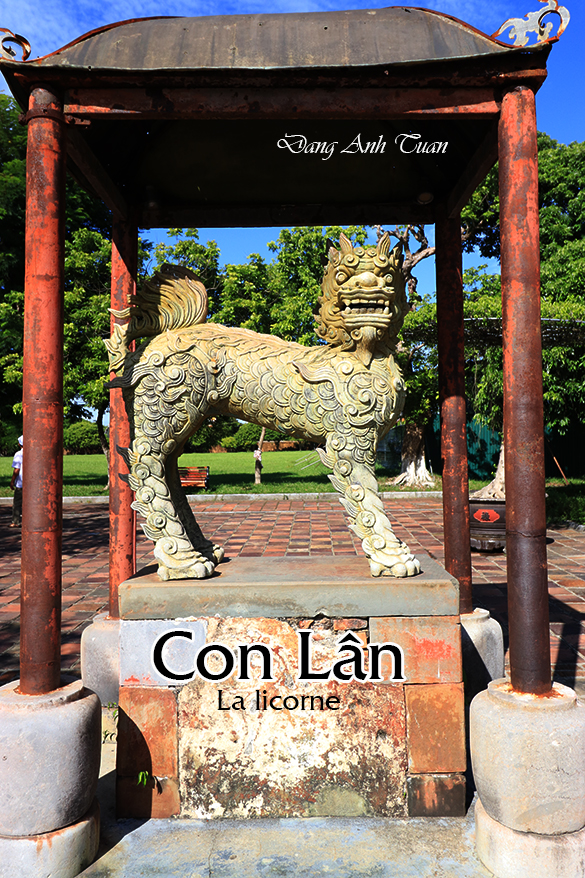
Con Lân (La licorne)

Lân là con linh vật  đứng hàng thứ nhì  trong bốn con vật có sức mạnh siêu phàm hay tứ linh (long, lân, qui, phụng). Trong văn hóa Việt nam, chúng ta thường bị lầm lẫn giữa  con kỳ lân với con nghê. Đặc điểm để phân biệt giữa nghê và lân là ở bộ móng, nghê mang móng vuốt còn kỳ lân mang móng guốc. Lân thường xuất hiện ở đình, chùa, đền, miếu hay những công trình kiến trúc nghệ thuật. Theo nhà nghiên cứu việt Đinh Hồng Hải thì Lân có nguồn gốc Trung Hoa, một linh vật tưởng tượng ngoại nhập. Thật sự khi gọi kỳ lân, tức là nói đến một cặp: con đực gọi là kỳ và lân là con cái. Khi du nhập vào văn hóa việt  thì  người  Việt quên đi « con kỳ » mà chỉ  kêu là  lân thôi.  Chỉ có những vị quân vương hiền minh mới xứng đáng được trông thấy nó. Ở Sân Đại Triều Nghi trước Điện Thái Hòa của Tử Cấm  Thành  (Huế)  có hai con lân được đặt ở hai góc sân mang ý nghĩa thời thái bình mà còn biểu tượng nhắc nhở đến  sự uy  nghiêm giữa chốn triều đình. Lân còn là con vật tiêu biểu báo điềm lành. Nó  còn có khả  năng  nhận ra  được người hiền lành và kẻ gian trá. Người dân Việt  thường biết nó qua múa lân sư được biểu diễn trong các dịp lễ hội, đặc biệt là Tết Nguyên Đán, Tết Trung Thu hay khánh thành cửa hàng mới vì loại thú nầy tượng trưng cho thịnh vượng và hạnh phúc. Còn trong đạo Phật, nó là hiện thân của bát nhã tức là trí tuệ tối cao  hay gíác ngộ.

Version française
La licorne  figure au deuxième rang parmi les quatre animaux sacrés aux pouvoirs surnaturels (dragon, licorne, tortue et phénix). Dans la culture vietnamienne, on  est habitué à confondre souvent la licorne avec le chien-lion (con nghê). La caractéristique permettant de faire la distinction entre  ce dernier et la licorne  se retrouve dans les ongles.  Le chien-lion possède des griffes tandis que  la licorne a des sabots. Les licornes sont visibles  souvent dans les maisons communales, les pagodes, les temples, les sanctuaires ou les œuvres d’art architecturales. Selon le chercheur vietnamien Đinh Hồng Hải, la licorne (ou Lân)  est d’origine chinoise. Il s’agit d’une mascotte imaginaire importée de l’étranger. En fait, lorsqu’on évoque la licorne, on se réfère souvent à un couple d’animaux : le mâle est connu sous le nom « kỳ » tandis que la femelle s’appelle « lân ». Au moment de l’introduction de la licorne dans la culture vietnamienne, on n’a gardé que la femelle (Lân). Seuls les monarques sages sont dignes de pouvoir la voir. Dans l’esplanade des Grands Saluts devant le somptueux palais de la suprême harmonie (Điện Thái Hoà) de la Cité pourpre  interdite (Huế), il y a deux licornes placées dans deux coins différents  pour marquer non seulement  la période de paix mais aussi le caractère hiératique de la cour impériale. La licorne est un animal de bon augure. Elle est capable de discerner la probité  et la malhonnêteté chez un  homme. Les Vietnamiens ont l’habitude de la connaître grâce à la danse de la licorne à l’occasion des fêtes importantes (Le Nouvel An,  la fête de la mi- automne, l’inauguration de la nouvelle boutique etc.) car elle est le symbole de la prospérité et du bonheur. Quant au bouddhisme, la licorne est l’incarnation de l’esprit intuitif de la Prajna (l’intelligence suprême ou l’illumination).

Version anglaise

The unicorn ranks second among the four sacred animals with supernatural powers (dragon, unicorn, turtle, and phoenix). In Vietnamese culture, people often confuse the unicorn with the lion-dog (con nghê). The distinguishing characteristic between the latter and the unicorn lies in the nails. The lion-dog has claws, while the unicorn has hooves. Unicorns are often seen in communal houses, pagodas, temples, shrines, or architectural artworks. According to the Vietnamese researcher Đinh Hồng Hải, the unicorn (or Lân) is of Chinese origin. It is an imaginary mascot imported from abroad. In fact, when referring to the unicorn, it often denotes a pair of animals: the male is known as « kỳ » while the female is called « lân. » At the time of the unicorn’s introduction into Vietnamese culture, only the female (Lân) was retained. Only wise monarchs are worthy of seeing it. In the esplanade of the Great Salutes in front of the magnificent Palace of Supreme Harmony (Điện Thái Hoà) of the Forbidden Purple City (Huế), there are two unicorns placed in two different corners to mark not only the period of peace but also the hieratic character of the imperial court. The unicorn is an animal of good omen.

She is capable of discerning honesty and dishonesty in a man. The Vietnamese are accustomed to knowing her through the unicorn dance on important occasions (New Year, the Mid-Autumn Festival, the inauguration of a new shop, etc.) because she is a symbol of prosperity and happiness.

As for Buddhism, the unicorn is the incarnation of the intuitive spirit of Prajna (supreme intelligence or enlightenment).


Galerie des photos

 
[Return RELIGION]

Tokyo au fil de la nuit (Tokyo về đêm)

Tokyo về đêm.
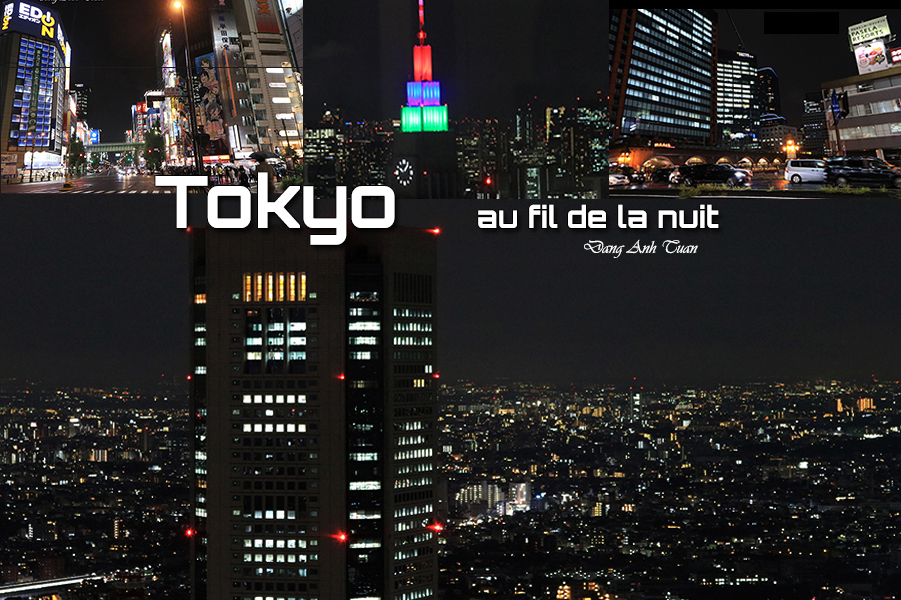
Tokyo au fil de la nuit

Version française
Version anglaise
Galerie des photos

Sau khi  viếng thăm chùa Senso-ji và học cách thức pha và uống trà theo phong cách người Nhật thì tối đó tụi nầy được anh HDV dẫn đi tham quan khu Shinjuku ở cách xa khác sạn tụi nầy 3 trạm métro. Nhờ vậy mình mới có dịp biết tàu điện ngầm của Tokyo. Đến nơi này mọi người đều phải mua ticket với máy tự động, giá cả cũng không đắc  mà cũng không có màn leo hàng rào qua cổng như ở Paris. Có thể qua cửa dễ dàng nhưng người Nhật họ có kỹ cương giáo huấn từ thưở nhỏ nên ai cũng tôn trọng luật lệ cả. Không có trò chen lấn như ở Paris hay xô đẩy như ở Việt Nam, mọi người đều nối đuôi chờ tàu điện đến trong một không gian yên lặng. Chỉ có buổi sáng lúc giờ cao điểm thì có  các nhân viên làm nhiệm vu đẩy các hành khách cuối cùng  lên tàu, đảm bảo không ai bị kẹt khi tàu đóng cửa lại. Ở ngoài cửa hầm điện cũng có  dân vô gia cư nhưng không có trò ăn xin cướp bóc, cho thì họ lấy chớ không bám theo người để năn nỉ lạy lục. Thật lạ trong tầm mắt chứ, làm mình ngẩn ngơ khâm phục.

Ra khỏi hầm điện thì có cảm giác là mình lọt vào tổ kiến khó mà định ra phương hướng và  không dễ tìm đường ra với sự hiện diện của nhiều hành lang ngầm. Tiếc hai hôm ở Tokyo thời tiết rất xấu nên mình không thể chụp hình vừa ý nhưng có còn hơn không.

Khu Shinjuku là một Tokyo mới, không có nhiều địa điểm lịch sử. Các toà nhà văn phòng chọc trời của Tokyo đều tập trung ở phía tây của ga Shinjuku. Mỗi ngày có đến 250.000 nguời đến đây làm việc. Năm 1991, khi  chính quyền thành phố dời về toà cao ốc Văn phòng Thị Chính Tokyo, 48 tầng do kiến trúc sư Tange Kenzo thiết kế thì mọi người gọi  Shinjuku là shin toshin (trung tâm thành phố mới). Ở đây có luôn hai  đài quan sát  ở tầng 45 của hai tháp đôi (Bắc và Nam) của toà thị chính,  vào cửa miễn phí và  nhìn thấy được núi Phú Sĩ khi trời tốt.  Lúc tụi nầy đến tham quan cũng có 10 giời tối mà còn  thấy các toà nhà văn phòng còn đèn sáng. Người Nhật làm việc  đến khuya và sau đó còn la cà ở các quán ăn dọc theo hai bên đường. Lúc trở về khách sạn, tụi nầy cùng anh HDV đi bộ. Mình mới nhận thấy ra người Nhật họ rất siêng năng làm việc.

Mình nhớ lại có một lần một người Nhật đến làm thực tập ở nơi mình làm việc. Mình có dịp hỏi anh nầy vậy ở Pháp có gì anh thích. Anh nầy mới trả lời với nụ cười khoái chí: Ở Pháp tôi thích có ngày nghỉ nhiều nhất là trò nghỉ cầu vòng. Thật vậy người  Nhật đã quen sống khổ cực với động đất, núi lửa, sóng thần và cuồn phong nên họ buộc lòng phải siêng năng, tận tụy với công việc họ có. Nhật Bản là đất nước có nhiều nghịch lý vì ở đó  bạn không chỉ tìm thấy những truyền thống mà còn có cả những điều lập dị. Đây là những gì bạn có thể khám phá ở quán cà phê Neko. Những người thuê nhà  không thể nuôi mèo có thể đến quán cà phê Neko dành  ra 1 giờ ngồi âu yếm khoảng 20 con mèo bằng cách trả phí vào cửa 1000 yen mà không cần đồ uống. Do đó, họ có thể xoa dịu đi tâm trạng ức chế  và áp lực mà họ gặp hằng ngày  trong công việc.

Version française

Après avoir visité le temple bouddhique Senso-ji et assisté à la séance de préparation du thé à la japonaise, notre guide nous a emmenés  visiter ce soir- là,  le quartier de Shinjuku situé  à 3 stations de métro de notre hôtel. Grâce à cela, j’ai eu l’occasion de connaître le métro de Tokyo. Une fois arrivé sur place, chacun de nous doit acheter un billet avec le distributeur automatique. Le prix n’est pas trop cher et il  n’y a pas non plus la tentation de tricher en sautant la barrière de la porte d’entrée comme à Paris. Il est possible de la franchir illégalement  mais les Japonais sont éduqués de façon plus disciplinée  dès leur jeune âge, chacun devant  respecter les règlements. Il n’y a aucune bousculade comme à Paris ou au Vietnam. Tout le monde se met  dans une file  d’attente à l’arrivée du train dans un espace calme. Il n’y a que le matin où l’on voit aux heures de pointe, les agents de transport chargés de pousser les derniers voyageurs à entrer dans le compartiment avec l’assurance de ne blesser  personne avant le départ du train.

À l’extérieur du métro, quelques  gens sans domicile fixe (SDF) sont présents  mais on ne trouve point la mendicité et le vol à la tire. Ceux-ci acceptent de recevoir l’argent avec plaisir mais en aucun  cas ils ne supplient personne pour l’aumône. C’est très étrange à portée de ma vue. Cela me  laisse pantois d’étonnement et d’admiration. En sortant du métro, on a l’impression d’être dans une fourmilière où on n’arrive pas à se repérer  par la présence d’un grand nombre de couloirs souterrains. Il est regrettable  pour moi  de perdre deux  jours d’affilée à cause du mauvais temps. Mieux vaut avoir quelques photos à la place de rien du tout.

Le quartier de Shinjuku est un nouveau Tokyo où on trouve peu de sites historiques. Par contre les gratte-ciel de bureaux de Tokyo sont concentrés du côté ouest de la gare de Shinjuku. Chaque jour, il y a au moins 250 000 personnes venant y travailler. En 1991, lors de la décision du gouvernement de la ville d’effectuer le déménagement dans le bâtiment de 48 étages du « Tokyo Metropolitan Office » conçu par l’architecte Tange Kenzo, les gens ont appelé dès lors Shinjuku en Shin Toshin (nouveau centre-ville). Il y a ici deux observatoires situés au 45ème étage des deux tours jumelles de la mairie   où l’entrée est gratuite et on peut  voir le mont Fuji par beau temps. Lors de notre visite, il était déjà 22 heures et nous voyions encore les immeubles de bureaux éclairés. Les Japonais travaillent jusque tard dans la nuit, puis ils  traînent dans les restaurants du quartier. De retour à l’hôtel, nous préférons de marcher  avec le guide. Je viens de réaliser que les Japonais sont très laborieux dans leur travail.

Je me rappelle d’une fois qu’un Japonais  de nom Ono était  venu faire un stage à l’endroit où je travaillais. J’ai eu l’occasion de lui demander ce qu’il aimait en France. Mr Ono m’a répondu avec un sourire heureux: J’aime qu’il y a beaucoup de jours de vacances  en France, en particulier les « ponts ». En effet, les Japonais sont habitués à vivre durement avec les tremblements de terre, les volcans, les tsunamis et les ouragans. Ils sont donc obligés d’être diligents et dévoués entièrement  à leur travail. Le Japon est un pays de paradoxes car on y trouve non seulement les traditions mais aussi les excentricités.  C’est ce qu’on peut découvrir avec les Neko cafés. Les locataires japonais n’ayant pas la possibilité de garder  les chats peuvent venir dans les Neko cafés pour passer tranquillement une heure avec  une vingtaine de chats et les câliner en payant un droit d’entrée de 1000 yens sans boisson. Ils peuvent ainsi calmer leur frustration et leur stress journalier qu’ils subissent dans le travail.

Version anglaise

After visiting the Buddhist temple Senso-ji and attending a Japanese tea preparation session, our guide took us that evening to visit the Shinjuku district, located three subway stations from our hotel. Thanks to this, I had the opportunity to experience Tokyo’s subway. Once there, each of us had to buy a ticket from the vending machine. The price was not too expensive, and there was no temptation to cheat by jumping over the entrance barrier like in Paris. It is possible to pass through illegally, but the Japanese are raised with more discipline from a young age, each person respecting the rules. There is no pushing or shoving like in Paris or Vietnam. Everyone lines up quietly to wait for the train’s arrival.

Only in the morning rush hours do transport agents appear to help push the last passengers into the carriages, ensuring no one is hurt before the train departs. Outside the subway, a few homeless people are present, but there is no begging or pickpocketing. They accept money gladly but never beg anyone for alms. This is very strange to my eyes. It leaves me speechless with astonishment and admiration. Exiting the subway, one feels like being in an anthill where it is hard to find one’s way due to the presence of a large number of underground corridors. It is regrettable for me to lose two consecutive days because of bad weather. It’s better to have some photos than nothing at all.

The Shinjuku district is a new Tokyo where there are few historical sites. On the other hand, Tokyo’s office skyscrapers are concentrated on the west side of Shinjuku Station. Every day, at least 250,000 people come here to work. In 1991, when the city government decided to move into the 48-story « Tokyo Metropolitan Office » building designed by architect Kenzo Tange, people started calling Shinjuku « Shin Toshin » (new downtown). There are two observatories located on the 45th floor of the twin towers of the city hall where entrance is free and one can see Mount Fuji on clear days. During our visit, it was already 10 p.m. and we could still see the office buildings lit up. The Japanese work late into the night, then they hang out in the neighborhood’s restaurants. Back at the hotel, we preferred to walk with the guide. I just realized that the Japanese are very hardworking in their work.

I remember once a Japanese man named Ono came to do an internship at the place where I worked. I had the opportunity to ask him what he liked about France. Mr. Ono replied with a happy smile: I like that there are many holidays in France, especially the « bridges » (long weekends). Indeed, the Japanese are used to living harshly with earthquakes, volcanoes, tsunamis, and hurricanes. They are therefore forced to be diligent and fully dedicated to their work. Japan is a country of paradoxes because you find not only traditions but also eccentricities. This is what you can discover with the Neko cafés. Japanese tenants who do not have the possibility to keep cats can come to Neko cafés to quietly spend an hour with about twenty cats and cuddle them by paying an entrance fee of 1000 yen without a drink. They can thus calm their daily frustration and stress that they endure at work.

Galerie des photos


[RETURN JAPAN]

Marseille, la ville la plus ancienne de la France


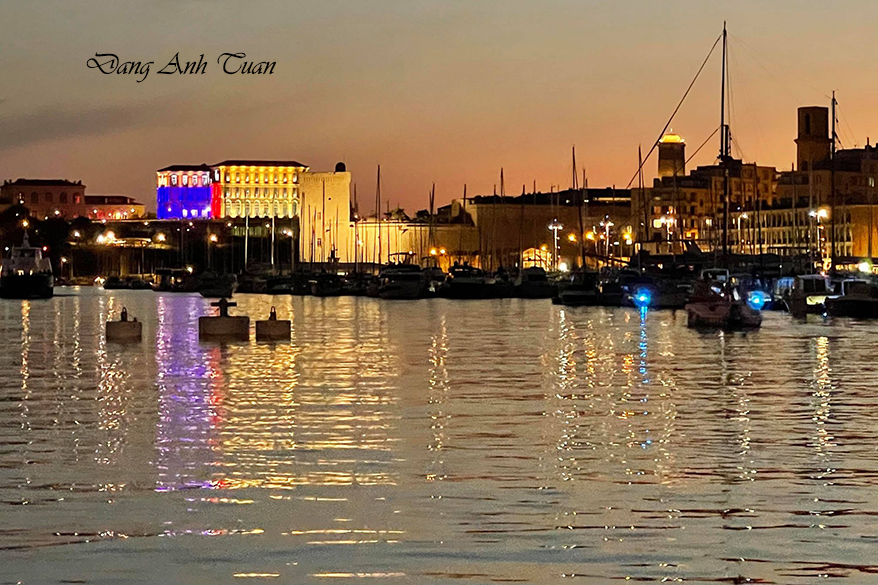
Vieux port de Marseille au fil de la nuit.

Cảng cổ của Marseille lúc về đêm

Galerie des photos

[Return VILLES DE FRANCE]

Hôtel des Invalides (Điên Invalides)

Hôtel des Invalides

Galerie des photos

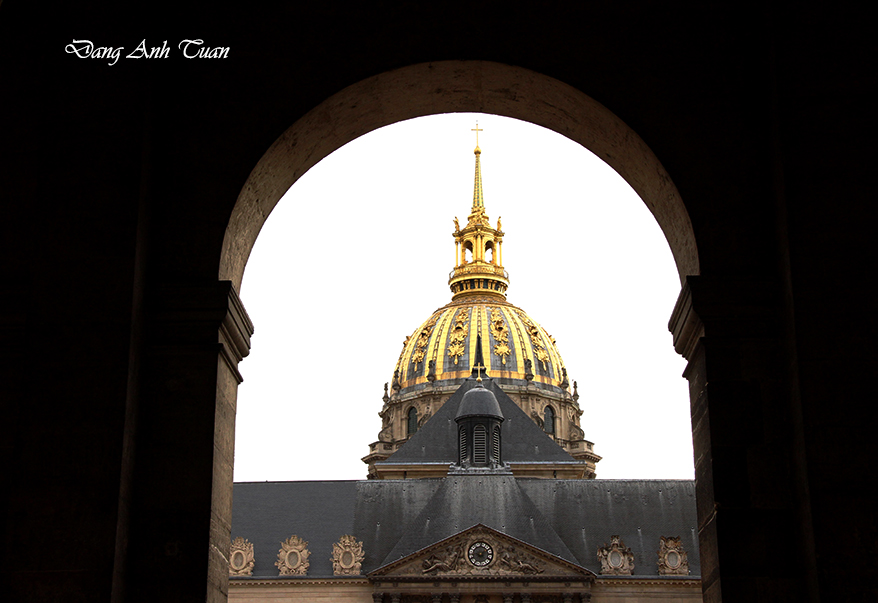
Le Dôme reste le bâtiment le plus élevé de Paris jusqu’à l’érection de la tour Eiffel. Il a été conçu par l’architecte  Jules Hardouin-Mansart  sous le règne de Louis XIV. Les nombreuses dorures du dôme rappellent que le Roi-Soleil avait  ordonné la construction de l’Hôtel des Invalides par édit afin d’accueillir les anciens soldats de son armée.  C’est aussi l’endroit où a été déposé le cercueil de l’empereur Napoléon 1er de la France.

Mái vòm Invalides vẫn là tòa nhà cao nhất ở Paris cho đến khi tháp Eiffel được dựng lên.  Nó được  thiết kế bởi  kiến trúc sư  Jules Hardouin-Mansart dưới thời ngự trị của vua Louis XIV.   Các vàng thép được  trông thấy trên mái vòm nhắc lại  vua Mặt Trời ra chỉ thị cho phép xây dựng khách sạn Invalides  qua một sắc lệnh để tiếp nhận các cựu binh trong quân đội. Đây cũng là nơi an nghỉ của Nã Phá Luân Đại Đế  của Pháp quốc.

The Dome remains the tallest building in Paris until the erection of the Eiffel Tower. It was designed by the architect Jules Hardouin-Mansart during the reign of Louis XIV. The numerous gildings of the dome recall that the Sun King had ordered the construction of the Hôtel des Invalides by decree to accommodate the former soldiers of his army. It is also the place where the coffin of Emperor Napoleon I of France was laid to rest.


Galerie des photos


[Return PARIS et ses sites]

Place de la Concorde (Quảng trường Concorde)

Quảng trường Concorde

[Return PARIS et ses sites]

La Tour Eiffel, l’un des symboles de Paris


Tour Eiffel
 
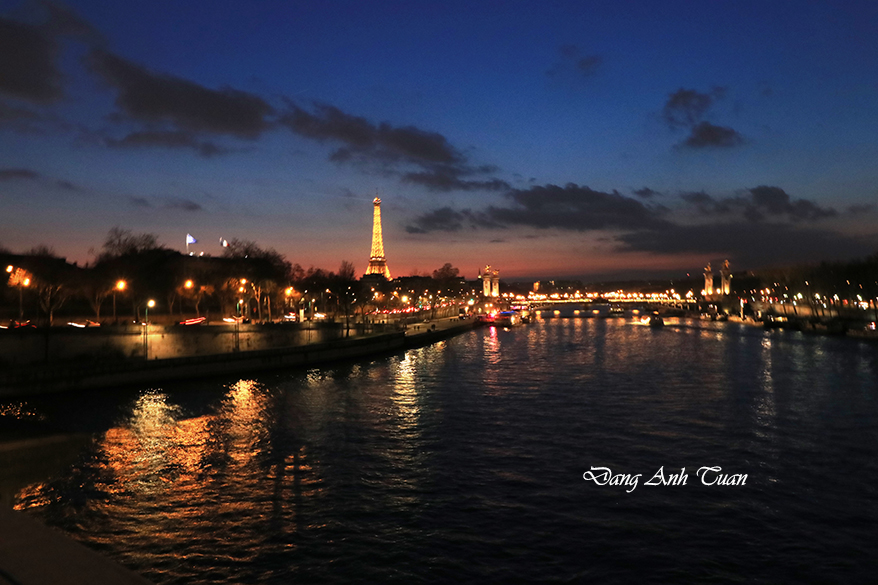
Tháp Eiffel, một trong những biểu tượng của kinh đô ánh sáng Paris được trông thấy từ xa về đêm dưới nhiều gốc độ khác nhau.
 
La tour Eiffel, l’un des symboles de la ville de lumière Paris est visible de loin au fil de la nuit sous de nombreux angles différents.

The Eiffel Tower, one of the symbols of the City of Light Paris, is visible from afar throughout the night from many different angles.

 
Galerie des photos


[Return PARIS et ses sites]