The Vietnamese bra

French and Vietnamese versions

yem_dao
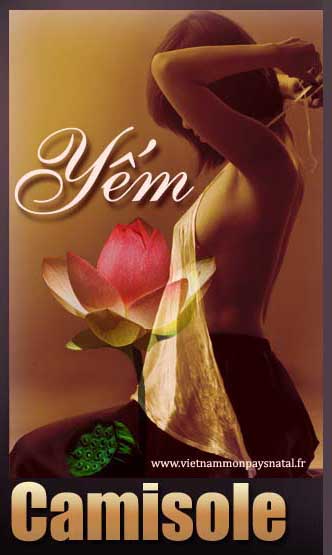
Being an integral element  of four-part dress, Yếm is the most popular bra worn by Vietnamese women in the past. One finds in its manufacture a silk or cotton fabric square, the ends of which  are fixed by the straps tying behind the back and at the neck  level.This is intended to cover and support the chest for leaving  naked the rest of the body’s upper part. Yếm causes not only lure of seduction but also pleasant freshness during summer days. However in winter, it becomes a kind of the underwear above which is added the four-part dress,  thus allowing  Vietnamese women to protect themselves against the severe cold.

In the Vietnamese tradition, the wasp waist is one of the distinctive traits  of female beauty. Perhaps that’s why the birth of this bra is linked to this tradition intended   to emphasize  the line of the women’s body by giving it the shape of the segmented body of the wasp. 

This bra  was worn by all sections of the population without exception. But the notion of color differentiates between the categories of people wearing it. The brown colour is intended for  farmers while  educated girls prefer the harmonious, elegant and discrete colors. For the elderly, the dark remains the most widely used. Despite this observation, it is possible to see Yếm with eccentric colours.

Pictures gallery

One does not known its origin but  Yếm was appeared for the first time in the 11th century under the Lý dynasty. It underwent many changes over time before being again recently an glamourous fashion article, competitor of « Áo dài ». In  old days, it was accompanied by wearing a skirt and a turban cloth (black or brown) or a scarf ending with a « Crow beak » at the  front top. (khăn vuôn mõ quạ). It is only during the reign of  Minh Mạng emperor  that the black pants was  imposed instead of the skirt.

Yếm is an inexhaustible source for Vietnamese poets among which is  famous Hồ Xuân Hương. She has had the opportunity to describe not only the romantic and glamourous image of this Vietnamese undershirt but also the innocence of a young girl living in a society ruled by Confucian immutable ethic, in her poem entitled « the girl asleep in the daytime » (Thiếu nữ ngủ ngày).

Mùa hè hây hẩy gió nồm đông
Thiếu nữ nằm chơi quá giấc nồng
Lược trúc lỏng cài trên mái tóc
Yếm đào trễ xuống dưới nương long
Ðôi gò Bông đảo sương còn ngậm
Môt lạch đào nguyên suối chưa thông
Quân tử dùng dằng đi chẳng dứt
Ði thì cũng dở ở không xong.

Summer breeze is sporadically blowing,
Lying down the young girl slides into sleeping.
Her bamboo comb loosely attached to her hair,
Her pink bra below her waist dropped down fair.
On these two Elysian mounds, the nectar is still remaining,
In that one Fairy rivulet, the current seems to stop flowing.
At such a view, the gentleman hesitated,
Odd to leave, yet inconvenient if he stayed.

Yếm is mentioned so many times in  popular poems. It reflects the strength and intensity of the love through these two following verses:

Trời mưa trời gió kìn kìn.
Đắp đôi dải yếm hơn nghìn chăn bông.

It’s raining and it made the wind with intensity.
To be covered with a pair of Yếm better than to get thousand duvets


It is difficult to leave the person we fell in love unless we have become this undershirt to retain her. That is what we have in the two verses below:

Kiếp sau đừng hóa ra người
Hóa ra dải yếm buộc người tình nhân.

In the future life, one should not be born a man
But it is necessary to be transformed into undershirt to retain the lover.

[Return TRADITIONS]

Museum of Champa sculpture (Bảo tàng viện Điêu Khắc Cổ)

French version
Vietnamese version
Picture gallery

phatmau_tara

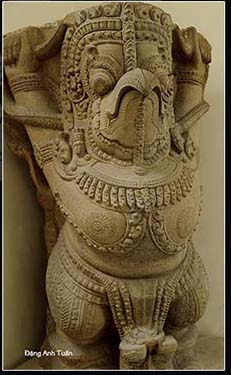
Before it became the Champa Sculpture Museum today, it was known as the Sculpture Garden in the distant past. It was here that they began to collect and preserve for the most part, under the aegis of archaeologist-architect Henri Parmentier and members of the French School of the Far East (EFEO) in the late 19th century all the artifacts found  during archaeological excavations in the central regions (from the Hoành Sơn Anamitic Range, Quảng Bình in the north to Bình Thuận (Phan Thiết) in the south) where an ancient Indochinese kingdom existed known in the early 2nd century as Linyi and then Huanwang and finally Champa until its annexation by Vietnam in 1471. Opened to the public in 1919, this museum initially took the name of its founder « Henri Parmentier Museum » and housed 190 artifacts among which was the famous pedestal of the Buddhist site Đồng Dương.

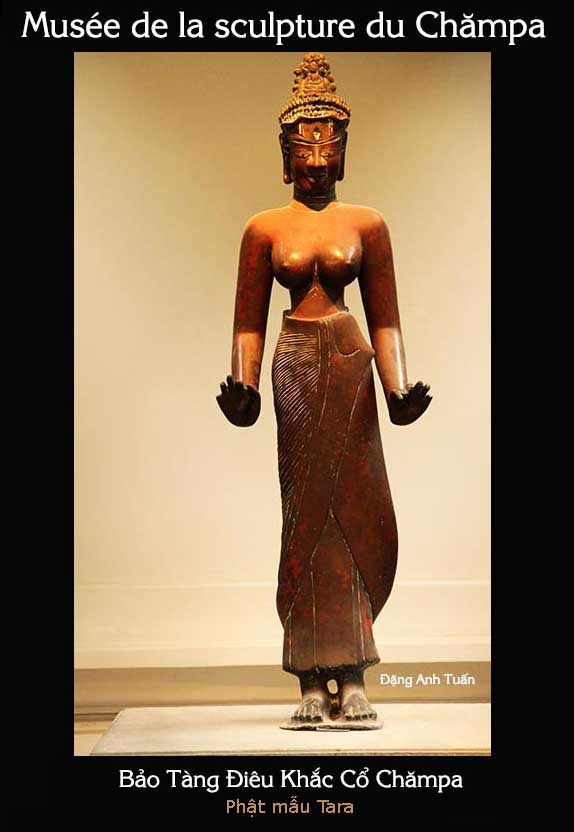
Then the museum did not cease to expand since 1975 to reach today an area of 2,000 m² out of a total of more than 6,600 m² and to acquire in the year 1978 the great masterpiece of bronze art, the statue of Laksmindra-Lokesvara (Quan Âm chuẩn đề) often known as Tara. It becomes over the decades the unique museum in the world in the field of Champa art. It allows the tourist to also know the chronology of Champa history as all styles are present through artifacts from the famous sites Mỹ Sơn, Đồng Dương, Trà Kiệu and Pô Nagar (Nha Trang). For French researcher Jean Boisselier, Chame sculpture is always closely linked to history. Despite the evolution of styles throughout its history, chame sculpture continues to keep the same divine and animal creatures in a constant theme. This is a museum not to be missed if one has the opportunity to visit Đà Nẵng

  • Mỹ Sơn E1 style (Phong cách E1)
  • Chính Lộ style (Phong cách Chính Lộ )
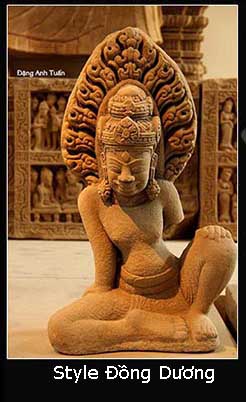
  • Đồng Dương style (Phong cách Đồng Dương)
  • Tháp Mắm style … (Phong cách Tháp Mắm)

Picture gallery

[ngg_images source= »galleries » container_ids= »126″ display_type= »photocrati-nextgen_basic_thumbnails » override_thumbnail_settings= »1″ thumbnail_width= »180″ thumbnail_height= »180″ thumbnail_crop= »1″ images_per_page= »30″ number_of_columns= »4″ ajax_pagination= »0″ show_all_in_lightbox= »0″ use_imagebrowser_effect= »0″ show_slideshow_link= »0″ slideshow_link_text= »[Montrer sous forme de diaporama] » template= »/homepages/5/d276592279/htdocs/clickandbuilds/vietnamquehuongtoi/wp-content/plugins/nextgen-gallery/products/photocrati_nextgen/modules/ngglegacy/view/gallery-caption.php » order_by= »pid » order_direction= »ASC » returns= »included » maximum_entity_count= »500″] Tháp Mắm style

style_thapmam


  • Mỹ Sơn E1 style : vivacity in ornamentation, dedicacy in the details..style_dongduong
  • Khương Mỹ style : gentleness in the faces, harmony and symmetry…
  • Trà kiệu style : beauty in the adornments, the half-smile, the development of feminine beauty ( fully developed breasts, new freedom in the hips etc ..)
  • Đồng Dương style :typical facial appearance (protruding eyebrowns, thick lips with the corners…
  • Tháp Mắm style : art reached in its limits with a lack of realism and extravagance….

[Return to CHAMPA]

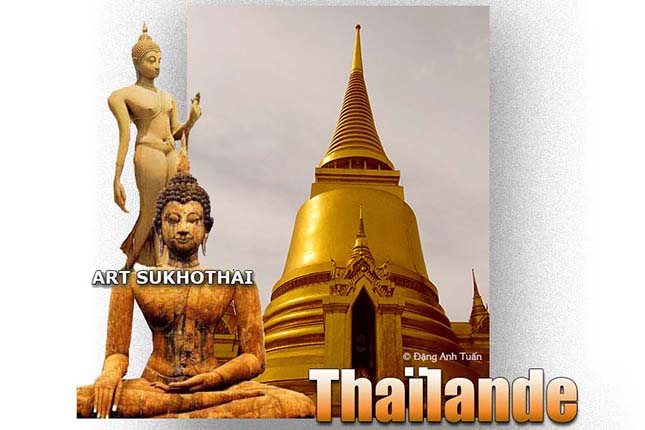
Art de Sukhothaï (Nghệ thuật Sukhothaï)


Version vietnamienne

English version

Avec le premier grand royaume thaï Sukhothai, on voit naître une nouvelle civilisation qui savait tirer profit de la culture indigène sous l’élan d’une personnalité exceptionnelle et aussi marquante qu’était le roi Rama Khamheng. Pour Georges Cœdès, les Thaïs étaient de remarquables assimilateurs. Au lieu de détruire tout ce qui appartenait aux anciens maîtres (Môn-Khmers) comme le firent les Vietnamiens lors de la conquête du Champa, les Thaïlandais tentèrent de se l’approprier et de retrouver les thèmes dans les vieux répertoires môn-khmers pour créer un nouveau style propre et particulier en laissant transparaître les traditions locales dans l’architecture (les chedis) et la statuaire (les Bouddhas). Le Mahàyàna fut abandonné désormais en faveur du bouddhisme du Theravàdà auquel était consacrée entièrement l’esthétique thaïlandaise. Celle-ci tira évidemment ses formules iconographiques et plastiques de l’art khmer et de celui du Dvaravati (Môn).

L’éclosion de l’art de Sukhothaï témoigne d’une volonté d’innovation et d’une vitalité remarquable malgré certaines influences cinghalaises, birmanes et khmères. C’est ce qu’on voit dans la grande création de l’iconographie des Bouddhas. Ceux-ci représentés sous la forme humaine étaient sculptés selon des règles très précises que les artistes thaïlandais devaient respecter minutieusement. Selon Bernard Groslier, il y a un peu d’exagération dans la beauté de ces oeuvres afin de pouvoir accentuer la stylisation et montrer l’originalité d’une société nouvelle et dynamique. L’allongement démesuré trouvé dans les bras et les oreilles et la déformation excessive du chignon supérieur rappellent bien le manque du réalisme.

Malgré cela, la sculpture bouddhique de Sukhothai témoigne incontestablement d’un art entièrement original et d’une période où la nation thaïlandaise avait besoin d’une identité culturelle et religieuse et d’une personnalité propre illustrée par l’exemple trouvé dans la création du Bouddha marchant. Sa forme gracieuse  ne peut pas passer inaperçue et  réussit à pénétrer les Thaïlandais. Une fluidité est trouvée dans le mouvement de ce Bouddha. Son allure est à la fois légère et sereine. Sa tête en forme d’ovale, ses sourcils arqués en demi cercle parfait et prolongés par un nez aquilin et long, sa chevelure en bouclette  surmontée d’une longue flamme (unîsa)(tradition cinghalaise), sa bouche entourée par une double ligne (tradition khmère), ses vêtements collés au corps sont les traits caractéristiques de l’art bouddhique de  Sukhothaï.

Sous le règne de Rama Khamheng (ou Rama le Brave), une nouvelle société se forma à partir de l’héritage môn-khmer. Cette société trouva son modèle administratif et social auprès des Mongols. L’écriture thaïe fut créée et basée sur la cursive khmère qui trouvait sa lointaine origine dans l’Inde méridional. Le bouddhisme theravàda fut adopté comme la religion d’état. Malgré cela, l’animisme continua à se perpétuer comme en a témoigné le culte de l’esprit du sol évoqué par Rama Khamheng. Celui-ci installa sur une colline près de Sukhothai un autel dédié à un esprit nommé Phra Khapung Phi, supérieur à tous les autres esprits pour assurer la prospérité du royaume. Cela lui revint la charge d’honorer ce culte tous les ans. C’est aussi cet état d’esprit qu’on a vu encore au début du XXème siècle au Vietnam avec la cérémonie rituelle de Nam Giao (Huế) célébrée par l’empereur car étant le fils du Ciel, il était censé de demander chaque année la protection et la bénédiction du Ciel pour le pays. (idem en Chine avec le temple du Ciel (Thiên Đàn) à Pékin).

On n’est pas étonné de trouver encore de nos jours cette tradition, cette idée de l’esprit supérieur dans le Bouddha d’Eméraude (ou Phra Keo Morakot), palladium de la Thaïlande et protecteur de la dynastie de Chakri dans la chapelle du palais royal à Bangkok. Pour Bernard Groslier, le parallélisme n’est pas gratuit: les Thaï appartiennent au monde primitif de la pensée chinoise. On se pose des questions à cette comparaison car on ne peut pas ignorer qu’analogues à des Vietnamiens, les Thaï faisaient partie du groupe Cent Yue dont la plupart des ethnies étaient des animistes et appartenaient au monde agricole. Ils étaient habitués à honorer le culte des génies du sol, de l’agriculture ou du village avant d’être sous la coupe de l’influence chinoise. Rama Khamheng réussît à nouer des relations diplomatiques avec la Chine de Koubilai Khan. Il favorisa la venue et l’installation des artisans chinois dans la capitale. Avec leur savoir-faire, le royaume de Sukhothai ne tarda pas à être connu avec ses fameuses céramiques de Sawankhalok. Royaume d’Ayutthaya

[Retour à la page Thaïlande]


Thailand (Thái Lan)

French version

The emergence of the Thai people is only strengthened since the XIVth century. Nevertheless it is a very ancient people of Southern China. It is a member of the Austro-Asiatic group (Chủng Nam Á) (or Baiyue or Bách Việt in Vietnamese). It is this group French archaeologist Bernard Groslier often indicated under the name of « Thai-Vietnamese group ».

Repulsed by the Tsin of Shi Huang Di, the Thai people try to resist again and again. For Vietnamese writer Bình Nguyên Lôc, the subjects of Shu and Ba (Ba Thục) kingdoms annexed very early by the Tsin in the Szechuan (Tứ Xuyên) (1), were the Proto-Thai (or Tày). According to this writer, they belonged to the Austroasiatic group of branch Âu (or Ngu in language mường or Ngê U in Chinese mandarin (quan thoại)) to which the Thai and the Tày were attached.

For him as for other Vietnamese researchers Trần Ngọc Thêm, Nguyễn Đình Khoa, Hà Văn Tấn etc .., the Austro-Asiatic group contains 4 different subgroups: subgroup Môn-Khmer, subgroup Việt Mường (branch Lạc), subgroup Tày-Thái (branch Âu) and subgroup Mèo-Dao to which it is necessary to add the subgroup Cham, Raglai, Êdê to define the Indonesian race (or Proto-Malay) (2) (Chủng cổ Mã Lai).

The contribution of the Thai people in the foundation of the Ậu Lạc kingdom of Thục Phán (An Dương Vương) is no longer in doubt after the latter managed to eliminate last king Hùng of the Văn Lang kingdom because the name « Âu Lạc » (or Ngeou Lo) evoke obviously the union of two ethnic groups Yue of branch Âu (Proto-Thai) and branch Lạc (Proto-Viet ). Furthermore, Thục Phán originating from the royal family of Shu (Thục), an Yue of Thai branch, which shows at such a point the union and the common fate of these two ethnic groups in front of the Chinese expansion.

It is what is has been reported in Chinese historical writings ( as Kiao -tcheou wai-yu ki or Kouang-tcheou ki) but it has been refuted by some Vietnamese historians because the Shu kingdom was too far the Văn Lang kingdom. This latter has been annexed very early ( more than a half century before the foundation of the Văn Lang kingdom) by the Tsin. But according to Bình Nguyên Lộc writer, in the compagny of his trusted friends, Thục Phán having lost his homeland, was forced to seek refuge at this time in the country having the same ethnic affinity, that is to say Si Ngeou (Tây Âu) located beside the Văng Lang kingdom of the Vietnamese. Furthermore, the Chinese have no interest in falsifying history by reporting that the ruler of the Âu Lạc kingdom was the Shu prince. For this latter and his trusted friends, the requests for asylum need a certain time, which explains at least a half century in this exodus before the foundation of his Âu Lạc kingdom. Moreover, he was at the head of an army of 30.000 soldiers. It is impossible for him to assure all logistical aspects and render his army invisible during the exodus by crossing through Yunan mountainous regions administered by others ethnic ennemies or people close to the Chinese. It is likely that he needed what is necessary before his conquest with Si Ngeou people (or Proto-Thaïs). Despite the legend of the Vietnamese magic crossbow, An Dương Vương (Ngan-yang wang) was a historical personage. The discovery of his capital archeological remains (Cổ Loa, huyện Đông An, Hànội ) does not question the existence of this kingdom established about three centuries before Jesus Christ. This one was later annexed by Zhao To (Triệu Đà), founder of the Nan Yue kingdom.


A long common history with the Vietnamese.

The Lạc Long Quân-Âu Cơ myth insinuate so skilfully the union and the separation of two Yue ethnic groups, one being of Lạc branch (the Proto-Vietnamese) coming down to the plains by the pursuit of water courses and rivers, the other (the Proto-Thaïs) taking refuge in mountainous areas. There are the Mường in this exodus. Being close to the Vietnamese at the linguistic level, the Mường have managed to keep their ancestral customs because they were sent away and protected in high mountains. They had a social organization similar to that of the Tày and the Thaïs.

Located in Kouang Tong (Quãng Đông) and Kouang Si (Quãng Tây) provinces, the Si Ngeou (Tây Âu) kingdom is none other than the land of the Proto-Thaïs (Thai ancestors). It is here that Shu prince Thục Phán took refuge before the Văn Lang kingdom conquest. It should also be remembered that Chinese emperor Shi Houang Di had to mobilize at this time more than 500.000 soldiers for the Si Ngeou kingdom conquest after having successfully defeated the Chu kingdom (Sỡ Quốc) army with 600.000 soldiers. You have to think that in addition to the implacable resistance of its warriors, the Si Ngeou kingdom should be very large and densely populated for the commitment of the substantial military force from Shi Houang Di (Tần Thủy Hoàng).

Despite the premature death of Si Ngeou king named Yi-Hiu-Song (Dịch Hu Tống),the resistance led by the Yue of Thai branch or (Si Ngeou)(Tây Âu) succeeded in obtaining a few expected results in Southern Kouang Si with the death of general T’ou Tsiu (Uất Đồ Thư) leading a Chinese army of 500.000 men, which has been mentioned in Master Houa-nan annals (or Houai–nan –tseu in Chinese or Hoài Nam Tử in Vietnamese) written by Liu An (Lưu An), grandson of Kao-Tsou emperor (or Liu Bang), founder of Han dynasty between 164 and 173 before our era. Si Ngeou was known for the courage of its formidable warriors. This corresponds exactly to the temperament of the Thai living in the past, described by French writer and photographer Alfred Raquez:(3)

Being belligerent and adventure racer, the old-time Thai were almost constantly at war with their neighbours and often saw their successfull excursions. After each victorious campaign, the prisoners were taken with them and deported in a part of Siam territory as far away as possible from their countries of origin.

After the disappearance of this kingdom and that of Âu Lạc, the Proto-Thaï remaining in Vietnam at this time under the bosom of Zhao To (a former general of Tsin dynasty who later became the first emperor of Nan Yue kingdom) had their descendants forming properly today the ethnic minority Tày of Vietnam. Other Proto-Thaï fled to Yunnan where they united at the eighth century in Nanzhao kingdom (Nam Chiếu) then Dali (Đại Lý) where buddhism of Greater Vehicle began to take root. Unfortunaly, their attempt was in vain. Shu, Ba, Si Ngeou, Âu Lạc (5), Nan Zhao, Dali countries are part of the list of kingdoms annexed one after the other by the Chinese during their exodus. In these countries submitted, the Proto-Thaïs presence was very important. In front of the Chinese continous pressure and the Himalaya inexorable barrier, the Proto-Thaï had to get back in the Indochinese peninsular (4) by penetrating slowly like a fan in Laos, northwest region of Vietnam (Tây Bắc), northern Thailand and Upper Burma.

According to Thai historical inscriptions found in Vietnam, there are three important waves of migration initiated by the Thai of Yunnan in northwest of Vietnam during the 9th and 11th centuries. This corresponds exactly to the period where Nanzhao was annexed by Dali destroyed, in turn, three centuries later by Kubilai Khan Mongols in China. During this penetration, the Proto-Thaïs were separated into groups: the Thaï of Vietnam, the Thaï in Burma (or Shans), the Thaï in Laos (or Ai Lao in Vietnamese) and the Thaï in Northern Thailand. Each of these groups began to adopt the religion of these host countries. The Thaï of Vietnam do not have the same religion as those of other territories. They continue to keep animism (vạn vật hữu linh) or totemism.

This is not the case of the Thaï living in Northern Thailand, Upper Burma, Laos which were occupied at this time by Indianized and Buddhist theravàda Môn-Khmer kingdoms (Angkorian empire, Môn Dvaravati, Haripunchai, Lavo kingdoms etc …) after the dislocation of Indianized Funan kingdom. The Môn had a key rôle in the transmission of Theravadà Buddhism from Sinhalese tradition for Thai newcomers.


(1): Pays des pandas. C’est aussi ici qu’on a découvert la culture de Ba-Shu célèbre pour ses masques zoomorphes de Sanxingdui et pour le mystère des signes sur les armures. C’est aussi le royaume de Shu-Han (Thục Hán) de Liu Bei (Lưu Bị) à l’époque des Trois Royaumes.(Tam Quốc)

(2) Race de l’Asie du Sud-Est préhistorique.

(3): Comment s’est peuplé le Siam, ce qu’est aujourd’hui sa population. Alfred Raquez, (publié en 1903 dans le Bulletin du Comité de l’Asie Française). In: Aséanie 1, 1998. pp. 161-181.

(4) Indochina in wider sense. This is not French Indochina.

(5) The Âu Lạc kingdom of An Dương Vương was annexed by Chinese General Zhao To (Triệu Đà) who later became the founder of Nanyue kingdom. This one will be in turn under the control of Han dynasty, half a century later.


Bibliography

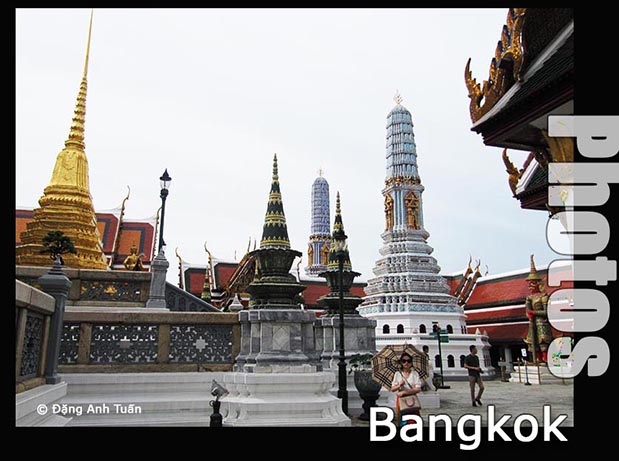
Photos de Venise de l’Orient (Vọng Các)


Bangkok

[Return THAÏLANDE]

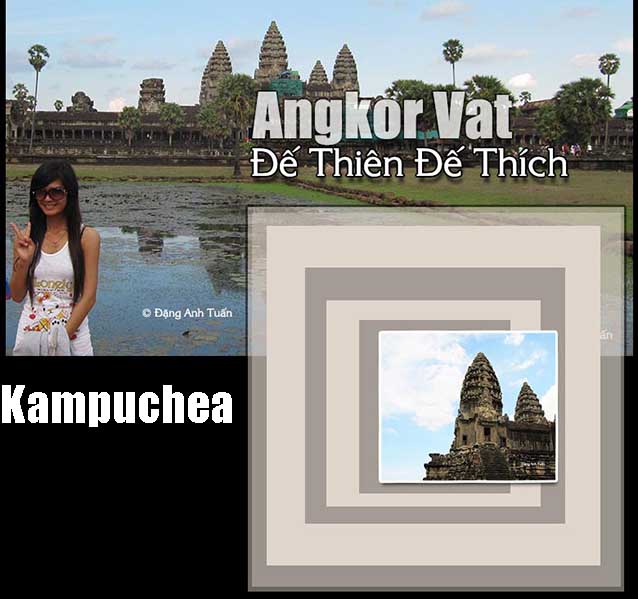
Angkor Vat (Đế Thiên Đế Thích)


Jewel of Khmer Art

angkor_vat

French version

Vietnamese version
picture-591

 
It is the largest and the most sublime temple-mountain of all Khmer temples. It was built during the reign of Sûryavarman II in the first half of the XIIth century. It was considered as capital of the Khmer empire having in its center the temple of state dedicated to Vishnu. It is here that the towers are raised in quincunx. Two major characteristics of the Khmer architecture are found there: pyramids or temples-mountains symbolizing the Mount Meru (house of Gods) and the galleries which were built the one above the other. Many people considers it as the eighth wonder of the world. Other temple mountains can be visited: Bakeng, Takeo, Baphûon, Prè Rup, Bakong and Ak Yum.

Bayon temple (Angkor Thom)

 bayon

French version

Vietnamese version

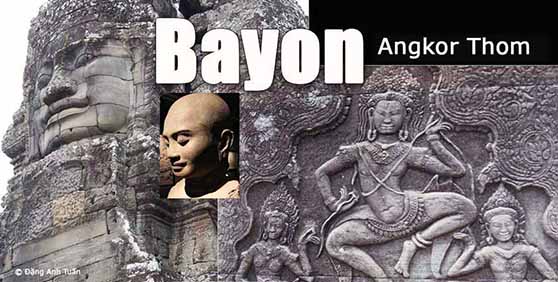
Bayon is the central temple of the old city Angkor Thom, capital of Khmer sovereigns at the beginning of the XIIIth century. It is the last one of temples-mountains built by king Jayavarman VII, restorer of royal power of the Khmer Angkor kingdom after the invasion of the Cham. Its decoration of a exceptional wealth is at the apogee of Mahayana Buddhist art.

This king dedicates this monument to Buddha he spreads the doctrine of which with his face towers. There are over 37 harmonious towers around a big central tower, the sanctuary. But we think that they could be more numerous, perhaps 54 towers with 216 faces according to French Paul Mus.

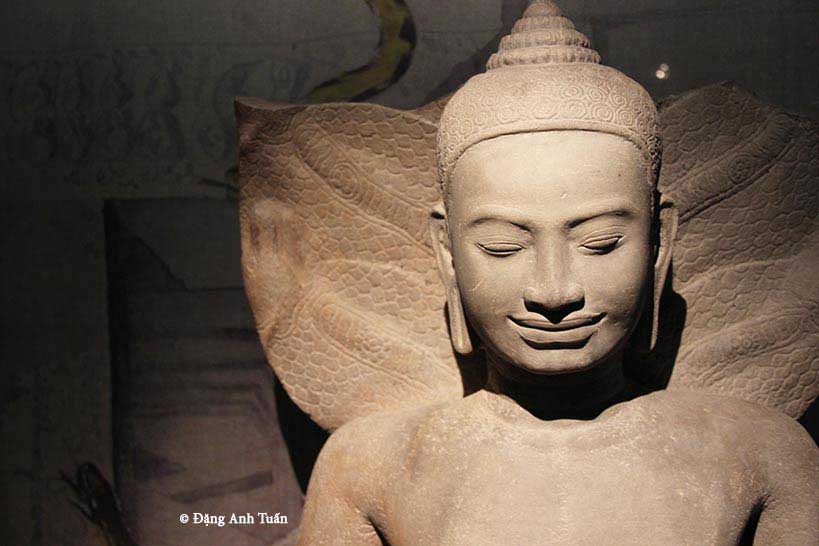
King Buddha at Guimet museum  

img_5645
These towers are built by putting stony blocks piled on top of the other without any cement. The sculpture will be made after the completion of placement of these rocky blocks.

What mechanical strength did they have, the Cambodians in the past, to raise the enormous stony blocks until higher parts of the building after having extracted them from the distant mountains, having polished and sculptured them? It is this question which haunted frequently Henri Mouhot during the discovery of Angkor ruins. We find on four sides of each tower, gigantic faces in the enigmatic smile, each one of them turned respectively to one of the four cardinal points.

The visitor has the impression to be followed by their glaucous look. For Pierre Loti, Bayon was the heaviest stony mountain the men dared to undertake since the pyramids of Memphis.

[ngg_images source= »galleries » container_ids= »123″ display_type= »photocrati-nextgen_basic_thumbnails » override_thumbnail_settings= »1″ thumbnail_width= »180″ thumbnail_height= »100″ thumbnail_crop= »1″ images_per_page= »30″ number_of_columns= »4″ ajax_pagination= »0″ show_all_in_lightbox= »0″ use_imagebrowser_effect= »0″ show_slideshow_link= »0″ slideshow_link_text= »[Montrer sous forme de diaporama] » template= »/homepages/5/d276592279/htdocs/clickandbuilds/vietnamquehuongtoi/wp-content/plugins/nextgen-gallery/products/photocrati_nextgen/modules/ngglegacy/view/gallery-caption.php » order_by= »pid » order_direction= »ASC » returns= »included » maximum_entity_count= »500″]img_5621
In his work entitled « Travel in the kingdoms of Siam, Cambodia, Laos and other central parts of Indochina « , the discoverer of the Angkor ruins, Henri Mouhot, left his impression: In spite of the disappearance of the gold and colors which almost totally removed from the building, there are only stones there. But these ones proclaim loudly the genius, the strength and the patience, the talent, the wealth and the power of the Cambodians in the past.

We discovered recently during a excavation realized in 1933, in the broken remains of a big stony statue 3,60 m in height, the representation of Jayavarman VII in king Buddha. The builder of the Bayon, is seated, legs tucked on the coiled body of the naga. Since then, we attributed this face with the mystic smile found on the sides of the Bayon towers to that of Jayavarman VII.
 

Ta Prohm (Temple-monastery)

French version

                                                                                                  Great king Jayavarman VII

taprohm

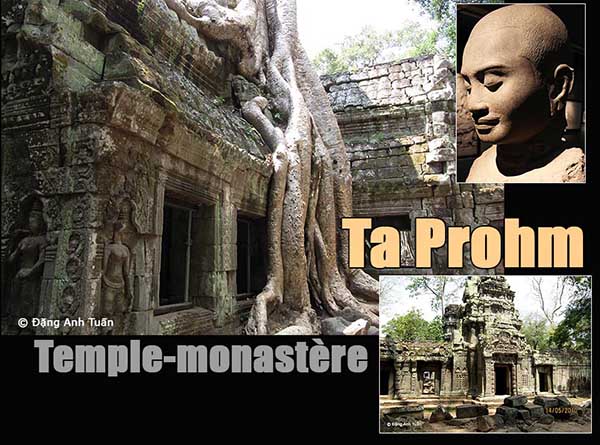
Unlike most of the temples of Angkor, Ta Prohm was left in a state of ruin. It was deliberately chosen by the École française d’Extrême-Orient (French School of Oriental Studies) as an example of what the temples of Angkor looked like at the time of their discovery in the XIXth century. For building this temple, the sovereign Jayavarman VII relied upon the income which the rice culture gave him. The money did not exist at that time. The currency of exchange remained the rice, the basic food of the workers enlisted to build the temple. We find in the Ta Prohm site an inscription indicating that 12 640 people served in this single temple.

It also reports that more than 66 000 farmers produced more than 2 500 tons of rice a year to feed the multitude of priests, dancers and workers in the temple. Because of its romantic attraction, the Ta Prohm temple was selected in the American movie Tomb Raider with Lara Croft (Angela Joli).

Đền – Tu viện Ta Prohm

[ngg_images source= »galleries » container_ids= »122″ display_type= »photocrati-nextgen_basic_thumbnails » override_thumbnail_settings= »1″ thumbnail_width= »230″ thumbnail_height= »100″ thumbnail_crop= »1″ images_per_page= »30″ number_of_columns= »3″ ajax_pagination= »0″ show_all_in_lightbox= »0″ use_imagebrowser_effect= »0″ show_slideshow_link= »0″ slideshow_link_text= »[Montrer sous forme de diaporama] » template= »/homepages/5/d276592279/htdocs/clickandbuilds/vietnamquehuongtoi/wp-content/plugins/nextgen-gallery/products/photocrati_nextgen/modules/ngglegacy/view/gallery-caption.php » order_by= »pid » order_direction= »ASC » returns= »included » maximum_entity_count= »500″]
 

It is here that the nature took back her rights. Certain walls of the Ta Prohm site can only stand up thanks to the roots of fig and cheese trees who enclose them as huge octopuses. Ta Prohm is considered as one of the temples the most appreciated in Angkor. It was built by great king builder Jaravarman VII at the end of the XIIth century. It was dedicated to his mother because we find the surprising resemblance of this one in the statue of the main divinity in this temple, Prajnaparamita (Perfection of the wisdom). His father was not either forgotten because Lokeçvara, the main god of Preah Khan looks like him enormously.

Banteay Srei (The jewel of Khmer art)

French version
banteay_srei

Banteay Srei: the jewel of Khmer art

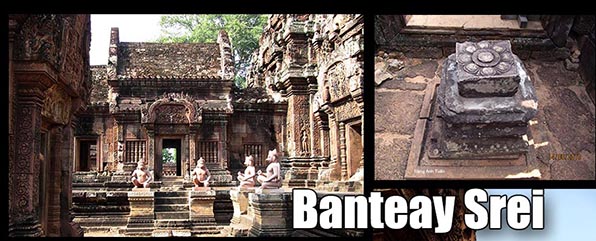
Located 20 km northeast of Angkor and almost at the foot of the mount Phnom Kulên, this temple was built in the Xth century in pink sandstone and in laterite under the reign of Jayavarman V. It is the work of certain Brahman Yajnavaraha, adviser of king Rajendravarman then guru of Jayavarman V. Besides the variety of stoneware (preferred material of the Khmers) in the warm tones of pink, the quality and the beauty of this temple are found in the exceptional delicacy of sculptures and the freshness of its sophisticated decorations. Depending on the period of sunshine, this temple changes colour through the day.

It was discovered by the French people in 1914. It became famous in 1923 when French writer André Malraux was arrested for the dissimulation of 4 apsaras. One gives to this temple a recent appelation naming  » citadel of the women  » in reference to the delicacy of the sculptured decorations which could have been made only by women or for its small size compared with the other temples. The restoration was made by Henri Marchal between 1931 and 1936 in a remarkable way by using the technique of the anastylose adopted by the Dutch people.

[ngg_images source= »galleries » container_ids= »210″ display_type= »photocrati-nextgen_basic_thumbnails » override_thumbnail_settings= »1″ thumbnail_width= »160″ thumbnail_height= »80″ thumbnail_crop= »1″ images_per_page= »30″ number_of_columns= »5″ ajax_pagination= »0″ show_all_in_lightbox= »0″ use_imagebrowser_effect= »0″ show_slideshow_link= »0″ slideshow_link_text= »[Montrer sous forme de diaporama] » template= »/homepages/5/d276592279/htdocs/clickandbuilds/vietnamquehuongtoi/wp-content/plugins/nextgen-gallery/products/photocrati_nextgen/modules/ngglegacy/view/gallery-caption.php » order_by= »pid » order_direction= »ASC » returns= »included » maximum_entity_count= »500″]


Culinary art ( Nghệ Thuật Ẩm Thực của người Việt)

 
amthucvn

French version

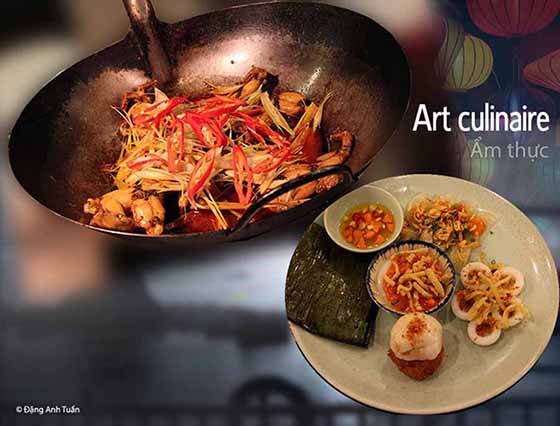
Vietnamese people grant a great importance to the culinary art, in particular to their eating. It is the first necessity in their daily life and culture. Nothing is more amazing to see the use of « an » as the prefix in a great number of words. Among them we find: ăn nói ( to speak ), ăn mặc ( to wear ), ăn ở ( to live ), ăn tiêu ( to consume ), ăn ngủ ( to sleep ), ăn trộm ( to steal ), ăn gian ( to cheat ), ăn hiếp ( to bully ) and so on…It is usually said: Trời đánh tránh bữa ăn to means even God dare not disturb the Vietnamese during their meal.


Their eating is carefully elaborated according to the concept of Yin and Yang and the five elements (Thuyết Âm Dương Ngũ Hành) which serves as the fundamental basis of their Van Lang civilization.
Yin-Yang ( Âm Dương ) is the representation of the two poles of all things, a duality that is at the same time contradictory and complementary. Of the nature Yin is whatever is fluid, cold, humid, passive, somber, interior, female in essence like the sky, the moon, night, water, winter. Of the nature Yang is whatever is solid, hot, luminous, active, exterior, male in essence like the earth, the sun, fire, summer. Human is the hyphen between these two poles or rather between the Earth (Dương) and the Sky ( Âm ). Harmony may only be found in the equilibrium that human brings to its environment, universe and body. Vietnamese food therefore finds all its meticulous preparation and particularity in the dialectic relationship of the theory of Yin and Yang. It also shows the respect of the millennial cultural tradition of a farming country and of a civilization known for its rice farming on flooded rice fields (trồng lúa nước).

Yin-Yang in Vietnamese culinary art

© Đặng Anh Tuấn

That is why rice should not be missed in a Vietnamese meal. It is at the basis of several Vietnamese dishes (bánh cuốn, bánh xèo, phở, bún, bánh tráng, bánh chưng vân vân ) (ravioli, crepe, pho, vermicelli, rice paper, sweet rice cake etc..) Rice can be whole, round, long, crushed, scented, glutinous etc… More than a food, rice is for the Vietnamese people a tangible proof of their Bai Yue culture, a trace of civilization that is not lost under the weight of long Chinese domination.

The manner in Vietnamese eating is not foreign to the search for the middle-of-the-road attitude encouraged in the concept of Yin and Yang.  » Eating together  » requires in their view a certain respect, a certain level of culture in the art of eating because there exists an undeniable interdependence among the guests in the share of food and space. It is usually said: Ăn trông nồi , ngồi trông hướng.

When eating look for where the rice cooker is and when sitting look for where the direction is. That is the maxim that Vietnamese parents used to tell their children about their table manners. One has to behave oneself when invited to a meal. One should not eat too fast for not to be called impolite but should neither eat too slowly as one should not make other guests wait. Emptying one’s plate or the cook pot is not allowed because it gives the feeling of being greedy. On the contrary, eating too little implies a lack of mannerliness, which may vex the host. This cautious behavior could be summed up by the following statement: Ăn hết bị đòn, ăn còn mất vợ. (Emptying the cook pot deserves spanking, leaving some leftover leads to losing the spouse ). It is in the constant search for equilibrium evoked in the Yin and Yang theory that a Vietnamese must exercise in due course at a meal. It should not be ignored the « varied » nature brought in by Vietnamese food that is characterized by the diversity and visible exuberance in colors of the ingredients in the preparation.

Around a bowl of rice is the creation of a multitude of colors, flavors and dishes. The expression of the 5 senses (ngũ giác) is also found in a Vietnamese meal:  

smell: by the release of aromas and flavors of foods served,
sight: by various coloration of the ingredients that go in the preparation of the dishes,
taste: by the flavors of the dishes,
hearing: by the sound made by the sucking of tea or stock with the mouth,
touch: by the nonstop handling of chopsticks.

For some Vietnamese specialties (gà nướng (roasted chicken), gà luộc ( boiled chicken ), gỏi cuốn (spring rolls) ), the use of hand is highly appreciated. Most Westerners used to attribute to the Chinese the holder of chopstick civilization. However it is the product of the cradle of the rice growing civilization of South East Asia. It is what the Chinese historian Ðàm Gia Kiện has written in his book entitled « Cultural History of China » ( Lịch sử văn hóa Trung Quốc ) ( 1993, page 769 ):
At the time prior to the unification of China by Qin Shi Huang Di, the Chinese continued to use their hands to grasp food. It was a tradition found in people growing millet (kê), barley (mạch) and eating bread, hum bao ( bánh bao ) and meat. They only began to use chopsticks during their expansion toward Southern China.
That assertion has been justified by recent scientific discoveries. Chopsticks can only be made in a region where abundance of bamboo is not in doubt. That is the case of Southern China and South East Asia. They are the rudimentary tool shaped to the image of the bird’s bill to efficiently pick up grains of rice and fish without having to soil the hands with the plates containing water (soup, broth, fish cauce etc…). It is found in the Vietnamese use of chopsticks a simple as well as humoristic philosophy. A pair of chopsticks is always compared with a married couple.

That is why one used to say:

Vợ chồng như đôi đũa có đôi
Bây giờ chồng thấp vợ cao như đôi đũa lệch so sao cho bằng.

Husband and wife are like a pair of chopsticks
Now that husband is short and wife is tall
Like mismatched chopsticks can’t be paired at all.

During the Lê dynasty, breaking a pair of chopsticks is like a dissolution of marriage. One prefers having a stupid spouse to having a disastrous pair of crooked chopsticks. This preference is evoked many time in the following statement:

Vợ dại không hại bằng đũa vênh.

Besides the « vivacious » and « lively » characteristics found in the handling of chopsticks, the « collective » characteristics should not be ignored as an attribute to this rudimentary utensil. It is often referred to a bundle of chopsticks to evoke solidarity. The saying: Vơ đũa cả nắm( gather chopsticks in a bunch) reflects that idea when we want to criticize someone and his family in a dispute or debate.

The Vietnamese fierce will to give a big attention to the balance of Yin and Yang is found again in their way of eating. A good meal must meet a certain number of criteria where interdependence cannot be ignored:

  • 1) It must be in agreement with the weather. It cannot be defined as good even when it is served with tasty dishes.
  • 2) It must occur at a pleasant place and time otherwise it is not deemed good either.
  • 3) It must be shared with close friends otherwise the word good cannot be attributed to it.

That is why coming from the criteria mentioned above, a good Vietnamese meal is not necessarily well stuffed. Sometimes meagerness is found in a good meal. It is that of Vietnamese poor peasants where a clever mixture of aromatic herb flavors plays a preponderant role.
The judicious search for balance of Yin and Yang is undeniably shown in the dishes, the human body and between man and the environment. In the Vietnamese culinary art three following important points are turned up: 

1) Yin-Yang equilibrium in the makeup of the dishes.
 
Vietnamese people tend to distinguish dishes according to classification they established in relation to the five elements of Yin-Yang: hàn ( cold ) ( Water ), nhiệt ( hot ) (Fire), ôn ( warm ) ( Wood ), lương ( fresh ) ( Meta l) and bình ( temperate ) (Earth). They take into account the compensation, interaction and combination of ingredients and condiments in the elaboration of a dish. One notices a series of vegetables and condiments in in the makeup of Vietnamese recipes. Known for curing illnesses caused by the « cold » ( coughs, colds etc…), ginger (gung), the condiment of the Yang characteristics, is visible in all the dishes having tendency to bear the cold: Bí đao ( marrow quash ), cải bắp ( cabbage ) rau cải ( lettuce ) and cá ( fish ). Hot pepper is of Yang nature ( hot ) and frequently used in dishes having cold, temperate or foul-smelling characteristics ( seafood, steamed fish for example ). One used to eat fermented chicken’s or duck’s eggs ( trứng gà lộn, trứng vịt lộn ) having the Yin characteristics ( Âm ) along with a very flavorful leaf ( rau răm ) of the Yang ( Dương ) tendency. The Yin (Âm) bearing water melon is always eaten with the Yang ( Dương ) natured salt. The most typical Vietnamese sauce remains the fish sauce. In the preparation of this national sauce, it is noticed there are 5 flavors classified according to the 5 element of Yin and Yang: mặn ( salty ) with the fish juice ( nước mắm ), đắng ( bitter ) with the zest of lemon ( vỏ chanh ), chua ( sour ) with the juice of lemmon ( or vinegar ), cay ( hot ) with powdered or crushed hot pepper and ngọt ( sweet ) with powdered sugar. Those five flavors ( mặn, đắng, chua, cay, ngọt ) combined and found in the national sauce of Vietnamese people correspond respectively to five elements defined in the theory of Yin and Yang( Thủy, Hỏa, Mộc, Kim, Thổ) ( Water, Fire, Wood, Metal, Earth).
 
2) Yin-Yang equilibrium in the human body.

Vietnamese food is sometimes used as an effective medicine to cure dysfunctions caused by the loss of balance in Yin and Yang in the human body. For the Vietnamese, the scenario seen in nature is also found inside their bodies. When an organ becomes too Yin, it leads to a slowdown in physical metabolism (feeling cold, slow heartbeats, indigestion etc…). On the other side, if it becomes too Yang, it triggers an acceleration of physical metabolism ( feeling hot, fast heartbeats, physical and mental hyperactivity etc…). A well-balanced Yin-Yang maintains life and assure good health. To regain this balance a person whose illness is of Yin nature ( Âm ) must eat dishes bearing Yang (Dương) characteristics. On the contrary a Yang-natured illness must be treated with Yin-natured dishes. To the Vietnamese, eating is taking care of oneself. Constipation (a Yang illness) can only be cured among the Yin dishes (chè đậu đen, chè đậu xanh etc..( meung bean, black bean compote, a Vietnamese dessert). On the other hand, Yin-natured diarrhea or stomach ache can be treated effectively with Yang-natured seasoned dishes (ginger (gừng, galangal (riềng)). The cold (a Yin-natured illness must find its solution in a bowl of rice porridge full of ginger slices

3) Yin-Yang equilibrium with the environment.

One used to say in Vietnamese : Ăn theo mùa ( Eating according to season ). This saying reflects the state of mind of the Vietnamese to be always in phase with nature and the environment in food.

In Summer, the supply of heat favors an abundance of vegetables, seafoods and fish. Therefore the Vietnamese people tend to eat vegetables and fish. They used to boil vegetables, pickle them (dưa) or make salads (gõi). Dishes that contain water are appreciated. It is the case of pho, the national stock of the Vietnamese people. Bitter and sour flavors cannot be absent either in the Vietnamese cuisine. It is the case of a mildly sour soup prepared with fish (or shrimps), tamarind (or pine apple) and tomatoes ( canh chua cá, canh chua tôm ).

On the other hand in Winter, to resist the cold, the Vietnamese prefer to eat meat and fatter dishes (of Yang characteristics). We notice a massive use of oily liquids (vegetable or animal) and condiments (ginger, chilly, garlic, pepper etc…). Slow cooking meat on low heat in fish sauce (rim thit), sauteing (xào) or frying meat (rán) are the cooking methods frequently used and conformed to climatic variations. Known as a tropical country (Yang)(Dương), Vietnam possesses a great number of dishes of cold characteristics ( Âm ). That is what the father of Vietnamese traditional medecine Hải Thượng Lãn Ông ( Lê Hữu Trác ) had an opportunity to emphasize in his work entitled « Nữ Công Thắng Lãm ». Out of 120 foodstuffs, he succeeded in picking about a hundred of Yin characteristics. This remark puts in evidence the unquestionable preference of Vietnamese for Yin dishes in their traditional food structure and the importance they keep granting to the search for a balance with nature and the environment. Vietnamese cuisine finds more and more followers in the West. Unlike other cuisines that play with sauces, it prefers using a lot of aromatic herbs and condiments. It is a cuisine that stands out for its lightness and digestibility. Much less fatty than Chinese cuisine, it does not miss showing its subtlety and originality. No less than 500 dishes are counted among them remains the imperial roll ( chả gìo). In this cuisine one finds not only a harmony of flavors and a multitude of subtle variations around a bowl of rice but also a profound and intimate agreement with nature and the environment.

There, Yin-Yang does not lose its vitality, the Vietnamese people, their soul and their temperament.