Tết du bûcheron (Sự tích cây nêu)


Le Tết du bûcheron

Version vietnamienne
Version anglaise

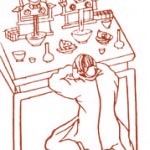
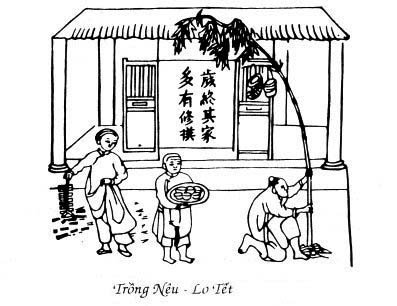
Jadis, un bûcheron parti dans les bois, voulut ramener quelques bambous. Il s’apprêta à couper un bambou avec sa hache quand il entendit ce dernier lui parler. En fait, ce bambou n’était pas ordinaire: c’était un Génie du Ciel transformé en bambou par un sortilège. Surpris, le bûcheron, accepta de laisser la vie sauve au Génie. Pour le remercier, le Génie exauça son vœu (passer  les trois merveilleux jours du Têt comblés de bons mets et de vins délicieux). Sur le conseil du Génie, le bûcheron continua sa route et rencontra l’ermite Za-Xoa qui l’invita  à célébrer le Têt dans son temple.

A minuit, assailli par une nuée de démons, le bûcheron et ses compagnons les affrontèrent. Pour les aider, Bouddha  venu du Ciel proposa aux démons de leur acheter un lopin de terre en échange de pièces précieuses, d’or et d’argent qu’il déposa devant eux. De quelle superficie ? demandèrent-ils  aussitôt les démons. De la taille de ma robe, leur répondit-il. Ceux-ci s’empressèrent de l’accepter, pensant à faire une excellente affaire. Or quand le Bouddha étendit sa robe, cette dernière se révéla aussi grande que le territoire vietnamien. Les démons étaient furieux de se laisser  duper, mais le marché était conclu.

Le Bouddha s’adressa au bûcheron et à ses amis en ces termes: « Lorsque vous inviterez les mânes de vos ancêtres à venir chez vous pour les cérémonies du Têt, des esprits maléfiques peuvent se glisser parmi eux. Vous devrez donc élever une perche de bambou au sommet  de laquelle vous ferez flotter un morceau de tissu jaune marqué de  mon emblème. Ainsi, tous les mauvais démons ne viendront pas vous importuner».

Au Vietnam, on observe encore cette coutume dans certaines campagnes. Dans le milieu urbain, elle a virtuellement disparu. Cependant, le pétard est rentré dans les mœurs et depuis, le Têt débute dans un concert de pétard qui est censé chasser les démons durant toute l’année.

Sự tích cây nêu 


Version vietnamienne

Ngày xưa, có một người tiều phu đi đốn củi muốn mang về một ít tre. Anh định chặt cây tre bằng rìu thì nghe tiếng tre nói với anh. Trên thực tế, cây tre này không phải  bình thường: nó là thần linh bị biến thành tre bởi bùa chú. Quá ngạc nhiên, người thợ rừng đồng ý để thần linh được sống. Để cảm ơn người thợ  rừng nầy, thần linh chấp thuận ý nguyện của người thợ  rừng (có được  ba ngày Tết tuyệt vời với các thức  ăn và rượu ngon). Theo lời khuyên của thần linh, anh thợ rừng tiếp tục hành trình và gặp ẩn sĩ Za-Xoa, người nầy mời anh về chùa ăn Tết …

Vào lúc nửa đêm, bị tấn công bởi một đám ma quỷ, người thợ rừng và đồng bọn của anh ta phải đối mặt với chúng. Để giúp đỡ họ, Đức Phật đề nghị mua một mảnh đất của ma quỷ để đổi lại cho ma qủy các đồng tiền, vàng bạc quý giá, mà Ngài đặt trước mặt họ. Diện tích nó là bao?  các ma qủy hỏi cùng một lúc. Cỡ kích thước chiếc váy của ta, ngài đáp. Họ vội vàng đồng ý vì nghĩ rằng họ đã có được một thỏa thuận tốt. Nhưng khi Đức Phật xoè váy của ngài ra thì váy biến ra quá rộng bằng lãnh thổ Việt Nam. Những con quỷ rất tức giận vì bị lừa, nhưng thỏa thuận đã được thực hiện thôi.

Đức Phật nói với người tiều phu và các người bạn của anh ta như sau: “Khi các ngươi mời tổ tiên về nhà để ăn lễ Tết, các hồn ma quỷ có thể len ​​lỏi vào trong các người đó. Do đó, các ngươi phải dựng một  cây nêu lên trên đỉnh treo một mảnh vải màu vàng có biểu tượng của ta. Như vậy, tất cả ma qủi sẽ không đến quấy nhiễu các ngươi.

Ở Việt Nam, phong tục này vẫn còn được duy trì ở một số vùng quê. Còn ở các đô thị, nó hầu như đã biến mất từ lâu. Tuy nhiên, việc đốt pháo đã trở nên phổ biến và kể từ đó Tết bắt đầu bằng các cuộc đốt pháo nhầm để xua đuổi ma quỷ suốt cả năm.

Version anglaise

Once, a woodcutter who went into the woods wanted to bring back some bamboo. He was about to cut a bamboo with his axe when he heard it speak to him. In fact, this bamboo was not ordinary: it was a Sky Genie transformed into bamboo by a spell. Surprised, the woodcutter agreed to spare the Genie’s life. To thank him, the Genie granted his wish (to spend the three wonderful days of Têt filled with good food and delicious wines). On the Genie’s advice, the woodcutter continued on his way and met the hermit Za-Xoa, who invited him to celebrate Têt in his temple.

At midnight, attacked by a swarm of demons, the woodcutter and his companions confronted them. To help, Buddha, who came from Heaven, offered to buy a plot of land from the demons in exchange for precious coins, gold, and silver, which he placed before them. How large? the demons immediately asked. As big as my robe, he replied. They hurried to accept, thinking it was a great deal. But when Buddha spread out his robe, it turned out to be as large as the Vietnamese territory. The demons were furious to have been tricked, but the deal was done.

The Buddha addressed the woodcutter and his friends as follows: « When you invite the spirits of your ancestors to come to your home for the Têt ceremonies, evil spirits may slip in among them. You should therefore raise a bamboo pole at the top of which you will hang a piece of yellow cloth marked with my emblem. This way, all the evil demons will not come to bother you. »

In Vietnam, this custom is still observed in some rural areas. In urban settings, it has virtually disappeared. However, firecrackers have become part of the traditions, and since then, Têt begins with a concert of firecrackers that is supposed to drive away demons throughout the year.

[Return CONTES]

Edouard Hocquard

Le regard d’un homme au destin exceptionnel

English version

 
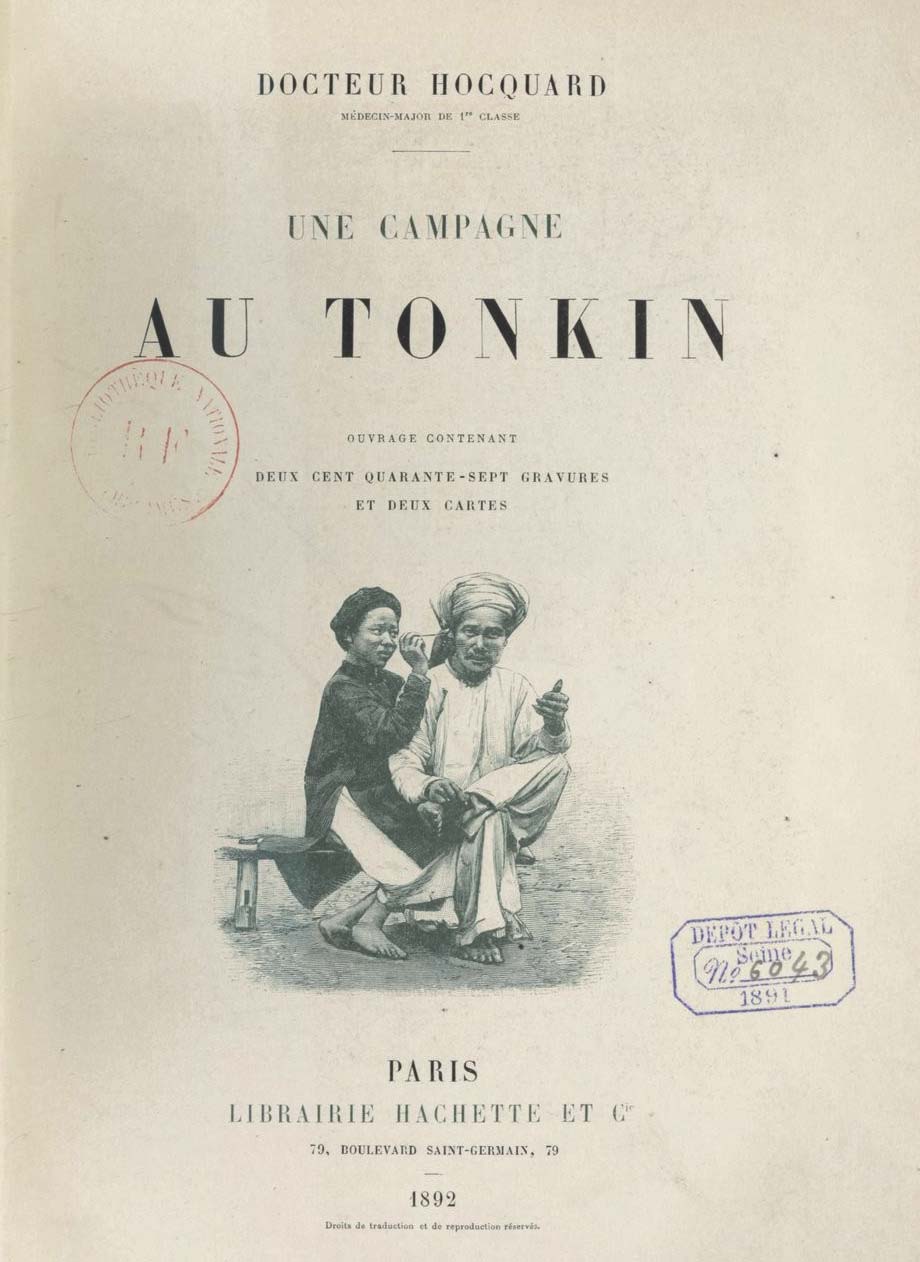
Charles Edouard Hocquard, médecin militaire et  reporter correspondant pour l’agence Havas au Tonkin de 1884 à 1886 nous a légué en héritage une collection d’images de beauté de la première guerre coloniale du Vietnam. Il a rapporté plus de 200 clichés composant une porte-folio de 80 planches en photoglyptie (1) publié en 1887. Il a relaté avec acuité et humour dans « Une expédition au Tonkin », les anecdotes pittoresques avec les paysans de la région, la connaissance de la flore locale, les souvenirs  de la guerre du Tonkin et du peuple vietnamien etc..

Il n’a pas obtenu le succès commercial escompté avec la publication de ses reportages photographiques.  Mais il a réussi à montrer qu’il est possible de trouver dans le conflit franco-vietnamien un autre regard plus objectif, celui d’un homme de science à la rencontre d’une autre culture à l’aube du  XXème siècle. Il est décédé d’une grippe infectieuse le 11 Janvier 1911 à l’âge de cinquante huit ans.


Galerie des photos

Version anglaise

The look of a man with  extraordinary destiny

Being a medical officer and reporter for the Havas agency in Tonkin from 1884 to 1886,  Charles Edouard Hocquard  has bequeathed us as heritage a collection of  beautiful digital pictures  coming from the first colonial war in Vietnam. He brougth  back more than 200 clichés composing a portfolio of 80 boards in  « photoglyptie« (1)  and published in 1887. He related picturesque anecdotes with  local peasants, knowledge  of local flora,  memories of war and Vietnamese people with acuity and humor in the book « Une expédition au Tonkin (An expedition in Tonkin) » etc…

The commercial success was not obtained  with the publication of its  photographic articles. But he succeeded in showing that it is possible to find in the franco-vietnamese conflict an other look very impartial, that of a scientific man going out to meet with an other culture at the dawn of the twenty century. He died from an infectious influenza on 11 January 1911 when he was fifty-eight years old.


(1) photoglyptie: un procédé d’impression photomécanique inaltérable destiné à remplacer les tirages argentiques.

      An immutable  photomechanical printing process is  intended to replace silver printings.

In Search of the Origin of the Vietnamese People: Part 1 (Đi tìm nguồn gốc dân tộc Việt)


Version française

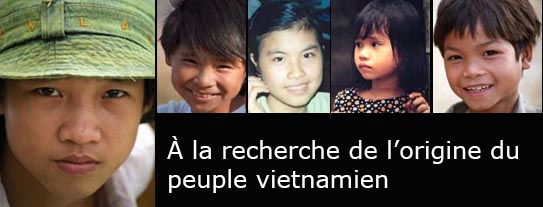
The discovery of the Hemudu site ( Zhejiang ) in 1973 was a great event for Chinese archaelologists because the site traced back to more than 5000 years the most ancient civilization of rice found on earth. Also found there were remnants of lacustrine wooden housing built on piles, the type of construction quite different from the earthen houses in Northern China. The people who lived there possessed traits characterized Mongoloid as well as Australo-Negroid. Because Zhejiang is part of the most beautiful provinces in Southern China for a long time, that famous civilization has been attributed to the Chinese people even though the cradle of their civilization was known to be narrowly tied to the basin of the Yellow River ( or Huang He ) ( Hoàng Hà ) where Anyang is its ancient heart. One cannot deny that their civilization has found all its quintessence in the neolithic cultures of Yang-Shao ( Henan Province ) ( 5000 years BC) and Longshan ( Shandong Province ) ( 2500 years BC ) respectively identified by the Swedish Johan G. Andersson in 1921 and the father of Chinese archaeology Li Ji a few years later. Thanks to phylogenetic works done by the American team led by professor J.Y.Chu of the University of Texas, which was published in the American Review of Sciences Academy under the title « Genetic Relationship of Population in China » (1), an accurate idea about the origin of the Chinese people began to emerge. Three points were raised from these works:

  • 1) It is clear that genetic evidence does not support that Homo-sapiens in China has an independent origin. The ancestors of the populations presently living in the East of China came from South East Asia.
  • 2) Thereafter, it is probably safe to conclude that « modern » folks native of Africa constitute largely the genetic capital found presently in East Asia.

In his conclusion, professor J.Y. Chu recognized that it is probable the ancestors of the populations speaking Altaic languages ( or the Han ) were issues of the population of South East Asia and the tribes coming from Central Asia and Europe.

That discovery did not call into question what has been proposed some few years before by anthropology professor Wilhelm G. Solheim II of the University of Hawaii in his book « A New Light in a Forgotten Past » (2). For this anthropologist, there is no doubts that the Hoa Binh culture (15,000 years B.C.) discovered in 1922 by the French archaeologist Madeleine Colani in a village near Hoà Bình province in Vietnam was the birth place of future evolution of Neolithic cultures of Yang Shao and Longshan found in Northern China. British physicist Stephen Oppenheimer has gone far beyond what was thought at that time by showing in logical and scientific processes that the cradle of civilization of humanity was in South-East Asia in his work « Eden in the East: the Drowned Continent of South-East Asia« .(4) He concluded basing on geological evidence found at the bottom of the East sea (Biển Đông)  and carbon-14 dating methods on foodstuff (yam, taro, rice, cereals etc…) found in South-East Asia ( Non Sok Tha, Sakai ( Thailand ) , Phùng NguyênÐồng Ðậu ( Vietnam ), Indonesia ), that a huge flood took place and forced the people in the region who, unlike what western archaeologists had described as folks living on fishing, hunting and gathering, were the first to know how to perfectly master rice growing and farming to migrate all over the place ( either southward in Oceania, or eastward in the Pacific, or westward in India, or northward in China ) for their survival. Those folks had become the seeds of great and brilliant civilizations found later in India, Mesopotamia, Egypt and the Mediterranean.

From those archaeological and scientific findings, one is led to pose questions on what has been reported and falsified by history in this region of the world and taught until then to the Vietnamese. Could one ignore any longer those scientific discoveries? Could one continue to believe any longer in Chinese writings ( Hậu Hán Thư for example ) where Chinese prefects such as Tích Quang ( Si Kouang ) and Nhâm Diên were imputed the care of teaching the ancestors of the Vietnamese how to dress and use the plow that they did not know at the first century of our era?. How could they not know rice growing, the legitimate descendants of king Shennong ( Thần Nông )(3), when one knows that the latter was a specialist in agrarian domain? No one dares to pick out this contradiction.

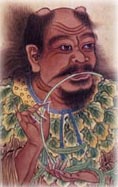
Shennong (Thần Nông)

One does not even raise questions on what the people from the North have given to this devine hero the nickname Yandi ( Viêm Ðế )( king of hot country of Bai Yue ). Is it about the way to refer to the king of the region of the South, because at the Zhou era, the Yue territory was known as Viêm Bang? Is it possible for nomad folks from the North whose origin is Turco-Mongol, the ancestors of the Han and of the Southern folks, the Yue to have the same ancestors? Is it the matter of a pure making up stories at the glory of the conquerors in order to justify their policy of assimilation?

All the traces of the other peoples, the « Barbarians » have been wiped off at the time of their passage. The conquest of the Chinese continent began at the borders of the loess and the Great Plain and hard to please for almost four millennia. That has been noted by the French scholar René Grousset in his work « History of China » when speaking of the expansion of a Chinese rude pioneer race of the Great Plain.

Facing their brilliant civilization, very few people including the Europeans when they first arrived in Asia dared to raise any doubts about what has been said in Chinese and Vietnamese annals and think of the existence of even another civilization that the dominators succeeded in monopolizing and erasing on the submissive land of the Bai Yue people. The name Indochina has already reflected a great deal this attitude because for a large number of folks, there are only two civilizations in the world worth mentioning in Asia: That of India and of China. It is also regrettable to note the same mistake made by some Vietnamese historians influenced by by the Chinese culture in their history works. By dint of being indoctrinated by the Northern folks’ policy of colonization, a certain number of Vietnamese continue to forget our origin and to think nowadays that we are issues of the Chinese who will not hesitate to set going their policy of assimilation and annexation in territories they have succeeded in conquering since the creation of their nation. The success of « Sinisation » of the Han was visible as the centuries went by at the time of contact with other « barbarian » peoples. The process would not be different from the one that marked their footsteps on the Mongolian « land of grass » in 19th century and in the Manchurian forest in 20th century.

One does not refute their brilliant civilization having an undeniable impact on the development of the Vietnamese culture during their long domination, but one cannot forget to recognize that the ancestors of the Vietnamese, the Luo Yue ( ou Lạc Việt ) have had their own culture, that of Bai Yue. The Vietnamese were the sole survivors of this people for not to be « sinised » in the turmoil of history. They were the legitimate heirs of the Bai Yue people and of their agricultural civilization. The bronze drums of Ðồng Sơn have witnessed their legitimacy because on these objects were found patterns of decoration recounting their agricultural and maritime activities of this brilliant era before the arrival of the Chinese on their territory ( Kiao Tche or Giao Chỉ in Vietnamese).

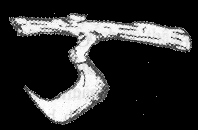
Now we know that the agricultural civilization of Hemudu has given birth to the culture of Bai Yue (or Bách Việt in Vietnamese). The term Bai Yue literary meaning One hundred Yue, has been used by the Chinese to call all the tribes thought to belong to one group, the Yue. According to Bình Nguyên Lộc, a Vietnamese writer, the tool frequently used by the Yue is the axe ( cái rìu in Vietnamese) found in several forms and made of different materials ( stone, iron or bronze ). For this reason that at the moment of contact with the nomad folks from the North of Turco-Mongol origin, the ancestors of the Han ( or Chinese ) called them by the name of « Yue », the folks who use the axe, which at that time looked like this :

and served as the model of representation in Chinese writing by the pictogram . This pictogram also appears in the word Yue to which is added the radical  mễ () (or rice or gạo in Vietnamese ) to mean the folks who practice farming at the era of Confucius. 

Nowadays, in the word Yue (), besides the radical () pass or vượt in Vietnamese), the picture of the axe continues to be represented by the pictogram    endlessly modified as time goes by. Perhaps the word Yue phonetically comes from the sound Yit used by the Muong tribe to call the axe. It is important to remember that the Muong tribe has the same origins as the Luo Yue ( ou Lạc Việt ) tribe whose the Vietnamese are issues. ( The famous Vietnamese kings Lê Ðại Hành , Lê Lợi being Muong people). Recently, archaeologist and researcher of CNRS Corinne Debaine-Francfort has talked about the use of the ceremonial axes by the Chinese in the sacrifice of humans or animals in her work titled « The Rediscovery of Ancient China » ( Editeur Gallimard, 1998 ). The sage Confucius had the opportunity to talk about the Bai Yue people in conversations with his disciples.

The Bai Yue people living south of the Yang Tse river ( Dương Tử Giang ) has a life style, a language, traditions, moral standards and a specific foodstuff… They devote themselves to rice growing, which makes them different from our people who grow millet and wheat. They drink water coming from a kind of plant plucked from the forest known as « tea ». They like dancing, working while singing and alternate their reply in the songs. They often disguise themselves in the dance with leaves and plants. We should not imitate them ( Xướng ca vô loại ).

Confucian influence is not unfamiliar to the bias that Vietnamese parents still hold today when their children devote themselves a bit too much to musical or theatrical activities. it is in this spirit that they are seen with a negative view. But it is also the attitude adopted by Chinese governors in forbidding the Vietnamese to manifest musical expressions in their ceremonies and festivities during their long domination.

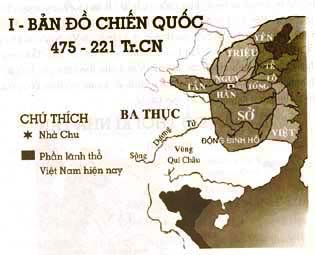
Historian Si Ma Qian ( Tư Mã Thiên ) had the opportunity to talk about the Yue in his Memoires historiques ( Sử Ký Tư Mã Thiên ) when he recounts the life of the famous lord, Gou Jian ( Câu Tiễn ),prince of the Yue for his incommensurable patience facing the ennemy governor Fu Chai ( Phù Sai ), king of principality Wu ( Ngô ) at the war time of Srpings and Autumns. After his death, his kingdom was absorbed completely in 332 B.C. by the kingdom of Chu ( Sở Quốc ) which was in its turn annexed later by Qin Shi Huang Di during the unification of China. It is important to stress that the Hemudu site is located in the kingdom Yue of Gou Jian.( Zhejiang ).

As for the groups sharing the same culture of Bai Yue, one finds the Yang Yue, Nan Yue ( Nam Việt ), Lu Yue, Xi Ou, Ou Yue, Luo Yue ( Lạc Việt ), Gan Yue, Min Yue ( Mân Việt ), Yi Yue, Yue Shang etc. They lived north of the basin of the blue river, from Zhejiang ( Triết Giang ) to Jiaozhi ( Giao Chỉ ) ( the North of Vietnam today ). It is found in this area of distribution the current provinces of Southern China: Foujian ( Phúc Kiến ), Hunan ( Hồ Nam ), Guizhou ( Qúi Châu ), Guangdong ( Quảng Ðông ), Jiangxi, Guangxi ( Quảng Tây ) and Yunnan ( Vân Nam ).

The Bai yue were probably the heirs of the Hòa Bình culture. They were a people of skilled farmers: They grew rice on burned land and flooded fields and raised buffaloes and pigs. They lived also by hunting and fishing. They have the custom of tattooing their bodies to protect themselves from attacks of water dragons (con thuồng luồng). Relying on the support of Si Ma Qian’s Memoires Historiques the scholar Léonard Aurousseau evoked the Goujian (king of the East Yue) ancestors’ custom to paint their bodies with dragons or other aquatic beasts similar to the ones found on the South Yue.

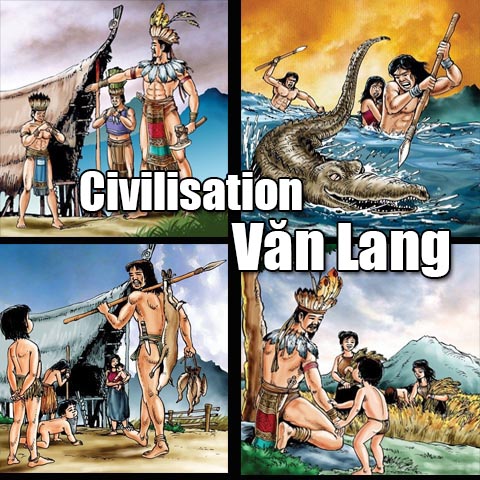
They wore long hair in chignon held by a turban. According to some Vietnamese texts, they cut their hair short to facilitate their walk in the mountain forests. Their clothes were made of vegetal fibers. Their houses were elevated to avoid being attacked by wild animals. They used bronze drums as ritual objects in their ceremonies for invocation of rain or as an emblem of power in case there is the need to call warriors for combat. The Giao Chi possessed a sacred instrument: The bronze drum. In listening to the drum, they were so enthusiastic during the war… », that is what we found in the first volume of Hậu Hán Thư (Late Hán Book). Their warriors wore a simple loincloth and armed with long spears decorated with feathers. They were also bold navigators who, in their long pirogues traveled all over East sea (Biển Đông) and beyond in part of southern seas. In spite of their high technicity and perfect mastering of farming and rice growing, they were a very peaceful people. More reading (Part 2)

Papyrus vietnamien (Giấy dó)

Imageries populaires Đông H

Version française

English version

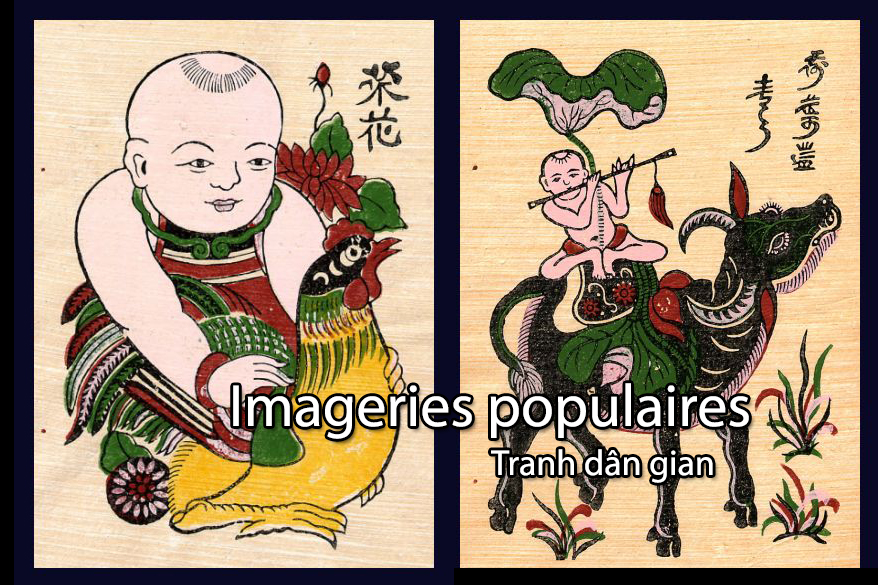
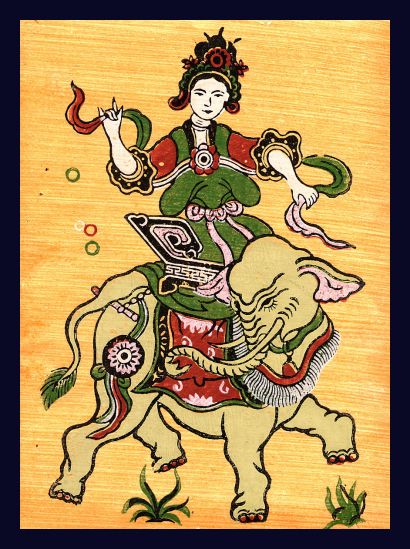
Các  bức tranh dân gian phổ biến nầy  thường được trông thấy trưng bày ở  các ki-ốt dành riêng cho các khách du lịch nước ngoài. Giấy dó (giấy rhamnomeuron) được sử dụng để in những hình ảnh này. Theo một số nhà nghiên cứu Việt Nam,  giấy này được xuất hiện vào khoảng thế kỷ thứ 3 và đạt đến đỉnh cao từ thế kỷ thứ 8 đến thế kỷ 14. Hồ Qúi Ly đã sử dụng nó vào cuối thế kỷ 14 để in các tiền tệ pháp định.

Việc sản xuất giấy này đòi hỏi phải có sự chuẩn bị thật  kỹ lưỡng. Giấy được làm bằng vỏ cây dó. Sau khi thu hoạch vào khoảng tháng 8 đến tháng 10 âm lịch, cần ngâm vỏ cây trong nước một hoặc hai ngày. Sau đó mới  được xử lý bằng cách ngâm nó trong dung dịch vôi cô đặc trong 5 giờ. Sau đó mới  đun sôi nó trong khoảng 20 giờ trước khi đem giã nó trong 5 giờ. Bột thu được bằng cách giã được pha loãng trong một chậu chứa đầy hỗn hợp nước và nhựa từ cây mò (clerodendron). Giấy thu được bằng cách sử dụng khuôn sau khi ép và sấy khô nó.

Cứ một trăm kí lô vỏ cây,  chỉ thu được 5 hoặc 6 kg giấy. Điều này giải thích tại sao thị trường bán giấy nầy rất bị hạn chế. Ngoài ra, giấy dó Việt Nam chỉ mọc ở vùng cao miền Bắc. Nổi tiếng với nghề in vẽ hình trên giấy dó, dân làng Dương Ô và Đông Hồ cũng chịu cùng  chung số phận.

Giá  vốn sản xuất giấy  được tái chế lại cao hơn so với  giá bán giấy dó. Đây chính là lý do khiến ít người tiếp tục quan tâm đến nghề truyền thống nầy  đang bị thất lạc đi qua năm tháng.


Les imageries populaires fréquemment visibles sont proposées dans les kiosques réservés aux touristes étrangers. Le papier dó (papier de rhamnomeuron) est utilisé dans l’impression de ces imageries. Selon certains chercheurs vietnamiens, ce papier fut apparu vers le IIIème siècle et connut son apogée du VIIIème au XIVème siècle. Hồ Qúi Ly s’en servit à la fin du XIVème  siècle pour l’impression des monnaies fiduciaires.

La production de ce papier nécessite une préparation minutieuse. Il est fabriqué avec l’écorce de l’arbre do. Après la récolte de celle-ci entre les 8ème et 10ème mois lunaires, on a besoin de l’immerger dans l’eau pendant un ou deux jours. On la traite ensuite en la macérant dans une solution de chaux condensée durant 5 heures. Puis on la fait bouillir durant une vingtaine d’heures avant de la piler pendant 5 heures. La farine obtenue par le pilage est diluée dans une bassine remplie d’un mélange d’eau et de résine de la plante mò ( clerodendron ). Le papier est obtenu grâce à un moule après avoir été pressé et séché.


Papyrus vietnamien

Galerie des photos

Pour cent kilos d’écorce, on obtient seulement 5 ou 6 kilos de papier. Cela explique la raison pour laquelle le marché est très limité. De plus le papyrus vietnamien dó ne pousse que dans les hautes régions au Nord. Connus pour la fabrication des imageries populaires sur le papier dó, les villageois de Dương Ô et de Ðông Hồ ont subi le même sort.

Le prix de revient  dans  la production du papier recyclé est supérieur à celui de vente  du papier dó. C’est pourquoi peu de gens continuent à s’intéresser encore à ce métier ancestral qui se perd au fil des années.

Version anglaise

Those are often proposed in the kiosks reserved to  foreign tourists. Paper dó (rhamnomeuron paper) is used in the printing of these images. According to certain Vietnamese researchers, this paper had appeared around the 3rd century and knews its apogee from the 8th to the 14th century. Hồ Qúi Ly made use of it at the end of  14th century for the printing of  fiduciary currencies. The production of this paper requires a meticulous preparation.

It is manufactured with the bark of the tree dó. After the harvest of this one between the 8th and 10th lunar months, one needs to immerse it in water during one or two days. After one treats it by macerating it in a lime solution condensed during 5 hours. Then one makes it by boiling  during about twenty hours before crushing it during 5 hours. The flour obtained by crushing is diluted in a basin filled with a mixture of water and resin of the plant mò (clerodendron). Paper is obtained thanks to a mould after being pressed and  dried.

For two hundred kilos of bark, one  gets only 5 or 6 kilos of paper. That explains why the market is very limited. In addition, the Vietnamese papyrus dó grows only in the northern  highlands. Known for making popular imagery on paper dó,  villagers of Dương Ô and Đông Hồ suffered the same fate.

The cost price in the production of recycled paper is higher than the selling  price  of dó paper. That is why a few people still continue to be interesting to this ancient craft that is lost over the years.

Ceramic (Gốm Vietnam)

French version

gom


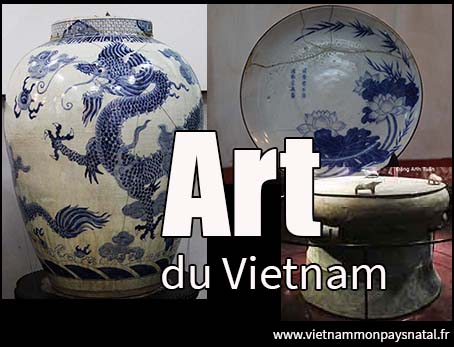
It is greatly surprising to see that, despite the everlasting domination of China on Viet-Nam, the latter was able to distinguish brilliantly starting from 14th century in the domain of ceramics. It became thus an active participant in the flourishing trade of South-East Asia in this domain with its junks and its compass known since 11th century. Tome Pires in his Suma Oriental (1515) summarized all these exchanges and foot-noted even the existence of a Vietnamese ceramic production intended for sale in China. At that time, there was even the counterfeit of Vietnamese blue and white in the Chinese furnaces of Snatow.

Its success was mainly due to the cobalt blue that blew into Vietnamese ceramic art a spirit which will have lasted for two centuries and enabled it to capture a foreign market as far as even the most remote corners of Asia.

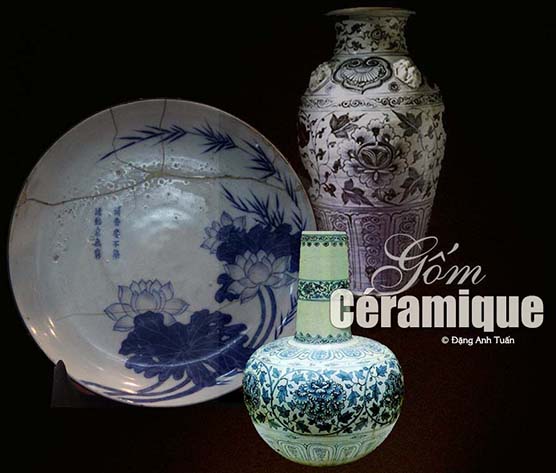
It is the case of large a vase-bottle found at the Topkapi palace of Istanbul, carrying an inscription in Chinese characters, in blue under glaze that one can read in Vietnamese: Painted for pleasure by Pei de Nam Sách in the 8th year of Thái Hoà, or of a dish with blue and white floral decoration at the Treasury of Ardebil (Museum of Teheran)

If the cobalt blue was known in Vietnam for a long time even before the Chinese invasion of Ming, it appears that it was used only around the years 1430-1450. It is from this time that the blue and white definitively replace monochromic ceramics. 

Gốm

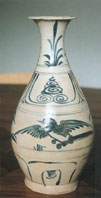
Vase (Lê dynasty)

It is thanks to the perfect control of manufacturing, decorating and baking techniques that the Vietnamese potter can improve his imagination. Even though constraints of painting under glaze do not prevent any repentance, there appear on the sandstone not only more and more sophisticated drawings but also a variety of pigments, an eruption of form s and original decorations, which made him an artist. If he does borrow a good number of decorative drawings from China ( peonies, lotus, flowers, foliated scrolls etc..), he has on the other hand the idea to create an autonomous style which is less hieratic and more vivacious than his Chinese homologous by the liveliness of his feature and his spontaneity. He can adapt these decorative elements to the Vietnamese style: the Chinese red fish becomes thus the Cá Bông, a Vietnamese freshwater fish.

It is no longer the case of China since China discovers the perspective starting from the reign of Jiajing (1522-1566). On the other hand, the quality of the central motif found on the plates, is definitely higher than that of the surrounding ones. This proves there is an intervention of several craftsmen in the realization of these plates. Because of the war, Viêt-Nam did not set up a systematic program of archaeological excavations. Few sites were exhumed so far. On the other hand one knows that the areas of Tam Tố north of Thanh Hoá, Nam Sách in the province of Hải Dương, Bát Tràng north of Hanoi to name a few sites, are surely witnesses of the manufacture of these Vietnamese ceramic pieces.

Jarres , verseuses et bols en grès à l’époque des dynasties Lý et Trần.

Pictures gallery of Vương Hồn g Sển collection


La céramique vietnamienne (Philippe Colomban CNRS)

Des céramiques vietnamiennes chargées d’histoire  (Philippe Colomban CNRS)


The Hmong (English version)

dantoc_hmong

French version
Vietnamese  version

The Hmong are divided into local  sub-groups: the Green Hmong, the Red Hmong, the variegated Hmong, the Black Hmong and the Na Mieo.

The Hmong (The Miao or Miêu in vietnamese) actually  living in Vietnam are  descendants of emigrants from South China. Around the end of 18th century and the beginning of 19th century, the Hmong emigrated to Indochina peninsula (Laos, Vietnam and Thaïland)  and settled  away from plains already occupied by  majority ethnic group  in mountainous areas of Hà Giang and Lào Cai provinces.

Their migration story was closely related to the insubordination to the Chinese culture and the policy of asssimilation practiced by northerners. According to mythic tales passed down from generation to generation, their ancestors lived in snow and  ice covered regions where the night lasted almost 6 months. That is why, being accustomed to living in tropical regions and not having the opportunity to see the snow, the Hmong use terms such as « nước cứng » (or solid water) and « cát trắng mịnh » (or fine white sand) to designate respectively the ice and the snow. According to historians, their origin would be in Siberia (Tây Bá Lợi Á) and in vast plateaus of Mongolia. Some Caucasian proeminent traits are detected among the Hmong today. Others preferably opt for Tibet because shamanic rituals.  One has speculations more than certainties about the accuracy of the Hmong geographic origin. In the Chinese writings, the Hmong were designated under the Miao name including initially all the  ethnic peoples non han living in South West China. Today,  this name is reserved to the population group specifically identified and distinct gathering together the Hmong living in Indochina peninsula and  the Miao ethnic minority populations  (The Hmong, the Hmou, the Qoxiong and the Hmau)  closely related at the linguistic and cultural level in China.

Originally related to the drawing of  rice field (Điền) above which is added the pictogram Thảo” (cỏ) (herb)(key 140), the Chinese character Miao (or Miêu in vietnamese) clearly shows the way that the Chinese adopt  to call  the people knowing  the rice cultivation with their language. Being initially rice farmers, the Miao  had  the sedentary lifestyle in plains. As the Miao were chased by successive waves of the Chinese who dispossessed them of their  arable land and their rice field, they were forced to become highlanders  and stayed until today. Being rushed to high altitudes in inaccessible and hostile mountain areas, they were forced to adapt themselves to each environment where they looked  for an agricultural model allowing them to practice the rice cultivation (rice terraces). In spite of that, the Chinese had the habit of traiting them as the barbarians. The Chinese have gone as far as making a distinction between the shu Miao ( or the  cooked Hmong) and the sheng Miao (the uncooked Hmong), that means the assimilated  Hmong  and the  diehard Hmong  on the margins of Chinese civilization.  They  had the task of transforming these sheng Miao into shu Miao.  Myths and facts are not miss to enrich the history of the Miao (or the Hmong).  The latter is punctuated by endless conflicts with the Chinese since time immemorial. This long history of resistance to oppression gives them a particular reputation: they cannot be assimilated and very belligerent.

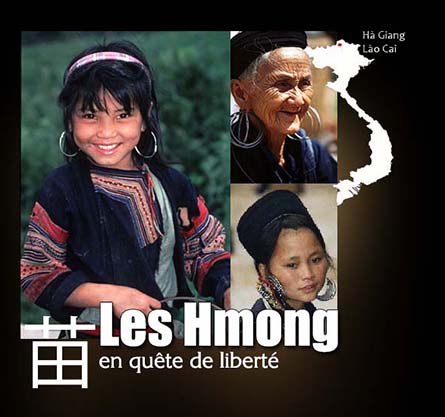
Les Hmong

A people in search of freedom

The Miao ( or the Hmong ) lived together with Hsia(1) tribes since prehistoric times in the middle of Yellow River  Basin (Honan or Hà Nam in vietnamese).  Being associated with Chi You ( Suy Vưu ), they engaged the first confrontation leading to failure with the death of the latter at Zhuolu (Trác Lộc) in Heibei province (Hồ Bắc) (approximatively 2690 before J.C.).They were  henceforth  repelled by Yellow emperor Huang Yuan (Hiên Viên) and Yu the Great (Ðại Vũ) in the Bai Yue territory at  the Yang Tsé Basin River. Other conflicts were evoked with Miao groups in Chinese historical writings  of Shan and Zhou dynasties (1121 – 256 before J.C.). In the middle course of Yang Tsé River (Dương Tữ Giang), they exercised  significant influence over the political and social life of the Chu kingdom (Sỡ Quốc). The latter was considered as one of three principalities fighting among themselves for supremacy  during the Warring States period (Thời Chiến Quốc)In addition to the soul recalling, we noted the close ties between the  Chu culture and the Miao on the various cultural  traits (lifestyle, habitat, language etc…)(2). They constituted probably the force majeure in the Chu population with the Luo Yue (the Proto-Vietnamese) and the ancestors of Thaï today (The Si Ngeou or Tây Âu).  This force majeure became the first bulwark of Yue and Miao tribes in the committed fight against the Chinese.

 
Pictures of Hmong women


img_8504

© Đặng Anh Tuấn

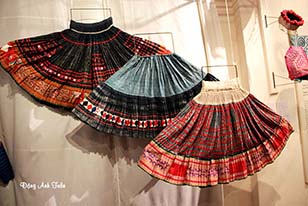
Being in hemp, silk or cotton, the  Hmong pleated skirt whose decoration is own to every group, requires more than 20 meters for the length of the fabric. The method of pleating is one of the characteristics of Hmong women skirt.

After the disappearance of this kingdom, the Miao continuated to be repelled in Guizhou (Quí Châu), Sichuan and Yunnan mountains.  Other military conflicts had emerged with Miao groups in the era of the first dynasty of the Han (140 – 87  before  J.C.) and during Five Dynasties (140 – 87 before  J.C.).  The Miao name was forgotten temporarily in Chinese writings until the establishment of Chinese suzerainty on these provinces by the Yuan ( or the Mongols of China). Then it was regularly mentionned again under the Ming dynasty. Because the Chinese strong demographic growth  ( from 100 millions to 450 millions between  13th and 18th centuries), the Chinese of the Ming dynasty continued to deprive the Hmong of their plateaus and their rice fields, which caused simultaneously the exodus and the fight engaged by the Hmong in the defense of their land. Some Hmong took up arms.  Other preferred to seek refuge in Indochina pensula, in particular in Vietnam by three  successive waves of which the most important was maked by  the  Taiping mystical insurrection   known under the name of Tai Ping Tian Guo (Thái Bình Thiên Quốc)  against the Qing  (from  1840 to 1868). The Hmong thus became a minority ethnic group of Vietnam since three centuries.


(1): There is the ancient name given to the Chinese.
(2): First  symposium on the history of  Chu kingdom (Jingzhu, Hubei, december 1981).


Art vietnamien (Nghệ thuật)

 Photos 


Dương Vân Nga (English version)


French version
Vietnamese version
Pictures gallery

One speaks rarely of Dương Vân Nga in the history of Vietnam. Her name is not as often cited as that of the sisters Trưng Trắc Trưng Nhị or that of Triệu Ẩu. However she was an outstanding woman, the great queen of the first two dynasties Ðinh and Tiền Lê ( anterior Lê ) of Vietnam. Her life and works can be summed up in the following four verses which have been transmitted by oral tradition to our days and left on the wall of Am Tien monastery by a mysterious monk exactly 1000 years now, at his encounter with Dương Vân Nga:

Hai vai gồng gánh hai vua
Hai triều hoàng hậu, tu chùa Am Tiên
Theo chồng đánh Tống bình Chiêm
Có công với nước, vô duyên với đời

On her two shoulders two kings were carried
Queen of two reigns, she retired in Am Tien monastery.
Accompanying her spouse, she had beaten the Song and pacified the Cham
Service she rendered to her country, yet bad luck she got in her life.

Among the ten queens of these two dynasties, she was the only one to be allowed a statue bearing her effigy. During its restoration and transfer in the temple dedicated to King Lê Ðại Hành at the beginning of the Hậu Lê dynasty the statue oozed strangely, perhaps due to it being exposed suddenly to the sun after having been put in a humid place. At that time, it was said that this phenomenon was attributed to atrocious sufferings life has reserved to Dương Vân Nga during her lifetime.

Dương Vân Nga

Her real name was Dương Thị. Vân Nga was the name attributed to her by combining the first word of the name of the region of her father Vân Long and that of her mother Nga Mỹ. She was issue of a very poor background. At her very young age she had to collect wood in the forest and fish in the river to provide to the subsistence of her family in a mountainous and uneven region which is our Hoa Lư. Early morning in the forest, late evening in the river, she became without delay a young hard working, energetic and trouble shooting girl.

She had an innate sense of organization that allowed her to become in the following years the leader of a band of young girls in the area. She arrived at coping with a rival band constituted mainly of young boys led by the buffalo tender Ðinh Bộ Lĩnh by completely disperse his herd of buffaloes by using firecrackers and by her perfect mastery of round floating baskets that helped rapid transport of her troops across swamps and streams. But Ðinh Bộ Linh finally had the last word thanks to his scheme of recourse to poles and light craft of bamboo mat to pierce and immobilize all the round floating baskets of Dương Vân Nga. From then on Ðinh Bộ Lĩnh not only conquered Duong Van Nga’s admiration but also her love. That is why nowadays to evoke conjugal union and predestined love of a couple, it is often referred to the following popular expression: Bamboo mat craft crush round floating baskets ( Thuyền tre đè thuyền thúng )

Thuyền thúng

Thanks to their association, they arrived at gathering under their banner all the young of Hoa Lu and eliminating without delay their opponents in the conquest of power. Thus Ðinh Bộ Lĩnh became the first king of the Ðinh dynasty often known as Ðinh Tiên Hoàng. He was very authoritarian. He used ranks and appointments to buy loyalty of his subordinates. He also used force and cruel and unimaginable punishments to punish his adversaries and those who dared criticize him.

Despite Dương Vân Nga’s advice, he remained unruffled and made several enemies to himself even in his family. Instead of appointing his eldest son Ðinh Liễn, the one who had helped him for several years in his fights for the unification of the country, he chose his youngest son Ðinh Hạng Lang as his crown prince. This provoked Ðinh Liễn’s jealousy and incited him to assassinate his younger brother. Dương Vân Nga was at first witness of the fratricidal fight among her children, then the death of her husband, king Ðinh Tiên Hoàng assassinated by Ðỗ Thích a crank who, after a dream, thought the kingdom should belong to him and the eldest son Ðinh Liễn killed by the rebel troops.

She soon had the pains and sufferings of her daughter, princess Phật Kim, deserted by her husband Ngô Nhật Khánh who, being one of the sons of Ngô Quyền, took refuge in Champa and requested this country to launch a maritime attack against his own land Vietnam in the goal of reconquest of power. Because of the age of her son Ðinh Toàn ( 6 years old ), she had to assume the regency with Lê Hoàn, a generalissimo, head of Vietnamese territories.

But she soon faced the armed resistance of her assassinated husband’s partisans who wanted to eliminate Lê Hoàn at any cost and also the imminent threat of the Song as well as Champa’s. She was placed in front of a dilemma that appeared to be difficult for a woman to overcome alone when she lived in a Confucian era and when Vietnam was just liberated from Chinese domination for about a dozen years. She had the courage to take a decision which appeared doubtful at that time and heavy of harmful consequences for the Dinh dynasty in yielding the throne to Le Hoan and associating with the latter in managing the Ðại Cồ Việt ( ancient Vietnam ).

Pictures gallery of Hoa Lư


This permitted Lê Hoàn to have a massive adhesion of a great part of population and restore not only the confidence but also the unity of the whole people. He thus succeeded in putting down the rebellion, wiping out the Song on the Bạch Ðằng river, starting the Nam Tiến movement ( or descent toward the South ) and restoring peace all over the country. One should place oneself in this troubling political context that Dương Vân Nga experienced in order to see that it was an act well thought out and courageous from the part of a woman who, trained up until then to be submissive to a Confucian yoke, dared accept the dishonor and scorn to assure that our country would not pass under Chinese domination and that Vietnam would not prolong in political chaos.

Her combat appeared to be more arduous than that of the Trưng Trắc Trưng Nhị sisters because it is the matter of not only a struggle against the invaders, but also her own interests, her personal sentiments for the love of this country.
During the reign of Lê Ðại Hành ( or Lê Hoàn ), she ceaselessly advised the latter to practice a politics of magnanimity towards his adversaries, to ban cruel punishments established by Ðinh Tiên Hoàng and to call on talented monks ( Khuông Việt, Ngô Chấn Lưu, Hồng Hiến, Vạn Hạnh ) to the management of the country. Being a warrior by nature, bearing the name of Great Expedition ( Ðại Hành ), he continued to enlarge Vietnam by leading not only a maritime expedition that destroyed the Cham capital Indrapura in presently Central Vietnam in 982 and killed the Cham king Bề Mi Thuế ( Paramec Varavarman ) but also a politics of pacification all over the place in the ethnic minority territories. It was in one of these battles that the last son of Dương Vân Nga and Ðinh Tiên Hoàng, Ðinh Toàn, died assassinated at the place of Lê Hoàn by the Mán. This death was followed by the suicide of her daughter, princess Phật Kim and the death by illness of her son Long Thâu that she had with Lê Ðại Hành. She was taken up by the disappearance of her entourage without complain. She preferred to live her last days in Am Tiên monastery and burry the personal sufferings of a woman facing her destiny.

Is it fair for a patriotic woman like Dương Vân Nga overwhelmed by destiny, not to be cheered and cited like the Trưng Trắc Trưng Nhị sisters in the history of our Vietnam? Is there anything to do with a deliberate omission because of a sacrilege committed by Dương Vân Nga for having married and served two kings in a feudal Confucian society which is ours? One cannot erase the truth of history especially these details, said the Chinese historian Si Ma Qian.

It is time to give back to Dương Vân Nga her notoriety and her place she deserved long time ago in our history pages and make known to future generations the courageous and full of wisdom decision. This one, even though it seemed doubtful and immoral for a Confucian society, was made in the moment where the situation exacted more than ever the cohesion and unity of the whole people facing foreign invasion, but also a man of valor and talent that was our great king Lê Ðại Hành. Without him, the Nam Tiến movement would not have taken place.

Dương Vân Nga-Lê Hoàn (Version française)

Vietnamese version
English version
Galerie des photos

On parle rarement de Dương Vân Nga dans l’histoire du Vietnam. Son nom est moins cité que celui des deux sœurs Trưng Trắc et Trưng Nhị ou Triệu Ẩu. Pourtant c’est une femme hors du commun, la grande reine de deux premières dynasties Ðinh et Lê antérieurs du Vietnam. Sa vie, son œuvre, on peut les résumer à travers les quatre vers suivants  transmis par tradition orale jusqu’à nos jours et  laissés par un moine mystérieux sur le mur du monastère Am Tiên, il y a eu exactement 1000 ans, lors de sa rencontre avec Dương Vân Nga:

Hai vai gồng gánh hai vua
Hai triều hoàng hậu, tu chùa Am Tiên
Theo chồng đánh Tống bình Chiêm
Có công với nước, vô duyên với đời

J’étais née pour épauler les deux rois
Étant la reine de deux dynasties, je me retirais à la fin de ma vie  dans le monastère Am Tiên.
En accompagnant mon époux,  je me battais contre les Song et je pacifiais le Champa
J’avais la gloire dans le pays et la malchance dans la vie.

Parmi les dix reines de ces deux dynasties, elle était la seule à être autorisée à avoir une effigie statuaire. Celle-ci, lors de la restauration et du transfert dans le temple dédié au roi Lê Ðại Hành au début de la dynastie des Lê postérieurs (Hậu Lê) suinta étrangement, probablement par le fait qu’elle avait été exposée subitement au soleil et placée depuis longtemps dans un endroit humide. On attribua, selon l’on-dit, ce phénomène, à cette époque, aux souffrances atroces que la vie avait réservées à Dương Vân Nga, lors de son vivant.

Dương Vân  Nga

Son vrai nom était Dương Thị. Vân Nga était le nom qu’on lui a attribué en associant le premier mot du nom de la région de son père Vân Long et celui de sa mère Nga Mỹ. Pour certains historiens, elle était la fille de Dương Tam Kha, le beau-frère du généralissime Ngô Quyền.  (déjà signalé dans l’article de  Đinh Bộ Lĩnh).  Elle était issue d’un milieu très pauvre. Dès son jeune âge,  elle était obligée de chercher du bois dans la forêt et de se procurer des poissons dans la rivière pour pourvoir à la subsistance de sa famille dans une région montagneuse et accidentée. De bonne heure, le matin dans la forêt, très tard le soir dans la rivière, elle ne tardait pas à devenir une jeune fille.

Thuyền thúng

Elle avait un sens d’organisation inné lui permettant de devenir quelques années plus tard le meneur d’une bande de jeunes filles de sa région. Elle arrivait à tenir tête à une bande rivale constituée essentiellement de jeunes garçons et dirigée par le  jeune bouvier  courageux et intelligent  Ðinh Bộ Lĩnh en désorganisant complètement les troupeaux de buffles de ce dernier par le crépitement  des feux de bois sec   et par la  maîtrise parfaite des paniers ronds flottants, ce qui permettait  de faciliter le transport rapide des troupes à travers les marécages et les cours d’eau. Mais Ðinh Bô. Lĩnh avait quand même le dernier mot grâce à son stratagème de recourir à  des embarcations légères en natte de bambou et à  des perches pour percer et immobiliser enfin tous les paniers ronds flottants de Dương Vân Nga. Dès lors, Ðinh Bộ Lĩnh conquit non seulement l’admiration de Dương Vân Nga mais aussi son amour. C’est pourquoi pour évoquer, de nos jours, l’union conjugale et la dette originelle d’un couple, on se réfère souvent à l’expression populaire suivante: « Les embarcations en natte de bambou écrasent les paniers ronds flottants (Thuyền tre đè thuyền thúng)».

Galerie des photos de Hoa Lư 


Grâce à leur association, ils arrivèrent à réunir sous leur bannière, tous les jeunes de Hoa Lư et ne tardèrent pas à éliminer leurs concurrents dans la conquête du pouvoir. Ðinh Bộ Lĩnh devint ainsi le premier roi de la dynastie des Ðinh connu souvent sous le nom de Ðinh Tiên Hoàng. Il était  très autoritaire. Il se servait des grades et des appointements pour acheter la fidélité de ses subordonnés mais aussi de la force et des châtiments cruels et inimaginables pour punir ses adversaires et ceux qui osaient le critiquer. 

Malgré les conseils de Dương Vân Nga, il continuait à rester imperturbable et se faisait de nombreux ennemis même dans sa famille. Au lieu de nommer son fils aîné, Ðinh Liễn, celui qui l’avait aidé depuis tant d’années dans ses combats pour l’unification du pays, il choisit comme prince héritier son plus jeune fils Ðinh Hạng Lang. Cela provoqua  la jalousie de Ðinh Liễn et incita  à ce dernier à assassiner son petit frère. Dương Vân Nga était d’abord témoin de la lutte fratricide de ses enfants, puis de la mort de son mari Ðinh Tiên Hoàng  et de son fils aîné  Đinh Liễn assassinés par un illuminé Ðỗ Thích qui, après un rêve, crut que le royaume devait lui appartenir.  Cet assassin fut pourchassé durant trois jours avant d’être découvert caché sous le toit d’un bâtiment et condamné à mort ensuite par son premier ministre Nguyễn Bặc. Cette hypothèse n’est pas très convaincante aujourd’hui. Certains historiens comme Phan Duy Kha, Lã Duy Lan, Đinh Công Vĩ ou Lê Văn Siêu  trouvent dans l’assassinat de Đinh Tiên Hoàng et de son fils la main de son généralissime Lê Hoàn avec la complicité de Dương Vân Nga. L’ambition de l’assassin est un peu démesurée et excessive dans la mesure où Đổ Thích ne détient  aucune armée comme Lê Hoàn. Il est le seul personnage à assister à cette tuerie car il est  l’eunuque de l’empereur. Dans le récit historique, il n’y a pas d’autres complices. Il y a le doute dans cette logique. Dương Vân Nga ne tardait  pas à voir les douleurs et les souffrances de sa fille, la princesse Phất Kim délaissée par son mari Ngô Nhật Khánh, qui, étant l’un douze seigneurs locaux soumis et issu de la famille de  Ngô Quyền, se réfugia au Champa et demanda à ce pays de monter une expédition  militaire  contre son propre pays, le Viêt-Nam dans le but de reconquérir le pouvoir convoité. 

Pourquoi  Ngô Xuân Khánh demande t-il de l’aide au Champa contre son propre pays? Pourquoi la Chine des Song prend-t-elle le prétexte pour justifier son intervention au Vietnam?

Il faut rappeler que Đinh Tiên Hoàn réussit à unifier le pays à cette époque car il adopta une politique basée essentiellement sur une combinaison de souplesse et d’alliance  vis à vis des forces rebelles issues de la famille du généralissime Ngô Quyền afin d’avoir l’adhésion du peuple vietnamien dans la conquête  et la légalité du pouvoir mis en place. C’est pourquoi  il consentit à donner sa fille  Phất Kim en mariage à Ngô Xuân Khánh et de prendre la mère et la sœur de ce dernier comme épouse pour lui et son fils aîné Đinh Liễn.  C’est avec la mère de Ngô Xuân Khánh qu’il avait un fils cadet  nommé Đinh Hạng Lang. Pour tenter de plaire à Ngô Xuân Khánh et à sa mère, il choisit Đinh Hạng Lang comme prince héritier à la place de  son fils aîné Đinh Liễn. Cette erreur fatale provoqua la colère de Đinh Liễn et incita ce dernier à  commettre le meurtre de  son jeune frère Đinh Hạng Lang.  Au lieu de condamner à mort  Đinh Liễn, Đinh Tiên Hoàng lui accorda  le pardon. Cela enleva à Ngô Xuân Khánh tout espoir d’usurper un jour  le pouvoir à l’image de Wang Mang (Vương Mãng) à l’époque des Han car il pensait à aider son jeune  demi-frère à gouverner le pays  lors la disparition de Đinh Tiên Hoàng.  C’est pourquoi il décida de  demander l’intervention du Champa pour reprendre le trône convoité. Quant à la Chine, elle trouva une occasion inespérée de reconquérir An Nam car jusqu’alors la Chine des Song reconnut seulement la succession légale en la personne de Đinh Liễn en lui accordant le titre « Nam Việt vương (roi du Sud) ».

A cause du jeune âge de son fils (6 ans) Ðinh Toàn,  Dương Vân Nga devait assumer la régence avec Lê Hoàn, généralissime, chef des territoires vietnamiens.  Elle se heurta aussitôt à la résistance armée des partisans de son mari assassiné qui voulaient éliminer à tout prix Lê Hoàn. Elle dut  faire face non seulement à la menace et l’invasion imminente des Song mais aussi à celle du Champa. Elle était placée devant un dilemme difficile pour une femme de surmonter seule lorsqu’elle vit à l’époque confucianiste et  le Vietnam fut libéré à peine d’une dizaine d’années de la domination chinoise. Elle avait besoin d’être protégée ainsi que son fils Đinh Toàn. Elle avait le courage de prendre une décision  douteuse à cette époque et lourde de conséquences néfastes pour la dynastie des Ðinh en cédant le trône de son fils à Lê Hoàn et en s’associant à ce dernier dans la gestion du Ðại Cồ Việt (ancien Viêt-Nam ). Cela permit à Lê Hoàn d’avoir à cette époque  l’adhésion massive d’une grande partie de la population et de restaurer non seulement la confiance mais aussi l’unité de tout un peuple. Il réussit ainsi à mater la rébellion menée par les anciens compagnons de Đinh Tiên Hoàng (Nguyễn Bặc, Đinh Điền), à anéantir les Song sur le fleuve Bach Ðằng, à entamer le mouvement « Nam Tiến (ou la marche vers le Sud) » et à restaurer la paix sur tout le pays. Il faut se placer dans ce contexte politique troublant qu’a connu Dương Vân Nga pour constater que c’est un acte bien réfléchi et courageux de la part d’une femme exceptionnelle, qui, formée jusque là pour être soumise à un carcan confucianiste, ose accepter le déshonneur et le mépris pour s’assurer que notre pays ne repasserait pas sous la domination chinoise et que le Viêt Nam ne se replongerait pas dans le chaos politique.

Son combat parait plus ardu que celui des sœurs Trưng Trắc et Trưng Nhị car il ne s’agit pas non seulement d’une lutte contre les envahisseurs mais aussi contre ses propres intérêts et ses sentiments personnels.

Durant le règne de Lê Ðại Hành (ou Lê Hoàn), elle ne cessa pas de conseiller à ce dernier de pratiquer une politique de magnanimité envers ses adversaires, à supprimer les châtiments cruels établis par Ðinh Tiên Hoàn et à faire appel à des moines talentueux (Khuông Việt Ngô Chấn Lưu, Hồng Hiến, Vạn Hạnh ) dans la gestion du pays. Étant guerrier de sa nature, portant le nom signifiant Grande Expédition (Ðại Hành), il continua à agrandir le Viêt-Nam en menant non seulement une expédition maritime qui détruisit la capitale chame Indrapura dans le centre du Viêt-Nam actuel en l’an 982 et qui tua le roi du Champa Bề Mi Thuế (Paramec Varavarman) mais aussi une politique de pacification de tous azimuts dans les territoires des minorités ethniques. C’est dans l’un de ces derniers que le dernier fils de Dương Văn Nga et Ðinh Tiên Hoàng, Ðinh Toàn mourut assassiné à la place de Lê Hoàn, par les Mán. Cette mort fut suivie par le suicide de sa fille, la princesse Phất Kim et par le décès de maladie de son fils Long Thâu qu’elle avait eu avec Lê Ðại Hành. Elle fut accablée par la disparition successive de son entourage sans broncher. Elle préféra passer les derniers jours de sa vie dans le monastère Am Tiên et y enfouir les douleurs personnelles d’une femme seule face à son destin.

Est-il juste pour une femme patriote comme Dương Vân Nga accablée par le destin, de ne pas avoir le mérite d’être chérie et citée comme les sœurs Trưng Trắc et Trưng Nhị dans l’histoire de notre Vietnam? S’agit-il d’une omission voulue délibérément à cause d’un sacrilège commis par Dương Vân Nga d’épouser et servir deux rois dans la société féodale et confucéenne qu’est la nôtre? On ne peut pas gommer la vérité de l’histoire en particulier ses détails, ce qu’avait dit l’historien chinois Si Ma Qian.

Il est temps de redonner à Dương Vân Nga la justice  et la place qu’elle mérite depuis si longtemps dans notre page d’histoire et faire connaître aux générations futures cette décision courageuse et empreinte de sagesse. Celle-ci, bien qu’elle paraisse douteuse et immorale pour la société confucéenne, est prise à un  moment où la situation politique exige plus que jamais la cohésion et l’unité de tout un peuple face à l’invasion étrangère et aussi un homme de valeur et de talent qu’est notre grand roi Lê Ðại Hành. Sans celui-ci, le mouvement Nam Tiến ne serait jamais engagé.

Bibliographie

Phan Duy Kha, Lã Duy Lan, Đinh Công Vĩ, Nhìn lại lịch sử, Nhà xuất bản Văn hóa thông tin, 2003.
« Việt Nam văn minh sử » – Lê Văn Siêu, Nhà xuất bản VHTT, 2004.
Hoàng Công Khanh: Hoàng hậu hai triều Dương Vân Nga. Nhà xuất bản văn học 12-1996

Being Confucianist (English version)

French version
Vietnamese version

Being confucianist

Vietnamese society is profoundly influenced by Confucianism that was introduced to Vietnam in the era of a long Chinese domination (111 B.C. – 939 A.D.). Therefore Vietnamese people have absorbed more or less the concepts prescribed by the wise Confucius in « The Canonical Book« . Must be done what appears on a moral viewpoint just and appropriate taking into account the Five Relations ( Ngũ Luân ) upon which rests the Vietnamese society: relation between the king and subjects, father and son, husband and wife, elder and younger brothers, friend and friend.

Thanks to this doctrine, a Vietnamese bestows great importance to his family that he always considers as a moral training ground and strongly attaches himself to the forces of the land and his ancestors.

This allows the Vietnamese society to find not only a cohesion but also a consolidation, deep roots and an efficiency to overcome foreign powers in the most difficult and crucial moments of the history of Vietnam. Society is considered on a large scale by Vietnamese as an extension of the family circle. A confucianist Vietnamese never neglects his filial piety, respect of elderly people, ideal of loyalty, friendship and honor.

In order to understand the Vietnamese soul, gentleness should be taken. Generally speaking, a Vietnamese is stripped of his aggressiveness except when someone makes him lose face, in particular his honor. Forgiveness is something very Vietnamese. Those are quintessential traits of the Vietnamese people depicted by the Vietnamese Bob Dylan Trịnh Công Sơn. Honor is one of the qualities a confucianist Vietnamese tries to conserve until the end of his life. The jade that melts can conserve its whiteness, the consumed bamboo still keeps its stem straight. Individual existence is very light compared to that of honor. Those are the sentences that sum up the state of mind of the confucianist Vietnamese.

Pictures gallery

It is the case of general Võ Tánh who, despite the recommendations of his brother-in-law Gia Long to flee, preferred to take sacrifice in 1801 by jumping in a building full of gun powder to defend not only is honor but also the lives of his soldiers facing the powerfully equipped Tây Sơn army immobilized because of the siege at Qui Nhơn, which allowed emperor Gia Long to claim at Phú Xuân (Huế) a thunderous and decisive victory. But the one who illustrated well the confucianist Vietnamese remains the hero Trần Hưng Ðạo. One finds in this general all the qualities of a man of ren (ren includes all virtues prescribed by Confucius in the Canonical Book.

His father, Trần Liễu was the brother of King Trần Thái Tôn. The latter had no children. To consolidate and perpetuate the dynasty, the prime minister Trần Thủ Ðộ did not hesitate to force the Princess Thuận Thiên, the concubine of Trần Hung Ðạo’s father, pregnant for three months, to marry the King. Outraged, his father Trần Liễu told him at the time of agony:

If you couldn’t avenge this offense and to take the throne, I wouldn’t never happy in the land of Sources.

It challenged not the words but never took into account the recommendations of his father. However, one day, to determine the intentions of his children, he asked again their opinion about it. His younger son encouraged him to usurp the throne. He prohibited his son from seeing him until the end of his life after failing to kill this latter on the field. Very pious, he learned that his father had told him, but he tried to leave aside the personal interests to act in accordance with the interests of the nation.

His loyalty toward the king was without failure . On a beautiful day, during an excursion with the king in a jonc, having in his hand a baton whose end bore a sharp piece of metal, he did not hesitate to take it off to show the king his loyalty. It was he who reassured the king to continue the struggle against the Mongols and not to surrender by telling him: « If you want to surrender, you must first behead me ». Thanks to his courage, determination, tenacity and magnanimity, Vietnam succeeded in getting out victor two times in a row against the Mongolian army of Kubilai Khan in 1257 and 1267.

He never took advantage of his military command to grant favor to anybody. He left it to the king to take care of when he was commander in chief of the Vietnamese army. He exerted his power with equal fairness on everyone, big or small. He is perfectly close to the man of ren. It is also thanks to him that Confucianism at his time reached its highest point and thus became the sole model of organization of state and of the Vietnamese society.

In spite of that, Confucianism is blamed for keeping the people in particular women in permanent status of submissiveness and for being one of the causing factors of inertia that works largely to the advantage of the leading class and stifles enterprise spirit and any reforms needed for progress, which provoked at the beginning of 20th century serious and catastrophic consequences for Vietnam with the fall of the Nguyễn empire followed by regrettable events during the last decades.

It is not surprising to see that a man coming from this Confucian society, in particular the Vietnamese intelligentsia of today is confronted often with an insurmountable dilemma. He is always pulled between social progress and moral values of Confucianism which continues to exert a noticeable influence on his heart and mind at the moment when Vietnamese society needs reforms to be able to better adapt with economic and social mutations that are necessary for Vietnam after so many years of war. It is difficult to know today in what way socialism erected on the dogma of state, has really played a role in the current social transformation. But it is also impossible to evaluate the degree of influence of Confucianism at this time.

Today, it is up to us, as Vietnamese to find the right way and to behave with dignity so that we are not ashamed of being the « Children and Nephews of the Dragon and the Immortal », in particular those who live abroad.