Le mythe de Táo Quân (Chuyện ông Táo)

Le mythe de Táo Quân

English version
Version vietnamienne
Galerie des photos

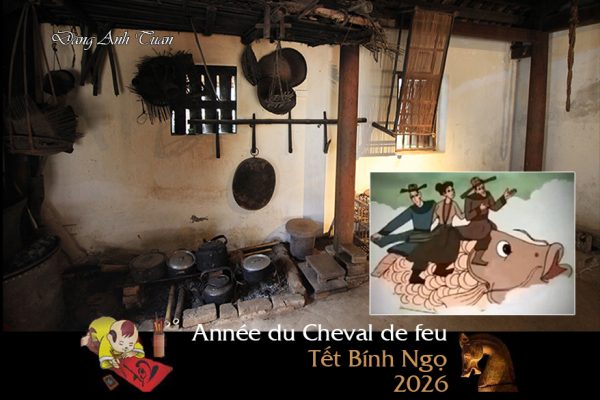
Le mythe des génies du foyer repose sur la tragique histoire d’un bûcheron et de sa femme. Il prend sa source dans le taoïsme. Ce couple modeste vivait heureux jusqu’au jour où  il découvrit qu’il ne pouvait pas avoir d’enfants. L’infortuné mari se mit à boire et à maltraiter sa femme. Celle-ci ne pouvant en supporter davantage le quitta et épousa un chasseur d’un village voisin. Mais un jour, fou de solitude et plein de remords, le bûcheron décida de rendre visite à sa femme pour lui présenter ses excuses.

Sur ces entrefaites, le chasseur rentra chez lui. Afin d’éviter tout malentendu, la jeune femme cacha son premier mari dans une étable au toit de chaume, située près de la cuisine où le chasseur était en train de fumer son gibier. Par malheur, une braise s’échappa du foyer et mit le feu à l’étable.

Affolée, la jeune femme s’élança vers l’étable en flammes pour sauver son ex-époux. Le chasseur la suivit pour lui porter secours et tous trois périrent dans le brasier. L’empereur de Jade (Ngọc hoàng), du haut de son trône céleste, profondément touché par ce triste sort, divinisa les trois malheureux et les chargea de veiller au bien-être des Vietnamiens  à l’emplacement avantageux de la cuisine. C’est ainsi qu’ils devinrent  dès lors les génies du Foyer.

Pendant la semaine où les génies sont au ciel, les Vietnamiens craignent que leur maison soit sans protection. Afin de prévenir toute incursion des mauvais esprits dans leur maison, ils érigent devant chez eux une  haute perche de bambou (cây nêu) sur laquelle sont suspendues des plaques en argile (ou khánh en vietnamien) vibrant avec sonorité au gré du vent pour éloigner les esprits. Au sommet de cette perche, flotte un morceau de tissu jaune marqué par l’emblème bouddhique.

Cette coutume trouve ses origines dans une légende bouddhique  intitulée « Le Tết du bûcheron » selon laquelle les  Vietnamiens doivent affronter des esprits maléfiques.

C’est toujours le vingt-troisième jour du dernier mois lunaire que chacun des  Vietnamiens organise une cérémonie de départ du génie de foyer  pour le ciel. On trouve non seulement sur son autel des fruits, des mets délicieux, des fleurs mais aussi un équipement de voyage approprié (3 paires de bottes, 3 chapeaux, vêtements, des papiers votifs) et des trois carpes mises dans une petite cuvette. À la fin de la cérémonie, on brûle les papiers votifs et on libère les carpes dans un étang ou dans une rivière afin que le génie puisse s’en servir pour s’envoler au ciel. Celui-ci doit rapporter tout ce qu’il a vu sur terre à l’empereur de jade, en particulier dans le foyer de chaque Vietnamien. Son séjour dure ainsi  six jours au ciel. Il doit retourner au foyer dans la nuit du réveillon jusqu’au moment où  débute la nouvelle année.

(*) cây nêu: C’est un arbre cosmique reliant la terre au ciel  en raison des croyances des peuples anciens adorant le soleil, y compris les Proto-Vietnamiens mais il  est employé également  pour délimiter leur territoire.

Version vietnamienne

Cuisine des Vietnamiens 

Truyền thuyết về các Táo quân được  dựa trên câu chuyện bi thảm của một người thợ rừng và vợ của ông ta. Nó có nguồn gốc từ Lão giáo. Cặp vợ chồng khiêm tốn này được sống hạnh phúc cho đến khi họ phát hiện ra rằng họ không thể có con. Người chồng bất hạnh nầy mới  bắt đầu rượu chè và ngược đãi  bà vợ. Bà nầy không thể chịu đựng được nữa và rời bỏ ông ta và kết hôn với một người thợ săn ở làng bên cạnh. Nhưng một ngày nọ, cô đơn và hối hận, người thợ rừng quyết định đến thăm vợ để xin tạ lỗi.

Giữa lúc đó, người thợ săn trở về nhà. Để tránh mọi sự hiểu lầm, người phụ nữ trẻ buộc lòng giấu người chồng cũ của mình ở trong một chuồng gia súc có mái nhà bằng tranh, nằm gần nhà bếp nơi mà người thợ săn đang hun khói thịt rừng. Thật không may, một đóm lửa  than hồng thoát ra khỏi lò và đốt cháy chuồng.

Cùng quẫn, người phụ nữ trẻ lao mình về phía chuồng  đang bốc cháy để cứu chồng cũ. Người thợ săn chạy theo cô để giúp cô và cả ba đã chết trong ngọn lửa. Ngọc Hoàng, từ trên cao nhìn xuống, cảm động vô cùng trước số phận đau buồn này, phong thần cho ba người  và buộc họ phải trông chừng từ đây hạnh phúc của người dân Việt ở vị trí thuận lợi của nhà bếp. Bởi vậy họ trở thành các thần bếp núc từ đây của các gia đình người Việt.

Trong tuần lễ  các táo quân ở trên trời, người Việt lo sợ ngôi nhà của họ sẽ không được bảo vệ. Để ngăn chặn sự xâm nhập của tà ma vào nhà, họ dựng trước cửa nhà một cây nêu có treo những khánh đất phát tiếng động khi có gió rung. Trên đỉnh cột này  có treo một mảnh vải màu vàng có biểu tượng của Phật giáo.

Phong tục này bắt nguồn từ một truyền thuyết Phật giáo mang tên « Tết của người thợ rừng », theo đó người dân việt phải đối mặt với những linh hồn ma quỷ.

Cứ đến ngày hai mươi ba tháng Giêng âm lịch, mỗi người  dân Việt lại tổ chức lễ tiễn Táo quân  về trời. Không chỉ có  trái cây, thức ăn ngon, các bông hoa trên bàn thờ của Táo quân mà còn có đồ dùng cho cuộc hành trình thích hợp (3 đôi giầy, 3 cái mũ, 3  bộ đồ quần áo, vàng mã) và ba con cá chép được đặt trong một chiếc thau nhỏ. Sau khi kết thúc lễ cúng thì đốt vàng mã và thả cá chép xuống ao hay sông để Táo quân mượn cá chép bay về trời.  Táo quân phải báo cáo lại với Ngọc Hoàng tất cả những gì Táo quân được nhìn thấy ở trần gian, nhất là ở trong nhà của mỗi gia đình của người dân Việt. Thời gian lưu trú của Táo quân được  kéo dài là sáu ngày ở trên trời. Táo quân phải trở về nhà vào đêm giao thừa đúng lúc khi năm mới vừa bắt đầu.

(*) cây nêu:  cây vũ trụ nối liền đất với trời, do tín ngưỡng thờ thần mặt trời của các dân tộc cổ mà trong đó có người Việt cổ mà còn hàm chứa ý thức về lãnh thổ cư trú của họ.

[Return CONTES]

The story of the mosquito (Chuyện con muỗi)

moustique
Vietnamese version
French version

Once upon a time in a faraway region of Vietnam, there was a young, brave and generous farmer of the name Ngọc Tâm. He had a wife of the name Nhan Diệp She was gracious and charming. Contrary to her husband who was thrifty and hard working, she was lazy and loved luxury. In spite of that, Ngoc Tâm loved his wife and forgave her for anything. Unfortunately, this union lasted only for a short time because his wife died brutally on a beautiful morning. Sinking into distress, Ngọc Tâm did not want to stay away from the corpse of his wife and opposed to her burial. After having sold all his assets, he embarked in a sampan with the casket and drifted with the current without having in mind any precise destination. One day, his sampan took him to the foot of a green and scented hill. Landing on ground, he discovered a landscape imprinted with the beauty of rare flowers and trees bearing varied fruits. During the time he continued his exploration, he suddenly met an old man with his long hair as white as his goatie beard.

From the old man emanated a great serenity and a surprising compassion, which allowed him to understand he had in front of him a God of Places. He threw himself down to the old man’s feet, then implore him to give back life to his wife. Feeling sorry for him, the God said: « I am going to grant your wish because your love and grief are sincere. But could you not regret it later on! ». Then he asked the peasant to open the casket, and cut the end of his finger and let three drops of blood fall on the body of his wife Nhan Diep. Right away, the latter opened her eyes as if she got out of a long lethargy.

Her forces returned very fast. Before leaving, the God told the woman: « Don’t forget your duties of a wife. Think of the love your husband brought to you and of his devotion. Be happy both of you. »

Hurrying to go back home, the peasant Ngọc Tâm tried to row days and nights. One evening, he had to land to buy groceries. During his absence, a big boat of a wealthy merchant drew up alonside his.

Hurrying to go back home, the peasant Ngọc Tâm tried to row days and nights. One evening, he had to land to buy groceries. During his absence, a big boat of a wealthy merchant drew up alonside his.

Caught by the beauty of Nhan Diệp, the merchant got into a conversation with her, ended up seducing her and taking her with him to a new destination. Upon his return, furious Ngọc Tâm decided to launch himself into the pursuit of the rich merchant. He succeeded in finding the latter after long months of search. He found his wife and proposed her to go back to him. Used to easy life, the latter refused to the proposal. Right then, the peasant recovered from his craze and told his wife:  » You are free to leave me. But you have to give back my three drops of blood that I poured on your body to revive you ».

Happy for getting rid of her stupid husband at a good deal, Nhan Diệp hurried to prick her finger. But at the time the blood began to flow, she tumbled down dead. This frivolous and light-hearted woman could not be resigned to leave this world definitively. She came back by transforming herself into a minuscule insect relentlessly pursuing Ngọc Tâm to steal from him the three drops of blood that brought her to human life.

This tiny creature is known later as the mosquito.

[Return CONTES]

L’histoire de la moustique (Chuyện con muỗi)

moustique
English version
French version

Ngày xửa ngày xưa, ở một vùng đất xa xôi của Việt Nam, có một chàng nông dân trẻ tuổi dũng cảm và hào phóng có tên là Ngọc Tâm. Có một người phụ nữ tên là “Nhan Điệp”. Cô nầy thật duyên dáng và quyến rũ. Khác với người chồng tằn tiện và chăm chỉ, cô lại lười biếng và thích xa hoa. Dù vậy, Ngọc Tâm vẫn yêu vợ và tha thứ cho cô tất cả. Thật không may, cuộc hôn nhân này chỉ tồn tại trong thời gian ngắn vì vợ anh đột ngột qua đời vào một buổi sáng đẹp trời. Chìm trong đau khổ, Ngọc Tâm không muốn tô điểm thi thể vợ nên phản đối việc chôn cất cô. Bán hết tài sản,anh mới  lên thuyền tam bản chở quan tài lang thang theo dòng nước, không có đinh hướng đi về đâu xác thực. Một hôm, chiếc thuyền đò đưa anh  tới chân một ngọn đồi xanh ngát hương thơm. Khi xuống  đất, anh khám phá ra một cảnh quan tuyệt đẹp với những loài hoa quý hiếm và các  cây có nhiều trái đa dạng. Khi đang tiếp tục khám phá, anh bất ngờ gặp một ông già có mái tóc dài màu trắng giống như chòm râu  cằm của mình. Một sự thanh thản tuyệt vời và lòng thương xót đáng kinh ngạc hiện ra ở từ ông già,  làm anh hiểu rõ  đứng  trước mặt  anh là thần thổ địa, vị thần cai quản vùng đất nầy. Anh ta  mới quỳ dưới chân ông, rồi cầu xin thần  phục hồi mạng sống cho vợ mình.

Động lòng thương xót anh, vị thần mới nói rằng: “Ta sẽ đáp ứng điều mong ước của con vì tình yêu và nỗi đau của con rất chân thành. Nhưng mong sau này con đừng hối hận quá nhiều nhé!”. Sau đó, thần  yêu cầu người nông dân mở quan tài, tự cắt đầu ngón tay của anh và nhỏ ba giọt máu lên thi thể  của vợ anh, Nhan Điệp. Ngay lập tức, nàng mở mắt ra như thể  nàng vừa tỉnh dậy sau cơn hôn mê kéo dài.

Sức khoẻ cũng được  trở lại rất nhanh. Trước khi chia tay, thần thổ địa mới nói với vợ anh: « Đừng quên bổn phận của một người vợ. Hãy nghĩ đến tình yêu mà chồng con dành cho con và sự tận tâm của anh ấy. Cả hai hãy giữ hạnh phúc. Vội vã trở về quê nhà, người nông dân Ngọc Tâm đã cố gắng chèo thuyền suốt ngày đêm. Một buổi tối, anh phải xuống tàu để mua đồ dự trữ. Trong lúc anh  vắng mặt, có chiếc thuyền lớn của một thương gia giàu có đến đậu bên cạnh thuyền anh. Bị vẻ đẹp của Nhan Diệp quyến rũ, thương gia mới bắt chuyện với nàng, cuối cùng quyến rũ  được nàng và đưa nàng theo mình đến một địa điểm mới.

Khi trở về, Ngọc Tâm tức giận quyết định theo đuổi thương gia giàu có. Anh  đã tìm được thương gia sau nhiều tháng tìm kiếm. Anh ta tìm thấy vợ mình và đề nghị nàng trở về cùng anh. Quen với một cuộc sống dễ dàng, nàng từ chối lời  đề nghị này. Đột nhiên, người nông dân không còn tha thiết sự yêu thương nữa và nói với vợ anh: « Em có quyền rời xa anh. Nhưng em phải trả lại cho anh ba giọt máu mà anh đã đổ trên cơ thể em để em hồi sinh lại >>.

Vui mừng vì thoát khỏi được sự rắc rối  của người chồng ngu ngốc, Nhan Diệp vội vàng chích ngón tay. Nhưng khi máu bắt đầu chảy, nàng ngã xuống chết liền. Người phụ nữ  không nghiêm túc và  nhẹ dạ  không  chịu rời bỏ thế giới này mãi mãi. Nàng quay trở lại bằng cách biến mình thành con muỗi không ngừng truy đuổi Ngọc Tâm để đánh cắp  lại ba giọt máu giúp nàng  trở lại kiếp người.

Con bọ nầy sau nầy được gọi là con muỗi.

Version française

Il était une fois dans une région lointaine du Viêt-Nam un jeune paysan, brave et généreux de nom Ngọc Tâm. Il avait une femme de nom « Nhan Diệp« . Celle-ci était gracieuse et charmante. Contrairement à son mari qui était économe et laborieux, elle était paresseuse et aimait bien le luxe. Malgré cela, Ngọc Tâm aimait toujours  sa femme et lui pardonnait tout. Malheureusement, cette union ne fut que de courte durée car sa femme mourut brutalement un beau matin. Sombrant dans la détresse, Ngọc Tâm ne voulut pas se séparer du corps de sa femme et s’opposa à son ensevelissement. Après avoir vendu ses biens, il s’embarqua dans un sampan avec le cercueil et erra au gré du courant, n’ayant en tête aucune destination précise.

Un jour, son sampan l’amena au pied d’une colline verdoyante et parfumée. Descendu sur terre, il découvrit un paysage empreint de beauté avec des fleurs rares, des arbres chargés des fruits variés. Au moment où il continua son exploration, il rencontra soudain un vieillard aux longs cheveux blancs tout comme sa barbiche. Il se dégagea du vieil homme une grande sérénité et une miséricorde étonnante, ce qui lui permit de comprendre qu’il avait devant lui un génie du sol. Il se jeta à ses pieds, puis il l’implora de rendre la vie à sa femme.

Pris de pitié pour lui, le génie lui dit:  » Je vais exaucer tes vœux car ton amour et ta douleur sont sincères. Mais puissiez-vous ne pas trop le regretter plus tard ! ». Puis il demanda au paysan d’ouvrir le cercueil, de se couper le bout du doigt et de laisser tomber trois gouttes de sang sur le corps de sa femme Nhan Diệp. Aussitôt, celle-ci ouvrit les yeux comme si elle sortait d’une longue léthargie.

Ses forces revinrent très vite. Avant la séparation, le Génie s’adressa à sa femme: « N’oubliez pas vos devoirs d’épouse. Pensez à l’amour que votre époux vous porte et à son dévouement. Soyez heureux tous les deux. » Pressé de rentrer chez lui, le paysan Ngọc Tâm essaya de ramer des jours et des nuits. Un soir, il dut débarquer pour acheter des provisions. Durant son absence, le grand bateau d’un riche commerçant vint se placer à côté du sien. Séduit par la beauté de Nhan Diệp, le marchand engagea la conversation avec elle, finit par la séduire et l’emmena avec lui vers une nouvelle destination.

A son retour, Ngọc Tâm, furieux décida de se lancer à la poursuite du riche marchand. Il parvint à retrouver ce dernier après de longs mois de recherche. Il retrouva sa femme et proposa à cette dernière de le rejoindre. Habituée à la vie facile, celle-ci refusa cette proposition. Du coup le paysan fut guéri de son amour et dit à sa femme: << Tu es libre de me quitter. Mais tu dois me rendre les trois gouttes de sang que j’ai versées sur ton corps pour te ranimer >>.
Heureuse de se débarrasser à si bon compte de son stupide mari, Nhan Diệp s’empressa de se piquer le doigt. Mais au moment où le sang commença à couler, elle s’écroula morte. Cette femme frivole et légère ne put pas se résigner à quitter définitivement ce monde. Elle y revint en se transformant en moustique  (con muỗi) poursuivant sans relâche Ngọc Tâm pour lui voler les trois gouttes de sang permettant de la ramener à la vie humaine.

Cette bestiole est connue plus tard sous le nom de moustique.

[Return CONTES] 

Vietnamese mother day (Lễ Vu Lan)

muckienlien
French version

Vietnamese version

Like the Europeans, Vietnamese people celebrate Mothers’ Day too. It is the Vu Lan festival on the 15th day of the 7th month of the lunar calendar.

Once upon a time there was a naughty lady of the name Thanh Ðề. She was without pity toward the poor and above all the beggars. She never gave alms and chased any beggars who showed up at the gate of her house. She did not hesitate to trample on the rice grains picked up by the poor peasants toiling all year long on their land. She made fun at buddhist priests and nuns by trying to disturb their quietness. She blasphemed Buddha, was in contempt of spirits and offered to pagodas foods mixed with meat ingredients.

Despite the advice of her son Mục Kiền Liên who was a bonze of high virtue, she hardly listened to him. At her death, she joined the Kingdom of the Deaths and had to pay for the faults she had committed in the living world: sitting on a nail studded bed, carrying on her head a bucket full of blood, staying hungry and thirsty as any food that was brought to her mouth melted into blood and turned into flame.

When Mục Kiền Liên became enlightened, he could go down to the Kingdom of the Deaths to see his mother. He witnessed the punishments she suffered. He could not do anything to change the course of justice by the heavenly decree nor could he substitute for his mother. He had to go and see Buddha and request grace from the latter. Buddha ordered him to arrange the Vu Lan ceremony on the 15th day of the 7th month of the lunar calendar, during which he could solicit the withdrawing of sentence for his mother with prayers and alms.

Vietnamese Mother day

Upon coming back to earth, really austere and fervent Mục Kiền Liên, when came the day, set up an altar in honor of Buddha while giving alms and ferforming ceremony. In the Kingdom of the Deaths, Thanh Ðề understood the sufferings as she had gone through hunger and thirst. The hardships that she encountered brought her little by little from her naughty nature to the knowledge of remorse.

Mục Kiền Liên’s piety reached the gate of Heaven. The Holy Father reviewed Thanh Ðề’s case, found that she had been able to repent and acqitted her. Muc Kien Lien was allowed to go down to hell to bring his mother back to life. From then on, Thanh Ðề honored Buddha with all her heart, respected buddhist priests, helped the poor. Inspired by this example, pious children according to Vietnamese customs, on the 15th day of the 7th month of the lunar calendar, set up an altar in memory of the dead and give alms to the poor.

[Return CONTES]

L’histoire de Mục Kiền Liên (Lễ Vu Lan)

muckienlien
English version
Vietnamese version

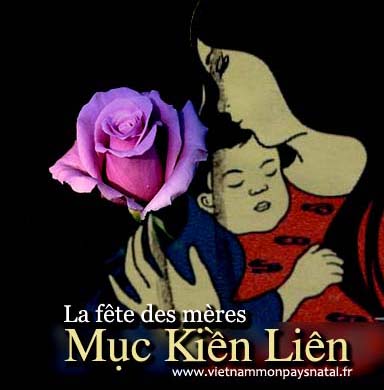
Comme les Européens, les Vietnamiens ont aussi la fête des Mères. C’est la fête du Vu Lan au 15è jour du 7ème mois lunaire.

Il était une fois une dame méchante au nom de Thanh Ðề. Elle était impitoyable envers les pauvres et surtout envers les mendiants. Elle ne faisait jamais aumône et chassait tout mendiant qui se présentait au portail de sa maison. Elle n’hésitait pas à piétiner des grains de riz, recueillis par les pauvres paysans s’échinant à longueur d’année sur leurs terres. Elle se moquait des bonzes et des bonzesses en cherchant à rompre leur quiétude. Elle blasphémait Bouddha, méprisait les esprits et offrait à la pagode des victuailles de jeûne auxquelles elle avait mêlé des aliments carnés.
Malgré les conseils de son fils Mục Kiền Liên qui fut un bonze de haute vertu, elle ne l’écoutait guère. A sa mort, elle rejoignit le Royaume des Morts et dut payer ses fautes commises dans le monde des vivants: s’asseoir sur un lit à clous, porter sur la tête un seau rempli de sang, rester affamée et assoiffée car tout aliment qu’on lui mettait dans sa bouche se fondait en sang et se muait en flamme.

Lễ Vu Lan

Mục Kiền Liên, une fois l’illumination atteinte, put descendre dans le Royaume des Morts pour voir sa mère. Il fut témoin des châtiments qu’elle encourut. Il ne put rien pour changer le cours justicier du décret céleste et ne put pas non plus se substituer à sa mère. Il fut obligé d’aller voir Bouddha et demanda grâce à ce dernier. Celui-ci lui ordonna d’organiser au 15ème jour du 7ème mois lunaire, la cérémonie de Vu Lan, au cours de laquelle il pourrait solliciter la remise de peine pour sa mère avec les prières et l’aumône.

De retour sur terre, Mục Kiền Liên, le jour venu, dressa un autel en hommage à Bouddha tout en faisant aumône et cérémonie bien austère et fervente. Thanh Ðề, dans le Royaume des Morts, prit conscience de la souffrance comme elle fut sensible à la faim et à la soif. Les difficultés qu’elle rencontrait l’amenaient à se départir au fur et à mesure de sa nature méchante et à connaître le remords. La piété de Mục Kiền Liên remua la porte du Ciel. Le père céleste réexamina le cas de Thanh Ðề, constata qu’elle avait pu se repentir et l’acquitta. Il fut permis à Mục Kiền Liên de descendre dans l’enfer ramener sa mère à la vie.

Depuis lors, Thanh Ðề, de tout cœur, honora Bouddha, respecta les bonzes, secourut les pauvres.  En s’inspirant de cet exemple, les enfants pieux, selon la coutume vietnamienne, au 15ème jour du 7ème mois lunaire, érigent un autel à la mémoire des défunts et font aumône aux pauvres.

Giống như người Châu Âu, người Việt chúng ta cũng kỷ niệm Ngày của Mẹ. Ngày này được gọi là lễ Vu Lan, rơi vào ngày 15 tháng 7 âm lịch.

Ngày xửa ngày xưa, có một người đàn bà độc ác tên là Thanh Đề. Bà ta đối xử tàn nhẫn với người nghèo, đặc biệt là với những người ăn xin. Bà ta không bao giờ bố thí và xua đuổi bất kỳ người ăn xin nào đến trước cửa nhà mình. Bà ta không ngần ngại giẫm đạp những hạt lúa mà những người nông dân nghèo quanh năm làm lụng vất vả trên mảnh đất của họ. Bà ta chế giễu các nhà sư, cố gắng phá vỡ sự yên bình của họ. Bà ta phỉ báng Đức Phật, khinh miệt các vị thần linh, và dâng lên chùa những món ăn chay trộn thịt.

Mặc dù con trai bà ta, Mục Kiền Liên, một nhà sư rất đức hạnh, bà ta chẳng thèm để ý đến lời khuyên của ông. Sau khi chết, bà đã gia nhập vương quốc Người chết và phải trả giá cho những tội lỗi mà bà đã phạm phải khi còn sống: ngồi trên một chiếc giường đinh, đội một xô máu trên đầu, luôn đói và khát vì bất kỳ thức ăn nào bà cho vào miệng đều tan thành máu và biến thành ngọn lửa.

Lễ Vu Lan

Sau khi giác ngộ, Mục Kiền Liên được xuống cõi Âm phủ để gặp mẹ. Ngài chứng kiến ​​những hình phạt mà mẹ phải chịu đựng. Ngài không thể làm gì để thay đổi đường lối chính đáng của thiên mệnh, cũng không thể thay thế mẹ mình. Ngài buộc phải đến gặp Đức Phật và cầu xin lòng thương xót. Đức Phật chỉ thị cho ngài tổ chức lễ Vu Lan vào ngày 15 tháng 7 âm lịch, trong đó ngài có thể cầu xin sự tha thứ cho mẹ mình thông qua việc cầu nguyện và bố thí. Khi trở về trần gian, đúng ngày đã định, Mục Kiền Liên đã lập bàn thờ để tỏ lòng tôn kính Đức Phật, thực hiện việc bố thí và một buổi lễ trang nghiêm, sốt sắng.

Ở cõi Âm phủ, Thanh Đề nhận thức được nỗi đau khổ, cũng như bà nhạy cảm với đói khát. Những khó khăn mà bà phải đối mặt dần dần khiến bà từ bỏ bản chất độc ác và trải qua sự hối hận. Lòng hiếu thảo của Mục Kiền Liên đã lay động cánh cổng Thiên đường. Đức Cha Thiên Thượng xem xét trường hợp của Thanh Đề, nhận thấy bà đã ăn năn và tha bổng cho bà. Sau đó, Mục Kiền Liên được phép xuống Địa ngục để cứu mẹ mình sống lại.

Từ đó, Thanh Đề hết lòng kính Phật, tôn sư trọng đạo, giúp đỡ người nghèo. Lấy tấm gương này, những người con hiếu thảo, theo phong tục Việt Nam, lập bàn thờ tưởng nhớ người đã khuất và bố thí cho người nghèo vào ngày 15 tháng 7 âm lịch.

[Return CONTES]

The mistake (Thiếu phụ Nam Xương)


French version
Vietnamese version

Long time ago, there was a couple who lived in perfect happiness. They just had a baby when the war broke out. The husband was drafted and sent to combat at the frontiers. Days and nights, his wife was waiting for the return of her husband by pulling all her energy in the presence of her child. The child grew and began to speak. On an evening, a violent storm broke out. The thunder was rumbling so deafeningly shaking windows and doors. Seized by panic, the child started screaming. To calm him, his mother told him his father was there to protect him. She had the idea of showing her shadow on the wall and told him: « Don’t be afraid, your father is there. » The child look at the shadow and said to it: « Good evening, Daddy ». Reassured, the child went to sleep. From that day on, the child had the habit of claiming his father and said « Good evening » to him before going to bed, which required the woman to lean every night before the lamp to create her shadow.

Finally the war ended. The husband came home. The man discovered with tenderness and emotion the child he had left when he was still a baby. Instead of hugging his father, the child pushed him out with virulence: « Leave me alone, you’re not my father. My Dad only comes at night ». The husband, overwhelmed with grief and hurt in his pride, thought that his wife deceived him for another man and decided not to inquire further. From then on he kept a very frigid and distant attitude without taking care of either the child or his wife who continued to show him their love. The misunderstanding incited the man to depart one day without leaving any address.cierge

Time passed, the worried wife asked herself questions on the attitude of her husband and continued to wait for his return. Unfortunately, sorrow and despair took over the young woman on a beautiful day. She decided to put an end to her days by drowning herself in the river after having entrusted her child to the care of his kins.

Having learned of the death of his wife and taken by remorse, the man went back home. In the evening, when he lit the lamp, his son happy to see his shadow appear on the wall, yelled: There, my Daddy ». The man then knew his terrible misunderstanding. The next day, he took his son to the riverside to implore forgiveness from his wife. The man promised to himself to stay single until the end of his life to take care of the child and that no other women would replace her in his heart.

Thiếu phụ Nam Xương

[Return CONTES]

La méprise (Thiếu phụ Nam Xương)

Version vietnamienne
English version

cierge

Autrefois, il y avait un couple vivant dans un bonheur parfait. Il venait d’avoir un bébé lorsque la guerre éclata contre le Champa. Le mari fut enrôlé et envoyé combattre aux frontières. Jour et nuit, elle attendait le retour de son mari en puisant toute sa force dans l’occupation  de son enfant. Celui-ci grandissait et commençait à parler. Un soir, un violent orage éclata. Le tonnerre était tellement assourdissant et faisait trembler les fenêtres et les portes. Pris de panique, l’enfant se mit à hurler. Pour le calmer, sa mère lui dit que son père était là et le protégeait. Elle eut l’idée de montrer son ombre sur le mur en lui disant: « N’aie pas peur, voilà ton père ». L’enfant regarda l’ombre et lui dit  » Bonsoir, papa ». Rassuré, l’enfant s’endormit. Depuis ce jour, l’enfant eut l’habitude de réclamer son père et de dire à ce dernier  » Bonsoir  » avant son coucher, ce qui obligea la femme à se pencher tous les soirs devant la lampe pour créer son ombre.

La guerre se termina enfin. Le mari revint à la maison. L’homme découvrit avec tendresse et émotion l’enfant qu’il avait quitté quand il était encore petit. Au lieu d’embrasser son père, l’enfant le repoussa avec virulence: « Laissez-moi tranquille, vous n’êtes pas mon père. Celui-ci ne vient que la nuit. Le mari, assommé de douleur et blessé dans son amour propre, crut que sa femme le trompait avec un autre homme et décida de ne pas l’interroger. Il se montra dès lors très froid et distant sans se préoccuper ni de l’enfant ni de sa femme qui continuait à lui témoigner son amour. L’incompréhension incita l’homme à s’en aller un beau jour sans laisser aucune adresse.

Les jours passèrent, la femme inquiète, se posait des questions sur l’attitude de son mari et continuait à attendre son retour. Malheureusement, la tristesse et le désespoir s’emparèrent un beau jour de cette jeune femme. Elle décida de mettre fin à ses jours en se noyant dans la rivière après avoir confié son enfant à ses proches.

Ayant appris la mort de sa femme et pris de remords, l’homme revint à la maison. Le soir, lorsqu’il alluma la lampe, son fils content de voir apparaître son ombre sur le mur, s’écria: « Voilà mon papa ». L’homme comprit alors sa terrible méprise. Le lendemain, il emmena son fils au bord de la rivière pour implorer le pardon de sa femme. L’homme lui promit de rester seul jusqu’à la fin de sa vie pour s’occuper de l’enfant et qu’aucune autre femme ne la remplacerait dans son cœur. 

Cette histoire est le seizième conte du vaste recueil de légendes merveilleuses de l’écrivain Nguyễn Dữ qui vécut au XVIème siècle dans une période assez troublée de l’histoire du Vietnam. C’est l’histoire de la femme connue sous le nom de Vũ Nương vivant à Nam Xương dans la province de Hà Nam au nord du Vietnam.

Thiếu phụ Nam Xương

Ngày xưa, có một cặp vợ chồng sống trong hạnh phúc viên mãn. Họ mới  vừa có một đứa con sinh ra khi chiến tranh bùng nổ với Chiêm Thành. Người chồng  phải nhập ngũ và được gửi đi chiến đấu ở nơi biên thùy. Ngày đêm, người vợ chờ đợi sự trở về của chồng, dốc hết sức lực  nuôi con. Cháu bé nầy đã lớn dần và bắt đầu biết nói. Một buổi tối, một cơn giông  tố dữ dội đã xảy ra. Sấm sét vang lên ầm ỹ chói tai và làm cho các cửa sổ và cửa nhà rung chuyển. Hoảng sợ, đứa trẻ bắt đầu la hét. Để trấn an con, người mẹ mới bảo con rằng cha của nó đã có ở đó và bảo vệ nó. Nàng  có ý tưởng chỉ bóng của mình lên tường nói: « Đừng sợ, bố của con đây ». Đứa trẻ nhìn vào cái bóng và nói « Chào bố ». Yên tâm, đứa trẻ ngủ thiếp đi. Kể từ ngày đó, đứa trẻ có thói quen đòi bố và nói  « Chào bố » trước khi đi ngủ, việc này buộc người phụ nữ phải nghiêng mình trước ngọn đèn mỗi tối để tạo bóng của mình cho con.

Cuộc chiến cuối cùng cũng được kết thúc. Người chồng trở về. Anh nầy  khám phá ra con và xúc động với sự dịu dàng mà anh ta đã bỏ ra đi khi nó còn bé. Thay vì ôm cha, đứa trẻ đẩy anh ra một cách mãnh liệt: « Để con yên, bố không phải là bố của con. Người này chỉ đến với con vào buổi tối. Người chồng choáng váng đau đớn và tổn thương ở bản thân, tưởng vợ lừa dối mình với một người đàn ông khác và nhất quyết không hỏi han về chuyện nầy. Từ đó  anh ta rất cư xử lạnh lùng, xa cách không lo lắng cho vợ con mặc dù nàng vẫn tiếp tục thể hiện tình yêu của mình với chồng. Sự  hiểu lầm nầy khiến anh ra đi một hôm  mà không để lại địa chỉ nào cả.

Ngày tháng trôi qua, người phụ nữ lo lắng thắc mắc về thái độ của chồng và tiếp tục chờ ngày trở về của chồng. Thật không may, nỗi buồn và tuyệt vọng đã đến với người phụ nữ trẻ này một hôm. Nàng quyết định tự kết liễu đời mình bằng cách trầm mình xuống sông sau khi giao con cho người thân giữ dùm.

Sau khi biết tin vợ qua đời và cảm thấy hối hận, người đàn ông này đã trở về nhà. Buổi tối lại, khi anh thắp đèn lên, cậu con trai vui mừng kêu lên khi thấy bóng của anh hiện lên trên tường: “Bố ơi, con đây rồi”. Người đàn ông sau đó mới hiểu ra sự sai lầm khủng khiếp của mình. Ngày hôm sau, anh ta đưa con trai ra bờ sông để cầu xin vợ tha thứ. Anh ta hứa sẽ ở một mình đến cuối đời để chăm sóc con và sẽ không có người phụ nữ nào khác thay thế nàng trong trái tim của anh ta.

Chuyện người con gái Nam Xương nầy nằm trong thiên thứ 16 của tác phẩm Truyền kì mạn lục, được sáng tác bởi nhà văn Nguyễn Dữ sống ở thế kỷ 16 trong thời kỳ khó khăn của đất nước. Chuyện kể về cuộc đời của nhân vật Vũ Nương. Vũ Nương tên thật là Vũ Thị Thiết, quê ở Nam Xương, tỉnh Hà Nam, miền bắc  Việt Nam.

[Return CONTES]

The Waiting Rock (Hòn Vọng Phu)

honvongphu


French version

This mountain, known as  » Núi Vọng Phu » (The Mountain of the Woman who is waiting for her husband) is located not far from Lạng Sơn, quite close to the Sino-Vietnamese border. At the top of the mountain is a rock bearing the shape of a standing woman holding her child in her arms. This resemblance is striking when the sun sets on the horizon. The tale of this mountain is so touching it becomes thus one of the legends preferred by Vietnamese and gives so much inspiration to Vietnamese poets, in particular composer Lê Thương through his three songs Hòn Vọng Phu I, II and III presented here in format mp3.


Long time ago, in a village on the highland region, lived two orphans, one was a young man about twenty years old, the other was his seven years old sister. Because they were alone in this world, they were all one for the other. On a beautiful day, a traveling astrologer told the young man when he consulted him on their future:

<< If I’m not mistaken, you will fatally marry your sister with all your days and hours of your births. Nothing could turn the course of your destiny >>.
Tormented by this terrible prediction, he decided to kill his sister on a beautiful morning when he suggested to take her to the forest to cut wood. Taking advantage of his sister’s inattention, he felled her with a stroke of ax and fled. He decided to change his name and resettled in Lang Son. Many years went by. On a beautiful day he married a merchant’s daughter who gave him a son and made him happy.

On a beautiful morning, he found his wife sitting in the back yard drying her long black hair under the sunshine. At the time when she glided the comb on her hair that she lifted with her other hand, he discovered a long scar above the back of her neck. Surprised, he asked her for its cause. Hesitating, she began to tell the story crying:

<< I am only the adoptive daughter of the merchant. Orphaned, I lived with my brother who, fifteen years ago for unknown reasons, injured me with a blow of an ax and abandoned me in the forest. I was rescued by the robbers who sold me to this merchant who had just lost his daughter and who was sorry for my situation. I don’t know what happened to my brother and it is hard for me to explain his insensitive act. However we love each other so much.>>

The husband overcame his emotion and asked his wife for information concerning her father’s and brother’s names and her native village. Taken by remorse while keeping for himself the frightening secret, he was ashamed and horrified himself. He tries to stay away from his wife and his son by taking advantage of the military draft to enroll in the army and hoping to find the delivery on the battleground.

From the day of his departure, in ignorance of the truth, his wife waited for him with patience and resignation. Every evening, she took her son in her arms and climbed up the mountain looking out for the return of her husband. She made the same gesture for entire years.

On a beautiful day, reaching the top of the mountain, exhausted and stayed standing, her eyes fixed to the horizon, she was changed into rock and immobile in her eternal wait.

[Return CONTES]

La montagne de l’attente (Hòn vọng phu)


honvongphu

English version
Vietnamese version

Musique Hòn Vọng Phu

Cette montagne, connue sous le nom  » Núi Vọng Phu » (ou la Montagne de la femme qui attend son mari) est située non loin de Lạng Sơn, tout proche de la frontière sino-vietnamienne. Au sommet de cette montagne se dresse un rocher rappelant la forme d’une femme debout avec son enfant dans ses bras. Cette ressemblance est étonnante lors du coucher du soleil à l’horizon. Le récit sur ce rocher est tellement émouvant qu’il devient ainsi l’une des légendes préférées des Vietnamiens et qu’il donne tant d’inspirations aux poètes vietnamiens, en particulier au compositeur Lê Thương à travers ses trois chansons Hòn Vọng Phu I, II et III. (Hòn Vọng Phu).

Autrefois, dans un village de la haute région, vivaient deux orphelins, l’un, un jeune garçon d’une vingtaine d’années et l’autre, sa sœur n’ayant que sept ans. Comme ils étaient seuls au monde, ils étaient tout l’un pour l’autre. Un beau jour, un astrologue de passage dit au jeune garçon lors de la consultation sur leur avenir:

<< Si je ne me trompe pas, vous épouserez fatalement votre sœur avec les jours et les heures de vos naissances. Rien ne pourra détourner le cours de votre destin >>.

Tourmenté par cette terrible prédiction, il décida de tuer un beau matin sa sœur en proposant d’emmener cette dernière dans la forêt pour aller couper du bois. Profitant de l’inattention de sa sœur, il l’abattit d’un coup de hache et s’enfuit. Il décida de changer de nom et de s’établir à Lạng Sơn. De nombreuses années passèrent. Il épousa un beau jour la fille d’un commerçant. Celle-ci lui donna un garçon et le rendit heureux.

Un beau matin, il trouva dans la cour intérieure sa femme en train de sécher ses longs cheveux noirs et assise en plein soleil. Au moment où celle-ci faisait glisser le peigne sur la chevelure qu’elle soulevait de l’autre main, il découvrît une longue cicatrice au dessus de sa nuque. Abasourdi, il lui en demanda la cause. Hésitante, elle commença à raconter son histoire en pleurant:

<< Je ne suis que la fille adoptive du commerçant. Orpheline, je vivais avec mon frère qui, pour des raisons inconnues, il y avait quinze ans, me blessa d’un coup de hache et m’abandonna dans la forêt. Je fus sauvée par les brigands qui m’ont revendue à un commerçant qui venait de perdre sa fille et qui avait pitié de ma situation. Je ne sais pas ce qu’est devenu mon frère et il est difficile pour moi d’expliquer son geste insensé. Pourtant nous nous aimions tellement.>>

Le mari maîtrisa son émotion et demanda à sa femme les renseignements concernant le nom de son père, celui de son frère et de son village natal. Pris par le remords tout en gardant pour lui l’épouvantable secret, il eut honte et horreur de lui-même. Il s’efforça de s’éloigner de sa femme et de son enfant en profitant de la mobilisation décrétée pour s’enrôler dans l’armée et en espérant trouver la délivrance sur le champ de bataille.

Depuis son départ, dans l’ignorance de la vérité, sa femme attendit, patiente et résignée. Chaque soir, elle prenait son garçon dans ses bras et grimpait sur la montagne pour guetter le retour de son mari. Elle faisait le même geste depuis tant d’années.

Un jour, arrivée au sommet de la montagne, épuisée et restée debout, les yeux fixés à l’horizon, elle fut changée en pierre immobile dans son attente éternelle. 

[Return CONTES]

Ngọn núi này, được gọi là « Núi Vọng Phu », nằm không xa Lạng Sơn, rất gần biên giới Việt-Trung. Trên đỉnh núi có một tảng đá trông giống như một người phụ nữ bế con. Hình ảnh này đặc biệt nổi bật vào lúc hoàng hôn. Câu chuyện về tảng đá này cảm động đến nỗi nó đã trở thành một trong những truyền thuyết được yêu thích nhất của người Việt Nam và đã truyền cảm hứng cho nhiều nhà thơ Việt Nam, đặc biệt là nhạc sĩ Lê Thương, người đã viết ba bài hát có tựa đề Hòn Vọng Phu I, II và III. 

Ngày xửa ngày xưa, tại một ngôi làng trên cao nguyên, có hai đứa trẻ mồ côi: một chàng trai ngoài hai mươi và cô em gái bảy tuổi. Là hai người duy nhất trên đời, họ là tất cả đối với nhau. Một ngày nọ, một nhà chiêm tinh đi ngang qua đã nói với chàng trai trẻ trong một buổi xem bói về tương lai của họ: « Nếu ta không nhầm, con sẽ chắc chắn lấy em gái mình vào đúng ngày giờ con chào đời. Không gì có thể thay đổi được số mệnh của con. » Bị dày vò bởi lời tiên đoán khủng khiếp này, một buổi sáng nọ, chàng quyết định giết em gái mình, rủ họ đưa cô vào rừng đốn củi. Lợi dụng sự lơ là của cô, chàng đã dùng rìu chém cô rồi bỏ trốn. Chàng quyết định đổi tên và định cư tại Lạng Sơn. Nhiều năm trôi qua. Một ngày nọ, chàng kết hôn với con gái một thương gia. Nàng sinh cho chàng một đứa con trai và khiến chàng hạnh phúc vô cùng.

Một buổi sáng đẹp trời, anh thấy vợ mình đang ngồi phơi mái tóc đen dài trong sân, dưới ánh nắng chan hòa. Khi cô ấy dùng tay kia chải tóc, anh nhận thấy một vết sẹo dài sau gáy. Anh sững sờ hỏi đó là gì. Ngập ngừng, cô bắt đầu kể lại câu chuyện, vừa khóc vừa nói: 

“Tôi chỉ là con gái nuôi của thương gia. Là trẻ mồ côi, tôi sống với anh trai, không hiểu vì lý do gì, mười lăm năm trước, anh đã dùng rìu chém tôi rồi bỏ tôi lại trong rừng. Tôi được bọn cướp cứu, chúng bán tôi cho một thương gia vừa mất con gái và thương hại tôi. Tôi không biết chuyện gì đã xảy ra với anh trai mình, và thật khó để lý giải hành động vô nghĩa của anh ấy. Vậy mà chúng tôi lại yêu thương nhau đến thế.”

Người chồng cố gắng kiềm chế cảm xúc và hỏi vợ về tên cha, tên anh trai và quê quán của cô. Lòng tràn ngập hối hận, nhưng vẫn giữ bí mật khủng khiếp này cho riêng mình, anh cảm thấy xấu hổ và kinh hoàng. Anh cố gắng xa lánh vợ con bằng cách lợi dụng lệnh động viên để nhập ngũ, hy vọng tìm thấy sự cứu rỗi trên chiến trường. Từ khi chồng ra đi, không hề hay biết sự thật, vợ anh đã kiên nhẫn chờ đợi và cam chịu. Mỗi tối, cô đều bế con trai lên núi chờ chồng trở về. Cô đã làm điều tương tự trong suốt bao nhiêu năm.

Một ngày nọ, khi đã lên đến đỉnh núi, kiệt sức và đứng nhìn chằm chằm về phía đường chân trời, nàng biến thành một tảng đá bất động trong sự chờ đợi vĩnh hằng. 

Musique Hòn Vọng Phu


[Return CONTES]

The Mudras of Buddha (Thủ Ấn)


mudra_bouddha
French version
Vietnamese version

The symbolic gestures of Buddha icone_lotus

Depending on the manufacturing country of Buddha statue, the artist can represent it in a different way. By contrast, there is always some immutable ritual characters that he must observe scrupulously in the Buddhist statuary. This is the case of the position and gestures of the Buddha’s hands (mudras). Being limited in number, the latter, complemented by the body posture (asana), allows the faithful to benefit of the teaching and philosophy of Buddhism. One is accustomed to associate these symbolic gestures to the various episodes in the Buddha life (meditation under the Bodhi tree, taking the earth as witness, first predicate at Sarnath etc.).

Instead of Buddhist texts to whom a very few people have acces, these mudras in the iconographic representations of Buddha are genuine tools for religious transmission. The picture is more meaningful because it is based on simple gestures and readable by all in place of Buddhist texts which are sometimes incomprehensible. The mudras that are initially designed by the yogis and priests of the Vedic epoch in India will be retrieved and interpreted by Mahayana sects to become over time, one of the techniques of highly codified representation. They thus constitute a language extremely powerful because through a number of signs and symbols, this allows you to identify the sacred character, to define its rank and to evoke its qualities.


mudras

Thủ Ấn

This is the case of the divinities of Buddhist pantheon (Bodhisattvas, Amithâba etc.). That is what we also find in multiple practices having a religious character (dances, rituals, meditations etc ..) without forget to remind what we have also seen in the Christian iconography with its saints placed at the entrance of the Middle Ages cathedrals. Some important mudras are frequently encountered in the Buddhist iconography.  

Absence of fear mudra

(Ấn xúc địa)

Taking the earth as witness with his right hand

It is the Bhumiparsha-mudra. In this gesture, one sees that his right arm hangs down over the right knee while his left hand is raised in front of his belly on his legs in position of lotus. He took the earth as witness and he called Goddess of the earth Torani to his rescue. To kill the hordes of evil represented by Mara, this godhead provoked the waves by letting down her hair. This mudra announced the imminence of the awakening. At the end of this meditation, he will announce the Four Noble Truths (Tứ Diệu Đế): Dukka (suffering), Samudaya (insatiable hunger), Nirohda (extinction of suffering) and Marga Sacca ( Buddha way towards extinction) to achieve nirvana (final liberation).

Charity mudra  (Varada mudra)

Meditation mudra (Ấn thiền)

Buddha have been sitting with both hands in front of his belly, palms returned, on his legs crossed in lotus. It is the dhyana-mudra that is often found in zen school. This is the meditation period of Buddha under the tree of awakening (Bodhi) in Bihar.

Argument mudra (Ấn giáo hóa)

Sitting in position of lotus, Buddha maintains his right hand to the height of his shoulder, palm facing outward, the thumb and index finger touching and the other fingers being raised. This posture corresponds well to the discussion and argument.

[Return RELIGION]