
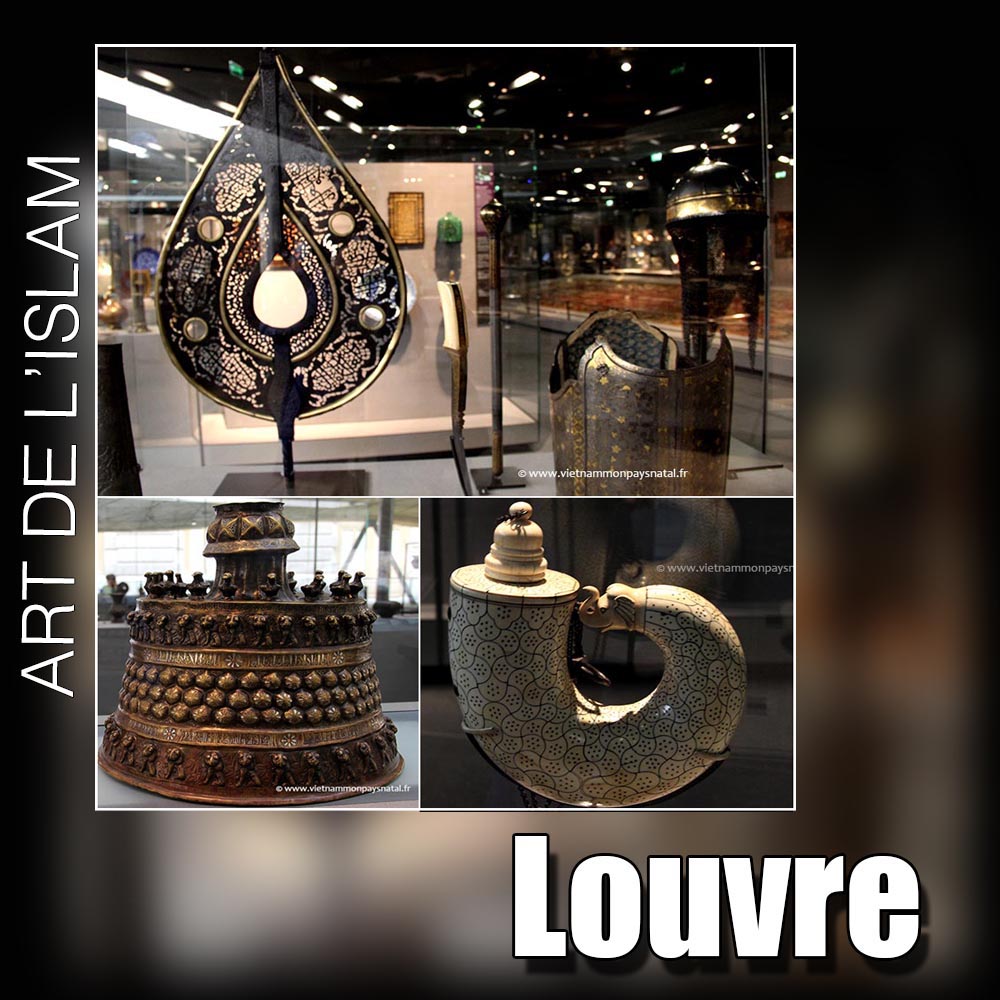
Sites touristiques
Sites touristiques et historiques du Vietnam ou du monde.
Peintures italiennes (Bức tranh Ý Đại Lợi)
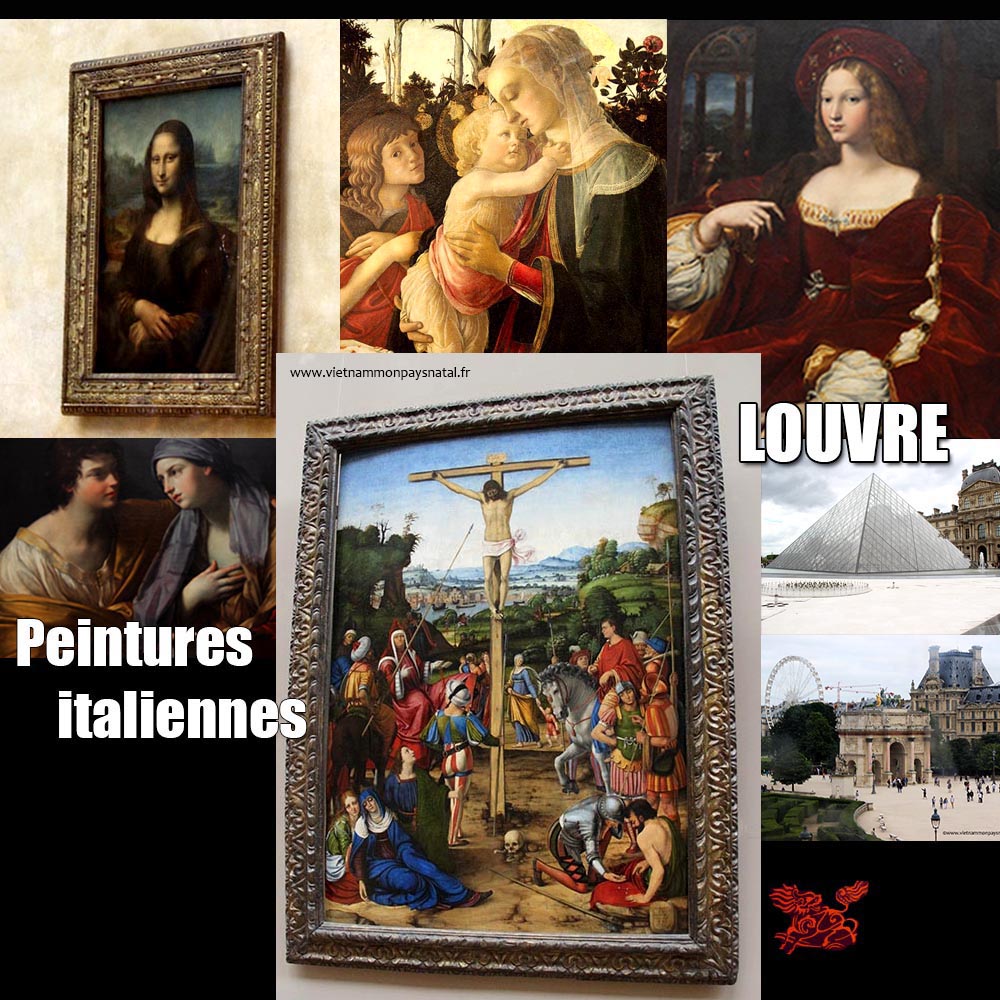
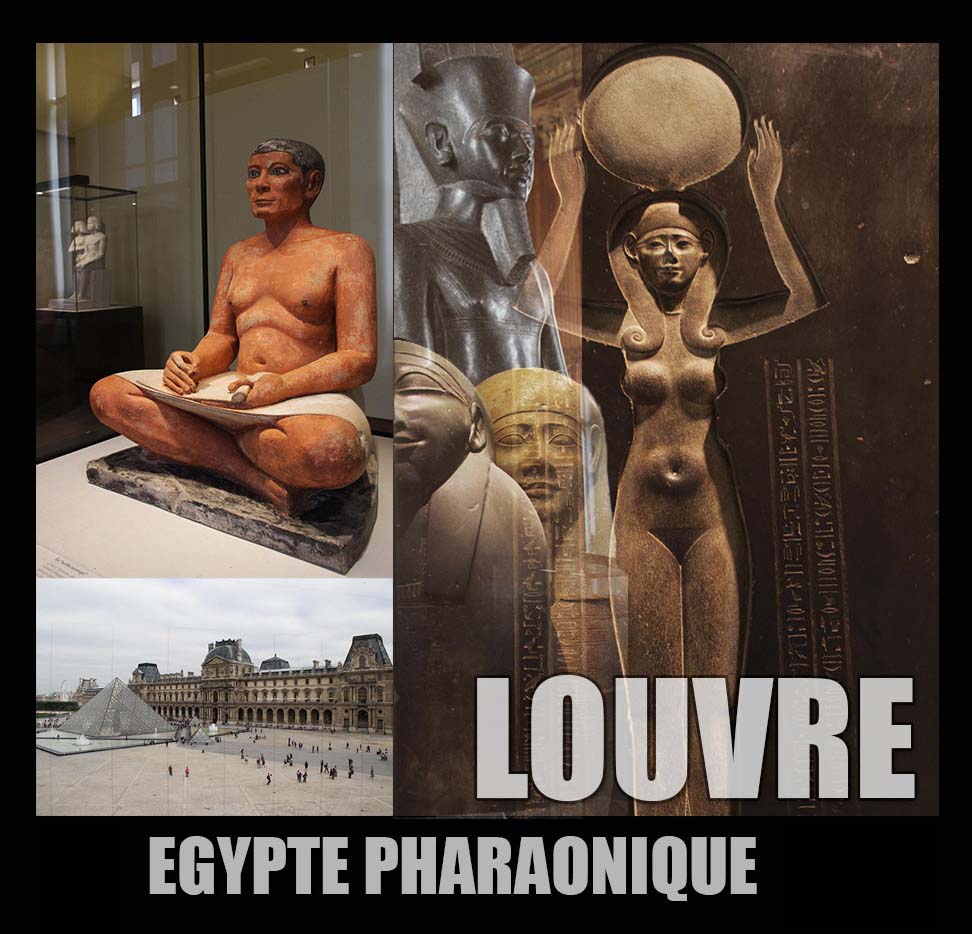
Louvre (Egypte pharaonique)
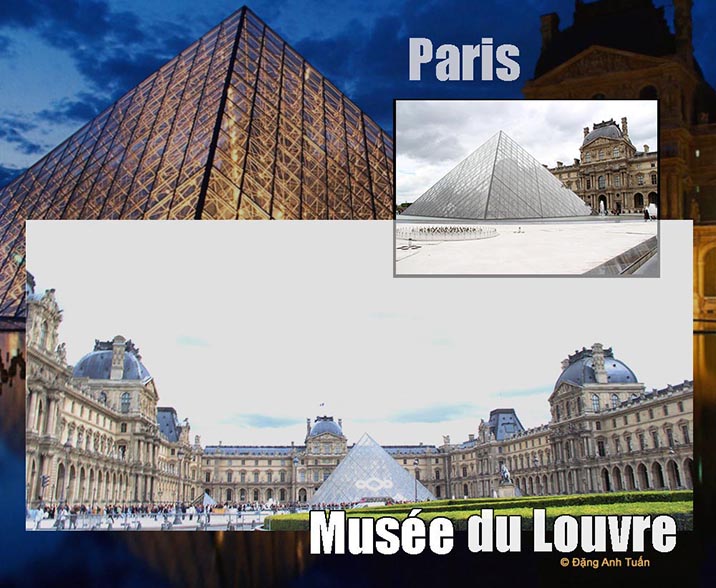
Musée du Louvre (Bảo tàng viện Louvre)
English version
French version
Pictures gallery
Bảo tàng viện Louvre không những khác biệt là một bảo tàng lớn nhất Paris về diện tích (210 000 m2 mà đã có 68000 m2 dàng cho triển lãm) mà còn là một trong những bảo tàng trọng đại ở thế giới. Bảo tàng viện Louvre lúc nào đêm cũng như ngày rất đẹp khiến người du khách ngưỡng mộ nhất là có những kiệt tác như Léonard de Vinci, Eugène Delacroix, Caravage, Raphaël, Arcimboldo vân vân….. Còn thêm một kim tư tháp kính ở giữa sân Napoléon, được kiến trúc sư người Mỹ gốc Hoa Ieoh Ming Pei. thiết kế. Cấu trúc bằng kim loại nầy chịu đựng mặt đường kiến gồm có sắt thép và aluminium nặng 200 tấn. Một ấn tượng hiện đại nhất thế giới.
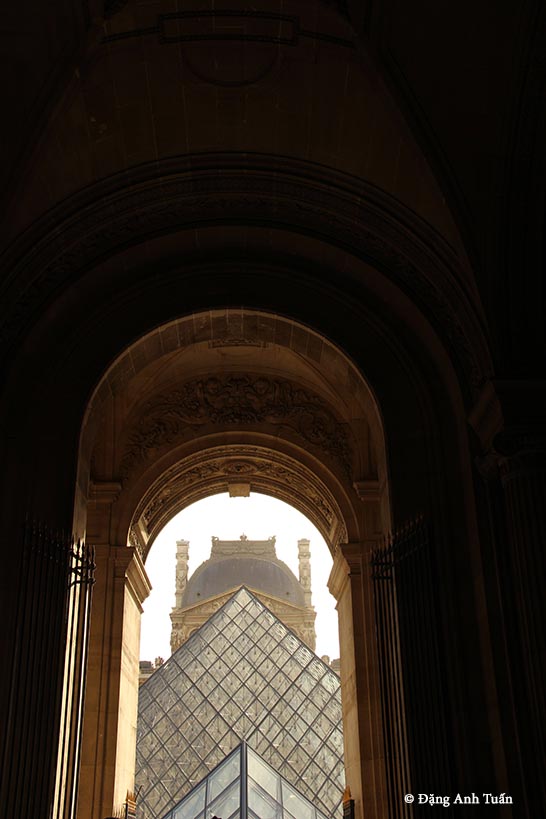
Le musée du Louvre n’est pas non seulement le plus grand musée de Paris par sa surface (210 000 m² dont 68 000 consacrés aux expositions mais aussi l’un des plus importants du monde. De jour comme de nuit , le musée est tellement splendide avec ses œuvres d’art de Léonard de Vinci, Eugène Delacroix, Caravage, Raphaël, Arcimboldo etc. De plus son pyramide conçu par l’architecte américain d’origine chinoise Ieoh Ming Pei, est au cœur de la cour de Napoléon .Cette structure métallique supportant le parement en verre est faite d’acier et d’aluminium et pèse 200 tonnes. Une impression mondiale moderne.
The Louvre Museum is not only the largest museum in Paris by its area (210,000 m², of which 68,000 are dedicated to exhibitions) but also one of the most important in the world. By day and by night, the museum is so splendid with its works of art by Leonardo da Vinci, Eugène Delacroix, Caravaggio, Raphael, Arcimboldo, etc. Moreover, its pyramid, designed by the American architect of Chinese origin Ieoh Ming Pei, is at the heart of the Napoleon Courtyard. This metal structure supporting the glass cladding is made of steel and aluminum and weighs 200 tons. A modern global impression.
Galerie des photos (Pictures gallery)
Opéra Garnier (Nhà hát Opéra Garnier)

Version française
Version anglaise
Galerie des photos
Đây là một trong những nhà hát tráng lệ và đẹp nhất ở thế giới. Nhờ sáng kiến và trí tưởng tượng của kiến trúc sư Charles Garnier, nhà hát nầy là một công trình nổi bật được hoàn thành sau thời kỳ đế chế thứ hai của Pháp quốc trong khu vực thiết kế của nam tước Haussman qua sự yêu cầu của hoàng đế Napoléon III.
C’est l’un des plus beaux théâtres au monde. Imaginé par l’architecte Charles Garnier, cet opéra prit place à la fin du second empire dans le Paris haussmanien à la demande de l’empereur Napoléon III.
This is one of the most magnificent and beautiful theaters in the world. Thanks to the initiative and imagination of architect Charles Garnier, this theater is a remarkable work completed after the period of the Second French Empire in the area designed by Baron Haussman at the request of Emperor Napoleon III.
Sainte-Chapelle (Nhà thờ Sainte Chapelle)
Version vietnamienne
Version française
Version anglaise
Galerie des photos
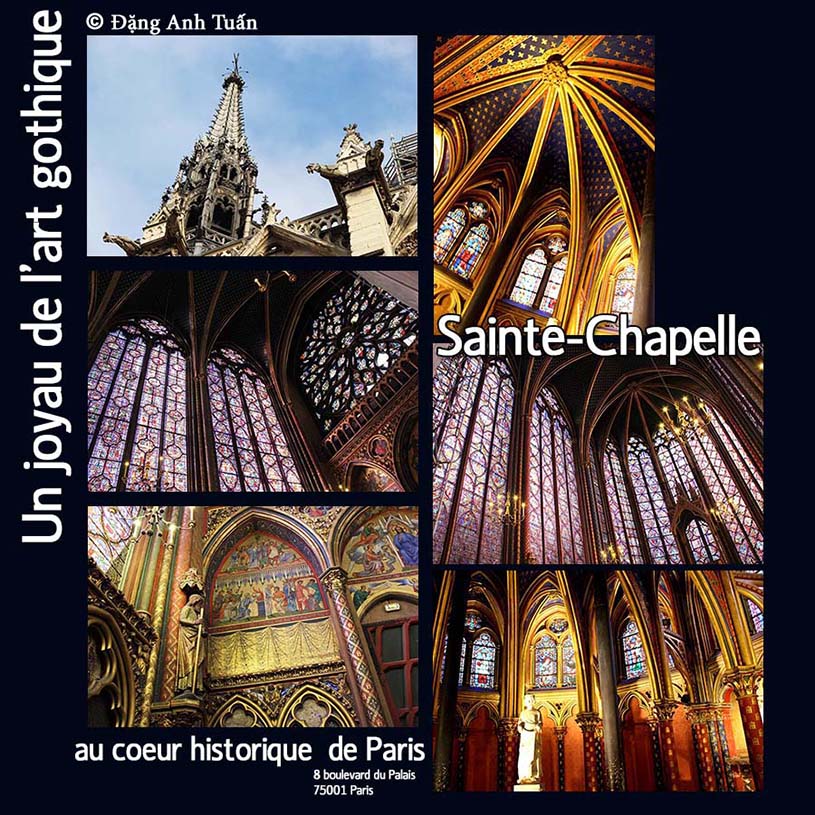
Ít ai biết đến nhà thờ nầy bằng Notre Dame de Paris. Nó nằm trong lãnh vực của bộ tư pháp và cũng không xa chi cho mấy nhà thờ Notre Dame. Được xây dựng vào năm 1242, dưới thời vua Saint Louis (Louis IX), thời gian xây dựng nhà thờ mất khoảng 7 năm. Khi hoàn thành, công trình này khác biệt không những bỡi vẻ thanh lịch đặc sắc và đồ sộ mà còn thấy sự liều lĩnh trong việc xây dưng kiến trúc gothic nầy dựa trên việc nâng cao trọng đại các cửa kiến không dùng vách tường. Gần bờ sông Seine, nhà thờ Sainte Chapelle là một trong những kiến trúc kiệt tác nằm giữa khu phố lịch sữ latin. Được chọn làm nơi lưu giữ những thánh tích như vòng gai của Đức Chúa Jésus truớc khi chúa bị đóng đinh vào thập tự mà vua Louis IX có được năm 1239.
Saint-Chapelle est moins connue que l’église Notre Dame de Paris. Édifiée en 1242 sous le règne du roi Louis IX (ou Saint Louis), elle est située à l’intérieur du domaine appartenant au ministère de la justice qui n’est pas trop loin de l’église Notre Dame. Sa durée de réalisation prend à peu près 7 ans. Elle se distingue non seulement, lors de sa finition, par l’élégance extraordinaire et la taille impressionnante mais aussi par la hardiesse de construire un œuvre d’art gothique basé essentiellement sur l’élévation importante et l’absence presque totale des murs au niveau des fenêtres. Localisée sur l’île de la Cité, la Sainte-Chapelle est l’un des chefs d’œuvre situé au cœur historique du quartier latin. Elle a été choisie par le roi Louis IX pour abriter les reliques qu’il avait acquises en 1239, en particulier la couronne d’épines posée sur la tête du Christ avant sa crucifixion.
Saint-Chapelle is less well known than the Notre Dame Church of Paris. Built in 1242 during the reign of King Louis IX (or Saint Louis), it is located within the grounds belonging to the Ministry of Justice, not far from the Notre Dame Church. Its construction took about 7 years. It stands out not only, upon completion, for its extraordinary elegance and impressive size but also for the boldness of creating a Gothic work of art based essentially on significant elevation and the almost total absence of walls at the window level. Located on the Île de la Cité, Sainte-Chapelle is one of the masterpieces situated in the historic heart of the Latin Quarter. It was chosen by King Louis IX to house the relics he had acquired in 1239, particularly the crown of thorns placed on Christ‘s head before his crucifixion.
The valley of Chămpa kings (Thánh Địa Mỹ Sơn)
Version française ou vietnamienne
The valley of Chămpa kings
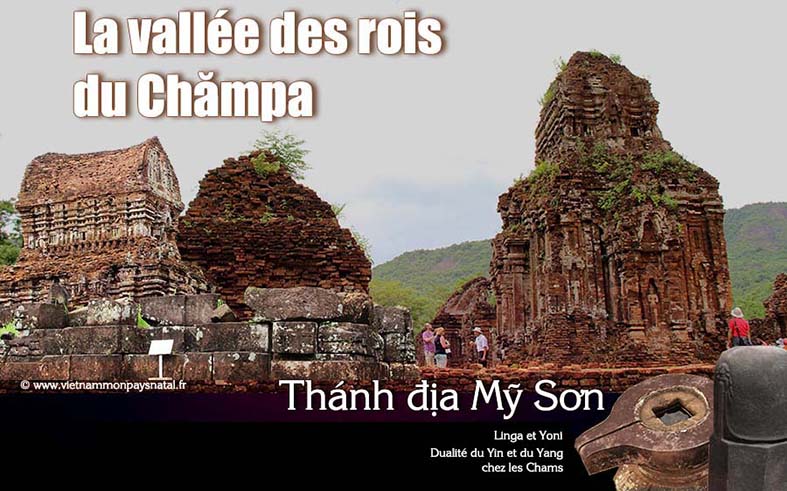
The Old Chămpa inhabitants have incarnated their soul into the soil and the stone and they have been able to take advantage of the nature for making it in a splendid, mysterious and grandiose Mỹ Sơn. It is a real architectural, sculptural and artistic museum for the outstanding value in the world that it is difficult to fully understand.
(Late architecte Kasimierz Kwakowski )
The brick buildings and sandstone statues are the cornerstone in the Chămpa art. Contrary to the Khmer, the Chămpa people continued to build the edifices in brick, despite the perfect mastery of sandstone in decorations and statues. The Chămpa architecture is inspired by India. The works are essentially composed of a main temple (or kalan in the Cham language), some towers and some outbuildings, the whole included in the enclosure. The brick carving remains a particular and original Chămpa art rarely found among other peoples of Southeast Asia.
Mỹ Sơn could be compared with Angkor (Cambodia), Pagan (Myamar), Borobudur (Indonesia) and Ayutthaya (Thaïland). Mỹ Sơn is located in a valley located approximatively 10 km west of Trà Kiệu. This one was known as the capital of Lâm Ấp kingdom (Linyi) from 605 to 707 with the name Simhapura and situated 37km south of Đà Nẵng city.
Pictures gallery
[ngg_images source= »galleries » container_ids= »86″ exclusions= »964″ display_type= »photocrati-nextgen_basic_thumbnails » override_thumbnail_settings= »1″ thumbnail_width= »180″ thumbnail_height= »100″ thumbnail_crop= »1″ images_per_page= »30″ number_of_columns= »5″ ajax_pagination= »0″ show_all_in_lightbox= »0″ use_imagebrowser_effect= »0″ show_slideshow_link= »0″ slideshow_link_text= »[Montrer sous forme de diaporama] » template= »/homepages/5/d276592279/htdocs/clickandbuilds/vietnamquehuongtoi/wp-content/plugins/nextgen-gallery/products/photocrati_nextgen/modules/ngglegacy/view/gallery.php » order_by= »pid » order_direction= »ASC » returns= »included » maximum_entity_count= »500″]
A great homage to Chămpa civilization vanished in the turbulence of history.
Pagode Dâu (Bắc Ninh)
Pagode Dâu, berceau du bouddhisme vietnamien
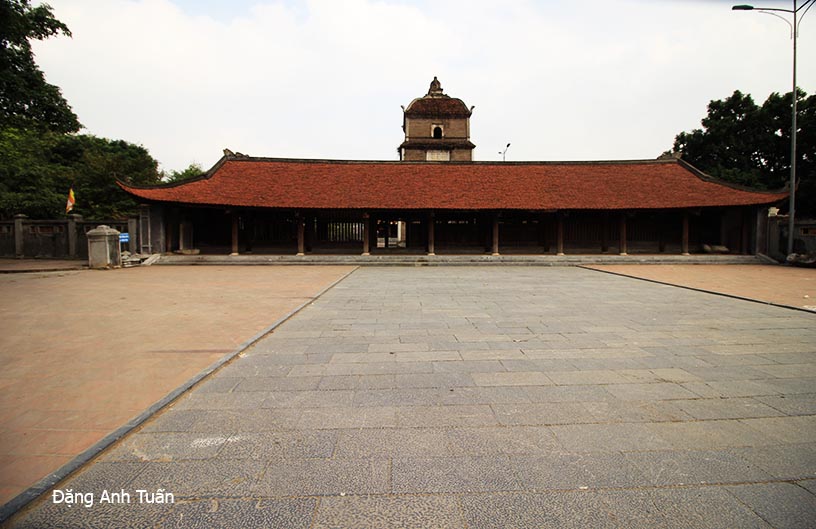
La pagode Dâu vue à partir de sa porche
Version vietnamienne
English version
Galerie des photos
Loin de Hanoï d’une trentaine de kilomètres, la pagode Dâu est la pagode la plus ancienne du Vietnam car elle fut édifiée au début de l’ère chrétienne dans la région Dâu connue fréquemment à cette époque sous le nom « Luy Lâu ». Au temps des Han (les Chinois), Lũy Lâu fut considérée comme la capitale de Giao Châu ( Giao Chỉ) de 111 av. J.C jusqu’à 106 av. J.C. À cette époque, elle reçut très tôt, selon le chercheur vietnamien Hà Văn Tấn, l’influence bouddhiste venant de l’Inde jusqu’au Vème siècle. Le gouverneur chinois Shi Xie ( Sĩ Nhiếp en vietnamien) (177-266) était accompagné souvent en ville par des religieux venant de l’Inde (người Hồi) ou de l’Asie Centrale (Trung Á) à chaque sortie. À la fin du IIème siècle, Luy Lâu devint le premier centre bouddhique vietnamien avec les cinq pagodes anciennes: la pagode Dâu dédiée au Génie des nuages Pháp Vân (“thần mây”), la pagode Đậu au Génie des Pluies Pháp Vũ ( “thần mưa”), la pagode Tướng au Génie du tonnerre Pháp Lôi (“thần sấm”), la pagode Dàn au Génie des éclairs Pháp Điện ( “thần chớp”) et la pagode principale à Man Nương, la mère de ces 4 génies (ou Tứ Pháp en vietnamien). Étant les mots sino-vietnamiens, les noms Dâu, Đậu, Tướng, Dàn ont été préférés par les Vietnamiens à la place des noms Mây, Mưa, Sấm , Chớp (Nuages, Pluie, Tonnerre et Éclairs), qui sont en étroite relation avec la force naturelle trouvée dans le milieu agricole. Le système basé sur ces 4 génies évoque l’association subtile entre le bouddhisme et les croyances populaires d’origine primitive au Việtnam.
Dès lors, beaucoup de religieux indiens et étrangers tels que Ksudra (Khâu Đà Là), Ma Ha Kỳ Vực (Mahajivaca), Kang-Sen-Houci (Khương Tăng Hội), Dan Tian ne tardèrent pas à séjourner à Luy Lâu et à y prêcher l’enseignement du Bouddha. Le nombre de moines étrangers fut si important que Lũy Lâu devint en quelques années plus tard le centre de traduction des sutras parmi lesquels figurait le fameux sutra Saddharmasamadhi (Pháp Hoa Tam Muội) traduit par le moine kouchan Cương Lương Lâu Chi (Kalasivi) dans le courant du IIIème siècle. Selon le vénérable Thích Nhất Hạnh, on a été porté à croire par erreur dans le passé que le moine indien Vinitaruci introdusit le bouddhisme dhyana vietnamien (Thiền) à la fin du VIème siècle. Lors de son passage à Luy Lâu en l’an 580, il résida dans le monastère Pháp Vân appartenant à l’école dhyana. C’est aussi à cette époque que le moine dhyana Quán Duyên était entrain d’y enseigner le dhyana.
D’autres moines vietnamiens furent allés en Chine pour prêcher la loi bouddhique avant l’arrivée du fameux moine Bodhidharma reconnu comme le patriarche de l’école dhyana et de l’art martial chinois. Désormais, on sait que c’est au moine sogdiane Kang-Sen-Houci (Khương Tăng Hội) le mérite d’introduire le bouddhisme dhyana au Vietnam. C’est à Luy Lâu que le bouddhisme commençait à s’implanter par le biais de l’histoire de Man Nương et ne rencontrait aucune réticence de la part des Vietnamiens car le bouddhisme acceptait la tolérance et le paganisme traditionnel. Les légendes Thích Quang Phật et Man Nương Phật Mẫu témoignaient de la facilité d’agréger les croyances populaires au bouddhisme. On peut dire que c’est le mariage réussi entre le bouddhisme et les croyances populaires (Mây, Mưa, Sấm, Chớp) trouvées dans ce coin. L’anniversaire de Siddhartha Gautama était aussi celui des 4 génies devenus Bouddhas. La mère Man Nương de ces 4 génies devenait également Avalokiteśvara. On n’hésitait pas à mettre dans les endroits où les 4 génies ont été vénérés, un autel pour le Bouddha. Dès lors, le bouddhisme commença à se propager dans d’autres régions du Tonkin.
Le bouddhisme vietnamien était le mahayana et prenait deux voies dans sa propagation: voie maritime à partir du sud du Vietnam (Founan et Chămpa) et voie terrestre à partir du Nord du Vietnam (Yunnan).
Chùa Dâu (Bắc Ninh)
Chùa Dâu, cái nôi của Phật giáo Vietnam
Chùa Dâu nhìn từ tam quan, tháp Hoà Phong ở chính giữa
Cách xa Hànội khoảng 30 cây số, chùa Dâu là chùa có lâu đời nhất ở Việt Nam vì được xây dựng từ buổi đầu Công Nguyên ở vùng Dâu mà thường được gọi là Luy Lâu . Lúc thởi Hán thuộc, Luy Lâu nầy được xem là thủ phủ của cả Giao Châu (Giao Chỉ) từ năm 111 TCN đến 106 TCN. Ở thời đó, Luy Lâu được tiếp thu sớm, theo nhà nghiên cứu Hà Văn Tấn , ảnh hưởng Phật giáo từ Ấn Độ cho đến thế kỷ thứ năm. Thái thú Sĩ Nhiếp (177-266) thường được tháp tùng khi đi dạo trong thành phố với các tu sĩ đến từ Ấn Độ hay Trung Á. Cuối thế kỷ thứ hai, Lũy Lâu trở thành trung tâm đầu tiên Phật giáo ở Việt Nam với năm ngôi chùa cổ: chùa Dâu thờ Pháp Vân (« thần mây »), chùa Đậu thờ Pháp Vũ ( « thần mưa »), chùa Tướng thờ Pháp Lôi (« thần sấm »), chùa Dàn thờ Pháp Điện ( « thần chớp ») và chùa Tổ thờ Man Nương là mẹ của Tứ Pháp. Những cái tên Dâu, Đậu, Tướng, Dàn đó là những tên nôm dân dã cũa các nữ thần được thờ trong các chùa nầy mà người dân thích gọi thay vì Mây, Mưa, Sấm , Chớp, những cái tên làm ta nghĩ đến các sức mạnh thiên nhiên của cư dân sống về nông nghiệp. Hệ thống Tứ Pháp nói lên đây sự kết hợp tinh vi giữa Phât giáo với các tín ngưỡng dân gian có nguồn gốc nguyên thủy ở Việtnam.
Kể từ đó, nhiểu tu sĩ Ấn và ngọai quốc nổi tiếng như Khâu Đà La (Ksudra), Ma Ha Kỳ Vực ( Mahajivaca) , Kang-Sen-Houci (Khương Tăng Hội), Dan Tian đều có đến tá túc nơi nầy để nghiên cứu, biên soạn, giảng kinh Phật và đào tạo tăng đồ. Số người tu sĩ càng ngày càng đông khiến Luy Lâu chỉ vài năm sau trở thành một trung tâm phiên dịch các kinh phật trong đó có Pháp Hoa Tam Muội (Saddharmasamadhi sutra ) của pháp sư Cương Lương Lâu Chi (Kalasivi) , người nước Đại Nhục Chi vào thế kỷ thứ ba. Theo thiền sư Thích Nhất Hạnh, ai cũng tưởng lầm thiền sư nam thiên trúc Tỳ Ni Đa Lưu Chi (Vinaturaci) là người sáng lập dòng thiền ở Việtnam vào cuối thế kỷ thứ sáu nhưng khi ông đến Lưu Lâu vào năm 580, ông ở chùa Dâu (hay Pháp Vân). Chính lúc đó nơi nầy đã có thiền sư Quán Duyên đang dạy thiền học và cũng có nhiều tu sĩ từ nơi nầy sang Trung Hoa để thuyết pháp trước khi tu sĩ Bồ Đề Đạt Ma (Bodhidharma) có mặt ở Trung Hoa và được công nhận là người sáng lập thiền học và võ thuật Trung Hoa.
Chính là thiền sư Khương Tăng Hội, người nước Khương Cư, có công là người sáng lập dòng thiền ở Việtnam. Chính ở Luy Lâu nầy Phật giáo gia nhập vào đất nước Việtnam qua chuyện nàng Man Nương mà không có găp sự khó khăn trở ngại nào cả vì Phật giáo rất khoan dung , hòa đồng và chấp nhận dễ dàng tín ngưỡng của dân bản xứ. Đây là cuộc hôn phối huyền diệu giữa đạo phật với tín ngưỡng bản địa, tiền thân của Tứ pháp (Mây, Mưa, Sấm, Chớp) thờ ở vùng Dâu. Ngày sinh của Đức Phật Thích Ca cũng là ngày sinh của Phật Tứ Pháp (Việt Nam). Bà Man Nương, mẹ của Tứ Pháp được tôn sùng làm Phật mẫu. Nơi nào có thờ Tứ Pháp , những nữ thần nông nghiệp thì có thêm bàn thờ Phật. Các nữ thần đuợc Phật hóa trở thành Phật mẫu.
Từ đó Phật giáo mới lan tỏa ra các vùng khác Bắc Bộ. Phật giáo du nhập ở Việtnam là Phật giáo đại thừa (Mahayana) và theo hai ngã: đuờng biển, từ phiá nam Việt Nam (Phù Nam và Chămpa) và đường bộ, từ phía bắc Việt Nam (Vân Nam).
Village ancien Đường Lâm (Làng cổ)

Portail du village Đường Lâm
Version vietnamienne
English version
Pictures Gallery
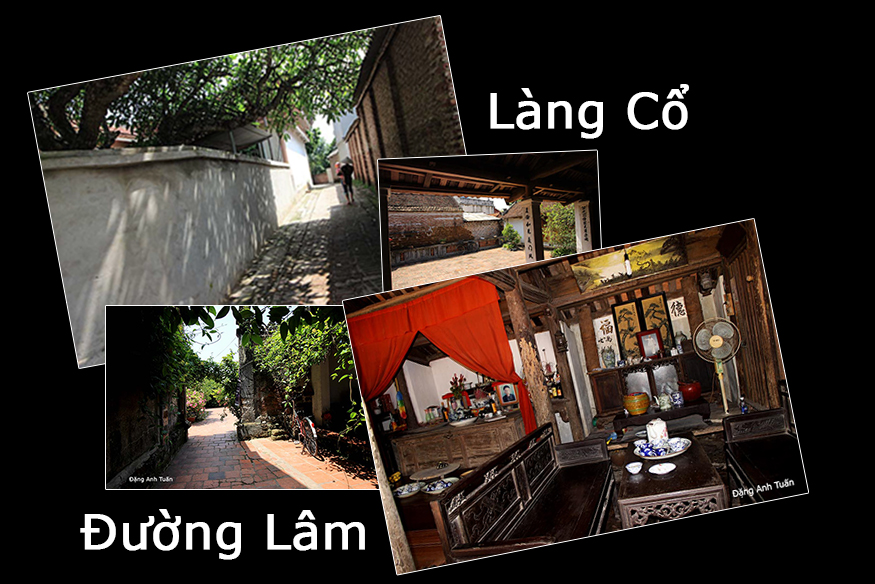
Ayant occupé à peu près 800 ha, le village Đường Lâm est localisé approximativement à 4km à l’ouest de la ville provinciale Sơn Tây. Il est consacré pratiquement à l’agriculture. Il est rare de trouver encore aujourd’hui l’un des villages ayant conservé les traits caractéristiques d’un village traditionnel vietnamien. Si la baie de Hạ Long est l’œuvre de la nature, Đường Lâm est par contre l’ouvrage crée par l’homme. Il est plus riche de signification que la baie de Hạ Long. C’est ce qu’a remarqué le chercheur thaïlandais Knid Thainatis. Effectivement Đường Lâm est riche non seulement en histoire mais aussi en tradition.
Dans les temps anciens, il s’appelait encore Kẻ Mia (pays de la canne à sucre). Selon une légende populaire, le métier de fabriquer de la mélasse de canne à sucre à Đường Lâm rapportait comment la princesse Mi Ê a trouvé une plante semblable à un roseau. Elle a pris une section de cette plante et a senti sa douceur fraîche et son goût aromatique. Elle a tellement aimé cette plante si bien qu’elle a conseillé aux gens de la cultiver. Au fil du temps, la canne à sucre poussait tellement dense qu’elle couvrait une grande surface comme le bois. La population locale a commencé à produire de la mélasse ainsi que des bonbons à partir de celle-ci. D’où le nom « Kẻ Miá ».
Grâce aux fouilles archéologiques aux alentours des contreforts de la montagne Ba Vi, on découvre que Đường Lâm était le territoire des Proto-Vietnamiens. Ces derniers y vivaient en grande concentration à l’époque de la civilisation de Sơn Vi. Ils continuaient à s’y établir encore durant les quatre cultures suivantes: Phùng Nguyên (2000-1500 BC), Đồng Dậu (1500-1000 BC), Gò Mun (1000-600 BC) et Đồng Sơn (700 BC-100 AD).
Le village est aussi la terre de deux rois célèbres Phùng Hưng et Ngô Quyền. Le premier, connu sous le nom « Bố Cái Đại Vương » (ou Grand roi père et mère du peuple) est adulé comme le libérateur de la domination chinoise à l’époque des Tang tandis que le deuxième a réussi à mettre fin à l’occupation chinoise de 1000 ans en défiant la flotte des Han du Sud (Nam Hán) sur le fleuve de Bạch Đằng. C’est aussi ici qu’on retrouve l’autel dédié à l’ambassadeur Giang Văn Minh auprès de la cour de Chine. Ce dernier fut tué par l’empereur des Ming Zhu Youjian (Sùng Trinh) car il a osé l’affronter en lui répondant du tac au tac avec le vers mémorable suivant:
Ðằng giang tự cổ huyết do hồng (Bạch Đằng từ xưa vẫn đỏ vì máu)
Le fleuve Bạch Ðằng continue à être teinté avec du sang rouge.
pour lui rappeler les victoires éclatantes et décisives des Vietnamiens contre les Chinois sur le fleuve Bạch Ðằng, suite au vers arrogant qu’il a reçu de la part de l’empereur chinois:
Đồng trụ chí kim đài dĩ lục (Cột đồng đến giờ vẫn xanh vì rêu).
Le pilier en bronze continue à être envahi par la mousse verte. (évoquant ainsi la période de pacification du territoire vietnamien par le général chinois Ma Yuan à l’époque des Han).
Làng cổ Đường Lâm
L’une des caractéristiques de ce village antique réside dans la préservation de son portail (porte principale) par lequel tout le monde doit passer. Le visiteur peut s’égarer facilement s’il n’arrive pas à repérer la maison communale Mông Phụ. Celle-ci est un bâtiment colossal édifié au centre du village avec son imposante charpente en bois de fer (gỗ lim). La plupart des maisons sont protégées par des blocs de murs en latérite et leurs porches sont parfois des petits chefs-d’œuvre qui ne peuvent pas laisser indifférent le visiteur. Le village Đường Lâm continue à garder son charme séculaire face à l’urbanisation galopante qu’on ne cesse pas de voir dans d’autres villages.
Có khoảng chừng 800 mẫu, làng cổ Đường Lâm nằm cách chừng 4 cây số về phiá tây của thị xã Sơn Tây. Làng nầy chuyên sống về canh nông. Rất hiếm còn tìm lại được ngày nay một trong những làng cổ còn giữ được những nét cá biệt của một làng Việtnam truyền thống. Nếu vịnh Hạ Long là một tác phẩm của tạo hóa thì làng cổ Đường Lâm ngược lại là một sản phẩm do con người tạo ra. Nó còn giàu có ý nghĩa nhiều hơn vịnh Hạ Long. Đây là sự nhận xét của nhà nghiên cứu Thái Knid Thainatis. Thật vậy Đường Lâm rất phong phú không những về lịch sữ mà còn luôn cả tập quán.
Thời xưa, Đường Lâm vẫn được gọi là Kẻ Mia (vùng đất trồng mía). Theo truyền thuyết, nghề làm mật mía ở Đường Lâm liên quan đến việc công chúa Mi E tìm thấy một loại cây giống cây sậy. Cô lấy một phần của cây này và ngửi thấy vị ngọt và hương vị thơm mát của nó. Cô rất yêu thích loài cây này nên đã khuyên mọi người nên trồng nó. Theo thời gian, cây mía mọc rậm rạp phủ kín cả một vùng rộng lớn như rừng. Người dân địa phương bắt đầu sản xuất mật mía cũng như kẹo từ nó. Do đó nó có tên là « Kẻ Miá« .
Nhờ các cuộc khai quật khảo cổ xung quanh ở chân núi Ba Vi, người ta phát hiện ra Đường Lâm là lãnh thổ của người Việt cổ. Những người sau này sống tập trung ở đây trong thời kỳ của nền văn hóa Sơn Vi. Họ vẫn tiếp tục định cư ở nơi nầy tiếp theo cho bốn nền văn hóa sau đây: Phùng Nguyên (2000-1500 TCN), Đồng Dậu (1500-1000 TCN), Gò Mun (1000-600 TCN) và Đồng Sơn (700 TCN-100 SCN).
Nơi nầy cũng là đất của hai vua cự phách Phùng Hưng và Ngô Quyền. Vua đầu tiên thường gọi là « Bố Cái Đại Vương » rất đuợc ngưỡng mộ vì ông là lãnh tụ khởi cuộc nổi dậy chống lại sự đô hộ của nhà Đường còn Ngô Quyền thì có công trạng kết thúc sự đô hộ quân Tàu có gần một thiên niên kỹ qua cuộc thách thức hải quân Nam Hán trên sông Bạch Đằng. Cũng chính nơi nầy mà cũng tìm thấy nhà thờ của thám hoa Giang Văn Minh. Ông đuợc đề cử sang Tàu xưng phong dưới thời Hậu Lê. Ông bị trảm quyết bỡi vua Tàu Minh Tư Tông Chu Do Kiểm (tức hoàng đế Sùng Trinh) vì ông không để vua Tàu làm nhục Việtnam dám đối đáp thẳng thắn với một vế đối lại như sau: Ðằng giang tự cổ huyết do hồng (Bạch Đằng từ xưa vẫn đỏ vì máu) nhắc lại những chiến công hiển hách trêng sông Bạch Đằng khi nhận một vế ngạo mạn của vua Tàu: Đồng trụ chí kim đài dĩ lục (Cột đồng đến giờ vẫn xanh) vì rêu ám chỉ đến cột đòng Mã Viện , thời kỳ quân Tàu đô hộ nước Việt dưới thời Đông Hán.
Một trong những đặc trưng của làng cổ nầy là sự gìn giữ cái cổng làng mà bất cứ ai đến làng cũng phải đi qua cả. Người du khách có thể bị lạc đường nếu không nhận ra hướng đi đến đình Mông Phụ. Đây là một toà nhà to tác được dựng ở giữa trung tâm của làng với một mái hiên oai vệ bằng gỗ lim. Tất cả nhà ở làng nầy phân đông được bảo vệ qua các bức tường bằng đá ong và các cổng vào thường là những kiệc tác khiến làm du khách không thể thờ ơ được. Làng cổ Đường Lâm tiếp diễn giữ nét duyên dáng muôn thưở dù biết rằng chính sách đô thị hoá vẫn phát triển không ngừng ở các làng mạc khác.
Occupying about 800 hectares, the village of Đường Lâm is located approximately 4 km west of the provincial town of Sơn Tây. It is practically dedicated to agriculture. It is rare to still find today one of the villages that has preserved the characteristic features of a traditional Vietnamese village. While Ha Long Bay is the work of nature, Đường Lâm, on the other hand, is a creation made by man. It is richer in meaning than Ha Long Bay. This is what the Thai researcher Knid Thainatis noticed. Indeed, Đường Lâm is rich not only in history but also in tradition.
In ancient times, it was still called Kẻ Mia (land of sugarcane). According to a popular legend, the craft of making sugarcane molasses in Đường Lâm tells how Princess Mi Ê found a plant resembling a reed. She took a section of this plant and felt its fresh sweetness and aromatic taste. She liked this plant so much that she advised people to cultivate it. Over time, the sugarcane grew so densely that it covered a large area like a forest. The local population began to produce molasses as well as candies from it. Hence the name « Kẻ Miá« .
Thanks to archaeological excavations around the foothills of Ba Vi mountain, it was discovered that Đường Lâm was the territory of the Proto-Vietnamese. They lived there in large concentrations during the Sơn Vi civilization period. They continued to settle there during the following four cultures: Phùng Nguyên (2000-1500 BC), Đồng Dậu (1500-1000 BC), Gò Mun (1000-600 BC), and Đồng Sơn (700 BC-100 AD).
The village is also the land of two famous kings, Phùng Hưng and Ngô Quyền. The first, known as « Bố Cái Đại Vương » (or Great King Father and Mother of the People), is revered as the liberator from Chinese domination during the Tang dynasty, while the second succeeded in ending 1,000 years of Chinese occupation by defeating the Southern Han fleet on the Bạch Đằng River. It is also here that the altar dedicated to ambassador Giang Văn Minh to the Chinese court is found. He was killed by the Ming emperor Zhu Youjian (Sùng Trinh) because he dared to confront him with a sharp retort in the memorable verse:
Ðằng giang tự cổ huyết do hồng (The Bạch Đằng River has always been red because of blood)
The Bạch Đằng River continues to be stained with red blood.
This was to remind him of the brilliant and decisive victories of the Vietnamese against the Chinese on the Bạch Đằng River, following the arrogant verse he received from the Chinese emperor:
Đồng trụ chí kim đài dĩ lục (Cột đồng đến giờ vẫn xanh vì rêu).
The bronze pillar is still green because of moss.
The bronze pillar continues to be overgrown by green moss. (thus evoking the period of pacification of the Vietnamese territory by the Chinese general Ma Yuan during the Han dynasty).
One of the characteristics of this ancient village lies in the preservation of its main gate through which everyone must pass. Visitors can easily get lost if they fail to locate the Mông Phụ communal house. This is a colossal building erected at the center of the village with its imposing ironwood frame (gỗ lim). Most houses are protected by laterite wall blocks, and their porches are sometimes little masterpieces that cannot leave visitors indifferent. The Đường Lâm village continues to retain its centuries-old charm in the face of the rampant urbanization that is constantly seen in other villages.
Bibliographie:
Lê Thanh Hương: An ancient village in Hanoi, Thế Giới publishers, Hànôi 2012