Han Wu Di (Western Han timeline , VA)

Vietnamese version
French version


202 BC: Liu Bang proclaims himself emperor. (Gaozu)
195 BC: Death of Gaozu.
198-188 BC: Reign of Huidi. (Hán Huệ Đế)
188-180 BC: Regency of Lu Hou (Lữ Hậu)
180-157 BC: Reign of Wendi. (Hán Văn Đế)
157-141 BC: Reign of Jindi. (Hán Cảnh Đế)
154 BC: Rebellion of the Seven Kingdoms.
141-87 BC: Reign of Wudi. (Hán Vũ Đế)
87-74 BC: Reign of Zhaodi. (Hán Chiêu Đế)
80-68 BC: Regency of General Huo Guang
74 BC: 27-day reign of Liu He, deposed emperor.
74-48 BC: Reign of Xuandi. (Hán Tuyên Đế)
48-33 BC: Reign of Yuandi. (Hán Nguyên Đế)
33-7 BC: Reign of Chengdi (Hán Thành Đế)
7-1 BC: Reign of Aidi. (Hán Ai Đế)
1 BC – 5 AD: Reign of the young emperor Pingdi, poisoned by Wang Mang. (Hậu Phế Đế)


Once in power, Wang Mang (Vương Mãng) initiated a series of monetary (three times in 9, 10, and 14 AD) and economic reforms in the country. The classes most affected were the nobles and merchants because with each currency change, the old coins were exchanged for new ones at a less favorable rate, which led people to produce counterfeit coins instead of losing value during the exchange. Counterfeiting was severely punished. However, the peasants were not affected by this reform because they sold their grains in small quantities to buy necessary goods in the market and had no concerns regarding cash. From then on, Wang Mang earned the hatred of the nobles and wealthy merchants, but according to the Swedish sinologist H. Bielenstein, at the time the economic reforms were implemented, the real cause of his downfall was a series of natural disasters (drought, flooding, locusts) leading first to famine, then banditry, rebellion, and finally civil war. The flooding caused a large migration of populations living in the disaster-stricken areas.

This disaster led the starving refugees to band together in groups, pillaging the regions they passed through and rising up against the government troops supposed to suppress them. Known as the Red Eyebrows (Xích Mi) because they dyed their eyebrows red, these hordes soon achieved their first victory in the year 22 and began to invade other western regions. Meanwhile, there were revolts led by the Han aristocracy, but they were all suppressed and harshly crushed because they lacked popular support. It took thirteen years of civil war for the Liu clan to regain confidence in Liu Xiu (or Lưu Tú), a talented and magnanimous figure later known as Guangwu (Hán Quang Vũ Đế) to restore the empire and the Han dynasty.

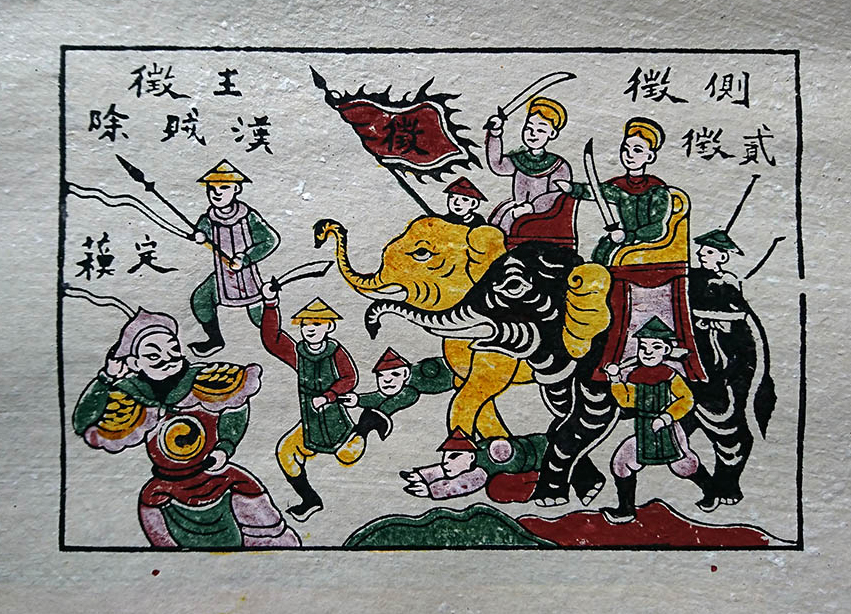
This marks the beginning of the Eastern Han period (Đông Hán). Upon his rise to power, he continuously acted in favor of the poor and slaves. Unlike Wudi, he pursued a policy of non-intervention in vassal states. Yet it was he who later sent Ma Yuan (Mã Viên) to suppress the rebellion of the Trưng sisters, Trưng Trắc and Trưng Nhị, in the territory of the Yue. He was considered one of the great emperors of the Han dynasty alongside Wudi by historians.

During archaeological excavations, it is known that the Han descendants were ahead of the Romans in several fields at that time. They were the first to invent a product that allowed them to convey their thoughts and knowledge. They often called it « zhi » or (giấy or paper in French). In 105 AD, a eunuch named Cai Lun (Thái Luân) from the imperial court, observing how wasps used to chew wood fibers in building their cardboard nests, had the idea to imitate them and thus invented paper, which was later presented to Emperor Hedi (Hán Hòa Đế) of the Eastern Han dynasty (Đông Hán). Archaeology has recently contradicted this version because fragments of paper made from plant fibers have been found that are clearly older than Cai Lun’s time, some dating back to the reign of Wudi and others excavated from tombs at the end of the Western Han and the beginning of the Eastern Han. It is very common to find chronological inconsistencies that the Chinese deliberately wanted to introduce into their traditional history established until then by the dynasties, particularly those of Qin and Han, in Confucian orthodoxy and in the period of conquest and annexation of new territories if one continues to have a Cartesian mindset.

Chinese demiurges such as Fuxi (Phục Hi), Nuwa (Nữ Oa), Pangu (Bàn Cổ), Shennong (Thần Nông) were borrowed from southern populations. This is the case of the great Chinese scholar Ruey Yih-Fu, who sees in Fuxi and Nuwa a specific cultural trait of the Nan Man (Man Di) (Southern Barbarians), or that of Le Blanc, the translator of Huainanzi (Hoài Nam Tử). For the latter, the Fuxi-Nuwa cycle is a tradition of the kingdom of Chu (Sỡ Quốc). The sons of Han even introduced into their literature a creation myth of Pangu collected from the ancestors of Yao (Baptandier). The Chinese archaeologist Yan Wenming describes this as the unique product of multiple origins, or one must be like the famous sinologist Chang Kwang-Chih to speak of a phenomenon within a sphere of cultural interaction.

Until then, the sons of Han wrote with a brush or ink made from soot on wooden tablets, silk boards, or bamboo. It seems that according to some archaeologists, the manufacturing method that Cai Lun presented to Emperor Heidi in the year 105 was only the synthesis and improvement of previous experiences aimed at facilitating the gradual replacement of silk and bamboo by paper, which was less expensive in the face of increasing demands of that time.

Structure of the Tombs

At the beginning of the Western Han period, vertical pit tombs were still numerous. This architectural tradition is illustrated by the tombs of the Marquise Dai at Mawangdui, near Changsha (Hunan), those of Dabaotai near Beijing, and Fenghuangshan near Jiangling (Hebei). These were gradually replaced over the years by the horizontal tomb model that spread throughout the Han empire.

Many factors contributed to this change and gave funerary art a new brilliance. Besides the imposing dimensions of the burials, there is the richness of their funerary furnishings and the religious beliefs linked to the Han’s transition to the afterlife. For this reason, princes, nobles, large landowners, army officers, and wealthy merchants did not hesitate to display the privileges of their social position and function, which they hoped to maintain in the afterlife (renxun), and to show their fervor of piety and devotion towards the deceased by attempting to provide everything needed through funerary objects (or mingqi) (spiritual objects) (Minh Khí). Those produced under the Han reign were particularly refined. Endowed with symbolic meaning, they included miniature models of ritual vessels and musical instruments intended for rites and ceremonies, as well as agricultural buildings or dwellings.

Techniques and inventions under the Han

Under the Han, the Chinese wrote a lot: government reports, poems, historical accounts, a gigantic dictionary, and a nationwide census in the year 2 AD with 57,671,400 inhabitants. At the beginning of the Eastern Han, hemp paper, of poor quality, was used to wrap fish. From the 3rd century onwards, paper became the main writing medium in China. When the emperor traveled on his chariot, he was protected from the sun and rain by a circular canopy that could be closed thanks to a system of sliding metal ribs.

It is known that the sons of the Han used the wheelbarrow and pulley to move goods, while in agriculture, they used the treadle hammer to grind grains and ores. It was under the Han reign that the Chinese used water wheels for various purposes. Thanks to contact with the northern barbarians, the Xiongnu, Chinese artisans borrowed techniques from them, which they managed to master and produce objects of exceptional quality. This was discovered during excavations in princely tombs with chariot ornaments, tableware, jewelry, belt buckles, etc.

To guard against calamities such as earthquakes, the Chinese scholar Zhang Heng invented in 132 AD the world’s first seismometer to alert the Han court and indicate the direction of the earthquake’s epicenter. The invention of the odometer also belonged to him, along with the first rotating celestial globe. Porcelain was born in China, whose purity and whiteness justify the name given to it by the Italians in the 15th century as « la coquille nacrée (porcellana). » The main element in the composition of porcelain is kaolin, known during the Eastern Han period. Under their reign, porcelain began to experience significant growth. During the Western Han and earlier periods (the Warring States), the Chinese were able to create geographic maps painted on silk and stored in boxes. Sent by Prince Dan of Yan during the Spring and Autumn period (Xuân Thu), the hero Jing Ke planned to use a folded map to conceal a dagger and assassinate Qin Shi Huang Di. It was only in 1973 that the existence of these maps was discovered in tomb No. 3 of Mawangdui (168 BC). These (2 maps and a city plan) thus constitute the oldest maps in China and in the world. In the field of astronomy, Han China experienced remarkable development.

The astronomy text discovered in tomb 3 of Mawangdui (168 BC) accurately reports observations related to the movement of the five planets during the period 246-177 BC. The complete journey of Saturn across the sky is counted as 30 years, a figure not far from the 29.46 years given by today’s astronomers.

Jade is one of the most difficult stones to work with. Yet since the Neolithic period, Chinese lapidaries managed to skillfully carve jade, probably using quartzite pastes or garnets, which gives it exceptional artistic value with rings, circles, representations of dragons, etc. During the Shang period (Thương Ân dynasty), jade was intended purely for ornamental purposes. This is what archaeologists discovered in the tomb of Queen Fu Hao (755 jades found).

Then during the Western Zhou period, it became customary to cover the deceased with masks and breastplates made of several pieces. This is a sign of distinction or nobility by placing breastplates on the body of the deceased dressed in decorated silk. The masks and shrouds were not intended for decorative purposes but had a religious function in the quest for immortality under the Han.

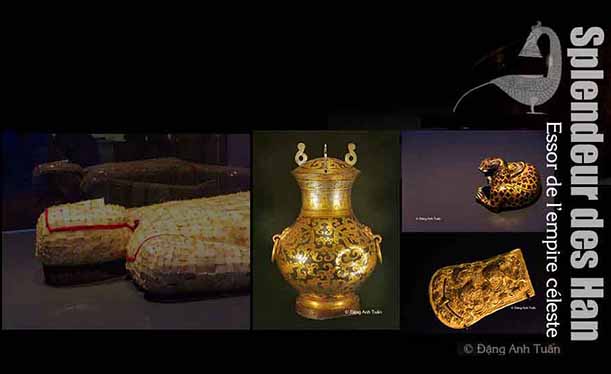
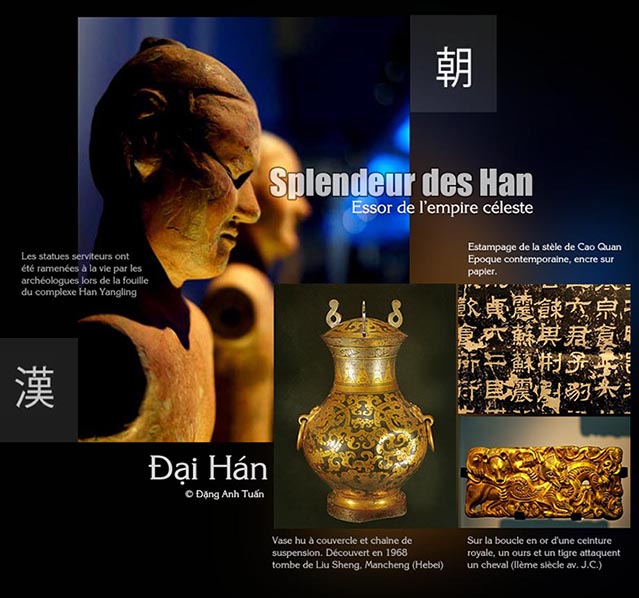
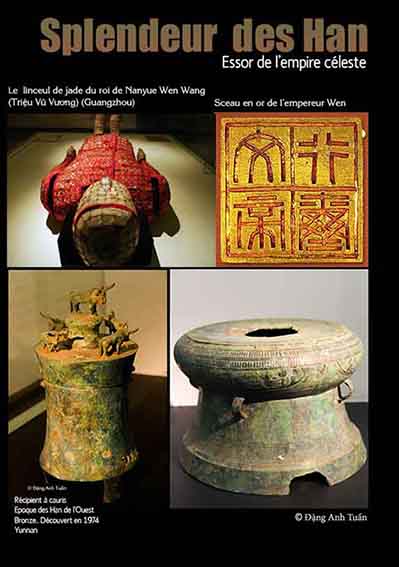
Small jade amulets were used to seal the nine orifices of the deceased’s body to allow their spirit to live in the afterlife. However, the role of the jade bi, placed on the forehead of the King of Nanyue, Zhao Mo (Triệu Muội), is unknown. The shrouds of Emperor Wudi’s brother, Liu Shen, and his wife, Princess Dou Wan, found in Mancheng and composed of 2,498 jade plaques of various sizes sewn with gold thread, testify to the perfect mastery of Chinese lapidaries in creating such shrouds and luxurious ornamental objects from the Han period.

The Chinese were accustomed to lacquering a wide variety of supports. Some lacquered objects, notably a red wooden cup found in a tomb in Zhejiang, reveal their extraordinary craftsmanship as early as the Neolithic period (5th-4th millennia BCE). It should be noted that this region belonged to the kingdom of Wu (Ngô Việt), part of the ancient territory of the Baiyue before being annexed by the kingdom of Chu, which was later conquered by Qin Shi Huang Di during the unification of the empire. Is this their craftsmanship or that of the Bai Yue? In any case, following the example of the kingdom of Chu, the sons of Han demonstrate perfect mastery in the art of bending wood, creating original and stylized works of high quality that leave archaeologists speechless with admiration during their excavations.

These lacquers recall the motifs and intricate designs found on bronze vessels. They succeeded in making lacquer the flagship product under the Han dynasty. It is known that lacquered objects buried in tombs can be preserved for tens of centuries thanks to the presence of an enzyme acting as a protein catalyst (urushiol) on the thin film of the objects, which is heat-resistant and impermeable to water and corrosive acids. More than a hundred lacquered objects (trays, cups with ear-shaped handles (erbei), vases, etc.) have been unearthed at Mawangdui near Changsha (Hunan). Other original works in very good condition were recovered from the tomb of Marquis Yi of Zeng at Leigudun (Hubei).

Bibliographic references:

  • La Chine des Han. Histoire et civilisation. Office du Livre. 1982
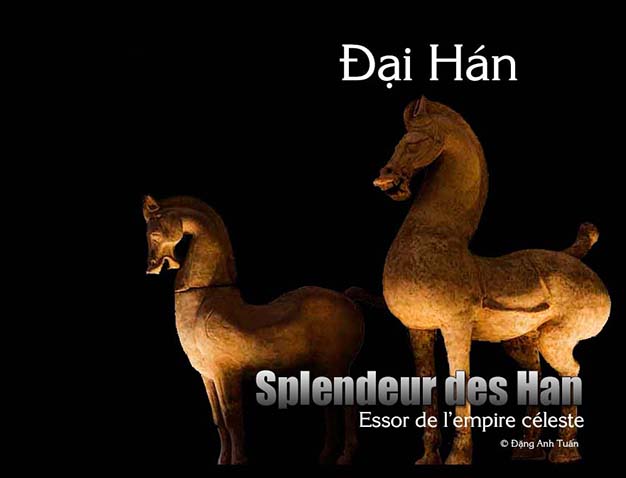
  • Splendeur des Han. Essor de l’empire céleste. Editeur Flammarion. 2014
  • Chine ancienne. Des origines à la dynastie des Tang. Maurio Scarpari. Gründ.
  • Trésors de Chine millénaires mais intacts. National Geographic. Octobre 2001
  • La dynastie des Han. Vingt siècles d’influence sur la société chinoise. National Geographic. Février 2004.
  • Chine. La gloire des empereurs. Paris Musées. Editions Findakly.
  • La Chine des premiers empereurs. Editions Atlas. 1991
  • Splendeurs des Han. Essor de l’empire céleste. Editions des Beaux Arts. 2014.

[Eastern Han Timeline (Reading more)]

[Return Han Dynasty]

Han Wu Di empire: Art of living (VA)


Version vietnamienne

Version française

Under the Han dynasty, Chinese society was structured in such a way that only the literati and peasants were well respected compared to artisans and merchants, according to the Hanshu by Ban Gu in the 1st century. Yet, it was only the latter who benefited from the empire’s economic system despite a large number of restrictions imposed by the imperial power. The multiplication of private enterprises and the opening of trade routes (such as the Silk Road) allowed them to enrich themselves easily. They sold commodities and luxurious superfluous goods highly prized by the Han aristocracy and landowners. Thanks to funerary art, we are led to draw useful lessons about the art of living as well as entertainment of that era. Silk was reserved for the court, nobility, and officials, while linen was for the people, in their traditional costume adorned with accessories illustrating their social status. Silk experienced remarkable growth because it was the subject of luxury trade but was also used in the tribute system for the Xiongnu and vassal states. In 1 BC, silk gifts reached their maximum with 370 garments, 30,000 rolls of silk fabrics, and 30,000 jin of silk floss. Merchants took advantage of exchanges to launch a lucrative trade with foreigners, particularly with the Parthians and the Romans.

Private workshops competed with imperial workshops.
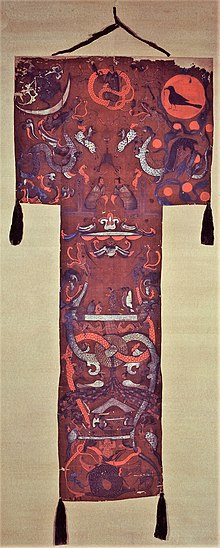
Funerary banner found in Madame Dai’s coffin

This encouraged silk production and increased regional diversity. The weaving demonstrates a high level of technical skill, as a silk shirt measuring 1.28 meters long with a wingspan of 1.90 meters found in the tomb of Marquise Dai weighed only 49 grams. Besides the silk banner covering the deceased’s coffin and decorated with paintings illustrating Taoist cosmology, silk manuscripts were also discovered (Yijing (Di Kinh), two copies of Daodejing (Đạo Đức Kinh), two medical treatises, and two texts on Yin-Yang, as well as three maps in one of the three Mawangdui tombs, some written in a mixture of lishu (scribe script) and xiaozhuan (small seal script) dating from the reign of Gaozu (Hán Cao Tổ), others entirely in lishu dating from the reign of Wendi. Despite its high cost, silk was preferred because it is more manageable, lighter, and easier to transport compared to wooden tablets. Under the Han, lacquerware, whose craftsmanship is still considered refined, began to fill the homes of the wealthy. These, imitating the aristocracy of the Chu kingdom, used lacquered wooden tableware, most often red on the inside and black on the outside with enhanced painted motifs; these colors corresponded well to those of Yin (black) and Yang (red).

The same applies to trays and boxes intended for storing folded clothes, toiletries, manuscripts, etc. For princely families, jade replaces lacquer. As for the common people, ceramics are used along with wood for their tableware. Resembling individual circular or rectangular trays, low tables, generally on legs, are used to serve meals. These are well stocked with dishes, chopsticks (kuaizi), spoons, ear-handled cups (erbei) for drinking water and alcohol. Regarding staple foods, millet and rice are the most appreciated cereals.

Millet is reserved for festive days in northern China, while rice, a product of the ancient kingdom of Chu, is confined to southern China as it is considered a luxury product. For the poor, wheat and soybeans remain dominant in their meals. Chinese cuisine is roughly the same as it was during the Qin era. Geng, a type of stew, remains the traditional Chinese dish where pieces of meat and vegetables are mixed. However, following territorial expansion and the arrival and acclimatization of new products from other parts of the empire, innovations gradually begin to appear in the making of noodles, steamed dishes, and cakes made from wheat flour.

The same applies to trays and boxes intended for storing folded clothes, toiletries, manuscripts, etc. For princely families, jade replaces lacquer. As for common people, ceramics are used along with wood for their tableware. Similar to individual circular or rectangular trays, low tables, generally with legs, are used for serving meals. These are well stocked with dishes, chopsticks (kuaizi), spoons, ear-handled cups (erbei) for drinking water and alcohol. Regarding staple foods, millet and rice are the most appreciated cereals.

Millet is reserved for festive days in northern China, while rice, a product of the ancient kingdom of Chu, is confined to southern China as it is considered a luxury product. For the poor, wheat and soybeans remain dominant in their meals. Chinese cuisine is roughly the same as it was during the Qin era. Geng, a type of stew, remains the traditional Chinese dish where pieces of meat and vegetables are mixed. However, following territorial expansion and the arrival and acclimatization of new products from other parts of the empire, innovations gradually begin to appear in the making of noodles, steamed dishes, as well as cakes made from wheat flour.

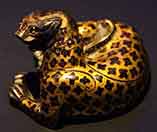
Roasting, boiling, frying, stewing, and steaming are among the cooking methods. The mat is used for sitting by all social classes until the end of the dynasty. It is held in place at the four corners by small bronze weights shaped like curled-up animals: tigers, leopards, deer, sheep, etc. To alleviate the discomfort caused by kneeling on the heels, lacquered wooden backrests or armrests are used. The mat is also used in central and southern China by modest people for sleeping. However, in northern China, because of the cold, one must use a kang, a kind of earthen bed covered with bricks and topped with mats and blankets. Beneath this kang, there is a system of pipes that distribute heat maintained from a stove located inside or outside the house.

Leisure and pleasures were not forgotten either during the Han period.

Thanks to texts, we know that the musical tradition of Chu held an important place in the Han court, which continued to appreciate it. According to the French sinologist J.P. Diény, the Han preferred above all other music that which made one cry. The favorite themes in songs revolved around separation, the passage of time, and pleasures.

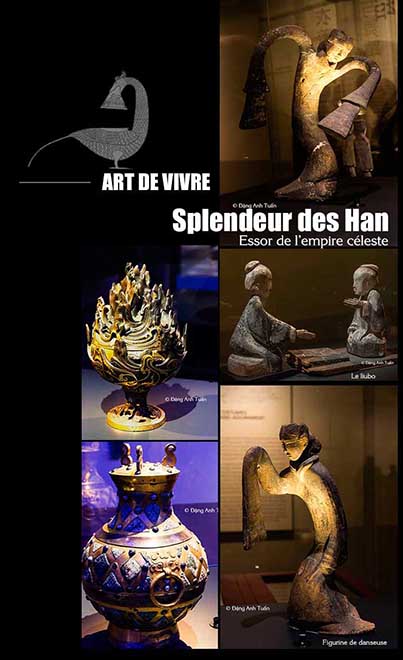
It is in the princely tombs that one discovers the figurines of dancers (mingqi) (minh khí). These reveal, through their gestures, the skill of tracing arabesques in the air with the long sleeves of their robes. The dances, based on the movements of the garments caused by the twisting of the body and the arms, give the dancer, accompanied by sometimes melancholic singing, a vivid portrait of Han choreographic art. For the latter, the family is, in the Confucian conception, the basic unit of the social system around which ancestor worship, rites, banquets, and weddings take place, providing throughout the year many occasions and pretexts for music to accompany them and make life harmonious. Being symbols of authority and power, bronze chimes cannot be absent. They are frequently used in ritual ceremonies but also in court music. Thanks to archaeological excavations, it is known that the life of Han princely courts was punctuated by banquets, games, and concerts accompanied by dances and acrobatics. As for entertainment, it was reserved exclusively for men. Liubo (a kind of chess game) was one of the most popular games of the time, along with dice games that could have up to 18 faces. It is better to play than to remain idle, this is the advice of Confucius given in his « Analects. »

Unlike the archaeology of earlier periods, that of the Han allows us to access the realm of the intimate, such as women’s makeup. They used foundation made from rice powder or white lead to paint their faces. Red spots were applied on the cheekbones, dark circles under the eyes, beauty marks on the cheek, a touch of color on the lips, etc. The education of the young was a priority during the Han period. From childhood, obedience, politeness, and respect for elders were instilled. At ten years old, the boy began receiving lessons from a teacher. He had to study the Analects of Confucius (Lunyu), the Classic of Filial Piety (Xiao jing), etc., before moving on between the ages of fifteen and twenty to reading the Classics. Considered inferior to men, women were obliged from a young age to learn silk work, cooking, and to possess the major qualities taught to them: gentleness, humility, self-control. They had to submit to the three obediences (Tam Tòng): as a child to their father, as a wife to their husband, as a widow to their son. They could be married around 14-15 years old to ensure the continuity of the family lineage. Despite these Confucian constraints, women continued to exercise real power within the family structure, particularly in the relationship between mother and son.The concern to honor the deceased led the Han, particularly those of the West, to create extravagant tombs and true treasures such as jade burial suits in the quest for immortality. This is the case with the tomb of Emperor Wudi’s father, Han Jing Di.

 So far, archaeologists have already extracted more than 40,000 funerary objects around the emperor’s mound. It is expected that this entire funerary complex will yield between 300,000 and 500,000 objects because, besides the mound, there are two distinct pits left to explore: those of the empress and the emperor’s favorite concubine, Li. According to a Chinese archaeologist in charge of this exploration, it is not the number of objects discovered that is important, but rather the significance of each of the findings recovered in this funerary complex. It is believed that the Western Han were accustomed to valuing truly grandiose funerary monuments despite their frugality, revealed through a series of objects that are much smaller than those found in Qin tombs.

[Western Han Timeline (Reading  more)]

[Return Han Dynasty]

Han Princes Tombs

Vietnamese version
French version

Similar to their predecessor Qin Shi Huang Di, the emperors of the Han dynasty sent emissaries during their reign in search of paradisiacal places with the aim of seeking immortality and accessing the divine world. These mythical lands are often associated with Penglai Island (đảo Bồng Lai) located to the east and Mount Kunlun (Côn Lôn) to the west in the beliefs of the Han era. It is the mountain where the Queen Mother of the West (Tây Vương Mẫu) (Xiwangmu) resides, who possessed the elixir of immortality. This is why her presence is recurrently found in the decoration of Han tombs. This testifies not only to her popularity but also to the Taoist conception related to the prolongation of life beyond death. According to some unverified and unjustified rumors, Zhang Qian was initially tasked by Wudi to search for immortality recipes near Mount Kunlun, the western abode of the immortals. Always dressed in a long tunic, they have an elongated and angular face, a wide mouth above a pointed chin, arched eyebrows, and large ears, which gives them a rather strange silhouette and an emaciated appearance. Once the dao is reached, they have wings on their shoulders. In the Taoist conception of the afterlife, to preserve the physical integrity of the deceased and the immortality of their soul, the nine orifices of their body must be sealed with gold and jade pieces (mouth, ears, eyes, nostrils, urethra, rectum).

Then the deceased must be made to wear a mask or a jade suit whose use is governed by a very strict hierarchical protocol. For emperors, the jade suit is sewn with gold threads. As for kings and other less important dignitaries, their jade suit only has threads of silver or copper. The use of the suit reflects the Han belief in the soul’s perpetuity in the afterlife because jade is attributed with apotropaic properties that help promote the soul’s immortality.

During the Han period, the dualistic conception of the soul was mentioned in several Chinese texts such as the Huainanzi by Liu An (Hoài Nam Tử). Each individual has two souls: one called hun that goes to heaven and the other called po that physically disappears with the deceased. To prevent the hun soul from escaping through the facial orifices, the mask or suit proves indispensable.

Is this dualistic conception of the soul truly Chinese or borrowed from another civilization, that of the Baiyue? It is found among the Mường, the cousins of the Vietnamese, living in the most remote corners of the mountainous regions of Vietnam. For the Mường, there are several souls in a human being which they call wại. These are divided into two categories: wại kang (the splendid souls) and wại thặng (the hard souls). The former are superior and immortal while the latter, attached to the body, are evil. Death is only the consequence of the escape of these souls.

It is important to recall that the culture of the kingdom of Chu (Sỡ Quốc), conquered by Qin Shi Huang Di during the unification of China, had a particular originality, its own language, that of the Bai Yue. From the Qin-Han period onwards, there existed an imperial institution, the fangshi, who were local scholars considered magicians specialized in star rites and government recipes.

Their role was to collect, each in their own territory, ritual procedures, beliefs, local medicines, systems of representation, cosmologies, myths, legends, as well as local products, and submit them to the political authority so that it could decide whether to retain them or not and incorporate them in the form of regulations with the aim of increasing imperial power in an ethnologically very diverse nation and providing the emperor with the means for his divine vocation. Everything had to be collected and added to the service of the Son of Heaven in order to establish his legitimacy over recently conquered barbarian territories.

___This is one of the characteristic traits of Chinese culture: It knows how to accept and absorb foreign cultures without ever showing signs of wavering or cultural modifications.___

This is what the famous 20th-century Chinese philosopher Liang Shuming wrote in the introduction to his work entitled « The Main Ideas of Chinese Culture » (translation by Michel Masson). This echoes the following remark made by the French ethnologist and sinologist Brigitte Baptandier in her conference text during an APRAS study day on regional ethnologies in Paris in 1993:

Chinese culture thus formed over the centuries as a kind of mosaic of cultures. It requires a slow infusion of barbarian blood into China, adapting this beautiful phrase of the historian F. Braudel for France with the barbarians.


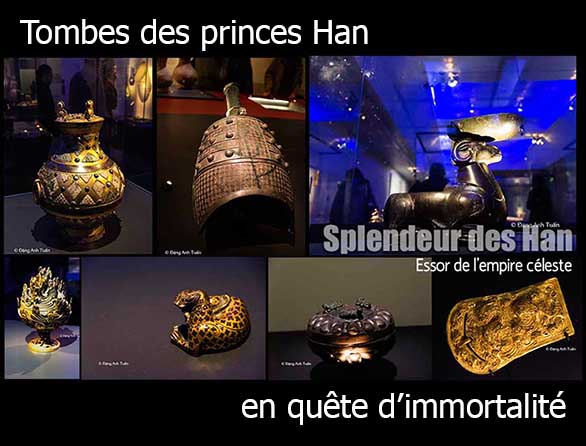
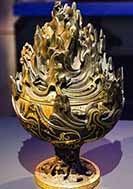
The Boshanlu incense burners (incense burners shaped like Mount Bo) were meant to represent the mythical mountains bathed in clouds and qi vapors (vital cosmic energy). The popularity of these incense burners was largely due to Han thought on immortality and the cult of sacred mountains.

Boshanlu


According to the estimate of the dean of Chinese archaeologists Wang Zhongsu, since 1949 more than 10,000 tombs have been excavated from the Han dynasty alone. Thanks to major archaeological discoveries from the tombs of Lady Dai and her son at Mawangdui (Changsha, Hunan) (168 BC), or the tomb of Emperor Jindi’s son, Prince Han Liu Sheng and his wife Dou Wan (Mancheng, Hebei) (113 BC), as well as the tomb of Zhao Mo, grandson of Zhao Tuo and king of Nanyue (Xianggang, Guangzhou) (120 BC), archaeologists have begun to better understand Han art through thousands of exceptional objects made of jade, iron, and bronze, ceramics, lacquerware, etc. These testify to the opulence and power of the princely courts under the Han. They are sometimes unique specimens revealing not only exquisite technical craftsmanship and the preciousness of the materials but also regional particularities.

During the excavations, archaeologists observed that there is a break in Chinese art, a profound change historically corresponding to the development of the unified empires (Qin and Han) and contact with foreign influences. The presence of secular objects, particularly bronze vessels commonly found during the Zhou period, gave way to the development of figurative art and pictorial representations. There is undoubtedly a notable influence from other cultural spheres in the field of Han art, especially in material culture. From then on, ancestor worship no longer took place in temples as it had during the Bronze Age but occurred within the tombs and in sanctuaries near them. Moreover, like Emperor Qin Shi Huang Di, the Han emperors and their princes tended to make the tomb a replica of their earthly royal residence.

This concept dates back to the Zhou period and was frequently illustrated in the funerary practices of the elites of the Chu kingdom. Similar to the latter, the Han believed in the soul’s continuity in the afterlife. The vision of death was considered a continuation of life. This belief remains alive today in China during the Qingming Festival, with sacrifices offered to ancestors: fake money and funerary objects burned.

It is for this reason that during excavations, everything they owned in their lifetime is found: favorite objects, terracotta figurines representing their household staff, as well as jade shrouds intended to reduce death to nothingness. The imperial tombs of the Han are marked by the presence of a high artificial mound located within a rectangular enclosure where the burials and ancillary pits are also found. The structure of their tombs becomes increasingly complex and often rivals that of their palaces, with separate pits each having a distinct function (storehouse, stable, kitchen, banquet hall, etc.). This is the case of the Liu Qi site, known as Emperor Jindi, and his wife, Empress Wang, in the suburb of Xi’an. It is in these pits that luxury items (vases, basins, incense burners, mirrors, weights for mats, cauldrons, lamps, daggers, etc.) or everyday items (grains, fabrics, meat, etc.) of the deceased are found, leaving archaeologists dumbfounded and silent with admiration, alongside terracotta figurines (or mingqi). These can be either figurines of domestic animals or human statuettes.

Thanks to the Silk Road and Chinese expansion, a large number of regional artistic traditions, foreign fashions, and new products contributed to the artistic flourishing of the Han. Cosmopolitanism certainly played an important role at that time.

The splendor of luxury objects found in tombs reveals not only the grandeur and refinement of princely courts but also a taste for exoticism. The dances and music of Chu, the songs of Dian, and the art of Central Asian minstrels renew the court’s entertainment. Contacts with the arts of the steppe promote the enrichment of the decorative repertoire.

Similar to jade, bronze was one of the materials highly prized by the Chinese. During the Han period, the popularity of bronze began to decline because for ancestor worship, there was no longer a need for complete sets of ritual bronze vessels, and lacquer objects imitating those of the kingdom of Chu were preferred instead. The latter had frequently decorated them with motifs or figures of great imagination according to its own mythology during the Warring States period.

Despite the visible decline in the tombs of Han princes, bronze was still widely used in chariot ornaments and luxury objects found

[Reading Art of living]

[Return Han Dynasty]


Han Wu Di empire: Annexion (VA)

 Chinese conquests: Nan Yue and Ye Lang

Vietnamese version
French version

At the time when Zhang Qian was tasked in the year -126 with seeking alliances to encircle the Xiongnu, they continued to launch increasingly deadly raids, resulting in several thousand Chinese dead or captive living in the frontier commanderies (Dai, Yanmen, or Shang) in northern China. This forced Wudi, now more confident in consolidating his power and his rear positions, to adopt a new policy towards these « barbarians. » From then on, Chinese offensives aimed at preventing the Xiongnu from concentrating on the edge of Chinese territory became more frequent.

The first success occurred in the autumn of -128 in the Yuyang region with Wei Qing, the new hero of the Chinese army. This was followed by other brilliant and decisive conquests in the spring of -121, led by Huo Qubing, the son of Wei Qing‘s elder sister and « champion of the army, » who was exceptionally granted the title of Guanjun by Wudi. He chose a new tactic of striking like lightning at the head of the Xiongnu armies deep within their territory, which allowed the Chinese to reconquer the Ordos, the entire area south of the Yellow River loop (Hoàng Hà), to establish the commanderies of Shuofang and Wuyuan, and to deport people into the conquered zones with the aim of providing significant long-term logistics to the army in pursuing enemies into other distant and unknown regions.

The empire of Wudi had the means to implement this colonization policy with a population of 50 million inhabitants at that time. It is estimated that more than 2 million Chinese were relocated under Wudi’s reign along the northern border. This policy paid off because these agricultural colonies definitively became, a few years later, the reliable bulwark of China against these « barbarians. » This reminds us of the policy of the Vietnamese in the conquest of Champa and the Mekong Delta and that of the Chinese in today’s Tibet. The incessant harassment by the Xiongnu, agitated like wasps disturbed from their nests, forced Wudi to change tactics by now prioritizing the northern front and temporarily abandoning all his territorial ambitions in the southwest of his empire in the Yunnan region and in the kingdom of Nanyue (Nam Việt), which once included northern Vietnam.

Thanks to the following unchanging strategy:

1°) Attack and push back the Xiongnu as far as possible into their territories by surprise.

2°) Deport populations affected by floods or condemned people into the conquered areas of their Xiongnu adversaries and create new commanderies there. This is the case of the commanderies of Jiuquan, Dunhuang, Zhangye, and Wuwei along the Gansu corridor.

3°) Weaken the Xiongnu by playing the division card and attract the new Xiongnu allies with the tribute system. (creation of five independent allied states (or shuguo) serving as a buffer between his empire and the enemy Xiongnu under his reign)

Wudi thus succeeded in slowing down the momentum of the belligerent Xiongnu. They were forced to transfer their headquarters near Lake Baikal (Siberia) and loosen their grip on all of Eastern Turkestan.

This allowed Wudi to have free hands and regain the expansionist desire towards the South and Northeast to secure trade and gain other allies since Zhang Qian had tried to hint at the existence of a direct route to reach the kingdom of Shendu (India) from the kingdom of Shu (conquered by Shi Huang Di during the Spring and Autumn period (or Chunqiu, 722-453 BC). Zhang Qian had this instinctive deduction during his stay in Daxia (Bactria) where he discovered the products of Shu (bamboo, fabrics, etc.) transported via this direct access route. Wudi tried to reuse the same strategy he had chosen for the Xiongnu.

Annexation of the Southern Kingdoms

Taking advantage of the dissent among the Yue and the death of the king of Nanyue Zhao Yingqi (Triệu Anh Tề), Wudi found the opportunity to incorporate the kingdom of Nanyue into his empire. Since the new king Zhao Xing (Triệu Ái Đế) was only 6 years old, the regency fell to his mother, a Chinese woman named Jiu (Cù Thị). She never hid her attraction to her former homeland as she was very unpopular with her Yue subjects. Wudi tried to bribe her by proposing a deal aimed at incorporating the kingdom of Nanyue into his empire in exchange for royal titles. This plan was aborted due to a coup organized by the prime minister Lü Jia, supported largely by the Yue. This treacherous queen, her son, the new king, and the Han officials were massacred by Lü Jia and his Yue supporters. They installed the new king Zhao Jiande (Triệu Dương Đế), whose mother was a Yue. Furious, Wudi could not let such an affront go unpunished when he had the opportunity to definitively appropriate a region known for its natural wealth and for its ports Canton and Hepu facilitating access to the South Sea. According to Chinese merchants, the economy was flourishing in Nanyue because it had not only pearls, rhinoceros horns, and turtle shells but also precious stones and tree essences. These exotic products would thus become fashionable items at the Han court.

The military expedition was led by General Lu Bode (Lộ Bác Đức) with one hundred thousand sailors from tower ships sent to the site to suppress the Nanyue revolt. He was assisted in this mission by Yang Pu (Dương Bộc), known for his cruel and ruthless nature towards his victims like a hawk on its prey. However, magnanimous Lu Bode played on his reputation and invited his enemies to surrender. He managed to gain the allegiance of the Yue at the end of the military confrontation. As for Lü Jia and his young king Zhao Jiande, they were captured in the spring of 111 BC during their escape. Their heads were displayed at the north gate of the Chang An (Trường An) palace. Known for its regional supremacy, the defeat of Nanyue sounded the death knell for Yue hopes and forced others to submit to the Han. This was the case for the Western Ou (Tây Âu) and the king of Cangwu (Guangxi) (Quảng Tây), as well as the Yelang kingdom (Dạ Lang), which at that time straddled the territories of Guizhou (Quí Châu) and Guangxi. Northern Vietnam was also occupied by the Chinese, who attempted to push their advantage as far as Rinan in Annam.

Wudi divided Northern Vietnam into two commanderies: Jiaozhi (Giao Chỉ) and Jiuzhen (Cửu Chân). The administrative capital of Jiaozhi was initially at Miling (Mê Linh), then later transferred to Lũy Lâu in Bắc Ninh province.

Faced with the disintegration of Minyue (Mân Việt) and the resistance of part of its population (Dong Yue) (Đông Việt), which Wudi considered a source of future trouble, he did not hesitate to use drastic measures. He issued a decree allowing the population of this kingdom to be emptied in 111 BC by deporting all the natives to another area located between the Huai River and the Yangtze River.

Thanks to the conquest of the Yue and Yelang territories, Wudi succeeded in making contact for the first time with the kingdom of Dian and understanding its importance. He soon sent envoys there to convince King Changqian of this kingdom to come to Chang’an to pledge allegiance. Faced with Changqian’s reluctance, Wudi ordered the liquidation of all hostile tribes, particularly the Laojin and Mimo, who attempted to block the southern route mentioned by Zhang Qian to reach Daxia and Central Asia. It was reported that more than twenty thousand enemies were killed or captured during this intervention. King Changqian of Dian was forced to surrender with his subjects. Instead of punishing him, Wudi spared him due to his distant Chinese ancestry and, like the king of Yelang, gave him the royal investiture seal to administer the annexed territory. His kingdom was henceforth transformed into the commandery of Yzhou in 109 BC. Thus ended the annexation of southwestern China (Yunnan) by Wudi.

According to the historian Sima Qian, the issue of relations between the Chinese and the Southwestern barbarians arose because someone saw a « ju » sauce in Panyu (Canton) and the people of Daxia possessed bamboo canes from Qiong (a Southwestern tribe) to humorously recall that Wudi was initially interested only in the existence of the southern route to Daxia for trade. The colonization of the South began to gain momentum while allowing the local Yue aristocracy greater autonomy, as had been granted to the king of Dian. Meanwhile, to separate the Xiongnu from their tributaries, the Wuhuan and Donghu horse herders, Wudi’s army was soon established in Manchuria. Between 109 and 106 BC, Wudi’s army occupied the northern half of the Korean peninsula and established four commanderies there: Letun in the northwest, Zhenfan on the west coast, Lintu in the east, and Xuantu in the north.
After a long reign of 54 years, Han Wudi died in 87 BC, leaving China drained and ruined, much like Louis XIV left France eighteen centuries later. While the military campaigns led by Wudi brought the Han dynasty to the height of its glory and power, they exhausted the public finances. The beginning of his reign corresponds to the Yang period during which the people had enough to eat, as Sima Qian wrote in his historical memoirs. The grain stores were well filled, as was the public treasury.

The empire was stable. This was largely due to the effort of its predecessor Jing Di to govern throughout a 17-year reign according to the Taoist precept: Rule with minimum intervention. (Wu wei er zhi). Corvées and taxes were greatly reduced. Unfortunately, the splendors of the court accompanied by expensive diplomacy towards the Xiongnu and vassal countries (tribute system) and annexationist policies swallowed up all the human and economic wealth of the country, which allowed Yang to shift into Yin, where landowners (nobles and officials) monopolized all the irrigated lands by buying them at low prices from impoverished peasants. The situation was catastrophic: the rich got richer, the poor got poorer. The people of the capital Luoyang lived in excess and insolence, wearing fine brocades, pearls, and jade, while the fate of the poor worsened, some preferring to become private or government slaves. Disasters and floods spared the country no more. Meanwhile, intrigues and debauchery multiplied at the Han court at the end of the 1st century. Imperial power was weakened by various factions, rivalries between imperial wives, and the machinations of their relatives, which allowed Wang Mang, an ambitious regent minister, to take advantage by poisoning the young Emperor Pingdi (Han Bingdi) (9 years old) in the year 5 AD and usurp the throne with the help of his aunt, Empress Dowager Wang of the empire.

[Reading: Tomb of the Han princes: on quest of immortality]

[Return Han Dynasty]


Han Wu Di empire: Silk road (VA)

Han Wu Di empire

Version française
Version vietnamienne

Politically, the empire of Wudi began to be more firmly established as the renovation of Confucianism offered ambitious and talented people from the common class the opportunity to access important positions in the administration, which until then had been held by the old guard mainly composed of nobles, Taoists, and followers of Huanglao. Thanks to the examination system, merit now replaced birth privileges. However, his empire was not yet safe from rebellion and rivalries, which continued to run rampant in the Han court. The failure of separatism (in 122 BC) by Lord Liu An, known for his encyclopedic work Huainanzi on the knowledge of the time, testified to the difficulty of bringing the nobility under control, even after about fifteen years of Wudi’s reign.

Like his father, Emperor Jindi (Han Jing Di), who had experienced during his reign the revolt organized by the coalition of seven kingdoms led in 154 BC by Prince Wu, Wudi decided to carry through the systematic dismantling of the fiefs of the lords in order to prevent any attempt at rebellion. From then on, the apanage no longer belonged solely to the eldest son of the deceased vassal king but had to be shared among all his sons.

They played no political role apart from the privilege of wealth that their fief provided them. Through this clever fragmentation, it only takes a few generations of succession to make important principalities disappear and disperse their forces. Moreover, he appointed for each region a traveling inspector (thứ sử) responsible for controlling and supervising not only the powerful families but also the prefects. As for the court rivalries, Wudi skillfully took advantage of them by encouraging confrontation and competition among his advisors in sometimes fruitless debates in order to consolidate a powerful but just and moral central power. By appointing a secretariat responsible for examining the reports and petitions of the ministers, he effectively removed the role of the prime minister. It was with this in mind that he strengthened the autocratic nature of his reign. He pardoned no fault when one of his advisors or generals committed one.This was the case of the extraordinary archer Li Guang (Lý Quảng), nicknamed « the flying general » by the Xiongnu. He was demoted for the fault of having gotten lost in the desert with his soldiers during an engagement against the Xiongnu. But his punishment was commuted to a substitute fine. The redemption of penalties and fines was very common during the Han period. Even the defense’s plea risked endangering the defender’s life as he was accused of deceiving the emperor.

This is the case of the famous historian Sima Qian (Tư Mã Thiên) who was sentenced to castration for defending the family of the officer Li Ling (Lý Lăng), grandson of General Li Guang, accused of joining the Xiongnu. The measures taken by Wudi in many areas testified to the worst legalist methods. His advisors and generals were at the mercy of his judgments. They could be easily dismissed from their positions for minor faults before being promoted elsewhere. Rewards and punishments were part of the course of action that Wudi adopted for his collaborators. Their fear allowed Wudi to develop his art of governing wisely. It is rare to find officials under Wudi’s reign holding their positions for more than five years except for Gongsunhe, his minister of carriages, who could keep his position for more than thirty years. Only the scholar Dong Zhongdhu knew how to withdraw from the court at the right time to avoid disgrace.

On the economic front, on the advice of Sang Hongyang (Công Tôn Hoằng), he abolished the law allowing the rich to mint coins, extract salt by evaporation, and cast iron. From then on, the state monopolized these operations to increase its revenues. To help the peasants, the state bought certain goods in surplus when their prices fell and resold them at better prices in case of shortage.

This measure aimed to control price fluctuations and prevent speculation by large merchants. It was also the state’s responsibility to ensure the control of the circulation of goods through the junshu (or state transport offices). Wudi created a tax on the goods (carts, livestock, boats, etc.) of merchants and moneylenders, who were responsible for declaring their capital. In case of fraud, they risked losing their property and being punished with two years of military service at the border.

According to the documents of the historian Sima Qian, the beginning of his reign was favored by six decades of gradual recovery of productive forces encouraged by his predecessors. The state treasury showed a surplus. The population was well clothed and fed. This early period of his reign was known as the yang period, characterized by political stability along with an abundance of food for a population estimated at over 50 million inhabitants according to the first large-scale census in the year 2 AD mentioned by Sima Qian in his historical memoirs. According to the French sinologist Marcel Granet, the policy adopted by Wudi reflected a revolutionary character.

Wudi only cared about his immediate interest, tried to find case-by-case solutions to urgent problems, abandoned them once resolved, and used collaborators for a short time in order to achieve the desired result. When these collaborators became known for their exploits and became too « dangerous, » he decided to eliminate them. The mistrust of a tyrant surrounded by legalist advisors lacking great depth of mind prevented China at that time from seizing the rare opportunity to become a solid and organized country.

His empire could falter overnight. The Xiongnu remained a major concern for Wudi despite the heqin policy adopted so far by his predecessors. Their insubordination and insolence continued to humiliate the Han. To defeat an enemy as elusive as the Xiongnu, Wudi was forced to reorganize his army and make it more capable of mobility, with the objective of dislodging the adversary and seizing their cattle at the heart of their camp through rapid raids with a small number of horsemen, as was done by the Xiongnu. For this reason, the use of chariots was abandoned in military engagements.

Then it was necessary to abandon the tradition of officials wearing the traditional robe in favor of trousers so as not to be hindered in their riding and to overcome the reluctance of the soldiers to mount horses because their legs-apart position was associated with the squatting position used by ordinary people. This tactic allowed strikes against the Xiongnu but did not succeed in subduing them definitively. That is why Wudi had to opt for other measures, among which were the improvement of the road network, which was not only the backbone of the economic system but also the key to success in transporting troops and supplies. There are now postal stations on the Han roads, stables for horses, inns for officials, lodging houses for ordinary travelers, and even jails for prisoners. Over the centuries, the road network thus became the key factor in military expansion and an effective tool for the cultural penetration of the Han. It is only rivaled by the Roman network.


The reign of Wudi marks the golden age of the Han dynasty. It was under this reign that Vietnam was annexed in 111 BC. This was the first Chinese domination lasting nearly 1000 years. 

Bibliographic references.

  • Précis d’histoire de Chine. Editions de langues étrangères. Beijing
  • Văn Hóa Nam Chiếu-Đại Lý. Nhà xuất bản văn hóa thông tin. Hànội 2004
  • La grande époque de Wudi. Editions You Feng. Dominique Lelièvre. 2001
  • Lịch sử văn minh Trung Hoa. Will Durant. Nguyễn Hiến Lê dịch. NBX Nhà văn hóa thông tin. 2006

This road network also requires, along the entire northern border in the Gansu region, the installation of several garrisons around their watchtowers, some of which are 18 meters high, with the purpose of monitoring the movement of the Xiongnu, signaling it with smoke signals, protecting those who use the road, and engaging in defensive actions in coordination with the general staff. The victory of the Han also depends on other factors as important as this road network. Supplying provisions for the garrisons is often a daily challenge, not to mention the major difficulties encountered by Wudi’s army in pursuing the Xiongnu beyond the border into unknown regions. This requires the deployment of a large number of horses and gradually improved knowledge of the terrain through map drawing and locating water points, as well as collaboration with local populations. Sometimes, it is essential to quickly replenish the cavalry in case of significant losses. An example can be cited from the Ferghana campaign against the Dayuan in 104 BC. Of the 60,000 soldiers engaged and 3,000 horses taken, Wudi’s general, Li Guanli, returned with 10,000 soldiers and 1,000 horses. For this, the Han court had to encourage people to raise horses for remounts, set the price of a stallion at a fairly high standard price, and promote the introduction of new breeds from western regions.

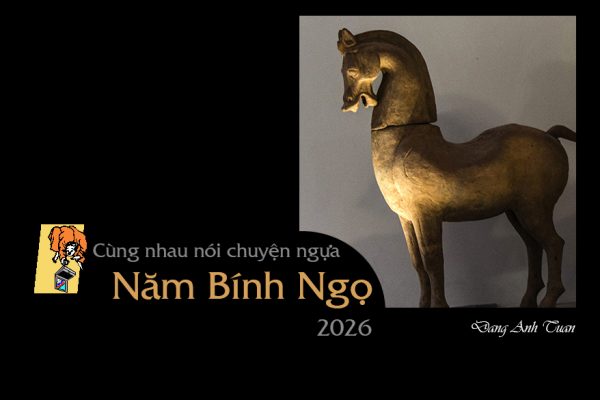
The rapid reconstitution of the cavalry proves essential in distant expeditions. It is not unrelated to the constantly increasing number of stud farms and the improvement of fodder through the planting of alfalfa (Chi linh lăng), whose seeds were brought back by Zhuang Qian (Trương Khiên) during his exploration mission in Central Asia. It was through this mission that Zhuang Qian discovered in the Ferghana Valley (today’s Uzbekistan) the magnificent horses sweating blood (*)(ngựa hãn huyết) and brought back in 114 BC some specimens of the same breed offered by the Wusun, allies of Wudi in Central Asia. Their size, speed, and strength pleased Wudi, a great horse enthusiast. But their performance is supposed to be less impressive than that of the Dayun (Ferghana). Thanks to harder hooves, the horses of the Dayun can travel a thousand li per day. Envious of having the horses of the latter, Wudi organized a military expedition against the Dayuan, who made the mistake of refusing to offer them in exchange for gifts. He later did not hesitate to give these equines the name of « heavenly horses » (tianma) (thiên mã). These thus became symbols of power and prestige because Wudi felt humiliated and vexed by the refusal of a small kingdom lost in the Ferghana Valley.

The cost of the military expedition was exorbitant not only in equipment and horses but also in human lives, resulting in a rather mixed outcome with about thirty celestial horses and three thousand more ordinary stallions and mares. Yet Wudi’s army was carefully selected, largely composed of professional soldiers and convicts, as well as cavalry provided by the commanderies of the border regions. These enlisted soldiers had to be capable of remarkable physical endurance, able to undertake long marches and besiege a city. According to the historian Sima Qian, it was not death in combat or lack of supplies that caused these significant losses, but rather thirst and the generals’ obsession with winning the war at all costs, as their lives depended on the success or failure of these operations. Rewards and severe punishments, including death sentences, were part of what Wudi reserved for them without any illusions upon their return to China. Brave generals were forced to commit suicide or surrender to the enemy (Li Quian, Li Ling, Li Guanli, etc.). The Ferghana campaign was completed in just one year (Spring of the year -102 to Spring of the year -101).

Birth of the Silk Road

From now on, after the Ferghana campaign, all the kingdoms located along the route taken by the Han army (later known as the « Silk Road ») accepted the vassalage of China except the Xiongnu. To fight the latter, Wudi first tried to seek alliances with the enemies of the Xiongnu, the Da Yuezhi (or Great Yuezhi) by sending a delegation led by Zhuang Qian to Central Asia in 139 BC. However, he did not succeed in completing his mission because he was held captive by the Xiongnu for 10 years before managing to escape and during his flight discovered Ferghana (Dayuan), Sogdiana (the region of Samarkand), Bactria (present-day Turkmenistan), and the northern part of present-day Afghanistan. On the other hand, upon his return to China in 126 BC, he reported to Wudi. This allowed him to learn about the countries Zhuang Qian had visited and to mention not only the possibility of reaching the kingdom of Shendu (India) from Shu (Sichuan) but also the power of a distant empire called Daquin (the Roman Empire). In the absence of allies against the Xiongnu, it was now possible to find trading partners interested in Chinese products: silk, lacquerware, iron tools, etc., in exchange for jade, horses, and fur.

The Silk Road was thus born and became the link between the East and the West. It was only in the year 115 BCE that Zhuang Qian was once again entrusted by Wudi with a new diplomatic mission to the western regions. This time, he succeeded in bringing back not only a wide variety of plants and natural products (alfalfa, wine, grapes, nuts, pomegranates, beans, woolens, carpets, etc.) but also horse breeders, the Wusun. Impressed by the splendor and wealth of the Han court, they later agreed to join the enterprise proposed by Wudi and implicitly recognized China’s suzerainty. This alliance was followed by the sending of a Chinese princess of royal blood to the king of the Wusun, who had the opportunity to twice inform Wudi of the warlike intentions of the Xiongnu during this alliance.

TWO WORLDS, TWO EMPIRES:

Around the year 100 AD, the Han Empire was comparable to that of Rome. The economy of the former was essentially based on peasants, while that of the latter relied on slavery.

[Reading Han Wu Di: Annexion]

[Return Han Dynasty]

Han Dynasty (VA)

Han Dynasty

for  four centuries (From 206 BC -220 AD)

Version française
Version vietnamienne

The Chinese are proud to be the sons of the Han. They feel better treated under the Han dynasty because it managed to give them relative freedom and practiced a policy of appeasement and cultural unification, which was missing after years of blind absolutism, wars, and atrocities under the first short-lived Qin dynasty from 221 to 206 BC. This dynasty was founded by Zheng Ying, the ruler of a peripheral kingdom in the northwest of China, descended from the non-Chinese Rong tribe from the steppes. Yet, thanks to the administrative and legislative reforms successively undertaken by the legalists Shang Yang (Thương Ưởng), Han Fei (Hàn Phi), and Li Si (Lý Tư), the latter known as Shi Huang Di, he succeeded in giving them a centralized and unified empire after fierce struggles against the six rival states (Warring States Period) (Chiến Quốc), not to mention the annexation of the Ba and Shu kingdoms in the Sichuan province (Tứ Xuyên) in 316 BC. To prevent any signs of resistance and local particularities, he adopted the policy of population transfer to the north and northwest. More than 100,000 wealthy and influential people belonging to the former states of Chu (Sỡ Quốc) and Qi (Tề Quốc) were relocated in 198 BC to the capital.

To expand his empire, he soon launched military expeditions not only to the North against the Xiongnu (Hung Nô) but also to the south in Fujian (Phúc Kiến), Guangdong (Quảng Đông), Guangxi (Quảng Tây), and Northern Vietnam (Giao Chỉ). It was in these southern regions that, after his death, one of his generals named Zhao To (or Triệu Đà), allied with the Yue, founded the kingdom of Nan Yue (or Nam Việt), which Vietnamese historians still consider their territory because it succeeded in annexing in the meantime the Âu Lạc kingdom of the Vietnamese. Eliminating several rival generals and emerging victorious from the final confrontation with the brilliant descendant of the general Xiang Yang (Hạng Yên) of Chu, Xiang Yu (Hạng Vũ), the former uneducated relay leader turned bandit chief Liu Bang (Lưu Bang), who came from the common class, proclaimed himself emperor in 202, established his capital at Chang’an (not far from present-day Xi’an), and thus founded the Han dynasty. He will go down in history under the name Gaozu (Hán Cao Tổ). His rise was due neither to birth nor family but rather to his talent in managing the abilities of his three companions, each having a decisive role in the conquest of power: governance with Xiao He (Tiêu Hà), strategy with Zhang Liang (Trương Lương), and military tactics with Han Xin (Hàn Tín).

According to the French historian René Grousset, Liu Bang was the beneficiary of the work accomplished by the genius Qin Shi Huang Di, who had created from scratch the imperial centralization and Chinese unity. During sixty years of reign, Gao Zu’s successors had to face problems of intrigue and insubordination due to their laissez-faire and appeasement policies, raised by the empire’s nobility, as well as frequent invasions by the Xiongnu coming from Central Mongolia. These were probably the Protomongols or Proto-Turks. They constituted a formidable threat to the Han dynasty since they were unified under the command of Mao Dun (Mặc Đốn) (209-174 BC). They would later do the same in Europe with Attila.

Hostilities between the Han and the Xiongnu took place in 201 when the latter invaded Shanxi. Gaozu nearly got captured on the Baideng plateau near Pingcheng in northern Shanxi. He owed his salvation only to cunning by having Mao Dun hold the portrait of a Chinese beauty. During this confrontation, he realized that his cavalry remained the Achilles’ heel of his army, which was largely composed of infantry. This was not the case for the Xiongnu (Hung nô) with the astonishing mobility of their cavalry. They were accustomed from a young age to riding sheep and shooting birds with bow and arrows.

They were skilled in handling a bow and serving in the cavalry during wartime. Moreover, these individuals, regardless of their qualities as horsemen, had the small Mongolian horse whose endurance was well established. Gaozu understood the necessity of equipping his army with an equivalent force. Since the number of stud farms remained very limited at that time in the commanderies, his successor, Emperor Wendy, had to resort to a decree stipulating that each family sending a horse to the state would be exempt from conscription for three of its members.

Furthermore, in the Han army, there was no difference between riding horses and draft horses because they belonged to the same breed. Chinese steeds were recognized by their massive bodies, short legs, and broad necks, and they were much less resilient. To consolidate power within his empire and to buy time in strengthening his cavalry, Gaozu was forced to sign a friendship pact known as heqin in 198 with the shanyu Modu (or Maodun). He had to send him an annual tribute consisting of a fixed quantity of silks, liquors, rice, and foodstuffs in exchange for the cessation of hostilities. Additionally, a princess from the royal family was given in marriage to the shanyu (emperor of the Xiongnu).

It is a way for China to buy peace at a high price in the hope of not being attacked by the Xiongnu and to sinicize the barbarians because their emperor thus became the son-in-law of the Han court. Chinese poetry is not lacking in sneers and complaints, comparing the princess to a « Chinese partridge » given in marriage to the « wild bird of the North. » There is Chinese contempt in the designation of these barbarians by the word « Xiongnu, » which means « fierce slave. » The most famous case remains that of the concubine Wang Zhao Jun (Vương Chiêu Quân) during the reign of Emperor Yuandi (Hán nguyên Đế).

This reminds us of the same approach later used by the Vietnamese king Trần Nhân Tôn with Princess Huyền Trân Công Chúa to ally with Champa’s Jaya Sinhavarman III (Chế Mân) in the struggle against Kublai Khan’s Mongols and with the aim of obtaining in exchange the two territories of Châu Ô and Châu Rí. There is also irony about her fate, comparing her to a cinnamon tree growing in the middle of the forest and letting itself be climbed by a « Yao » or a « Mường. »

Beyond the heavy tribute, the Great Wall of China remains an essential barrier to mark the boundary between two worlds: the barbarian and the civilized, the steppe and culture. This tribute policy, which the Chinese called « gifts, » was not very profitable for the Han court but it showed how weak it was compared to the nomads because it always had to be on the defensive. Sometimes their provocation was unbearable and humiliating when the insatiable Modu set his mind on nothing less than marrying the Dowager Empress Lü Hu, the main wife of Emperor Gaozu, through his letter. However, under Chinese influence, the Xiongnu began to develop a taste for luxury in their way of dressing in silk imported from China, stylizing plaques, belt buckles in bronze or gold in their animal art similar to that of the Scythians, building fortified cities while preserving their traditional yurts, etc.

From the reign of Wendi, the Chinese contribution, to which monetary payments must be added, was always increasing significantly. Despite this, the insatiable Xiongnu continued to sporadically launch new raids. They soon had to face a worthy rival Chinese emperor. Wudi (Martial Emperor) is his reign name.

Nothing was initially planned for him to ascend to the highest position of the empire, but thanks to palace intrigues, he was enthroned at the age of 15 upon the death of his father, Emperor Jindi, in 141 BC.
 

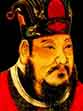
Hán Vũ Đế
Emperor Wu Di (Hán Vũ Đế)

According to legend, when he was still young, he was tested by Emperor Jindi to determine if he was intelligent or not. His answer pleased him so much that Jindi undertook to educate him and changed his name to Che: the intelligent. At the beginning of his reign, he faced some difficulties with his reforms due to the laxity of his predecessors, advocated by the Daodejing (Đạo Đức Kinh), and the oversight of his relatives, particularly that of his mother Wang (who died in 126 BC) and his grandmother, the great Empress Dowager Dou (Đậu Thái hậu), supported by the court nobility. This nobility was mainly composed of supporters of huanglao (a movement favoring individual fulfillment and legalism in government) and Taoists. Her death in 135 BC allowed him to better consolidate his power and take the reins of government upon the death of his maternal uncle and prime minister Tian Fen (Điền Phần) in 131 BC. From then on, the slightest criticism of his policy was considered a crime of lèse-majesté. He thus became the absolute monarch of the empire.

This did not prevent him from listening to his advisers while respecting laws, rites, and customs. He called upon new men, scholars (or boshis), among whom was a scholar named Dong Zhongshu (Đổng Trọng Thư), a specialist in the Chronicle of Spring and Autumn (Chunqiu). On his advice, Wudi adopted Confucianism adapted to his time with various contributions, particularly borrowings from Legalism and the theory of Yin and Yang and the Five Elements. This was reflected in practice by a new, more coherent doctrine encompassing politics, the individual, and society. The rites were celebrated according to the prescriptions of the texts.

Morality, righteousness (yi), and perfect knowledge of the Classics were criteria for selecting officials in the administration through an examination. In 124 BC, Wudi founded near Chang An the great university (taixue), a kind of imperial academy dedicated to the study of Confucius’s texts. Confucianism began to spread to all layers of society. In 104 BC, Wudi abandoned the Qin calendar in favor of a calendar that took into account the first day of the first lunar month of spring instead of the first day of the tenth lunar month, often in February of the year. This is the calendar that the Chinese continue to use to this day. This did not prevent him from listening to his advisors while respecting laws, rites, and customs. He called upon new men, scholars (or boshis), among whom was the scholar Dong Zhongshu (Đổng Trọng Thư), a specialist in the Spring and Autumn Annals (Chunqiu). On the advice of the latter, Wudi adopted Confucianism adapted to his time with various contributions, particularly borrowings from Legalism and the theory of Yin and Yang and the Five Elements. This was reflected in practice by a new, more coherent doctrine that included politics, the individual, and society. The rites were celebrated in accordance with the prescriptions of the texts.

Morality, righteousness (yi), and perfect knowledge of the Classics were criteria for selecting officials in the administration through an examination. In 124 BC, Wudi founded near Chang An the great university (taixue), a kind of imperial academy dedicated to the study of Confucius’ texts. Confucianism began to permeate all layers of society. In 104 BC, Wudi abandoned the Qin calendar in favor of a calendar that took into account the first day of the first lunar month of spring instead of the first day of the tenth lunar month, often in February of the year. This is the calendar that the Chinese continue to use to this day.

Then, by finding the virtue of the earth from the fact that Liu Bang came from the common people, Wudi henceforth adopted the element « Earth » and chose the color yellow associated with it as the imperial color of the Han because this choice was established according to the teaching of the Five Elements (Wu Xing) (Ngũ Hành). By its color,

white (Metal) (Kim) for the Shang-Yin (Ân–Thương)
red (Fire) (Hỏa) for the Zhou (Châu)
black (Water) (Thủy) for the Qin (Tần)
yellow (Earth) (Thổ) for the Han (Hán),

each element has a particular meaning. Each dynasty established its power under the protection of this element. Wudi chose the element « Earth » to neutralize the « Water » of the Qin. Taking the example of the first emperor of China (Shi Huang Di) of the Qin dynasty, it is observed that he symbolically justified his right to rule because only water, represented by the color black, could destroy the power of the king of the Zhou who was under the sign of the fire element (red color). Similarly, the Zhou dynasty had succeeded in taking power from King Di Xin (in Vietnamese Trụ Vương or Đế Tân) of the Shang dynasty because the fire element of the Zhou dynasty could melt the metal, the protective element of the Shang dynasty. The Xia dynasty would probably be associated with the color green if its existence were confirmed. The succession of Chinese dynasties results in the following pattern corresponding to the cycle of destruction or domination in Wuxing:

Earth—> Water—> Fire —> Metal—> Wood

This new concept of the cosmic order of things now inspires the organization of China’s relations with other countries or the king’s relations with the people. Analogous to the purple North Star around which stars of different sizes revolve, Wudi’s China places itself at the center around which peoples of different importance revolve, each in its place. Being the Son of Heaven, the emperor placed at the center of his empire is the link between heaven and the people. He governs through justice and rites. His power is entrusted by Heaven. That is why when people obey him, they also comply with Heaven’s wishes. He is never accountable to the people but is judged only by Heaven through signs of good or bad omens on earth (natural disasters, earthquakes, good or bad harvests, floods, etc.). The three cardinal guides (the ruler guides the subject, the father guides the son, and the husband guides the wife) (Tam Cương) and the five permanent virtues (benevolence, righteousness, propriety, knowledge, and sincerity) (Ngũ Thường) become effective tools not only to consolidate the absolute power of the emperor but also to maintain order in feudal society.

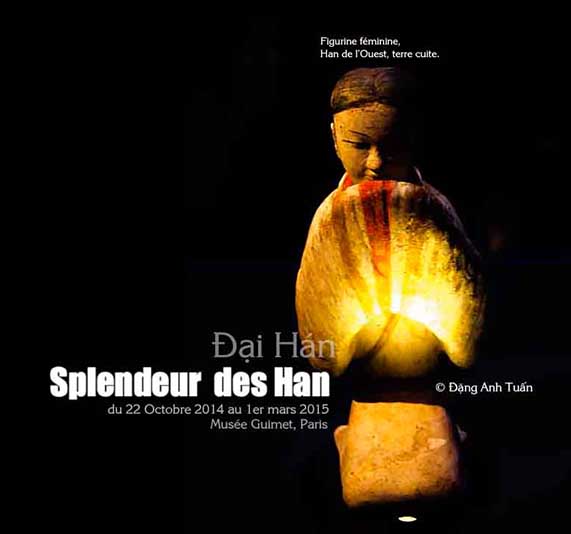
More than 200 works from 27 institutions and museums unveil Chinese society under the Han dynasty.

HANDI

Guimet Museum of Asian Arts

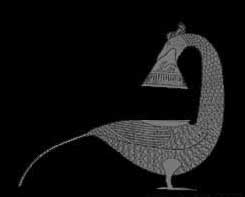
Phoenix-shaped lamp 

[Return CHINE, Empire du Milieu]

The Nùng (English version)

The Nùng

Vietnamese version

French version

The Nùng are part of the Tày-Thái group of the Austro-Asiatic ethnolinguistic family. According to foreign ethnologists, they are related to the Tày of Vietnam and the Zhuang or Choang (dân tộc Tráng) of China. Although the Tày and the Nùng speak their respective languages, they manage to understand each other perfectly. Their languages differ slightly in phonetics but are similar in vocabulary use and grammar. The Tày were present at the end of the first millennium BC.

This is not the case for the Nùng. Their settlement in Vietnam dates back to only about 300 years ago. However, their presence in southern China (Kouang Si (Quảng Tây), Kouang Tong (Quảng Ðông), Yunnan (Vân Nam), Guizhou (Qúi Châu), and Hunan (Hồ Nam)) is not very recent. They were also one of the ethnic groups of the Austro-Asiatic Bai Yue or Hundred Yue (Bách Việt) group. Also known under the name Tây Âu (Si Ngeou or Âu Việt) at a certain time, they played a major role in the founding of the second kingdom of Vietnam, the Âu Lạc kingdom of An Dương Vương, but they also engaged in relentless struggle against the Chinese expansion led by Emperor Qin Shi Huang Di (Tần Thủy Hoàng) with the Luo Yue (the Proto-Vietnamese). They also participated in the uprising of the two Vietnamese heroines Trưng Trắc and Trưng Nhị in the reconquest of independence under the Han dynasty.

They continue to preserve to this day many memories and legends about these two heroines in Kouang Si.

At a certain distant time, the Nùng were considered a branch of the Luo Yue living in the mountains before being definitively given the name « Choang » because they are closer to the Tày and the Thais than to the Vietnamese in terms of social organization and language. By calling themselves Cần Slửa Ðăm (people with black clothes) (người mặc áo đen), they claim to be different from the Tày, who are known as Cần Slửa Khao (people with white clothes) (người mặc áo trắng). Despite their clothes being the same indigo color, both peoples do not dress in the same way. This observation was noted by the Vietnamese writer Hữu Ngọc Hoàng Nam, author of the first monographic essay on the Nùng in Vietnam, who highlighted an important remark about the meaning of the words Đăm and Khao. For him, these allow the identification and distinction of subgroup membership within the Tày-Thai linguistic group through differences in clothing colors, dialects, and customs. Those belonging to Đăm (black or Đen in Vietnamese) include the Nùng, Black Thái, Thái, Black Hmongs, Black Lolo, etc., and those belonging to Khao (white or trắng in Vietnamese) include the Tày, White Thái, Lao (or Dao), White Lolo, White Hmongs, etc.

This remark does not convince the Vietnamese linguist Hoàng Mai, who comes from the Tày people, because for the latter, the Tày, despite belonging to the « Khao or White » group, always wear black clothes. Moreover, the word Slửa is not simply a word designating everyday clothing but is somewhat Áo hồn (Slửa Khoăn) because among the Thais, the Tày, and the Nùng, a garment symbolically represents the living soul of each individual. This was reported by the Vietnamese ethnologist Cầm Trọng in his article entitled « The Participation of Thai Culture in the Formation and Evolution of Vietnamese Culture » (International Conference on Thai Studies (1984/08/22-24; Bangkok).

Relying on this strong argument, he was led to conclude that the word pair Đăm – Khao (Black-White) should rather belong to the domain of spiritual culture because it is used to trace back the origin of subgroups within the Tày-Thái ethnic group, just as among the Vietnamese it is customary to evoke the word pair Rồng-Nước represented respectively by Lạc Long Quân and Âu Cơ to trace their origin.

The Nùng are divided into several subgroups known under different names: Nùng Inh, Nùng, Dính, Nùng An, Nùng Phàn Sinh, Nùng Cháo, etc. These names originate from the migration of the Nùng coming from the provinces of Kouang Si and Kouang Tong in China. In Vietnam, the Nùng are located in mountainous regions, deep forests, or valleys with altitudes not exceeding 300 meters above sea level. They often live mixed with the Tày in the provinces of the Upper Region. But their concentration is higher in Lạng Sơn (43% of the province’s population) and in Cao Bằng (32%). Most Nùng live in stilt houses, but there is still a small minority who prefer to live in houses at ground level with rammed earth or unfired brick walls.

Before building the house, the owner must carefully examine the horoscope of their age to find a favorable year for construction. Sometimes it is necessary to wait at least 2 or 3 years to find it. Their presence is essential at the time of clearing the construction site, establishing the foundation and columns, and setting up the roof.

The orientation of the house is one of the important criteria that the owner cannot neglect because it could be responsible for all misfortunes for him and his family. It is customary to say in the Nùng language: đảy kim dòm mò mả, thong thả dòm tì lườn. (Success in business comes from ancestral tombs. We are safe thanks to the land and the orientation of the house).

Demographically, they are ranked 7th among the 54 ethnic groups in Vietnam. In their history, the Nùng also have the legend of Báo luông Slao Cải. It is the story of the benevolent giant who cleared the land and taught them how to grow rice, corn, cotton, and everything they needed. The Nùng are accustomed to wearing fairly simple clothing, without embroidery or patterns. These are made from coarse indigo-colored fabrics. This color harmonizes with nature in the green environment of the forest. Their clothing can vary from light to dark shades of indigo. This variation depends on the preference of each Nùng group. Indigo remains the symbol of loyalty, as told by a Nùng legend:

There was a poor orphan living in a hut at the edge of the forest. One fine morning, a young beggar appeared at her door and asked for food. Being so poor, she could not offer him any. She had to go to the market to sell her beautiful hair and bought food for him. From that day, they became husband and wife. Because of the war, he was forcibly enlisted and never returned. Tired of not receiving any news, she set out to look for him and died along the way. She transformed into an indigo plant whose leaves provide indigo, a color that is everlasting and synonymous with loyalty through the ages.

In the traditional costume of Nùng women, there is the turban scarf, the jacket, and the pants. Generally speaking, regardless of the Nùng group, there is always a square turban, a five-panel jacket buttoned under the right armpit and extending down below the hip, and loose pants called chân què (*) whose upper edges are folded over with a turned belt. Depending on the Nùng group, there are slight modifications to the jacket. This is the case for the Nùng In and Phàn Slình groups, whose women wear jackets with sleeves and button bands decorated with black pieces. However, for the Phàn Slình Cúm Cọt group, the jackets are shorter than those of the other groups and are accompanied by red fringes around the neck. Only the details differentiate these groups. On the other hand, Tày women wear long dresses reaching the calf with fairly tight sleeves. Regarding the pants, most Nùng women wear classic loose chân què pants, except those from the Nùng Dính group who are accustomed to wearing skirts with belts adorned with 12 colored pieces symbolizing the twelve months of the year.

Their jewelry is made of silver because, in their ancestral traditions, it protects them against harmful winds that affect their health. Besides the aesthetic beauty that this metal can provide, it is always considered a thermometer in assessing seasonal epidemics. Nùng women and men are accustomed to wearing necklaces, bracelets, and rings. Additionally, Nùng women’s adornments include earrings and chains around their waists.

As for Nùng men, their trousers are of the same style as those of their women. Their jacket, with a stand-up collar about 2 cm high, is open at the front and adorned with 7 fabric buttons and 4 pockets. The Nùng have several Tết celebrations throughout the year, but the lunar Tết remains their major festival. This is celebrated with great pomp and marked by the presence of a large number of delicious dishes in each family to bid farewell to the old year.

The Nùng customarily eat a duck because it helps to get rid of the bad luck they had during the old year and brings them good fortune with the new year. On the eve of the new lunar Tết, the Nùng woman must fetch water from the well with a bucket. Then she boils it to make good tea before offering it to the ancestors. As for the Nùng husband, he must visit the temple to make offerings. There are many prohibitions that must be respected during the first days of the lunar new year:

Cúng hỉ phát sò (Wishing happiness and prosperity)
I send you my best wishes for happiness and prosperity

Bươn chiêng pi mấu (The first month of the new year)
for the month of February of the new year

Hét lăng tú lì (Anything is allowed)
You will be permitted to accomplish your achievements

Chi lăng tú đẩy a (May all wishes come true)
and to realize all your wishes

Nùng women are not allowed to wash clothes on New Year’s Eve. Chickens cannot be killed. Oxen and buffaloes must not be mistreated. Bowls must not be broken and cleaning should not be done.

On the second day, chickens may be slaughtered to offer to the ancestors and spirits. Visits to relatives, especially to the maternal family (Bên ngoại), are permitted. Children will receive money that adults customarily give them in small envelopes known as « bao lì xì.« 

From the third day, in each village, the Nùng organize a popular festival called « Hội Lùng Tùng » (descent to the fields), often held on the land in front of their communal house. The participation of each family is visible with an offering tray. The presence of a shaman is essential because he is supposed to perform the rites to gain the favor of Heaven for agricultural activities and better harvests and to protect people from diseases. Besides the ritual ceremony, there are also folk games: lion dances, cloth ball throwing (chơi ném còn), tug of war (kéo co), spinning top launching, shuttlecock kicking, etc. It is also an occasion for girls and boys to get to know each other by forming groups for alternating songs, and slì exchanges between two young girls and two young boys.
Lion dance
Similar to other ethnic minorities in Southeast Asia, the Nùng are animists. They believe that there is a soul that animates not only living beings but also plants, stones, etc. That is why their worship includes a large number of spirits: forest spirit, earth spirit, mountain spirit, river and stream spirits, tutelary spirit, childhood spirit (Mụ Mẹ Hoa), etc.

Similar to other ethnic minorities in Southeast Asia, the Nùng are animists. They believe that there is a soul that animates not only living beings but also plants, stones etc. That is why in their worship we see a large number of spirits: spirit of the forest, spirit of the soil, spirit of the mountains, spirit of the rivers and streams, tutelary spirit, spirit of childhood (Mụ Mẹ Hoa), etc.

But the most important worship remains the ancestor worship. Each Nùng household has an altar always placed in a left compartment. This is a sacred place. At the center of this altar is a wall ancestral tablet (or a bài vị) bearing parallel sentences and Chinese characters recording the lineage of the ancestors. Generally speaking, the head of the family plays an important role in all respects.

Being both father and husband, he is the only one who can arbitrate all family problems, especially the division of property. This will be done upon the death of the parents or when one of the married children, who had been living under the same roof, separates. Only boys can claim this division. The eldest brother will then receive a significant share because he will be responsible for living with the parents. However, there is an exception for the Nùng Dín Hoàng Sa Phì group (Hà Giang). It is the youngest child of the family who will inherit a significant share of the property because he will be the last to marry and will have the responsibility to accompany the parents until the end of their lives.

In case the family has no sons, the property goes to the son-in-law who is obliged to change his name and who is now responsible for maintaining his wife’s ancestral altar. There are many taboos that the young bride is supposed to know when she lives under her husband’s family roof. She cannot pass in front of the ancestral altar. She is not allowed to sit in the reception area reserved for visitors. She cannot enter the place where her father-in-law sleeps or stay at the same table with him. In the absence of her husband, it is forbidden for her father-in-law to give her anything or to enter her room. The father-in-law cannot accompany his daughter-in-law. He is not allowed to work together with his daughter-in-law in the same rice field. The same prohibitions are found in the relationship between the son-in-law and his mother-in-law.

Similar to the Mường, the Nùng need to consult the horoscope of the bride and groom to avoid problems of age incompatibility. The decision to start the marriage or not belongs to the parents based on the equality of social and family conditions of the two families. For boys, the selection criteria remain the same as in other ethnic groups: hard work, strength, aptitude for hunting and agriculture. For girls, people are accustomed to seeking their profile through certain well-known Nùng sayings:

Nả hang khàng suổi phịn siêng (con gái mặt vuông chữ điền trông như tiên)

The girl with a square, well-defined face looks like a fairy.

or

Kiêu sải bố thưng tum , mì cua tẻ sè lùm sèo móp
Gót chân không chạm đất khổ suốt đời

The heel not touching the ground is a sign of a hard life.

Sometimes judgment is based on observing the family of the young bride. This is found in the following Nùng saying:

Chiếu khẩu lệ chiếu phàng, Chiếu nàng lẽ chiếu mẻ
Muốn biết được lúa, nhìn vào gốc rạ. Muốn biết nàng dâu, nhìn vào người mẹ.

To know the quality of the rice plant, look at the roots. To know the young bride, observe her mother.

However, before marriage, girls and boys are free to love and understand each other during major festivals where they can participate in folk games or alternate singing slì songs. They can also take the opportunity to give each other certain souvenirs (baskets for cotton balls (hắp lì), baskets for thread balls (cóm lót), turbans for boys (cưn nả), combs (phooc phum), embroidered bags, etc.).

In the Nùng marriage, the matchmaker (male or female) remains an essential figure as they handle all the formal procedures and financial transactions between the two families. In most cases, the brother of the groom’s mother is appointed to this demanding role because he will later become the godfather of the bride along with his wife after the wedding. In financial transactions, the bride’s family tends to ask for more gifts because the bride’s value is considered greater based on the number of these gifts.

The marriage ritual has several stages, the most important of which is leading the bride to her husband’s house. She is required to lightly touch a tray of food placed at the entrance of the main door and then knock it over with her foot. Then, she must quickly cross the threshold of the door. This procedure is known as « Nghi lễ tách nhập ma (Procedure of detachment and union of ghosts). » From that moment on, she becomes a full member of her husband’s family both spiritually and materially. She will permanently join her husband’s house when she becomes pregnant or after six months of marriage.

Death

In the ancestral tradition of the Nùng, when there is a deceased in the family, all close relatives from the maternal side (or păang lăng) must be present before placing the deceased in the coffin. A shaman (thẩy tào) is also required, who is supposed to handle all the ritual procedures related to the funeral from A to Z.

He must begin the first important procedure Khay lò to clear the way and accompany the soul of the deceased to the other world because for the Nùng, the soul that escapes from a dead body continues to live. Married daughters and nieces must bring money trees as their contributions, and the close relatives from the maternal side a horse for their funeral offerings. For the Nùng, even after the burial, the soul continues to wander around the house. That is why an altar must be set up next to the place where the deceased used to sleep when still alive.

After one hundred days of burial, there will be a ceremony accompanied by a large number of delicious dishes (pork, chicken, and sticky rice (xôi)). Then it will be followed by another marking the end of mourning after three years.

Each Nùng group has its own way of celebrating this ending. The Nùng Lôi destroy a bamboo tube that they had previously left on the deceased’s altar by burning it, while the Nùng An make a large number of familiar animals (pigs, chickens, buffaloes, oxen) and farming tools using cut paper and place them in a pot that they bury under the location of the deceased’s grave. The Nùng see death only as the beginning of another life for the deceased. That is why they need these offerings to be able to lead a more pleasant life in the other world.

Birth

Similar to the Mường, there are many taboos surrounding the birth of a child. The child needs to be protected by the goddess of childhood, whose altar will be set up in the house. Besides the celebration of the child’s first month, some Nùng groups also hold a ceremony to give a name to the child when they reach adulthood.

Similar to the Vietnamese, the Nùng have a long history and a millennial culture. It was with them that the Vietnamese were part of the Hundred Yue. In the past, facing formidable northern adversaries, they tried to create their own state but were unable to achieve it. Their undeniable contribution to the foundation of the Âu Lạc kingdom of the Vietnamese cannot be denied. Their hero Nùng Trí Cao continues to hold a place in our history.

There is no reason not to make their history and culture known to young Vietnamese because

The Nùng also have a significant share of responsibility in building the future of our Vietnam along with the other 52 ethnic groups.

[Back to Page « Vietnam, land of 54 etnies]

TANG DYNASTY (Đại Đường)

Version française
Version vietnamienne

The Chinese are proud to always be the sons of the Han. Yet the golden age of Chinese civilization is not the Han period but rather that of the Tang, which lasted three centuries later (618-907). Thanks to the abundance of documentation and the discovery of minqi figurines, ritual objects placed in the tombs of the elites of the time, we know that the Tang period was a time during which significant progress was made in sciences and technology (gunpowder, woodblock printing, mechanical engineering, medicine, cartography, etc.). It was a dynasty open to the world, showing unprecedented tolerance towards foreign cultures and religions (the Nestorian Church, Zoroastrianism, a polytheistic religion from Persia, Buddhism in full expansion, etc.).

It was also under the reign of the founding emperor Tang Tai Zong (Đường Thái Tôn or Lý Thế Dân) that the Buddhist monk Xuan Zang (Huyền Trang) began in the year 629 the sacred pilgrimage known as the « Journey to the West (Tây Du Ký) » by leaving alone from the capital Chang An for 17 years, at the emperor’s request to bring back the sacred scriptures from India. It was also a period when the flourishing of arts and letters was at its peak with poets Du Fu (Đỗ Phủ), Li Bai (Lý Bạch), Bai Juji (Bạch Cư Dị), the painter Wang Wei (Vương Duy), etc., and a time of relative freedom for women. They could excel in the arts, particularly in music and poetry. Sometimes they could have a higher status in society. This was the case with Empress Wu Zetian (Võ Tắc Thiên). Women could wear less restrictive clothing with the loose Hanfu robe (Hán phục).

It was also under this dynasty that the Silk Road experienced significant growth for various economic, political, and religious purposes through the establishment of strategic marriage policies, military conquests, and silk to consolidate alliances, bribe and divide the nomads, and expand its empire westward. Thanks to this setup, the dynasty succeeded in establishing trade and cultural links along the Silk Road. It was along this route that two Nestorian monks brought silk worm eggs from China to Byzantium, hiding them in their bamboo canes. Finally, it was also the period when Vietnam was under the control of the Tang after being annexed earlier by the Sui with General Liu Fang (Lưu Phương).

Under the Tang dynasty, Chang-An was the largest cosmopolitan city in the world at that time. It was nicknamed the « city of a million inhabitants » in Chinese records. Known as « Eternal Peace, » it was the most densely populated city in the world, ahead of Baghdad and Byzantium. But according to the census record in the year 742 in the New Book of Tang (Tân Đường Thư), Chang-An and its surroundings had 362,921 families totaling 1,960,188 people, while it is estimated that more than 50 million inhabitants lived in China at that time across a territory stretching from the East China Sea to Central Asia, from the Gobi Desert in the north to beyond the Nanglin (Lĩnh Nam) mountains in the south where Annam is located. Covering an inland area of almost 87 km², the cosmopolitan capital Chang-An was not only a center of political and economic power but also a haven of peace with wide avenues, magnificent palaces, Buddhist temples, private gardens, and vast markets. Its broad avenues and streets were arranged in a rectangular grid of 114 blocks of houses, each individually walled and all protected by the same outer wall.

Musée des arts asiatiques Guimet

Dynastie_Tang

Every morning, as soon as the announcement of the opening of its main gate was made by the first beats of the drums, people coming from all corners of the empire as well as numerous foreign merchants attracted by the significant trade of the capital began to enter and go about their business. At night, one could only move from one street to another with a pass. All kinds of goods could be found there, from furniture to spices (Persian saffron, Indian pepper, etc.) in the two large markets of the city, one in the east and the other in the west. The imperial court regulated the control of prices and product quality on a weekly basis. The discovery of a number of Sogdian tombs in the capital has helped to better understand how elements of foreign culture infiltrated the Chinese society of Chang’an and vice versa. There was even a foreign quarter.

The Tang army included many important contingents of Turkish soldiers called Tujue (proto-Turkic). Thanks to this recruitment policy and the steppe experience that the Turkish officers had, it allowed the Tang dynasty to expand its empire westward. This was the conquest of the oasis kingdoms of Karakhoja by the Tang with the Sogdian general Ashina She’er (A Sử Na Xã Nhĩ) in 648 in what is now Xinjiang province. He was appointed general of the right guard by Emperor Tang Gaozong (Đường Cao Tông). He died in 655 and was buried alongside Emperor Taizong (Đường Thái Tông). He was posthumously renamed Yuan ().

Chang An played a key role in commercial exchange on the Silk Road with regions as far away as India, the Middle East, and Europe. Its urban layout and religious architecture (the Great Wild Goose Pagoda housing the sacred texts brought back by the monk Xuan Zang) and palatial architecture (the Palace of Great Clarity (Daming Gong), or the residence of the emperors) testify to technical expertise in respecting harmony and the environment and later brought significant influence in the planning of the capitals of Silla in Korea and Heian in Japan. Chang An remains an important part of China’s historical and cultural heritage. 

Under the reign of Emperor Tai Zong, merchants and traders could move freely throughout the empire without fear of bandits. Prisons were empty, and people did not feel the need to lock the doors of their homes. Harvests were abundant: one only needed 3 or 4 qian to buy 10 liters of rice. This was not only a period of prosperity that China experienced until the reign of Emperor Xuan Zong before the revolt of the Sogdian general An Lu Shan in 755, but also a good model of governance often referenced in the history of China.

Pagode de l’Oie (Tháp Đại Nhạn)

[Return MUSEUM]

Forbidden city of Beijing (Cố Cung): Part 3

Vietnamese version
French version

[Forbidden city of Beijing: Part 3]

Nails on the doors, this tradition has long existed since the Sui and Tang dynasties (581-907). Specifically, in the Forbidden City, all four main gates have nails, but besides this, only the Meridian Gate has five gates, while the other gates have only three gates.

Except for the East Hua Gate, which has 8 rows horizontally and 9 rows vertically of yellow nails (8*9=72) with an even number (Yang number, which is an integer divisible by 2 and multiple of 3), all other gates have 9 rows horizontally and 9 rows vertically, meaning 9*9=81, which is an odd number (Yin number). The Chinese often use Yang numbers, while the Vietnamese tend to prefer odd numbers (Yin numbers). Through the use of nails on the doors, besides their structural and decorative functions, it is also seen to reflect the solemnity and grandeur of the feudal regime of that time.

Door frame

There are many questions about the choice of Yang numbers on the eastern gate (or the East Flower Gate). This is a mystery that historians have not yet found an answer to. Some believe that when Emperor Jiaqing and Emperor Daoguang were buried, they had to borrow this gate to bring the coffin out. Therefore, this gate is often called the Ghost Gate. This explanation may be reasonable because with Yin numbers, the deceased return to the Underworld. The number of nails fixed on the gates was determined according to the rank and class of the owner in the feudal system.

Since the Son of Heaven is the son of the Heavenly Emperor (Heaven), the number of rooms in the Forbidden City must be less than the number of houses that Heaven has in the celestial palace (10,000). This number is a Yang number and represents infinity in China. According to a survey in 1973, there are 8,704 rooms in the Forbidden City (a Yang number).

As for the color yellow, in Yin-Yang and the Five Elements, this color is usually associated with the Earth element and is located at the center in the management of all things and supervision of the four directions. Because it is the color of the midday sun, this brilliant color belongs only to the emperor as it symbolizes the respect and protection of the Heavenly Emperor. There was a custom of not using certain colors during the feudal period: red, yellow, and sky blue.

img_3307

Incense Burner

Conversely, the common people used: black, white, and gray colors. Therefore, it is not surprising to see the prominent use of these two standout colors: purple-red and yellow in the construction of the royal palace in the Forbidden City. The walls are purple-red, while the glazed tiles of the palace are yellow. However, there are exceptions, all related to the theory of Yin-Yang and the Five Elements. That is the Wenyuan Palace, where the royal library is located. This place has a black roof. Fire was a concern in the Forbidden City. Fires were discovered many times in the Forbidden City. The last fire occurred when Emperor Guangxu was about to marry his cousin Longyu in one month. This was an ill omen for the marriage.

Using this as a pretext, Empress Dowager Cixi immediately executed the two eunuchs responsible for arranging the lanterns. Therefore, the color black, symbolizing water, was used in the Wenyuan Palace to prevent fire disasters and to protect the books in the library. Some houses near the East Flower Gate have roofs painted blue because this is where the princes lived. This is also the blue color assigned to the east in the Five Elements theory.

[Return Forbidden City]

[Return CHINE]

Forbidden city of Beijing (Cố Cung): Part 2


Vietnamese version
French version

[Forbidden city of Beijing (Cố Cung): Part 2]

The Càn Thanh Palace has often been the place witnessing intrigues, assassinations, and betrayals during the Ming and Qing dynasties. Moreover, above the throne, on the folding screen, there is always a horizontal plaque inscribed by Emperor Thuận Trị ( Shunzhi ) that reads: « Bright and Upright. » There is also a commendatory comment praising it from his successor, Emperor Kangxi. This is a wonderful structure, transcending ancient and modern times, radiant and eternal, worthy of being a model for future generations. But unfortunately, behind this plaque, there were many underlying conflicts and power struggles within the palace.

During the 500 years of reign of the Ming and Qing dynasties, many incidents occurred in this palace. First of all, there was the story of Emperor Jiajing of the Ming dynasty (1507-1567), who was notoriously licentious and cruel beyond description, nearly suffocated by palace maids. Taking advantage of his deep sleep and avenging his paranoid behavior, the maids conspired to strangle him with a rope on the dragon bed. However, because one maid in the group betrayed them to the empress, the emperor was saved. All the maids, including the favored consort of the emperor, were immediately executed.

Then Emperor Taizong of the Ming dynasty (1582-1620), known as Zhu Changluo, suddenly died one month after ascending the throne. It was suspected that he was either sexually abused or poisoned. This caused the court to fall into a power struggle. This case is known as the Hongyuan Case because before his sudden death, the emperor had taken medicine. Finally, the penultimate emperor of the Ming dynasty, son of Ming Guangzong, Zhu Youxiao (1605-1628), known by the era name Tianqi, became entangled in the Di Gong Case. Taking advantage of the young age of the emperor, a consort of his father (Emperor Wanli), Li Xuanzi, deliberately controlled Zhu Youxiao. She intentionally stayed in the Qianqing Palace and demanded the emperor to confer upon her the title of Empress Dowager so that she could govern the court. Facing strong demands and opposition from the officials, Emperor Tianqi (Zhu Youxiao) issued an edict forcing her to leave the palace and live elsewhere, where she died a few weeks later in a fire. Ultimately, she did not die along with her daughter. Through this event, everyone noticed the emperor’s involvement, despite opposition within him. Historians often collectively refer to these three cases under the name « The Three Late Ming Cases (Vãn Minh Tam Án) »

During the Qing dynasty, there were two important events. Although Kangxi was regarded as a great emperor in Chinese history, he also faced difficulties in appointing a crown prince due to the struggle for the throne among his sons. Initially, he appointed Yinreng as crown prince at the age of two, but later Kangxi changed his mind and chose the 14th prince, Yinzhen, as his successor. He secretly hid behind a plaque with the four characters « Guang Ming Zheng Da » a box containing an edict « Transfer the throne to the 14th son, » meaning to pass the throne to the 14th prince because Yinzhen was the prince he favored. According to legend, when Kangxi was seriously ill, Yinzhen was on a campaign in the Xinjiang region. Prince Yinzhen took advantage of the opportunity to take the box and altered the edict from « Transfer the throne to the 14th son«  to « Transfer the throne to the 4th » son » by removing the character « ten. » Thanks to this, Yongzheng became emperor. According to popular discussion, Yinzhen also fled to the garden to observe Kangxi’s illness after previously giving Kangxi a bowl of ginseng soup. Historians believe Yongzheng bears some responsibility for Kangxi’s sudden death, and this remains a mystery and a topic of speculation among people.

Just after ascending the throne under the name Yongzheng, he immediately eliminated or exiled all those who had the potential to oppose him. After his coronation, to avoid disputes over succession—something he understood well and knew to be difficult in power struggles—he devised a clever method by writing the decree naming the heir in two copies: one sealed and kept in a box behind the plaque inscribed « Guangming Zhengda, » and the other he carried on his person. When he was about to pass away, the decree in the box could be retrieved and compared with the one he carried to identify the rightful successor to the throne. This way, no resistance could arise. This method of appointing the crown prince remained effective until the reign of Emperor Xianfeng, but since Xianfeng had only one child, Tongzhi, with Empress Dowager Cixi, the method lost its effectiveness. To consolidate her regency, Empress Dowager Cixi abolished this method by successively enthroning the « child emperors, » namely Guangxu and Puyi.

[Forbidden city of Beijing (Cố Cung): Part 3]