Les bronzes de Sanxingdui (Part 2)

Version vietnamienne (2ème partie)

English version (Part 2) 


D’autres traits caractéristiques trouvés à Sanxingdui n’ont pas d’équivalent dans l’art des Shang. C’est le cas de la décoration végétale illustrée par le martelage des feuilles en or ou en cuivre et par la forme d’arbres ou de boutons de fleurs. Une autre source d’inspiration majeure se retrouve dans le thème de l’oiseau. Qu’il s’agisse d’hommes ou d’animaux, l’artiste de Sanxingdui réussit à leur donner avec agilité non seulement une stylisation assez poussée mais aussi des formes d’expression très naturalistes. Ce n’est le cas de l’art des Shang où l’artiste tend à transformer l’aspect ou la forme de l’animal par une stylisation assez excessive, loin de la réalité


Repères chronologiques


Vers 1900-1500: culture d’Erlitou. Début de l’âge du bronze en Chine. Période des Xia? (Nhà Hạ)

Vers 1500-1300: phase Erligang de la dynastie des Shang (Nhà Thương)

Vers 1300-1050: phase Anyang de la dynastie des Shang (Nhà Ân)

Vers 1200 av. J.C: Fosses n°1 et n°2 de Sanxingdui. Sichuan

Vers 1200-1000 av. J.C: phase d’occupation du site de Jinsha, Chengdu, Sichuan.

Vers 1050-256 av. J.C.: dynastie des Zhou (Nhà Châu).

316 av. J.C.: conquête du Sichuan par les armées de la principauté de Qin (Nhà Tần).


Trouvailles archéologiques de la dynastie des Shang

[ngg_images source= »galleries » container_ids= »279″ display_type= »photocrati-nextgen_basic_thumbnails » override_thumbnail_settings= »1″ thumbnail_width= »180″ thumbnail_height= »200″ thumbnail_crop= »1″ images_per_page= »30″ number_of_columns= »4″ ajax_pagination= »0″ show_all_in_lightbox= »0″ use_imagebrowser_effect= »0″ show_slideshow_link= »0″ slideshow_link_text= »[Montrer sous forme de diaporama] » template= »/homepages/5/d276592279/htdocs/clickandbuilds/vietnamquehuongtoi/wp-content/plugins/nextgen-gallery/products/photocrati_nextgen/modules/ngglegacy/view/gallery.php » order_by= »pid » order_direction= »ASC » returns= »included » maximum_entity_count= »500″]

 Musée Cernusci

Lors de la fouille des fosses n°1 et n°2, on s’aperçoit que malgré la période contemporaine des Shang, la tradition de Sanxingdui diffère complètement de celle de ces derniers car elle présente plusieurs traits spécifiques et originaux. D’abord les élites de Sanxingdui n’ont pas utilisé les vases zun de la même manière que les Shang. Elles s’en ont servi pour stocker certains biens de prestige et de valeur comme les cauris marins, une sorte de monnaie d’échange en raison de leur rareté.                 

C’est ce qu’on a découvert grâce à la statue d’un personnage portant une vase zun trouvée dans la fosse n°2. Ce n’est pas le cas des Shang dont les vases zun aux formes diverses possèdent chacune un rôle très précis afin d’honorer le culte de leurs ancêtres: servir et boire du vin, présenter les mets, cuire les offrandes de viande etc. Puis la représentation de la figure humaine fait partie de l’art de Sanxingdui. Le nombre de têtes et de masques est impressionnant et ne peut pas passer inaperçu pour les visiteurs et les archéologues lors de la première découverte de cet art. Par contre, dans l’art des Shang, l’homme n’est pratiquement pas représenté.

Contrairement aux bronziers des Shang qui étaient connus pour la fabrication des vases rituels dont certaines pouvaient atteindre 1 mètre de hauteur, ceux de Sanxingdui ont préféré les sculptures souvent audacieuses à la demande des élites locales. Ils ont été obligés d’adapter les techniques importées et de créer de nouveaux procédés, en particulier la soudure pour leurs propres réalisations.

En examinant les objets trouvés dans les fosses de Sanxingdui, les archéologues ont été amenés à la conclusion que les traditions de Sichuan et d’Anyang s’opposent nettement dans leurs pratiques sacrificielles respectives. Contrairement aux dirigeants d’Anyang honorant seulement le culte des ancêtres, les élites de Sanxingdui vénéraient à la fois les ancêtres et le soleil. Le fait de découvrir plus tard à Jinsha considéré par les archéologues comme le site assumant la continuité de la culture de Sanxingdui, le regroupement de quatre oiseaux entourant le soleil sur un ornement en or ou la statue debout en bronze ayant sa coiffe en forme du soleil, atteste incontestablement le culte du soleil. Celui-ci était une pratique très courante dans les anciennes civilisations du monde.

Selon le chercheur chinois Shi Jingsong, toutes les trouvailles de la fosse n°2 peuvent se répartir en deux groupes: le premier ayant trait à des objets dont les motifs sont similaires à ceux trouvés sur les récipients en bronze dans la plaine centrale des Shang, le second identifié par des figurines ou par des motifs décoratifs relatant le soleil. Pour lui, il n’y a aucun doute sur le partage du pouvoir entre le roi et le prêtre et la coexistence des temples religieux et ancestraux dans la civilisation de Sanxingdui.

Il s’agit probablement d’un royaume civilisé investi de pouvoirs théocratiques, ce qui permet de supposer un système religieux et social à échelons multiples à travers ses vestiges découverts.

[Retour]

[Return MUSEUM]

English version (2nd part)

Other characteristic features found in Sanxingdui have no equivalent in Shang art. This is the case of plant decoration illustrated by the hammering of leaves in gold or copper and by the shape of trees or flower buds. Another major source of inspiration is found in the theme of the bird. Whether it is humans or animals, the artist of Sanxingdui succeeds in giving them with agility not only a fairly advanced stylization but also very naturalistic forms of expression. This is not the case in Shang art where the artist tends to transform the appearance or form of the animal by a rather excessive stylization, far from reality.

During the excavation of Pits 1 and 2, it was discovered that, despite the contemporary period of the Shang, the Sanxingdui tradition differs completely from that of the Shang, as it presents several specific and original features. First, the elites of Sanxingdui did not use zun vessels in the same way as the Shang. They used them to store certain prestigious and valuable goods, such as sea cowries, a kind of currency due to their rarity.
This was discovered thanks to the statue of a figure carrying a zun vessel found in Pit 2. This is not the case for the Shang, whose zun vessels of various shapes each had a very specific role to honor the cult of their ancestors: serving and drinking wine, presenting food, cooking meat offerings, etc. Moreover, the representation of the human figure is part of the art of Sanxingdui. The number of heads and masks is impressive and cannot go unnoticed by visitors and archaeologists when this art is first discovered. On the other hand, in Shang art, humans are practically not represented.

Unlike Shang bronze workers, who were known for crafting ritual vessels, some of which could reach a height of one meter, those of Sanxingdui preferred the often bold sculptures requested by local elites. They were forced to adapt imported techniques and develop new processes, particularly welding, for their own creations.

By examining the objects found in the Sanxingdui pits, archaeologists concluded that the traditions of Sichuan and Anyang contrasted sharply in their respective sacrificial practices. Unlike the Anyang rulers, who honored only ancestor worship, the Sanxingdui elites venerated both ancestors and the sun. The later discovery at Jinsha, considered by archaeologists to be the site that represents the continuity of the Sanxingdui culture, of the grouping of four birds surrounding the sun on a gold ornament, or of the standing bronze statue with its headdress in the shape of the sun, undeniably attests to sun worship. This was a very common practice in the ancient civilizations of the world.

According to Chinese researcher Shi Jingsong, all the finds from Pit No. 2 can be divided into two groups: the first relating to objects whose motifs are similar to those found on bronze vessels in the central plain of the Shang, the second identified by figurines or decorative motifs depicting the sun. For him, there is no doubt about the sharing of power between king and priest and the coexistence of religious and ancestral temples in the Sanxingdui civilization. It was probably a civilized kingdom invested with theocratic powers, which allows us to suppose a multi-level religious and social system through its discovered remains.

Chronological benchmarks

Around 1900-1500: Erlitou culture. Beginning of the Bronze Age in China. Xia period? (Nhà Hạ)

Around 1500-1300: Erligang phase of the Shang dynasty (Nhà Thương)

Around 1300-1050: Anyang phase of the Shang dynasty (Nhà Ân)

Around 1200 BC. B.C.: Pits No. 1 and No. 2 of Sanxingdui. Sichuan

Around 1200-1000 BC. J.C: occupation phase of the site of Jinsha, Chengdu, Sichuan.

Around 1050-256 BC. BC: Zhou dynasty (Nhà Châu).

316 BC 1500 BC: conquest of Sichuan by the armies of the principality of Qin (Nhà Tần).

Références bibliographiques

Les bronzes du Sichuan. Chine

Connaissance des Arts

Alain Thote.

Paris Juillet 2017

[Return]

[Return MUSEUM]

Di chỉ Tam Tinh Đôi (phần 2)


version française

Có những nét đặc trưng khác  tìm thấy ở di chỉ Tam Tinh Đôi  mà  không có nét tương đương như vậy ở trong nghệ thuật của triều đại Thương. Đó là việc trang trí thực vật được biểu lộ qua các lá bằng vàng hay đồng và các hình dáng cây  cỏ hoặc các đọt bông.  Một nguồn cảm hứng khác trọng đại được gặp gỡ lại ở trong đề tài  chim. Dù  hiện vật là người hay thú, nghệ nhân cũng đạt được kết quả  mỹ mãn với sự khéo léo trong việc tạo  ra  một phong cách khá tiên tiến mà còn có những biểu hiện rất tự nhiên.  Ngược lại trong nghệ  thuật của nhà  Thương thì nghệ nhân thường có khuynh hướng biến đổi   một cách quá đáng hình dáng con vật khiến  trông thấy  không có thực tế.


Thứ tự thời gian

Từ 1900-1500:  Văn hóa Erlitou. Khởi đầu thời kỳ đồ đồng . Nhà Hạ?

Từ 1500-1300: Giai đọan  Erligang của nhà Thương.

Từ 1300-1050:  Giai đọan  An Dương (Nhà Ân-Thương)

Từ 1200 TCN: Hầm  số 1 và 2 của Tam Tinh Đôi . Tứ Xuyên

Từ 1200-1000 TCN: Giai đọan  định cư ở di chỉ Jinsha (Thành Đô, Tứ Xuyên)

Từ 1050-256  TCN : Triều đại Nhà Châu.

316  TCN:  Thôn tính Tứ Xuyên  bởi  quân nhà Tần.


Lúc khai  quật các hầm số 1 và 2 thì các nhà khảo cổ mới nhận thấy dù cùng thời với nhà Thương, truyền thống ở di chỉ Tam Tinh Đôi hoàn toàn khác hẳn vì nó có nhiều nét độc đáo và cá biệt. Trước hết các dòng qúi tộc ở Tam Tinh Đôi không dùng các chậu zun tựa như triều đại nhà Thương. Họ chỉ dùng các chậu nầy để trữ các vật có giá trị hay có mang tính cách quyền lực và uy tín chẳng  hạn võ óc, một thứ  tiền để trao đổi vì hiếm có. Cụ thể là pho tượng đội một  cái chậu « zun » tìm thấy  khi lúc khai quật hầm số 2. Ngược lại với triều đại nhà Thương thì các chậu zun dù  có  nhiều hình dáng  không giống nhau nhưng mỗi chậu có vai trò rõ ràng trong việc cúng tế tổ tiên:  dùng và uống rượu, trưng bày các thức ăn,  nấu các đồ cúng vân vân .. Mặt con người được thể hiện không ít trong nghệ thuật của Tam Tinh Đôi.  Số lượng tượng đầu người  và mặt nạ rất đáng kể và không thể nào  không làm các  du khách và các nhà khảo cổ không để ý khi đến  khám phá lần đầu nghệ thuật nầy.  Ngược lại trong nghệ thuật của nhà Thương, con người hầu như không có được sự tượng trưng  nào cả. 
 

Cổ vật nhà Thương

[ngg_images source= »galleries » container_ids= »279″ display_type= »photocrati-nextgen_basic_thumbnails » override_thumbnail_settings= »1″ thumbnail_width= »160″ thumbnail_height= »180″ thumbnail_crop= »1″ images_per_page= »30″ number_of_columns= »4″ ajax_pagination= »0″ show_all_in_lightbox= »0″ use_imagebrowser_effect= »0″ show_slideshow_link= »0″ slideshow_link_text= »[Montrer sous forme de diaporama] » template= »/homepages/5/d276592279/htdocs/clickandbuilds/vietnamquehuongtoi/wp-content/plugins/nextgen-gallery/products/photocrati_nextgen/modules/ngglegacy/view/gallery.php » order_by= »pid » order_direction= »ASC » returns= »included » maximum_entity_count= »500″] Bảo tàng viện Cernuschi (Paris)   

Ngược lại các nghệ nhân của nhà Thương biết đến qua sự sáng tạo các chậu nghi lễ mà có cái có thể cao đến 1 thước , các thợ đồng của Tam Tinh Đôi thường  liều lĩnh chọn làm các tác phẩm điêu khắc theo sự đòi hỏi của tầng lớp ưu tú nội địa.  Họ buộc lòng phải làm thích hợp các kỷ thuật du nhập và sáng tạo các phương pháp mới đặc biệt là việc hàn nối để thực hiện các công trình riêng tư.

Khi khám nghiệm các cổ vật tìm thấy trong các hố của di chỉ Tam Tinh Đôi, các nhà khảo cổ  đi đến kết luận  rằng các phong tục có ở Tam Tinh Đôi và An Dương  rất tương khắc rõ ràng trong việc tế lễ.  Ngược lại các lãnh đạo ở An Dương chỉ có lòng tôn kính tổ tiên thì các tầng lớp chính trị ở Tam Tinh Đôi rất sùng kính tổ tiên lẫn mặt trời.  Việc khám phá sau nầy  Jinsha được các nhà khảo cổ xem là di chỉ có nhiệm vụ đảm nhận việc tiếp tục văn hóa Tam Tinh Đôi và việc tập hợp lại 4 con chim xung quanh mặt trời trên một cổ vật trang trí bằng vàng hay là pho tượng đứng thẳng bằng đồng có cái mũ hình dáng mặt trời , minh chứng không phủ nhận được việc sùng kính tôn thờ mặt trời. Đây là một thói quen được  phổ biến trong các nền văn minh cổ đại ở trên thế giới.  

Theo nhà nghiên cứu Trung Hoa Shi Jingsong, tất  cả hiện vật tìm thấy trong hố số 2 được chia ra thành hai loại:  loại thứ nhất có liên quan đến các hiện vật mà các mô típ tựa như các mẫu hình đựợc trông thấy trên các đồ đựng bằng đồng thuộc về vùng trung nguyên  của nhà Thương còn loại thứ nhì được nhận dạng nhờ các tượng nhỏ hay các mô típ trang trí liên quan mặt trời.  Theo ông , không có sự nghi vấn   trên  sự phân chia quyền lực giữa vua và thầy tế lễ nhất là thể hiện việc cùng tồn tại các đền thờ tôn giáo và tổ tiên trong văn hóa Tam Tinh Đôi. Chắc chắn đây là một vương quốc văn minh có một chế độ thần quyền vì vậy có thể giả  định một hệ thống tôn giáo và xã hội có nhiều bậc cấp qua các cổ vật được khám phá.


Tài liệu tham khảo

Les bronzes du Sichuan. Chine

Connaissance des Arts

Alain Thote.

[Trở lại phần đầu][Return MUSEUM]


Di chỉ Tam Tinh Đôi (Phần 1)

Sichuan (Tứ Xuyên)

Version française

English version

Từ khi khám phá tình cờ được  một số đồ ngọc tinh xảo từ cái cuốc của một người nông dân  vào  năm 1929, kế tiếp  sau đó  với  cuộc khai quật hai hầm làm tế  lễ  rất quy mô bởi các nhà khảo cổ Trung Hoa vào năm 1986, di chỉ Tam Tinh Đôi mới tiết lộ ra một phần quan trọng  của nền văn minh của Tứ Xuyên mà chưa được ai biết đến. Cho đến giờ, qua các văn bản  cổ Trung Hoa  thì văn minh  Trung Quốc  được khởi đầu ở đồng bằng trung tâm của Hoàng Hà  với  An Dương, thủ đô  của nhà Thương,  được công nhận là một triều đại đầu tiên  trong lịch sử Trung Hoa. Chính ở trong truyền thống biên  sử, vua Đại Vũ, một vị vua  ở thời cổ đại,  có tiếng  phát triển kỹ thuật chinh phục  sông ngòi  và được xem là vị vua sáng lập triều Hạ đã có công sáng chế ngành kim khí ở lưu vực sông Hoàng Hà. Từ nay, các nhà khảo cổ buộc lòng phải kiểm điểm  lại cái nhìn của họ về những phát triển đầu tiên của thời kỳ đồ đồng vì    còn  có những trung tâm  văn hóa khác rất độc đáo và cùng thời với triều đại nhà Thương .

Hình ảnh lí tưởng của văn hóa Trung Hoa xuất phát từ An Dương bị vở nát  từ khi các nhà khảo cổ khám phá được di chỉ Tam Tinh Đôi. Mặc dầu nằm ở trong vùng man rợ nhưng di chỉ Tam Tinh Đôi   có được một nền văn hóa rất  tinh vi cũng như  triều đại nhà Thương,  nhất là không được biết đến qua các tài liệu và các sử gia Trung Hoa. Theo nhà khảo cổ  Task Rosen  của  viện bảo tàng  Anh  “British Museum”, việc khám phá nầy  có thể nói  làm nổi bật  hơn việc khám phá các kỵ  binh và ngựa   bằng đất nung  của Tần Thủy Hoàng ở Trường An (Xian). Bốn thẻ khảm ngọc lam tìm thấy ở trong một hố của Tam Tinh Đôi  giống  như những thẻ được xem thấy ở vùng Erlitou (tỉnh Hà Nam)  thường được các nhà khảo cổ coi là cái nôi văn hóa của thời đồ  đồng của Trung Hoa. Sự quan hệ  nầy  chứng nhận một cách  hiển nhiên  việc  giao lưu  hàng hóa  và  trao đổi  kiến thức kỹ thuật tinh vi từ đồng bằng Trung Nguyên đến Tứ Xuyên.  

Theo nhà  Hán học Alain Thote,   vùng trung lưu của con sông xanh (hay là Dương Tữ Giang) có thể   là  trạm dùng đến   trong việc giao lưu   nầy. Những kết quả  thu gặt được chất chì  qua sự phân tích  đồng  vị ở những nơi  như  di chỉ Tam Tinh Đôi ,  hay mồ của nữ hoàng chiến binh Phụ Hảo,  vợ của vua Vũ Đinh nhà Thương ở An Dương  (Hà Nam) hay là mộ ở  Tân Can (Giang Tô) đều xác nhận rõ ràng sự hiện diện của chất chì  có nguồn gốc đến  từ Vân Nam (Yunan). Trong ba nơi nầy , kỹ thuật chế tạo đều dùng các khuôn mẫu  đất sét phân cắt nhiều   đoạn trong việc nấu luyện  đã có ở thế kỷ 16 trước Công Nguyên với văn hóa Erlitou (Thời kỳ nhà Hạ?). Dựa trên các kết quả nầy,  chúng ta có thể  phỏng đoán rằng đã có sự thiết lập trao đổi ở  nhiều vùng ở giữa thời kỳ hai ngàn năm trước công Nguyên.  Các cuộc tương tác văn hóa cũng không còn là một câu hỏi hay nghi vấn chi nửa  trên toàn lãnh thổ Trung Hoa. Nhà Thương cũng không còn là một triều đại duy nhất có quyển lực toàn thế thường được  nói đến trong các văn bản Trung Hoa mà  họ có những nước  lân cận cũng hùng cường như họ mà  họ có  thiết lập liên kết chặc chẽ ít nhiều. 

Nằm cách xa 40 cây số về phía bắc của thủ đô Thành Đô (Tứ Xuyên),  gần thành phố Quãng Hán, di chỉ  Tam Tinh Đôi  thường được gọi buổi đầu là nơi có đất đầm nhất là có sự thành hình của ba gò đất  (Ba Sao).  Chỉ nhờ sự khám phá của hai hố vào năm 1986 mà các nhà khảo cổ mới bất đầu lưu ý nhiều đến nơi nầy và khi khai quật vào năm 1996 thì họ mới biết nơi nầy là môt thành phố được xây dựng đã có khoảng chừng 1800 năm trước Công Nguyên và được lan rộng trên mười mấy cây số. Hai hố nầy cách xa nhau cở ba chục thước. Mỗi hố có độ sâu khoảng chừng 1 thước rưởi và niên tuổi xa cách cở chừng vài chục năm (30 năm khoảng chừng). Hố thứ nhất có tất cả 420 cổ vật, các mảnh xương bị cháy, các ngà voi , các vỏ sò (ốc tiền) vân vân … trong lúc đó ở hố thứ hai thì không những có một số cổ  vật ba lần  gấp hơn  (1300 khỏang chừng)  mà còn có những bảo vật khổng lồ (pho tượng của một người có  thân hình thon và cao, các  cây « thần » đúc bằng đồng và các mặt nạ đen).

Không có sự thứ tự  rõ ràng trong việc chất  đặt  các món vật nầy.  Ngược lại các lễ vật cúng thì được tập hợp lại  và   phân chia  theo loại nhưng đều bị đánh vỡ và  cố tình   bị đốt cháy phần đông trong hai hố.  Trong những bảo vật tìm thấy ở di chỉ  thì những hiện vật đẹp nhất  vẫn là pho tượng của một người cao khoảng chừng một thước bảy chiều cao và đứng vững chắc trên một bệ trang trí  gồm có bốn mặt nạ  đầu thú   lật  ngược và theo giả thuyết của vài nhà khảo cổ, có cầm trong  hai tay một cao một thấp không tương xứng,  một hay nhiều vật có hình dáng  cây trụ hoặc là một ngà voi  và một cây « thần » bằng đồng  có chiều cao đến bốn thước sau khi đượ c khôi phục  lại và chỉ  dùng để thờ thần  mặt trời.

Nhưng chính các mặt nạ kinh ngạc bằng đồng nó làm lưu ý đến nhiều  các nhà khảo cổ lúc khai quật cái hố tế lễ  số 2  vì các tượng đầu bằng đồng nầy mỗi cái có một hình dáng kỳ cục so với các khuôn mặt của con người, lỗ tai  to tướng của các con voi, chiếc mũi  thẳng, khuôn mặt thì vuông,  một cái miệng hẹp nhưng rộng với chiều ngang của khuôn mặt  và  đôi mắt hình quả hạnh nhân được phóng đại. Tìm thấy  tổng cộng  được mười ba cái tượng  đầu người như vậy. Ngược lại triều đại Thương để lại văn  khắc trên các hiện vật bằng đồng, di chỉ Tam Tinh Đôi  không có lưu lại một chữ viết nào cả. Các nhà khảo cổ buộc lòng  gán cho di chỉ Tam Tinh Đôi tính chất hoàn toàn tôn giáo và tế lễ. Họ dựa vào một số tập quán dẫn chứng  qua các mặt nạ, các tạo vật lai căng giữa người và thú, các con rồng, các người chim, các vật tế lễ tìm  thấy  trong các hố, nhất là  không có các  đồ trang trí và   các đồ tế lễ  đều bị hoàn toàn hũy phá và sau cùng là cách thức đầm đất  qua nhiều lớp biểu lộ ý định niêm phong vĩnh viễn di chỉ Tam Tinh Đôi. Theo  Niannian Fan, một nhà khoa học chuyên nghiên cứu về sông ngòi ở đại học Tứ Xuyên (Thành Đô), di chỉ Tam Tinh Đôi bị chôn vùi bởi trận bùn lở do  cường độ nước dâng lên và rút xuống mau lẹ  của  sông  Minjiang  từ một trận động đất quan trọng  xảy ra có hơn  3000 năm.

 Niannian Fan dẩn chứng giả thuyết của ông bằng cách tìm trong các văn bản cổ về lịch sử, có xảy ra vào năm 1099 một  thảm họa  trọng đại ở thủ đô nhà Châu (Shaanxi). Theo ông, các dân cư ở Tam Tinh Đôi buộc lòng đời đô thời đó  về di chỉ Jinsha, cách đó 50 cây số  và nằm trên bờ sông Modi. Gỉa thuyết động đất và bùn lở không có gì thuyết phục cả nhất  là ông không có giải thích các lý do  khiến  các hiện vật tế lễ  đều bị hủy phá một cách cố tình trước khi được vứt xuống hố của Tam Tinh Đôi vào thời mà nơi nầy bị ruồng bỏ.

Theo nhà Hán học Pháp Alain Thote, chính vì  các cơn thinh nộ mà  con sông chảy qua nơi nầy  nó  xoá đi một phần nào  vết  tích của di chỉ   Tam Tinh Đôi. Ngoài những lý do không hiểu được về việc từ bỏ vụt chốc  di chỉ Tam Tinh Đôi và   thay thế nó sau nầy bởi di chỉ Jinsha được khám phá vào năm 1996 trong vùng ngọai ô nằm ở   hướng tây cũa Thành Đô (Chengdu), việc khám phá vẫn còn mang  nhiều  bí ẩn  và đánh thức thêm  sự quan tâm và  lòng  khao khát về sự  thật của các nhà khảo cổ. Có các hiện vật tìm được sự giải thích  chính đáng  còn có  nhiều hiện vật vẫn không có sự giải đáp  nào cả cho  đến ngày hôm nay. Lâu nay, chúng ta tưởng rằng Thục Quốc chỉ thuộc về huyền thọai nhưng sự khám phá di chỉ Tam Tinh Đôi  làm  cho chúng ta biết được không những Thục Quốc có thật  cách đây khoảng 5000 đến 3000 năm mà nó còn có những nghi lễ rất phức tạp qua các hiện vật quyến rũ và dị thường. Phần đông các  hiện vật nầy là các  tượng đầu người được chế trong một hệ thống  rất tĩ mĩ  dựa trên những tập tục riêng biệt của nghệ thuật Tam Tinh Đôi  với chủ đích làm các  hiện vật có khoảng cách   để tránh sự chiếu phản  chính  xác của thế giới hiện tại. Ngược lại không có  tìm thấy sự cá biệt hóa nào trong các  tượng đầu người.

Hố số 1 có được 13  tượng đầu người bằng đồng còn trong hố số 2 có được 44 tượng đầu người trong đó có 4 tượng đầu được phủ che  một phần trên mặt bằng vàng lá  rất mỏng được cắt  rạch hay  gò theo  kỹ thuật được thường dùng trong nghề kim hoàn (technique du repoussé) để có hình nổi (hay phù điêu). Vàng lá  được tìm thấy  được  ở  hai hầm của di chỉ Tam Tinh Đôi và ở di chỉ Jinsha qua  các vật trang trí của cây « thần » bằng đồng hoặc ở các mặt nạ hay là ở cây quyền  trượng dài 142 cm . Theo sự hiểu biết của các nhà khảo cổ,  vàng lá  dùng làm  các cổ vật tế lễ  thường mỏng, nhẹ và ít có trang trí. Vã lại kỹ thuật dùng mẫu sáp để nấu  vàng không có dùng.  Vàng lá nầy  chắc chắn đến từ các mỏ vàng của Tứ Xuyên   vì vùng nầy được biết  thưở xưa là nơi có giàu có tài nguyên khoáng sản. Đây là một trong những đăc  tính  của nghệ thuật Tam Tinh Đôi vì vàng vẫn chưa có  dùng đến  vào cuối  2000 năm TCN ở  thủ đô An Dương của triều đại nhà Thương.

Gươm  tế lễ  Zhang

Thường được gọi là  Zhang, các gươm tế lễ  bằng ngọc thạch hay được đẽo trong  các đá có hình dáng giống ngọc thạch  thường có một  hoặc  hai  mũi nhọn ở  đầu và   được xem  là đặc tính thứ nhì trong nghệ thuật của Tam Tinh Đôi. Những ngưòi có cái gươm  nầy phải có một  cương vị  rõ ràng trong đẳng cấp  xã hộị.   Các gươm tế lễ nầy  được  có một thời đóng một vai trò quan trọng trong các nghi lễ tập tục dành cho giới lãnh đạo của Tam Tinh Đô. Họ phải dùng gươm nầy bằng hai tay để trước ngực trong tư thế tôn kính trước mặt vua hay là   dâng  lễ trước các thần thánh.  Theo nhà Hán học Alain Thote, không  có sự quyết đoán  minh bạch nào về hai giả thuyết nầy cho đến ngày hôm nay.

Nhờ qua số lượng hình dáng và sự phong phú  biểu lộ  trong việc trang trí khéo léo với những nét khắc  tĩ mĩ  bằng kim, việc   trọng dụng các cây gươm  nầy  mang  lại sự thành công tuyệt vời ở Sanxingdui.  Điều nầy  chứng tỏ trong việc chế tạo,  ý định   tìm kiếm tối đa  sự thẫm mỹ và sáng tạo  riêng biệt  để  có sự so sánh với các gươm  đựợc tìm thấy ở miền trung và bắc  của Trung Hoa .  Tuy nhiên, qua bản đồ ghi các  cuộc khám phá mà được nghiên cứu thì  được biết  cái loại gươm nầy có nguồn gốc  xuất phát từ miền bắc của nước Trung Hoa và   sự hiện diện của nó không có  ở các nơi của vùng trung lưu của con sông xanh.  Như vậy    càng làm  giả thuyết  lưu truyền  trực tiếp  của các  cây gươ m tế lễ  nầy  từ đồng bằng trung nguyên đến Tứ Xuyên  trong thờì kỳ 2 thiên  niên kỷ  có lý hơn để rồi  các nhà lãnh đạo của Tam Tinh Đôi độc quyền  làm  sở hửu trong viêc trọng dụng   về sau nầy.  

[Di chỉ Tam Tinh Đôi (Tiếp  theo phần 2)]


Tài liệu tham khảo

Re-examination of the artifact pits of Sanxingdui. Shi Jingsong. Chinese archeology

New research exploring the origins of Sanxingdui. Rowan Flad. Backdirt 2008

Art et archéologie de la Chine impériale. Alain Thote, Robert W. Bagley. Livret annuaire 2002-2003-2004, pp 362-369

La redécouverte de la Chine ancienne. Corinne Debaine-Francfort. Découvertes Gallimard.


Les bronzes de Sanxingdui (Part 1)

Version vietnamienne

English version 

Depuis la découverte d’un grand nombre d’éléments de jade par le hasard à partir  d’un coup de pioche effectué en 1929 par un fermier, suivie ensuite par les deux fouilles sacrificielles en 1986 par les archéologues chinois, Sanxingdui révèle un pan inconnu de la civilisation de Sichuan. Jusqu’alors, selon les textes chinois, la civilisation chinoise émerge seulement dans la plaine centrale dont le cœur antique reste Anyang, l’ancienne capitale des Shang. C’est dans l’historiographie traditionnelle, que Yu le Grand, (Đại Vũ) le dompteur des eaux et le fondateur de la dynastie mythique des Xia, aurait le mérite d’inventer la métallurgie dans la vallée du fleuve jaune. Désormais, les archéologues sont obligés de réévaluer leurs idées sur les premiers développements de l’âge du bronze car il y avait à cette époque  d’autres foyers de civilisation aussi originaux et contemporains des Shang.

L’image idéale d’une civilisation chinoise issue d’Anyang (An Dương)  s’effrite depuis la découverte du site Sanxingdui car ce dernier, situé dans une périphérie barbare, révèle une culture aussi sophistiquée que celle des Shang et ignorée jusque-là par les historiens chinois et par les écrits. Selon l’expert en archéologie Task Rosen du « British Museum », la découverte de la culture de Sanxingdui semble être plus remarquable que celle des guerriers et des chevaux en terre cuite de Qin Shi Huang Di à Xian. Les quatre plaques incrustées de turquoise et trouvées dans la fosse de Sanxingdui sont très similaires à celles rencontrées dans la région d’Erlitou (province de Henan) que les archéologues ont considéré jusqu’alors comme le berceau de la culture  du bronze chinois. Cette parenté témoigne évidemment de l’échange commercial et de la transmission de savoirs techniques sophistiqués de la plaine centrale vers le Sichuan.  Cette région du cours moyen du fleuve Bleu (ou Yangzi Jiang)(Dương Tữ Giang) a joué  peut-être, selon le sinologue Alain Thote, le relais dans cette transmission.

Les résultats de l’analyse isotopique du plomb dans le bronze, que ce soit celui du site Sanxingdui, de la tombe de la reine guerrière Fu Hao (Phụ Hảo) de la dynastie des Shang à Anyang (An Dương) dans la province de Henan ou de Xin’gan au Jiangxi confirment la présence irréfutable du même plomb venant de la province de Yunnan. Dans ces trois régions, la technique de fabrication est la technique de la fonte renversée dans des moules d’argile segmentés, née au XVIème siècle avant notre ère dans la culture d’Erlitou (Période Xia?)(Nhà Hạ). Sur la base de ces résultats, on est amené à supposer que ces échanges aient été établies entre différentes régions vers le milieu du IIème millénaire avant J.C. Les interactions culturelles ne sont plus mises en doute sur une vaste étendue de la Chine ancienne. Les Shang n’étaient pas les seuls à détenir le pouvoir universel comme cela a été donné par les écrits chinois mais ils avaient des voisins aussi puissants qu’eux et avec lesquels ils échangeaient des liens plus ou moins étroits.

Situé à une quarantaine de kilomètres au nord de la capitale Chengdu (Thành Đô) de Sichuan, le site archéologique Sanxingdui, proche de la ville de GuangHan (Quãng Hán) est désigné au début comme un endroit de terre damée où se trouve la formation de trois buttes (Trois Etoiles). C’est seulement lors de la découverte des deux célèbres fosses en 1986 que les archéologues commençaient à s’intéresser à ce site qui, grâce à la fouille en 1996, se révélerait être l’ancienne occupation d’une cité remontant aux environs de 1800 avant J.C. et s’étendant sur une dizaine de kilomètres. Ces deux fosses sont situées à trente mètres l’une de l’autre et ont chacune une profondeur d’environ 1,5 m et un écart d’âge de quelques décennies (30 ans au moins).

La première contient un total de 420 objets, des fragments d’os carbonisés, de défenses d’éléphants, de coquillages marins (cauris) etc. tandis que dans la deuxième il y a non seulement un nombre de pièces trois fois plus important (1300 environ) mais aussi des pièces imposantes (une gigantesque statue verticale et mince  en bronze, , des arbres sacrés en bronze et des masques anthropomorphes). Aucun ordre précis n’est établi lors du dépôt de ces pièces. Par contre ces offrandes regroupées par catégories d’objets, ont été brisées et brûlées volontairement en grande partie dans les fosses. Parmi les trouvailles archéologiques du site Sanxingdui, les plus beaux éléments restent la statue d’un personnage monumental haut d’environ 1,71 m et debout sur un socle à décor masqué (constitué de quatre masques têtes d’animaux  renversés)  et portant selon certains archéologues, dans ses mains disproportionnées, soit un ou des objets de forme cylindrique soit une défense d’éléphant et un arbre des esprits en bronze brisé, pouvant atteindre 4 m de haut dans sa reconstitution et relatant le culte du soleil.

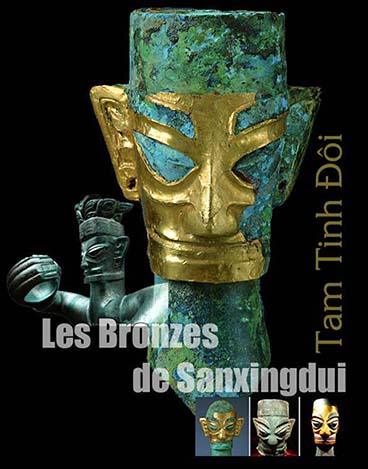
Mais ce sont plutôt les masques saisissants de bronze qui retiennent l’attention des archéologues lors la fouille de la fosse sacrificielle n°2 car ces têtes de bronze ont chacune un aspect plus grotesque que les figures humaines, de grandes oreilles d’éléphants, un nez droit, un visage carré,  une bouche étroite occupant la largeur du visage  et des yeux un peux exagérés  ayant la forme de la graine de  l’amande. On en a retrouvé treize  au total au moment de la découverte de cette fosse.

Contrairement aux Shang laissant des inscriptions sur leurs bronzes, le site de Sanxingdui n’a donné aucune trace écrite. Les archéologues ont été contraints de lui attribuer méthodiquement le caractère profondément religieux et sacrificiel. Leur justification s’appuie d’abord sur un faisceau dense de croyances à travers les masques, les créatures hybrides entre l’homme et la bête, les dragons, les hommes-oiseaux, les objets rituels trouvés dans les fosses, puis sur l’absence d’ornements et l’état des offrandes délibérément détruites et rendues inutilisables et surtout sur le tassement de la terre de remblai en plusieurs couches marquant l’intention de vouloir sceller pour toujours  ce site. Selon Niannian Fan, un scientifique spécialisé dans l’étude des rivières à l’université de Sichuan (Chengdu), le site Sanxingdui a été enseveli par le glissement du terrain dû à la montée et descente hâtive du lit de la rivière Minjiang lors d’un séisme majeur ayant eu lieu il y a plus de 3000 ans.

Niannian Fan tente de conforter son hypothèse en trouvant dans les anciens écrits historiques, un catastrophe majeur survenu en 1099 dans la capitale des Zhou (Shaanxi). Pour lui, les habitants de Sanxingdui furent obligés de transférer à cette époque leur cité à Jinsha, distant de 50 km de Sanxingdui et situé sur les berges de la rivière Modi. Malgré cela, l’hypothèse du séisme et du glissement du terrain n’est pas très convaincant car il ne peut pas expliquer les raisons pour lesquelles les objets rituels ont été cassés délibérément avant d’être jetés dans les fosses de Sanxingdui à l’époque où ce dernier fut abandonné.

Selon le sinologue français Alain Thote, du fait de ses débordements, la rivière traversant  le site était certainement responsable de la disparition d’une partie des vestiges située  au cœur de la cité Sanxingdui. Outre les raisons inconnues de l’abandon précipité  du site Sanxingdu et de son futur remplacement par le site Jinsha découvert en 1996 dans la banlieue ouest de Chengdu, la découverte continue à être empreinte de mystère et éveiller l’intérêt et la soif de la connaissance de la vérité. Certains objets ont trouvé une explication probante, d’autres restant en suspens jusqu’à aujourd’hui. Depuis longtemps, on a cru que le royaume de Shu (Thục Quốc) appartenait à la légende mais la découverte de Sanxingdui révèle désormais non seulement son existence datant d’au moins de 5000 ans à 3000 ans mais aussi la complexité de ses rites à travers ses artefacts fascinants et étranges. Ceux-ci sont principalement les têtes humaines fabriquées dans un système très élaboré de conventions propres à l’art de Sanxingdui dans le but de les mettre à distance par rapport au monde réel et  d’éviter de refléter exactement ce dernier.

Par contre, aucun souci d’individualisation n’est trouvé dans toutes ces têtes. La fosse n°1 contenait 13 têtes humaines en bronze tandis que dans la deuxième fosse, il y avait quarante quatre dont quatre étaient partiellement recouvertes d’une feuille d’or. De faible épaisseur, celle-ci était découpée et incisée ou martelée selon une technique proche du repoussé. Sa présence est décelée soit sur les ornements de l’arbre en bronze, soit sur les masques ou sur une canne longue de 142 cm dans les deux fosses de Sanxingdui et sur le site de Jinsha. En l’état des connaissances des archéologues,  les feuilles d’or associées aux objets rituels étaient à la fois minces,  légères et assez peu décorées. De plus, l’or n’était pas fondu à la cire perdue. Ce matériau précieux provenait probablement des gisements aurifères de Sichuan connue autrefois comme une région riche en ressources minières. C’est l’une des caractéristiques de l’art de Sanxingdui car l’or n’était pas utilisé encore à la fin du IIème millénaire avant notre ère à la capitale Anyang des Shang contemporains dans leur art.
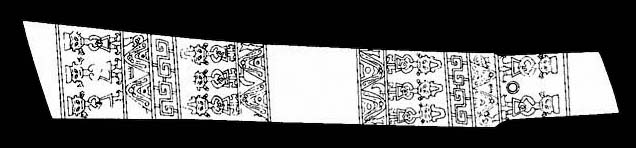
Lame de cérémonie zhang (Nha chương)

Connues sous le nom de « zhang », les lames en jade ou taillées dans des pierres ayant l’aspect du jade se terminent   en une ou deux pointes et constituent la deuxième caractéristique trouvée dans l’art de Sanxingdui. Leur possession témoigne de l’appartenance à un certain rang dans la société de Sanxingdui. Elles semblaient revêtir à cette époque, une importance particulière dans les cérémonies rituelles réservées aux élites de Sanxingdui. Ces dernières devaient s’en servir en les prenant à deux mains en avant de leur poitrine, dans une attitude déférente en présence du roi ou dans un geste d’offrande devant les dieux. Selon le sinologue Alain Thote, rien n’est  permis de trancher encore entre ces deux théories.

Leur emploi connut un succès inouï révélé à Sanxingdui par la multitude des formes et l’enrichissement du décor finement incisé à l’aiguille. Cela témoigne incontestablement de la volonté de développer une recherche esthétique très poussée et de la créativité originale dans leur réalisation par rapport aux zhang trouvés en Chine du Nord et du Centre. Pourtant, selon l’étude de la carte des découvertes, associée à une analyse chrono-typologique, on sait que cette pièce est originaire  de la Chine du Nord et elle est absente sur les sites de la région du cours moyen du fleuve Bleu. Cela conforte l’hypothèse d’une transmission directe de cet objet rituel, de la plaine centrale à Sichuan au cours du deuxième millénaire pour laisser à la fin de sa diffusion, aux élites de Sanxingdui,  la prééminence d’en faire un très large usage.

[Les bronzes de Sanxingdui: Partie 2(Suite)] 

English version

Since the discovery of a large number of jade items by chance from a pickaxe strike made in 1929 by a farmer, followed by two sacrificial excavations in 1986 by Chinese archaeologists, Sanxingdui reveals an unknown aspect of the Sichuan civilization. Until then, according to Chinese texts, Chinese civilization only emerged in the central plain, whose ancient heart remains Anyang, the former capital of the Shang. In traditional historiography, Yu the Great (Đại Vũ), the tamer of waters and founder of the mythical Xia dynasty, is credited with inventing metallurgy in the Yellow River valley. From now on, archaeologists are forced to reassess their ideas about the early developments of the Bronze Age because at that time there were other centers of civilization as original and contemporary as the Shang.

The ideal image of a Chinese civilization originating from Anyang (An Dương) has been eroding since the discovery of the Sanxingdui site because the latter, located in a barbaric periphery, reveals a culture as sophisticated as that of the Shang and previously ignored by Chinese historians and writings. According to archaeology expert Task Rosen from the British Museum, the discovery of the Sanxingdui culture seems to be more remarkable than that of the terracotta warriors and horses of Qin Shi Huang Di in Xian. The four turquoise-inlaid plaques found in the Sanxingdui pit are very similar to those encountered in the Erlitou region (Henan province), which archaeologists had until now considered the cradle of Chinese bronze culture.

This kinship obviously testifies to commercial exchange and the transmission of sophisticated technical knowledge from the central plain to Sichuan. This region of the middle course of the Blue River (or Yangzi Jiang) (Dương Tữ Giang) may have played, according to sinologist Alain Thote, a relay role in this transmission. The results of isotopic analysis of lead in the bronze, whether from the Sanxingdui site, the tomb of the warrior queen Fu Hao (Phụ Hảo) of the Shang dynasty at Anyang (An Dương) in Henan province, or Xin’gan in Jiangxi, confirm the irrefutable presence of the same lead coming from Yunnan province.

In these three regions, the manufacturing technique is the inverted casting method in segmented clay molds, which originated in the 16th century BCE in the Erlitou culture (Xia Period?)(Nhà Hạ). Based on these results, it is assumed that these exchanges were established between different regions around the middle of the 2nd millennium BCE. Cultural interactions are no longer in doubt across a vast expanse of ancient China. The Shang were not the only ones holding universal power as stated in Chinese writings, but they had neighbors as powerful as themselves with whom they exchanged more or less close ties.

Located about forty kilometers north of the capital Chengdu (Thành Đô) in Sichuan, the Sanxingdui archaeological site, near the city of GuangHan (Quãng Hán), was initially designated as a place of compacted earth where three mounds (Three Stars) are found. It was only with the discovery of the two famous pits in 1986 that archaeologists began to take an interest in this site, which, thanks to excavations in 1996, revealed itself to be the ancient occupation of a city dating back to around 1800 BCE and covering about ten kilometers. These two pits are located thirty meters apart from each other, each about 1.5 meters deep, and have an age difference of a few decades (at least 30 years).

The first contains a total of 420 objects, including fragments of charred bones, elephant tusks, marine shells (cowries), etc., while the second not only has about three times as many pieces (around 1300) but also large items (a gigantic vertical and slender bronze statue, sacred bronze trees, and anthropomorphic masks). No specific order was established during the deposition of these pieces. However, these offerings, grouped by categories of objects, were largely broken and deliberately burned in the pits. Among the archaeological finds at the Sanxingdui site, the most beautiful elements remain the statue of a monumental figure about 1.71 meters tall, standing on a base decorated with masks (consisting of four overturned animal head masks) and holding, according to some archaeologists, in its disproportionate hands either one or several cylindrical-shaped objects or an elephant tusk and a broken bronze spirit tree, which can reach up to 4 meters tall in its reconstruction and relates to the sun cult.

But it was the striking bronze masks that captured the archaeologists’ attention during the excavation of Sacrificial Pit No. 2. Each of these bronze heads had a more grotesque appearance than the human figures, with large elephant ears, a straight nose, a square face, a narrow mouth spanning the width of the face, and slightly exaggerated eyes shaped like almond seeds. A total of thirteen were found at the time of this pit’s discovery.

Unlike the Shang, who left inscriptions on their bronzes, the Sanxingdui site yielded no written records. Archaeologists were forced to methodically attribute to it a profoundly religious and sacrificial nature. Their justification is based first on a dense bundle of beliefs through masks, hybrid creatures between man and beast, dragons, bird-men, ritual objects found in the pits, then on the absence of ornaments and the state of the offerings deliberately destroyed and rendered unusable and especially on the compaction of the earth of embankment in several layers marking the intention to want to seal forever this site. According to Niannian Fan, a scientist specialized in the study of rivers at the University of Sichuan (Chengdu), the Sanxingdui site was buried by the landslide due to the hasty rise and fall of the bed of the Minjiang River during a major earthquake that took place more than 3000 years ago.

Niannian Fan attempts to support his hypothesis by finding in ancient historical writings a major disaster that occurred in 1099 in the Zhou capital (Shaanxi). According to him, the inhabitants of Sanxingdui were forced to relocate their city to Jinsha at that time, 50 km from Sanxingdui and located on the banks of the Modi River. Despite this, the earthquake and landslide hypothesis is not very convincing because it cannot explain why ritual objects were deliberately broken before being thrown into the Sanxingdui pits at the time when the city was abandoned.

According to French sinologist Alain Thote, due to its overflowing, the river flowing through the site was certainly responsible for the disappearance of part of the remains located in the heart of the Sanxingdui city. Apart from the unknown reasons for the hasty abandonment of the Sanxingdu site and its eventual replacement by the Jinsha site discovered in 1996 in the western suburbs of Chengdu, the discovery continues to be shrouded in mystery and to arouse interest and a thirst for knowledge of the truth. Some objects have found a convincing explanation, others remain unresolved until today. For a long time, it was believed that the kingdom of Shu (Thục Quốc) belonged to legend but the discovery of Sanxingdui now reveals not only its existence dating back at least 5000 years to 3000 years but also the complexity of its rites through its fascinating and strange artifacts. These are mainly the human heads made in a very elaborate system of conventions specific to the art of Sanxingdui in order to distance them from the real world and to avoid reflecting it exactly.

On the other hand, no concern for individualization is found in all these heads. Pit No. 1 contained 13 bronze human heads while in the second pit, there were forty-four, four of which were partially covered with gold leaf. Thin, this was cut and incised or hammered using a technique close to repoussé. Its presence is detected either on the bronze tree ornaments, or on the masks or on a 142 cm long cane in the two pits of Sanxingdui and on the site of Jinsha. According to the state of knowledge of archaeologists, the gold leaves associated with ritual objects were both thin, light and relatively undecorated. Moreover, the gold was not melted using the lost wax method. This precious material probably came from the gold deposits of Sichuan, formerly known as a region rich in mineral resources. This is one of the characteristics of Sanxingdui art because gold was not yet used in their art at the end of the 2nd millennium BC in the contemporary Shang capital of Anyang.

Ceremonial blade zhang (Nha Chương)

Known as « zhang, » blades made of jade or jade-like stones end in one or two points and constitute the second characteristic found in Sanxingdui art. Their possession indicates belonging to a certain rank in Sanxingdui society. At this time, they seemed to have held particular importance in ritual ceremonies reserved for the elites of Sanxingdui. The latter were to use them by holding them with both hands in front of their chest, in a deferential attitude in the presence of the king or in a gesture of offering before the gods. According to sinologist Alain Thote, there is still no definitive answer between these two theories.

Their use enjoyed unprecedented success in Sanxingdui, revealed by the multitude of forms and the enrichment of the finely incised needlework. This undoubtedly demonstrates the desire to develop a very advanced aesthetic research and the original creativity in their realization compared to the zhang found in North and Central China. However, according to the study of the map of the discoveries, associated with a chrono-typological analysis, we know that this piece originates from North China and it is absent on the sites of the region of the middle course of the Blue River. This supports the hypothesis of a direct transmission of this ritual object, from the central plain to Sichuan during the second millennium to leave at the end of its diffusion, to the elites of Sanxingdui, the preeminence to make a very wide use of it.

[The Sanxingdui Bronzes: Part 2(Continued)]


Références bibliographiques

Re-examination of the artifact pits of Sanxingdui. Shi Jingsong. Chinese archeology
New research exploring the origins of Sanxingdui. Rowan Flad. Backdirt 2008
Art et archéologie de la Chine impériale. Alain Thote, Robert W. Bagley. Livret annuaire 2002-2003-2004, pp 362-369
La redécouverte de la Chine ancienne. Corinne Debaine-Francfort. Découvertes Gallimard.


 

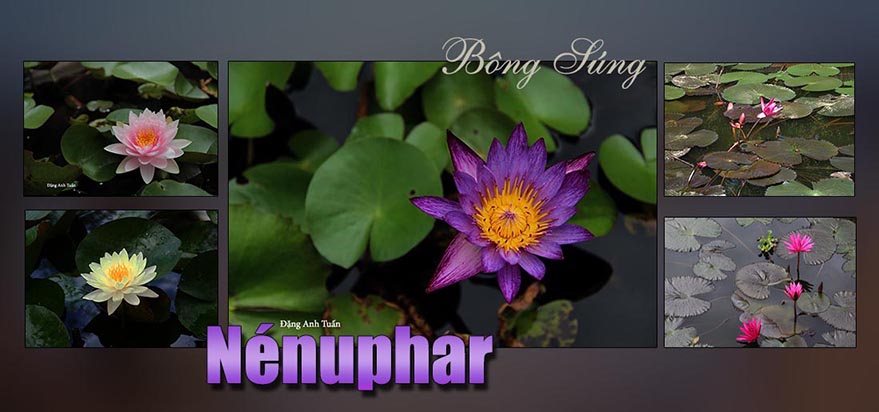
Bông Súng (Nénuphar)


Dans le jardin de Claude Monet (Givenchy)

Version française
Version anglaise

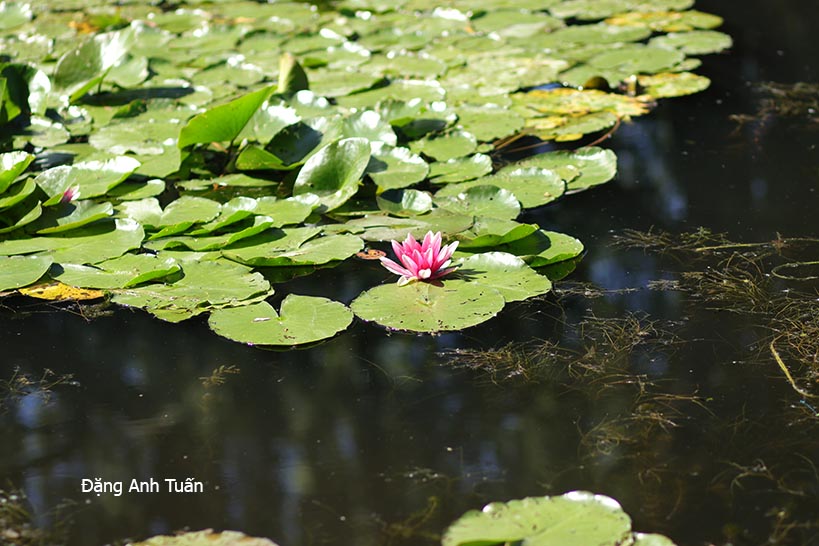
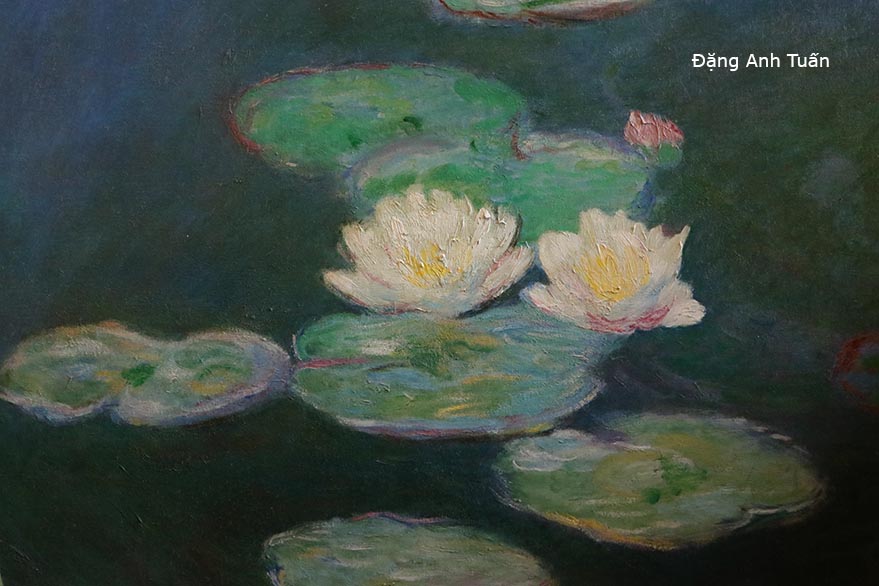
Được xem là biểu tương sự  tinh khiết và yên tĩnh, cây bông súng thường  mọc hoang dã trong bùn. Ở nam bộ Vietnam,  người ta thường ăn mắm kho với bông súng hay  dùng nó để làm món  gỏi  tuyệt vời. Để  bảo vệ một cách hữu hiệu các bộ phận  tựa như nhụy và nhị,  cây bông súng có  được một cơ chế  hóa lý rất tinh vi khi  trời về đêm lạnh rét hay  có độ ẩm cao.  Nhờ có nước  lan tràn vào  các không bào và  có sự biến  đổi của ánh sáng  và nhiệt độ khiến có sự thay đổi ở nơi có  tập trung nhiều ion canxi của các tế bào và dẩn đến việc tạo ra áp suất trên các mặt trong và ngoài của các tràng hoa.  Vì vậy các cánh hoa hay bị méo mó  nhưng không vì thế mà  bị hư hỏng. Chiều  tối lại,  cây bông súng dựng đứng lên các cánh hoa để che chở các bộ phận sinh sản bằng cách làm phòng ra các tế bào của nó. (sự trương nước) Còn sáng lại nó buông lơi  xuống các cánh hoa và làm co lại các tế bào  (sự co lại gọi  là plasmolyse) bằng cách làm bốc hơi nước và giảm đi áp xuất trên các vách tế bào. Tùy thuộc  dáng vóc mà hoa súng có nhiều cánh hoa hay không để nó có thể  dễ dàng đóng khép và bảo trợ  các bộ phận sinh sản.  Đối với các nhà nghiên cứu khoa học, đây không những là chuyện  thăng bằng mà còn là một phát minh tuyệt vời được  tìm thấy  ở các thực vật trước khi con người khám phá ra được các máy bơm nước và cái kích.

Etant le symbole de paix et de pureté, le nénuphar est habitué à pousser sauvagement dans la boue. Au Vietnam, on s’en sert dans le Sud soit pour accompagner la soupe aux poissons (mắm kho) soit pour faire une salade  délicieuse. Le nénuphar possède un mécanisme physique et chimique  très ingénieux permettant de protéger ses organes reproductifs  (étamines, pistils) contre le froid et l’humidité nocturne. Grâce à la pénétration de l’eau dans les vacuoles et aux variations de la lumière et de la température modifiant ainsi la concentration en ions calcium des cellules,  cela provoque la pression sur les faces interne et externe de ses corolles et facilite  la déformation de ses  pétales  sans que ces derniers soient abîmés.  Le soir, le nénuphar  redresse  ses pétales pour protéger ses appareils reproducteurs  par le gonflement de ses cellules (turgescence)   tandis que le matin il les fait retomber  par le dégonflement de ces  mêmes cellules  (plasmolyse) en diminuant la pression sur leurs parois cellulaires  et en perdant de l’eau par évaporation. En fonction de la taille, la fleur du nénuphar doit avoir un certain nombre de pétales  afin de mieux  se refermer et protéger ses organes reproductifs.  Pour les chercheurs, c’est non seulement une affaire d’équilibre mais aussi une invention géniale chez les plantes avant la découverte des pompes hydrauliques  et des vérins par les hommes. 

Galerie des photos

Lis d’eau

Tableau nénuphar de Monet

Version anglaise

Being the symbol of  peace and purity, the water lily is accustomed to grown savagely in the mud. In Vietnam, it is used either by accompagnying the fish soup in the South region or by making a delicious salad. The water lily has a chemical and physical mechanism very ingeniuos allowing to protect its reproductive organs (stamen, pistil)  against the cold and  night humidity. Thanks the water penetration in vacuoles and  variations in light and temperature, thereby altering  calcium ion concentration in cells, it causes  the pressure on the internal and external faces of its corollas  and facilitates  the deformation of its petals without  the latter being damaged. At night, the water lily adjustes its petals for protecting its  reproductive system by the swelling of its cells (turgor) while in the morning, its petals fall down by the  deflation of these same cells thanks to the  pressure reduction applied on their cell walls (plasmolysis)  and the loss of water by evaporation.

Depending on size, the flower of water lily must have a certain  number of petals for being closed again and protecting its reproductive organs. For scientists, it is not only the balancing act but also an ingenious invention in plants before the discovery of hydraulic pumps and cylinders by men.


[Return FLEURS DU MONDE]


Một thoáng trở về với Luông Phạ Băng (Luang Pra Bang)

Một thoáng trở về với Luông Phạ Băng

Version française

Version anglaise

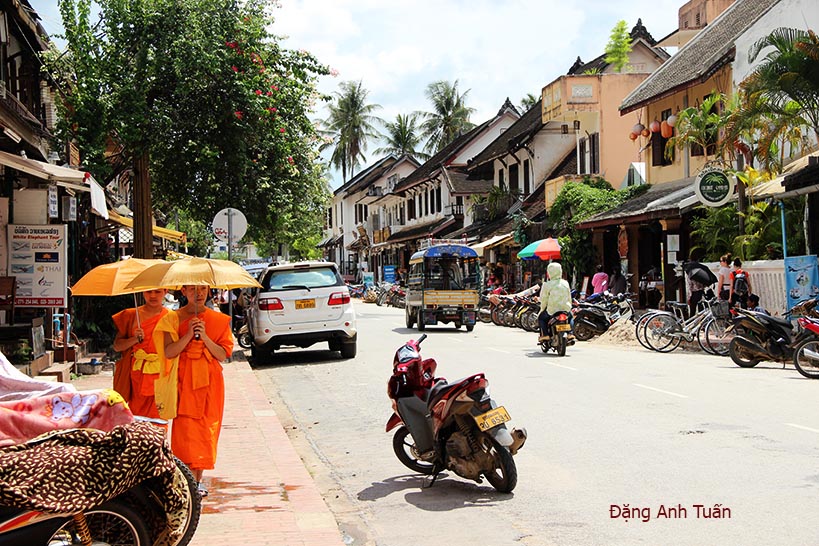
Từ thế kỷ 14 đến 1946, Luông Pra Băng hay Mường Luông là kinh đô của một vương quốc đuợc mang tên là Lan Xang hay là vuơng quốc triệu voi. Luang Pra Bang được UNESCO công nhận là một di sản thế giới (văn hóa). Nằm bên cạnh sông huyèn thoại  Cửu Long, Luông Phạ Băng cách xa Viên Chăn (Vientiane) 425 cây số về phía Bắc. 

Depuis le 14ème siècle jusqu’à l’année 1946, Luong Pra Bang fut la capitale du royaume de Lan Xang (ou royaume du million d’éléphants). Luang Pra Bang est reconnue par UNESCO comme le patrimoine culturel de l’humanité. Longeant le  fleuve mythique Mékong, elle est  située à 425 km de  la capitale Vientiane  dans la direction nord.

From the 14th century until the year 1946, Luang Prabang was the capital of the kingdom of Lan Xang (or the kingdom of a million elephants). Luang Prabang is recognized by UNESCO as a cultural heritage of humanity. Bordering the mythical Mekong River, it is located 425 km north of the capital Vientiane.

[Back to Luang Pra Bang]

Thạp Đồng (Văn hóa Đồng Sơn)


Thạp đồng Đào Thịnh
thap_dong


Version française
Version anglaise

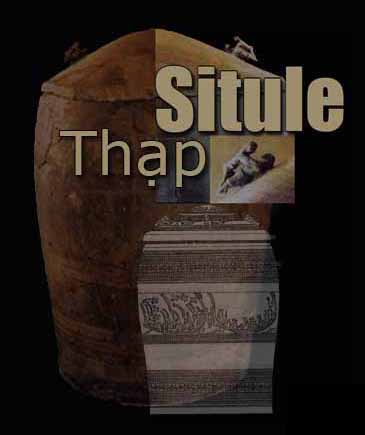
Mặc dầu thạp và trống đồng được xem như hình với bóng nhưng thạp rất ít được phổ biến trong dân gian  vì có nhiều lý do. Trước hết ít có sách vở ghi chép về thạp đồng.  Vã lại địa vực phân bố  cũng rất  giới hạn. Trống đồng thường được trông thấy  khắp nơi ở Đông Nam Á và phía nam của Trung Hoa thì ngược lại  những thạp đồng chỉ tìm thấy phần lớn ở Viet Nam. Thạp thường  tập trung ở các lưu vực  các sông lớn như sông Hồng, sông Mã và sông Cả mà theo truyền thuyết dân Việt đấy là lảnh thổ  của nhà nước Văn Lang dưới thời các vua Hùng. Ở Trung Hoa, chỉ có một số ít ỏi thạp đồng tìm thấy ở  các  tỉnh biên thùy như  Quảng Tây, Vân Nam, Quảng Đông và mang tính chất trao đổi và thương mại.  Cũng có một   thạp   đồng  mà được tìm thấy ngoài lệ ở  Phong Điền (Thừa Thiên Huế) cùng lúc với  một trống đồng Heger loại I , một hiện vật có lẽ được trao đổi với cư dân  văn hóa cùng thời Sa Huỳnh.

Văn hóa Đồng Sơn

Nhưng đó cũng là một thạp đồng duy nhất được khám phá ở vùng Thừa Thiên Huế cho đến năm  2005. Hơn một thế kỷ đi qua, từ khi khám phá được một cái nắp đầu tiên của thạp đồng nằm úp trong trống đồng Ngọc Lũ  (1893-1894) cho đến ngày nay, thì trên 250 thạp đồng được biết và kiểm kê thì chỉ có 15 thạp đồng được  tìm thấy ở Trung Hoa (9 thạp trong ngôi mộ của Nam Việt Vương Triệu Muội, vua thứ hai của nước Nam Việt, cháu nội Triệu Đà, 1 thạp  trong một ngôi mộ ở Quảng Đông, 4 thạp trong mộ La Bạc Loan ( Quảng Tây )  và một thạp đồng trong khu vực  Tianzimiao (Điền Quốc, Vân Nam).  

235 thạp đồng còn lại thì rải rác   ở các địa điểm  khai quật của văn hóa   Đồng Sơn thường thấy ở Việtnam và phân bố ra hai loại: 205 thạp không có nắp và 30 thạp có nắp. Chỉ đến năm 1930 thạp đồng được một học giả người Nhật Bản Umeshra Sueji miêu tả lần đầu tiên một cách sơ lược. Sau đó, năm 1936,  thạp đựợc giới thiệu bởi nhà khảo cổ Olov Jansé,  một cộng tác viên tạm thời của trường Viễn Đông Bác Cổ Pháp sau  cuộc khai quật di tích Đồng Sơn.

Các thạp đồng thường thuộc về dòng dõi  qúi tộc. Đó là sự nhận xét  mà các nhà khảo cổ hay có sau các cuộc khai quật ở các mộ táng  của giới  quí tộc và các nhà lãnh tụ địa phương. Thạp đồng không phải là một biểu hiệu quyền lực như trống đồng mà nó là một sản phẩm có tính chất đa năng. Nó được sử dụng

  •  để chứa các loại chất lỏng (nước cúng , rượu thờ cúng hay dầu thực vật)
  •  làm đồ đựng và tích  trử lương thực ( cá, cua, tôm, thịt thú rừng vân vân …) để phòng ngừa nạn đói kém,
  •  để chứa vỏ trấu ( thạp Làng Vạc (Nghệ Tịnh))
  •  làm một chiếc quan tài tùy táng mà tìm thấy được năm 1995 một tử thi trẻ em được cuốn bằng chiếu cói  qua thạp Hợp Minh (Yên Bái)  hay đựng nguyên một chiếc  sọ  của người quá cố hay của nạn nhân trong việc tế thần qua thạp Thiệu Dương (Thanh Hóa) khám phá năm 1961
  •  làm vật dụng đựng thang tro và xương cốt  sau khi hỏa táng với ( thạp Đào Thịnh (Yên Bái) năm 1960
  •  làm một hiện vật dùng trong lễ tang để đưa người quá cố về thế giới bên kia với thạp Vạn Thắng (Phú Thọ) phát hiện năm 1962.


tigre_dongson

Con thú đang tha  mồi được thấy
trên nắp thạp Vạn Thắng. Hànội 2008


Thông thường, thạp mà được thấy ở Viet Nam trong các mộ táng sang trọng thường có tính cách nghi lễ đối với dân tộc Lạc Việt ( hay người Đồng Sơn).  Đối với các người nầy , thạp được xem không những là một vật dụng rất cần thiết trong cuộc sống hằng ngày mà nó còn là một vật mà người quá cố không thể thiếu khi về thế giới bên kia. Từ một vật dụng hằng ngày  cho đến khi trở thành  một đồ tùy táng đó là một việc rất thông thường đối với người Đồng Sơn vì đây là một khái niệm chia sẻ giữa người quá cố  và những người thân thuộc, một truyền thống đuợc trường tồn dưới nhiều hình thức từ thời xa xưa trong các nền văn minh cổ đại nhất là trong nền văn hóa Đồng Sơn.

Thạp  có hình khối trụ thuôn dần từ miệng xuống đáy và  có thể có vành  gờ  miệng để dễ đậy nắp đồng hình vòm. Thạp thường có hai quai hình chữ U lộn ngược.  Thạp không có phong phú như trống đồng bởi vì nó mang tính cách thông dụng. Trên thân của thạp   có các băng  phù điêu hoa văn  trang trí  với những mô típ  mà được thường thấy trên trống đồng  (vòng tròn có tiếp tuyến, những đường gẫy khúc đan vào nhau tạo hình thoi,  vạch ngắn thẳng vân vân…) hay  là hoa văn rất đơn giản.

Nhưng đôi khi cũng có những thạp đồng mang vẻ đẹp vô song và trang trí rất  tinh vi cũng không thua chi trống đồng.  Đấy là trường hợp của các thạp  Đào Thịnh (Yên Bái), Vạn Thắng ( Phú Thọ), Hợp Minh (Yên Bái ), mỗi thạp đều có nắp hình vòm, được  trang trí ở ngay giữa trung tâm một ngô i sao  nhiều  cánh hay  ở chung quanh có gắn 4 khối tượng người hay thú mà được bố trí đi ngược chiều kim đồng hồ.Trên  thạp Đào Thịnh thì tìm thấy có  4 khối tượng, mỗi khối là một đôi nam nữ đang ở tư thế giao hợp  còn trên nắp Vạn Thắng (Phú Thọ)  thì có bốn con thú đang săn  mồi hay là 4 con bồ nông trên nắp Hợp Minh (Yên Bái).

Khi quan  sát và so sánh các hoa văn trang trí thuyền bè với những người  hóa trang, đầu đội mũ lông chim trên thân của thạp Đào Thịnh với các hình chạm khắc  trên  các trống đồng Heger loại I  (Ngọc Lũ, Hoàng Hạ, Cổ Loa, Sông Đà (Moulié) …) thì có cảm tưởng đây là những sản phẩm có  cùng một phong cách nghệ thuật và  được chạm khắc bởi những nghệ nhân khéo léo được đạo tạo từ một trường,  xuất  thân  từ  một nền văn hóa chung . Như vậy chứng tỏ những sản phẩm nầy thể hiện cùng có một chủ nhân sáng tạo chung,  đó là  cư dân của nền văn hóa  Đồng Sơn đã có hai thiên niên kỷ trước đây. Rất khó phân loại các thạp đồng   nếu dựa vào yếu tố hoa văn bởi vì các thạp đồng  được tìm thấy hầu hết đều có hoa văn mang tính cách biểu tượng.

Có những nhà khảo cổ gợi ý  dựa kích thước làm tiêu chuẩn trong việc phân loại các thạp nhưng vì  gam thạp quá đa dạng từ to (các thạp Hợp Minh, Thiệu Dương, Xuân Lập vân vân…) đến bé như minh khí đựợc tìm thấy ở các mộ táng Châu Can (Hà Nam), Núi Nấp ( Thanh Hoá ) khiến khó dùng tiêu chí nầy được. Cuối cùng chỉ có khái niệm  dùng nắp thạp là có căn bản hợp lý nhất  trong việc phân biệt  các thạp đồng.  Dựa trên mỹ thuật  trang trí văn hoa thì phải nói  có sự phong phú  rỏ ràng  ở nơi các thạp có nắp.  Và cũng nhờ  có gờ miệng thì  mớ i có thể biết được thạp đó  có nắp hay không dù nắp thạp có thể mất hay không còn nửa.

Với các trống đồng, thạp   không những là  một phần tử tiêu biểu của nên văn hóa Đồng Sơn mà còn là bằng chứng cốt lõi có nguồn gốc ở địa phương. (Việt Nam)

Đôi khi nhìn thạp làm ta nhớ đến chiếc gùi bằng mây mà thường được thấy hiện nay  ở  các dân tộc thiểu số ở Viet Nam. Gùi cũng có các quai dùng để buộc dây xách thuận tiện cho việc di chuyển.  Theo các nhà khảo cổ học , chiếc thạp là hình ảnh của chiếc gùi mà cư dân Đồng Sơn thường dùng thưở xưa với nắp để đậy khi dùng để chứa đồ. Theo sự quan sát của nhà khảo cổ học Việtnam Nguyễn Việt, những chiếc thạp nhất là chiếc  được trưng bày ở bảo tàng viện Barbier-Mueller ở Genève (Thụy Sĩ) rất có thể tiếp nhận ảnh hưởng của các nghệ nhân khéo léo của vương quốc Điền ở Vân Nam. Có thể nói vào thời đó, văn hóa Đồng Sơn đuợc phát  triển trong bối cảnh cởi mở, đã trao đổi lẫn nhau những thông tin và sản phẩm với Điền quốc qua sông Hồng. Lấy nguổn nước ở Vân Nam, sông Hồng được xem thời đó như là đường tơ lụa sông. Dù sao đi nửa, cũng có thể khẳng định một cách quả quyết là thạp đồng không phải là một sản phẩm của Trung Hoa mà nó mang nhiều  tính chất địa phương (Viet Nam).

Référence bibliographique:

Thạp Đồng Đông Sơn Hà Văn Phùng Nhà Xuất Bản Khoa Học Xã
Những dấu vét đầu tiên của thời đại đồ đồng thau ở Việtnam, NXb Khoa học xã hội, Hànội,1963. Lê văn Lan, Phạm văn Kỉnh, Nguyễn Linh

Situla (Thạp đồng)

thap_dong

Version vietnamienne

Version française

Although the situla (or thạp in Vietnamese ) is considered with the bronze drum as shadow and picture (bóng với hình), it remains still largely unknown to the public for several reasons. First, there is little written on  Dongsonian situla. And then the area dissemination about situlas is very limited. Unlike the bronze drums having been scattered everywhere in Southeast Asia and  South China, the situlas have for the  most part  been found by constrast  in Vietnam. According to Vietnamese mythology, their concentration is located in the basins of  Hồng (or Red River), Mã and Cả rivers delineating the territory of Văn Lang kingdom at the time of Hùng kings. In China, there is a very small number of Dongsonian situlas found coming probably to trade and localized in the border provinces Kouang Si (Quảng Tây), Yunnan (Vân Nam) and Kouang Tong (Quảng Đông). This is also the case of the situla Phong Ðiền (Thừa Thien Huế) that was discovered at the same time as a Dongsonian bronze drum of Heger I, an  object of exchange with the population of contemporary culture of Sa Huỳnh.

The  tiger catches its prey. That is what we have seen on the cover
of the bronze jar in Vạn Thắng sepulture.

tigre_dongson


But it is also the sole situla discovered in this region Thừa Thiên Huế until 2005. More than a century passed, since the discovery of the first cover of the situla in the bronze drum Ngoc Lũ (1893-1894) until now, on 250 situlas known and inventoried, there are only 15 situlas found in China (9 situlas in the tomb of the second king of Nan Yue, Zhao Mei (Triệu Muội), 1 situla in a grave site in the province KouangTong, 4 situlas in the tomb Luobowan (La Bạc Loan) (Kouang Si) ) and 1 Dongsonian situla in the region of Tianzimiao (district of Cheng-gong, Yunnan). The 235 remaining situlas are localized in the Dongsonian sites so called « pure » in Vietnam and divided into two categories: 205 situlas without lid and 30 situlas with lid. It is only in 1930 that the situla was described in a summary manner for the first time by a Japanese scholar Umeshra Sueji. Then it was evocated by Swedish archaeologist Olov Janse, temporary scientific collaborator of French School of Extreme Orient (EFEO) in 1936 during the archaeological excavations. Finally the situlas belonged to the aristocracy. That is what have been frequently observed during the excavations in the graves belonging until now to noblemen and local warlords. The situla is not an emblem of power but it is a container (ustensil) with multiple uses (tính đa năng). It is used 

  • to contain liquids of all kinds (divine water, altar wine or vegetable oils),
  • to store food (fishes, crabs, prawns, wild game meat etc…) in the dearth period,
  • to contain rice hush with Làng Vạc situla (Nghệ Tịnh),
  • to be used as burial receptacle (with bones) where one finds sometimes the remains of a child with the Hợp Minh situla discovered in 1995 (Yên Bái) , sometimes a skull, that of the deceased or victim of the sacrifice with the situla found in 1961 at Thiệu Dương (Thanh Hóa),
  • to contain humain remains by incineration with Đào Thịnh situla (Yên Bái) in 1960,
  • to be used as funerary object to accompagny the deceased in the other world with Vạn Thắng situla (Phú Thọ) in 1962.

Generally speaking, the situla which is found in Vietnam in the rich graves has a ritual character among the Luo Yue (or the Dongsonian). For the latter, the situla was considered not only as an indispensable utensil in the daily life but also an object that the deceased could not miss in the other world. The passage of an object used to a funerary object was very frequent among the Dongsonian because it is a notion of sharing between the deceased’s relatives and himself, a tradition which is perpetuated in various forms since the dawn of time in the ancient civilizations, in particular in the Dongsonian civilization.

The situla whose  the shape is cylindrical and   slightly narrowed in the bottom, can have a very fine rim to facilitate, at the neck level, the deposit of a convex cover. It is fitted with two handles in the shape of U reversed with double spirals.  Known for its usual character, the situla is not a work of art very rich in comparison with the bronze drum.

Generally speaking, one finds on the container body, a decor in low relief organized in registers of classical geometric motifs from decoratif Dongsonian repertoire (pointed circles connected by tangents, lozenze friezes or vertical incisions etc …) or a plane decoration very simple. But we may find ourselves with situlas of unparalleled beauty  the decor of which is as sophisticated as that of bronze drums. This is the case of Đào Thịnh (Yên Bái), Vạn Thắng (Phú Thọ), Hợp Minh (Yên Bái ) situlas, each having a cover adorned with a star in its center or filled with human and animal figures in relief,  the arrangement of which  is carried out in the  clock reverse. That is what we have seen with 4 couples in intimate embrace on the Đào Thịnh situla’s cover or 4 fauves seizing prey on the Vạn Thắng situla. By contrast, 4 pelicans are sculpted in relief on the Hợp Minh situla.

Văn hóa Đồng Sơn

By comparing the figurative decoration of pirogue accompanied by men wearing tall feathers on the body of the famous situla Đào Thịnh as that of bronze drums Heger’s type I (Ngọc Lũ, Hoàng Hạ, Cổ Loa, Song Đà (Moulie) … ), one may perceive that products of the same artistic  style are realized by skillful bronzemakers from a same school or rather  from the brilliant civilization of Đồng Sơn since two thousand years ago. For the situlas, it is difficult to establish a classification based on the ornamentation because the latter has carries the symbolic character on most of the situlas.

History museum (Hànội)

Some suggest the dimension as a criterion for classification but there is a variety of situlas ranging from their largest size (Hợp Minh, Thiệu Dương, Xuân Lập etc. ) to their smallest miniature ( mingqi or minh khí  in Vietnamese) (situlas found at Châu Can (Hà Nam), Núi Nấp ( Thanh Hoá ) etc … ), which does not allow to have a desired classification. Finally, it is the notion of cover which has been taken into account in the classification of situlas. The richness and sophistication of the decor are visible on all situlas possessing a cover. This is not the case of situlas without cover. Thanks to a slightly protruding ledge found at the level of its collar (gờ miệng), we can identify a situla with lid or not even if the latter has today disappeared.

The situla constitutes not only with the bronze drums, one of the representative elements of Ðồng Sơn culture but also the irrefutable evidence of the Dongsonian local origin in Vietnam.

It may be inspired by the wicker-look basket (gùi in Vietnamese) that is still found today among some ethnic minorities of Vietnam because the latter also has the handles to facilitate the fixing of  cords during the movement. For some archaeologists, the situla is well the  basket image that the Dongsonian had the habit of using formerly with the cover because it was initially designed to serve as a receptacle. According to Vietnamese archaeologist Nguyễn Việt, some situlas  exhibited  in particular in the Barbier-Mueller museum in Geneva (Switzerland), attest to the probable influence of skillful bronzemakers of Dian kingdom (Ðiền Quốc) in Yunnan (Vân Nam). It is possible  the culture of Ðồng Sơn  has developed in a context very open and   exchanged each other the information and objects with Dian kingdom by Red River . By taking its source in Yunnan, this river was regarded in the past as the silk road river. But it can nevertheless be stated categorically that the Dongsonian situla is a foreign object to the Chinese tradition and it is the local craftsmanship (or Vietnamese).

[RETURN]

Bibliography:

Thạp Đồng Đông Sơn Hà Văn Phùng
Nhà Xuất Bản Khoa Học Xã Hội

Những dấu vết đầu tiên của thời đại đồ đồng thau  ở Việtnam,
NXb Khoa học xã hội, Hànội,1963. Lê văn Lan, Phạm văn Kỉnh, Nguyễn Linh


Fête des mères ( Lễ Mẹ)


A l’occasion de la fête des mères,  je voudrais dédicacer cette page  pour  tous ceux qui ont la chance d’avoir encore une mère, de lui montrer l’affection et de lui dire un GRAND MERCI. Vous pouvez  agrafer une rose sur votre  veste pour témoigner de la reconnaissance mais aussi de la joie immense d’avoir ce trésor inestimable, ce qu’a suggéré le moine zhen Thích Nhất Hạnh dans son best-seller  » Bông Hồng cài áo » ( une rose agrafée sur la veste) .

C’est aussi ce sentiment qu’a ressenti  feu compositeur Trịnh Công Sơn : Si j’avais un bouquet de roses d’une valeur inestimable, j’aimerais bien l’offrir à ma mère. Malheureusement elle n’était plus là pour le recevoir.

Il n’y a que la rose qui peut symboliser l’affection indescriptible que tout Vietnamien aime réserver soigneusement à sa mère, à celle qui lui a donné la vie mais aussi l’amour de ce pays.

Malgré son niveau d’instruction assez peu élevé, le paysan vietnamien arrive à décrire l’amour maternel d’une manière juste et simple à travers le proverbe suivant :

Mẹ già như chuối ba hương
Như xôi nếp một, như đường mía lau

Ma mère ressemble à une banane parfumée,
Elle est comme du riz gluant cuit à la vapeur ou du sucre provenant de la canne à sucre.

Quand on a l’occasion de goûter une banane « ba hương », on découvre non seulement son saveur mais aussi son parfum et sa substance sucrée. C’est ce que ressent le paysan dans l’amour que sa mère continue à lui donner.

Le suc de cet amour le laisse toujours insatiable. De plus le paysan le trouve exquis comme du riz gluant et mielleux comme du sucre provenant de la canne à sucre.

Mother’s Day


On the occasion of the Mother’s Day, I would like to dedicate this page to those who are lucky to have again a mother. They can continue to pin a rose on their coats with the intention of showing not only the gratitude but also the immense joy to have an priceless  treasure, what has suggested the Vietnamese zen monk Thích Nhất Hạnh in the novel Bông hồng cài áo (A rose pinned on the coat)

It is also this feeling which late talented composer Trinh Công Son felt:

If I had a pink bunch of a priceless value, I would like to offer it to my mother. Unfortunately she was not there to receive it.

There is only the pink which can symbolize the indescribable affection that any Vietnamese likes to reserve to his mother carefully, to the one who   gave him the life but also the love of this country.

In spite of his educational level rather relatively low, the Vietnamese peasant manages to describe the maternal love in a way right and simple through the following proverb:

Mẹ già như chuối ba hương
Như xôi nếp một, như đường mía lau

My mother resembles a scented banana,
She is as sticky rice cooked with the vapor or sugar coming from the   sugarcane.

When one has the occasion to taste a banana “Ba hương”, one discovers not only his savor but also his perfume and his sweetened substance. It is what the peasant feels in the love that his mother continues to give him.

The juice of this love make  him always insatiable. In addition, the peasant finds it exquisite as glutinous rice and sweeter as sugar coming from the   sugarcane.


La Bastille (Quảng Trường Bastille)

Version française
Version anglaise

Tuy rằng có  nhà hát  mới opéra  mang kiến trúc hiện đại  gần có 20 năm , quảng trường Bastille vẫn tiếp tục giữ được một biểu tượng trọng đại.  Nó cùng đồng nghĩa với  tự do tìm lại được.  Nó còn lưu lại sự hiện diện vô hình của pháo đài trở thành sau đó nhà tù mà dân tộc Pháp đã  thành công hủy bỏ vào ngày 14 tháng 7 năm 1789  trong cuộc khởi nghĩa đập vỡ chế độ độc tài vua chúa. Cao hơn khoảng chừng 50 thước, cột trụ   trên chót vót có thần tự do, dựng ở Bastille không phải để tưởng niệm cuộc cách mạng 1789 mà nó lưu niệm tưởng nhớ những  nạn nhân của Trois Glorieuses (27, 28  và  29 tháng 7 năm 1830).  Tên họ của các nạn nhân được ghi bằng chữ vàng trên cột còn dưới  nền bằng đá hoa thì có mồ của họ. 


Malgré la construction du nouvel opéra depuis une vingtaine d’années, la place de Bastille continue à garder une dimension symbolique. Elle est synonyme de la liberté retrouvée. Elle est marquée toujours par la présence invisible de la forteresse que le peuple français avait réussi à investir et à démolir le 14 Juillet 1789 dans le but de briser le despotisme royal. Haute d’une cinquantaine de mètres, la colonne au sommet de laquelle surgit le génie de la liberté, n’est pas élevée pour commémorer la révolution de 1789 mais elle est en souvenir des victimes des Trois Glorieuses (27,28 et 29 Juillet 1830). Les noms de ces dernières sont inscrits en lettres d’or sur la colonne tandis que sa base en marbre contient leur caveau.

Despite the construction of the new opera house some twenty years ago, the Place de Bastille continues to have a symbolic dimension. It is synonymous with freedom regained. It is still marked by the invisible presence of the fortress that the French people had managed to take over and demolish on July 14, 1789 in order to break the royal despotism. About fifty meters high, the column at the top of which rises the genius of freedom, is not raised to commemorate the revolution of 1789 but it is in memory of the victims of the Three Glorious (27, 28 and 29 July 1830). The names of the latter are inscribed in gold letters on the column while its marble base contains their tomb.

[Return Paris et ses sites]