Red river delta (Đồng bằng sông Hồng)


delta_rouge

French version
Vietnamese version
Picture gallery

Contrary to the Mekong Delta, the Red River Delta contains many historical vestiges. It is the cradle of the Vietnamese nation. Found here, near Thanh Hoá in the Mã River valley is the presence of an civilization in the millenium before Christ at the Bronze Age called Dongsonian Age. Also started with the Bronze Age, the mystical periods of Vietnam’s history. The first legendary dynasty, that of Hồng Bàng, would have reigned until 3rd century B.C. From this delta has begun at the beginning of10th century the Nam Tiến Movement (or the Descent toward the South) started by General Lê Hoàn and finished in 18th century by the kings Nguyễn.

To dominate and control its water and its vagaries, the Vietnamese people had to build and consolidate dikes ceaselessly. These dikes existed for a thousand years and broke sixteen times during the past twenty-five years. It is because of the Red river that the Vietnamese people has been haunted with the domination and control of water. Since the beginning of our era, the Vietnamese people have been compelled to organize, perform, and maintain water amnagement works. This has brought to the Vietnamese the virtue of being more patient, more obstinate, keener, hard working and methodical in dike construction, canal digging, embankment building and breach filling. In this delta is found a sophisticated network of drainage canals and high dikes that only a centralized state on water control such as Vietnam knows how to realize.

It is itself that witnessed several decisive battles of the Vietnamese people against their invaders. It is thanks to its complicity that General Trần Hưng Ðạo defeated the Mongol army by planting on its bed pikes that broke the Mongol ships in 1288 at the mouth of the Bạch Ðằng river, renewing the tactics used by General Ngô Quyền against the Chinese in 938 (a victory that put an end to the thousand-year Chinese domination ). It is also witness of the Yên Bái uprising led by nationalist leader Nguyễn Thái Học in 1930. Its destiny is that of the Vietnamese people. It is it that gives the capital of Vietnam the last name Hànội (Hà means river, Nội means inside, interior).

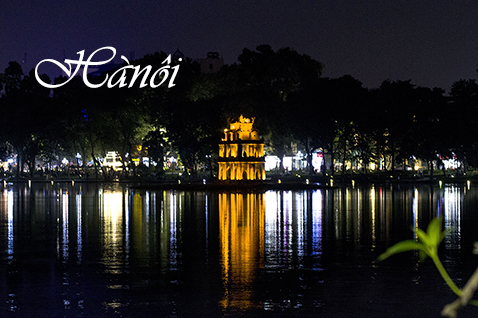
Hà-Nội means « On this side of the river ». This city was founded by king Lý Thái Tổ (Lý Công Uẩn) in year 1010 at the neighborhood of Ðại La that geomancers believed to be favorably sheltered from the waters of the Red river. It is also called Thăng Long (City of Ascending Dragon) because, in his dream, Lý Thái Tổ saw a golden dragon flying from that locality.

Vietnam’s history is linked closely with this Red River (or Sông Hồng ). It is itself that forged the Viet soul. It is itself that has petrified the thick identity of the Vietnamese people. At the same time, It is the enemy, the friend and the actor of the Vietnamese people.

It is it that saw Hanoï  growing with its thirty-six business streets and lakes. Writer Thạch Lam of the « Tự Lực Văn Ðoàn » writing club talked about It in his novel « Hà Nội 36 phố phường« . It is it that gave birth to the French construction of the Paul Doumer (now Cầu Long Biên) bridge 1680 meters (approx. one mile ) long at Hà Nôi.

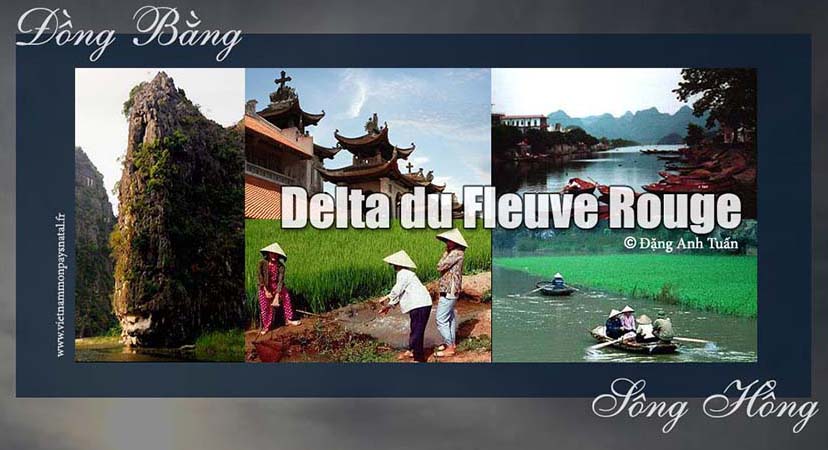
Thanks to its silt rich in iron, and with its irrigation, the delta is so fertile that it is possible to have one more harvest in November. It is it that shapes the landscape of the delta. Every day are seen women leaning under their conical hats, feet and hands in the clay, children coming from school surveying the dikes, motionless buffaloes in their mud baths under a sun that is sometimes overwhelming. It is it that often floods the plain of Hoa Lư, the old capital of Vietnam until 11th century.

The Red River is the second largest river of Vietnam after Mekong. It descends from Yunnan, a mountainous region south of China. It is known as the « six-head river » that enters Vietnam definitively at Lao Cai. It curves on more than 1000km ( over 600 miles ) before dying in the somptuous bay of Hạ Long. This one is the eighth wonder of the world. It counts more than three thousand isles, islets, and reefs. One finds rocks of varied forms. Some are tiny, others are of important dimmension bearing picturesque names such as isle of the Wonder, isle of the Surprise, the Marionettes, the Monkeys, the Toad etc…

The Ha Long bay has become for the past few years the site most visited by foreign tourists when they landed in Vietnam. Mini-cruises by junk make it possible to visit it. It is in this bay, according to the legend, that a dragon would have descended to tame the sea currents. That is why the Vietnamese called it Hạ Long (or the site of the Descending Dragon).

Impressed by the splendor and beauty of this bay that he visited by junk in 1468, king Lê Thánh Tôn left some unforgettable verses in witness of his emotion:

Muôn ngọn núi nổi trên như biển ngọc
La liệt như những sao sa, những quần cờ, chênh vênh màu xanh biếc …

High summits are drawn up as a crowd in the sea like many jewels
Bluish tops are dispersed like the falling stars and the pieces in the chessboard of waves.
Fish and salt, abundant like sand, offer a rapid gain to people
Pictures gallery


Capital Hanoï (Vietnam)


Version française

Vietnamese version

Thăng Long muôn thưở 

As indicated by its name Hà Nội means « The city on this side of the river » (Hà means river, Nội means inside). Contrary to other cities in Vietnam, Hanoï has a long agitated history. Its destiny is that of the Vietnamese people. It experienced a long period of disgrace when Nguyễn Ánh arrived at founding the Nguyen dynasty in 1802 after 20 years of fighting the Tây Sơn and decided to transfer the capital to Huế (or Phú Xuân). It witnessed several decisive battles in the reclaim of independence, in particular the Đống Đa battle run by Emperor Quang Trung in 1789. Thanks to the blitzkrieg upon Chinese troops of Qing, and to Quang Trung’s scheme to choose the date of the Vietnamese new year to surprise the Chinese enemy, Hanoï was thus liberated as well as Vietnam. It was also chosen by Hồ Chí Minh to proclaim Vietnam’s independence on September 2, 1945 at Ba Đình Square.

It was also on one of its lakes under the name of Hồ Gươm where Lê Lợi, future king Lê Thái Tổ, after his victory over the Ming, according to a Vietnamese legend, returned his magic sword to a golden tortoise which gave him this sword during a walk. Thanks to this sword, Lê Lợi succeeded in chasing Chinese troops of Ming out of Viet Nam after 10 years of fighting a guerilla warfare. That is why the lake is known as « Lake of Returned Sword » (or Hồ Hoàn Kiếm).

It was also at Hanoï that the unique one-pillar pagoda (Chùa Một Cột) was erected in 1049 by king Lý Thái Tông on a strong wooden pillar in the style of ancient temples of ancestors. According to legend, the king afflicted by not having a descendant, saw in his dream Quan Âm, the Goddess of Compassion. Sitting on a lotus flower, she gave him a son. Shortly after that, a young country girl that he made favorite, gave him an heir. In witness of his gratitude, he had this pagoda erected in the middle of a pond of lotus flowers.

Because of its proximity to the Red river, every year Hà Nội is victim of floodings caused by the cresting of this river and by violent monsoon rain and typhoons.

In spite of that, Hà Nội continues to remain the capital of a unified Vietnam. No one dares to contest the political and cultural heritage it has left to the Vietnamese people. It represents not only for the majority of Vietnamese the symbol of national unity but also the pride of a people of peasants who know how to valiantly resist the changes of nature and the ambitions of invaders.

Hànội vắng những cơn mưa

Saxophoniste Quyền Văn Minh

Pictures gallery


Thăng Long muôn thưở

Before becoming the capital city of Việt-Nam, Hà Nội was the seat of the Chinese administration in 607 and bore the name of « Tống Bình« . In 866, this seat was surrounded by the wall of Ðại La whose some vestiges still exist. It was chosen by the founder of the Lý dynasty, king Lý’ Công Uẩn, in 1010 as a new capital of Vietnam at the place of Hoa Lư.

According to legend, in his dream the king saw a golden dragon flying over that locality. That is why Hà Nội was called at that time « Thăng Long » (ascending dragon)« .

This site was deemed favorable in comparison with other sites because it is located between « hà » and « sơn », waters and mountains, in the middle of rice paddies and protected from flooding by dikes. In 15th century, Hà Nội took the name of Ðông Kinh. Then it retook the name of Thăng Long until the transfer of the royal residence to Huế. Next, it took the name of Thành Tích then Bắc Thành before becoming Hà Nội only in 1931. It became the capital of North Viet-Nam after the Geneva Accord in 1954 and since the events of 1975, the capital of reunified Viet-Nam.

Hà Nội covers 913km2. Its interior (or nội thành 40km2) is divided into four urban districts (or Quận): Quận Hoàn Kiếm, Quận Hai Bà Trưng, Quận Ðống Ða, and Quận Ba Ðình. It also includes six suburban districts (or Huyện) and several villages located within its limits.

One finds the soul of Hà Nội through its old city. Poetess Bà Huyện Thanh Quan, a poetess of 19th century evoked it in one of her works. What retains the most in that old city are the 36 streets that are often known as Hàng (or merchendise in English). There, each cratfsman makes his specialty object and each street was baptized following the craft that was practiced there: street of Silk, street of Drums, street of Potteries etc. Novelist Thạch Lam talked about it in his novel « Hà Nội, 36 Phố Phường ». Hà Nội is also the Vietnamese city which keeps more colonial traits compared to other cities. It can be said that it is the conformed copy of a French town in the structure of Arcachon, with its governor’s palace, opera house, post office and park. The bridge Long Biên (or Paul Doumer) recalls not only the first work of art of French builders on the Red river in 1902 but also the traces of American bombings during the Vietnam War.

In spite of that, Hanoï, from the past few years begins to change its face and look. Constructions have been multiplied at such a rhythm that there is not one square meter unoccupied. It tries to catch up with its late economy and to fill in the incoming vacuum left by the return of Hong Kong to China.

[RETURN]

Communal house (Đình Làng: Part 3)

dinhlang03

Đình Làng (Part 3)

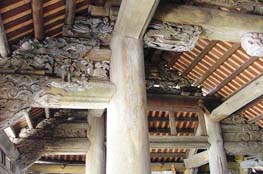
Armature ( Cấu tạo vì kèo )

Version vietnamienne

Version française

In addition to the ceremonies scheduled in the year in honor of the tutelary genius, villagers attach great importance to anniversaries of his birth and death. But there are also other occasional sacrifices caused often by a marriage, an appointment, a promotion or a old or siver wedding (khao lão). This allows you to give rise to feasts in the village and allows you to celebrate in large pump the cult in the tutelary genius. The latter may be a man or a woman. It is easy to identify this genius at the time of the procession. For the genius-man, there is always the presence of a horse in red (ngựa hồng) or white ( ngựa bạch) laquered wood. This one is of natural size and mounted on a wooden rectangular plate fitted with castors. The latter is richly harnessed and it is supposed to bring the genius soul. In the case where the genius is a woman, this horse is replaced by the palanquin in red hemp (võng đào) suspended from the beam having the ends carved with dragon head and based on two easels in the form of three crossed sticks.

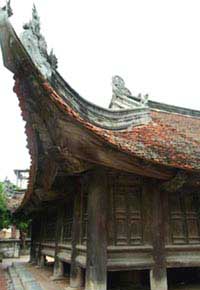
Mái cong làng Ðình Bảng 

dinhlang02

For the duration of the feast, one sacrifices to the tutelary genius with solemnity by moving its char ( kiệu) accompanied by a large number of culte objects, parade weapons, dais (tán) and pennants (cờ), from the communal house (đình) to the his place of residence (nghè) (1) or from the village to another allied village in the case where these ones are united by the cult of the same genius and by organizing multiple entertainment: fighting of cocks, buffaloes and birds, chess games with human pawns, flat hand wrestling etc.

There is also a important rite which recalls the significant characteristics of genius life. Known as the « hèm » in Vietnamese and kept secret, it is always celebrated during the night for geniuses who have not done an honorable act (genius thief, genius with fists, wast collector genius etc … ).. By contrast, it is celebrated in the great day for the geniuses with a quality or an act of bravery. One avoids to pronounce also the name of the genius during the rite by modifying the pronunciation or by substituting a synonym. This is the case of genius Linh Lang for example. We are obliged to tell « khoai dây » instead « khoai lang » (potatoes), « thầy lương » for « thầy lang » (doctor) etc. This singular rite is one of the essential features of communal cults. The negligence of this rite could jeopardize the prosperity of the village.

Its construction is always operated according to a well-defined layout plan identifiable by some Chinese characters Nhất, Nhị, Tam, Ðinh, Công, Vương etc.  A communal house (đình) who stands alone with a rectangular main building (đại đình) evokes the character « Nhất ». This is the case of « đình » Tây Ðằng.By contrast, we are led to recognize the character Nhị by adding to the main building a second building (tiền tế) (or building reserved for sacrifices). This one is parallel to the first building and preceding it in the new layout. This is the case of the communal house Liên Hiệp. It is rare to find the character Tam in the construction of communal house. In a general way, the « đình » is frequently encountered in the shape of the character Công.

The posterior building Hậu Cung is connected to the main building by a small corridor or a small court (Ống muống) . This is the case of the communal house Đình Bảng, Mộng Phụ. For the character Vương, it is sufficient to connect three buildings (Hậu Cung, Đại Đình, Tiền Tế) with two corridors (Ống muống). It is in this last building « Tiền Tế » where the official ceremony for tutelary genius is performed by notables wearing a blue suit during the feast days. READING MORE

Palanquin in red hemp (Đình Cổ Loa)              

No Images found.


(1) ghè: Place of residence of the genius often located at the entrance of the village. At the time of the feast, invited the genius is invited to join the communal house « đình ». It is brought back to its « ghè » when the feast is terminated.

Bibliographie:

Le Ðình, maison communale du Viêt Nam.
Hà Văn Tấn, Nguyễn Văn Kự,
Editions Thế Giới, 2001

Yên Bái (Nguyễn Thái Học- Cô Giang)


Thaihoc

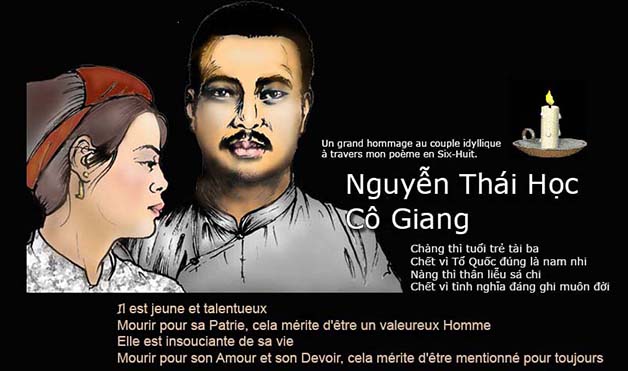
A great homage to the idyllic couple through my poem in Six-Eight:

He is young and talented;
Dying for his Father Land, he deserves being a valorous man.
She does not worry about her own life;
Dying for her love and duty, she is unforgettable forever.

Version française

Version vietnamienne

Contrary to other Vietnamese towns, Yên Bái has no tourist attractions. It is only the provincial capital, a riverside town located in the valley of the Red river half way on the road going from Hànội to the Chinese border Lào Cai. In spite of that, it continues to be famous in the past by its armed resistance driven by Vietnamese nationalists in the struggle for independence. It incarnates not only the hope of the Vietnamese people to regain their freedom by force but also the dauntlessness of the nationalists before death after the failure of their revolt in 1930. It should be looked at in the political context of that time to understand not only the causes of that revolt but also the Vietnamese people’s profound aspiration for independence after Phan Chu Trinh ‘s failure in advocating priority of overall progress of society over political independence followed by his death, and the house arrest of Phan Bội Châu, another important figure, by the colonial authorities at the capital of Huế.

Despite the warning of colonel Parfait-Louis Monteil in 1924, few reforms were made in favor of the native people. On the contrary, the exploitation of cheap labor in rubber tree plantations was at the top of its efficiency and horror. Writer Roland Dorgelès talked about it in his work « The Mandarin Road« . This virgin land, when it opens on impact, releases a mortal breath. As many as traced paths, as many as open tombs. The rubber trees coming out of the ground, spindly, and well in lines, look like the rows of cross. The dead numbered in the tens of thousand because of diseases and malnutrition. That is why through the following poem, this complaint is heard:

Kiếp phu đỗ lắm máu đào
Máu loang mặt đất máu trào mủ cây
Trần gian địa ngục là đây
Ðồn điền đất đỏ nơi Tây giết người

The coolies’ blood has much shed,
It shed on the ground, it shed through the sap.
This is the hell on earth,
The rubber tree plantation is where the French colonists commit murder.

For half of a century, the colonists harvested latex they converted into gold. It was in the plantations that sprouted the revolt. Someone like Nguyễn Văn Viên arrived at getting out of this hell and joining the Vietnamese nationalist party ( Việt Nam Quốc Dân Ðảng ) led by Nguyễn Thái Học. To show this fervor and find a favorable echo among the deprived, especially the plantation coolies, Nguyễn Văn Viên took the initiative, in spite of Nguyễn Thái Học’s reluctance, to assassinate Bazin known for his opulence in recruiting coolies and shipping them to rubber tree plantations in South Vietnam. The death of this man gave the colonial authorities an opportunity to launch the policy of repression all over the place.

Thus the nationalist party became the favored target in this crusade. It could no longer move easily. If it did not react, it would be a slow death because its members would be captured sooner or later by the colonial authorities. If it did react by the revolt, it knew that it would be a collective, hazardous, and exemplary suicide. That is why Nguyễn Thái Học had the habit of saying to his party companions:

Ðại hà chi thanh, nhân thọ kỷ hà?
Ðợi sông Hoàng Hà trong trở lại, đời người thọ là bao?

Waiting for the Yellow River water to be clear, how many live spans can we count?

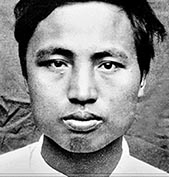
The real photo of Nguyễn Thái Học

According to the Chinese, the Yellow River water only regains its clearness every three hundred years. Nguyen Thai Hoc knew for sure he was going to lead his party companions to a definite death. He could not wait any longer. But this death seemed useful because it recalled to the Vietnamese people that there was no other choice but the struggle. It also marked the beginning of   an   awareness and awakening of the whole people facing its destiny that was, up until then, led by the unworthy heirs of the Nguyễn dynasty (Khải Ðịnh, Bảo Ðại). The revolt of  Yên Bái was an indisputable failure because most of the nationalists leaders were captured.

On the other hand, it threw in a sound and long lasting basis upon which the communist party laid its authority and popularity among the people in the following years in the conquest of independence. It also tolled the death knell for a colonial empire that had vainly lost so many opportunities to reestablish the dialogue and cooperation with the native people. This was translated by the death sentence imposed on all the nationalist leaders. Nguyễn Thái Học was the last one to be guillotined. Before his execution, he was impassible. In spite of his weakness, he tried to shout out loud in French:

Dying for one’s country
Is the most beautiful fate
The most envied lot….

Then he lay down on his back facing the blade of the guillotine. « Long live Vietnam » was the last words heard before the fall of the guillotine’s blade. His blood spurted everywhere under a covered sky. His head fell in a bucket containing saw dust (June 17 1930). He was only 27. Faithful to her Vietnamese tradition, his wife Nguyễn Thị Giang did not take long to follow him to commit suicide on June 18, 1930 at the inn where they had met often before their marriage. She left a letter whose sentences illustrated well the indefectible love she had for her husband and her country:

Sống nhục sao bằng sự thoát vinh
Nước non vẹn kiếp chung tình
………
Cuộc đời xá kể chi thành bại
Trai trung thì gái phải trinh

Dying in pride rather than living in humiliation
I make it whole the love for you and the nation
……..
Success and failure do not matter in life
As long as man is faithful and woman has fidelity.

The remains of the thirteen Vietnamese nationalists were buried the following day on a hill near the Yên Bái railway station.

If this town is not as well known as most of Vietnamese cities, it incarnates on the contrary something the other towns cannot have. It is the symbol of maturity and dignity rediscovered in a people facing its own fate. It grew valiantly in the past along with the Vietnamese people in its struggle for independence.

(Việt Nam Quốc Dân Ðảng)

Voyage 2017: Vatican (Ý Đại Lợi)

Toà thánh Vatican

Version française
Version anglaise
Galerie des photos

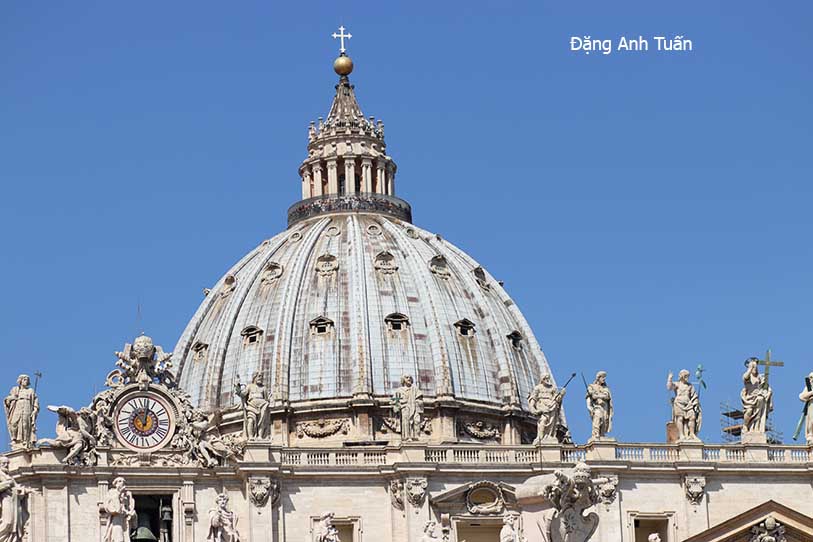
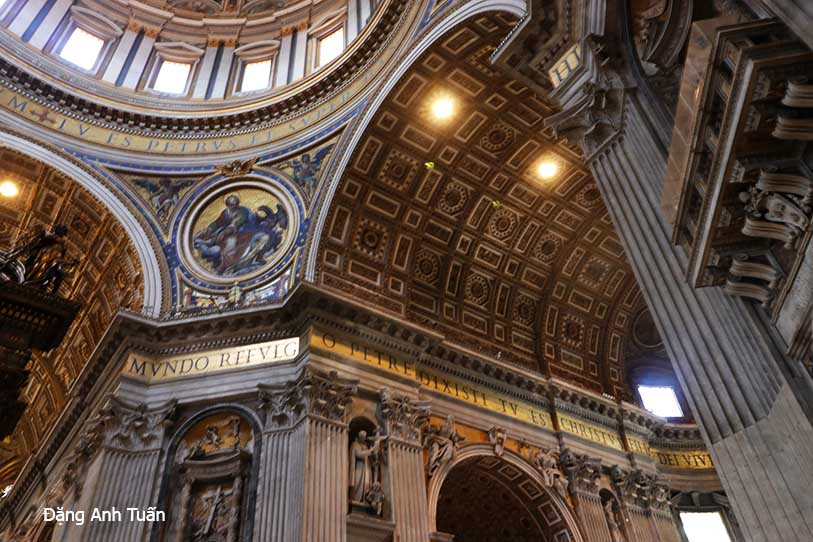
Đây là một  quốc gia nhỏ nhất thế giới với tổng diện tích 0,44km2 và  nằm giữa thủ đô Rome của Ý Đại Lợi. Tuy vậy, Vatican có tầm ảnh hưởng quan trọng trên thế giới vì đây là trung tâm công giáo đã có thời kỳ hoàng đế Constantin (thế kỷ thứ tư) với hàng tỷ tín đồ trên thế giới hiện nay. Đến đây mà không xem được nhà nguyện Sistina thì rất uổng vì nơi nầy có những kiệt tác của các nhà họa sĩ trứ danh của thời phục hưng  như Michel Ange,  Sandro Botticelli vân vân và cũng không nên quên lên chót vòm của thánh đường  Saint Pierre để nhìn xuống xem quảng trường nhưng mất ít nhất hai ngày mới xem hết vì rất mất thì giờ  trong việc  nối  đuôi và chờ đợi.


C’est l’un des plus petits états d’Europe avec une superficie de 0,44km2 au cœur de la ville de Rome en Italie. Pourtant, Vatican a une influence notable dans le monde car c’est le centre spirituel des catholiques existant à l’époque de l’empereur Constantin (4ème siècle)  avec des milliards de fidèles dans le monde entier. C’est très décevant pour ceux qui ont l’occasion de venir à Vatican sans avoir le temps nécessaire pour  visiter le dôme de  la basilique de Saint Pierre et la chapelle  Sixtine car c’est ici qu’on peut voir les fresques,  les chefs d’œuvre des peintres célèbres à l’époque de la Renaissance comme Michel-Ange,  Sandro Botticelli etc. mais pour  cette visite, il faut compter deux jours car il faut faire l’interminable attente  pendant des heures.


It is one of the smallest states in Europe with an area of 0.44 km² in the heart of the city of Rome, Italy. However, the Vatican has a notable influence in the world because it is the spiritual center of Catholics existing since the time of Emperor Constantine (4th century) with billions of followers worldwide. It is very disappointing for those who have the chance to come to the Vatican without having enough time to visit the dome of St. Peter’s Basilica and the Sistine Chapel because it is here that you can see the frescoes, masterpieces by famous painters from the Renaissance era such as Michelangelo, Sandro Botticelli etc. But for this visit, you need to allow two days because you have to endure the endless waiting for hours.

Click vào hình để xem kích thước to hơn 

Cliquez sur la photo pour voir plus grande la photo
Click on the photo to see the larger photo

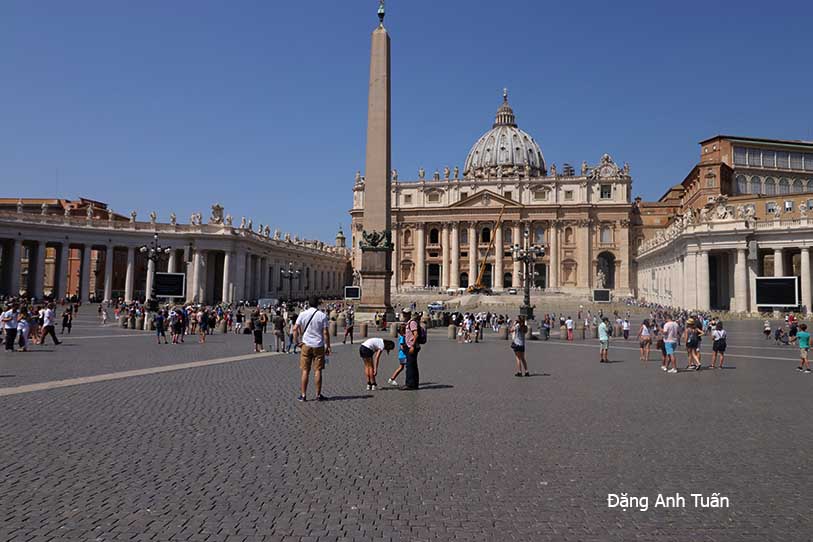
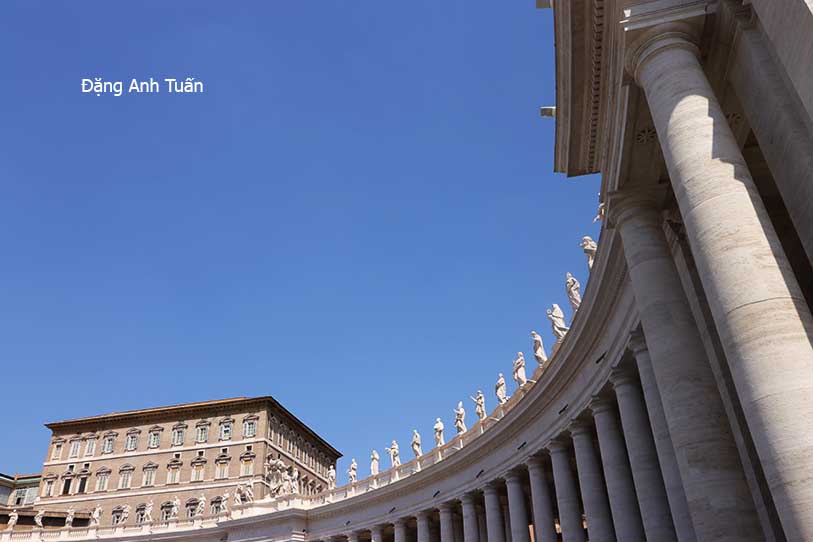
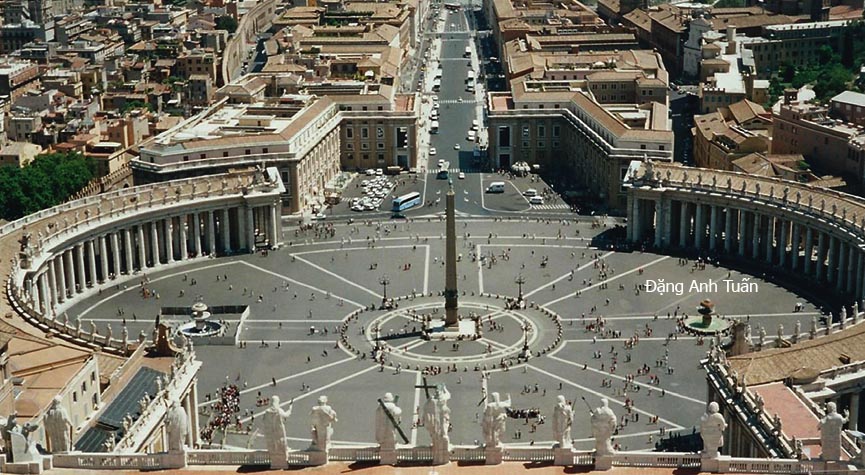
Place Saint Pierre 

Quảng trường thánh Phê Rô

Galerie des photos


No Images found.

[Return ITALIE] 

Voyage 2017: Pise (Ý Đại Lợi)

Version anglaise
Version française
Galerie des photos

Place des miracles

cliquez pour voir les photos correspondantes

 Cánh đồng của những  kỳ công

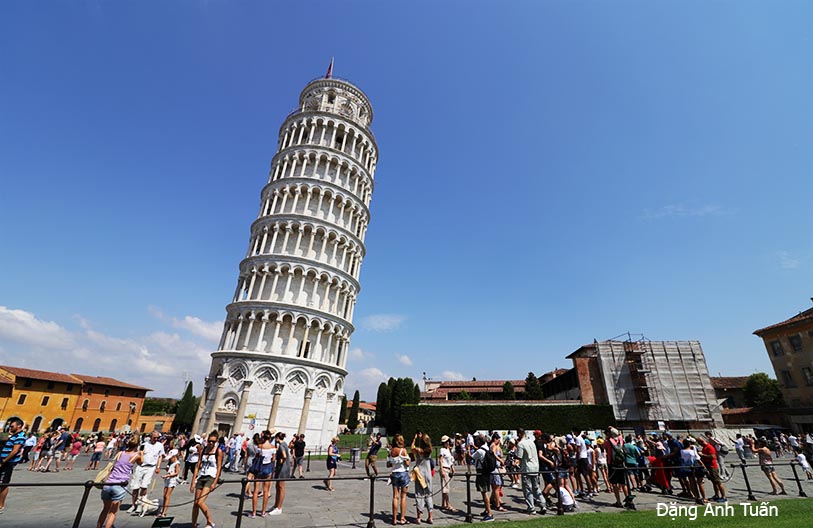
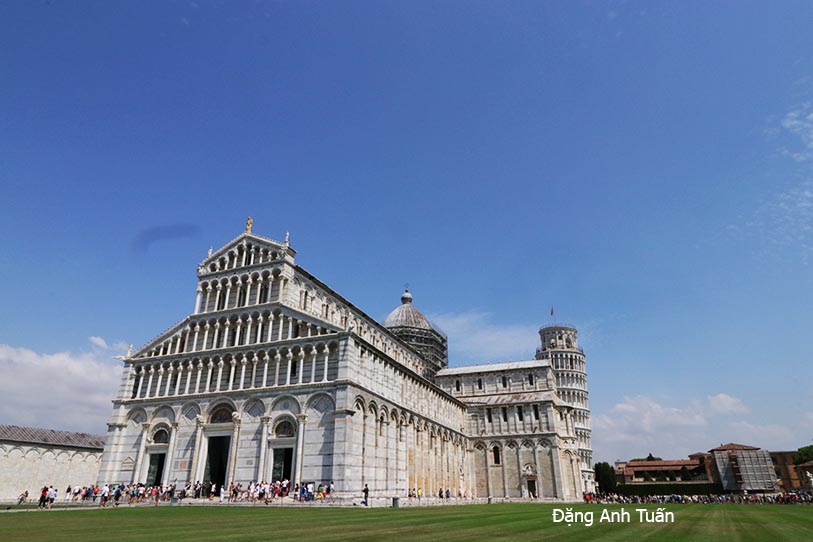
Khi nhắc đến Pise thì ai cũng nghĩ đến ngay  tháp nghiêng.  Nhưng chúng ta  quên đi  thành phố nầy là một hải cảng quan trọng  ở thời  kỳ đế quốc La Mã và có một thời phát triển hàng hải đáng kể. Chính nhờ đó mà Pise được xem là một trong bốn  nước cộng hoà hàng hải của Ý Đại Lợi (Amalfi, Pise, Gênes và  Venise)  trong quá khứ. Pise đến tột đỉnh quyền lực vào thế kỷ  11 nhờ các cuộc chinh phục liên tiếp và đáng kể:  sự cuớp phá  Reggio de Calabre  vào năm 1005, kiểm soát hoàn toàn biển  Tyrrhénienne  vào năm  1017 sau khi thôn tính Sardaigne, xâm chiếm  Carthage ( rồi  Mahdia vào năm  1088), cướp bóc hủy phá Palerme vân vân… Nhờ vậy, Pise có tiền để khởi đầu công việc xây cất nhà thờ và các toà nhà khác ở cánh đồng của những  kỳ công  (Piazza dei Miracoli ) mà sau nầy được gọi là  Piazza del Duomo.

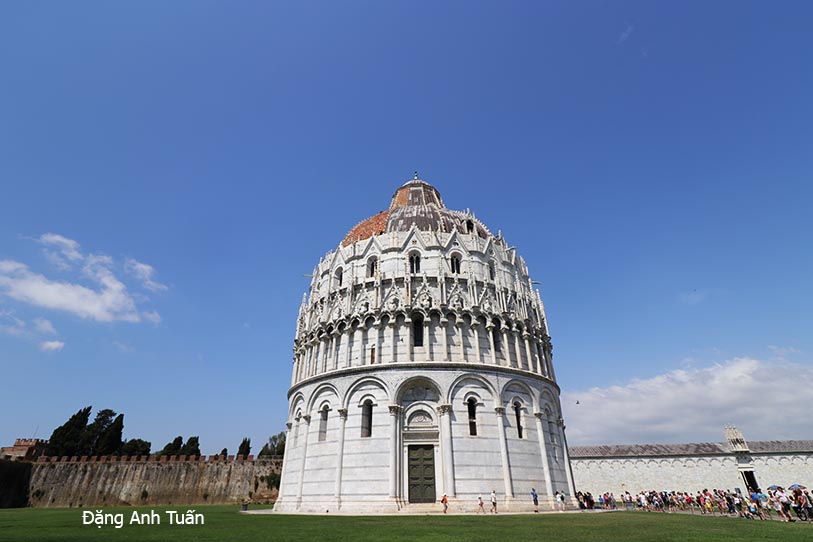
 Đây là trung tâm  Bảo tồn Di sản Văn hóa Tôn giáo và nghệ thuật của thành phố cổ kính  Pise  gồm có 4 công trình mà nhà văn hào Ý, ông Gabriele d’Annunzio  xem như là những kỳ công trong một quyển sách của ông: Campanile (tháp chuông nhà thờ)(hay tháp nghiêng), nhà thờ Notre-Dame de l’Assomption, Nhà rửa tội Saint-Jean  và nghĩa trang Simone


Quand on parle de Pise, on pense tout de suite à sa célèbre  tour penchée.  Mais on oublie que  la ville fut un port important à l’époque de l’empire romain et  connut une expansion maritime considérable, ce qui fait de Pise l’une des quatre républiques maritimes d’Italie (Amalfi, Pise,  Gênes  et Venise) dans le passé. Elle atteignit son apogée au  XIe siècle par une succession de conquêtes notables:  pillage de  Reggio de Calabre  en 1005,  contrôle total de   la mer Tyrrhénienne en 1017 par la capture de Sardaigne,  occupation de  Carthage (puis Mahdia en 1088), mise à sac de Palerme etc. Cela lui  permet avec les rentrées d’argent,   le début de la construction de la cathédrale et les autres monuments du fameux champ des miracles (Piazza dei Miracoli ) qui deviendra ensuite la Piazza del Duomo.

——C’est le centre religieux et artistique de Pise constitué de quatre monuments que l’écrivain italien  Gabriele d’Annunzio considère comme les miracles dans un de ses romans:  la célèbre tour penchée,  la cathédrale Notre-Dame de l’Assomption, le baptistère de Saint-Jean et le cloître gothique de Simone——


Version anglaise

When we talk about Pisa, we immediately think of its famous leaning tower. But we forget that the city was an important port during the Roman Empire and experienced considerable maritime expansion, making Pisa one of the four maritime republics of Italy (Amalfi, Pisa, Genoa, and Venice) in the past. It reached its peak in the 11th century through a series of notable conquests: the sacking of Reggio Calabria in 1005, total control of the Tyrrhenian Sea in 1017 with the capture of Sardinia, occupation of Carthage (then Mahdia in 1088), the sacking of Palermo, etc. This allowed, with the income generated, the beginning of the construction of the cathedral and other monuments of the famous Field of Miracles (Piazza dei Miracoli), which later became the Piazza del Duomo.

—–It is the religious and artistic center of Pisa consisting of four monuments that the Italian writer Gabriele d’Annunzio considers miracles in one of his novels: the famous leaning tower, the Cathedral of Our Lady of the Assumption, the Baptistery of Saint John, and the Gothic cloister of Simone——-


Galerie des photos


Style gothique et pisan (Phong cách gô tích và pi-da)

Vue panoramique à partir du baptistère de Saint-Jean

[Return ITALIE]


Voyage d’été 2017: Florence (Ý Đại Lơi)

Version française
Version anglaise
Galerie des photos

Đây là  một thành phố có khoảng chừng 500 ngàn dân và nằm bên bờ  sông hiền hoà  Arno giữa  hai biển Tyrrhenus (Tyrrhenian Sea) và Adriatique.  Florence toạ lạc hầu như ở trung tâm của bán đảo Ý Đại Lợi. Vào thế kỷ 15, Florence  được cai trị bởi một gia tộc nổi tiếng Médicis  mà sau nầy họ được gọi là các đại  công tước của xứ Toscane.

Cũng vào thời đó  là thời điểm   rực rỡ của Florence trong các hoạt động nghệ thuật và văn học  cũng như chính trị  và kinh tế.  Florence còn có một di sản đặc biệt nói lên tính cách huy hoàng có cả hàng trăm năm của nó. Chính ở nơi nầy là quê quán của Cimabue và  Giotto, hai người cha đẻ hội họa của Ý Đại Lợi, Arnolfo  và  Andrea Pisano hai nhà canh tân về ngành  kiến trúc và điêu khắc và Michel-Ange, Léonard de Vinci,  Brunelleschi, Donalto và  Massacio những tên tuổi lừng danh  khởi xướng  ở thời kỳ Phục hưng (thế kỷ XV và XVI).

Tuy nhỏ hơn so sánh với các thủ đô văn hóa khác, Florence nghênh đón  mỗi năm có hơn 7 triệu người du khách ngoại quốc.  Florence còn  cất giữ  riêng tư phân nửa số lượng kiệt tác mà Ý Đại Lợi có. Cũng là thành phố đầu tiên làm ra các đồng xu bằng  vàng mà thường được gọi là florins vào năm 1252.  Vài quốc gia như Hà Lan vẫn  giữ thói quen gọi đồng tiền của họ với cái tên nầy.


C’est une ville d’environ un demi-million d’habitants se trouvant  sur les rives du fleuve Arno entre les mers Tyrrhénienne et Adriatique. Elle est presque au centre de la péninsule italienne.  Au XVème siècle Florence passa sous la Seigneurie des Médicis qui devinrent  ensuite les Grands Ducs de Toscane.

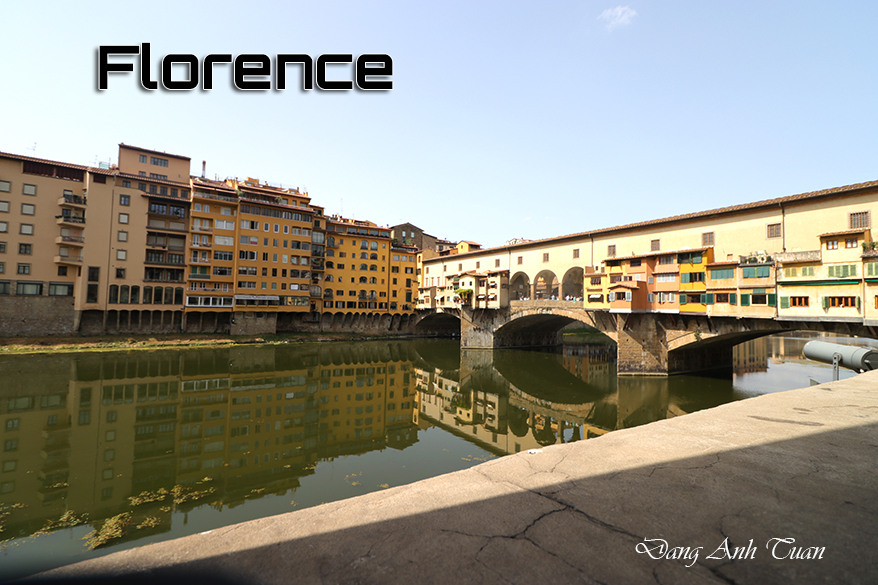
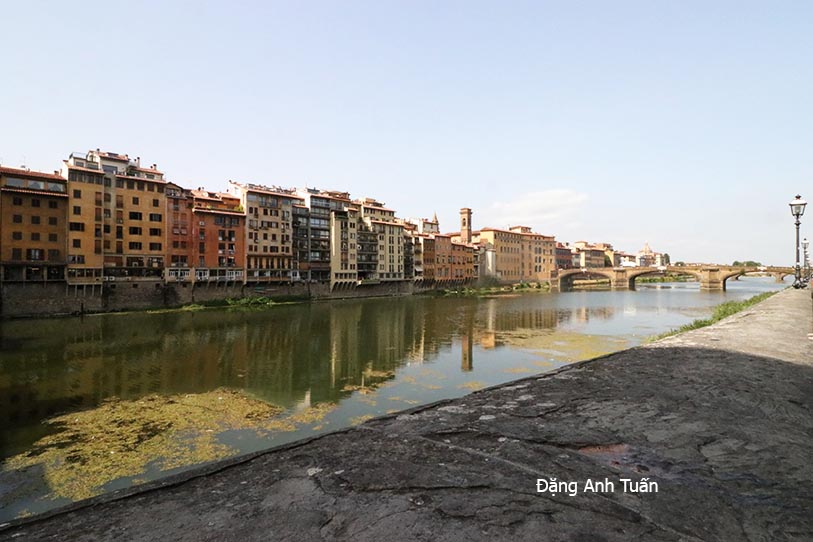
Fleuve Arno avec les ponts  Vecchio  et Santa Trinita
Arno River with the Vecchio and Santa Trinita bridges.

Ce fut un moment de grandeur de Florence dans les arts et  la culture mais aussi dans la politique et  la puissance économique. Florence renferme un exceptionnel patrimoine d’art qui témoigne de sa splendeur séculaire.  C’est ici que vécurent Cimabue et Giotto, pères de la peinture italienne,  Arnolfo et Andrea Pisano, rénovateurs de l’architecture et de la sculpture et Michel-Ange, Léonard de Vinci, Brunelleschi, Donalto et Massacio,   initiateurs célèbres  de la Renaissance (du XVème au XVIème siècle).

Plus petite que d’autres capitales culturelles, Florence accueille aujourd’hui  plus de sept millions de touristes par an.  Elle abrite en plus, à elle seule, la moitié des œuvres d’art conservées en Italie. C’est aussi la première cité à frapper ses propres pièces d’or, les florins de Florence en 1252.  Certains pays comme les Pays-Bas ont conservé jusqu’à une date récente cette appellation pour désigner leur monnaie. 

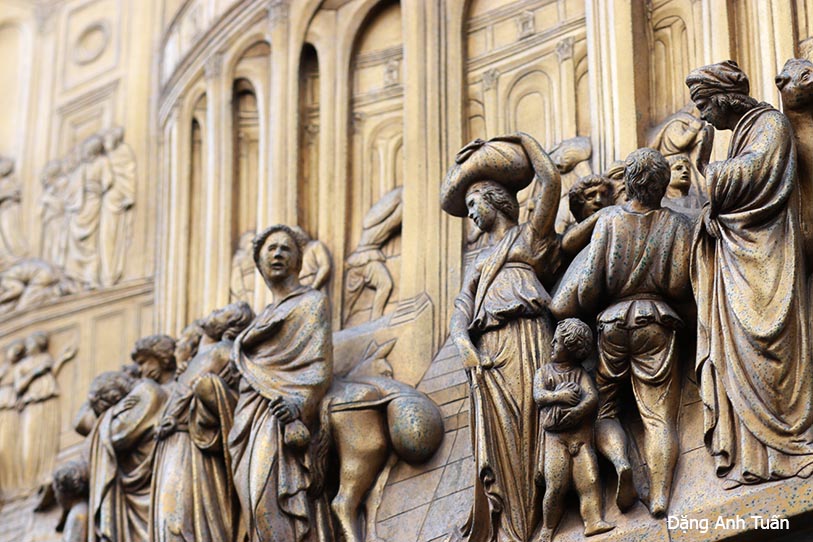
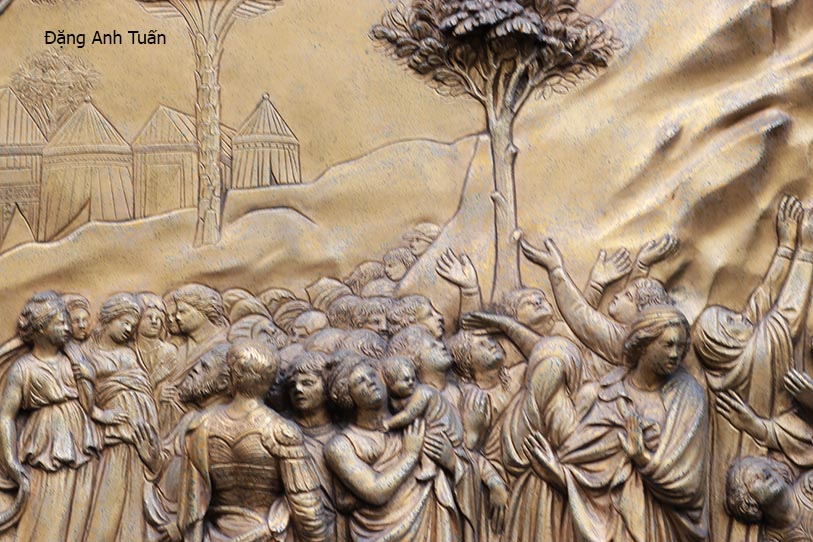
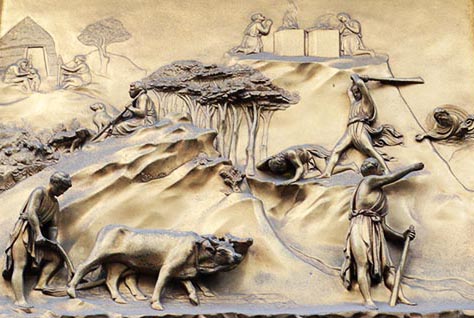
Portes du paradis de Lorenzo Ghiberti

un des plus grands maîtres de la première moitié du Quattrocento

Gates of Paradise by Lorenzo Ghiberti, one of the greatest masters of the first half of the Quattrocento.

Cửa lên thiên đường của Lorenzo Ghiberti

Version anglaise

It is a city of about half a million inhabitants located on the banks of the Arno River between the Tyrrhenian and Adriatic seas. It is almost at the center of the Italian peninsula. In the 15th century, Florence came under the rule of the Medicis family, who later became the Grand Dukes of Tuscany.

This was a moment of greatness for Florence in the arts and culture, but also in politics and economic power. Florence holds an exceptional artistic heritage that testifies to its centuries-old splendor. It is here that Cimabue and Giotto, fathers of Italian painting, Arnolfo and Andrea Pisano, renovators of architecture and sculpture, and Michelangelo, Leonardo da Vinci, Brunelleschi, Donatello, and Masaccio, famous initiators of the Renaissance (from the 15th to the 16th century), lived.

Smaller than other cultural capitals, Florence today welcomes more than seven million tourists per year. It also houses, by itself, half of the artworks preserved in Italy. It is also the first city to mint its own gold coins, the florins of Florence in 1252. Some countries, like the Netherlands, have retained this name until recently to designate their currency.

Galerie des photos

[Return ITALIE]

Voyage d’été 2017: Rome (Ý Đại Lơi)


[Retour ITALIE]


Tử Cấm Thành Bắc Kinh: phần 3

Version française

English version

[Tử Cấm Thành Bắc Kinh: phần 3]

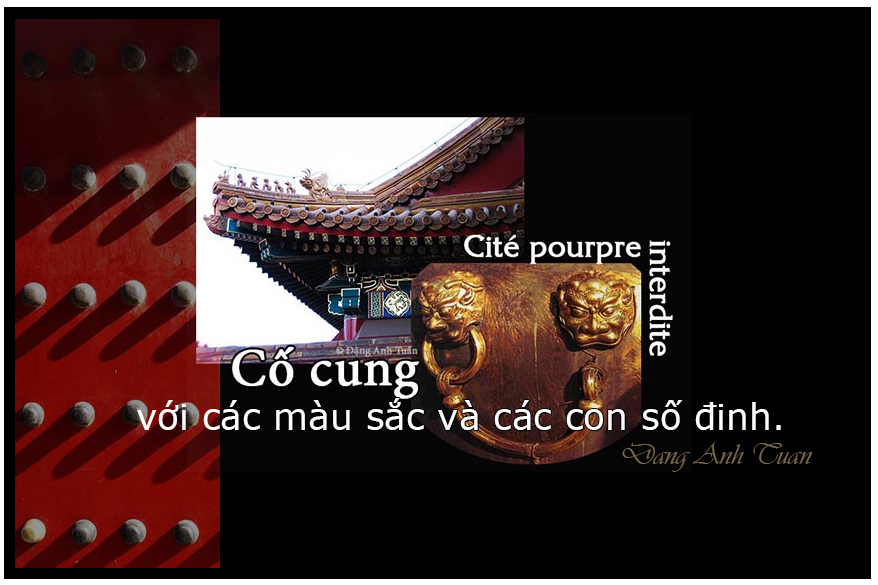
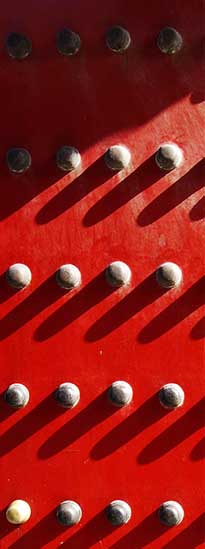
Đóng đinh trên các cửa, truyền thống nầy đã có từ lâu có từ thời nhà Tùy Đường (581-907). Riêng về cố cung thì trên bốn cửa chính  thì  đều có đóng đinh nhưng ngoài việc nầy,  chỉ có ngọ môn thì có thêm năm cổng còn các cửa khác thì chỉ có ba cổng.

Trừ cửa Đông Hoa Môn có 8 hàng ngang 9 hàng dọc đinh màu vàng ( 8*9=72)  với con số chẵn (số Dương tức là con số nguyên chia cho 2 và bội số của 3), tất cả cửa khác  đều có  9 hàng ngang và 9 hàng dọc  tức là 9*9=81, nghĩa là với con số Âm (số lẻ). Người Hoa hay dùng số Dương còn người Việt thì đối lại thì trọng con số lẻ (số Âm). Qua việc dùng đinh đống cửa, ngoài chức năng cấu tạo và  trang trí, người ta còn nhận thấy  nó còn  thể hiện khía cạnh trang nghiêm và uy nghi của một chế độ phong kiến của thời đó.

Đinh cửa

Có rất nhiều câu hỏi về sự chọn lựa số Dương trên cửa phía Đông (hay là Đông Hoa Môn). Đây là một nghi vấn mà các sử gia chưa tìm được câu trả lời. Có người nghĩ rằng lúc an táng Gia Khánh ĐếĐạo Quang Đế thì phải  mượn cửa nầy để đem đi chôn. Vì thế cửa nầy thường được gọi là Qủi Môn. Có thể đây là sự giải thích hợp tình hợp lý vì với số Âm người qua đời mới về được với Âm Phủ. Số lượng đinh đóng trên các cửa được cố định tùy theo chức vụ giai cấp của chủ nhân trong chế độ phong kiến.

Vì thiên tử là con của Thiên Đế (Trời) nên   số lượng phòng  trong cố cung  phải ít hơn số gian nhà mà Trời có trên thiên đình (10.000).  Con số nầy là con số Dương và là con số mang tính cách vô tận ở Trung Hoa.  Theo cuộc điều tra vào năm 1973 thì  có ở cố cung tất cả 8704 phòng (con số Dương).

Riêng về màu vàng, trong Âm Dương Ngũ Hành, thì màu nầy thường được gán với hành  Thổ (hay đất)  được tọa lạc ở trung tâm  trong việc quản lý vạn vật và giám sát  bốn phương. Vì là màu của mặt trời ở giữa trưa, màu nầy rực rỡ chỉ thuộc về hoàng đế vì nó biểu hiệu  sự kính trọng và che chở của thiên đế. Có tục lệ không được dùng một số màu ở thời kỳ phong kiến: màu đỏ, màu vàng, màu xanh da trời.

img_3307

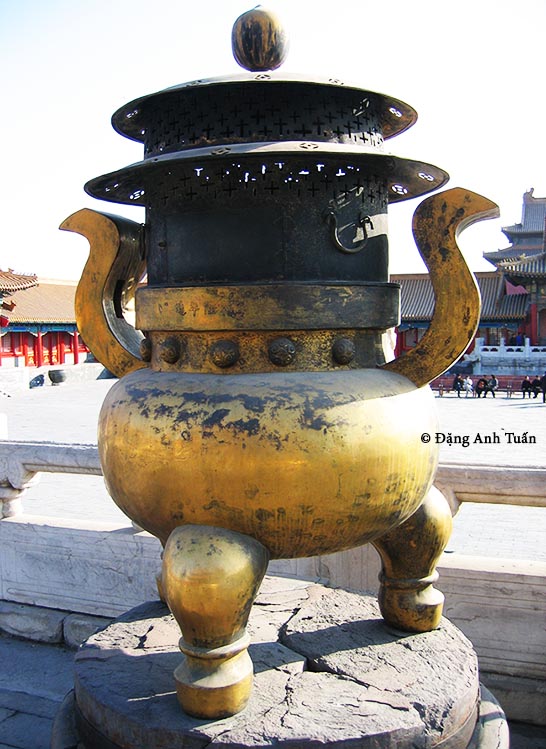
Lư hương

Ngược lại dân chúng được dùng: màu đen, màu trắng và màu xám. Bởi vậy không có chi ngạc nhiên khi thấy lại sự trọng dụng hai màu nổi bật nầy: màu đỏ tía và màu vàng  trong việc xây cất cung đình ở cố cung. Các vách tường thì màu đỏ tím còn các ngói  lưu ly  của cung đình thì màu vàng. Nhưng cũng có ngọai lệ đều có liên quan đến thuyết Âm Dương Ngũ Hành.  Đó là cung Wenyuan, nơi  có  thư viện Hoàng gia. Nơi nầy có mái nhà màu đen. Lửa là một vấn đề lo ngại ở cố cung. Đã bao lần lửa đựợc phát giác ở cố cung. Lần chót có lửa là lúc hoàng đế Quang Tự sắp thành hôn  còn một tháng với cô em họ Long Dụ. Đây là điềm báo không tốt cho cuộc hôn nhân. Dựa lấy cớ nầy, thái hậu Từ Hy hành quyết lập tức hai thái giám phụ trách trong việc bố trí các lồng đèn.  Bởi vậy màu đen tượng trưng nước,  được dùng ở cung Wenyuan trong việc phòng tránh hỏa họan và để bảo vệ các bộ sách ở thư viện. Có những gian nhà ở gần Đông Hoa Môn thì có mái nhà sơn màu xanh vì đây là nơi  ở của các hoàng tử.  Đấy cũng là màu xanh mà được gán cho phương đông trong ngũ hành.

[Trở về trang Tử Cấm Thành ( Bắc Kinh)]

[Trở về trang Trung Quốc]

Tử Cấm Thành Bắc Kinh: phần 2 (Cité interdite Pékin)

Version française

English version

[Tử Cấm Thành: Phần 2]

Cung Càn Thanh  đã bao lần là nơi  chứng kiến các âm mưu, các cuộc ám sát hay phản trắc dưới hai triều đại Minh Thanh. Hơn nữa, sau ngai vàng,  trên tấm bình phong, luôn luôn có treo một bức hoành   mà   hoàng đế Thuận Trị đề tự như sau: Quang minh chính đại. Còn thấy luôn cả lời bình luận  tôn vinh của người kế vị của ông , đó là hoàng đế Khang Hi. Đây là một kết cấu   tuyệt  vời , vượt qua cổ kim, còn  rạng rỡ và vĩnh cửu đáng làm tấm  gương học tập  cho hậu thế. Nhưng khốn  nổi sau  bức hoành nầy có bao nhiêu chuyện xung đột tiềm tàng,   tranh dành quyền hành ở trong  cung.

Trong thời gian 500 năm ngự trị của hai triều đại Minh  Thanh,  có nhiều biến cố đã xảy ra ở trong cung nầy. Trước hết là chuyện của hoàng đế Gia Tĩnh nhà Minh (1507-1567)  nổi tiếng hoang dâm và tàn ác không tả xiết được , súyt nửa bị chết ngạt bởi các cung nữ trong cung.  Lợi dụng ông ngủ say và rửa hận bởi cử chỉ hoang tưởng của ông, các cung nữ toa rập dùng dây  thừng thắt cổ ông trên long sàng.  Nhưng vì bị tố giác bởi một cung nữ trong nhóm với hoàng hậu nên hoàng đế được cứu sống. Các cung nữ đều bị hành quyết  tức khắc  luôn cả bà vương phi sùng ái của hoàng đế.

Rồi sau đó hoàng đế Thái Xương của nhà Minh (1582-1620) được biết dưới tên Chu Thường Lạc  chết đột ngột sau một tháng đăng cơ.  Người ta nghi ông  lạm dụng tình dục hay  bị  đầu độc.   Khiến làm triều đình lâm vào cuộc tranh giành quyền lực .   Vụ nầy được biết duới tên là Án Hồng Hoàn vì trước khi chết đột ngột,  hoàng đế có uống thuốc. Sau cùng hoàng đế áp chót của nhà Minh, con của Minh Quang Tông, Chu Do Hiệu  (1605-1628)  được biết với  niên hiệu  Thiên Hỷ (Tianqi) để  vuớng víu vào vụ Án Di Cung. Lợi dùng tuổ i nhỏ của hoàng đế, một vương phi của cha ông (vua Vạn Lịch),  Lý Tuyên Thi cố tình  thống chế Chu Do Hiệu . Bà cố  tình  ở lại Cung Càn Thanh và yêu cầu hoàng đế phong bà làm thái hậu để bà  có thể  điều hành triều chính.  Trước đòi hỏi và phản đối  mạnh mẽ của các quần thần, vua Thiên Hỷ ( Chu Do Hiệu) hạ chiếu bắt bà rời khỏi cung  và sống ở cung khác bị cháy vài tuần sau. Cuối cùng bà không bị chết  cùng cô con gái. Qua việc nầy , ai cũng nhận thấy có sự nhúng tay của hoàng đế tuy rằng có sự phản đối ở nơi ông.  Các sử gia thường tập hộp lại ba án trên đây dưới cái tên là  Vãn Minh Tam Án.

Dưới triều nhà Thanh,  có hai biến cố quan trọng. Mặc dầu Khang Hi được xem là một ông vua vĩ đại trong lịch sử Trung Hoa nhưng ông cũng gặp khó khăn trong việc lập thái tử nối ngôi vì có cuộc đấu tranh giành hoàng vị giữa các con của ông. Lúc đầu , ông phong cho Yinreng làm thái tử lúc mới hai tuổi sau đó Khang Hy đổi ý và chọn hoàng tử thứ 14 Dẫn Trinh làm ngưởi thừa kế.  Ông thầm kín  cất giấu  sau lưng bức hoành có bốn chữ  Quang minh chính đại môt cái hộp trong đó có di chiếu  « Truyền vị thập tứ tử  »  có nghĩa nhường ngôi lại cho thế tử thứ 14 vì Dẫn Trinh là hoàng tử được ông yêu chuộng.   Theo  truyền thuyết nói rằng,  khi Khang Hy đau nặng  thì Dẫn Trinh lúc đó đang viễn chinh ở vùng Tân Cương (Xinjiang) thì hoàng tử  Dẫn Chân ( Yingzheng ) lợi dụng thời cơ để lấy cái hộp và sửa chữa « Truyền vị thập tứ tử »  thành  » Truyền vị dư tứ tử  » bằng cách bỏ chữ « thập ». Nhờ vậy Ung Chính trở thành hoàng đế. Theo  bàn luận của người đời, Dẫn Chân còn chạy trốn ra vườn xem bệnh tình của Khang Hy mà trước đó ông có cho Khang Hy uống một bát  canh sâm. Theo các sử gia, Ung Chính có phần  trách nhiệm  trong cái chết đột ngột của Khang Hy  và vẫn tiếp tục là môt nghi vấn, một câu chuyện bàn tán của người đời. 

Vừa lên ngôi dưới tên là Ung Chính, ông  liền diệt trừ hay lưu đày tất cả những người  có tiềm năng chống đối .  Sau khi đăng quang, để tránh việc thừa kế mà ông là người  thông hiểu và gian nan  trong cuộc tranh giành quyền lực,  ông  mới thiết lập một phương pháp khéo léo bằng viết chiếu chỉ người thừa kế sau nầy thành hai bản, một bản niêm phong để trong hôp  cất sau bức hoành « Quang Minh chính đại » còn một bản ông mang trong người.  Khi ông lâm chung thì  có thể kiếm di chiếu ở trong hộp và  so sánh với bản ông có trong người thì sẻ nhận ra được người kế thừa hoàng vị .  Như vậy không có sự phản kháng nào cả. Phương pháp lập thái tử vẫn có tác dụng đến đời vua Hàm Phong nhưng vì Hàm Phong chỉ có một đứa con duy nhất  Đồng Trị với Từ Hy hoàng hậu nên phương pháp nầy hết còn hiệu lực. Để củng cố chức vụ nhiếp  chính, Từ Hy thái hậu ủy bỏ phương pháp nầy bằng cách tấn phong lần lượt  những  » hoàng đế con  nít » đó là Quang TựPhố Nghi.

[Tử  Cắm Thành (Bắc Kinh): Phân 3]