Chùa Keo (Pagode Keo, Thái Bình)


Version vietnamienne
English version
Galerie des photos

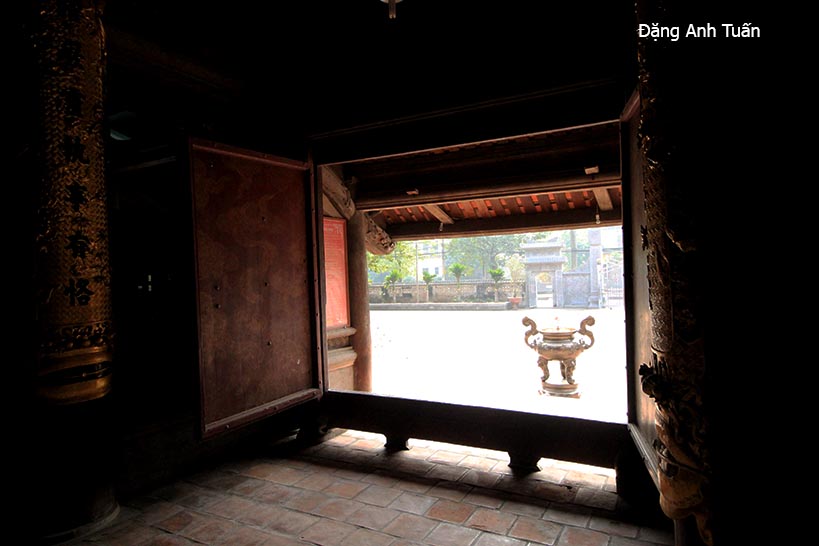
En évoquant Thái Bình, on ne cesse pas de penser à sa spécialité locale (soupe de poissons)  et à sa pagode Keo.  Etant préparé minutieusement avec  les morceaux de  carpe  d’eau douce assaisonnés avec de  la poudre de curcuma,, ce plat associé aux nouilles de riz crée à la fois un goût délicieux et aromatique avec les feuilles d’aneth et de basilic,  ce qui lui permet de rivaliser incontestablement avec le phở, le bouillon des Tonkinois.

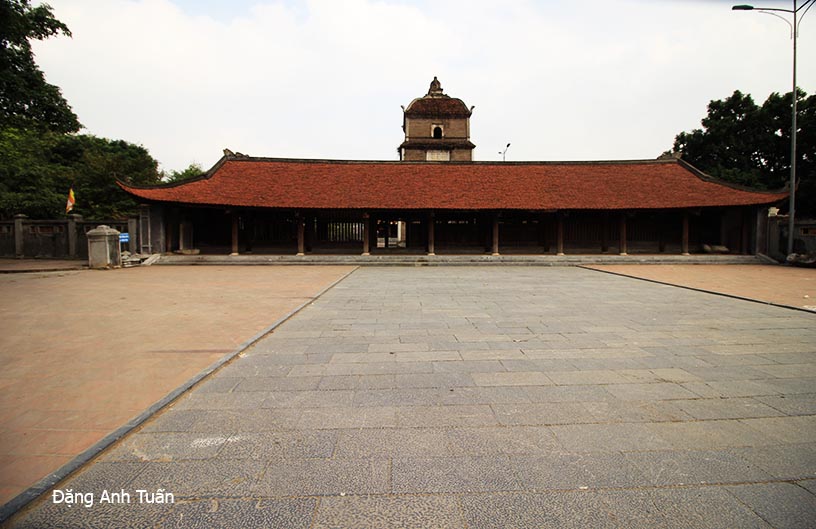
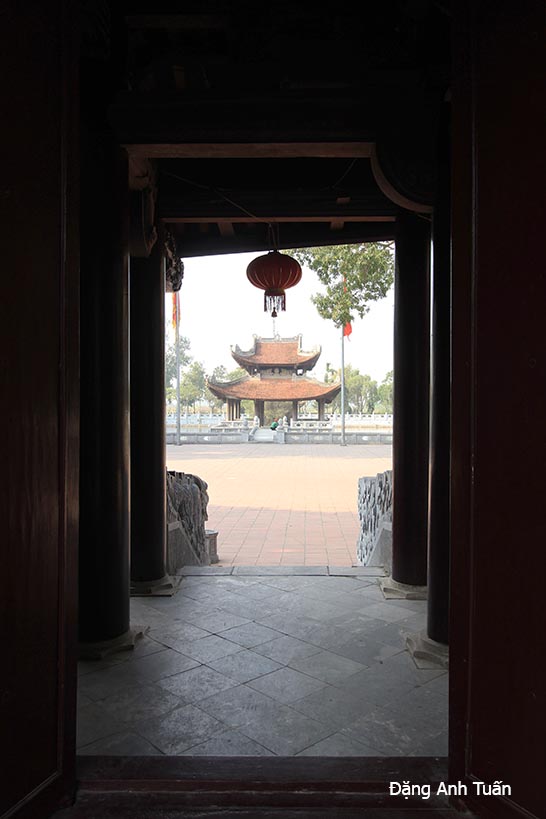
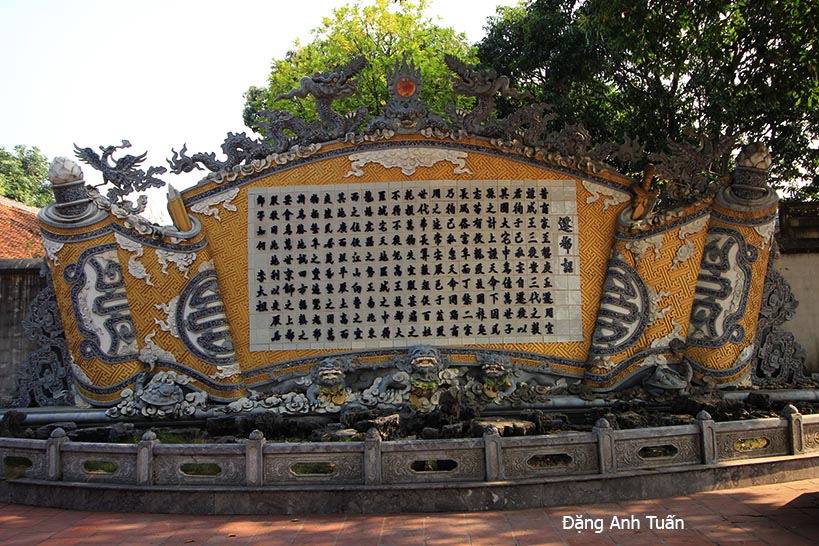
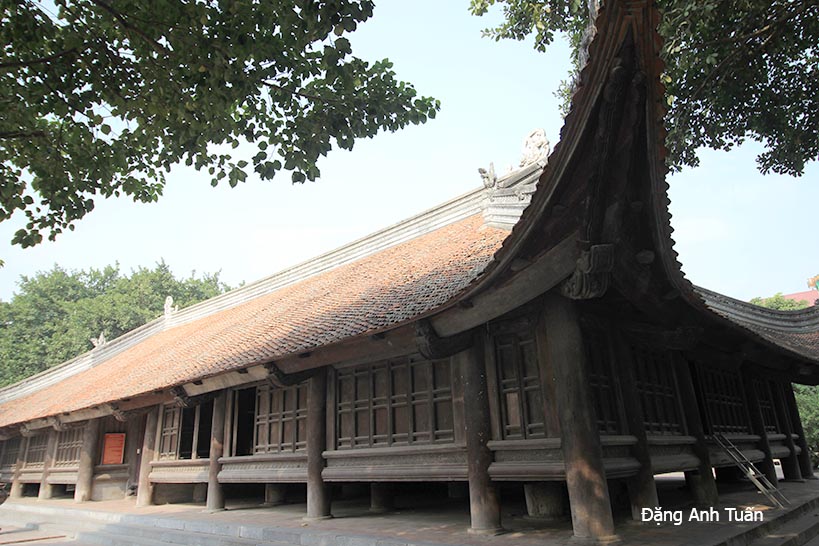
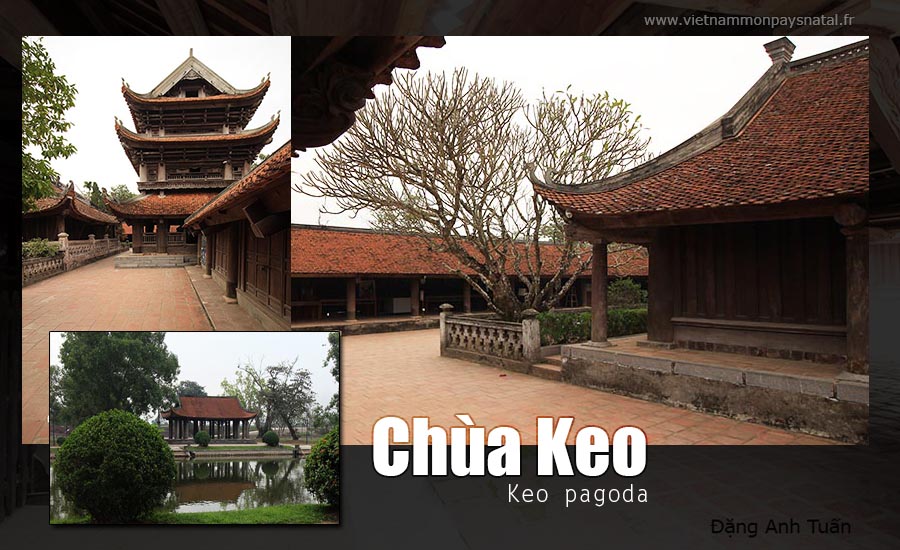
Quant à la pagode Keo, elle est véritablement un ancien ouvrage  architectural localisé dans le district Vũ Thư avec une superficie de 40.907,9m2. Etant considérée souvent comme une chef d’œuvre d’art basé essentiellement sur l’utilisation des étais  du bois de fer précieux (gỗ lim), cette pagode possède plus de 100 travées de taille diverse et un clocher magnifique à 3 étages  dont chacun possède son propre toit aux tuiles « mủi hài » et une cloche en bronze carrelé.  

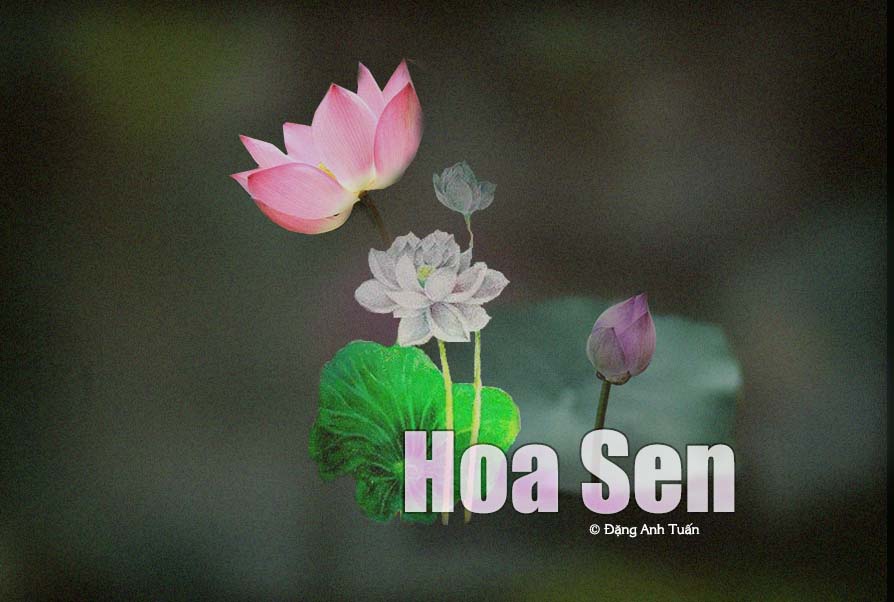
On ne conteste pas sa réputation d’être  le plus beau   joyau architectural typique datant de l’époque des Lê postérieurs. Son dôme ressemble à une fleur de lotus épanouie au milieu de la cour de la pagode.

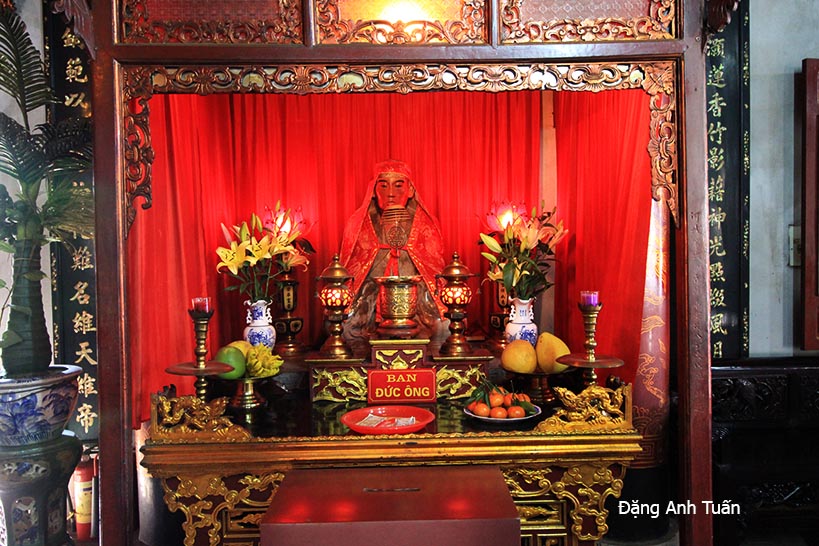
 L’organisation du culte religieux est la particularité de cet édifice  avec   Tiền Phật hậu Thần Thánh ( Bouddha dans la cour avant  et les Génies dans la cour arrière). C’est pourquoi on retrouve  prioritairement Bouddha  dans la salle antérieure (tiền đường) de la pagode  tandis qu’on pratique le culte des génies, en particulier celui  du  moine Dương Không Lộ dans la salle postérieure (hậu đường).    Etant issus des écoles religieuses   Vô Ngôn Thông et Thảo Đường, Dương Không Lộ était non seulement le Maître du Royaume sous la dynastie des Lý mais aussi l’inventeur de la fonderie vietnamienne. Cette pagode est habituée à organiser chaque année le festival des rites traditionnels ayant lieu au printemps (le 4ème jour du 1er mois lunaire), et  à l’automne (entre le 13ème et le 15ème jour du 9e mois lunaire). La fête est tellement importante que les filles ne peuvent pas s’en passer avec le dicton suivant:

Dù cho cha đánh mẹ treo, Em không bỏ hội chùa Keo hôm rằm.

Malgré l’interdiction de mes parents,
je ne peux pas  laisser tomber le festival des rites traditionnels au jour du mois lunaire.

Un joyau architectural vietnamien

Galerie des photos 


Version anglaise 

In speaking of Thái Bình province, one does not cease thinking about its local speciality (fish soup) and Keo pagoda. Being carefully prepared with  seasoned pieces  of freshwater carp in turmeric powder, this meal combined with noddles gives simustaneously a delicious  and aromatic taste  by the presence of dill  and basil leaves, which allow it to compete with phở, the Tonkinese soup. For the Keo pagoda, there is an older architectural  artefact located in the  Vũ Thư district and covering a land area of 40.907,9m2. Being considered as a greatest masterpiece  of art and  based essentially on the use of precious wooden struts (gỗ lim), this pagoda has more than 100  various-sized spans and  a magnificient threelevel bell tower,  each of which  posseses its own roof  with  shaped tiles (mũi hài) and a bell in tiled bronze

.One does not deny its reputation for being the most beautiful architectural jewel dating from the time of Later Lê Dynasty. Its dome looks like a flower blossomed in the midst of pagoda’s yart.

The organization of religious worship is the  particularity of this building with Tiền Phật hậu thần thánh (Buddha in front yard and geniuses in rear yard). That is why Buddha is fund in the anterior room (tiền đường) while the cult of geniuses, in particular that of Dương Không Lộ monk takes place in the posterior room (hậu đường). Coming  from religious schools Vô Ngôn Thông and Thảo Đường, Dương Không Lộ was not only the great master of the kingdom under Ly  dynasty but also the inventor of Vietnamese foundry. This pagoda is accustomed to organize each year the religious festival in the spring (4th day of the first lunar month) and autumn (between 13th and 15th day of the 9th lunar month). The festival is so important that girls  cannot do without it with the following saying: 

Dù cho cha đánh mẹ treo, em không bỏ hội chùa Keo hôm rằm.
Despite the interdiction of my parents,  I cannot renounce the Keo festival at the lunar day.

 
Chùa Keo,
một kiến trúc đẹp nhất ở Vietnam

Vietnamese version

Nhắc đến Thái Bình thì không thể quên được món canh cá rô và chùa Keo.  Canh cá, món nầy  được kết hợp với bánh đa, tạo ra một hương vị đầm đà với lá thì là, húng bạc hà,   không thua chi món phở của người miền Bắc  còn chùa Keo thì là một công trình kiến trúc cổ  độc đáo nằm trong huyện Vũ Thư  và có diện tích 40.907,9m2.  Đựơc xem là một kiệt tác nghệ thuật bằng gỗ lim, có hơn một trăm gian lớn nhỏ khác nhau và  nhất là có một gác chuông gồm có ba tầng, 12 mái, khung gỗ, mái lợp ngói mũi hài và một chiếc chuông đồng lát gạch.

Gác chuông là một kiến trúc tiêu biểu dưới thời Hậu Lê và được xem là đẹp nhất của vùng Bắc Bộ với hình dáng của một hoa sen vương lên giữa sân chùa.

Chùa Keo  có đặc điểm riêng trong việc thờ tự, ngoài thờ Phật phía sau còn thờ thánh.(tiền Phật, hậu Thánh). Vì vậy phía sau là nơi thờ thiền sư Dương Không Lộ, đựợc phong làm thánh.  Ông thuộc phái Vô Ngôn Thông và phái Thảo Đường, làm Quốc sư dưới triều nhà Lý và được xem là vị tổ của nghề đúc đồng. Chùa nầy hằng năm  còn có tổ chức những ngày lễ hội  truyền thống dành cho mùa Xuân và mùa Thu. Ngày lễ hội quan trọng cho đến đổi  có câu ca dao về hội chùa Keo:

Dù cho cha đánh mẹ treo,
Em không bỏ hội chùa Keo hôm rằm.

[Return RELIGION]


Người bán hàng rong Hanoï


Les marchandes ambulantes de Hanoï

Version anglaise
Version vietnamienne
Galerie des photos

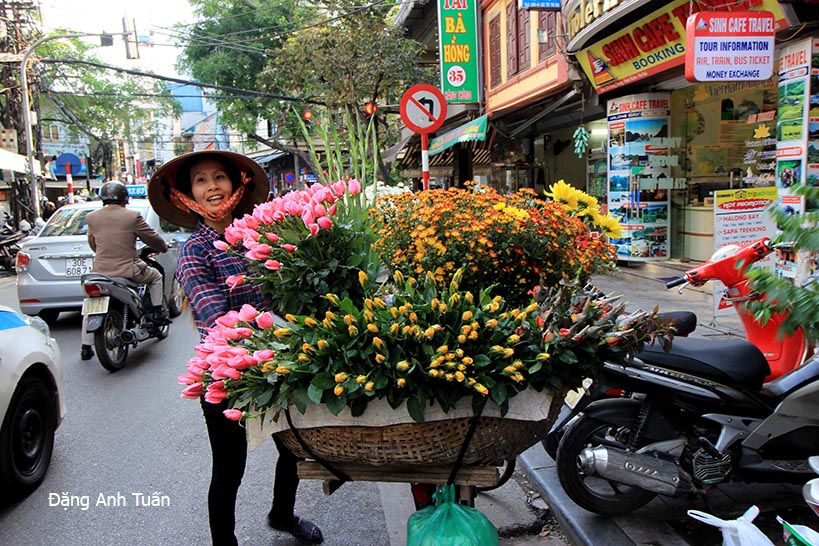
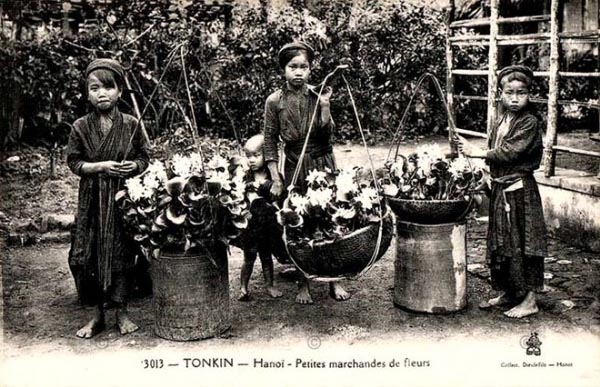
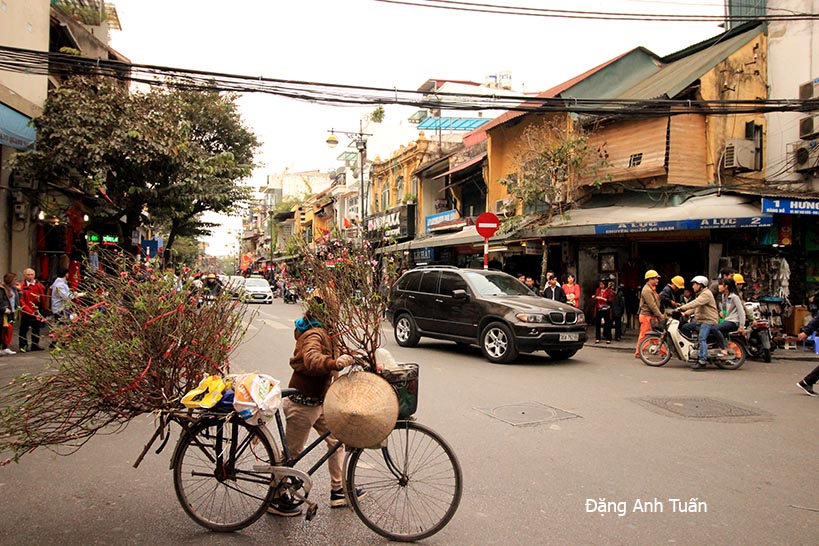
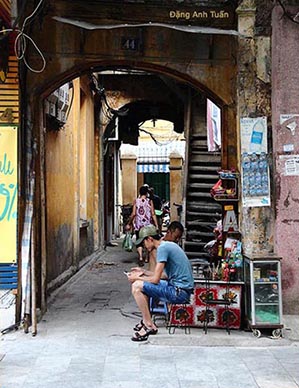
Étant connues à l’époque coloniale, les marchandes ambulantes se font au fil des années une image d’une scène ordinaire et plutôt familière pour les Hanoïens dans leur vie journalière. Par contre pour les touristes étrangers et les passionnés  de photos, elles constituent un attrait  très original,  une caractéristique particulière de la « culture du commerce ambulant »  de Hanoï  dont les photos ne peuvent pas être absentes  dans un album de photos de voyage, en particulier avec les marchandes ambulantes de fleurs. Étant venues d’autres provinces ou vivant aux alentours de la capitale, celles-ci  réveillées  très  tôt, à 4 ou 5 heures du matin, doivent accomplir  des dizaines de  kilomètres en vélo pour s’approvisionner en fleurs et fruits au marché.  Puis elles  cherchent des rues  calmes et désertes  pour mettre en valeur les produits  proposés à vendre (leurs et fruits)  tout en faisant appel à leur créativité  et l’adresse de leurs mains dans la géniale exposition et  la disposition superbement équilibrée de ces produits. Ceux-ci sont proposés en fonction de leur saison. On peut dire que ces femmes marchandes ambulantes  sont des tableaux vivants animés et multicolores se  faufilant au cœur du vieux quartier de la capitale.

Elles  apportent  tous les jours à la capitale   un style de vie   particulier sans qu’elles  le sachent. Elles continuent à s’inquiéter de manière timorée  tout en cherchant de loin la présence et le déplacement de la police locale à travers leurs yeux  craintifs et apeurés. Cela fait mal à ces femmes qui doivent chercher de l’argent pour s’acquitter des obligations familiales et avoir la tranquillité dans l’âme mais cela crée aussi un souci majeur pour ceux qui aiment à faire des photos comme moi car je suis obligé de les poursuivre patiemment  à travers les rues et les quartiers avec le but de pouvoir obtenir ces photos inoubliables ci-dessous  que je pourrai partager sur le net. Il est  très difficile d’avoir auprès de ces femmes courageuses un sourire matinal naturel avec cette vie assez  tumultueuse.

Version vietnamienne

Đã có từ  đời Pháp thuộc, người bán hàng rong là một hình ảnh bình dị quá quen thuộc  đối với người Hà Thành trong cuộc sống hằng ngày nhưng đối với những người du khách ngoại quốc hay là những người thích chụp ảnh thì người bán hàng rong là một nét đẹp quá độc đáo, một đặc trưng  văn hoá bán hàng rong  riêng tư  của Hà Thành không thể thiếu sót để lưu niệm trong cuốn album được nhất là với  những người bán hoa dạo. Các phụ nữ bán rong nầy họ là những người  nhập cư từ phương xa đến, họ  thức dậy lúc 4, 5 giờ sáng đạp xe hàng cây số để lấy hoa hay trái cây ở chợ   rồi họ tìm những đường hay nơi vắng vẽ ít người  để họ trang trí lại theo ý muốn, tăng thêm với  đôi bàn tay khéo léo,  cái  vẻ đẹp của  các món hàng thực phẩm  họ bán,  nhất là hoa quả. Họ bán theo mùa, muà nào thức ấy. Có thể nói họ là những bức tranh sống  linh hoạt   muôn màu di chuyển giữa lòng phố cổ. 

Họ tạo ra hằng ngày  một nét đẹp riêng tư  cho Hà Thành mà chính họ không bao giờ biết  nghỉ đến. Họ lúc nào cũng lo lắng  rụt rè thăm dò từ đằng xa sự đeo  đuổi của các chú  cảnh sát phường xóm qua đôi mắt sợ sệt. Thật tội cho họ để kiếm tiền trang trải cuộc sống vất vã, không có lúc nào được yên tâm cả mà cũng tội cho những người thích  chụp ảnh như  tớ cũng bị lôi cuốn, chạy theo họ qua đường phố, phải kiên nhẫn  để có thể được các tấm ảnh nầy  để chia sẻ trên trang nầy  nhất là hiếm có  được ở nơi họ  những  nụ cười tự nhiên vui vẻ buổi sáng với cuộc sống bon chen nầy.

marchande_ambulante


Version anglaise

Being known at the colonial period, street women  vendors get over the years,  a picture of the ordinary scene and too familiar for people living in Hanoi. However, for foreign tourists and photo enthusiasts, they constitute an attraction very original, a particular characteristic of ambulant commerce in Hanoï. Their photos are not missing in an album of travel pictures, in particular with  itinerant florists. Coming from other provinces or living around the capital and being  up early  around 4 or 5 in the morning, they must accomplish tens of kilometers on a bike  for their  supplies in flowers and fruits to the market. Then they seek refuge in quiet and desert streets in order to highlight the products to be sold  (flowers and fruits) by calling upon the creativity  and the manuel skill  in the ingenious exhibition and the arrangement superbly balanced of these products proposed depending on their season. 

One can say these street vendors are animated and multicoloured  living tableaux sneaking in the heart of old quarter of Hanoï. They provide every day to the capital a  particular lifestyle without them knowing. They continue to worry in timid manner by seeking away the presence and displacement of local police with their fearful eyes. It hurts these women who must find money for paying off their family obligations and having peace in their soul but it  also creates a major concern for those who love to take pictures like me because I am obliged to pursue them with patience through streets  and quarters in order to obtain these unforgettable  pictures below.  It is difficult to have a morning natural  smile from courageous women when they have a tumultuous life.

Galerie des photos

[Return FLEURS DU MONDE]

[Return HANOI]

Old Hànội (Phố cổ Hànội)

Version française
Version vietnamienne
Galerie des photos

Despite the obsolescence of its tubular houses (nhà ống) and  old quarter of 36 streets and guilds, the « old Hanội » make over time the charming and romantic feeling. This old quarter  extending over an area mesuring approximately 82 ha, was established according to the criteria mentioned in the geomancy, a Asian discipline for finding the equilibrium and harmony between water and earth and especially between beneficial wind (Blue Dragon) and  evil wind (White Tiger).

 Each street has its specialty: street consecrated to the silk with multicolored scarves, street reserved only to drugs with the fragrance of aromatic herbs etc … , that is what writer Roland Dorgeles told in his book « On the mandarin road ». In his book entitled « A description of  Tonkin kingdom« , the English merchant Samuel Baron mentioned that with  his illustrations and interesting descriptions.

Despite its insignificant size against that of Vietnam, the old quarter of Hanoï irrefutably  demonstrate the commercial and urban culture of the Vietnamese over many centuries. It is a model sorely needed for knowing in depth the traditional structure of the « town » in the Vietnamese’s rural world.

Pictures gallery 

titre_vieux_hanoi_1


Phố Cổ

The old quarter has a thousand years of history even if this latter is chaotic. Hànội has been predicted by Lý Thái Tổ king for ten thousand generations to come during the capital’s transfer. Hànội remains not only the eternal capital of the Vietnamese but also the sole city in South-East Asia  successfully keeping its mercantile city over the centuries.

Thu Quyến Rũ (The seduction of  Autumn of Đoàn Chuẫn-Từ Linh).
Saxophonist Quyền Văn Minh.

This track is taken from the album « Hànội mùa thu và em » (Hànội, the autumn and my love).

 Over night

vieux hanoi la nuit


Quán Thánh temple (Hànôi)

French version
Vietnamese version

Not far from Lake of the West (Hồ Tây), Quán Thánh is one of  the inescapable sites of Hànôi city. This sacred  temple is reserved to the cult of Taoist God named  Huyền Thiên Trấn Vũ considered in Asia as the emperor of the North (Bei Di (or Bắc Đẩu in vietnamese)) ruling on the underwater world. According to  the judicious arrangement of Feng Shui, (Phong Thủy), it is  erected with three  others  for purpose of protecting Thăng Long capital against strangers and  evil spirits, each going in the well-defined direction (Bạch Mã temple Hàng Buồm at the East, Voi Phục (Thủ  Lệ ) temple at the West,  Kim Liên in the South and Quán Thánh in the northern Hanoi). It is often said that this temple was erected in 1010 under the reign of Lý Thái Tổ king. The  statue was made of wood at the beginning of its installation. Despite successive  renovations under the Trần dynasty,  it was  only in 1677 under the reign of Lê Hy Tông king that the restoration was significant with the installation and replacement of the statue in bronze-black and the bell tower of the temple.

Vũ Công Chấn’s altar

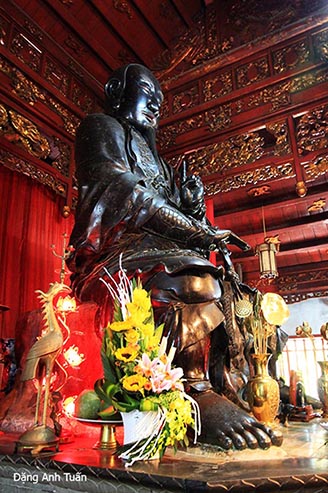
This colossal statue of 4 tons and about 4 meters  in height, was placed on a marble platform having one metre in height. In a  sitting position with a square face and barefoot, the statue has a taoist traditional dress. It holds  in the right hand, a sword pointing on the turtle’s back and superbly decorated by the presence of the coiled snake while in the left hand, a Taoist mudra, a codified  ritual sign is visible by way of exorcism. Being associated to the direction of the North and  water, the color must be black  according to the theory of five elements (Ngũ hành). It is the explanation found in the color selection for the statue.

Pictures gallery

Đền Quán Thánh

The fine detail and the imposing size of this statue made almost four centuries ago, unquestionably reveal  the prodigious exploit and  know-how of  Ngũ Xã village steelworkers of this time under the supervision of Vũ Công Chấn.

 This temple is not only  the one of  last Taoist temples found in the capital but also the ideal place for those who like  serenity and calm in the town so loud and vibrant as Hànội city.

[RETOUR]


The Vietnamese bra

French and Vietnamese versions

yem_dao
Being an integral element  of four-part dress, Yếm is the most popular bra worn by Vietnamese women in the past. One finds in its manufacture a silk or cotton fabric square, the ends of which  are fixed by the straps tying behind the back and at the neck  level.This is intended to cover and support the chest for leaving  naked the rest of the body’s upper part. Yếm causes not only lure of seduction but also pleasant freshness during summer days. However in winter, it becomes a kind of the underwear above which is added the four-part dress,  thus allowing  Vietnamese women to protect themselves against the severe cold.

In the Vietnamese tradition, the wasp waist is one of the distinctive traits  of female beauty. Perhaps that’s why the birth of this bra is linked to this tradition intended   to emphasize  the line of the women’s body by giving it the shape of the segmented body of the wasp. 

This bra  was worn by all sections of the population without exception. But the notion of color differentiates between the categories of people wearing it. The brown colour is intended for  farmers while  educated girls prefer the harmonious, elegant and discrete colors. For the elderly, the dark remains the most widely used. Despite this observation, it is possible to see Yếm with eccentric colours.

Pictures gallery

One does not known its origin but  Yếm was appeared for the first time in the 11th century under the Lý dynasty. It underwent many changes over time before being again recently an glamourous fashion article, competitor of « Áo dài ». In  old days, it was accompanied by wearing a skirt and a turban cloth (black or brown) or a scarf ending with a « Crow beak » at the  front top. (khăn vuôn mõ quạ). It is only during the reign of  Minh Mạng emperor  that the black pants was  imposed instead of the skirt.

Yếm is an inexhaustible source for Vietnamese poets among which is  famous Hồ Xuân Hương. She has had the opportunity to describe not only the romantic and glamourous image of this Vietnamese undershirt but also the innocence of a young girl living in a society ruled by Confucian immutable ethic, in her poem entitled « the girl asleep in the daytime » (Thiếu nữ ngủ ngày).

Mùa hè hây hẩy gió nồm đông
Thiếu nữ nằm chơi quá giấc nồng
Lược trúc lỏng cài trên mái tóc
Yếm đào trễ xuống dưới nương long
Ðôi gò Bông đảo sương còn ngậm
Môt lạch đào nguyên suối chưa thông
Quân tử dùng dằng đi chẳng dứt
Ði thì cũng dở ở không xong.

Summer breeze is sporadically blowing,
Lying down the young girl slides into sleeping.
Her bamboo comb loosely attached to her hair,
Her pink bra below her waist dropped down fair.
On these two Elysian mounds, the nectar is still remaining,
In that one Fairy rivulet, the current seems to stop flowing.
At such a view, the gentleman hesitated,
Odd to leave, yet inconvenient if he stayed.

Yếm is mentioned so many times in  popular poems. It reflects the strength and intensity of the love through these two following verses:

Trời mưa trời gió kìn kìn.
Đắp đôi dải yếm hơn nghìn chăn bông.

It’s raining and it made the wind with intensity.
To be covered with a pair of Yếm better than to get thousand duvets


It is difficult to leave the person we fell in love unless we have become this undershirt to retain her. That is what we have in the two verses below:

Kiếp sau đừng hóa ra người
Hóa ra dải yếm buộc người tình nhân.

In the future life, one should not be born a man
But it is necessary to be transformed into undershirt to retain the lover.

[Return TRADITIONS]

Museum of Champa sculpture (Bảo tàng viện Điêu Khắc Cổ)

French version
Vietnamese version
Picture gallery

phatmau_tara

Before it became the Champa Sculpture Museum today, it was known as the Sculpture Garden in the distant past. It was here that they began to collect and preserve for the most part, under the aegis of archaeologist-architect Henri Parmentier and members of the French School of the Far East (EFEO) in the late 19th century all the artifacts found  during archaeological excavations in the central regions (from the Hoành Sơn Anamitic Range, Quảng Bình in the north to Bình Thuận (Phan Thiết) in the south) where an ancient Indochinese kingdom existed known in the early 2nd century as Linyi and then Huanwang and finally Champa until its annexation by Vietnam in 1471. Opened to the public in 1919, this museum initially took the name of its founder « Henri Parmentier Museum » and housed 190 artifacts among which was the famous pedestal of the Buddhist site Đồng Dương.

Then the museum did not cease to expand since 1975 to reach today an area of 2,000 m² out of a total of more than 6,600 m² and to acquire in the year 1978 the great masterpiece of bronze art, the statue of Laksmindra-Lokesvara (Quan Âm chuẩn đề) often known as Tara. It becomes over the decades the unique museum in the world in the field of Champa art. It allows the tourist to also know the chronology of Champa history as all styles are present through artifacts from the famous sites Mỹ Sơn, Đồng Dương, Trà Kiệu and Pô Nagar (Nha Trang). For French researcher Jean Boisselier, Chame sculpture is always closely linked to history. Despite the evolution of styles throughout its history, chame sculpture continues to keep the same divine and animal creatures in a constant theme. This is a museum not to be missed if one has the opportunity to visit Đà Nẵng

  • Mỹ Sơn E1 style (Phong cách E1)
  • Chính Lộ style (Phong cách Chính Lộ )
  • Đồng Dương style (Phong cách Đồng Dương)
  • Tháp Mắm style … (Phong cách Tháp Mắm)

Picture gallery

[ngg_images source= »galleries » container_ids= »126″ display_type= »photocrati-nextgen_basic_thumbnails » override_thumbnail_settings= »1″ thumbnail_width= »180″ thumbnail_height= »180″ thumbnail_crop= »1″ images_per_page= »30″ number_of_columns= »4″ ajax_pagination= »0″ show_all_in_lightbox= »0″ use_imagebrowser_effect= »0″ show_slideshow_link= »0″ slideshow_link_text= »[Montrer sous forme de diaporama] » template= »/homepages/5/d276592279/htdocs/clickandbuilds/vietnamquehuongtoi/wp-content/plugins/nextgen-gallery/products/photocrati_nextgen/modules/ngglegacy/view/gallery-caption.php » order_by= »pid » order_direction= »ASC » returns= »included » maximum_entity_count= »500″] Tháp Mắm style

style_thapmam


  • Mỹ Sơn E1 style : vivacity in ornamentation, dedicacy in the details..style_dongduong
  • Khương Mỹ style : gentleness in the faces, harmony and symmetry…
  • Trà kiệu style : beauty in the adornments, the half-smile, the development of feminine beauty ( fully developed breasts, new freedom in the hips etc ..)
  • Đồng Dương style :typical facial appearance (protruding eyebrowns, thick lips with the corners…
  • Tháp Mắm style : art reached in its limits with a lack of realism and extravagance….

[Return to CHAMPA]

Art de Sukhothaï (Nghệ thuật Sukhothaï)


Version vietnamienne

English version

Avec le premier grand royaume thaï Sukhothai, on voit naître une nouvelle civilisation qui savait tirer profit de la culture indigène sous l’élan d’une personnalité exceptionnelle et aussi marquante qu’était le roi Rama Khamheng. Pour Georges Cœdès, les Thaïs étaient de remarquables assimilateurs. Au lieu de détruire tout ce qui appartenait aux anciens maîtres (Môn-Khmers) comme le firent les Vietnamiens lors de la conquête du Champa, les Thaïlandais tentèrent de se l’approprier et de retrouver les thèmes dans les vieux répertoires môn-khmers pour créer un nouveau style propre et particulier en laissant transparaître les traditions locales dans l’architecture (les chedis) et la statuaire (les Bouddhas). Le Mahàyàna fut abandonné désormais en faveur du bouddhisme du Theravàdà auquel était consacrée entièrement l’esthétique thaïlandaise. Celle-ci tira évidemment ses formules iconographiques et plastiques de l’art khmer et de celui du Dvaravati (Môn).

L’éclosion de l’art de Sukhothaï témoigne d’une volonté d’innovation et d’une vitalité remarquable malgré certaines influences cinghalaises, birmanes et khmères. C’est ce qu’on voit dans la grande création de l’iconographie des Bouddhas. Ceux-ci représentés sous la forme humaine étaient sculptés selon des règles très précises que les artistes thaïlandais devaient respecter minutieusement. Selon Bernard Groslier, il y a un peu d’exagération dans la beauté de ces oeuvres afin de pouvoir accentuer la stylisation et montrer l’originalité d’une société nouvelle et dynamique. L’allongement démesuré trouvé dans les bras et les oreilles et la déformation excessive du chignon supérieur rappellent bien le manque du réalisme.

Malgré cela, la sculpture bouddhique de Sukhothai témoigne incontestablement d’un art entièrement original et d’une période où la nation thaïlandaise avait besoin d’une identité culturelle et religieuse et d’une personnalité propre illustrée par l’exemple trouvé dans la création du Bouddha marchant. Sa forme gracieuse  ne peut pas passer inaperçue et  réussit à pénétrer les Thaïlandais. Une fluidité est trouvée dans le mouvement de ce Bouddha. Son allure est à la fois légère et sereine. Sa tête en forme d’ovale, ses sourcils arqués en demi cercle parfait et prolongés par un nez aquilin et long, sa chevelure en bouclette  surmontée d’une longue flamme (unîsa)(tradition cinghalaise), sa bouche entourée par une double ligne (tradition khmère), ses vêtements collés au corps sont les traits caractéristiques de l’art bouddhique de  Sukhothaï.

Sous le règne de Rama Khamheng (ou Rama le Brave), une nouvelle société se forma à partir de l’héritage môn-khmer. Cette société trouva son modèle administratif et social auprès des Mongols. L’écriture thaïe fut créée et basée sur la cursive khmère qui trouvait sa lointaine origine dans l’Inde méridional. Le bouddhisme theravàda fut adopté comme la religion d’état. Malgré cela, l’animisme continua à se perpétuer comme en a témoigné le culte de l’esprit du sol évoqué par Rama Khamheng. Celui-ci installa sur une colline près de Sukhothai un autel dédié à un esprit nommé Phra Khapung Phi, supérieur à tous les autres esprits pour assurer la prospérité du royaume. Cela lui revint la charge d’honorer ce culte tous les ans. C’est aussi cet état d’esprit qu’on a vu encore au début du XXème siècle au Vietnam avec la cérémonie rituelle de Nam Giao (Huế) célébrée par l’empereur car étant le fils du Ciel, il était censé de demander chaque année la protection et la bénédiction du Ciel pour le pays. (idem en Chine avec le temple du Ciel (Thiên Đàn) à Pékin).

On n’est pas étonné de trouver encore de nos jours cette tradition, cette idée de l’esprit supérieur dans le Bouddha d’Eméraude (ou Phra Keo Morakot), palladium de la Thaïlande et protecteur de la dynastie de Chakri dans la chapelle du palais royal à Bangkok. Pour Bernard Groslier, le parallélisme n’est pas gratuit: les Thaï appartiennent au monde primitif de la pensée chinoise. On se pose des questions à cette comparaison car on ne peut pas ignorer qu’analogues à des Vietnamiens, les Thaï faisaient partie du groupe Cent Yue dont la plupart des ethnies étaient des animistes et appartenaient au monde agricole. Ils étaient habitués à honorer le culte des génies du sol, de l’agriculture ou du village avant d’être sous la coupe de l’influence chinoise. Rama Khamheng réussît à nouer des relations diplomatiques avec la Chine de Koubilai Khan. Il favorisa la venue et l’installation des artisans chinois dans la capitale. Avec leur savoir-faire, le royaume de Sukhothai ne tarda pas à être connu avec ses fameuses céramiques de Sawankhalok. Royaume d’Ayutthaya

[Retour à la page Thaïlande]


Thailand (Thái Lan)

French version

The emergence of the Thai people is only strengthened since the XIVth century. Nevertheless it is a very ancient people of Southern China. It is a member of the Austro-Asiatic group (Chủng Nam Á) (or Baiyue or Bách Việt in Vietnamese). It is this group French archaeologist Bernard Groslier often indicated under the name of « Thai-Vietnamese group ».

Repulsed by the Tsin of Shi Huang Di, the Thai people try to resist again and again. For Vietnamese writer Bình Nguyên Lôc, the subjects of Shu and Ba (Ba Thục) kingdoms annexed very early by the Tsin in the Szechuan (Tứ Xuyên) (1), were the Proto-Thai (or Tày). According to this writer, they belonged to the Austroasiatic group of branch Âu (or Ngu in language mường or Ngê U in Chinese mandarin (quan thoại)) to which the Thai and the Tày were attached.

For him as for other Vietnamese researchers Trần Ngọc Thêm, Nguyễn Đình Khoa, Hà Văn Tấn etc .., the Austro-Asiatic group contains 4 different subgroups: subgroup Môn-Khmer, subgroup Việt Mường (branch Lạc), subgroup Tày-Thái (branch Âu) and subgroup Mèo-Dao to which it is necessary to add the subgroup Cham, Raglai, Êdê to define the Indonesian race (or Proto-Malay) (2) (Chủng cổ Mã Lai).

The contribution of the Thai people in the foundation of the Ậu Lạc kingdom of Thục Phán (An Dương Vương) is no longer in doubt after the latter managed to eliminate last king Hùng of the Văn Lang kingdom because the name « Âu Lạc » (or Ngeou Lo) evoke obviously the union of two ethnic groups Yue of branch Âu (Proto-Thai) and branch Lạc (Proto-Viet ). Furthermore, Thục Phán originating from the royal family of Shu (Thục), an Yue of Thai branch, which shows at such a point the union and the common fate of these two ethnic groups in front of the Chinese expansion.

It is what is has been reported in Chinese historical writings ( as Kiao -tcheou wai-yu ki or Kouang-tcheou ki) but it has been refuted by some Vietnamese historians because the Shu kingdom was too far the Văn Lang kingdom. This latter has been annexed very early ( more than a half century before the foundation of the Văn Lang kingdom) by the Tsin. But according to Bình Nguyên Lộc writer, in the compagny of his trusted friends, Thục Phán having lost his homeland, was forced to seek refuge at this time in the country having the same ethnic affinity, that is to say Si Ngeou (Tây Âu) located beside the Văng Lang kingdom of the Vietnamese. Furthermore, the Chinese have no interest in falsifying history by reporting that the ruler of the Âu Lạc kingdom was the Shu prince. For this latter and his trusted friends, the requests for asylum need a certain time, which explains at least a half century in this exodus before the foundation of his Âu Lạc kingdom. Moreover, he was at the head of an army of 30.000 soldiers. It is impossible for him to assure all logistical aspects and render his army invisible during the exodus by crossing through Yunan mountainous regions administered by others ethnic ennemies or people close to the Chinese. It is likely that he needed what is necessary before his conquest with Si Ngeou people (or Proto-Thaïs). Despite the legend of the Vietnamese magic crossbow, An Dương Vương (Ngan-yang wang) was a historical personage. The discovery of his capital archeological remains (Cổ Loa, huyện Đông An, Hànội ) does not question the existence of this kingdom established about three centuries before Jesus Christ. This one was later annexed by Zhao To (Triệu Đà), founder of the Nan Yue kingdom.


A long common history with the Vietnamese.

The Lạc Long Quân-Âu Cơ myth insinuate so skilfully the union and the separation of two Yue ethnic groups, one being of Lạc branch (the Proto-Vietnamese) coming down to the plains by the pursuit of water courses and rivers, the other (the Proto-Thaïs) taking refuge in mountainous areas. There are the Mường in this exodus. Being close to the Vietnamese at the linguistic level, the Mường have managed to keep their ancestral customs because they were sent away and protected in high mountains. They had a social organization similar to that of the Tày and the Thaïs.

Located in Kouang Tong (Quãng Đông) and Kouang Si (Quãng Tây) provinces, the Si Ngeou (Tây Âu) kingdom is none other than the land of the Proto-Thaïs (Thai ancestors). It is here that Shu prince Thục Phán took refuge before the Văn Lang kingdom conquest. It should also be remembered that Chinese emperor Shi Houang Di had to mobilize at this time more than 500.000 soldiers for the Si Ngeou kingdom conquest after having successfully defeated the Chu kingdom (Sỡ Quốc) army with 600.000 soldiers. You have to think that in addition to the implacable resistance of its warriors, the Si Ngeou kingdom should be very large and densely populated for the commitment of the substantial military force from Shi Houang Di (Tần Thủy Hoàng).

Despite the premature death of Si Ngeou king named Yi-Hiu-Song (Dịch Hu Tống),the resistance led by the Yue of Thai branch or (Si Ngeou)(Tây Âu) succeeded in obtaining a few expected results in Southern Kouang Si with the death of general T’ou Tsiu (Uất Đồ Thư) leading a Chinese army of 500.000 men, which has been mentioned in Master Houa-nan annals (or Houai–nan –tseu in Chinese or Hoài Nam Tử in Vietnamese) written by Liu An (Lưu An), grandson of Kao-Tsou emperor (or Liu Bang), founder of Han dynasty between 164 and 173 before our era. Si Ngeou was known for the courage of its formidable warriors. This corresponds exactly to the temperament of the Thai living in the past, described by French writer and photographer Alfred Raquez:(3)

Being belligerent and adventure racer, the old-time Thai were almost constantly at war with their neighbours and often saw their successfull excursions. After each victorious campaign, the prisoners were taken with them and deported in a part of Siam territory as far away as possible from their countries of origin.

After the disappearance of this kingdom and that of Âu Lạc, the Proto-Thaï remaining in Vietnam at this time under the bosom of Zhao To (a former general of Tsin dynasty who later became the first emperor of Nan Yue kingdom) had their descendants forming properly today the ethnic minority Tày of Vietnam. Other Proto-Thaï fled to Yunnan where they united at the eighth century in Nanzhao kingdom (Nam Chiếu) then Dali (Đại Lý) where buddhism of Greater Vehicle began to take root. Unfortunaly, their attempt was in vain. Shu, Ba, Si Ngeou, Âu Lạc (5), Nan Zhao, Dali countries are part of the list of kingdoms annexed one after the other by the Chinese during their exodus. In these countries submitted, the Proto-Thaïs presence was very important. In front of the Chinese continous pressure and the Himalaya inexorable barrier, the Proto-Thaï had to get back in the Indochinese peninsular (4) by penetrating slowly like a fan in Laos, northwest region of Vietnam (Tây Bắc), northern Thailand and Upper Burma.

According to Thai historical inscriptions found in Vietnam, there are three important waves of migration initiated by the Thai of Yunnan in northwest of Vietnam during the 9th and 11th centuries. This corresponds exactly to the period where Nanzhao was annexed by Dali destroyed, in turn, three centuries later by Kubilai Khan Mongols in China. During this penetration, the Proto-Thaïs were separated into groups: the Thaï of Vietnam, the Thaï in Burma (or Shans), the Thaï in Laos (or Ai Lao in Vietnamese) and the Thaï in Northern Thailand. Each of these groups began to adopt the religion of these host countries. The Thaï of Vietnam do not have the same religion as those of other territories. They continue to keep animism (vạn vật hữu linh) or totemism.

This is not the case of the Thaï living in Northern Thailand, Upper Burma, Laos which were occupied at this time by Indianized and Buddhist theravàda Môn-Khmer kingdoms (Angkorian empire, Môn Dvaravati, Haripunchai, Lavo kingdoms etc …) after the dislocation of Indianized Funan kingdom. The Môn had a key rôle in the transmission of Theravadà Buddhism from Sinhalese tradition for Thai newcomers.


(1): Pays des pandas. C’est aussi ici qu’on a découvert la culture de Ba-Shu célèbre pour ses masques zoomorphes de Sanxingdui et pour le mystère des signes sur les armures. C’est aussi le royaume de Shu-Han (Thục Hán) de Liu Bei (Lưu Bị) à l’époque des Trois Royaumes.(Tam Quốc)

(2) Race de l’Asie du Sud-Est préhistorique.

(3): Comment s’est peuplé le Siam, ce qu’est aujourd’hui sa population. Alfred Raquez, (publié en 1903 dans le Bulletin du Comité de l’Asie Française). In: Aséanie 1, 1998. pp. 161-181.

(4) Indochina in wider sense. This is not French Indochina.

(5) The Âu Lạc kingdom of An Dương Vương was annexed by Chinese General Zhao To (Triệu Đà) who later became the founder of Nanyue kingdom. This one will be in turn under the control of Han dynasty, half a century later.


Bibliography

Photos de Venise de l’Orient (Vọng Các)


Bangkok

[Return THAÏLANDE]

Angkor Vat (Đế Thiên Đế Thích)


Jewel of Khmer Art

angkor_vat

French version

Vietnamese version
picture-591

 
It is the largest and the most sublime temple-mountain of all Khmer temples. It was built during the reign of Sûryavarman II in the first half of the XIIth century. It was considered as capital of the Khmer empire having in its center the temple of state dedicated to Vishnu. It is here that the towers are raised in quincunx. Two major characteristics of the Khmer architecture are found there: pyramids or temples-mountains symbolizing the Mount Meru (house of Gods) and the galleries which were built the one above the other. Many people considers it as the eighth wonder of the world. Other temple mountains can be visited: Bakeng, Takeo, Baphûon, Prè Rup, Bakong and Ak Yum.