La bourgade de Đồng Văn (Phố cổ Đồng Văn)

Version française
Version anglaise
Galerie des photos

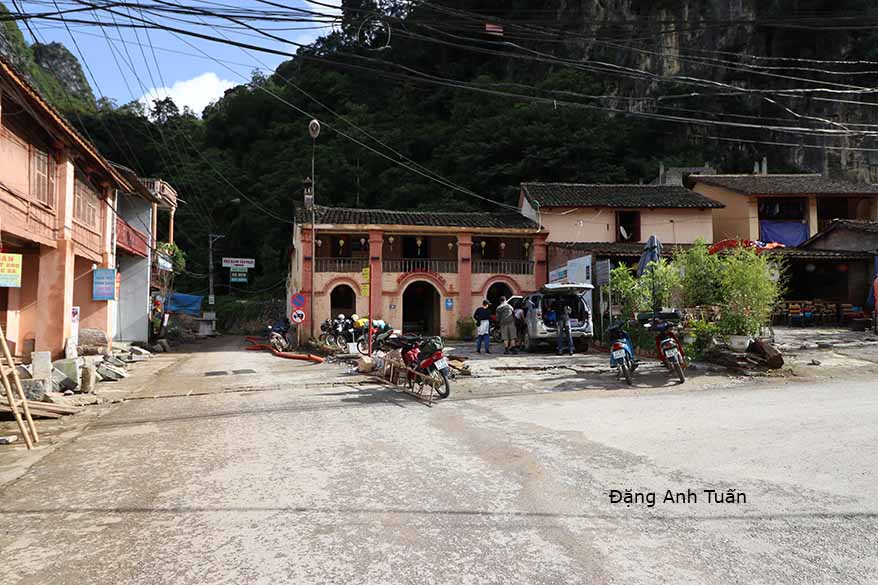
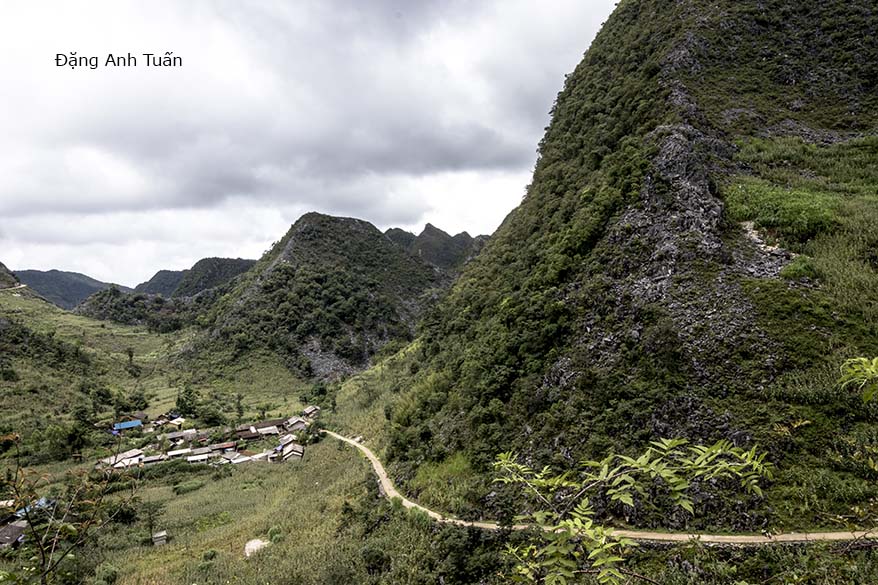
Nằm ở giữa lòng thung lũng của cao nguyên đá Đồng Văn, phố nầy lúc ban đầu có khoảng chừng 40  cái nhà mà thôi. Khu phố nầy được thành hình vào đầu  thế kỷ 20 dưới chân núi  với vài gia đình người Hmong, người Tày và người Hoa. Bởi vì được xây cất với các thợ  được thuê đến từ Tứ Xuyên nên các nhà ở đây mang dấu ấn  khá  sâu đậm của người Hoa qua lối kiến trúc hai tầng trình tường, mái  ngói âm dương và trước cửa nhà có đèn lồng treo cao. Nay trở thành một địa điểm quan trọng mà du khách không thể bỏ qua được khi đến Hà Giang. Nhà cửa ở đây cũng xây cất lại, nhà trọ cũng có nhiều, giá cả cũng  phải chẵn, du khách ngoại quốc nhất là dân đi phượt cũng đông cuối tuần và thích ngủ nhà sàn.

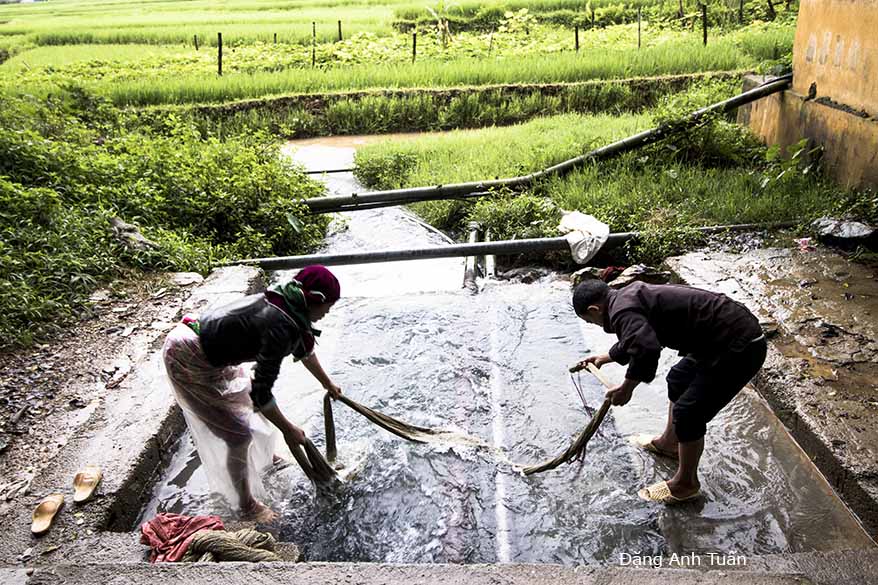
Rất tiếc chiều hôm đó, mưa quá to nên chụp hình không được nhiều. Chỉ sáng hôm sau, trời lại nắng nên mới có vài tấm ảnh để lưu niệm nhưng cũng có dịp viếng thăm một nhà cổ của người Hmong nay thành nhà trọ và có dịp chứng kiến cách thức dùng nước suối rửa cây linh (lin)  trước khi dệt vãi.  Đi miền núi như mình rất mệt nhưng  học hỏi rất nhiều về tập quán nhất là Hà Giang có đến 22 dân tộc thiểu số  và rất thích thú trong cuộc hành trình nầy. 

Située au cœur de la vallée du plateau karstique de Đồng Văn, cette bourgade avait  seulement au moment de sa construction  une quarantaine de maisons.  Elle prit forme au début  du XXème siècle au pied des montagnes rocheuses avec quelques familles Hmong, Tày et Hoa (ou Chinois).  Comme ses maisons ont été construites par des ouvriers recrutés  venant de Sichuan, cette bourgade continue à garder  une  profonde empreinte chinoise à travers son architecture typique à deux étages, son toit avec des tuiles tubulaires âm dương (Yin-Yang) et ses lampions suspendus devant l’entrée.

Aujourd’hui, elle devient un passage obligatoire pour ceux qui visitent Hà Giang.  La plupart de ses maisons sont rénovées et ses « homestay » (logement chez l’habitant) sont nombreux avec un prix assez raisonnable. Les touristes étrangers  sont en majorité des routards ou des gens aimant l’aventure de l’extrême et préférant dormir dans des maisons sur pilotis   et ils sont nombreux à la fin de la semaine.   

C’est regrettable pour nous d’avoir la pluie torrentielle le soir de notre arrivée. C’est seulement le lendemain avec le retour du soleil que je peux faire quelques photos ci-dessus. J’ai aussi l’occasion de visiter une vieille maison devenant aujourd’hui un  « logement chez l’habitant » et d’apprendre la façon de laver le lin avec l’eau de source  avant le tissage des vêtements pratiqué par les Hmong.  L’excursion à la montagne est épuisante   mais elle me permet d’avoir des choses à apprendre en particulier les coutumes et les traditions lorsque la région Hà Giang a 22 minorités ethniques. Je suis très content de ce voyage mémorable. 

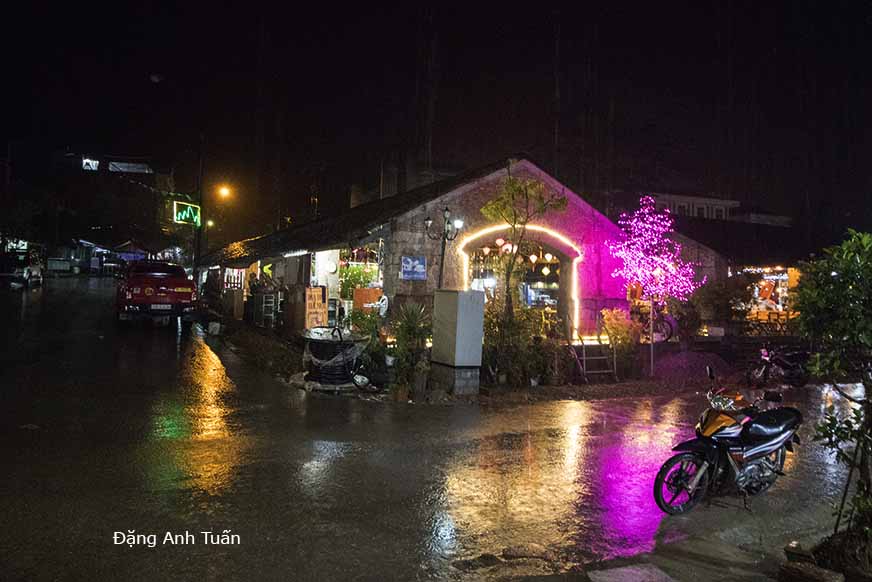
La bourgade Đồng Văn au fil de la nuit.

Laver le lin avant le tissage des vêtements par les Hmong.

Located in the heart of the Đồng Văn karst plateau valley, this small town had only about forty houses at the time of its construction. It took shape at the beginning of the 20th century at the foot of the rocky mountains with some Hmong, Tày, and Hoa (or Chinese) families. Since its houses were built by workers recruited from Sichuan, this town continues to retain a strong Chinese influence through its typical two-story architecture, its roof with âm dương (Yin-Yang) tubular tiles, and its lanterns hanging in front of the entrance. Today, it has become a must-visit stop for those visiting Hà Giang. Most of its houses have been renovated, and its homestays are numerous with quite reasonable prices. The majority of foreign tourists are backpackers or people who love extreme adventure and prefer to sleep in stilt houses, and many of them come at the end of the week.

It is unfortunate for us to have torrential rain on the evening of our arrival. It is only the next day, with the return of the sun, that I can take some photos above. I also had the opportunity to visit an old house that has now become a « homestay » and to learn how to wash flax with spring water before weaving clothes, a practice of the Hmong. The mountain excursion is exhausting, but it allows me to learn many things, especially the customs and traditions since the Hà Giang region has 22 ethnic minorities. I am very happy with this memorable trip.


bourgade_dong_van

[RETOUR]

Hà Giang, vẽ đẹp của miền sơn cước


Version française
Version anglaise
Galerie des photos

Nằm ở vùng núi phía Bắc Vietnam, Hà Giang là một tỉnh có nhiều núi rừng, giáp ranh giới vói tỉnh Vân Nam của Trung Quốc. Dân số ở nơi nầy rất thưa, chỉ có khoảng chừng 900.000 người theo điều tra dân số năm 2016. Tuy nhiên chính ở nơi nầy tụ hơp rất nhiều dân tộc thiểu số (22 dân tộc) trong đó đáng kể nhất là người Hmong (hay Miêu) tiếp đó người Tày, người Dao và người Nùng. Đến đây mới thấy được cái đẹp tư nhiên của tạo hóa, cái hùng vĩ của non nước, cái nhọc nhằn, công lao của ông cha ta gìn giữ bờ cõi đất nước trước hiểm họa của người phương bắc. Chính cũng ở nơi nầy mới có cảm xúc nhiều khi lặn lội trèo lên 389 bậc thang ở đỉnh Lũng Cú mà thường được gọi là đỉnh núi Rồng (Long Sơn) (1700 mét), nơi mà danh tướng Lý Thường Kiệt phá Tống bình Chiêm dựng lên lúc ban sơ cây cột cờ để khẳng định chủ quyền Vietnam trên mãnh đất nầy.

Tuy Hà Giang nó rất còn hoang sơ của miền sơn cước nhưng nó có cái gì thiêng liêng mà không thể diễn tả được khi đến với mãnh đất nầy. Tôi còn nhớ trước ngày đi đến, ai cũng khuyên không nên đi vỉ tuần trước đường xá sạt lở vì bão Sơn Tinh. Có thể nguy hiểm cho tánh mạng và có thể hủy đi lịch trình Hà Giang khiến tôi sẻ mất một tuần ở Vietnam nhưng rồi tôi cũng quyết tâm đi cùng các con cháu. Tôi mới có dịp nhìn thấy được nét đẹp của Hà Giang, đến tham quan cao nguyên đá Đồng Văn mà cơ quan UNESCO chín thức công nhận là Công Viên địa chất toàn cầu đầu tiên của Vietnam và thứ hai ở Đông Nam Á sau Langkawi (Mã Lai)  vào năm 2010.

Hôm đi, không có gì trở ngại cả, cứ lấy quốc lộ 2 đến Tuyên Quang rồi sau đó đến thành phố Hà Giang nghỉ một đêm ở một khách sạn trong thành phố Hà Giang. Trên đường, có một quán bán nước mía không thấy có ruồi chi cả dù có bã mía rất nhiều trong thùng rác. Thấy vậy tôi,  các con cháu và cháu  tài xế mới mua uống  mỗi người một ly. Hai vợ chồng bán nước mía nầy họ trồng sau vườn các bụi mía. Thât ngon và sạch nhất là ở đất nầy không thấy có  ruồi có lẽ tại khí hậu của rừng núi và dân số quá thưa. Lâu lắm rồi mới uống được một ly nước mía trong sạch chớ bao giờ dám uống mỗi lần vê Việtnam. 

Chiều đó  còn được một cặp vợ chồng bạn con dâu mình mời và  đãi một buổi cơm với món ăn đặc trưng ở Hà Giang là lẩu ngựa. Ăn kèm theo rau rừng, mùi vị béo ăn cũng không ngán để làm ấm lại con người khi  không gian thời tiết se lạnh hay mưa rỉ rả trong đêm. Sáng sớm mưa vẫn rơi, tụi nầy tiếp tục hành trình đi Đồng Vạc với quốc lộ 4C, mình hơi lo, cứ nhủ thầm trong lòng, cứ  sương mù xuống nửa lừng đồi thêm mưa rỉ rả  như vầy  thì chuyện chụp hình của mình cũng hỏng chưa nói chuyện sạt lở đất ở giữa đường đi, đôi khi có một  tảng đá to lớn vài tấn nằm bên hông đường. Không có chỉ dẩn rõ ràng chi cả có đi đuợc hay không, cháu tài xế Minh cứ lẳng lặng lái xe.

Chính nhờ  sự bình tĩnh cũa Minh và tính tiền định có ở nơi người con Việt mà sự  lo âu của mình cũng dần dần biến mất nhất là có những đọan đường không có mây đen trời lại nắng khiến mình mãi mê chụp hình mà quên tất cả. Nhưng có những đoạn đường quanh co nguy hiểm đến đổi phải sửng sốt đèo nầy qua thì đèo khác tới khiến làm ai cũng mệt  nhất là chỉ có tổng cộng hơn 200 cây số mà 6, 7  tiếng đồng hồ phải mất .  Mệt thì có mệt nhưng với không gian yên tĩnh, con người hiền hòa của vùng sơn cước thì  cũng nên cần có  chớ không như ở Saïgon hay Hànội  cái ồn ào ầm ĩ của tiếng kèn, cái không gian sôi động không ngừng. 

Cũng không có trộm cắp như các đô thị khác theo lời kể của cháu tài xế. Cụ thể là gà, vịt, trâu và bò vẫn ngẩn ngơ do dự   từng bước  sang ngang trên quốc lộ mà tất cả xe lớn xe nhỏ phải tránh và dù tụi nó  xa nhà của chủ nhân có cả cây số. Cũng không ai dám cán  chúng nó vì sợ chủ nhân đòi đền gấp  nhiều lần hơn. Dọc theo quốc  lộ,  lúc nào cũng thấy các cánh đồng ngô xanh của dân tộc Hmong. Họ rất giỏi về làm ruộng. Bởi vậy từ thưở nào người Trung Hoa  dùng chữ  tựơng hình điền  thêm trên đầu  chữ  tượng hình thảo (lúa)  ám chỉ nguời Hmong 苗 hay Miêu, những người  giỏi về canh tác đấy. 

Cũng đúng thôi vì nhìn  trên tản đá chỉ cần một tí đất là  cây ngô có thể chồi ra dễ dàng. Đôi khi dọc theo đường nhìn sâu qua kiến xe có một  hay hai cái nhà của người Hmong nằm cheo leo sườn núi không biết họ xây dưng làm sao và đi thể nào để vào đó.  

Cũng có phần  may mắn khi  đến Đồng Văn có một nhà trọ mới sửa ở phố cổ nên tụi nầy được trọ đêm thứ nhì ở  đây. Mưa vẫn rơi tầm tã nên đèn đuốc cũng lờ mờ, không có trông đẹp như Hội An, Phố cổ Hànội. Có lẽ tụi nầy đến giữa tuần nên không có nhộn nhịp như lúc cuối tuần. Sáng ngày thứ ba, tụi nầy mới có dịp ăn điểm tâm ở đây, ăn bánh cuốn trứng  Đồng Văn, đặc sản ở  miền sơn cước.

Nó cũng được tráng từ bột gạo và nhân làm từ lợn xay ra, chỉ có khác là thay vì ăn kèm với nước mắm pha chanh đường thì họ dùng với nước hầm (ninh) xương kèm theo hai chiếc giò lụa nhỏ.  Mình chỉ  thấy có một hương vị đặc biệt nhưng vì có mỡ của xuơng nên ăn dễ  ngán lắm. Có lẽ là một cách ăn để ấm lòng và  xua đuổi cái lạnh của rừng Tây Bắc cũng như ở Pháp thường ăn bơ với mùa đông. Sau đó tụi nầy  đi một vòng ở phố cổ Đồng văn, mới có dịp nhìn thấy được cách thức rửa cây lin  mà người Hmong dùng để  dệt vãi  với nước suối trước khi đi tham quan đỉnh Lũng Cú và nhà vua Mèo Vương Chính Đức.  Biết bao nhiêu kỷ niệm khó quên và cảm xúc không ít với ba ngày ở Hà Giang nhất là có các con cháu bên cạnh, lúc nào cũng trơ lực  trong chuyến đi nầy từ Hà Giang đến Cà Mau, hai cái mốc của đất nước cách xa  1535 cây số.

Située dans la région montagneuse du Nord Vietnam, Hà Giang est une province partageant la frontière commune avec  la contrée du sud-ouest de la Chine, Yunnan. Sa population est peu dense et estimée à peu près de 900.000 habitants selon la statistique démographique en 2016. Pourtant c’est une région où il y a la concentration importante  des ethnies minoritaires du Vietnam (22 ethnies) parmi lesquelles il faut citer d’abord les Hmongs suivis par les Tày, les Dao et les Nùng. C’est ici qu’on découvre la beauté extraordinaire du Créateur,  la nature grandiose et magnifique du Vietnam fascinant, le labeur et le mérite de nos ancêtres dans l’action de résister à la menace des gens du Nord. C’est ici seulement qu’on ressent une émotion intense lorsqu’on grimpe les 389 marches de l’escalier en pierre de la colline Lũng Cú qu’on est habitué à appeler la « colline du Dragon » à 1700 mètres d’altitude. C’est ici aussi que le général vainqueur  des Song et pacificateur du Chămpa  Lý Thường Kiệt a édifié au début un mât en bois de quelques mètres pour affirmer  avec intransigeance la souveraineté du Vietnam sur ce territoire.

Bien que ce dernier ait l’air d’une région montagneuse  sauvage et difficilement pénétrable, il y a quelque chose sacrée que je n’arrive pas à décrire en venant ici. Je rappelle bien que la veille de mon départ, tout le monde m’a recommandé d’abandonner le projet de visiter Hà Giang  car elle a été dévastée la semaine précédente par la tempête « Sơn Tinh« . Cela pourrait provoquer des ennuis pour moi et me faire perdre une semaine de vacances au Vietnam. Malgré cela, je continue à persister dans le dessein d’y aller. J’ai ainsi l’occasion d’admirer le charme irrésistible  de Hà Giang et de visiter le plateau karstique Đồng Văn que la fondation  UNESCO a reconnu comme le deuxième parc géologique de l’Asie du Sud Est après celui de la Malaisie (Langkawi) en 2010.

Nous  n’avons  aucun souci le jour du départ. Nous  n’avons  qu’à prendre la route nationale n°2 pour aller à la ville Tuyên Quang avant de rejoindre ensuite  la ville Hà Giang pour passer la nuit à l’hôtel.  Sur la route, nous avons l’occasion de rencontrer un kiosque  détenu par un couple et spécialisé dans la vente du jus de canne à sucre. Nous constatons  qu’il n’y a pas de mouches aux alentours malgré la présence d’une poubelle remplie de déchets de canne à sucre broyés. Nous pensons que le climat joue un rôle important et la démographie n’est pas importante. Nous sommes tentés, chacun  de prendre un verre de jus de canne à sucre. C’est extrêmement délicieux car jusqu’à ce jour je n’ose pas à le prendre quand je reviens au Vietnam.

Le soir  même, nous sommes invités par un couple d’amis de  ma belle-fille Oanh dans un restaurant connu pour sa spécialité locale (lẫu ngựa)(ou fondue vietnamienne de viande de cheval). Accompagné par les légumes de la région montagneuse, ce plat ayant la saveur grasse ne nous dégoûte pas mais il nous réchauffe tellement  lorsque le temps commence à se refroidir et la pluie est sporadique durant toute  la nuit. Le lendemain, la pluie continue à tomber toujours. Malgré cela, nous prenons   la route nationale 4C  en direction de Đồng Văn. 

L’inquiétude commence à m’envahir car si le brouillard continue à s’épaissir de plus en plus à mi-hauteur de la colline avec la pluie persistante comme celle de la nuit, l’idée de faire les photos  serait tombée à l’eau sans  évoquer les dégâts causés sur la route par la dernière tempête ( plusieurs  gros bloc de pierre de plusieurs tonnes  étant souvent visibles au bord de la route). Aucune indication n’est fournie pour connaître la praticabilité de la route ou non. Notre chauffeur Minh continue à conduire avec assiduité sans être inquiété par l’absence de l’indication.

C’est grâce à son calme et à l’attitude fataliste reçue des Vietnamiens  que mon inquiétude s’estompe au fil de la journée. Sur certains tronçons de la route,  le retour du soleil m’incite  à tout oublier et à me  consacrer entièrement  à  faire des clichés. Par contre il y a des tronçons de route très dangereux et tellement sinueux que cela nous rend tous fatigués. Pour 200 kilomètres de trajet, il faut compter au minimum 6 ou 7 heures de route. Malgré cela, nous sommes contents d’avoir cet espace tranquille et  les gens gentils et  aimables de la région montagneuse au lieu de retrouver à Saïgon ou à Hanoï le bruit incessant des klaxons et l’espace tellement animé et pollué.

Selon le chauffeur Minh, il n’y a pas non plus le vol comme on le trouve dans les villes.  Les poulets, les canards,  les buffles ou les bœufs hésitant dans leur marche peinent à  traverser la route sans que leur propriétaire s’inquiète de les perdre même s’ils sont loin de leur enclos.

Personne n’aime à les écraser car il faut payer  un prix très fort au propriétaire. Sur le bord de la route, on trouve souvent les champs de maïs des Hmong. Ils sont experts dans le domaine de la culture. C’est pourquoi les Chinois se servent depuis longtemps du pictogramme  điền   (champ) au dessus duquel est ajouté  le pictogramme thảo  (riz paddy) pour désigner les Hmong (ou Miêu), les gens doués pour la culture du sol.

C’est ce que nous constatons en découvrant de près sur une roche garnie d’une  petite motte de terre l’apparition d’une plante de maïs. Parfois à travers la vitrine de la voiture, nous  découvrons au loin  une ou deux maisons des Hmong perchées  sur le flanc de la montagne. On se demande comment arrivent-ils à les construire et à y accéder?

Nous avons la chance de passer la deuxième nuit  à Đồng Văn  dans un homestay récemment rénové au centre de la vieille ville. La pluie continue à tomber le soir. C’est pourquoi aucune attraction n’a lieu et les lampions sont clairsemés par rapport à ceux de Hội An et de la vieille ville de Hànội. Du fait que nous sommes arrivés au milieu de la semaine, nous ne trouvons aucune   animation organisée fréquemment  en fin de la semaine. Le matin du  troisième jour, pour prendre le petit déjeuner,  nous cherchons de bonne heure un restaurant spécialisé dans la préparation d’une crêpe à l’œuf (bánh cuốn trứng)  typique de Đồng Văn.

 Étant une spécialité de la région montagneuse, cette crêpe  est faite à partir de la farine de riz et de la viande hachée et se déguste  en la trempant  dans une sauce mijotée à petit feu avec des os de porc et accompagnée toujours par deux petits morceaux de pâté de viande.  Ce plat a une saveur particulière mais à cause de la consistance graisseuse de la sauce, il est difficile de renouveler l’envie.   

C’est peut-être la façon de se réchauffer et d’évacuer le froid provenant de la forêt Nord-Ouest comme en France  on est habitué à manger du beurre en hiver. Nous allons faire ensuite un tour à Đồng Văn. Nous avons l’occasion de voir la façon des Hmongs de laver  le lin avant de s’en servir pour le tissage de leurs vêtements avec l’eau de source. Puis    nous visitons  la colline Lũng Cú et le palais fortifié du roi des Hmongs Vương Chính Đức. J’ai tellement des souvenirs et des moments d’émotion intense qu’il est difficile de remémorer pour ces trois jours de visite à Ha Giang en  compagnie de  mes enfants et de mon petit-fils qui ne cessent pas de me soutenir dans ce projet depuis le début jusqu’à la fin de ce voyage inoubliable. (de Hà Giang jusqu’à la pointe de Cà Mau, 1535 km à parcourir).

English version

Located in the mountainous region of Northern Vietnam, Hà Giang is a province sharing a common border with the southwestern region of China, Yunnan. Its population is sparse and estimated at about 900,000 inhabitants according to demographic statistics in 2016. Yet, it is a region with a significant concentration of Vietnam’s ethnic minorities (22 ethnic groups), among which the Hmongs are the most notable, followed by the Tày, the Dao, and the Nùng. It is here that one discovers the extraordinary beauty of the Creator, the grand and magnificent nature of fascinating Vietnam, the labor and merit of our ancestors in resisting the threat from the northern people. It is only here that one feels an intense emotion when climbing the 389 steps of the stone staircase on Lũng Cú hill, commonly called the « Dragon Hill, » at an altitude of 1,700 meters. It is also here that the general who defeated the Song and pacified Champa, Lý Thường Kiệt, initially erected a wooden pole a few meters high to firmly assert Vietnam’s sovereignty over this territory.

Although it looks like a wild and hardly accessible mountainous region, there is something sacred that I cannot describe when coming here. I clearly remember that the day before my departure, everyone recommended that I abandon the project of visiting Hà Giang because it had been devastated the previous week by the storm « Sơn Tinh« . This could cause trouble for me and make me lose a week of vacation in Vietnam. Despite this, I continued to persist in the intention to go there. I thus had the opportunity to admire the irresistible charm of Hà Giang and to visit the Đồng Văn karst plateau, which the UNESCO foundation recognized as the second geological park in Southeast Asia after the one in Malaysia (Langkawi) in 2010.

We had no problem on the day of departure. We just had to take national road No. 2 to go to the city of Tuyên Quang before then joining the city of Hà Giang to spend the night at the hotel. On the way, we had the opportunity to encounter a kiosk owned by a couple and specialized in selling sugarcane juice. We noticed that there were no flies around despite the presence of a trash bin filled with crushed sugarcane waste. We think that the climate plays an important role and that the demography is not important. We are each tempted to have a glass of sugarcane juice. It is extremely delicious because until now I have not dared to have it when I return to Vietnam.

That same evening, we are invited by a couple of friends of my daughter-in-law Oanh to a restaurant known for its local specialty (lẫu ngựa) (or Vietnamese horse meat fondue). Accompanied by vegetables from the mountainous region, this dish, with its rich flavor, does not disgust us but warms us up so much as the weather begins to cool and the rain is sporadic throughout the night. The next day, the rain continues to fall. Despite this, we take National Road 4C towards Đồng Văn.

Worry begins to overwhelm me because if the fog continues to thicken more and more halfway up the hill with persistent rain like that of the night, the idea of taking photos would be ruined, not to mention the damage caused to the road by the last storm (several large stone blocks weighing several tons are often visible at the roadside). No indication is provided to know whether the road is passable or not. Our driver Minh continues to drive diligently without being concerned by the lack of signs.

It is thanks to his calm and the fatalistic attitude inherited from the Vietnamese that my anxiety fades throughout the day. On certain stretches of the road, the return of the sun encourages me to forget everything and fully dedicate myself to taking pictures. However, there are very dangerous and winding sections of the road that make us all tired. For 200 kilometers of travel, it takes at least 6 or 7 hours on the road. Despite this, we are happy to have this peaceful space and the kind and friendly people of the mountainous region instead of returning to Saigon or Hanoi with the incessant noise of horns and the very lively and polluted environment.

According to the driver Minh, there is also no theft like what is found in the cities. Chickens, ducks, buffaloes, or oxen hesitating in their walk struggle to cross the road without their owners worrying about losing them even if they are far from their pens. No one likes to run them over because a very high price must be paid to the owner. Along the roadside, you often find the Hmong’s cornfields. They are experts in the field of cultivation. That is why the Chinese have long used the pictogram điền (field) above which is added the pictogram thảo (rice paddy) to designate the Hmong (or Miêu), the people skilled in soil cultivation.

This is what we observe when closely discovering, on a rock adorned with a small clump of earth, the appearance of a corn plant. Sometimes, through the car window, we spot one or two Hmong houses perched on the mountainside in the distance. We wonder how they manage to build and access them?

We are fortunate to spend the second night in Đồng Văn at a recently renovated homestay in the center of the old town. The rain continues to fall in the evening. This is why no attractions take place and the lanterns are sparse compared to those in Hội An and the old town of Hà Nội. Since we arrived midweek, we find no frequently organized events at the end of the week. On the morning of the third day, to have breakfast, we early on look for a restaurant specializing in preparing an egg pancake (bánh cuốn trứng) typical of Đồng Văn.

Being a specialty of the mountainous region, this pancake is made from rice flour and minced meat and is enjoyed by dipping it in a sauce simmered slowly with pork bones, always accompanied by two small pieces of meat pâté. This dish has a particular flavor, but due to the greasy consistency of the sauce, it is hard to want to have it again.

It may be a way to warm up and get rid of the cold coming from the Northwest forest, just like in France where we are used to eating butter in winter. Then we will take a tour of Đồng Văn. We have the opportunity to see how the Hmongs wash the flax before using it to weave their clothes with spring water. Then we visit Lũng Cú hill and the fortified palace of the Hmong king Vương Chính Đức. I have so many memories and moments of intense emotion that it is difficult to recall these three days of visiting Ha Giang in the company of my children and my grandson who have continuously supported me in this project from the beginning to the end of this unforgettable journey. (From Hà Giang to the tip of Cà Mau, 1535 km to travel).

Cuộc hành trình Hà Giang  theo hình ảnh 


Paris 28/08/2018 

[RETOUR]

Le voyage à Hà Giang, Cao Bằng (Chuyến đi Hà Giang, Cao Bằng)

Le voyage à Hà Giang et Cao Bằng

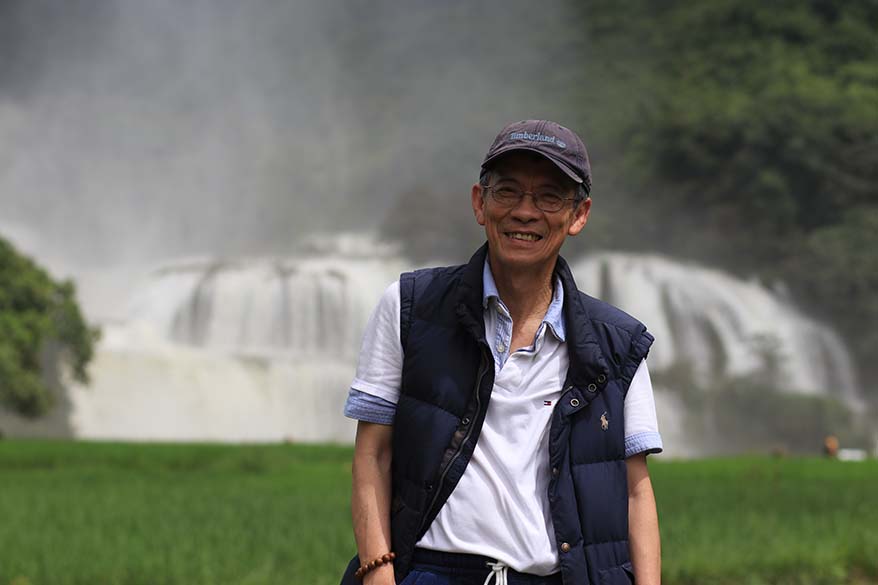
Devant la chute d’eau impressionnante de Bản Giốc (Cao Bẳng)

Version vietnamienne

Je n’ai aucun moment  de visiter jusque-là tant d’endroits durant mon séjour au Vietnam comme je viens de le faire cette fois. Cela vient peut-être de mon ambition ancrée en moi depuis longtemps malgré mon âge assez élevé. Si je ne fais pas cette fois une excursion à Hà Giang, je pense que je n’ai plus l’occasion pour y aller même si j’ai tant d’argent. En prenant habituellement un circuit touristique, on n‘est jamais gâté car on n’a pas l’occasion de faire des photos à l’endroit désiré mais on est obligé de respecter les horaires imposées par le guide. De plus on a besoin de justifier qu’on est en bonne santé et qu’on est accompagné par des proches durant le voyage. Grâce à l’aide apportée par le patron d’un hôtel situé dans la vieille ville de Hanoi, Mr Trung et à l’encouragement de mes enfants, je suis plus motivé pour réaliser ce projet. La veille de notre départ, tout le monde me recommande d’y renoncer car les routes de Hà Giang ont été dévastées par le typhon Sơn Tinh la semaine précédente. Mais je suis entêté dans ma décision car je pense que chacun de nous a son destin et Dieu continue à soutenir ma volonté d’y parvenir. En arrivant à Hà Giang, je m’aperçois qu’il y a tellement de tronçons de route sinueux dévastés. La pluie continue à tomber à des endroits où le nuage s’assombrit et la route est très dangereuse pour moi et mes proches. Il ne faut pas oublier de remercier le jeune chauffeur Minh tellement doué dans la conduite et aimable que ma peur s’estompe au fil de mon voyage malgré la succession des pentes particulièrement plus raides que celles trouvées en Corse (France). Minh ne cesse pas de répondre à mon attente et de me permettre à faire des photos à mon gré malgré sa fatigue visible sur son visage à cause de son assiduité pour parer à toute éventualité. Il faut reconnaître que j’ai la chance d’avoir des gens extrêmement gentils et d’être dans cette région. C’est aussi une occasion pour moi d’admirer la beauté naturelle et grandiose, une caractéristique de la forêt du nord-ouest semblable à un tableau naturel du créateur, de pouvoir visiter la vieille ville Đồng Văn, grimper les 384 marches de l’escalier pour voir le drapeau flottant à Lũng Cú, admirer les chutes d’eau impressionnantes de Bản Giốc (Cao Bằng) occupées en grande partie aujourd’hui par les gens du Nord dans une région jusque-là défendue vaillamment par nos ancêtres avec des larmes et du sang. Je suis à la fois triste et heureux quand je rencontre à Lũng Cú deux jeunes garçons routards vietnamiens âgés à peu près de 16 à 18 ans venant de la région Thái Nguyên avec leur moto. Leur but est de pouvoir réaliser quelques photos avec la tour du drapeau flottant à Lũng Cú en grimpant comme moi les 300 marches de l’escalier. Ce geste m’émeut tellement que je ne retiens pas mes larmes. Je me rends compte qu’il y a toujours  l’amour intense de la jeunesse vietnamienne face à la menace des gens du Nord.

Galerie des photos

Chuyến đi Hà Giang và Cao Bằng

Chưa có bao giờ tôi về Việt Nam mà đi tham quan nhiều nơi như vậy có lẻ vì hoài bão mà mình có từ lâu ở nơi mình nhưng cũng có phần nào vì tuổi tác của mình. Nếu không đi thì không bao giờ đi được nửa dù có tiền đi nửa. Đi tour thì không thích thú chi cho mấy không được chụp những nơi mình thích mà còn vô cùng vội vã tranh thủ thì giờ theo lịch trình của hướng dẩn viên . Vã lại còn phải bảo đảm không bệnh hoạn có bảo hiểm và có người thân đi chung khi đi tour. Vi thế nhờ biết cháu Trung, nguời quản lý của khách sạn mình ở và quen biết từ lâu và nhờ có các con cháu đi chung mà mình mới có động lực thực hiện được hoài bão nầy. Trước ngày đi, mọi người khuyên bỏ ý đinh nầy đi đang sạt lở đường xá ở Hà Giang với bão Sơn Tinh tuần trước. Nhưng mình nhất định đi vì mình nghĩ rằng mỗi người đều có số mạng vã lại Trời không phụ ý định tâm quyết của mình đấy. Khi đến Hà Giang, mình mới nhận thấy sạt lở ở những đoan đường quanh co, mưa vẫn còn khi có mây đen ở từng đoạn đường, rất cực kỳ nguy hiểm cho mình và mọi người. Cũng phải cảm ơn Minh, cháu tài xế trẻ lái rất giỏi và rất dễ thương khiến sự sợ hải của mình không còn nửa nhất là đèo nầy vừa qua thì đèo khác lại tới còn hơn ở đảo Corse của Pháp nhiều lắm. Chú ơi, chú muốn ngừng ở đâu chụp, cháu ngừng ở nơi đó dù đôi khi Minh tỏ ra mệt mỏi đau lưng vì quá chăm chỉ. Thật sự tôi có duyên với mọi người nhất là với mãnh đất nầy. Mới có dip nhìn thấu tận vẽ đep cực kỳ hùng vĩ đặc trưng của rừng Tây Bắc như một bức tranh thiên nhiên của tạo hóa, có dip đến tham quan làng cổ Đồng Văn, leo 384 bậc thang lên xem cột cờ Lũng Cú, đến nhìn thác Bản Giốc(Cao Bằng) hùng vĩ nay bị mất đi một phần ở mãnh đất đia đầu của Tổ Quốc được bao lần giữ gìn bởi ông cha chúng ta. Rất vui buồn lẫn lộn khi thấy hai đứa trẻ cở chừng 16, 18 tuổi chạy xe gắn máy từ Thái Nguyên ngủ bờ ngủ bụi đi phượt để trèo lên như mình qua 300 bậc thang để chụp hình cột cờ Lũng Cú rồi quay về Thái Nguyên, một niềm hảnh diện của tuổi trẻ làm mình chảy nước mắt vì tinh thần yêu nước của tui trẻ nầy vẫn còn nồng nàn, vẫn còn mãnh liệt trước hiểm họa của người phương bắc.
Hà Giang ngày 24/7/2018

Pyramide du Louvre (Kim tự tháp kính Louvre)


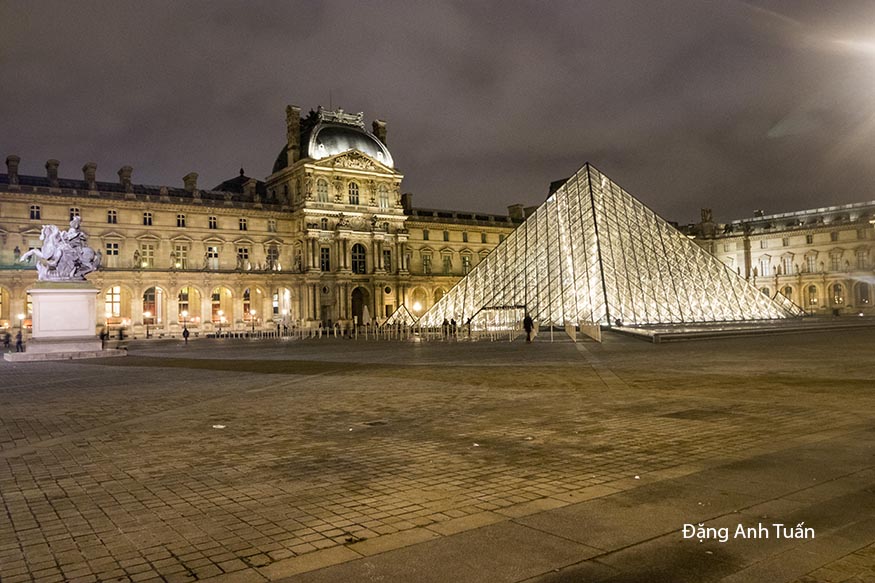
La pyramide du Louvre au milieu de la cour Napoléon du musée Louvre

Version française
Version anglaise
Galerie des photos

Theo lời yêu cầu của cố tổng thống Pháp François Mitterand vào năm 1983, kim tự tháp kính  Louvre được xây bằng kính và kim loại ở giữa sân Napoléon của bảo tàng Louvre. Đây là tác phẩm của kiến trúc sư người Mỹ gốc Hoa , ông Ieoh Ming người được nhận nhiều giải mà  trong đó có giải Pritzkert thường đựợc xem là giải Nobel về kiến trúc. Khi kiến ​​trúc sư Ieoh Ming thiết kế kim tự tháp Louvre, ông đã thiết kế nó theo cùng tỷ lệ với kim tự tháp Kheops. Kim tự tháp kính Louvre có bề cao là  21,64 thước với đáy  hình vuông  mỗi cạnh là 35,42 thước. Toàn bộ kim tự tháp được xây bằng kính cùng các khớp nối bằng kim loại , gồm có tất cả là  603 tấm kính hình thoi (losange)   và 70 tấm hình tam giác (triangle). Lúc đầu kim tự tháp là môt đề tài tranh luận sôi nổi vì  có người cho rằng không phù hợp với khung cảnh cổ kính của cung điện Louvre nhất là  với  phong cách vị lai. Nhưng cuối cùng sự kết hợp của hai phong cách kiến trúc cổ đại và hiện đại nó đem lại không những một kết quả mỹ mãn mà còn đem lại một nét đẹp độc nhất ở giữa thành phố Paris, một viên kim cương hoàn hảo của điện Louvre . Kim tự tháp kính  Louvre trở thành hiện nay một trong những  biểu tượng tham quan không thể thiếu xót cùng tháp Eiffel và nhà thờ Notre Dame de Paris khi ai có dịp đến tham quan Paris.

Version française

À la demande du feu président français François Mitterand en 1983, la pyramide du Louvre a été conçue et réalisée en verre et en acier au milieu de la cour  Napoléon du musée Louvre. C’est l’œuvre de l’architecte américain d’origine chinoise  Ieoh Ming  ayant reçu plusieurs prix parmi lesquels figure le prix d’architecture Pritzker considéré jusqu’alors comme le prix Nobel de l’architecture.  Quand l’architecte Ieoh Ming imagine la pyramide du Louvre, il lui donne les mêmes proportions que celles du Kheops. La pyramide du Louvre s’élève à 21,64 mètres sur une base  carrée  de 35,42 mètres de côté. Étant réalisé  avec une structure métallique en acier et en aluminium, le tout de la pyramide comporte 603 losanges et 70 triangles en verre. Au début de sa construction, la pyramide du Louvre est l’objet d’âpres  controverses  car selon certains, la pyramide est mal incorporée  dans le classicisme du palais Louvre avec un style futuriste. Mais finalement l’association de deux styles d’architecture classique et futuriste apporte non seulement un franc succès mais aussi un charme unique au cœur de la ville de Paris, un joyau d’architecture  parfait du palais Louvre.  La pyramide du Louvre devient aujourd’hui l’une des attractions touristiques qu’il est impossible de manquer avec la tour d’Eiffel et l’église  Notre Dame lorsqu’on a l’occasion de visiter Paris. (8,9 millions en 2011).

Version anglaise

At the request of the late French President François Mitterand in 1983, the Louvre Pyramid was designed and built in glass and steel in the middle of the Louvre’s Cour Napoléon. It is the work of Chinese-born American architect Ieoh Ming, whose many awards include the Pritzker Architecture Prize, considered until then to be the Nobel Prize for architecture. When Ieoh Ming designed the Louvre pyramid, he gave it the same proportions as those of Kheops. The Louvre pyramid rises to a height of 21.64 meters on a square base measuring 35.42 meters on each side. Constructed from a steel and aluminum structure, the pyramid features 603 rhombuses and 70 glass triangles. At the start of its construction, the Louvre Pyramid was the subject of bitter controversy, as some felt that the pyramid was poorly incorporated into the classicism of the Louvre Palace with its futuristic style. But in the end, the combination of classical and futuristic architectural styles not only proved a resounding success, it also added a unique charm to the heart of Paris, making the Louvre Palace a perfect architectural gem. Today, the Louvre Pyramid is one of the must-see tourist attractions, along with the Eiffel Tower and Notre Dame Church, when visiting Paris (8.9 million in 2011).
 

Galerie des photos

pyramide

[Return PARIS et ses sites]

Bái Đính (English version)


baidinh

Tràng An landscaped  complex

French version 

Pagoda Bái Đính

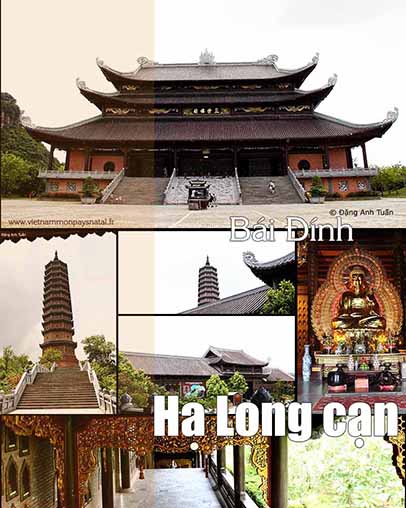
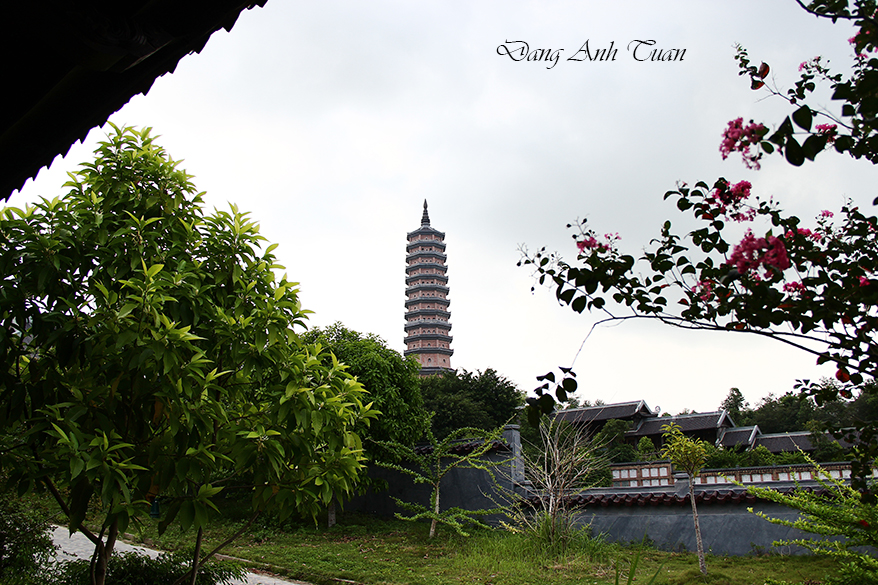
Located on the karst mountain range of Tràng An in Ninh Bình, the Bái Đinh pagoda has a long history dating back several centuries. Its fame has been attested for a long time under successive dynasties: Đinh, Early Lê, and Lý. Today, it has become a religious complex where one can find not only the ancient temple but also new temples under construction since 2003. The Bái Đính pagoda is considered in Southeast Asia as the pagoda housing the gigantic bronze Buddha statue imported from Russia. It has a height of 16 meters and weighs 100 tons. The 500 white marble arhats of the pagoda are spread over approximately 2 kilometers along a corridor. This complex has a total area of 539 hectares, of which 27 hectares are attributed to the old pagoda, 80 hectares to the new temples, a Buddhist study center, reception areas, parking lots, as well as a system of lakes 

World cultural heritage of Vietnam


Ninh Bình (Hạ Long cạn


Mekong delta river (Đồng Bằng Cửu Long)


Version française

Cửu Long nơi có chín rồng
Có sông nhiều cá có đồng lúa xanh
Thưở xưa là đất tranh giành
Người Nam nhắc đến không đành lìa xa

The Mekong delta is the former territory of the kingdom Founan (Phù Nam). The Mekong delta’s natives are  the mixing of several Vietnamese, Khmer, Cham and Chinese peoples. A fifth of the population lives in this delta. The least hectare, the least cultivable parcel of the delta are exploited by peasants consisted of Vietnamese of Khmer origin, Chinese,Chàm, and Vietnamese. That is why a multitude of religions is found there: Buddhism, Catholicism, Caodaism, Islam, and Hoà Hảo. Irrigated and sprinkled by the Mekong River, this delta produced itself alone one-half of the rice of the country, which allows Vietnam to become the third largest exporter of rice in the world.

The Mekong delta is currently divided into  12 provinces: Long An, Tiền Giang, Bến Tre, Ðồng Tháp, An Giang, Kiên Giang,  Vĩnh Long, Trà Vinh, Hậu Giang, Sóc Trăng, Bạc Liêu  and Cà Mau.

Đồng Bằng Cửu Long

Before becoming an integral part of Vietnam, this delta belonged to the Khmer people. The first Vietnamese colonists appeared only at the beginning of the 16th century on this territory that was until then just a marshy area infested with crocodiles and filled with mangroves. It is only in 17th century that this territory became Vietnamese under the scepter of the lords Nguyễn. It was also the arena of violent clashes between the Tay Son’s armies and the Nguyen’s partisans supported by the mercenaries recruited by Pigneau de Béhaine at the end of 18th century.

One finds in this delta a labyrinth of channels and rivers that add up to 4,000 kilometers, which is equivalent to the length of the Mekong river itself. This river is born out of the snows from Tibet in the province of Qing Hai, flows for more than 4,500 km before reaching the delta and crosses six countries: China, Burma, Thailand, Laos, Kampuchea, and Vietnam. It divides itself at the capital of Kampuchea, Phnom-Penh into two branches, Mekong and Bassac that enter Vietnam separately. In Vietnam, its upper course is divided into four arms at Vĩnh Long to throw itself into the East Sea. (Biển Đông).

The great lake Tonlé Sap, located at the center of Kampuchea is not only a natural fish tank but also a natural regulator of the water flow making it possible to prevent the flood of the delta. In summer, because of monsoon rain, the level of Mekong is higher compared to that of the lake to which it is connected by a channel. The lake fills itself, passing from 3,000 square kilometers in season of low waters to more than 10,000 square kilometers at the end of the monsoon. The lake begins to reverse its water into the delta by the time the rain ends. The Mekong delta does not need big water management works or dikes to protect itself from swelling, which proves to be essential for the delta of the North. Thanks to the irrigation of Mekong, the delta is so fertile. Gardens, fields, rice plantations and orchards are seen everywhere.

These orchards are in fact small plots of land irrigated by channels connected to each other by bamboo bridges often called Cầu Khỉ (Monkey Bridges). When referring to the delta, the term « cò bay thẳng cánh«  is often used. This means the delta is so vast that the cranes can extend their wings as they fly over. 

It is in this delta, at Sadec, that Marguerite Duras’ mother ran the girls’ school. A young Chinese of good family lived there too. He will become the hero in « The Lover « . This novel has made Marguerite Duras a superstar of the French literature overnight allowing her to win the Prix de Goncourt in 1984 and ensure the sale of one million three hundred thousand copies in paperback in Midnight Editions and one million copies in hardcover at France-Loisirs.

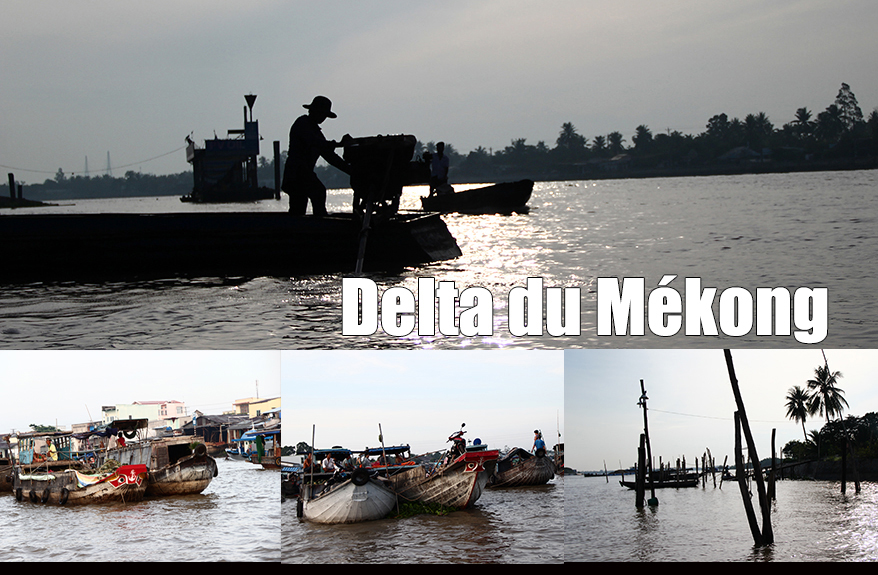
It is also in this delta that are seen every morning, hundreds of sampans converging toward the famous floating market of Phùng Hiêp at the crossroad of seven channels in the direction of Cần Thơ to Sóc Trăng, or toward lesser known markets such as Cái Răng and Phong Ðiền. Also seen are merchants with conic hats trailing their mountains of fruits, legions of ducks, chickens and pigs to the market on their small boats, or other rudimentary means of transportation (bicycles, rickshaws). It is thanks to the orchards of the delta that one finds a great number of fruits: sapotilles, ramboutans, caramboles, corrosoles etc… at the markets of Saigon. It can be said that the delta feeds Saigon and a greater part of Vietnam. In the northeast of the peninsula lies the Plain of Reed ( Ðồng Tháp Mười ) which was a Việt Cộng refuge yesterday and which becomes the Asian Camargue today.

In spite of its lack of archaeological richness, the delta continues to play a vital role economically for Vietnam. It becomes thus the object of greed and confrontation for so many years. It was French Cochinchina at one recent time. Even Hồ Chí Minh, when alive, has agreed to its importance by burying his father at Sadec. There are folks whose names remain anchored in the memory of the Vietnamese people. Phan Thanh Giản, Võ Tánh, Nguyễn Trung Trực, Hùynh Phú Sổ, are among these folks and are issue of this corner.


Without the delta, Vietnam is never free and independent….. 
It is the granary of Vietnam.


Hà Tiên (English version)

French version

Vietnamese version

Facing to the Gulf of Siam, Hà Tiên is located about 8 kilometers from the Cambodian border. It is also the city marking the end of the long walk towards the South started by the Vietnamese. Before being known as Hà Tiên, it initially was called  Phương Thành then Mang Kham in the past. Its economic growth has been due to the massive arrival of the Chinese, supporters of the former Ming dynasty (or Minh Hương in Vietnamese) whose most known was Mac Cửu (Mac King Kiou).

Being hostile to the new dynasty of the Manchus (Qing) and leaving China at the 17 years age, this one,was established with his family in Cambodia in 1671. He was appointed a few years later by the Cambodgian king as provincial chief of Mang Khảm . Thanks to his generosity and business talent, he succeeded to transform Mang Kham into a port city flourishing and animated in the region. For countering against the Siamese’s ambition, he needed the Vietnameses protection, in particular that of the Nguyễn lords to the detriment of the Cambodian ones. They agreed to confer to him the title of commander of troops (tổng binh) in this region. Consequently, Mang Kham belonged to Vietnamese territory and changed name into becoming Hà Tiên. According to the legend, one saw appearing on the river, the ballad of Immortals (Hà river in Vietnamese). It is also the reason for choosing this name. Hà Tiên became a few years later the starting point for the conquest of Cambodian districts: Long Xuyên (Cà Mau today), Kiên Giang (Rạch Giá), Tran Giang (Cần Thơ), Tran Di (Bạc Liêu) with his son Mac Thiên Tứ. This latter was a character out of the ordinary. His fate was tied closely to that of Nguyễn Ánh, future emperor of the Nguyên Dynasty. It became the famous rampart of the Nguyễn against the Tây Sơn. With the years of vicissitudes of Nguyễn Ánh, he had to take refuge in Thailand with all the family and the son of Nguyễn Ánh, Prince Xuân. To sow doubt among the Siamese, the Tây Sơn did not hesitate to falsify documents and make them responsible for a conspiracy against Siamese king Trịnh Tân (Phraya Tak Sin).

Pictures gallery


His entire family was executed with the prince Xuân. To preserve his honor and fidelity, he committed suicide in September 1780. Mac Thiên Tứ was also a greatest poet of his time. He made Hà Tiên famous by his volume of poems entitled « Hà Tiên Thâp vịnh » praising the beauty of its natural and marvellous sites.

This volume continues to grow in the coming years with the addition of 10 poems written by each of 31 poets belonging to the club of the poets « Chiêu Anh Các » created under the initiative of Mac Thiên Tứ. That constituted in all 320 poems to which Nguyễn Cư Trinh added the last ten poems to give a value priceless to this volume that continues to be transmitted to the posterity.

Ones does not forget his famous poem in Six-Eight to tease an young girl in Quảng Nam (Center of Vietnam), disguised as a young student taking part in the evening of the illumination festival. By seeing this young man, he does not hesitate to send the following four verses:

Bên kia sen nở nhiều hoa
Người khen hoa đẹp nõn nà hơn em
Trên bờ em đứng em xem
Mọi người sao bỗng không thèm nhìn hoa

On the other side, the lotus has many flowers
The person who admires them is more prettier than you.
On land, you continue to admire them
Everyone is not be interested to admire your « flower »

Without hesitation, he replied promptly by the four following verses:

Mặt ao sen nở khắp
Trông hoa lẫn bóng người
Trên bờ ai đứng ngắm
Sao chẳng thấy hoa tươi?

The surface of the pond is filled with flowers of lotus
Ones finds here at the same time these flowers and the people’s shadows
On land, each one is admiring them
Why isn’t a beautiful flower found?

img_8129

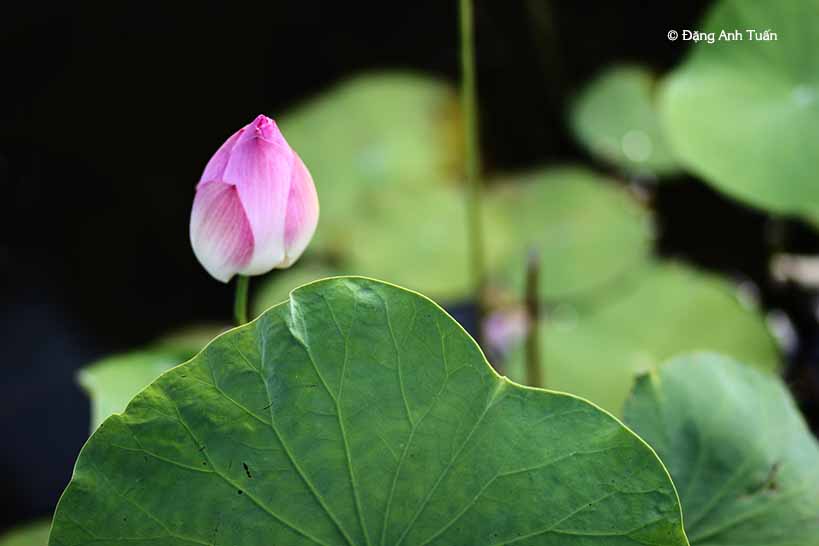
Lotus

This poetic exchange enabled him to have sympathy and to discover that this young student was only one girl disguised as a boy to avoid the pirates, coming from the Center of Vietnam, following her father to make the trade and bearing the name Nguyễn Thi Xuân. Mac Thiên Tứ took her later as wife of second rank . But the latter failed to die because of the jealousy of his wife . She was forced to withdraw herself in a pagodon to finish her last remaining days. Before her death, she left a poem showing her purity and nobility in a nauseaous world filled with turpitudes by comparing her with a lotus flower:

Vươn khỏi bùn nhơ thoát vươn lên
Phỉ lòng trong trắng giữa thiên nhiên
Xuân thu đậm nhạt bao hồng tía
Ðừng sánh thanh cao với đóa sen.

Leaving mud, the lotus flower continues to open out
It is glad to be pure in nature
Its perianth becomes more or less purple in the course of time
But one should not compare the nobility with this flower.

hatien_2

When one evokes Hà Tiên, one does not forget to think of Mac Cửu and his son Mac Thiên Tứ because it is thanks to them that Vietnam succeeded in achieving its long walk towards the South. Nothing is more astonishing than to see the deep attachment and respect which the Vietnamese reserved for Mac Cửu and his family through his temple in Hà Tiên.

Tự Đức mauseolum ( English version)

Version française


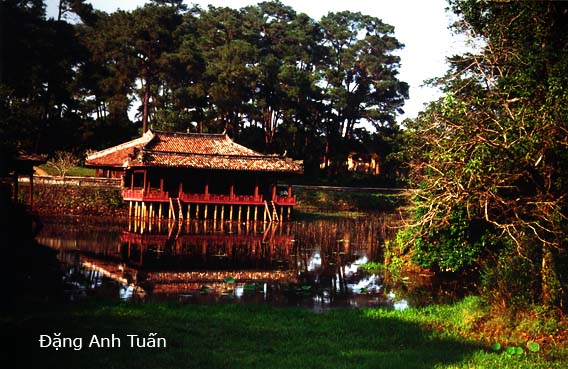
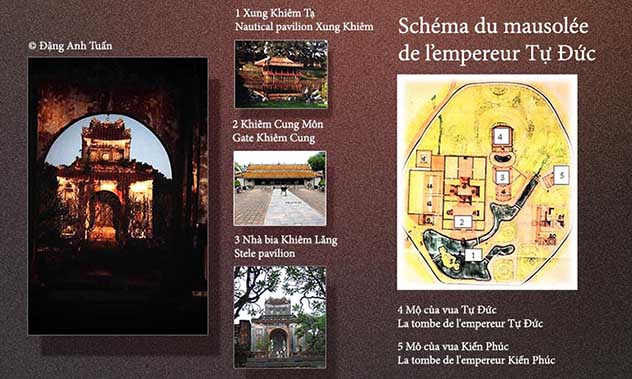
Xung Khiêm Tạ

Unlike other royal tombs of the Nguyễn Dynasty, Tự Ðức mausoleum  is primarily a possible place of refuge during his reign. That is why there is not only a palace which was later transformed into a place of worship after his death but also a theater and two small and pretty pavilions in red wood (Du Khiêm and Xung Khiêm) where he liked to sit for the relaxation and the composition of his poems. This mausoleum which was built during 1864-1867 by three thousand soldiers and workers, had approximately fifty buildings surrounded by a stone and brick wall 1500 meters in length in an area of 12 ha.

Khiêm Lăng (謙陵)

Tự Đức was crowned king at a time where he have had to cope not only with development of Western capitalism but also internal strife (war grasshoppers led by  poet Cao Ba Quát, the eviction of his elder brother Hồng Bàng at his enthronement etc..). For taking refuge, he did not hesitate to order the construction of his tomb as a place of relaxation in his lifetime and remains a place of residence for eternal future life.


Pictures gallery

In this mausoleum, the pavilion Hoa Khiêm is the main building where the Emperor worked and the pavilion Lương Khiêm is where he lived and slept. One finds also in the domain of his mausoleum two other tombs: those of his wife, Queen Lê Thiện Anh and one of his three adopted son, King Kiến Phúc.

The architecture of this mausoleum reflects not only the nature of the romantic poet emperor Tư Ðức but also the freedom that is lacking so far in the other mausoleums. Nothing is surprising to see this mausoleum become one of the favorite places choosen by most foreign and Vietnamese tourists.

 
lang_tu_duc