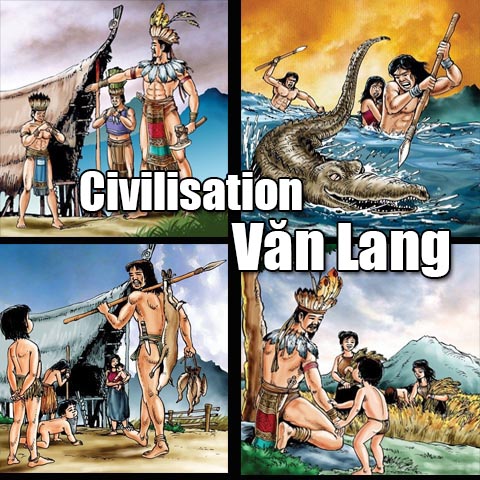
In Search of the Origin of the Vietnamese People: Part 2 (Đi tìm nguồn gốc dân tộc Việt)


Đi tìm nguồn gốc dân tộc Việt (Phần 2)

French version

Vietnamese version

In search of the Origin of the Vietnamese people

This remark has been confirmed by what was discovered in the tombs at the Guigi site of Jiangxi: The weapons found bore a symbolic characteristic because they were all made of wood. They did not have an important place in people’s life or after-live. This led to the conclusion that contrary to the society of the folks from the North, that of the Yue was rather more peaceful. That is why they were not able to resist better every time there was an encroachment by the neighbors from the North, the Yi  did not stop at nibbling away their territory and pushing them a little farther south at each confrontation. The Yi  themselves by their art of making bows and arrows. They were formidable warriors talented in arching and horse riding. Hardened by the roughness of nature, they were used to wrestling with wild animals and other tribes. That gave them at the start a gene of a conqueror and a fighter in their blood.

It was not the case of the folks from the South, the Bai Yue. The wise Confucius had the occasion to compare the forces that the folks from the North and from the South possessed respectively: Courage and power ( Dũng ) for the former and kindness and generosity ( Nhân từ ) for the latter. Again, the word Yi  for origin the picture of a man holding a bow   gives us a pretty good idea on the particularity of the folks from the North. Under the direction of , Houang Di ( Hoàng Ðế ) they have succeeded in pushing back the first tribes of Bai Yue in the territory delimited by the yellow river Huang He and the YangTse river led by Chiyou ( Xi Vưu ) ( or Ðế Lai in Vietnamese ) in alliance with king Lôc Tục ( ou Kinh Dương Vương ) who reigned south of the blue River on a vast country of Xích Qủi ( Country of red demons ). According to a Chinese legend, this confrontation took place at Trác Lộc ( Zhuolu ) in the presently province of Hebei and has permitted the folks from the North to start progressively their expansion to the Blue River. The death of Chiyou marked the first victory of the folks from the North over the Bai Yue people some 3000 years B.C.

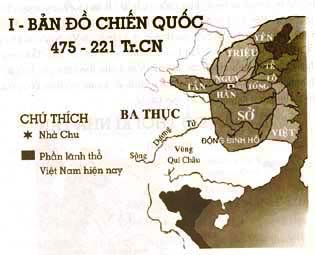
At the Shang period, none of the Chinese or Vietnamese historic documents talked about the relationship between the Bai Yue and the Shang besides the Vietnamese legend about « Phù Ðổng Thiên Vương » ( or the heavenly hero of Phù Ðổng village ) which reported a confrontation between the Shang and the Văn Lang kingdom of the Luo Yue. However it was noted that contact was established later between the Zhou dynasty and the king of the Luo Yue ( Hùng Vương ). A silver pheasant ( bach trĩ ) was offered by the latter to the king of Zhou according to the book Linh Nam Chích Quái. At the time of Spring and Autumn, a state of East Yue was known in the Mémoires Historiques by the historiographer of Han empire Si Ma Qian ( Tư Mã Thiên ) . It was the kingdom of the famous lord Gou Jian (Câu Tiễn). At the death of this one, his descendants did not succeed in maintaining hegemony. At the middle course of the Blue River, another kingdom, founded also by one of the Bai Yue tribes ( Bộc Lão ) and known as Chu ( Sở Quốc), took over at the time of Fighting Kingdoms and became one of the seven rival principalities ( Han, Zhao, Wei, Yan, Qi, Qin and Chu ).(Hàn, Triệu, Ngụy, Yên, Tề, Tần và Sỡ).

Terracotta warrior of Qin Shi Huang Di

Before being defeated by the army of Qin, the Chu kingdom has indirectly brought its undeniable contribution in favor of the future formation and unity of the Chinese nation  by eliminating in 332 the state of East Yue of Goujian and starting to give a new impulsion to the development of a large state with the reforms of Wu Qi (Ngô Khởi).

The Tong Yue (or the Yue of Gou Jian) began to take refuge in the southern territory of Bai Yue after the annexation of their land by the Chu kingdom. According to Léonnard Aurousseau, after their defeat, the Yue of Gou Jian  (or Tong Yue ) found asylum in large number in the following regions: Foujian  (Phúc Kiến ), Guangdon ( Quảng Ðông ), Guangxi ( Quảng Tây ) and Jiaozhi ( Giao Chỉ ) and thus became the Man Yue ( Foujian ), Nan Yue (Jiangsu, Jiangxi) and Luo Yue (Quangxi, Jiaozhi). All were « sinisized » as centuries went by except the Luo Yue who were the legitime descendants of  the Yue belonging to the Ngeou branch and were known often as Tây Âu (Xi Ngeou).

« There was no doubts on the origin of the Luo Yue », wrote the French scholar Leonard Aurousseau in his work « Notes sur les origines du peuple annamite ( Ghi chép nguồn gốc dân tộc An Nam ) » ( BEFEO, T XXIII, 1923, p.254 ). The other Yue peoples, particularly those living in the Chu kingdom were fast to follow them at the unification of China by Qin Shi Huang Di. This one did not hesitate to banish whoever dare resist his policy of assimilation, particularly the Yue and the Miao to forced labor on the construction of the Great Wall, to burn not only all the works of learned confucianists but also those of other unsubdued people and to maintain his policy of aggression against the Bai Yue as far as Ling Nan ( Linh Nam ). The conquest of the Xi Ou and Luo Yue (Tay Au) territory of Thục An Dương Vương that marked the second confrontation between the Chinese and the Bai Yue, was achieved in 207 with the nomination of two famous governors to the conquered territory: Nhâm Hiếu  (Jen Hiao) and his assistant Triệu Ðà (Zhao Tuo).

In spite of the policy of terror and pacification, the Yue continued to run their resistance heroically. They hid in the bush and lived with the animals. No one agreed to become slave of the Chinese. The Yue picked their chiefs among their men of value. Then they attacked the Chinese at night and inflicted them with a great defeat…, that was reported in the translation of Huainan zi (Hoài nam tử) of L. Aurousseau, B.E.F.E.O. XXIII, 1923, p. 176.

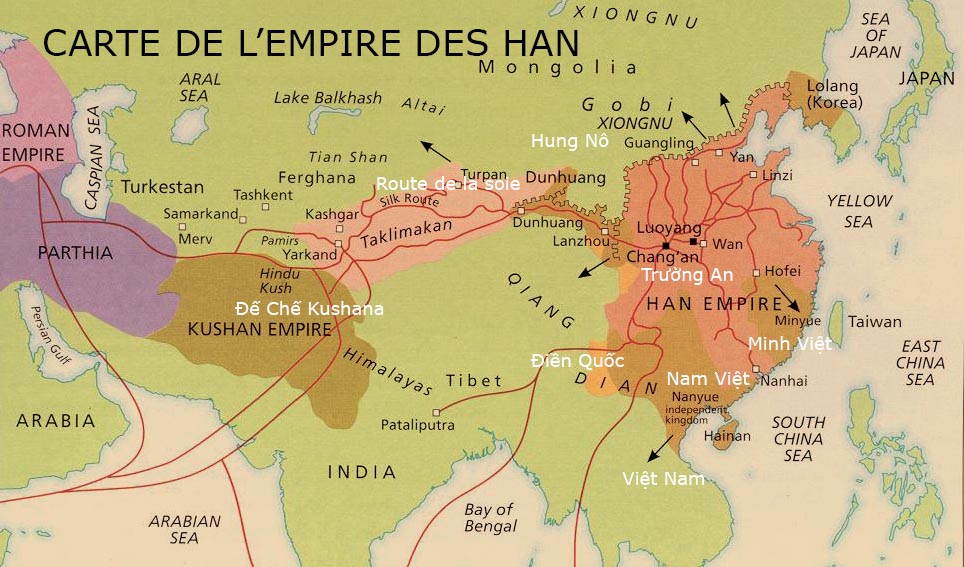
At the death of Nhâm Hiếu, taking advantage of consecutive troubles following the fall of the Qin empire in 207, Triệu Ðà. ( Zhao Tuo ) became allied with other Yue to declare independence fo the Nan Yue kingdom for which he took control of Guilin and Xiang then in 184 B.C., he attacked the Chang Sha region ( Hunan ( Hồ Nam )) . This kingdom was short-lived and fell back in the hands of the folks from the North, the Han in 111 B.C. despite the heroic resistance of Prime Minister Lục Gia. This confrontation, the third one with the people of Bai Yue took away not only their land but also their cultural identity. The sinization began its full steam on the conquered territory ( Foujian (Phuc Kien), Guizhou ( Qui Chau ), Guangdong ( Quảng Ðông ), Guangxi ( Quảng Tây ), Yunnan ( Vân Nam ), Tonkin ( Giao Chỉ ). Many revolts and insurrections broke out during this long period of Chinese domination. But the most dazzling revolt remained the one run heroically by the sisters Trưng Trắc, Trưng Nhị. On appeal of the sisters in 39 A.D., the Yue living in the South of China and a large part of Tonkin joined them. That helped them to stand up with the Han army until 43 A.D. But they were finally defeated by Ma Yuan ( Mã Viện ) a great Chinese marshal at the time. Ma Yuan ( Mã Viện ) assigned by the Han emperor, Guang Wu (Quang Võ) decided to destroy all bronze drums found on the land of the Luo Yue because he knew at the confrontation that those objects had the value as an emblem of power for them. According to what people said, to move back the frontier down to the Nam Quan border gate, he did not hesitate to erect a pillar several meters high made of bronze collected from the drums and bearing this sign:

Ðồng trụ triệt , Giao Chỉ diệt
Ðồng trụ ngã, Giao Chỉ bị diệt.
Bronze pillar falls, Giao Chi disappears

But that did not upset the will and ardor for independence of the Luo Yue ( the Viet ). They decided to consolidate the pillar by throwing a piece of earth around it when they went by, which progressively helped in building up a mound and made disappear the mythical pillar. To deal with any eventuality of revolt, there was also an order from empress Kao (Lữ Hậu) in 179 B.C. providing a ban on delivery of not only plowing and metal instruments but also horses, oxen and sheep to the Barbarians and the Yue. This has been reported by E. Gaspardone in his work titled  » Matériaux pour servir à l’histoire de l’Annam » ( BEFEO, 1929 ). Because of this policy, it is not surprising to discover recently a large number of bronze drums burried in Vietnam and in neighboring areas ( Yunnan, Hunan ). The Ðồng Sơn civilization came to an end during the Chinese occupation.

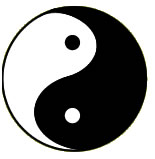
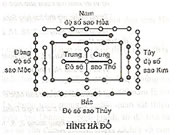
Forced enlistment of the Yue into the army of the conquerors and the contacts they had with the Chinese as the years went by allowed them to know more about warfare technique (Sunzi (Tôn Tử) for example) and to improve their weapons in the struggle against the invaders in the years to come. On the other hand, the Chinese appropriated what belonged to the Yue during their long occupation. The Yue continued to be treated as barbarians despite their undeniable contribution to the radiance of Chinese culture. Those folks from the North could pretend from then on to be the legitimate holders of the Writing of Luo, the theory of Ying and Yang and the 5 elements, even though there exists a large number of incoherence in their mythical made up stories.

 Reconstructed model found at the Banpo site

They modified the dragon, the preferred mythical animal of the Bai Yue, which had a start with an alligator’s head and a snake’s body, to fit their temperament of a warrior and their taste by giving it the wings and a horse’s trunk and definitely adopted it as their own symbolic animal even though they had the white tiger in their Turco – Mongol traditions. Their round form house whose model has been reconstructed and found at the Banpo site has been replaced by a spacious house with a roof largely « hollow-back » and overflowing in canopy, that of the Bai Yue. In the turmoil of history, there was no more room for the Bai Yue.

Except the Luo Yue, other peoples of Bai Yue continued to be « sinized » in a way that at the end of 10th century, on their land there were only two peoples face to face, a conquering people (the Han) and the rebellious people ( the Viet ) looking for independence. The states of Gou Yue, Nan Yue, Man Yue etc…thereafter took part in Southern China. Taking advantage of the breaking up of the Tang empire, the Luo Yue declared independence with Ngô Quyền. The Vietnamese nation began to see the day. One should not believe that everything went really smoothly and harmoniously. It cost such sacrifices in order for the folks from the North to accept the reality. That is how the history page of the Bai Yue was mixed up with that of the Luo Yue.

Have recent scientific discoveries radically changed the view about the Bai Yue and particularly their history? They have called into question he idea of cultural diffusionism originated from the North. More ancient vestiges than those at Hemudu have been discovered recently in the middle Blue river at Pentoushan ( Hunan ) . Could one continue to consider the Miao, the Bai Yue as « barbarian » folks? Nevertheless the word Miao (or Miêu in Vietnamese) which is made of a ricefield picture ( Ðiền) added on its top the pictogram « Thảo » (cỏ) ( herb ) provides evidence how the Chinese depict in their language people knowing how to grow rice. Could we continue to maintain a traditional and obsolete version written by the conquerors to the detriment of the search for historic truth? It turns out indispensable to put the train back on the tracks knowing for sure that the Chinese civilization does not need made up stories because it deserved to appear for a long time among the great civilizations of humanity. It is the ancestors of the Luo Yue that taught the folks from the North the culture of rice and not the other way around as has been written in a large number of Chinese and Vietnamese historic documents. The time has come to give the homage to our ancestors, the Yue, who because of their peaceful nature were forced to be wiped off in front of the use of force in the turmoil of history.

Inheriting a glorious past, embroiled in successive fratricidal and colonial wars and mired in corruption, Luo Yue’s Vietnam needs to pull itself together because it does not deserve to be one of the poorest countries in the world. It is time for it to follow in the footsteps of its ancestors and do better than them.

In Search of the Origin of the Vietnamese People: Part 1 (Đi tìm nguồn gốc dân tộc Việt)


Version française

The discovery of the Hemudu site ( Zhejiang ) in 1973 was a great event for Chinese archaelologists because the site traced back to more than 5000 years the most ancient civilization of rice found on earth. Also found there were remnants of lacustrine wooden housing built on piles, the type of construction quite different from the earthen houses in Northern China. The people who lived there possessed traits characterized Mongoloid as well as Australo-Negroid. Because Zhejiang is part of the most beautiful provinces in Southern China for a long time, that famous civilization has been attributed to the Chinese people even though the cradle of their civilization was known to be narrowly tied to the basin of the Yellow River ( or Huang He ) ( Hoàng Hà ) where Anyang is its ancient heart. One cannot deny that their civilization has found all its quintessence in the neolithic cultures of Yang-Shao ( Henan Province ) ( 5000 years BC) and Longshan ( Shandong Province ) ( 2500 years BC ) respectively identified by the Swedish Johan G. Andersson in 1921 and the father of Chinese archaeology Li Ji a few years later. Thanks to phylogenetic works done by the American team led by professor J.Y.Chu of the University of Texas, which was published in the American Review of Sciences Academy under the title « Genetic Relationship of Population in China » (1), an accurate idea about the origin of the Chinese people began to emerge. Three points were raised from these works:

  • 1) It is clear that genetic evidence does not support that Homo-sapiens in China has an independent origin. The ancestors of the populations presently living in the East of China came from South East Asia.
  • 2) Thereafter, it is probably safe to conclude that « modern » folks native of Africa constitute largely the genetic capital found presently in East Asia.

In his conclusion, professor J.Y. Chu recognized that it is probable the ancestors of the populations speaking Altaic languages ( or the Han ) were issues of the population of South East Asia and the tribes coming from Central Asia and Europe.

That discovery did not call into question what has been proposed some few years before by anthropology professor Wilhelm G. Solheim II of the University of Hawaii in his book « A New Light in a Forgotten Past » (2). For this anthropologist, there is no doubts that the Hoa Binh culture (15,000 years B.C.) discovered in 1922 by the French archaeologist Madeleine Colani in a village near Hoà Bình province in Vietnam was the birth place of future evolution of Neolithic cultures of Yang Shao and Longshan found in Northern China. British physicist Stephen Oppenheimer has gone far beyond what was thought at that time by showing in logical and scientific processes that the cradle of civilization of humanity was in South-East Asia in his work « Eden in the East: the Drowned Continent of South-East Asia« .(4) He concluded basing on geological evidence found at the bottom of the East sea (Biển Đông)  and carbon-14 dating methods on foodstuff (yam, taro, rice, cereals etc…) found in South-East Asia ( Non Sok Tha, Sakai ( Thailand ) , Phùng NguyênÐồng Ðậu ( Vietnam ), Indonesia ), that a huge flood took place and forced the people in the region who, unlike what western archaeologists had described as folks living on fishing, hunting and gathering, were the first to know how to perfectly master rice growing and farming to migrate all over the place ( either southward in Oceania, or eastward in the Pacific, or westward in India, or northward in China ) for their survival. Those folks had become the seeds of great and brilliant civilizations found later in India, Mesopotamia, Egypt and the Mediterranean.

From those archaeological and scientific findings, one is led to pose questions on what has been reported and falsified by history in this region of the world and taught until then to the Vietnamese. Could one ignore any longer those scientific discoveries? Could one continue to believe any longer in Chinese writings ( Hậu Hán Thư for example ) where Chinese prefects such as Tích Quang ( Si Kouang ) and Nhâm Diên were imputed the care of teaching the ancestors of the Vietnamese how to dress and use the plow that they did not know at the first century of our era?. How could they not know rice growing, the legitimate descendants of king Shennong ( Thần Nông )(3), when one knows that the latter was a specialist in agrarian domain? No one dares to pick out this contradiction.

Shennong (Thần Nông)

One does not even raise questions on what the people from the North have given to this devine hero the nickname Yandi ( Viêm Ðế )( king of hot country of Bai Yue ). Is it about the way to refer to the king of the region of the South, because at the Zhou era, the Yue territory was known as Viêm Bang? Is it possible for nomad folks from the North whose origin is Turco-Mongol, the ancestors of the Han and of the Southern folks, the Yue to have the same ancestors? Is it the matter of a pure making up stories at the glory of the conquerors in order to justify their policy of assimilation?

All the traces of the other peoples, the « Barbarians » have been wiped off at the time of their passage. The conquest of the Chinese continent began at the borders of the loess and the Great Plain and hard to please for almost four millennia. That has been noted by the French scholar René Grousset in his work « History of China » when speaking of the expansion of a Chinese rude pioneer race of the Great Plain.

Facing their brilliant civilization, very few people including the Europeans when they first arrived in Asia dared to raise any doubts about what has been said in Chinese and Vietnamese annals and think of the existence of even another civilization that the dominators succeeded in monopolizing and erasing on the submissive land of the Bai Yue people. The name Indochina has already reflected a great deal this attitude because for a large number of folks, there are only two civilizations in the world worth mentioning in Asia: That of India and of China. It is also regrettable to note the same mistake made by some Vietnamese historians influenced by by the Chinese culture in their history works. By dint of being indoctrinated by the Northern folks’ policy of colonization, a certain number of Vietnamese continue to forget our origin and to think nowadays that we are issues of the Chinese who will not hesitate to set going their policy of assimilation and annexation in territories they have succeeded in conquering since the creation of their nation. The success of « Sinisation » of the Han was visible as the centuries went by at the time of contact with other « barbarian » peoples. The process would not be different from the one that marked their footsteps on the Mongolian « land of grass » in 19th century and in the Manchurian forest in 20th century.

One does not refute their brilliant civilization having an undeniable impact on the development of the Vietnamese culture during their long domination, but one cannot forget to recognize that the ancestors of the Vietnamese, the Luo Yue ( ou Lạc Việt ) have had their own culture, that of Bai Yue. The Vietnamese were the sole survivors of this people for not to be « sinised » in the turmoil of history. They were the legitimate heirs of the Bai Yue people and of their agricultural civilization. The bronze drums of Ðồng Sơn have witnessed their legitimacy because on these objects were found patterns of decoration recounting their agricultural and maritime activities of this brilliant era before the arrival of the Chinese on their territory ( Kiao Tche or Giao Chỉ in Vietnamese).

Now we know that the agricultural civilization of Hemudu has given birth to the culture of Bai Yue (or Bách Việt in Vietnamese). The term Bai Yue literary meaning One hundred Yue, has been used by the Chinese to call all the tribes thought to belong to one group, the Yue. According to Bình Nguyên Lộc, a Vietnamese writer, the tool frequently used by the Yue is the axe ( cái rìu in Vietnamese) found in several forms and made of different materials ( stone, iron or bronze ). For this reason that at the moment of contact with the nomad folks from the North of Turco-Mongol origin, the ancestors of the Han ( or Chinese ) called them by the name of « Yue », the folks who use the axe, which at that time looked like this :

and served as the model of representation in Chinese writing by the pictogram . This pictogram also appears in the word Yue to which is added the radical  mễ () (or rice or gạo in Vietnamese ) to mean the folks who practice farming at the era of Confucius. 

Nowadays, in the word Yue (), besides the radical () pass or vượt in Vietnamese), the picture of the axe continues to be represented by the pictogram    endlessly modified as time goes by. Perhaps the word Yue phonetically comes from the sound Yit used by the Muong tribe to call the axe. It is important to remember that the Muong tribe has the same origins as the Luo Yue ( ou Lạc Việt ) tribe whose the Vietnamese are issues. ( The famous Vietnamese kings Lê Ðại Hành , Lê Lợi being Muong people). Recently, archaeologist and researcher of CNRS Corinne Debaine-Francfort has talked about the use of the ceremonial axes by the Chinese in the sacrifice of humans or animals in her work titled « The Rediscovery of Ancient China » ( Editeur Gallimard, 1998 ). The sage Confucius had the opportunity to talk about the Bai Yue people in conversations with his disciples.

The Bai Yue people living south of the Yang Tse river ( Dương Tử Giang ) has a life style, a language, traditions, moral standards and a specific foodstuff… They devote themselves to rice growing, which makes them different from our people who grow millet and wheat. They drink water coming from a kind of plant plucked from the forest known as « tea ». They like dancing, working while singing and alternate their reply in the songs. They often disguise themselves in the dance with leaves and plants. We should not imitate them ( Xướng ca vô loại ).

Confucian influence is not unfamiliar to the bias that Vietnamese parents still hold today when their children devote themselves a bit too much to musical or theatrical activities. it is in this spirit that they are seen with a negative view. But it is also the attitude adopted by Chinese governors in forbidding the Vietnamese to manifest musical expressions in their ceremonies and festivities during their long domination.

Historian Si Ma Qian ( Tư Mã Thiên ) had the opportunity to talk about the Yue in his Memoires historiques ( Sử Ký Tư Mã Thiên ) when he recounts the life of the famous lord, Gou Jian ( Câu Tiễn ),prince of the Yue for his incommensurable patience facing the ennemy governor Fu Chai ( Phù Sai ), king of principality Wu ( Ngô ) at the war time of Srpings and Autumns. After his death, his kingdom was absorbed completely in 332 B.C. by the kingdom of Chu ( Sở Quốc ) which was in its turn annexed later by Qin Shi Huang Di during the unification of China. It is important to stress that the Hemudu site is located in the kingdom Yue of Gou Jian.( Zhejiang ).

As for the groups sharing the same culture of Bai Yue, one finds the Yang Yue, Nan Yue ( Nam Việt ), Lu Yue, Xi Ou, Ou Yue, Luo Yue ( Lạc Việt ), Gan Yue, Min Yue ( Mân Việt ), Yi Yue, Yue Shang etc. They lived north of the basin of the blue river, from Zhejiang ( Triết Giang ) to Jiaozhi ( Giao Chỉ ) ( the North of Vietnam today ). It is found in this area of distribution the current provinces of Southern China: Foujian ( Phúc Kiến ), Hunan ( Hồ Nam ), Guizhou ( Qúi Châu ), Guangdong ( Quảng Ðông ), Jiangxi, Guangxi ( Quảng Tây ) and Yunnan ( Vân Nam ).

The Bai yue were probably the heirs of the Hòa Bình culture. They were a people of skilled farmers: They grew rice on burned land and flooded fields and raised buffaloes and pigs. They lived also by hunting and fishing. They have the custom of tattooing their bodies to protect themselves from attacks of water dragons (con thuồng luồng). Relying on the support of Si Ma Qian’s Memoires Historiques the scholar Léonard Aurousseau evoked the Goujian (king of the East Yue) ancestors’ custom to paint their bodies with dragons or other aquatic beasts similar to the ones found on the South Yue.

They wore long hair in chignon held by a turban. According to some Vietnamese texts, they cut their hair short to facilitate their walk in the mountain forests. Their clothes were made of vegetal fibers. Their houses were elevated to avoid being attacked by wild animals. They used bronze drums as ritual objects in their ceremonies for invocation of rain or as an emblem of power in case there is the need to call warriors for combat. The Giao Chi possessed a sacred instrument: The bronze drum. In listening to the drum, they were so enthusiastic during the war… », that is what we found in the first volume of Hậu Hán Thư (Late Hán Book). Their warriors wore a simple loincloth and armed with long spears decorated with feathers. They were also bold navigators who, in their long pirogues traveled all over East sea (Biển Đông) and beyond in part of southern seas. In spite of their high technicity and perfect mastering of farming and rice growing, they were a very peaceful people. More reading (Part 2)

À la recherche de l’origine du peuple vietnamien: 2ème partie

Đi tìm nguồn gốc dân tộc Việt (Phần 2)

English version

Vietnamese version

Cette constatation a été confirmée par ce qu’on avait découvert dans les tombes du site Guiqi de Jiangxi : Les armes trouvées ont porté un caractère symbolique car elles étaient tout en bois. Elles n’ont pas eu une place importante dans leur vie ou leur après -vie. On a été amené à conclure que contrairement à la société des gens du Nord, celle des Yue était plutôt pacifique. C’est pourquoi cela ne leur permit pas de résister mieux à chaque empiétement de leurs voisins du Nord , les Yi qui ne cessèrent pas de grignoter leur territoire et de les refouler un peu plus au sud à chaque confrontation. Les Yi se distinguaient par leur art de fabriquer des arcs et des flèches. Ils étaient des guerriers redoutables et doués pour le tir à l’arc et l’équitation. Endurcis par la rudesse de la nature, ils étaient habitués à lutter contre les animaux sauvages et les autres tribus. Cela leur permit d’avoir au départ dans leur sang le gène d’un conquérant et d’un lutteur.

Ce n’était pas le cas des gens du Sud , les Bai Yue. Le sage Confucius a eu l’occasion de comparer les forces que possédaient respectivement les gens du Nord et du Sud: le courage et la puissance ( Dũng ) pour les premiers et la bienveillance et la générosité ( Nhân từ ) pour les seconds. Déjà le caractère « Yi » qui était à l’origine le dessin d’un homme   portant un arc  nous a donné une idée précise sur la particularité des gens du Nord. Ceux-ci, sous la direction de Houang Di (Hoàng Ðế) , ont réussi à refouler les premières tribus de Baiyue vivant dans le territoire délimité par le fleuve jaune Huang He et le fleuve bleu Yangtsé et dirigées par Chiyou (Xi Vưu) (ou Ðế Lai en vietnamien) en alliance avec le roi Lôc Tục (ou Kinh Dương Vương) régnant au sud du Fleuve Bleu sur le vaste pays des Xích Qủi (Pays des démons rouges). Selon la légende chinoise, cette confrontation a eu lieu à Trác Lộc ( Zhuolu ) dans l’actuelle province de Hebei et a permis aux gens du Nord d’entamer progressivement leur expansion jusqu’au fleuve Bleu. Le décès de Chiyou a marqué la première victoire des gens du Nord sur le peuple Bai Yue il y a eu à peu près 3000 ans avant J.C.

À l’époque des Shang, aucun document historique chinois ou vietnamien ne parla des relations entre les Bai Yue et les Shang à part la légende vietnamienne de « Phù Ðổng Thiên Vương » (ou le héros céleste du village Phù Ðổng) qui a rapporté une confrontation entre les Shang et le royaume de Văn Lang des Luo Yue. Par contre, on nota le contact établi plus tard entre la dynastie des Zhou et le roi des Luo Yue ( Hùng Vương ) . Un faisan argenté ( chim trĩ ) avait été offert même par ce dernier au roi des Zhou selon l’ouvrage Linh Nam Chích Quái. A l’époque des Printemps et Automnes, un état des Yue de l’Est se fit connaître dans les Mémoires Historiques de l’historiographe de l’empire des Han Si Ma Qian (Tư Mã Thiên) . C’était le royaume du seigneur illustre Gou Jian (Câu Tiễn). À la mort de celui-ci, ses descendants ne réussirent pas à maintenir l’hégémonie. Sur le moyen cours du fleuve Bleu, un autre royaume fondé aussi par l’une des tribus de Bai Yue ( Bộc Lão ) et connu sous le nom de Chu ( Sở Quốc ) prit la relève à l’époque des Royaumes Combattants et devint l’ une des sept principautés rivales (Han , Zhao, Wei, Yan, Qi , Qin et Chu). (Hàn, Triệu, Ngụy, Yên, Tề, Tần và Sở).

L’armée de terre cuite des Qin

Avant d’être vaincu par la force des armes de l’armée des Qin, le royaume de Chu a apporté indirectement sa contribution indéniable en faveur de la future formation et de l’unité de la nation chinoise en éliminant en 332 l’état des Yue de l’Est de Goujian et en commençant à donner une nouvelle impulsion au développement d’un grand état avec les réformes de Wu Qi (Ngô Khởi).

Les Tong Ngeou (ou les Yue de Gou Jian) commencèrent à se réfugier dans le sud du territoire des Bai Yue après l’annexion de leur territoire par le royaume de Chu. Selon Léonard Aurousseau, après leur défaite, les  Tong Ngeou  ou les ( les Yue de Gou Jian ) trouvaient asile en grande nombre dans les régions suivantes: Foujian (Phúc Kiến), Guangdong (Quảng Ðông), Guangxi (Quảng Tây) et Jiaozhi (Giao Chỉ) et y devenaient ainsi les Mân Yue (Foujian) , les Nan Yue (Jiangsu, Jiangxi) et les Luo Yue (Guangxi , Jiaozhi). Tous ont été sinisés au fil des siècles sauf les Luo Yue. Ces derniers étaient les descendants légitimes des Tong Ngeou  car ils appartenaient comme les  Yue de l’Est  à la branche Ngeou  et ils étaient connus souvent sous le nom Tây Âu (les Xi Ngeou).

Il n’y avait plus de doute sur l’origine des Luo Yue » , c’est ce que l’érudit français Léonnard Aurousseau a écrit dans son ouvrage «  Notes sur les origines du peuple annamite (Ghi chép nguồn gốc dân tộc An Nam) » ( BEFEO, T XXIII, 1923 , p 254 ). D’autres Yue, en particulier ceux vivant dans le royaume de Chu ne tardèrent pas à les suivre lors de l’unification de la Chine par Qin Shi Huang Di. Celui-ci n’hésita pas à bannir tous ceux qui avaient osé résister à sa politique d’assimilation, en particulier les Yue et les Miao aux travaux forcés dans la construction de la Muraille de Chine, à brûler non seulement tous les ouvrages des lettrés confucianistes mais aussi ceux des autres peuples insoumis et à maintenir sa politique d’agression contre les Bai Yue jusqu’au Ling Nan (Linh Nam). La conquête du territoire des Xi Ou et des Luo Yue (Tây Âu) de Thục An Dương Vương qui a marqué la deuxième confrontation des Chinois avec les Bai Yue, fut achevée en 207 avec la nomination des deux gouverneurs célèbres du territoire conquis: Nhâm Hiếu ( Jen Hiao ) et son adjoint Triệu Ðà. (Zhao Tuo).
A la mort de Nhâm Hiếu, profitant des troubles consécutifs à la chute de l’empire des Qin en 207, Triệu Ðà. (Zhao Tuo) s’allia avec d’autres Yue pour déclarer l’indépendance du royaume de Nan Yue pour lequel il conquit les anciennes commanderies de Guilin et Xiang puis il attaqua en 184 avant J.C. la région de Chang Sha (Hunan (Hồ Nam)). Ce royaume resta éphémère et retomba dans le giron des gens du Nord, les Han en 111 avant J.C. malgré la résistance héroïque du premier ministre Lục Gia. Cette confrontation, la troisième avec le peuple Bai Yue fit perdre à ce dernier non seulement son territoire mais aussi son identité culturelle. La sinisation commença à battre son plein sur le territoire conquis (Foujian (Phúc Kiến), Guizhou (Qúi Châu), Guangdong (Quảng Ðông), Guangxi (Quảng Tây) , Yunnan (Vân Nam), Tonkin (Giao Chỉ). Beaucoup de révoltes et d’insurrections ont éclaté durant cette longue période de domination chinoise. Mais la révolte la plus éclatante resta celle menée héroïquement par les deux sœurs Trưng Trắc, Trưng Nhị . A l’appel de ces dernières en 39 après J.C. , les Yue vivant dans le Sud de la Chine et dans la grande partie du Tonkin les joignirent. Cela leur permit de tenir tête à l’armée des Hán jusqu’en 43 après J.C. Mais elles furent battues finalement par un grand maréchal chinois de l’époque Ma Yuan (Mã Viện)(Phục Ba Tướng quân). Celui-ci, envoyé par l’empereur Guang Wu (Quang Vũ) des Han, décida de détruire tous les tambours en bronze trouvés sur le sol des Luo Yue car il sut reconnaître lors de la confrontation que ces objets ont eu la valeur d’un emblème de pouvoir pour ces derniers. Selon l’on-dit, pour reculer la frontière jusqu’au portail Nam Quan, il n’hésita pas à édifier un pilier haut de plusieurs mètres, fabriqué avec du bronze récupéré de ces tambours et portant l’écriteau suivant:

Ðồng trụ triệt , Giao Chỉ diệt
Ðồng trụ ngã, Giao Chỉ bị diệt.
Le Giao Chỉ disparaîtrait pour toujours avec la chute de ce pilier

Mais cela n’émoussa pas la volonté et l’ardeur indépendantiste des Luo Yue ( les Việt ). Ceux-ci décidèrent de le consolider en jetant, à chaque passage, un morceau de terre autour de cette colonne colossale, ce qui permit d’édifier progressivement un monticule faisant disparaître ainsi ce pilier mythique. Pour parer à toute éventualité de révolte, il y a eu même un édit de l’impératrice Kao (Lữ hậu) en 179 avant J.C. stipulant qu’il était interdit de livrer non seulement aux barbares et aux Yue des instruments aratoires et en métal mais aussi des chevaux, des bœufs et des moutons. Ce fait a été rapporté par E. Gaspardone dans son ouvrage intitulé « Matériaux pour servir à l’histoire de l’Annam » (BEFEO, 1929). A cause de cette politique, il n’est pas étonnant de découvrir récemment un grand nombre de tambours en bronze enterrés au Vietnam et dans les régions avoisinantes (Yunnan, Hunan ). La civilisation dongsonnienne prit fin durant l’occupation chinoise

L’enrôlement forcé des Yue dans l’armée des conquérants et le contact qu’ils ont eu au fil des années avec les Chinois leur permit de connaître mieux les techniques de guerre (Sunzi (Tôn Tử) par exemple ) et de perfectionner leurs armes dans leur lutte contre les envahisseurs dans les années à venir. En revanche, les Chinois se sont appropriés tout ce qui leur appartenait durant leur longue occupation. Ces Yue continuaient à être traités comme des peuples barbares malgré leur contribution indéniable au rayonnement de la culture chinoise. Ces gens du Nord pouvaient prétendre être désormais les détenteurs légitimes de l’Ecrit de Luo , de la théorie de Yin -Yang et de 5 éléments (Âm Dương ngũ hành) bien qu’un grand nombre d’incohérences fussent trouvées dans leur affabulation mythique. 

Modèle reconstitué et retrouvé sur le site du Banpo.

Ils remodelaient le dragon, l’animal aquatique mythique préféré des Bai Yue, qui avait au départ une tête d’alligator et un corps de serpent, à leur tempérament de guerrier et à leur goût en lui donnant des ailes et un tronc de cheval et l’adoptaient définitivement comme leur animal symbolique bien qu’ils eussent le tigre blanc dans leurs traditions turco-mongoles. Leur maison de forme ronde dont le modèle a été reconstitué et retrouvé sur le site du Banpo a été remplacée par la maison spacieuse au toit largement ensellé et débordant en auvent, celle des Bai Yue. Dans les tourbillons de l’histoire, il n’y avait plus de place pour les Bai Yue.

Exceptés les Luo Yue, les autres peuples de Bai Yue continuaient à être sinisés de manière qu’à la fin du Xème siècle, sur leur territoire, il ne resta que deux peuples face à face, un peuple conquérant ( les Han ) et un peuple insoumis (Les Luo Yue ou les Vietnamiens) en quête d’indépendance. Les états des Gou Yue, des Nan Yue, des Man Yue etc. firent partie désormais de la Chine du Sud. Profitant de la dislocation de l’empire des Tang (nhà Đường), les Luo Yue déclarèrent leur indépendance avec Ngô Quyền.

La nation vietnamienne commença à voir le jour. Il ne faut pourtant pas croire que tout se passe réellement dans la douceur et dans l’harmonie. Il faut tant de sacrifices pour que les gens du Nord acceptent cette réalité. C’est ainsi que la page de l’histoire des Bai Yue était confondue désormais avec celle des Luo Yue .

Les découvertes scientifiques récentes ont changé radicalement la vision qu’on a des gens de Bai Yue et particulièrement de leur histoire.? Elles ont remis en cause l’idée d’un diffusionnisme culturel originaire du Nord. Des vestiges plus anciens encore que ceux de Hemudu ont été découverts récemment dans le moyen fleuve Bleu à Pentoushan (Hunan (Hồ Nam)). Peut-on continuer à considérer les Miao, les Bai Yue comme des gens « barbares » ? Pourtant le caractère Miao (ou Miêu en vietnamien ) qui porte à l’origine le dessin d’une rizière (Ðiền)  au dessus duquel est ajouté le pictogramme « Thảo » (cỏ) ( herbe) montre à l’évidence la façon des Chinois de s’adresser à des gens sachant faire la riziculture avec leur langage. Peut-on continuer à maintenir une version traditionnelle et obsolète écrite par les conquérants au détriment de la recherche de vérité historique? Il s’avère indispensable de remettre le train de l’histoire sur les rails tout en sachant que la civilisation chinoise n’a pas besoin de ces affabulations car elle a mérité de figurer depuis longtemps parmi les grandes civilisations de l’humanité. Ce sont les ancêtres des Luo Yue qui ont appris aux gens du Nord la culture du riz mais non pas inversement comme cela a été écrit dans un grand nombre de documents historiques chinois et vietnamiens. Il est temps de rendre hommage à nos ancêtres, les Yue, qui à cause de leur tempérament pacifique, étaient obligés de s’effacer devant l’usage de la force dans les tourbillons de l’histoire.


Héritant d’un passé glorieux, empêtré successivement dans des guerres fratricides et coloniales et plongé dans la corruption, le Vietnam des Luo Yue a besoin de se ressaisir car il ne mérite pas de faire partie des pays les plus pauvres du monde. Il est temps pour lui de suivre la voie tracée par ses ancêtres et de faire mieux qu’eux.

[Return CIVILISATION]

À la recherche de l’origine du peuple vietnamien (Đi tìm nguồn gốc dân tộc Việt)


English version
Vietnamese version

La découverte du site Hemudu (Zhejiang) en 1973 fut un grand évènement pour les archéologues chinois car ce site datant plus de 5000 ans témoigne de la trace de la plus ancienne civilisation du riz trouvée jusque là dans le monde. On y a trouvé aussi les restes d’un habitat lacustre en bois monté sur pilotis, un type de construction bien différent des maisons en terre de la Chine du Nord. La population qui vivait là était caractérisée par des traits à la fois mongoloïdes et australo-négroïdes. Comme Zhejiang fait partie des plus belles provinces de la Chine du Sud depuis longtemps, on ne cesse pas d’attribuer aux Chinois cette fameuse civilisation bien qu’on sache que le berceau de leur civilisation est lié étroitement au bassin du fleuve Jaune (ou Huang He) (Hoàng Hà) dont Anyang est le cœur antique. On ne peut pas nier que leur civilisation a trouvé toute sa quintessence dans les cultures néolithiques de Yang-Shao (province de Henan) (5000 ans av J.C.) et Longshan ( province de Shandong ) ( 2500 ans av J.C. ) identifiées respectivement par le Suédois Johan G. Andersson en 1921 et par le père de l’archéologie chinoise Li Ji quelques années plus tard. Grâce aux travaux d’analyse phylogénétique de l’équipe américaine dirigée par le professeur J.Y. Chu de l’université de Texas publiés en Juillet 1998 dans la Revue de l’Académie des Sciences américaine et groupés sous le titre «  Genetic Relationship of Population in China » (1) , on a commencé à avoir une idée précise sur l’origine du peuple chinois. 

On a relevé deux points importants dans ces travaux:

  • 1°) Il est clair que l’évidence génétique ne peut pas soutenir une indépendance originale des Homo -sapiens en Chine. Les ancêtres des populations vivant actuellement dans l’Est de la Chine venaient de l’Asie du Sud Est.
  • 2°) Désormais, il est probablement sûr de conclure que les gens « modernes » originaires d’Afrique constituent en grande partie le capital génétique trouvé couramment dans l’Asie de l’Est.

Dans sa conclusion, le professeur J.Y. Chu a reconnu qu’il est probable que les ancêtres des populations parlant des langues altaïques ( ou des Han ) étaient issus de la population de l’Asie du Sud Est et des peuplades venant de l’Asie centrale et de l’Europe.

Cette découverte n’a pas remis en cause ce qu’a proposé il y a quelques années auparavant le professeur d’anthropologie Wilhelm G. Solheim II de l’université Hawaii dans son ouvrage intitulé Une nouvelle lumière dans un passé oublié.(2) Pour cet anthropologue, il n’y avait pas de doute que la culture de Hòa Bình ( 15000 ans avant J.C. ) découverte en 1922 par l’archéologue français Madeleine Colani dans un village proche de la province Hòa Bình du Vietnam avait été la base de la naissance et de l’évolution future des cultures néolithiques de Yang-Shao (Ngưỡng Thiều)  et de Longshan (Long Sơn)  trouvées dans le Nord de la Chine. Le physicien britannique Stephen Oppenheimer était allé au delà de ce qui n’était pas pensé jusque-là en démontrant dans sa démarche logique et scientifique que le berceau de la civilisation de l’humanité était en Asie du Sud Est dans son ouvrage intitulé  Eden dans l’Est: le continent noyé de l’Asie du Sud Est.

Il y a conclu qu’en se basant sur les preuves géologiques trouvées au fond de la mer de l’Est (Biển Đông)  et sur les méthodes de datation effectuées avec C-14 sur la nourriture ( patate douce, taro, riz, céréales etc. ) retrouvée en Asie du Sud Est ( Non Nok Tha, Sa Kai ( Thailande ), Phùng Nguyên, Ðồng Ðậu (Vietnam), Indonésie ), un grand déluge avait eu lieu et avait obligé les gens de cette région qui, contrairement à ce que les archéologues occidentaux avaient décrit comme des gens vivant de pêche, de chasse et de cueillette, étaient les premiers sachant maîtriser parfaitement la riziculture et l’agriculture, à émigrer dans tous les azimuts ( soit vers le Sud en Océanie, soit vers l’Est dans le Pacifique , soit vers l’Ouest en Inde ou soit vers le Nord en Chine ) pour leur subsistance. Ces gens étaient devenus les semences des grandes et brillantes civilisations trouvées plus tard en Inde, en Mésopotamie, en Egypte et en Méditerranée.

De cette constatation archéologique et scientifique, on est amené à poser des questions sur tout ce qui a été rapporté et falsifié par l’histoire dans cette région du monde et enseigné jusque-là aux Vietnamiens. Peut-on ignorer encore longtemps ces découvertes scientifiques ? Peut-on continuer à croire encore aux écrits chinois (Hậu Hán Thư par exemple ) dans lesquels on a imputé aux préfets chinois Tích Quang (Si Kouang) et Nhâm Diên (Ren Yan) le soin d’apprendre aux ancêtres des Vietnamiens la façon de s’habiller et l’usage de la charrue qu’ils ne connaissent pas au premier siècle de notre ère? Comment ne connaissent-ils pas la riziculture, les descendants légitimes du roi Shennong (Thần Nông) (3), lorsqu’on sait que ce dernier était un spécialiste dans le domaine agraire? Personne n’ose relever cette contradiction.

Shennong (Thần Nông)

On ne se pose même pas des questions sur ce que les gens du Nord ont donné à ce héros divin comme surnom Yandi (Viêm Ðế) ( roi du pays chaud des Bai Yue ) (3). S’agit -il de leur façon de se référer au roi de la région du Sud car à l’époque des Zhou, le territoire des Yue était connu sous le nom Viêm Bang? Est-il possible aux gens nomades du Nord d’origine turco-mongole, les ancêtres des Han et aux gens du Sud, les Yue d’avoir les mêmes ancêtres? S’agit-il encore d’une pure affabulation édifiée à la gloire des conquérants et destinée à légitimer leur politique d’assimilation? 

Toutes les traces des autres peuples, les « Barbares », ont été effacées lors de leur passage. La conquête du continent chinois a commencé aux confins du lœss et de la Grande Plaine et a existé près de quatre millénaires. C’est ce qu’a noté l’érudit français René Grousset dans son ouvrage « Histoire de la Chine » en parlant de l’expansion d’une race de rudes pionniers chinois de la Grande Plaine .

Face à leur brillante civilisation, peu de gens y compris les Européens lors de leur arrivée en Asie ont osé mettre en doute ce qui a été dit jusque-là dans les annales chinoises et vietnamiennes et penser à l’existence même d’une autre civilisation que les dominateurs ont réussi à accaparer et à effacer sur le territoire soumis du peuple Bai Yue. Le nom de l’Indochine a déjà reflété en grande partie cette attitude car pour un grand nombre de gens, il n’y a que deux civilisations méritant d’être citées en Asie: celles de l’Inde et de la Chine. Il est regrettable de constater aussi la même méprise commise par certains historiens vietnamiens imprégnés par la culture chinoise dans leur ouvrage historique. A force d’être endoctrinés par la politique de colonisation des gens du Nord, un certain nombre de Vietnamiens continuent à oublier notre origine et à penser aujourd’hui que nous sommes issus des Chinois. Ceux-ci n’hésitaient pas à mettre en marche leur politique d’assimilation et d’annexion dans les territoires qu’ils avaient réussi à conquérir depuis la création de leur nation. Le succès de la sinisation des Han était visible au fil des siècles lors de leur contact avec d’autres peuples « barbares » . Le processus ne dut pas être différent de celui qui a marqué leur empiétement au XIXème siècle sur la « terre des herbes mongole » et au XXème sur la forêt mandchourienne. 

On ne réfute pas à leur brillante civilisation d’avoir un impact indéniable sur le développement de la culture vietnamienne durant leur longue domination mais on ne peut pas oublier de reconnaître que les ancêtres des Vietnamiens, les Luo Yue (ou Lạc Việt) ont eu leur propre culture, celle de Bai Yue. Ils étaient les seuls survivants de ce peuple à ne pas être sinisés dans les tourmentes de l’histoire. Ils étaient les héritiers légitimes du peuple Bai Yue et de sa civilisation agricole. Les tambours en bronze de Ðồng Sơn ont témoigné de leur légitimité car on a trouvé sur ces objets les motifs de décoration retraçant leurs activités agricoles et maritimes de cette brillante époque avant l’arrivée des Chinois sur leur territoire ( Kiao Tche ou Giao Chỉ en vietnamien ).

On sait maintenant que la civilisation agricole de Hemudu a donné naissance à la culture de Bai Yue (ou Bách Việt en vietnamien). Le terme Bai Yue signifiant littéralement les Cent Yue, a été employé par les Chinois pour désigner toutes les tribus croyant appartenir à un groupe, les Yue. Selon l’écrivain talentueux vietnamien Bình Nguyên Lộc, l’outil employé fréquemment par les Yue est la hache (cái rìu en vietnamien) trouvée sous diverses formes et fabriquée avec des matériaux différents (pierre, fer ou bronze). C’est pour cette raison qu’au moment du contact avec les gens nomades du Nord d’origine turco-mongole, les ancêtres des Han (ou Chinois), ils étaient appelés par ces derniers, sous le nom « les Yue », les gens ayant l’habitude de se servir de la hache. Celle-ci prit à cette époque la forme suivante:

et servit de modèle de représentation dans l’écriture chinoise par le pictogramme. Celui-ci continua à figurer intégralement dans le mot Yue  auquel on ajoute aussi le radical mễ  () riz ou gạo en vietnamien) pour désigner les  riziculteurs à l’époque de Confucius. De nos jours, dans le mot Yue , outre le radical « Tẩu () outrepasser ou en vietnamien vượt ) »,  la hache continue à être représentée par le pictogramme  modifié incessamment au fil des années. Le mot Yue provient peut-être phonétiquement du phonème Yit employé par la tribu Mường pour désigner la hache. Il est important de rappeler que la tribu Mường est celle ayant les mêmes origines que la tribu Luo Yue (ou Lạc Việt) dont les Vietnamiens sont issus. (Les rois illustres vietnamiens Lê Ðại Hành , Lê Lợi étant des Mường). Récemment, l’archéologue et chercheuse du CNRS, Corinne Debaine-Francfort a parlé de l’utilisation des haches cérémonielles yue par les Chinois dans le sacrifice d’humains ou d’animaux, dans son ouvrage intitulé « La redécouverte de la Chine ancienne » (Editeur Gallimard, 1998). Le sage Confucius avait l’occasion de parler du peuple Bai Yue dans les entretiens qu’il a eus avec ses disciples. 

Le peuple Bai Yue vivant dans le sud du fleuve Yang Tsé (Dương Tử Giang) a un mode de vie, un langage, des traditions, des mœurs et une nourriture spécifique … Ils se consacrent à la riziculture et se distinguent des nôtres habitués à cultiver le millet et le blé. Ils boivent de l’eau provenant d’une sorte de plante cueillie dans la forêt et connue sous le nom « thé ». Ils aiment danser, travailler tout en chantant et alterner des répliques dans les chants. Ils se déguisent souvent dans la danse avec les feuilles des plantes. Il faut éviter de les imiter . (Xướng ca vô loại). 

L’influence confucianiste n’est pas étrangère au préjugé que les parents vietnamiens continuent à entretenir encore aujourd’hui lorsque leurs enfants s’adonnent un peu trop aux activités musicales ou théâtrales. C’est dans cet esprit confucéen qu’on les voit d’un mauvais œil. Mais c’est aussi l’attitude adoptée par les gouverneurs chinois en interdisant aux Vietnamiens d’avoir des manifestations musicales dans les cérémonies et les festivités durant la période de leur longue domination.

L’historien chinois Si Ma Qian (Tư Mã Thiên) avait l’occasion de parler de ces Yue dans ses Mémoires historiques (Sử Ký Tư Mã Thiên) lorsqu’il a retracé la vie du seigneur illustre Gou Jian (Câu Tiễn), prince des Yue pour sa patience incommensurable face au seigneur ennemi Fu Chai (Phù Sai), roi de la principauté de Wu (Ngô) à l’époque des Printemps et Automnes. Après sa mort, son royaume fut absorbé complètement en 332 avant J.C. par le royaume de Chu (Sở Quốc) qui fut annexé à son tour plus tard par Qin Shi Huang Di (Tần Thủy Hoàng) lors de l’unification de la Chine. Il est important de souligner que le site de Hemudu se trouve dans le royaume Yue de Gou Jian.(Zhejiang).

Parmi les  groupes partageant la même culture de Bai Yue , on trouve les Yang Yue, les Nan Yue (Nam Việt), les Lu Yue, Les Xi Ou, Les Ou Yue, les Luo Yue (Lạc Việt , les Gan Yue, les Min Yue (Mân Việt), les Yi Yue, les Yue Shang etc. Ils vivaient au sud du bassin du fleuve bleu , de Zhejiang (Chiết Giang) jusqu’au Jiaozhi (Giao Chỉ)(le Nord du Vietnam d’aujourd’hui). On retrouve dans cette aire de répartition les provinces actuelles de la Chine du Sud: Foujian (Phúc Kiến), Hunan (Hồ Nam), Guizhou (Qúi Châu), Guangdong (Quảng Ðông), Jiangxi, Guangxi (Quảng Tây) et Yunnan (Vân Nam).

Les Bai Yue étaient probablement les héritiers de la culture Hoà Bình . Ils étaient un peuple d’agriculteurs avertis: ils cultivaient le riz en brûlis et en champ inondé et élevaient buffles et porcs. Ils vivaient aussi de la chasse et de la pêche. Ils avaient coutume de se tatouer le corps pour se protéger contre les attaques des dragons d’eau (con thuồng luồng). En s’appuyant sur les Mémoires Historiques de Si Ma Qian, l’érudit français Léonard Aurousseau a évoqué la coutume des ancêtres de Goujian ( roi des Yue de l’Est) de peindre leurs corps de dragons ou d’autres bêtes aquatiques comme celle trouvée chez les Yue du Sud.

Ils portaient les cheveux longs en chignon et soutenus par un turban. D’après certains textes vietnamiens, ils avaient des cheveux courts pour faciliter leur marche dans les forêts des montagnes. Leurs vêtements étaient confectionnés avec les fibres végétales. Leurs maisons étaient surélevées pour éviter les attaques des bêtes sauvages. Ils se servaient de tambours en bronze comme d’objets rituels utilisés pour les cérémonies d’invocation à la pluie ou comme un emblème de pouvoir utilisé en cas de besoins pour appeler les guerriers au combat. « Les Giao Chỉ ont possédé un sacré instrument : le tambour en bronze. En écoutant la voix du tambour, ils étaient tellement enthousiastes au moment de la guerre etc. », c’est ce qu’on a trouvé dans le premier volume de l’écrit chinois « Hậu Hán Thư (L’écrit de Hán postérieur) . Leurs guerriers étaient vêtus d’un simple pagne et armés de longues lances ornées de plumes. Ils étaient aussi des hardis navigateurs qui, sur leurs longues pirogues, sillonnèrent toute la Mer de l’Est (Biển Đông)  et au delà une partie des mers australes. Malgré leur haute technicité et leur maîtrise parfaite en matière d’agriculture et de riziculture, ils étaient un peuple très pacifique. Lire la suite (2ème partie)


(1) Volume 95, issue 20, 1763-1768, 29 July , 1998
(2) National Geographic, Vol 139, no 3
(3) Kinh Dương Vương, étant le père de l’ancêtre des Vietnamiens, Lạc Long Quân et l’arrière petit-fils du roi Shen Nong.


Champa sculpture: (Điêu Khắc cổ Champa) Part 3

e_sculpture_champa3
French version
Vietnamese version

Mỹ Sơn A 1 Style

Phong Cách Mỹ Sơn A 1 (Xth century)

French researcher Jean Boisselier distinguishes two styles. The first style is known under the name of Khương Mỹ (first half of the Xth century) and it is constituted by the works adopting again some features found in the Ðồng Dương style. As to the second style, it is called under the Trà Kiệu name (second half of the Xth century) and it brings together the works getting completely off the Đồng Dương style. We note a increasingly marked indo-Javanese influence after having taken Khmer influences.

In the Khương Mỹ style, we observe in both harmony and symmetry. The sweetness is also visible in the facial expressions to the sculptures. Regarding the Trà Kiệu style, in addition to the sweetness found in poses and faces, we find the beauty of the adornments, the half-smile, the trend toward the high prominent reliefs etc. ..The development of female beauty is no longer in doubt (breasts fully developed, broad hips, the elegance of the body etc.) in the Cham sculpture during this period.


Phong Cách Mỹ Sơn A 1 


In the Trà Kiệu style’s prolongation, there’s the Chánh Lộ style (11th century) where we are a witness to the return of main features: thick lips, wide mouth, arch of eyebrow in relief. In this style, there is the absence of the half-smile on the face, the disappearance of the broad hips, the simplification of ornament and cap ( Kirita-Mukuta ). We can say that it is in fact a return to the past. This style is only a transition style between those of Mỹ Sơn A 1 and Bình Ðịnh. 

Tháp Mắm style
(or Bình Ðịnh style)

The latter stretches with its extensions, from 11th century until the end of the 13th century. The Champa became a Khmer province for twenty years (between 1203 and 1220). It is for this reason that the significant influence of the Angkorian art is found in this style. It is not by chance that French researcher Jean Boisselier imputes the beginning of the 13th century of Tháp Mắm style to the Bayon style in the Cham art. 

The Tháp Mắm style is both eccentric by the enrichment of the decor and the expression of fantastic animals, deities and dvarapalas (thick lips, pupils not marked, eyebrows in clear relief, nostrils dilated, a beard, mustaches)

Phong Cách Tháp Mắm

The works of this long period show close relationships, not only with Khmer art but also with Vietnamese art. The dragons of Tháp Mắm, towers of gold, silver and ivory, demonstrate the Vietnamese influence (period of Lý and Trần dynasties). In this style, the animal sculptures are very varied but they reflect the unrealistic and mythical character. Sometimes, some ferocious and nasty animals very pushed to implausibility and exaggeration, become charming and cute creatures.

Makara

sculpture_cham_thap_man

One can have the same ambiguous idea of French researcher Jean Boisselier on the Champa art by asking oneself if one encounters a decadent work or one is at the top of a art pushed to its limits. Vietnamese researcher Ngô văn Doanh has the opportunity to compare this style to the ray of light before the nightfall. Although this one is splendid and blazing hot, it is too « old« . It is about to disappear with regrets for giving way to Yang Mun and Pô Rome styles.

Tháp mắm style

Phong Cách Muộn

Yang Mum et Pô Rome styles
( XIVth -XVth century)

One finds in these styles the mediocre and schematic character. There is a tendency to stylize your carved images and to neglect the rest, in particular the lower limbs that are sometimes reduced to a triangular stone block or a pedestal. The kut (or funerary steles  the base uncarved is buried under the growth) show with rudeness a human silhouette without anyone knowing there is a Muslim influence or a return to the animist past.


Hinduism gives way to new forms of religion (cult of local geniuses (the Yang), animism, islam) since the fall of Vijaya (Bình Ðịnh) in 1471 against the Vietnamese (Lê Thánh Tôn) and the loss of all holy places (Mỹ Sơn, Trà Kiệu, Đồng Dương), which thus express a long and irreversible twilight for Cham sculpture. Being left in oblivion since so many years and recently appropriated by the Vietnamese, the Champa sculpture goes back to be their object of admiration since the exposure of Vietnam art treasures (2005 Guimet Museum, Paris) and one of the major components of Vietnamese art. Now, it is an integral part of the artistic and cultural heritage of Vietnam.

[Return CHAMPA]

Bibliography reference

  • La statuaire  du Champa. Jean Boisselier. Volume LIV, EFEO Paris 1963.
  • Văn hóa cổ Champa. Ngô Văn Doanh . NXB Dân Tộc 2002
  • Champa sculpture. Nguyễn Thế Thục. NXB  Thông Tấn 2007
  • Jean Boisselier . La statuaire du Champa. Recherche sur les cultes et l’iconographie.
  • Bénisti Mireille: Arts asiatiques. Année 1965. Volume 12. N°1.
  • L’art du Champa. Jean François Hubert. Editeur Parkstone Press International. 2005
  • Pérégrinations culturelles au Champa. Nguyễn Vă Kự, Ngô Văn Doanh, Andrew Hardy. Editions Thế Giới Publishers 2005

Champa sculpture: (Điêu khắc Cổ) Part 2


French version
Vietnamese version

Mỹ Sơn E1 style:
(VIIth -middle VIIIth century)

The sculptures of  Mỹ Sơn sanctuary are distinguished not only by the finesse in details but also by the vitality in ornamentation. The amazing and brilliant combination of Cham realistic descriptions and characteristic elements found in the Indian philosophical doctrine (hinduism) has marked the beginning of the golden age of Cham culture.

The divinities head  found at Mỹ Sơn site has the following characters: square face, big eyes, thick lips, large ears with pendants, straight nose, hairstyle in spherical shape with the ringed octogonal vertical element, halo behind the head. It may indicate the Chenla influence (or Cambodia at the pre-Angkorian period ). This is the case of Visnu in a lying position, similar a pre-Angkorian lintel and located in the Mỹ Sơn E 1 pediment.

Mỹ Sơn E1 style


(Middle 8th -Middle 9th century)
Hoàn Vương period.

It is marked by the significant influence of Java. The postural waddle, sensuality and elegance in the sculpture and the halo behind the head give to this style a indisputable subtlety. It seems that only remain the sculptures carved in the temples brick. French researcher Jean Boisselier has pointed out that a lot of bronzes dated back to this period and were imported from Indonesia. This highlights the privileged relationship between Champa and Indonesia.

Điêu khắc Cổ Chămpa

Ðồng Dương style
(Middle of 9th century)

sculpture_dongduong1


Déesse Tara,

Bronze height 1m20 (2002)

This is the style where the facial appearance is very typical. It is easily recognized by the common features: protruding eyebrowns joined by a continuous and sinous line going back up to the hair, thick lips with the upturned commissures, a moustache that is confused sometimes to upper lip and flat, broad (from face) and aquiline (from profile) nose, narrow front and short chin. The God is identified by his frontal eye. The absence of the smiling face is mentioned. 

This style corresponds to Indrapura period where Buddhism knew a significant development and became the personal inclination of Indravarman II king. The latter built, in the second half of the 9th century, a Buddhist monastery in Ðồng Dương, located 65 km from Ðà Nẵng city. There is a lot of artworks concerning the Buddhism of the Great Vehicle. It is here that we found an inscription testifying to his simultaneous homage to Laksmindra Lokesvara (another name of Avalokitesvara) (Buddhism) and Shiva Bhadesrava (Shaivism). 

This is the sign of the Cham syncretism during this period. A lot of questions arise about the provenance of the Cham Buddhist influence. We long believed and proposed a Chinese influence prior to Liang dynasty via the center of Nanjing in Wanfosi (Chengdu) or in Quingzhou (Shandong). But one could suggest a southern influence coming from the Funan kingdom in Mekong delta. The Ðồng Dương style gives to Buddha statues a condensed aspect of masculinity, vigilant sweetness and well-controlled force.

[More reading]

Đồng Dương style

Pictures gallery

Dâu pagoda (Chùa Dâu)

Version française
Version vietnamienne
Galerie des photos

Pagode Dâu,Vietnamese buddhism cradle


 Dâu pagoda  visible from its porch

 
  About 30 kilometers from Hanoï, Dâu pagoda is the most religious building in Vietnam because it was constructed in early Christian times in Dâu region known frequently during this period under the name “Lũy Lâu”. In Chinese times, Lũy Lâu was considered as the capital of Giao Châu (Giao Chi) from 111 B.C. until 106 B.C. At that time, according to Vietnamese researcher Hà Văn Tấn , the buddhist influence coming from India was accepted very early until the 5th century. Chinese governor Si Xie ( Sĩ Nhiếp in vietnamese) (177-266) also was accompagnied   in town by clerics coming from India (người Hồi) or Central asia (Trung Á) for each trip. At the end of the second century, Luy Lâu becames the first vietnamese buddhist centre  with 5 old pagodas: Dâu pagoda devoted to cloud genius  Pháp Vân (“thần mây”), pagoda Đậu to rain genius Pháp Vũ ( “thần mưa”), Tướng pagoda to thunder genius Pháp Lôi  (“thần sấm”),   Dàn pagoda to thunderbold genius Pháp Điện ( “thần chớp”) and main pagoda belonging to the mother  Man Nương of  that 4 geniuses (or Tứ Pháp in vietnamese). The Sino-Vietnamese words Dâu, Đậu, Tướng, Dàn  were preferred by the Vietnamese instead of using the names  Mây, Mưa, Sấm , Chớp (Cloud, rain, thunder and thunderbold) in close relation with the natural force found in the agricultural environment. The system based on that 4 geniuses evokes the subtle association between the buddhism  and popular beliefs coming from a  primitive society in Vietnam

Accordingly, a lot of  Indian and foreign religious such as  Ksudra (Khâu Đà Là), Ma Ha Kỳ Vực (Mahajivaca), Kang-Sen-Houci (Khương Tăng Hội), Dan Tian did not wait long to stay at Luy Lâu and to preach the Buddhist teaching. The number of monks is so important that Luy Lâu becames in just a few years later the translation centre for sutras among which was found the famous sutra Saddharmasamadhi (Pháp Hoa Tam Muội) translated by kouchan monk Cương Lương Lâu Chi (Kalasivi) in the  3th century. According to  zen  monk  Thích Nhất Hạnh, one had the tendency to believe by mistake in the past that   Indian monk Vinitaruci introduced the Vietnamese Dhyana buddhism (Thiền) at the end of 6th century. During its passage to Luy Lâu in 580, he lived in the Pháp Vân monastery belonging to the dhyana school. It was during this time that  dhyana monk Quán Duyên  was beginning to teach here  the dhyana. 

Other monks went in China for preaching the Buddhist law before the arrival of  famous monk  Bodhidharma known as  the partriach of  dhyana  school  and Chinese martial art.  By now, it is known that Kang-Sen-Houci (Khương Tăng Hội) monk coming from Sogdiana, had the merit of introducing the dhyana buddhism in Vietnam.  The Buddhism began to implant itself at Lũy Lâu via  Man Nương history  and encountered no reluctance from the Vietnamese because it accepted the  tolerance and the traditional paganism. Thích Quang Phật and and Man Nương Phật Mẫu legends attested the easyness to aggregate  popular beliefs with  the buddhism.  One can say the marriage is successful between   buddhism and popular beliefs (Mây, Mưa, Sấm, Chớp) found in the corner.  The Buddha’s birthday also was  that of 4 geniuses who became Buddhas. The mother Man Nương of these 4 geniuses was also venerated   as Avalokiteśvara. One did not hesitate to install the Buddha altar in places where these 4 geniuses have been venerated. From now on, the buddhism began to propagate longer in other regions of Tonkin.  The Vietnamese buddhism was the Mahayana and took two ways in its propagation: seaway from South Vietnam (Funan and Champa) and land way from North Vietnam via Yunan.

Pictures gallery

[Return RELIGION] 


Vietnamese buddhism (Phật giáo Vietnam)

French version

Vietnamese version

The exact date of the introduction of Buddhism to Vietnam is not known. According to the Vietnamese scholar Phan Lạc Tuyên, Indian monks came to Vietnam at the beginning of the Christian era based on the story of Chu Đồng Tử, who was initiated into Buddhism during his encounter with an Indian monk. This was also the period of the Three Kingdoms (Tam Quốc) when Vietnam was a Chinese province called Jiaozhi (Giao Châu) under the governance of Shi Xie (Sĩ Nhiếp). At that time, Vietnam belonged to the kingdom of Wu (Đông Ngô) led by Sun Quan (Tôn Quyền), whose mother, a fervent disciple, brought monks from Luy Lâu to Jianye (the capital of the kingdom of Wu), which corresponds to the current city of Nanjing (Nam Kinh), to ask them to preach and comment on Buddhist sutras.

The Buddhist center Luy Lâu became so prestigious and important that it soon attracted many famous Indian or foreign monks such as Ksudra (Khâu Đà Là), Mahajivaca (Ma Ha Kỳ Vực), Kang-Sen-Houci (Khương Tăng Hội), Dan Tian (Đàm Thiên). Being the senior monk of the Sui dynasty, the latter, upon his return to China, had the opportunity to report to Emperor Sui Wendi (Tùy Văn Đế) on the development of Vietnamese Buddhism: the province of Giao Châu had adopted Buddhism before us because, in addition to the construction of 20 pagodas, it had more than 500 monks and 15 collections of translated sutras.

This undeniably proves that Buddhism was flourishing at that time in Vietnam. It is important to recall that in the Chinese annals, there is mention of the pillaging by the Chinese army under General Lieou Fang (Lưu Phương) of the Sui dynasty (nhà Tùy). This general devastated the capital of Champa, Điển Xung (Kandapurpura), under the reign of King Sambhuvarman (Phạm Phạn Chí in Vietnamese) and took with him 1,350 Buddhist texts compiled in 564 volumes. Champa very early on promoted the establishment of Buddhism, as it was already mentioned by the famous monk Yijing (Nghĩa Tịnh) upon his return from his maritime journey in the Insulinde as one of the Southeast Asian countries that held the Buddha’s doctrine in high esteem at the end of the 7th century under the reign of Wu Ze Tian (Vũ Tắc Thiên) of the Tang dynasty (Nhà Đường).

Although Vietnam was a Chinese protectorate (from 111 BC to 931 AD), it was nevertheless the true relay between China and India. The establishment of Buddhism was very early in this country at the beginning of the Christian era because Vietnam was not only next to countries using Sanskrit for Buddhist texts such as Founan (Phù Nam) and Champa but also the mandatory passage point for Indian merchants. They needed to rest, replenish food supplies, and exchange goods (silk, spices, eaglewood, cinnamon, pepper, ivory, etc.).

At that time, India had established trade relations directly with the Middle East and indirectly with Mediterranean countries such as the Roman Empire. Mahayana Buddhism flourished in India with the centers of Amaravati and Nagarjunakonda in the coastal region of southeastern India (Andhra Pradesh). This encouraged Indian monks to accompany sailors along the coasts of Malaysia, Funan, and Vietnam with the intention of spreading the faith. That is why it can be said that Vietnamese Buddhism came directly from India with Indian monks, but in no way was it brought by the Chinese.

Vietnamese Buddhism, whose current is Mahayana, takes more into account collective salvation than individual salvation, whereas Theravada Buddhism considers salvation as the result of efforts made by the individual to achieve enlightenment and become a bodhisattva. At the beginning of its establishment, Buddhism encountered no resistance from the Vietnamese because it easily accepted their traditional paganism. It only had some simple and modest religious activities such as the veneration of the Buddha, offerings, acts of mercy, etc. Buddha was none other than Quán Thế Âm (Avalokitesvara) and Nhiên Đăng (Dipankara) because these figures protected sailors during sea voyages. The first Vietnamese Buddhist legends, Thích Quang Phật and Man Nương Phật Mẫu, also appeared at this time with the arrival of the monk Ksudra, also known as Kalacarya (the Black Master), in Vietnam.

It is through these legends that Man Nương, upon her death, became an object of worship under the name « Mother Buddha or Phật Mẫu » by the Vietnamese. These legends thus testify to the ease of integrating popular beliefs into Buddhism. Furthermore, this religion, imported early on, was under Indian influence which, according to researcher Hà Văn Tấn, lasted until the 5th century.

The Chinese governor Sĩ Nhiếp (177-266) was often accompanied in the city by religious figures coming from India (người Hồ) or Central Asia (Trung Á) on each outing. The number of foreign monks was so significant that Giao Châu became a few years later the center for translating sutras, among which was the famous Saddharmasamadhi sutra (Pháp Hoa Tam Muội) translated by the monk Chi Cương Lương Tiếp (Kalasivi) in the course of the 3rd century.

It is also important to note that in a short period of six years (542-547), King Lý Nam Đế (Lý Bí) of the early Lý dynasty succeeded in freeing Vietnam from Chinese domination and ordered the construction of the Khai Quốc pagoda (Foundation of the Nation), which today is the famous Trấn Quốc pagoda in Hanoi. According to the Zen monk Thích Nhất Hạnh, it was mistakenly believed in the past that the Indian monk Vinitaruci introduced Vietnamese dhyana Buddhism (Thiền) at the end of the 6th century. During his stay in Lũy Lâu in the year 580, he resided in the Pháp Vân monastery belonging to the dhyana school. It was also at this time that the dhyana monk Quán Duyên was teaching dhyana there. Other Vietnamese monks had gone to China to teach dhyana before the arrival of the famous monk Bodhidharma, recognized as the patriarch of the Chinese dhyana school and the patriarch of Kungfu.From now on, it is known that it was the monk Kang-Sen-Houci of Sogdian origin (Khương Tăng Hội), instead of Vinitaruci (Ti Ni Lưu Đà Chi), who deserves the credit for introducing dhyana Buddhism to Vietnam.

Vietnamese Buddhism began to flourish and reach its golden age when Vietnam succeeded in regaining independence under General Ngô Quyền. Under the Đinh, Early Lê, Lý, and Trần dynasties, Buddhism was recognized as the state religion.

[Buddhism under the Đinh, Tiền Lê, Lý, and Trần dynasties]

[Return RELIGION]

Funan kingdom (Vương quốc Phù Nam)

founan

Funan kingdom

Vietnamese version
French version

Until the dawn of the 20th century, the information was received about this old Hinduized kingdom in some Chinese texts. It was mentioned during the Three Warring States period of Chinese history (Tam Quốc )(220-265) in Chinese writings since the establisment of diplomatic relations between  the Wu state (Đông Ngô) and foreign countries. In this report, it is noted that the governor of Guandong and Tonkin provinces, Lu-Tai sent representatives (congshi) in the south of his kingdom. The kings, beyond the borders of his kingdom (Funan, LinYi (future Chămpa) and Tang Ming (country identified in the northern Tchenla at the time of Tang dynasty) sent each other an ambassador to pay him their tribute. Then Funan was also quoted in the dynastic annals from the Tsin dynasty (nhà Tấn) until the Tang dynasty (Nhà Ðường).

Even the name of Funan is the phonetic transcription of the old khmer word bhnam (mountain) in Chinese characters. It still gives rise to reservations and reluctances in the interpretation of Funan by « mountain » for some experts. These one find the justification of the name « Funan » in the best sense of « hillock » because, until quite recently, in the ethnographical studies [Martin 1991; Porée-Maspero 1962-69] , the Khmer were used to practising ceremonies around the artificial hillocks. Being affected by this custom that they did not know, the Chinese have made reference to this mode of practice for designating this kingdom. Thanks to archaeological excavations which took place in 1944 at Óc Eo with French Louis Malleret in An Giang province located into the south of present-day Vietnam, the existence and prosperity of this Indianised kingdom have not been in doubt. The results of these excavations had been written in his doctoral thesis, then published in an entitled work « Archaeology of the Mekong delta » representing 6 volumes.

This allows to confirm the Chinese informations and to make them a little more precise in the confinement and localization of this kingdom. Because of the abundance of  tin archaeological finds, French archaeologist Louis Malleret did not hesitate to borrow the name Óc Eo for designating this tin civilization. We begin to have now a deep light on this kingdom as well as its external relations during the resumption of excavations undertaken both by Vietnamese teams (Đào Linh Côn, Võ Sĩ Khải, Lê Xuân Diêm) and French-Vietnamese team led by Pierre-Yves Manguin between 1998 and 2002 in An Giang, Ðồng Tháp and Long An provinces where a large number of sites of Óc Eo culture are located.

We know that Óc Eo was a major port of this kingdom and was a transit hub in trade exhanges between the Malaysian peninsula and India on one hand and between the Mekong and China on other one. As the boats of the region could not cover long distances and had to follow the coast, Óc Eo thus became a mandatory stop and a important strategic step during the 7 centuries of blooming and prosperity for Funan kingdom.
Óc Eo civilization

Pictures gallery 

This one occupied a quadrangle included between the gulf of Thailand and Transbassac (western plains of Mekong delta or miền tây in Vietnamese) in the South of Vietnam. It was bounded in the northwest by the Cambodian border and in the southeast by Trà Vinh and Sóc Trăng cities. Aerial photos taken by the French people in the 1920s revealed that Funan was a maritime empire (or a thalassocracy).

The Chinese authors tell us that immense city states, encircled by successive lines of earthen ramparts and ditches formely filled by crocodiles, were divided into districts by the ramification of canals and arteries. We can imagine houses and stores on piles, bordered by ships as in Venice or in the Hanseatic cities. We discover in this surprising network constituted by stars of rectilinear canals arranged according to the northeast / southwest frame (from Bassac towards the sea) and all communicating with each other, its important role for evacuating Bassac floodwaters towards the sea. This allows to wash the soil with alum, repulse headways of brackish water during Bassac floods, favor the floating rice, ensure especially the provisioning inside the kingdom by cargoes of coastal navigation coming from China, Malaysia, India and even from Mediterranean circumference.

The discovery of gold coins bearing Antonin le Pieux (in 152 A.D.) or Marc Aurèle‘s effigies and low-reliefs carvings of Persian kings testifies to the important role of this kingdom in trade exchanges at the beginning of the Christian era. There is even a grand canal allowing to connect the port city Óc Eo on one hand with the sea and on the other hand with the Mekong and the ancient city of Angkor Borei, located 90 km upstream in the Cambodian territory. This one would be presumably the capital of Funan in its decline.

For French archaeologist Georges Coedès, there is no question that the Angkor Borei site corresponds exactly to that of Na-fou-na, described in Chinese texts as the city where kings of Funan wildrew after their eviction from the ancient capital of Funan, Tö-mu, identified as the city Vyàdhapura located in the Bà Phnom region of the Cambodian territory by Georges Coedès [BEFEO, XXVIII, p. 127]. The wealth of this archeological site and the variety of archeological remains originating from it, confirm his affirmation.

Thanks to archeological finds that have been recovered during all series of excavations on the complex of Óc Eo sites, we can say that this kingdom knew three important periods during its existence:

The first period which extends from the 1st to about 3th century, distinguishes itself by terra-cottas (ceramic potteries, bricks, tiles), glassware (pearls and necklaces), silverware (rings, earrings), stones sculptures (seals, signet rings, cabochons), copper, iron, bronze and especially tin objects.

We attend the first human activity on hillocks in the Óc Eo plain and on low slopes of Ba Thê mountain. The habitat is on piles and wood. The common jar grave in the South-East Asia is still practised. The process of the Indianisation is not yet started by the absence of statuaries and religious relics. But there is, all the same, a regular contact between this kingdom and India.

The commercial exchange is strengthened by local alliances and Indian teachers arrival. These one, retained longer for their stays in this kingdom because of the season of monsoons, continued to practise their religions (Brahmanism, Buddhism). They began to make emulators among the natives and to help the latter in the implementation of a hydraulic network allowing to drain the flooded plain, until now, hostile and to make it « useful » for the habitat, cultivation and development of their kingdom. The Indians were known to realize advisedly the works of agricultural hydraulics and cultivation. It is what we have seen in the country of the Tamils during the Pallava period for example.

The floating rice cultivation is attested by the traces of use of this graminaceous plant as degreasing agent for pottery. For French researcher of CNRS, J.N. Népote, specialist of the Indo-Chinese peninsula, Funan kingdom received most of its revenues from the agricultural sector in the technique of floating rice.

It was not necessary to cultivate the soil nor to sow and even less to plant rice seedlings in this time when the coastal fringe of Funan was an flooded zone of polders. The rice grew alone at the same time as the water level, this one being able to reach three metres in height. The rice was later harvested by boats. For the floating rice, the only constraint to be required was the distribution and regulation of floods by the digging of canals in order to be better able to manage the irrigation water and facilitate the means of communication.

The second period of the Funan history (4th- 7th centuries) is marked by the discovery of a large number of Vishnouist and Buddhist religious monuments on the hillocks of Oc Eo plain and on the slopes of Mount Ba Thê. The emblematic figures of the Indian pantheon (Shiva, Vishnu, Brahma, Nanin, Ganesha and Buddha) were exposed. It is also the period when the piled wooden housing moves from hillocks towards flooded plain and low slopes of Ba Thê mountain.

The indianisation of the kingdom was underway when we saw around 357 an Indian of Chinese name Tchou Tchan-t’an, being perhaps of Scythian origin and Kanishka descent, to reign in Funan kingdom [Founan: Paul Pelliot, p 269], which could explain the success of the Surya cult and its iconography in the Funan art. Another Brahman of Chinese name (Kiao-Tchen-Jou) (or Kaundinga-Jayavarma) will succeed him and will reign in Funan kingdom between 478 and 514. It is the period quite known thanks to local inscriptions in sanskrit.

Even the myth of the kingdom’s foundation comes from India: a Brahman named Kaundinya, guided by a dream, get a magic bow in a temple and navigates towards these banks where he manages to beat the girl named Soma of the native sovereign presented as Naga king (a fabulous snake) then he marries her to govern this country. We can say that during this period, the Funan kingdom knew its peak and maintained close relations with China.

The magnitude of its trade was indisputable by the discovery of a large number of objects other than that of India found on Funan banks: fragments of bronze mirrors dating from the Han anterior period, Buddhist bronze statuettes attributed to Wei dynasty, a group of purely Roman objects, statuettes of Hellenistic style in particular a bronze representation of Poseidon. These objects were probably exchanged for goods because Funan people only knew the barter. For the purchase of valuable products, they used golden and silver ingots, pearls and perfumes. They were known as excellent jewelers. The gold was finely worked with numerous Brahmanic symbols. Jewels (golden earrings with the delicate clasp, admirable golden filigrees, glass pearls, intaglios etc.) exposed in the museums of Đồng Tháp, Long An and An Giang testifies not only of their know-how and their talent but also the admiration of the Chinese in their narratives during their contact with Funan people.

The last period corresponds to the decline and end of Funan kingdom. A important change was indicated during period tcheng-kouan (627-649) to Funan kingdom in the Chinese annals. The kingdom of Tchen-la (Chân Lập) (future Cambodia) situated in the southwest of Lin Yi ( future Champa) and country vassal of Funan took over the latter and subjugated it. This fact was not only reported in the new history of Tang (618-907) of Chinese historian Ouyang Xiu but also on a new inscription of Sambor-Prei Kuk in which king of Tchen La, Içanavarman was congratulated for having increased the territory of his parents. One thus bear witness to the abandonment of habitat and religious sites in the plain Óc Eo because the centre of gravity of the new political formation coming from the North leaves the coast to gradually approach the site of the future capital of Khmer empire, Angkor.

For French researcher J. Népote, the Khmers come from the North by Laos appear as Germanic bands against the Roman empire, try to establish inside lands a unitarian kingdom under the name of Chen La. They have no interest to keep the technique of the floating rice because they live far from the coast. They try to combine their own mastery of water storage with the contributions of Indian hydraulic science (barays) to finalize through multiple experimentations an irrigation better adjusted to the hinterland ecology and local varieties of irrigated rice.

In spite of the recent discoveries confirming the existence of this kingdom, many questions have remained unanswered. We do not know who were the indigenous people populating this kingdom. One thing is for sure: they were not Vietnamese who had arrived only in the Mekong delta in the 17th century. Were they ancestors of the Khmers? Some had this conviction when Louis Malleret began excavations in the 1940s because the toponymy of the region was totally Khmer. At the time of Funan, it was yet not clear what this is. However, thanks to the study of osseous remains of Cent-Rues (in the peninsula of Cà Mau), we are dealing with a population very close to Indonesians (or Austro-Asiatic ) (Nam Á).

A Mon-Khmer contribution in the North of this kingdom can be possible to give to Funan the juxtaposition and the fusion of two strata which are not far away from each other before becoming the race of Funan people. In this hypothesis frequently accepted, the Funan people were the proto-Khmers or the cousins of the Khmers. The absorption of a city of Malaysian peninsula (known under the name Dunsun in the Chinese sources reporting this fact ) in the 3th century by Funan in an area where the Mon-Khmer influence is undeniable, is one of the determining elements in favour of this hypothesis.

In what conditions did Óc Eo disappear? Nevertheless Óc Eo played an economic role in commercial exchanges during seven first ones centuries of the Christian era. The archaeologists continue to look for the causes of the disappearance of this port city: flood, fire, deluge, epidemic etc. …

Is the Funan kingdom a state unified with a strong central power or is it a federation of centers of urbanized and sufficiently autonomous political power on the Indo-Chinese peninsula as on the Malaysian peninsula so that we qualify them as city-states?

P.Y.Manguin has already raised this question during a colloquium organized by Copenhagen Polis centers on the city-states of the coastal South-East Asia in December, 1998. Where is its capital if the central power is strongly emphasized many times by the Chinese in their texts? Angkor Borei, Bà Phnom are they really the former capitals of this kingdom like that has been identified by French Georges Coèdes?

For the moment, what has been found does not bring answers but it only redoubles the envy and desire of archaeologists to find them in the coming years because they know that they have the feeling of dealing with brilliant civilization of the Mekong delta.


Bibliography references

Georges Coedès: Quelques précisions sur la fin du Founan, BEFEO Tome 43, 1943, pp1-8
Bernard Philippe Groslier: Indochine, Editions Albin Michel, Paris 
Lê Xuân Diêm, Ðào Linh Côn,Võ Sĩ Khai: Văn Hoá Oc eo , những khám phá mới (La culture de Óc Eo: Quelques découvertes récentes) , Hànôi: Viện Khoa Học Xã Hội, Hô Chí Minh Ville,1995 
Manguin,P.Y: Les Cités-Etats de l’Asie du Sud-Est Côtière. De l’ancienneté et la permanence des formes urbaines. 
Nepote J., Guillaume X.: Vietnam, Guides Olizane 
Pierre Rossion: le delta du Mékong, berceau de l’art khmer, Archeologia, 2005, no422, pp. 56-65.

Ceramic (Gốm Vietnam)

French version

gom


It is greatly surprising to see that, despite the everlasting domination of China on Viet-Nam, the latter was able to distinguish brilliantly starting from 14th century in the domain of ceramics. It became thus an active participant in the flourishing trade of South-East Asia in this domain with its junks and its compass known since 11th century. Tome Pires in his Suma Oriental (1515) summarized all these exchanges and foot-noted even the existence of a Vietnamese ceramic production intended for sale in China. At that time, there was even the counterfeit of Vietnamese blue and white in the Chinese furnaces of Snatow.

Its success was mainly due to the cobalt blue that blew into Vietnamese ceramic art a spirit which will have lasted for two centuries and enabled it to capture a foreign market as far as even the most remote corners of Asia.

It is the case of large a vase-bottle found at the Topkapi palace of Istanbul, carrying an inscription in Chinese characters, in blue under glaze that one can read in Vietnamese: Painted for pleasure by Pei de Nam Sách in the 8th year of Thái Hoà, or of a dish with blue and white floral decoration at the Treasury of Ardebil (Museum of Teheran)

If the cobalt blue was known in Vietnam for a long time even before the Chinese invasion of Ming, it appears that it was used only around the years 1430-1450. It is from this time that the blue and white definitively replace monochromic ceramics. 

Gốm

Vase (Lê dynasty)

It is thanks to the perfect control of manufacturing, decorating and baking techniques that the Vietnamese potter can improve his imagination. Even though constraints of painting under glaze do not prevent any repentance, there appear on the sandstone not only more and more sophisticated drawings but also a variety of pigments, an eruption of form s and original decorations, which made him an artist. If he does borrow a good number of decorative drawings from China ( peonies, lotus, flowers, foliated scrolls etc..), he has on the other hand the idea to create an autonomous style which is less hieratic and more vivacious than his Chinese homologous by the liveliness of his feature and his spontaneity. He can adapt these decorative elements to the Vietnamese style: the Chinese red fish becomes thus the Cá Bông, a Vietnamese freshwater fish.

It is no longer the case of China since China discovers the perspective starting from the reign of Jiajing (1522-1566). On the other hand, the quality of the central motif found on the plates, is definitely higher than that of the surrounding ones. This proves there is an intervention of several craftsmen in the realization of these plates. Because of the war, Viêt-Nam did not set up a systematic program of archaeological excavations. Few sites were exhumed so far. On the other hand one knows that the areas of Tam Tố north of Thanh Hoá, Nam Sách in the province of Hải Dương, Bát Tràng north of Hanoi to name a few sites, are surely witnesses of the manufacture of these Vietnamese ceramic pieces.

Jarres , verseuses et bols en grès à l’époque des dynasties Lý et Trần.

Pictures gallery of Vương Hồn g Sển collection


La céramique vietnamienne (Philippe Colomban CNRS)

Des céramiques vietnamiennes chargées d’histoire  (Philippe Colomban CNRS)