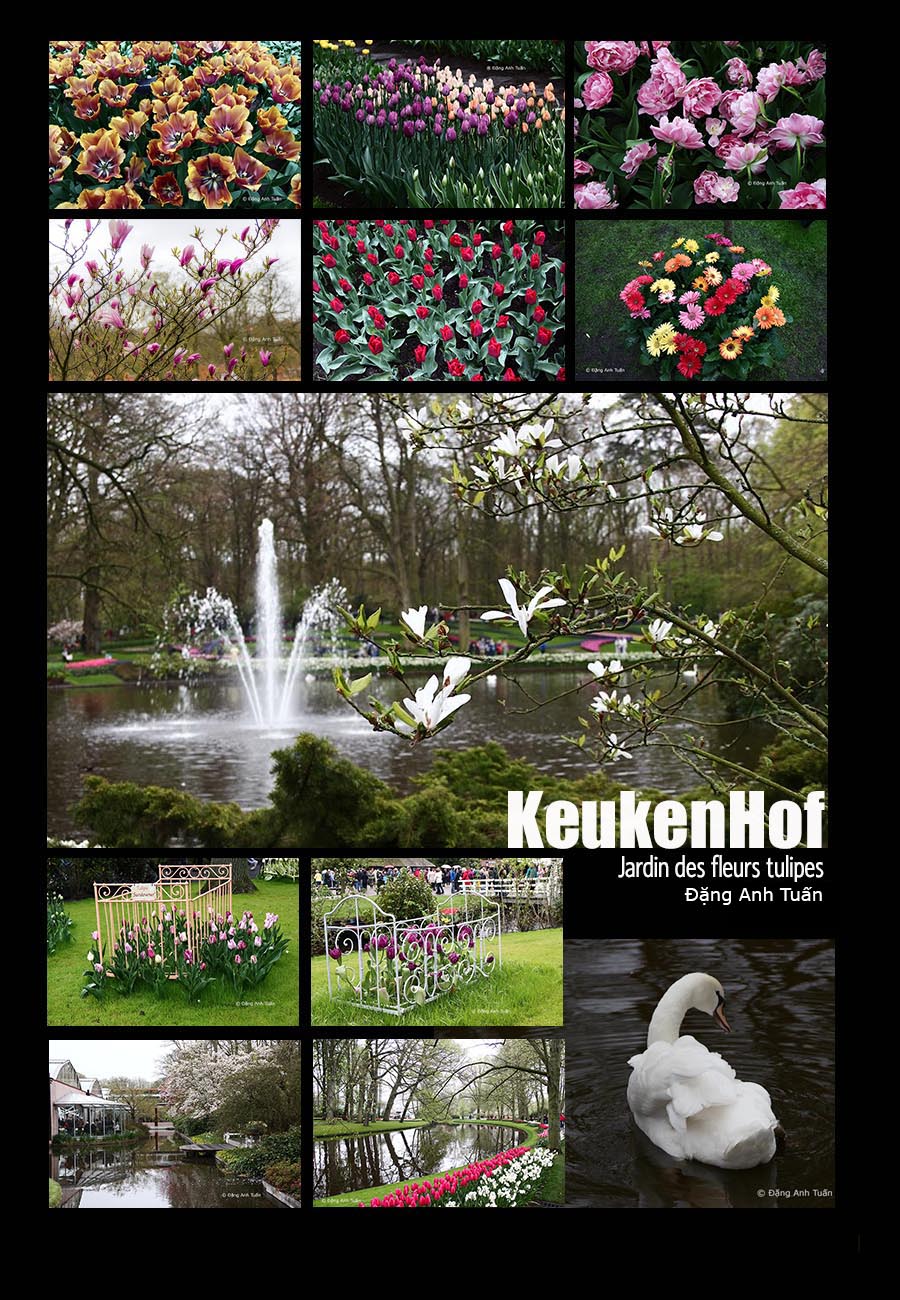
Parc de Keukenhof (Amsterdam)


Ouvert tous les ans à la même période au public pour huit semaines, le parc de Keukenhof est situé à Lisse, au sud-ouest d’Amsterdam  (Hollande). Ce parc de 32 ha est très connu non seulement pour ses tulipes mais aussi pour ses jardins thématiques.  Grâce à cette fleur, la Hollande est le premier producteur au monde avec plus de 4 milliards de bulbes vendus chaque année.

Vườn hoa tulipe Keukenhof

Open every year to the public  during the same period for eight weeks, the park of Keukenhof is located at Lisse in the southwest of Amsterdam.  This 33 hectare park is very known not only for its tulips but also for its theme gardens. Thanks to this flower, Holland is the largest world producer  with more than 4 billions bulbs sold each year.

keukenhof

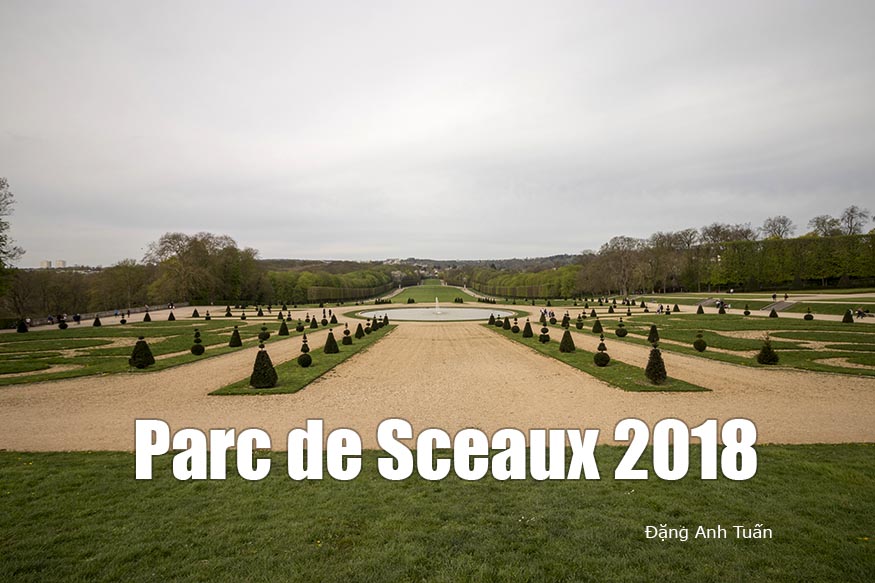
Parc de Sceaux 2018

Công viên Sceaux

C’est l’un des parcs connus dans la région de l’île de France. Il fut conçu par le célèbre aménageur des jardins du château de Versailles, André le Nôtre à la fin du XVII  ème siècle à la demande de Colbert, ministre des finances du roi soleil Louis XIV .


Parcs_sceaux_2018

 Đây là một trong những công viên nổi tiếng  ở vùng ngọai ô Paris. Vườn nầy được thiết kế vào cuối thế kỷ 17  bỡi ông André Le nôtre, người  được xây dựng và trang trí các vườn hoa của lầu đài Versailles với sự yêu cầu của bộ trưởng tài chính của « vua mặt trời » Louis XIV.


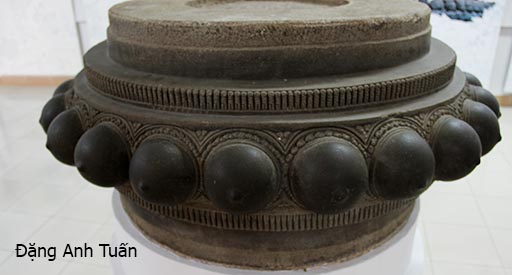
Champa sculpture ( Điêu khắc cổ Champa): Part 1

dieu_khac_champa
Version française
Version vietnamienne

Until today, the exact ethnic origin of the Chams is not known. Some believe that they came from continental Asia and were pushed back along with other populations living in southern China (the Bai Yue) by the Chinese, while others (ethnologists, anthropologists, and linguists) highlighted their island origin through their research work.


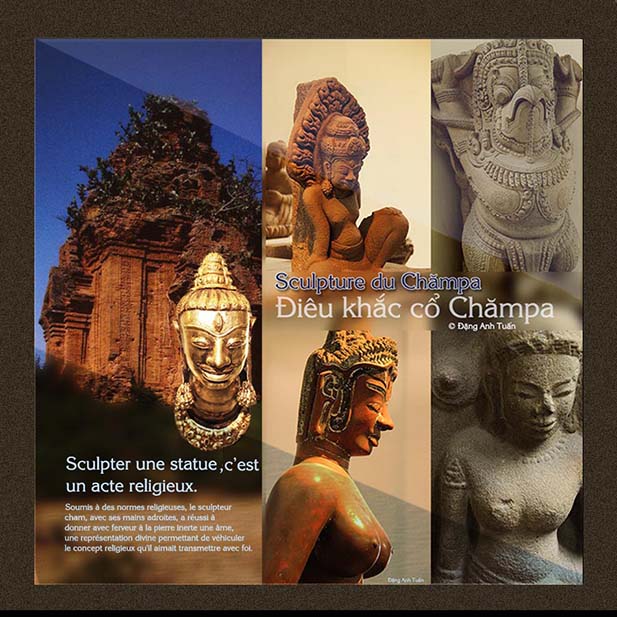
Carving a statue is a religious act.


For the latter, the Chams were probably populations from the South Seas (the countries of the archipelagos or those of the Malay Peninsula). Cham oral traditions mentioning connections linking, in legendary times, Champa and Java support this latter hypothesis.
Nicknamed the Vikings of Southeast Asia, the Chams lived along the coasts of central and southern present-day Vietnam. Their main activities were essentially based on trade. They were in contact very early with China and territories as far away as the Malay Peninsula, possibly the coasts of South India.

Being dedicated to religious purposes, Cham sculpture was thus not immune to political repercussions and influences from outside, particularly those from India, Cambodia, and Java. These became the main forces of creation, development, and evolution of styles in their art. According to the French researcher Jean Boisselier, Cham sculpture was closely linked to history. Significant changes were noted in the development of Cham sculpture, especially statuary, with historical events, changes of dynasties, or the relations that Champa had with its neighbors (Vietnam or Cambodia). According to the Vietnamese researcher Ngô Văn Doanh, whenever there was a significant external impact, a new style in Cham sculpture soon appeared.

To illustrate this, it is enough to cite an example: in the 11th-12th centuries, the intensification of violent contacts especially with Vietnam and Cambodia, and the emergence of new concepts related to the foundations of royal power can explain the originality and richness found in the style of Tháp Mắm.

Pictures gallery


Being the expression of the Indian pantheon (Brahmanist but especially Shaivist and Buddhist), Cham sculpture rather resorts to the local interpretation of concepts and norms coming from outside with elegance than to servile imitation. It is above all a support for meditation and a proof of devotion. Sculpting a statue is a religious act. Subject to religious norms, the Cham sculptor, with his skillful hands, succeeded in fervently giving the inert stone a soul, a divine representation allowing the conveyance of the religious concept he wished to transmit with faith. Cham sculpture is peaceful. No scenes of horror are depicted. There are only somewhat fanciful animal creatures (lions, dragons, birds, elephants, etc.). No violent or indecent forms are found in the deities. Despite the evolution of styles over history, Cham sculpture continues to maintain the same divine and animal creatures within a constant theme.


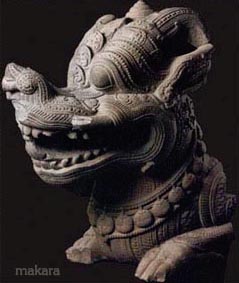
Makara

Cham art has succeeded in maintaining its specificity, its own facial expression, and its particular beauty without it being said that it is a servile copy of external models, thus preserving its uniqueness in Hindu sculpture found in India and Southeast Asia. Despite the lack of animation and realism, Cham works were mostly carved from sandstone and much more rarely from terracotta and other alloys (gold, silver, bronze, etc.).

Generally modest in size, they depict religious beliefs and worldviews. They cannot leave us indifferent because they always give us a strong strange impression. This is one of the characteristics of the beauty of Cham art.

In Cham sculpture, one finds free-standing sculptures (round-bosses), high reliefs, and low reliefs. A free-standing sculpture is one that can be viewed from all sides to see the sculptor’s work. A high relief is a sculpture with a very prominent relief that does not detach from the background. As for the low relief, it is a sculpture with slight projection on a uniform background. In Cham sculpture, there is a tendency to emphasize the roundness of creatures in the reliefs. Few scenes are depicted in this sculpture. There is a noted lack of connection or coherence in the assembly when otherwise.

The creatures found in Cham sculpture tend to always emerge brilliantly from the space surrounding them. They have something monumental about them. Even when they are grouped together in the works of Mỹ Sơn, Trà Kiệu depicting the daily life of the Chams, they give us the impression that each one remains independent from the others.

One can say that the Cham sculptor focuses solely on the creature he wants to show and deify without ever thinking about excessively unrealistic details and imperfections (such as the too-large hand or the overly bent arm of the dancer from Trà Kiệu, for example) and without closely imitating the original Indian models, which gives this Cham sculpture the « monumental » character not found in other sculptures. This is another particularity found in this Cham sculpture.

The works are not numerous but they testify to a beautiful plastic quality and the expression of various religions. It is difficult to attribute them to a single style. On the other hand, some traits close to the tradition of Indian art from Amaravati can be noted. It was only in the second half of the 7th century, under the reign of King Prakasadharma Vikrantavarman I, that Cham sculpture began to take shape and reveal its originality. [Reading more]


Papyrus vietnamien (Giấy dó)

Imageries populaires Đông H

Version française

English version

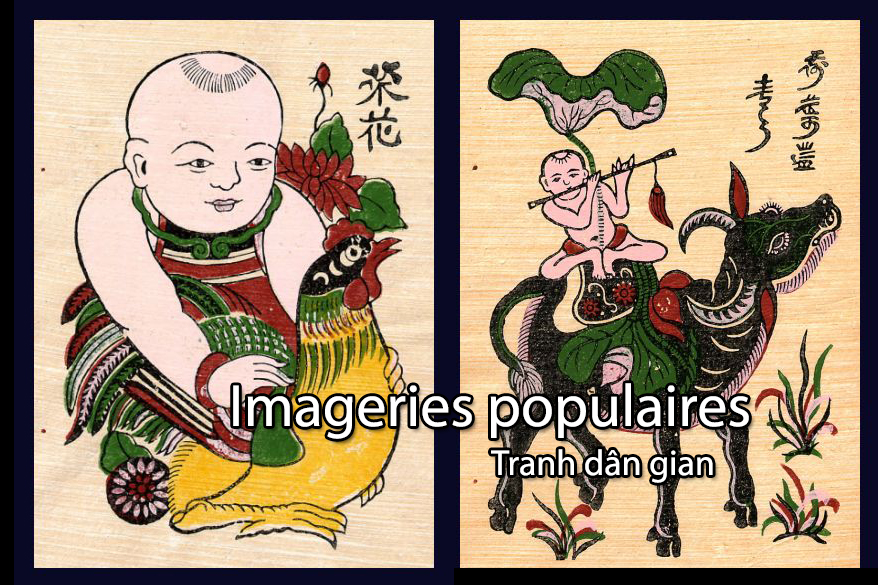
Các  bức tranh dân gian phổ biến nầy  thường được trông thấy trưng bày ở  các ki-ốt dành riêng cho các khách du lịch nước ngoài. Giấy dó (giấy rhamnomeuron) được sử dụng để in những hình ảnh này. Theo một số nhà nghiên cứu Việt Nam,  giấy này được xuất hiện vào khoảng thế kỷ thứ 3 và đạt đến đỉnh cao từ thế kỷ thứ 8 đến thế kỷ 14. Hồ Qúi Ly đã sử dụng nó vào cuối thế kỷ 14 để in các tiền tệ pháp định.

Việc sản xuất giấy này đòi hỏi phải có sự chuẩn bị thật  kỹ lưỡng. Giấy được làm bằng vỏ cây dó. Sau khi thu hoạch vào khoảng tháng 8 đến tháng 10 âm lịch, cần ngâm vỏ cây trong nước một hoặc hai ngày. Sau đó mới  được xử lý bằng cách ngâm nó trong dung dịch vôi cô đặc trong 5 giờ. Sau đó mới  đun sôi nó trong khoảng 20 giờ trước khi đem giã nó trong 5 giờ. Bột thu được bằng cách giã được pha loãng trong một chậu chứa đầy hỗn hợp nước và nhựa từ cây mò (clerodendron). Giấy thu được bằng cách sử dụng khuôn sau khi ép và sấy khô nó.

Cứ một trăm kí lô vỏ cây,  chỉ thu được 5 hoặc 6 kg giấy. Điều này giải thích tại sao thị trường bán giấy nầy rất bị hạn chế. Ngoài ra, giấy dó Việt Nam chỉ mọc ở vùng cao miền Bắc. Nổi tiếng với nghề in vẽ hình trên giấy dó, dân làng Dương Ô và Đông Hồ cũng chịu cùng  chung số phận.

Giá  vốn sản xuất giấy  được tái chế lại cao hơn so với  giá bán giấy dó. Đây chính là lý do khiến ít người tiếp tục quan tâm đến nghề truyền thống nầy  đang bị thất lạc đi qua năm tháng.


Les imageries populaires fréquemment visibles sont proposées dans les kiosques réservés aux touristes étrangers. Le papier dó (papier de rhamnomeuron) est utilisé dans l’impression de ces imageries. Selon certains chercheurs vietnamiens, ce papier fut apparu vers le IIIème siècle et connut son apogée du VIIIème au XIVème siècle. Hồ Qúi Ly s’en servit à la fin du XIVème  siècle pour l’impression des monnaies fiduciaires.

La production de ce papier nécessite une préparation minutieuse. Il est fabriqué avec l’écorce de l’arbre do. Après la récolte de celle-ci entre les 8ème et 10ème mois lunaires, on a besoin de l’immerger dans l’eau pendant un ou deux jours. On la traite ensuite en la macérant dans une solution de chaux condensée durant 5 heures. Puis on la fait bouillir durant une vingtaine d’heures avant de la piler pendant 5 heures. La farine obtenue par le pilage est diluée dans une bassine remplie d’un mélange d’eau et de résine de la plante mò ( clerodendron ). Le papier est obtenu grâce à un moule après avoir été pressé et séché.


Papyrus vietnamien

Galerie des photos

Pour cent kilos d’écorce, on obtient seulement 5 ou 6 kilos de papier. Cela explique la raison pour laquelle le marché est très limité. De plus le papyrus vietnamien dó ne pousse que dans les hautes régions au Nord. Connus pour la fabrication des imageries populaires sur le papier dó, les villageois de Dương Ô et de Ðông Hồ ont subi le même sort.

Le prix de revient  dans  la production du papier recyclé est supérieur à celui de vente  du papier dó. C’est pourquoi peu de gens continuent à s’intéresser encore à ce métier ancestral qui se perd au fil des années.

Version anglaise

Those are often proposed in the kiosks reserved to  foreign tourists. Paper dó (rhamnomeuron paper) is used in the printing of these images. According to certain Vietnamese researchers, this paper had appeared around the 3rd century and knews its apogee from the 8th to the 14th century. Hồ Qúi Ly made use of it at the end of  14th century for the printing of  fiduciary currencies. The production of this paper requires a meticulous preparation.

It is manufactured with the bark of the tree dó. After the harvest of this one between the 8th and 10th lunar months, one needs to immerse it in water during one or two days. After one treats it by macerating it in a lime solution condensed during 5 hours. Then one makes it by boiling  during about twenty hours before crushing it during 5 hours. The flour obtained by crushing is diluted in a basin filled with a mixture of water and resin of the plant mò (clerodendron). Paper is obtained thanks to a mould after being pressed and  dried.

For two hundred kilos of bark, one  gets only 5 or 6 kilos of paper. That explains why the market is very limited. In addition, the Vietnamese papyrus dó grows only in the northern  highlands. Known for making popular imagery on paper dó,  villagers of Dương Ô and Đông Hồ suffered the same fate.

The cost price in the production of recycled paper is higher than the selling  price  of dó paper. That is why a few people still continue to be interesting to this ancient craft that is lost over the years.

Dương Vân Nga (English version)


French version
Vietnamese version
Pictures gallery

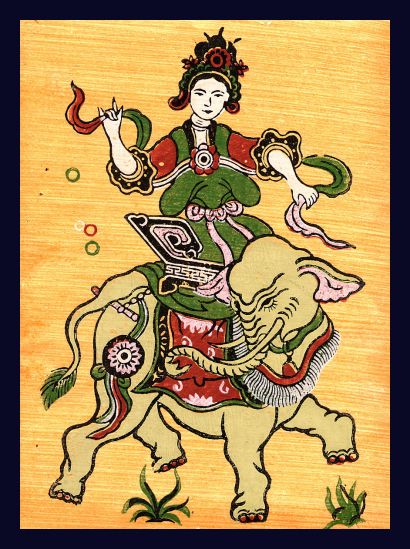
One speaks rarely of Dương Vân Nga in the history of Vietnam. Her name is not as often cited as that of the sisters Trưng Trắc Trưng Nhị or that of Triệu Ẩu. However she was an outstanding woman, the great queen of the first two dynasties Ðinh and Tiền Lê ( anterior Lê ) of Vietnam. Her life and works can be summed up in the following four verses which have been transmitted by oral tradition to our days and left on the wall of Am Tien monastery by a mysterious monk exactly 1000 years now, at his encounter with Dương Vân Nga:

Hai vai gồng gánh hai vua
Hai triều hoàng hậu, tu chùa Am Tiên
Theo chồng đánh Tống bình Chiêm
Có công với nước, vô duyên với đời

On her two shoulders two kings were carried
Queen of two reigns, she retired in Am Tien monastery.
Accompanying her spouse, she had beaten the Song and pacified the Cham
Service she rendered to her country, yet bad luck she got in her life.

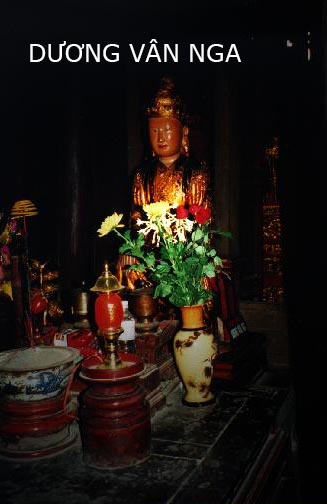
Among the ten queens of these two dynasties, she was the only one to be allowed a statue bearing her effigy. During its restoration and transfer in the temple dedicated to King Lê Ðại Hành at the beginning of the Hậu Lê dynasty the statue oozed strangely, perhaps due to it being exposed suddenly to the sun after having been put in a humid place. At that time, it was said that this phenomenon was attributed to atrocious sufferings life has reserved to Dương Vân Nga during her lifetime.

Dương Vân Nga

Her real name was Dương Thị. Vân Nga was the name attributed to her by combining the first word of the name of the region of her father Vân Long and that of her mother Nga Mỹ. She was issue of a very poor background. At her very young age she had to collect wood in the forest and fish in the river to provide to the subsistence of her family in a mountainous and uneven region which is our Hoa Lư. Early morning in the forest, late evening in the river, she became without delay a young hard working, energetic and trouble shooting girl.

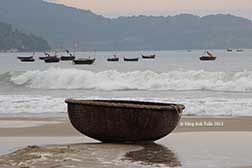
She had an innate sense of organization that allowed her to become in the following years the leader of a band of young girls in the area. She arrived at coping with a rival band constituted mainly of young boys led by the buffalo tender Ðinh Bộ Lĩnh by completely disperse his herd of buffaloes by using firecrackers and by her perfect mastery of round floating baskets that helped rapid transport of her troops across swamps and streams. But Ðinh Bộ Linh finally had the last word thanks to his scheme of recourse to poles and light craft of bamboo mat to pierce and immobilize all the round floating baskets of Dương Vân Nga. From then on Ðinh Bộ Lĩnh not only conquered Duong Van Nga’s admiration but also her love. That is why nowadays to evoke conjugal union and predestined love of a couple, it is often referred to the following popular expression: Bamboo mat craft crush round floating baskets ( Thuyền tre đè thuyền thúng )

Thuyền thúng

Thanks to their association, they arrived at gathering under their banner all the young of Hoa Lu and eliminating without delay their opponents in the conquest of power. Thus Ðinh Bộ Lĩnh became the first king of the Ðinh dynasty often known as Ðinh Tiên Hoàng. He was very authoritarian. He used ranks and appointments to buy loyalty of his subordinates. He also used force and cruel and unimaginable punishments to punish his adversaries and those who dared criticize him.

Despite Dương Vân Nga’s advice, he remained unruffled and made several enemies to himself even in his family. Instead of appointing his eldest son Ðinh Liễn, the one who had helped him for several years in his fights for the unification of the country, he chose his youngest son Ðinh Hạng Lang as his crown prince. This provoked Ðinh Liễn’s jealousy and incited him to assassinate his younger brother. Dương Vân Nga was at first witness of the fratricidal fight among her children, then the death of her husband, king Ðinh Tiên Hoàng assassinated by Ðỗ Thích a crank who, after a dream, thought the kingdom should belong to him and the eldest son Ðinh Liễn killed by the rebel troops.

She soon had the pains and sufferings of her daughter, princess Phật Kim, deserted by her husband Ngô Nhật Khánh who, being one of the sons of Ngô Quyền, took refuge in Champa and requested this country to launch a maritime attack against his own land Vietnam in the goal of reconquest of power. Because of the age of her son Ðinh Toàn ( 6 years old ), she had to assume the regency with Lê Hoàn, a generalissimo, head of Vietnamese territories.

But she soon faced the armed resistance of her assassinated husband’s partisans who wanted to eliminate Lê Hoàn at any cost and also the imminent threat of the Song as well as Champa’s. She was placed in front of a dilemma that appeared to be difficult for a woman to overcome alone when she lived in a Confucian era and when Vietnam was just liberated from Chinese domination for about a dozen years. She had the courage to take a decision which appeared doubtful at that time and heavy of harmful consequences for the Dinh dynasty in yielding the throne to Le Hoan and associating with the latter in managing the Ðại Cồ Việt ( ancient Vietnam ).

Pictures gallery of Hoa Lư


This permitted Lê Hoàn to have a massive adhesion of a great part of population and restore not only the confidence but also the unity of the whole people. He thus succeeded in putting down the rebellion, wiping out the Song on the Bạch Ðằng river, starting the Nam Tiến movement ( or descent toward the South ) and restoring peace all over the country. One should place oneself in this troubling political context that Dương Vân Nga experienced in order to see that it was an act well thought out and courageous from the part of a woman who, trained up until then to be submissive to a Confucian yoke, dared accept the dishonor and scorn to assure that our country would not pass under Chinese domination and that Vietnam would not prolong in political chaos.

Her combat appeared to be more arduous than that of the Trưng Trắc Trưng Nhị sisters because it is the matter of not only a struggle against the invaders, but also her own interests, her personal sentiments for the love of this country.
During the reign of Lê Ðại Hành ( or Lê Hoàn ), she ceaselessly advised the latter to practice a politics of magnanimity towards his adversaries, to ban cruel punishments established by Ðinh Tiên Hoàng and to call on talented monks ( Khuông Việt, Ngô Chấn Lưu, Hồng Hiến, Vạn Hạnh ) to the management of the country. Being a warrior by nature, bearing the name of Great Expedition ( Ðại Hành ), he continued to enlarge Vietnam by leading not only a maritime expedition that destroyed the Cham capital Indrapura in presently Central Vietnam in 982 and killed the Cham king Bề Mi Thuế ( Paramec Varavarman ) but also a politics of pacification all over the place in the ethnic minority territories. It was in one of these battles that the last son of Dương Vân Nga and Ðinh Tiên Hoàng, Ðinh Toàn, died assassinated at the place of Lê Hoàn by the Mán. This death was followed by the suicide of her daughter, princess Phật Kim and the death by illness of her son Long Thâu that she had with Lê Ðại Hành. She was taken up by the disappearance of her entourage without complain. She preferred to live her last days in Am Tiên monastery and burry the personal sufferings of a woman facing her destiny.

Is it fair for a patriotic woman like Dương Vân Nga overwhelmed by destiny, not to be cheered and cited like the Trưng Trắc Trưng Nhị sisters in the history of our Vietnam? Is there anything to do with a deliberate omission because of a sacrilege committed by Dương Vân Nga for having married and served two kings in a feudal Confucian society which is ours? One cannot erase the truth of history especially these details, said the Chinese historian Si Ma Qian.

It is time to give back to Dương Vân Nga her notoriety and her place she deserved long time ago in our history pages and make known to future generations the courageous and full of wisdom decision. This one, even though it seemed doubtful and immoral for a Confucian society, was made in the moment where the situation exacted more than ever the cohesion and unity of the whole people facing foreign invasion, but also a man of valor and talent that was our great king Lê Ðại Hành. Without him, the Nam Tiến movement would not have taken place.

Beautiful landscapes of Vietnam


French version
Vietnamese version

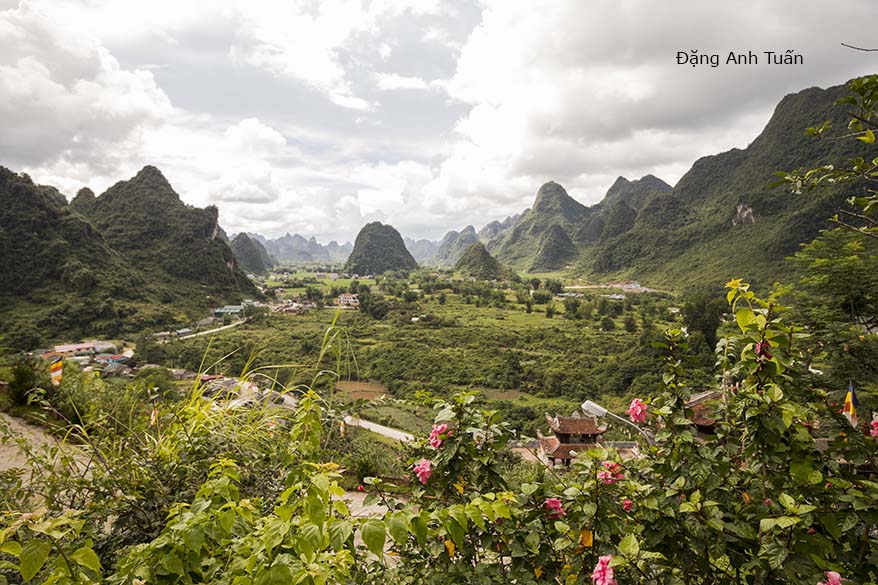
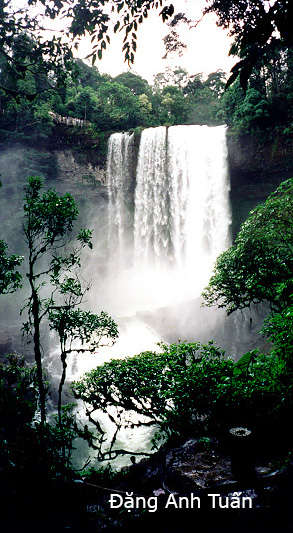
The landscape of Vietnam is really magnificent and exceptional.  For an avid photographer, it is the ideal place where he can make beautiful pictures for  immortalizing his trip. From North to South, the landscape is so  contrasted that it is impossible to remain indifferent to the  breath-taking beauty of nature.

Pictures gallery

phongcanh

Phong cảnh hữu tình 

In the North, one is amazed by atonishing and majestic  peaks emerging    from clean waters and islets with various forms in  Along and Hoa Lư bays and  rice terraces used by minority ethnic groups  in the heart of the mountains (Sapa, Mộc Châu, Mai Châu, Hà Giang, Yên Bái, Cao Bằng). In the central region, in addition to Phong Nha-Kẻ Bàng and Sơn Động  stalactite caves and world heritages of Unesco (Huế, Mỹ Sơn, Hội An),  there are beautiful beaches (Mỹ Khê, Hội An, Nha Trang ) and national parks (Yok Don, Nam Cát Tiên).  In the South, the natural beauty is no less, in particular in the Mekong delta.

Here, thanks to the hand of man, panoramas are revealed magnificent: large rice fields as far as the eye, luxuriant orchards (Bến Tre, Mỹ Tho, Cái Bè) and beautiful traditional villages along watercourses without forgetting the mangrove forest in Châu Đốc and Cà Mau peninsula.
 

Mandarin road (English version)

Version française

Mandarin road

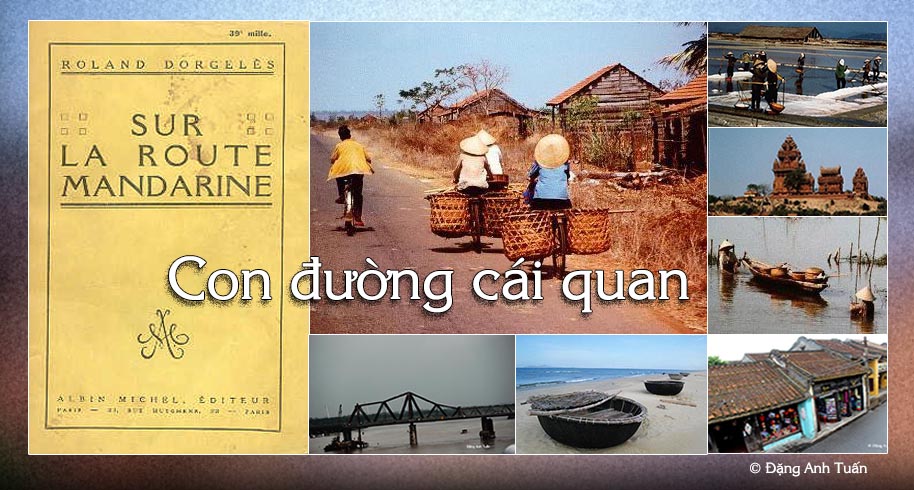
If a tourist has a chance to travel by car from Saigon to Hanoï, he has got to take the « mandarin route » (or route No.1 ) as it is the only one that exists on the road network in Vietnam. We owe the name of « mandarin route » to the French who named it in 19th century because it is certain that it was the road taken by mandarins and high functionaries to travel rapidly and easily between the capital and their provinces. This route is born in the swamps of  Mekong delta infested with mosquitoes. It begins at Cà Mau and ends at the post of Ðồng Ðằng on the Sino-Vietnamese border in the region close to Lạng Sơn. It is often said that this route is the country’s backbone that looks like a sea horse. This route is 1730km long, linking several cities, in particular Saigòn, Phan Thiết, Nha Trang, Qui Nhơn, Hội An, Ðà Nẵng, Huế, Ðồng Hới, Hà Tịnh, Thanh Hóa and Hanoï.

It is generally covered with asphalt, but often on some sections, it was badly paved and weighed down by a multitude of trucks, bicycles, pedestrians, buffaloes, cows, and troops of ducks walking on. The bitumen often breaks, causing the grandmother perching side-saddle on the baggage carrier and girls leaning on too big bikes, to jump. Those are the familiar scenes often encountered on this road.

One also finds harvested rice and manioc left to dry on asphalt heated by the sun in the North. On this route, one can see on a side of Sa Huynh, the salt fields or mounds of salt recovered from the foliage and set up alongside of the road. The further one goes north, the more one sees peaceful landscapes of flooded rice paddies.

One often crosses children leading herds of buffaloes daubed with mud. At the edge of Hoa Lư, the ancient capital of Viet Nam, silhouettes of rocky hills emerge from the bluish mist.

Despite its bad condition especially in North Vietnam, it continues to be the axle road vital to Vietnam. For those who like to know the history of Vietnam, the history of the long march towards the South, it is suggested that this route be borrowed because one would find not only the vestiges of a lost civilization in the whirlwind of history, the kingdom of Champa, but also the marks and traces that Vietnamese settlers, for the past decades, succeeded in carving during their passage.

Pictures gallery

Quốc lộ số 1

To know this route is to know not only the immense rice paddies, rubber tree plantations, beautiful sightseeing points on the coast of Vietnam, very beautiful panoramic views from one delta to another, superbs passes (in particular the Hải Vân pass) and wooded hills, almost desolate waste lands, but also an intensity of a Vietnamese agricultural life through hamlets located alongside of the route.

To know this route is to also know the Hiền Lương bridge. It was built by the French in 1950, destroyed by an American airplane in 1967, 178 meters long. It certainly evokes an episode when Viet Nam was divided and when one-half of the bridge was painted red and the other half yellow. It is located at the 17th parallel, in a zone where one of its sections, known during the Indochina war as « the Road without Joy » as French troops encountered fierce resistence there.

To know this route is to know the Hải Vân pass. It is located at 28km north of Ðà Nẫng ( or Tourane ) and only 495m high. As its name indicates, it is always in the clouds because it is close to the sea, which allows it to receive important masses of humid air. In the old days, it marked the frontier between the North and the South and protected the Chams from the Vietnamese appetite for land.

Composer Phạm Duy has evoked this route through his work entitled « Con Ðường Cái Quan« .


Route mandarine (Version française)


Version française

English version

Con đường cái Quan

Nếu du khách có cơ hội đi từ Sài Gòn đến Hà Nội bằng ô tô thì bắt buộc phải đi « con đường cái quan » (hoặc Quốc Lộ số 1) vì đây là tuyến đường duy nhất ở Việt Nam. Tên này có tên là « con đường của các quan » mà người Pháp gọi nó như vậy  bởi vì đây là tuyến đường trước đó được các quan lại và các quan chức cao cấp dùng để đi nhanh chóng dễ dàng giữa thủ đô và các tỉnh. Con đường này được sinh ra ở vùng đầm lầy của đồng bằng sông Cửu Long, đầy dãy các muỗi truyền nhiễm. Nó được bắt đầu ở  Cà Mau và kết thúc tại đồn Đồng Đăng ở biên giới Trung-Việt gần vùng Lạng Sơn. Nó thường được xem là cột sống của đất nước trông nhìn như hồi hải mã (cá ngựa). Con đường này dài đến 1.730 cây số, nối liền một số thành phố, đặc biệt là Cà Mau, Bạc Liêu, Cần Thơ, Vĩnh Long, Sài Gòn (hay thành phố Hồ Chí Minh), Phan Thiết, Nha Trang, Quy Nhơn, Hội An, Đà Nẵng, Huế, Đồng Hới, Hà Tĩnh, Thanh Hóa, Ninh Bình, Hà Nội, Lạng Sơn.

Con đường nầy thường được trán nhựa nhưng trải nhựa rất kém thường bị tắc nghẽn trên vài đoạn đường với một số xe vận tải, xe đạp, các người đi bộ,  các đàn trâu, bò và các đàn vịt chạy lon ton. Nhựa đường hay thường bị nổ vỡ, làm cho bà cụ giật mình gác hai chân trên giá hành lý và những đứa trẻ ngồi trên những chiếc xe đạp quá lớn. Đây là những cảnh tượng bất thường hay gặp trên tuyến đường này.

Ngoài ra còn có những mớ lúa hoặc sắn thu thập còn đang phơi khô trên các đường nhựa nung dưới ánh mặt trời ở miền Bắc. Trên con đường này, chúng ta  có thể nhìn thấy ở phía Sa Huỳnh, các đầm lầy muối hoặc những ụ muối phủ đầy một lớp lá và  được dựng theo dọc đường. Càng đi xa về phía bắc, chúng ta càng có được những quan cảnh  yên bình của những cánh đồng lúa ngập nước. Chúng ta thường bắt gặp những đứa trẻ dẫn đầu đàn trâu dính bùn. Ở ngoại ô Hoa Lư, cố đô của Việt Nam, các hình bóng của những ngọn đồi núi đá vôi xuất hiện trong sương mù.Mặc dù tình trạng đường xá rất tồi tệ nhất là ở miền Bắc Việt Nam, nó vẫn tiếp tục là trục đường quan trọng của Việt Nam. Đối với những người thích tìm hiểu về lịch sử Việt Nam, lịch sữ của cuộc Nam tiến, chúng ta  cần nên đi theo con đường này bởi vì chúng ta không chỉ thấy  các di tích của một nền văn minh bị biến mất trong cơn lốc lịch sử, vương quốc Champa mà  còn cả dấu ấn và dấu vết của  những người định cư Việt Nam qua nhiều thập kỷ mà họ  cố gắng áp đặt trong suốt thời gian họ đi qua. Biết con đường này là không chỉ biết đến những cánh đồng lúa mênh mông, những đồn điền cao su, những góc nhìn tuyệt đẹp dọc theo bờ biển Việt Nam, những toàn cảnh tuyệt vời từ đồng bằng này sang đồng bằng khác, các đèo vô cùng ngoạn mục  đặc biệt là đèo Hải Vân, những ngọn đồi rừng rậm, những cánh đồng gần như hoang vắng nhưng cũng có  một sức mạnh của đời sống nông nghiệp Việt Nam thông qua các ấp dọc theo con đường.

 Biết con đường này là cũng biết đến cầu Hiền Lương. Cầu này do người Pháp xây dựng vào năm 1950, bị không quân Mỹ phá hủy năm 1967, dài được 178 mét, chắc chắn gợi lại một thời mà đất nước còn bị chia đôi với một nửa cầu được sơn màu đỏ và nửa còn lại màu vàng. Nó nằm ở trên vĩ tuyến 17, trong một khu vực có một đoạn đường  được biết đến trong thời kỳ chiến tranh Đông Dương dưới cái tên « Đường không vui » vì quân đội Pháp gặp sự kháng cự quyết liệt ở nơi nầy. Biết tuyến đường này là biết đèo Hải Vân. Nó nằm 28  cây số về phía bắc của Đà Nẵng (hoặc Tourane) và chỉ có 496 thước so với mực nước biển. Cũng như tên gọi của nó, nó luôn ở trong mây vì nó rất gần biển, khiến nó  lúc nào cũng nhận được một khối lượng lớn không khí ẩm thấp. Thưở xưa, nó đánh dấu biên giới giữa Bắc và Nam mà còn bảo vệ người Chămpa trước dục vọng xâm chiếm lãnh thổ của người dân Việt. Cố nhạc sỹ Phạm Duy có gợi  đến con đường này qua tác phẩm được mang tên « Con Đường Cái Quan ». 

Route mandarine

Si le touriste a l’occasion de voyager de Saïgon à Hanoï en voiture, il est obligé de prendre la « route mandarine » (ou la route No 1) car c’est la seule qui existe sur le réseau routier du Vietnam. Ce nom « route mandarine », on le doit aux Français qui l’ont appelé car c’était la route prise autrefois par les mandarins et les hauts fonctionnaires pour voyager rapidement et aisément entre la capitale et leurs provinces. Cette route est née dans les marécages du delta du Mékong,  infestés de moustiques. Elle commence à Cà Mau et se termine au poste de Ðồng Ðan de la frontière sino-vietnamienne dans la région proche de Lạng Sơn.  On dit souvent qu’elle est la colonne vertébrale du pays au « look » d’hippocampe. Cette route est longue de 1730 km, reliant plusieurs villes, en particulier Cà Mau, Bạc Liêu, Cần Thơ, Vĩnh Long, Saïgon, Phan Thiết, Nha Trang, Qui Nhơn, Hội An, Ðà Nẵng, Huế, Ðồng Hới, Hà Tịnh, Thanh Hóa et Hanoï.

Elle est recouverte d’une manière générale d’asphalte, mais mal bitumée et encombrée souvent sur certains tronçons d’une multitude de camions, de vélos, de piétons, de buffles et de vaches et de troupeaux de canards qui trottinent. Le bitume explose souvent, faisant tressauter la mamie grimpée en amazone sur un porte-bagages et les mômes juchés sur des vélos trop grands. Ce sont des scènes insolites rencontrées fréquemment sur cette route.

On trouve aussi des récoltes de riz ou de manioc mises à sécher sur l’asphalte chauffée de soleil dans le Nord. Sur cette route, on peut voir du côté de Sa Huynh, des marais salants ou des monticules de sel recouverts de feuillage et dressés le long de la chaussée.

Plus on s’avance dans le Nord, plus on rencontre des paysages paisibles de rizières inondées. On croise souvent des enfants menant des troupeaux de buffles laqués de boue. Aux abords de Hoa Lư, l’ancienne capitale du Vietnam, les silhouettes des collines rocheuses émergent d’une brume bleutée.

Malgré son mauvais état surtout dans le Nord du Vietnam, elle continue à être l’axe routier vital du Vietnam. Pour ceux qui aiment connaître l’histoire du Vietnam, l’histoire de sa longue marche vers le Sud, il est conseillé d’emprunter cette route car on retrouve non seulement les vestiges d’une civilisation disparue dans le tourbillon de l’histoire, le royaume du Champa mais aussi les marques et les traces que les colons vietnamiens, depuis des décennies, arrivèrent à imposer lors de leur passage.

Galerie des photos

Connaître cette route c’est connaître non seulement des rizières immenses, des plantations d’hévéas, de beaux points de vue sur la côte du Vietnam, de très beaux panoramas d’un delta à un autre, de cols superbes (en particulier le col des Nuages ) et de collines boisées, des landes presque désolées mais aussi une intensité de vie agricole vietnamienne à travers les hameaux qui longent la route.

Connaître cette route c’est connaître aussi le pont Hiền Lương. Celui-ci construit par les Français en 1950, détruit par l’aviation américaine en 1967, long de 178m, évoque certainement une époque où le Vietnam était divisé et où la moitié du pont était peinte en rouge et l’autre moitié en jaune. Il est situé au 17ème parallèle, dans une zone où est situé un tronçon, connu lors de la guerre d’Indochine sous le nom « Rue sans Joie » car les troupes françaises y rencontrèrent de farouches résistances.       

Quốc lộ số 1

Connaître cette route c’est connaître le col des Nuages. Celui-ci est situé à 28 km au Nord de Ðà Nang (ou Tourane) et seulement 496 m d’altitude. Comme son nom l’indique, il est toujours dans les nuages car il est proche de la mer, ce qui lui permet de recevoir d’importantes masses d’air humide. Autrefois, il marquait la frontière entre le Nord et le Sud et protégeait les Chams des appétits territoriaux vietnamiens.

Le compositeur Phạm Duy a évoqué cette route à travers son œuvre intitulé Con Ðường Cái Quan.

Mandarin Road

If the tourist has the opportunity to travel from Saigon to Hanoi by car, they must take the « Mandarin Road » (or Route No. 1) because it is the only one that exists on Vietnam’s road network. This name « Mandarin Road » comes from the French who called it that because it was the route formerly taken by mandarins and high officials to travel quickly and easily between the capital and their provinces. This road was born in the mosquito-infested swamps of the Mekong Delta. It starts in Cà Mau and ends at the Đồng Đan post on the Sino-Vietnamese border near the Lạng Sơn region. It is often said to be the backbone of the country with the « look » of a seahorse. This road is 1,730 km long, connecting several cities, particularly Cà Mau, Bạc Liêu, Cần Thơ, Vĩnh Long, Saigon, Phan Thiết, Nha Trang, Qui Nhơn, Hội An, Đà Nẵng, Huế, Đồng Hới, Hà Tịnh, Thanh Hóa, and Hanoi.

It is generally covered with asphalt, but poorly paved and often cluttered on certain sections with a multitude of trucks, bicycles, pedestrians, buffaloes, cows, and herds of ducks trotting along. The asphalt often cracks, causing the grandmother riding sidesaddle on a luggage rack and the kids perched on oversized bicycles to bounce. These are unusual scenes frequently encountered on this road.

You can also find rice or cassava harvests laid out to dry on the sun-heated asphalt in the North. On this road, near Sa Huynh, you can see salt marshes or mounds of salt covered with foliage and lined up along the roadside.

The further north you go, the more you encounter peaceful landscapes of flooded rice fields. You often come across children leading herds of buffaloes coated in mud. Near Hoa Lư, the ancient capital of Vietnam, the silhouettes of rocky hills emerge from a bluish mist.

Despite its poor condition, especially in northern Vietnam, it continues to be the vital road axis of Vietnam. For those who like to learn about the history of Vietnam, the story of its long march to the South, it is recommended to take this route because you not only find the remains of a civilization lost in the whirlwind of history, the Champa kingdom, but also the marks and traces that Vietnamese settlers, over decades, managed to impose during their passage.

Knowing this road means knowing not only vast rice fields, rubber plantations, beautiful viewpoints on the coast of Vietnam, stunning panoramas from one delta to another, magnificent mountain passes (especially the Cloud Pass), and wooded hills, almost desolate moorlands but also an intensity of Vietnamese agricultural life through the hamlets that line the road.

Knowing this road also means knowing the Hiền Lương bridge. This bridge, built by the French in 1950, destroyed by American aviation in 1967, and 178 meters long, certainly evokes a time when Vietnam was divided and half of the bridge was painted red and the other half yellow. It is located on the 17th parallel, in an area where a section, known during the Indochina War as the « Street Without Joy, » was situated because French troops encountered fierce resistance there.

Knowing this road is knowing the Cloud Pass. It is located 28 km north of Đà Nang (or Tourane) and only 496 meters above sea level. As its name suggests, it is always in the clouds because it is close to the sea, which allows it to receive significant masses of moist air. In the past, it marked the border between the North and the South and protected the Chams from Vietnamese territorial ambitions.

The composer Phạm Duy mentioned this road through his work titled Con Đường Cái Quan.


Dalat (English version)

Version française

  Thành phố sương mù

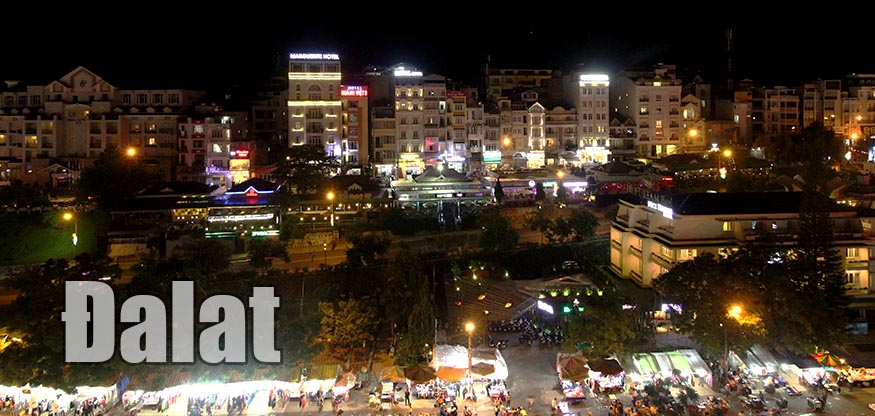
Located on the Vietnam’s Central Highlands, about 250 kilometers from Saigon and  1500 meters above sea level, Dalat continues to keep the charm of the 1920s.

In 1893, the discoverer of the plague bacillus and the Pasteur‘s disciple, Alexandre Yersin has founded at the Lang Bian mountain plateau  a fertile ground for the establishment of a sanatorium. His project was followed several years later by that of Governor Paul Doumer in transforming Dalat into  the  most select climate  resort of South East Asia.
Here is found the little Paris of the Viet Nam with its buildings erected during the colonial era:  high school Yersin, convent of the sisters named “Couvent des Oiseaux”, private villas whose style is borrowed from Basque country, as well as from to  Savoy and Normandy.

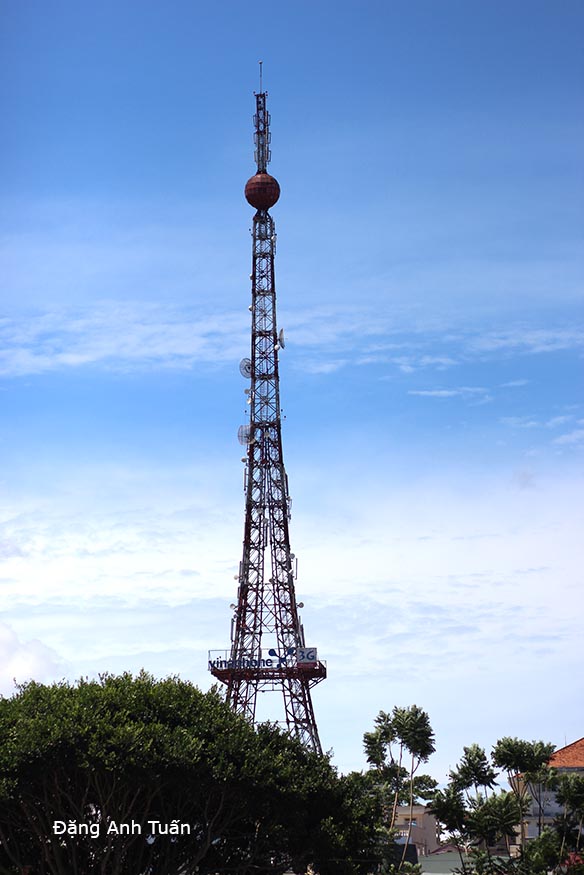
The railway station of Đà Lạt is a replica of the Deauville train station in miniature. Even the small red and white iron lady, the small Eiffel Tower is there to remind its Parisian colleague.

 Little Paris in Vietnam

Pictures gallery 

Thanks to the temperate climate (10 degrees in  winter) and 25 degrees in  summer, one can cultivate here  all citrus fruits and vegetables. That allows Dalat to become the  leading vegetable provider of the country. Flowers greenhouses are also in the honour  for the region. Known as  « the city of eternal spring« , Dalat is characterized by a large number of « no »: no air conditioning, no traffic lights, no cycle ricksaws, no cops in  the streets, no supermarkets, no motorcycle taxis (xe ôm) etc..

[Retour VILLES]