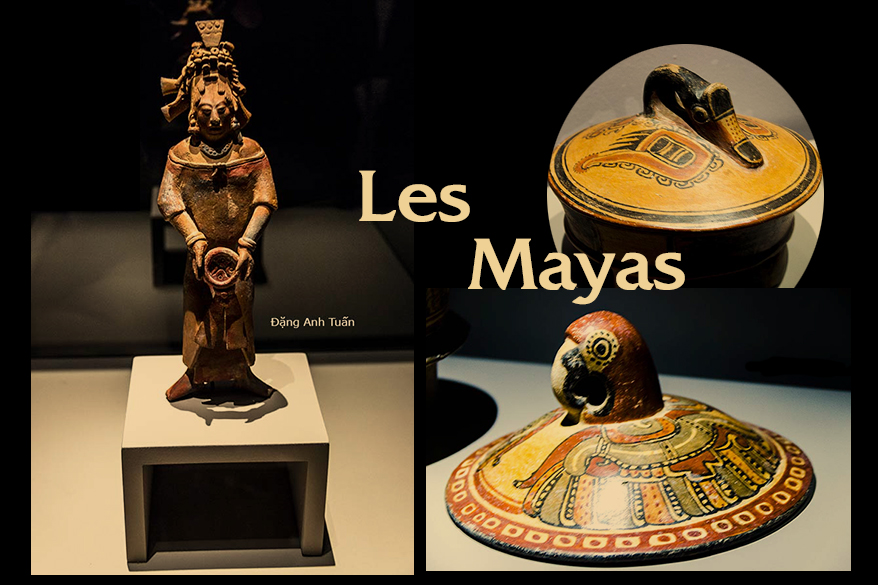
Musée des beaux-arts (Bảo tàng mỹ thuật Hànội)


Bảo tàng mỹ thuật

Version française
Version anglaise
Galerie des photos

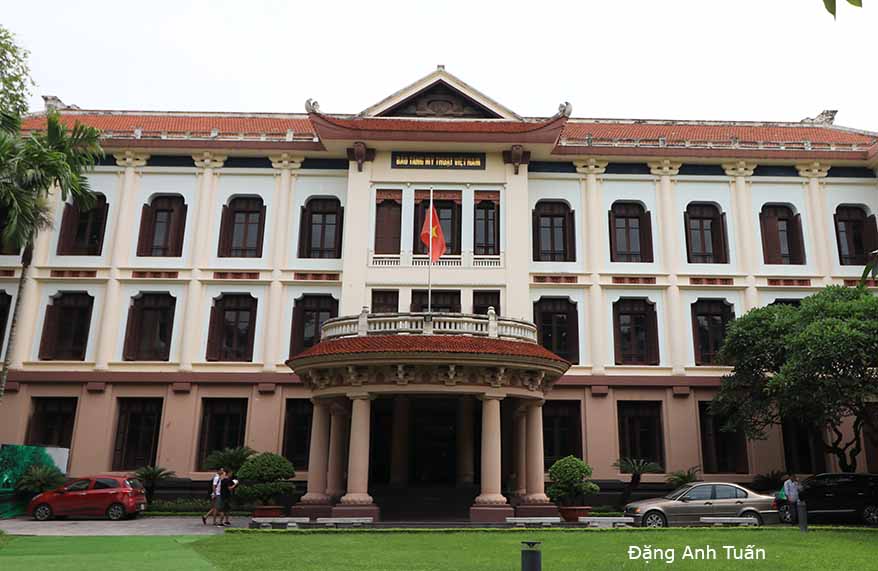
Tọa lạc ở giữa lòng thủ đô Hànội  ngang mặt Văn Miếu , bảo tàng mỹ thuật ít  được biết  so với bảo tàng dân tộc học.  Tuy nhiên chính là địa điểm không nên bỏ qua được cho những ai thích mỹ thuật Việt Nam từ thời tiền sử cho đến ngày nay.  Chính ở  nơi nầy tìm thấy  ở ba tầng rất nhiều kiệt tác được phân phối trưng bài theo chủ đề và khám phá   các kỹ thuật gồm có nhiều lĩnh vực (như gốm, điêu khắc,  sơn mài,  tranh lụa hay giấy dó, nghệ thuật dân gian vân vân …). 

Gian nhà dành cho sơn mài rất tráng lệ với các tượng tổ sư của phái Thiền Tông và các vị Kim Cương ở chùa Tây Phương. Có thể nói các tượng nầy được xem như là đạt được đến đỉnh cao của nghệ thuật điêu khắc cổ Việtnam dưới triều đại Tây Sơn dù thời đai nầy chỉ có tồn tại 14 năm  (1788-1802). Chính qua các tư thế và hình dáng đáng ngạc nhiên của các tượng mà nhận ra được không những sự thành hình phong cách cá biệt mà còn làm trội lên tính hiên thực và tính nhân văn.

Dù có tính chất tôn giáo, mỗi tượng là một kiệt tác được hoàn thành một cách tĩ mĩ bỡi người điêu khắc với chủ đích làm sao để nổi bật nét đặc thù cá tính, cảm giác và sùng kính mà họ  có. Có thể mất hai tiếng dẽ dàng khi đến tham quan bảo tàng mĩ lệ nầy. Ít có du khách lắm  nhưng cũng đáng  để đến tham quan khi có dip đến Hànội.

Version française

Le musée des beaux-arts est  situé en plein cœur de la capitale Hànội. Il est en face du temple de la littérature (Văn Miếu). Il est peu connu par rapport à celui d’ethnographie.  De la préhistoire jusqu’à nos jours,  l’art vietnamien y est bien présenté. On s’y voit proposer un très large éventail d’œuvres.   Celles-ci  sont réparties sur trois étages thématiques. On peut y découvrir l’ensemble des techniques: céramique, sculpture, laque, peinture sur soie et sur papier de mûrier, arts populaires etc.

La partie réservée aux laques est très magnifique. On y trouve  la belle collection des Bouddhas de la pagode Tây Phương. C’est le point culminant de la sculpture ancienne  du Vietnam  à l’époque de Tây Sơn. Cette dernière  ne subsiste que 14 ans (1788-1802). Ses statues sont dans des postures et des attitudes assez surprenantes.  On y voit  un style particulier mais aussi le réalisme et l’humanisme.   

Le sculpteur artisan réalise  chaque statue  avec soin malgré le caractère religieux. Il tente   de montrer la particularité de sa propre personnalité, ses sentiments et sa dévotion.  On peut  passer facilement  deux heures dans ce beau musée.  Il y a peu de visiteurs. Cela vaut quand même le détour lorsqu’on a l’occasion de visiter Hànội.

66 Nguyễn Thái Học, Ba Đình, Hà Nội, Việt Nam

Fine art museum

Version anglaise

The Fine Arts Museum is located right in the heart of the capital, Hanoi. It is opposite the Temple of Literature (Văn Miếu). It is less well known compared to the Ethnographic Museum. From prehistory to the present day, Vietnamese art is well represented there. A very wide range of works is offered. These are spread over three thematic floors. One can discover all the techniques: ceramics, sculpture, lacquer, painting on silk and mulberry paper, popular arts, etc.

The section dedicated to lacquer is very magnificent. There is the beautiful collection of Buddhas from the Tây Phương Pagoda. It is the high point of ancient Vietnamese sculpture during the Tây Sơn period. The latter lasted only 14 years (1788-1802). Its statues are in quite surprising postures and attitudes. One can see a particular style but also realism and humanism.

The artisan sculptor carefully creates each statue despite its religious nature. He tries to show the uniqueness of his own personality, his feelings, and his devotion. One can easily spend two hours in this beautiful museum. There are few visitors. It is still worth a visit when one has the opportunity to visit Hanoi.

Galerie des photos

[RETURN MUSEUM]

Non nước Cao Bằng (Monts et Eaux Cao Bằng)

Le fleuve Nho Quế se faufile comme un serpent à travers les montagnes

Version française
English version
Galerie des photos

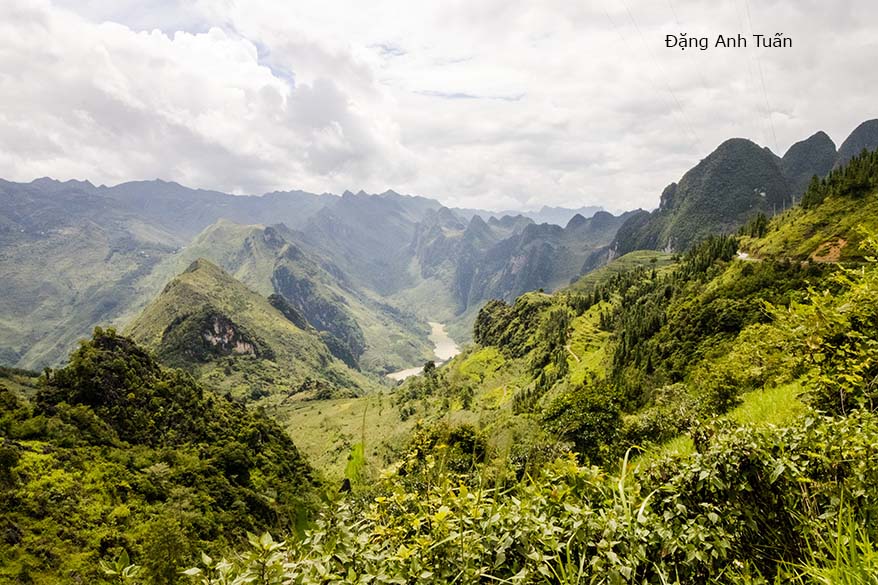
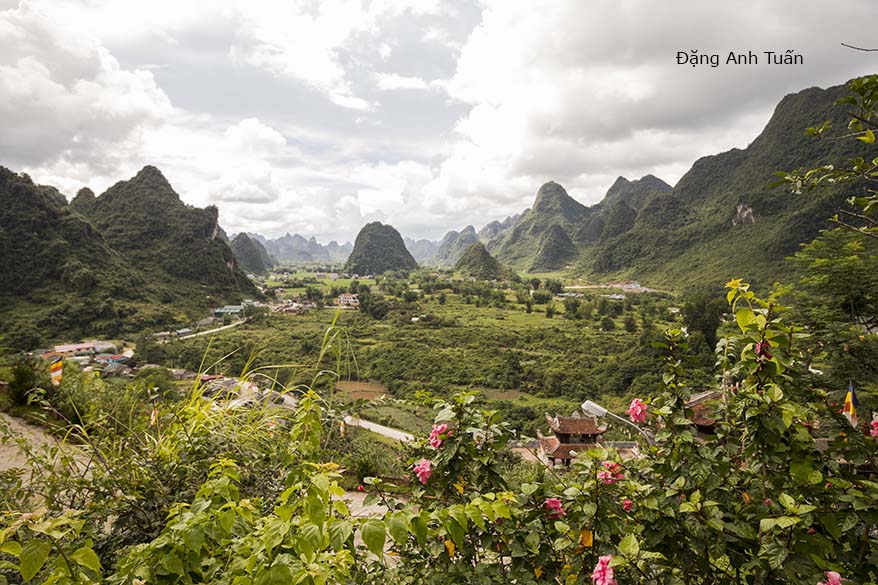
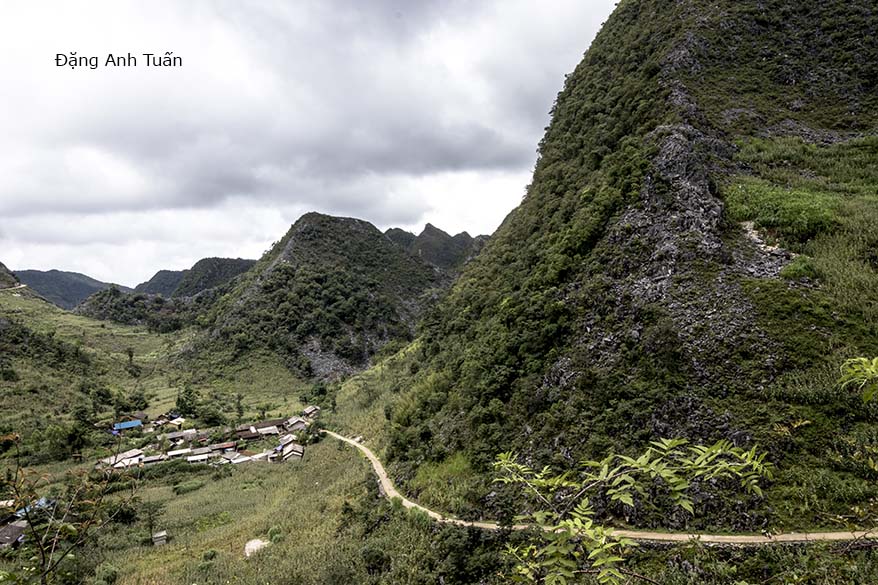
Sau công viên địa chất Đồng Văn (Hà Giang), Việt Nam đuợc có thêm  công viên địa chất thứ hai  Non nước Cao Bằng gia nhập vào  mạng lưới công viên địa chất toàn cầu  mà tổ chức Liên Hiệp Quốc  UNESCO công nhận vào tháng 4 vừa qua (2018). Tỉnh   Cao Bằng  cùng tên nầy thuộc vùng đông bắc Việt Nam, giáp ranh giới với khu tự trị Quảng Tây của Trung Quốc. Cao Bằng nằm cách xa thủ đô Hànội 286 km.  Đến từ Hà Giang, tụi nầy chọn đi qua con đèo độc đáo Mã Pí Lèng. Đèo nầy nằm giữa cao nguyên Đồng Văn, một bên là vách núi Mã Pí Lèng còn một bên là sông Nho Quế. Đèo nầy  không dài chi cho mấy chỉ khoảng 20 km nhưng nó rất hùng vĩ ngoạn mục nhất ở Việt Nam vì trong tầm mắt trên cao nhìn xuống đèo nó nhỏ  như  sợ chỉ, như con rắn bò qua hàng ngàn núi đá  trọc màu xám trùng trùng điệp điệp lô nhô cây cối.  Đèo nầy được ví như « vua của các đèo » ở Việtnam vì nó rất nguy hiểm với những đoạn cua tay lổn nhổn đá hộc, hai ô tô phải né tránh nhau với tiếng kèn.  Sở dĩ đèo nầy mang cái tên Mã Pí Lèng vì theo tiếng Quảng Đông là sóng mũi con ngựa. Tuy nhiên các người Hmong họ cho là sóng mũi con mèo.

Theo lời kể dân gian, các con ngựa cái leo qua đèo nầy  dễ bị trụy thai vì  dốc nó cao  quá chừng khiến con ngựa đuối sức trèo lên tắc thở.   Đường nầy được mang tên Hạnh Phúc nhưng thật sư đựợc thành hình với mồ hôi, xương máu và nước mắt của đội quân cảm tử thuộc  16 dân tộc thiểu số (Tày, Mèo, Lolo, Pù Péo vân vân …) cùng nhau đục đẽo từng viên đá ngày đêm trong thời gian suốt  6 năm liền. Có thể nói là con đường gian nan khổ sở nhất cho những ai lái xe nhưng nó cũng là một niềm vui không ít cho những người du lịch thích cảnh vật thiên nhiên  hoang dã. Có đến đây mới thành hảo hán vì đây được xem như là Vạn Lý Trường Thành của Việt Nam, có đến đây mới thấy đất nước Việt Nam rất xinh đẹp  và xanh tươi.

Cao Bằng là một tỉnh ít bị ô nhiễm nhất chỉ có khoảng chừng 500.000 dân. Cao Bằng nổi tiếng có thác Bản Giốc, có động Ngườm Ngao, có khu di tích Pắc Bó. Chính ở nơi nầy mà người anh hùng của dân tộc Tầy Nùng, Nùng Trí Cao khởi nghĩa dành độc lập chống lại nhà Tống như tộc Lạc Việt với Ngô Quyền. Mặc dầu việc quật khởi không thành, ông được xem là người anh hùng của dân tộc Choang (Tày Nùng) và được tôn thờ ở Cao Bằng nhất là ở chùa Phật Tích Trúc Lâm Bản Giốc. Chính ở nơi nầy mà theo lời chỉ dẩn của Trạng Trình Nguyễn Bỉnh Khiêm  mà con cháu nhà Mạc chạy về đây cố thủ, làm vua được ba đời thêm vào thế kỷ 16.

Version française 

Après la reconnaissance du parc karstique de Đồng Văn , le Vietnam a eu  récemment le deuxième parc  géologique Non Nước Cao Bằng reconnu comme   membre du Réseau global des parcs géologiques de la part de l’UNESCO en avril dernier (2018). La  province Cao Bằng  est  située au nord-est du Vietnam et a une frontière commune avec la région autonome Kouang Si (Quảng Tây) de la Chine. Elle est distante  de la capitale Hànội de 286 km. En partant de Hà Giang, nous sommes décidés de prendre la route menant au col majestueux Mã Pí Leng. Celui-ci est situé au cœur du plateau calcaire Đồng Văn avec d’un côté les falaises de Mã Pí Leng  et de l’autre  le fleuve Nho Quế. Ce col fait environ 20 km de long mais il est grandiose et  très spectaculaire au Vietnam car à portée de vue en haut, le col  ressemble à un fil mince ou à un serpent se faufilant à travers des milliers de rochers nus et gris qui se succèdent  et se laissent  envahir par la végétation.  Il est considéré comme le « roi des cols »  au Vietnam car il est tellement  dangereux  avec des tronçons de route  en forme de coude  et remplis  de blocs de pierre  équarris en désordre que  le klaxon  des  voitures doit retentir sans cesse pour éviter les risques de collision.

C’est pourquoi ce col porte le nom « Mã Pí Lèng » car selon le cantonais, c’est le bout avant du  nez du cheval. Mais pour les Hmong c’est le bout avant du  nez du chat. Selon l’on-dit,  en prenant ce col, la jument enceinte aurait le risque d’avortement car  la pente est tellement  haute que  le cheval serait mort d’épuisement pour la montée. Cette route sinueuse est appelée souvent  « route du bonheur »  mais elle  a été construite  avec la sueur, le sang et les larmes des volontaires recrutés parmi les  16 ethnies minoritaires  (Tày, Mèo, Lolo, Pù Péo etc.) du Vietnam,  ne cessant pas de travailler jour et nuit durant les six années consécutives  pour cette réalisation titanesque. 

On peut dire que c’est la route la plus difficile pour les chauffeurs. En passant par ce col, on se sent fier d’être un brave car on le  considère comme la Muraille de Chine du Vietnam. C’est aussi une  joie immense pour les touristes, en particulier pour ceux qui aiment la nature sauvage. En venant ici, on s’aperçoit que le Vietnam est un très beau pays et qu(il il est incroyablement vert.

La province Cao Bằng est la moins polluée car elle n’a qu’à peu près 500.000 habitants. Cao Bằng est connue pour ses chutes d’eau Bản Giốc, sa grotte Nguờm Ngao,  le site historique Pắc Bó. C’est ici que le héros national du peuple Choang Nùng Trí Cao a tenté le soulèvement populaire  contre les Song (Chinois) pour établir un royaume Đại Nam au sud de la Chine comme les Vietnamiens avec le général Ngô Quyền.  Malgré l’échec de ce soulèvement, il est considéré comme un héros du peuple  Choang et vénéré partout à Cao Bằng, en particulier à la pagode Phật Tích en face des chutes d’eau Bản Giốc. C’est ici que sur les recommandations du Nostradamus vietnamien Nguyễn Bỉnh Khiêm que les descendants de la dynastie des Mạc se réfugièrent  au 16ème  siècle pour se défendre et maintenir encore leur règne pour trois générations.

English version

After the recognition of the Đồng Văn Karst Park, Vietnam recently had the second Non Nước Cao Bằng Geological Park recognized as a member of the Global Network of Geological Parks by UNESCO last April (2018). Cao Bằng Province is located in the northeast of Vietnam and shares a border with the Kouang Si (Quảng Tây) Autonomous Region of China. It is 286 km from the capital Hanoi. Leaving Hà Giang, we decided to take the road leading to the majestic Mã Pí Leng Pass. This is located in the heart of the Đồng Văn limestone plateau with the cliffs of Mã Pí Leng on one side and the Nho Quế River on the other.

This pass is about 20 km long but it is grandiose and very spectacular in Vietnam because from the top, the pass looks like a thin thread or a snake winding through thousands of bare and gray rocks that follow one another and are invaded by vegetation. It is considered the « king of passes » in Vietnam because it is so dangerous with sections of road in the shape of an elbow and filled with disorderly squared stone blocks that the car horns must sound constantly to avoid the risk of collision. This is why this pass is called « Mã Pí Lèng » because according to Cantonese, it is the front tip of the horse’s nose. But for the Hmong it is the front tip of the cat’s nose. According to the saying, when passing through this pass, the pregnant mare would have the risk of abortion or the slope is so steep that the horse would die of exhaustion while climbing it. This winding road is often called « road of happiness » but it was built with the sweat, blood and tears of volunteers recruited from the 16 ethnic minorities (Tày, Mèo, Lolo, Pù Péo etc.) of Vietnam, who did not stop working day and night for six consecutive years for this titanic achievement.

One can say that this is the most difficult road for drivers. Passing through this pass, one feels proud to be brave because this pass is considered the Great Wall of China of Vietnam. It is also a great joy for tourists, especially those who love wild nature. Coming here, one realizes that Vietnam is a very beautiful country and incredibly green.

Cao Bằng province is the least polluted because it has only about 500,000 inhabitants. Cao Bằng is known for its Bản Giốc waterfalls, Nguờm Ngao cave, and the historical site Pắc Bó. It is here that the national hero of the Choang Nùng people, Trí Cao, attempted a popular uprising against the Song (Chinese) to establish a Đại Nam kingdom south of China, like the Vietnamese with General Ngô Quyền. Despite the failure of this uprising, he is considered a hero of the Choang people and is venerated everywhere in Cao Bằng, especially at the Phật Tích pagoda opposite the Bản Giốc waterfalls. It is here, on the recommendations of the Vietnamese Nostradamus Nguyễn Bỉnh Khiêm, that the descendants of the Mạc dynasty took refuge in the 16th century to defend themselves and maintain their rule for three more generations.

Galerie des photos (de Hà Giang à Cao Bằng)

[Return VILLES]

Le palais fortifié du roi des Hmong (Dinh thự của vua Mèo)

Version vietnamienne
Version anglaise
Galerie des photos

De passage à Hà Giang, on a l’occasion de visiter le palais fortifié du roi des Hmong Vương Chính Đức. Celui-ci est situé à une vingtaine de kilomètres de Đồng Văn au cœur de la vallée de la  commune Sa Phìn. Selon l’on-dit, Vuơng Chính Đức a choisi cet emplacement du fait qu’il y a  un bloc de terre semblable à la carapace de la tortue, ce qui permet d’avoir une belle carrière pour lui et ses descendants dans l’optique des géomanciens.

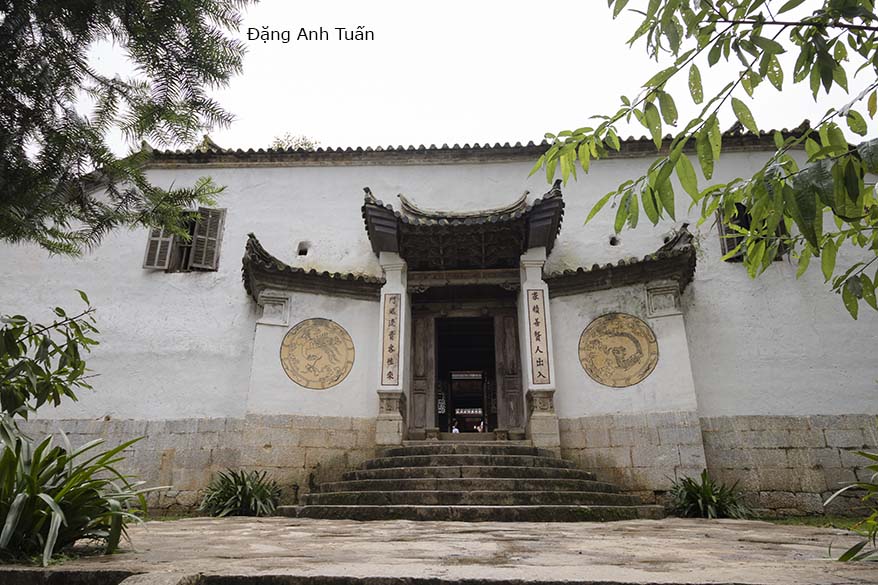
Basée sur le modèle de Yamen Manchu (bâtisse d’un mandarin à l’époque des Qing) et construite dans les années 1920 à 1600 m d’altitude sur une superficie de 3000 m2, cette magnifique résidence est une belle œuvre architecturale, un mélange subtil de l’art traditionnel Hmong, chinois et français. Cela   nécessite quand même 8 ans de travaux effectués  avec acharnement par les ouvriers venant de Yunnan et de Đồng Văn.  Elle est composée de 3 constructions  sur pilotis à 2 étages dont l’une  est située jusque derrière  l’entrée et les deux autres dépendances  sont opposées entre elles et forment avec la première  un angle droit. Tout est fait en bois précieux (planchers, cloisons, colonnes etc…) avec la toiture toujours en tuiles Yin et Yang.

Il y a au moins 64 pièces et   trois cours intérieures. Grâce à l’ajout de de deux donjons en pierre  à l’arrière de cette résidence, celle-ci est appelée souvent sous le nom « château ».  À l’époque où le roi des Hmong était en vie, il y avait plus de 100 personnes qui étaient logés dans cette résidence, y compris ses 3 femmes et ses enfants. 

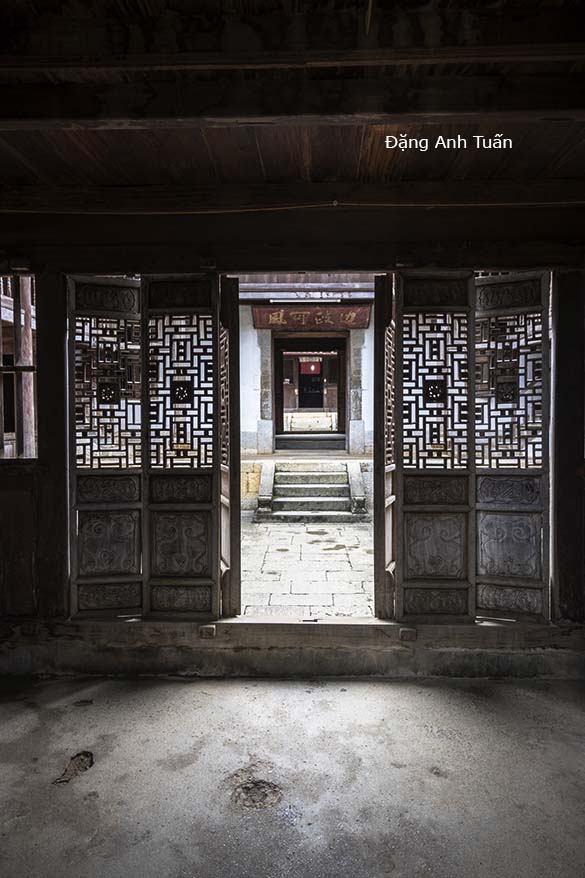
Vue prise de l’entrée de la résidence jusqu’au fond à travers les cours

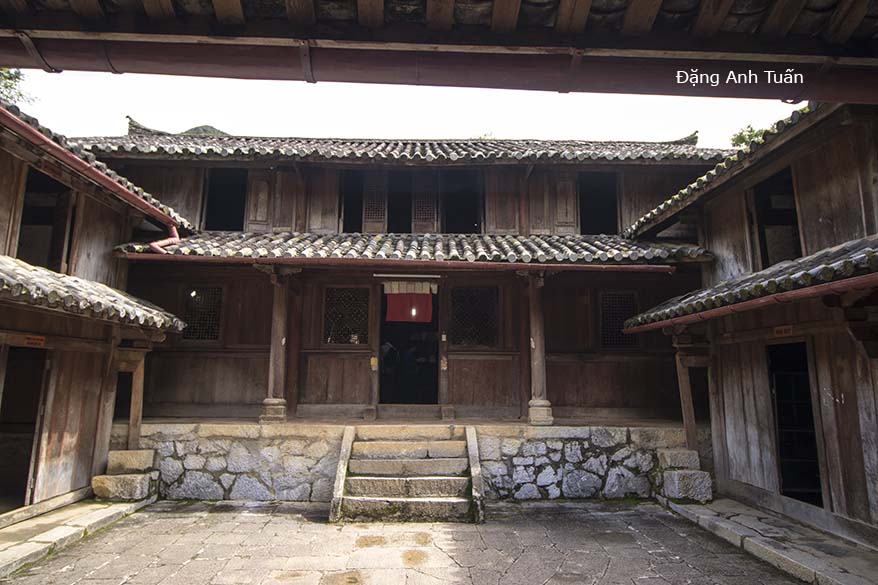
Maison principale avec ses deux dépendances opposées

Ai có đến Hà Giang thì cũng có dịp đến tham quan nhà của vua Mèo Vương  Chính Đức. Được tọa lạc cách Đồng Văn gần hai chục cây số ở giữa lòng một thung lũng thuộc địa phận xã Sa Phìn. Theo lời  đồn, Vương Chính Đức chọn nơi nầy vì ở đây có một khối đất được xem như là cái mai rùa khiến sẻ  có sự nghiệp tốt đẹp cho ông và con cháu theo cái nhìn quan sát của các nhà rành về phong thủy. Dựa trên mẫu nhà của Yamen Manchu (những dinh thất của các quan dưới thời đại nhà Thanh) và  được xây cất  ở độ cao 1600 thước vào các năm 1920 với một diện tích 3000 mét vuông, dinh thự nầy là một kiệt tác kiến trúc, một hỗn hợp tinh vi của nghệ thuật truyền thống của người Hmong, người Hoa và người Pháp. Thế cũng phải  mất 8 năm xây dựng nhọc nhằn bỡi những người thợ chuyên môn đến từ Vân Nam và Đồng Văn. Dinh thự  nầy gồm có 3 tòa nhà mà nhà chính thì được tọa lạc ngay sau cửa vào và hai nhà phụ thì đối diện với nhau và tạo với nhà chính các góc vuông.

Tất cả đều được làm bằng gỗ qúy từ sàn nhà cho đến cột trụ qua đến vách ngăn.  Tất cả mái nhà  nơi nầy đều được lợp với ngói âm dương. Có ít nhất 64 phòng và ba sân  nội.  Nhờ thêm hai vọng lâu xây  bằng đá ở phiá sau dinh thự mà dinh nầy thuờng được gọi là lầu đài.   Dạo thời vua Mèo còn sống thì có hơn một trăm người sống ở đây kể luôn ba bà vợ  của ông và các con cháu.

Based on the model of a Manchu Yamen (a mandarin’s residence during the Qing dynasty) and built in the 1920s at an altitude of 1600 meters over an area of 3000 m², this magnificent residence is a beautiful architectural work, a subtle blend of traditional Hmong, Chinese, and French art. It still required 8 years of hard work by laborers coming from Yunnan and Đồng Văn. It is composed of 3 two-story stilt buildings, one of which is located right behind the entrance, and the other two outbuildings are opposite each other, forming a right angle with the first. Everything is made of precious wood (floors, partitions, columns, etc.) with the roof always covered with Yin and Yang tiles.

Passing through Hà Giang, one has the opportunity to visit the fortified palace of the Hmong king Vương Chính Đức. It is located about twenty kilometers from Đồng Văn in the heart of the Sa Phìn commune valley. According to legend, Vương Chính Đức chose this location because there is a block of earth resembling a turtle shell, which provides a good position for him and his descendants according to geomancers.

There are at least 64 rooms and three inner courtyards. Thanks to the addition of two stone towers at the back of this residence, it is often called a « castle. » At the time when the Hmong king was alive, more than 100 people lived in this residence, including his 3 wives and children.

Galerie des photos

palais_roi_hmong

[RETOUR]

La bourgade de Đồng Văn (Phố cổ Đồng Văn)

Version française
Version anglaise
Galerie des photos

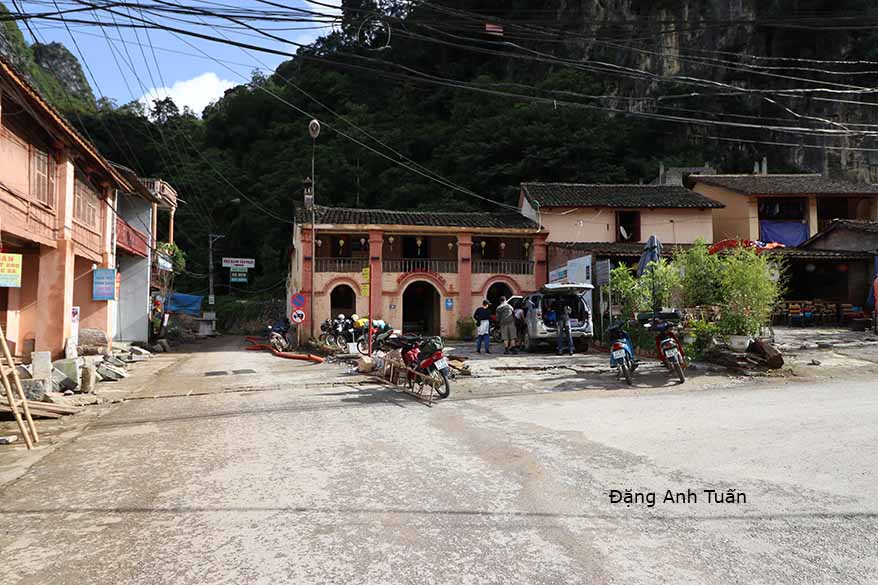
Nằm ở giữa lòng thung lũng của cao nguyên đá Đồng Văn, phố nầy lúc ban đầu có khoảng chừng 40  cái nhà mà thôi. Khu phố nầy được thành hình vào đầu  thế kỷ 20 dưới chân núi  với vài gia đình người Hmong, người Tày và người Hoa. Bởi vì được xây cất với các thợ  được thuê đến từ Tứ Xuyên nên các nhà ở đây mang dấu ấn  khá  sâu đậm của người Hoa qua lối kiến trúc hai tầng trình tường, mái  ngói âm dương và trước cửa nhà có đèn lồng treo cao. Nay trở thành một địa điểm quan trọng mà du khách không thể bỏ qua được khi đến Hà Giang. Nhà cửa ở đây cũng xây cất lại, nhà trọ cũng có nhiều, giá cả cũng  phải chẵn, du khách ngoại quốc nhất là dân đi phượt cũng đông cuối tuần và thích ngủ nhà sàn.

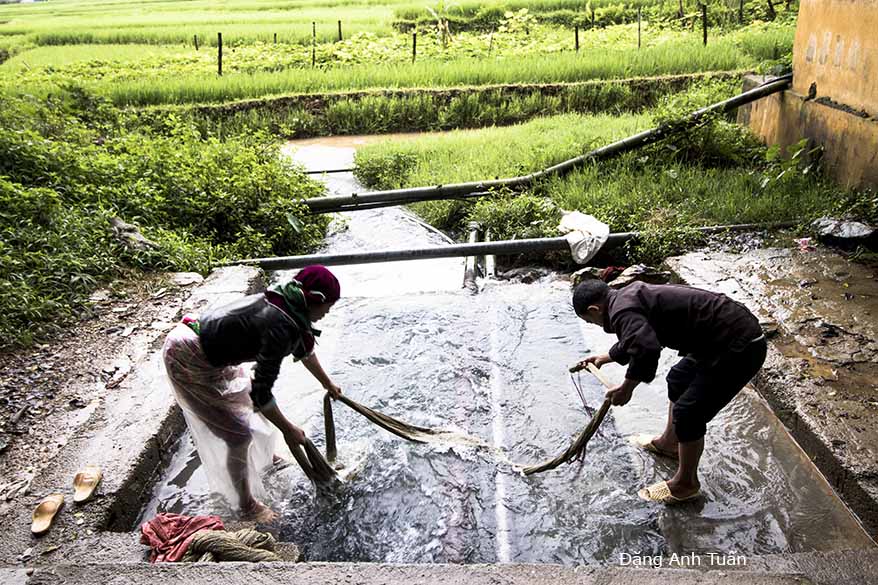
Rất tiếc chiều hôm đó, mưa quá to nên chụp hình không được nhiều. Chỉ sáng hôm sau, trời lại nắng nên mới có vài tấm ảnh để lưu niệm nhưng cũng có dịp viếng thăm một nhà cổ của người Hmong nay thành nhà trọ và có dịp chứng kiến cách thức dùng nước suối rửa cây linh (lin)  trước khi dệt vãi.  Đi miền núi như mình rất mệt nhưng  học hỏi rất nhiều về tập quán nhất là Hà Giang có đến 22 dân tộc thiểu số  và rất thích thú trong cuộc hành trình nầy. 

Située au cœur de la vallée du plateau karstique de Đồng Văn, cette bourgade avait  seulement au moment de sa construction  une quarantaine de maisons.  Elle prit forme au début  du XXème siècle au pied des montagnes rocheuses avec quelques familles Hmong, Tày et Hoa (ou Chinois).  Comme ses maisons ont été construites par des ouvriers recrutés  venant de Sichuan, cette bourgade continue à garder  une  profonde empreinte chinoise à travers son architecture typique à deux étages, son toit avec des tuiles tubulaires âm dương (Yin-Yang) et ses lampions suspendus devant l’entrée.

Aujourd’hui, elle devient un passage obligatoire pour ceux qui visitent Hà Giang.  La plupart de ses maisons sont rénovées et ses « homestay » (logement chez l’habitant) sont nombreux avec un prix assez raisonnable. Les touristes étrangers  sont en majorité des routards ou des gens aimant l’aventure de l’extrême et préférant dormir dans des maisons sur pilotis   et ils sont nombreux à la fin de la semaine.   

C’est regrettable pour nous d’avoir la pluie torrentielle le soir de notre arrivée. C’est seulement le lendemain avec le retour du soleil que je peux faire quelques photos ci-dessus. J’ai aussi l’occasion de visiter une vieille maison devenant aujourd’hui un  « logement chez l’habitant » et d’apprendre la façon de laver le lin avec l’eau de source  avant le tissage des vêtements pratiqué par les Hmong.  L’excursion à la montagne est épuisante   mais elle me permet d’avoir des choses à apprendre en particulier les coutumes et les traditions lorsque la région Hà Giang a 22 minorités ethniques. Je suis très content de ce voyage mémorable. 

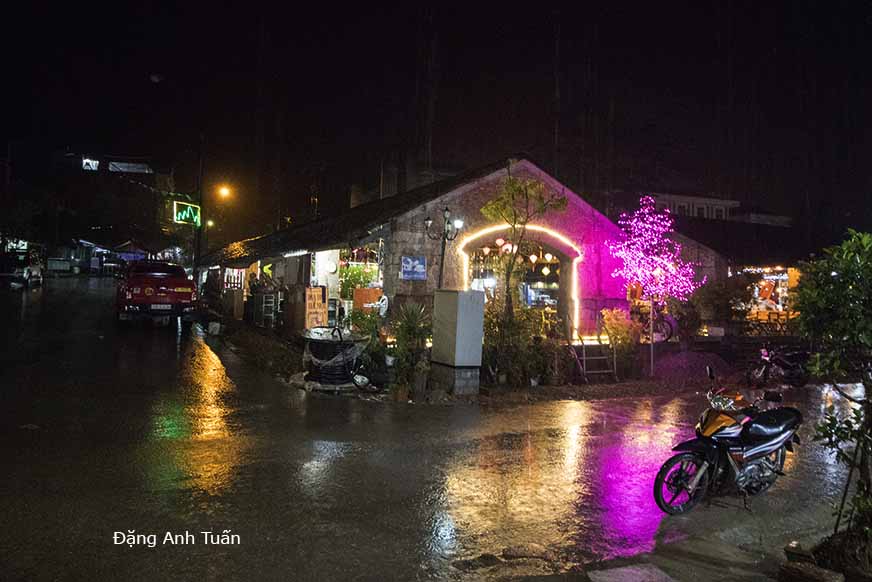
La bourgade Đồng Văn au fil de la nuit.

Laver le lin avant le tissage des vêtements par les Hmong.

Located in the heart of the Đồng Văn karst plateau valley, this small town had only about forty houses at the time of its construction. It took shape at the beginning of the 20th century at the foot of the rocky mountains with some Hmong, Tày, and Hoa (or Chinese) families. Since its houses were built by workers recruited from Sichuan, this town continues to retain a strong Chinese influence through its typical two-story architecture, its roof with âm dương (Yin-Yang) tubular tiles, and its lanterns hanging in front of the entrance. Today, it has become a must-visit stop for those visiting Hà Giang. Most of its houses have been renovated, and its homestays are numerous with quite reasonable prices. The majority of foreign tourists are backpackers or people who love extreme adventure and prefer to sleep in stilt houses, and many of them come at the end of the week.

It is unfortunate for us to have torrential rain on the evening of our arrival. It is only the next day, with the return of the sun, that I can take some photos above. I also had the opportunity to visit an old house that has now become a « homestay » and to learn how to wash flax with spring water before weaving clothes, a practice of the Hmong. The mountain excursion is exhausting, but it allows me to learn many things, especially the customs and traditions since the Hà Giang region has 22 ethnic minorities. I am very happy with this memorable trip.


bourgade_dong_van

[RETOUR]

Hà Giang, vẽ đẹp của miền sơn cước


Version française
Version anglaise
Galerie des photos

Nằm ở vùng núi phía Bắc Vietnam, Hà Giang là một tỉnh có nhiều núi rừng, giáp ranh giới vói tỉnh Vân Nam của Trung Quốc. Dân số ở nơi nầy rất thưa, chỉ có khoảng chừng 900.000 người theo điều tra dân số năm 2016. Tuy nhiên chính ở nơi nầy tụ hơp rất nhiều dân tộc thiểu số (22 dân tộc) trong đó đáng kể nhất là người Hmong (hay Miêu) tiếp đó người Tày, người Dao và người Nùng. Đến đây mới thấy được cái đẹp tư nhiên của tạo hóa, cái hùng vĩ của non nước, cái nhọc nhằn, công lao của ông cha ta gìn giữ bờ cõi đất nước trước hiểm họa của người phương bắc. Chính cũng ở nơi nầy mới có cảm xúc nhiều khi lặn lội trèo lên 389 bậc thang ở đỉnh Lũng Cú mà thường được gọi là đỉnh núi Rồng (Long Sơn) (1700 mét), nơi mà danh tướng Lý Thường Kiệt phá Tống bình Chiêm dựng lên lúc ban sơ cây cột cờ để khẳng định chủ quyền Vietnam trên mãnh đất nầy.

Tuy Hà Giang nó rất còn hoang sơ của miền sơn cước nhưng nó có cái gì thiêng liêng mà không thể diễn tả được khi đến với mãnh đất nầy. Tôi còn nhớ trước ngày đi đến, ai cũng khuyên không nên đi vỉ tuần trước đường xá sạt lở vì bão Sơn Tinh. Có thể nguy hiểm cho tánh mạng và có thể hủy đi lịch trình Hà Giang khiến tôi sẻ mất một tuần ở Vietnam nhưng rồi tôi cũng quyết tâm đi cùng các con cháu. Tôi mới có dịp nhìn thấy được nét đẹp của Hà Giang, đến tham quan cao nguyên đá Đồng Văn mà cơ quan UNESCO chín thức công nhận là Công Viên địa chất toàn cầu đầu tiên của Vietnam và thứ hai ở Đông Nam Á sau Langkawi (Mã Lai)  vào năm 2010.

Hôm đi, không có gì trở ngại cả, cứ lấy quốc lộ 2 đến Tuyên Quang rồi sau đó đến thành phố Hà Giang nghỉ một đêm ở một khách sạn trong thành phố Hà Giang. Trên đường, có một quán bán nước mía không thấy có ruồi chi cả dù có bã mía rất nhiều trong thùng rác. Thấy vậy tôi,  các con cháu và cháu  tài xế mới mua uống  mỗi người một ly. Hai vợ chồng bán nước mía nầy họ trồng sau vườn các bụi mía. Thât ngon và sạch nhất là ở đất nầy không thấy có  ruồi có lẽ tại khí hậu của rừng núi và dân số quá thưa. Lâu lắm rồi mới uống được một ly nước mía trong sạch chớ bao giờ dám uống mỗi lần vê Việtnam. 

Chiều đó  còn được một cặp vợ chồng bạn con dâu mình mời và  đãi một buổi cơm với món ăn đặc trưng ở Hà Giang là lẩu ngựa. Ăn kèm theo rau rừng, mùi vị béo ăn cũng không ngán để làm ấm lại con người khi  không gian thời tiết se lạnh hay mưa rỉ rả trong đêm. Sáng sớm mưa vẫn rơi, tụi nầy tiếp tục hành trình đi Đồng Vạc với quốc lộ 4C, mình hơi lo, cứ nhủ thầm trong lòng, cứ  sương mù xuống nửa lừng đồi thêm mưa rỉ rả  như vầy  thì chuyện chụp hình của mình cũng hỏng chưa nói chuyện sạt lở đất ở giữa đường đi, đôi khi có một  tảng đá to lớn vài tấn nằm bên hông đường. Không có chỉ dẩn rõ ràng chi cả có đi đuợc hay không, cháu tài xế Minh cứ lẳng lặng lái xe.

Chính nhờ  sự bình tĩnh cũa Minh và tính tiền định có ở nơi người con Việt mà sự  lo âu của mình cũng dần dần biến mất nhất là có những đọan đường không có mây đen trời lại nắng khiến mình mãi mê chụp hình mà quên tất cả. Nhưng có những đoạn đường quanh co nguy hiểm đến đổi phải sửng sốt đèo nầy qua thì đèo khác tới khiến làm ai cũng mệt  nhất là chỉ có tổng cộng hơn 200 cây số mà 6, 7  tiếng đồng hồ phải mất .  Mệt thì có mệt nhưng với không gian yên tĩnh, con người hiền hòa của vùng sơn cước thì  cũng nên cần có  chớ không như ở Saïgon hay Hànội  cái ồn ào ầm ĩ của tiếng kèn, cái không gian sôi động không ngừng. 

Cũng không có trộm cắp như các đô thị khác theo lời kể của cháu tài xế. Cụ thể là gà, vịt, trâu và bò vẫn ngẩn ngơ do dự   từng bước  sang ngang trên quốc lộ mà tất cả xe lớn xe nhỏ phải tránh và dù tụi nó  xa nhà của chủ nhân có cả cây số. Cũng không ai dám cán  chúng nó vì sợ chủ nhân đòi đền gấp  nhiều lần hơn. Dọc theo quốc  lộ,  lúc nào cũng thấy các cánh đồng ngô xanh của dân tộc Hmong. Họ rất giỏi về làm ruộng. Bởi vậy từ thưở nào người Trung Hoa  dùng chữ  tựơng hình điền  thêm trên đầu  chữ  tượng hình thảo (lúa)  ám chỉ nguời Hmong 苗 hay Miêu, những người  giỏi về canh tác đấy. 

Cũng đúng thôi vì nhìn  trên tản đá chỉ cần một tí đất là  cây ngô có thể chồi ra dễ dàng. Đôi khi dọc theo đường nhìn sâu qua kiến xe có một  hay hai cái nhà của người Hmong nằm cheo leo sườn núi không biết họ xây dưng làm sao và đi thể nào để vào đó.  

Cũng có phần  may mắn khi  đến Đồng Văn có một nhà trọ mới sửa ở phố cổ nên tụi nầy được trọ đêm thứ nhì ở  đây. Mưa vẫn rơi tầm tã nên đèn đuốc cũng lờ mờ, không có trông đẹp như Hội An, Phố cổ Hànội. Có lẽ tụi nầy đến giữa tuần nên không có nhộn nhịp như lúc cuối tuần. Sáng ngày thứ ba, tụi nầy mới có dịp ăn điểm tâm ở đây, ăn bánh cuốn trứng  Đồng Văn, đặc sản ở  miền sơn cước.

Nó cũng được tráng từ bột gạo và nhân làm từ lợn xay ra, chỉ có khác là thay vì ăn kèm với nước mắm pha chanh đường thì họ dùng với nước hầm (ninh) xương kèm theo hai chiếc giò lụa nhỏ.  Mình chỉ  thấy có một hương vị đặc biệt nhưng vì có mỡ của xuơng nên ăn dễ  ngán lắm. Có lẽ là một cách ăn để ấm lòng và  xua đuổi cái lạnh của rừng Tây Bắc cũng như ở Pháp thường ăn bơ với mùa đông. Sau đó tụi nầy  đi một vòng ở phố cổ Đồng văn, mới có dịp nhìn thấy được cách thức rửa cây lin  mà người Hmong dùng để  dệt vãi  với nước suối trước khi đi tham quan đỉnh Lũng Cú và nhà vua Mèo Vương Chính Đức.  Biết bao nhiêu kỷ niệm khó quên và cảm xúc không ít với ba ngày ở Hà Giang nhất là có các con cháu bên cạnh, lúc nào cũng trơ lực  trong chuyến đi nầy từ Hà Giang đến Cà Mau, hai cái mốc của đất nước cách xa  1535 cây số.

Située dans la région montagneuse du Nord Vietnam, Hà Giang est une province partageant la frontière commune avec  la contrée du sud-ouest de la Chine, Yunnan. Sa population est peu dense et estimée à peu près de 900.000 habitants selon la statistique démographique en 2016. Pourtant c’est une région où il y a la concentration importante  des ethnies minoritaires du Vietnam (22 ethnies) parmi lesquelles il faut citer d’abord les Hmongs suivis par les Tày, les Dao et les Nùng. C’est ici qu’on découvre la beauté extraordinaire du Créateur,  la nature grandiose et magnifique du Vietnam fascinant, le labeur et le mérite de nos ancêtres dans l’action de résister à la menace des gens du Nord. C’est ici seulement qu’on ressent une émotion intense lorsqu’on grimpe les 389 marches de l’escalier en pierre de la colline Lũng Cú qu’on est habitué à appeler la « colline du Dragon » à 1700 mètres d’altitude. C’est ici aussi que le général vainqueur  des Song et pacificateur du Chămpa  Lý Thường Kiệt a édifié au début un mât en bois de quelques mètres pour affirmer  avec intransigeance la souveraineté du Vietnam sur ce territoire.

Bien que ce dernier ait l’air d’une région montagneuse  sauvage et difficilement pénétrable, il y a quelque chose sacrée que je n’arrive pas à décrire en venant ici. Je rappelle bien que la veille de mon départ, tout le monde m’a recommandé d’abandonner le projet de visiter Hà Giang  car elle a été dévastée la semaine précédente par la tempête « Sơn Tinh« . Cela pourrait provoquer des ennuis pour moi et me faire perdre une semaine de vacances au Vietnam. Malgré cela, je continue à persister dans le dessein d’y aller. J’ai ainsi l’occasion d’admirer le charme irrésistible  de Hà Giang et de visiter le plateau karstique Đồng Văn que la fondation  UNESCO a reconnu comme le deuxième parc géologique de l’Asie du Sud Est après celui de la Malaisie (Langkawi) en 2010.

Nous  n’avons  aucun souci le jour du départ. Nous  n’avons  qu’à prendre la route nationale n°2 pour aller à la ville Tuyên Quang avant de rejoindre ensuite  la ville Hà Giang pour passer la nuit à l’hôtel.  Sur la route, nous avons l’occasion de rencontrer un kiosque  détenu par un couple et spécialisé dans la vente du jus de canne à sucre. Nous constatons  qu’il n’y a pas de mouches aux alentours malgré la présence d’une poubelle remplie de déchets de canne à sucre broyés. Nous pensons que le climat joue un rôle important et la démographie n’est pas importante. Nous sommes tentés, chacun  de prendre un verre de jus de canne à sucre. C’est extrêmement délicieux car jusqu’à ce jour je n’ose pas à le prendre quand je reviens au Vietnam.

Le soir  même, nous sommes invités par un couple d’amis de  ma belle-fille Oanh dans un restaurant connu pour sa spécialité locale (lẫu ngựa)(ou fondue vietnamienne de viande de cheval). Accompagné par les légumes de la région montagneuse, ce plat ayant la saveur grasse ne nous dégoûte pas mais il nous réchauffe tellement  lorsque le temps commence à se refroidir et la pluie est sporadique durant toute  la nuit. Le lendemain, la pluie continue à tomber toujours. Malgré cela, nous prenons   la route nationale 4C  en direction de Đồng Văn. 

L’inquiétude commence à m’envahir car si le brouillard continue à s’épaissir de plus en plus à mi-hauteur de la colline avec la pluie persistante comme celle de la nuit, l’idée de faire les photos  serait tombée à l’eau sans  évoquer les dégâts causés sur la route par la dernière tempête ( plusieurs  gros bloc de pierre de plusieurs tonnes  étant souvent visibles au bord de la route). Aucune indication n’est fournie pour connaître la praticabilité de la route ou non. Notre chauffeur Minh continue à conduire avec assiduité sans être inquiété par l’absence de l’indication.

C’est grâce à son calme et à l’attitude fataliste reçue des Vietnamiens  que mon inquiétude s’estompe au fil de la journée. Sur certains tronçons de la route,  le retour du soleil m’incite  à tout oublier et à me  consacrer entièrement  à  faire des clichés. Par contre il y a des tronçons de route très dangereux et tellement sinueux que cela nous rend tous fatigués. Pour 200 kilomètres de trajet, il faut compter au minimum 6 ou 7 heures de route. Malgré cela, nous sommes contents d’avoir cet espace tranquille et  les gens gentils et  aimables de la région montagneuse au lieu de retrouver à Saïgon ou à Hanoï le bruit incessant des klaxons et l’espace tellement animé et pollué.

Selon le chauffeur Minh, il n’y a pas non plus le vol comme on le trouve dans les villes.  Les poulets, les canards,  les buffles ou les bœufs hésitant dans leur marche peinent à  traverser la route sans que leur propriétaire s’inquiète de les perdre même s’ils sont loin de leur enclos.

Personne n’aime à les écraser car il faut payer  un prix très fort au propriétaire. Sur le bord de la route, on trouve souvent les champs de maïs des Hmong. Ils sont experts dans le domaine de la culture. C’est pourquoi les Chinois se servent depuis longtemps du pictogramme  điền   (champ) au dessus duquel est ajouté  le pictogramme thảo  (riz paddy) pour désigner les Hmong (ou Miêu), les gens doués pour la culture du sol.

C’est ce que nous constatons en découvrant de près sur une roche garnie d’une  petite motte de terre l’apparition d’une plante de maïs. Parfois à travers la vitrine de la voiture, nous  découvrons au loin  une ou deux maisons des Hmong perchées  sur le flanc de la montagne. On se demande comment arrivent-ils à les construire et à y accéder?

Nous avons la chance de passer la deuxième nuit  à Đồng Văn  dans un homestay récemment rénové au centre de la vieille ville. La pluie continue à tomber le soir. C’est pourquoi aucune attraction n’a lieu et les lampions sont clairsemés par rapport à ceux de Hội An et de la vieille ville de Hànội. Du fait que nous sommes arrivés au milieu de la semaine, nous ne trouvons aucune   animation organisée fréquemment  en fin de la semaine. Le matin du  troisième jour, pour prendre le petit déjeuner,  nous cherchons de bonne heure un restaurant spécialisé dans la préparation d’une crêpe à l’œuf (bánh cuốn trứng)  typique de Đồng Văn.

 Étant une spécialité de la région montagneuse, cette crêpe  est faite à partir de la farine de riz et de la viande hachée et se déguste  en la trempant  dans une sauce mijotée à petit feu avec des os de porc et accompagnée toujours par deux petits morceaux de pâté de viande.  Ce plat a une saveur particulière mais à cause de la consistance graisseuse de la sauce, il est difficile de renouveler l’envie.   

C’est peut-être la façon de se réchauffer et d’évacuer le froid provenant de la forêt Nord-Ouest comme en France  on est habitué à manger du beurre en hiver. Nous allons faire ensuite un tour à Đồng Văn. Nous avons l’occasion de voir la façon des Hmongs de laver  le lin avant de s’en servir pour le tissage de leurs vêtements avec l’eau de source. Puis    nous visitons  la colline Lũng Cú et le palais fortifié du roi des Hmongs Vương Chính Đức. J’ai tellement des souvenirs et des moments d’émotion intense qu’il est difficile de remémorer pour ces trois jours de visite à Ha Giang en  compagnie de  mes enfants et de mon petit-fils qui ne cessent pas de me soutenir dans ce projet depuis le début jusqu’à la fin de ce voyage inoubliable. (de Hà Giang jusqu’à la pointe de Cà Mau, 1535 km à parcourir).

English version

Located in the mountainous region of Northern Vietnam, Hà Giang is a province sharing a common border with the southwestern region of China, Yunnan. Its population is sparse and estimated at about 900,000 inhabitants according to demographic statistics in 2016. Yet, it is a region with a significant concentration of Vietnam’s ethnic minorities (22 ethnic groups), among which the Hmongs are the most notable, followed by the Tày, the Dao, and the Nùng. It is here that one discovers the extraordinary beauty of the Creator, the grand and magnificent nature of fascinating Vietnam, the labor and merit of our ancestors in resisting the threat from the northern people. It is only here that one feels an intense emotion when climbing the 389 steps of the stone staircase on Lũng Cú hill, commonly called the « Dragon Hill, » at an altitude of 1,700 meters. It is also here that the general who defeated the Song and pacified Champa, Lý Thường Kiệt, initially erected a wooden pole a few meters high to firmly assert Vietnam’s sovereignty over this territory.

Although it looks like a wild and hardly accessible mountainous region, there is something sacred that I cannot describe when coming here. I clearly remember that the day before my departure, everyone recommended that I abandon the project of visiting Hà Giang because it had been devastated the previous week by the storm « Sơn Tinh« . This could cause trouble for me and make me lose a week of vacation in Vietnam. Despite this, I continued to persist in the intention to go there. I thus had the opportunity to admire the irresistible charm of Hà Giang and to visit the Đồng Văn karst plateau, which the UNESCO foundation recognized as the second geological park in Southeast Asia after the one in Malaysia (Langkawi) in 2010.

We had no problem on the day of departure. We just had to take national road No. 2 to go to the city of Tuyên Quang before then joining the city of Hà Giang to spend the night at the hotel. On the way, we had the opportunity to encounter a kiosk owned by a couple and specialized in selling sugarcane juice. We noticed that there were no flies around despite the presence of a trash bin filled with crushed sugarcane waste. We think that the climate plays an important role and that the demography is not important. We are each tempted to have a glass of sugarcane juice. It is extremely delicious because until now I have not dared to have it when I return to Vietnam.

That same evening, we are invited by a couple of friends of my daughter-in-law Oanh to a restaurant known for its local specialty (lẫu ngựa) (or Vietnamese horse meat fondue). Accompanied by vegetables from the mountainous region, this dish, with its rich flavor, does not disgust us but warms us up so much as the weather begins to cool and the rain is sporadic throughout the night. The next day, the rain continues to fall. Despite this, we take National Road 4C towards Đồng Văn.

Worry begins to overwhelm me because if the fog continues to thicken more and more halfway up the hill with persistent rain like that of the night, the idea of taking photos would be ruined, not to mention the damage caused to the road by the last storm (several large stone blocks weighing several tons are often visible at the roadside). No indication is provided to know whether the road is passable or not. Our driver Minh continues to drive diligently without being concerned by the lack of signs.

It is thanks to his calm and the fatalistic attitude inherited from the Vietnamese that my anxiety fades throughout the day. On certain stretches of the road, the return of the sun encourages me to forget everything and fully dedicate myself to taking pictures. However, there are very dangerous and winding sections of the road that make us all tired. For 200 kilometers of travel, it takes at least 6 or 7 hours on the road. Despite this, we are happy to have this peaceful space and the kind and friendly people of the mountainous region instead of returning to Saigon or Hanoi with the incessant noise of horns and the very lively and polluted environment.

According to the driver Minh, there is also no theft like what is found in the cities. Chickens, ducks, buffaloes, or oxen hesitating in their walk struggle to cross the road without their owners worrying about losing them even if they are far from their pens. No one likes to run them over because a very high price must be paid to the owner. Along the roadside, you often find the Hmong’s cornfields. They are experts in the field of cultivation. That is why the Chinese have long used the pictogram điền (field) above which is added the pictogram thảo (rice paddy) to designate the Hmong (or Miêu), the people skilled in soil cultivation.

This is what we observe when closely discovering, on a rock adorned with a small clump of earth, the appearance of a corn plant. Sometimes, through the car window, we spot one or two Hmong houses perched on the mountainside in the distance. We wonder how they manage to build and access them?

We are fortunate to spend the second night in Đồng Văn at a recently renovated homestay in the center of the old town. The rain continues to fall in the evening. This is why no attractions take place and the lanterns are sparse compared to those in Hội An and the old town of Hà Nội. Since we arrived midweek, we find no frequently organized events at the end of the week. On the morning of the third day, to have breakfast, we early on look for a restaurant specializing in preparing an egg pancake (bánh cuốn trứng) typical of Đồng Văn.

Being a specialty of the mountainous region, this pancake is made from rice flour and minced meat and is enjoyed by dipping it in a sauce simmered slowly with pork bones, always accompanied by two small pieces of meat pâté. This dish has a particular flavor, but due to the greasy consistency of the sauce, it is hard to want to have it again.

It may be a way to warm up and get rid of the cold coming from the Northwest forest, just like in France where we are used to eating butter in winter. Then we will take a tour of Đồng Văn. We have the opportunity to see how the Hmongs wash the flax before using it to weave their clothes with spring water. Then we visit Lũng Cú hill and the fortified palace of the Hmong king Vương Chính Đức. I have so many memories and moments of intense emotion that it is difficult to recall these three days of visiting Ha Giang in the company of my children and my grandson who have continuously supported me in this project from the beginning to the end of this unforgettable journey. (From Hà Giang to the tip of Cà Mau, 1535 km to travel).

Cuộc hành trình Hà Giang  theo hình ảnh 


Paris 28/08/2018 

[RETOUR]

Paysage époustouflant du Vietnam

Version vietnamienne

English version


Le  paysage du Vietnam est vraiment magnifique et exceptionnel.  L’eau est omniprésente partout et en osmose avec la terre. C’est pour cela que les deux mots Terre-Eau sont employés  pour désigner cette contrée.  Pour un passionné de la photographie, c’est l’endroit  idéal où on peut  faire de beaux clichés  pour immortaliser son voyage. Du nord jusqu’au sud, le paysage est tellement contrasté qu’l est impossible de rester indifférent   devant l’étonnante beauté de la nature.

Dans le nord, on est émerveillé par les pitons ahurissants et majestueux  émergeant des eaux limpides et les îlots de formes diverses dans les baies d’Along et Hoa Lư  et par les rizières en étages pratiquées par les minorités ethniques au cœur des montagnes (Sapa, Mộc  Châu, Hà Giang, Cao Bẳng). Au centre, dans les zones montagneuses et les basses plaines côtières, outre les grottes stalactites de Phong Nha-Kẻ Bàng  et Sơn Động et les patrimoines mondiaux de l’Unesco (Huế, Mỹ Sơn, Hội An), il y a de belles plages d’un bleu azur ( Mỹ Khê, Hội An, Nha Trang, ) et des parcs nationaux de Yok Don et Nam Cát Tiên. Dans le sud, la beauté de la nature n’est pas moindre, en particulier dans le delta du Mékong.

C’est ici que  grâce à la main de l’homme, des panoramas se révèlent magnifiques: des vastes champs de rizières à perte de vue, des vergers luxuriants (Bến Tre, Mỹ Tho, Cái Bè)  et des beaux villages traditionnels tout le long des arroyos (cours d’eau) sans  oublier les mangroves de la péninsule de Cà Mau et de Châu Đốc

phongcanh

 Phong cảnh hữu tình của đất nước 

Phong cảnh ở Việtnam thực sự nó quá tráng lệ và phi phàm. Nước ở đâu cũng có và  được thấm nhuần với đất từ thưở nào nên hai chữ Đất Nước mà người Việt thường dùng để chỉ định  Quê Hương Đối  với một người đam mê chụp ảnh, đây là nơi lý tưởng mà có thể tạo ra những tấm ảnh tuyệt vời để lưu niệm cuộc hành trình của mình. Từ Bắc đến Nam, phong cảnh nó tương phản đến đổi mà không ai có thể dửng dưng được trước nét đẹp tuyệt vời, một tác phẩm nghệ thuật  tạo hình thiên nhiên  của tạo hóa. Ờ miền Bắc, thì có những chỏm núi vôi  uy nghi  làm ta sửng sốt  nhô lên  khỏi mặt nước  và các đảo đá hình thù đa dạng ở vịnh Hà Long Hoa Lư,  những cánh đồng lúa bậc thang của các dân tộc thiểu số ở giữa núi rừng (Sapa, Mộc  Châu, Hà Giang, Cao Bẳng). Ở miền Trung,  ngoài các  hang động thạch nhũ của Phong Nha-Kẻ Bàng và Sơn Động và những di tích thế giới Unesco (Huế, Mỹ Sơn, Hôi An), thì  ở những vùng miền núi và những nơi đất thấp ven theo bờ biển, có những bãi biển với màu xanh biếc ( Mỹ Khê, Lang Cô, Hội An, Nha Trang ) và các vuờn quốc gia Yok Don và Nam Cát Tiên. Ở miền Nam,  nét đẹp cũng không kém nhất là ở đồng bằng sông Cửu Long.

Chính ở đây nhờ bàn tay của con người mà quang cảnh vô cùng ngoạn mục:  những cánh đồng lúa ngút tầm mắt, những vuờn cây ăn quả sum sê (Bến Tre, Mỹ Tho, Cái Bè vân vân ) và những ngôi  làng truyền thống dọc theo các con kênh mà cũng không nên quên  nhắc đến các rừng  đước  của Châu Đốc và Cà Mau.

Eglise Notre Dame de Paris (Nhà thờ Đức Bà Paris)


Notre Dame de Paris

Version française
Version anglaise
Version vietnamienne
Galerie des photos

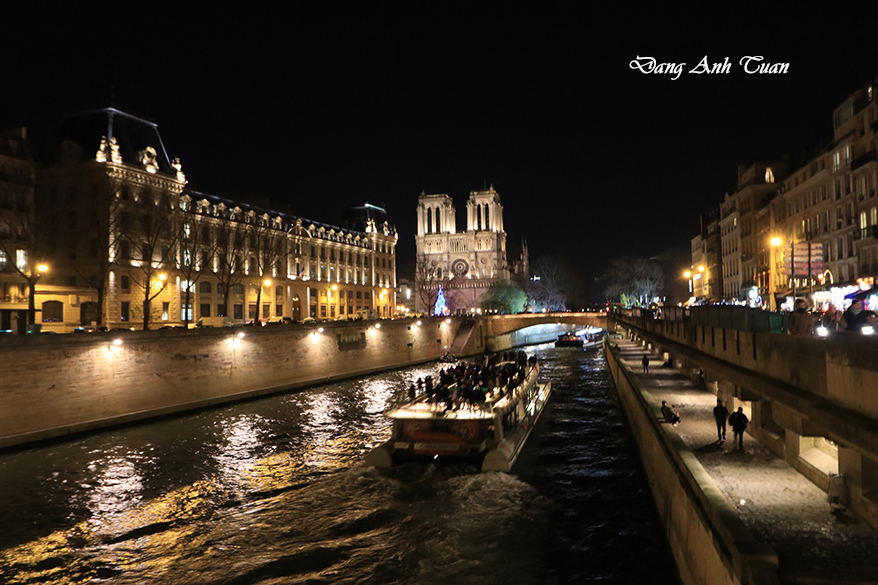
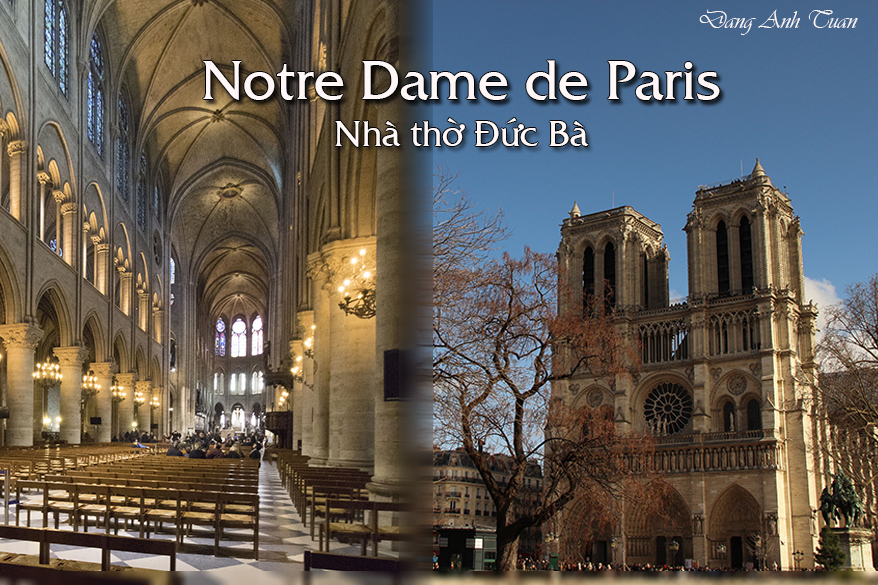
Từ một nhà thờ nhỏ bé với phong cách xưa (romane) mà đến phong cách gothique thì có một đoạn đường khá dải hơn hai thế kỷ từ  1160 đến giữa thế kỷ 14, có nhiều sửa chữa và bổ túc khiến nhà thờ nầy trở thành một kiệc tác của Paris mà không ai có thể quên khi đến tham quan Paris. Số lượng người đi xem  là 13 triệu người mỗi năm có nghĩa là hơn 30.000 du khách mỗi ngày. Nó luôn luôn đứng đầu trong danh sách các nơi tham quan ở Paris, trước tháp Eiffel  và điện Louvre. Nhà thờ nầy là một trong những nhà thờ xây dựng đầu tiên  với phong cách gothique. Phong cách nầy dựa trên các vòm mà có ở các nơi bắt tréo hình nhọn  và gân cung. Nhờ vậy trọng lượng của vòm nó không dựa trên hai trụ mà 4 trụ. Phong cách nầy đem lại không những sự  sáng sủa nhờ có nhiều cửa sổ mà còn cao vút tạo ra sự tao nhã lạ thường. Tại sao gọi gothique ? Thuật ngữ gothique dùng  bởi người La Mã để ám chỉ dân  Goth, dân mọi rợ đến từ phiá  Bắc (người Pháp thưở xưa). Nhà thờ Đức Bà được  sùng tu lại sau khi bi hỏa hoạn xảy ra vào ngày 15 Tháng tư 2019 và mở lại cho dân chúng từ cuối năm 2024. 

Version française

Partant d’une église romane jusqu’à devenir une église gothique, il y a un long chemin à parcourir prenant plus de deux siècles, de 1160 jusqu’au milieu du 14ème  siècle.  Beaucoup de modifications et d’ajouts étant ajoutés, elle devient ainsi un chef-d’œuvre de Paris que personne ne peut oublier  lors de son passage à Paris. Le nombre de visiteurs s’élève à 13 millions par an ou plus 30.000 touristes par jour.  Elle est toujours la première sur la liste des sites touristiques à Paris devant la tour Eiffel et le musée du Louvre. 

Cette église est l’une des premières églises construites avec le style gothique. Celui-ci est basé essentiellement sur la technique de la voûte sur croisée d’ogive  (ses arcs brisés se croisent en  diagonales et s’appuient non pas sur deux piliers mais sur quatre piliers). Cette technique apporte non seulement la lumière grâce à un nombre élevé de fenêtres (vitraux)  mais aussi l’élévation et la finesse extraordinaire. Pourquoi gothique ? Ce mot est employé par les Romains pour faire allusion à des Goths,  des peuplades barbares situées dans le Nord de l’Europe (les Français d’autrefois). Notre Dame de Paris à Paris est restauré cause d’une incendie ayant eu lieu le 15 Avril 2019 et est réouvert au public à la fin de l’année 2024. 

English version

Starting from a Romanesque church to becoming a Gothic church, there is a long journey spanning more than two centuries, from 1160 until the mid-14th century. Many modifications and additions were made, thus it became a masterpiece of Paris that no one can forget when passing through Paris. The number of visitors rises to 13 million per year or more than 30,000 tourists per day. It is still the first on the list of tourist sites in Paris, ahead of the Eiffel Tower and the Louvre Museum.

This church is one of the first churches built in the Gothic style. This style is essentially based on the technique of the ribbed vault (its pointed arches cross diagonally and rest not on two pillars but on four pillars). This technique not only brings light thanks to a large number of windows (stained glass) but also extraordinary elevation and delicacy. Why Gothic? This word was used by the Romans to refer to the Goths, barbarian peoples located in Northern Europe (the French of old). Notre Dame de Paris in Paris is being restored due to a fire that occurred on April 15, 2019, and is reopening to the public at the end of 2024.

Galerie des photos


Notre Dame de Paris


[Return PARIS et ses sites]

Les Mayas (Nền văn minh Maya): Partie 2

Version française

English version

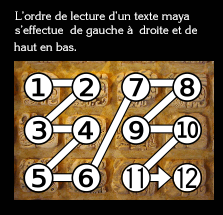
Cho đến năm 1950, nhờ  nhà ngôn ngữ nga Yuri Knorosov mà  hệ thống chữ viết Maya được giãi mã.  Ông nầy đã  chứng minh  lối  viết của người Maya trong việc phiên âm là loại logo âm tiết (từ 900 đến 1200 dấu) so với lối viết của người Ai Cập (734 dấu). Rồi đến 1978, nhà nghiên cứu  văn khắc người Mỹ, ông J. Juteson của đại học Stanford đưa vào trong luận án dành về văn tự của người Maya, một ý niệm về việc bổ sung ngữ âm. Có luôn cả văn phạm của người Maya được cung cấp gần đây trong những năm 1980-1990 với các công việc của L. Schele (1982), B. Macleod (1983) và  V. Bricker (1986). Nhờ đó mà sự hiểu biết về lối viết của người Maya đuợc thông suốt từ đây. Ngày nay, có thể khẳng định là chữ viết của người Maya là loại logo âm tiết.  Nhờ sự tiến triển trong việc giãi mã và các cuộc khai quật mà  cái nhìn về người Maya cũng được thay đổi nhất là với những gì họ để lại trong kho tàng tượng hình gồm có hiện nay hơn mười ngàn  văn bản. Muốn hiểu một văn tự của người Maya, chúng ta phải đọc từ trái qua phải và từ trên xuống dưới.

Trước đây, chúng ta thường cho rằng người Maya là những người hiền hòa so với người Aztec hiếu chiến. Nhưng nhờ những khám phá khảo cổ gần đây về một số văn bản chữ tượng hình bao gồm các cột (hoặc tấm bia) kỷ niệm, bàn thờ, bản treo tường vân vân…  chúng ta mới  biết rằng họ cũng rất  ưa thích chiến tranh. Đế chế của họ không dựa trên một tổ chức tập trung như của người Inca ở dãy núi Andes. Tuy nhiên, giống như người Hy Lạp, họ sống tập trung ở các thành bang và liên tục chiến đấu với nhau để chiếm quyền  bá chủ. Họ đôi khi được gọi là người Hy Lạp của thế giới mới.

Trong mỗi thành phố, có một vị vua thần linh, người nầy được giao nhiệm vụ làm trung gian giữa  thần dân và thế giới thần linh, tựa như  pháp sư thời xưa. Ngoài việc cung cấp thực phẩm và dùng  sức  dành được  chiến thắng chống lại kẻ thù của mình, nhà vua cần phải bắt tù nhân  để hiến tế máu sau đó  và  mong có được ân huệ của các vị thần linh nhằm đảm bảo sự vĩnh cửu của thành phố của mình trước những thảm họa thiên nhiên (động đất, bão, biến đổi khí hậu vân vân). Người ta cũng thường thấy các chức sắc  cao cấp Maya thực hiện nghi lễ trích  máu với dao bằng bạch kim hoặc cái gai nhọn của con cá đuối. Mặc dù họ đã phải chịu đựng những hình thức đau đớn trên lưỡi và dương vật của họ, họ vẫn thấy rằng đây là  hành động tự nguyện của họ, một sự hy sinh cao cả, vì máu được coi là tài sản quý giá nhất của con người, được dùng để duy trì trật tự vũ trụ và lợi ích của triều đại.

Các lễ vật cúng  được thấy rất nhiều và đa dạng. Ngoài máu, họ còn có thể nuôi dưỡng các vị thần bằng mùi và vị. Đôi khi, theo truyền thống của họ, họ quen ném nạn nhân, đặc biệt là các cô gái và trẻ em còn trinh, xuống giếng (hoặc cenote). Đây là trường hợp của Giếng Hy sinh tại Chichen Itza, nơi xương người được tìm thấy (13 sọ của đàn ông, 21 trẻ em và 8 phụ nữ) nhờ quá trình thoát nước được thực hiện bởi các nhà khảo cổ học. Người cai tri (hay lãnh chúa) hay thường tổ chức việc thờ cúng các thần thánh này nên được họ bảo vệ và tôn trọng trong tư tưởng của người Maya. Chính vì thế khi qua đời, lãnh chúa  được đi theo con đường  gắn liền với  sự chuyển động vũ trụ của mặt trời hay mặt trăng để xâm nhập vào âm phủ (thế giới ngầm) và tái sinh ở thiên giới để trở thành một thần thánh nhờ sức mạnh siêu nhiên được ban cho bởi  các vị thần. Mặt khác, đối với một người Maya bình thường thì  người nầy phải chết trong địa ngục sau một hành trình gian nan đầy nguy hiểm nhưng có thể trở lại trần gian trong một số dịp nhất định với sự đồng ý của thần chết để tham gia vào các nghi lễ do con cháu người nầy thực hiện.

Sự tôn kính mà người Maya bày tỏ với các vị thần của họ thông qua việc hiến tế con người và sự hy sinh bản thân (sẹo và đâm xuyên qua da thịt) đã làm mờ  đáng kể cho hình ảnh của họ. Đây là lý do tại sao khi đến  lãnh thổ của họ, người Tây Ban Nha xem coi họ là người man rợ tại vì những phong tục nhất định nầy. Tuy nhiên, họ đã phát minh ra con số 0 hai thế kỷ trước khi người châu Âu mượn nó từ người Ả Rập sau các cuộc Thập tự chinh. Số 0 này thường được biểu thị bằng một cái vỏ, một bông hoa và đôi khi là một hình xoắn ốc. Họ quan tâm đến toán học và thiên văn học. Họ biết cách sử dụng riêng các số dương.

Dân tộc Maya là một trong số ít các dân tộc  bị thu hút bởi thời gian. Nhờ biết sử dụng hệ thống vigesimal (dựa trên hệ nhị thập phân), họ đã thiết lập nhiều lịch để dự đoán các sự kiện quan trọng (ví dụ như các lời tiên tri), xác định các ngày quan trọng trong lịch sử và chuẩn bị thời gian thuận lợi cho các nghi lễ để các lực siêu nhiên mang lại tích cực cho nông nghiệp và cuộc sống hàng ngày của họ bằng cách trở lại các mùa màng và thời kỳ màu mỡ của trái đất. Lịch của họ cũng chính xác như lịch của chúng ta. Họ đã có thể tính toán được các giai đoạn của sao Kim và thời gian đồng hành của sao Hỏa với độ chính xác đáng kinh ngạc 780 ngày mặc dù chúng ta biết rằng vào thời điểm đó, họ hoàn toàn không có các thiết bị quang học. Người ta có thể nghĩ rằng ngoài khả năng quan sát và kiên nhẫn của họ, họ còn có khả năng suy luận và kết luận rất xuất sắc. Đây là trường hợp của một trong những đài quan sát của người Maya ở Chichén Itzá, Yucatan, Caracol (hay con ốc sên trong tiếng Tây Ban Nha), nơi người ta có thể theo dõi nơi chân trời  các vị trí khác nhau của các thiên thể (mặt trời, mặt trăng hoặc sao Kim)  từ cửa sổ của tháp. Sự di chuyển của các thiên thể vẫn là một lĩnh vực đặc biệt đối với người Maya vì nó có liên quan chặt chẽ đến việc thờ phượng các vị thần linh. Những vị thần này có mặt ở khắp mọi nơi, ngay cả trong thế giới bên dưới, nơi có nhiều vị thần linh  và nhiều cấp độ (9 vị thần, 9 tầng dưới đất).

[ Trở về Người Maya : Phần 1]

Malgré cela, une percée significative dans le déchiffrement de l’écriture maya eut lieu dans les années 1950 grâce aux travaux du linguiste russe Yuri Knorosov. Ce dernier parvint à prouver que l’écriture utilisée par les Mayas pour la transcription de leur langue, était de type logo-syllabique (de 900 à 1200 signes) comparable à l’égyptien classique (734 signes). Puis en 1978, l’épigraphiste américain de l’université Stanford, J. Justeson introduisit dans sa thèse consacrée à l’écriture maya, l’idée de compléments phonétiques. Même une grammaire se constitua récemment dans les années 1980-1990 avec les travaux de L. Schele (1982), B. Macleod (1983) et V. Bricker (1986). Cela facilite la meilleure compréhension de la tradition écrite par des Mayas.

Aujourd’hui, on peut dire que l’écriture maya est de type logo-phonétique. Grâce à cette avancée dans le décryptage et dans les fouilles archéologiques, on est obligé de modifier la vision qu’on a eue à l’égard des Mayas en saisissant tout ce qu’ils avaient laissé dans le corpus hiéroglyphique composé actuellement de plus de dix mille textes. Pour connaître le contenu d’un texte maya, il faut suivre l’ordre de lecture qui s’effectue de gauche à droite et de haut en bas.

Dans le passé, on avait l’habitude de présenter les Mayas comme pacifiques, comparés à des Aztèques belliqueux et guerriers. Mais grâce aux découvertes archéologiques récentes de plusieurs textes hiéroglyphiques couvrant les colonnes commémoratives (ou stèles), les autels, les panneaux muraux etc…, on sait qu’ils étaient aussi adeptes de la guerre.

Leur empire ne s’appuyait pas sur une organisation centralisée comme les Incas des Andes. Par contre, analogues aux Grecs, ils vivaient regroupés dans les cités-états et ils ne cessaient pas de guerroyer entre eux en quête d’hégémonie. On les appelle parfois sous le nom des Grecs du nouveau monde.

Dans chaque cité, il y a un roi d’essence divine, chargé d’être le médiateur entre ses sujets et le monde des dieux comme le chaman de jadis. Outre la procuration de la nourriture et la force de travail gratuite en cas des victoires contre ses ennemis, le monarque a besoin de faire des prisonniers destinés aux sacrifices de sang dans le but de s’attirer les grâces des dieux et d’assurer l’éternité de sa cité face aux calamités naturelles (séismes, ouragans, changements climatiques etc…). Il est fréquent de voir aussi l’acte rituel de la saignée effectuée par les hauts dignitaires mayas à l’aide d’un couteau en obsidienne ou d’un aiguillon de pastenague. Malgré les mortifications très douloureuses soit sur leur langue soit leur pénis, ces derniers trouvaient dans leur acte volontaire une sacrifice suprême car le sang qui était considéré comme le bien le plus précieux de l’homme, servait à maintenir l’ordre cosmique et les intérêts dynastiques.

Les offrandes étaient multiples et diverses. Outre le sang, ils pouvaient nourrir les dieux avec des odeurs et des saveurs. Parfois, dans leur tradition, ils étaient habitués à jeter dans le puits (ou cénote) des victimes, en particulier des jeunes filles vierges et des enfants. C’est le cas de la Cenote du Sacrifice à Chichen Itza où on a retrouvé des ossements humains ( 13 crânes d’hommes, 21 d’enfants et 8 de femmes) lors du drainage effectué par des archéologues. Le souverain qui célébrait ainsi ce culte divin était traité avec respect et protégé par les divinités dans la pensée maya. C’est pourquoi lors de sa mort, il emprunta le même chemin lié au mouvement cosmique du soleil ou de la lune pour pénétrer dans l’inframonde (milieu souterrain) et renaquit dans le monde céleste pour devenir une divinité grâce au pouvoir surnaturel accordé par les dieux.

Par contre, pour un Maya ordinaire, il devait mourir au fond de l’inframonde après un long parcours périlleux mais il pouvait revenir sur terre en certaines occasions avec le consentement des dieux de la mort pour participer aux rites pratiqués par ses descendants. L’hommage que les Mayas avaient accordé à leurs dieux par les sacrifices humains et les autosacrifices (scarification et percement des chairs) porte un préjudice considérable à leurs images. C’est pourquoi, lors de l’arrivée des Espagnols sur leur territoire, ils étaient considérés comme des barbares à cause de certaines coutumes. Pourtant ils ont inventé le zéro deux siècles avant l’emprunt des Européens aux Arabes après les croisades. Ce chiffre 0 était représenté souvent par une coquille, une fleur et parfois une spirale. Ils étaient férus de mathématiques et d’astronomie. Ils savaient utiliser exclusivement des nombres positifs.

Les Mayas étaient l’un des rares peuples qui ont été fascinés par le temps. Grâce à leur système vigésimal (à base 20), ils établissaient plusieurs calendriers permettant de prédire d’importants évènements (les prophéties par exemple), de fixer les grandes dates de l’histoire et de préparer les moments propices aux cérémonies destinées à influencer positivement l’effort des forces surnaturelles sur leur agriculture et leur vie quotidienne par le retour des saisons et les époques de fertilité de la terre. Leur calendrier solaire était aussi précis que le nôtre. Ils ont réussi à calculer les phases de Vénus et la période synodique de Mars de 780 jours avec une précision stupéfiante bien qu’on sache qu’à cette époque, ils furent dépourvus entièrement des instruments d’optique.

On est amené à penser qu’outre leur faculté d’observation et leur patience inouïe, ils avaient un sens de la logique et une déduction extrêmement remarquable. C’est le cas de l’un des observatoires mayas trouvés dans le Yucatan à Chichén Itzá, le Caracol (ou l’escargot en espagnol) où on peut suivre à l’horizon différentes positions des astres (soleil, lune ou Vénus) depuis les lucarnes de la tour. Le mouvement de ceux-ci restait un domaine privilégié pour les Mayas car il était lié étroitement au culte des dieux. Ces derniers foisonnaient partout même dans l’inframonde où il y avait autant de dieux que de niveaux. (9 dieux, 9 niveaux souterrains).

[Retour à la page MAYA]

Despite this, a significant breakthrough in deciphering Maya writing occurred in the 1950s thanks to the work of the Russian linguist Yuri Knorosov. He managed to prove that the writing used by the Mayas for transcribing their language was of a logo-syllabic type (ranging from 900 to 1200 signs), comparable to classical Egyptian (734 signs). Then, in 1978, the American epigraphist from Stanford University, J. Justeson, introduced the idea of phonetic complements in his thesis dedicated to Maya writing. Even a grammar was developed recently in the 1980s-1990s with the work of L. Schele (1982), B. Macleod (1983), and V. Bricker (1986). This facilitates a better understanding of the written tradition by the Mayas.

Today, it can be said that Maya writing is of the logo-phonetic type. Thanks to this progress in decipherment and archaeological excavations, we are forced to change the view we had of the Mayas by understanding everything they left in the hieroglyphic corpus currently composed of more than ten thousand texts. To know the content of a Maya text, one must follow the reading order which is done from left to right and from top to bottom.

In the past, the Mayas were usually presented as peaceful, compared to the warlike and warrior Aztecs. But thanks to recent archaeological discoveries of several hieroglyphic texts covering commemorative columns (or stelae), altars, mural panels, etc., we know that they were also keen on war.

Their empire was not based on a centralized organization like the Incas of the Andes. However, similar to the Greeks, they lived grouped in city-states and continuously waged war among themselves in search of hegemony. They are sometimes called the Greeks of the New World.

In each city, there is a king of divine essence, responsible for being the mediator between his subjects and the world of the gods, like the shaman of old. Besides providing food and free labor in case of victories against his enemies, the monarch needs to take prisoners destined for blood sacrifices to gain the favor of the gods and ensure the eternity of his city in the face of natural calamities (earthquakes, hurricanes, climate changes, etc.). It is also common to see the ritual act of bloodletting performed by high Maya dignitaries using an obsidian knife or a stingray spine. Despite the very painful mortifications on their tongue or penis, they found in their voluntary act a supreme sacrifice because the blood, considered the most precious asset of man, served to maintain cosmic order and dynastic interests.

The offerings were many and varied. In addition to blood, they could feed the gods with smells and flavors. Sometimes, in their tradition, they were accustomed to throwing victims into the well (or cenote), especially virgin girls and children. This is the case of the Cenote of Sacrifice in Chichen Itza where human bones (13 skulls of men, 21 of children and 8 of women) were found during the drainage carried out by archaeologists. The sovereign who celebrated this divine cult in this way was treated with respect and protected by the deities in Mayan thought. Therefore, upon his death, he took the same path linked to the cosmic movement of the sun or the moon to enter the underworld (underground environment) and was reborn in the celestial world to become a divinity thanks to the supernatural power granted by the gods.

On the other hand, for an ordinary Maya, he had to die at the bottom of the underworld after a long perilous journey but he could return to earth on certain occasions with the consent of the gods of death to participate in the rites practiced by his descendants. The homage that the Maya had paid to their gods through human sacrifices and self-sacrifices (scarification and piercing of the flesh) caused considerable harm to their image. This is why, when the Spanish arrived on their territory, they were considered barbarians because of certain customs. Yet they invented zero two centuries before the Europeans borrowed it from the Arabs after the Crusades. This number 0 was often represented by a shell, a flower and sometimes a spiral. They were keen on mathematics and astronomy. They knew how to use only positive numbers.

The Maya were one of the few peoples fascinated by time. Using their vigesimal (base 20) system, they established several calendars that allowed them to predict important events (prophecies, for example), to fix the major dates in history, and to prepare the right moments for ceremonies designed to positively influence the efforts of supernatural forces on their agriculture and daily life through the return of the seasons and the periods of fertility of the earth. Their solar calendar was as precise as ours. They managed to calculate the phases of Venus and the synodic period of Mars of 780 days with astonishing precision, although it is known that at this time they were entirely deprived of optical instruments.

We are led to believe that in addition to their powers of observation and their incredible patience, they had a sense of logic and an extremely remarkable deduction. This is the case of one of the Mayan observatories found in the Yucatan at Chichén Itzá, the Caracol (or the snail in Spanish) where one can follow on the horizon different positions of the stars (sun, moon or Venus) from the skylights of the tower. The movement of these remained a privileged domain for the Mayans because it was closely linked to the worship of the gods. The latter abounded everywhere even in the underworld where there were as many gods as there were levels. (9 gods, 9 underground levels).

[Return to the page  MAYA]

[Return MUSEUM]

Les Mayas (Nền văn minh Maya): Partie I

Version française
English version
Galerie des photos

Người Maya

Theo các nhà khảo cổ học, người Maya có nguồn gốc người Á với  nét mặt. Có thể nghĩ rằng ở trên đất hoang sơ  Châu Mỹ nầy, ông cha họ đến đây khi còn là những người đi săn đến từ Châu Á. Vi đeo đuổi các thú rừng nên họ vượt qua eo biển Béring trong thời kỳ cuối băng hà. 30.000 năm trước, sự lạnh đi hành tinh làm mực nước biển giảm xuống, khiến eo biển Béring hiện tại trở thành cầu nối tự nhiên giữa lục địa châu Á và châu Mỹ.  Lý  thuyết nầy có vẽ thuyết phục và hấp dẫn vì chúng ta nhận thấy ở nơi những người Maya nầy có những kỹ thuật thường được trông thấy ở Châu Á: gốm, việc xe sợi và dệt vải, những khái niệm mang tính chất tôn giáo (saman giáo) và vũ trụ cũng như sự kết hợp các màu và các thần thú ở bốn phương (Ngũ hành).

Nhờ nhà thám hiểm người Mỹ, ông John Lloyd Stephens và bạn đồng hành họa sỹ Frederick Catherwood khám phá vào năm 1840, các công trình của thành phố Copán (Honduras) bị bao phủ bởi cây cối và chìm đắm trong sương mù của rừng nhiệt đới,  người ta mới bất đầu quan tâm lại nền văn minh của người Maya nhất là lối sống của họ, những kiến thức khoa học như thiên văn, toán học, kiến trúc, canh nông và nhất là chữ viết của họ. Lối viết nầy rất phức tạp không có dùng đến trong mậu dịch cũng như các văn tự cổ khác. Nó không dành cho giới hạ tầng cũa xã hội mà nó là một phương tiện cho giới qúi tộc và các ký lục để tiếp cận với các thần thánh và hợp pháp hóa quyền lực vua chúa  được xem như ngang hàng với các thần thánh.

Chính vì vậy biết bao nhiêu nhà khảo cứu xem vặn tự của họ là một vấn đề nan giải nhất là khi đoàn viễn chinh Tây Ban Nha xâm nhập vào lãnh thổ của người Maya thì bao nhiêu sách vỡ (hay codex) ở Mani (Yucatan) đều bị giám mục Diego de Landa đốt cả. Qua những công thức nghi lễ được tìm thấy trong các codex với lối viết theo những họa tiết không thể hiểu nổi, ông cho rằng đây là một trở ngại rất lớn trong việc truyền bá đạo công giáo và nó  còn mang tính chất dị đoan mê tín. Có ít nhất 70 tấn tang chứng văn tự của người Maya bị tiêu hủy cùng 5000 thần tượng.

Tuy nhiên ông Diego de Landa là một trong những nhà thời luận xuất sắc về văn hóa Maya. Rất nhiều người không nghĩ rằng ở thời đó có những bộ tộc nghèo đói sống ở vùng đất hoang tàn Copán mà được John Lloyd StephensFrederick Catherwood khám phá là con cháu của những người xây dựng một nền văn minh Maya cổ. Tuy nhiên ở thời kỳ tiền Colombo, họ là một dân tộc duy nhất ở Trung Mỹ đã khảo sát tĩ mĩ một hệ thống chữ viết phức tạp để mang lại sự liên kết chặt chẽ và thống nhất cho nền văn hóa của họ nhất là nó rất phong phú và khác nhau từ vùng nầy qua vùng khác trên phương diện sắc tộc và vật chất. Mặc dầu có 30 thổ ngữ, người ta vẫn tìm thấy một loại chữ viết tượng hình như nhau ở khắp nơi vùng Trung Mỹ dù nơi đó là đồng bằng Yucatan hay là vùng cao nguyên của Guatemala hoặc là vùng đất có các con sông Usumacinta và Sarstoon.

Cũng như người Ai Cập với giấy cói và nguời Trung Hoa với sợi dâu tằm, người Maya họ tìm ra việc chế tạo giấy với một loại sợi của cây vả (hay cây sung). Nhờ vậy họ ghi chép lại tất cả lễ nghi tôn giáo, các cuộc quan sát khoa học cùng các biên sử trong các codex dưới dạng các tấm giấy lớn được gấp dựng đứng lại như đàn phong cầm. Vì sự thiêu hủy sách vở do ông Diego de Landa đề xướng nên chỉ còn hiện nay 4 codex của người Maya: codex de Dresde, codex Tro Cortesianus (hay là bản thảo Madrid), codex Peresianus (hay là bản thảo Paris) thì thuộc về các  thư viện Dresde, Madrid và Paris còn  codex thứ tư được gọi là codex Grolier khám phá vào năm 1971 bởi Michael Coe, một nhà nghiên cứu Mỹ ở đại học Yale.

[Tiếp theo trang 2]

Galerie des photos

Les Mayas

Qui sont ces mayas?

Selon certains archéologues, les Mayas ont leur origine asiatique avec leurs traits. On pourrait penser à l’arrivée de leurs ancêtres, des chasseurs venus d’Asie, à la poursuite du gibier sur le territoire vierge d’Amérique en franchissant le détroit de Béring au cours de la dernière période glaciaire. Il y a 30000 ans , le refroidissement de la planète fait baisser le niveau de mers, ce qui permet à l’actuel détroit de Béring de devenir le pont  naturel entre les continents asiatique et américain. Cette théorie reste séduisante et convaincante dans la mesure où on trouve chez les Mayas des techniques rencontrées en Asie: céramique, filage et tissage ainsi que certains concepts d’ordre religieux (chamanisme) et cosmique comme les associations de couleurs et d’animaux célestes aux quatre points cardinaux. (Ngũ hành).

Grâce à la découverte des monuments de la ville Copán (Honduras) envahis par la végétation dans les vapeurs de la jungle tropicale par l’explorateur américain John Lloyd Stephens et son compagnon illustrateur Frederick Catherwood en 1840, on recommence à s’intéresser à leur civilisation, leur mode de vie, leurs connaissances scientifiques (astronomie, mathématiques, architecture, agriculture etc.) et surtout leur écriture glyptique. Celle-ci est un système d’écriture complexe et incompréhensible qui n’est pas conçu pour les transactions commerciales comme les autres écritures anciennes. Elle n’est pas destinée à la basse couche de la société maya mais elle est un moyen pour les nobles et les scribes de s’adresser aux dieux et de légitimer le pouvoir de leurs souverains considérés à l’égal des dieux.

Cela décourage un grand nombre de savants et de chercheurs qui qualifiaient avec résignation dans le passé cette écriture maya de « problème insoluble ». Leur déchiffrement devient de plus en plus ardu car lors de l’arrivée des conquistadors espagnols sur le territoire des Mayas, la plupart de leurs manuscrits (ou codex) furent brûlés sur un bûcher par l’évêque Diego de Landa à Mani (Yucatan). Ce dernier trouva dans ces codex des formules de rituel avec une écriture glyptique incompréhensible, une entrave à sa mission de christianisation et un caractère de superstition et de mystification du démon. On estime qu’il fit détruire 70 tonnes de témoignages écrits par les Mayas ainsi que 5000 idoles.

Pourtant il fut l’un des meilleurs chroniqueurs de la civilisation maya. Beaucoup de gens eurent du mal à croire, à cette époque, que ces Indiens misérables vivant à côté des ruines mystérieuses de Copán découvertes par John Lloyd Stephens et Frederick Catherwood, étaient les descendants des bâtisseurs de cette civilisation. Pourtant ils furent, à l’époque précolombienne, le seul peuple d’Amérique centrale à avoir poussé aussi loin l’exploration d’un système complexe d’écriture dans le but de donner cohésion et unité à leur culture autant diverse que variée, d’une région à une autre, au niveau de la composition ethnique et matérielle. Malgré un grand nombre élevé de dialectes (une trentaine en tout), on a retrouvé les mêmes hiéroglyphes, la même écriture en divers points de l’Amérique centrale soit sur les basses terres de tout le Yucatan soit dans les hautes terres du Guatemala ou dans le territoire traversé par les rivières Usumacinta et Sarstoon.

Analogues aux Égyptiens avec le papyrus et aux Chinois avec la fibre de mûrier, les Mayas ont réussi à fabriquer le papier avec les fibres d’une espèce de figuier. Cela leur permit d’enregistrer leurs rites religieux, leurs observations scientifiques et leurs annales dans des codex présentés sous la forme des grandes feuilles de papier plissées verticalement en accordéon. À cause de l’autodafé de livres mayas organisé par Diego de Landa, il ne reste aujourd’hui que 4 codex mayas dont les trois premiers sont: le Codex de Dresde (Codex Dresdensis), le Codex Tro Cortesianus (ou Manuscrit de Madrid), le Codex Peresianus (ou Manuscrit de Paris) dans les bibliothèques de Dresde, de Madrid et de Paris et le quatrième connu comme le Codex Grolier découvert en 1971 par Michael Coe, un chercheur américain de l’université Yale.[Suite: Partie 2]

Who are these Mayans?

According to archaeologists, the Maya people have Asian origins with distinct facial features. It can be thought that in this wild land of the Americas, their ancestors arrived here as hunters from Asia. Pursuing wild animals, they crossed the Bering Strait during the last Ice Age. 30,000 years ago, the planet’s cooling caused sea levels to drop, turning the current Bering Strait into a natural bridge between the continents of Asia and America. This theory seems convincing and appealing because we observe among the Maya people techniques commonly seen in Asia: pottery, spinning and weaving, religious concepts (shamanism) and the cosmos, as well as the combination of colors and mythical animals from the four directions (Five Elements). Thanks to the American explorer John Lloyd Stephens and his companion, the artist Frederick Catherwood, who discovered in 1840 the works of the city of Copán (Honduras) covered by trees and immersed in the mist of the tropical forest, people began to take renewed interest in the Maya civilization, especially their way of life, scientific knowledge such as astronomy, mathematics, architecture, agriculture, and especially their writing. This script is very complex and was not used in trade like other ancient scripts. It is not intended for the infrastructure of society but is a means for the nobility and the elites to communicate with the gods and legitimize the power of kings, who are regarded as equals to the gods.

For this reason, many researchers consider their script to be a very challenging problem, especially when the Spanish expedition invaded the territory of the Maya. Many books (or codices) in Mani (Yucatan) were all burned by Bishop Diego de Landa. Through the ritual formulas found in the codices, written in incomprehensible patterns, he believed this was a major obstacle to spreading Christianity and that it also had superstitious and pagan characteristics. At least 70 tons of Maya written evidence were destroyed along with 5,000 idols.

However, Diego de Landa was one of the most outstanding chroniclers of Maya culture. Many people did not think that at that time there were poor tribes living in the desolate land of Copán, which John Lloyd Stephens and Frederick Catherwood discovered to be descendants of the builders of an ancient Maya civilization. However, in the pre-Columbian era, they were the only people in Central America who meticulously surveyed a complex writing system to bring close connection and unity to their culture, especially since it was very rich and varied from one region to another in terms of ethnicity and material aspects. Despite having 30 dialects, people still found a similar type of hieroglyphic writing throughout Central America, whether in the Yucatan plains, the highlands of Guatemala, or the lands with the Usumacinta and Sarstoon rivers.

Like the Egyptians with papyrus and the Chinese with silk fibers, the Maya discovered the production of paper using fibers from the fig tree (or mulberry tree). Thanks to this, they recorded all religious ceremonies, scientific observations, and historical chronicles in codices in the form of large sheets of paper folded upright like an accordion. Due to the destruction of books initiated by Diego de Landa, only four Maya codices remain today: the Dresden Codex, the Tro-Cortesianus Codex (or the Madrid manuscript), the Peresianus Codex (or the Paris manuscript) belonging to the libraries of Dresden, Madrid, and Paris respectively, and the fourth codex called the Grolier Codex, discovered in 1971 by Michael Coe ,an American researcher from Yale University  [Reading more: Part 2]

Aristide Maillol (Jardin des tuileries)

Aristide Maillol

Version vietnamienne

Version anglaise

Galerie des photos

Presque à 40 ans, Aristide Maillol commence à être connu à travers ses chefs-d’œuvre de la sculpture en bronze non pas sur la peinture. Chaque fois de passage au jardin des Tuileries en face de la pyramide du Louvres, je ne tarde pas à prendre quelques photos sur ses sculptures en bronze de femmes nues car elles sont vraiment très belles sur la façon de faire apparaître la beauté du corps féminin. Maillol avec Rodin ce sont deux personnages auxquels le philosophe français Michael Paraire attribue le mot « génie » entre le 19 et 20 ème siècle, chacun ayant un style différent. Rodin se penche vers le réalisme et prône le caractère particulier de chaque personnage dans ses œuvres qualifiées sublimes par Michael Paraire. Rodin se sert de l’argile. Quant à Maillol, il se sert du bronze comme matériau dans ses réalisations qualifiées « beau » par le même philosophe, en particulier ce qui a trait  à la beauté du corps féminin. Ses œuvres sont visibles au jardin des Tuileries, au musée d’art moderne de New York ou au musée Maillol que sa muse Dina Vierny dans les années 1930 a fondé en 1995 à Paris.

Almost 40 years old, Aristide Maillol began to become known through his masterpieces of bronze sculpture, not through painting. Every time I pass through the Tuileries Garden opposite the Louvre Pyramid, I do not hesitate to take some photos of his bronze sculptures of nude women because they are truly very beautiful in the way they reveal the beauty of the female body. Maillol, along with Rodin, are two figures to whom the French philosopher Michael Paraire attributes the word « genius » between the 19th and 20th centuries, each having a different style. Rodin leans towards realism and emphasizes the unique character of each figure in his works, which Michael Paraire describes as sublime. Rodin uses clay. As for Maillol, he uses bronze as the material in his creations, which the same philosopher describes as « beautiful, » especially in relation to the beauty of the female body. His works can be seen in the Tuileries Garden, the Museum of Modern Art in New York, or the Maillol Museum, which his muse Dina Vierny founded in 1995 in Paris during the 1930s.

Version vietnamienne

Mãi đến gần 40 tuổi , ông Maillol mới nổi tiếng qua những tác phẩm điêu khắc chứ không phải qua hội họa. Mỗi lần đến vườn hoa Tuileries ngang mặt Pyramide của bảo tàng viện Louvres thì mình không thể không dừng lại chụp các bức tượng khỏa thân điêu khắc của ông vì nó quá đẹp làm nỗi bật thân thể của người phụ nữ. Ông cùng nhà điêu khắc Rodin đuợc một nhà triết gia Pháp Michael Paraire gọi là hai kẻ thiên tài giữa thế kỷ 19 và 20, mỗi người một phong cách khác nhau. Ông Rodin thì thiên hẳn về lối hiện thực, ca ngợi cá tính riêng của mỗi nhân vật.trong các tác phẩm của ông đươc Michael Paraire gọi là tuyệt vời (sublime). Ông nầy thường dùng đất sét. Còn ông Maillol thì thường sử dụng chất liệu đồng trong các kiệt tác của ông đuợc Michael Paraire gọi là quá đẹp nhất là cái đẹp hoàn mỹ của thân người phụ nữ. Các tác phẩm thường được trưng bày ở vườn hoa Tuileries, bảo tàng nghệ thuật hiện đại ở New York hay ở bào tàng Maillol mà được người mẫu của ông là Dina Vierny ở những năm 1930, thành lâp vào năm 1995 ở Paris.

Galerie des photos

[Return PARIS et ses sites]