Dương Vân Nga-Lê Hoàn (Version française)

Vietnamese version
English version
Galerie des photos

On parle rarement de Dương Vân Nga dans l’histoire du Vietnam. Son nom est moins cité que celui des deux sœurs Trưng Trắc et Trưng Nhị ou Triệu Ẩu. Pourtant c’est une femme hors du commun, la grande reine de deux premières dynasties Ðinh et Lê antérieurs du Vietnam. Sa vie, son œuvre, on peut les résumer à travers les quatre vers suivants  transmis par tradition orale jusqu’à nos jours et  laissés par un moine mystérieux sur le mur du monastère Am Tiên, il y a eu exactement 1000 ans, lors de sa rencontre avec Dương Vân Nga:

Hai vai gồng gánh hai vua
Hai triều hoàng hậu, tu chùa Am Tiên
Theo chồng đánh Tống bình Chiêm
Có công với nước, vô duyên với đời

J’étais née pour épauler les deux rois
Étant la reine de deux dynasties, je me retirais à la fin de ma vie  dans le monastère Am Tiên.
En accompagnant mon époux,  je me battais contre les Song et je pacifiais le Champa
J’avais la gloire dans le pays et la malchance dans la vie.

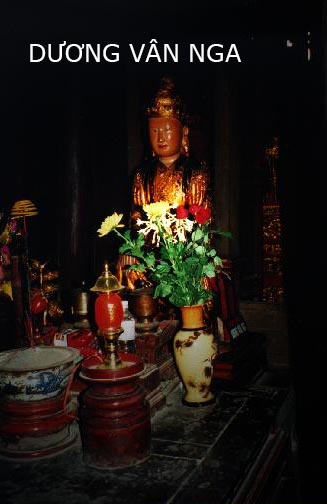
Parmi les dix reines de ces deux dynasties, elle était la seule à être autorisée à avoir une effigie statuaire. Celle-ci, lors de la restauration et du transfert dans le temple dédié au roi Lê Ðại Hành au début de la dynastie des Lê postérieurs (Hậu Lê) suinta étrangement, probablement par le fait qu’elle avait été exposée subitement au soleil et placée depuis longtemps dans un endroit humide. On attribua, selon l’on-dit, ce phénomène, à cette époque, aux souffrances atroces que la vie avait réservées à Dương Vân Nga, lors de son vivant.

Dương Vân  Nga

Son vrai nom était Dương Thị. Vân Nga était le nom qu’on lui a attribué en associant le premier mot du nom de la région de son père Vân Long et celui de sa mère Nga Mỹ. Pour certains historiens, elle était la fille de Dương Tam Kha, le beau-frère du généralissime Ngô Quyền.  (déjà signalé dans l’article de  Đinh Bộ Lĩnh).  Elle était issue d’un milieu très pauvre. Dès son jeune âge,  elle était obligée de chercher du bois dans la forêt et de se procurer des poissons dans la rivière pour pourvoir à la subsistance de sa famille dans une région montagneuse et accidentée. De bonne heure, le matin dans la forêt, très tard le soir dans la rivière, elle ne tardait pas à devenir une jeune fille.
Thuyền thúng

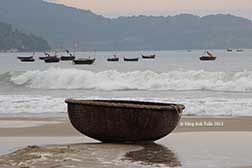
Elle avait un sens d’organisation inné lui permettant de devenir quelques années plus tard le meneur d’une bande de jeunes filles de sa région. Elle arrivait à tenir tête à une bande rivale constituée essentiellement de jeunes garçons et dirigée par le  jeune bouvier  courageux et intelligent  Ðinh Bộ Lĩnh en désorganisant complètement les troupeaux de buffles de ce dernier par le crépitement  des feux de bois sec   et par la  maîtrise parfaite des paniers ronds flottants, ce qui permettait  de faciliter le transport rapide des troupes à travers les marécages et les cours d’eau. Mais Ðinh Bô. Lĩnh avait quand même le dernier mot grâce à son stratagème de recourir à  des embarcations légères en natte de bambou et à  des perches pour percer et immobiliser enfin tous les paniers ronds flottants de Dương Vân Nga. Dès lors, Ðinh Bộ Lĩnh conquit non seulement l’admiration de Dương Vân Nga mais aussi son amour. C’est pourquoi pour évoquer, de nos jours, l’union conjugale et la dette originelle d’un couple, on se réfère souvent à l’expression populaire suivante: « Les embarcations en natte de bambou écrasent les paniers ronds flottants (Thuyền tre đè thuyền thúng)».

Galerie des photos de Hoa Lư 


Grâce à leur association, ils arrivèrent à réunir sous leur bannière, tous les jeunes de Hoa Lư et ne tardèrent pas à éliminer leurs concurrents dans la conquête du pouvoir. Ðinh Bộ Lĩnh devint ainsi le premier roi de la dynastie des Ðinh connu souvent sous le nom de Ðinh Tiên Hoàng. Il était  très autoritaire. Il se servait des grades et des appointements pour acheter la fidélité de ses subordonnés mais aussi de la force et des châtiments cruels et inimaginables pour punir ses adversaires et ceux qui osaient le critiquer. 

Malgré les conseils de Dương Vân Nga, il continuait à rester imperturbable et se faisait de nombreux ennemis même dans sa famille. Au lieu de nommer son fils aîné, Ðinh Liễn, celui qui l’avait aidé depuis tant d’années dans ses combats pour l’unification du pays, il choisit comme prince héritier son plus jeune fils Ðinh Hạng Lang. Cela provoqua  la jalousie de Ðinh Liễn et incita  à ce dernier à assassiner son petit frère. Dương Vân Nga était d’abord témoin de la lutte fratricide de ses enfants, puis de la mort de son mari Ðinh Tiên Hoàng  et de son fils aîné  Đinh Liễn assassinés par un illuminé Ðỗ Thích qui, après un rêve, crut que le royaume devait lui appartenir.  Cet assassin fut pourchassé durant trois jours avant d’être découvert caché sous le toit d’un bâtiment et condamné à mort ensuite par son premier ministre Nguyễn Bặc. Cette hypothèse n’est pas très convaincante aujourd’hui. Certains historiens comme Phan Duy Kha, Lã Duy Lan, Đinh Công Vĩ ou Lê Văn Siêu  trouvent dans l’assassinat de Đinh Tiên Hoàng et de son fils la main de son généralissime Lê Hoàn avec la complicité de Dương Vân Nga. L’ambition de l’assassin est un peu démesurée et excessive dans la mesure où Đổ Thích ne détient  aucune armée comme Lê Hoàn. Il est le seul personnage à assister à cette tuerie car il est  l’eunuque de l’empereur. Dans le récit historique, il n’y a pas d’autres complices. Il y a le doute dans cette logique. Dương Vân Nga ne tardait  pas à voir les douleurs et les souffrances de sa fille, la princesse Phất Kim délaissée par son mari Ngô Nhật Khánh, qui, étant l’un douze seigneurs locaux soumis et issu de la famille de  Ngô Quyền, se réfugia au Champa et demanda à ce pays de monter une expédition  militaire  contre son propre pays, le Viêt-Nam dans le but de reconquérir le pouvoir convoité. 

Pourquoi  Ngô Xuân Khánh demande t-il de l’aide au Champa contre son propre pays? Pourquoi la Chine des Song prend-t-elle le prétexte pour justifier son intervention au Vietnam?

Il faut rappeler que Đinh Tiên Hoàn réussit à unifier le pays à cette époque car il adopta une politique basée essentiellement sur une combinaison de souplesse et d’alliance  vis à vis des forces rebelles issues de la famille du généralissime Ngô Quyền afin d’avoir l’adhésion du peuple vietnamien dans la conquête  et la légalité du pouvoir mis en place. C’est pourquoi  il consentit à donner sa fille  Phất Kim en mariage à Ngô Xuân Khánh et de prendre la mère et la sœur de ce dernier comme épouse pour lui et son fils aîné Đinh Liễn.  C’est avec la mère de Ngô Xuân Khánh qu’il avait un fils cadet  nommé Đinh Hạng Lang. Pour tenter de plaire à Ngô Xuân Khánh et à sa mère, il choisit Đinh Hạng Lang comme prince héritier à la place de  son fils aîné Đinh Liễn. Cette erreur fatale provoqua la colère de Đinh Liễn et incita ce dernier à  commettre le meurtre de  son jeune frère Đinh Hạng Lang.  Au lieu de condamner à mort  Đinh Liễn, Đinh Tiên Hoàng lui accorda  le pardon. Cela enleva à Ngô Xuân Khánh tout espoir d’usurper un jour  le pouvoir à l’image de Wang Mang (Vương Mãng) à l’époque des Han car il pensait à aider son jeune  demi-frère à gouverner le pays  lors la disparition de Đinh Tiên Hoàng.  C’est pourquoi il décida de  demander l’intervention du Champa pour reprendre le trône convoité. Quant à la Chine, elle trouva une occasion inespérée de reconquérir An Nam car jusqu’alors la Chine des Song reconnut seulement la succession légale en la personne de Đinh Liễn en lui accordant le titre « Nam Việt vương (roi du Sud) ».

A cause du jeune âge de son fils (6 ans) Ðinh Toàn,  Dương Vân Nga devait assumer la régence avec Lê Hoàn, généralissime, chef des territoires vietnamiens.  Elle se heurta aussitôt à la résistance armée des partisans de son mari assassiné qui voulaient éliminer à tout prix Lê Hoàn. Elle dut  faire face non seulement à la menace et l’invasion imminente des Song mais aussi à celle du Champa. Elle était placée devant un dilemme difficile pour une femme de surmonter seule lorsqu’elle vit à l’époque confucianiste et  le Vietnam fut libéré à peine d’une dizaine d’années de la domination chinoise. Elle avait besoin d’être protégée ainsi que son fils Đinh Toàn. Elle avait le courage de prendre une décision  douteuse à cette époque et lourde de conséquences néfastes pour la dynastie des Ðinh en cédant le trône de son fils à Lê Hoàn et en s’associant à ce dernier dans la gestion du Ðại Cồ Việt (ancien Viêt-Nam ). Cela permit à Lê Hoàn d’avoir à cette époque  l’adhésion massive d’une grande partie de la population et de restaurer non seulement la confiance mais aussi l’unité de tout un peuple. Il réussit ainsi à mater la rébellion menée par les anciens compagnons de Đinh Tiên Hoàng (Nguyễn Bặc, Đinh Điền), à anéantir les Song sur le fleuve Bach Ðằng, à entamer le mouvement « Nam Tiến (ou la marche vers le Sud) » et à restaurer la paix sur tout le pays. Il faut se placer dans ce contexte politique troublant qu’a connu Dương Vân Nga pour constater que c’est un acte bien réfléchi et courageux de la part d’une femme exceptionnelle, qui, formée jusque là pour être soumise à un carcan confucianiste, ose accepter le déshonneur et le mépris pour s’assurer que notre pays ne repasserait pas sous la domination chinoise et que le Viêt Nam ne se replongerait pas dans le chaos politique.

Son combat parait plus ardu que celui des sœurs Trưng Trắc et Trưng Nhị car il ne s’agit pas non seulement d’une lutte contre les envahisseurs mais aussi contre ses propres intérêts et ses sentiments personnels.

Durant le règne de Lê Ðại Hành (ou Lê Hoàn), elle ne cessa pas de conseiller à ce dernier de pratiquer une politique de magnanimité envers ses adversaires, à supprimer les châtiments cruels établis par Ðinh Tiên Hoàn et à faire appel à des moines talentueux (Khuông Việt Ngô Chấn Lưu, Hồng Hiến, Vạn Hạnh ) dans la gestion du pays. Étant guerrier de sa nature, portant le nom signifiant Grande Expédition (Ðại Hành), il continua à agrandir le Viêt-Nam en menant non seulement une expédition maritime qui détruisit la capitale chame Indrapura dans le centre du Viêt-Nam actuel en l’an 982 et qui tua le roi du Champa Bề Mi Thuế (Paramec Varavarman) mais aussi une politique de pacification de tous azimuts dans les territoires des minorités ethniques. C’est dans l’un de ces derniers que le dernier fils de Dương Văn Nga et Ðinh Tiên Hoàng, Ðinh Toàn mourut assassiné à la place de Lê Hoàn, par les Mán. Cette mort fut suivie par le suicide de sa fille, la princesse Phất Kim et par le décès de maladie de son fils Long Thâu qu’elle avait eu avec Lê Ðại Hành. Elle fut accablée par la disparition successive de son entourage sans broncher. Elle préféra passer les derniers jours de sa vie dans le monastère Am Tiên et y enfouir les douleurs personnelles d’une femme seule face à son destin.

Est-il juste pour une femme patriote comme Dương Vân Nga accablée par le destin, de ne pas avoir le mérite d’être chérie et citée comme les sœurs Trưng Trắc et Trưng Nhị dans l’histoire de notre Vietnam? S’agit-il d’une omission voulue délibérément à cause d’un sacrilège commis par Dương Vân Nga d’épouser et servir deux rois dans la société féodale et confucéenne qu’est la nôtre? On ne peut pas gommer la vérité de l’histoire en particulier ses détails, ce qu’avait dit l’historien chinois Si Ma Qian.

Il est temps de redonner à Dương Vân Nga la justice  et la place qu’elle mérite depuis si longtemps dans notre page d’histoire et faire connaître aux générations futures cette décision courageuse et empreinte de sagesse. Celle-ci, bien qu’elle paraisse douteuse et immorale pour la société confucéenne, est prise à un  moment où la situation politique exige plus que jamais la cohésion et l’unité de tout un peuple face à l’invasion étrangère et aussi un homme de valeur et de talent qu’est notre grand roi Lê Ðại Hành. Sans celui-ci, le mouvement Nam Tiến ne serait jamais engagé.

Bibliographie

Phan Duy Kha, Lã Duy Lan, Đinh Công Vĩ, Nhìn lại lịch sử, Nhà xuất bản Văn hóa thông tin, 2003.
« Việt Nam văn minh sử » – Lê Văn Siêu, Nhà xuất bản VHTT, 2004.
Hoàng Công Khanh: Hoàng hậu hai triều Dương Vân Nga. Nhà xuất bản văn học 12-1996

Being Vietnamese (Tôi là người Vietnam)

French version

Vietnamese version

Being Vietnamese 

According to the archaeological sources we have today, the Vietnamese are descendants of the Thai-Vietnamese group. Some historians keep on seeing in these Vietnamese, not only Mongol immigrants coming from southern China (the Yue) and resettling in the Red River delta in the course of the centuries that preceded our era, but also carriers of the Chinese civilization that swept away on their passage by a demographic push, all the brilliant civilizations known up until then on the Indochinese peninsula (those of Ðồng Sơn, and later of Champa).

Others think that the Vietnameses are the result of fusion between several people in contact in the basin of the Red River among which it is necessary to quote Hmongs, the Chinese, the Thais and Dongsonese. While basing themself on their legend of water melon taking place at the time of Hung kings and testifying to the coming of strangers of a different race who might have brought the seeds to Vietnam by the maritime way ( 3rd century B.C ) and on the archaeological excavations confirming the existence of the Nan Yue kingdom, the Vietnameses are convinced that they resulted from Yue but with an Indonesian background probably via by the intermediary of the Dongsonese because Ðình (communal house) heightened on piles and where resides the most vivid expression of the Vietnamese soul, resembles indisputably the houses prefigured on the bronze drums of Ðồng Sơn. This conviction seems conclusive because one finds also other astonishing resemblances among Vietnameses as well as Indonesian tribes: chews bétel, tattooing and tooth lacquering.

Apart from some Frenchmen like Henri Oger who was able to discover in the Vietnamese society a millennial civilization rich in traditions and customs, one continues to be open to a hallucinating confusion in considering that the Vietnamese civilization is a tracing of the Chinese civilization. One continues to reproach the Vietnameses for not having a civilization so worthy, intense and rich as the ones found in other peoples in Indochina (Khmer and Cham civilizations) through their temples of Angkor and Mỹ Sơn. It is a regrettable ignorance because to known the richness of the Vietnamese civilization, one needs to be more interested in its history, its literature than its art. 

How can one have a fantastic and original art when one is always in a perpetual struggle with a so rude and pitiless nature and when Tonkin is of no exceptional wealth not to include the systematic assimilation by the Chinese during their thousand-year domination. In spite of that, the Vietnamese succeeded in showing several times their techniques, know-how and imagination that allowed them to give to some Vietnamese productions (ceramics in particular) an almost admirable rank among the provincial arts of the Chinese world.

In order to preserve the traditions and to perpetuate their culture, the Vietnamese owe their safety to their sempiternal struggle. Thanks to their religious beliefs and their quasi hostile environment at the beginning, they possess a considerable power of resistance to moral and physical sufferings that became with the passing years one of their main forces for overcoming all external aggressions.

Also thanks to their labor, tenacity, and sacrifices in human lives, they were successful in holding in check the caprices and wrath of the Red River, in keeping the Chinese outside Tonkin on several rounds and in the 17th century going through the barrier which is made up then impenetrable the Anamitic cordillera in their march towards the South. The Chams were the first victims this secular confrontation, followed by the Khmers.

One can reproach the Vietnamese for being pitiless towards the other peoples but it should not be forgotten that the Vietnameses have struggled inexorably since the creation of their nation for their survival and the preservation of their traditions. The Vietnameses have been at a much disadvantage for a long time by the geographical proximity of China. It was to block the passage of Kubilai Khan‘s Mongols in the conquest of Champa that the Vietnamese suffered twice their invasions in 1257 and 1287. It was to find a passage towards the Middle Empire that the French thought to succeed in their first try by the Mekong then by the Red River that allowed a link to Yunnan that Doudard de Lagree‘s mission followed by Francis Garnier’s were sent to Indochina. This permitted the French to be more particularly interested in Tonkin and intervene militarily a few years later. It was also to counter China after the Korean war that the Vietnamese were implicated by force for decades in the East-West confrontation. It was to thwart the China policy in Cambodia that the Vietnamese received a lesson of correction in February 1980 by Chinese troops’ lightning invasion at the frontier of Lạng Sơn for a month.

For those who know the history of Vietnam well, being Vietnamese is not to be so peaceful and so cool even if a Vietnamese wants to be in that way. Kneaded of the brown silt of the Tonkinese delta where he comes from, involving in the perpetual struggle with the acrimony of the Red River, undertaking a  long march toward the South through a succession of intermittent wars, and suffering a long Chinese assimilation and domination, not to include a century of French colonization and a few dozens of years that compelled him to become a target of the East-West confrontation and a victim of the cold war, the Vietnamese never lets himself discouraged by these titanic hardships. 

On the contrary, he becomes more hardened, more perseverant, more tough, more persuaded in his political convictions and more capable of resisting valiantly those affronts. His profound and intimate attachment to his native land and his traditions makes him become uncompromising in the struggle, which makes of him a pitiless and formidable conqueror for some, a legitimate defender of freedom and national independence for others.

Whatever happens, he found himself proud of taking over from his parents to valiantly defend the ancestors’ soil and his people’s survival and to be worthy of the Son of the Dragon and the nephew of the Fairy.  « Dyeing for one’s country » is not strange either to his temperament or his traditions. But it is the lot the most beautiful and worthy of desire that many Vietnamese such as Trần Bình Trọng, Nguyễn Thái Học, Phó Ðức Chính, Nguyễn Trung Trực,Trần Cao Vân, Nguyễn An Ninh etc. have accepted to get with bravery on that land of legends

Being Vietnamese

is being capable of resisting above all any assimilation and foreign ideology and being proud of having in his veins the blood of the Dragon.

Mekong delta river (Đồng Bằng Cửu Long)


Version française

Cửu Long nơi có chín rồng
Có sông nhiều cá có đồng lúa xanh
Thưở xưa là đất tranh giành
Người Nam nhắc đến không đành lìa xa

The Mekong delta is the former territory of the kingdom Founan (Phù Nam). The Mekong delta’s natives are  the mixing of several Vietnamese, Khmer, Cham and Chinese peoples. A fifth of the population lives in this delta. The least hectare, the least cultivable parcel of the delta are exploited by peasants consisted of Vietnamese of Khmer origin, Chinese,Chàm, and Vietnamese. That is why a multitude of religions is found there: Buddhism, Catholicism, Caodaism, Islam, and Hoà Hảo. Irrigated and sprinkled by the Mekong River, this delta produced itself alone one-half of the rice of the country, which allows Vietnam to become the third largest exporter of rice in the world.

The Mekong delta is currently divided into  12 provinces: Long An, Tiền Giang, Bến Tre, Ðồng Tháp, An Giang, Kiên Giang,  Vĩnh Long, Trà Vinh, Hậu Giang, Sóc Trăng, Bạc Liêu  and Cà Mau.

Đồng Bằng Cửu Long

Before becoming an integral part of Vietnam, this delta belonged to the Khmer people. The first Vietnamese colonists appeared only at the beginning of the 16th century on this territory that was until then just a marshy area infested with crocodiles and filled with mangroves. It is only in 17th century that this territory became Vietnamese under the scepter of the lords Nguyễn. It was also the arena of violent clashes between the Tay Son’s armies and the Nguyen’s partisans supported by the mercenaries recruited by Pigneau de Béhaine at the end of 18th century.

One finds in this delta a labyrinth of channels and rivers that add up to 4,000 kilometers, which is equivalent to the length of the Mekong river itself. This river is born out of the snows from Tibet in the province of Qing Hai, flows for more than 4,500 km before reaching the delta and crosses six countries: China, Burma, Thailand, Laos, Kampuchea, and Vietnam. It divides itself at the capital of Kampuchea, Phnom-Penh into two branches, Mekong and Bassac that enter Vietnam separately. In Vietnam, its upper course is divided into four arms at Vĩnh Long to throw itself into the East Sea. (Biển Đông).

The great lake Tonlé Sap, located at the center of Kampuchea is not only a natural fish tank but also a natural regulator of the water flow making it possible to prevent the flood of the delta. In summer, because of monsoon rain, the level of Mekong is higher compared to that of the lake to which it is connected by a channel. The lake fills itself, passing from 3,000 square kilometers in season of low waters to more than 10,000 square kilometers at the end of the monsoon. The lake begins to reverse its water into the delta by the time the rain ends. The Mekong delta does not need big water management works or dikes to protect itself from swelling, which proves to be essential for the delta of the North. Thanks to the irrigation of Mekong, the delta is so fertile. Gardens, fields, rice plantations and orchards are seen everywhere.

These orchards are in fact small plots of land irrigated by channels connected to each other by bamboo bridges often called Cầu Khỉ (Monkey Bridges). When referring to the delta, the term « cò bay thẳng cánh«  is often used. This means the delta is so vast that the cranes can extend their wings as they fly over. 

It is in this delta, at Sadec, that Marguerite Duras’ mother ran the girls’ school. A young Chinese of good family lived there too. He will become the hero in « The Lover « . This novel has made Marguerite Duras a superstar of the French literature overnight allowing her to win the Prix de Goncourt in 1984 and ensure the sale of one million three hundred thousand copies in paperback in Midnight Editions and one million copies in hardcover at France-Loisirs.

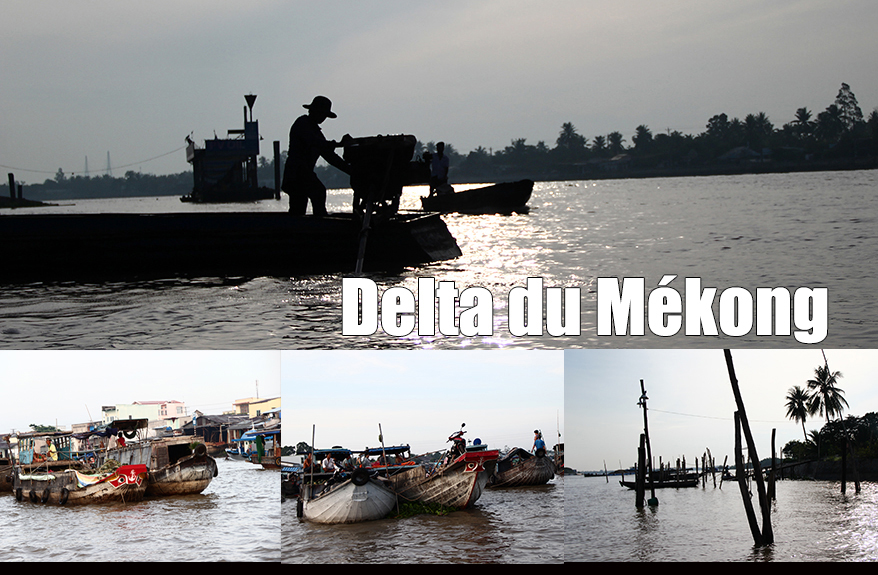
It is also in this delta that are seen every morning, hundreds of sampans converging toward the famous floating market of Phùng Hiêp at the crossroad of seven channels in the direction of Cần Thơ to Sóc Trăng, or toward lesser known markets such as Cái Răng and Phong Ðiền. Also seen are merchants with conic hats trailing their mountains of fruits, legions of ducks, chickens and pigs to the market on their small boats, or other rudimentary means of transportation (bicycles, rickshaws). It is thanks to the orchards of the delta that one finds a great number of fruits: sapotilles, ramboutans, caramboles, corrosoles etc… at the markets of Saigon. It can be said that the delta feeds Saigon and a greater part of Vietnam. In the northeast of the peninsula lies the Plain of Reed ( Ðồng Tháp Mười ) which was a Việt Cộng refuge yesterday and which becomes the Asian Camargue today.

In spite of its lack of archaeological richness, the delta continues to play a vital role economically for Vietnam. It becomes thus the object of greed and confrontation for so many years. It was French Cochinchina at one recent time. Even Hồ Chí Minh, when alive, has agreed to its importance by burying his father at Sadec. There are folks whose names remain anchored in the memory of the Vietnamese people. Phan Thanh Giản, Võ Tánh, Nguyễn Trung Trực, Hùynh Phú Sổ, are among these folks and are issue of this corner.


Without the delta, Vietnam is never free and independent….. 
It is the granary of Vietnam.


Hà Tiên (English version)

French version

Vietnamese version

Facing to the Gulf of Siam, Hà Tiên is located about 8 kilometers from the Cambodian border. It is also the city marking the end of the long walk towards the South started by the Vietnamese. Before being known as Hà Tiên, it initially was called  Phương Thành then Mang Kham in the past. Its economic growth has been due to the massive arrival of the Chinese, supporters of the former Ming dynasty (or Minh Hương in Vietnamese) whose most known was Mac Cửu (Mac King Kiou).

Being hostile to the new dynasty of the Manchus (Qing) and leaving China at the 17 years age, this one,was established with his family in Cambodia in 1671. He was appointed a few years later by the Cambodgian king as provincial chief of Mang Khảm . Thanks to his generosity and business talent, he succeeded to transform Mang Kham into a port city flourishing and animated in the region. For countering against the Siamese’s ambition, he needed the Vietnameses protection, in particular that of the Nguyễn lords to the detriment of the Cambodian ones. They agreed to confer to him the title of commander of troops (tổng binh) in this region. Consequently, Mang Kham belonged to Vietnamese territory and changed name into becoming Hà Tiên. According to the legend, one saw appearing on the river, the ballad of Immortals (Hà river in Vietnamese). It is also the reason for choosing this name. Hà Tiên became a few years later the starting point for the conquest of Cambodian districts: Long Xuyên (Cà Mau today), Kiên Giang (Rạch Giá), Tran Giang (Cần Thơ), Tran Di (Bạc Liêu) with his son Mac Thiên Tứ. This latter was a character out of the ordinary. His fate was tied closely to that of Nguyễn Ánh, future emperor of the Nguyên Dynasty. It became the famous rampart of the Nguyễn against the Tây Sơn. With the years of vicissitudes of Nguyễn Ánh, he had to take refuge in Thailand with all the family and the son of Nguyễn Ánh, Prince Xuân. To sow doubt among the Siamese, the Tây Sơn did not hesitate to falsify documents and make them responsible for a conspiracy against Siamese king Trịnh Tân (Phraya Tak Sin).

Pictures gallery


His entire family was executed with the prince Xuân. To preserve his honor and fidelity, he committed suicide in September 1780. Mac Thiên Tứ was also a greatest poet of his time. He made Hà Tiên famous by his volume of poems entitled « Hà Tiên Thâp vịnh » praising the beauty of its natural and marvellous sites.

This volume continues to grow in the coming years with the addition of 10 poems written by each of 31 poets belonging to the club of the poets « Chiêu Anh Các » created under the initiative of Mac Thiên Tứ. That constituted in all 320 poems to which Nguyễn Cư Trinh added the last ten poems to give a value priceless to this volume that continues to be transmitted to the posterity.

Ones does not forget his famous poem in Six-Eight to tease an young girl in Quảng Nam (Center of Vietnam), disguised as a young student taking part in the evening of the illumination festival. By seeing this young man, he does not hesitate to send the following four verses:

Bên kia sen nở nhiều hoa
Người khen hoa đẹp nõn nà hơn em
Trên bờ em đứng em xem
Mọi người sao bỗng không thèm nhìn hoa

On the other side, the lotus has many flowers
The person who admires them is more prettier than you.
On land, you continue to admire them
Everyone is not be interested to admire your « flower »

Without hesitation, he replied promptly by the four following verses:

Mặt ao sen nở khắp
Trông hoa lẫn bóng người
Trên bờ ai đứng ngắm
Sao chẳng thấy hoa tươi?

The surface of the pond is filled with flowers of lotus
Ones finds here at the same time these flowers and the people’s shadows
On land, each one is admiring them
Why isn’t a beautiful flower found?

img_8129

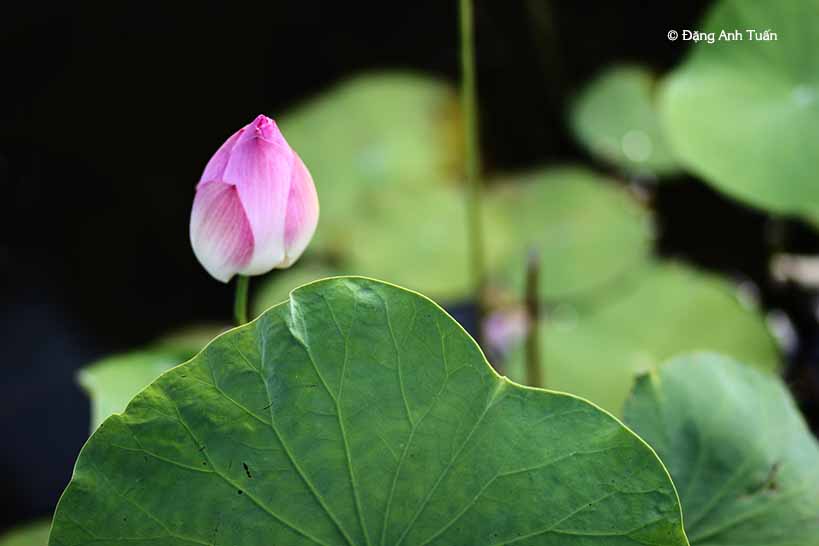
Lotus

This poetic exchange enabled him to have sympathy and to discover that this young student was only one girl disguised as a boy to avoid the pirates, coming from the Center of Vietnam, following her father to make the trade and bearing the name Nguyễn Thi Xuân. Mac Thiên Tứ took her later as wife of second rank . But the latter failed to die because of the jealousy of his wife . She was forced to withdraw herself in a pagodon to finish her last remaining days. Before her death, she left a poem showing her purity and nobility in a nauseaous world filled with turpitudes by comparing her with a lotus flower:

Vươn khỏi bùn nhơ thoát vươn lên
Phỉ lòng trong trắng giữa thiên nhiên
Xuân thu đậm nhạt bao hồng tía
Ðừng sánh thanh cao với đóa sen.

Leaving mud, the lotus flower continues to open out
It is glad to be pure in nature
Its perianth becomes more or less purple in the course of time
But one should not compare the nobility with this flower.

hatien_2

When one evokes Hà Tiên, one does not forget to think of Mac Cửu and his son Mac Thiên Tứ because it is thanks to them that Vietnam succeeded in achieving its long walk towards the South. Nothing is more astonishing than to see the deep attachment and respect which the Vietnamese reserved for Mac Cửu and his family through his temple in Hà Tiên.

Tự Đức mauseolum ( English version)

Version française


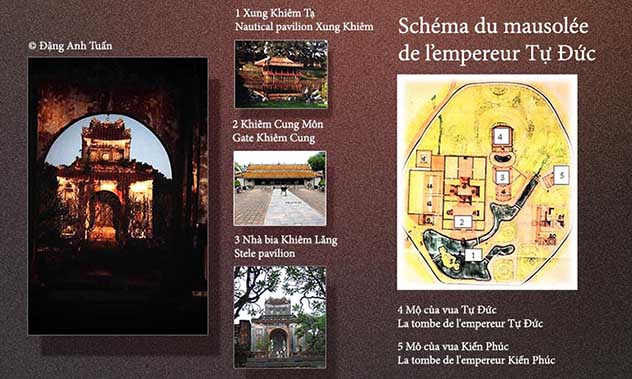
Xung Khiêm Tạ

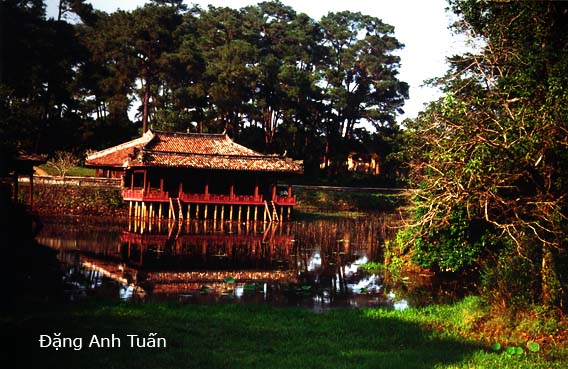
Unlike other royal tombs of the Nguyễn Dynasty, Tự Ðức mausoleum  is primarily a possible place of refuge during his reign. That is why there is not only a palace which was later transformed into a place of worship after his death but also a theater and two small and pretty pavilions in red wood (Du Khiêm and Xung Khiêm) where he liked to sit for the relaxation and the composition of his poems. This mausoleum which was built during 1864-1867 by three thousand soldiers and workers, had approximately fifty buildings surrounded by a stone and brick wall 1500 meters in length in an area of 12 ha.

Khiêm Lăng (謙陵)

Tự Đức was crowned king at a time where he have had to cope not only with development of Western capitalism but also internal strife (war grasshoppers led by  poet Cao Ba Quát, the eviction of his elder brother Hồng Bàng at his enthronement etc..). For taking refuge, he did not hesitate to order the construction of his tomb as a place of relaxation in his lifetime and remains a place of residence for eternal future life.


No Images found.

Pictures gallery

In this mausoleum, the pavilion Hoa Khiêm is the main building where the Emperor worked and the pavilion Lương Khiêm is where he lived and slept. One finds also in the domain of his mausoleum two other tombs: those of his wife, Queen Lê Thiện Anh and one of his three adopted son, King Kiến Phúc.

The architecture of this mausoleum reflects not only the nature of the romantic poet emperor Tư Ðức but also the freedom that is lacking so far in the other mausoleums. Nothing is surprising to see this mausoleum become one of the favorite places choosen by most foreign and Vietnamese tourists.

 
lang_tu_duc


Mausoleum of Minh Mạng emperor (English version)


lang_minh_mang

Version française
Version anglaise
Galerie des photos (Bộ hình ảnh)

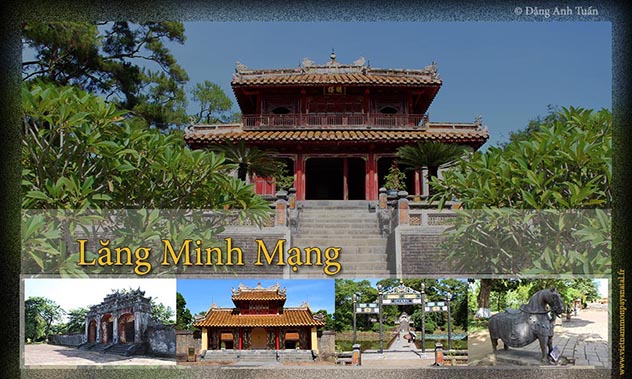
Mỗi lăng mộ vua chúa đều có một cảnh quan và một nét quyến rũ riêng. Lăng Minh Mạng nổi tiếng với sự hài hòa hoàn hảo giữa kiến ​​trúc và môi trường tự nhiên. Lăng bắt đầu được xây dựng dưới triều đại của ngài (1820-1841) và chỉ được hoàn thành vào năm 1843, hai năm sau khi ngài qua đời bởi người kế vị là vua Thiệu Trị.

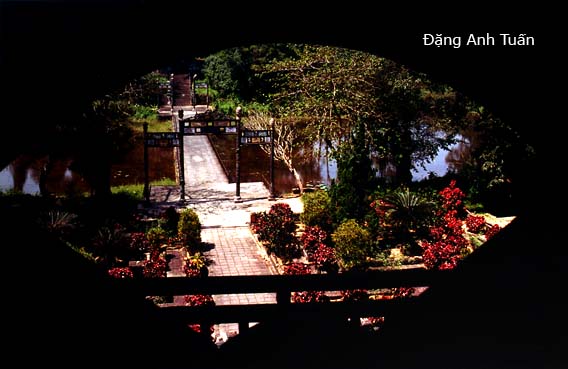
Đền Sùng Ấn, được người kế vị  (vua Thiệu Trị) dâng tặng cho  vua Minh Mạng và hoàng hậu, được hoàn thành thông qua ba tầng lầu và cổng  Hiền Đức. Phía bên kia của ngôi đền này, có ba cây cầu đá bắc qua hồ Thanh Minh (Hồ Minh Trung). Cây cầu trung tâm được gọi là « cầu của Trí tuệ và Chính nghĩa » (Trung Đạo Kiều), được xây bằng đá cẩm thạch và chỉ dành cho hoàng đế sử dụng. Đình Minh Lâu (Đình Ánh Sáng) tượng trưng cho Tam Hoàng: Trời, Người và Đất. (Thiên Nhân Địa).

Từ cây cầu đá bắc qua hồ Tân Nguyệt, người ta có thể đi qua một cánh cổng bằng đồng, một bức tường tròn tượng trưng cho mặt trời và ở giữa hàng rào thiêng liêng này là lăng mộ của hoàng đế, một gò đất được bao quanh bởi những cây thông tự nhiên.

Each royal tomb has a particular landscape and a own charm. That of Minh Mang is known for perfect harmony between architecture and  natural environment. It began to be built during his reign (1820-1841) and was completed only in 1843, two years after his death by his successor Thiệu Trị.

The temple Sung Ấn , dedicated to Minh Mang and his wife by his successor, may be achieved through  three terraces and the gate Hiền Ðức. On the other side of this temple, there are three stone bridges spanning Lake Pure Clarity. (Hồ Minh Trung). The central bridge known as the « bridge of the Intelligence and righteousness » (Trung Ðạo Kiều , built in marble was used only by the emperor. Pavilion Minh Lâu (Pavilion of Light) represent the Triad: Heaven, Human being and the Earth. (Thiên Nhân Ðịa).

From a stone bridge spanning the lake Tân Nguyệt (Lake of the New Moon), one can reach through a gate in bronze, a circular wall symbolizing the sun and in the middle of this sacred fence it is the emperor ‘s tomb, a mound of soil surrounded by natural pines.

Trung đạo kiều

Hiếu Lăng (孝陵)

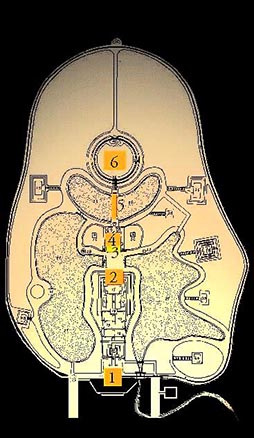
Map of  the Minh Mạng emperor mauseoleum

langminhmang1


  • 1 Ðại Hồng Môn
  •   The red main gate
  • 2 Sùng Ấn Ðiện
  •   The cult of temple
  • 3  Hoàng Trạch Môn
  •    The Hoàng Trạch gate  of pavilion of light
  • 4  Minh Lâu
  •    The pavilion of light
  • Trung Ðạo Kiều
  •     The bridge of the Intelligence and righteousness
  • 6  Mộ của vua Minh Mạng
  •      The mausoleum of Minh Mang emperor


Pictures gallery

[Return DYNASTY]

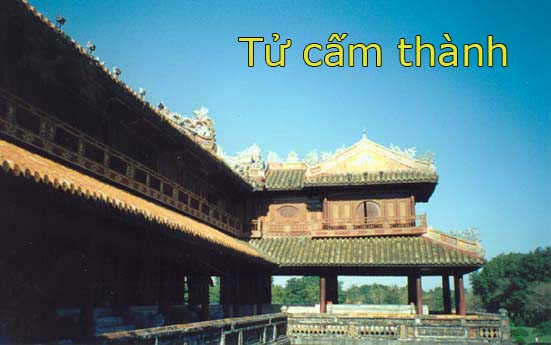
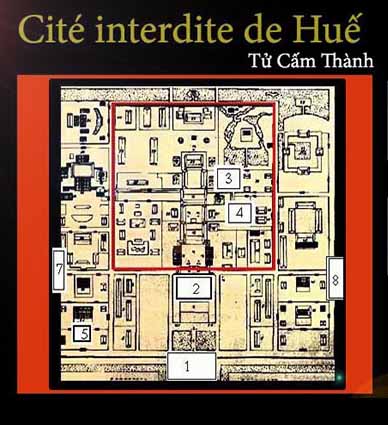
Forbidden city of Huế (Tử Cấm Thành)

Version française

The forbidden city   is encircled by a 4-metre high  brick wall with a classic coating. This wall also is  surrounded by a ditch filled with water. Each door preceded by one or several bridges gives access on each side. The Ngọ Môn Gate is the main entrance and it is reserved for the King.

It is a powerful  masonry  foundation drilled with five passages and surmonted by an elegant wooden structure with two levels, the Belvedere of five Phoenixes (Lầu Ngủ Phụng). In the East and West of the Citadel, one finds respectively  the gates  of humanity and virtue which are highly decorated and pierced each by  three passages. The gate of humanity has been completely  restored in 1977.

World cultural heritage of Vietnam

Once we have gone precisely through the Ngo Môn Gate, we see appearing on the main axis the sumptuous palace of Supreme Harmony or  Throne palace that can be reached through the Esplanade of the Great Salvation (Sân Ðại Triều Nghi). It is in this Palace that the emperor, seated in a prominent symbolic position, received the salvation of all dignitaries of the empire  hierarchically aligned  on the esplanade at the time of great ceremonies. It is also the only building kept after so many years of war. Behind this palace, it is the imperial residence.

© Đặng Anh Tuấn

schema_noithanh1


  • 1 Noon gate (Ngọ Môn)
  • 2 Throne palace (Điện Thái Hoà)
  • 3 Archives pavilion  ( Thái Bình Ngự Lâm Thư Lâu)
  • 4  Royal theatre ( Duyệt Thị Đường)
  • 5 Pavilion of  Splendor (Hiến Lâm Các)
  • 7 Gate of virtue (Hiền Đức Môn)
  • 8 Gate of humanity (Hiển Nhơn Môn)

Pictures gallery


Huế city (English version)


titre_hue 

Version française

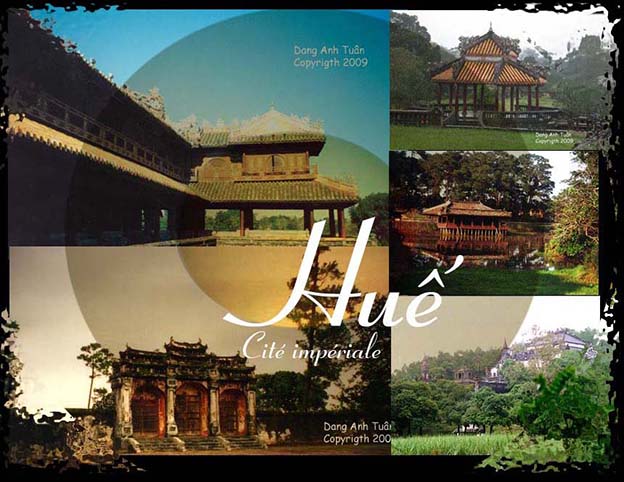
For the majority of Vietnamese, Huế always remains the intellectual and artistic foyer of Vietnam. It always looks like a sleeping princess. It knows how to keep its charm and grace that it has had since the Champa occupation with its citadel, the Perfume river and above all the famous Thiên Mụ ( or The Celeste Lady ) pagoda . The cruel beauty of its women wearing the white tunic ( áo dài ) accompanied by a conical hat (or nón bài thơ) , the fineness of its poetry, the union of its parks and pagodas with varnished tiles, the culture of its madarinal court make it more charming, noble, and majestuous.

One remembers Hue through the follwing two famous popular verses:

Gió đưa cành trúc là đà
Tiếng chuông Thiên  Mụ, canh gà Thọ-Xương

While the wind smootly moves the bamboo branches 
One hears the Thiên Mụ bell, and the Thọ-Xương rooster’s song

Before becoming the imperial capital of the Nguyễn, it was first the strong place of Chinese Jenan’s command of emperorQin ShiHuangDi in 3rd century B.C., then it was gradually integrated in the kingdoms of Lin Yi and Champa since 284 of our era. Then it was the object of greed of the Chinese and the Vietnamese when the latter  gained their independence. It was partially controlled by the Vietnamese in 1306. This control was only wholly when Hue became a dowry from king Chế Mẫn of Champa to the Vietnamese in exchange of his marriage with princess Huyền Trân.

Cố Đô Huế

It was the imperial capital of a reunified Vietnam from 1802 to 1945 and knew no less than 13 emperors of the Nguyễn dynasty, of whom the founder was Nguyễn Ánh known under the name of  » Gia Long ». On the left bank of the Perfume river, in the middle of the city center, three surroundding walls circumscribe the imperial city and protect the forbidden purple city whose orientation was set in relationship with four cardinal points by geomancers of the court. As an admirer of the Ming dynasty, emperor  Gia Long did not hesitate to give Huế a striking resemblance of the Forbidden City of Peking.

Pictures gallery

The royal tombs were built  at the exit of the city, along the river. Hue was the target of several conquests, French first in 1885, Japanese next in 1945 and then French in 1946. It was the witness of deadly combats during the Mậu Thân Tết offensive in 1968. Many times, it was also the actor of nationalist resistance in colonial time and during the last five decades.

Despite its aristocratic appearance, Huế knows how to conserve in difficult time the history of Vietnam that is to say the Vietnamese soul.

Mandarin road (English version)

Version française

Mandarin road

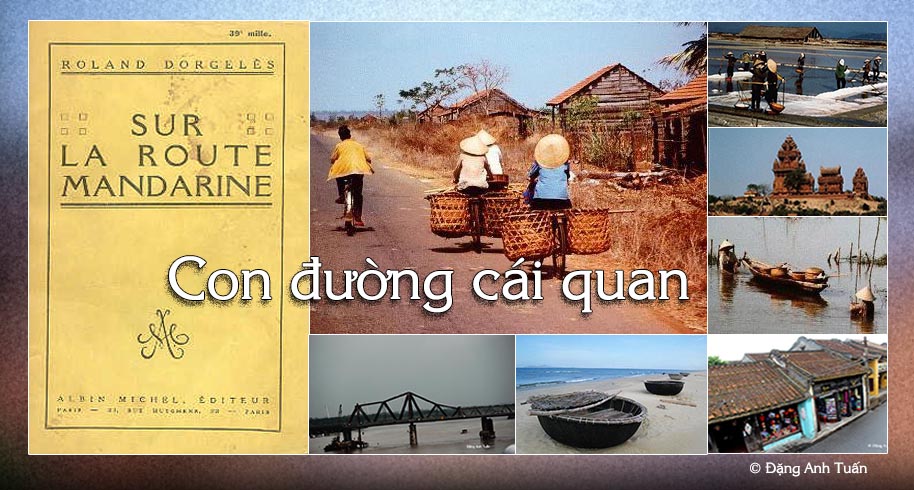
If a tourist has a chance to travel by car from Saigon to Hanoï, he has got to take the « mandarin route » (or route No.1 ) as it is the only one that exists on the road network in Vietnam. We owe the name of « mandarin route » to the French who named it in 19th century because it is certain that it was the road taken by mandarins and high functionaries to travel rapidly and easily between the capital and their provinces. This route is born in the swamps of  Mekong delta infested with mosquitoes. It begins at Cà Mau and ends at the post of Ðồng Ðằng on the Sino-Vietnamese border in the region close to Lạng Sơn. It is often said that this route is the country’s backbone that looks like a sea horse. This route is 1730km long, linking several cities, in particular Saigòn, Phan Thiết, Nha Trang, Qui Nhơn, Hội An, Ðà Nẵng, Huế, Ðồng Hới, Hà Tịnh, Thanh Hóa and Hanoï.

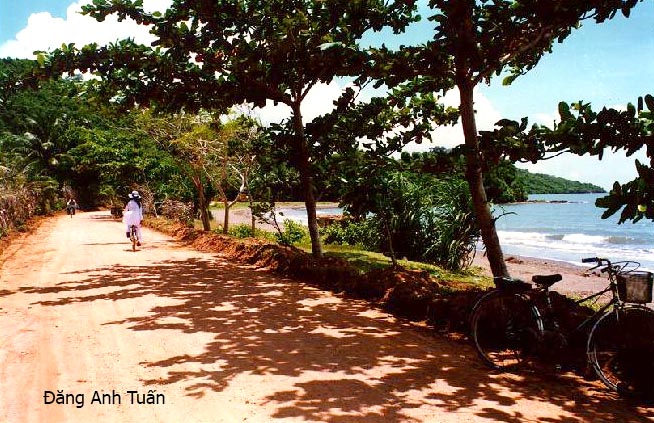
It is generally covered with asphalt, but often on some sections, it was badly paved and weighed down by a multitude of trucks, bicycles, pedestrians, buffaloes, cows, and troops of ducks walking on. The bitumen often breaks, causing the grandmother perching side-saddle on the baggage carrier and girls leaning on too big bikes, to jump. Those are the familiar scenes often encountered on this road.

One also finds harvested rice and manioc left to dry on asphalt heated by the sun in the North. On this route, one can see on a side of Sa Huynh, the salt fields or mounds of salt recovered from the foliage and set up alongside of the road. The further one goes north, the more one sees peaceful landscapes of flooded rice paddies.

One often crosses children leading herds of buffaloes daubed with mud. At the edge of Hoa Lư, the ancient capital of Viet Nam, silhouettes of rocky hills emerge from the bluish mist.

Despite its bad condition especially in North Vietnam, it continues to be the axle road vital to Vietnam. For those who like to know the history of Vietnam, the history of the long march towards the South, it is suggested that this route be borrowed because one would find not only the vestiges of a lost civilization in the whirlwind of history, the kingdom of Champa, but also the marks and traces that Vietnamese settlers, for the past decades, succeeded in carving during their passage.

Pictures gallery

Quốc lộ số 1

To know this route is to know not only the immense rice paddies, rubber tree plantations, beautiful sightseeing points on the coast of Vietnam, very beautiful panoramic views from one delta to another, superbs passes (in particular the Hải Vân pass) and wooded hills, almost desolate waste lands, but also an intensity of a Vietnamese agricultural life through hamlets located alongside of the route.

To know this route is to also know the Hiền Lương bridge. It was built by the French in 1950, destroyed by an American airplane in 1967, 178 meters long. It certainly evokes an episode when Viet Nam was divided and when one-half of the bridge was painted red and the other half yellow. It is located at the 17th parallel, in a zone where one of its sections, known during the Indochina war as « the Road without Joy » as French troops encountered fierce resistence there.

To know this route is to know the Hải Vân pass. It is located at 28km north of Ðà Nẫng ( or Tourane ) and only 495m high. As its name indicates, it is always in the clouds because it is close to the sea, which allows it to receive important masses of humid air. In the old days, it marked the frontier between the North and the South and protected the Chams from the Vietnamese appetite for land.

Composer Phạm Duy has evoked this route through his work entitled « Con Ðường Cái Quan« .


Route mandarine (Version française)


Version française

English version

Con đường cái Quan

Nếu du khách có cơ hội đi từ Sài Gòn đến Hà Nội bằng ô tô thì bắt buộc phải đi « con đường cái quan » (hoặc Quốc Lộ số 1) vì đây là tuyến đường duy nhất ở Việt Nam. Tên này có tên là « con đường của các quan » mà người Pháp gọi nó như vậy  bởi vì đây là tuyến đường trước đó được các quan lại và các quan chức cao cấp dùng để đi nhanh chóng dễ dàng giữa thủ đô và các tỉnh. Con đường này được sinh ra ở vùng đầm lầy của đồng bằng sông Cửu Long, đầy dãy các muỗi truyền nhiễm. Nó được bắt đầu ở  Cà Mau và kết thúc tại đồn Đồng Đăng ở biên giới Trung-Việt gần vùng Lạng Sơn. Nó thường được xem là cột sống của đất nước trông nhìn như hồi hải mã (cá ngựa). Con đường này dài đến 1.730 cây số, nối liền một số thành phố, đặc biệt là Cà Mau, Bạc Liêu, Cần Thơ, Vĩnh Long, Sài Gòn (hay thành phố Hồ Chí Minh), Phan Thiết, Nha Trang, Quy Nhơn, Hội An, Đà Nẵng, Huế, Đồng Hới, Hà Tĩnh, Thanh Hóa, Ninh Bình, Hà Nội, Lạng Sơn.

Con đường nầy thường được trán nhựa nhưng trải nhựa rất kém thường bị tắc nghẽn trên vài đoạn đường với một số xe vận tải, xe đạp, các người đi bộ,  các đàn trâu, bò và các đàn vịt chạy lon ton. Nhựa đường hay thường bị nổ vỡ, làm cho bà cụ giật mình gác hai chân trên giá hành lý và những đứa trẻ ngồi trên những chiếc xe đạp quá lớn. Đây là những cảnh tượng bất thường hay gặp trên tuyến đường này.

Ngoài ra còn có những mớ lúa hoặc sắn thu thập còn đang phơi khô trên các đường nhựa nung dưới ánh mặt trời ở miền Bắc. Trên con đường này, chúng ta  có thể nhìn thấy ở phía Sa Huỳnh, các đầm lầy muối hoặc những ụ muối phủ đầy một lớp lá và  được dựng theo dọc đường. Càng đi xa về phía bắc, chúng ta càng có được những quan cảnh  yên bình của những cánh đồng lúa ngập nước. Chúng ta thường bắt gặp những đứa trẻ dẫn đầu đàn trâu dính bùn. Ở ngoại ô Hoa Lư, cố đô của Việt Nam, các hình bóng của những ngọn đồi núi đá vôi xuất hiện trong sương mù.Mặc dù tình trạng đường xá rất tồi tệ nhất là ở miền Bắc Việt Nam, nó vẫn tiếp tục là trục đường quan trọng của Việt Nam. Đối với những người thích tìm hiểu về lịch sử Việt Nam, lịch sữ của cuộc Nam tiến, chúng ta  cần nên đi theo con đường này bởi vì chúng ta không chỉ thấy  các di tích của một nền văn minh bị biến mất trong cơn lốc lịch sử, vương quốc Champa mà  còn cả dấu ấn và dấu vết của  những người định cư Việt Nam qua nhiều thập kỷ mà họ  cố gắng áp đặt trong suốt thời gian họ đi qua. Biết con đường này là không chỉ biết đến những cánh đồng lúa mênh mông, những đồn điền cao su, những góc nhìn tuyệt đẹp dọc theo bờ biển Việt Nam, những toàn cảnh tuyệt vời từ đồng bằng này sang đồng bằng khác, các đèo vô cùng ngoạn mục  đặc biệt là đèo Hải Vân, những ngọn đồi rừng rậm, những cánh đồng gần như hoang vắng nhưng cũng có  một sức mạnh của đời sống nông nghiệp Việt Nam thông qua các ấp dọc theo con đường.

 Biết con đường này là cũng biết đến cầu Hiền Lương. Cầu này do người Pháp xây dựng vào năm 1950, bị không quân Mỹ phá hủy năm 1967, dài được 178 mét, chắc chắn gợi lại một thời mà đất nước còn bị chia đôi với một nửa cầu được sơn màu đỏ và nửa còn lại màu vàng. Nó nằm ở trên vĩ tuyến 17, trong một khu vực có một đoạn đường  được biết đến trong thời kỳ chiến tranh Đông Dương dưới cái tên « Đường không vui » vì quân đội Pháp gặp sự kháng cự quyết liệt ở nơi nầy. Biết tuyến đường này là biết đèo Hải Vân. Nó nằm 28  cây số về phía bắc của Đà Nẵng (hoặc Tourane) và chỉ có 496 thước so với mực nước biển. Cũng như tên gọi của nó, nó luôn ở trong mây vì nó rất gần biển, khiến nó  lúc nào cũng nhận được một khối lượng lớn không khí ẩm thấp. Thưở xưa, nó đánh dấu biên giới giữa Bắc và Nam mà còn bảo vệ người Chămpa trước dục vọng xâm chiếm lãnh thổ của người dân Việt. Cố nhạc sỹ Phạm Duy có gợi  đến con đường này qua tác phẩm được mang tên « Con Đường Cái Quan ». 

Route mandarine

Si le touriste a l’occasion de voyager de Saïgon à Hanoï en voiture, il est obligé de prendre la « route mandarine » (ou la route No 1) car c’est la seule qui existe sur le réseau routier du Vietnam. Ce nom « route mandarine », on le doit aux Français qui l’ont appelé car c’était la route prise autrefois par les mandarins et les hauts fonctionnaires pour voyager rapidement et aisément entre la capitale et leurs provinces. Cette route est née dans les marécages du delta du Mékong,  infestés de moustiques. Elle commence à Cà Mau et se termine au poste de Ðồng Ðan de la frontière sino-vietnamienne dans la région proche de Lạng Sơn.  On dit souvent qu’elle est la colonne vertébrale du pays au « look » d’hippocampe. Cette route est longue de 1730 km, reliant plusieurs villes, en particulier Cà Mau, Bạc Liêu, Cần Thơ, Vĩnh Long, Saïgon, Phan Thiết, Nha Trang, Qui Nhơn, Hội An, Ðà Nẵng, Huế, Ðồng Hới, Hà Tịnh, Thanh Hóa et Hanoï.

Elle est recouverte d’une manière générale d’asphalte, mais mal bitumée et encombrée souvent sur certains tronçons d’une multitude de camions, de vélos, de piétons, de buffles et de vaches et de troupeaux de canards qui trottinent. Le bitume explose souvent, faisant tressauter la mamie grimpée en amazone sur un porte-bagages et les mômes juchés sur des vélos trop grands. Ce sont des scènes insolites rencontrées fréquemment sur cette route.

On trouve aussi des récoltes de riz ou de manioc mises à sécher sur l’asphalte chauffée de soleil dans le Nord. Sur cette route, on peut voir du côté de Sa Huynh, des marais salants ou des monticules de sel recouverts de feuillage et dressés le long de la chaussée.

Plus on s’avance dans le Nord, plus on rencontre des paysages paisibles de rizières inondées. On croise souvent des enfants menant des troupeaux de buffles laqués de boue. Aux abords de Hoa Lư, l’ancienne capitale du Vietnam, les silhouettes des collines rocheuses émergent d’une brume bleutée.

Malgré son mauvais état surtout dans le Nord du Vietnam, elle continue à être l’axe routier vital du Vietnam. Pour ceux qui aiment connaître l’histoire du Vietnam, l’histoire de sa longue marche vers le Sud, il est conseillé d’emprunter cette route car on retrouve non seulement les vestiges d’une civilisation disparue dans le tourbillon de l’histoire, le royaume du Champa mais aussi les marques et les traces que les colons vietnamiens, depuis des décennies, arrivèrent à imposer lors de leur passage.

Galerie des photos

Connaître cette route c’est connaître non seulement des rizières immenses, des plantations d’hévéas, de beaux points de vue sur la côte du Vietnam, de très beaux panoramas d’un delta à un autre, de cols superbes (en particulier le col des Nuages ) et de collines boisées, des landes presque désolées mais aussi une intensité de vie agricole vietnamienne à travers les hameaux qui longent la route.

Connaître cette route c’est connaître aussi le pont Hiền Lương. Celui-ci construit par les Français en 1950, détruit par l’aviation américaine en 1967, long de 178m, évoque certainement une époque où le Vietnam était divisé et où la moitié du pont était peinte en rouge et l’autre moitié en jaune. Il est situé au 17ème parallèle, dans une zone où est situé un tronçon, connu lors de la guerre d’Indochine sous le nom « Rue sans Joie » car les troupes françaises y rencontrèrent de farouches résistances.       

Quốc lộ số 1

Connaître cette route c’est connaître le col des Nuages. Celui-ci est situé à 28 km au Nord de Ðà Nang (ou Tourane) et seulement 496 m d’altitude. Comme son nom l’indique, il est toujours dans les nuages car il est proche de la mer, ce qui lui permet de recevoir d’importantes masses d’air humide. Autrefois, il marquait la frontière entre le Nord et le Sud et protégeait les Chams des appétits territoriaux vietnamiens.

Le compositeur Phạm Duy a évoqué cette route à travers son œuvre intitulé Con Ðường Cái Quan.

Mandarin Road

If the tourist has the opportunity to travel from Saigon to Hanoi by car, they must take the « Mandarin Road » (or Route No. 1) because it is the only one that exists on Vietnam’s road network. This name « Mandarin Road » comes from the French who called it that because it was the route formerly taken by mandarins and high officials to travel quickly and easily between the capital and their provinces. This road was born in the mosquito-infested swamps of the Mekong Delta. It starts in Cà Mau and ends at the Đồng Đan post on the Sino-Vietnamese border near the Lạng Sơn region. It is often said to be the backbone of the country with the « look » of a seahorse. This road is 1,730 km long, connecting several cities, particularly Cà Mau, Bạc Liêu, Cần Thơ, Vĩnh Long, Saigon, Phan Thiết, Nha Trang, Qui Nhơn, Hội An, Đà Nẵng, Huế, Đồng Hới, Hà Tịnh, Thanh Hóa, and Hanoi.

It is generally covered with asphalt, but poorly paved and often cluttered on certain sections with a multitude of trucks, bicycles, pedestrians, buffaloes, cows, and herds of ducks trotting along. The asphalt often cracks, causing the grandmother riding sidesaddle on a luggage rack and the kids perched on oversized bicycles to bounce. These are unusual scenes frequently encountered on this road.

You can also find rice or cassava harvests laid out to dry on the sun-heated asphalt in the North. On this road, near Sa Huynh, you can see salt marshes or mounds of salt covered with foliage and lined up along the roadside.

The further north you go, the more you encounter peaceful landscapes of flooded rice fields. You often come across children leading herds of buffaloes coated in mud. Near Hoa Lư, the ancient capital of Vietnam, the silhouettes of rocky hills emerge from a bluish mist.

Despite its poor condition, especially in northern Vietnam, it continues to be the vital road axis of Vietnam. For those who like to learn about the history of Vietnam, the story of its long march to the South, it is recommended to take this route because you not only find the remains of a civilization lost in the whirlwind of history, the Champa kingdom, but also the marks and traces that Vietnamese settlers, over decades, managed to impose during their passage.

Knowing this road means knowing not only vast rice fields, rubber plantations, beautiful viewpoints on the coast of Vietnam, stunning panoramas from one delta to another, magnificent mountain passes (especially the Cloud Pass), and wooded hills, almost desolate moorlands but also an intensity of Vietnamese agricultural life through the hamlets that line the road.

Knowing this road also means knowing the Hiền Lương bridge. This bridge, built by the French in 1950, destroyed by American aviation in 1967, and 178 meters long, certainly evokes a time when Vietnam was divided and half of the bridge was painted red and the other half yellow. It is located on the 17th parallel, in an area where a section, known during the Indochina War as the « Street Without Joy, » was situated because French troops encountered fierce resistance there.

Knowing this road is knowing the Cloud Pass. It is located 28 km north of Đà Nang (or Tourane) and only 496 meters above sea level. As its name suggests, it is always in the clouds because it is close to the sea, which allows it to receive significant masses of moist air. In the past, it marked the border between the North and the South and protected the Chams from Vietnamese territorial ambitions.

The composer Phạm Duy mentioned this road through his work titled Con Đường Cái Quan.