Âm Dương trong đời sống của người dân Việt (Yin et Yang dans la vie des Vietnamiens): Phần 2


Version francaise

Version anglaise

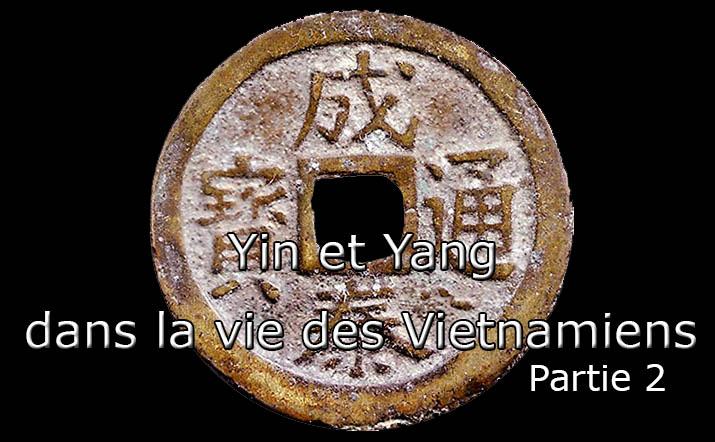
Trong lý thuyết Âm Dương,  có nhắc đến vuông tròn là muốn nói đến sự hoàn thiện và kết hợp mỹ mãn.  Từ một hình vuông ta có thể biến hình có tám cạnh rồi tiếp tục đến 16 cạnh, cứ nhơn 2 cho đến cuối cùng tạo thành một hình tròn, một hình không còn cạnh nửa. Đây là một hình hoàn hảo  (perfectissima forma). Bởi vậy người ta thường nói « Mẹ tròn, con vuông » để chúc mừng mẹ con được dồi dào sức khoẻ lúc sinh đẻ.   Cái thành ngữ nầy được truyền lại bởi  các tiền nhân để chúng ta  lưu ý đến tính cách  sáng tạo của vũ trụ. Các hình tròn và vuông là hai hình dáng  đựợc thấy  không những qua bánh chưng bánh Tết hay là bánh Su Sê mà còn ở trên các đồng tiền đồng của Việtnam.

Sapèque
Hình dáng của các đồng tiền xưa nầy rất liên quan đến thiên văn học của người Việt cổ: sự tròn trĩnh của các đồng tiền gợi  lại Trời  tròn như cái bát úp cùng Đất qua lỗ vuông  ở giữa. Thông thường thì có một tỷ lệ phải tôn trọng ờ các đồng tiền xưa nầy: 70 phần trăm cho hình tròn và 30 phân trăm cho hình vuông. Hai dáng hình vuông tròn nầy cũng được thấy qua cây gậy tre mà trưởng nam dùng đi theo sau quan tài  trong lúc đưa  đám tang của cha. Còn nếu người qua đời là mẹ thì người con phải đi trong tư thế lùi trước  nhìn quan tài. Đây là nghi thức  « Cha đưa mẹ đón » cần phải tôn trọng trong phong tục đám tang của người dân Việt. Gậy tre  biểu tượng tính ngay thẵng và khả năng chịu đựng của cha.  Nếu là mẹ thì phải thế với cây vong để nói lên sự gian dị, dịu dàng và khéo léo.  Cây gậy phải có đầu tròn và chân hình vuông để biểu tượng Trời Đất còn thân gậy thì dành cho con cái với hàm ý là cần sự che chở của Trời Đất, giáo dục của cha mẹ và tương trợ của anh em trong xã hội. Để bày tỏ sự kính trọng đối với  người qua đời, quan khách phải lạy trước quan tài với con số chẳn (2 hoặc 4) vì người qua đời sẻ về âm phủ (Âm).  Theo nhà nghiên cứu Việt Trần Ngọc Thêm, mọi thứ liên quan chặt chẽ hoặc xa xôi đến cái chết đều phải sử dụng số chẳn (Yin=yên bình=cái chết).

Thưở xưa thường có phong tuc để trong miệng người chết một lát vàng (Dương)  để bao quản thể xác và để  tránh thối rữa.

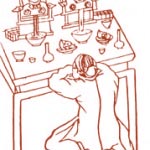
Bàn thờ tổ tiên

Trong lúc hấp hối , người chết được  các người thân nhân cho một biệt danh (hay tên thụy) mà chỉ họ và người chết biết thôi  vì đến ngày giỗ, người chết sẻ được gọi về nhà để tham dự  cúng kiến và tránh các cô hồn. Bởi vậy người ta thường nói tên cúng cơm  để nhắc nhở  mỗi người có biệt danh. Cũng phải  chọn con số chẳn với  các bó bông dành cho tang lễ. Nhưng có một trường hợp ngoài lệ khi người chết là cha mẹ hay Phật. Thông thường trước bàn thờ  của các người nầy thường cắm ba cây nhan trong bình  hay là quỳ gối đầu đụng tới đất lạy 3 lần (số lẻ) vì lúc nào cũng xem họ là những người thân thuộc còn sống. Để bày tỏ sự kính trọng với các người cao tuổi còn sống, người ta chỉ bái 1 hay 3 lần mà thôi. Ngược lại trong lễ đám cưới, cô dâu trước khi về nhà chồng phải qùy bái cha mẹ ruột có công  sinh thành và nuôi dưởng mình nhưng chỉ lạy với số chẳn vì từ nay cô dâu kể như chết và thuộc về nhà chồng. 

Còn có một phong tục cho đêm tân hôn. Chọn một phụ nữ có nhiều con, đức hạnh vẹn toàn, được gia đình chú rể  mời đến để trực tiếp dọn giường  với đôi chiếu: 1 úp 1 mở  theo mô hình kết hợp của Âm Dương. Thưở xưa, cô dâu chú rể  hay trao đổi với nhau bằng  một nhúm đất lấy  một nhúm muối. Họ muốn thực hiện lời hứa và gắn bó với nhau suốt đời bằng cách lấy Trời Đất làm nhân chứng. Có một thành ngữ  cũng cùng một ý nghĩa: Gừng cay muối mặn để nhắc nhở vợ chồng trẻ chớ đừng bỏ nhau vì vị mặn của muối hay vị cay của gừng lại rất đậm đà và rất khó quên cũng như tình nghĩa vợ chồng rất sâu đậm và thắm thiết dù có bao thăng trầm trong cuộc sống.

Để nói đến đức hạnh, người dân Việt thường hay nói 

Ba vuông sánh với bảy tròn
Đời cha vinh hiễn đời con sang giàu

Khi nói đến ba vuông, làm ta nhớ đến  hình dáng của bánh chưng thường thấy nhân dịp Tết.  Với  những đường được vẻ  thẳng bằng  với thước vuông góc, hình dáng nầy tượng trưng lòng trung thành và tính cương trực   trong mối quan hệ của Tam Tòng: Tại gia tòng phu, xuất giá tòng phu, phu tữ tòng tữ. Còn 7 vòng tròn thì làm ta nhớ  sự tròn trĩnh của bánh giầy. Vòng tròn của bánh tựa như một dãy dấu chấm được cách xa đều đặn với tâm điểm nơi  mà có trái tim. Đây là tiêu biểu của một tâm hồn  rất thăng bằng mà không có  đam mê nào lay chuyển được. Chính ở đây mới thấy sự hoàn thiện của thất tình:  hỹ, nộ, ái, lạc, sĩ, ố, dục Ai mà có được một cuộc sống đạo đức nếu có được lòng trung thành và tính cương trực với mọi người và giữ đựợc mãi khoảng cách một cách cân bằng qua sự bộc lộ tình cảm của mình?

Từ  ngữ  « vuông tròn » thường được  nói đến trong một số châm ngôn dân gian của người Viêt:

Lạy trời cho đặng vuông tròn 
Trăm năm cho trọn lòng son với chàng!

Đấy mà xử ngãi (nghĩa) vuông tròn
Ngàn năm ly biệt vẫn còn đợi trông

hoặc là trong các đọan thơ  411-412 và  1331-1332 của Kim Vân Kiều:

Nghĩ mình phận mỏng cánh chuồn 
Khuôn xanh biết có vuông tròn mà haỵ

hay 

Trăm năm tính cuộc vuông tròn, 
Phải dò cho đến ngọn nguồn lạch sông

Lưỡng tính Âm Dương biểu hiện dưới nhiều hình thức ở Vietnam.  Ở Trung Hoa thì có một vị thần (ông tơ)  lo chuyện hôn nhân   nhưng ở Vietnam thì có đôi thần minh, môt ông một bà thường gọi Ông Tơ Bà Nguyêt. Cũng như ở chùa chiền thì có Phật Ông Phật Bà trên bàn thờ Phật. Người dân Việt  rất tin  rằng mỗi người được gắn bó từ lúc đầu với các con số.  Trước khi sinh, bào thai cần phải đợi 9 tháng 10 ngày.  Để nói ai có được  mệnh tốt thì người ta nói người đó có số đỏ. Còn ngược lại số đen dành cho ai có một định mệnh xấu. [ Con số Âm Dương của người Việt]

Âm Dương trong đời sống của người dân Việt (Yin et Yang dans la vie des Vietnamiens): Phần 1


yinyangviet

Version française

Version anglaise

 Triết lý  Âm Dương nó được gắn bó mật thiết hằng ngày với đời sống của người dân Việt và được ứng dụng trong nhiều lĩnh vực. Thuộc về Âm tất cả những gì có tính chất lỏng, ẩm, lạnh, tĩnh, tối, nội hay có cốt yếu nữ tính như  mặt trời, mặt trăng, đêm, nước hay mùa đông. Còn ngược lại thuộc về dương tất cả gì hiện ra tính chất cứng, khô,  nóng, cử động, sáng, ngoại hay có cốt yếu nam tính như  đất, thái dương, lửa, mùa hè vân vân…. Tính âm dương nầy được nhận ra trong  việt ngữ  qua hai phụ từ « con » và « cái ». Tựa như các mạo từ  xác định « le » và « la » trong Pháp ngữ, các  phụ từ « con » và « cái » được dùng để chỉ định trong vài trường hợp nào đó tính  đực và  cái. Nhưng dưa trên các từ chỉ đồ vật có hàm nghĩa tĩnh (không cử động) hay động (cử động) thì  các phụ từ « cái » và « con » nầy dùng theo, được  thuộc về loại ngữ nghĩa tương ứng tức là có dạng tĩnh hay động như các đồ vật. Phụ từ « cái » dùng khi đồ vật mang  tính cách  không cử động (tĩnh) ví dụ như  cái nhà, cái hang, cái nồi vân vân etc… Ngược lại khi đồ vật có tính cách cử động hay liên hệ đến cử động thì phải dùng  phụ từ « con » như  con mắt, con tim, con trăng, con ngươi, con dao, con đường, con hẻm vân vân  … Con mắt nhúc nhích  không ngừng cũng như con tim  đập rộn ràng. Cũng như con trăng hay con ngư cử động. Người Việt cổ thường xem  dao như con vật thiêng.  Nó được nuôi dưỡng với máu, rượu và gạo. Dù đồ vật được gọi cùng một danh từ nhưng có thể có ý nghĩa khác tùy theo  sử dụng  từ phụ « con » hay « cái » . Ví dụ sau đây thể hiện tĩnh hay động của chiếc thuyền  tùy theo sử  dụng tự phụ « cái » hay « con ». Con thuyền trôi theo dòng nước. Có nghĩa là có dùng mô tơ hay có ai chèo nên con thuyền được tiến lên. Ngược lại khi nói cái thuyền trôi theo dòng nước thì không có ai vận hành chiếc thuyền chi cả. Đây là làn sóng nước nó làm thuyền di chuyển một mình. Câu nầy muốn ghi nhận cái trạng thái  tĩnh của chiếc thuyền. Thuyền đậu thì gọi là « cái thuyền » còn thuyền chuyển động trên sông thì thường gọi là « con thuyền ». Lưỡng tính âm dương còn thể hiện rõ  ràng  qua các dụng cụ thông dùng chẳng hạn như  dao: dao cái (dao to) hay dao đực (dao rựa). 

Sự nhận xét nầy được nhà nghiên cứu và hán học  Pháp Alain Thote ghi nhận trong bài có tựa đề là « Origine et premiers développements de l’épée en Chine » (Nguồn gốc và phát triển đầu tiên của các thanh kiếm  ở Trung Hoa). Các gươm của người Việt cổ rất được nổi tiếng như  dao trủy thủ Ngư Trường  (Yuchang)(ou l’épée des entrailles de poisson)  mà Chuyên Chư  (Zhuan Zhu)  dùng để giết Ngô Vương Liêu,  vào thời Xuân Thu vân vân… Qua các thanh kiếm, có thể biết giống đực hay cái. Từ ngữ  « đực rựa » thường được nghe trong các cuộc đàm thoại để ám chỉ các người đàn ông vì họ thường mang mạ tấu hay dao rựa khi ra khỏi nhà  từ sự nhận xét của các người dân Việt. Lưỡng tính âm dương thường được thấy từ lâu ở Việtnam trong nghề trồng lúa: chồng cuốc vợ cấy. Tượng trưng giống đực (Dương),  lưỡi cày xuyên qua đất (Âm)  còn khi  lúc cấy, vợ  (Âm) truyền lại khả năng sinh sản cho các cây lúa (Dương). Để nói lên sự hoàn hảo gắn bó vợ chồng (Âm Dương), người ta thường nói: thuận vợ thuận chồng tát biển Đông cũng cạn.

Người Việt cổ rất gắn bó không những với đất mà luôn cả môi trường nơi họ sinh sống vì nhờ các hiện tượng thiên nhiên (mưa, nắng, gió, mây vân vân…) họ  có được có mùa mang tốt đẹp hay không.   Việc trồng lúa trên nương rẫy còn tùy thuộc sự may rủi với thời tiết. Bởi vậy người Việt cổ họ cần sống hài hoà với thiên nhiên.  Họ thường xem họ là nối gạch giữa Trời và Đất.  Từ khái niệm nầy ta thường hay nói: Thiên Thời, Địa Lợi, Nhân Hòa. Chính ba hệ số nầy dành chiến thắng cho dân tộc Việt với các nhà chiến lựơc  Trần Hưng Đạo, Nguyễn Trãi hay  Quang Trung trong công cuốc chống ngọai xâm.  Người dân Việt xem trọng các hệ số nầy trong cách suy nghĩ và cuộc sống hằng ngày.  Đối với họ, cái khái niệm nầy  nó có một ảnh hưởng không chối cãi được trên con người: định mệnh thường được áp đặt theo ý trời và còn phụ thuộc theo ngày sinh tháng đẻ.   Con người  có thể hấp thụ được  linh khí tốt hay xấu (qi) mà trời đất tạo ra với môi trường trong và ngoài nơi mà con người ở. Nghệ thuật làm điều hòa linh khí môi trường sẻ làm giảm đi sự buồn phiền và mang lại sự thoả mái và sức khoẻ cho con người.   Một mãnh  đất bằng phẳng không có nhấp nhô và không có đồi  là một mãnh đất thiếu linh khí và không có sự sống.   Người Việt ám chỉ núi đồi  với  Rồng và Hổ.  Các nhà thường có Rồng xanh ở phiá tây  và hổ trắng ở  phiá đông. Con Rồng thông thường hùng tráng hơn con Hổ (Hữu Thanh Long, Tã Bạch Hổ)  có nghĩa là núi (Rồng) phải cao hơn đồi (Hổ). Sự hài hoà được hoàn mỹ nếu điạ điểm nào được  dựa vào núi và hai bên có các dãy đồi che đở chống gió không làm phân tán đi các chi mà còn dẫn đến một cái hồ hay con sông, nơi có nước và thức ăn cho sự sống  và cũng là nơi  tụ các chi.

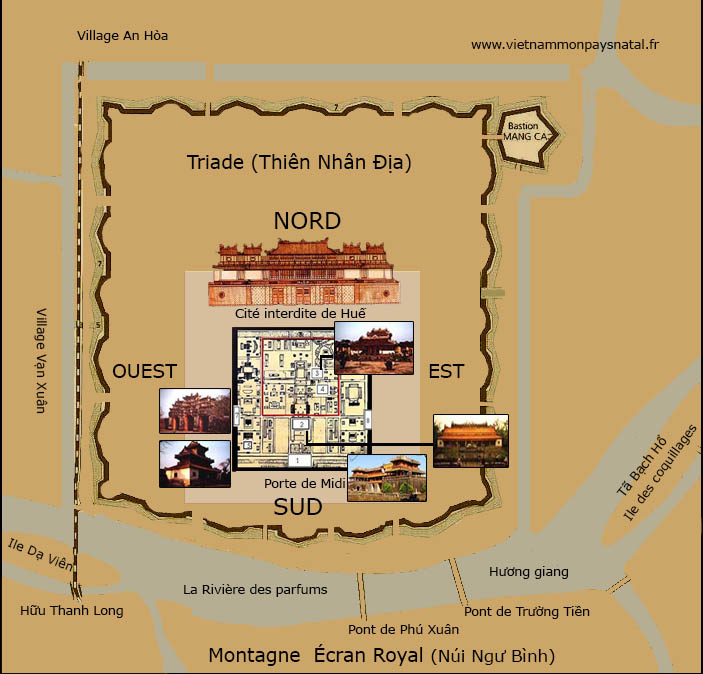
Cái mô hình nầy có thể thấy được qua kinh thành (hay phương thành)  Huế. Kinh thành quay mặt về phiá nam vì Kinh dịch đã viết: « Thánh nhân nam  diện nhi thính thiên hạ thí (vua quay mặt về phía nam để cai trị thiên hạ) ».  Với   tính cách quân sự phòng vệ, vòng thành của kinh thành nầy   được dựng  lên dựa theo kiểu thành lũy của  Vauban  và  bao gồm  một hoàng thành (hay Đại Nội) ở mặt phiá nam.  Đại Nội  nầy   cũng bị hạn chế bởi một vòng đai thứ nhì  hình chữ nhật  622×606 thước mà trong đó  lại có cung thành hay là  Tử Cấm Thành,  nơi ăn ở sinh hoạt của vua và hoàng gia với một vòng đai cuối cùng cũng gần như vuông (330×324  thước).  Sự chồng chéo ba vòng đai nầy  thể hiện  khái niệm Tam Tài (Thiên-Nhân-Địa).    Phía nam của kinh thành nơi có Ngọ Môn, cổng chính của hoàng thành, được dọc theo khúc cong của sông Hương. Cũng như rồng ngoạ về phiá tây, sông nầy  bò  từ nam lên Bắc  len lỏi giữa những gò đồi  rồi quay một cách đột ngột 90 độ về phiá đông. Sông Hương  gặp  hai  cù lao Dã Viên và Cổn Hến trước khi đổ ra biển, tạo ra cái « Chi Huyền Thủy »  rất phù hợp với  sơ đồ được  nói ở trên trong thế  Hữu Thanh Long, Tã Bạch Hổ  mà được  Dã Viên và Cồn Hến tượng trưng, ngang mặt với núi Ngự Bình  cao 150 thước làm một bức bình phong thiên nhiên theo lý thuyết phong thủy.

Con người có thể tác động và thay đổi cuộc sống của mình.  Với những hành động nhân từ đối với kẻ khác, con người có thể tìm thấy được  hạnh phúc và  cải thiện được phần nào  cái nghiệp của mình. Ngày xưa ở Việtnam có một lễ quan trọng mà do triều đình nhà Nguyễn  tổ chức hàng năm. Đó là lễ tế Nam Giao.   Chính vua có quyền cúng tế Trời Đất và cha mẹ mình ở đàn Nam Giao vì vua là con của Trời. Đàn nầy  được xây dựng vào năm 1806 cách kinh thành Huế về phía nam. Đàn Nam Giao có ba tầng, tượng trưng cho thuyết tam tài: Thiên, Đia, Nhân. Mỗi tầng mang một hình dạng và màu sắc riêng tư.  Được chay tịnh lòng mình trước đó, vua lên đàn tế và cầu khẩn cho mưa thuận gió hòa, quốc thái dân an, tạ ơn trời đất.  Vua là  người  trung gian duy nhất giữa Trời và Đất.  Quan niệm Tam Tài cũng thưòng được nhắc đến trong các truyện cổ tích Việt Nam.  

Trong truyện Sơn Tinh Thủy Tinh, Mỵ Nương được cầu hôn bởi hai vị thần hay là trong truyện Táo Quân, người phụ nữ bị phân vân giữa mối tình xưa và hiện tại.  Trong truyện trầu cau, quan niệm  tam tài dựa trên   vợ, chồng và em.  Một khi qua đời họ  trở thành dây  trầu, cây cau và đá vôi thì bộ ba nầy biểu thị  cho tiết hạnh, ngay thẳng và trong trắng.  Truyện trầu cau  phản ảnh  khái niệm cân đối hài hoà  mà được thấy trong lý thuyết Âm Dương.   Để làm miếng trầu, người ta thường phết vôi trên lá trầu. Rồi thêm vào đó vỏ của  cây chay  Artocarpus tonkinese màu vàng cam cùng vài  lát cau thái mỏng. Rồi bỏ vào miệng và nhai chậm rãi đến khi chỉ còn bã trầu mới nhổ ra sau đó.  Có đến 5 vị  trong miếng trầu:   ngọt với cau, cay với lá trầu, đắng với rễ vỏ của cây chay,  mặn với vôi và chua với nước bọt.  Hình ảnh  dây leo của cây trầu nhô ra từ đất mà được tiêu biểu  qua  đá vôi  và quấn chặt thân cây cau dong dỏng cao thẳng   nầy khiến ta nhận thấy được tính chất trung dung  giữa Âm và Dương  trong sự  hài hoà hoàn hảo.  Miếng trầu là đầu câu chuyện thuờng được nghe nói trong ngạn  ngữ của người Việt.  Sự chấp nhận ăn miếng trầu  mang nhiều ý nghĩa thường dẫn đến một lời cam kết mà không ai có thể nghĩ khước từ về sau.  Nếu đây là sự trao đổi giữa trai và gái thì nó còn  có nghĩa là một đề nghị thành hôn. Trong truyền thống của người Việt, miếng trầu là biểu tượng cho hạnh phúc vợ chồng. Vì vậy nó không thể thiếu trong lễ cưới.

Trong nền văn hóa trồng lúa nước, còn có nhiều bộ ba cũng quan trọng như Thiên Địa Nhân. Đây là trường hợp của Thủy, Hỏa, Thổ hay là Mộc, Kim, Thổ.  Con người cần có đất để trồng lúa, nước và phân bón  để làm cho đất có  màu mỡ. Cũng như con người cũng cần có cây cỏ để sinh sống và kim loại để làm dụng cụ  canh tác.  Nhưng trong trường hợp nào đi nửa, con người cũng cần có đất vì đất là yếu tố chung của Thủy, Hỏa, Thổ hay là Mộc, Kim, Thổ.  Chính vì vậy đất (hay Thổ) chiếm môt vị trí trung ương và then chốt  trong việc quản lý bốn phương.  Trong đời sống nông nghiệp, yếu tố quan trọng sau đất là nước. Bởi vậy người nông dân  thường  nói:  Nhất nước nhì phân. Như nước thuộc  về « Âm », người ta gán cho phương Bắc vì phương nầy tương thích với trời  lạnh (mùa đông). Ngược lại trong bộ ba  (Thủy, Hỏa, Thổ), yếu tố lửa đựợc  nối kết với phương nam vì nơi nầy trời nóng và nhiều ánh sáng. Còn yếu tố Mộc thường liên quan đến cây cối mà thường được nẩy nở ở mùa xuân. Bởi vậy Mộc được  chiếm ở phương tây với sư tăng trưởng của Duơng. Còn lại là yếu tố Kim với tinh chất dễ uốn nắn và đa dạng nên nó  được ở phương đông mà thường được liên nối với mùa thu. 

Người Việt thường nhận thấy ở lý thuyết Âm Dương một khái niệm luân phiên hơn là một khái niệm đối nghịch.  Hai thành tố Âm và Dương tạo thành một thực thể dẩn đến việc thiết lập một cân bằng thích hợp và hài hoà.  Đối với họ, thế giới  biểu thị  qua tất cả những qui luật tuần hoàn hơp thành bởi sự liên hợp của hai thể hiện luân phiên và bổ sung. Không có gì hoàn toàn âm hoặc hoàn toàn dương, trong âm có dương và trong dương có âmHai thanh tố Âm và Dương được xem như là bánh xe lăn.  Vận động đến chốn, các thanh tố bắt đầu làm lại. Một khi giới hạn được đạt thì các thành tố nầy trở lại một lần nửa.

Có một lô châm ngôn dân gian có quan hệ nhân quả  biểu lộ cụ thể sự chuyển hóa của Âm Dương.  Bởi vậy thường nghe nói:  Trong rũi có may, Trong họa có phúc,   Sướng lắm khổ nhiềuTrèo cao ngã đau Yêu nhau nhiều cắn nhau đau, Của đi thay người.  Hai yếu tố Phúc và Họa  thông thường thay đổi đi ngược chiều với nhau.  Nhờ có lưỡng tính Âm Dương nầy  mà người dân Việt thường kiếm một cân bằng thích hợp trong cuộc sống hằng ngày.  Họ tìm cách có được sự  hoà thuận hoàn hảo với mọi người và thiên nhiên  luôn cả sau khi qua đời. Đây là sự việc mà người ta khám phá được ở mộ cổ Lạc Trương (Thanh Hóa) ba thế kỷ trước Công Nguyên với các đồ mai táng bằng gỗ (Dương) được chôn cất phương bắc (Âm) và các đồ bằng đất nung (Âm) thì ở phương Nam (Dương). Khái niệm cân bằng cũng được thấy rõ ở chùa chiền với Ông Thiện Ông ÁcChính nhờ triết lý cân bằng nầy mà người dân Việt có khả năng để  thích  ứng với bất cứ tình huống hay thảm họa nào đi nửa. Chính cũng nhờ nguyên tắc cân bằng nầy mà các nhà lãnh đạo Việt đã tiếp tục giữ được trong quá khứ khi có chung đụng với ngoại bang. Để tránh sĩ nhục cho quân  Mông Cỗ bị thất bại hai lần ở Việtnam, tướng Trần Hưng Đạo đề nghị cống nạp cho Hốt Tất Liệt để có được  hoà bình bền lâu. Sau khi thắng quân Minh, Nguyễn Trãi  không gần ngại thả Vuơng Thông trở về Trung Hoa với  13000 quân lính  và đề nghị môt hiệp ước cống hiến 3 năm một lần hai tượng bằng kim loại mịn để đền bồi thường hai tướng nhà Minh Liễu Thăng Lương Minh bị chết lúc giao chiến.

Cũng như vua Quang Trung rất khiêm tốn và chấp nhận gữi sang Trung Hoa một sứ giã để giải  hoà với vua Càn Long sau khi tiêu diệt quân Thanh ở Hànội vào năm 1788 trong một thời gian ngắn  ngủi (6 ngày). Cũng không quên nhắc đến thái độ khéo léo của các nhà lãnh đạo cộng sản trên phương diện ngoại giao trong các cuộc xung đột với Pháp Quốc và Mỹ Quốc.  Hội nghị Genève (1954) và Paris (1972)  biểu hiện một lần nửa giải pháp   cân bằng hay phương pháp trung dung mà người dân Việt tìm thấy trong lý thuyết Âm Dương. Ở Vietnam, tất cả đồ vật nào có hình dáng tròn thuộc về Dương còn những đồ vật nào có hình vuông thuộc vế Âm. Đây là một khái niệm đã có từ thuở xa xôi mà người ta nghĩ rằng  mặt trời lại  tròn và mặt đất thì  vuông nhờ người dân Việt cổ  san bằng làm cho vuông vức  mới làm rẫy và cất nhà được. Chính với quan niệm « thiên viên địa phương (trời tròn đất vuông) » nầy   mà nguời Việt cổ có thói quen chia mãnh đất ra chín lô với mô hình dựa trên chữ  tĩnh 井 (giếng nước) viết bằng chữ Hán. Lô ở trung tâm dùng để xây cái giếng còn 8 lô  xung quanh còn lại để xây cất nhà. Đây là đơn vi gia cư đâu tiên  trong xã hội nông nghiệp.  Câu châm ngôn dân gian sau đây : trời xanh như tán lọng tròn ; đất kia chằn chặn như bàn cờ vuông phản chiếu quá đúng cái tín ngưỡng nầy. Tổ tiên chúng ta vẫn biết trái đất tròn trong tìm thức nên khi nói  « trời tròn đất vuông » là muốn phân biệt giữa thể (cái gì tồn tại tự chính nó) như trời   và dụng (cái gì được  dùng khi được san bằng) như đất. 

[ Âm Dương trong đời sống dân Việt: phần 2]


Tài liệu tham khảo

–Alain Thote: Origine et premiers développements de l’épée en Chine.
–Cung Ðình Thanh: Trống đồng Ðồng Sơn : Sự tranh luận về chủ quyền trống đồng giữa học giã Việt và Hoa.Tập San Tư Tưởng Tháng 3 năm 2002 số 18. 
-Brigitte Baptandier : En guise d’introduction. Chine et anthropologie. Ateliers 24 (2001). Journée d’étude de l’APRAS sur les ethnologies régionales à Paris en 1993.
-Thái văn Kiểm: Việt Nam quang hoa . Nhà sách Xuân Thu. USA
-Nguyễn Từ Thức : Tãn Mạn về Âm Dương, chẳn lẻ (www.anviettoancau.net) 
-Trần Ngọc Thêm: Tìm về bản sắc văn hóa Việt-Nam. NXB : Tp Hồ Chí Minh Tp HCM 2001. 
-Nguyễn Xuân Quang: Bản sắc văn hóa việt qua ngôn ngữ việt (www.dunglac.org)
-Georges Condominas : La guérilla viêt. Trait culturel majeur et pérenne de l’espace social vietnamien, L’Homme 2002/4, N° 164, p. 17-36. 
-Louis Bezacier: Sur la datation d’une représentation primitive de la charrue. (BEFO, année 1967, volume 53, pages 551-556) …..

Nghệ thuật ẩm thực của người Việt

amthucvn

French version
English version

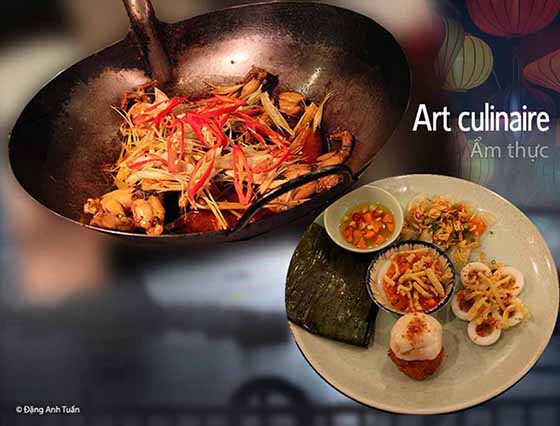
Người dân Việt rất chú trọng nhiều về nghệ thuật ẩm thực  nhất là các món ăn hằng ngày. Việc ăn uống nó trở thành một điều tất yếu  quan trọng trong cuộc sống và văn hóa của người dân Việt. Cũng không có gì phải ngạc nhiên khi một số từ họ thường dùng đều có chữ ăn dù biết rằng các từ nầy không có liên quan mật thiết  đến chữ ăn. Trong các  từ nầy, thường thấy chăng hạn: ăn nói, ăn mặc, ăn ở, ăn tiêu, ăn ngủ, ăn gian, ăn hối lộ, ăn hiếp vân vân … Chúng ta thường nghe : Trời đánh tránh bữa ăn để nói lên ông Trời có giận dỗi đi nữa cũng phải tránh quấy rầy buổi ăn của người dân Việt.

Các thức ăn của họ được chế biến một cách kỹ lưỡng theo thuyết Âm Dương Ngũ Hành, một cơ bản chủ yếu của nền văn minh Văn Lang. Âm Dương là biểu tượng của hai thực thể vừa đối lập và bổ sung của vạn vật trong vũ trụ. Thuộc về Âm tất cả những gì có tính chất  lỏng, lạnh, ẩm, thụ động, nội hay bản chất nữ tính như trời, mặt trăng, tối, nước và mùa đông. Ngược lại thuộc về Dương tất cả những gì có tính cứng, nóng, khô, năng động, ngoại, hay bản chất nam tính như đất, mặt trời, sáng, lửa và mùa hè. Con người thường được xem là dấu gạch nối giữa hai thực thể đó hay nói đúng là giữa  Trời (Âm) và Đất (Dương). Sự hài hoà có thể có được nhờ sự thăng bằng mà con người mang lại cho môi trường, vũ trụ và trong  cơ thể của con người. Qua  cách thức chế biến tỉ mỉ chu đáo và cá biệt trong mối quan hệ biện chứng của thuyết âm dương,  các món ăn của người Việt  còn biểu lộ  được sự tôn trọng truyền thống văn hóa đã có cả nghìn năm của một nước nông nghiệp và một nền văn minh rực rỡ với kỹ thuật trồng lúa nước. Chính vỉ thế mà gạo không thể thiếu trong một buổi cơm của người  Việt. Chính gạo là phần chủ yếu của các món ăn của người  Việt:   bánh cuốn, bánh xèo, phở, bún , bánh tráng, bánh chưng vân vân. Gạo có thể chỉ xay bỏ vỏ trấu (gạo lứt), dài, tròn, ghiền, thơm hay nếp (không có gluten) vân vân…  Còn hơn là một thức ăn, gạo là bằng chứng xác thực của người dân Việt thuộc về đại tộc Bách Việt và cũng là dấu ấn còn lại của một nền văn minh không bị hũy diệt   dưới sự thống trị lâu dài của người Hoa.

Âm Dương trong nghệ thuật ẩm thực của người Việt

Cách thức ăn uống của người dân Việt cũng không ngoài lệ với  việc tìm kiếm cái trung dung mà được ca tụng trong lý thuyết Âm Dương. « Ngồi ăn chung » thường đòi hỏi phải có sự  kính  nể và trình độ văn hóa  trong nghệ thuật ăn uống bỡi vì có sự tương thuộc hiển nhiên giữa những người  thực khách  trong việc chia sẻ thức ăn và không gian. Chính vì vậy mà người ta thường nói:  Ăn trông nồi , ngồi trông hướng. Không những thận trọng để ý nồi cơm mà còn phải chú ý đến hướng khi ngồi vào ăn. Đó là  câu châm ngôn mà cha mẹ người Việt thường nói với các con khi lúc còn nhỏ. Phải biết xử sự cho đúng với hai chữ trung dung khi được mời ăn. Không được ăn mau quá vì sẻ bị xem như  vô lễ mà cũng không dược ăn chặm quá vỉ để người khác phải chờ đợi. Cũng không thể ăn hết các thức ăn hay cơm trong nồi vì thể hiện quá đỗi  sự tham ăn. Ngược lại ăn ít  quá thì sẻ bị xem như là người thiếu lịch sự nhất là có thể làm phật ý chủ nhà. Cái thái độ thận trọng nầy thường được nhắc nhở qua câu tục ngữ nầy: Ăn hết bị đòn, ăn còn mất vợ. Chính vì vậy người dân Việt phải cố kiên trì   tìm kiếm  cho mình với sự khéo léo cái cân bằng nầy của lý thuyết Âm Dương  trong bữa cơm.  Tính cách đa dạng trong  các  thức ăn mà người  Việt  biến chế,  cũng  thể hiên rỏ ràng sự dồi dào phong phú của  các nguyên liệu.  Trong bữa cơm, thường có rất nhiều thức ăn, màu sắc  và hương vị  chung quanh bát cơm ý là chưa kể đến sự biểu lộ của ngũ giác quan mà  đuợc cảm nhận như sau:  

Khứu giác : từ các mùi thơm ngào ngạt  của các thức ăn.

Thị giác: tìm thấy qua các  màu sắc của các nguyên liệu trong việc chế biến thức ăn.

Vị giác: cảm nhận được các vị truyền thống: mặn, ngọt, chua, cay và đắng trong các thức ăn.

Thính giác: thu nhận được tiếng động khi uống trà hay ăn canh.

Xúc giác:   cảm giác được khi dùng các đôi đũa.

Với  vài món ăn như gà nướng, gà luộc, gỏi cuốn , việc dùng tay rất được thích hợp. Phần đông người Tây Phương thường quen nghỉ rằng  văn hóa dùng đũa thuộc về người Hoa. Tuy nhiên nó là sản phẩm của cái nôi  văn hóa trồng lúa được  tọa lạc ở Đông Nam Á. Chính nhà sử gia Trung Hoa , ông Đàm Gia Kiện công nhận  trong quyển sách tựa đề : Lịch sử văn hóa Trung Hoa (1993, trang 769).

Nhớ lại trước  thời kỳ Tần Thủy Hoàng thống nhất Trung Hoa, người Hoa vẫn còn ăn bốc thức ăn với tay. Đây là một truyền thống thường thấy ở các dân tộc sống trồng kê, mạch và ăn bánh bao thịt. Họ chỉ biết dùng đũa khi họ mở mang bờ cõi trong cuộc nam tiến. Sự khẳng định nầy nó được xác nhận lại qua các cuộc khám phá gần đây. 

Các đôi đũa nầy chỉ làm ra được từ những vùng có nhiều tre.  Chỉ có vùng phía nam Trung Quốc và Đông Nam Á.  Đũa là công cụ thô sơ được chế biến theo hình giống mỏ chim để có thế bắt lấy dễ dàng hột gạo hay cá và tránh việc bẩn tay với các món ăn có nước (súp, cháo, nước  mắm vân vân …). Người ta tìm thấy ở nơi người dân Việt một triết lý giản dị và hóm hỉnh trong việc dùng đôi đũa.  Đôi đũa thường được xem như cặp vợ chồng:
Vợ chồng như đôi đũa có đôi
Bây giờ chồng thấp vợ cao như đôi đũa lệch so sao cho bằng.

Dưới thời nhà Lê, việc bẻ gãy đôi đũa đồng nghĩa với hai chữ ly dị.  Thà có một bà vợ ngây ngô hơn là có một cặp đũa cong vòng.  Chính vì vậy ta thường nghe qua tục ngữ nầy như sau : Vợ dại không hại bằng đũa vênh

Ngoài tính cách nhanh nhẹn và linh hoạt trong việc dùng đũa, người ta không thể quên tính cách tập thể mà thuờng gán cho đũa. Thông thuờng người ta ám chỉ bó đũa để nhắc đến sự đoàn kết. Tục ngữ : Vơ đũa cả nắm phản ánh cái ý niệm nầy khi người ta muốn chỉ trích người nào hay gia đình của họ từ một cuộc tranh cãi hay thảo luận nào không cần biết tính cá biệt.

Trong cách thức ăn  uống, người dân  Việt vẫn coi trọng sự thăng bằng  của lý thuyết Âm Dương. Một bữa cơm ngon  phải thích hợp với  các tiêu chuẩn mà thường phụ thuộc lẫn nhau:

Nó phải phù hợp với khí hậu. Nó không thể nói là ngon dù có những món ăn thú vị.
Nó phải ở nơi nào và có một bầu không khí thỏa mái nếu không nó cũng không ngon.
Nó phải chia sẻ với các người bạn thân thiết nếu không chữ ngon cũng không thể gán cho nó.

Từ các tiêu chuẫn  được nêu ở trên đây, một bữa cơm ngon  không nhất thiết phải có thức ăn nhiều.  Đôi khi tìm thấy ít ỏi thức ăn trong bữa cơm ngon. Đó là bữa cơm của người nghèo mà sự kết hợp khéo léo các rau thơm khiến   giữ được một vai trò  quan trọng trong bữa cơm ngon. Việc tìm kiếm sự thăng bằng thích đáng trong lý thuyết âm dương thường được được nêu lên biểu lộ hiển nhiên trong các món ăn, cơ thể con người và giữa người và môi trường. Trong nghệ thuật ẩm thực, 3 điểm quan trọng sau đây được nêu lên:

1°) Sự thăng bằng Âm Dương trong các món ăn.

Dựa trên cách phận loại mà người Việt  thiết lập theo ngũ hành của Âm Dương thì mới nhận thấy được người Việt   rất chú ý  đến chuyện phân biệt các món ăn: hàn  (Nước), nhiệt (Hỏa), ôn (Mộc), lương (kim) và bình (Thổ). Họ  lưu ý đến  chuyện  bù đấp tương tác và kết hợp của các nguyên liệu và  gia vị trong việc chế biến  các thức ăn. Có một bản liệt kê  rau cỏ và gia vị   được ghi nhận lại   nhờ các công thức nấu ăn của người  Việt.  Được  dùng để trị các chứng bệnh phong hàn (ho, cúm vân vân ..),  gừng  (thuộc về Dương)   thường thấy được xử dụng nhiều  ở trong các món ăn có xu hướng mang tính chất hàn (lạnh): bí đao, cải bắp,  rau cải hay cá. Ớt (thuộc về Dương) có hương vị cay  thường được dùng ở các món ăn  có xu hướng mang tính chất lạnh hay ôn (hải sản, cá hấp vân vân…). Nguời ta có thói quen ăn trứng gà hay vịt lộn   (thuộc về Âm) nên thường  ăn với rau răm (thuộc về Dương). Cũng như dưa hấu (thuộc về Âm)  thường ăn lúc nào cũng có muối (thuộc về Dương).  Nước chắm  đặc biệt của người dân Việt vẫn là nước mắm. Trong cách pha nước mắm, thường thấy có 5 hương vị được xếp theo ngũ hành của Âm Dương: mặn với nước mắm, đắng với vỏ chanh, chua với nước chanh hay  giấm,  cay với ớt ghiền nát hay thái nhỏ và ngọt với đường bột.  Năm mùi  vị (mặn, đắng, chua, cay, ngọt) nầy  phối hợp và  được tìm thấy trong nước mắm tương ứng hoàn toàn với 5 hành chỉ định trong lý thuyết Âm Dương (Thủy, Hỏa, Mộc, Kim, Thổ).

2°) Sự thăng bằng Âm Dương  trong cơ thể con người.

Các thức ăn  người Việt   dùng thường được xem như là một vị thuốc hữu hiệu với chủ đích để bổ khuyết  loạn năng gây ra bỡi sự thiếu thăng bằng Âm Dương trong cơ thể con người. Đối với người Việt,  kịch bản mà thường thấy ở trong tạo hóa hay tái diễn lại trong cơ thể của họ.  Khi một bộ phận có « âm » nhiều quá thì con người sẻ cảm nhận có sự suy giảm chuyển hóa sinh lý ngay (cảm giác lạnh,  nhỉp tim chậm lại, tiêu hóa khó khăn vân vân…). Còn ngược lại nếu có « dương » nhiều quá thì sẻ có sự tăng nhanh  chuyển  hóa sinh lý (cảm giác nhiệt nhiều,  nhịp tim đập mau, sự tăng động thất thường thể xác hay trí tuệ vân vân…). Bỡi vậy cần có lại  sự thăng bằng  Âm Dương để duy trì cuộc sống và đảm bảo sức khỏe. Để khôi phục lại sự thăng bằng nầy, một người bệnh có nhiều « âm » quá phải cần dùng các thức ăn có tính chất dương. Ngược lại với một người bệnh có « dương » nhiều thì phải chửa bệnh với các thức ăn mang nhiều tính chất « âm ». Đối với người Việt , ăn tức là tự chữa bệnh. Nguời bị chứng táo bón ( bệnh thuộc về dương)  được khỏi bệnh với các thức ăn có tính chất âm (chè đậu, chè đậu xanh vân vân …). Nguợc lại bị tiêu chảy hay đau bụng (bệnh thuộc về âm) thì chỉ trị có hữu hiệu với các thức ăn có nhiều gia vị (gừng, riềng vân vân mang tính chất dương). Người bị cảm lạnh chỉ tìm được giải pháp qua một tô cháo có nhiều khoanh gừng.

3°) Sự thăng bằng Âm Dương với môi trường.

Người  dân Việt hay thường nói : Ăn ở theo mùa. Câu tục ngữ nầy phản ánh thái độ của người dân Việt lúc nào cũng muốn có sự hài hòa với thiên nhiên và môi trường  trong các thức ăn. Mùa hè nóng nực  thì có rất nhiều rau cỏ, hải sản và cá. Người  Việt thường thích cá và rau cỏ.  Họ quen nấu nước để luộc rau, làm dưa hay làm gỏi. Các món ăn có nước cũng được ưa chuộng nhất là phở, món ăn truyền thống của người dân Việt. Các vị đắng và chua cũng không thể thiếu  được trong thức ăn của người Việt. Đó là  món canh chua  thường  được nấu với cá hay tôm, me (hay dứa) và cà chua.  Nguợc lại  với mùa đông, để chống lạnh,  người Việt  thích ăn thịt và các món ăn thường  có mỡ (thuộc về Dương).  Việc sử dụng các dầu thực vật hay động vật  và nhiều thứ gia vị như gừng, ớt, tỏi, tiêu vân vân … cũng  không ít. Rim thịt với nước mắm,  xào hay rán là những phương pháp nấu chín thường thông dụng và đáp ứng với sự thay đổi thời tiết. Việtnam là một nước nhiệt đới (thuộc về Dương) nên có rất nhiều món ăn mang tính chất «lạnh ». (thuộc về Âm). Đây là sự nhận xét mà ông tổ của ngành y học cổ truyền Việtnam, Hải Thương Lãn Ông (Lê Hữu Trác) có dịp ghi lại trong quyển sách mang tên là Nữ Công Thắng Lãm. Trên 120 thực phẩm liệt kê, ông đã  chứng minh có  một trăm thực phẩm có tính chất Âm.  Sự nhận xét nầy  làm sáng tỏ sự ưa thích hiển nhiên của người Việt với  các món ăn có tính chất Âm trong cấu trúc ăn uống truyền thống   và sự quan tâm của họ trong việc tìm kiếm thăng bằng với môi trường và thiên nhiên.

Ở Tây Phương,  số  người thích ăn  các món ăn việt càng ngày càng nhiều.  Ngược lại các món ăn ngoại quốc mà nước sốt  giữ một vai trò quan trọng,  các món ăn việt chỉ dùng rất nhiều các rau cỏ và gia vị mà còn được xem là  các món ăn nhẹ nhàng và   dễ tiêu.  It mỡ so với các món ăn của người Trung Hoa nhưng nhờ  có nét độc đáo và  tinh tế nên  cũng có  được đến 500 món ăn mà mọi người  biết nhiều  nhất là món  chã giò hay nem. 

Chính trong các món ăn việt nầy người ta tìm thấy không những  sự hài hoà của các hương vị và các biến đổi tinh tế chung quanh bát cơm mà còn có sự hòa hợp sâu sắc và mật thiết với thiên nhiên và môi trường. 

Âm Dương  không mất đi sinh lực  cũng như

người dân Việt tâm hồn và khí chất.


Yin and Yang numbers (Âm Dương: Part 3)


Yin and Yang numbers (Con số Âm Dương)

Version vietnamienne

Version française

We are used to saying in Vietnamese: sống chết đều có số cả (Everyone has their D-day for life as well as for death). Ði buôn có số, ăn cỗ có phần (One has their vocation for trade just as one has their share at a feast). In everyday life, everyone has their size for clothes and shoes. It is noticed that, unlike the Chinese who adore even numbers, the Vietnamese rather favor odd numbers (số âm) over even numbers (số dương).

The frequent use of odd numbers is found in Vietnamese expressions: ba mặt một lời (One needs to be face to face in the presence of a witness), ba hồn bảy vía (three souls and seven vital supports for humans, i.e., one is panicked), Ba chìm bảy nổi chín lênh đênh (very turbulent), năm thê bảy thiếp (having 5 wives and 7 concubines, i.e., having multiple wives), năm lần bảy lượt (several times), năm cha ba mẹ (heterogeneous), ba chóp bảy nhoáng (hastily and carelessly), Một lời nói dối, sám hối 7 ngày (A lying word equals seven days of repentance), Một câu nhịn chín câu lành (Avoiding one offensive phrase is like having nine kind phrases), etc. or those involving multiples of the number 9: 18 (9×2) đời Hùng Vương (18 legendary Hùng Vương kings), 27 (9×3) đại tang 3 năm (27 months) (or a mourning period of three years which actually translates to only 27 months), 36 (9×4) phố phường Hà Nội (Hanoi with 36 districts), etc.

We must also not forget to mention the numbers 5 and 9, each having a very important role. The number 5 is the most mysterious number because everything begins from this number. Heaven and Earth have the 5 elements or agents (Ngũ hành) that give birth to all things and beings. It is placed at the center of the River Map (Hà Đồ) and the Luo River Writing (Lạc thư), which form the basis of the transformation of the 5 elements (Thủy, Hỏa, Mộc, Kim, Thổ) (Water, Fire, Wood, Metal, and Earth).

It is associated with the Earth element in the central position, which the farmer needs to know the direction of the cardinal points. This thus returns to man the center in managing things, species, and the four cardinal points. For this reason, in feudal society, this place was reserved for the king because he was the one who governed the people. Consequently, the number 5 belonged to him, as did the color yellow symbolizing the Earth. This explains the color chosen by Vietnamese and Chinese emperors for their garments.

Besides the center occupied by man, a symbolic animal is associated with each of the four cardinal points: the North by the turtle, the South by the phoenix, the East by the tiger, and the West by the dragon. It is not surprising to find at least in this attribution the three animals living in a region where agricultural life plays a significant role and water is vital.

Ho Tou Lo Chou

(Hà Đồ Lạc Thư)
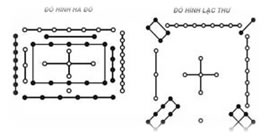
 This is the territory of the Bai Yue. Even a dragon, so fierce in other cultures, becomes a gentle and noble animal imagined by the peaceful peoples of the Bai Yue. The number 5 is also known as « Tham Thiên Lưỡng Đia » (or ba Trời hai Ðất or 3 Yang 2 Yin) in the theory of Yin and Yang because obtaining the number 5 from the combination of the numbers 3 and 2 corresponds better to the reasonable percentage of Yin and Yang than that resulting from the combination of the numbers 4 and 1.

In the latter, one notices that the Yang number 1 is greatly dominated by the Yin number 4. This is not the case with the combination of numbers 3 and 2, where the Yang number 3 slightly dominates the (Yin) number 2. This favors the development of the universe in an almost perfect harmony. In the past, the fifth day, the fourteenth day (1+4=5), and the twenty-third day (2+3=5) of the month were reserved for the king’s outings. It was forbidden for subjects to conduct business during his travels and to disturb his walk. This may be the reason why many Vietnamese today, influenced by this ancestral tradition, continue to avoid choosing these days for building houses, traveling, and making important purchases. It is customary to say in Vietnamese:

Chớ đi ngày bảy chớ về ngày ba
Mồng năm, mười bốn hai ba
Đi chơi cũng lỗ nữa là đi buôn
Mồng năm mười bốn hai ba
Trồng cây cây đỗ, làm nhà nhà xiêu

Do not go on the seventh day, do not return on the third day
The fifth, fourteenth, twenty-third
Going out is also a loss, let alone trading
The fifth, fourteenth, twenty-third
Planting trees, the trees fail; building houses, the houses collapse.

You should avoid leaving on the 7th day and returning on the 3rd day of the month. On the 5th, 14th, and 23rd days of the month, you would be at a loss if you go out or do business. Similarly, you would see the fall of a tree or the tilting of your house if you plant it or build it on those days.

The number 5 is frequently mentioned in Vietnamese culinary art. The most typical sauce of the Vietnamese remains fish sauce. In the preparation of this national sauce, there are 5 flavors classified according to the 5 elements of Yin and Yang: salty (mặn) with fish juice (nước mắm), bitter (đắng) with lemon zest (vỏ chanh), sour (chua) with lemon juice (or vinegar), spicy (cay) with crushed or powdered chili peppers, and sweet (ngọt) with powdered sugar. These five flavors (mặn, đắng, chua, cay, ngọt) combined and found in the Vietnamese national sauce correspond respectively to the 5 elements defined in the Yin and Yang theory (Thủy, Hỏa, Mộc, Kim, Thổ) (Water, Fire, Wood, Metal, and Earth).

Similarly, these 5 flavors are found in the sweet and sour soup (canh chua) prepared with fish: sour with tamarind seeds or vinegar, sweet with pineapple slices, spicy with sliced chili peppers, salty with fish sauce, and bitter with some okra (đậu bắp) or with the flowers of the fayotier (bông so đũa). When this soup is served, a few fragrant herbs are added, such as panicaut (ngò gai), rau om (an herb with a flavor close to coriander but with an additional lemony note). This is a characteristic feature of the sweet and sour soup of Southern Vietnam and different from those found in other regions of Vietnam.

We cannot forget to mention the glutinous rice cake that the Proto-Vietnamese succeeded in passing down to their descendants over the millennia of their civilization. This cake is tangible proof of the belonging of the Yin and Yang theory and its five elements to the Hundred Yue, of which the Proto-Vietnamese were a part, because in the making of this cake, the generative cycle of these 5 elements (Ngũ hành tương sinh)  found.

(Fire->Earth->Metal->Water->Wood)

Inside the cake, one finds a piece of porkmeat in red color ( Fire ) around which there is  a kind of paste made with broad beans in yellow color ( Earth ). The whole thing is wrapped by the sticky rice in white color ( Metal ) to be cooked with boiling water ( Water ) before having a green colouring on its surface thanks to the latanier leaves (Wood).

There is another cake that cannot be missing at weddings. It is the susê or phu-Thê cake (husband-wife), which has a round shape inside and is wrapped in banana leaves (green color) to give it the appearance of a cube tied with a red ribbon. The circle is thus placed inside the square (Yang within Yin). This cake is made of tapioca flour, scented with pandan, and sprinkled with black sesame seeds. At the heart of this cake is a paste made from steamed soybeans (yellow color), lotus seed jam, and grated coconut (white color). This paste closely resembles the frangipane found in king cakes. Its sticky texture recalls the strong bond that one wishes to represent in the union. This cake is the symbol of the perfection of marital love and loyalty in perfect harmony with Heaven and Earth and the five elements symbolized by the five colors (red, green, black, yellow, and white).

This cake is recounted by the following tale: once upon a time, there was a merchant indulging in debauchery and not thinking of returning to his family, although before his departure, his wife gave him the susê cake and promised to remain warm and sweet like the cake. That is why, upon learning this news, his wife sent him other phu thê cakes accompanied by the following two verses:

Từ ngày chàng bước xuống ghe
Sóng bao nhiêu đợt bánh phu thê rầu bấy nhiêu

Since your departure, as many waves as were met by your boat, so many afflictions were known by the susê cake.

Lầu Ngũ Phụng
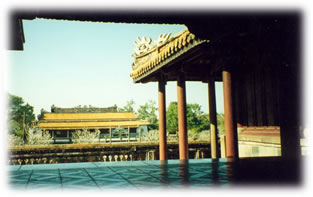
 

In architecture, the number 5 is not forgotten either. This is the case of the meridian gate of the Huế citadel, which is a powerful masonry mass pierced by five passages and topped with an elegant two-level wooden structure, the Belvedere of the Five Phoenixes (Lầu Ngũ Phụng).

Seen as a whole, it resembles a grouping of 5 phoenixes intimately perched with their wings spread. This belvedere has one hundred ironwood columns painted red, supporting its nine roofs. This number 100 has been carefully examined by Vietnamese specialists. For the renowned archaeologist Phan Thuận An, it corresponds exactly to the total number obtained by adding the two numbers found respectively in the River Map (Hà Ðồ) and the Luo River Script (Lạc thư cửu tinh đồ), symbolizing the perfect harmony of the union of Yin and Yang. This is not the opinion of another specialist, Liễu Thượng Văn. According to him, it represents the strength of 100 families or the people (bách tính) and reflects well the notion dân vi bản (taking the people as the foundation) in the governance of the Nguyễn dynasty.

The roof of the central pavilion is covered with yellow « lưu ly » tiles, the others with blue « lưu ly » tiles. The main gate, right in the middle, is the meridian gate (Ngọ Môn) paved with « Thanh » stones dyed yellow, dedicated to the passage of the king. On both sides, there are the Left Gate and the Right Gate (Tả, Hữu, Giáp Môn) reserved for civil and military mandarins. Then the two other side gates Tả Dịch Môn and Hữu Dịch Môn are intended for soldiers and horses. That is why it is customary to say in Vietnamese: 

Ngọ Môn năm cửa chín lầu
Một lầu vàng, tám lầu xanh, ba cửa thẳng, hai cửa quanh »

The Meridian Gate has 5 passages and nine roofs, one of which is varnished in yellow and the other eight in green. There are three main doors and two side doors.
To the east and west of the citadel, there are the Gate of Humanity and the Gate of Virtue, which are reserved respectively for men and women.

The number 9 is a Yang number (or odd). It represents the power of yang at its maximum and is difficult to reach. That is why in the past the emperor often used it to show his power and supremacy. He climbed the nine steps symbolizing the ascent of the sacred mountain where his throne was located. According to legend, the Forbidden City of Huế, like that of Beijing, had 9,999 rooms. It is worth recalling that the Forbidden City of Beijing was supervised by a Vietnamese named Nguyễn An, who was exiled at a very young age during the Ming dynasty. The emperor, like each of his palaces, faces south, towards the Yang energy, so that the emperor receives the vital breath of the sun because he is the Son of Heaven. In Vietnam, there are the nine dynastic urns of the citadel of Huế, the nine branches of the Mekong River, the nine roofs of the Five Phoenixes pavilion, etc. In the tale titled « The Mountain Spirit and the River Spirit (Sơn Tinh Thủy Tinh), » the eighteenth (2×9) Hùng Vương king proposed as a dowry for his daughter Mị Nương’s marriage: an elephant with 9 tusks, a rooster with 9 spurs, and a horse with 9 red manes. The number 9 symbolizes the Sky, whose birth date is the ninth day of the month of February.

Less important than the numbers 5 and 9, the number 3 (or Ba or Tam in Vietnamese) is closely linked to the daily life of the Vietnamese. They do not hesitate to mention it in a great number of popular expressions. To signify a certain limit, a certain degree, they habitually say:

Không ai giàu ba họ, không ai khó ba đời.
No one can claim to be wealthy for three generations just as no one is unfortunate for three successive lives.

It often happens to the Vietnamese that they do not complete a certain task in one go, which forces them to perform the operation up to three times. This is the expression they frequently use: Nhất quá Tam. It is the number three, a limit they do not wish to exceed in accomplishing this task.

To say that someone is irresponsible, they refer to them as « Ba trợn. » One who is opportunistic is called Ba phải. The expression « Ba đá » is reserved for vulgar people, while those who keep getting entangled in small matters or endless troubles receive the title « Ba lăng nhăng. » To weigh their words, the Vietnamese need to fold the three thumbs of their tongue. (Uốn Ba tấc lưỡi).

The number 3 also is synonymous with insignificant and unimportant something.It is what one finds in following popular expressions: 

Ăn sơ sài ba hột: To eat a little bit.
Ăn ba miếng: idem
Sách ba xu: book without values. (the book costs only three  pennies).
Ba món ăn chơi: Some  dishes  for tasting. 

Analogous to number 3, the number 7 is often mentioned in Vietnamese literature. One cannot ignore either the expression Bảy nỗi ba chìm với nước non  (I  float 7 times  and I descend thee times if this  expression is translated in verbatim) that Hồ Xuân Hương poetess  has used and immortalized in her poem intituled « Bánh trôi nước” :

Thân em vừa trắng lại vừa tròn
Bây nỗi ba chìm với nước non
………. 

for describing difficulties encountered by the Vietnamese woman in a feudal and Confucian society. This one did not spare either those having an independent mind, freedom and justice.   It is the case of  Cao Bá Quát , an active scholar who was degusted from the scholastica of his time and dreamed of replacing the Nguyễn authoritarian monarchy by an enlightened monarchy. Accused of being the actor of the grasshoppers insurrection  (Giặc Châu Chấu) in 1854, he was condemned to death and he did no hesitate his reflection on the fate reserved to those who dared to criticize  the despotism and feudal society in his poem before his death: 

Ba hồi trống giục đù cha kiếp
Một nhát gươm đưa, đéo mẹ đời. 

Three gongs are reserved to the miserable fate
A sabre slice finishes this dog’s life. 

If the Yin and Yang theory continues to haunt their mind for its mystical and impenetrable character, it remains however a way of thinking and living to which a good number  of the Vietnamese continue to refer daily for common practices and respect of ancestral traditions.
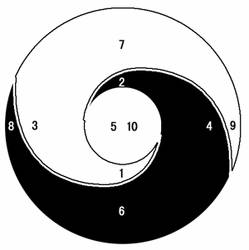

Bibliography

Xu Zhao Long : Chôkô bunmei no hakken, Chûgoku kodai no nazo in semaru (Découverte de la civilisation du Yanzi. A la recherche des mystères de l’antiquité chinoise, Tokyo, Kadokawa-shoten 1998).
-Yasuda Yoshinori : Taiga bunmei no tanjô, Chôkô bunmei no tankyû (Naissance des civilisations des grands fleuves. Recherche sur la civilisation du Yanzi), Tôkyô, Kadokawa-shoten, 2000).
-Richard Wilhelm : Histoire de la civilisation chinoise 1931
-Nguyên Nguyên: Thử đọc lại truyền thuyết Hùng Vương
– Léonard Rousseau: La première conquête chinoise des pays annamites (IIIe siècle avant notre ère). BEFO, année 1923, Vol 23, no 1
-Paul Pozner : Le problème des chroniques vietnamiennes., origines et influences étrangères. BEFO, année 1980, vol 67, no 67, p 275-302
-Dich Quốc Tã : Văn Học sữ Trung Quốc, traduit en vietnamien par Hoàng Minh Ðức 1975.
-Norman Jerry- Mei tsulin (1976) : The Austro asiatic in south China : some lexical evidence, Monumenta Serica 32 :274-301
-Henri Maspero : Chine Antique : 1927.
-Jacques Lemoine : Mythes d’origine, mythes d’identification. L’homme 101, paris, 1987 XXVII pp 58-85
-Fung Yu Lan: A History of Chinese Philosophy ( traduction vietnamienne Đại cương triết học sử Trung Quốc” (SG, 1968).68, tr. 140-151)).
-Alain Thote: Origine et premiers développements de l’épée en Chine.
-Cung Ðình Thanh: Trống đồng Ðồng Sơn : Sự tranh luận về chủ quyền trống
đồng giữa h ọc giã Việt và Hoa.Tập San Tư Tưởng Tháng 3 năm 2002 số 18.
-Brigitte Baptandier : En guise d’introduction. Chine et anthropologie. Ateliers 24 (2001). Journée d’étude de l’APRAS sur les ethnologies régionales à Paris en 1993.
-Nguyễn Từ Thức : Tãn Mạn về Âm Dương, chẳn lẻ (www.anviettoancau.net)
-Trần Ngọc Thêm: Tìm về bản sắc văn hóa Việt-Nam. NXB : Tp Hồ Chí Minh Tp HCM 2001.
-Nguyễn Xuân Quang: Bản sắc văn hóa việt qua ngôn ngữ việt (www.dunglac.org)
-Georges Condominas : La guérilla viêt. Trait culturel majeur et pérenne de l’espace social vietnamien, L’Homme 2002/4, N° 164, p. 17-36.
-Louis Bezacier: Sur la datation d’une représentation primitive de la charrue. (BEFO, année 1967, volume 53, pages 551-556)
-Ballinger S.W. & all: Southeast Asian mitochondrial DNA Analysis reveals genetic continuity of ancient Mongoloid migration, Genetics 1992 vol 130 p.139-152….

Yin and Yang theory: (Âm Dương Phần 2)


French version

Vietnamese version

When speaking of the symbolic couple circle/square, one wants to evoke perfection and happy union. Starting from a square with 4 sides, one can have an octagon by doubling the number of sides. Then by continuously doubling the number of these sides, one finally obtains a circle with no sides. It is the perfect form (perfectissima forma) testifying to absolute perfection. That is why it is customary to say in Vietnamese « Mẹ tròn, con vuông » to wish the mother and her child good health at the time of birth. This expression was handed down by our ancestors to draw our attention to the creative nature of the universe. Roundness and square are the two shapes taken not only by glutinous rice cakes (Bánh Chưng, Bánh Tết) or wedding cakes (Bánh Su Sê or Phu Thê) but also by ancient Vietnamese coins (or sapèques).

The shape of these sapèques is linked to traditional Vietnamese cosmology: the roundness of these coins evokes that of the sky, and the central hole is square like the earth.

Old coin

For the surface area of these sapèques, there is always a percentage to respect: 70% for the round part and 30% for the square part. These two shapes are also found in the bamboo cane held by the eldest son walking behind the coffin during his father’s funeral procession. When the deceased person is his mother, he is obliged to walk backward while looking straight ahead at the coffin. This is the « Cha đưa mẹ đón » (Accompany the father, receive the mother) protocol to be respected in Vietnamese funeral rites. The bamboo of the cane represents the father’s uprightness and endurance.

It is replaced by another plant known as « cây vong, » symbolizing simplicity, gentleness, and flexibility when the deceased person is the mother. The cane must have a round head and a square base to symbolize Heaven and Earth, while the middle part of the stem is reserved for the children and descendants. This means that everyone needs the protection of Heaven and Earth, the education of parents, and mutual assistance among siblings in society. To show respect, the number of times the guest is required to bow in front of the coffin must be a Yin number, i.e., an even number (i.e., 2 or 4), because the deceased person will join the world of darkness with a Yin character (Âm phủ in Vietnamese). According to Vietnamese researcher Trần Ngọc Thêm, everything closely or remotely related to death must use even numbers
(Yin = peace = death)

In the past, it was customary to place a piece of pure gold (Yang) in the mouth of the deceased to infuse the mana contained in the precious metal. Gold, representing the Yang principle, is capable of preserving the body and preventing decay.

At the moment of the deceased person’s agony, their relatives must give them a nickname (or in Vietnamese tên thụy) that only they and their close ones know, with the agreement of the household spirit, because on the anniversary of their death, this nickname will be mentioned to invite them to participate in the offerings and to avoid awakening other wandering souls. That is why it is customary to say in Vietnamese tên cúng cơm to remind that everyone has a nickname. Similarly, a bouquet of flowers offered at funerals must consist of an even number (or yin) of flowers.

Ancestral altar

There is an exception to this rule when it comes to Buddha or deceased parents. In front of their altar, it is customary to place 3 incense sticks in the vase or to prostrate completely on the knees, with the head touching the ground, an odd number (Yang) (con số dương, số lẻ) of times because they are still considered living beings. Likewise, to show respect towards living elderly people, one only performs one or three prostrations. However, in wedding rites, the bride must prostrate before her parents to thank them for her birth and education before joining her husband’s family.

It is the even number (or Yin số chẵn) of times she must perform (i.e., 2 or 4) because she is considered « dead » as she no longer belongs to her original family. There is a custom for the ceremony on the first wedding night. An older woman, who has many children and is considered good and honest, is asked to take charge of spreading and overlapping a pair of braids on the bridal bed: one open and the other placed upside down, symbolizing the union of Yin and Yang.
 

Mẹ tròn, con vuông

In the past, young couples used to exchange a pinch of soil for a pinch of salt. They wanted to honor and perpetuate their union and fidelity by taking Heaven and Earth as witnesses of their commitment. The same meaning is also found in the following expression: Gừng cay muối mặn, reminding newlyweds never to part because life is bitter and deep with ups and downs, just like the pungent ginger and salt that retain their flavor over the years.

For speaking of virtue, one is accustomed to say in Vietnamese: 

Ba vuông sánh với bảy tròn
Đời cha vinh hiễn đời con sang giàu

As three squares can be in comparison seven circles, virtuous parents will have rich children.

By speaking of these three squares, one needs to reminder the square form of rice cake proposed during the new year. This cake constituted by straight lines  symbolizes loyalty and righteousness in the relationship of three submissions « Tam Tòng »: Tại gia tòng phu, xuất giá tòng phu, phu tữ tòng tữ (submission to the father before her marriage,submission to the husband during her marriage, submission to the elder son when widowed).

About 7 circles, one must think of the roundness of « bánh giầy ».  This one  is constituted by a sequence of dots equidistant from the center where there is the heart. This cake is the symbol of  a well-balancel soul that any passion does not bewinder. One finds in this heart the perfection of seven human sentiments: (Thất tình : hỹ, nộ, ái, lạc, sĩ, ố, dục )( Joy, anger, sadness, cheerfullness, love, hatred, desire). Does someone  realize a  ideal moral life if under any circumstances, he succeeds to maintain the loyalty and  righteousness with others and always keeps his equidistant gap in the manifestation of his feelings?

The expression  vuông tròn has  frequently been  employed in a great number of Vietnamese popular sayings:

Lạy trời cho đặng vuông tròn 
Trăm năm cho trọn lòng son với chàng!

I pray to God that  everything should go well and I should  eternally keep  my faithful  hearth  with you.

or 

Đấy mà xử ngãi (nghĩa) vuông tròn
Ngàn năm ly biệt vẫn còn đợi trông

Here is the signification of conjugal love
Despite the eternal separation, one continues to wait  for the  return with patience

or in the following verses 411-412 and  1331-1332 of Kim Vân Kiều‘s best-seller

Nghĩ mình phận mỏng cánh chuồn 
Khuôn xanh biết có vuông tròn mà haỵ

My fate is fragile like the dragonfly’s wing
Does the Heaven  knows that this union is durable or not?

or

Trăm năm tính cuộc vuông tròn,
Phải dò cho đến ngọn nguồn lạch sông

During your life (one hundred years), when you are concerned about your marriage, you must go upstream to the source. (One must inquire about the bride’s family down to the smallest detail.)

This Yin and Yang bipolarity is expressed in various forms in Vietnam. In China, if there is a single marriage genius, in Vietnam there is a couple of male and female geniuses (Ông Tơ Bà Nguyệt). Likewise, in Vietnamese pagodas, there is a couple of male and female Buddhas (Phật ông Phật bà) on the altar instead of a single Buddha. Vietnamese people firmly believe that each of them is associated with a certain number of digits. Before birth, the embryo needs to wait 9 months and 10 days. To say that someone has a happy fate, it is said that they have a « happy destiny » (số đỏ). Conversely, the « unfortunate destiny » (số đen) is reserved for people with a bad fate.


NEXT (Yin and Yang numbers)


Yin and Yang theory (Âm Dương : Phần 1)

yinyangviet

French version 

Vietnamese version

The theory of Yin and Yang continues to be closely linked to the daily life of the Vietnamese and finds its application in all fields. Everything that is fluid, cold, humid, passive, dark, internal, immobile, of feminine essence such as the sky, the moon, the night, water, winter, is of Yin nature. Everything that is solid, warm, bright, active, external, mobile, of masculine essence such as the earth, the sun, fire, summer, is of Yang nature.

This Yin and Yang characteristic is even found in Vietnamese grammar through the use of the words « con » and « cái« . Analogous to the definite articles « le » and « la » in French, these are used to indicate gender in certain restricted cases, but one can also base their use on the « mobile » or « immobile » nature of the object they accompany to indicate its belonging to the corresponding semantic class. The word « cái » is used when the object has the « immobile » character (tĩnh vật): cái nhà (house), cái hang (cave), cái nồi (pot), etc. On the other hand, when the « mobile » state (động vật) is part of the nature of the object, the word « con » is used to precede it. This is the case for the following words: con mắt (eye), con tim (heart), con trăng (snake), con ngươi (pupil), con dao (knife), etc.

The eye moves constantly just as the heart beats. Likewise, the snake moves just like the pupil. The knife is considered by the Vietnamese as a sacred animal. It is nourished with blood, wine, and rice. The same name given to an object can lead to two different interpretations depending on the use of the word « cái » or « con. » The following example translates the mobile (con) or immobile (cái) nature of the object thuyền (or boat in French) used: Con thuyền trôi theo dòng nước (The boat moves along the water). This means that someone is making the boat move with the oar or with the engine. On the other hand, when one says « cái thuyền trôi theo dòng nước » (The boat moves along the water), the emphasis is on the fact that there is no one maneuvering the boat. It is the flow of the water that makes the boat move by itself. This notes the immobile nature of the boat. The influence of Yin and Yang is not unrelated to the way the gender is sometimes attributed to common objects. This is the case with the knife (dao): dao cái (large knife), dao đực or dao rựa (or machete). This observation was noted by Alain Thote, the French archaeologist and sinologist, in his article entitled « Origin and Early Developments of the Sword in China« : The swords of Yue enjoyed great fame in antiquity.

This is the case of the fish entrails sword that the butcher named Zhuan Zhu (Chuyên Chư) used to assassinate the Liao sovereign (Ngô Vương Liêu) of the state of Wu (nước Ngô) during the Spring and Autumn period (Xuân Thu), etc. Some swords bore a name and could be masculine or feminine. The expression « đực rựa, » often heard in conversations to refer to men, comes from the old Vietnamese custom of carrying machetes when going out.

The association of sexes has also been visible for a long time in Vietnam in rice cultivation: the man plows and the woman transplants. The plowshare that pierces the earth (âm) (Yin) symbolizes the male sex (Yang) (dương), while through transplanting, the woman transmits her fertilizing power (âm) (Yin) to the rice plants (dương) (Yang). To denote the perfect harmony in the union of Yin and Yang, it is customary to say in Vietnamese: United, husband and wife can scoop all the water from the Eastern Sea. (thuận vợ thuận chồng tát biển Đông cũng cạn).

Being rice farmers, the Proto-Vietnamese were attached not only to the land but also to the environment because, thanks to natural phenomena (rain, sun, wind, clouds, etc.), they could have good harvests or not. Extensive rice cultivation by slash-and-burn or in naturally flooded fields depended on climate uncertainties. That is why they needed to live in harmony with nature.

They considered themselves the link between Heaven and Earth (Thiên-Nhân-Địa). Based on this notion, it is common to say in Vietnamese: Thiên Thời, Địa Lợi, Nhân Hòa (being aware of weather conditions, knowing the terrain well, and having popular support or national harmony). These are the three key factors of victory often referenced by Vietnamese strategists (Trần Hưng Đạo, Nguyễn Trãi, Quang Trung) in their struggle against foreign invaders. The Vietnamese take this triad (Tam Tài) into account in their way of thinking and daily life.

For them, there is no doubt that this notion has an undeniable influence on the person themselves: their destiny is dictated by the will of Heaven and depends on their birth date. With the external and internal environment of their dwelling, they can receive the harmful or beneficial breath (qi) generated by the earth. The art of harmonizing the environmental energy of one’s place of residence allows one to minimize troubles and promote well-being and health. A flat terrain without undulations or hills is lifeless and lacks qi breath (Khí). The Vietnamese call hills and mountains Dragons and Tigers. Buildings should have a green dragon to the west and a white tiger to the east. The benevolent Dragon must be more powerful than the Tiger (Hữu Thanh Long, Tã Bạch Hổ) that is to say the Dragon mountain must be higher than the Tiger hill. The notion of harmony takes on its full meaning when a site backed by a mountain and surrounded on two sides by chains of hills that protect it from winds dispersing the Chi (or cosmic energy) gives access to a lake or a river where there is water and food essential for life and the accumulation of cosmic energies (Chi).

This model can be found in the case of the historic city or citadel of Huế (Kinh thành Huế). It is oriented towards the south because in the Yi King it is written: the one who governs the country must look towards the south « Thánh nhân nam diện nhi thính thiên hạ thí » (the king turns his face to the south to rule the world). The enclosure of this citadel is a defensive construction with a military character based on the fortress technique of the famous engineer Vauban and encompassing near its southern front the imperial city bounded by a second rectangular enclosure measuring 622×606 meters. Inside this is the purple forbidden city forming the symbolic heart of the empire within a third and last almost square enclosure of 330×324 meters. The interlocking of these three enclosures refers to the Triad (Heaven, Man, Earth).

The southern front of the citadel, where the Meridian Gate is located, follows a convex path along the Perfume River. Resembling a dragon lying in the West, it undulates and rises towards the North, weaving through small hills and making a 90° bend to the East. It first reaches the protective islands of Dã Viên and Cồn Hến before joining the sea. This creates an ideal position (Chi Huyền Thủy) in accordance with the scheme described above, with a green dragon to the East and a white tiger to the West represented respectively by the shell islands (Cồn Hến) and Dã Viên, facing a natural screen symbolized by the Royal Screen Mountain (Núi Ngự Bình).


Man can act and influence his own life. By performing benevolent acts towards others, he can find happiness and improve his karma. In the past, there was a Nam Giao or Tế Giao ceremony in Vietnam, organized every year by the court of Hué in honor of Heaven and Earth. It is the emperor’s privilege to annually associate his deified ancestors with the homage paid to Heaven and Earth on a monumental esplanade built in 1806 in the southern suburbs of Huế because he is the son of Heaven. There are three levels corresponding to the triad: Heaven, Representative (emperor), Earth (Thiên, Nhân, Địa).

Each level has its own shape and a different color: the sky is spherical and the earth square (trời tròn đất vuông), thiên thanh địa hoàng (the sky is light blue and the earth yellow). Previously subjected to isolation and fasting, the emperor ascended the esplanade of sacrifices and acted on behalf of his people to ask the natural forces of the universe to improve the environment on earth. The emperor is the only figure qualified to be the intermediary between Heaven and Earth. This triad (Thiên, Nhân, Địa) has often been mentioned in Vietnamese legends.

In the legend of the « The God of Mountains and the God of Rivers (Sơn Tinh Thủy Tinh) » there is a girl named Mi Nương who is sought in marriage by these two spirits, or in the legend of the Kitchen genius myth  (Chuyện Táo quân), the woman is torn between the love of her former husband and that of the new one. In the legend of the « Betel Quid, » the triad (wife, husband, younger brother) is represented by the woman, her husband, and her twin brother who, once deceased, respectively become the betel leaf, the areca nut, and the lime stone. The betel quid well reflects the notion of balance and harmony found in the theory of Yin and Yang. To prepare the betel quid, a little slaked lime is spread on a betel leaf.

Then, orange-yellow colored root bark of Artocarpus tonkinese is added, and finally a betel nut finely sliced is incorporated. The whole mixture is placed in the mouth and slowly chewed. After about twenty minutes of chewing, the remaining quid is spit out. The five tastes can be found in the betel quid: sweet from the betel nut, spicy from the betel leaf, bitter from the root, salty from the lime, and sour from the saliva. Through the image of the fresh betel vine emerging from the earth symbolized by the lime stone and entwining the slender areca palm trunk in this legend, one wants to note the character of the perfect balance between Yin (Earth) and Yang (Heaven) in perfect harmony. The betel quid is the prelude to every conversation (Miếng trầu là đầu câu chuyện), as often said in an old Vietnamese proverb. Acceptance carries deep meaning and amounts to a firm commitment, a given word that no one would think to take back. If the exchange occurs between a girl and a boy, it is equivalent to a proposal of marriage or union. In Vietnamese tradition, the betel quid is a symbol of conjugal happiness. It cannot be missing from marriage rites.

In the civilization of wet rice cultivation, there are other trinities as important as the triad (Heaven, Man, Earth). This is the case with the triad (Thủy, Hỏa, Thổ) (or (in French Water-Fire-Earth)) or the triad (Mộc, Kim, Thổ) (or Wood, Metal, Earth). We need the earth for rice cultivation, water, and fertilizers derived from ashes caused by fire to fertilize the soil. Similarly, plants are used for food and metals to make appropriate tools for agriculture. We notice that these triads have a common element, which is earth. That is why it occupies a central place in the management of the four cardinal points. It is the pivot around which the other four elements revolve. In agricultural life, the most important element after earth is water. It is the phrase: Nhất nước nhì phân (First water, second fertilizer) often heard from a Vietnamese farmer. Since water has a Yin nature, it is attributed to the North direction because it is compatible with cold (winter). On the other hand, being Yang in nature, the fire element of the triad (Thủy, Hỏa, Thổ) is better associated with the South direction with heat and radiation (summer). The wood element clearly recalls plants whose birth often takes place in spring. It is associated with occupying the west direction with the growth of Yang. As for the metal element, which is malleable and can take different forms, it is associated with the east direction, which is linked to autumn.

The Vietnamese find in the theory of Yin and Yang an idea of alternation rather than opposition. Yin and its complementary element Yang form an entity that allows for the establishment of a good balance and harmony. For them, the world represents a totality of cyclic orders constituted by the combination of two alternating and complementary manifestations. It is known that in an opposing relationship, both Yin and Yang each carry the seed of the other within themselves. (Nothing is completely Yin or completely Yang; within Yin there is Yang and within Yang there is Yin). Yin and Yang are considered as the wheel of a chariot. Having reached their end, they begin again. Once their limit is reached, they return again.

A set of popular sayings reflecting the law of causality concretely testify to the mutation of Yin and Yang. That is why it is customary to say in Vietnamese « Trong rũi có may » (In misfortune, there will be luck), « Trong dỡ có hay » (In what seems bad, there is also something good), « Trong họa có phúc » (In misfortune, there will always be happiness). « Sướng lắm khổ nhiều » (The more satisfied the desire, the more one will suffer), « Trèo cao ngã đau » (The higher you climb, the more painful the fall). « Yêu nhau nhiều cắn nhau đau » (The more we love each other, the more we hurt each other). Lost possessions are therefore sometimes the ransom of a human life. This is clearly expressed by the Vietnamese proverb: Của đi thay người (possessions go away instead of people). The factors Phúc (happiness) and Họa (misfortune) must vary inversely to each other.

It is thanks to this Yin and Yang bipolarity that the Vietnamese are accustomed to seeking a good balance in daily life. They try to find perfect harmony with everyone and with nature even beyond their death. This was discovered in the Lạch Trương necropolis (Thanh Hóa), dating back to 3 centuries before Christ, with wooden burial objects (Yang) placed in the North (Yin) and those made of terracotta (Yin) in the South (Yang).

This notion of balance can even be found in the pagoda with the spirits of good and evil (Ông Thiện Ông Ác). It is thanks to this philosophy of balance that the Vietnamese have the ability to adapt to all situations, even in extreme cases. It is also this principle of balance that Vietnamese leaders have continued to uphold in the past during confrontations with foreign countries. To avoid the humiliation of the Mongols, who were defeated twice in Vietnam, General Trần Hưng Ðạo proposed paying tribute to Kubilai Khan in exchange for lasting peace. After defeating the Ming Chinese, Nguyễn Trãi, the strategic advisor to King Lê Lợi, did not hesitate to allow Wang Tong (Vương Thông) to return to China with 13,000 captured soldiers and proposed a vassalage pact with a triennial tribute of two medium-sized statues made of fine metal as compensation for two generals who died in battle, Liou Cheng (Liễu Thăng) and Leang Minh (Lương Minh). Similarly, King Quang Trung showed humility and agreed to send an envoy to Emperor Qianlong to seek peace after crushing the Qing army at Hanoi in 1788 within a very short time (6 days).

We must not forget either the conduct and flexibility demonstrated by the communist leaders in diplomacy during the confrontation with the French and the Americans. The Geneva (1954) and Paris (1972) agreements once again testify to the search for balance or the middle way ingeniously found by the Vietnamese in the theory of Yin and Yang.
In Vietnam, spherical objects (tròn) are integrated into Yang, and square-shaped ones (vuông) into Yin. This tendency dates back to a time when it was believed that the sky was spherical and the earth was square because the ancient Vietnamese had to square the land before they could use it for plowing and building houses. It was in this mindset that the Bai Yue (of which the Proto-Vietnamese were a part) used to divide a portion of land into nine lots based on the character tĩnh (giếng nước, meaning water well). The central lot was designated for building a water well, and the remaining eight lots were intended for constructing houses, thus forming the first housing unit in agricultural society.

The following Vietnamese popular saying: trời xanh như tán lọng tròn; đất kia chằn chặn như bàn cờ vuông (The blue sky is like a round parasol; the earth is firm like a square chessboard) reflects this belief well.The Proto-Vietnamese knew that the sky was round and the earth was square to distinguish between the round aspect of the sky at the moment of its existence (thể) and the square aspect of the earth at the moment of its use (dụng).

 NEXT (More reading Part 2)


Bibilography

–Alain Thote: Origine et premiers développements de l’épée en Chine.
–Cung Ðình Thanh: Trống đồng Ðồng Sơn : Sự tranh luận về chủ quyền trống đồng giữa học giã Việt và Hoa.Tập San Tư Tưởng Tháng 3 năm 2002 số 18. 
-Brigitte Baptandier : En guise d’introduction. Chine et anthropologie. Ateliers 24 (2001). Journée d’étude de l’APRAS sur les ethnologies régionales à Paris en 1993.
-Nguyễn Từ Thức : Tãn Mạn về Âm Dương, chẳn lẻ (www.anviettoancau.net) 
-Trần Ngọc Thêm: Tìm về bản sắc văn hóa Việt-Nam. NXB : Tp Hồ Chí Minh Tp HCM 2001. 
-Nguyễn Xuân Quang: Bản sắc văn hóa việt qua ngôn ngữ việt (www.dunglac.org)
-Georges Condominas : La guérilla viêt. Trait culturel majeur et pérenne de l’espace social vietnamien, L’Homme 2002/4, N° 164, p. 17-36. 
-Louis Bezacier: Sur la datation d’une représentation primitive de la charrue. (BEFO, année 1967, volume 53, pages 551-556) …..


Sacrifice (English version)

sacrifice_1f
Version Française
Version vietnamienne

Life is a game of chance. The chance is against us. It’s worth dying now for the country and set an example of sacrifice

Nguyễn Thái Học

Vietnam is not only a land of legends and learned men but also a land that men have acquired acre by acre in a crual mother nature for more than four thousand years. The cradle of the Vietnamese nation, the delta of Tonkin bordered by mild hills of the Hundred Thousands Mounts of China and squeezed in the South by a quasi impenetrable range, the Annamitic Cordillera, reduced to 15,000 km2 but rich of all the mud pulled out by the Red river, continues to be threathened by the latter with the discharge of 500m3 at low tide up to 3500m3 during the highest crests.

To master the blows of sword of the Red River, the Vietnamese people resort to a method of building dikes, which requires not only an increased watch of dikes but also a perpetual struggle. Facing the never-ending change of nature, the caprice of the Red river and the territorial ambitions of China, the Vietnamese people owe their safety at the cost not only of their labor and courage but also of their sacrifice in the long march filled of pitfalls towards the South.

This sacrifice is not foreign to the majority of Vietnamese in particular the men and women of character. It also becomes a cult that one likes to maintain and ceaselessly praise for Vietnam to excite the whole people before the threat of foreigners.

The sacrifice is the surest way to maintain the perfection of the homeland but it is also the synonym of loyalty and dignity. A great person is the one who dares take the responsibilities in moments of difficulty in his or her life but it is also the one who knows how to sacrifice himself or herself for a good cause, in particular for his or her country. The sacrifice is indispensable to the word « honor » in Vietnam.

Because of this moral dignity, many military people prefered suicide to surrender (Trưng Trắc, Trưng Nhị, Trần Bình Trọng, Võ Tánh etc..). That is why it is the habit to say:

Hùm chết để da, người chết để tiếng.
A dead tiger leaves its hide, a deceased person his reputation. 

The history of Vietnam is also that of sacrifices. The duty of a Vietnamese is to serve his or her country with all his heart. The greater the danger, the better his or her loyalty seems to be.


Heroes sacrifice for their fatherland. No matter what happens, his honor is never tainted. It is the case of the scholar Phan Thanh Giản, signatory of the Franco-Vietnamese treaty of 1868. After having failed to put up with the French in the defense of the three western provinces of the Mekong delta (Vĩnh Long, An Giang and Hà Tiên) he chose to surrender and decided to poison himself in 1967 because he thought it was the only way to save the people and to show his fidelity to emperor Tự Ðức. The same, Nguyễn Tri Phương (1873), adversary of Francis Garnier and Hoàng Diệu (1882), adversary of Henri Rivière preferred suicide after having failed to defend Hànội city.

During the French occupation, sacrifice became the flame of hope lit by unknown people such as Nguyễn Trung Trực, Phạm Hồng Thái. The former accepted to die in the stead of his mother captured after having succeeded in blowing up the French « Espérance » on its passage on the « Nhựt Tảo » river in Long An while the latter, chased by the Chinese police in his escape, preferred to throw himself in the river after having failed to assassinate the French governor Merlin during his passage by Canton in 1924. Admiror of his courage and sacrifice for his fatherland, the governor of Canton later buried his remains in a cemetery solely reserved for the 72 Chinese heroes and known as « Hoàng Hoa Cương » in Vietnamese. 

If this sacrifice is not a vain word for men, it carries a particular meaning for the Vietnamese women. Princess Huyền Trân of the Trần dynasty was proposed to become in 1306 the wife of king Chế Mẫn (Jaya Simhavarman)  in exchange of the two territories of Champa Chau Ô and Châu Rí. She had to sacrifice her life, her love for reason of State.

The same, three centuries later, a princess of the Nguyễn dynasty, of the name Ngọc Vạn to whom the word « Cochinchina » or (Cô chín xin) was attributed, was not late in following Huyen Tran’s footsteps in becoming the concubine of Cambodian king Prea Chey Chetta II in 1618 in exchange of the facilities granted to Vietnamese in their settlement in the region Ðồng Nai Mô Xoài which is no other than the Saigon-Cholon region today.

Her presence on the Cham soil served as a pretext for lord Nguyễn Phúc Tần to launch an expedition and annex the last territory of Champa in 1651. One cannot blame the Cham for hating princess Ngoc Khoa at that time because of her, they have lost their homeland. But Ngọc Khoa illustrates for us, the Vietnamese the sublime sacrifice she consented for her country and her people.


Po Klong Garai (PhanThiết)

Văn Lang civilization (Thời kỳ Hồng Bàng: Part 2)


French version

One also retains the outstanding event underlined by the Chinese historian Trịnh Tiều in his work « Thông Chí« : In the southern China, under the reign of  Nghiêu king  (2253 before J.C.), there was the emissary of a tribe named Việt Thường who offered to the king as a pledge of allegiance, an old tortoise living more than 1000 years and 3 meters long. One found on its back, the inscriptions carrying the characters in the shape of a tadpole (văn Khoa Ðẩu) and allowing to interpret all the changes of the Sky and nature. King Nghiêu decided to attribute to them the name Qui Lịch (or tortoise calendar). This form of writing was recently found  on a stone belonging to the cultural vestiges of the region Sapa-Lào Cai in the North of Vietnam. The Vietnamese historian Trần Trọng Kim raised this question in his work entitled Việt Nam sử lược (Abstract of the history of Vietnam). Many clues have been found in favour of the interpretation of the same tribe and  people. One cannot refute  there is an undeniable bond between the writing in the shape of tadpoles  and the toad found either on the  bronze drums of Ðồng Sơn or the  Ðông Hà popular Vietnamese stamps,  the most of which known remains the stamp « Thầy Ðồ Cóc » (or the Master toad). On the latter, one finds the following sentence: Lão oa độc giảng ( the old toad holds the monopoly of teaching ). Although it had appeared 400 years ago only, it ingeniously reflected the perpetual thought of the Hùng vuong time. It is not by chance that one attributed to the toad the Master role  but one would like to highlight the importance of the representation and the significance of this image.

The toad was the carrier of a civilization whose the writing in the shape of tadpoles was used by the  Lac Viet tribe  at the Hùng Vương time  because he was the father of the tadpole. In the same way, through the stamp of « Chú bé ôm con cóc » (or the child embraces the toad ), one detected all the original thought of  Lạc Việt people. The respect of the child towards  the toad or rather  its Master (Tôn Sư trọng đạo) was an already existing concept at the Hùng vương time. Could one conclude from it there was a correlation with what one found later in the confucean spirit with the sentence « Tiên học lễ, hậu học văn  » ( First learn the moral values then  the culture )?


The master toad (Thầy Ðồ Cóc)
 In Vietnam, the tortoise is not not only the symbol of longevity and immortality but also that of transmission of  spiritual values in the Vietnamese tradition. One finds its representation everywhere, in particular in commonplaces like communal houses, pagodas and temples. It is used at the temple of literature ( Văn Miếu ) to raise steles praising the merits of laureates to the national contests.


The crane on the tortoise back
On the other hand, in the temples and communal houses, one sees the tortoise  always carry a crane on its back. There is an undeniable resemblance between this crane and the bird wader with a long beak found on the bronze drums of Ðồng Sơn. The  crane statue on the tortoise  back probably reflects the perpetuity of all the religious beliefs resulting from the  Văn Lang  civilization through the time.

The tortoise  omnipresence in the history and culture of the Vietnamese results neither from the long domination of the Chinese nor the effect of chance but it  owed  to the fact that the Văn Lang kingdom should be located in an area populated by large tortoises. It was only in the south of  the Basin  Yang Tsé river (Sông Dương Tữ) that one can find this species of large tortoises in extermination. It is what was reported by the Vietnamese author Nguyễn Hiến Lê in his work entitled « Sử Trung Quốc  » (History of China ) (Editor Văn Hoá 1996) « .

It is not very probable to  find one day, the archaeological vestiges proving the existence of this kingdom like those already found with the Shang  dynasty. But nothing invalidates this historical truth because in addition to the facts evoked above, there is even  in this kingdom the intangible proof of a very old civilization often named  « the Văn Lang civilization » , one found the base of which  in the theory of Yin and Yang and  the five elements (Thuyết Âm Dương Ngũ Hành ). 

Âm Dương
This one was highlighted through the sticky rice cake « Bánh Chưng Bánh dầy » which was exclusively specific to the Vietnamese people since the   kings Hùng period.  One could raise questions about the origin of this theory which was attributed until now to the Chinese. According to the historical Memoires of Si Ma Qian ( Sử Ký Tư Mã Thiên ), one knew that  the philosopher of the country of Qi ( Tề Quốc ) ( 350-270 before J.C.) Tseou Yen (Trâu Diễn), was the first Chinese to highlight the relation between the theory of Yin and Yang and that of the 5 elements ( Wu Xing )(Thuyết Âm Dương Ngũ Hành)  at the time of the Warring States (thời Chiến Quốc). 

The Yin and the Yang  was evoked in the  Zhouyi book (Chu Dịch) by the son of king Wen (1)or Duke of Zhou (Chu Công Đán) while the theory of the five elements had been found by Yu the Great (Đại Vũ) of the Xia dynasty ( Hạ ). There was practically an interval of 1000 years between these two theories. The concept of the five elements was quickly integrated into  the yin and the yang to give an explanation on the « tao » which is at the origin of everything. In spite of the success met in a great number of domains (astrology, geomancy, traditional medicine), it is difficult to give a coherent justification to the level of the publication date of these theories because the concept Taiji  (thái cực) ( supreme limit ) from which the two principal elements were born ( the yin and the yang ), was introduced only at the time of Confucius (500 years before J.C. ).  Taiji was the object of meditation for  philosophers from all horizons  since the philosopher of the Song  period  and  founder of the Neo-Confucianism, Zhou Dunyi ( Chu Ðôn Di ), had given to this concept a new definition in his bestseller: « Treatise on the figure Taiji » ( Thái Cực đồ thuyết ):

Vô cực mà là thái cực, Thái cực  động sinh Dương, động đến cực điểm thì tĩnh, tĩnh sinh Âm, tĩnh đến cực đỉnh thì lại động. Một động một tĩnh làm căn bản cho nhau….

From Wuji (no limit) to Taiji (supreme limit or  grand extreme). The supreme limit, once in motion, generates the yang and at the limit of motion, it is in the rest state.   In turn, this one generates the yin and at the limit of the rest state, it is  the return to  the motion state.  For the latter  and the rest state, each takes roots in the other.

For the Chinese, there is a sequence in the beginning of the universe:
Thái cực sinh lưỡng nghi là Âm Dương, Âm Dương sinh Bát Quái

Taiji is  the « One » referred to in the Dao principle of creation. From Taiji,  Yin and Yang which are the basic attributes of the universe give rise to the eight trigrams.

 Hà Đồ (Map of the River)
The incoherence is so visible in the chronological order of these theories because one had attributed to Fu Xi (Phục Hi)(1) the invention of the eight trigrams 3500 years ago before J.C. while the concept of Yin and Yang was introduced at the time of Zhou (1200 years before J.C.). While relying on the recent archaeological discoveries, in particular on the discovery of the manuscripts on silk  at Mawangdui (1973), the Chinese specialists of today advance unimaginable statements: The hexagrams precede the trigrams…, which proves that the chronological order of these theories is likely to be modified unceasingly in accordance with the new situations. One is brought to find in this imbroglio, an another explanation, an  another approach, an  another assumption according to which the theory of Yin and  Yang and  5 elements was adequated to an  another civilization. It would be that of Văn Lang. The confusion continues to be anchored in the  reader mind with the famous River map and Writing of Luo (Hà Ðồ Lạc Thư). 

The Writing of Luo was to be found before the appearance of the Plan of the River. That highlights the contradiction found in the chronological order of these discoveries. Certain Chinese had the occasion to call in question the traditional history established up to that point in the confucian orthodoxy by the Chinese dynasties. It is the case of Ouyang Xiu (1007-1072) who saw in this famous plan the work of man. He refuted the « gift from heaven » in his work entitled « Questions of a child about Yi King ( Yi tongzi wen ) » (Zhongguo shudian, Peking 1986). He preferred the version of the human invention.

How can  one grant  the veracity to the Chinese legend when  a complete inconsistency is known in the chronological order of the discovery of these famous Plan of the River and Writing of Luo?

Fou Xi (Phục Hi) (3500 before J.C.) discovered first, the River map ( Hà Ðồ ) at the time of an excursion on the Yellow River (Hoàng Hà). He saw leaving the water a dragon horse (long mã) bearing on its back this plan. It is to You the Great (Đại Vũ)  (2205 before J.C.) that one attributed the discovery of the Writing of Luo found on the  tortoise back. However it is thanks to the Writing of Luo and with its explanation (Lạc Thư cửu tinh đồ) that one manages to establish and  interpret correctly the stellar diagram drawn  from the polar star (Bắc Ðẩu) and found on this famous Plan of the river according to the Yin and Yang and 5 elements.

The famous word « Luo » ( Lạc ) found in the text of the Great Commentary of Confucius:

     Thị cố thiên sinh thần vật, thánh nhân tắc chi, thiên địa hóa thánh nhân hiệu chi; thiên tượng, hiện cát hung, thánh nhân tượng chi. Hà xuất đồ, Lạc xuất thư, thánh nhân tắc chi

     Cho nên trời sinh ra  thần vật, thánh nhân áp dụng theo; trời đất biến hoá, thánh nhân bắt chước; trời bày ra hình tượng. Hiện ra sự  tốt  xấu, thánh nhân phỏng theo ý tượng. Bức đồ hiện ra sông Hoàng  Hà, hình chữ hiện ở sông Lạc, thánh nhân áp dụng.

The Heaven gives rise to the divine things, the Wise men  take them as criterion. The Heaven  and the Earth know changes and transformations, the Wise men  reproduce them. The images expressing fortune and misfortune are suspended    in the Heaven, the Wise mens imitate them. The Plan comes from the Yellow River, the Writing  from the Luo river, the Wise men take them as models.

continues to be interpreted until today like the name of the Luo river, an affluent of the Yellow River which crosses and nourishes the center of China. One continues to see in these famous Plan of the River and Writing of Luo the first premises of the Chinese civilization. From the drawings and figures to the trigrammatic signs, from the trigrammatic signs to the linguistic signs, one thinks of the march of the Chinese civilization in Yi King without believing that it could be the model borrowed by the Wise one from another civilization. However if Luo is associated with the word Yue, that indicates the tribe Lạc Việt  (Luo Yue ) from which the Vietnamese come.  Does it seem  like  a sheer coincidence or a name used by the Wise men  You the Great  or Confucius to refer to the Văn Lang civilization? Lạc Thư indicates effectively the writing of the tribe Luo, Lạc tướng its generals, Lạc điền its territory, Lạc hầu  its marquis etc…..

It is rather disconcerting to note that the theory of Yin – Yang and  5 elements finds its perfect cohesion and its functioning in the  intangible proof of the  Văn Lang civilization, the sticky cake. In addition to the water, one finds in its constitution the 4 essential elements (meat, broad beans, sticky rice, bamboo or latanier leaves). The cycle of generation (Ngũ hành sinh) of 5 elements is quite visible in the making of this cake. At the interior of the cake, one finds a red  piece of porkmeat  (Fire) surrounded by a kind of paste made with  yellow broad beans (Earth). The whole thing is wrapped by the white  sticky rice (Metal) to be cooked with boiling water  (Water) before finding a green colouring on its surface thanks to the latanier leaves (Wood).

The two geometrical forms, a circle and a square which this cake takes, correspond well to the  Yin ( Âm ) and  the Yang (Dương). As the Yang breath reflects plenitude and purity, one gives it  the shape of a circle. However, one finds in the  Yin breath the impurity and  limitation. That is why it recovers the form of a square. A light difference is notable in the definition of Yin-Yang of the Chinese and that of the Vietnamese. For the latter, Yin tends to be in motion (động).

Cycle of generation

Fire->Earth->Metal->Water->Wood

Ngũ hành tương sinh

It is for that reason one finds only the presence of the 5 elements in the Yin (Âm) represented by the rice cake in the form of a square ( Bánh chưng ). It is not the case of the cake in the shape of a circle that  the Yang (Dương) symbolizes, this latter tending  to carry the « motionless » character  (tĩnh). It is probably the reason which explains until today why the theory  of Yin-Yang and 5 elements does not know a giant leap in its evolution and that its applications continue to carry the mystical and confused character in the public opinion because of the error introduced into the definition of Yin-Yang by the Chinese.

One is accustomed to saying « Mẹ tròn, con vuôn » in Vietnamese to wish the mother and her child a good health at the time of birth. This expression is used as a phrase of courtesy if it is not known that it was bequeathed by our ancestors with an aim of holding our attention on the creative character of the Universe. From this latter were born Yin and Yang which are not only in opposition but also in interaction and correlation. The complementarity and the indissociability of these two poles are at the base of the satisfying development of nature. The typically Vietnamese game « Chơi ô ăn quan » also testifies to the perfect operation of the theory of Yin-Yang and 5 elements. The game stops when one does not find any more tokens in the two extreme half-circles corresponding to the two poles Yin and Yang.

 
Ancestor altar

No Vietnamese hides his emotion when he sees on his ancestor altar  the sticky rice cake at the time of the  Tết festival. For him, this dish looking less attractive and not having any succulent taste,  bears a particular significance. It testifies not only to the respect and affection that  the Vietnamese likes to maintain with regard to his ancestors but also the impression of a 5000-year old civilization. This sticky rice cake is the undeniable proof of the perfect  functioning  of Yin and Yang and 5 elements. It is the only intact legacy that the Vietnamese succeeded in receiving on behalf of his ancestors in the swirls of history. It cannot compete with the masterpieces of other civilizations like the Wall of China or pyramids of the Pharaohs built with sweat and blood. It is the living symbol of a civilization which bequeathed to humanity a knowledge of priceless value.  One continues to use it  in a great number of domains of application (astronomy, geomancy, medicine, astrology etc….). Return to Part 1


Văn Lang civilization (Thời kỳ Hồng Bàng): Part 1

Thời kỳ Hồng Bàng

Văn Lang civilization

Version française

The Vietnamese are accustomed to saying: one remembers the source from which one drinks the water (Uống nước nhớ nguồn). It is therefore not surprising to see them continue to celebrate in grand pomp on the 10th day of the third lunar month of each year, the commemorative day of the Hùng kings of the Hồng Bàng dynasty, the founding fathers of the Vietnamese nation. Until today, no archaeological vestige is found to confirm the existence of this dynasty except for the ruins of the citadel Cỗ Loa (Old snail city) dating from the period of the  An Dương Vương‘s reign and the temple built in honor of these  Hùng kings at  Phong Châu in the province of Phú Thọ.

Many clues do not invalidate this existence if one refers to the legends reported of this mythical time and  the Annals of Vietnam and China. The Chinese domination (IIIrd century before J.C. – 939 after J.C.) is not foreign to the greatest influence on the development of the Vietnamese civilization. All that belongs to the Vietnamese became Chinese and vice versa during this period. One notes it is a policy of assimilation deliberately wanted by the Chinese. That does not let the Vietnamese  the possibility for maintaining their culture inherited from an old civilization of 5000 years and called « Văn Lang civilization » without resorting to the oral traditions (popular proverbs, poems or legends).

Two verses found in the following popular song (ca dao):

Trăm năm bia đá thì mòn
Ngàn năm bia miệng vẫn còn trơ trơ

The stele of stone erodes after a hundred years
The words of people continue to remain in force after a thousand years

testify to the practice carried out knowingly by the Vietnamese with the goal of preserving what they inherited from the Văn Lang civilization.

This one bears the name of a kingdom which was bordered at that time by the East sea, to the west by the Shu Ba kingdom (Ba Thục)(Tứ Xuyên or Szechuan in English), to the north by the territory of the lake Ðông Ðình (Hu Nan) (Hồ Nam) and to the south by the  kingdom of Chămpa (Champa). This state was located in the  Yang Tse river (Dương Tữ giang) Basin region and was placed under the authority of a king Hùng. This one had been elected for his courage and his values. He had divided his kingdom into districts entrusted to his brothers known under the name « Lạc hầu » (marquis). His male children have the title of Quang Lang and his daughters that of Mỵ nương. His people was known under the name « Lạc Việt ». His men had a custome of  tattooing their body. Being often revealed in the Chinese annals, this « barbarian » practice was intended to protect men from the attacks of  water dragons (con thuồng luồng) if one believes the Vietnamese texts. It is perhaps the reason why the Chinese often designated them under the name Qủi (demons). Loincloth and chignon constituted the usual costume of these people to which were added bronze ornaments. The Lac Viet lacquered their teeth in black, chewed betel nuts and crushed rice with their hand. Being farmers, they practiced the cultivation of rice in flooded field. They lived in plains and coastal areas while in the mountainous areas of  Việt Bắc and on the part of the territory of the  Kuang Si province, took refuge the Tây Âu, the ancestors of the ethnic groups Tày, Nùng and Choang.

Towards the end of the third century before our era, the leader of Tây Âu tribes defeated the last king Hùng  and succeeded in reunifying under his banner the territories of Tây Âu and  Lac Việt to form the  Âu Lạc kingdom, in the year 258 before our era. He took as the reign name, An Dương Vương  and transferred his capital to Cỗ Loa located  just over 20  kilometers from Hànội.

Is the kingdom of Văn Lang a pure fabrication supplied by the Vietnamese with an aim of maintaining a myth or a kingdom really existing and disappeared in the swirls of history?

Geographic map of Văn Lang kingdom

According to the Vietnamese myth, the land of the Proto-Vietnamese was delimited in the north, at the time of Hùng kings (first vietnamese dynasty 2879 before J.C.)  by the Dongting lake (Động Đình Hồ) located in the land of the Chu kingdom (Sỡ Quốc in Vietnamese). A part of their territory returned to this latter during the Warring States period (thời Chiến Quốc).  Their descendants living in this part reattached  probably became inhabitants of the Chu kingdom. There were a relationship, an  intimate connection between in this kingdom and the Proto-Vietnamese. There is a hypothesis suggested and proposed recently by a Vietnamese writer Nguyên Nguyên (2). According to the latter, it is not rare that in the old writings, ideograms are replaced by other ideograms with the same phonetics. It is the case of the title Kinh Dương Vương whom had taken  the father of the ancestor of the Vietnamese, Lộc TụcBy writing it in this way in Chinese , we  see appearing easily the names of two cities Kinh Châu (Jingzhou) (3) and Dương Châu (Yángzhou) (4) where lived respectively the  Yue ethnic groups  of Thai branch  and Lạc branch. There was the  expression of a  desire employed by the narrator for evoking intelligently the installation and  fusion of yue ethnic groups of Thai branch and Lạc branch coming from these cities during the conquests of the Chu kingdom.  On the other hand, the ideogram 陽 (Thái dương) is translated as light or solemn. It is employed with  the aim of avoiding its use as surname. By using this word, it allows to translate Kinh Dương Vương   into solemn king Kinh. But there is also a synonymic word Kinh  of the word Lạc (), nickname of the Vietnamese. In short,  Kinh Dương Vương can be translated as solemn king Việt. Concerning the title whom took the Âu Việt king , the author does not question his explanation: it is the pacification of the country of the Yue ethnic group from the Lạc branch by a Yue son from the Thái branch. This can only strengthen the argument given by Edouard Chavannes and  Léonard Aurousseau(5): the Proto-Vietnamese  and the inhabitants of the Chu kingdom have had common ancestors. Moreover,  there  is a striking coincidence found in the clan name Mi (bear or gấu in Vietnamese) written in the Chu language, translated into Hùng  (熊) (in Vietnamese) and beared  by Chu kings and that of Vietnamese kings. By relying on Sseu-Ma Tsien historical memories translated by  E. Chavannes (6), one knowns that the king of the Chu principality  is from bararian hordes living in the South China (or Bai Yue): Hiong-K’iu (Hùng Cừ) says: I am a barbarian man and does not participe in titles and posthumous names  granted by the Middle kingdom.

American linguists  Mei Tsulin and  Norman Jerry (7) identified a number of borrowed words in the Austro-Asiatic language and recognized them in Chinese writings during  the Han period. There is the case of the Chinese word  囝 (giang in Vietnamese or river  in French ) or nu (ná     in Vietnamese or  crossbow in English). They demonstrated the high likelihood of the   Austro-Asiatic language presence  in South China and concluded that there was a contact between the Chinese language and the Austro-Asiatic language in the territority of the former kingdom of Chu between 1000 and 500 years before J.C.

The geographical argument was never taken seriously  into account by Vietnamese historians in the past because for them, this dynasty belonged to the mythical period. Moreover, according to Chinese writings,  the   territory of ancestors of the Vietnamese  (Kiao-tche (Giao Chỉ))  was confined in the current Tonkin, thus annoying them to accept without explanation or justification the territorial spread  of the Hồng Bàng dynasty   until the  Dongting lake. They did not see in the narration of this myth, the willingness of the ancestors   of the Vietnamese to indicate their origin, to show their belonging in the Bai Yue group and their unwavering resistance facing formidable Chinese conquerors.

In the Chinese annals,  one has reported that, at the Spring and Autumn period,   Gou Jian king of the  Yue state  was interested to get an alliance with the Văn Lang kingdom  in order to hold supremacy on  other powerful  principalities of the region. It is likely that the Văn Lang kingdom had to be a  country  neighbouring the state of  Gou Jian king  of  Yue. This one had no interest in contracting this alliance if  the Văn Lang kingdom was geographically confined in Vietnam today. The recent discovery of the Gou Jian king’s sword  (reign of 496-465 before J.C.)  in the grave  n°1 of Wanshan (Jianling) (Hubei) allows to better discern the  contours of the Văn Lang kingdom. It would probably be located in the Guizhou region (Qúi Châu).  But Henri Masporo has contested this speculation in the book  intituled « Le royaume de Văn Lang « (BEFEO, t XVIII, fasc 3 ) ». He has attributed to Vietnamese historians the mistake of confusing the Văn Lang kingdom with that of Ye Lang (or Dạ Lang in Vietnamese)  the name of which has been badly by Chinese historians to their Vietnamese colleagues at the time of  the Tang dynasty (nhà Đường).  This is not exactly true because in Vietnamese legends, in particular in that of Phù Ðổng Thiên Vương (or  Skylord of  Phù Ðổng village), one realizes that the Văn  Lang kingdom was in armed conflict with the Yin-Shang dynasty (Ân Thương) at the time of the  Hùng  VI king  and it was much larger in area than the Ye Lang kingdom found at the time of  the unification of China by Qin Shi Huang Di (Tần Thủy Hoàng)

In the Vietnamese annals, one took about the long period of the Hùng kings reign (from 2879 to 258 before J.C.). The discovery of bronze artefacts in Ningxiang (Hu Nan) during the years 1960 does not put into question the existence of the contemporary centres of the Shang civilization ignored by  writings in the southern China. There is the case of the culture of Sangxindui (Di chỉ Tam Tinh Đôi)(Sichuan (Tứ Xuyên)) for example. The wine vase in bronze decorated with the anthropomorphic faces testifies obviously to the contact established by the Shang with    people of Melanesian type because one finds on these sides,  the round human faces with a flat nose. The moulding of this bronze used in the manufacture of this vase requires the tin incorporation which the northern China did not have at that time.  

Would there be any  real contact, a war between the  Shang and the   Văn Lang  kingdom  if one held on to the legend of the skylord Phù Ðổng? Could  you  grant the  veracity to a fact brought back by a Vietnamese legend ? Many western historians always perceived the  Dongsonian  civilization period as the beginning  of the Vietnamese nation (500-700 before J.C.). It is also the shared opinion  found in the anonymous historical work intituled  « Việt Sử Lược« .

Under the reign of Zhuang Wang (Trang Vương) of Zhou (nhà Châu)  ( 697-682 before J.C.), in the district Gia Ninh, there was a strange character managing to dominate  all the tribes with his sorceries, taking for title the name Hùng and establishing his capital at Phong Châu. With the hereditary filiation, that made it possible for his line to maintain power with 18 kings, all bearing the name Hùng.

On the other hand, in other Vietnamese historical works, one granted a long period of reign to the Hồng Bàng  dynasty (from 2879 to 258 before J.C.) with 2622 years. It appears inconceivable to us if one maintains 18 as  the number of kings during this period because this means that each king Hùng  reigned on average 150 years. One can only find a satisfactory answer if one accepts the assumption established by Trần Huy Bá in his expose published in the newspaper  Nguồn Sáng n°23 on the commemorative day of Hùng kings (Ngày giỗ Tổ Hùng Vương) (1998). For him, there is a false interpretation on the word « đời » found in the sentence « 18 đời Hùng Vương« . The word « Ðời » must be replaced by the word Thời meaning « period ».

Mouth organ player

With this assumption, there are therefore  18 periods of reign,   each of which  corresponds to a branch being able to be made up of one or several kings in the family tree of the  Hồng Bàng dynasty . This argumentation is reinforced by the fact that king Hùng Vương was elected for his courage and his merits if one refers to the Vietnamese tradition to choose men of value for the supreme function. That was reported in the famous legend of the sticky rice cake (Bánh chưng bánh dầy). One can thus justify the word Thời by the word branch (or chi ).

There is a need to give a more coherent explanation for the number 2622 with 18 branches following in the work  intituled « Văn hoá tâm linh – đất tổ Hùng Vương » by the author  Hồng Tử Uyên.

Chi Càn Kinh Dương Vương húy Lộc Túc   
Chi Khảm Lạc Long Quân húy Sùng Lãm
Chi Cấn Hùng Quốc Vương húy Hùng Lân
Chi Chấn Hùng Hoa Vương húy Bửu Lang
Chi Tốn Hùng Hy Vương húy Bảo Lang
Chi Ly Hùng Hồn Vương húy Long Tiên Lang
Chi Khôn Hùng Chiêu Vương húy Quốc Lang
Chi Ðoài Hùng Vĩ Vương húy Vân Lang
Chi Giáp Hùng Ðịnh Vương húy Chân Nhân Lang
………….. manquant dans  le document historique …
Chi Bính Hùng Trinh Vương húy Hưng Ðức Lang
Chi Ðinh Hùng Vũ Vương húy Ðức Hiền Lang
Chi Mậu Hùng Việt Vương húy Tuấn Lang
Chi Kỷ Hùng Anh Vương húy Viên Lang
Chi Canh Hùng Triệu Vương húy Cảnh Chiêu Lang
Chi Tân Hùng Tạo Vương húy Ðức Quân Lang
Chi Nhâm Hùng Nghị Vương húy Bảo Quang Lang
Chi Qúy Hùng Duệ Vương

That enables us to also find the thread of history in the military conflict between the  Văn Lang kingdom  and the Shang  via the legend of « Phù Ðổng Thiên Vương (Thánh Gióng)« . If this conflict took place, it could only be at the beginning of the period of  the Shang’s reign  for several reasons:

  • 1) No Chinese or Vietnamese historical document spoke about the trade between the kingdom of Van Lang and the Shang. On the other hand, one noted the contact established later between the Zhou dynasty (nhà Châu) and  Hùng king. A silver pheasant had been offered even by this latter to the king of Zhou according to the book  intituled « Selection of Strange Tales in Lĩnh Nam » (Lĩnh Nam Chích Quái).
  • 2) The  Shang dynasty  only reigned from 1766 to 1122 before J.C.  There would be approximately a time lag of 300 years  if one tried to compute the arithmetic mean of the 18 periods under the  Hùng kings reign: (2622/18) and to multiply it by 12 to give rougly  a date to the end of  the sixth branch of the Hùng reign ((Hùng Vương VI) by adding to which the number  258, the year of the annexation of the Văn Lang  kingdom by  An Dương king. One would have fallen about at the year 2006 dating  the end of the sixth branch Hùng reign (Hùng Vuong VI). One can deduce from this date that the conflict if happened, should be at the beginning of the  Shang dynasty era. This gap is not completely unjustified because one only has until then few precise historical details beyond the  reign time of  Chu Lệ Vương (Zhou LiWang)  (850 before J.C.).

One notes a military expedition undertaken during three years by   Wuding (Vũ Ðịnh) king of the Shang in  the  region of  Ðộng Ðình lake against the nomadic people, the Gui  alias « Demons », which was mentioned in the  Yi King book (Kinh Dịch) translated by Bùi Văn Nguyên, Khoa Hoc Xã Hội Hà Nội 1997. In his work published in the newspaper Nguồn Sáng no 23, Trần Huy Bá rather thought of King Woding (Ốc Ðinh) who was one of the first kings of the Shang  dynasty. With this assumption,  there is no doubt or ambiguity because there is a perfect coherence reported in the Chinese and Vietnamese annals. One must know that at the time of An Dương Vương, one was accustomed to indicating the country Việt Thường under the name « Xích Qủi ». The term Xích is employed for referring to the equator (Xich đạo). About Qủi, this  wants to evoke the red star Yugui Qui, one of the seven stars of the South. This one  happened under the skies of the Jingzhou city of the Yue at the time the Shang king had installed his troop. It is also the opinion shared by the Vietnamese author Vũ Quỳnh in his work « Tân Ðinh Linh Nam Chích Quái »:

Ở đây có bộ tộc Thi La Quỷ thời Hùng Vương thứ VI vào đánh nước ta nhân danh nhà Ân Thương.

It is here that at the reign time  of king Hùng VI , one found a tribe Thi La Qủy who invaded our country in the name of Yin-Shan.

This conflict could explain the principal reason for which the Văn Lang kingdom did not establish any trade with the Shang. The discoveries of the bronze objects in Ningxiang  (Hu Nan) during the years 1960 gave the evidence that they could be the spoils brought back during the expedition into the southern China because there was no explanation to give to the bronze wine vases decorated with  Melanesian anthropomorphic faces.

  • 3°) In the Vietnamese legend « Phù Ðổng Thiên Vương », one noted the escape and  dislocation of the Shang army  in the district Vũ Ninh at the same time  the immediate disappearance of the celestial hero coming from the  Phù Ðổng village. One also told of his spontaneous appearance at the time of the Shang  invasion without any preparation in advance. This gave the evidence that he should be present on the territory at the  invasion time  of this latter. The territories conquered by the Shang could not be taken back entirely by the Lạc Việt because  one could say that they were driven out of the  Văn Lang territory in the legend. It was not completely the case because it was noted that with the advent of the Zhou dynasty, one saw appearing  vassal countries like the state of Yue  Goujian (Wu Yue) (Ngô Việt), the  Chu  kingdom ( Sỡ ) etc…on an old part of the Văn Lang territory.

 It would not be known for whatever reason , the Văn Lang kingdom was reduced and thus confined in the north of Vietnam of today  by glancing  at  the geographical map found during  the time of Springs and Autumn and that of king Qin Shi Huang Di. Why was Goujian interested to the alliance with the Văn Lang kingdom if the latter was confined in the north of the Vietnam today? One could give to the dismemberment of this kingdom the following explanation:

At the time of the Yin-Shan  invasion, a certain number of tribes among the 15 tribes of  Lạc Việt people, succeeded in routing away the Shang  army  and continued to shown  their attachment and their honesty to the Văn Lang kingdom. That did not prevent them from keeping their autonomy and  maintaining a development rather high at  the social and cultural level. That could give later  an explanation to the emergence of  independent states   located at  the geographical map  of the  Tsin period (Qin Shi Huang Di) as  Ye Lang (Dạ Lang), Dian (Ðiền Việt), Si Ngeou (Tây Âu) and  the  significant reduction of the Văn Lang kingdom in  area  to the current state (in the north of Vietnam).

It is possible that this reduced kingdom restructured itself  in an identical way sus as the Văn Lang kingdom established at the beginning of its creation by last king Hùng in order to remind to his people the greatness of his kingdom.  The king  thus  kept  the names of 15  ancient tribes and gave to his reduced territory the name Vũ Ninh for commemorating the brilliant success earned by Lạc Việt people under the reign of Hùng VI  king. Việt Trì probably could be the last capital of the Văn Lang kingdom.  One notes a part of historical  reality  in the Vietnamese legend because one has recently discovered in China the use of iron at the time of the Shang dynasty. On  the other hand, the  iron could be replaced by an other metal like the bronze without losing however the real significance in the content of the legend. It was only used for reflecting the courage and the bravery which one loved  to attribute to the skylord. If the iron was well  quoted, this  no longer doubted its  discovery  and its use very early in the Văn Lang kingdom. This  also justifies  the coherence given by this legend to the conflict which opposed  the Văn Lang kingdom and  the Shang. Read more 


Bibliography:

(1) Paul Pozner : Le problème  des chroniques vietnamiennes., origines et influences étrangères.  BEFO, année 1980, vol 67, no 67,  p 275-302
(2) Nguyên Nguyên: Thử đọc lại truyền thuyết Hùng Vương 
(3)Jīngzhōu (Kinh Châu) : la capitale de vingt rois de Chu, au cours de la période  des Printemps et Automnes (Xuân Thu) (-771 — ~-481) 
(4) Yángzhōu (Dương Châu) 
(5) Léonard Rousseau: La première conquête chinoise des pays annamites (IIIe siècle avant notre ère). BEFO, année 1923, Vol 23, no 1.
(6) Edouard Chavannes :Mémoires historiques de Se-Ma Tsien de Chavannes, tome quatrième, page 170).
(7) Norman Jerry- Mei tsulin 1976 The Austro asiatic in south China : some lexical evidence, Monumenta Serica 32 :274-301

Sơn mài (Laques)

English version
Vietnamese version

À quelle date la technique de la laque a-t-elle été introduite au Viet Nam? Sa date d’introduction  continue à alimenter les débats et reste toujours d’actualité  l’objet de discussions. Pour certains archéologues, l’utilisation de l’ornement laqué remonta à la première invasion chinoise grâce à la découverte des objets laqués dans des tombes des IIIème- IVème siècles de notre ère. Pour d’autres chercheurs, cette technique fut introduite au XVème siècle par Trần Tường Công, un ambassadeur vietnamien à la cour de Chine. Celui-ci fut chargé par le roi Lê Nhân Tôn (1443- 1460) de trouver un métier susceptible de procurer de nouvelles ressources pour les paysans. Il fut initié dans des ateliers chinois de la province Hunan aux mystères de la laque.  Personne n’est vraiment convaincue jusqu’à ce jour car les affabulations chinoises ne manquaient pas  à cette époque pour légitimer leur politique d’assimilation  et de conquête territoriale vis à vis à d’autres peuples.

Par contre, on sait que Hunan fit partie du royaume de Chu (Sỡ Quốc) établi sur la fleuve Yangzi (Dương Tử Giang) à l’époque des Royaumes Combattants. Ce dernier fut annexé plus tard par Qin Shi Huang Di (Tần Thủy Hoàng). C’est aussi dans ce royaume de Chu qu’on a découvert les tombes  de Mme Dai et de son fils à Mawangdui (Mã Vương Đôi) (Changsa, Hunan), (168 av. J.C.) où l’artisanat local  montrait une maîtrise parfaite de la forme et de la couleur, en particulier les boiseries de la laque.  Cela nous amène à avoir une idée précise et pouvoir conclure  que la technique de la  laque venait probablement des Bai Yue car  le royaume de Chu  était en contact étroit  avec ces derniers et  en recevait une influence notable en ce qui concerne la soie, la laque, les rites chamaniques des Hmong, les épées etc.
La laque est en fait le suc laiteux obtenu par incision du laquier. Grâce à la solidification à l’air libre et à la résistance à l’acide et aux éraflures, la gomme résineuse constitue une protection idéale pour les bois et pour les bambous. On se sert de cette résine dans la fabrication des objets laqués. Ceux-ci offrent une grande diversité: paravents, coffres, plateaux, vases, échiquiers etc. Le travail de laque nécessite beaucoup de préparations et de soins.

Version vietnamienne

Sơn mài

Kỹ thuật  sơn mài đã được du nhập  vào Việt Nam từ lúc nào? Câu hỏi  nầy vẫn tiếp tục duy trì các cuộc tranh luận và vẫn còn ngày nay là một đề tài bàn cãi. Đối với các nhà khảo cổ học, việc trang sức sơn mài đã bất nguồn từ cuộc xâm nhập đầu tiên của người Trung Hoa nhờ sự khám phá các di vật sơn mài tìm thấy trong các cổ mộ cố có từ thế kỷ 3 và 4 trước Công Nguyên.  Còn các  nhà nghiên cứu khác thì kỹ thuật sơn mài được du nhập ở thế kỷ 15 bỡi Trần Tường Công. Ông nầy được vua Lê Nhân Tôn (1443- 1460) phái đi  sang Trung Quốc làm sứ thần và có trọng trách để tìm một nghề có thể đem lại nguồn  lực mới   cho người nông dân Việtnam. Ông được kết nạp  bước đầu ở các xưởng Trung Hoa ở tỉnh Hồ Nam để thông hiểu kỹ thuật sơn mài. Nhưng ít có người tin về việc nầy cho đến ngày nay nhất là ở  thời điểm đó những  chuyện bia đặt nầy  không thiếu nhằm  với chủ đích hợp pháp hóa chính sách xâm lược đất đai và đồng hóa tất cả dân tộc bị cai trị. Ngược lại, chúng ta biết rằng Hồ Nam thuộc về Sở Quốc đựợc thiết lập trên sông Dương Tử thời Chiến Quốc.  Sau nầy nước Sở bị Tần Thủy Hoàng thôn tính. Chính ở Sở quốc mà người ta khám phá được  các  ngôi  mộ  cổ của bà phu nhân tên  Đại và con bà   ở Mã Vương Đôi (Trường Sa, tỉnh Hồ Nam),  vào  thời  nhà Hán (năm 168 trước Công Nguyên) mà thủ công nghệ đia phương biểu hiện sự khéo léo về màu sắc cũng như về hình dạng nhất là  ở các gỗ  sơn mài. Nhờ đó chúng ta có một cái nhìn chính xác và có thể kết luận là kỹ thuât sơn mài đến từ đại tộc Bách Việt vì Sở quốc thường có liên hệ thân thiết và nhận đuợc ở đại tộc nầy một ảnh hưởng trọng đại nhất là ở các lĩnh vực như tơ lụa, gươm giáo, nghi lễ  đạo saman của dân tộc Hmong vân vân …..Sơn mài  thật sự là  nhựa sữa được lấy  từ cây sơn ta qua các  đường rach vào thân cây.  Nhờ sự đông đặc ngoài trời và  kháng cự hữu hiệu chống  axit và các vết trầy nên  gôm nhựa rất được  thông dụng trong việc bảo vệ thích hợp cho các đồ vật làm bằng  cây và tre.  Vì vậy chất nhựa nầy được dùng trong việc chế tạo các đồ  nội thất như  các bình phong, rương, mâm, bình, bàn cờ tướng vân vân… Kỹ  thuật sơn mài   cần phải có nhiều giai đoạn  chuẩn bi và chăm sóc tĩ mĩ. 


Version anglaise


At what  date was the  lacquering technique introduced in Vietnam? Its date of introduction continues  to sustain debates and always remains the object of discussions. For some archaeologists, the use of lacquer adornment dated back to the first Chinese invasion (discovery of lacquerwares in the tombs of 3rd – 4th centuries of our era). For others researchers, this technique was introduced by Trần Tường Công, an ambassador at the court of China. He was assigned by king Lê Nhân Tôn (1443-1460 ) to find a trade contributing  to provide new resources for peasants. He was introduced to the secrets of lacquer in Chinese workshops of Hunan province. Nobody is not really convinced  until today because the Chinese pretence did not lack  at this time for legitimating  the policy of assimilation and territorial conquest vis à vis other people. On the other hand, one knowns Hunan was an integral  part of the Chu kingdom (Sở Quốc) established on the Yangzi river  (Dương Tử Giang)  during the Warring States period. The latter was annexed thereafter by  Qin Shi Huang Di (Tần Thủy Hoàng). It is also in the Chu kingdom  one has discovered  the tombs of Mrs Dai and her son at  Mawangdui (Mã Vương Đôi) (Trường Sa, Hồ Nam), (168 before J.C.) where the local craft  showed the master’s degree in  shape and color, in particular the lacquer panelling. We are brought to have  a precise idea and conclude that the lacquering techniques probably came from the Bai Yue because the Chu kingdom was  in close contact  with the latter and got from which  an important influence  concerning  silk,  lacquer, shamanic rites of Hmong people, swords etc.

Lacquer is in fact the milky juice obtained from the incision of the lacquer tree. Thanks to the solidification in open air and the resistance to acid and scratches, the resinous gum constitutes an ideal protection for wood and bamboo. One uses this resin to make lacquerwares. They offer a great diversity: folding screens, chests, trays, vases, chessboard etc. Lacquerwork requires a lot of preparations and care

[RETURN]