Hồ Chí Minh ville (Saïgon) Version vietnamienne

Saïgon  (Hồ Chí Minh ville)

Saïgon hai tiếng nhớ nhung
Ra đi luyến tiếc nghìn trùng cách xa

Version française
English version
Pictures gallery

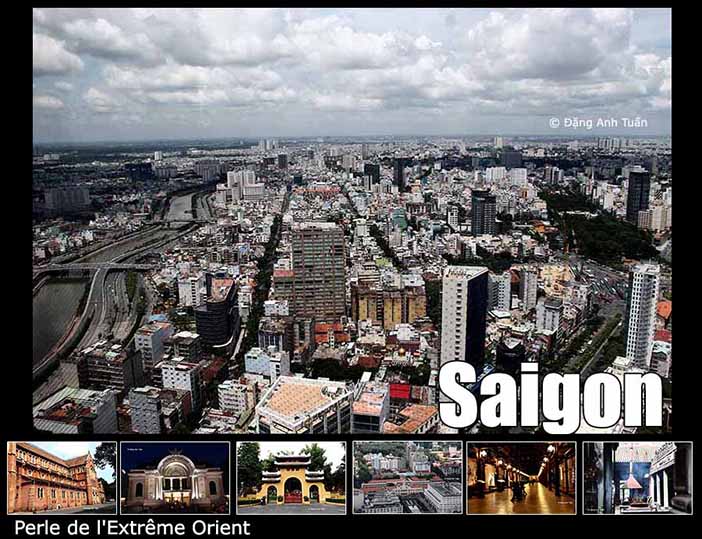
Đối với một số người dân Việt, thành phố này mãi mãi là Sàigòn. Còn  với những người khác, đấy thực sự là thành phố Hồ Chí Minh. Dù thành phố nầy có mang tên chi nữa, nó vẫn tiếp tục là trung tâm kinh tế  đối với các doanh nhân nước ngoài. Chính ở nơi đây quá cảnh hàng triệu tấn thóc gạo và cá của  đồng bằng sông Cửu Long  để được xuất khẩu. Mặc dù được đổi tên vào năm 1975, Saïgon vẫn tiếp tục giữ những thói quen cũ, những thay đổi thất thường và những nghịch lý. Thành phố vẫn luôn náo nhiệt ồn ào với những đêm không ngủ. Quang cảnh hay thường được trông thấy  ở  các đường phố hay qua đêm trong những căn phòng rộng lớn sàn gỗ với các cô gái trẻ học nhảy điệu valse và tango. Saigon vẫn sống rất linh động với 10 triệu cư dân hiện nay. Saïgon lúc nào cũng có sức sống mãnh liệt  với một tinh thần tháo vát  tuyệt vời. Thành phố vẫn phóng đãng, thích phiêu lưu và quá phấn khởi. Nó tiếp tục phát triển với những khách sạn sang trọng hàng nghìn phòng ở giữa các khu dân nghèo. Đây là thành phố đông dân nhất ở Việt Nam với mật độ dân số trung bình hơn 4.500 người trên mỗi kilomet vuông, còn  cao hơn cả Thượng Hải (Trung Quốc).

Các điểm tham quan

Galerie des photos

Thành phố nầy hiện có tổng diện tích 2061 km2 và được chia thành 19 quận và 5 huyện. Trong quá khứ, thành phố gồm có 12 quận và 6 huyện trên diện tích là  2029 kilomet vuông. Saigon đã từng là Hòn Ngọc Viễn Đông trong thời kỳ Pháp thuộc  và sau đó là thủ đô của miền Nam Việt Nam từ năm 1956 đến năm 1975. Ngày nay, nhờ dự án phát triển đô thị bán đảo Thủ Thiêm và sự  gia nhập của quận Thủ Đức gần đây, thành phố  đã thành công, theo nhà nghiên cứu  người Việt Trần Khắc Minh của đại học Québec ở Montréal, trong việc mở rộng khu vực đô thị và tăng trưởng dân số một cách nhanh chóng nhờ quá trình đô thị hóa nhưng điều nầy  không ngăn cản được sự phân đọan của kết cấu đô thị ngày càng tăng  và làm nổi bật thêm  khoảng cách giàu nghèo nhất là trong việc tìm nhà cư ngụ.

Từ đầu công nguyên cho đến thế kỷ 17, Sàigon lần lượt thuộc về  vương quốc Phù Nam, rồi  đến Chân Lạp,  sau đó Chămpa và Cao Miên. Tên của nó chỉ được nhắc đến lần đầu tiên trong một  tài liệu của Việt Nam vào năm 1776, kể  lại cuộc chinh phục thành phố  nầy bởi các chúa Nguyễn vào năm 1672.  Đối với người Khơ Me (hoặc người Cao Miên), Sàigòn chỉ là tên biến dạng của từ  Prey Nokor (« thành phố trong rừng ») mà người Khơ Me  gán cho thành phố này. Sài Gòn là một vùng đầm lầy đầy cá sấu và có nhiều  khí lam chướng vào cuối thế kỷ 17. Việc những người Việt đầu tiên định cư chọn Sàigòn làm nơi tha hương không phải là một chuyện bình thường. Vì thế có một ca dao phổ biến mà người  dân Việt được biết để  nói đến vùng đất dữ, có nhiều khí lam chướng.

Chèo ghe sợ sấu cắn chân
Xuống sông sợ đĩa, lên rừng sợ ma.

Mặc dầu có nhiều khuyết điểm, Saigòn vẫn tiếp tục là tĩnh mạch trọng yếu của Việt Nam. Chính Saigon đã dạy người dân Việt biết đến chính sách Đổi Mới  từ năm 1996 đẩy mạnh không những  công nghiệp hóa và  hiện đại hóa mà còn giúp họ ưa thích  chủ nghĩa tư bản và phiêu lưu trong việc bỏ vốn đầu tư mạo hiểm. Cũng như các thành phố khác, Sàigòn có một lịch sử lâu dài trước khi bị đô hộ, sau đó bị Mỹ hóa và sau cùng  lấy tên thành phố Hồ Chí Minh sau biến cố  năm 1975.

Đối với những người quan tâm đến thành phố này, lịch sử và sự phát triển của nó thì nên đọc những cuốn sách sau đây:

  • Saigon, le chantier des utopies de Didier Lauras, Editions Autrement, Collections Monde, 1997, no 95 HS.
  • Saigon, 1925-1945 , de la belle Colonie à l’éclosion révolutionnaire de Philippe Franchini, Editions Autrement, Collections Monde, no17, 1992.

[Return VILLES]


Depuis quand, Paris devient-elle la ville lumière?

Từ bao giờ Paris trở thành kinh đô ánh sáng?
Depuis quand, Paris devient-elle la ville lumière?
Version française
Version anglaise
Galerie des photos

Được xem là kinh đô ánh sáng của Âu Châu, Paris đã có nét đẹp lung linh nầy từ bao giờ nhỉ? Qua nhiêu thế kỷ, Paris cũng như các thành phố Âu Châu đều chìm lặn trong bóng tối một khi màn đêm buông xuống khiến làm người qua đường áy náy lo sợ vì thiếu an ninh nhất là với một mùa đông lạnh buốt. Bởi vậy nhà thi sỹ Boileau có nhắc đến vấn đề nầy trong quyển sách ông viết có tựa đề : Les Embarras de Paris vào năm 1666. Chính vì vậy mới có các nhóm người tuần tra đi khắp nẽo đường Paris với các bó đuốc nhưng khó mà kiểm soát được Paris nhất là ở thế kỷ 17 có đến 500.000 cư dân. Thời đó, muốn đi đêm phải có đuốc hay đèn lồng. Các người giàu có thì có người nô bộc dẫn đường với chiếc đèn lồng. Sau đó ở giữa thế kỷ 17 có những người chuyên môn sinh sống với nghề cầm đuốc dẫn đường, họ đón khách ở những nơi có nhà hát hay vũ trường. Mãi cho đến đầu thế kỷ 19 nghề nầy vẫn còn thấy ở Paris. Tuy nhiên những người giàu có hay ngưởi buôn bán vẫn sợ sệt vì đường không được sáng tỏ chi cho lắm.

Trong lúc đó ở Âu Châu thì các thành phố đã có hệ thống đèn đường công cộng với các lồng đèn đốt trước nhà. Dựa trên chỉ dụ của vua mặt trời của Pháp, Louis XIV thì trung tướng cảnh sát La Reynie mới ra chỉ thị bắt buộc các chủ nhà đặt đèn trước nhà khiến nhờ vậy có hơn 2700 đèn lồng được đặt ở 900 đường của thành phố. Đèn nầy được đốt từ tháng mười cho đến tháng ba, từ 6 giờ chiều đến 12 giờ đêm. Từ đó hệ thống đèn đường làm người du khách ngoại quốc đến Paris đều thán phục và say mê nhưng loại đèn lồng nầy dễ bị gió làm tắt ngọn lửa của lồng đèn. Sau đó được thay thế bằng cột đèn đường (réverbère) được sáng tạo bởi người thợ đồng hồ xứ Bourgogne tên là Bourgeois de Châteaublanc để tránh được nạn gió và soi sáng đường xá tỏ hơn đèn lồng. Hiện nay còn thấy các cột đèn nầy ở nhiều nơi sang trọng của Paris như ờ quảng trường Vendôme chẳng hạn hay dọc theo các cầu sông Seine. Chính nhờ vậy một khi hoàng hôn phủ xuống thành phố, thì các đèn đường được đốt lên thưở đầu bằng khí đốt nay thì bằng điện cả khiến Paris đẹp lung linh về đêm.

Galerie des photos

« of 13 »


Version française

Étant connue comme la capitale européenne de la lumière, Paris a-t-elle eu depuis quand cette beauté chatoyante? Au fil des siècles, Paris comme tant d’autres villes européennes ont été plongées dans l’obscurité une fois la nuit tombée. Cela faisait peur surtout aux passants en raison du manque de sécurité avec un hiver froid et rude. Le poète Boileau eut l’occasion d’évoquer ce problème dans son livre intitulé « Les Embarras de Paris » en 1666. C’était pourquoi il y avait des groupes de patrouilleurs constitués parcourant les rues de Paris avec des torches ou des lanternes mais malheureusement c’était difficile de contrôler Paris au 17ème siècle avec plus de 500 000 habitants. À cette époque, si on voulait sortir la nuit, il fallait avoir des torches ou des lanternes. Les riches étaient précédés dans leurs pas par un serviteur avec une lanterne. Puis au milieu du XVIIème siècle, il y avait des porteurs de flambeau vivant avec le métier de guide d’éclairage. Ils se postaient devant les lieux connus comme les théâtres et les salles de bal à la recherche des clients. Jusqu’au début du XIXème siècle, ce métier exista encore à Paris. Cependant, les riches ou les commerçants avaient encore peur car les rues n’étaient pas bien éclairées. Pendant ce temps en Europe, les villes avaient déjà possédé un système d’éclairage public avec des lanternes installées devant les maisons.

En se basant sur le décret du Roi Soleil de France, Louis XIV, le lieutenant général de police La Reynie a émis une directive ordonnant aux propriétaires de mettre en place les lanternes sur les façades de leurs maisons. Plus de 2 700 lanternes étaient installées ainsi dans les 900 rues de la ville. Cette lanterne devait être allumée, de 18h jusqu’à minuit, depuis le mois d’octobre jusqu’au mois de mars. Depuis, le système d’éclairage public commença à émerveiller les touristes étrangers lors de leur passage à Paris mais la lanterne s’éteignit facilement au gré du vent. Elle fut remplacée ensuite par le réverbère inventé par un horloger bourguignon de nom Bourgeois de Châteaublanc et ayant pour but d’éviter le vent et d’éclairer mieux encore la rue. Aujourd’hui, ce type de réverbère est encore visible dans de nombreux endroits luxueux à Paris, comme par exemple à la place Vendôme ou le long des ponts traversant la Seine. C’est pourquoi dès le coucher de soleil, les réverbères d’abord allumés autrefois au gaz et maintenant à l’électricité rendent Paris plus chatoyante toute la nuit.

Version anglaise

Known as the European capital of light, since when has Paris had this shimmering beauty? Over the centuries, Paris, like many other European cities, was plunged into darkness once night fell. This was especially frightening for passersby due to the lack of security during the cold and harsh winter. The poet Boileau had the opportunity to address this problem in his book titled « Les Embarras de Paris » in 1666. That is why there were groups of patrolmen roaming the streets of Paris with torches or lanterns, but unfortunately, it was difficult to control Paris in the 17th century with more than 500,000 inhabitants. At that time, if one wanted to go out at night, they had to have torches or lanterns. The wealthy were preceded in their steps by a servant carrying a lantern. Then, in the mid-17th century, there were torchbearers living by the trade of lighting guides. They stationed themselves in front of well-known places such as theaters and ballrooms in search of clients. This profession still existed in Paris until the beginning of the 19th century. However, the rich or merchants were still afraid because the streets were not well lit. Meanwhile, in Europe, cities already had a public lighting system with lanterns installed in front of houses.

Based on the decree of the Sun King of France, Louis XIV, the lieutenant general of police La Reynie issued a directive ordering homeowners to install lanterns on the facades of their houses. More than 2,700 lanterns were thus installed in the 900 streets of the city. These lanterns had to be lit from 6 p.m. until midnight, from October to March. Since then, the public lighting system began to amaze foreign tourists during their visits to Paris, but the lanterns easily went out in the wind. They were later replaced by the streetlamp invented by a Burgundian watchmaker named Bourgeois de Châteaublanc, designed to protect against the wind and better illuminate the street. Today, this type of streetlamp is still visible in many luxurious places in Paris, such as Place Vendôme or along the bridges crossing the Seine. That is why, from sunset onwards, the streetlamps—once lit by gas and now by electricity—make Paris shine all night long.

Références bibliographiques:

Alain Cabantous: Histoire de la nuit. XVème-XV IIIème siècle Editeur Fayard, 2009.
Alfonso Lopez : Eclairage public : une lueur dans les villes.
Revue mensuelle: Histoire N°76. Octobre 2021

Mộc Châu (Plantation de thé)

Plantation de thé

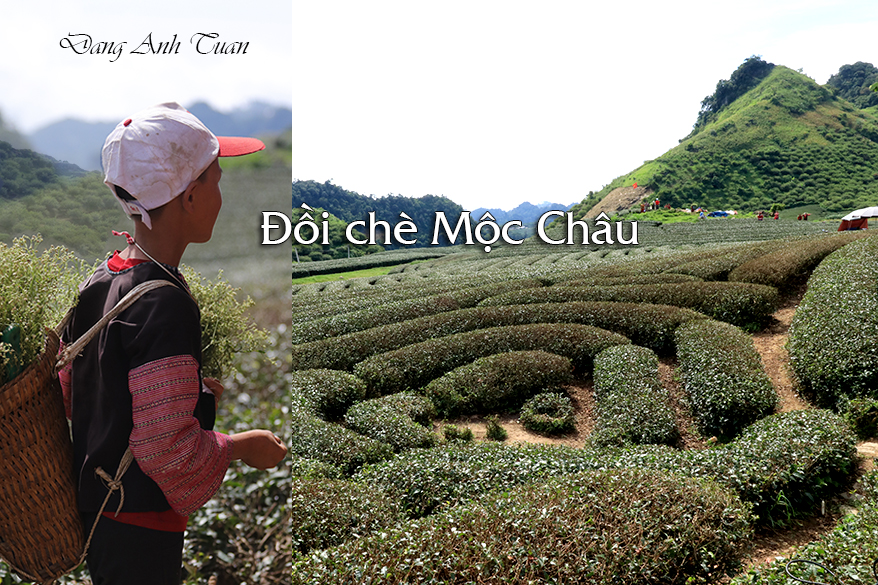
Mộc Châu (Sơn La) được mệnh danh là Đà Lạt của miền Bắc. Cách Hà Nội 180 km về phía Tây Bắc, nơi được nổi tiếng chè và có nét độc đáo trong văn hóa của các dân tộc H’Mông, Thái, Dao, Mường…
Mộc Châu (Sơn La) est au Vietnam du nord ce que Dalat est au Vietnam du sud. Etant située loin de la capitale Hanoï de 180 km dans le territoire du Nord-Ouest, elle est réputée pour son thé et possède le trait caractéristique dans la culture des minorités ethniques Hmong, Thaï, Yao et Mường etc.

Moc Chau (Son La) in northern Vietnam is what Dalat is to southern Vietnam. Located 180 km away from the capital Hanoi in the Northwest region, it is famous for its tea and has distinctive features in the culture of ethnic minorities such as Hmong, Thai, Yao, and Muong, etc.

  • Cascade des Fées (Thác Nàng Tiên)
  • Forêt des pins  Bản Áng (Rừng thông Bản Áng)

[RETURN]

Thác Dải Yếm (Cascade Dải Yếm, Mai Châu)


Thác Dải Yếm

Version française
Version anglaise
Galerie des photos

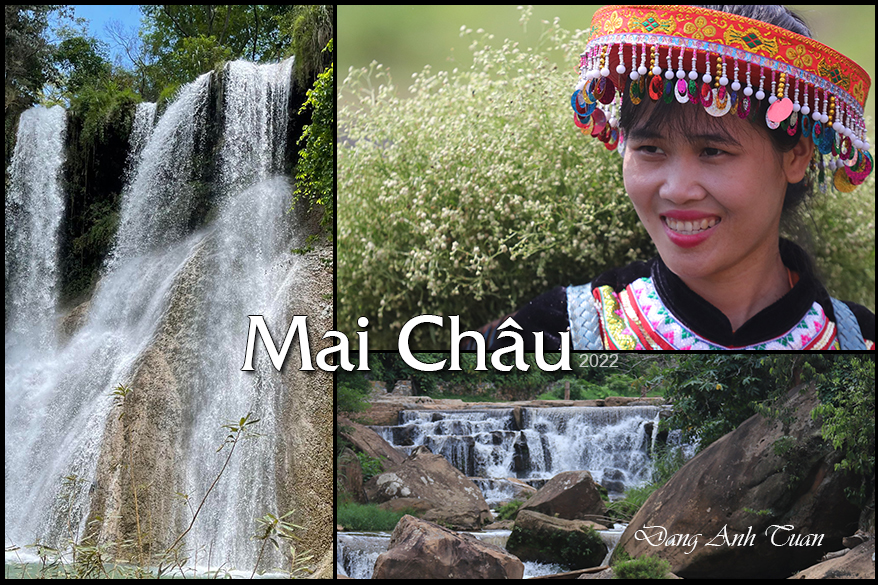
Thác Dải Yếm được hình thành từ hai khe nước bo Tá Cáubo Co Lắm ở bản Vặt cách thác 600m về phía tay trái và cùng nằm trên QL43. Ngày xưa, nhiều người còn gọi thác này là Thác Nàng, Thác Bản Vặt, tuy nhiên cái tên được nhiều người biết đến nhất vẫn là Thác Dải Yếm. Cái tên thác đã gắn liền với sự tích về hai cô thôn nữ dũng cảm cứu chàng trai khỏi nước lũ. Nằm cách trung tâm thị trấn Mộc Châu khoảng 8km, làng nầy của người Thái được toạ lạc cách suối 600 thước  bên tay trái và trên quốc lộ 43. Thác Dải Yếm  còn là ngọn thác lớn thuộc địa phận xã Mường Sang, huyện Mộc Châu, tỉnh Sơn La.

Version française

La cascade Dãi Yếm se forme lors de la rencontre de deux cours d’eau, Bó Co Lắm  et Bo Tá Cháu dans le village de Vặt. Loin du centre-ville de Mộc Châu à peu près de 8km,  ce village des Thaïs  est situé  à 600 m de la cascade sur le côté gauche et sur la route nationale 43. Autrefois, beaucoup de gens appelaient également cette cascade Thác Nàng, Thác Bản Vặt, mais le nom le plus célèbre est toujours la cascade Dải Yếm dont  le nom est lié  étroitement à l’histoire de deux courageuses villageoises ayant sauvé un garçon lors d’une inondation. La cascade Dải Yếm est une chute d’eau importante appartenant à la commune de Mường Sang du district de Mộc Châu, dans la province de Sơn La.

English version

The Dãi Yếm waterfall is formed at the meeting point of two streams, Bó Co Lắm and Bo Tá Cháu, in the village of Vặt. About 8 km from the center of Mộc Châu town, this Thai village is located 600 m from the waterfall on the left side and along National Road 43. In the past, many people also called this waterfall Thác Nàng, Thác Bản Vặt, but the most famous name remains Dải Yếm waterfall, whose name is closely linked to the story of two brave village women who saved a boy during a flood. The Dải Yếm waterfall is a significant waterfall belonging to the commune of Mường Sang in the Mộc Châu district, Sơn La province.

Picture gallery

[RETURN]

Quartier piétonnier (Huế)

Khu phố Tây ba lô

Cũng như mọi thành phố, Huế cũng có phố đi bộ  hay thường gọi là khu phố Tây ba lô vì người Âu Châu hay thường cư trú ở nơi nầy trong thời gian viếng thăm cố đô Huế. Cũng có đường mang tên Phạm Ngũ Lão như ở thành phố Saïgon nhưng không có náo nhiệt và đông đảo người chi cho lắm.  Tuy nhiên nó  là nơi mà người du khách có thể tìm kiếm các trò vui chơi và giải trí về đêm giữa lòng cố đô trầm tư và sâu lắng. 

Comme toutes les villes du Vietnam, Huế possède également le quartier des routards européens  car ils y résident fréquemment lors de leur visite dans l’ancienne cité de Huế. C’est étonnant de trouver une rue nommée Phạm Ngũ Lão comme celle de  la ville de Saïgon, mais elle n’est pas assez animée et bondée de gens. Cependant, c’est un endroit où les touristes peuvent trouver des divertissements et peuvent trainer  une vie nocturne au cœur de l’ancienne capitale calme et contemplative.

Like all cities in Vietnam, Huế also has a backpacker district frequented by European travelers during their visit to the ancient city of Huế. It is surprising to find a street named Phạm Ngũ Lão like the one in Saigon, but it is not as lively or crowded. However, it is a place where tourists can find entertainment and enjoy nightlife in the heart of the calm and contemplative former capital.

[Return Huế]

Le pavillon Nhật Thành ( Nhật Thành Lâu)

Nhật Thành Lâu

Version française
Version anglaise
Galerie des photos

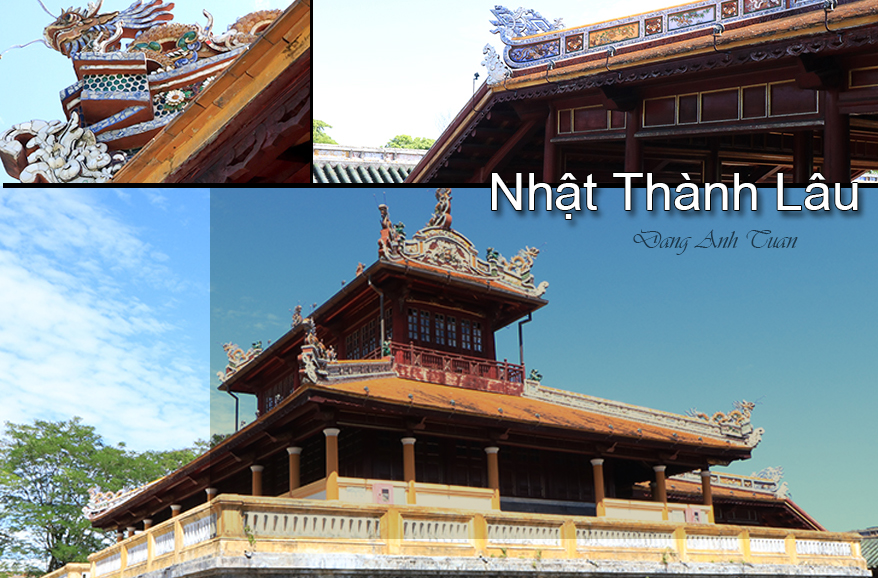
Công trình kiến trúc này được xây dựng vào năm 1841 dưới thời vua Thiệu Trị, lầu gồm có 2 tầng. Nơi nầy là Phật điện của nhà vua trong Tử Cấm Thành hay là kho bạc theo  lời của một tác giả. Không ai biết rõ sự bổ dụng nó trong Tử Cấm Thành. Vào thời kỳ cuối nhà Nguyễn thì nơi nầy mẹ vua Bảo Đại, bà Từ Cung và các bà trong nội cung hay thường lui tới đây để đọc kinh, cầu an và niệm Phật. Lầu Nhật Thành bị tàn phá rất nặng nề trong các năm 1947 và năm 1968 nên  chỉ còn lại phần nền của công trình. Bởi vậy năm 2018, Trung tâm Bảo tồn Di tích Cố đô Huế đã cho phục dựng lại công trình này. Lầu Nhật Thành nằm ở vị trí của Minh Thận Điện thưở xưa, ở phiá đông thì có Càn Thành Điện và phía nam Thái Bình Lâu

Version française

Étant construite en 1841 sous le roi Thiệu Trị, cette œuvre architecturale se composait de 2 étages. Elle  n’avait aucune affectation précise dans la cité pourpre interdite. Selon certains, elle était le lieu de vénération du Bouddha par le roi ou la chambre forte royale selon la remarque d’un auteur dans son article. Vers la fin de la dynastie des Nguyễn, la mère du roi Bảo Đại, la reine Từ Cung et d’autres femmes du palais  y étaient venues souvent  pour lire des sutras, faire des prières ou vénérer Bouddha. Ce pavillon Nhật Thành qui  fut gravement endommagé durant les années  1947 et 1968 ne gardait que sa fondation. En 2018, le Centre de conservation des monuments de Huế décida de le restaurer. Étant situé à l’emplacement de l’ancien palais Minh Thận, Nhật Thành Lâu se retrouve à l’est avec le palais privé du roi, Càn Thanh et au sud avec la bibliothèque royale Thái Bình Lâu.

English version

This architectural work was built in 1841 during the reign of Emperor Thiệu Trị, and the tower has 2 floors. This place was the Buddha hall of the king in the Forbidden Purple City or the treasury according to an author. No one knows clearly its function in the Forbidden Purple City. In the late Nguyễn dynasty, this place was often visited by Emperor Bảo Đại‘s mother, Lady Từ Cung, and the ladies of the inner palace to read sutras, pray for peace, and chant Buddha’s name. Nhật Thành Tower was heavily damaged in the years 1947 and 1968, leaving only the foundation of the structure. Therefore, in 2018, the Hue Monuments Conservation Center restored this building. Nhật Thành Tower is located at the site of the former Minh Thận Hall, with Càn Thành Hall to the east and Thái Bình Pavilion to the south.

Galerie des photos

[Return Hue]


Stèle commémorative (Bia Tưởng Niệm)


Version française
Version anglaise

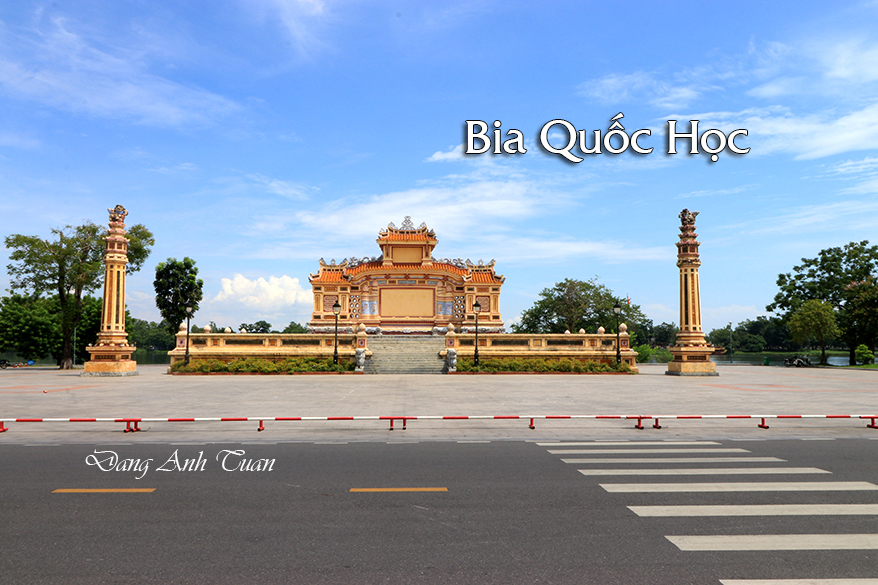
Đựợc gọi là Bia Quốc học, công trình nầy xây cất vào đầu thế kỷ 20 để tưởng niệm những binh sỹ người Pháp và Việt đã hy sinh trong chiến tranh thế giới lần thứ nhất chống Đức. Công trình nầy được chọn theo mẫu thiết kế của họa sỹ xuất sắc trong ngành mỹ thuật đồ họa, Tôn Thất Sa, hậu duệ  của chúa Nguyễn Phúc Chu. Đài được khởi công xây dựng ngày 12 tháng 5 năm 1920 và đã có hơn một trăm năm.  Theo  ông Nguyễn Đình Hoè, đài nầy được dựng theo dáng một bình phong lớn, có mái che, hai tầng và trên nền có bậc thềm. Các hoạ tiết trang trí, kiến trúc, điêu khắc đều mang phong cách kiến trúc của thời Nguyễn. Vì thế nên không bị hũy phá mà còn được sùng tu lại trông rất xinh xắn và hài hoà với quan cảnh hài hoà của sông Hương và trước mặt trường Quốc Học.

Étant appelée maintenant « Bia Quốc Học (Stèle de l’École Nationale)», cette stèle commémorative a été édifiée au début du XXème siècle pour se souvenir des soldats français et vietnamiens morts lors de la Première Guerre mondiale contre l’Allemagne. Ce monument  a été sélectionné selon le modèle proposé par  l’artiste de son temps dans l’industrie des arts graphiques, Tôn Thất Sa, un descendant du seigneur Nguyễn Phúc Chu. Sa construction commença  le 12 mai 1920 et data aujourd’hui plus de cent ans. Selon Mr. Nguyễn Đình Hoè, ce monument a été édifié sous la forme d’un grand paravent doté d’un toit, comportant deux étages  et établi sur une plate-forme avec des marches. Les motifs décoratifs, l’architecture et la sculpture sont tous dans le style architectural de la dynastie des Nguyễn. C’est pour cela qu’il n’a pas été détruit. Par contre, sa rénovation récente est superbe et en harmonie  avec le cadre enchanteur de la rivière des Parfums et en face de l’École Nationale de Huế.

Now called the « Bia Quốc Học (Stele of the National School), » this commemorative stele was erected at the beginning of the 20th century to remember the French and Vietnamese soldiers who died during the First World War against Germany. This monument was selected according to the model proposed by the artist of his time in the graphic arts industry, Tôn Thất Sa, a descendant of the lord Nguyễn Phúc Chu. Its construction began on May 12, 1920, and today it is over a hundred years old. According to Mr. Nguyễn Đình Hoè, this monument was built in the form of a large folding screen with a roof, consisting of two levels and established on a platform with steps. The decorative motifs, architecture, and sculpture are all in the architectural style of the Nguyễn dynasty. That is why it was not destroyed. On the other hand, its recent renovation is superb and in harmony with the enchanting setting of the Perfume River and opposite the National School of Huế.


[Return Huế]

Chùa Thiên Mụ (Pagode de la Dame céleste)


Version française
Version anglaise
Galerie des photos

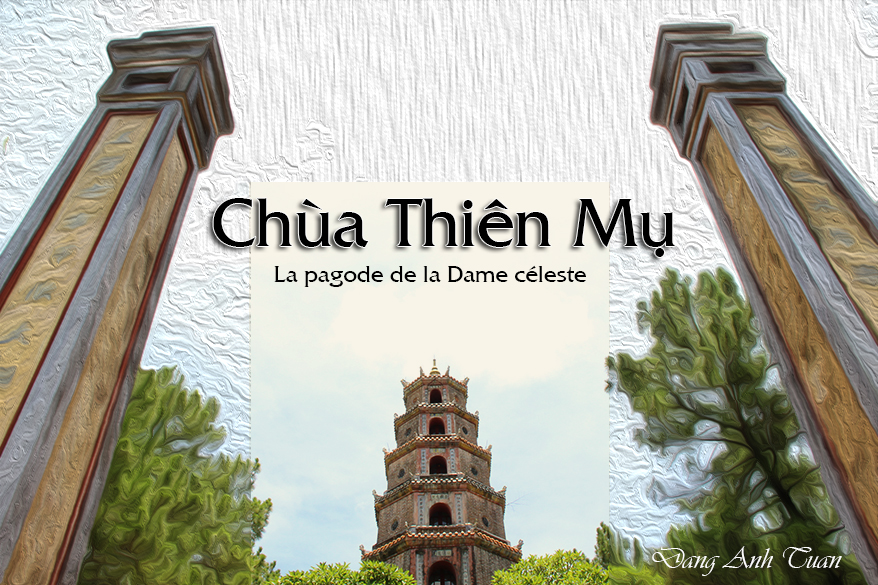
Trước khi chúa Tiên Nguyễn Hoàng  xây dựng chùa Thiên Mụ hay Linh Mụ vào năm 1601  ở trên đồi Hà Khê  nằm phiá tã ngạn sông Hương  thì chính  ở nơi nầy đã có trước đó  một nền thảo am của những người đến khai khẩn vùng đất nầy lập lên tên là Thiên Mỗ. Chuyện nầy được ghi nhận lại bởi một danh sỹ Dương Văn An đời nhà Mạc có công trạng  viết về núi sông, thành trì, phong tục ở miền Thuận Hoá  (Bình Trị Thiên và Bắc Quảng Nam) trong Ô Châu Cận Lục  vào 1553.  Như vậy  vùng đất nầy thuộc về dân tộc Chàm  vì các di tích thành Lồi của họ được tìm thấy gần đây chỉ cách thành phố  Huế có 4 cây số. Khi Nguyễn Hoàng được  vua Lê  Anh Tông làm Tổng Trấn Tướng Quân kiêm quản cả  Quảng Nam và Thuận Hóa ở Đàng Trong thì ông đã có ý định muốn làm nên nghiệp lớn.  Lúc đầu ông đóng quân ở   (phiá  bắc của Quảng Trị  ngày nay). Có một lần ông đi dò dẫm các vùng lân cận thì ông mới khám phá ra đồi Hà Khê. Ông được nghe dân gian kể là nơi này  có một  bà lão mặc áo đỏ quần lục hay thường xuất hiện  và cũng là nơi mà Cao Biền (Kao Pien)  viên tướng tài nhà Đường (Trung Quốc), làm quan cai trị Việt Nam vào thế kỷ IX. Giỏi thuật số và thông địa lý, ông cho người đào hố ở  phiá sau đồi để  cắt đứt các long mạch và phá linh khí tránh sự xuất hiện của một chân tu đến đây  lập chùa và  làm cho nước Nam hùng mạnh.

Đã có ý đồ làm chúa ở xứ Đàng Trong từ lâu, ông không ngần ngại ra lệnh lấp hố, tụ lại linh khí làm bền vững long mạch và  truyền lệnh xây dựng một ngôi chùa trên nền thảo am của đồi  tên là Thiên Mụ ngoảnh mặt ra sông Hương  để thoả mản ý nguyện trông đợi của dân chúng. Vì sợ quấy rầy bởi  những thần linh  địa phương có khả năng mang lại cho ngườì dân Việt  một cuộc sống tồi tệ trong cuộc Nam Tiến nên họ hay thường sử dụng những nơi có dấu tích  văn hóa Chàm để  chuyển vị các chốn  nầy  vào thế giới tâm linh và làm nơi thờ tự của họ. Họ đang cố gắng thiết lập sự hài hòa giữa sức mạnh siêu nhiên và thời gian ở  các lãnh thổ mà họ đã chinh phục được. Đó là trường hợp thánh địa Pô Nagar nơi mà nữ thần Chăm Uma được người dân Việt giành lại sở hữu và không ngần ngại biến chuyển  truyền thuyết Po Nagar thành truyền thuyết của mình và  được dàn xếp  lại theo cách riêng tư nhưng dù sao họ cũng không xóa bỏ được hết nền tảng của truyền thuyết Chàm. Nữ thần của Chiêm Thành do đó trở thành Thiên Y A Na (hay Thiên Y Thánh Mẫu) của người dân Việt. Sự chiếm đoạt sở hữu  này còn được thấy ở những địa danh khác của Việt Nam trong cuộc Nam Tiến: Bà Đen ở Tây Ninh hay nữ thần Chúa Xứ ở núi Sam (Châu Đốc).

Vì vậy cái thảo am nầy  của người Chàm tên là Thiên Mỗ cũng không ngoài lệ. Nó được dựng cất lại thành một ngôi chùa mang  tên là Thiên Mụ đấy thôi.  Theo nhà nghiên cứu Phan Thuận An thì chúa Nguyễn Kiêm nhận thấy phong cảnh thoát tục hữu tình của ngôi chùa cổ  kính nầy nên cho xây lại ngôi chùa để được  khang trang hơn.  Chùa nầy lúc đầu cũng  sơ sài mà thôi nhưng được nổi  tiếng  từ khi  hoà thượng Thích Đại Sán  (hay Thạch Liêm)  ở Quảng Đông  được chúa  Nguyễn Phước Chu, một người rất sùng đạo Phất,  mời qua để  truyền bá những lời dạy hay giáo lý của Đức Phật tại chùa.  Chúa  còn cho đúc chuông lớn và có làm bài minh khắc trên chuông vào năm 1710.  Chùa nầy còn được trùng tu nhiều lần, lần đầu vào năm 1665 dưới thời chúa Nguyễn Phúc Tần, sau đó bị binh hỏa tàn phá nặng nề dưới thời nhà Tây Sơn (1786-1801) và được tu sửa lại dưới thời ngự trị của vua Gia Long (1815)  và Minh Mạng (1831).  Phải đợi đến năm 1844, năm mà  bà Thuận Thiên Cao Hoàng Hậu, vợ của vua Gia Long thọ  được 80 tuổi thi vua Thiệu Trị cử thống chế Hoàng Văn Hậu xây dựng chùa lại một cách quy mô, có thêm tháp Phương Duyên cao 7 tầng (21 thước)  và đình Hương Nguyện.

Còn dưới thời vua Tự Đức, để tránh động đến Trời vua đổi danh từ Thiên Mụ thành ra Linh Mụ trong thời gian (1862-1869). Năm 1904, với trần bão dữ dội ở Huế, đình Hương Nguyện bị sụp đổ và chỉ được trùng tu lại 3 năm sau dưới thời ngự trị của vua Thành Thái. Chính ngài  nhân dịp  lễ mừng thọ 90 tuổi của bà Từ Dũ, vợ của vua Thiệu Trị, cho bộ Công tu bổ tháp Phước Duyên và dựng bia kỷ niệm. Ngày nay, nhờ sự hài hoà giữa kiến trúc cổ kính của chùa và cảnh sắc nên thơ bên dòng sông Hương, chùa  Thiên Mụ trở thành một danh lam thắng cảnh của đất nước.

Version française

Avant d’entamer la construction de la pagode de la Dame céleste (Thiên Mụ)  par  le premier seigneur Tiên Nguyễn Hoàng de la famille des Nguyễn en 1601 sur la colline Hà Khê  située  sur la rive gauche de la Rivière des Parfums, il y avait déjà à cet endroit  la fondation  d’un pagodon connu sous le nom Thiên Mỗ. Ce dernier  appartenait  aux gens  venus  exploiter cette région. Ce fait  était signalé  par le  célèbre écrivain  Dương Văn An de l’époque de la dynastie des  Mạc, à qui l’on attribue le mérite de décrire les montagnes, les rivières, les citadelles et les coutumes de la région de Thuận Hóa (Bình Trị Thiên  et dans le nord de Quảng Nam) dans son œuvre intitulée Ô Châu Cận Lục (Composition moderne sur le district Ô Châu) en 1553.  Cette région appartenait  ainsi aux gens du Champa  car les reliques de leur citadelle Lồi étaient retrouvées récemment à 4 kilomètres  de la ville de Huế.

Lors de la nomination de  Nguyễn Hoàng en tant que général-administrateur des régions Quảng Nam et Thuận Hóa  dans le pays Đàng Trong (le centre du Vietnam actuel) par le roi Lê Anh Tông, il  a déjà eu l’intention de faire une belle carrière politique. Il s’installa au début avec son armée à  Ái Tử (dans le nord de l’actuel Quảng Tri). Une fois, en explorant les environs, il découvrit la colline de Hà Khê. On le fit connaître dans cet endroit l’histoire d’une vieille dame  venant du Ciel et  portant une chemise rouge et un pantalon vert. Mais ce lieu était aussi l’endroit où le talentueux général de la dynastie Tang Cao Biền  (Kao Pien)  chargé d’administrer le  Vietnam au 9ème siècle et connu pour l’art de la divination et le Feng Shui,  tenta de creuser le fossé derrière de la colline. Cela permit de couper les veines du dragon et détruire toutes les énergies positives pour éviter l’apparition d’un vrai moine venu ici pour construire à l’avenir un temple et rendre le Sud plus puissant.

Ayant eu longtemps l’intention d’être le  seigneur à Đàng Trong, il ordonna  à obturer sans hésitation  le fossé   dans le but de faciliter la concentration des énergies positives et renforcer les veines du dragon et construire sur l’ancien emplacement du pagodon de la colline une pagode orientée vers la Rivière des Parfums. Il  lui donna ainsi  le nom Thiên Mụ (Dame céleste) pour répondre à l’attente et la volonté de la population. Afin d’éviter d’être dérangés par les esprits locaux qui pourraient leur apporter une vie exécrable durant leur marche vers  le Sud (Nam Tiến), les Vietnamiens n’hésitèrent pas à faire usage des vestiges de la culture du Champa pour les transposer dans leur propre univers religieux et les faire devenir leurs propres lieux de culte. Ils tentèrent d’établir une harmonie entre les puissances surnaturelles et temporelles dans les  territoires qu’ils avaient réussi à conquérir. C’est le cas du sanctuaire de Pô Nagar où la déesse du Champa Uma a été appropriée  par les Vietnamiens. Ceux-ci n’hésitèrent pas à assimiler la légende de Po Nagar dans une mythologie arrangée à leur manière sans réussir à effacer le substrat cham du mythe. La déesse du Champa devenait ainsi Thiên Y A Na (Thiên Y Thánh Mẫu) des Vietnamiens. Cette appropriation se renouvelait  à d’autres endroits du Vietnam lors de la marche vers le Sud: la Dame Noire à Tây Ninh ou la déesse Chúa Xứ au mont Sam (Châu Đốc).

C’est pourquoi  le temple cham nommé Thiên Mỗ ne fait pas exception.  Il a été reconstruit pour devenir la pagode nommée Thiên Mụ. Selon le chercheur Phan Thuan An, le seigneur  Nguyễn Kiêm, séduit par le charmant paysage de cette ancienne pagode, ordonna sa reconstruction pour la rendre  plus spacieuse. Cette pagode était très rudimentaire à son début.  Elle  devint  célèbre à partir du moment où le moine Thích Đại Sán (ou Thạch Liêm) venant  de Guangdong, avait  été invité par le seigneur Nguyễn Phước Chu, un grand dévot du bouddhisme, à diffuser les bons enseignements de Bouddha dans cette pagode. Ce seigneur fit couler une grande cloche et fit  graver une inscription sur cette dernière en 1710. Cette pagode fut restaurée à plusieurs reprises, d’abord en 1665 sous le règne du seigneur Nguyễn Phúc Tần. Elle  subit ensuite  de gros dégâts provoqués par l’incendie à la période des Tây Sơn (Paysans de l’Ouest)(1786-1801) et  des remaniements importants sous les règnes des empereurs  Gia Long (1815) et Minh Mang (1831). Puis il faut attendre l’évènement qui eut lieu en 1844. C’est l’année où  l’impératrice mère Thuận Thiên Cao Hoàng Hậu, épouse du roi Gia Long, fêta son anniversaire à 80 ans pour que  roi Thieu Tri chargeât  le maréchal Hoàng Văn Hậu de reconstruire la pagode à grande échelle en y ajoutant la tour Pháp Duyên (7 étages) et le pavillon Hương Nguyện.

Sous le règne du roi Tự Đức, afin d’éviter de déranger le « Ciel »,  le roi a changé son nom de Thiên Mụ en Linh Mụ durant la période (1862-1869). En 1904, à cause de la violente tempête à Huế, le pavillon Hương Nguyện s’effondra  et ne fut restauré que trois ans plus tard sous le règne du roi Thành Thái. C’est lui qui, à l’occasion du 90ème anniversaire de la reine Từ Dũ, épouse du roi Thiệu Trị, demanda au ministère public  de restaurer la tour Phước Duyên et d’ériger une stèle commémorative.

Aujourd’hui, grâce à l’harmonie entre l’architecture ancienne de la pagode et le paysage poétique au bord de la Rivière des Parfums, la pagode Thiên Mụ est devenue un lieu pittoresque du pays.

English version

Before beginning the construction of the pagoda of the Celestial Lady (Thiên Mụ) by the first lord Tiên Nguyễn Hoàng of the Nguyễn family in 1601 on the Hà Khê hill located on the left bank of the Perfume River, there was already at this place the foundation of a pagoda known as Thiên Mỗ. The latter belonged to the people who came to exploit this region. This fact was noted by the famous writer Dương Văn An from the era of the Mạc dynasty, who is credited with describing the mountains, rivers, citadels, and customs of the Thuận Hóa region (Bình Trị Thiên and northern Quảng Nam) in his work titled Ô Châu Cận Lục (Modern Composition on the Ô Châu district) in 1553. This region thus belonged to the people of Champa as the relics of their Lồi citadel were recently found 4 kilometers from the city of Huế.

When Nguyễn Hoàng was appointed as the general-administrator of the Quảng Nam and Thuận Hóa regions in the Đàng Trong country (the central part of present-day Vietnam) by King Lê Anh Tông, he already had the intention of making a successful political career. He initially settled with his army in Ái Tử (in the north of present-day Quảng Tri). Once, while exploring the surroundings, he discovered the Hà Khê hill. In this place, he was told the story of an old lady coming from Heaven, wearing a red shirt and green pants. But this location was also where the talented general of the Tang dynasty, Cao Biền (Kao Pien), who was in charge of administering Vietnam in the 9th century and known for the art of divination and Feng Shui, attempted to dig a moat behind the hill. This was meant to cut the dragon’s veins and destroy all positive energies to prevent the appearance of a true monk who would come here in the future to build a temple and make the South more powerful.

Having long intended to be the lord in Đàng Trong, he ordered without hesitation to fill in the moat in order to facilitate the concentration of positive energies and strengthen the dragon veins, and to build on the former site of the hill pagoda a pagoda oriented towards the Perfume River. He thus gave it the name Thiên Mụ (Celestial Lady) to meet the expectations and will of the population. To avoid being disturbed by local spirits who could bring them a miserable life during their march to the South (Nam Tiến), the Vietnamese did not hesitate to use the remnants of Champa culture to transpose them into their own religious universe and make them their own places of worship. They tried to establish harmony between supernatural and temporal powers in the territories they had managed to conquer. This is the case of the Pô Nagar sanctuary where the Champa goddess Uma was appropriated by the Vietnamese. They did not hesitate to assimilate the legend of Po Nagar into a mythology arranged in their own way without managing to erase the Cham substrate of the myth. The Champa goddess thus became Thiên Y A Na (Thiên Y Thánh Mẫu) of the Vietnamese. This appropriation was renewed in other places in Vietnam during the march to the South: the Black Lady in Tây Ninh or the goddess Chúa Xứ on Sam Mountain (Châu Đốc).

That is why the Cham temple named Thiên Mỗ is no exception. It was rebuilt to become the pagoda named Thiên Mụ. According to researcher Phan Thuan An, Lord Nguyễn Kiêm, captivated by the charming landscape of this ancient pagoda, ordered its reconstruction to make it more spacious. This pagoda was very rudimentary at its beginning. It became famous from the moment the monk Thích Đại Sán (or Thạch Liêm), coming from Guangdong, was invited by Lord Nguyễn Phước Chu, a great devotee of Buddhism, to spread the good teachings of Buddha in this pagoda. This lord had a large bell cast and had an inscription engraved on it in 1710. This pagoda was restored several times, first in 1665 under the reign of Lord Nguyễn Phúc Tần. It then suffered heavy damage caused by fire during the Tây Sơn period (Western Peasants) (1786-1801) and underwent significant renovations under the reigns of Emperors Gia Long (1815) and Minh Mang (1831). Then, one must wait for the event that took place in 1844. That is the year when Empress Mother Thuận Thiên Cao Hoàng Hậu, wife of King Gia Long, celebrated her 80th birthday, leading King Thiệu Trị to charge Marshal Hoàng Văn Hậu with the large-scale reconstruction of the pagoda by adding the Pháp Duyên tower (7 floors) and the Hương Nguyện pavilion.

During the reign of King Tự Đức, in order to avoid disturbing the « Heaven, » the king changed its name from Thiên Mụ to Linh Mụ during the period (1862-1869). In 1904, due to a violent storm in Huế, the Hương Nguyện pavilion collapsed and was only restored three years later under the reign of King Thành Thái. It was he who, on the occasion of the 90th birthday of Queen Từ Dũ, wife of King Thiệu Trị, requested the public ministry to restore the Phước Duyên tower and erect a commemorative stele.

Today, thanks to the harmony between the ancient architecture of the pagoda and the poetic landscape by the Perfume River, the Thiên Mụ pagoda has become a picturesque place in the country.

Galerie des photos

[Return RELIGION]

[Return Huế]
Huế au fil de la nuit (Huế về đêm)

Huế au fil de la nuit

[Return Huế]

Phu Văn Lâu (Pavillon des Édits)


Version française
Version anglaise
Galerie des photos

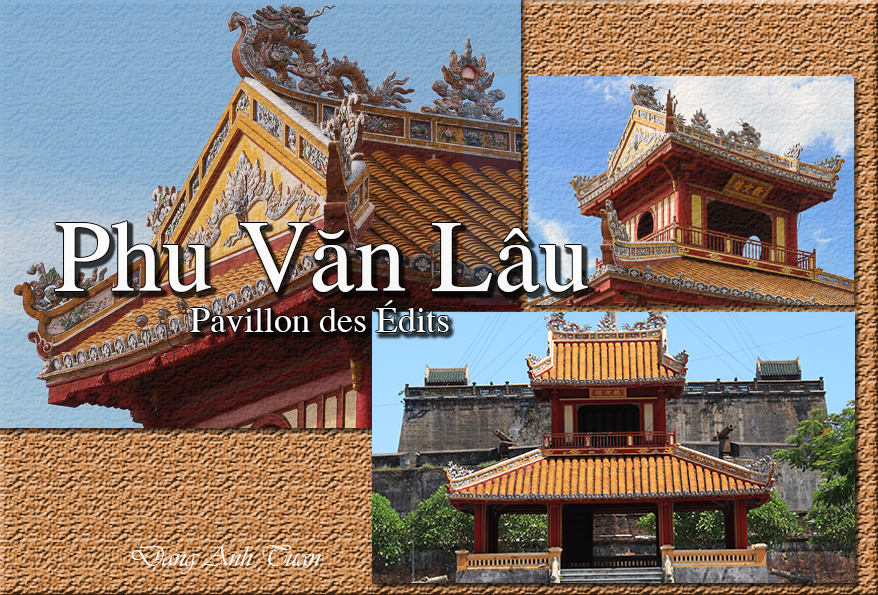
Được tọa lạc trước Kỳ Đài trên trục chính của hoàng thành Huế, quay mặt về phía phía nam (sông Hương), Phu Văn Lâu  là một ngôi lầu nhỏ hai tầng được xây dựng vào năm 1819 dưới thời ngự trị của vua Gia Long. Lầu nầy có chức năng để niêm yết các chiếu chỉ của vua lúc mới ban hành và để công bố tên của các thí sinh được trúng tuyển trong các khoa thi lớn như thi hội và đình. Chính vì lầu có mang tính các long trọng nên mọi người đến đây phải xuống người và phải quỳ lại trước khi đọc chiếu thư của triều đình. Có bia đá trước lầu « Khuynh Cái Hạ Mã » để nhắc nhở mọi người phải xuống ngựa bày tõ lòng kính cẩn. Năm 1829, nơi nầy được vua Minh Mạng dùng để tổ chức cuộc đấu hổ và voi.

Dưới thời vua Thành Thái, sau cơn bão năm Giáp Thìn (1904), Phu Văn Lâu bị phá hủy  trầm trọng và được vua Thành Thái hạ lệnh xây dựng lại như xưa. Phu Văn Lâu là một di tích lịch sử vì đây là nơi mà Trần Cao VânThái Phiên  giả vờ câu cá để gặp vua Duy Tân bàn việc khởi nghĩa chống Pháp. Khi sự việc bị đổ vỡ không thành, hai ông bị tử  hình và vua Duy Tân bị đày qua đảo La Reunion. Bởi vậy ai cũng ngầm ngùi thương xót những nhà yêu nước Việt Nam qua ca dao Huế sau đây nhắc nhở  đến sự việc nầy:

Chiều chiều trước bến Văn Lâu,
Ai ngồi, ai câu, ai sầu, ai thảm?
Ai thương, ai cảm, ai nhớ, ai trông?
Thuyền ai thấp thoáng bên sông,
Nghe câu mái đẩy, chạnh lòng nước non !


Version française

Situé à l’arrière de la tour du mât (Kỳ Đài) sur l’axe principal de la Citadelle Impériale de Huế et en face de la Rivière des Parfums, Phu Van Lau est un pavillon à deux étages construit en 1819 sous le règne de l’empereur  Gia Long. Cet édifice  a pour fonction d’afficher les arrêtés pris par le roi au moment de leur promulgation et d’annoncer les noms des candidats qui ont été sélectionnés aux concours nationaux et provinciaux. Du fait qu’il avait  un caractère solennel, tous ceux qui venaient ici,  devaient descendre de cheval et se mettre à genoux avant de lire l’édit impérial. Il y avait une  stèle de pierre devant le pavillon  « Khuynh Cái Hạ Mã » pour rappeler à chacun de respecter cette modalité.

En 1829, ce lieu fut utilisé par le roi Minh Mang pour organiser un combat de tigres et d’éléphants. Sous le règne du roi Thành Thái, lors de la tempête de l’année Giáp Thin (1904), Phu Van Lau a été sévèrement détruit et  reconstruit comme avant par le roi. Phu Van Lau est un vestige historique car c’est l’endroit où Trần Cao Vân et Thái Phiên ont fait semblant de pêcher pour rencontrer le roi Duy Tân et engager les discussions du soulèvement contre les autorités coloniales françaises. Lorsque le complot avait échoué, ces deux hommes ont été exécutés et le roi Duy Tân a été exilé à La Réunion. C’est pourquoi cela nous remplit de compassion pour les patriotes vietnamiens avec les vers cités ci-dessous dans une chanson populaire de Huế:

Chiều chiều trước bến Văn Lâu,
Ai ngồi, ai câu, ai sầu, ai thảm?
Ai thương, ai cảm, ai nhớ, ai trông?
Thuyền ai thấp thoáng bên sông,
Nghe câu mái đẩy, chạnh lòng nước non !

Le soir devant l’embarcadère Văn Lâu,
Qui est assis, qui pêche, qui est triste, qui est malheureux?
Qui aime, qui ressent, qui se souvient, qui regarde ?
La barque glisse  rapidement sur le fleuve,
En entendant le chant éthéré de la batelière, on éprouve un sentiment de tristesse !

English version

Located at the rear of the mast tower (Kỳ Đài) on the main axis of the Imperial Citadel of Huế and facing the Perfume River, Phu Van Lau is a two-story pavilion built in 1819 during the reign of Emperor Gia Long. This building served the purpose of displaying royal decrees at the time of their promulgation and announcing the names of candidates who had been selected in national and provincial exams. Due to its solemn nature, all who came here had to dismount from their horses and kneel before reading the imperial edict. There was a stone stele in front of the pavilion, « Khuynh Cái Hạ Mã, » to remind everyone to respect this protocol. In 1829, this place was used by King Minh Mang to organize a combat between tigers and elephants.

During the reign of King Thành Thái, in the storm year of Giáp Thin (1904), Phu Van Lau was severely damaged and was rebuilt as before by the king. Phu Van Lau is a historical relic because it is the place where Trần Cao Vân and Thái Phiên pretended to be fishing to meet King Duy Tân and engage in discussions about the uprising against the French colonial authorities. When the plot failed, these two men were executed and King Duy Tân was exiled to Réunion. This is why it fills us with compassion for the Vietnamese patriots, with the verses quoted below in a popular Huế song:

Chiều chiều trước bến Văn Lâu,
Ai ngồi, ai câu, ai sầu, ai thảm?
Ai thương, ai cảm, ai nhớ, ai trông?
Thuyền ai thấp thoáng bên sông,
Nghe câu mái đẩy, chạnh lòng nước non !

In the evening in front of the Văn Lâu dock,
Who is sitting, who is fishing, who is sad, who is unhappy?
Who loves, who feels, who remembers, who watches?
The boat glides quickly on the river.


[Return Hue]