Nguyễn Trãi (Version anglaise)

French version

Vietnamese version

I would like to give to this great Vietnamese politician a great homage by slightly modifying the two verses he composed in his poem « Improvisation » translated into French by Nguyễn Khắc Viện in Anthology of the Vietnamese Literature:

A thousand Autumns have passed, water keeps its face
A thousand generations have watched the moon similar to itself;

by my two following verses:

A thousand Autumns have passed, Vietnam keeps its independence
A thousand generations have venerated Nguyễn Trãi similar to himself.

© Đặng Anh Tuấn


One can sum up the life of this great politician by means of verse 3248 of the Vietnamese literature great classical of Nguyễn Du in 18th century:

Chữ Tài liền với chữ Tai một vần
The word Tài (Talent) rhymes perfectly with the word Tai ( Misfortune ).

to evoke not only his incredible talent but also his tragic end regretted by so many Vietnamese generations. Facing the brutal force that represented emperor Chenzu of the Ming ( Minh Thánh Tổ ) under the command of Tchang Fou ( Trương Phụ ) during his invasion of Đại Việt ( ancient name of Vietnam) in the ninth month of the year Binh Tuất (1406), Nguyễn Trãi knew how to give what Lao Tseu had said in the Book of Life and Virtue:
 

Nothing is more supple and soft in the world than water
However to attack what is hard and strong
Nothing surpass it and nobody can match it.
That the weak surpasses the strong
That the supple surpasses the hard
Everyone knows.
But nobody put this knowledge into practice
 

a tremendous conceptualization and elaborated an ingenious strategy allowing the Vietnamese, weak in number to come out victorious during that confrontation and regain their national independence after 10 years of struggle. With the landowner Lê Lợi, known later as Lê Thái Tổ and 16 comrades-in-arms tied by a pledge at Lung Nhai (1406 ), and 2000 peasants at mount Lam Sơn in the mountainous region West of Thanh Hoá, Nguyễn Trãi arrived at turning the insurrection into a war of liberation and converting a band of ill-armed peasants into a people’s army of 200,000 men strong a few years later.

The strategy known as « guerilla » was shown very effective because Nguyen Trai was successful in putting into practice the doctrine advocated by the Chinese Clausewitz, Sun Zi (Tôn Tữ) in the Spring and Autumn ( Xuân Thu ) era, based on the following variables: Virtue, Time, Land , Leadership, and Discipline in the conduct of the war. Nguyễn Trãi had an opportunity to say he preferred winning the heart of the people to citadels . When there is harmony between the leaders and the people, the latter will accept to fight until their last breath. The cause will be heard and won because Heaven takes side with the people, which Confucius had the opportunity to recall in his Canonical Books: 

Thiên căng vụ dân, dân chi sở dục, thiên tất tòng chí
Trời thương dân, dân muốn điều gì Trời cũng theo
Heaven loves people so much it grants what people ask for.

One can say that with Nguyễn Trai, the humanist inclination of Confucian doctrine has taken its full development. To make sure of the support and adhesion of the people in his war for independence, he did not hesitate to take advantage of his people’s superstition and credulity. He asked his close relations to climb up trees and use toothpicks and honey to carve the following sentence on the leaves. 

Lê Lợi vì dân, Nguyễn Trãi vì thân
Lê Lợi for the people, Nguyễn Trãi for Lê Lợi 

This attracted ants to eat the honey leaving the message marked on the leaves which were blown off by the wind into streams and other bodies of water. When people picked up the leaves as such, they believed that the message came from the will of Heaven and massively joined he war of liberation.

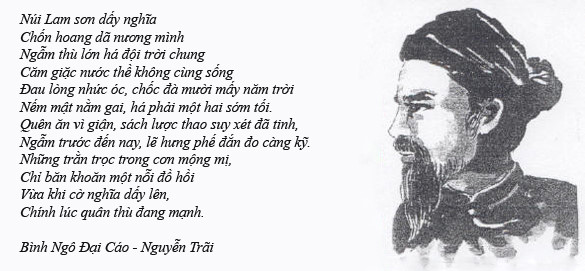
Humanist by conviction, he always thought not only of the sufferings of his people but also that of his enemies. He had the opportunity to emphasize in his letter to Chinese General Wang Toung ( Vương Thông ) that the duty of a commander is to dare make a decision, undo hatred, save human lives and cover the world with good deeds in order to bequeath a great name to posterity ( Quân Trung Từ Mệnh Tập ). He let defeated Chinese generals Wang Toung ( Vương Thông ), Mã Anh, Fang Chen ( Phương Chính ) go back to their country with 13000 captured soldiers, 500 junks and thousands of horses. Concerned about peace and the happiness of his people, in his masterpiece « Proclamation of the Ngô Pacification » ( Bình Ngô Ðại Cáo ) that he wrote after winning the war and driving the Chinese army out of Vietnam, he recalled that it was the time to act with wisdom for the safety of the people.

To make China not to feel humiliated by the bitter defeat and to restore above all a long lasting peace and happiness for his people, he proposed China a vassal pact with a tribute of two real-sized statues in fine metal every three years ( Ðại thần kim nhân ) in compensation for the two Chinese generals Liou Cheng ( Liễu Thăng ) and Leang Minh ( Lương Minh ) who died in combat.

In the first years of the struggle, Nguyễn Trãi knew biting and bleeding defeats many times (the death of Lê Lai, Ðinh Lễ etc… ), which forced him to take refuge at Chi Linh three times with Lê Lợi and his partisans. Despite of that, he never felt discouraged because he knew that the people fully supported him. He often compare the people with the ocean. Nguyễn Trãi had the opportunity to tell his close relations:

Dân như nước có thể chở mà có thể lật thuyền.
The people is like water which can move and sink the ship.

The remark made by his father Nguyễn Phi Khanh, captured and brought to China with other educated Vietnamese including Nguyễn An, the future builder of the forbidden Citadel in Peking, during their separation moment at the Sino-Vietnamese border, continued to be vivid in his mind and made him ever more determined in his unwavering conviction for the his just cause: 

Hữu qui phục Quốc thù, khóc hà vi dã
Hãy trở về mà trả thù cho nước, khóc lóc làm gì
You’d better go back and avenge the country, it doesn’t help crying. 

He spent whole nights in search of a strategy permitting to counter the Chinese army at the zenith of its force and terror. Being updated on the dissensions within the ranks of its adversaries, the difficulty that emperor Xuanzong of the Ming was having at the northern border with the Hungs after the disappearance of Chengzu in 1424 and the damages that the Chinese army suffered during the last military engagements in spite of their territorial success, Nguyễn Trãi did not hesitate to propose a truce to general Ma Ki. The truce was voluntarily accepted by both sides because each side thought they could take advantage of this respite either to consolidate their army in waiting for reinforcements from Kouang Si and Yunnan and a larger scale military engagement ( for the Ming ), or to rebuild an army already suffering important losses of lives and to     change the strategy in the struggle for liberation ( for the Viet ).

Taking advantage of the unfamiliarity of the terrain by the Chinese reinforcing army coming from China, he was fast in his maneuvering putting into work the  » the full and the void  » doctrine advocated by Sun Zi who had said in his work « The Art of War »:

The arm must be similar to water
Since water avoids heights and falls into hollows,
The army avoids the full and attacks the void.

which permitted him to decapitate Liou Cheng and his army in the « void » of Chi Lăng defined by Sun Zi, in the mountainous and quagmire narrow pass near Lang Son. He did not give any respite to Liou Cheng’s successor, Leang Minh to regroup the remainder of his Chinese army by setting a trap around the city of Cần Trạm. Then he took advantage of the success to rout the reinforcing army of the Chinese general ( Mộc Thanh ), which force the latter to drive off and go back alone to Yunnan ( Vân Nam )

Fearing to lose the bulk of his troops in a confrontation and worrying about saving the blood of his people, he chose to implement the policy of isolating big cities such as Nghệ An, Tây Ðô, Đồng Quan ( ancient name of the capital Hànội ) by investing all forts and small cities surrounding them, by incessantly harassing the supply troops and by neutralizing all reinforcing Chinese troops. In order to prevent the eventual return of the invaders and to disorganize their administrative structure, he placed in the liberated cities a new administration led by young and educated recruits. He did not stop sending emissaries to Chinese or Vietnamese governors of these towns to convince them to surrender under penalty of being brought to justice and sentenced to death in case of resistance. This turned out to be fruitful and rewarding because it compelled generalissimo Wang Toung and his lieutenants to surrender unconditionally as he was aware that it was impossible to hang on to Ðồng Quang any longer without reinforcement and supply. It was not only a war of liberation but also a war of nerves that Nguyen Trai has successfully conducted against the Ming.

Independence regained, he was appointed Minister of the Interior and member of the Secret Council. Known for his righteousness, he was fast to become the privileged target of the courtesans of king Lê Thái Tổ who began to take offense at his prestige. Feeling the risk of having the same fate reserved for his comrade in arms Trần Nguyên Hản and imitating the Chinese senior advisor Zhang Liang ( Trương Lương or Trương Tử Phòng ) of Han Emperor Liu Bang ( Lưu Bang or Hán Cao Tổ ), he requested king Lê Lợi to allow him to retire to mount Côn Sơn, a place he had spent his whole youth with his grand father Trần Nguyên Ðán, a former great minister regent of the Tran king, Trần Phế Ðế and the great grand son of general Trần Quang Khải, one of the Vietnamese heroes in the struggle against the Mongols of Kubilai Khan. 

It was here that he wrote a series of composed writings that recalled not only his profound attachment to nature which he made a confidant of, but also his ardent desire to give up honors and glory and to regain serenity. It was also through his poems that one finds in him a profound humanism, an extraordinary simplicity, an exemplary wisdom and an inclination to retreat and solitude. There, he has insisted that a man’s life lasted only one hundred years at the most. Sooner or later one will return to sand and dust. What counts in a man is his dignity and honor such as a blue blanket ( symbol of dignity ) that had been defended energetically by the learned Chinese Vương Hiền Chi of the Tsin dynasty during the intrusion of a burglar to his home, in his poem  » Improvisation on a Summer day » ( Hạ Nhật Mạn Thành ) or his freedom such as that of the two Chinese hermits Sào Phú and Hua Dzo of the Antiquity in his poem  » The Côn Sơn Song » ( Côn Sơn Ca ). 

In spite of his early retirement, he was accused of killing the king a few years later and was tortured in 1442 with all his family members because of the death of he young king Lê Thái Tông, in love with his young concubine Nguyễn Thị Lộ and accompanied by her to the lichee garden. One knows everything except the human heart that stays unfathomable, that was what he said in his poem « Improvisation » ( Mạn Thuật ) but that was what happened to him in spite of his foresight. His memory was restored only a few dozen years later by the great king Lê Thánh Tôn. One can keep in this scholar not only the love he always carried for his people and his country but also the respect he always knew how to keep toward his adversaries and nature. To this talented learned Vietnamese, his memory should be honored by quoting the phrase that Yveline Féray wrote in the foreword of her novel « Ten thousand Springs« : 

The tragedy of Nguyễn Trãi is that of a so great man living in a too little society
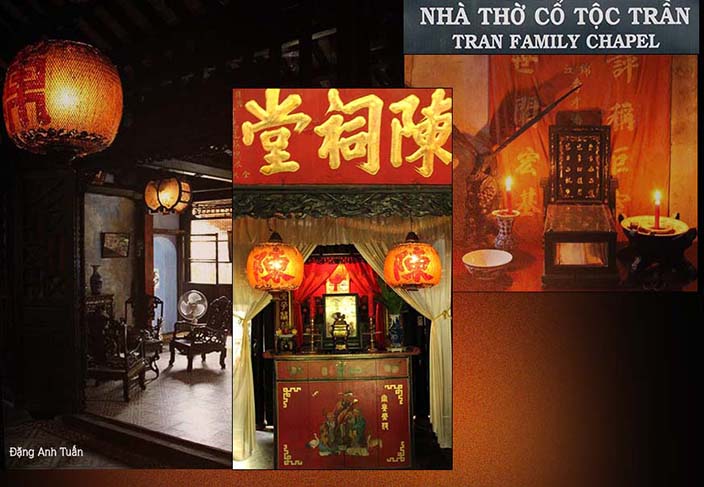
 

Temple du clan familial Trần (Nhà thờ cổ tộc Trần)

hoian_et_tran

Temple du clan familial Trần 


[Retour HOI AN et ses quartiers]


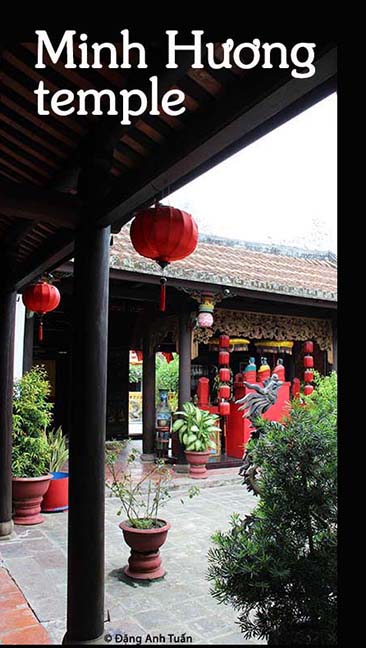
Temple Minh Hương ( Tùy Tiên Đường Minh Hương)

hoian_et_tuytienduong

[Retour HOI AN et ses quartiers]

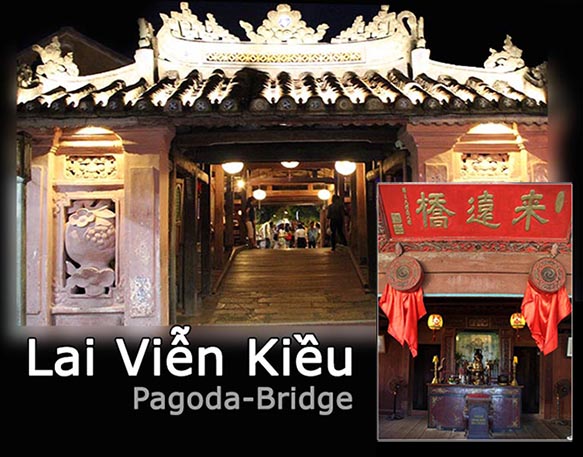
Pagode-pont (Chùa cầu)

pagoda_bridge


Version française
Version anglaise
Galerie des photos

Về cây cầu này, một số nhà sử học cho rằng nó được xây dựng bởi người Nhật. Liệu họ tự xây dựng hay là do người Trung Quốc đặt hàng? Bí ẩn lịch sử này vẫn chưa được giải đáp. Các chuyên gia khác hoàn toàn bác bỏ giả thuyết này. Họ tin rằng cây cầu nên được cho là do người Nhật xây dựng, vì mục đích của nó là đánh dấu rõ hơn lối vào khu phố Nhật Bản.

En ce qui concerne ce pont, certains historiens en attribuent la construction aux Japonais. Ces derniers l’ont-ils construit eux-mêmes ou l’ont-ils réalisé sur commande des Chinois ? C’est une énigme historique qui reste à éclaircir. D’autres experts réfutent totalement cette hypothèse. Ils estiment que ce pont doit être attribué aux Japonais dans la mesure où celui-ci était destiné à mieux signaler l’entrée du quartier japonais.

Regarding this bridge, some historians attribute the construction to the Japanese. The latter, did they build it for themselves  or did they realize it on Chinese request? It is the historic riddle which remains to clear up. Other experts totally refute this hypothesis. They consider that this bridge must be attributed to the Japanese in so far as this one was intended to indicate better the entrance of the Japanese district.

Galerie des photos

[Retour Hoi An et ses quartiers]

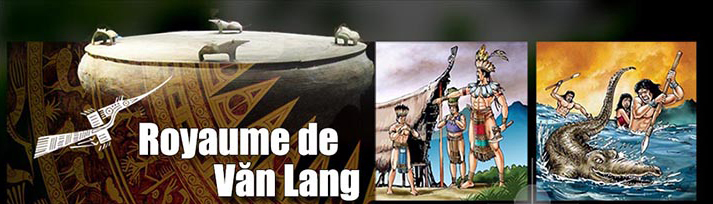
Văn Lang kingdom (Văn Lang)

French version
Vietnamese version

 In fact, Văn Lang referres the semi-legendary epoch of the eighteen Hùng kings or Lạc Vương (2879-257 B.C.) or 2622 years. It was the legend and the myth of the Dragon and the Immortal of whom Vietnamese are issue. This kingdom was located in the Yang Tse river basin (Sông Dương Tử) and was placed under the authority of a Hùng king . This one had been elected for his courage and his values. He had divided his kingdom into districts entrusted to his brothers known under the name « Lạc hầu » ( marquis ). His male children have the title of Quan Lang and his daughters that of Mỵ nương. His people was known under the name « Lạc Việt« . His men had a habit of tattooing their body. This « barbarian » practice, often revealed in the Chinese annals, was intended to protect men from the attacks of  water dragons (con thuồng luồng) if one believes the Vietnamese texts. It is perhaps the reason why the Chinese often designated them under the name « Qủi (daemons) ».

Loincloth and chignon constituted the usual costume of these people to which were added bronze ornaments. The Lac Viet lacquered their teeth in black, chewed betel nuts and crushed rice with their hand. The farmers practiced the cultivation of rice in flooded field. They lived in plains and coastal areas while,  in the mountainous areas of the current Việt Bắc and on part of the territory of the current Chinese province of Kuang Si,  lived the Tây Âu,  ancestors of the ethnic groups Tày, Nùng and Choang currently disseminated in the North Vietnam and in the South of China. At that epoch, the Vietnamese people lived on fishing and cultivation. They already knew how to use tree bark to make clothes, prepare rice alcohol, practice slash and burn agriculture, eat ordinary rice or sweet rice, live in houses on stilts to avoid wild animals etc… Many Vietnamese popular tales (the story of the Sweet Rice Cake, that of the Betel Quid and that of the Mountain and River Gods etc.) came  from these customs.

There is a part of reality in the history of this kingdom. The ruines of the Cổ Loa citadel (Spiral citadel) located  about 18km in the district Đồng Ánh from  Hànội and the temples of Hùng kings testifies to these indisputable vestiges with historians viewpoint.


HUNG_VUONG


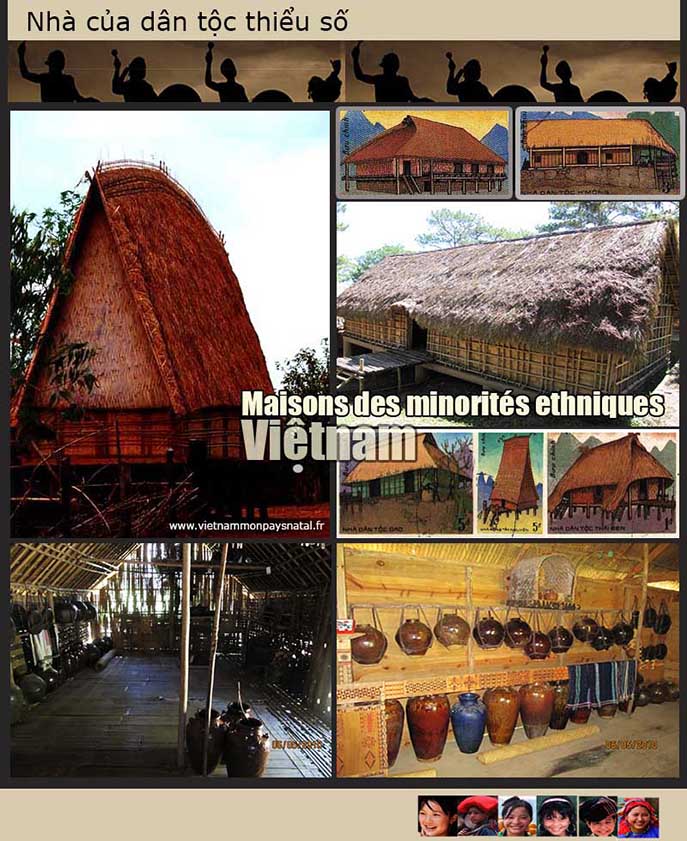
Ethnic minority housing (Nhà của đồng bào thiểu số)


maisons_minorites


French version

Ethnic minority housing

The richness of ethnic minorities living in the Central Highlands (Tây Nguyên) of Vietnam is measured by the number of jars of rice beers found inside of their houses. These jars are distinguished by their forms, sizes and colors. Some are engraved with the bas-reliefs often illustrated by flowers or dragons.


Pictures gallery

maisons_ethnies

The challenge (Thách Thức)

defi

The challenge

French version
Vietnamese version

This word is not unfamiliar to the Vietnamese. On the contrary, it is synonymous to perseverance, resistance, ingenuity and confrontation for these frail people whose feet have been burried in the rice fields’ mud since the dawn of time. They never stop at taking up, from generation to generation, the challenge incessantly imposed by the excesses of a harsh and inhospitable nature and by the Midle Empire, their big brother and hereditary enemy at the border. The Vietnamese dedicated to the latter a surprising admiration but at the same time pledged an implacable resistance in the goal of keeping their national independence and cultural traits. China has many times tried to assimilate Vietnam during its millennial domination but it succeeded in blurring the particularities without making them disappear completely. It was quick to be aware of that, because on any favorable occasion, the Vietnamese displayed their resistance and difference. They even tried to confront the Chinese in the field of literature. That has been reported in a great number of accounts that keep on to be plentiful up until now in the history of Vietnamese literature.

According to what was said, after having succeeded in putting down the revolt of the two sisters Trưng Trắc Trưng Nhị and pacifying Giao Chỉ ( ancient country of the Viet ), Chinese General Ma Viện( MaYuan ) of the Han dynasty erected in 43 at the Sino-Vietnamese border a pillar several meters high bearing the following notice:

Ðồng trụ triệt, Giao Chỉ diệt
Ðồng trụ ngã, Giao Chỉ bị diệt.

Vietnam would disappear forever with the fall of this pillar.

To avoid the pillar’s fall, the Vietnamese tried to strengthen it by throwing, as they walked by, a piece of soil around that huge column, and thus progressively helped in building a mound making the mythical pillar disappear.

To be ironic about the Vietnamese’s fear and worry of losing their country, the Ming emperor did not hesitate to use unfriendly terms to arrogantly tell the Vietnamese envoy Giang Văn Minh ( 1582-1639 ) during a reception:

Ðồng trụ chí kim đài dĩ lục

This Bronze pillar is now buried in green moss

to remind Giang Văn Minh of the putting down of the Trung sisters’ revolt and the pacifiaction of his country by the Chinese. Remaining unruffled, Giang Văn Minh responded with a surprising insight and an energetic and courageous determination:

Ðằng giang tự cổ huyết do hồng
That Ðằng river was then blended with red blood.

This was not the first time such a litterary competition took place. Under the reign of king Lê Ðại Hành ( The Great Expediter ), monk Lạc Thuận had an opportunity to catch the admiration of Chinese ambassador Li Jiao ( Lý Giác ) whom he helped cross the river by posing as a boatman.

He was quick to complete the four-versed poem started first by Li Jiao who saw two wild geese playing on the water wave crests:

Ngỗng ngỗng hai con ngỗng
Ngữa mặt nhìn trời xanh
Goose, goose, the two geese
Looking up the blue sky they tease

by the following two verses:

Nước biếc phô lông trắng
Chèo hồng sóng xanh khua

Bluish green water contrasts white feather
Showing pink feet splitting blue waves over.

It is shown not only the rapidity of monk Lac Thuan’s improvisation but also his ingenuity of placing in parallel the ideas and the words to be used in this four-versed poem.
But obviously credits on the confrontation finally go to to the learned Mạc Ðỉnh Chi because he knew how to show during his stay in China his capability of resistance and his talent of knowing how to cleverly answer all questions s and avoid all traps. He was sent to China (1314) by king Trần Anh Tôn after the latter had defeated the army of Kubilai Khan’s Mongols with general Trần Hưng Ðạo. Because of an unexpected delay, he could not show up on time at the gate of the fort at the Sino-Vietnamese border. The mandarin in charge of the supervision of the fort agreed to open the gate if f only Mạc Ðỉinh Chi could appropriately parallel the mandarin’s sentence containing 4 words « quan ».

Quá quan trì, quan quan bế,
nguyện quá khách quá quan
Qua cữa quan chậm, cữa quan đóng,
mời khách qua đường qua cữa quan.

Late at passing the gate, the mandarin gate is closed,
Passing pedestrian please pass the gate.

Unruffled at this litterary challenge, he replied to the mandarin with a surprising ease by the following sentences:

Xuất đối dị, đối đối nan, thỉnh tiên sinh tiên đối.
Ra câu đối dễ, đối câu đối khó
xin tiên sinh đối trước

Easy to pose the sentence, difficult to parallel it.
Parallel sentence poser please pose first.

It is noted that in this reply, there are not only the word « đối » that is repeated 4 times in parallel with the word « quan », but also the virtuosity of respecting the rhymes and the rules in composing parallel sentences by Mạc Ðỉnh Chi in his verses while making it known to the mandarin the situation he was tangled up with. This enormously pleased the Chinese mandarin who was quick to to open the fort gate and greet him with great pomp. This incident was reported to the Peking court and was fast to bring desire to the best Chinese learned mandarins to measure up with him in literary field.

One day, he was riding his mule in the capital city of Peking. The mule did not go fast enough, which annoyed a Chinese mandarin who followed him on his way. Irritated by the disturbing slowliness, the mandarin turn to him saying with an arrogant and contemptuous tone:

Xúc ngã ky mã, đông di chi nhân dã, Tây di chi nhân dã?
Chạm ngựa ta đi là người rợ phương Ðông hay là người rợ phương Tây?

Slowing my horse is the barbarian from the East or from the West?

That mandarin took what he had learned in the book Mencius ( Mạnh Tử )(1) to refer to the barbarians, those who do not possess the same culture of the Midle Empire by using the words « đông di ». Surprised by the hurting remark while he knew that China was at that time governed by by the nomad tribes, the Mongols, Mạc Ðĩnh Chi replied with his black humor:

Át dư thừa lư, Nam Phương chi cường dư, Bắc phương chi cường dư
Ngăn lừa ta cưởi, hỏi người phương Nam mạnh hay người phương Bắc mạnh?

Impeding my mule is the strong people from the North or from the South?

Mạc Ðỉnh Chi also took what he had learned from the book Trung Dung (2) to remind the mandarin that he was not sure that the people from the North were stronger than those from the South. The mandarin turned pale of shame and was so vexed by the spirited and spontaneous reply that he was forced to drive off. Another time, in a discussion with Mạc Ðỉnh Chi and wanting to know his character, the Yuan emperor read him the following phrase:

Nhật hỏa, vân yên, bạch đáng thiêu tàn ngọc thỏ
Mặt trời là lửa, mây là khói, ban ngày đốt cháy vần trăng

Daytime, the sun being fire, the clouds being smoke burn up the moon.

The emperor wanted to show his power by comparing himself with the sun and in making it known to Mạc Ðỉnh Chi that Vietnam is comparable to the moon would soon be wiped out and dominated. Unruffled, Mac Ðỉnh Chi replied in firm and courageous terms:

Nguyệt cung, kim đạn, hoàng hôn xa lạc kim ô
Trăng là cung, sao là đạn, chiều tối bắn rơi mặt trời.

Nightime, the moon being crossbow, the stars being projectiles shoot down the sun.

Thus the Yuan emperor Kubilai Khan ( Nguyên Thê’ Tổ ) had to recognize his talent and granted him the title  » ( Lưỡng Quốc Trạng Nguyên  » ( Doctor of both countries ) for China as well as for Vietnam. this rendered some Chinese mandarins jealous. One of them tried to humiliate him one day by treating him as a bird because of the tone of the monosyllabic language; the Vietnamese give the impression of chirping when they speak:

Quích tập chi đầu đàm Lỗ luận: tri tri vi tri chi, bất tri vi bất tri, thị tri
Chim đậu cành đọc sách Lỗ luận: biết thì báo là biết, chẳng biết thì báo chảng biết, ấy là biết đó.

Birds gather on the branch to study the book Dialogs: What we know we say we know, what we don’t we say we don’t, we know it though.

It was a way to recommend Mac Ðĩnh Chi to show more humility and to behave like a man of Confucian quality ( junzi ). Mac Ðĩnh Chi replied in treating him like a frog because the Chinese have the habit of clicking the tongue when drinking and speaking loudly:

Oa minh trì thượng đọc Châu Thư: lạc dữ đọc lạc nhạc, lạc dữ chúng lạc nhạc, thục lạc.
Châu chuộc trên ao đọc sách Châu Thu: cùng ít người vui nhạc, cùng nhiều người vui nhạc, đằng nào vui hơn.

Frogs assemble in the pond to learn the work Chou Ching : they enjoy blaring alone, they enjoy blaring together, they’re blaring anyhow.
It’s a way to recommend the Chinese mandarin to have a keen mind in order to be able to have the right behavior and a more fair judgment.

In spite of the literary confrontation, Mac Ðĩnh Chi was very much appreciated in China. He was assigned by the Yuan emperor to write the funeral oration in honor of the passing away of a Mongolian princess. Due to the respect that the Chinese traditionally maintained toward talented Vietnamese people, especially the scholars having unprecedented erudition and keen minds, the learned Nguyễn Trãi was saved in extremis by the great steward Houang Fou ( Hoàng Phúc ). He was seen by Chinese generalissimo Tchang Fou ( Trương Phụ ) as a captive to be eliminated, a dangerous and harmful to the Chinese politics of expansion in Vietnam. He was retained by Tchang Fou during his stay at Ðồng Quang ( ancien name of Capital Hà-Nội before he could join the cotton clothed hero Lê Lợi later at Lam Sơn. Without the magnanimous and protective gesture of the eunuch Hoang Fou, Lê Lợi would not have been able to defeat the Ming because it was Nguyễn Trãi, the godsent adviser and eminent strategist that Lê Lợi relied upon to run the guerilla during his ten years struggle against the Chinese.

This literary confrontation began to blurr progressively with the arrival of the French in Vietnam and stopped definitively when emperor Khải Ðịnh decided to put an end to the Vietnamese system of mandarinal contest up until then copied from the Chinese one and based essentially on the Four Classics (3) and the Five Cannons (4) of the wise Confucius (Tứ Thư Ngũ Kinh).

intro1

The last mandarinal contest was organized at Huế in 1918. Another system of recruitment in the French way was proposed at the colonial l period. From then on, Vietnam has no longer the opportunity to measure up literarily with China and to show her its difference, its intellectual resistance and its cultural traits.

[Return TRADITIONS]


(1) : Jou philosophy of first plan of 4th century B.C.
(2) : The Middle-Of-The-Road, one of the basic works of Chinese education.
(3) : The Great Studies, ( Ðại Ho.c ), Middle-Of-The-Road ( Trung Dung ), Dialogs ( Luận Ngữ ) and Mencius’s Book ( ( Sách Mạnh Tử ).
(4):The Book of Odes ( Kinh Thi ), The Historic Documents( Kinh Thư ), The Book of Mutations ( Kinh Dịch ) The Rites( Kinh Lễ ), Springs and Autumn ( Kinh Xuân Thu ).

The Lôlô (Dân tộc Lô Lô)

French version

Vietnamese version

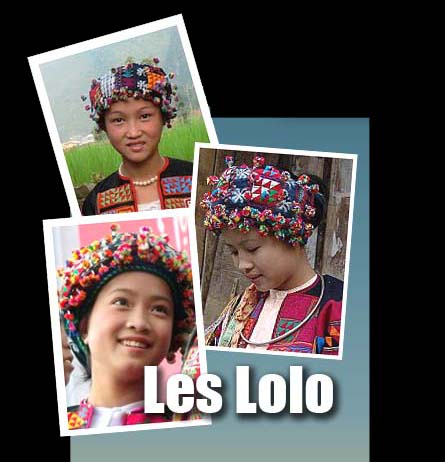
Being known in China under the name « Yi », the Lô Lô are  also called Mùn Di, Màn Di, La La, Qua La, Ô Man, Lu Lộc Mà by the Vietnamese. They belong to the Tibeto-Burman ethno-linguistic group.  A large number live in the highland areas of China  (Sichuan, Yunnan, Guizhou et Kouang Si) except a little minority native of Yunnan installed  in the Upper Tonkin at the time of migratory flows which were appeared in the 15th and 18 th centuries. At present, the population of this ethnic group amounts to about 4000 individuals in Vietnam. According to  ethnologists, the Lô Lô are descendants of the nomadic people and sheep farmer Qiang (Khương tộc ) who emigrated from the  South East of Tibet for taking up permanent residence  in Sichuan (Tứ Xuyên) and Yunnan (Vân Nam).

The one of 54 ethnic minorities in Vietnam                      

dantoc_lolo_1

At the period of Chunqiu (or Spring and Autumn period)(Xuân Thu in Vietnamese), this people was always at war with the inhabitants of Yellow River (Hoàng Hạ),  ancestors of the Chinese. Their expansion was stopped by the duke Mu of the Qin  state (Tần Mục Công) which  ruled between -660 et -621 and was one of five famous  hegemons (Bá chủ) at this time thanks to the contribution made by his talented chancellor Baixi Li (Bá Lý Hệ).

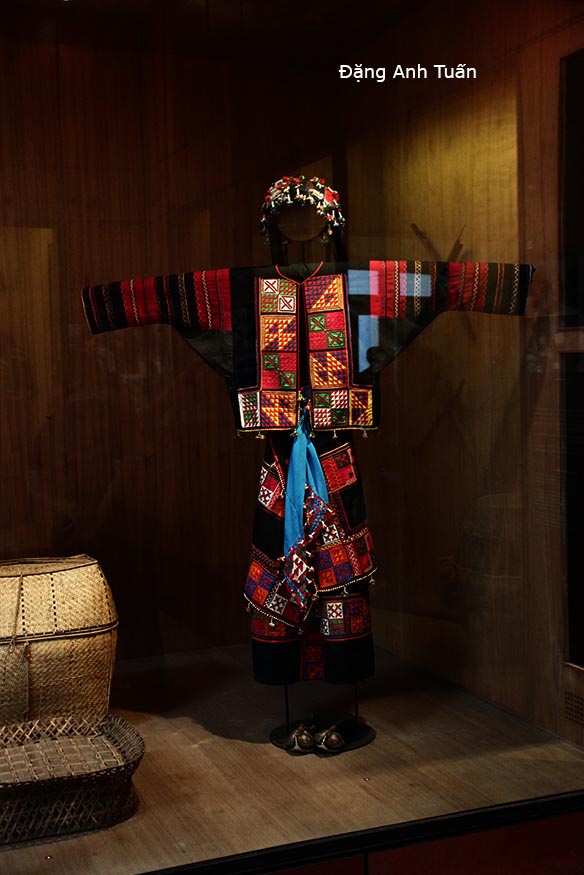
In the ethnic group Lô Lô, there are two small groups: the coloured Lô Lô  (Lô Lô hoa )  and the black  Lô Lô  (Lô Lô đen). They live by using   traditional irrigated rice method and slashand-burn agriculture with  most important plants as  corn, sticky rice and ordinary rice. That is what we see in Đồng Văn et Mèo Vạc districts on the fields and milpas.  By contrast, in the Bảo Lạc district, except the permanents milpas, they use  the field terraces. Their main food is the maize flour immersed in boiling water. The broth is not missing in their meal, which  always requires the use of  bowls and  spoons in wood.

彝族  (Dân tộc Lô Lô)

In general, their homes are conveniently located in high  and dry areas overlooking the valleys. They prefer to live near dense forests because forests and streams are considered by them as living spaces of the soil genius. They are just people who like to live in harmony with nature. They use the hoods with two shoulder straps  in rattan or a variety of bamboo (giang) for transporting their possessions. They prefer to be married  with people of their sample ethnic.  They  also practice exogamy just in case the marriage takes place  between people from different parentages. The Lô Lô  are monogamous. The young bride lives in the family of his  husband.  The adultery is condemned in their traditions. However, the levirate marriage is tolerated because the little brother of the deceased can take for the  spouse his sister-in-law. Similarly, the son of   the parternal aunt is allowed to be married with the daughter of the maternal uncle (cô cậu) but it is strictly forbidden to do the opposite.

In the family, everything is decided by the husband. The daughters inherit jewelry of their mother and receive upon their marriage a dowry. About the heritage itself,  the beneficiaries are male children in the family. When a person is died,  his family organises a ritual ceremony in the intention of helping  his  soul to find   the path towards  his ancestors. Being known under the name  » dance of the spirits », this  rhythmic manifestation is led by his son-in-law carrying on his shoulders a bag containing a cloth ball representing the head of the deceased. Sometimes,   instead of this ball, we find  a piece of wood or a squash on which is drawn the figure of the deceased. This shows that the traces of the practice  of headhunting remain vivacious among the Lô Lô. During the funeral, this son-in-law must carry one of the extremities of the coffin. It is him and brothers of the widow to throw the first handfuls of earth in the tomb of the deceased.

The Lô Lô  clearly distinguish between close ancestors (in less than 5 generations) and distant ancestors (beyond six generations).  For close ancestors, there is always an own altar in each family while for distant ancestors, the ritual takes place in the home of the  lineage head (trưởng tộc).  Like the Vietnamese people, the Lô Lô have the bronze drums which are used only during the funeral. These drums   are always in pairs: a male and a female. They are placed in the supports next to feet of the deceased so that their eardrums are  opposing each other. Then a player stands between them and strikes them alternatively with a unique drum stick. A  beat for the male drum followed by  another  beat for the female drum, all of this is in a regular cadence.

The player must be  single or a married man whose the wife is not pregnant at the funerals. Being a sacred instrument, the drum is buried or hidden in a place which is simultaneously clean and discreet. There is only the familial lineage head  who  knows this emplacement.

For the Lô Lô, there is a legend concerning the bronze drum:

Once upon a time, the country and its inhabitants were swallowed by the flood. Having had compassion for young girls who were dying, God provided assistance to them by putting respectively the big sister in the great bronze drum and the younger in the small drum. The drums were not drowned by the flood, which saved two young girls. After the deluge, they taked refuge in the mountains and were married. They had thus become the ancestors of ressurected humans.

Like the Vietnamese and the Chinese, the Lô Lô celebrate their new year at which are added other rites and  festivals. The is the case of the ritual of new rice, the celebration of the 5th day of the 5th moon, that of the 15th day of the 7th moon etc.. We don’t forget to mention also the dance under the  moonlight. The latter may last all night  and assembles  either a majority of  girls and boys or  a group of young girls  or married womens. The dance  starts with  the formation of the circle carried out by the dancers who place their hands on the shoulders of others.  They are accompanied  by songs  and movements simulating the  daily activities  such as the rice pounding and   winnowing,  the fruit picking or the embroidery etc …

Being the favourite entertainment for youth, the dance under the moonlight takes place on the site near to the village and it can take up to the morning light.

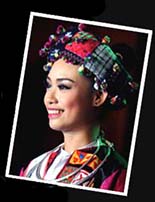
butvietAlthought the Lô Lô are not numerous in Vietnam, they are distinguished from other ethnies by their flamboyant clothing and the deep attachment to nature. 

[Back to page « Vietnam, land of 54 ethnies »]

burstani 
Bibliographic references:

  • Ethnic minorities in Vietnam. Đặng Nghiêm Vạn, Chu Thái Sơn, Lưu Hùng . Thế Giới Publishers Hànội 2010
  • Mosaïque culturelle des ethnies du Vietnam. Nguyễn Văn Huy. Maison d’édition de l’éducation. 1997
  • Notes sur quelques danses de minorités ethniques du Nord Vietnam. Phạm Thị Điền. Etudes vietnamiennes. Tome 39 n°3


The sweet cake rice (Bánh chưng bánh dầy)


The sweet rice cake

French version

The son of the first king of Van Lang, the Vietnam of long time ago, reigned under the name of Hùng Vương. He had three wives, each of them gave birth to a boy. The son of the first wife, Long married Kim who was arrogant and jealous. The son of the second, Ho married Ngoc who was naughty and sharp tongued toward her husband. The son of the deceased third wife, Vân, lived with his maternal grandmother and farmed for a living. He practiced the slash and burn agriculture, grew vegetables or went fishing in his spare time. His grandmother married Van to Xuân, a wise and hard working young woman in the village. The couple led a modest but happy life.

One day, summoned by the king, they had to sell their buffaloes to prepare for the trip to the court. There, they saw their elder brothers and their wives dress elegantly and adorned with jewels. Van and Xuan felt confused. Everyone mocked and scorned at them for going to see the king in such a simple appearance.

However, the king showed afection to Vân, an orphan of mother. Burdened by old age and a reign of 50 years, the king wanted to leave the throne to whoever could prapare the most tasty foods. The spouse of the elder brothers, confident of their talent, rivaled for getting the throne to their husbands. Only Vân and Xuan were worried because they were very poor.

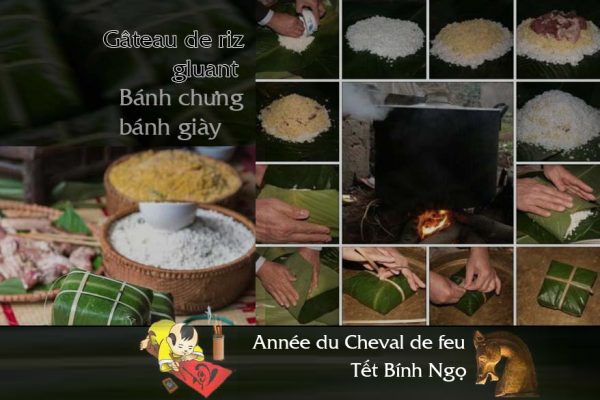
One night, in a dream, Van saw his mother who let him know he would be selected for the throne. It would be sufficient for him to make a sweet rice cake in the form of a square with meat and bacon in the middle of it to symbolise the heart. The square cake represented the earth because at that time people thought the earth was square. Vân woke up and recalled the dream to his wife. The couple decided to follow the advice of their mother to make the cake, and to boil it in a terra cotta pot.

On the scheduled day, the two brothers Kim and Ngọc offered to the king expensive dishes. But the latter did not find anything exceptional. As for the cakes offered by Vân and Xuân, the king was excited by their delicateness and meaning. ( One should govern the country with wisdom). He showered Van with praises and designated him to be his successor. For his generosity, Van did not hesitate to give his brothers the title of viscount.The sweet rice cake ( or bánh chưng in Vietnamese ) is one of the traditional delicacies of the Vietnamese people during the Tết festival. It is eaten with caramel marinated stewed pork.This cake is also intangible proof of the theory of Yin and Yang and of the five elements belonging to Bai Yue (or Cent Yue), to which the Proto-Vietnamese belong, as it is made according to the cycle of generation of these 5 elements.

Fire->Earth->Metal->Water->Wood

Inside the cake, there’s a piece of red pork (Fire) surrounded by a kind of pastry made from yellow beans (Earth). The whole is wrapped in white glutinous rice (Metal) and cooked with boiling water (Water), before the surface is given a green tint by banana leaves (Wood). The shape of these cakes was found in bi discs and jade and ivory Congs in the tombs of the aristocrats of two civilizations, Lianzhu and Shijiahé, with the idea of protecting the deceased in the world of the dead. The bi disc was often associated with Heaven and was green in color, while the Cong, which was tubular on the outside and cylindrical on the inside, was associated with Earth and was yellow in color. This is why, to commemorate the Elders, rice cakes cannot be missing from the ancestors’ altar on the occasion of the Lunar New Year.


[Return CONTES]

[Return Tết Bính Ngọ]

Gâteau de riz gluant (Bánh chưng bánh giày)


Version vietnamienne
Version anglaise

Le fils du premier roi du royaume  Văn-Lang (Vietnam d’autrefois) régnait sous le nom de Hùng-Vương. Il avait trois épouses, chacune d’elles donnant naissance à un garçon. Le fils de la première, Long, se mariait à  Kim, orgueilleuse et jalouse. Le fils de la seconde, Hồ, épousait  Ngọc, méchante et acariâtre envers son mari. Le fils de la troisième décédée, Lang Liêu, vivait avec sa grand-mère maternelle et s’occupait des travaux agricoles. Il pratiquait la culture sur brûlis, cultivait les légumes ou allait pêcher aux heures de loisir. La grand-mère maria Lang Liêu à Xuân, une demoiselle sage et laborieuse du village. Le couple menait une vie modeste et heureuse.

Un jour, convoqués par le roi, ils durent vendre leurs deux buffles pour préparer le voyage. À la cour royale, ils virent leurs aînés et leurs épouses habillés élégamment et parés de bijoux. Lang Liêu et Xuân se sentirent confus. Tout le monde se moqua d’eux en leur reprochant de se présenter au roi sous une simple apparence.

Par contre, le roi se montra affectueux pour Lang Liêu, orphelin de mère. Accablé par la vieillesse et par le règne durant plus de  50 ans, le roi voulut céder le trône à celui qui pouvait préparer les mets les plus savoureux. Les épouses des deux aînés, confiantes de leur talent, rivalisèrent pour gagner le trône à leur mari. Seuls, Lang Liêu et Xuân furent  très inquiets car ils étaient très pauvres.

Une nuit, dans un songe, Lang Liêu vit sa mère qui lui fit savoir qu’il serait l’élu du trône. Il lui suffit de faire deux gâteaux de riz gluant, l’un en forme de carré (bánh chưng) avec de la viande et de la graisse au milieu pour symboliser le cœur et l’autre en forme de rondeur (bánh giày) sans garniture.  Les gâteaux carré  et rond représentaient respectivement  la terre et le ciel car on crut à cette époque que la terre était plate et carrée et le ciel étai rond. Lang Liêu se réveilla et raconta le songe à sa femme. Le couple décida de suivre les conseils de leur mère pour confectionner les gâteaux, puis les faire bouillir dans une marmite en argile cuite.

Au jour fixé, les deux brus Kim et Ngọc offrirent au roi des plats copieux et  coûteux. Mais ce dernier ne trouva rien d’exceptionnel. Quant aux gâteaux offerts par Lang Liêu et Xuân, il fut ravi par leur délicatesse et par leur signification. (Il faut régner sur terre avec cœur et sagesse et se souvenir du grand mérite des parents).

Le roi combla Lang Liêu de louanges et le désigna comme son successeur. Pour sa générosité, Lang Liêu n’hésita à élever au titre de vicomtes ses frères. De ce jour, chaque année, lors de la fête du Têt, il  prit l’habitude d’offrir sur l’autel de ses parents ces deux gâteaux de riz qu’il confectionna lui-même. Tous ses sujets commencèrent à l’imiter à cette occasion. C’est pourquoi le gâteau de riz gluant de Lang Liêu porta désormais le nom « Tiết Liệu » et devint ainsi  l’une des friandises traditionnelles des Vietnamiens lors de la fête du Tết. On le sert souvent avec du porc au caramel. Ce gâteau est aussi  la preuve intangible de la théorie  du Yin et du Yang et de ses cinq éléments appartenant à Bai Yue (ou Cent Yue)  dont les Proto-Vietnamiens font  partie car on retrouve  dans  sa confection le cycle d’engendrement  de ces 5 éléments.

Feu->Terre->Métal->Eau->Bois

À l’intérieur du gâteau, on  trouve un  morceau de viande de porc  de couleur rouge (le Feu) entouré par une sorte de pâte faite avec des fèves de couleur jaune  (la Terre).  Le tout est enveloppé par  le riz gluant de couleur blanche (le Métal) pour  être cuit avec de l’eau bouillante (l’Eau) avant d’avoir la coloration verte sur sa surface grâce aux feuilles de bananier (le Bois). La forme de ces gâteaux était retrouvée  à travers les disques bi et les Cong en jade et en ivoire  dans les tombes des aristocrates de deux civilisations Lianzhu et Shijiahé avec l’idée de protéger les trépassés dans le monde des morts.  Le disque bi était souvent associé au Ciel et avait la couleur verte tandis que le Cong  dont la forme était  tubulaire à l’extérieur et cylindrique à l’intérieur, était  assimilé à la Terre et avait  la couleur jaune. C’est pourquoi  afin de commémorer les Anciens, à l’occasion de nouvel an lunaire, les gâteaux de riz  ne peuvent pas être manquants sur l’autel des ancêtres.

Version vietnamienne

Con trai của vị vua đầu tiên của vương quốc Văn-Lang (Việt Nam cổ đại) trị vì tên là Hùng-Vương. Ngài có ba người vợ, mỗi người đều sinh được một đứa con trai. Con trai trưởng Long lấy vợ Kim kiêu hãnh và ganh tị. Con trai thứ hai là Hồ lấy Ngọc, xấu tính và cay nghiệt với chồng. Con trai của người thứ ba qua đời  tên là  Lang Liêu, sống với bà ngoại và chăm lo công việc nông nghiệp. Anh  làm nương rẫy thường ngày, trồng rau hoặc đánh cá lúc rảnh rỗi. Bà gả Lang Liêu cho Xuân, một cô thôn nữ ngoan ngoãn và  chăm chỉ. Cặp đôi vợ chồng có một cuộc sống khiêm tốn và hạnh phúc.

Một ngày kia, được vua triệu tập, hai vợ chồng phải bán hai con trâu của mình để chuẩn bị cho chuyến đi. Ở triều đình, họ thấy vợ chồng của hai anh ăn mặc sang trọng và  đeo đầy trang sức. Lang Liêu và Xuân cảm thấy bối rối. Mọi người đều cười nhạo họ, trách móc họ đến trình diện với vua cha với cách ăn mặc giản dị.

Ngược lại, vua cha biểu lộ sự trìu mến với Lang Liêu, mồ côi mẹ từ sớm. Nản lòng trước tuổi già và trị vì hơn 50 năm, nhà vua muốn nhường ngôi cho người con nào  có thể chế biến được những món ăn ngon nhất. Vợ của hai anh cả tin tưởng ở tài năng của mình nên cố tranh giành nhau ngôi báu cho chồng mình. Chỉ có Lang Liêu và Xuân là rất lo lắng vì họ rất nghèo.

Một đêm, trong một giấc mơ, Lang Liêu thấy mẹ của mình về , báo cho anh biết rằng anh sẽ được ngôi vua. Chỉ cần phải làm là hai chiếc bánh gạo nếp, một chiếc có hình vuông (bánh chưng) với nhân thịt và mỡ ở giữa tượng trưng cho trái tim và chiếc còn lại hình tròn không nhân (bánh giày). Hai chiếc bánh hình tròn và hình vuông nầy  tượng trưng cho trời và đất  vì thời đó người ta tin rằng trái đất bằng phẳng là hình vuông và trời thì tròn. Lang Liêu tỉnh dậy và kể lại giấc mơ cho vợ. Hai vợ chồng quyết định nghe lời mẹ làm bánh rồi sau đó đem luộc bánh trong nồi đất nung.

Đến ngày quyết  định, hai cô con dâu Kim và Ngọc dâng vua cha những món ăn cao sang đắt tiền. Nhưng vua cha không tìm thấy có chi đặc biệt cả. Đối với những chiếc bánh của Lang Liêu và Xuân, vua cha lại  hoan hỉ vì vừa thấy ngon và có ý nghĩa của các bánh gạo nếp. (Cần phải trị vì với đạo lý và khôn ngoan và nhớ đến công đức sinh thành lớn lao của cha mẹ)

Nhà vua khen ngợi Lang Liêu và chỉ định làm người kế vị. Vì lòng hào hiệp của mình, Lang Liêu không ngần ngại phong anh em mình lên hàng tử tước. Kể từ ngày đó, cứ đến Tết hàng năm, vua Lang Liêu  lại có thói quen  cúng trên bàn thờ cha mẹ hai chiếc bánh chưng bánh  dày do chính tay vua làm. Tất cả mội người dân bắt đầu bắt chước vua từ đấy . Đó là lý do tại sao bánh nếp của Lang Liêu ngày nay mang tên “Tiết Liệu” và trở thành một trong những món ăn truyền thống của người dân Việt trong ngày Tết. Nó thường được  ăn chung với thịt lợn kho. Chiếc bánh chưng  cũng là bằng chứng xác thực của thuyết Âm dương và ngũ hành thuộc về đại tộc Bách Việt trong đó có người Việt cổ vì chúng ta tìm thấy trong cách chế tạo của bánh có ngũ hành tương sinh:

Hỏa->Thổ->Kim->Thủy->Mộc

Bên trong bánh có một miếng thịt lợn màu đỏ (Hỏa) bao quanh bên ngoài là loại bột nhão làm bằng nhân đậu màu vàng (Thổ). Toàn bộ được gói bằng gạo nếp có màu trắng (Kim) trụng với nước sôi (Thủy) trước khi có màu xanh trên bề mặt nhờ có lá chuối (Mộc).Hình dáng Bánh Chưng bánh giày này được trông thấy trong các mộ qúi phái của hai nền văn hoá Lương Chữ và Thạch Gia Hà qua các đĩa bi và cong bằng ngọc bích và ngà  trong bối cảnh nghi lễ và thường  có nhiệm vụ bảo vệ người về thế giới bên kia. Bi thường được kết nối với trời và màu xanh, trong khi tông, với hình dạng hình ống vuông ở bên ngoài và hình tròn bên trong, được liên kết với đất và màu vàng.Bởi vậy để tưởng niệm người xưa, các bánh chưng bánh giày không thể thiếu trên bàn thờ  tổ tiên nhân dịp Tết Nguyên Đán.

[Return CONTES]

[Return Tết Bính Ngọ]