Le culte de la baleine (Tục lệ thờ cá Ông)

Tục lệ thờ cá Ông

The whale cult

Version française

Version anglaise

Ai đến miền trung và miền nam Việt Nam sẽ  khám phá một tập quán mà theo nhà nghiên cứu Charles J.C. MacDonald  (CNRS Marseille) là một đặc tính của người Việt ở vùng biến  chớ ở miền Bắc thì không có, đó là tục lệ thờ cá Ông (hay cá voi (poisson éléphant) ).  Cho đến giờ nầy  các nhà học giả Việt như Thái Văn Kiểm, Trần văn Phước hay Trần Hàm Tấn thì nghĩ rằng đây là một tập quán cũa người Chàm mà người Việt tiếp nhận  cũng như ở Nha Trang với thánh mẫu Po Nagar nhưng cho đến giờ không có sách vỡ nào chứng minh là tập quán nầy  thuộc về dân tộc Chàm. Theo cố cả Léopold Cadière thì đúng hơn là người dân Việt  theo thuyết duy linh và đa thần nên chuyện thờ cá Ông cũng không ngoại lệ. Ở  đảo Cù lao chàm có hẵn hòi luôn  một đền thờ cá Ông. 

 Người dân Việt ở miền Trung và miền Nam kính nể cá Ông như  cha mẹ  và thần thánh. Còn gọi cá Ông với các tên như sau : ông Chung, ông Khơi, ông Lớn  vân vân…Mỗi khi gặp cá Ông « lụy (chết) » dạt vào bờ, ngư dân đầu tiên thấy được thì  dân làng cử làm trưởng tang, phải chịu tang như là con của cá Ông dù  được cả làng đứng ra tổ chức mai táng và xây mộ.

Theo lời nhà học giả Thái văn Kiểm, dưới thời vua Gia Long, cá Ông được chứng chỉ sắc phong làm thống chế của các biển phía nam vì cá Ông đã giúp vua Gia Long thoát chết đuối. Dưới thời vua Tự Đức (1848-1883) cá voi được tôn xưng là Đức Ngư có nghĩa là cá có đức độ. Theo sách « Gia Định thành thông chí » của Trịnh Hoài Đức thì  thấy chép như sau : Những khi tàu bè găp sóng gió lớn thường thấy cá Ông dìu đỡ mạn thuyền và bảo vệ người dân được yên ổn. Cũng thường đưa người vào bờ khi thuỳền bị chìm đắm hay lúc có sóng gió thần.

Chỉ có từ Linh Giang đến Hà Tiên ở nứớc Nam ta mới có hiện tượng nầy mà thôi chớ ở các biển  khác thì không có sự  giúp đỡ  kỳ diệu nầy. Cũng có phần đúng với sự nhận xét của học giả Anh Quốc  Ruddle Kenneth như sau: chuyện thờ cúng cá Ông cũng là một thể thức nhẳm cố liên kết chặt chẻ các ngư dân Việt sống ở vủng biển.

Version française

Quiconque débarque  dans le centre et le sud du Vietnam va découvrir  une coutume que le chercheur Charles J.C. MacDonald (CNRS Marseille) a considérée comme une caractéristique typique trouvée chez les Vietnamiens vivant le long de la côte  vietnamienne  car les gens du Nord ne l’ont pas eue. C’est le culte de la baleine. Selon certains érudits vietnamiens tels que Thái Văn Kiểm, Trần văn Phước ou Trần Hàm Tấn, ce culte appartenait aux Chams. Lors de l’occupation de leur territoire par les Vietnamiens, ceux-ci n’hésitaient pas à l’adopter comme la déesse Po Nagar à Nha Trang. Mais cette hypothèse n’est pas très convaincante dans la mesure où aucun document n’apporte jusqu’aujourd’hui la certitude à propos de cette appartenance  chame.

Selon le père Léopold Cadière, cette coutume n’est pas une exception car les Vietnamiens étaient animistes et polythéistes. C’est dans l’île Poulo Cham qu’on découvre un temple dédié carrément au culte de la baleine. Ce mammifère marin est vénéré comme  les parents ou un génie. On l’appelle parfois avec les noms suivants : Monsieur Chung, Monsieur Khơi, Monsieur Lớn etc. Chaque fois que  le pêcheur  découvre en premier  une baleine échouée morte  sur le rivage, il sera nommé d’office par les villageois comme l’organisateur des funérailles car il est considéré comme le fils du cétacé malgré les frais des funérailles et de la construction de sa tombe à la charge de tous les  gens du village.  

Selon l’érudit Thái văn Kiểm, sous le règne de l’empereur Gia Long, la baleine reçut un brevet de génie et le titre d’amiral des mers du Sud car l’empereur Gia Long dut sa vie à ce mammifère marin lors d’une noyade. Sous le règne du roi Tự  Đức (1848-1883), les baleines étaient honorées sous le nom de Đức Ngư, ce qui signifie  « poisson vertueux ». Selon le livre «Gia Định thành thông chí» de Trịnh Hoài Đức, il est écrit ce qui suit: Lorsque le bateau  rencontre  de grosses vagues et le vent violent, on voit souvent la baleine soutenir le bateau et protéger les gens. Elle les ramène souvent  sur terre sains et saufs  lors du naufrage du bateau ou durant la tempête.  Dans notre pays, ce phénomène  se produit uniquement de Linh Giang jusqu’à Hà Tiên, mais dans d’autres mers, cette aide miraculeuse n’existe pas. 

Rien ne contredit pas ce que le chercheur anglais Ruddle Kenneth a remarqué dans son livre: le culte de la baleine renforce la cohésion de la communauté des pêcheurs vietnamiens vivant le long de la côte du centre et du Sud Vietnam.

Version anglaise

Anyone arriving in central and southern Vietnam will discover a custom that researcher Charles J.C. MacDonald (CNRS Marseille) considered a typical feature found among Vietnamese living along the Vietnamese coast. MacDonald (CNRS Marseille) considered a typical characteristic found among Vietnamese living along the Vietnamese coast, because the people of the North didn’t have it. It’s the cult of the whale. According to some Vietnamese scholars such as Thái Văn Kiểm, Trần văn Phước or Trần Hàm Tấn, this cult belonged to the Chams. When the Vietnamese occupied their territory, they didn’t hesitate to adopt it as the goddess Po Nagar in Nha Trang. But this hypothesis is not very convincing, as no document to date provides any certainty about this Chame affiliation.

According to Father Léopold Cadière, this custom is no exception, as the Vietnamese were animists and polytheists. On the island of Poulo Cham, we discovered a temple dedicated to the cult of the whale. This marine mammal is revered as a parent or a genie. It is sometimes called by the following names: Monsieur Chung, Monsieur Khơi, Monsieur Lớn etc. Whenever a fisherman is the first to discover a whale washed up dead on the shore, he is automatically appointed by the villagers as the organizer of the funeral, as he is considered the son of the cetacean, despite the fact that the costs of the funeral and the construction of its grave are borne by all the people of the village

According to scholar Thái văn Kiểm, during the reign of Emperor Gia Long, the whale was awarded a patent of genius and the title of Admiral of the South Seas, as Emperor Gia Long owed his life to this marine mammal during a drowning incident. During the reign of King Tự Đức (1848-1883), whales were honored as Đức Ngư, meaning “virtuous fish”. According to the book “Gia Định thành thông chí” by Trịnh Hoài Đức, it says the following: When the boat encounters big waves and strong wind, the whale is often seen supporting the boat and protecting the people. It often brings them safely ashore when the boat sinks or during a storm.  In our country, this phenomenon only occurs from Linh Giang to Hà Tiên, but in other seas, this miraculous help does not exist.

Nothing contradicts what English researcher Ruddle Kenneth noted in his book: whale worship strengthens the cohesion of the Vietnamese fishing community living along the coast of central and southern Vietnam.

[Return TRADITIONS]

Sacrifice (Version vietnamienne)

 
 sacrifice_1f
Version française
Version anglaise

Cuộc đời  giống như một trò chơi cờ bạc. Chúng ta không có may mắn. Tốt hơn là chết vì đất nước này và để lại tấm gương của sự hy sinh.

Nguyễn Thái Học

 
Việt Nam không chỉ là vùng đất của  các truyền thuyết  và  sĩ phu, mà còn là vùng đất mà con người đã chinh phục từng mẫu đất một, với một  thiên nhiên khắc nghiệt  từ bốn nghìn năm. Cái nôi của dân tộc Việt là đồng bằng Bắc Bộ. Nó được bao bọc ở phía Bắc bởi những ngọn đồi thoai thoải của Bách Vạn Sơn của Trung Quốc và bị  thắt lại ở phía Nam bởi dãy Trường Sơn, một dãy núi gần như không thể xuyên thủng qua được. Nó bị  thu hẹp lại chỉ  còn 15.000 cây số vuông nhưng lắm bùn do sông Hồng lôi  cuốn và nó vẫn tiếp tục bị đe dọa bởi lưu lượng dòng chảy thất thường  thay đổi từ 500 m3 khi nước thấp đến 35.000m3  trong  những ngày có các cơn  lũ lớn.
Để kiềm chế  những trận tấn công dữ  dội của sông Hồng, người dân Việt  phải dùng đến biện pháp xây đê  để ngăn chặn, đòi hỏi họ không chỉ phải tăng cường giám sát đê thường trực mà họ còn phải đấu tranh triền miên. Đối mặt với thời tiết xấu liên miên của thiên nhiên, sự thất thường của Sông Hồng và tham vọng lãnh thổ của Trung Quốc, người dân Việt phải trả giá cho sự cứu rỗi họ bằng công sức và lòng dũng cảm cũng như sự hy sinh của họ trong cuộc hành trình dài  đầy gian nan hướng về đất phương Nam.

Sự hy sinh này không còn xa lạ  hầu hết với  người dân Việt, đặc biệt là những người có cá tính. Nó cũng trở thành một giáo phái mà người ta thích duy trì và ca ngợi không ngừng ở Việt Nam  để tôn vinh cả một dân tộc trước mối đe dọa từ bên ngoài.

Hy sinh là cách an toàn nhất để duy trì sự hoàn hảo của tổ quốc nhưng nó cũng đồng nghĩa với lòng trung thành và nhân phẩm. Một người đàn ông vĩ đại là người dám chịu trách nhiệm trong những thời điểm khó khăn của cuộc đời, nhưng cũng là người biết hy sinh bản thân vì mục đích tốt đẹp, đặc biệt là vì đất nước. Sự hy sinh không thể tách rời khỏi chữ “danh dự” ở Việt Nam.

Hùm chết để da, người chết để tiếng.

Lịch sử của Việt Nam cũng là lịch sử của sự hy sinh.Nhiệm vụ của một người dân Việt là phục vụ quê hương của mình bằng cả trái tim. Những nguy hiểm càng lớn, thì lòng trung thành được thể hiện càng tốt hơn.


 Po Klong Garai (Phan Thiết)

Người anh hùng hy sinh thân mình vì quê hương. Dù có chuyện gì xảy ra, danh dự cũng sẽ không bao giờ bị hoen ố. Đây là trường hợp của sĩ phu  Phan Thanh Giản, người ký kết hiệp ước Pháp-Việt năm 1868. Sau khi thất bại trong nỗ lực chống lại người Pháp để bảo vệ ba tỉnh phía tây đồng bằng sông Cửu Long (Vĩnh Long, An Giang và Hà Tiên), ông đã đầu hàng và quyết định tự tử vào năm 1867 vì ông nghĩ rằng đó là cách duy nhất để cứu dân và thể hiện lòng trung thành của mình với vua Tự Đức. Tương tự như vậy, Nguyễn Tri Phương (1873) và Hoàng Diệu (1882), những đối thủ tương ứng của Francis GarnierHenri Rivière, đã chọn cách tự tử sau khi thất bại trong việc bảo vệ thành phố Hà Nội.

Trong thời kỳ Pháp đô hộ, sự hy sinh đã trở thành ngọn đuốc hy vọng được thắp sáng bởi những con người vô danh như Nguyễn Trung TrựcPhạm Hồng Thái. Người đầu  đã đồng ý chết thay thế  mẹ mình bị bắt sau khi ông thành công làm nổ tàu  « Espérance » trong  cuộc hành trình trên sông « Nhựt Tảo » ở Long An trong khi người sau, bị cảnh sát Trung Quốc truy đuổi trong  cuộc chạy trốn, đã chọn cách nhảy xuống sông tự tử sau khi ông không thành công trong nỗ lực ám sát thống đốc Pháp Martial Merlin trong cuộc viếng thăm của ông nầy ở Quảng Châu vào năm 1924. Ngưỡng mộ lòng dũng cảm và sự hy sinh của ông vì quê hương, sau đó thống đốc Quảng Châu đã chôn cất hài cốt của ông trong một nghĩa trang chỉ dành riêng cho 72 anh hùng Trung Quốc và được gọi là « Hoàng Hoa Cương » trong tiếng Việt.

Nếu  sự hy sinh không phải là một từ vô ích  đối với đàn ông, nó cũng mang một ý nghĩa đặc biệt đối với  ng ư ời phụ nữ Việt Nam. Công chúa Huyền Trân của nhà Trần được cầu hôn vào năm 1306 với vua Chiêm Thành là Chế Mân (Jaya Simhavarman) để đổi lấy hai vùng đất Chiêm Thành là Châu Ô và Châu Ri’. Bà đã phải hy sinh mạng sống và tình yêu của mình vì lợi ích quốc gia. Tương tự như vậy, ba thế kỷ sau, một công chúa của triều Nguyễn tên là Ngọc Vạn, người thường được gọi bằng cái tên « Cochinchina » hay (Cô chín Chin), đã sớm nối gót Huyền Trân để trở thành phi tần của vua Cao Mi ên  Prea Chey Chetta II vào năm 1618 để  đánh đổi lấy sự thuận lợi cho người Việt được  định cư  dễ dàng ở vùng Đồng Nai-Mô Xoài, chính là vùng Sài Gòn – Chợ Lớn ngày nay.

Em gái của bà, công chúa Ngọc Khoa, được gả cho vị vua cuối cùng của Chăm Pa, Po Rômê vào năm 1630 vài năm sau đó. Mối quan hệ này khiến bà trở thành mục tiêu chính của người Chàm  trong mối hận thù đối người Việt Nam. Sự hiện diện của bà trên đất Chàm là cái cớ để Chúa Nguyễn Phúc Tần tiến hành cuộc viễn chinh và sáp nhập lãnh thổ cuối cùng của Chăm Pa vào năm 1651. Không thể trách người Chàm vì lúc đó căm ghét công chúa Ngọc Khoa và vì bà mà họ mất quê hương. Nhưng ngược lại, những người dân Việt  như chúng ta thì Ngọc Khoa  minh họa sự hy sinh cao cả mà bà đã dành cho đất nước và dân tộc.


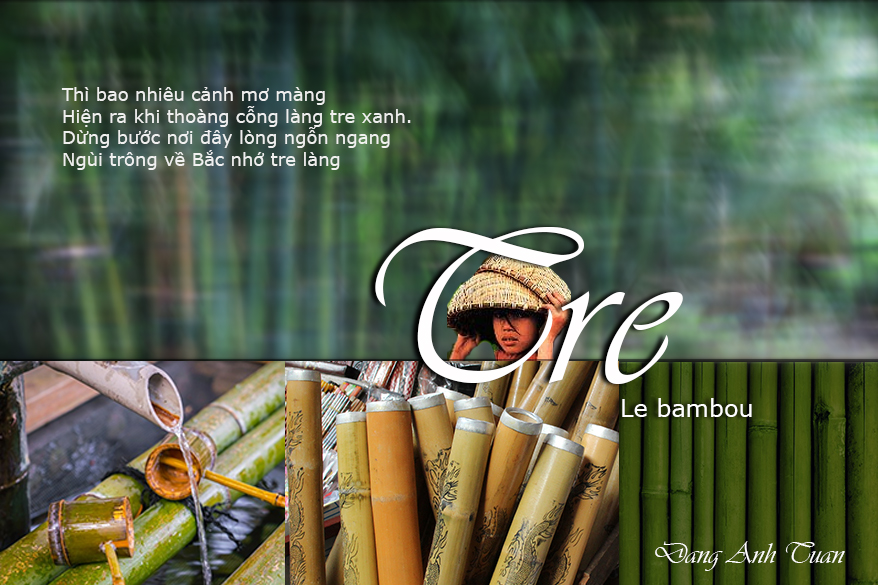
The bamboo ( Cây Tre)


Version française

Version vietnamienne

Bamboo is closely linked to Vietnamese daily life. When we’re young, we fall asleep in the swing of a bamboo cradle. When we’re old and dying, we lie in a coffin lowered into the grave with bamboo ropes. French journalist Jean Claude Pomonti, a specialist in Southeast Asian issues, has often humorously referred to our civilization as the “bamboo civilization” in his columns for the newspaper “Le Monde”, because bamboo is an important part of our culture. Thanks to scientific research, we know that 39,000 years ago, bamboo was the main resource used by human groups in Southeast Asia, but due to the extremely unfavourable preservation conditions for organic materials, this use was no longer visible several thousand years later. In 1948, the famous geographer Pierre Gourou spoke of a “plant civilization” for Indochina, and more specifically for Vietnam.

It is a plant with multiple uses in Vietnam. Thanks to this plant, everything is possible in this country where nothing is easy and where we do not let ourselves be put off or stopped by obstacles. First, in our history, bamboo is evoked in the myth of the giant child of the village of Gióng. This man grew enormously in a few weeks to chase away the armies coming from the North (the Shang) and on his iron horse breathing fire, he succeeded in pulling out bamboo forests to defeat his enemies. Then in the 13th century, a resounding victory was led by the generalissimo Trần Hưng Đạo against the Mongol hordes of Kublai Khan on the Bạch Đằng River with junks and boats made of wood and bamboo. The victory of Dien Bien Phủ was also achieved in 1954 against the French expeditionary force through the massive and clever use of bamboo poles and bamboo-trimmed bicycles in supplying the front with food and ammunition and i clever use of bamboo poles and bamboo-trimmed bicycles in supplying the front with food a around the fortified camp of Dien Bien Phủ, which thus facilitated intensive artillery bombardment, day and night.

Through history, we can see that there is a long-standing deep attachment of the Vietnamese people to this bamboo. It is this plant that the Vietnamese poet Nguyễn Duy tries to humanize and describe for the noble qualities in his poem entitled « Tre Việt Nam (Vietnamese bamboo) » from which some verses are extracted below:

Bão bùng thân bọc lấy thân
Tay ôm, tay níu tre gần nhau thêm.
Thương nhau, tre chẳng ở riêng
Luỹ thành từ đó mà nên hỡi người.

During the storm, the bamboos protect their bodies.
Arms clasped together, they try to get closer to each other.
Filled with affection, they cannot live apart.
Thus, the bamboo fortress is born.

In food, bamboo shoots are used in the preparation of many dishes. They are necessarily cooked or canned in order to remove the natural toxins they contain. There are many proverbs and popular songs alluding to childhood by evoking bamboo shoots. We say măng sữa (bamboo shoot to breastfeed) or tuổi măng sữa (tender age) to refer to childhood. We usually say: Măng không uốn thì tre uốn sao được. (If we do not straighten the shoot, how can we straighten the bamboo?). The bamboo shoot reminds us of the notion of the passage of time. We must not let lost time slip away because bamboo grows for a time and man has only one age. We must enjoy time before it passes and old age catches up with us. This is what we find in Vietnamese folk songs and sayings:

Măng mọc có lứa người ta có thì.

There’s a season for bamboo shoots, just as there is a time for people. Or

Khi đi trúc chưa mọc măng
Ngày về trúc đã cao bằng ngọn tre.

The bamboo hadn’t yet sprouted when I left.
It had already reached the top of the bamboo when I returned.

Or

Tre già măng mọc

When the bamboo grows old, the shoots begin to emerge.

This expression somehow reflects our hope for youth and future generations.

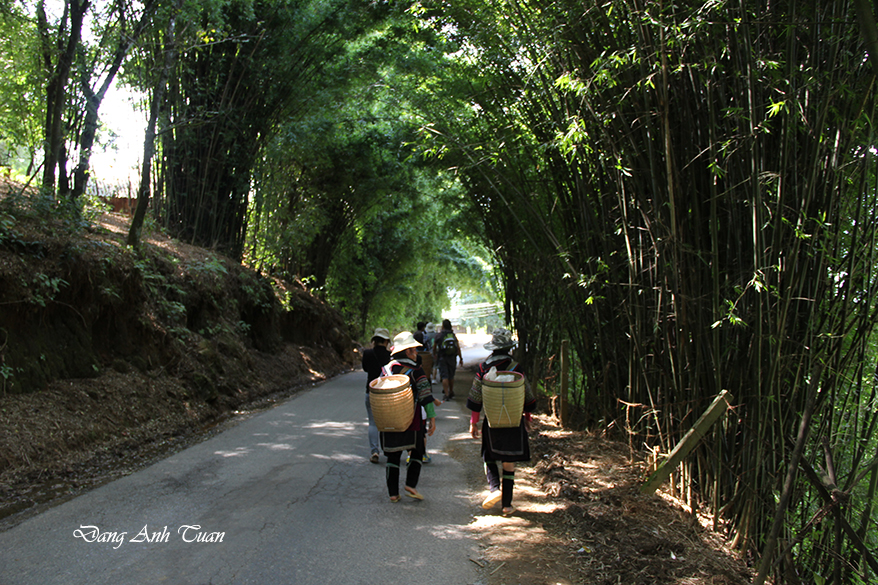
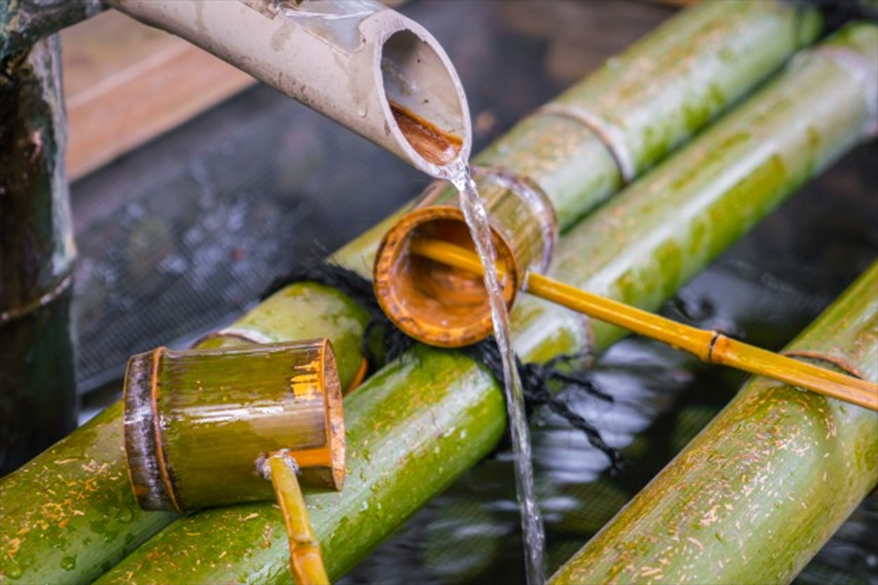
In the past, the Vietnamese used this hollow bamboo, so strong and so light, to build partitions and hedges several meters high to protect their village from enemies and bandits. This material is found everywhere in the house, from the framework, walls, partitions to the floors. Everything is made with this hollow wood (furniture, beds, tables, various accessories, etc.), even a drinking cup. Torn into strips, it is used as ropes and strings. Bamboo filaments are used to make baskets of all kinds to facilitate transport on land (baskets) or on water (round baskets). It is also used to make conical hats to shelter from the rain and the sun. Thanks to this plant, we know how to create everyday tools (buckets for drawing water, pipes for smokers, water pipes, etc.).

It is also used as food for animals and even for villagers. They eat the most tender bamboo shoots like asparagus. The roots of this hollow wood are even dug up and dried in the sun for weeks on end. As Tet approaches, it is used as firewood to bake sticky rice cakes or to protect against the cold, especially in winter in northern and central Vietnam. Bamboo thus becomes something « sacred, » intimate and specific to the village. It is thanks to these hedges made from this plant that the village regains not only its tranquility and privacy, but also its traditions and customs. Bamboo thus becomes the protector of the villagers. This is why a Vietnamese proverb says that

The king’s authority stops before the village’s bamboo hedges. (Phép vua thua lệ làng)

It is also only in villages today that we find this incomparable plant that makes life easier for villagers. Bamboo and the village are so closely linked that they are often compared to a person linked to his shadow. This is why we find this evocation in several Vietnamese poems. This impression, every Vietnamese will probably have it when passing through his native village through the following four verses:

Thì bao nhiêu cảnh mơ màng
Hiện ra khi thoàng cỗng làng tre xanh.

As we indulge in dreaming, we see the entrance to the village and the bamboo appear from afar.

Dừng bước nơi đây lòng ngỗn ngang
Ngùi trông về Bắc nhớ tre làng

When we stop here, we feel helpless
When we remember our homeland with emotion, we are reminded to see the village bamboo again.


To find the bamboo is to find the village. That’s why bamboo has become the representative symbol of Vietnam.


Is Vietnamese civilization a copy of Chinese civilization?

Is Vietnamese civilization a copy of Chinese civilization?

Version vietnamienne

Version française

For a long time, based on Chinese annals, famous Vietnamese scholars such as Trần Trọng Kim in his work « The History of Vietnam » or Đào Duy Anh in « The Outline of the History of Vietnamese Civilization » have recognized that the Proto-Vietnamese originated in China or Tibet. This is why during the time of Chinese domination, the Chinese governors Si Kouang and Ren Yan had to teach them how to cultivate rice and how to live and dress (Book of Later Han). This is an understandable mistake because they need to rely on Chinese annals to find the source of reliable information instead of believing in Vietnamese legends recounting improbable things, the ancient territory of Vietnam being delimited by the Dongting Lake of the Chu Kingdom during the Warring States period, for example.
Even the Europeans during their stay in Southeast Asia in the 19th century had a rather short-sighted vision because they only discovered two major and brilliant civilizations: India and China. This is why they called Indochina to recall the notable influence of these two civilizations in this region including Vietnam, Cambodia and Laos. The recent discoveries of famous American archaeologists such as Wilhelm G. Solheim II, Carl Sauer, Chester Gorman (1965), Donn Bayard, Stephen Oppenheimer provide evidence confirming that the birth of agriculture took place very early in Southeast Asia. Between 9000 and 10000 years BC, its inhabitants were experienced farmers. They did not live only from hunting as European archaeologists used to describe. Around 8000 BC, there was a great cataclysm and a flood that forced these farmers to flee to other safe regions to protect themselves and earn a living. According to S. Oppenheimer, their traces have been found in the islands of Melanesia, Polynesia, and Micronesia. They spoke the language belonging to the Austronesian language family and were originally from Southeast Asia.


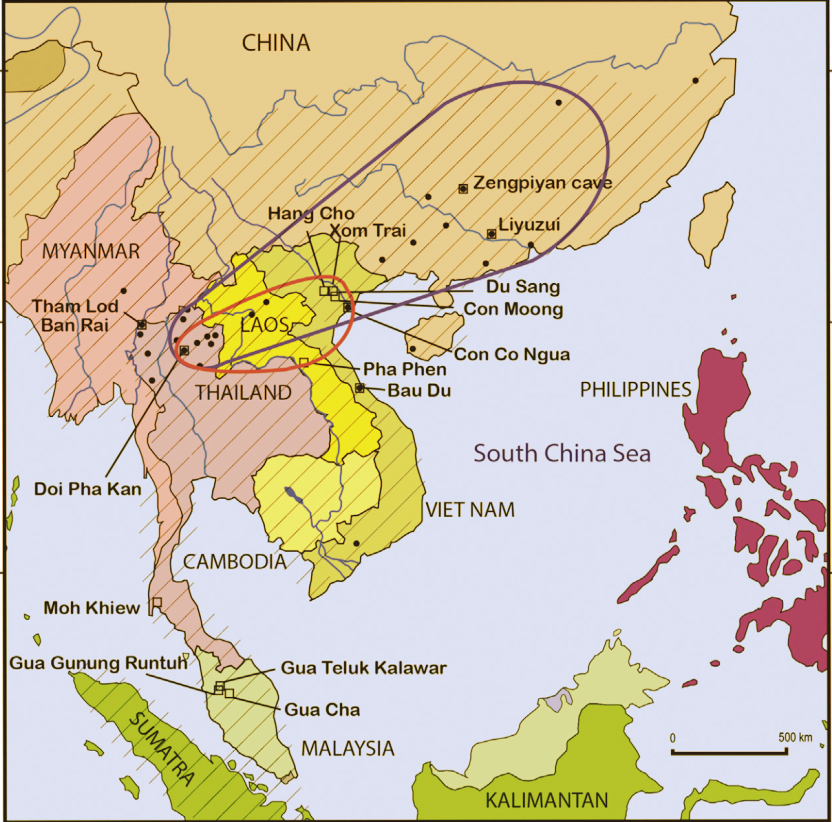
This is entirely consistent with the genetic data analyzed by the American team led by Professor J.Y. Chu of the University of Texas and published in July 1998 in the journal of the American Academy of Sciences under the title « Genetic Relations of Population in China »: the Chinese of today, especially those of South China (Hoa Nam) have ancestors in Southeast Asia. We can therefore say that the Bai Yue, especially the Luo Yue (the Proto-Vietnamese) were not Chinese and they knew agriculture very early. An axe dating back to 7000 BC was found by Chester Gorman in 1965 at the Spirit Cave in Thailand, while the axe attributed to China and brought back to Southeast Asia only dated back to 3000 BC. The Hemudu culture discovered in 1973 (5000 BC – 4500 BC) and considered to be the first very ancient domestic rice culture in China is also the Bai Yue culture because the Jiangnan province belonged during the Warring States period to the famous Wu-Yue king Goujian (496-465 BC). In fact, the Hoa Binh culture (12,000 BC-10,000 BC) that Madeleine Colani discovered in Vietnam and which was at the origin of Vietnamese civilization spread later and brought notable influence to the north. The people living in Hoa Binh at that time were called the Proto-Miao (they would later become the Proto-Vietnamese). They excelled in agriculture. That is why the Proto-Chinese used the pictogram Rice Field below which appears the pictogram Vegetation to form the word Miao designating people who knew how to do agriculture. They left the Himalayan mountain range, Tiānshān (Thiên Sơn) several thousand years ago, followed the rivers in the East and Southeast direction and settled in Southeast Asia before traveling through the regions located in the south of China (or the south of the Yangtze River Delta). They were also called the people living in the hot country (or Viêm tộc) during the Chu Dynasty (nhà Châu) or the Bai Yue later. It can be said that the Hoà Bình culture was the flooded rice culture of the Vietnamese. It also favored the birth of the Hemudu culture (5500 TCN), the Đồng Sơn culture (500 years BC) etc.

As for the Proto-Chinese, they were also from Tiānshān (Thiên Sơn) but they were part of the nomadic tribes living from hunting and cattle breeding in the Xinjiang region. When it became desert (5000 BC), the Proto-Chinese were forced to follow along the Yellow River and advanced into northern China where the Proto-Miao were. They were called at that time the Yi. This pictogram Yi is the association of two pictograms Man and Bow to designate a man knowing how to shoot with a bow. The Proto-Chinese were excellent warriors. This is why there is a confrontation that took place between them and the Proto-Miao led by Chiyou at Zhuolu in 2704 BC. They emerged victorious with the death of the latter.

For the Chinese, the first traces of their civilization date back to the Neolithic period in the Shang capital, Anyang (Henan) and Yangshao (Shaanxi) with several sites. It was the Swedish archaeologist Johann Andersson who discovered the first site in 1921. This culture, dating back to between about 5000 and 3000 years BC, flourished in the plains of the central highlands irrigated and shaped by the Yellow River for centuries. They cultivated millet, wheat and barley. According to the French historian René Grousset, rice is foreign to northern China (page 8) in his work entitled « History of China« . This fact is consistent with the spread and influence exerted by the Hoà Binh culture (12000TCN-10000 TCN) in the north. The Chinese living in southern China are Bai Yue, whom the Chinese have managed to sinicize because their blood contains the gene of the Proto-Miao or Bai Yue (like the Man Yue, the U Yue, the Shan Yue, the Wu Yue, etc.). This is why the Chinese are proud of the richness and diversity of their culture. Yin and Yang and the 5 elements, the Yi King,  the tea, the curved roof of houses, the paper, the dragon, the  chopsticks  and the bronze drums, everything now belongs to them because it is located in the territory of the Bai Yue, i.e. in the south of the 5 Passes (Lĩnh Nam) of China except Vietnam. Yet at a certain time, the Bai Yue were still Nan Man or southern barbarians. This is one of the characteristic features of Chinese culture: it knows how to accept and absorb foreign cultures without ever being able to speak of vacillation or cultural modifications. This is what the famous 20th century Chinese philosopher Liang Shuming wrote in the introduction to his work entitled « The Master Ideas of Chinese Culture » (translated by Michel Masson).

This is in line with the following observation made by the French ethnologist and sinologist Brigitte Baptandier in her lecture text at an APRAS study day on regional ethnologies in Paris in 1993: Chinese culture has thus been formed over the centuries as a sort of mosaic of cultures. China needs a slow infusion of barbarian blood by readapting the beautiful formula of the historian F. Braudel for France with the barbarians. The Chinese introduce into their literature a Pangu creation myth collected from the ancestors of Yao. (Baptandier).

Lac_viet

From the Qin-Han period onwards, there existed an imperial institution, the fangshi, who were local scholars considered magicians specializing in star rites and government recipes. Their role consisted of collecting, each in their own territory, ritual procedures, beliefs, local medicines, systems of representation, cosmologies, myths, legends as well as local products and submitting them to the political authority so that the latter could retain them or not and incorporate them in the form of regulations with the aim of increasing imperial power in an ethnologically very diverse nation and giving the emperor the means for his divine vocation. 

Everything had to be collected and added to the service of the Son of Heaven in order to establish his legitimacy in territories recently conquered from the barbarians. This is why in the history of China there is an inconsistency that is difficult to understand because the Chinese used to take Mr. A’s outfit to dress Mr. B during the time of the Five Emperors and Three Augusts. All this is due in large part to the borrowing of traditions, customs and mythical characters or animals from the peoples they managed to sinicize.

Chinese demiurges such as Fuxi, Nuwa, Pangu, Shennong were borrowed from southern populations. This is the case of the great Chinese scholar Ruey Yih-Fu who sees in Fuxi and Nuwa a specific cultural trait of the Nan Man (Southern Barbarians) or that of Charles Le Blanc, the translator of Huainanzi (Hoài Nam Tử). For the latter, the cycle of Fuxi-Nuwa is a tradition of the kingdom of Chu. We tend to forget that from the Qin-Han era, the agricultural culture of the Bai Yue was integrated into Chinese culture so much so that the difference between these two cultures is no longer distinguished. China succeeded in largely sinicizing most of the Bai Yue except the Luo Yue.

They managed to escape from the yoke of the Northerners after a long domination lasting almost 1000 years. The Chinese took over everything that belonged to the Vietnamese but they failed to sinicize them because the Vietnamese continued to keep the characteristic way of life of the cultivation of flooded rice based essentially on the autonomy of the villages thus making the penetration of foreign aggressors ineffective with their traditions and customs. (The authority of the king yielding to the local customs of the village). This is why they only need two essential elements « Earth » and « Water » to refer to their country and their civilization. « Earth » and « Water » allow them to domesticate wild rice and help them to attach themselves deeply to their soil to protect the water (or country in Vietnamese), this is what their ancestors have managed to demonstrate many times the resistance to the peril of the Northerners for many centuries.


Anh Ca (Brother Hai)


Anh Cả (Brother Hai)

Once, while I was visiting South Vietnam, I had the opportunity to listen to the bus guide tell us about it. According to him, during our people’s march to the South, the eldest son must stay with his mother to support the family while his father, who is in the army, goes to the South alone. Far from his family and his homeland, he usually takes a second wife and has another child. This child will be called « sister Hai » or « brother Hai » because this corresponds to the rank « TWO » in the family consisting of several children. There is another hypothesis as follows:

During the Nguyen Dynasty, there was a tradition of refraining from any action that referred to the first name of the king or his relatives. This is why the word ĐẢM was replaced by the word ĐỞM because ĐẢM was the first name of Nguyễn Phúc Đảm (King Minh Mang) (can đảm meaning courage was transformed into can đỏm). King Minh Mang had a wife named Hồ Thị Hoa, mother of King Thiệu Trị. Viceroy Le Van Duyet built a bridge near a beautiful garden in Bến Nghé (the first district of today’s Ho Chi Minh City). It was originally called « flower bridge » (cầu HOA), which later became « cầu BÔNG. » It is said that the word « Cả » is not used because it refers to the eldest son of King Gia Long (Prince Cảnh). This is absurd because « Hương Cả » is the title given to the first person in the village in South Vietnam, often heard by the population and still used in the French colonial era. This is absurd because no one ever pays attention to the rank or title given.

It should be remembered that the Vietnamese are part of the Austro-Asiatic group. In addition to the Vietnamese, there are many other ethnic groups that are now called ethnic minorities such as the Tai-Kadai, the Austronesians, the Mường, the Hmong, the Cham etc.). Consequently, there is always the reciprocal borrowing of words in the vocabulary used by these ethnic groups. In South Vietnam, formerly it was the territory of the kingdom of Funan whose inhabitants were not the Khmer but the Austronesians like the Cham and the Mạ in the Đồng Nai region despite the annexation of this kingdom later by Chenla which later became the Angkorian empire of the Khmer. As their territory was too vast, the Khmer were unable to assume their presence everywhere. This is why the Funanese only became Khmer in places where contact was possible thanks to the assimilation policy. On the other hand, in other places the Funanese continued to live as before.

Being given the undeniable proximity of the Austro-Asiatic and Austronesian groups, proven for thousands of years by documents from genetic research work as recently as twenty years ago, the borrowing of the word HAK from the Funanese belonging to the Austronesian group in South Vietnam by the Vietnamese is very normal to designate children.

According to Vietnamese writer Bình Nguyên Lộc, the eldest son is always called « Son Hak » by the Funanese. So « sister Hai » or « brother Hai » used by the Vietnamese in South Vietnam obviously come from the Funanese. This is why in South Vietnam when you meet a Vietnamese with wavy hair, you can deduce that he is of Funanese origin like the Mạ in the Dong Nai region. A pure Vietnamese never has wavy hair but on the other hand has straight hair because he is part of the Southern Mongoloid group.

[Return TRADITIONS]

Traces of Vietnam’s matriarchal system


Traces of Vietnam’s matriarchal system.

Version française
There is a time when our people, like other peoples of the world, adopt the matriarchal system. Do we have the opportunity to think about this for ourselves? Certainly not, because at birth, we all took our father’s name, except in France where we are now allowed to add our mother’s name to our name. In the Vietnamese language, we often use words that still bear traces of the matriarchal system, which we never think about, especially since our country has adopted the patriarchal system for so long. We often say wife/husband (VỢ CHỒNG) but never husband/wife (CHỒNG VỢ). We are used to referring to the family line with the term « BÀ CON » where the word BÀ (madam) always precedes the word CON (or child). Sometimes there is contempt in the words when using the following term « gái nạ dòng or divorced woman » where the word nạ refers to the mother’s lineage. According to the writer Binh Nguyên Lộc, this is meant to imply a polyandrous girl. This implicitly means a bad girl.

Today, our country still has a matriarchal system in many places, such as in the Vietnamese highlands with the Cham, Jarai, Ede, Raglai and Churu ethnic groups belonging to the Austronesian language family, or the M’nong and K’ho of the Austro-Asiatic language family. Some claim that our country has adopted the patriarchal system since the annexation of Jiaozhi (Giao Chỉ) by China. This is certainly not true. When did our country abandon the matriarchal system in favor of the patriarchal one? To explore this question further, archaeologists often rely on the way the dead are buried in the tombs of sites linked to the flooded rice civilization. It was certainly not at this time that the Hùng kings of the Văn Lang kingdom ruled with the Phùng Nguyên culture, as succession to the throne clearly operates through patriarchy in the legend, notably the major power always accruing to the eldest member of the family in the social organization of the time.

We also know that the ancestors of the Vietnamese people came directly from the region of the Blue River (Yangtze), based on today’s genetic research data. We need to go back in time and analyze the places where flooded rice was grown in the middle and lower reaches of the Yangtze River, because according to Japanese researcher Shin’ichi Nakamura of Kanazawa University, the cradle of rice cultivation must have been there, but given the current state of knowledge, it’s difficult to pinpoint it very precisely on a map.

However, there is the social evolution in the regions of the lower Yangtze River (Hemudu and Liangzhu archaeological sites) during the Neolithic period:

from a diversified economy to an exclusively rice-growing economy

– from agricultural to urban settlement

– from a collective cemetery to a cemetery for individual groups.

Why the Hemudu site? According to French archaeologist Corinne Debaine-Francfort, the oldest Neolithic site in the Hemudu region (Zheijiang) not only yielded the remains of a wooden lake dwelling on stilts, quite different from the mud houses of northern China, but also grains of rice cultivated in flooded fields using hoes made from animal shoulder blades in 1973. It can be said that rice was domesticated at this site dating from around 4770 to 5000 BC. The people living here had both Mongoloid and Australo-Negroid features. When people died, they were buried with their heads facing east or northeast, and most had no offerings. Nor did they have a clearly defined communal cemetery.

On the other hand, they had a common clan cemetery with numerous grave goods. We can see that a matriarchal system was still in place here, as we find the remains of animals such as monkeys, rhinoceroses, deer, elephants, tigers, tortoises etc. This shows that the local inhabitants were still living off hunting and fish.

The role of man is not considered important, as it is not yet necessary to have a social organization requiring many human resources for production, such as tool-making, storing rice in granaries, casting bronze, etc., as well as the distribution of arduous tasks to obtain the desired result during the harvest season. Man seems to have little power and is not allowed to own or inherit land.ing at the time.

On the other hand, in the Neolithic sites of the Liangzhu culture, there is a clear shift in the balance of power between husband and wife. For example, among the funerary objects in individual tombs, agricultural tools such as polished stone shovels are intended for men, while weaving wheels remain the main objects for women. This proves that, at the time, men were the main laborers in the rice fields and women were only responsible for household chores.

In addition, stonecutters were forced to change their trade and became jade cutters. This led to an important period of industrial development and division of labor in society, and fostered the emergence of class distinctions between rich and poor, as well as between aristocracy and religion. Since then, there has also been a contribution to division within the family unit. It was also at this point that monogamy began to appear.  The wife followed her husband to live with his family. The children were also able to live with their parents and family, and took the father’s surname when they were born.  Upon death, husband and wife could be buried together with members of their patriarchal family.

In short, we can say that the Vietnamese followed the patriarchal system very early on, when our ancestors were still living in the Yangtze basin. Consequently, when they returned to the Red River delta, they continued to preserve patriarchy under the Hồng Bàng dynasty with the Phùng Nguyên culture.


Bibliographie:

Annick Levy-Ward : Les centres de diffusion du riz cultivé. De l’Asie du Sud-Est à la Chine. Études rurales, n°151-152, 1999
Shin’ichi Nakamura: LE RIZ, LE JADE ET LA VILLE. Évolution des sociétés néolithiques du Yangzi. Éditions de l’EHESS 2005/5 60e année, pp 1009-1034
Corinne Debaine-Francfort : La redécouverte de la Chine ancienne.  Editions Gallimard  1998.
Bình Nguyên Lộc: Lột trần Việt ngữ. Talawas

Vietnamese makara (con kim)


Con kìm 

Version française
Version vietnamienne

For so many years, when I have the opportunity to visit temples or pagodas, I am used to taking photos of the sacred animal that is clearly visible on their roofs. I always think I am dealing with a dragon because its head resembles that of a dragon, its mouth being gaping and always swallowing an element of the roof. But when you examine it closely, you discover its very short body and its tail resembling that of a fish. The Chinese are used to calling it Xi. This is their way of calling this legendary creature Makara. This one is used to living underwater and is the favorite vehicle of the goddess of the Ganges River, Ganga. It is therefore an aquatic creature from abroad. Its mouth is so large that it can swallow an architectural element of the roof. Is this why the Vietnamese give it the name « Kìm » (or pincer in French)? Why is it often found on the roofs of temples or communal houses?

According to the Taiping Leibian Encyclopedia, it is a tradition dating back to the Han period under the reign of Emperor Han Wudi and the period when Buddhism began to take root in China. Following the fire at the Bach Luong Palace and at the suggestion of a mandarin to the emperor, the Imperial Court decided to sculpt the statue of this aquatic creature and install it on the roof of the palace because it was capable of extinguishing fire by surfing on the waves, which caused rain when it appeared. This creature henceforth became the symbol of the extinction of fire.

This custom was widespread not only in the Han imperial court but also in popular belief. Our country, annexed by the Han at this time, was no exception in the practice of this cult. Kim thus became the sacred animal of decoration on the roofs of communal houses and pagodas because Vietnamese artists have succeeded today in giving it a specific character in Vietnamese culture over the centuries. It has long since become a purely Vietnamese sacred animal. Everyone forgets not only its Hindu name, makara, but also its origin. 


Griefs of war (Nỗi buồn chiến tranh)

 
Tình gia thất nào ai chẳng co’
Kià lão thân khuê-phụ nhớ ‘thương
Mẹ già phơ phất mái sương
Con thơ  nhỏ  dại còn dương phù  trì

Chinh Phụ Ngâm

Familial sentiments, who does not feel them?
Your old parents, your young wife remember you with love
Your mother, under the weight of age, sees her white hair floating like the rime
Your young baby in his tender innocence, needs your protection.

Complaint of the warrior’s wife

chagrin_de_guerre

Griefs of war

Version française

Speaking of Vietnam, people will not stop thinking of the war, its wounds and its boat people. No one could be indifferent when it is known that 13 million tons of bombs ( 300 pounds per person ) and 45 million gallons of defoliant were dumped over during the war. There were about 4 million Vietnamese civilians killed or injured, 450,000 Vietnamese combatants dead, 800,000 combatants wounded not included 58,183 Americans dead or missing in action and 313,613 wounded on the American side. That war divided at that time not only world opinion but also that of the Vietnamese. It continued to engrave on the mind of Americans up until now. On the other hand, it is hard for a Vietnamese to justify that war when one is in love with justice, freedom and independence. There is in each one of us full of regrets, contradictions and embarrassment because we know quite well the causes of that war and its consequences.

Independence and freedom never come together on the road of peace. We continue to dream of having them together some day on that such an arduous land that we never stop shaping it with sweat and tears for so many generations. We keep on imploring God, attribute fault to foreigners without wanting to recognize our own errors, without daring to look to ourselves in the mirror and without wanting to nurture the whole people’s hope. We have lost too many occasions in the past to be reconciled with each other, to bring Vietnam out of poverty and to bring it back to the road of prosperity at the dawn of the 21st century. It is time not to start over the same mistakes that our elders have made for so many years, to bury our personal hard feelings for the national interest and to magnanimously treat all those who do not share our political convictions. To do it is evidently not easy but it is less painful than what so may Vietnamese families have suffered during that war, which we often called  » the griefs of war ».

In 1945, in the Mekong delta, a young man named Hoàng, issue of a landed family, lived in hiding with his young lover Hương at a suburb not far from Cần Thơ.. They had two children, a boy named Thành, 3 years old and a girl named Mai, one year old. Unfortunately, this conjugal union was short lived because it was uncovered by their kins.

They strongly condemned it because it was a shame to the family when it was known that the young woman was no other than Hoàng’s niece. Caught by shame and taken by remorse, Hoàng decided to abandon his family and enrolled in the Việt-Minh army hoping to find relief on the battle fields against the French army. Thanks to his courage and military exploits, he became a few years later an important person in charge in the Vietnamese communist party in the Minh Hải region ( Cà Mau ) in South Vietnam.

In 1954, after the Geneva Accord, he was repatriated to North Vietnam waiting for the new democratic election in South Vietnam. Unfortunately, because of the cold war and the East-West confrontation, the election never took place. Vietnam then became the place of confrontation and was divided in two republics, one close to the Soviet bloc and the other the Republic of Vietnam. After a few years of higher education in Moscow, Hoàng returned to Ha Noi and a few years later became the engineer in charge, specialized in the field of making heavy artillery and maintaining anti-aircraft battery DCA during the American Vietnamese war. In the meantime, he remarried and was killed in a beautiful morning in his bunker during a bombardment by South Vietnamese and American aircraft in the region of Vinh in 1964. He was posthumously decorated and considered national hero ( liệt-sĩ ) since then.

As for his young wife, she continued to raise her two children in South Vietnam waiting for the return of her husband. Her son Thành became some twenty years later one of the brilliant aviators of South Vietnam after having spent three years training in the United States ( Houston, Texas ). He flew several missions over North Vietnam and participated in several rounds of bombardment of Thanh Hóa and Vinh regions. Could one of the bombs he dropped have by accident killed his father, a person he would always like to see again some day when peace would return in this country?

Two months before the fall of  Saïgon in 1975, in the course of the month of February, Thành received the order to discreetly leave the country with his family to resettle in the United States. He finally preferred to stay in Vietnam because his mother always fostered the hope of finding his father alive in North Vietnam and seeing again a reunified family after so many years of sufferings and separation. Unfortunately, she never found her husband alive. She knew he was killed by American bombs and as a reward, she received the title of « spouse of a hero » ( or vợ của liệt sỹ  ). On the other hand, because of his three years of training in the United States and his military activities, Thành, her son, was sent to a reeducation camp located at Lạng Sơn in North Vietnam. He had to spend eight years of reeducation. During his confinement, his mother had to take a long trip every six months to see him and did not stop crying during these reunions. On his release, he only found her to be in a lamentable state with her eyes almost blind. But he never had the chance to serve her any longer because he had to leave Vietnam to resettle in the United States in 1994. Probably he would never see his mother again who is now 75 years old because returning to Vietnam would have been for the moment, an utopia.

The story of this family torn and ruined by that war is not only the story lived by the vast majority of Vietnamese but also that of a people continuing to heal its deep wounds, as the years go by, for the price of independence and freedom.


Dong Son culture (Văn hóa Đồng Sơn)

 
vanhoa_dongson
Version vietnamienne
Version française

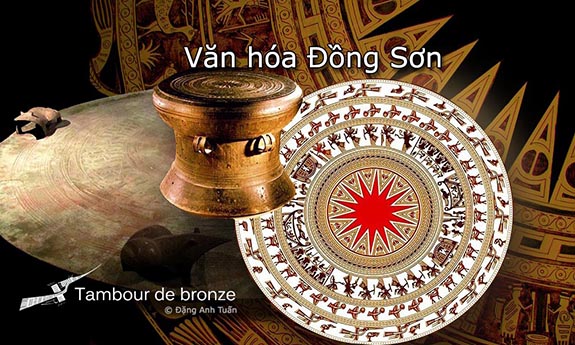
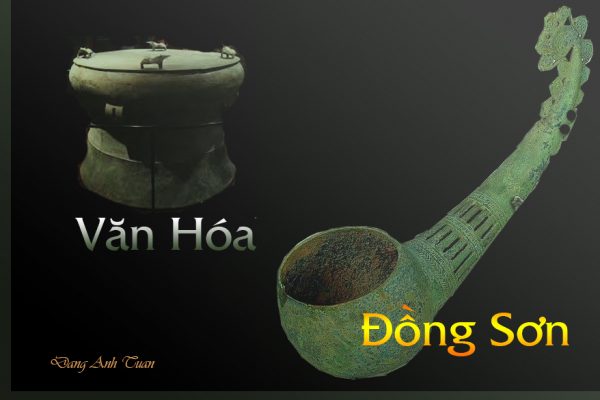
In the early 20th century, archaeologists from the Ecole française d’Extrême-Orient (Louis Pajot, Olov Jansen) discovered a large number of Bronze Age artefacts in the Mã valley, notably in the village of Ðồng Sơn.

Among these finds are musical instruments, in particular drums. These are decorated with figurative motifs depicting stylized animals and scenes from daily life. But the most remarkable of these drums remains that of Ngọc Lũ. This is a cylinder 63 cm high and 79 cm in diameter. It was purchased by EFEO at the 1902 exhibition and auction in Hanoi for the price of 550 piasters at the time. It is arguably the finest drum ever found in Asia. On its upper side are motifs mixed with various ritual subjects: herds of deer, waterfowl, houses on stilts etc. The Austrian archaeologist Heine-Geldern was the first to propose the name Đồng Sơn for this culture. Since then, the culture has been known as the Ðồng Sơn or Dongsonian culture.   According to researchers Louis Bezacier and Nguyễn Phúc Long, the art of Đồng Sơn represents only the final phase of a long evolution of bronze metallurgy from the Gò Bông (late Phùng Nguyên) , Đồng Dậu and Gò Mun eras and corresponds to the period when it reached perfection and acquired prestige and influence in Southeast Asia and the Pacific.

According to researcher Hà Văn Tấn, the culture of Đồng Sơn has its roots among the proto-Dongsonian cultures discovered, which gradually enable it to have remarkable creations.  The art of Đồng Sơn emerged on the basis of Neolithic industry, as the first bronze objects can be found alongside carved stone instruments and pottery with a still Neolithic character. To look for the origins of the Dongsonian in the north or west of Vietnam, as several researchers have done, is to put forward a hypothesis that has no scientific basis. Dongsonian art is also in contact with the art of the Warring Kingdoms (Houai-style daggers from the Wu-Yue kingdom).  The ancient bronzes found in Vietnam are totally different from those of the Shang and Chu dynasties in China, both in the creation of charming forms and in decoration and alloying.  We can say without hesitation that this is a purely local production with very little influence from Chinese bronzes.

Đồng Sơn culture

(500 B.C. – 43 A.C.)

dongsonien


Thanks to the discoveries of bronze ploughing implements (ploughshares) found at Vạn Thắng and Sơn Tây reported by Vietnamese researchers in their book entitled “Les premiers vestiges de l’Âge de bronze au Vietnam p 110-113, Hànội 1963)(1), the Proto-Vietnamese already knew how to plough their rice fields. This invalidates the old Chinese thesis that the Proto-Vietnamese didn’t know how to plough before the Han conquest. They had to learn from the governors Si Kouang (Tích Quan) and Ren Yan (Nhâm Diên) how to grow rice and how to live and dress (Livre des Han postérieurs). One of the characteristics of Dongsonian bronze lies in the subtle blend of copper, tin and lead elements, depending on the type of tool produced (battle axe, crossbow trigger, spear point, ploughshare, hoe, dagger, etc.). According to Vietnamese researcher Nguyễn Phúc Long, ancient bronze drums found in North Vietnam have a much higher lead content than those from archaic China, in the order of 27.8% for the former versus 0.55% for the latter.

Beauty and skill are not lacking either in the decoration of the various objects found with the creatures living in the rice fields (toad, pelican, turtle, buffalo etc.). For some time now, despite the proximity of a multi-cultural country like China, there has been unanimous agreement on the singularity of this age-old culture, which originated with the rice-growing peasants, whose feet were buried in the mud of the flooded fields and who were close to nature. It is contemporary with the Sa Huỳnh and Đồng Nai cultures of central and southern Vietnam today.

[RETURN]

Từ bao giờ có khu 36 phố phường ở Hà Nội?

Từ bao giờ có khu 36 phố phường ở Hà Nội?
Depuis quand il y a le quartier des 36 rues et corporations  à Hanoï?

Version française 
Version anglaise
Galerie des photos

Thăng Long được xuất phát từ làng Long Đỗ. Từ thế kỷ  thứ năm, vua Lý Nam Đế đã xây ở  đây « mộc thành» của nước Vạn Xuân. Nhà Đường, sau khi xâm chiếm nước ta lấy nơi nầy làm trị sở trên đất Long Đỗ và đổi tên nó ra Tống Bình.

Lý Công Uẩn dưới sự giúp đở của sư Vạn Hạnh nhận ra tiềm năng của vùng đất nầy vì nó là điểm giao nhau của các trục đường bộ và đường sông trong việc vận chuyễn hàng hóa. Vã lại nó còn  đáp ứng cho việc cân bằng  giữa các yếu tố  nước và đất hay là giữa dòng khí tốt (Rồng xanh) và dòng khí xấu (hổ trắng)   trong phong thủy mà được tướng nhà Đường Cao Biền  du nhập vào nước ta. Tục truyền Cao Biền dùng bùa phép yểm trấn thành Đại La nhưng nhờ thần Bạch Mã  trợ  giúp mà Lý Thái Tổ thành công trong  việc xây thành Thăng Long trên nền móng cũ của  thành Đại La. Đền thờ Bạch Mã vẫn  còn ngày nay ở phố Buồm (Rue des voiles). Vì vậy vào mùa thu 1010, Lý Công Uẩn mới ra quyết định dời đô từ Hoa Lư về vùng đất « Rồng cuộn, hổ ngồi ». Ngài muốn chọn một nơi để phát triển kinh tế  cho vận nước được lâu dài và tính kế lâu dài  cho con cháu được  muôn vạn thế hệ và muôn vật được phồn thịnh và phong phú.

Từ đó, ngài cần lập các công xưởng thủ công để sản xuất các hàng hóa mà triều đình cần dùng và tiêu thụ.  Không những các thợ thụ công giỏi đua nhau đến Thăng Long làm việc mà luôn cả các nông dân ở thôn quê vùng sông Hồng  lúc nhàn rỗi  cũng tham gia sản xuất các sản phẩm hàng thủ công bán cho các con buôn mà những người này họ mang về kinh thành bán lại để kiếm lời. Lúc đầu họ tụ hợp ở các phiên chợ  của bốn chợ lớn tại các cửa  ô kinh thành. Nhưng về sau vì các xưởng sản xuất của triều đình không thể cung ứng đủ nên khiến một số thương nhân dần dần tập trung tại khu phố  ở cửa Đông vì ở đây địa thế của chợ nầy rất thuận lợi cho việc chuyên chở hàng hóa bằng thuyền từ nông thôn ra kinh thành qua sông Hồng, Tô Lịch và các kênh. Phía trước mặt chợ  thời đó là đền Bạch Mã. Còn bên phải là sông Tô Lịch và thưở đó có cái cầu bắc ngang sông hiện nay đó là phố Hàng Đường. Bởi vậy ở thế kỉ 14 mới  có thành ngữ  « Kẻ Chợ » (những người của chợ) để nói đến khu phố tấp nập này. Chính  nơi nầy được gọi về sau là  khu 36 phố phường để bán các sản phẩm  thủ  công mà các làng nghề  xung quanh và ở nông thôn cung cấp. Các cửa hàng đều là những  nhà chòi dùng để làm cơ xưởng hay để buôn bán dọc theo phố (hay đường).

Tựa như các nhà ở đồng quê, các cửa hàng nầy được dựng lên bằng gỗ, tre, mái rơm và tường trét bùn. Nhà nào cũng có chum nước để ở trên mái  khi có hỏa họan  thì kéo đổ xuống mái. Quá sợ hỏa hoạn, người dân lập đền Hỏa Thần (nay nó nằm ở Hàng Điếu) để ngày rằm cầu xin thần lửa đừng gây cháy.  Kẻ Chợ dần dần thoát khỏi sự phụ thuộc vào kinh thành từ thế 17 dưới sự ngự trị của các chúa Trịnh nhờ có một  loạt nghị quyết như giảm thuế, thống nhất hệ thống tiền bạc và xây dựng nhiều công trình đô thị lớn dẫn đến sự phát triển đáng kể. Các thủ công nhà buôn từ các làng nghề đổ xô về cư ngụ lâu dài ở thành phố và các nhà con buôn nước ngoài  thì bắt đầu lập chi nhánh tại kinh thành khiến làm nền kinh tế nó rất sôi động hơn. Nhờ đó mà kinh thành trở nên trung tâm buôn bán lớn nhất của miền bắc Việt Nam.

Các thợ  thủ công và các thương nhân cùng một làng quê gốc tập hợp thành các phương hội rồi cùng nhau  chuyên sản xuất hay  bán ở phường. Để kiếm hàng cần mua thì chỉ cần đến phường mà trước lối cổng vào thì có một tấm bảng ghi rõ chất  lượng và loại hàng được bán.Thời kỳ này chữ phố cũng chưa được dùng. Theo nhà văn Nguyễn Ngọc Tiến thì chữ phố vẫn được dùng với nghĩa là bến sông. Bởi vậy mới có câu « Gác mái ngư ông về viễn phố » (nhớ về bến xa)  trong bài thơ « Chiều hôm nhớ nhà » của bà Huyện Thanh Quan.Theo nhà sử học Pháp Philippe Papin, thì chữ phố được sử dụng vào năm 1851 ở huyện Thọ Xuyên và Vĩnh Thuân nên mới có chức trưởng phố  trong  quyến sách mang tựa đề là  « Lịch sử Hà Nội ». Còn trong sách Đại Nam nhất thống chí thì có chép như sau: Hà Nội là kinh đô xưa, nguyên trước có 36 phố phường …. Còn trong cuốn « Chuyến đi thăm Bắc Kỳ năm Ất Hợi  (1876) của học giả Trương Vĩnh Ký thì ông có kể ra 21 phố gồm có: Hàng Buồm, phố nầy cũng là phố Khách Trú có nhiều tiệm thuốc bắc, nhiều hàng cao lâu, Hàng Quảng Đông (Hàng Ngang hiện nay) nơi nầy cũng toàn  người khách trú ở, Hàng Mã thì gắn liền với nghề sản xuất, buôn bán đồ giấy, đồ vàng mã cúng lễ, ma chay vân vân… Như vậy chữ phố có thể ra đời từ đầu thời vua Tự Đức.

Các thợ kim hoàn xuất phát từ làng Châu Khê thì định cư ở phố Hàng Bạc. Còn thợ tiện gỗ đến từ làng Nhị Kê thì ở phố Tô Tịch vân vân…Họ luôn luôn giữ liên lạc với ngôi làng gốc của họ ở nông thôn trong việc tuyển nhân công, cung ứng nguyên liệu, ghi tên vào gia phả của làng, tham gia mỗi năm và các ngày hội của làng.


Các làng ở nông thôn trở thành các nơi cung cấp không những cho làng phố  đô thị các sản phẩm đạt trình độ kỹ thuật cao mà còn luôn cả nông phẩm cho kinh thành. Có thể nói các làng ở nông thôn và các làng phố ở kinh thành phụ thuộc lẫn nhau. Chính nhờ thế tình thần đoàn kết giữa các làng phố đô thị và các làng ở nông thôn càng chặt chẽ hơn nữa. Mỗi làng phố  đô thị được xây dựng dọc theo phố hay một đoạn của phố và lệ thuộc một hay nhiều làng cùng làm một nghề thủ công. Thời đó đăc điểm của làng phố là ở mỗi đầu của làng phố là có cổng ra vào. Các cổng nầy đều đóng lại lúc về đêm. Mỗi làng phố còn có một  bộ máy hành chánh riêng biệt cũng như có một trưởng phố, một  ngôi đình riêng tư nhầm để thờ các ông tổ của nghề hay là  các thần hoàng của các làng gốc ở nông thôn.  Dưới thời Pháp thuộc, để tránh hỏa hoạn thì chính quyền Pháp mới ra chỉ thị xây dựng lại thành phố qua  các công trình kiến trúc  kiên cố với các  ngôi nhà  hình ống mà  chúng ta được thấy ngày nay ở phố cổ Hà Nội mà họ còn  lấp đi nhiều ao hồ như hồ Hàng Đào, hồ Mã Cảnh, hồ Hàng Chuối, hồ Liên Trì vân vân…  Năm 1894, Pháp lấp đọan đầu sông Tô Lịch để xây chợ Đồng Xuân. Họ lại phá tường thành Hà Nội và các cửa thành. Nay chĩ còn duy nhất Ô Quan Chưởng hay (Ô cửa Đông) còn khúc sông Tô Lịch dưới chân thành cũng bị lấp đi.  Giờ  đây nhiều phố  chỉ còn tên mà thôi như phố Hàng Bè chớ cát bồi đưa sông ra xa nên bè mảng không còn vào được sát chân đê nữa. Như vậy đâu  còn bè mà cũng không còn chợ cái bè trên đê nữa. 

Còn các nhà hình ống nầy mang đậm phong cách phương tây nhất là mặt tiền với ban công, lô gia, hiên nhà vân vân. Còn vật liệu xây dựng thì gồm có xi măng, cốt thép, bê tông, kính vân vân … Tuy nhiên theo sử gia Pháp Philippe Papin thì các nhà ống ở Hànội là ảnh hưởng của cộng đồng người Hoa. Luận chứng nầy  không hẳn là sai nếu có  dịp đến tham quan các nhà cổ  của  người Hoa ở  Hội  An.  Nhưng theo nhà văn Nguyễn Ngọc Tiến thì  dưới thời vua Minh Mạng,  đánh thuế  cửa hàng không  căn cứ  nhà đó  buôn to hay nhỏ  hay chiều sâu mà chỉ  đo mặt tiền.  Mặt tiền rộng đóng thuế  cao, hẹp thì  thuế  ít. Vì vậy mặt tiền rộng hay thường chia ra nhiều cửa hàng. Đôi khi con trai lập gia đình và không có điều kiện mua chỗ buộc cha mẹ phải nhường một phần cửa hàng nên mới có  sự  hình thành nhà ống.  Các nhà ống tuy mặt tiền rất eo hẹp nhưng có  thể có chiều dài lên đến 60 thước. Loại nhà nầy thường có ba phần: phiá trước dùng để buôn bán hay cơ xưởng  còn ở  giữa  hay thường  có  cái sân, nơi có một nhà nhỏ xây vòm cuống giống một cái lò cao 1,8 thước để chứa các đồ  qúi giá  phòng khi cháy chớ nếu không mất trắng tay và phần cuối thì để ở.

Trong quyển sách  được mang tên là « Miêu tả về vương quốc Bắc Kỳ », ông Samuel Baron, một thương gia người Anh có nhắc đến phố cổ qua một số tài liệu hình ảnh và những gì ông  mô tả  thật thú vị. Tuy rằng nhỏ hẹp so với diện tích của Việt Nam, khu phố cổ Hà Nội nó là minh chứng tiêu biểu của  nền văn hóa thương mại và đô thị của người dân Việt qua nhiều thế kỷ. Đây là một kiểu mẫu mà cần thiết phải biết tường tận để hiểu rõ  được cái cấu trúc truyền thống của đô thị trong thế giới làng mạc của người  dân Việt.


Version française

Thăng Long était issue  du village de Long Đỗ. Dès le Vème siècle, le roi  Lý Nam Đế construisit ici la « citadelle en bois » du royaume de Vạn Xuân. Après avoir envahi notre pays, la dynastie des Tang a pris cet endroit comme le quartier général de son armée sur les terres de  Long Đỗ et a changé son nom en Tống Binh. Lý Công Uẩn aidé par le  moine Van Hanh, a  trouvé l’énorme  potentiel de cet endroit  car il était à  l’intersection des routes et des voies fluviales pour faciliter le transport de marchandises. De plus, il a  répondu  également à l’équilibre et l’harmonie  entre les éléments Eau et Terre ou bien  entre le souffle  bienfaisant  (Dragon vert) et le souffle malfaisant (Tigre blanc) dans la géomancie  introduite dans notre pays par le général Tang Gao Pian. La légende racontait  qu’il  se servit des sortilèges pour protéger la citadelle de Đại La, mais grâce à l’aide  apportée par le génie  « métamorphosé en Cheval Blanc », Lý Thái Tổ réussit à édifier  la citadelle de Thăng Long sur les anciennes fondations de la citadelle de Đại La. Le temple dédié au culte du Cheval Blanc  existe encore aujourd’hui  dans la rue des voiles (Phố Buồm). C’était pourquoi à l’automne 1010, Lý Thái Tổ vint de décider le transfert de la capitale, de Hoa Lư à la région où le dragon s’enroulait et le tigre était assis. Il voulait choisir un endroit pour développer l’économie à long terme et prévoir un avenir radieux avec prospérité et abondance pour dix mille  générations futures. 

Il dut créer  dès lors des usines artisanales pour produire les marchandises dont la cour royale avait besoin pour la consommation.  Il y avait non seulement des artisans talentueux  se précipitant à  travailler à Thăng Long, mais aussi des agriculteurs vivant dans les campagnes de la région du fleuve Rouge. Ces derniers,  durant leur temps libre, ont également participé à la production de produits artisanaux destinés à être vendus aux intermédiaires  qui les ont ramenés dans la capitale pour les revendre dans le but de gagner de l’argent. Dans un premier temps, ils s’étaient rassemblés aux quatre grands marchés se trouvant tout près des  portes de la capitale. Mais comme les usines royales ne pouvaient pas approvisionner suffisamment les  produits, ils  s’étaient  progressivement regroupés  dans le quartier de la Porte Est car le terrain d’ici  était très propice au transport fluvial des marchandises  de la campagne vers la capitale en passant par le fleuve Rouge jusqu’à Tô Lich et les canaux.

À cette époque, devant le marché se trouvait le temple du Cheval Blanc (Bạch Mã). Sur sa droite il y avait la rivière Tô Lich et  un pont, le tout devenant aujourd’hui la rue  du sucre (Hàng Đường). C’était  pourquoi au 14ème siècle l’expression « Kẻ Chợ »  (ou les gens du marché) était employé  pour désigner ce quartier animé. C’était cet endroit qui devenait  plus tard  le  quartier de 36 rues et corporations  destiné à vendre tous les produits artisanaux fournis par les villages artisanaux et ruraux  aux alentours.  Les magasins  étaient entièrement  des huttes utilisées comme des ateliers de fabrication  ou des lieux pour faire du commerce tout le long de la rue.

Analogues à des maisons de campagne, ces magasins étaient  construits en bois et en bambou, avec des toits de paille et des murs enduits de boue. Chaque maison possédait  une jarre d’eau sur le toit qui, en cas d’incendie, pouvait  être renversée  sur le toit pour éteindre le feu. Étant effrayés par le feu, les gens ont décidé de construire  un temple  destiné au génie du feu (situé aujourd’hui dans la rue des pipes) pour lui demander de ne pas provoquer d’incendie tout le 15ème  jour du mois lunaire.  Kẻ  Chợ s’’était  progressivement échappé de la dépendance de la capitale depuis le XVIIème siècle sous le règne des seigneurs Trinh grâce à une série de résolutions telles que la réduction des impôts, l’unification du système monétaire et la réalisation de nombreux  projets urbains conduisant à un développement important. Les artisans  commerçants  des villages artisanaux affluèrent vers la capitale pour y vivre de manière permanente et les commerçants étrangers commencèrent à ouvrir aussi des succursales dans la capitale, ce qui rendait  l’économie plus dynamique. Grâce à cela, la capitale était  devenue ainsi  le plus grand centre commercial dans le  nord du Vietnam.

Les artisans et les commerçants d’un même village se regroupaient en corporations et se spécialisaient ensemble dans la production ou la vente dans le quartier. Pour trouver les produits dont vous avez besoin,  il vous suffit de vous rendre au quartier dont le portail d’entrée porte un panneau indiquant clairement la qualité et le type de produits vendus. Durant cette période, le mot rue n’était pas utilisé. Selon l’écrivain Nguyễn Ngoc Tiến, le mot rue était encore employé  pour désigner le quai fluvial. C’est pourquoi il y a la phrase « En déposant la rame, le pêcheur  se dépêche de retourner à la rive lointaine » dans le poème «L’après-midi  teinté de nostalgie» de Mme Huyện Thanh Quan. Selon l’historien français Philippe Papin, le mot « rue » était utilisé en 1851 dans les districts de Thọ Xuyên et Vĩnh Thuận. C’est pour cela que  le poste du chef de la rue est apparu  dans son  livre intitulé « Histoire de Hanoi ».

Dans le livre intitulé  Đai Nam Nhất Thống Chí (Géographie du Viet Nam), il est écrit ainsi: Hanoï était l’ancienne capitale, elle comptait à l’origine 36 rues etc. Dans le livre « Un voyage au Tonkin de  l’année du cochon en bois (1876) » de l’érudit Trương Vĩnh Ký, il a répertorié 21 rues dont: Hàng Buồm (Rue des voiles). Cette rue étant aussi la rue des immigrants chinois  avec de nombreux magasins de médecine traditionnelle et des restaurants chinois , Hàng Quảng Đông  c’était la rue des Cantonnais à l’époque française (rue Hang Ngang d’aujourd’hui), Hàng Mã  (Rue du cuivre à l’époque française) était  associée à la production et au commerce de papiers votifs, des objets de funérailles, etc. Le mot rue pourrait donc être né dès le début du règne du roi Tự Đức.

Les bijoutiers venus du village de Châu Khê s’étaient installés dans la rue des changeurs (Hàng Bạc). Quant aux tourneurs sur bois du village de Nhi Kê, ils habitaient dans la rue Tô Tịch et ainsi de suite… Ils gardaient toujours le contact avec leur village d’origine à la campagne en recrutant des ouvriers, en fournissant du matériel, en inscrivant leurs noms dans la généalogie du village et en participant chaque année aux fêtes villageoises.

Les villages ruraux étaient  devenus ainsi  des lieux qui approvisionnaient non seulement les villages urbains en produits de haute technologie mais aussi en produits agricoles pour la capitale. On peut dire que les villages de la campagne et les villages de la capitale dépendaient les uns des autres. Grâce à  cette interdépendance, l’esprit de solidarité entre les villages urbains et les villages ruraux était encore plus serré. Chaque village urbain était construit le long d’une rue ou d’un tronçon de rue et dépendait d’un ou plusieurs villages exerçant le même métier.

A cette époque, la particularité du village résidait sur le fait qu’à chaque extrémité du village il y avait toujours un portail d’entrée qui était fermé durant la nuit. Chaque village disposait  également d’un appareil administratif distinct ayant un chef de village, une maison communale dédiée  au culte des ancêtres du métier ou  des génies du village dont les gens étaient issus. 

Durant la période coloniale française, afin d’éviter les incendies, le gouvernement français prit la décision de réorganiser la ville au moyen des travaux architecturaux avec des maisons tubulaires que l’on voit aujourd’hui dans la vieille ville de Hanoï, mais il fit disparaître également  de nombreux étangs et lacs comme le lac Hàng Đào, lac Mã Cảnh, lac Hàng Chuối, lac Liên Trì  etc. pour construire les maisons et les bâtiments publics. En 1894, les Français ont asséché la partie supérieure de la rivière Tô Lich pour construire le marché de  Đồng Xuân. Ils ont de nouveau détruit les murs de la citadelle de Hanoi et ses portes. Il ne restait désormais que la porte Quan Chưởng  (porte  de l’Est) et la rivière Tô Lich en contrebas de la citadelle a également été comblée de sable et d’alluvions. À présent, de nombreuses rues n’ont plus que leur nom, comme la rue Hàng Bè (rue des radeaux), car le sable a repoussé la rivière plus loin, de sorte que les radeaux ne peuvent plus s’approcher du pied de la digue. Donc il n’y a plus de radeau. Alors  il n’y a non plus de marché des radeaux sur la digue.

Quant aux maisons tubulaires, on les voit mettre en valeur le style occidental, notamment leur  façade avec balcon, loggia, porche etc. Les matériaux de construction comprennent le ciment, les barres d’armature, le béton, le verre etc. Cependant, selon l’historien français Philippe Papin, les maisons tubulaires de Hanoï sont influencées par la communauté chinoise. Cet argument n’est pas forcément faux si on a l’occasion de visiter les anciennes maisons des Chinois à Hội An. Mais selon l’écrivain Nguyễn Ngoc Tiến, sous le règne du  roi Minh Mang, l’impôt sur les magasins n’était pas basé sur la taille ou la profondeur du magasin, mais uniquement sur la façade. Le propriétaire d’un magasin  ayant une façade relativement large doit payer une taxe plus élevée par rapport à celui possédant une  petite façade. On a intérêt de diviser  la grande façade en plusieurs petites façades donc en plusieurs boutiques. Parfois, un fils  qui se marie et n’a pas les moyens d’acheter un nouveau logement est obligé de demander à ses parents de céder une partie de leur boutique, ce qui donne naissance à la création des maisons tubulaires. Bien que celles-ci aient des façades très étroites, elles peuvent avoir une longueur allant jusqu’à 60 mètres.

Ce type de maison comporte généralement trois parties: le devant avec sa façade est réservé au commerce ou à l’atelier tandis qu’au milieu se trouve généralement  une  petite cour où on édifie  une petite maison avec un dôme  ressemblant à un four de 1,8 mètre de haut pour garder des objets de valeur en cas d’incendie  et le derrière  du magasin est destiné à l’habitation.

Dans son livre intitulé « Une description du royaume de Tonkin », le commerçant anglais Samuel Baron en a parlé avec ses illustrations et ses descriptions intéressantes. 
Malgré sa taille insignifiante par rapport à celle du Vietnam, le vieux quartier de Hanoï témoigne incontestablement de la culture commerciale et urbaine des Vietnamiens au fil de plusieurs siècles. C’est un modèle dont on a besoin pour connaître d’une manière approfondie la structure traditionnelle de la « ville » dans le monde rural des Vietnamiens.

English version

Thăng Long originated from the village of Long Đỗ. As early as the 5th century, King Lý Nam Đế built here the « wooden citadel » of the kingdom of Vạn Xuân. After invading our country, the Tang dynasty took this place as the headquarters of their army on the lands of Long Đỗ and renamed it Tống Binh. Lý Công Uẩn, aided by the monk Van Hanh, discovered the enormous potential of this place because it was at the intersection of roads and waterways, facilitating the transport of goods. Moreover, it also met the balance and harmony between the elements of Water and Earth, or between the beneficial breath (Green Dragon) and the harmful breath (White Tiger) in geomancy introduced to our country by General Tang Gao Pian. Legend has it that he used spells to protect the Đại La citadel, but thanks to the help provided by the spirit « transformed into the White Horse, » Lý Thái Tổ succeeded in building the Thăng Long citadel on the old foundations of the Đại La citadel. The temple dedicated to the worship of the White Horse still exists today on Sail Street (Phố Buồm). That is why, in the autumn of 1010, Lý Thái Tổ decided to transfer the capital from Hoa Lư to the region where the dragon curled and the tiger sat. He wanted to choose a place to develop the economy long-term and foresee a bright future with prosperity and abundance for ten thousand future generations.

He then had to create artisanal factories to produce the goods that the royal court needed for consumption. There were not only talented artisans rushing to work in Thăng Long, but also farmers living in the countryside of the Red River region. The latter, during their free time, also participated in the production of handicrafts intended to be sold to intermediaries who brought them back to the capital to resell in order to make money. At first, they gathered at the four main markets located near the gates of the capital. But since the royal factories could not supply enough products, they gradually regrouped in the East Gate neighborhood because the land there was very suitable for the river transport of goods from the countryside to the capital via the Red River to Tô Lich and the canals.

At that time, in front of the market was the White Horse Temple (Bạch Mã). To its right was the Tô Lich river and a bridge, all of which today is Sugar Street (Hàng Đường). That is why in the 14th century the expression « Kẻ Chợ » (or the market people) was used to designate this lively neighborhood.It was this place that later became the district of 36 streets and guilds, intended to sell all the handcrafted products supplied by the nearby artisanal and rural villages. The shops were entirely huts used as workshops or places for trade along the street.

Similar to country houses, these shops were built of wood and bamboo, with thatched roofs and mud-plastered walls. Each house had a water jar on the roof which, in case of fire, could be overturned onto the roof to extinguish the flames. Being afraid of fire, people decided to build a temple dedicated to the fire spirit (located today on Pipe Street) to ask it not to cause any fires on the 15th day of the lunar month. Kẻ Chợ gradually escaped dependence on the capital since the 17th century under the reign of the Trinh lords thanks to a series of resolutions such as tax reduction, monetary system unification, and the completion of many urban projects leading to significant development. Artisanal merchants from the craft villages flocked to the capital to live there permanently, and foreign traders also began opening branches in the capital, making the economy more dynamic. Thanks to this, the capital had thus become the largest commercial center in northern Vietnam.

Artisans and merchants from the same village would group together into guilds and specialize collectively in production or sales within the neighborhood. To find the products you need, you just have to go to the neighborhood whose entrance gate bears a sign clearly indicating the quality and type of products sold. During this period, the word « street » was not used. According to the writer Nguyễn Ngọc Tiến, the word « street » was still used to refer to the river quay. That is why there is the phrase « Upon laying down the oar, the fisherman hurries back to the distant shore » in the poem « Afternoon tinged with nostalgia » by Mrs. Huyện Thanh Quan. According to the French historian Philippe Papin, the word « street » was used in 1851 in the districts of Thọ Xuyên and Vĩnh Thuận. That is why the position of street chief appeared in his book entitled « History of Hanoi. »

In the book entitled Đai Nam Nhất Thống Chí (Geography of Vietnam), it is written as follows: Hanoi was the ancient capital, originally comprising 36 streets, etc. In the book « A Journey to Tonkin in the Year of the Wooden Pig (1876) » by the scholar Trương Vĩnh Ký, he listed 21 streets including: Hàng Buồm (Sail Street). This street was also the street of Chinese immigrants with many traditional medicine shops and Chinese restaurants. Hàng Quảng Đông was the street of the Cantonese during the French era (today’s Hang Ngang street). Hàng Mã (Copper Street during the French era) was associated with the production and trade of votive papers, funeral objects, etc. The word « street » could therefore have originated at the beginning of King Tự Đức‘s reign.

Jewelers from the village of Châu Khê had settled in the money changers’ street (Hàng Bạc). As for the woodturners from the village of Nhi Kê, they lived on Tô Tịch street, and so on… They always maintained contact with their native village in the countryside by recruiting workers, supplying materials, registering their names in the village genealogy, and participating each year in village festivals.

The rural villages thus became places that supplied not only the urban villages with high-tech products but also agricultural products for the capital. It can be said that the countryside villages and the capital’s villages depended on each other. Thanks to this interdependence, the spirit of solidarity between urban and rural villages was even stronger. Each urban village was built along a street or a section of a street and depended on one or more villages practicing the same trade. At that time, the uniqueness of the village lay in the fact that at each end of the village there was always an entrance gate that was closed at night. Each village also had a distinct administrative body with a village chief, a communal house dedicated to the worship of the ancestors of the trade or the village spirits from which the people originated.

During the French colonial period, to prevent fires, the French government decided to reorganize the city through architectural works with tubular houses that can still be seen today in the old town of Hanoi. However, they also caused the disappearance of many ponds and lakes such as Hang Dao Lake, Ma Canh Lake, Hang Chuoi Lake, Lien Tri Lake, etc., to build houses and public buildings. In 1894, the French drained the upper part of the To Lich River to build the Dong Xuan Market. They again destroyed the walls of the Hanoi citadel and its gates. Only the Quan Chuong Gate (the East Gate) remained, and the To Lich River below the citadel was also filled with sand and sediment. Now, many streets exist only in name, such as Hang Bè Street (Raft Street), because the sand pushed the river further away, so rafts can no longer approach the foot of the embankment. Therefore, there are no more rafts. Consequently, there is no longer a raft market on the embankment.

As for the tube houses, they are seen to highlight the Western style, particularly their façade with balcony, loggia, porch, etc. The construction materials include cement, reinforcing bars, concrete, glass, etc. However, according to the French historian Philippe Papin, the tube houses of Hanoi are influenced by the Chinese community. This argument is not necessarily false if one has the opportunity to visit the old Chinese houses in Hội An. But according to the writer Nguyễn Ngoc Tiến, under the reign of King Minh Mang, the tax on shops was not based on the size or depth of the shop, but only on the façade. The owner of a shop with a relatively wide façade had to pay a higher tax compared to one with a small façade. It was advantageous to divide the large façade into several small façades, thus into several shops. Sometimes, a son who got married and could not afford to buy a new home was forced to ask his parents to give up part of their shop, which led to the creation of tube houses. Although these have very narrow façades, they can be up to 60 meters long.

This type of house generally consists of three parts: the front with its facade is reserved for commerce or the workshop, while in the middle there is usually a small courtyard where a small house with a dome resembling a 1.8-meter-high oven is built to keep valuables safe in case of fire, and the back of the shop is intended for living quarters.

In his book titled « A Description of the Kingdom of Tonkin, » the English merchant Samuel Baron spoke about it with his illustrations and interesting descriptions. Despite its insignificant size compared to that of Vietnam, the old quarter of Hanoi unquestionably bears witness to the commercial and urban culture of the Vietnamese over several centuries. It is a model needed to gain a deep understanding of the traditional structure of the « city » in the rural world of the Vietnamese.

Galerie des photos

VILLAGE_URBAIN

[Return HANOÏ]

Bibliographie:

Nguyễn Bá  Chính : Hà Nôi Chỉ Nam. Guide de Hanoï. Nhà xuất  bản Nhã Nam, Hà Nội.
Philippe Papin : Histoire de Hanoï. Editeur Fayard.
Hữu Ngọc: Hà Nội của tôi. Nhà xuất bản Văn Học.
Nguyễn Ngọc Tiến: Làng Làng Phố Phố Hà Nội. Nhà xuất bản hội nhà văn.