Tiểu Andalusia ở giữa lòng Paris

Sites touristiques et historiques du Vietnam ou du monde.
Parc Montsouris (Công viên Montsouris)
Version vietnamienne
Version anglaise
Galerie des photos en été
Galerie des photos en automne
Situé en face de la cité universitaire dans le 14ème de Paris, le parc de Montsouris fut construit sous l’empereur Napoléon III et inauguré en 1869. C’est un lieu de détente préféré par la plupart des étudiants parisiens. C’est aussi qu’on retrouve aussi la plupart des concerts organisés gratuitement au kiosque à musique durant l’été.
Nằm đối diện với ký túc xá ở quận 14 của Paris, công viên Montsouris được xây dựng dưới thời hoàng đế Napoléon III và khánh thành vào năm 1869. Đây là nơi thư giãn được đa số sinh viên yêu thích. Chính ở nơi nầy hay thường thấy các buổi hòa nhạc được tổ chức miễn phí ở ki- ốt âm nhạc trong suốt mùa hè.
Located opposite the university campus in the 14th arrondissement of Paris, the Parc de Montsouris was built under Emperor Napoleon III and inaugurated in 1869. It is a favorite place of relaxation for most Parisian students. It is also where most of the free concerts held at the bandstand during the summer take place.
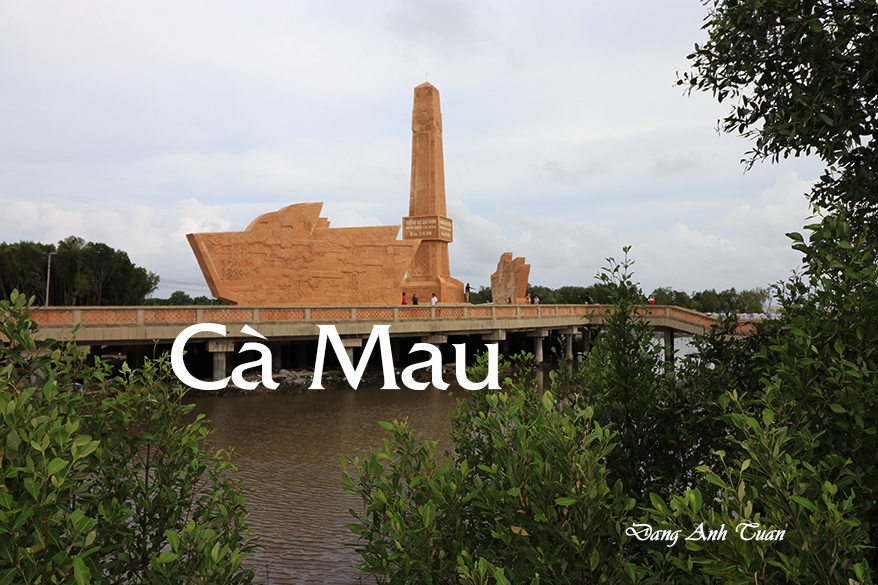
Cà Mau (tiếng Khơ Me gọi là Teuk Khmao) là một thành phố nằm ở cực phương nam của nước đất nước Việt Nam. Đi đến Cà Mau phải qua không biết bao nhiều các cầu nhỏ để nói lên Cà Mau là một vùng đầm lầy và thuộc về đồng bằng sông Cửu Long. Cà Mau đươc biết đến nhờ có vườn quốc gia U Minh Hạ. Đây là một trong ba vùng lõi của Cà Mau, được UNESCO công nhận là khu dự trữ sinh quyển thế giới. Rất phong phú về động và thực vật, vườn quốc gia U Minh Hạ có khoảng 250 loài thực vật, 182 loài chim, 40 loài thú, 20 loài bò sát cùng nhiều loại côn trùng khác nhau. Ở xung quanh Mũi Cà Mau là vùng biển cạn. Hàng năm đất lấn ra biển hàng trăm thước. Vì vậy mà từ bao nhiêu thế hệ, người dân Cà Mau thường hay nói với câu ngạn ngữ nầy: « Mắm đi trước, đước theo sau » trong cuộc hành trình lấn biển. Các cây mắm nhờ có rễ ăn sâu trong đất bùn nên bồi được thêm đất phù sa. Rễ cây đâm tua tủa và chỉa lên mặt đất cùng nhau giữ đất. Sau đó là đến phiên đước và những cây rừng ngập mặn khác như sú, vẹt… cùng đua nhau mọc lên khiến bãi bồi ngày càng vững chắc thêm để vươn ra biển.
Cà Mau (connue en khmer sous le nom de Teuk Khmao) est une ville située à l’extrême sud du Vietnam. En venant ici, il faut traverser tant de petits ponts pour rappeler bien que Ca Mau est une région marécageuse du delta du Mékong. C’est l’une de ses trois zones importantes reconnues par l’UNESCO comme réserve de biosphère mondiale. Très riche de faune et de flore, le parc national U Minh Ha compte environ 250 espèces de plantes, 182 espèces d’oiseaux, 40 espèces de mammifères, 20 espèces de reptiles et de nombreux types d’insectes différents. Autour du cap Cà Mau c’est la zone où la mer est peu profonde. Chaque année, la terre empiète sur la mer à des centaines de mètres. C’est pour cela que depuis des générations, les habitants de Cà Mau ont l’habitude de dire en vietnamien: » les plantes mắm (Avicennia) poussent d’abord, puis elles sont suivies par les palétuviers » dans leur empiétement sur la mer. Grâce à de longues racines fixées dans les bancs de vase, les Avicennias facilitent le dépôt des alluvions marines. Leurs racines ramifiées s’orientent dans toutes les directions hors du sol et réussissent à retenir ensemble ce dépôt. Puis c’est le tour des palétuviers et des autres plantes capables de pousser dans cet environnement permettant d’affermir ainsi l’extension de la vasière.
Ca Mau (known in Khmer as Teuk Khmao) is a town in the extreme south of Vietnam. On the way here, you have to cross many small bridges to realize that Ca Mau is a marshy region of the Mekong Delta. It is one of three important areas recognized by UNESCO as a world biosphere reserve. Rich in flora and fauna, U Minh Ha National Park boasts some 250 plant species, 182 bird species, 40 mammal species, 20 reptile species and many different types of insect. Around Cape Cà Mau is the zone where the sea is shallow. Every year, hundreds of meters of land encroach on the sea. This is why, for generations, the inhabitants of Cà Mau have been used to saying in Vietnamese: “the mắm plants (Avicennia) grow first, then they are followed by the mangroves” in their encroachment on the sea. Thanks to long roots fixed in the mud banks, Avicennias facilitate the deposition of marine alluvium. Their branching roots reach out from the soil in all directions, holding the deposit together. Then it’s the turn of the mangroves and other plants able to grow in this environment, helping to consolidate the extension of the mudflat.
Version française
Version anglaise
Galerie des photos
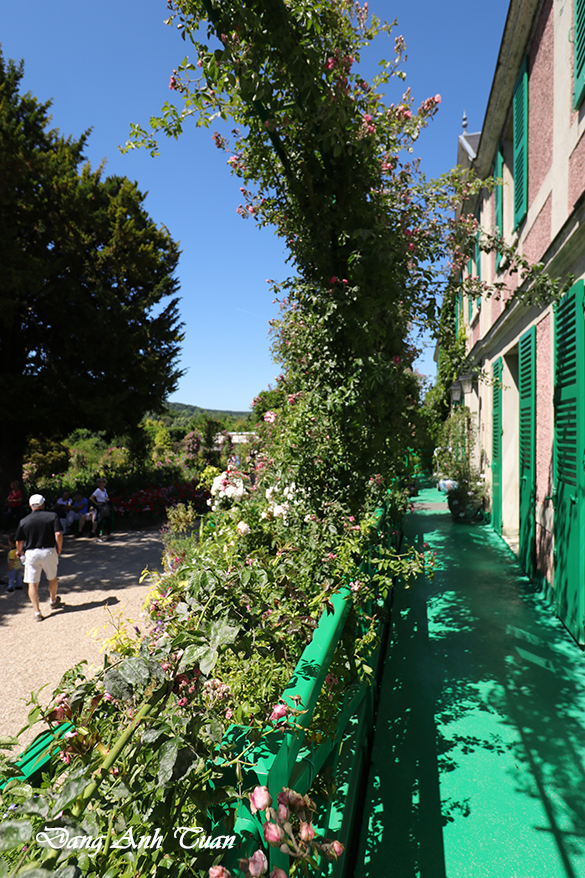
Nhờ việc nới rộng khu vườn « Clos Normand » và sửa đổi nguồn nước sông Ru, Monet đã thành công tạo cho khu vườn nầy có được một diện tích 1000 m2 và một hình dáng tuyệt vời mà du khách có cơ hội chiêm ngưỡng ngày nay khi đến tham quan Giverny. Năm 1895, ông bắt đầu vẽ khu vườn của mình. Khu nầy không ngừng sung túc và phong phú thêm với các loài cây cỏ mà ông chọn trồng theo ý mình. Nhờ đó, ông thực hiện hơn 250 bức tranh tuyệt vời từ nhiều góc độ nhìn khác nhau. Nhưng các hoa súng vẫn là chủ đề chính và quyén rũ ông đến nổi qua các bức tranh của ông, các cảnh vật chỉ được vẽ sơ sài để nổi bật các hoa súng ưa thích. Khu vườn nầy giúp ông có nguồn cảm hứng vô tận và được xem từ đây như là một tuyệt phẩm nghệ thuật vẹn toàn
Grâce à l’agrandissement du Clos Normand et à la modification du cours d’eau du Ru, Monet réussit à donner à son jardin d’eau couvrant désormais 1000m2 l’aspect actuel que le visiteur a l’occasion de contempler avec admiration lors de sa visite à Giverny. Il se mit à peindre en 1895 son jardin d’eau renouvelé incessamment par de nouvelles plantations et par l’abondance de la végétation choisie avec soin par lui-même. Cela lui permit de réaliser avec ingéniosité un ensemble de plus de 250 tableaux sous de nombreux angles de vue différents. Mais les nymphéas constituent le sujet principal dans ses tableaux et captent son attention si bien que le paysage y est dessiné simplement pour dégager la beauté de ses fleurs préférées. Son jardin d’eau lui donna ainsi une source d’inspiration inépuisable et s’intégra désormais comme une œuvre d’art à part entier.
Thanks to the enlargement of the Clos Normand and the modification of the course of the Ru stream, Monet succeeded in giving his water garden, now covering 1000m2, the current appearance that visitors have the opportunity to admire during their visit to Giverny. He began painting his water garden in 1895, which was continuously renewed by new plantings and the abundance of vegetation carefully chosen by himself. This allowed him to ingeniously create a collection of more than 250 paintings from many different viewpoints. But the water lilies are the main subject in his paintings and capture his attention so much that the landscape is simply drawn to highlight the beauty of his favorite flowers. His water garden thus provided him with an inexhaustible source of inspiration and became, from then on, a work of art in its own right.
Une ballade mémorable dans le jardin de Monet (Giverny, Haute Normandie)
Cùng nhau đi dạo trong vưòn của họa sỹ tài hoa Monet (Giverny)
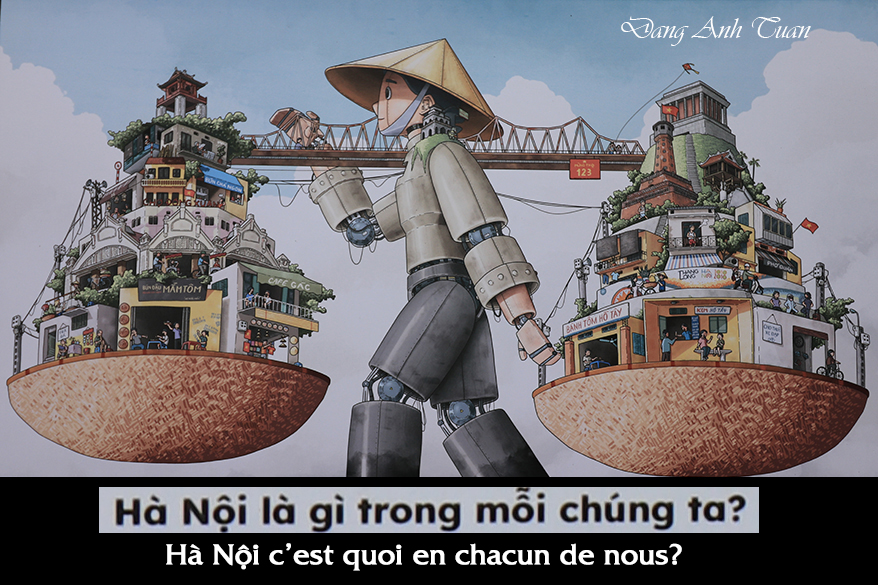
Hà Nội là gì trong mỗi chúng ta?
Hanoï c’est quoi en chacun de nous?
What is Hanoi in each of us?
Hà Nội là bát bún ngan giản dị ? Là những ghế nhựa ngồi bệ? Là gánh hàng rong với chiếc đòn gánh là cầu Long Biên còn người gánh lại là một cô robot ? Hay là Hànội là… Đây là cuộc thi vẽ minh họa thuộc dự án Hanoi Rethink được tổ chức bởi UNESCO với sự đồng hành của nhóm Vietnam local Artist Group.
Hanoï c’est quoi en chacun de nous ? Hanoï est-elle un simple bouillon de canard aux vermicelles ? Ou ce sont les chaises basses en plastique ? Ou le vendeur ambulant dont la palanche est le pont Long Bien et qui est en fait un robot ? Ou bien Hanoi est … C’est le concours d’illustration appartenant au projet Hanoi Rethink organisé par UNESCO en collaboration avec le groupe Vietnam local Artist.
What is Hanoi in each of us? Is Hanoi just a simple duck broth with vermicelli? Or is it the low plastic chairs? Or the street vendor whose carrying pole is the Long Bien Bridge and who is actually a robot? Or is Hanoi… It is the illustration contest belonging to the Hanoi Rethink project organized by UNESCO in collaboration with the Vietnam Local Artist group.
Version française
Version anglaise
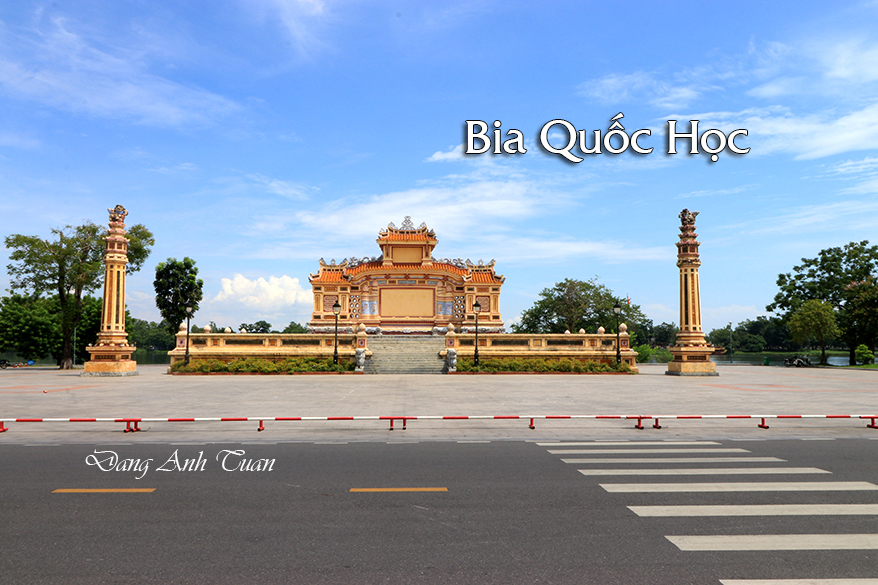
Đựợc gọi là Bia Quốc học, công trình nầy xây cất vào đầu thế kỷ 20 để tưởng niệm những binh sỹ người Pháp và Việt đã hy sinh trong chiến tranh thế giới lần thứ nhất chống Đức. Công trình nầy được chọn theo mẫu thiết kế của họa sỹ xuất sắc trong ngành mỹ thuật đồ họa, Tôn Thất Sa, hậu duệ của chúa Nguyễn Phúc Chu. Đài được khởi công xây dựng ngày 12 tháng 5 năm 1920 và đã có hơn một trăm năm. Theo ông Nguyễn Đình Hoè, đài nầy được dựng theo dáng một bình phong lớn, có mái che, hai tầng và trên nền có bậc thềm. Các hoạ tiết trang trí, kiến trúc, điêu khắc đều mang phong cách kiến trúc của thời Nguyễn. Vì thế nên không bị hũy phá mà còn được sùng tu lại trông rất xinh xắn và hài hoà với quan cảnh hài hoà của sông Hương và trước mặt trường Quốc Học.
Étant appelée maintenant « Bia Quốc Học (Stèle de l’École Nationale)», cette stèle commémorative a été édifiée au début du XXème siècle pour se souvenir des soldats français et vietnamiens morts lors de la Première Guerre mondiale contre l’Allemagne. Ce monument a été sélectionné selon le modèle proposé par l’artiste de son temps dans l’industrie des arts graphiques, Tôn Thất Sa, un descendant du seigneur Nguyễn Phúc Chu. Sa construction commença le 12 mai 1920 et data aujourd’hui plus de cent ans. Selon Mr. Nguyễn Đình Hoè, ce monument a été édifié sous la forme d’un grand paravent doté d’un toit, comportant deux étages et établi sur une plate-forme avec des marches. Les motifs décoratifs, l’architecture et la sculpture sont tous dans le style architectural de la dynastie des Nguyễn. C’est pour cela qu’il n’a pas été détruit. Par contre, sa rénovation récente est superbe et en harmonie avec le cadre enchanteur de la rivière des Parfums et en face de l’École Nationale de Huế.
Now called the « Bia Quốc Học (Stele of the National School), » this commemorative stele was erected at the beginning of the 20th century to remember the French and Vietnamese soldiers who died during the First World War against Germany. This monument was selected according to the model proposed by the artist of his time in the graphic arts industry, Tôn Thất Sa, a descendant of the lord Nguyễn Phúc Chu. Its construction began on May 12, 1920, and today it is over a hundred years old. According to Mr. Nguyễn Đình Hoè, this monument was built in the form of a large folding screen with a roof, consisting of two levels and established on a platform with steps. The decorative motifs, architecture, and sculpture are all in the architectural style of the Nguyễn dynasty. That is why it was not destroyed. On the other hand, its recent renovation is superb and in harmony with the enchanting setting of the Perfume River and opposite the National School of Huế.
Huế au fil de la nuit
Version anglaise
Version française
Galerie des photos
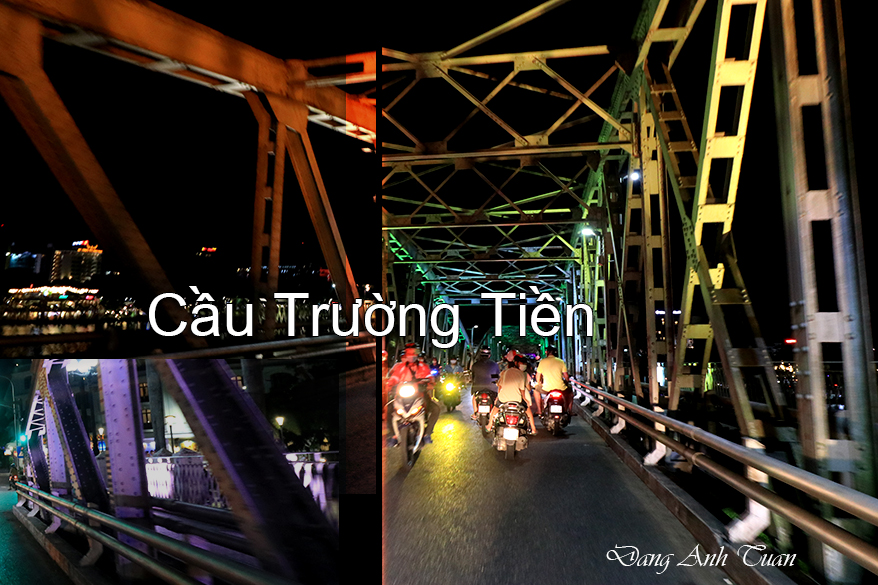
Có tuổi đời nhiều hơn cầu Long Biên ở Hànội, cầu Trường Tiền ở Huế được Hãng Schneider et Cie et Letellier thiết kế và khởi công vào tháng 5 năm 1899 và khánh thành vào ngày 18 tháng 12 năm 1900 với sự hiện diện của vua Thành Thái. Người ta ghi nhận được một cuộc chạm trán đầu tiên của ngài với khâm sứ Alexis Auvergne ở thời điểm khánh thành cái cầu mới bắc qua sông Hương. Tự hào về kỳ công kỹ thuật và sự vững chắc của cái cầu, Alexis Auvergne không ngần ngại trả lời với thái độ ngạo nghễ: Khi nào cầu nầy sụp đổ thì nước ngài sẻ được độc lập. Để cho thấy sự quan trọng mà chính quyền thực dân đã dành cho cái cầu mới này, họ đặt cho nó một cái tên mới là cầu « Thành Thái ». Điều này khiến làm vua Thành Thái tức giận vô cùng vì ông viện cớ rằng từ nay mọi người có thể giẫm đạp lên đầu ngài qua cái cầu này. Ngài cấm mọi người gọi cầu nầy bằng tên mới và xúi giục họ sử dụng tên cũ « Trường Tiền ». Vài năm sau, trong một cơn bão dữ dội năm thìn (1904), cái cầu nầy bị sập bốn nhịp phía bắc rơi xuống sông.
Thành Thái nhanh chóng nhắc nhở lại câu nói của Alexis Auvergne với sự hài hước hóm hỉnh của ông. Alexis Auvergne đỏ mặt xấu hổ và buộc phải lánh trốn trước những lời nói khó chịu này. Đến năm 1906, sàn cầu mới được đúc lại bằng xi măng. Năm 1938 cầu được nới rộng ra ở hai bên để làm chỗ cho người đi bộ. Sau khi vua Thành Thái bị truất phế, cầu nầy mới lấy tên Georges Clemenceau, một thủ tướng Pháp có công với trận thế chiến thứ nhất. Sau khi Pháp mất chủ quyền ở Đông Dương thì cầu lấy tên là Nguyễn Hoàng, một vị chúa Nguyễn đầu tiên được trấn thủ ở đất Thuận Hóa. Bao lần thay đổi, người dân Huế vẫn quen gọi là Trường Tiền hay Tràng Tiền vì ở gần đó có công trường đúc tiền của nhà nước. Cầu nầy thật sự có 6 nhịp 12 vài cầu chớ không phải 6 vài cầu 12 nhịp như ca dao đã ghi nhận theo sự nhận xét của nhà nghiên cứu Trần Đức Anh Sơn. Bởi lẽ, cầu này có năm trụ ớ giữa, cùng với hai mổ cầu ở hai đầu, chia chiếc cầu ra sáu khoảng không gian bằng nhau (6 nhịp). Mỗi nhịp có 2 chiếc vài ở hai bên nhầm thay đổi mômen lực, chuyển từ lực tác động xuống một điểm trên cầu (do người và vật đi qua) thành lực dàn đều trên mặt cầu, tránh sự cộng hưởng lực và nguy hại cho tuổi thọ chiếc cầu.
Dù có rất nhiều cầu bắc ngang sông Hương nhưng cầu Trường Tiền vẫn được người dân Huế ưa thích vì nó có nét đẹp riêng tư. Cái duyên dáng của nó như chiếc trâm cài trên mái tóc của nàng thơ tên là sông Hương được nhắc đến trong bài viết của Trần Đức Anh Sơn. Nhìn thoáng qua từ đằng xa, cầu gồm 6 nhịp dầm thép hình vành lược được thiết kế theo phong cách gô tíc, ở đầu cầu phía bắc thỉ có chợ Đông Ba còn ở đầu phiá nam thì có khách sạn lâu đời Morin (1906). Cầu Trường Tiền nay là một biểu tượng lịch sử quan trong ở cố đô Huế.
Plus ancien que le pont Long Biên à Hanoï, le pont Trường Tiền de Huế fut conçu par la compagnie Schneider et Letellier en mai 1899. Celle-ci commença à le construire en mai 1899 et fêta son inauguration le 18 décembre 1900 en présence du roi Thành Thái. On nota la première altercation virulente de ce dernier avec le résident général Alexis Auvergne au moment de l’inauguration du nouveau pont enjambant la Rivière des Parfums. Fier de la prouesse technique et sûr de la solidité du pont, Alexis Auvergne n’hésita pas à dire à Thành Thái avec son ton arrogant:
Quand vous aurez vu ce pont s’écrouler, votre pays sera indépendant.
Pour montrer l’importance que les autorités coloniales ont donnée à ce nouveau pont, elles lui octroyèrent un nouveau nom « Thành Thái ». Cela rendit l’empereur furieux car en prenant le prétexte que tout le monde put piétiner sur sa tête par le passage de ce pont, il interdît à ses sujets de l’appeler avec le nouveau nom et les incita se servir de l’ancien nom « »Trường Tiền » .Quelques années plus tard, lors du passage d’une tempête violente (1904), le pont s’écroula avec ses 4 travées dans l’eau. Thành Thái ne tarda pas à rappeler à Alexis Auvergne ce qu’il lui avait dit avec son humour noir.
Alexis Auvergne rougit de honte et fut obligé de déguerpir devant ces propos gênants. En 1906, le nouveau tablier du pont fut refondu avec du ciment. En 1938, le pont fut élargi des deux côtés pour accueillir les piétons. Après la destitution du roi Thành Thái, ce nouveau pont prit le nom de Georges Clemenceau, l’ancien premier ministre français ayant rendu des services méritoires à la Première Guerre mondiale.
Après que La France avait perdu la souveraineté en Indochine, le pont prit le nom de Nguyễn Hoàng, le premier seigneur des Nguyễn chargé d’être le gouverneur du territoire Thuận Hóa. Malgré la changement de nom en plusieurs fois, les gens de Huế aimaient à l’appeler encore sous le nom de Trường Tiền ou Tràng Tiền car à sa proximité se trouvait un atelier de l’état destiné à faire des pièces de monnaie. Ce pont a en fait 6 travées et 12 butées mais non pas 6 butées et 12 travées comme cela a été dit dans la chanson populaire selon la remarque du Dr.Trần Đức Anh Sơn.
Du fait que ce pont a cinq piles au milieu, ainsi que deux culées à ses deux extrémités, il est divisé en six espaces égaux (6 travées). Chaque travée comporte une butée de chaque côté ayant le rôle de modifier la poussée en rendant la force d’impact d’un point du pont (causée par le passage de personnes et d’objets) en une force uniformément répartie sur le tablier du pont, ce qui permet d’éviter la résonance des forces et des dommages pour renforcer la pérennité du pont.
Bien qu’il y ait de nombreux ponts sur la Rivière des Parfums, le pont Trường Tiền est préféré par les gens de Huế car il se distingue par sa beauté particulière. Son charme a été évoqué par le chercheur Trần Đức Anh Sơn comme celui d’une broche accrochée dans la chevelure d’une jeune fille aimée nommée « Sông Hương » (Rivière des Parfums) En l’observant de loin, on constate que ce pont se compose de 6 travées de poutres en acier en forme de peigne conçues dans un style gothique. À l’extrémité nord du pont se trouve le marché Đông Ba et à son extrémité sud, il y a l’hôtel Morin datant de l’époque coloniale (1906) . Le pont Trường Tiền devient aujourd’hui un symbole historique important dans l’ancienne capitale de Huế.
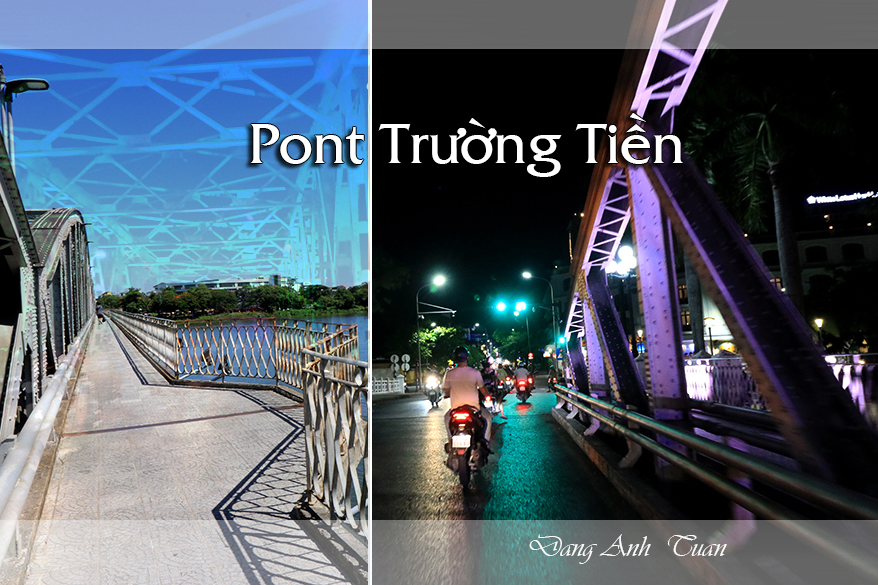
Older than the Long Biên Bridge in Hanoi, the Trường Tiền Bridge in Huế was designed by the Schneider and Letellier company in May 1899. They began construction in May 1899 and celebrated its inauguration on December 18, 1900, in the presence of King Thành Thái. The first heated confrontation between the latter and the Resident-General Alexis Auvergne was noted at the inauguration of the new bridge spanning the Perfume River. Proud of the technical feat and confident in the bridge’s solidity, Alexis Auvergne did not hesitate to say to Thành Thái in an arrogant tone:
When you see this bridge collapse, your country will be independent.
To show the importance the colonial authorities gave to this new bridge, they granted it a new name, « Thành Thái. » This made the emperor furious because, using the pretext that everyone could trample on his head by crossing this bridge, he forbade his subjects from calling it by the new name and encouraged them to use the old name, « Trường Tiền. » A few years later, during a violent storm (1904), the bridge collapsed with its four spans falling into the water. Thành Thái quickly reminded Alexis Auvergne of what he had told him with his dark humor.
Alexis Auvergne blushed with shame and was forced to flee in front of these embarrassing remarks. In 1906, the new deck of the bridge was recast with cement. In 1938, the bridge was widened on both sides to accommodate pedestrians. After the dethronement of King Thành Thái, this new bridge was named Georges Clemenceau, after the former French prime minister who rendered meritorious services during the First World War.
After France lost sovereignty in Indochina, the bridge was named Nguyễn Hoàng, the first lord of the Nguyễn assigned as the governor of the Thuận Hóa territory. Despite the name changes several times, the people of Huế still liked to call it by the name Trường Tiền or Tràng Tiền because nearby there was a state workshop intended for making coins. This bridge actually has 6 spans and 12 abutments, not 6 abutments and 12 spans as stated in the popular song, according to the remark of Dr. Trần Đức Anh Sơn.
Because this bridge has five piers in the middle, as well as two abutments at its two ends, it is divided into six equal spaces (6 spans). Each span has an abutment on each side with the role of modifying the thrust by turning the impact force at a point of the bridge (caused by the passage of people and objects) into a force evenly distributed over the bridge deck, which helps to avoid resonance of forces and damage to reinforce the durability of the bridge.
Although there are many bridges over the Perfume River, the Trường Tiền Bridge is preferred by the people of Huế because it stands out for its particular beauty. Its charm was described by the researcher Trần Đức Anh Sơn as that of a brooch attached to the hair of a beloved young girl named « Sông Hương » (Perfume River). When observed from a distance, it can be seen that this bridge consists of 6 spans of steel beams shaped like a comb, designed in a Gothic style. At the northern end of the bridge is the Đông Ba market, and at its southern end, there is the Morin Hotel dating back to the colonial era (1906). Today, the Trường Tiền Bridge has become an important historical symbol in the ancient capital of Huế.
Version française
Version anglaise
Galerie des photos
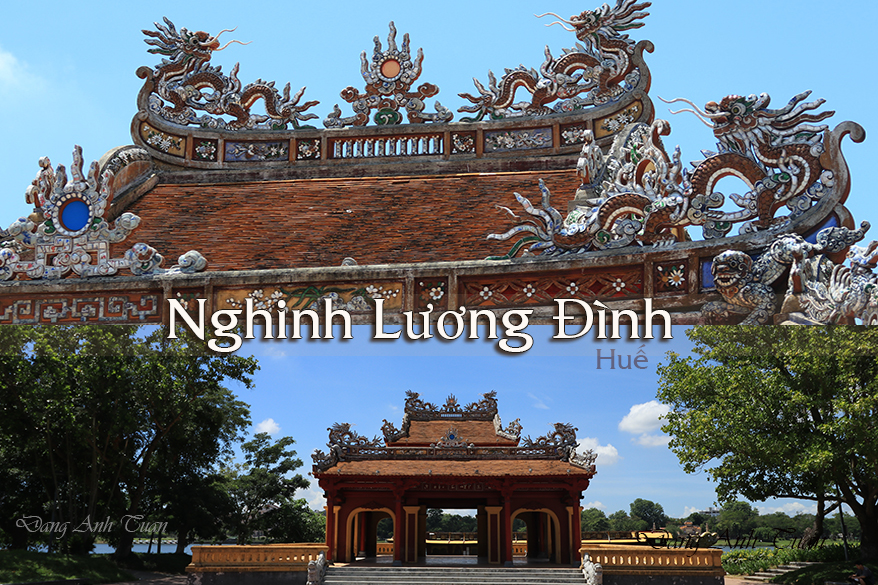
Nghinh Lương đình được xây dựng ở bờ bắc sông Hương, trước mặt toà Phu Văn Lâu dưới triều vua Tự Đức vào năm 1852 và được trùng tu lại dưới đời vua Thành Thái nhưng bị cơn bão vào năm 1904 nên công trình bị tàn phá nặng nề. Sau nầy được dưới thời ngự trị của vua Khải Định (1918) được xây dựng lại và kết nối với bến thuyền liền nhau nhưng vẫn giữ chức năng cũ. Đây là nơi nghỉ chân và hóng mát của nhà vua trước khi xuống thuyền rồng để du ngoạn trên sông Hương. Công trình nầy được nằm dài trên trục chính từ Kỳ Đài truớc cửa Ngọ Môn đến Phu Vân Lâu và có một kiến trúc theo kiểu phương đình. Một gian, 4 chái được nối dài ra ở phía trước và phía sau với nhà vỏ cua qua máng xối được cấu tạo từ vật liệu kim loại. Bốn mặt của gian chính giữa đều được để trống. Còn ở giữa bờ nóc của gian chính thì có lưỡng long chầu nhật .
Còn nhà vỏ cua thì ở bờ mái cũng có hình hồi long chầu mặt nguyệt và ở cuối các bờ quyết thì trang trí hình chim phượng. Các vì kèo gỗ được chạm trổ một cách công phu ở trên mặt với các hình ảnh mang các đề tài bát bửu như: tù và, quạt vả, phát trần, lẵng hoa và bầu rượu. Mái nhà chính lợp ngói ống lưu ly vàng, hai nhà vỏ cua lợp ngói liệt men vàng. Nghinh Lương đình được xây dựng trên nền cao khoảng 90 cm cùng bó vỉa bằng gạch vồ và đá thanh. Nơi phiá bờ sông thì có 13 bậc cấp dẫn xuống một hành lang xây sát mặt nước sông Hương. Nghìn Lương Đình là một trong hai công trình kiến trúc cùng Phu Văn Lâu không có nằm ở trong Đại Nội. Tuy nhiên hai công trình nầy được mọi người ở Việt Nam đều biết đến luôn cả du khách ở nước ngoài vì hình ảnh của nó được in trên tờ giấy 50.000 đồng Việt Nam.
Le pavillon Nghinh Lương a été construit devant Phu Văn Lâu (pavillon des Édits) sur la rive nord de la Rivière des Parfums sous le règne de l’empereur Tự Đức en 1852. Puis il a été restauré à l’époque de l’empereur Thành Thái . Puis il a subi des dégâts importants lors de la tempête en 1904. Plus tard, sous le règne du roi Khải Đinh (1918), il a été reconstruit presque entièrement et relié à l’embarcadère tout en gardant son ancienne fonction. C’est le lieu de repos et de détente de l’empereur avant de prendre une excursion en bateau sur la rivière des Parfums. Cet ouvrage architectural est situé sur l’axe principal de la tour du mât (Kỳ Đài) située en face de la porte principale Ngọ Môn jusqu’au pavillon des Édits (Phu Van) et possède une architecture du style de la maison communale. Une grand espace entouré de 4 appentis, se prolonge en avant et en arrière par des maisons « en coquille de crabe » au moyen des gouttières de drainage en matériau métallique. L’espace central ne possède aucune porte sur ses quatre côtés. Par contre au milieu de son arête faitière, on voit apparaître un globe enflammé (foudre) vers lequel les deux dragons tournent la tête.
Quant à la maison en « coquille de crabe », sur le toit, on retrouve également un couple de dragons rendant hommage à la lune et l’ornement d’un phénix au bout de ses extrémités. Les fermes de toit en bois sont minutieusement sculptées sur leur façade avec des motifs représentant la série des huit joyaux: corne, éventail en forme de feuille de figuier, époussette, panier de fleurs et calebasse à vin.
Le toit principal est recouvert de tuiles « Yin et Yang » jaunes et les deux maisons en coquille de crabe ont leurs tuiles vernissées jaunes. Le pavillon Nghinh Lương a été construit sur une plate-forme d’environ 90 cm de haut avec les dalles de trottoir en pierre « thanh ». Au bord de la rivière, il y a 13 marches facilitant la descente vers un couloir construit près de la surface de l’eau de la Rivière des Parfums. Le pavillon « Nghinh Lương » est l’une des deux œuvres architecturales avec le pavillon Phu Van, qui ne font pas partie de la Cité pourpre interdite. Pourtant, ces deux joyaux architecturaux sont connus de tous les gens y compris les touristes étrangers au Vietnam car leur image est imprimée sur le billet de 50 000 VND.
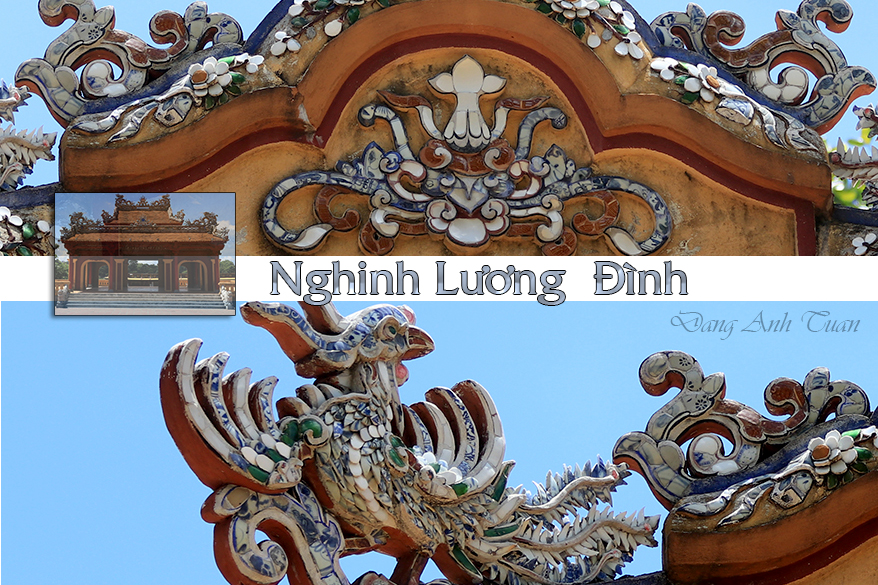
Nghinh Luong Pavilion was built on the north bank of the Huong River, in front of the Phu Van Lau building during the reign of King Tự Đức in 1852 and was restored under King Thành Thái’s reign. However, it was severely damaged by a storm in 1904. Later, during the reign of King Khải Đinh (1918), it was rebuilt and connected to the adjacent boat dock but still retained its original function. This was the resting and cooling place for the king before boarding the dragon boat to cruise on the Huong River. The structure lies along the main axis from Kỳ Đài in front of Ngo Mon Gate to Phu Van Lau and features a pavilion-style architecture. It has one main hall and four wings extended at the front and back with crab shell-like houses connected through gutters made of metal materials. All four sides of the central hall are left open. In the middle of the ridge of the main hall, there is a motif of two dragons chasing the sun.
As for the crab shell houses, the gable ends also feature dragon motifs facing the moon, and at the ends of the ridge beams, phoenix bird decorations are displayed. The wooden rafters are intricately carved on the surface with images featuring the eight precious symbols such as a conch shell, fan, fly whisk, flower basket, and wine gourd. The main house roof is covered with yellow glazed tube tiles, while the two crab shell houses are covered with yellow glazed flat tiles.
Nghinh Luong Pavilion is built on a platform about 90 cm high, bordered with brick and Thanh stone edging. On the riverbank side, there are 13 steps leading down to a corridor built close to the surface of the Perfume River. Nghinh Luong Pavilion is one of two architectural works, along with Phu Van Lau, that are not located within the Imperial City. However, these two works are well known by people in Vietnam and even foreign tourists because their images are printed on the 50,000 Vietnamese dong banknote.
Palais An Định
English version
Version française
Galerie des photos
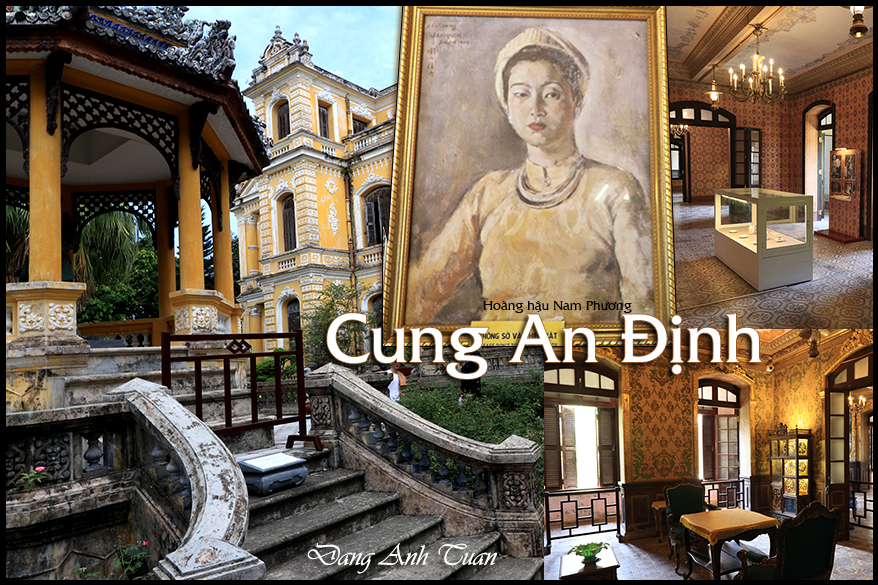
Đây là biệt cung của vua Khải Định khi ngài còn là Phụng Hóa Công Nguyễn Phúc Bửu Đảo dưới thời ngự trị của vua Thành Thái, cha của vua Duy Tân. Được toa lạc bên bờ sông An Cựu, nay là số 97 đường Phan Đình Phùng ở thành phố Huế. Cung nầy được ngài dùng tiền riêng tư để xây cất làm nơi thư giản, tiếp khách và tổ chức các bữa tiệc hoàng gia. Cung nầy trở thành từ 1922 tiềm đế của Đông Cung Thái tử Vĩnh Thùy tức là vua Bảo Đại về sau. Công trình nầy được thực hiện bởi các tay nghề kỹ xảo trong số đó có một người thợ mộc tên là Nguyễn Văn Khá và một họa sĩ nổi tiếng Lương Quang Duyệt. Cổng chính được trang trí bằng đồ sành theo phong cách baroque. Được thấy ở giữa gờ của mái cổng chính có sự kết hợp lưỡng long chậu nhật đi cùng với mô típ mây và có luôn cả các cột trụ kiểu Cô ranh tơ trong kiến trúc Hy Lạp. Ngoài cổng chính, quần thể kiến trúc còn có đình Trung Lập hình bát giác, lầu Khải Tường, nhà hát Cửu Tư Đài, chuồng thú, hồ nước vân vân…
Lầu Khải Tường gồm có ba tầng được xây dựng trên nền đất có diện tích 745 mét vuông và được trang trí rất công phu ở mặt tiền với các mô tip như bắc đẩu bội tinh, thiên thần, bát bửu hoa văn vân vân… theo phong cách kiến trúc tân– cổ điển hỗn hợp cùng các họa tiết thường được thấy ở trong văn hóa phương Đông như mô típ tứ linh (rồng, lân, qui, phụng). Còn bên trong của lầu đài thì ngoài sáu bích họa lộng lẫy kiêu sa sơn dầu treo trên tường, còn thấy ở giữa đại sảnh có một tượng đồng của hoàng tử Vĩnh Thùy (tức là vua Bảo Đại) dưới ngọn đèn chùm đẹp lung linh. Các họa tiết hoa văn ở nơi nầy đều rất hiện đại trên vách tường và thể hiện phong cách phương Tây khiến làm du khách phải ngẫn ngơ không ít trước cái đẹp lạ thường hiếm thấy ở các cung điện nhà Nguyễn. Nhưng rất tiếc ngày nay toà nhà nầy bị hư hỏng trầm trọng bởi chiến tranh kéo dài từ bao nhiêu năm. Vả lại sau năm 1975 nó còn là nơi khu nhà ở tập thể dành cho các gia đình của các giáo sư ở đại học Huế.
Từ năm 2002, chính quyền Việt Nam phải nhờ đến sự hổ trợ tài chánh và kỹ thuật của nuớc Cộng hoà liên bang Đức cùng các chuyên gia của hội đoàn trao đổi văn hóa Leibniz để phục hồi lại cho cung An Định. Chính tại nơi nầy năm 1945, sau khi vua Bảo Đại tuyên bố thoái vị và trao lại ấn kiếm cho cách mạng tháng 8, mẫu hậu Từ Cung tức là mẹ của vua Bảo Đại cùng Nam Phương hoàng hậu và các con cháu hoàng thất phải dọn ra đây ở. Cung An Đình được xem ngày nay là một di tích lịch sử của một quá khứ đầy biến động mà du khách không thể bỏ qua cũng như Tử Cấm Thành khi đến tham quan Huế.
C’est la résidence privée du roi Khải Định à l’époque où ce dernier était encore Phụng Hóa Công Nguyễn Phúc Bửu Đảo sous le règne du roi Thành Thái, père du roi Duy Tân. Situé sur la rive du fleuve An Cựu, ce palais se trouve aujourd’hui au numéro 97 de la rue Phan Đình Phùng dans la ville de Huế. Il a été construit par lui-même avec son propre argent pour être à la fois un lieu destiné à se détendre, recevoir des invités et organiser des banquets royaux. Il devint à partir de 1922 la résidence du prince héritier Vĩnh Thùy, le futur roi Bảo Đại plus tard. Cet ouvrage architectural a été réalisé par des artisans qualifiés, parmi lesquels figuraient un menuisier nommé Nguyễn Văn Khá et un peintre connu sous le nom Lương Quang Duyệt. Le portail principal est orné d’éléments en céramique dans un style baroque. Au centre du faîte arêtière de ce dernier, on voit apparaître la combinaison d’un couple de dragons rendant leurs hommages au soleil reposant sur un lit de nuages et des piliers corinthiens dans l’architecture grecque. À part ce portail principal, ce complexe architectural comporte un pavillon octogonal Trung Lập dans la cour d’entrée, un palais Khải Tường à trois étages, un théâtre Cửu Tư Đài, un parc d’animaux, un lac etc.
Etant édifié sur le terrain d’une superficie de 745 m2, ce palais a été bien décoré laborieusement sur sa façade extérieure, des motifs tels que les insignes de la légion d’honneur, les anges, les 8 joyaux agrémentés de fleurs etc. dans un style architectural néo-classique, mélangés avec ceux que l’on retrouve couramment dans la culture orientale comme les quatre animaux sacrés (dragon, licorne, tortue, phénix) etc. À l’intérieur du palais, outre les six superbes fresques murales peintes à l’huile, on trouve dans le hall principal une statue en bronze du jeune prince Vĩnh Thùy (Bảo Đại) sous un magnifique lustre scintillant. Les motifs de décoration y sont très modernes dans un style européen, ce qui ne manque pas surprendre les visiteurs en les amenant à découvrir l’exceptionnelle beauté rarement trouvée dans les palais de la dynastie des Nguyễn. Mais c’est regrettable de voir aujourd’hui ce bâtiment dans un état de délabrement avancé en raison de la guerre qui a duré pendant de nombreuses années. De plus, après 1975, il devint l’endroit où étaient logées plusieurs familles des enseignants de l’université de Hue.
Depuis 2002, le gouvernement vietnamien dût compter sur le soutien financier et technique de la République fédérale d’Allemagne et des experts de l’association d’échanges culturels de Leibniz pour restaurer le palais An Định. C’était en 1945 qu’après l’abdication du roi Bảo Đại et sa remise du sceau et de l’épée à la révolution d’août, la reine mère Từ Cung (mère du roi Bảo Đại) et la reine Nam Phuong accompagnées par leurs descendants déménagèrent ici. Le palais An Dinh est considéré aujourd’hui comme un vestige historique d’un passé tumultueux que les touristes ne peuvent pas ignorer comme la Cité Interdite lors leur visite à Hué.
This is the private residence of King Khải Định at the time when he was still Phụng Hóa Công Nguyễn Phúc Bửu Đảo under the reign of King Thành Thái, father of King Duy Tân. Located on the bank of the An Cựu River, this palace is now at number 97 Phan Đình Phùng Street in the city of Huế. It was built by himself with his own money to serve as a place for relaxation, receiving guests, and organizing royal banquets. From 1922, it became the residence of Crown Prince Vĩnh Thùy, the future King Bảo Đại. This architectural work was carried out by skilled artisans, including a carpenter named Nguyễn Văn Khá and a painter known as Lương Quang Duyệt. The main gate is adorned with ceramic elements in a baroque style. At the center of the ridge of this gate, one can see a combination of a pair of dragons paying homage to the sun resting on a bed of clouds and Corinthian pillars from Greek architecture. Besides this main gate, the architectural complex includes an octagonal pavilion Trung Lập in the entrance courtyard, a three-story palace Khải Tường, a theater Cửu Tư Đài, an animal park, a lake, etc.
Built on a plot of land measuring 745 m2, this palace was painstakingly decorated on its exterior facade with motifs such as the insignia of the Legion of Honor, angels, the 8 jewels adorned with flowers, etc., in a neoclassical architectural style, mixed with those commonly found in Eastern culture like the four sacred animals (dragon, unicorn, turtle, phoenix), etc. Inside the palace, besides the six superb oil-painted murals, there is a bronze statue of the young Prince Vĩnh Thùy (Bảo Đại) in the main hall under a magnificent sparkling chandelier. The decorative motifs are very modern in a European style, which surprises visitors by leading them to discover the exceptional beauty rarely found in the palaces of the Nguyễn dynasty. But it is regrettable to see this building today in a state of advanced dilapidation due to the war that lasted many years. Moreover, after 1975, it became the place where several families of teachers from Hue University were housed.
Since 2002, the Vietnamese government has had to rely on the financial and technical support of the Federal Republic of Germany and experts from the Leibniz Cultural Exchange Association to restore the An Định Palace. It was in 1945 that after the abdication of King Bảo Đại and his handing over of the seal and sword to the August Revolution, the Queen Mother Từ Cung (mother of King Bảo Đại) and Queen Nam Phương, accompanied by their descendants, moved here. The An Định Palace is now considered a historical relic of a tumultuous past that tourists cannot ignore, much like the Forbidden City during their visit to Huế.