The Hmong (English version)

dantoc_hmong

French version
Vietnamese  version

The Hmong are divided into local  sub-groups: the Green Hmong, the Red Hmong, the variegated Hmong, the Black Hmong and the Na Mieo.

The Hmong (The Miao or Miêu in vietnamese) actually  living in Vietnam are  descendants of emigrants from South China. Around the end of 18th century and the beginning of 19th century, the Hmong emigrated to Indochina peninsula (Laos, Vietnam and Thaïland)  and settled  away from plains already occupied by  majority ethnic group  in mountainous areas of Hà Giang and Lào Cai provinces.

Their migration story was closely related to the insubordination to the Chinese culture and the policy of asssimilation practiced by northerners. According to mythic tales passed down from generation to generation, their ancestors lived in snow and  ice covered regions where the night lasted almost 6 months. That is why, being accustomed to living in tropical regions and not having the opportunity to see the snow, the Hmong use terms such as « nước cứng » (or solid water) and « cát trắng mịnh » (or fine white sand) to designate respectively the ice and the snow. According to historians, their origin would be in Siberia (Tây Bá Lợi Á) and in vast plateaus of Mongolia. Some Caucasian proeminent traits are detected among the Hmong today. Others preferably opt for Tibet because shamanic rituals.  One has speculations more than certainties about the accuracy of the Hmong geographic origin. In the Chinese writings, the Hmong were designated under the Miao name including initially all the  ethnic peoples non han living in South West China. Today,  this name is reserved to the population group specifically identified and distinct gathering together the Hmong living in Indochina peninsula and  the Miao ethnic minority populations  (The Hmong, the Hmou, the Qoxiong and the Hmau)  closely related at the linguistic and cultural level in China.

Originally related to the drawing of  rice field (Điền) above which is added the pictogram Thảo” (cỏ) (herb)(key 140), the Chinese character Miao (or Miêu in vietnamese) clearly shows the way that the Chinese adopt  to call  the people knowing  the rice cultivation with their language. Being initially rice farmers, the Miao  had  the sedentary lifestyle in plains. As the Miao were chased by successive waves of the Chinese who dispossessed them of their  arable land and their rice field, they were forced to become highlanders  and stayed until today. Being rushed to high altitudes in inaccessible and hostile mountain areas, they were forced to adapt themselves to each environment where they looked  for an agricultural model allowing them to practice the rice cultivation (rice terraces). In spite of that, the Chinese had the habit of traiting them as the barbarians. The Chinese have gone as far as making a distinction between the shu Miao ( or the  cooked Hmong) and the sheng Miao (the uncooked Hmong), that means the assimilated  Hmong  and the  diehard Hmong  on the margins of Chinese civilization.  They  had the task of transforming these sheng Miao into shu Miao.  Myths and facts are not miss to enrich the history of the Miao (or the Hmong).  The latter is punctuated by endless conflicts with the Chinese since time immemorial. This long history of resistance to oppression gives them a particular reputation: they cannot be assimilated and very belligerent.

A people in search of freedom

femmes_hmong

The Miao ( or the Hmong ) lived together with Hsia(1) tribes since prehistoric times in the middle of Yellow River  Basin (Honan or Hà Nam in vietnamese).  Being associated with Chi You ( Suy Vưu ), they engaged the first confrontation leading to failure with the death of the latter at Zhuolu (Trác Lộc) in Heibei province (Hồ Bắc) (approximatively 2690 before J.C.).They were  henceforth  repelled by Yellow emperor Huang Yuan (Hiên Viên) and Yu the Great (Ðại Vũ) in the Bai Yue territory at  the Yang Tsé Basin River. Other conflicts were evoked with Miao groups in Chinese historical writings  of Shan and Zhou dynasties (1121 – 256 before J.C.). In the middle course of Yang Tsé River (Dương Tữ Giang), they exercised  significant influence over the political and social life of the Chu kingdom (Sỡ Quốc). The latter was considered as one of three principalities fighting among themselves for supremacy  during the Warring States period (Thời Chiến Quốc)In addition to the soul recalling, we noted the close ties between the  Chu culture and the Miao on the various cultural  traits (lifestyle, habitat, language etc…)(2). They constituted probably the force majeure in the Chu population with the Luo Yue (the Proto-Vietnamese) and the ancestors of Thaï today (The Si Ngeou or Tây Âu).  This force majeure became the first bulwark of Yue and Miao tribes in the committed fight against the Chinese.
img_8504

Being in hemp, silk or cotton, the  Hmong pleated skirt whose decoration is own to every group, requires more than 20 meters for the length of the fabric. The method of pleating is one of the characteristics of Hmong women skirt.

Les Hmong

The  Hmong 

After the disappearance of this kingdom, the Miao continuated to be repelled in Guizhou (Quí Châu), Sichuan and Yunnan mountains.  Other military conflicts had emerged with Miao groups in the era of the first dynasty of the Han (140 – 87  before  J.C.) and during Five Dynasties (140 – 87 before  J.C.).  The Miao name was forgotten temporarily in Chinese writings until the establishment of Chinese suzerainty on these provinces by the Yuan ( or the Mongols of China). Then it was regularly mentionned again under the Ming dynasty. Because the Chinese strong demographic growth  ( from 100 millions to 450 millions between  13th and 18th centuries), the Chinese of the Ming dynasty continued to deprive the Hmong of their plateaus and their rice fields, which caused simultaneously the exodus and the fight engaged by the Hmong in the defense of their land. Some Hmong took up arms.  Other preferred to seek refuge in Indochina pensula, in particular in Vietnam by three  successive waves of which the most important was maked by  the  Taiping mystical insurrection   known under the name of Tai Ping Tian Guo (Thái Bình Thiên Quốc)  against the Qing  (from  1840 to 1868). The Hmong thus became a minority ethnic group of Vietnam since three centuries.


(1): There is the ancient name given to the Chinese.
(2): First  symposium on the history of  Chu kingdom (Jingzhu, Hubei, december 1981).

[Retour Viet et 54 minorités ethniques]


Art vietnamien (Nghệ thuật)

 Photos 


Bái Đính (English version)


baidinh

Tràng An landscaped  complex

French version 

Pagoda Bái Đính

Located on the karst mountain range of Tràng An in Ninh Bình, the Bái Đinh pagoda has a long history dating back several centuries. Its fame has been attested for a long time under successive dynasties: Đinh, Early Lê, and Lý. Today, it has become a religious complex where one can find not only the ancient temple but also new temples under construction since 2003. The Bái Đính pagoda is considered in Southeast Asia as the pagoda housing the gigantic bronze Buddha statue imported from Russia. It has a height of 16 meters and weighs 100 tons. The 500 white marble arhats of the pagoda are spread over approximately 2 kilometers along a corridor. This complex has a total area of 539 hectares, of which 27 hectares are attributed to the old pagoda, 80 hectares to the new temples, a Buddhist study center, reception areas, parking lots, as well as a system of lakes 

World cultural heritage of Vietnam


Ninh Bình (Hạ Long cạn


Being Confucianist (English version)

French version
Vietnamese version

Being confucianist

Vietnamese society is profoundly influenced by Confucianism that was introduced to Vietnam in the era of a long Chinese domination (111 B.C. – 939 A.D.). Therefore Vietnamese people have absorbed more or less the concepts prescribed by the wise Confucius in « The Canonical Book« . Must be done what appears on a moral viewpoint just and appropriate taking into account the Five Relations ( Ngũ Luân ) upon which rests the Vietnamese society: relation between the king and subjects, father and son, husband and wife, elder and younger brothers, friend and friend.

Thanks to this doctrine, a Vietnamese bestows great importance to his family that he always considers as a moral training ground and strongly attaches himself to the forces of the land and his ancestors.

This allows the Vietnamese society to find not only a cohesion but also a consolidation, deep roots and an efficiency to overcome foreign powers in the most difficult and crucial moments of the history of Vietnam. Society is considered on a large scale by Vietnamese as an extension of the family circle. A confucianist Vietnamese never neglects his filial piety, respect of elderly people, ideal of loyalty, friendship and honor.

In order to understand the Vietnamese soul, gentleness should be taken. Generally speaking, a Vietnamese is stripped of his aggressiveness except when someone makes him lose face, in particular his honor. Forgiveness is something very Vietnamese. Those are quintessential traits of the Vietnamese people depicted by the Vietnamese Bob Dylan Trịnh Công Sơn. Honor is one of the qualities a confucianist Vietnamese tries to conserve until the end of his life. The jade that melts can conserve its whiteness, the consumed bamboo still keeps its stem straight. Individual existence is very light compared to that of honor. Those are the sentences that sum up the state of mind of the confucianist Vietnamese.

Pictures gallery

It is the case of general Võ Tánh who, despite the recommendations of his brother-in-law Gia Long to flee, preferred to take sacrifice in 1801 by jumping in a building full of gun powder to defend not only is honor but also the lives of his soldiers facing the powerfully equipped Tây Sơn army immobilized because of the siege at Qui Nhơn, which allowed emperor Gia Long to claim at Phú Xuân (Huế) a thunderous and decisive victory. But the one who illustrated well the confucianist Vietnamese remains the hero Trần Hưng Ðạo. One finds in this general all the qualities of a man of ren (ren includes all virtues prescribed by Confucius in the Canonical Book.

His father, Trần Liễu was the brother of King Trần Thái Tôn. The latter had no children. To consolidate and perpetuate the dynasty, the prime minister Trần Thủ Ðộ did not hesitate to force the Princess Thuận Thiên, the concubine of Trần Hung Ðạo’s father, pregnant for three months, to marry the King. Outraged, his father Trần Liễu told him at the time of agony:

If you couldn’t avenge this offense and to take the throne, I wouldn’t never happy in the land of Sources.

It challenged not the words but never took into account the recommendations of his father. However, one day, to determine the intentions of his children, he asked again their opinion about it. His younger son encouraged him to usurp the throne. He prohibited his son from seeing him until the end of his life after failing to kill this latter on the field. Very pious, he learned that his father had told him, but he tried to leave aside the personal interests to act in accordance with the interests of the nation.

His loyalty toward the king was without failure . On a beautiful day, during an excursion with the king in a jonc, having in his hand a baton whose end bore a sharp piece of metal, he did not hesitate to take it off to show the king his loyalty. It was he who reassured the king to continue the struggle against the Mongols and not to surrender by telling him: « If you want to surrender, you must first behead me ». Thanks to his courage, determination, tenacity and magnanimity, Vietnam succeeded in getting out victor two times in a row against the Mongolian army of Kubilai Khan in 1257 and 1267.

He never took advantage of his military command to grant favor to anybody. He left it to the king to take care of when he was commander in chief of the Vietnamese army. He exerted his power with equal fairness on everyone, big or small. He is perfectly close to the man of ren. It is also thanks to him that Confucianism at his time reached its highest point and thus became the sole model of organization of state and of the Vietnamese society.

In spite of that, Confucianism is blamed for keeping the people in particular women in permanent status of submissiveness and for being one of the causing factors of inertia that works largely to the advantage of the leading class and stifles enterprise spirit and any reforms needed for progress, which provoked at the beginning of 20th century serious and catastrophic consequences for Vietnam with the fall of the Nguyễn empire followed by regrettable events during the last decades.

It is not surprising to see that a man coming from this Confucian society, in particular the Vietnamese intelligentsia of today is confronted often with an insurmountable dilemma. He is always pulled between social progress and moral values of Confucianism which continues to exert a noticeable influence on his heart and mind at the moment when Vietnamese society needs reforms to be able to better adapt with economic and social mutations that are necessary for Vietnam after so many years of war. It is difficult to know today in what way socialism erected on the dogma of state, has really played a role in the current social transformation. But it is also impossible to evaluate the degree of influence of Confucianism at this time.

Today, it is up to us, as Vietnamese to find the right way and to behave with dignity so that we are not ashamed of being the « Children and Nephews of the Dragon and the Immortal », in particular those who live abroad.


Être Caodaïste (Tôi là người Cao Đài)


Version vietnamienne
Version anglaise
Galerie des photos

Nous, les Caodaïstes, nous devons savoir nous perfectionner. Il n’est pas indispensable pour nous de jeûner et d’invoquer Bouddha par des prières ou d’être cloîtrés dans la pagode afin de pouvoir être à la perfection. Nous avons la possibilité de le faire si nous avons toujours en nous les trois qualités suivantes: l’Amour, la Sagesse et la Volonté. À la naissance, nous avons eu déjà la bonté. C’est pourquoi, nos Aïeux ont eu l’habitude de dire:

Nhân chi sơ, tính bản thiện. Le genre humain est naturellement bon à la naissance.

Mais à cause des aléas de la vie, des rivalités injustifiées et des désirs immodérés qui continuent à nous accaparer sempiternellement, nous sommes devenus ainsi des gens malhonnêtes, perfides, égoïstes, ce qui nous fait perdre la bonté que nous avons acquise à la naissance. Tous les Sages de l’Antiquité avaient eu ces trois qualités évoquées ci-dessus.

Pour avoir l’idée sur ce que l’individu possède en termes de bonté ou non, il nous suffit d’observer sa conduite envers ses proches. C’est par cette observation que nous arrivons à le connaître, ce qu’avait dit le philosophe chinois  Jou Mencius.

L’Amour est une qualité nécessaire à la perfection mais elle ne peut pas être parfaite car nous avons besoin de la sagesse pour distinguer le vrai du faux, la raison du tort , le bien du mal. Il n’ y a pas mal des gens généreux qui, malgré leurs dons offerts à la construction des pagodes d’une manière non négligeable, continuent à être empêtrés dans un comportement néfaste car ils n’arrivent pas à discerner la raison du tort. Il leur arrive d’être mal considérés quelquefois par rapport à ceux qui n’ont jamais l’occasion de participer à cette contribution généreuse.

Au Vietnam, la dynastie des Lý était réputée pour sa ferveur irréprochable envers le bouddhisme par le biais d’un grand nombre de constructions de pagodes. Cela conduisit inexorablement le peuple à la misère à cause des impôts trop élevés et provoqua inéluctablement le mécontentement populaire qui était la cause principale de sa chute.

Quel que soit son niveau d’instruction, l’homme a toujours en lui la Sagesse car quand nous agissons mal ou non , nous le saurons grâce à notre propre conscience. Par exemple, quand on essaie de mentir, on se sent honteux envers soi-même bien que la personne à qui on a menti ne le sache pas. C’est la sagesse qui nous aide à faire cette distinction. Le philosophe français Blaise Pascal a eu l’occasion de souligner que l’homme est un roseau pensant.

Pour continuer à mentir ou à agir mal ou non, nous avons besoin de la Volonté. Il est facile d’évoquer cette qualité mais il nous parait difficile de la posséder car nous sommes obligés d’aller quelquefois à l’encontre de nos propres intérêts ou d’être perdants des fois aussi. Il nous arrive quelquefois de ne pas avoir la vie sauve. Je me réfère à quelques faits historiques chinois ou vietnamiens dans le but de nous permettre d’être ensemble à réfléchir et à admirer respectueusement les personnes considérées  comme  celles sachant se perfectionner car elles ont eu les trois qualités évoquées ci-dessus. Elles deviennent des personnages célèbres dans l’histoire de la Chine et du Vietnam.

D’abord, c’était le cas de Zhuge Liang (ou Gia Cát Lượng en vietnamien). Il fut à la fois premier ministre et conseiller de Liu Bei, le dernier survivant de la dynastie des Han (Lưu Hoài Ðức) en Chine. Les Barbares venant des steppes du Nord de la Chine et dirigés par Manh Hoạch aimaient à faire souvent des razzias sur le territoire de son royaume. Zhuge Liang arriva à capturer Manh Hoạch 7 fois mais ce dernier fut libéré immédiatement sur l’ordre de Zhuge Liang à chaque capture. Il était très généreux. Il était doté d’une sagesse extraordinaire car il trouva qu’il était nécessaire de convaincre Manh Hoạch par le biais de l’amour et des sentiments. Si Manh Hoạch avait été tué, il y aurait probablement un autre Manh Hoạch. Cela l’obligea à monter fréquemment des expéditions punitives et ne lui permit pas d’avoir les  mains libres pour restaurer la dynastie des Han et ramener la paix et le bonheur à ses citoyens.

C’était pourquoi il continua à libérer impassiblement Manh Hoạch lors de chaque capture. Il avait une volonté incommensurable car il savait que pour empêcher Manh Hoach de trahir plus tard, il devait perdre beaucoup de temps, laisser tomber les intérêts personnels et se donner beaucoup de soucis avec son âge assez élevé. Ce serait moins fatigant pour lui s’il décidait de tuer Manh Hoạch car il n’était pas obligé de monter jusqu’à 7 fois l’expédition punitive. Lors de la dernière capture, lorsqu’il était sur le point de libérer habituellement Manh Hoạch, ce dernier commença à pleurer et à se rendre définitivement. Zhuge Liang a eu ces trois qualités évoquées ci-dessus. Bien qu’il ne soit pas religieux, nous pouvons affirmer qu’avec les trois qualités trouvées en lui ( l’Amour, la Sagesse et la Volonté ), il a su se perfectionner et il était considéré déjà comme un Sage à l’époque des Trois Royaumes.

Au Vietnam, il y a aussi des rois que nous pouvons considérer comme des Sages. C’est le cas du roi Lý Thánh Tôn qui a eu ces 3 qualités citées ci-dessus. C’est pourquoi il a été connu dans l’histoire du Vietnam comme un roi intelligent, distingué, charitable et vaillant. La révolte du roi du Champa, Chế Cũ l’obligea à monter une expédition punitive tout en laissant à sa concubine Ỷ Lan la régence. Face à la détermination de Chế Cũ, il n’arriva pas à le capturer après plusieurs mois d’expédition. Déçu, il fut obligé de rentrer au pays. Sur le chemin de retour, il apprit que son peuple ne cessait pas de vanter le talent de sa concubine Ỷ Lan dans l’art de gouverner le pays. Il se sentit honteux et décida de revenir au front. Lorsqu’il réussît de capturer Chế Cũ, il aurait pu tuer celui-ci pour apaiser sa colère mais il préféra le laisser rentrer dans son pays.

C’était pourquoi le Vietnam connut une période de paix, de prospérité et de bonheur. Il était très charitable car il laissa partir celui qui l’avait humilié devant son peuple. Il perdit beaucoup de temps pour arriver à le capturer. Sommes-nous capables de le faire comme lui si nous étions à sa place? Un beau jour, durant une période où l’hiver était rude, il s’adressa à ses mandarins dans les termes suivants :

En m’habillant de cette manière, je continue à être transi de froid. Comment arrivent-ils les gens à résister à ce froid rigoureux surtout les pauvres lorsqu’on sait qu’ils n’ont pas assez d’argent pour se nourrir?. Il faut leur donner dès maintenant de la nourriture et des habits supplémentaires.

Une autre fois, en tenant compagnie à sa fille, la princesse Ðông Thiên, lors d’une audience, il se tourna vers ses mandarins en leur disant :

J’ai un amour profond pour mon peuple comme celui que j’ai toujours pour ma fille. Malheureusement, le peuple est si peu instruit qu’il ne cesse pas de commettre des fautes. C’est pour cela que j’en ai tellement pitié. Je vous demande de bien vouloir diminuer les châtiments et les peines infligés.

Sa sagesse était incommensurable. Pour conquérir le Champa, il sut qu’il fallait convaincre et calmer Chế Cũ bien qu’il fût humilié et vexé de comparer ce qu’il avait subi par rapport à ce qu’avait fait sa concubine, une femme issue d’un milieu rural, Ỷ Lan pour son peuple durant son absence. Il pourrait tuer Chê’ Cũ pour apaiser sa colère et laver cet outrage passager. Mais c’était un homme courageux qui savait mettre les intérêts de son peuple devant ses intérêts personnels. C’était bien la personne ayant les trois qualités évoquées.

Quelle que soit la situation où nous sommes, nous, les Caodaïstes, nous devons essayer de nous perfectionner. Cela m’est arrivé de vouloir poursuivre cette démarche. Il faut reconnaître que ce n’est pas facile de la concrétiser. Je ne cache pas non plus que j’ai eu aussi les difficultés journalières mais je me sens soulagé énormément quand j’ai réussi à la concrétiser un peu. J’en suis ravi car je me rends compte que je commence à me perfectionner un peu même si cela parait infime.

Un jeune caodaïste 

img_9502

Cela me rappelle la phrase que Ung Giả Vi a écrite dans les Entretiens du Sage Confucius:

Nhân viên hồ tai! Ngã dục nhân, Tư Nhân chi hỷ!
Nhân có xa đâu! Ta muốn nhân thì nhân đến vậy!
La vertu n’est pas loin! On pourra l’avoir si on la veut vraiment.

ce qui me permet d’être convaincu que le BIEN ou le MAL existe bien en chacun de nous. Vous pouvez  le choisir à votre guise. Je comprends qu’il n’est pas nécessaire d’aller à la pagode ou à l’église pour pouvoir se perfectionner. Je suis capable de le faire si je n’oublie pas ce qu’a dit Maître (Thầy) ( Dieu ) dans la bible des Caodaïstes que j’ai eu l’occasion de lire:

Si tu veux être un vrai Caodaïste, il faut que tu aies l’Amour et le principe moral. Il est absolument nécessaire pour toi de te perfectionner.

Tu mérites de porter ainsi cette tunique blanche, symbole de la pureté. Tu te sens fier plus que jamais d’être un Caodaïste.

Galerie des photos

[Return RELIGION]

The Caodaïsm ( Cao Đài Giáo)

 
titre_caodai
French version
Vietnamese version
Galerie des photos

Caodaism is the third important religion in Vietnam after Buddhism and Christianity. Cao means « High » and Ðài means « Palace« . Cao Đài is the supreme palace where reigns God. Caodaism is a religion which encompasses, combines and is in harmony with several elements from other principal religions: Buddhism, Confucianism, Catholicism, Hinduism, Islam, Judaism and Taoism while taking into account Vietnamese traditions. The Holy Seat is located at Tây Ninh, 90km northwest of Saigon. The number of its followers amounts to 7 million in Vietnam and 30,000 abroad, in particular in Asia, Australia, Canada, Europe and the United States.

One finds in the history of this religion three important episodes of revelations. The first and second took place in 6th century before our era. During the first manifestation, God appeared under the three forms of Jewish leader in the Middle East, Buddha in India and Fou-Hi symbolizing the cult of humanity in China. During the second manifestation, Buddhism reappeared in the form of Sakiamuni, Confucianism in that of Confucius, Christianity in that of Jesus-Christ, Taoism in that of Lao-Tseu and Islam in that of MohammedAs for the third manifestation, God has decided to reveal himself. This third manifestation based on Buddhism is often called « Ðại  Ðạo Tam Kỳ Phổ Ðộ« . All the religions that have preceded the revelation of Caodaism are only the different forms of the same reality in different manner according to the period,  habits and traditions,  places of revelations with the view to educating the humanity and leading it on the path of good  according to the God guide.

Pictures gallery


The philosophy and profession of faith found in  Caodaism are of a disconcerting simplicity, closer to morals than to mystical transcendence.

  • Respect of the cult of ancestors.
  • Practice of meditation.
  • Practice of vegetarism.
  • Suppression of violence.
  • Respect of all religious forms.
  • Searching for liberation from reincarnation cycle.
  •  
    Respect of the following five prohibitions:

  • Kill no lives
  • Be not dishonest
  • Drink no alcohol
  • Commit no adultery
  • Use no offensive words
  • Pray at least once a day and practice a vegetarian diet at least 10 days per month. The service is held at the Holy Seat of Tay Ninh everyday and takes place at precise hours:

    6:00 am, 12:00 PM (noon), 6:00 PM and 12:00 AM (midnight)
    [Return RELIGION]

    Being woman in Vietnam

    French version

    etre_femme

    Being woman in Vietnam

    Vietnam is a country where Confucianism exerts its considerable influence on political life as well as on society. Becoming a state philosophy under the Han dynasty, Confucianism was employed on several occasions as a single model of the state organization and of the Vietnamese society.

    This Confucian influence is not foreign to traditional conditions imposed on the Vietnamese woman. She is subjected to the rule of the following three submissions: Tam Tòng

    Tại gia tòng phụ, xuất giá tòng phu, phu tử tòng tử

    • submission to the father before her marriage
    • submission to the husband during her marriage
    • submission to the elder son when widowed

    This rule was reminded in « Family Instructions » (Gia Huấn Ca) by Nguyễn Trãi, the advisor of king Lê Lợi at the beginning of 15th century, and under the Nguyen dynasty. The Gia Long code which was in force in 19th century, was the most retrograde and rigorous that Vietnam has ever known.

    In spite of that, the Vietnamese woman had a dominating role to play in the Vietnamese family and society. This is found through songs, poems, tales, and lullabies. There, the Vietnamese woman is described not only as a tender, submissive, and virtuous but also a hard working person endowed with an incommensurable patience.

    The Trưng Trắc Trưng Nhị sisters are heroines as much quoted and venerated as the heroes Quang Trung, Hưng Ðạo Vương Trần Quốc Tuấn etc…They are also the first women who fought side by side with the men in the struggle for independence. The most illustrious case remains the example of Nguyễn Thị Giang. Faithful to the Vietnamese tradition, she committed suicide in 1930 after the execution of her husband, the nationalist leader Nguyễn Thái Học.

    The Vietnamese woman is viewed as a perfect model to defend the motherland and national honor. One finds it in the story « Hòn Vọng Phu  » ( Waiting Rock ). It is the story of a woman petrified at the top of a hill, her child in her arms, looking out for the return of her husband who had left for the frontiers in the defense of the country. This model woman is found at several points all over the Vietnamese territory (Cao Bằng, Ninh Hoà etc….)

    One also finds this model woman in the story « Thiếu Phụ Nam Xương » (« The Woman of Nam Xương » or  » The Contempt » ). It is the story of a woman who committed suicide because of an erroneous judgment her husband had on her fidelity. A man is allowed to have weaknesses but not a woman. She must be a perfect model. That constitutes for so many years a lot of stirs and discussions. Some women tried to break that Confucian yoke. It was the case of poetess Hồ Xuân Hương who criticized taboos while composing sensual poems at the end of 18th century. She has always been affirmed from the literary point of view as a free woman. Her verses are always filled with erotic evocations.

    One finds this vehement dispute by a woman of a Confucian society through the following poem that describes the cake Bánh Trôi Nước ( a white and round cake, having a sweetened core, immersed in a caramelized juice ) :

    Thân em vừa trắng lại vừa tròn
    Bẩy nỗi ba chìm với nước non
    Rắn nát mặc dầu tay trẻ nặng
    Mà em vẫn giử tấm lòng son

    My body is white, my shape is round,
    I float and sink with water and mound.
    My contour depends on the hand that kneads
    But I always keep my heart pure and sound.

    Hồ Xuân Hương referred to a woman who at that time, in spite of her tainted body and difficulties of life, continued to keep her heart pure and faithful. She was also the only one who dared approach her rights as a woman and talk shamelessly about carnal love. She succeeded in not being censored through her unequaled skill by proceeding with allusions and metaphors. To talk about eroticism, she used a soothing description of landscape and objects, things the most believed in a feudal society.

    There was even an anecdote about her told by the poet Xuân Diệu himself:

    It rained one day. The road became slippery. Hồ Xuân Hương fell suddenly. She spread herself all out on her body, her arms raised behind her head, her legs pulled apart. The boys laughed. She improvised a distich immediately:

    Giơ tay với thử trời cao thấp
    Xoạc cẳng đo xem đất vắn dài

    I raise my arm to measure the vastness of the sky
    I pull my legs apart to have that of the ground.

    It was also the case of the favorite Ỷ Lan of king Lý Thánh Tôn. She took advantage of the campaign conducted by her husband against Champa to assure a brilliant regency. She undertook at that time many social measures to help the poor and women in particular. Only in 1907 for the first time were classes opened for girls in a private school. The feminist movement started to be launched.

    Nowadays when the law recognizes equality of the sexes in all economic, political and social domains, there exists in fact this inequality. It is no longer a question of legality but a question of mentality. It continues to be omnipresent especially in rural environment.

    Peasant (Nông dân)

    Version française
    Version vietnamienne
     
    paysan

    As Vietnam is a country where Confucianism exerts considerable influence on society, the Vietnamese peasant always takes the second rank on the social scale compared to a scholar. Even in the majority of folk songs, an undeniable preference is noted for the learned men. The dream of having a learned man as husband is always an obsession for a Vietnamese girl in the old days.

    Chẳng tham ruộng cả ao liền
    Tham vì cái bút cái ghiên anh đồ.

    I neither need immense rice fields nor whole ponds
    I only like the scholar’s brush and his ink stone.

    However, thank to the farmer’s labor and sweat, Vietnam has currently become the third largest rice exporter after the United States and Thailand. Also thanks to his sacrifice, Vietnam territory has grown from Lạng Sơn to the Point of Cà Mau.

    It is the farmer that took possession from 16th century, of the territory filled with water and sunshine that is our Cochinchina during the Descent toward the South. It is also him that took up arms to defend the motherland when invaded. That is why he is often called peasant-soldier. It is also him that first revolted against the aristocracy and gave the brothers Tay Son the opportunity to grasp the power in 1770 in central Vietnam.

    It is also him that works the landscape of the two deltas with no cultivable piece of land is left unexploited. Everyday in the fields of these deltas are seen male and female peasants leaning under their conical hats, feet and hands in the clay, continuing to pull out rice seedlings from nursery beds or replant them in the paddy. His existence is a continual struggle. He loves his land more, and his precious cereal gives him so much anxiety and annoyance. He never stops resisting bravely the forces of nature: drought, flood, typhoon etc… He is always obsessed with overcoming the water. To work the soil, to thwart calamities, to prevent food shortage.

    That supposes his perfect mastering of hydraulic art: dike building, canal digging, breach filling, rampart elevating etc. It is the water that shapes his thick identity. He becomes more patient, more obstinate, more hard working and more methodical. For him, work is a supreme virtue, a value in itself. In the North, the peasant is poorer. He dresses in a more austere way and behaves with more reserve. Even on his face, the cheeks are more protrude, the features are marked. In the South, the peasant is more open, less reserved, craftier, and more outgoing. In spite of these differences, there is one thing in common between the peasant of the North and that of the South: realism.

    Pictures gallery

    The down-to-earth overrides sentimentality. His sharp observation of reality gives rise to an often wild humor towards other classes, in particular monks, sorcerers, quacks, aristocrats, etc. This humor is found in Ca Dao ( or proverbs ).

    Thẩy địa, thầy bói, thầy đồng,
    Nghe ba thầy ấy thì lông không còn.

    The geomancer, the fortune teller, the soothsayer,
    Listening to them and you will lose your shirt.

    Also in folk songs are found his joy of life, his simplicity, his righteousness, his economy. It is in these watery checkerboards filled with mud, and meticulously and economically gardened that appears the centennial rooting of the peasant tied to his labor, which makes him a diligent and obstinate combatant.

    For a Vietnamese peasant, his field, his soil are symbolized by this constant mixture of land and water. It is still by these words đất nước that he indicates his motherland. His attachment to this land is so deep that one can say only in one sentence:

    His destiny is that of Vietnam.


    Being Vietnamese (Tôi là người Vietnam)

    French version

    Vietnamese version

    Being Vietnamese 

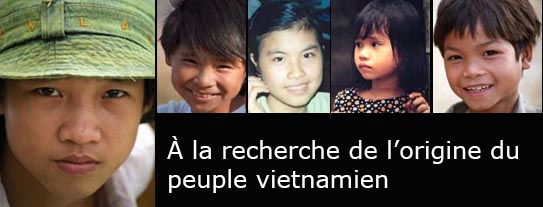
    According to the archaeological sources we have today, the Vietnamese are descendants of the Thai-Vietnamese group. Some historians keep on seeing in these Vietnamese, not only Mongol immigrants coming from southern China (the Yue) and resettling in the Red River delta in the course of the centuries that preceded our era, but also carriers of the Chinese civilization that swept away on their passage by a demographic push, all the brilliant civilizations known up until then on the Indochinese peninsula (those of Ðồng Sơn, and later of Champa).

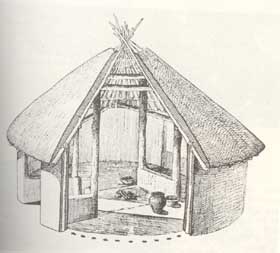
    Others think that the Vietnameses are the result of fusion between several people in contact in the basin of the Red River among which it is necessary to quote Hmongs, the Chinese, the Thais and Dongsonese. While basing themself on their legend of water melon taking place at the time of Hung kings and testifying to the coming of strangers of a different race who might have brought the seeds to Vietnam by the maritime way ( 3rd century B.C ) and on the archaeological excavations confirming the existence of the Nan Yue kingdom, the Vietnameses are convinced that they resulted from Yue but with an Indonesian background probably via by the intermediary of the Dongsonese because Ðình (communal house) heightened on piles and where resides the most vivid expression of the Vietnamese soul, resembles indisputably the houses prefigured on the bronze drums of Ðồng Sơn. This conviction seems conclusive because one finds also other astonishing resemblances among Vietnameses as well as Indonesian tribes: chews bétel, tattooing and tooth lacquering.

    Apart from some Frenchmen like Henri Oger who was able to discover in the Vietnamese society a millennial civilization rich in traditions and customs, one continues to be open to a hallucinating confusion in considering that the Vietnamese civilization is a tracing of the Chinese civilization. One continues to reproach the Vietnameses for not having a civilization so worthy, intense and rich as the ones found in other peoples in Indochina (Khmer and Cham civilizations) through their temples of Angkor and Mỹ Sơn. It is a regrettable ignorance because to known the richness of the Vietnamese civilization, one needs to be more interested in its history, its literature than its art. 

    How can one have a fantastic and original art when one is always in a perpetual struggle with a so rude and pitiless nature and when Tonkin is of no exceptional wealth not to include the systematic assimilation by the Chinese during their thousand-year domination. In spite of that, the Vietnamese succeeded in showing several times their techniques, know-how and imagination that allowed them to give to some Vietnamese productions (ceramics in particular) an almost admirable rank among the provincial arts of the Chinese world.

    In order to preserve the traditions and to perpetuate their culture, the Vietnamese owe their safety to their sempiternal struggle. Thanks to their religious beliefs and their quasi hostile environment at the beginning, they possess a considerable power of resistance to moral and physical sufferings that became with the passing years one of their main forces for overcoming all external aggressions.

    Also thanks to their labor, tenacity, and sacrifices in human lives, they were successful in holding in check the caprices and wrath of the Red River, in keeping the Chinese outside Tonkin on several rounds and in the 17th century going through the barrier which is made up then impenetrable the Anamitic cordillera in their march towards the South. The Chams were the first victims this secular confrontation, followed by the Khmers.

    One can reproach the Vietnamese for being pitiless towards the other peoples but it should not be forgotten that the Vietnameses have struggled inexorably since the creation of their nation for their survival and the preservation of their traditions. The Vietnameses have been at a much disadvantage for a long time by the geographical proximity of China. It was to block the passage of Kubilai Khan‘s Mongols in the conquest of Champa that the Vietnamese suffered twice their invasions in 1257 and 1287. It was to find a passage towards the Middle Empire that the French thought to succeed in their first try by the Mekong then by the Red River that allowed a link to Yunnan that Doudard de Lagree‘s mission followed by Francis Garnier’s were sent to Indochina. This permitted the French to be more particularly interested in Tonkin and intervene militarily a few years later. It was also to counter China after the Korean war that the Vietnamese were implicated by force for decades in the East-West confrontation. It was to thwart the China policy in Cambodia that the Vietnamese received a lesson of correction in February 1980 by Chinese troops’ lightning invasion at the frontier of Lạng Sơn for a month.

    For those who know the history of Vietnam well, being Vietnamese is not to be so peaceful and so cool even if a Vietnamese wants to be in that way. Kneaded of the brown silt of the Tonkinese delta where he comes from, involving in the perpetual struggle with the acrimony of the Red River, undertaking a  long march toward the South through a succession of intermittent wars, and suffering a long Chinese assimilation and domination, not to include a century of French colonization and a few dozens of years that compelled him to become a target of the East-West confrontation and a victim of the cold war, the Vietnamese never lets himself discouraged by these titanic hardships. 

    On the contrary, he becomes more hardened, more perseverant, more tough, more persuaded in his political convictions and more capable of resisting valiantly those affronts. His profound and intimate attachment to his native land and his traditions makes him become uncompromising in the struggle, which makes of him a pitiless and formidable conqueror for some, a legitimate defender of freedom and national independence for others.

    Whatever happens, he found himself proud of taking over from his parents to valiantly defend the ancestors’ soil and his people’s survival and to be worthy of the Son of the Dragon and the nephew of the Fairy.  « Dyeing for one’s country » is not strange either to his temperament or his traditions. But it is the lot the most beautiful and worthy of desire that many Vietnamese such as Trần Bình Trọng, Nguyễn Thái Học, Phó Ðức Chính, Nguyễn Trung Trực,Trần Cao Vân, Nguyễn An Ninh etc. have accepted to get with bravery on that land of legends

    Being Vietnamese

    is being capable of resisting above all any assimilation and foreign ideology and being proud of having in his veins the blood of the Dragon.

    Mekong delta river (Đồng Bằng Cửu Long)


    Version française

    Cửu Long nơi có chín rồng
    Có sông nhiều cá có đồng lúa xanh
    Thưở xưa là đất tranh giành
    Người Nam nhắc đến không đành lìa xa

    The Mekong delta is the former territory of the kingdom Founan (Phù Nam). The Mekong delta’s natives are  the mixing of several Vietnamese, Khmer, Cham and Chinese peoples. A fifth of the population lives in this delta. The least hectare, the least cultivable parcel of the delta are exploited by peasants consisted of Vietnamese of Khmer origin, Chinese,Chàm, and Vietnamese. That is why a multitude of religions is found there: Buddhism, Catholicism, Caodaism, Islam, and Hoà Hảo. Irrigated and sprinkled by the Mekong River, this delta produced itself alone one-half of the rice of the country, which allows Vietnam to become the third largest exporter of rice in the world.

    The Mekong delta is currently divided into  12 provinces: Long An, Tiền Giang, Bến Tre, Ðồng Tháp, An Giang, Kiên Giang,  Vĩnh Long, Trà Vinh, Hậu Giang, Sóc Trăng, Bạc Liêu  and Cà Mau.

    Đồng Bằng Cửu Long

    Before becoming an integral part of Vietnam, this delta belonged to the Khmer people. The first Vietnamese colonists appeared only at the beginning of the 16th century on this territory that was until then just a marshy area infested with crocodiles and filled with mangroves. It is only in 17th century that this territory became Vietnamese under the scepter of the lords Nguyễn. It was also the arena of violent clashes between the Tay Son’s armies and the Nguyen’s partisans supported by the mercenaries recruited by Pigneau de Béhaine at the end of 18th century.

    One finds in this delta a labyrinth of channels and rivers that add up to 4,000 kilometers, which is equivalent to the length of the Mekong river itself. This river is born out of the snows from Tibet in the province of Qing Hai, flows for more than 4,500 km before reaching the delta and crosses six countries: China, Burma, Thailand, Laos, Kampuchea, and Vietnam. It divides itself at the capital of Kampuchea, Phnom-Penh into two branches, Mekong and Bassac that enter Vietnam separately. In Vietnam, its upper course is divided into four arms at Vĩnh Long to throw itself into the East Sea. (Biển Đông).

    The great lake Tonlé Sap, located at the center of Kampuchea is not only a natural fish tank but also a natural regulator of the water flow making it possible to prevent the flood of the delta. In summer, because of monsoon rain, the level of Mekong is higher compared to that of the lake to which it is connected by a channel. The lake fills itself, passing from 3,000 square kilometers in season of low waters to more than 10,000 square kilometers at the end of the monsoon. The lake begins to reverse its water into the delta by the time the rain ends. The Mekong delta does not need big water management works or dikes to protect itself from swelling, which proves to be essential for the delta of the North. Thanks to the irrigation of Mekong, the delta is so fertile. Gardens, fields, rice plantations and orchards are seen everywhere.

    These orchards are in fact small plots of land irrigated by channels connected to each other by bamboo bridges often called Cầu Khỉ (Monkey Bridges). When referring to the delta, the term « cò bay thẳng cánh«  is often used. This means the delta is so vast that the cranes can extend their wings as they fly over. 

    It is in this delta, at Sadec, that Marguerite Duras’ mother ran the girls’ school. A young Chinese of good family lived there too. He will become the hero in « The Lover « . This novel has made Marguerite Duras a superstar of the French literature overnight allowing her to win the Prix de Goncourt in 1984 and ensure the sale of one million three hundred thousand copies in paperback in Midnight Editions and one million copies in hardcover at France-Loisirs.

    It is also in this delta that are seen every morning, hundreds of sampans converging toward the famous floating market of Phùng Hiêp at the crossroad of seven channels in the direction of Cần Thơ to Sóc Trăng, or toward lesser known markets such as Cái Răng and Phong Ðiền. Also seen are merchants with conic hats trailing their mountains of fruits, legions of ducks, chickens and pigs to the market on their small boats, or other rudimentary means of transportation (bicycles, rickshaws). It is thanks to the orchards of the delta that one finds a great number of fruits: sapotilles, ramboutans, caramboles, corrosoles etc… at the markets of Saigon. It can be said that the delta feeds Saigon and a greater part of Vietnam. In the northeast of the peninsula lies the Plain of Reed ( Ðồng Tháp Mười ) which was a Việt Cộng refuge yesterday and which becomes the Asian Camargue today.

    In spite of its lack of archaeological richness, the delta continues to play a vital role economically for Vietnam. It becomes thus the object of greed and confrontation for so many years. It was French Cochinchina at one recent time. Even Hồ Chí Minh, when alive, has agreed to its importance by burying his father at Sadec. There are folks whose names remain anchored in the memory of the Vietnamese people. Phan Thanh Giản, Võ Tánh, Nguyễn Trung Trực, Hùynh Phú Sổ, are among these folks and are issue of this corner.


    Without the delta, Vietnam is never free and independent….. 
    It is the granary of Vietnam.