Hà Giang, vẽ đẹp của miền sơn cước


Version française
Version anglaise
Galerie des photos

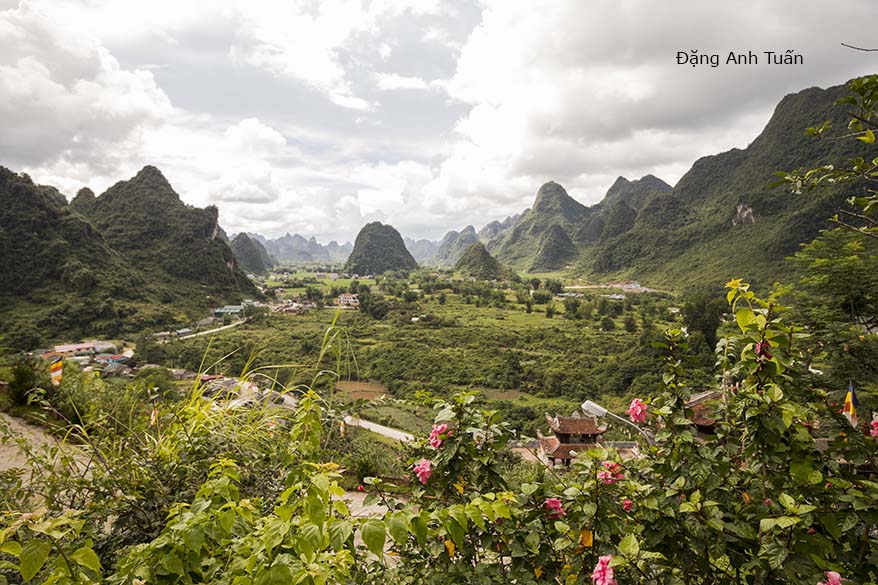
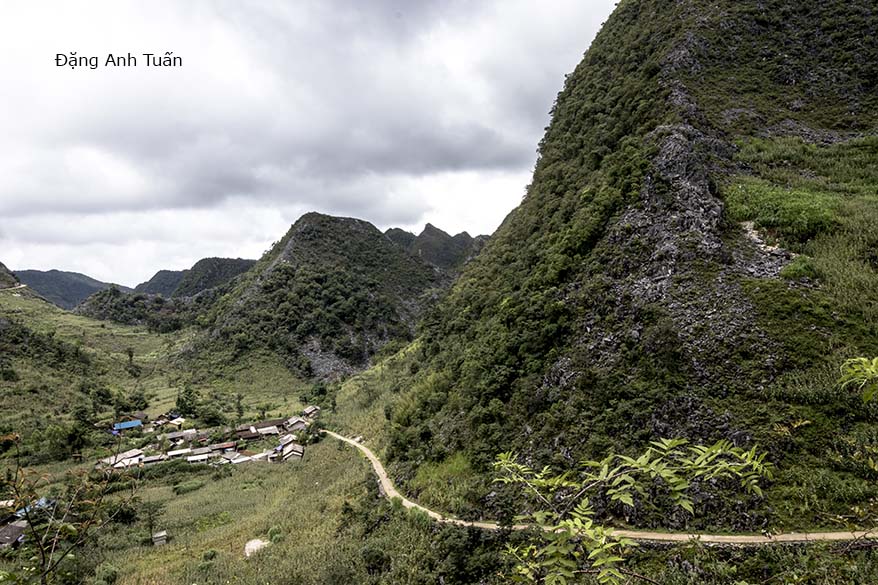
Nằm ở vùng núi phía Bắc Vietnam, Hà Giang là một tỉnh có nhiều núi rừng, giáp ranh giới vói tỉnh Vân Nam của Trung Quốc. Dân số ở nơi nầy rất thưa, chỉ có khoảng chừng 900.000 người theo điều tra dân số năm 2016. Tuy nhiên chính ở nơi nầy tụ hơp rất nhiều dân tộc thiểu số (22 dân tộc) trong đó đáng kể nhất là người Hmong (hay Miêu) tiếp đó người Tày, người Dao và người Nùng. Đến đây mới thấy được cái đẹp tư nhiên của tạo hóa, cái hùng vĩ của non nước, cái nhọc nhằn, công lao của ông cha ta gìn giữ bờ cõi đất nước trước hiểm họa của người phương bắc. Chính cũng ở nơi nầy mới có cảm xúc nhiều khi lặn lội trèo lên 389 bậc thang ở đỉnh Lũng Cú mà thường được gọi là đỉnh núi Rồng (Long Sơn) (1700 mét), nơi mà danh tướng Lý Thường Kiệt phá Tống bình Chiêm dựng lên lúc ban sơ cây cột cờ để khẳng định chủ quyền Vietnam trên mãnh đất nầy.

Tuy Hà Giang nó rất còn hoang sơ của miền sơn cước nhưng nó có cái gì thiêng liêng mà không thể diễn tả được khi đến với mãnh đất nầy. Tôi còn nhớ trước ngày đi đến, ai cũng khuyên không nên đi vỉ tuần trước đường xá sạt lở vì bão Sơn Tinh. Có thể nguy hiểm cho tánh mạng và có thể hủy đi lịch trình Hà Giang khiến tôi sẻ mất một tuần ở Vietnam nhưng rồi tôi cũng quyết tâm đi cùng các con cháu. Tôi mới có dịp nhìn thấy được nét đẹp của Hà Giang, đến tham quan cao nguyên đá Đồng Văn mà cơ quan UNESCO chín thức công nhận là Công Viên địa chất toàn cầu đầu tiên của Vietnam và thứ hai ở Đông Nam Á sau Langkawi (Mã Lai)  vào năm 2010.

Hôm đi, không có gì trở ngại cả, cứ lấy quốc lộ 2 đến Tuyên Quang rồi sau đó đến thành phố Hà Giang nghỉ một đêm ở một khách sạn trong thành phố Hà Giang. Trên đường, có một quán bán nước mía không thấy có ruồi chi cả dù có bã mía rất nhiều trong thùng rác. Thấy vậy tôi,  các con cháu và cháu  tài xế mới mua uống  mỗi người một ly. Hai vợ chồng bán nước mía nầy họ trồng sau vườn các bụi mía. Thât ngon và sạch nhất là ở đất nầy không thấy có  ruồi có lẽ tại khí hậu của rừng núi và dân số quá thưa. Lâu lắm rồi mới uống được một ly nước mía trong sạch chớ bao giờ dám uống mỗi lần vê Việtnam. 

Chiều đó  còn được một cặp vợ chồng bạn con dâu mình mời và  đãi một buổi cơm với món ăn đặc trưng ở Hà Giang là lẩu ngựa. Ăn kèm theo rau rừng, mùi vị béo ăn cũng không ngán để làm ấm lại con người khi  không gian thời tiết se lạnh hay mưa rỉ rả trong đêm. Sáng sớm mưa vẫn rơi, tụi nầy tiếp tục hành trình đi Đồng Vạc với quốc lộ 4C, mình hơi lo, cứ nhủ thầm trong lòng, cứ  sương mù xuống nửa lừng đồi thêm mưa rỉ rả  như vầy  thì chuyện chụp hình của mình cũng hỏng chưa nói chuyện sạt lở đất ở giữa đường đi, đôi khi có một  tảng đá to lớn vài tấn nằm bên hông đường. Không có chỉ dẩn rõ ràng chi cả có đi đuợc hay không, cháu tài xế Minh cứ lẳng lặng lái xe.

Chính nhờ  sự bình tĩnh cũa Minh và tính tiền định có ở nơi người con Việt mà sự  lo âu của mình cũng dần dần biến mất nhất là có những đọan đường không có mây đen trời lại nắng khiến mình mãi mê chụp hình mà quên tất cả. Nhưng có những đoạn đường quanh co nguy hiểm đến đổi phải sửng sốt đèo nầy qua thì đèo khác tới khiến làm ai cũng mệt  nhất là chỉ có tổng cộng hơn 200 cây số mà 6, 7  tiếng đồng hồ phải mất .  Mệt thì có mệt nhưng với không gian yên tĩnh, con người hiền hòa của vùng sơn cước thì  cũng nên cần có  chớ không như ở Saïgon hay Hànội  cái ồn ào ầm ĩ của tiếng kèn, cái không gian sôi động không ngừng. 

Cũng không có trộm cắp như các đô thị khác theo lời kể của cháu tài xế. Cụ thể là gà, vịt, trâu và bò vẫn ngẩn ngơ do dự   từng bước  sang ngang trên quốc lộ mà tất cả xe lớn xe nhỏ phải tránh và dù tụi nó  xa nhà của chủ nhân có cả cây số. Cũng không ai dám cán  chúng nó vì sợ chủ nhân đòi đền gấp  nhiều lần hơn. Dọc theo quốc  lộ,  lúc nào cũng thấy các cánh đồng ngô xanh của dân tộc Hmong. Họ rất giỏi về làm ruộng. Bởi vậy từ thưở nào người Trung Hoa  dùng chữ  tựơng hình điền  thêm trên đầu  chữ  tượng hình thảo (lúa)  ám chỉ nguời Hmong 苗 hay Miêu, những người  giỏi về canh tác đấy. 

Cũng đúng thôi vì nhìn  trên tản đá chỉ cần một tí đất là  cây ngô có thể chồi ra dễ dàng. Đôi khi dọc theo đường nhìn sâu qua kiến xe có một  hay hai cái nhà của người Hmong nằm cheo leo sườn núi không biết họ xây dưng làm sao và đi thể nào để vào đó.  

Cũng có phần  may mắn khi  đến Đồng Văn có một nhà trọ mới sửa ở phố cổ nên tụi nầy được trọ đêm thứ nhì ở  đây. Mưa vẫn rơi tầm tã nên đèn đuốc cũng lờ mờ, không có trông đẹp như Hội An, Phố cổ Hànội. Có lẽ tụi nầy đến giữa tuần nên không có nhộn nhịp như lúc cuối tuần. Sáng ngày thứ ba, tụi nầy mới có dịp ăn điểm tâm ở đây, ăn bánh cuốn trứng  Đồng Văn, đặc sản ở  miền sơn cước.

Nó cũng được tráng từ bột gạo và nhân làm từ lợn xay ra, chỉ có khác là thay vì ăn kèm với nước mắm pha chanh đường thì họ dùng với nước hầm (ninh) xương kèm theo hai chiếc giò lụa nhỏ.  Mình chỉ  thấy có một hương vị đặc biệt nhưng vì có mỡ của xuơng nên ăn dễ  ngán lắm. Có lẽ là một cách ăn để ấm lòng và  xua đuổi cái lạnh của rừng Tây Bắc cũng như ở Pháp thường ăn bơ với mùa đông. Sau đó tụi nầy  đi một vòng ở phố cổ Đồng văn, mới có dịp nhìn thấy được cách thức rửa cây lin  mà người Hmong dùng để  dệt vãi  với nước suối trước khi đi tham quan đỉnh Lũng Cú và nhà vua Mèo Vương Chính Đức.  Biết bao nhiêu kỷ niệm khó quên và cảm xúc không ít với ba ngày ở Hà Giang nhất là có các con cháu bên cạnh, lúc nào cũng trơ lực  trong chuyến đi nầy từ Hà Giang đến Cà Mau, hai cái mốc của đất nước cách xa  1535 cây số.

Située dans la région montagneuse du Nord Vietnam, Hà Giang est une province partageant la frontière commune avec  la contrée du sud-ouest de la Chine, Yunnan. Sa population est peu dense et estimée à peu près de 900.000 habitants selon la statistique démographique en 2016. Pourtant c’est une région où il y a la concentration importante  des ethnies minoritaires du Vietnam (22 ethnies) parmi lesquelles il faut citer d’abord les Hmongs suivis par les Tày, les Dao et les Nùng. C’est ici qu’on découvre la beauté extraordinaire du Créateur,  la nature grandiose et magnifique du Vietnam fascinant, le labeur et le mérite de nos ancêtres dans l’action de résister à la menace des gens du Nord. C’est ici seulement qu’on ressent une émotion intense lorsqu’on grimpe les 389 marches de l’escalier en pierre de la colline Lũng Cú qu’on est habitué à appeler la « colline du Dragon » à 1700 mètres d’altitude. C’est ici aussi que le général vainqueur  des Song et pacificateur du Chămpa  Lý Thường Kiệt a édifié au début un mât en bois de quelques mètres pour affirmer  avec intransigeance la souveraineté du Vietnam sur ce territoire.

Bien que ce dernier ait l’air d’une région montagneuse  sauvage et difficilement pénétrable, il y a quelque chose sacrée que je n’arrive pas à décrire en venant ici. Je rappelle bien que la veille de mon départ, tout le monde m’a recommandé d’abandonner le projet de visiter Hà Giang  car elle a été dévastée la semaine précédente par la tempête « Sơn Tinh« . Cela pourrait provoquer des ennuis pour moi et me faire perdre une semaine de vacances au Vietnam. Malgré cela, je continue à persister dans le dessein d’y aller. J’ai ainsi l’occasion d’admirer le charme irrésistible  de Hà Giang et de visiter le plateau karstique Đồng Văn que la fondation  UNESCO a reconnu comme le deuxième parc géologique de l’Asie du Sud Est après celui de la Malaisie (Langkawi) en 2010.

Nous  n’avons  aucun souci le jour du départ. Nous  n’avons  qu’à prendre la route nationale n°2 pour aller à la ville Tuyên Quang avant de rejoindre ensuite  la ville Hà Giang pour passer la nuit à l’hôtel.  Sur la route, nous avons l’occasion de rencontrer un kiosque  détenu par un couple et spécialisé dans la vente du jus de canne à sucre. Nous constatons  qu’il n’y a pas de mouches aux alentours malgré la présence d’une poubelle remplie de déchets de canne à sucre broyés. Nous pensons que le climat joue un rôle important et la démographie n’est pas importante. Nous sommes tentés, chacun  de prendre un verre de jus de canne à sucre. C’est extrêmement délicieux car jusqu’à ce jour je n’ose pas à le prendre quand je reviens au Vietnam.

Le soir  même, nous sommes invités par un couple d’amis de  ma belle-fille Oanh dans un restaurant connu pour sa spécialité locale (lẫu ngựa)(ou fondue vietnamienne de viande de cheval). Accompagné par les légumes de la région montagneuse, ce plat ayant la saveur grasse ne nous dégoûte pas mais il nous réchauffe tellement  lorsque le temps commence à se refroidir et la pluie est sporadique durant toute  la nuit. Le lendemain, la pluie continue à tomber toujours. Malgré cela, nous prenons   la route nationale 4C  en direction de Đồng Văn. 

L’inquiétude commence à m’envahir car si le brouillard continue à s’épaissir de plus en plus à mi-hauteur de la colline avec la pluie persistante comme celle de la nuit, l’idée de faire les photos  serait tombée à l’eau sans  évoquer les dégâts causés sur la route par la dernière tempête ( plusieurs  gros bloc de pierre de plusieurs tonnes  étant souvent visibles au bord de la route). Aucune indication n’est fournie pour connaître la praticabilité de la route ou non. Notre chauffeur Minh continue à conduire avec assiduité sans être inquiété par l’absence de l’indication.

C’est grâce à son calme et à l’attitude fataliste reçue des Vietnamiens  que mon inquiétude s’estompe au fil de la journée. Sur certains tronçons de la route,  le retour du soleil m’incite  à tout oublier et à me  consacrer entièrement  à  faire des clichés. Par contre il y a des tronçons de route très dangereux et tellement sinueux que cela nous rend tous fatigués. Pour 200 kilomètres de trajet, il faut compter au minimum 6 ou 7 heures de route. Malgré cela, nous sommes contents d’avoir cet espace tranquille et  les gens gentils et  aimables de la région montagneuse au lieu de retrouver à Saïgon ou à Hanoï le bruit incessant des klaxons et l’espace tellement animé et pollué.

Selon le chauffeur Minh, il n’y a pas non plus le vol comme on le trouve dans les villes.  Les poulets, les canards,  les buffles ou les bœufs hésitant dans leur marche peinent à  traverser la route sans que leur propriétaire s’inquiète de les perdre même s’ils sont loin de leur enclos.

Personne n’aime à les écraser car il faut payer  un prix très fort au propriétaire. Sur le bord de la route, on trouve souvent les champs de maïs des Hmong. Ils sont experts dans le domaine de la culture. C’est pourquoi les Chinois se servent depuis longtemps du pictogramme  điền   (champ) au dessus duquel est ajouté  le pictogramme thảo  (riz paddy) pour désigner les Hmong (ou Miêu), les gens doués pour la culture du sol.

C’est ce que nous constatons en découvrant de près sur une roche garnie d’une  petite motte de terre l’apparition d’une plante de maïs. Parfois à travers la vitrine de la voiture, nous  découvrons au loin  une ou deux maisons des Hmong perchées  sur le flanc de la montagne. On se demande comment arrivent-ils à les construire et à y accéder?

Nous avons la chance de passer la deuxième nuit  à Đồng Văn  dans un homestay récemment rénové au centre de la vieille ville. La pluie continue à tomber le soir. C’est pourquoi aucune attraction n’a lieu et les lampions sont clairsemés par rapport à ceux de Hội An et de la vieille ville de Hànội. Du fait que nous sommes arrivés au milieu de la semaine, nous ne trouvons aucune   animation organisée fréquemment  en fin de la semaine. Le matin du  troisième jour, pour prendre le petit déjeuner,  nous cherchons de bonne heure un restaurant spécialisé dans la préparation d’une crêpe à l’œuf (bánh cuốn trứng)  typique de Đồng Văn.

 Étant une spécialité de la région montagneuse, cette crêpe  est faite à partir de la farine de riz et de la viande hachée et se déguste  en la trempant  dans une sauce mijotée à petit feu avec des os de porc et accompagnée toujours par deux petits morceaux de pâté de viande.  Ce plat a une saveur particulière mais à cause de la consistance graisseuse de la sauce, il est difficile de renouveler l’envie.   

C’est peut-être la façon de se réchauffer et d’évacuer le froid provenant de la forêt Nord-Ouest comme en France  on est habitué à manger du beurre en hiver. Nous allons faire ensuite un tour à Đồng Văn. Nous avons l’occasion de voir la façon des Hmongs de laver  le lin avant de s’en servir pour le tissage de leurs vêtements avec l’eau de source. Puis    nous visitons  la colline Lũng Cú et le palais fortifié du roi des Hmongs Vương Chính Đức. J’ai tellement des souvenirs et des moments d’émotion intense qu’il est difficile de remémorer pour ces trois jours de visite à Ha Giang en  compagnie de  mes enfants et de mon petit-fils qui ne cessent pas de me soutenir dans ce projet depuis le début jusqu’à la fin de ce voyage inoubliable. (de Hà Giang jusqu’à la pointe de Cà Mau, 1535 km à parcourir).

English version

Located in the mountainous region of Northern Vietnam, Hà Giang is a province sharing a common border with the southwestern region of China, Yunnan. Its population is sparse and estimated at about 900,000 inhabitants according to demographic statistics in 2016. Yet, it is a region with a significant concentration of Vietnam’s ethnic minorities (22 ethnic groups), among which the Hmongs are the most notable, followed by the Tày, the Dao, and the Nùng. It is here that one discovers the extraordinary beauty of the Creator, the grand and magnificent nature of fascinating Vietnam, the labor and merit of our ancestors in resisting the threat from the northern people. It is only here that one feels an intense emotion when climbing the 389 steps of the stone staircase on Lũng Cú hill, commonly called the « Dragon Hill, » at an altitude of 1,700 meters. It is also here that the general who defeated the Song and pacified Champa, Lý Thường Kiệt, initially erected a wooden pole a few meters high to firmly assert Vietnam’s sovereignty over this territory.

Although it looks like a wild and hardly accessible mountainous region, there is something sacred that I cannot describe when coming here. I clearly remember that the day before my departure, everyone recommended that I abandon the project of visiting Hà Giang because it had been devastated the previous week by the storm « Sơn Tinh« . This could cause trouble for me and make me lose a week of vacation in Vietnam. Despite this, I continued to persist in the intention to go there. I thus had the opportunity to admire the irresistible charm of Hà Giang and to visit the Đồng Văn karst plateau, which the UNESCO foundation recognized as the second geological park in Southeast Asia after the one in Malaysia (Langkawi) in 2010.

We had no problem on the day of departure. We just had to take national road No. 2 to go to the city of Tuyên Quang before then joining the city of Hà Giang to spend the night at the hotel. On the way, we had the opportunity to encounter a kiosk owned by a couple and specialized in selling sugarcane juice. We noticed that there were no flies around despite the presence of a trash bin filled with crushed sugarcane waste. We think that the climate plays an important role and that the demography is not important. We are each tempted to have a glass of sugarcane juice. It is extremely delicious because until now I have not dared to have it when I return to Vietnam.

That same evening, we are invited by a couple of friends of my daughter-in-law Oanh to a restaurant known for its local specialty (lẫu ngựa) (or Vietnamese horse meat fondue). Accompanied by vegetables from the mountainous region, this dish, with its rich flavor, does not disgust us but warms us up so much as the weather begins to cool and the rain is sporadic throughout the night. The next day, the rain continues to fall. Despite this, we take National Road 4C towards Đồng Văn.

Worry begins to overwhelm me because if the fog continues to thicken more and more halfway up the hill with persistent rain like that of the night, the idea of taking photos would be ruined, not to mention the damage caused to the road by the last storm (several large stone blocks weighing several tons are often visible at the roadside). No indication is provided to know whether the road is passable or not. Our driver Minh continues to drive diligently without being concerned by the lack of signs.

It is thanks to his calm and the fatalistic attitude inherited from the Vietnamese that my anxiety fades throughout the day. On certain stretches of the road, the return of the sun encourages me to forget everything and fully dedicate myself to taking pictures. However, there are very dangerous and winding sections of the road that make us all tired. For 200 kilometers of travel, it takes at least 6 or 7 hours on the road. Despite this, we are happy to have this peaceful space and the kind and friendly people of the mountainous region instead of returning to Saigon or Hanoi with the incessant noise of horns and the very lively and polluted environment.

According to the driver Minh, there is also no theft like what is found in the cities. Chickens, ducks, buffaloes, or oxen hesitating in their walk struggle to cross the road without their owners worrying about losing them even if they are far from their pens. No one likes to run them over because a very high price must be paid to the owner. Along the roadside, you often find the Hmong’s cornfields. They are experts in the field of cultivation. That is why the Chinese have long used the pictogram điền (field) above which is added the pictogram thảo (rice paddy) to designate the Hmong (or Miêu), the people skilled in soil cultivation.

This is what we observe when closely discovering, on a rock adorned with a small clump of earth, the appearance of a corn plant. Sometimes, through the car window, we spot one or two Hmong houses perched on the mountainside in the distance. We wonder how they manage to build and access them?

We are fortunate to spend the second night in Đồng Văn at a recently renovated homestay in the center of the old town. The rain continues to fall in the evening. This is why no attractions take place and the lanterns are sparse compared to those in Hội An and the old town of Hà Nội. Since we arrived midweek, we find no frequently organized events at the end of the week. On the morning of the third day, to have breakfast, we early on look for a restaurant specializing in preparing an egg pancake (bánh cuốn trứng) typical of Đồng Văn.

Being a specialty of the mountainous region, this pancake is made from rice flour and minced meat and is enjoyed by dipping it in a sauce simmered slowly with pork bones, always accompanied by two small pieces of meat pâté. This dish has a particular flavor, but due to the greasy consistency of the sauce, it is hard to want to have it again.

It may be a way to warm up and get rid of the cold coming from the Northwest forest, just like in France where we are used to eating butter in winter. Then we will take a tour of Đồng Văn. We have the opportunity to see how the Hmongs wash the flax before using it to weave their clothes with spring water. Then we visit Lũng Cú hill and the fortified palace of the Hmong king Vương Chính Đức. I have so many memories and moments of intense emotion that it is difficult to recall these three days of visiting Ha Giang in the company of my children and my grandson who have continuously supported me in this project from the beginning to the end of this unforgettable journey. (From Hà Giang to the tip of Cà Mau, 1535 km to travel).

Cuộc hành trình Hà Giang  theo hình ảnh 


Paris 28/08/2018 

[RETOUR]

Việt Nam Quê Hương tôi. Đất Rồng và Huyền Thoại

Paris, kinh đô ánh sáng

Việt Nam hai tiếng nhớ nhung

Shangrila (Vân Nam)

Tại sao chọn gọi là Đất Rồng và Huyền Thoại ?


intro

Version française
English version
Thư viện ảnh

Việt Nam là một quốc gia ở Đông Dương mà người dân rất yêu chuộng hoà bình, độc lập và tự do. Là người dân Việt  thì phải có khả năng kháng cự lại trước hết việc đồng hóa hay là tư tưởng ngoại bang và hảnh diện có mang ở trong tĩnh mạch dòng máu của cha Rồng. Đối với người dân Việt, không còn sự  hoài nghi nào cả vì qua truyền thuyết Con Rồng Cháu Tiên có từ thuở nào, họ là con cháu của  cha Rồng mặc dầu họ biết rõ  từ nay nguồn gốc qua các công trình khoa học di truyền. Họ là người thừa kế của nền văn hóa Hòa Bìnhvăn hóa Phùng Nguyên  và thuộc về đại tộc Bách Việt, những bộ tộc sống rải rác ở phía nam sông Duơng Tử (Văn hóa Lương ChửThạch Gia Hà). Nuớc ở nơi nầy nó thấm nhuần với đất vì có thể là vậy nên quốc gia của họ thường được gọi là Đất Nước.

Cũng  trên mãnh đất của đồng bằng sông Hồng nầy đã qua bao nhiêu thế kỷ trước Công Nguyên có một vương quốc sáng lâp một triều đại với các vua Hùng huyền thoại (nước Văn Lang). Sau đó được thay  thế bởi nước Âu Việt của An Dương Vương (Thục Phán) mà thành trì Cổ Loa là thủ đô, một bằng chứng cụ thể của vương quốc nầy bị thôn tính về sau bởi  Triệu Đà, một danh tướng của hoàng đế Trung Hoa Tần Thủy Hoàng. Ông nầy sáng lập ra nước Nam Việt (Nan Yue) lại bị thôn tính lúc đầu bởi  Hán Vũ Đế và về sau bởi quân Tàu của danh tướng Mã Viện (Ma Yuan) dưới thời  Hán Quang Vũ Đế (Guang wudi) với một nghìn năm bắc thuộc  trước khi có cuộc chiến tranh giải phóng dân tộc của tuớng Ngô Quyền với chiến thắng rực rỡ trên vịnh Hạ Long, một trong di sản thế giới của Việt Nam.

Trong thời kỳ đô hộ, văn hóa Đồng Sơn bị hủy diệt. Người ta tìm thấy trong văn hóa nầy các thạp đồng và nhất là cái trống đồng uy nghiêm biểu hiệu quyền lực và đặc tính của dân tộc Việt đã bao lần suýt bị hủy diệt bởi đế  chế Trung Hoa theo dòng lich sử.  Đây không phải  là lịch sử của các triều đại vua chúa (Đinh, Tiền Lê,, Trần, Hậu Lê, Nguyễn  vân vân…) hay các phong trào tư tưởng mà chính đây là lịch sử của dân tộc nông dân bền bỉ từ biên cương Việt Trung (Cao Bằng) đến mũi Cà Mau, vất vã khó nhọc để lại dấu ấn cho quang cảnh của mãnh đất nầy. Sự hy sinh của họ không phải là một từ vô ích. Các hào kiệt của họ thà làm qủi phương nam thay vì làm các vương công phương Bắc. Còn các nữ hào kiệt cũng không ngần ngại đáp lời sông núi. Đó là hai bà Trưng Trắc Trung Nhị, Dương Vân Nga Triệu Ẩu, Ỷ LanNguyễn Thị Giang (Cô Giang), Nguyễn thị Minh khai vân vân. Không người con Việt nào có thể quên câu nói bất diệt của Nguyễn Thái Học trước cái chết :

Chết vì Tổ Quốc.
Đây là số mệnh quá cao thượng,  đáng khen

Trên chiến trường, không có lực luợng  ngoại bang nào có thể  đánh bại khi có chạm trán với người dân  Việt. Chính họ dành được  sự thắng lợi  nhờ ba yếu tố nầy: Thiên Thời, Đia Lợi và Nhân Hòa. Chính yếu tố sau cùng  nầy nó  đem lại sự khác biệt trong cuộc chiến tranh tiêu hao. Nguyễn Trãi đã có dip nói rằng thà chinh phục nhân tâm hơn là chiếm đoạt thành trì. Hiên ngang trước quân giặc mạnh  hơn họ thì họ cần phải kiên nhẫn nghĩ đến các thể thức thường được áp dụng trong lý thuyết Âm Dương : Lấy Yếu chống Mạnh hay Lấy Cụt chống Dài. Chính nhờ mưu lược nầy mà   được Thống soái Trần Hưng Đạo sử dụng để chống lại hạm đội xâm lược Nguyên-Mông của Hốt Tất Liệt trong trận chiến sông Bạch Đằng năm 1288 và sau đó sĩ phu Nguyễn Trãi dành phần thắng lợi  trong cuộc chống giặc nhà Minh của hoàng đế Vĩnh Lạc, người xây dựng Cố Cung ở Bắc Kinh được thiết kế bởi người Việt tên là Nguyễn An (Ruan An) và xua đuổi quân Tàu ra khỏi Việt Nam vào năm 1428.

Dùng chiến thuật di quân (Dương) trước sự bất động của quân nhà Thanh (Âm) phù hợp hoàn toàn với địa lợi, vua Quang Trung  đánh bại  chớp nhoáng quân địch vào năm 1788 trong 5 ngày Tết  để lấy lại Thăng Long. Chính cũng Quang Trung lợi dụng sự không biết đia thế của quân địch mà dành phần thắng lợi thần tốc ở  rạch Gầm-Xoài Mút (Mỹ Tho) với quân Xiêm La (Thái Lan) của tướng Chakri  khi ông nầy gởi sang 50 vạn binh tiếp viện cho vua Gia Long. Không có dân tộc nào có thể cưởng lại trước sự  bành trướng  của người dân Việt trong cuộc Nam Tiến đến mũi Cà Mau. Đó là trường hợp của hai vương quốc Chămpa ở miền trung và Chân Lạp đồng bằng sông Cửu Long.

Dù bị nghìn năm bắc thuộc và  có sự đóng góp văn hóa ngọai bang, những người nông dân con Việt  mảnh khảnh  nầy, chân vùi dưới bùn ở giữa các ruộng lúa, đã  gìn giữ được  những gì qúi giá nhất của các dân tộc trên thế giới. Đó là những truyền thống ( ca dao chẵng hạn)  và tiếng Việt dựa trên chữ Hán sau nầy dùng chữ Latinh với ông thầy tu dòng tên là  Alexandre de Rhodes. Chỉ còn bộ tộc Lạc Việt duy nhất  thuộc đại tộc Bách Việt không bị hán  hóa qua nhiều  thế kỷ. Chính Đức Khổng Tử  đã có từng  so sánh sinh lực  có ở nơi người Trung Hoa và người Lạc Việt, tổ tiên của người Việt Nam ngày nay: can đảm và vũ lực thuộc về người Trung Hoa, còn Lạc Việt thì khoan dung và  nhân từ.

Tuy nhiên người dân Việt luôn luôn gắn bó sâu đậm với đất nước khiến họ không nhường bộ trong cuộc đấu tranh vì thế theo sự suy luận của một nhóm người, họ là những kẻ đi chinh phục tàn nhẫn và đáng sợ nhưng còn nhóm người khác thì  họ là những người bảo vệ chính đáng trong công cuộc chiến  dành lại độc lập và tư do. Dù sao họ đã hy sinh quá nhiều trong quá khứ về sinh mạng cho hai khái niệm: độc lập và tự do mà họ  không có quen để lựa chọn hay tách biệt. Chính vì  vậy họ vẫn trong tình trạng khổ tâm không ít. Rồi họ cũng  có lần lượt  hai khái niệm nầy với  cái giá  mạng người quá đắt. Việc ý thức tập thể bất đầu thành hình qua nhiều năm với Nguyễn An Ninh.

Mặc dầu ba vị vua trẻ Việt Nam Hàm Nghi, Thành TháiDuy Tân bị lưu đày ở Algérie và La Réunion và việc xử trảm nhiều nhà cách mạng trong đó  có một chàng trai trẻ tài ba Nguyễn Thái Học, người dân Việt vẫn  không mất nhuệ khí trong các cuộc nổi dậy và dành lại độc lập với chiến thắng ở Điên Biên Phủ vào năm 1954. Việc  thả ba trăm tấn bom (265 kí cho mỗi người dân Việt)  và 60 triệu lít chất làm rụng lá cũng không làm nản lòng người dân Việt trên con đường thống nhất  lại đất nước với sự sụp đổ chính quyền Saïgon  vào năm 1975 sau đó dẫn đến việc đày  biết bao nhiêu người lính miền nam đến trại học tập và cuộc di tản  chưa từng thấy, có rất nhiều người thuyền nhân  chết đuối  và bị hảm hại bởi hải tặc ở biển Đông và vịnh Thái Lan để đi tìm tự do.

Theo lời tường thuật của nhiều tác giả Tây Âu, (Barry Wain, Magali Barbieri) có dịp nghiên cứu về vấn đề nầy thì có ít nhất  tổi thiểu là 250.000 người Việt vượt biên chết  ở biển. Theo sự dự tính của cơ quan HCR (Haut  Commissariat pour les Réfugiés), từ 1975 đến 1991, trong 16 năm, có gần một triệu người dân Việt mà trong đó có 8 trăm nghìn người di tản đã lìa bỏ Việt Nam. Con đường hòa giải dân tộc rất còn xa vời vì nó đầy gian nan, cạm bẩy và vụng về sau ba thập niên chiến tranh và đau khổ.

Một trang lịch sữ đã khép lại  nhưng Việt Nam phải trả  giá rất đắt không những trên phương diện con người và môi trường bởi vì vẫn tiếp tục nhận  những hậu quả không  ước lượng nổi của bao nhiêu thập niên chiến tranh (chất độc da cam chẵng hạn). Theo tờ báo thông tin của Unesco ghi lại tháng năm năm 2000, một tổ chức làm việc dưới sự bảo hộ của Liên Hiệp Quốc, ước tính có một phần năm rừng ở miền nam bị hủy hoại bởi các thuốc diệt cỏ của Hoa Kỳ.

Người trai nước Việt  ngày nay không biết hận thù  và cũng không có nỗi buồn chiến tranh của nhà văn Bảo Ninh. Nhưng thách thức  nghèo đói  vẫn  còn rình rập đeo đuổi. Bóng ma chiến tranh nó vẫn còn đó theo dòng ngày  tháng  ở biển Đông với các đảo Hoàng Sa bị cưởng đoạt  năm 1974 và Trường Sa gần đây bởi người phương Bắc mà  mối đe dọa càng ngày càng quá khiêu khích. Trước tham vọng quá đỗi của Trung Quốc, bài thiên sữ thi « Nam Quốc Sơn Hà » của tướng Lý Thường Kiệt phá Tống bình Chiêm, khẳng định lại chủ quyền của Việt Nam, nó trở lại ám ảnh tâm trí và vang âm trong trái tim của người con Việt.  

Tuy rằng với bao nỗi lo âu và cuộc sống quá tồi tệ, không ai có thể quên đi  được mãnh đất  nầy mà người con Việt thường gọi là Quê Hương vì  chỉ ở nơi  nầy  có thể tìm lại kỷ niệm của tuổi ấu thơ, mái trường xưa, nguồn gốc và  quá khứ. Mặc dầu mãnh đất nầy  nó đồng nghĩa với chữ nghèo nàn và khổ cực, nó là lý lẽ sống đấy vì ông cha ta  tranh đấu và giành được từ  khi lập nước với mồ hôi, nước mắt và xương máu. Cũng như mẹ, mỗi người con dân Việt  chỉ có một người mẹ duy nhất trong đời không ai có thể thay thế được. Ngoài làng ra, hình ảnh đình làng, con trâu, nón lá hay cây tre không bao giờ xoá mờ trong kí ức tập thể của người con Việt cả. Đối với những người con Việt viễn xứ, đây chỉ là một khoảng thời gian tạm thời thôi  chớ nó không phải là một kết cục chính. Hình bóng Quê Hương nó vẫn  đeo đuổi mãi  họ như chiếc đòn gánh trên vai  của người bán hàng rong với biết bao nhiêu trìu mến và luyến tiếc.

PCHTVN


Tại sao chọn gọi là Đất Rồng và Huyền Thoại ?

Người Việt cổ có thói quen xăm mình trên cơ thể. Tục lệ « man rợ » này, thường được nhắc đến trong các biên niên sử Trung Quốc. Nếu chúng ta dựa vào các văn bản Việt Nam thì đây là tục lệ nhằm bảo vệ họ để tránh sự tấn công của các con thuồng luồng (chắc đây là các con sấu hay giao long). Ngoài ra, họ thường nói bóng gíó qua các truyền thuyết để cho phép hậu thế truy tìm ra được nguồn gốc bởi sự hủy diệt có hệ thống nhất là nền văn hóa và trống đồng  và sự đàn áp không ngừng của nguời Trung Hoa trong thời kỳ bắc thuộc gần đến một ngàn năm.

Theo nhà nghiên cứu người Pháp Paul Pozner, sử học Việt Nam dựa trên một truyền thống lịch sử truyền khẩu rất lâu đời có trước thời đại của chúng ta dưới dạng truyền thuyết ở trong các đền thờ tổ tiên. Nhà văn Phạm Duy Khiêm, người Việt Nam đầu tiên đỗ tú tài cổ điển Pháp ở thời thuộc địa, đã có dịp kể lại cho chúng ta các truyền thuyết và các câu chuyện cổ tích nầy trong cuốn sách nổi tiếng có mang tựa đề “Légendes des terres sereines” mà ông được giải « Prix littéraire d’Indochine » vào năm 1943 về văn hóa và trí tuệ của người dân Việt. Chính vì những lý do nêu trên đây mà chúng ta chọn vùng đất của các con rồng huyền thoại để chỉ định nước Việt Nam.

Cập nhật ngày 26/2/2026


Paysage époustouflant du Vietnam

Version vietnamienne

English version


Le  paysage du Vietnam est vraiment magnifique et exceptionnel.  L’eau est omniprésente partout et en osmose avec la terre. C’est pour cela que les deux mots Terre-Eau sont employés  pour désigner cette contrée.  Pour un passionné de la photographie, c’est l’endroit  idéal où on peut  faire de beaux clichés  pour immortaliser son voyage. Du nord jusqu’au sud, le paysage est tellement contrasté qu’l est impossible de rester indifférent   devant l’étonnante beauté de la nature.

Dans le nord, on est émerveillé par les pitons ahurissants et majestueux  émergeant des eaux limpides et les îlots de formes diverses dans les baies d’Along et Hoa Lư  et par les rizières en étages pratiquées par les minorités ethniques au cœur des montagnes (Sapa, Mộc  Châu, Hà Giang, Cao Bẳng). Au centre, dans les zones montagneuses et les basses plaines côtières, outre les grottes stalactites de Phong Nha-Kẻ Bàng  et Sơn Động et les patrimoines mondiaux de l’Unesco (Huế, Mỹ Sơn, Hội An), il y a de belles plages d’un bleu azur ( Mỹ Khê, Hội An, Nha Trang, ) et des parcs nationaux de Yok Don et Nam Cát Tiên. Dans le sud, la beauté de la nature n’est pas moindre, en particulier dans le delta du Mékong.

C’est ici que  grâce à la main de l’homme, des panoramas se révèlent magnifiques: des vastes champs de rizières à perte de vue, des vergers luxuriants (Bến Tre, Mỹ Tho, Cái Bè)  et des beaux villages traditionnels tout le long des arroyos (cours d’eau) sans  oublier les mangroves de la péninsule de Cà Mau et de Châu Đốc

phongcanh

 Phong cảnh hữu tình của đất nước 

Phong cảnh ở Việtnam thực sự nó quá tráng lệ và phi phàm. Nước ở đâu cũng có và  được thấm nhuần với đất từ thưở nào nên hai chữ Đất Nước mà người Việt thường dùng để chỉ định  Quê Hương Đối  với một người đam mê chụp ảnh, đây là nơi lý tưởng mà có thể tạo ra những tấm ảnh tuyệt vời để lưu niệm cuộc hành trình của mình. Từ Bắc đến Nam, phong cảnh nó tương phản đến đổi mà không ai có thể dửng dưng được trước nét đẹp tuyệt vời, một tác phẩm nghệ thuật  tạo hình thiên nhiên  của tạo hóa. Ờ miền Bắc, thì có những chỏm núi vôi  uy nghi  làm ta sửng sốt  nhô lên  khỏi mặt nước  và các đảo đá hình thù đa dạng ở vịnh Hà Long Hoa Lư,  những cánh đồng lúa bậc thang của các dân tộc thiểu số ở giữa núi rừng (Sapa, Mộc  Châu, Hà Giang, Cao Bẳng). Ở miền Trung,  ngoài các  hang động thạch nhũ của Phong Nha-Kẻ Bàng và Sơn Động và những di tích thế giới Unesco (Huế, Mỹ Sơn, Hôi An), thì  ở những vùng miền núi và những nơi đất thấp ven theo bờ biển, có những bãi biển với màu xanh biếc ( Mỹ Khê, Lang Cô, Hội An, Nha Trang ) và các vuờn quốc gia Yok Don và Nam Cát Tiên. Ở miền Nam,  nét đẹp cũng không kém nhất là ở đồng bằng sông Cửu Long.

Chính ở đây nhờ bàn tay của con người mà quang cảnh vô cùng ngoạn mục:  những cánh đồng lúa ngút tầm mắt, những vuờn cây ăn quả sum sê (Bến Tre, Mỹ Tho, Cái Bè vân vân ) và những ngôi  làng truyền thống dọc theo các con kênh mà cũng không nên quên  nhắc đến các rừng  đước  của Châu Đốc và Cà Mau.

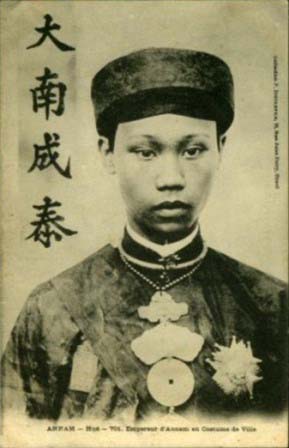
Duy Tân (1907-1916) (English version)

duytan_empereur

Version française

Version vietnamienne

 A great homage to the man who has dedicated all his life for his people and his country.

Một đời vì nước vì dân
Vĩnh San đứa trẻ không cần ngôi vua
Tù đày tử nhục khi thua
Tử rồi khí phách ông vua muôn đời

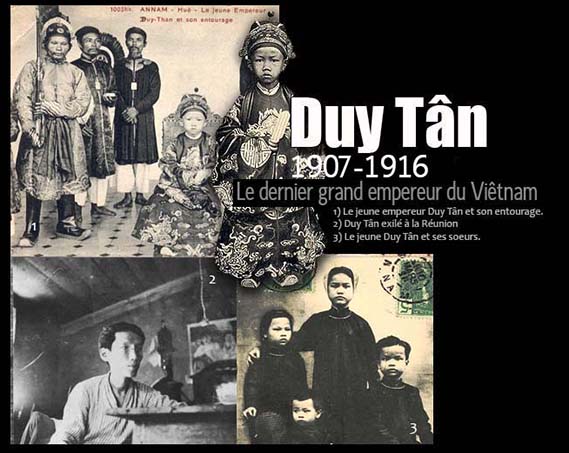
With the agreement of the Vietnamese authorities, the ashes of emperor Duy Tân interred up to now in the Republic of Central Africa were gathered with great pomp on April 4th, 1987 in Huế, the city of imperial mausoleums of the Nguyen dynasty. This has brought an end to a long and painful banishment that has had prince Vĩnh San often known as Duy Tân ( or Friend of Reforms ) since his uprising plan against the colonial authorities was discovered on May 4, 1916 because of the treason of a collaborator, Nguyễn Ðình Trứ.

Duy Tân is an outstanding character that none of the last emperors of the Nguyễn dynasty could be equal to. One can only regret his sudden disappearance due to a plane crash that took place at the end of 1945 on his way back from a mission from Vietnam. His death continues to feed doubt and remains one of the mysteries not elucidated until today. One found in him at that time not only the unequal popularity he knew how to acquire from his people, the royal legitimacy, but also an undeniable francophile, an alternative solution that general De Gaulle contemplated to propose to the Vietnamese at the last moment to counter the young revolutionary Hồ Chí Minh in Indochina. If he had been alive, Vietnam probably would not have known the ill-fated decades of its history and been the victim of the East-West confrontation and the cold war.

It is a profound regret that every Vietnamese could only feel when talking about him, his life and his fate. It is also a misfortune for the Vietnamese people to have lost a great statesman, to have written their history with blood and tears during the last decades.

His ascension to the throne remains a unique occurrence in the Annals of history of Vietnam. Taking advantage of suspicious anti-french schemes and the disguised lunacy of his father, emperor Thành Thái, the colonial authorities compelled the latter to abdicate in 1907 and go into exile in the Reunion at the age of 28. They requested that Prime Minister Trương Như Cường assume the regency. However this one while categorically refusing this proposal, kept demanding the colonial authorities to strictly respect the definite agreement in the Patenôtre Treaty of Protectorate (1884) providing that the throne comes back to one of the emperor’s sons in case he ceases reigning ( Phụ truyền tử kế ). Facing popular opinion and the infallible fidelity of Trương Như Cương to the Nguyen dynasty, the colonial authorities were forced to choose one of his sons as emperor. They did not hide their intention of choosing the one that seemed docile and without caliber. Except Vĩnh San, all of about 20 other sons of emperor Thành Thái were present at the moment of selection made by the General Resident Sylvain Levecque. The name Vĩnh San missed at the roll-call, which forced everyone to look for him everywhere.

Finally he was found under the beam of a frame, his face covered with mud and soak with sweat. He was chasing the crickets. Seeing him in this sordid condition, Sylvain Levecque did not hide his satisfaction because he thought only a fool would choose the day of ascession to the throne to go chasing the crickets. Upon the recommendation of his close collaborator Charles, he decided to designate him as emperor of Annam as he found in front of him a seven-year old child, timid, reserved, having no political ambition and thinking only to devote himself to games like children of his age. It was an erroneous judgment as stated in the comment of a French journalist at that time in his local newspaper:

 A day on the throne has completely changed the face of an eight-year old child. 

One noticed a few years later that the journalist was right because Duy Tân has dedicated all his life for his people and his country until his last breath of life.
At the time of his ascension to the throne he was only 7. To give him a stature of an emperor, they had to give him one more year of age. That is why in the Annals of history of Vietnam, he was brought to the throne at 8 years of age. To deal with this erroneous designation, the colonial authorities installed a council of regency constituted of Vietnamese personalities close to General Resident Sylvain Levecque ( Tôn Thất Hân, Nguyễn Hữu Bài, Huỳnh Côn, Miên Lịch, Lê Trinh, Cao Xuân Dục) to assist the emperor in the management of the country and requested that Eberhard, the father-in-law of Charles be Duy Tân’s tutor. It was a way to closely supervise the activities of this young man.

Trần Cao Vân

In spite of that, Duy Tân succeeded in evading the surveillance network placed by the colonial authorities. He was one of the fierce partisans for the revision of the Patenotre agreements (1884). He was the architect of several reforms: Tax and chore duty reduction, elimination of wasteful court protocols, reduction of his own salary etc… He forcefully protested the profanation of emperor Tự Ðức’s tomb by General Resident Mahé in his search for gold, with the governor of Indochina Albert Sarraut. He claimed the right to look at the management of the country. This marked the prelude of dissension which grew more and more visible between him and the French Superior Resident. On May 4, 1916, with Trần Cao Vân and Thái Phiên, he fomented a rebellion which was discovered and put down due to the treason of one of his collaborators. Despite his capture and flattering advice of the Governor of Indochina asking him to reexamine his comportment and conduct, he continued be impassible and said: 

If you compelled me to remain emperor of Annam, you should consider me as an adult emperor. I should need neither the council of regency nor your advice. I should manage the country’s business on the same footing with all foreign countries including France.

Facing his unwavering conviction, the colonial authorities had to assign the Minister of Instructions of that time, the father-in-law of future emperor Khải-Ðịnh, Hồ Ðắc Trung to institute proceedings against his treason toward France. For not compromising Duy Tân, the two older collaborators Trần Cao Vân and Thái Phiên made it known to Hồ Đắc Trung their intent to voluntarily accept the verdict provided that emperor Duy Tân was exempt from the capital punishment. They kept saying:

The sky is still there. So are the earth and the dynasty. We wish long live to the emperor.


Faithful to the Nguyen dynasty, Hồ Ðắc Trung only condemned the emperor to exile in justifying the fact that he was a minor and that the responsibility of the plot rested with the older collaborators Trần Cao Vân and Thái Phiên.

The men were guillotined at An Hoà. As for emperor Duy Tân, he was condemned to exile to the Reunion on November 3, 1916 on board of the steamship Avardiana. The day before his departure, the representative of the General Resident visited him and asked:

Sir, if you need money you may take it from the state coffer.

Duy Tân replied politely :

The money that you find in the coffer is intended to help the king to govern the country but it does not belong to me in anyway especially to a political prisoner.

To entertain the king, the representative did not hesitate to remind him that it was possible to choose preferred books in the library and take them with him during his exile because he knew the king loved to read very much. He agreed to that proposal and told him:

I love reading very much. If you have the chance to bring books for me, don’t forget to bring the entirety of all the volumes of « History of the French Revolution » of Michelet.

The representative dared not report to the Resident what Duy Tan had told him.

His exile marked not only the end of the imperial resistance and the struggle monopolized and animated up until then by the scholars for the defense of the Confucian order and the imperial state but also the beginning of a national movement and the emergence of a state nationalism placed in birth by the great patriot scholar Phan Bội Châu. It was also a lost chance for France for not taking the initiative to give freedom to Vietnam in the person of Duy Tân, a francophile of the first hour.

His destiny is that of the Vietnamese people. For a certain time, one has deliberately made all streets bearing his name disappear in big cities ( Hànội, Huế, Sàigon ) in Vietnam, but one cannot forever erase his cherished name in his people’s heart and in our collective memory. He is not the rival of anybody but he is on the contrary 

the last great emperor of Viet Nam.

To this title I dedicate to him the following four verses:

Devoting his whole life to his country and people,
Duy Tan the kid did not hang on to his throne.
Facing exile and humility when defeated,
His uprightness lives forever in history unabated.

Thành Thái (1879-1954) (English version)

Thành Thái 

Version française

Version vietnamienne

A great homage to a man who devoted his whole life for his country and people through my Six-Eight verses:

Ta điên vì nước vì dân
Ta nào câm điếc một lần lên ngôi
Trăm ngàn tủi nhục thế thôi
Lưu đày thể xác than ôi cũng đành

His madness for the love of  his country  and people.

I am mad for the love of my country and people
Once on the throne, I can’t stay deaf-mute
It wouldn’t matter I feel self pity and shame
And my body suffers years of exile with resignation

Prior to becoming emperor Thành Thái, he was known as Bửu Lân. He was the son of emperor Dục Ðức who had been vilely assassinated by the two Confucianist mandarins Tôn Thất Thuyết and Nguyễn Văn Tường, and the grand son of the mandarin Phan Ðình Bình. Because the latter was maladroitly opposed to the enthronement of emperor Ðồng Khánh by the colonial authorities, Ðồng Khánh was fast to take revenge by cowardly getting rid of this old mandarin and by putting Bửu Lân and his mother under house surveillance within the surrounding wall of the purple city at the Trần Võ palace in order to avoid all seeds of revolt. That was why at Ðồng Khánh’s death and upon the announcement of the choice of her son as the successor by the colonial authorities, Buu Lan’s mother was surprised and cried so much because she was always obsessed by the idea that her son would probably meet the same fate as her husband, emperor Dục Đức and her father, the mandarin Phan Ðình Bình. If Buu Lan was preferred to other princes, it was incontestably due to the ingenuities of Diệp Văn Cương, the presumed lover of his aunt, princess Công Nữ Thiên Niệm because Diệp Vân Cương was Resident General Rheinart‘s personal secretary, in charge of conducting business with the Imperial Court to find a compromise on the person to be chosen to succeed emperor Ðồng Khánh.

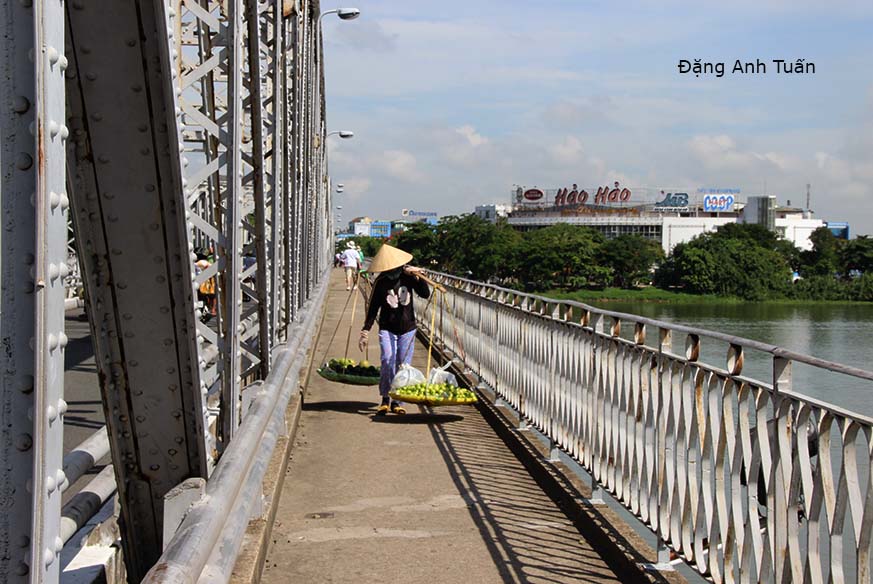
Thus he involuntarily became our new emperor known as Thành Thái. He was fast to realize that his power was very limited, that the Patenôtre treaty was never respected and that he had no right with regard to the management and future of his country. Contrary to his predecessor Ðồng Khánh, close to the colonial authorities, he took a passive resistance by trying to thwart their policies in a systematic manner with his provoking remarks and amicable gestures. His fist virulent altercation with the Resident General Alexis Auvergne was noticed at the inaugural ceremony of the new bridge spanning across the Perfume river. Proud of technical prowess and confident of the sturdiness of the bridge, Alexis Auvergne did not hesitate to tell Thành Thái with his habitual cynicism:

When you would have seen this bridge collapse, your country would be independent.

To show the importance that the colonial authorities has given to the new bridge, they named it « Thành Thái ». This made the emperor mad. Using as a pretext that everyone can walk over his head when crossing the bridge, he forbade his subjects to call the bridge by its new name and incited them to use the old name « Tràng Tiền ».

Tràng Tiền bridge (Huế)

Some years later, the bridge collapsed during a violent storm. Thành Thái was fast to recall Alexis Auvergne of what he had said with his black humor. Alexis Auvergne was red with shame and had to clear off at these embarrassing remarks. The dissension with the authorities grew day by day until the replacement of the old Resident General by Sylvain Levecque. The latter was fast to place a network of strict surveillance when he learned that Thanh Thai continued to approach his people through the bias of his reforms and his disguise in plain clothes or as a beggar in villages. He was the first emperor of Vietnam to take the initiative of having his hair cut the European fashion, which astonished so many of his mandarins and subjects when he first appeared. But he also was the first emperor to encourage his subjects to follow French education. He was the artisan of several architectural projects. He was also the first emperor of the Nguyen dynasty who wanted to pay enormous attention to the daily life of his subjects and to know their daily difficulties. It was reported that during an escorted excursion, he met on his way a poor man who was hauling a heavy load of bamboo. He body guard wanted to ease the way but he stopped him by saying:

I am neither citizen nor emperor as I should be in this country. Why do you chase him away?

During his excursions, he often used to sit on a mat, surrounded by the villagers and to discuss all the issues with them. It was in one of his excursion that he brought back to the purple city an oarswoman who accepted to marry him and became his concubine. He was well known as an excellent drummer.

That is why he summoned all the best drummers in the country to the purple city, asked them to play drums before his court and reward them generously according to their merit. It was reported that one day, he met a drummer who used to tilt his head when playing. Wanting to help him correct this funny habit, he told him jokingly:

If you keep on playing that way, I will have to have your head rolled.

From then on, the drummer, worrying incessantly about the next call, was overwhelmed by fear and died of a heart attack. One day, knowing the death of the drummer, Thanh Thai was taken my remorse, summoned his family and gave them a large sum of money to take care of their daily needs.

His way of joking, his frequent disguises, his sometimes strange behavior incomprehensible to the colonial authorities gave them an opportunity to brand him a lunatic.

As for Thành Thái, he was deported first to Vũng Tàu (former Cap St. Jacques) in the Fall of 1907, then later to the Reunion Island with his son, emperor Duy Tân in 1916. He was only allowed to return to Vietnam in 1945 after the death of Duy Tân and to stay confined within Vũng Tàu, South Vietnam during the last years of his life.

Is it possible to brand him lunatic when it is known through his poem titled « Hoài Cổ » (Remember the Past) that Thành Thái was so lucid and never stopped to groan with the pain facing the alarming situation of his country? Other eight seven-foot verses we know such as The storm of the year of the Dragon in 1904 ( Vịnh Trần Bão Năm Thìn ) or Profession of Faith (Cảm Hoài) not only show Thành Thai’s perfect mastery in the strict application of the difficult rules in Vietnamese poetry but also the painful pride of a great emperor who, in spite of a forced exile for almost half a century ( 1907-1954 ) by the colonial authorities, continued to display his conviction and unshakable faith in the liberation of his country. Through him it is already seen forging on this land of legends the instruments of a future revolt.

For him, his incurable illness was the goal to realize his intention, to give his people the dignity so long waited and to show future generations the sacrifice and the price which even he, a person considered alienated by the colonial authorities, had to pay for that country (47 years of exile). In the political context of the time, he should not reveal himself of this « illness ».

Up to now, no historic document show us Thành Thái’s insanity but rather it reveals a great emperor’s lunacy of the love of his country and people, never ending affliction of a great patriot facing the destiny of his country.

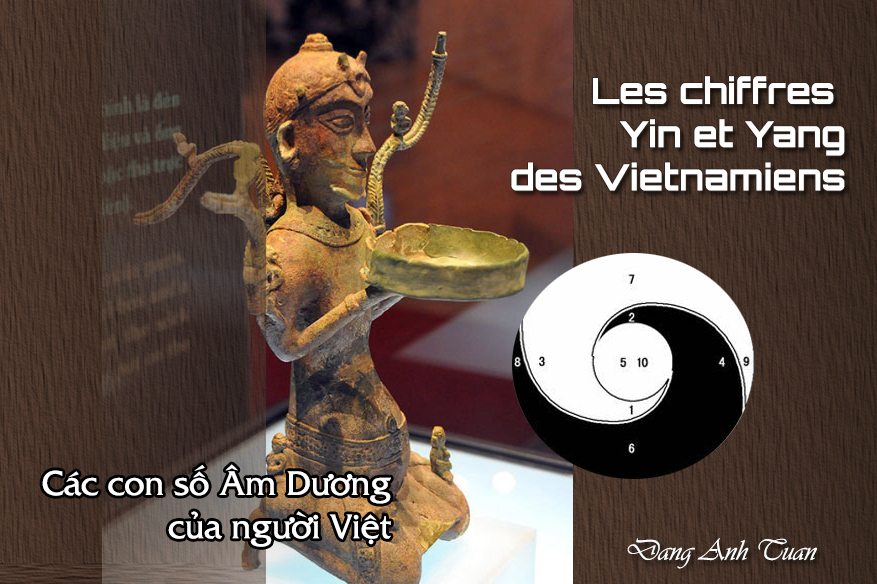
Yin and Yang numbers (Âm Dương: Part 3)


Yin and Yang numbers (Con số Âm Dương)

Version vietnamienne

Version française

We are used to saying in Vietnamese: sống chết đều có số cả (Everyone has their D-day for life as well as for death). Ði buôn có số, ăn cỗ có phần (One has their vocation for trade just as one has their share at a feast). In everyday life, everyone has their size for clothes and shoes. It is noticed that, unlike the Chinese who adore even numbers, the Vietnamese rather favor odd numbers (số âm) over even numbers (số dương).

The frequent use of odd numbers is found in Vietnamese expressions: ba mặt một lời (One needs to be face to face in the presence of a witness), ba hồn bảy vía (three souls and seven vital supports for humans, i.e., one is panicked), Ba chìm bảy nổi chín lênh đênh (very turbulent), năm thê bảy thiếp (having 5 wives and 7 concubines, i.e., having multiple wives), năm lần bảy lượt (several times), năm cha ba mẹ (heterogeneous), ba chóp bảy nhoáng (hastily and carelessly), Một lời nói dối, sám hối 7 ngày (A lying word equals seven days of repentance), Một câu nhịn chín câu lành (Avoiding one offensive phrase is like having nine kind phrases), etc. or those involving multiples of the number 9: 18 (9×2) đời Hùng Vương (18 legendary Hùng Vương kings), 27 (9×3) đại tang 3 năm (27 months) (or a mourning period of three years which actually translates to only 27 months), 36 (9×4) phố phường Hà Nội (Hanoi with 36 districts), etc.

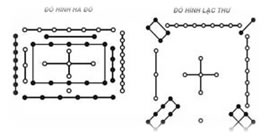
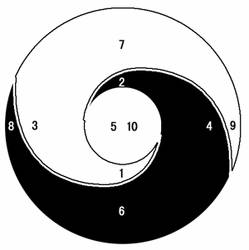
We must also not forget to mention the numbers 5 and 9, each having a very important role. The number 5 is the most mysterious number because everything begins from this number. Heaven and Earth have the 5 elements or agents (Ngũ hành) that give birth to all things and beings. It is placed at the center of the River Map (Hà Đồ) and the Luo River Writing (Lạc thư), which form the basis of the transformation of the 5 elements (Thủy, Hỏa, Mộc, Kim, Thổ) (Water, Fire, Wood, Metal, and Earth).

It is associated with the Earth element in the central position, which the farmer needs to know the direction of the cardinal points. This thus returns to man the center in managing things, species, and the four cardinal points. For this reason, in feudal society, this place was reserved for the king because he was the one who governed the people. Consequently, the number 5 belonged to him, as did the color yellow symbolizing the Earth. This explains the color chosen by Vietnamese and Chinese emperors for their garments.

Besides the center occupied by man, a symbolic animal is associated with each of the four cardinal points: the North by the turtle, the South by the phoenix, the East by the tiger, and the West by the dragon. It is not surprising to find at least in this attribution the three animals living in a region where agricultural life plays a significant role and water is vital.

Ho Tou Lo Chou

(Hà Đồ Lạc Thư)

 This is the territory of the Bai Yue. Even a dragon, so fierce in other cultures, becomes a gentle and noble animal imagined by the peaceful peoples of the Bai Yue. The number 5 is also known as « Tham Thiên Lưỡng Đia » (or ba Trời hai Ðất or 3 Yang 2 Yin) in the theory of Yin and Yang because obtaining the number 5 from the combination of the numbers 3 and 2 corresponds better to the reasonable percentage of Yin and Yang than that resulting from the combination of the numbers 4 and 1.

In the latter, one notices that the Yang number 1 is greatly dominated by the Yin number 4. This is not the case with the combination of numbers 3 and 2, where the Yang number 3 slightly dominates the (Yin) number 2. This favors the development of the universe in an almost perfect harmony. In the past, the fifth day, the fourteenth day (1+4=5), and the twenty-third day (2+3=5) of the month were reserved for the king’s outings. It was forbidden for subjects to conduct business during his travels and to disturb his walk. This may be the reason why many Vietnamese today, influenced by this ancestral tradition, continue to avoid choosing these days for building houses, traveling, and making important purchases. It is customary to say in Vietnamese:

Chớ đi ngày bảy chớ về ngày ba
Mồng năm, mười bốn hai ba
Đi chơi cũng lỗ nữa là đi buôn
Mồng năm mười bốn hai ba
Trồng cây cây đỗ, làm nhà nhà xiêu

Do not go on the seventh day, do not return on the third day
The fifth, fourteenth, twenty-third
Going out is also a loss, let alone trading
The fifth, fourteenth, twenty-third
Planting trees, the trees fail; building houses, the houses collapse.

You should avoid leaving on the 7th day and returning on the 3rd day of the month. On the 5th, 14th, and 23rd days of the month, you would be at a loss if you go out or do business. Similarly, you would see the fall of a tree or the tilting of your house if you plant it or build it on those days.

The number 5 is frequently mentioned in Vietnamese culinary art. The most typical sauce of the Vietnamese remains fish sauce. In the preparation of this national sauce, there are 5 flavors classified according to the 5 elements of Yin and Yang: salty (mặn) with fish juice (nước mắm), bitter (đắng) with lemon zest (vỏ chanh), sour (chua) with lemon juice (or vinegar), spicy (cay) with crushed or powdered chili peppers, and sweet (ngọt) with powdered sugar. These five flavors (mặn, đắng, chua, cay, ngọt) combined and found in the Vietnamese national sauce correspond respectively to the 5 elements defined in the Yin and Yang theory (Thủy, Hỏa, Mộc, Kim, Thổ) (Water, Fire, Wood, Metal, and Earth).

Similarly, these 5 flavors are found in the sweet and sour soup (canh chua) prepared with fish: sour with tamarind seeds or vinegar, sweet with pineapple slices, spicy with sliced chili peppers, salty with fish sauce, and bitter with some okra (đậu bắp) or with the flowers of the fayotier (bông so đũa). When this soup is served, a few fragrant herbs are added, such as panicaut (ngò gai), rau om (an herb with a flavor close to coriander but with an additional lemony note). This is a characteristic feature of the sweet and sour soup of Southern Vietnam and different from those found in other regions of Vietnam.

We cannot forget to mention the glutinous rice cake that the Proto-Vietnamese succeeded in passing down to their descendants over the millennia of their civilization. This cake is tangible proof of the belonging of the Yin and Yang theory and its five elements to the Hundred Yue, of which the Proto-Vietnamese were a part, because in the making of this cake, the generative cycle of these 5 elements (Ngũ hành tương sinh)  found.

(Fire->Earth->Metal->Water->Wood)

Inside the cake, one finds a piece of porkmeat in red color ( Fire ) around which there is  a kind of paste made with broad beans in yellow color ( Earth ). The whole thing is wrapped by the sticky rice in white color ( Metal ) to be cooked with boiling water ( Water ) before having a green colouring on its surface thanks to the latanier leaves (Wood).

There is another cake that cannot be missing at weddings. It is the susê or phu-Thê cake (husband-wife), which has a round shape inside and is wrapped in banana leaves (green color) to give it the appearance of a cube tied with a red ribbon. The circle is thus placed inside the square (Yang within Yin). This cake is made of tapioca flour, scented with pandan, and sprinkled with black sesame seeds. At the heart of this cake is a paste made from steamed soybeans (yellow color), lotus seed jam, and grated coconut (white color). This paste closely resembles the frangipane found in king cakes. Its sticky texture recalls the strong bond that one wishes to represent in the union. This cake is the symbol of the perfection of marital love and loyalty in perfect harmony with Heaven and Earth and the five elements symbolized by the five colors (red, green, black, yellow, and white).

This cake is recounted by the following tale: once upon a time, there was a merchant indulging in debauchery and not thinking of returning to his family, although before his departure, his wife gave him the susê cake and promised to remain warm and sweet like the cake. That is why, upon learning this news, his wife sent him other phu thê cakes accompanied by the following two verses:

Từ ngày chàng bước xuống ghe
Sóng bao nhiêu đợt bánh phu thê rầu bấy nhiêu

Since your departure, as many waves as were met by your boat, so many afflictions were known by the susê cake.

Lầu Ngũ Phụng


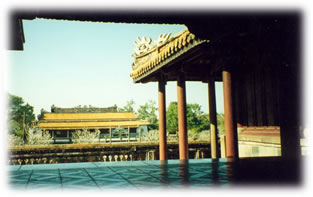
In architecture, the number 5 is not forgotten either. This is the case of the meridian gate of the Huế citadel, which is a powerful masonry mass pierced by five passages and topped with an elegant two-level wooden structure, the Belvedere of the Five Phoenixes (Lầu Ngũ Phụng).

Seen as a whole, it resembles a grouping of 5 phoenixes intimately perched with their wings spread. This belvedere has one hundred ironwood columns painted red, supporting its nine roofs. This number 100 has been carefully examined by Vietnamese specialists. For the renowned archaeologist Phan Thuận An, it corresponds exactly to the total number obtained by adding the two numbers found respectively in the River Map (Hà Ðồ) and the Luo River Script (Lạc thư cửu tinh đồ), symbolizing the perfect harmony of the union of Yin and Yang. This is not the opinion of another specialist, Liễu Thượng Văn. According to him, it represents the strength of 100 families or the people (bách tính) and reflects well the notion dân vi bản (taking the people as the foundation) in the governance of the Nguyễn dynasty.

The roof of the central pavilion is covered with yellow « lưu ly » tiles, the others with blue « lưu ly » tiles. The main gate, right in the middle, is the meridian gate (Ngọ Môn) paved with « Thanh » stones dyed yellow, dedicated to the passage of the king. On both sides, there are the Left Gate and the Right Gate (Tả, Hữu, Giáp Môn) reserved for civil and military mandarins. Then the two other side gates Tả Dịch Môn and Hữu Dịch Môn are intended for soldiers and horses. That is why it is customary to say in Vietnamese: 

Ngọ Môn năm cửa chín lầu
Một lầu vàng, tám lầu xanh, ba cửa thẳng, hai cửa quanh »

The Meridian Gate has 5 passages and nine roofs, one of which is varnished in yellow and the other eight in green. There are three main doors and two side doors.
To the east and west of the citadel, there are the Gate of Humanity and the Gate of Virtue, which are reserved respectively for men and women.

The number 9 is a Yang number (or odd). It represents the power of yang at its maximum and is difficult to reach. That is why in the past the emperor often used it to show his power and supremacy. He climbed the nine steps symbolizing the ascent of the sacred mountain where his throne was located. According to legend, the Forbidden City of Huế, like that of Beijing, had 9,999 rooms. It is worth recalling that the Forbidden City of Beijing was supervised by a Vietnamese named Nguyễn An, who was exiled at a very young age during the Ming dynasty. The emperor, like each of his palaces, faces south, towards the Yang energy, so that the emperor receives the vital breath of the sun because he is the Son of Heaven. In Vietnam, there are the nine dynastic urns of the citadel of Huế, the nine branches of the Mekong River, the nine roofs of the Five Phoenixes pavilion, etc. In the tale titled « The Mountain Spirit and the River Spirit (Sơn Tinh Thủy Tinh), » the eighteenth (2×9) Hùng Vương king proposed as a dowry for his daughter Mị Nương’s marriage: an elephant with 9 tusks, a rooster with 9 spurs, and a horse with 9 red manes. The number 9 symbolizes the Sky, whose birth date is the ninth day of the month of February.

Less important than the numbers 5 and 9, the number 3 (or Ba or Tam in Vietnamese) is closely linked to the daily life of the Vietnamese. They do not hesitate to mention it in a great number of popular expressions. To signify a certain limit, a certain degree, they habitually say:

Không ai giàu ba họ, không ai khó ba đời.
No one can claim to be wealthy for three generations just as no one is unfortunate for three successive lives.

It often happens to the Vietnamese that they do not complete a certain task in one go, which forces them to perform the operation up to three times. This is the expression they frequently use: Nhất quá Tam. It is the number three, a limit they do not wish to exceed in accomplishing this task.

To say that someone is irresponsible, they refer to them as « Ba trợn. » One who is opportunistic is called Ba phải. The expression « Ba đá » is reserved for vulgar people, while those who keep getting entangled in small matters or endless troubles receive the title « Ba lăng nhăng. » To weigh their words, the Vietnamese need to fold the three thumbs of their tongue. (Uốn Ba tấc lưỡi).

The number 3 also is synonymous with insignificant and unimportant something.It is what one finds in following popular expressions: 

Ăn sơ sài ba hột: To eat a little bit.
Ăn ba miếng: idem
Sách ba xu: book without values. (the book costs only three  pennies).
Ba món ăn chơi: Some  dishes  for tasting. 

Analogous to number 3, the number 7 is often mentioned in Vietnamese literature. One cannot ignore either the expression Bảy nỗi ba chìm với nước non  (I  float 7 times  and I descend thee times if this  expression is translated in verbatim) that Hồ Xuân Hương poetess  has used and immortalized in her poem intituled « Bánh trôi nước” :

Thân em vừa trắng lại vừa tròn
Bây nỗi ba chìm với nước non
………. 

for describing difficulties encountered by the Vietnamese woman in a feudal and Confucian society. This one did not spare either those having an independent mind, freedom and justice.   It is the case of  Cao Bá Quát , an active scholar who was degusted from the scholastica of his time and dreamed of replacing the Nguyễn authoritarian monarchy by an enlightened monarchy. Accused of being the actor of the grasshoppers insurrection  (Giặc Châu Chấu) in 1854, he was condemned to death and he did no hesitate his reflection on the fate reserved to those who dared to criticize  the despotism and feudal society in his poem before his death: 

Ba hồi trống giục đù cha kiếp
Một nhát gươm đưa, đéo mẹ đời. 

Three gongs are reserved to the miserable fate
A sabre slice finishes this dog’s life. 

If the Yin and Yang theory continues to haunt their mind for its mystical and impenetrable character, it remains however a way of thinking and living to which a good number  of the Vietnamese continue to refer daily for common practices and respect of ancestral traditions.


Bibliography

Xu Zhao Long : Chôkô bunmei no hakken, Chûgoku kodai no nazo in semaru (Découverte de la civilisation du Yanzi. A la recherche des mystères de l’antiquité chinoise, Tokyo, Kadokawa-shoten 1998).
-Yasuda Yoshinori : Taiga bunmei no tanjô, Chôkô bunmei no tankyû (Naissance des civilisations des grands fleuves. Recherche sur la civilisation du Yanzi), Tôkyô, Kadokawa-shoten, 2000).
-Richard Wilhelm : Histoire de la civilisation chinoise 1931
-Nguyên Nguyên: Thử đọc lại truyền thuyết Hùng Vương
– Léonard Rousseau: La première conquête chinoise des pays annamites (IIIe siècle avant notre ère). BEFO, année 1923, Vol 23, no 1
-Paul Pozner : Le problème des chroniques vietnamiennes., origines et influences étrangères. BEFO, année 1980, vol 67, no 67, p 275-302
-Dich Quốc Tã : Văn Học sữ Trung Quốc, traduit en vietnamien par Hoàng Minh Ðức 1975.
-Norman Jerry- Mei tsulin (1976) : The Austro asiatic in south China : some lexical evidence, Monumenta Serica 32 :274-301
-Henri Maspero : Chine Antique : 1927.
-Jacques Lemoine : Mythes d’origine, mythes d’identification. L’homme 101, paris, 1987 XXVII pp 58-85
-Fung Yu Lan: A History of Chinese Philosophy ( traduction vietnamienne Đại cương triết học sử Trung Quốc” (SG, 1968).68, tr. 140-151)).
-Alain Thote: Origine et premiers développements de l’épée en Chine.
-Cung Ðình Thanh: Trống đồng Ðồng Sơn : Sự tranh luận về chủ quyền trống
đồng giữa h ọc giã Việt và Hoa.Tập San Tư Tưởng Tháng 3 năm 2002 số 18.
-Brigitte Baptandier : En guise d’introduction. Chine et anthropologie. Ateliers 24 (2001). Journée d’étude de l’APRAS sur les ethnologies régionales à Paris en 1993.
-Nguyễn Từ Thức : Tãn Mạn về Âm Dương, chẳn lẻ (www.anviettoancau.net)
-Trần Ngọc Thêm: Tìm về bản sắc văn hóa Việt-Nam. NXB : Tp Hồ Chí Minh Tp HCM 2001.
-Nguyễn Xuân Quang: Bản sắc văn hóa việt qua ngôn ngữ việt (www.dunglac.org)
-Georges Condominas : La guérilla viêt. Trait culturel majeur et pérenne de l’espace social vietnamien, L’Homme 2002/4, N° 164, p. 17-36.
-Louis Bezacier: Sur la datation d’une représentation primitive de la charrue. (BEFO, année 1967, volume 53, pages 551-556)
-Ballinger S.W. & all: Southeast Asian mitochondrial DNA Analysis reveals genetic continuity of ancient Mongoloid migration, Genetics 1992 vol 130 p.139-152….

Yin and Yang theory: (Âm Dương Phần 2)


French version

Vietnamese version

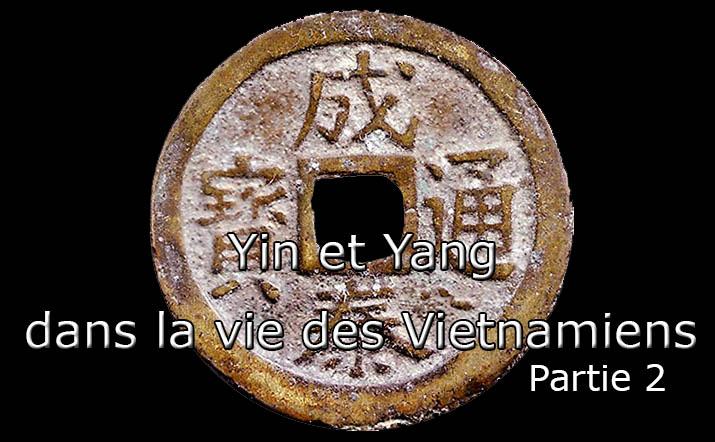
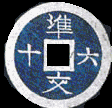
When speaking of the symbolic couple circle/square, one wants to evoke perfection and happy union. Starting from a square with 4 sides, one can have an octagon by doubling the number of sides. Then by continuously doubling the number of these sides, one finally obtains a circle with no sides. It is the perfect form (perfectissima forma) testifying to absolute perfection. That is why it is customary to say in Vietnamese « Mẹ tròn, con vuông » to wish the mother and her child good health at the time of birth. This expression was handed down by our ancestors to draw our attention to the creative nature of the universe. Roundness and square are the two shapes taken not only by glutinous rice cakes (Bánh Chưng, Bánh Tết) or wedding cakes (Bánh Su Sê or Phu Thê) but also by ancient Vietnamese coins (or sapèques).

The shape of these sapèques is linked to traditional Vietnamese cosmology: the roundness of these coins evokes that of the sky, and the central hole is square like the earth.

Old coin

For the surface area of these sapèques, there is always a percentage to respect: 70% for the round part and 30% for the square part. These two shapes are also found in the bamboo cane held by the eldest son walking behind the coffin during his father’s funeral procession. When the deceased person is his mother, he is obliged to walk backward while looking straight ahead at the coffin. This is the « Cha đưa mẹ đón » (Accompany the father, receive the mother) protocol to be respected in Vietnamese funeral rites. The bamboo of the cane represents the father’s uprightness and endurance.

It is replaced by another plant known as « cây vong, » symbolizing simplicity, gentleness, and flexibility when the deceased person is the mother. The cane must have a round head and a square base to symbolize Heaven and Earth, while the middle part of the stem is reserved for the children and descendants. This means that everyone needs the protection of Heaven and Earth, the education of parents, and mutual assistance among siblings in society. To show respect, the number of times the guest is required to bow in front of the coffin must be a Yin number, i.e., an even number (i.e., 2 or 4), because the deceased person will join the world of darkness with a Yin character (Âm phủ in Vietnamese). According to Vietnamese researcher Trần Ngọc Thêm, everything closely or remotely related to death must use even numbers
(Yin = peace = death)

In the past, it was customary to place a piece of pure gold (Yang) in the mouth of the deceased to infuse the mana contained in the precious metal. Gold, representing the Yang principle, is capable of preserving the body and preventing decay.

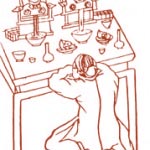
At the moment of the deceased person’s agony, their relatives must give them a nickname (or in Vietnamese tên thụy) that only they and their close ones know, with the agreement of the household spirit, because on the anniversary of their death, this nickname will be mentioned to invite them to participate in the offerings and to avoid awakening other wandering souls. That is why it is customary to say in Vietnamese tên cúng cơm to remind that everyone has a nickname. Similarly, a bouquet of flowers offered at funerals must consist of an even number (or yin) of flowers.

Ancestral altar

There is an exception to this rule when it comes to Buddha or deceased parents. In front of their altar, it is customary to place 3 incense sticks in the vase or to prostrate completely on the knees, with the head touching the ground, an odd number (Yang) (con số dương, số lẻ) of times because they are still considered living beings. Likewise, to show respect towards living elderly people, one only performs one or three prostrations. However, in wedding rites, the bride must prostrate before her parents to thank them for her birth and education before joining her husband’s family.

It is the even number (or Yin số chẵn) of times she must perform (i.e., 2 or 4) because she is considered « dead » as she no longer belongs to her original family. There is a custom for the ceremony on the first wedding night. An older woman, who has many children and is considered good and honest, is asked to take charge of spreading and overlapping a pair of braids on the bridal bed: one open and the other placed upside down, symbolizing the union of Yin and Yang.
 

Mẹ tròn, con vuông

In the past, young couples used to exchange a pinch of soil for a pinch of salt. They wanted to honor and perpetuate their union and fidelity by taking Heaven and Earth as witnesses of their commitment. The same meaning is also found in the following expression: Gừng cay muối mặn, reminding newlyweds never to part because life is bitter and deep with ups and downs, just like the pungent ginger and salt that retain their flavor over the years.

For speaking of virtue, one is accustomed to say in Vietnamese: 

Ba vuông sánh với bảy tròn
Đời cha vinh hiễn đời con sang giàu

As three squares can be in comparison seven circles, virtuous parents will have rich children.

By speaking of these three squares, one needs to reminder the square form of rice cake proposed during the new year. This cake constituted by straight lines  symbolizes loyalty and righteousness in the relationship of three submissions « Tam Tòng »: Tại gia tòng phu, xuất giá tòng phu, phu tữ tòng tữ (submission to the father before her marriage,submission to the husband during her marriage, submission to the elder son when widowed).

About 7 circles, one must think of the roundness of « bánh giầy ».  This one  is constituted by a sequence of dots equidistant from the center where there is the heart. This cake is the symbol of  a well-balancel soul that any passion does not bewinder. One finds in this heart the perfection of seven human sentiments: (Thất tình : hỹ, nộ, ái, lạc, sĩ, ố, dục )( Joy, anger, sadness, cheerfullness, love, hatred, desire). Does someone  realize a  ideal moral life if under any circumstances, he succeeds to maintain the loyalty and  righteousness with others and always keeps his equidistant gap in the manifestation of his feelings?

The expression  vuông tròn has  frequently been  employed in a great number of Vietnamese popular sayings:

Lạy trời cho đặng vuông tròn 
Trăm năm cho trọn lòng son với chàng!

I pray to God that  everything should go well and I should  eternally keep  my faithful  hearth  with you.

or 

Đấy mà xử ngãi (nghĩa) vuông tròn
Ngàn năm ly biệt vẫn còn đợi trông

Here is the signification of conjugal love
Despite the eternal separation, one continues to wait  for the  return with patience

or in the following verses 411-412 and  1331-1332 of Kim Vân Kiều‘s best-seller

Nghĩ mình phận mỏng cánh chuồn 
Khuôn xanh biết có vuông tròn mà haỵ

My fate is fragile like the dragonfly’s wing
Does the Heaven  knows that this union is durable or not?

or

Trăm năm tính cuộc vuông tròn,
Phải dò cho đến ngọn nguồn lạch sông

During your life (one hundred years), when you are concerned about your marriage, you must go upstream to the source. (One must inquire about the bride’s family down to the smallest detail.)

This Yin and Yang bipolarity is expressed in various forms in Vietnam. In China, if there is a single marriage genius, in Vietnam there is a couple of male and female geniuses (Ông Tơ Bà Nguyệt). Likewise, in Vietnamese pagodas, there is a couple of male and female Buddhas (Phật ông Phật bà) on the altar instead of a single Buddha. Vietnamese people firmly believe that each of them is associated with a certain number of digits. Before birth, the embryo needs to wait 9 months and 10 days. To say that someone has a happy fate, it is said that they have a « happy destiny » (số đỏ). Conversely, the « unfortunate destiny » (số đen) is reserved for people with a bad fate.


NEXT (Yin and Yang numbers)


Yin and Yang theory (Âm Dương : Phần 1)

yinyangviet

French version 

Vietnamese version

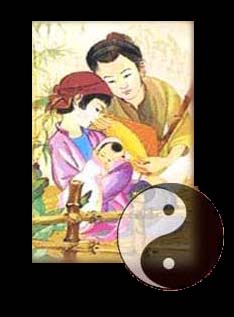
The theory of Yin and Yang continues to be closely linked to the daily life of the Vietnamese and finds its application in all fields. Everything that is fluid, cold, humid, passive, dark, internal, immobile, of feminine essence such as the sky, the moon, the night, water, winter, is of Yin nature. Everything that is solid, warm, bright, active, external, mobile, of masculine essence such as the earth, the sun, fire, summer, is of Yang nature.

This Yin and Yang characteristic is even found in Vietnamese grammar through the use of the words « con » and « cái« . Analogous to the definite articles « le » and « la » in French, these are used to indicate gender in certain restricted cases, but one can also base their use on the « mobile » or « immobile » nature of the object they accompany to indicate its belonging to the corresponding semantic class. The word « cái » is used when the object has the « immobile » character (tĩnh vật): cái nhà (house), cái hang (cave), cái nồi (pot), etc. On the other hand, when the « mobile » state (động vật) is part of the nature of the object, the word « con » is used to precede it. This is the case for the following words: con mắt (eye), con tim (heart), con trăng (snake), con ngươi (pupil), con dao (knife), etc.

The eye moves constantly just as the heart beats. Likewise, the snake moves just like the pupil. The knife is considered by the Vietnamese as a sacred animal. It is nourished with blood, wine, and rice. The same name given to an object can lead to two different interpretations depending on the use of the word « cái » or « con. » The following example translates the mobile (con) or immobile (cái) nature of the object thuyền (or boat in French) used: Con thuyền trôi theo dòng nước (The boat moves along the water). This means that someone is making the boat move with the oar or with the engine. On the other hand, when one says « cái thuyền trôi theo dòng nước » (The boat moves along the water), the emphasis is on the fact that there is no one maneuvering the boat. It is the flow of the water that makes the boat move by itself. This notes the immobile nature of the boat. The influence of Yin and Yang is not unrelated to the way the gender is sometimes attributed to common objects. This is the case with the knife (dao): dao cái (large knife), dao đực or dao rựa (or machete). This observation was noted by Alain Thote, the French archaeologist and sinologist, in his article entitled « Origin and Early Developments of the Sword in China« : The swords of Yue enjoyed great fame in antiquity.

This is the case of the fish entrails sword that the butcher named Zhuan Zhu (Chuyên Chư) used to assassinate the Liao sovereign (Ngô Vương Liêu) of the state of Wu (nước Ngô) during the Spring and Autumn period (Xuân Thu), etc. Some swords bore a name and could be masculine or feminine. The expression « đực rựa, » often heard in conversations to refer to men, comes from the old Vietnamese custom of carrying machetes when going out.

The association of sexes has also been visible for a long time in Vietnam in rice cultivation: the man plows and the woman transplants. The plowshare that pierces the earth (âm) (Yin) symbolizes the male sex (Yang) (dương), while through transplanting, the woman transmits her fertilizing power (âm) (Yin) to the rice plants (dương) (Yang). To denote the perfect harmony in the union of Yin and Yang, it is customary to say in Vietnamese: United, husband and wife can scoop all the water from the Eastern Sea. (thuận vợ thuận chồng tát biển Đông cũng cạn).

Being rice farmers, the Proto-Vietnamese were attached not only to the land but also to the environment because, thanks to natural phenomena (rain, sun, wind, clouds, etc.), they could have good harvests or not. Extensive rice cultivation by slash-and-burn or in naturally flooded fields depended on climate uncertainties. That is why they needed to live in harmony with nature.

They considered themselves the link between Heaven and Earth (Thiên-Nhân-Địa). Based on this notion, it is common to say in Vietnamese: Thiên Thời, Địa Lợi, Nhân Hòa (being aware of weather conditions, knowing the terrain well, and having popular support or national harmony). These are the three key factors of victory often referenced by Vietnamese strategists (Trần Hưng Đạo, Nguyễn Trãi, Quang Trung) in their struggle against foreign invaders. The Vietnamese take this triad (Tam Tài) into account in their way of thinking and daily life.

For them, there is no doubt that this notion has an undeniable influence on the person themselves: their destiny is dictated by the will of Heaven and depends on their birth date. With the external and internal environment of their dwelling, they can receive the harmful or beneficial breath (qi) generated by the earth. The art of harmonizing the environmental energy of one’s place of residence allows one to minimize troubles and promote well-being and health. A flat terrain without undulations or hills is lifeless and lacks qi breath (Khí). The Vietnamese call hills and mountains Dragons and Tigers. Buildings should have a green dragon to the west and a white tiger to the east. The benevolent Dragon must be more powerful than the Tiger (Hữu Thanh Long, Tã Bạch Hổ) that is to say the Dragon mountain must be higher than the Tiger hill. The notion of harmony takes on its full meaning when a site backed by a mountain and surrounded on two sides by chains of hills that protect it from winds dispersing the Chi (or cosmic energy) gives access to a lake or a river where there is water and food essential for life and the accumulation of cosmic energies (Chi).

This model can be found in the case of the historic city or citadel of Huế (Kinh thành Huế). It is oriented towards the south because in the Yi King it is written: the one who governs the country must look towards the south « Thánh nhân nam diện nhi thính thiên hạ thí » (the king turns his face to the south to rule the world). The enclosure of this citadel is a defensive construction with a military character based on the fortress technique of the famous engineer Vauban and encompassing near its southern front the imperial city bounded by a second rectangular enclosure measuring 622×606 meters. Inside this is the purple forbidden city forming the symbolic heart of the empire within a third and last almost square enclosure of 330×324 meters. The interlocking of these three enclosures refers to the Triad (Heaven, Man, Earth).

The southern front of the citadel, where the Meridian Gate is located, follows a convex path along the Perfume River. Resembling a dragon lying in the West, it undulates and rises towards the North, weaving through small hills and making a 90° bend to the East. It first reaches the protective islands of Dã Viên and Cồn Hến before joining the sea. This creates an ideal position (Chi Huyền Thủy) in accordance with the scheme described above, with a green dragon to the East and a white tiger to the West represented respectively by the shell islands (Cồn Hến) and Dã Viên, facing a natural screen symbolized by the Royal Screen Mountain (Núi Ngự Bình).


Man can act and influence his own life. By performing benevolent acts towards others, he can find happiness and improve his karma. In the past, there was a Nam Giao or Tế Giao ceremony in Vietnam, organized every year by the court of Hué in honor of Heaven and Earth. It is the emperor’s privilege to annually associate his deified ancestors with the homage paid to Heaven and Earth on a monumental esplanade built in 1806 in the southern suburbs of Huế because he is the son of Heaven. There are three levels corresponding to the triad: Heaven, Representative (emperor), Earth (Thiên, Nhân, Địa).

Each level has its own shape and a different color: the sky is spherical and the earth square (trời tròn đất vuông), thiên thanh địa hoàng (the sky is light blue and the earth yellow). Previously subjected to isolation and fasting, the emperor ascended the esplanade of sacrifices and acted on behalf of his people to ask the natural forces of the universe to improve the environment on earth. The emperor is the only figure qualified to be the intermediary between Heaven and Earth. This triad (Thiên, Nhân, Địa) has often been mentioned in Vietnamese legends.

In the legend of the « The God of Mountains and the God of Rivers (Sơn Tinh Thủy Tinh) » there is a girl named Mi Nương who is sought in marriage by these two spirits, or in the legend of the Kitchen genius myth  (Chuyện Táo quân), the woman is torn between the love of her former husband and that of the new one. In the legend of the « Betel Quid, » the triad (wife, husband, younger brother) is represented by the woman, her husband, and her twin brother who, once deceased, respectively become the betel leaf, the areca nut, and the lime stone. The betel quid well reflects the notion of balance and harmony found in the theory of Yin and Yang. To prepare the betel quid, a little slaked lime is spread on a betel leaf.

Then, orange-yellow colored root bark of Artocarpus tonkinese is added, and finally a betel nut finely sliced is incorporated. The whole mixture is placed in the mouth and slowly chewed. After about twenty minutes of chewing, the remaining quid is spit out. The five tastes can be found in the betel quid: sweet from the betel nut, spicy from the betel leaf, bitter from the root, salty from the lime, and sour from the saliva. Through the image of the fresh betel vine emerging from the earth symbolized by the lime stone and entwining the slender areca palm trunk in this legend, one wants to note the character of the perfect balance between Yin (Earth) and Yang (Heaven) in perfect harmony. The betel quid is the prelude to every conversation (Miếng trầu là đầu câu chuyện), as often said in an old Vietnamese proverb. Acceptance carries deep meaning and amounts to a firm commitment, a given word that no one would think to take back. If the exchange occurs between a girl and a boy, it is equivalent to a proposal of marriage or union. In Vietnamese tradition, the betel quid is a symbol of conjugal happiness. It cannot be missing from marriage rites.

In the civilization of wet rice cultivation, there are other trinities as important as the triad (Heaven, Man, Earth). This is the case with the triad (Thủy, Hỏa, Thổ) (or (in French Water-Fire-Earth)) or the triad (Mộc, Kim, Thổ) (or Wood, Metal, Earth). We need the earth for rice cultivation, water, and fertilizers derived from ashes caused by fire to fertilize the soil. Similarly, plants are used for food and metals to make appropriate tools for agriculture. We notice that these triads have a common element, which is earth. That is why it occupies a central place in the management of the four cardinal points. It is the pivot around which the other four elements revolve. In agricultural life, the most important element after earth is water. It is the phrase: Nhất nước nhì phân (First water, second fertilizer) often heard from a Vietnamese farmer. Since water has a Yin nature, it is attributed to the North direction because it is compatible with cold (winter). On the other hand, being Yang in nature, the fire element of the triad (Thủy, Hỏa, Thổ) is better associated with the South direction with heat and radiation (summer). The wood element clearly recalls plants whose birth often takes place in spring. It is associated with occupying the west direction with the growth of Yang. As for the metal element, which is malleable and can take different forms, it is associated with the east direction, which is linked to autumn.

The Vietnamese find in the theory of Yin and Yang an idea of alternation rather than opposition. Yin and its complementary element Yang form an entity that allows for the establishment of a good balance and harmony. For them, the world represents a totality of cyclic orders constituted by the combination of two alternating and complementary manifestations. It is known that in an opposing relationship, both Yin and Yang each carry the seed of the other within themselves. (Nothing is completely Yin or completely Yang; within Yin there is Yang and within Yang there is Yin). Yin and Yang are considered as the wheel of a chariot. Having reached their end, they begin again. Once their limit is reached, they return again.

A set of popular sayings reflecting the law of causality concretely testify to the mutation of Yin and Yang. That is why it is customary to say in Vietnamese « Trong rũi có may » (In misfortune, there will be luck), « Trong dỡ có hay » (In what seems bad, there is also something good), « Trong họa có phúc » (In misfortune, there will always be happiness). « Sướng lắm khổ nhiều » (The more satisfied the desire, the more one will suffer), « Trèo cao ngã đau » (The higher you climb, the more painful the fall). « Yêu nhau nhiều cắn nhau đau » (The more we love each other, the more we hurt each other). Lost possessions are therefore sometimes the ransom of a human life. This is clearly expressed by the Vietnamese proverb: Của đi thay người (possessions go away instead of people). The factors Phúc (happiness) and Họa (misfortune) must vary inversely to each other.

It is thanks to this Yin and Yang bipolarity that the Vietnamese are accustomed to seeking a good balance in daily life. They try to find perfect harmony with everyone and with nature even beyond their death. This was discovered in the Lạch Trương necropolis (Thanh Hóa), dating back to 3 centuries before Christ, with wooden burial objects (Yang) placed in the North (Yin) and those made of terracotta (Yin) in the South (Yang).

This notion of balance can even be found in the pagoda with the spirits of good and evil (Ông Thiện Ông Ác). It is thanks to this philosophy of balance that the Vietnamese have the ability to adapt to all situations, even in extreme cases. It is also this principle of balance that Vietnamese leaders have continued to uphold in the past during confrontations with foreign countries. To avoid the humiliation of the Mongols, who were defeated twice in Vietnam, General Trần Hưng Ðạo proposed paying tribute to Kubilai Khan in exchange for lasting peace. After defeating the Ming Chinese, Nguyễn Trãi, the strategic advisor to King Lê Lợi, did not hesitate to allow Wang Tong (Vương Thông) to return to China with 13,000 captured soldiers and proposed a vassalage pact with a triennial tribute of two medium-sized statues made of fine metal as compensation for two generals who died in battle, Liou Cheng (Liễu Thăng) and Leang Minh (Lương Minh). Similarly, King Quang Trung showed humility and agreed to send an envoy to Emperor Qianlong to seek peace after crushing the Qing army at Hanoi in 1788 within a very short time (6 days).

We must not forget either the conduct and flexibility demonstrated by the communist leaders in diplomacy during the confrontation with the French and the Americans. The Geneva (1954) and Paris (1972) agreements once again testify to the search for balance or the middle way ingeniously found by the Vietnamese in the theory of Yin and Yang.
In Vietnam, spherical objects (tròn) are integrated into Yang, and square-shaped ones (vuông) into Yin. This tendency dates back to a time when it was believed that the sky was spherical and the earth was square because the ancient Vietnamese had to square the land before they could use it for plowing and building houses. It was in this mindset that the Bai Yue (of which the Proto-Vietnamese were a part) used to divide a portion of land into nine lots based on the character tĩnh (giếng nước, meaning water well). The central lot was designated for building a water well, and the remaining eight lots were intended for constructing houses, thus forming the first housing unit in agricultural society.

The following Vietnamese popular saying: trời xanh như tán lọng tròn; đất kia chằn chặn như bàn cờ vuông (The blue sky is like a round parasol; the earth is firm like a square chessboard) reflects this belief well.The Proto-Vietnamese knew that the sky was round and the earth was square to distinguish between the round aspect of the sky at the moment of its existence (thể) and the square aspect of the earth at the moment of its use (dụng).

 NEXT (More reading Part 2)


Bibilography

–Alain Thote: Origine et premiers développements de l’épée en Chine.
–Cung Ðình Thanh: Trống đồng Ðồng Sơn : Sự tranh luận về chủ quyền trống đồng giữa học giã Việt và Hoa.Tập San Tư Tưởng Tháng 3 năm 2002 số 18. 
-Brigitte Baptandier : En guise d’introduction. Chine et anthropologie. Ateliers 24 (2001). Journée d’étude de l’APRAS sur les ethnologies régionales à Paris en 1993.
-Nguyễn Từ Thức : Tãn Mạn về Âm Dương, chẳn lẻ (www.anviettoancau.net) 
-Trần Ngọc Thêm: Tìm về bản sắc văn hóa Việt-Nam. NXB : Tp Hồ Chí Minh Tp HCM 2001. 
-Nguyễn Xuân Quang: Bản sắc văn hóa việt qua ngôn ngữ việt (www.dunglac.org)
-Georges Condominas : La guérilla viêt. Trait culturel majeur et pérenne de l’espace social vietnamien, L’Homme 2002/4, N° 164, p. 17-36. 
-Louis Bezacier: Sur la datation d’une représentation primitive de la charrue. (BEFO, année 1967, volume 53, pages 551-556) …..


Sacrifice (English version)

sacrifice_1f
Version Française
Version vietnamienne

Life is a game of chance. The chance is against us. It’s worth dying now for the country and set an example of sacrifice

Nguyễn Thái Học

Vietnam is not only a land of legends and learned men but also a land that men have acquired acre by acre in a crual mother nature for more than four thousand years. The cradle of the Vietnamese nation, the delta of Tonkin bordered by mild hills of the Hundred Thousands Mounts of China and squeezed in the South by a quasi impenetrable range, the Annamitic Cordillera, reduced to 15,000 km2 but rich of all the mud pulled out by the Red river, continues to be threathened by the latter with the discharge of 500m3 at low tide up to 3500m3 during the highest crests.

To master the blows of sword of the Red River, the Vietnamese people resort to a method of building dikes, which requires not only an increased watch of dikes but also a perpetual struggle. Facing the never-ending change of nature, the caprice of the Red river and the territorial ambitions of China, the Vietnamese people owe their safety at the cost not only of their labor and courage but also of their sacrifice in the long march filled of pitfalls towards the South.

This sacrifice is not foreign to the majority of Vietnamese in particular the men and women of character. It also becomes a cult that one likes to maintain and ceaselessly praise for Vietnam to excite the whole people before the threat of foreigners.

The sacrifice is the surest way to maintain the perfection of the homeland but it is also the synonym of loyalty and dignity. A great person is the one who dares take the responsibilities in moments of difficulty in his or her life but it is also the one who knows how to sacrifice himself or herself for a good cause, in particular for his or her country. The sacrifice is indispensable to the word « honor » in Vietnam.

Because of this moral dignity, many military people prefered suicide to surrender (Trưng Trắc, Trưng Nhị, Trần Bình Trọng, Võ Tánh etc..). That is why it is the habit to say:

Hùm chết để da, người chết để tiếng.
A dead tiger leaves its hide, a deceased person his reputation. 

The history of Vietnam is also that of sacrifices. The duty of a Vietnamese is to serve his or her country with all his heart. The greater the danger, the better his or her loyalty seems to be.


Heroes sacrifice for their fatherland. No matter what happens, his honor is never tainted. It is the case of the scholar Phan Thanh Giản, signatory of the Franco-Vietnamese treaty of 1868. After having failed to put up with the French in the defense of the three western provinces of the Mekong delta (Vĩnh Long, An Giang and Hà Tiên) he chose to surrender and decided to poison himself in 1967 because he thought it was the only way to save the people and to show his fidelity to emperor Tự Ðức. The same, Nguyễn Tri Phương (1873), adversary of Francis Garnier and Hoàng Diệu (1882), adversary of Henri Rivière preferred suicide after having failed to defend Hànội city.

During the French occupation, sacrifice became the flame of hope lit by unknown people such as Nguyễn Trung Trực, Phạm Hồng Thái. The former accepted to die in the stead of his mother captured after having succeeded in blowing up the French « Espérance » on its passage on the « Nhựt Tảo » river in Long An while the latter, chased by the Chinese police in his escape, preferred to throw himself in the river after having failed to assassinate the French governor Merlin during his passage by Canton in 1924. Admiror of his courage and sacrifice for his fatherland, the governor of Canton later buried his remains in a cemetery solely reserved for the 72 Chinese heroes and known as « Hoàng Hoa Cương » in Vietnamese. 

If this sacrifice is not a vain word for men, it carries a particular meaning for the Vietnamese women. Princess Huyền Trân of the Trần dynasty was proposed to become in 1306 the wife of king Chế Mẫn (Jaya Simhavarman)  in exchange of the two territories of Champa Chau Ô and Châu Rí. She had to sacrifice her life, her love for reason of State.

The same, three centuries later, a princess of the Nguyễn dynasty, of the name Ngọc Vạn to whom the word « Cochinchina » or (Cô chín xin) was attributed, was not late in following Huyen Tran’s footsteps in becoming the concubine of Cambodian king Prea Chey Chetta II in 1618 in exchange of the facilities granted to Vietnamese in their settlement in the region Ðồng Nai Mô Xoài which is no other than the Saigon-Cholon region today.

Her presence on the Cham soil served as a pretext for lord Nguyễn Phúc Tần to launch an expedition and annex the last territory of Champa in 1651. One cannot blame the Cham for hating princess Ngoc Khoa at that time because of her, they have lost their homeland. But Ngọc Khoa illustrates for us, the Vietnamese the sublime sacrifice she consented for her country and her people.


Po Klong Garai (PhanThiết)

Eastern Han Dynasty (Nhà Đông Hán)

 Version française
 Vietnamese version

Eastern Han dynasty (Nhà Đông Hán)

titre_dynhan_9 Guimet museum of Asian art (Paris)


Chronology of Eastern Han dynasty 

icon_daihan

 Đông Hán

25-57: Guangwudi reign

57-75: Mingdi‘s reign

75-88: Zhandi reign

88-106: Heidi reign

106: Shangdi reign

106-125: Andi reign

125: Shaodi reign

125-144: Chongdireign

145-146: Zhidi reign

146-168: Huandi reign

168-189: Lingdi reign

184: Yellow turban rebellion

189: Shaodi impeachment.

189-220: Xiandi reign.

190: Increasing power of GeneralCao Cao (Tào Tháo)

220: Death of Cao Cao and Xiandi.

End of Eastern Han dynasty


In the  territories conquered by  the Han, in particular in the South China, the Chinese assimilation continued in full swing. That is why revolts firstly  succeeded each other in the Dian kingdom (Điền Quốc)  (86, 83  before J.C., 14 after J.C., from 42 to  45 ). They were repressed with severity. These upheavals were largely due to   the Han officials exactions and the Chinese settlers’ behaviour in possession of fertile soils and expulsion of local people in remote  corners on his territory.  In addition, the latter had to adopt the language, customs and religious beliefs practiced by the Han.

In year 40, a serious rebellion broke out in Jiaozhou province (or Giao Châu in Vietnamese) including at this time, a great  part of  Kouangsi  and Kouang tong territories. It was led by the local prefect’s daughters, the elder Trưng Trắc (Zheng Cè)  and  her youngest daughter Trưng Nhị (Zheng Èr). As the husband of the elder Shi Suo (Thi Sách) opposed the Chinese assimilation policy conducted  brutally  by the Chinese proconsul Su Ding (Tô Định), the latter did not hesitate to kill him for making an example against Yue rebels. This killing revolted sisters Trưng and trigged immediately the insurgent movement in Yue territories.


icon_tigre

Mat weight 

intended to maintain the mat edges thanks to its weight.

[Return CHINE]

Sisters Trưng succeeded in gaining control of 65 citadels for a very short period of time.  They were  proclaimed Queens on conquered territories and etablished themselves in Meiling (or Mê Linh). In year 41, they were defeated by Chinese general Ma Yuan ( Mã Viện, Phục Ba tuớng quân)(the flow tamer) and preferred the suicide instead of the reddition by pluging into the Hát river. They thus became the symbol of Vietnamese resistance. They continue to be venerated today not only in Vietnam but also in certain areas of Yue territories belonging to China (Kouangsi et Kouang Tong). Ma Yuan began to apply a policy of terror and assimiltaion at forced march by placing at all level administration, Chinese trustwothy men and imposing the Chinese as the official language over the territory of the Vietnamese. It is the first Chinese domination during just 1000 years before the war of liberation started by General Ngô Quyền. In the meantime, Guangwudi  (Quang Vũ Đế)succeeded to bring prosperity and stability in his empire by reducing the tax on crops and profits. After his death,   his son Mingdi (Hán Minh Đế) imitating Wudi, pursued the policy of expansion by taking an offensive against the northern Xiongnu (Hung Nô)  with the aim of releasing the States of Central Asia from the guardianship of the latter and restoring the security of the silk road (con đường tơ lụa) for the benefit of China. Being the brother of Ban Gu (*)(Ban Cố) historian of this time, General Ban Chao (Ban Siêu) was in charge of this  military expedition. He succeeded in reaching the sea Caspienne and subduing the  Yuezhi (Nguyệt Chi or Nhục Chi) thanks to the Kusana assistance.


 (*) Author of Hanshu (Hán Thư)


Galerie des photos

guimet_han